In the Middle of Nowhere

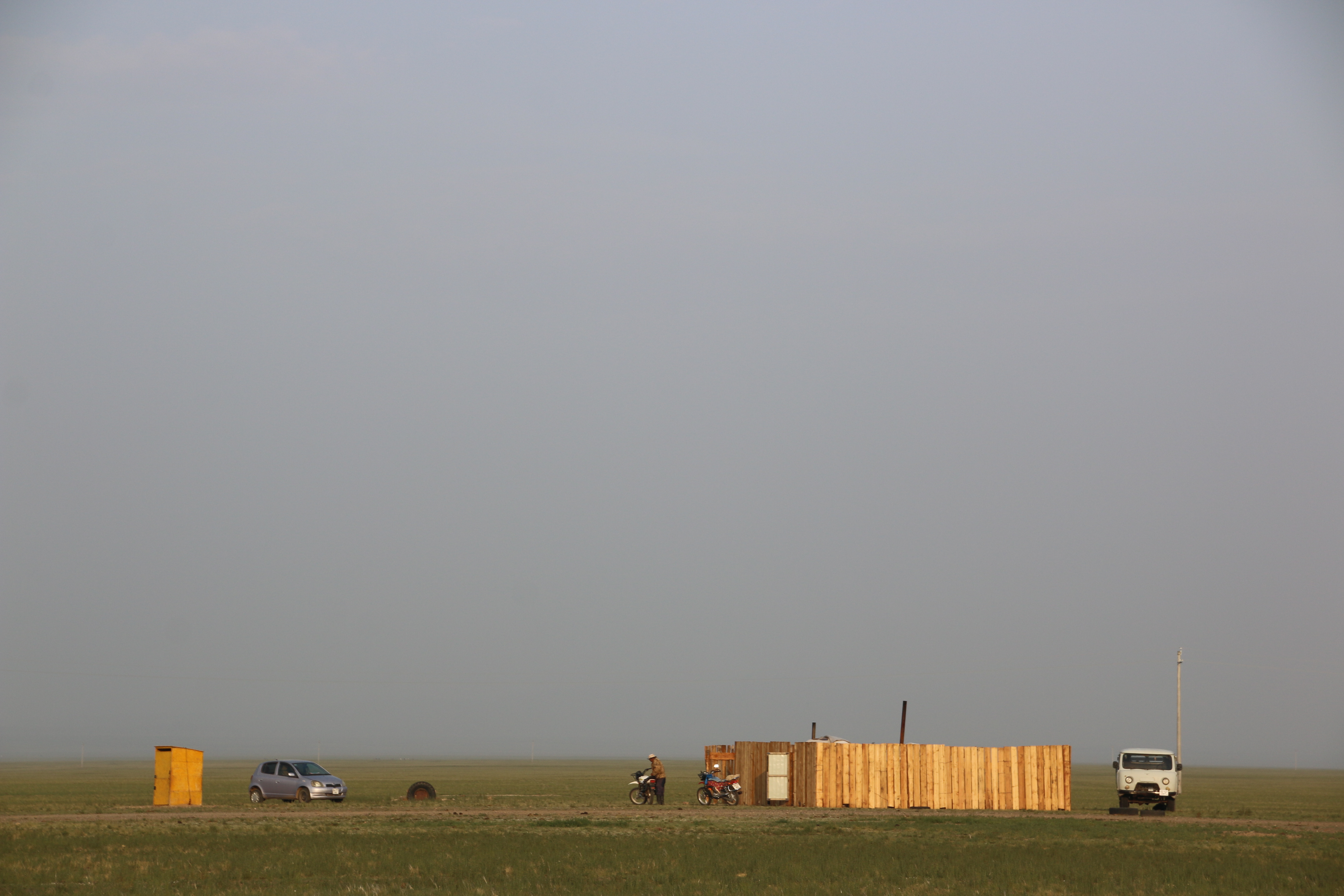
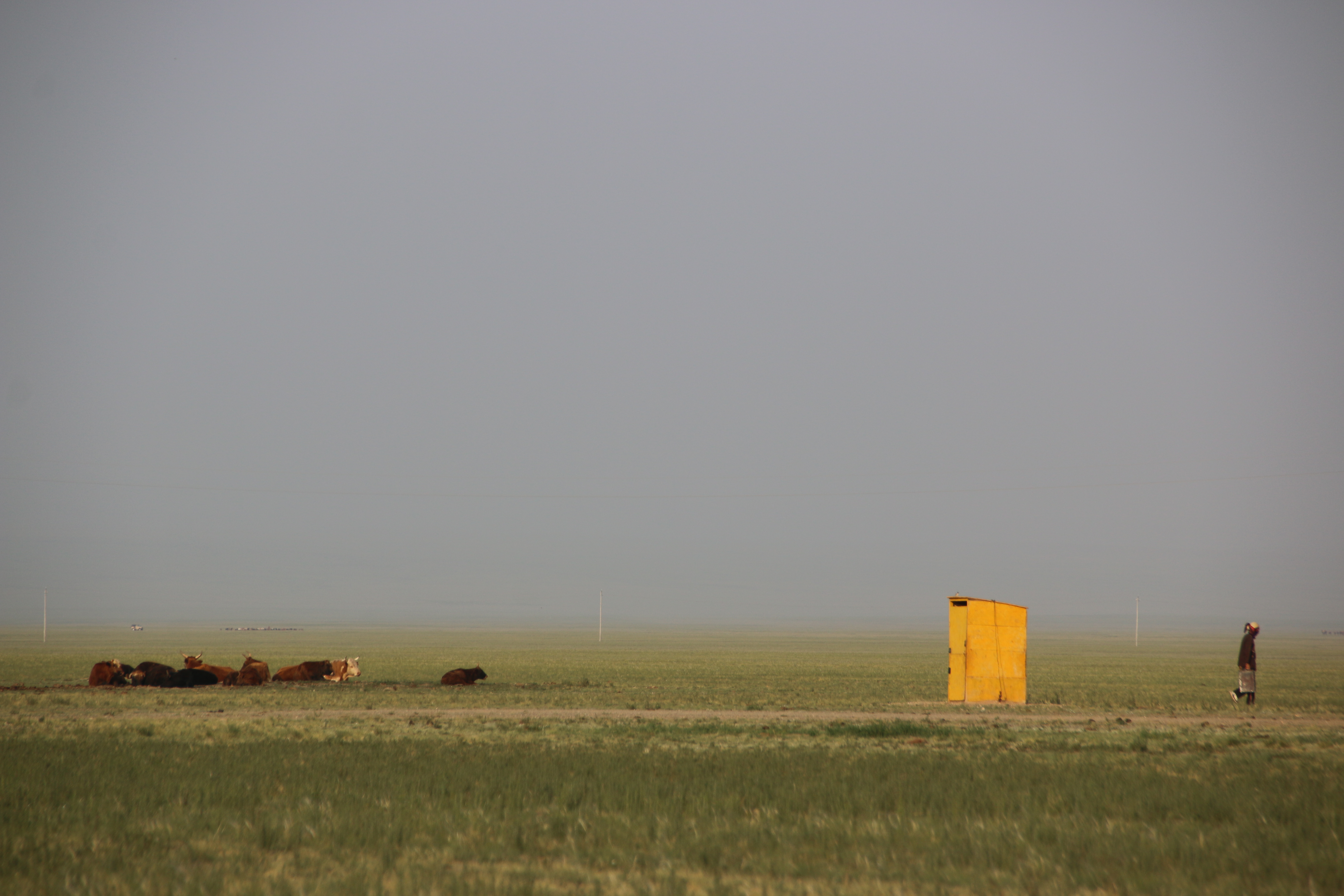
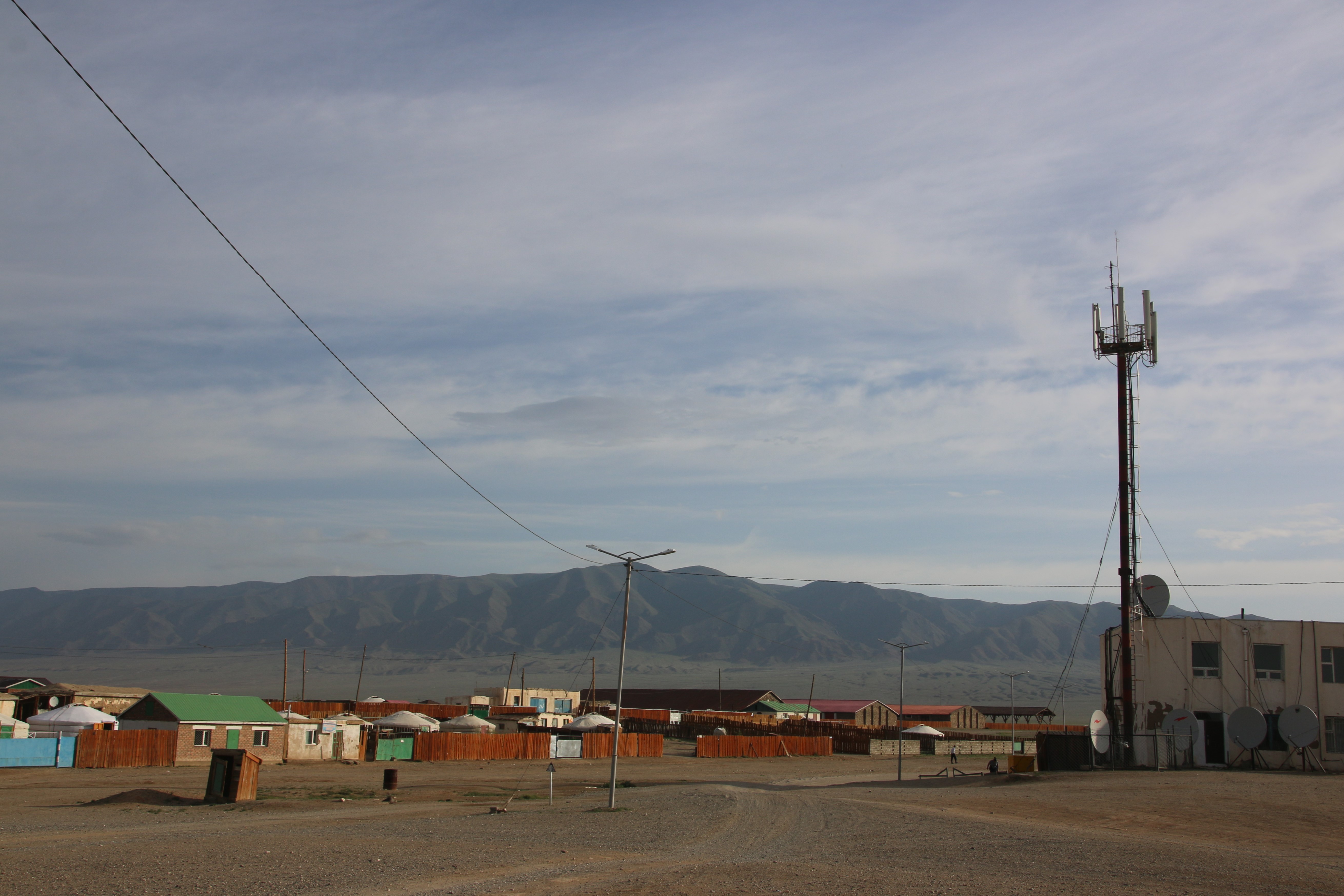
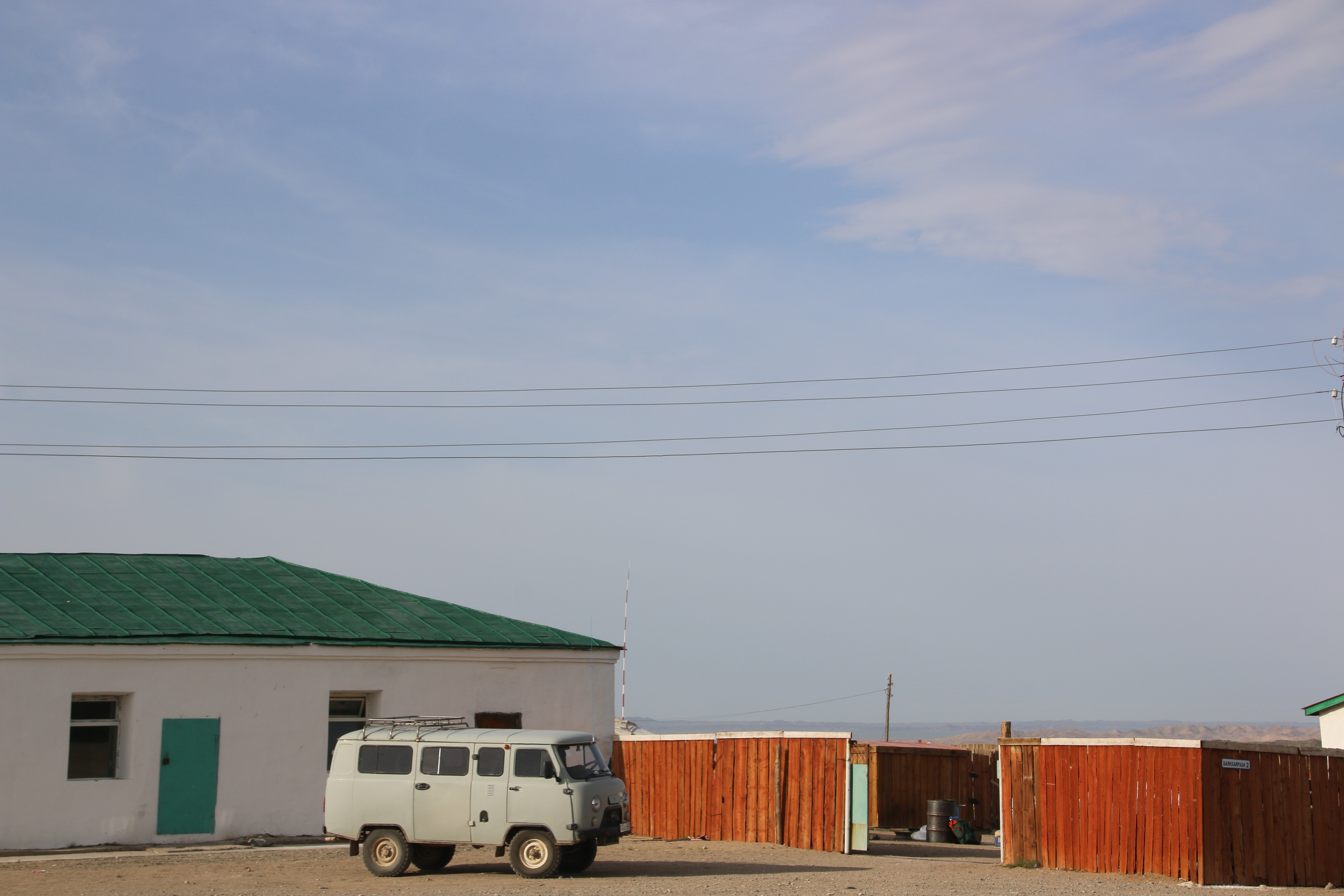
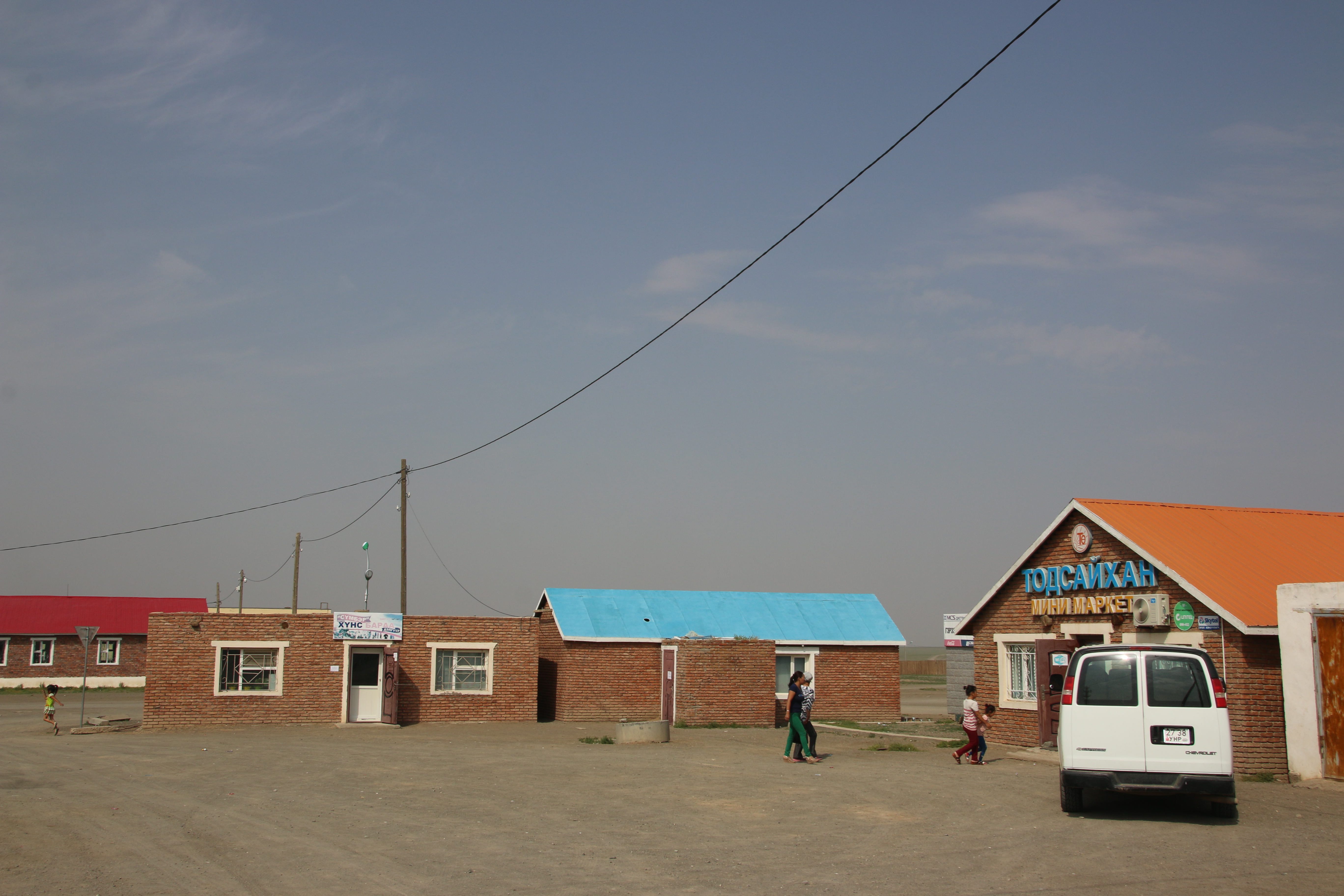
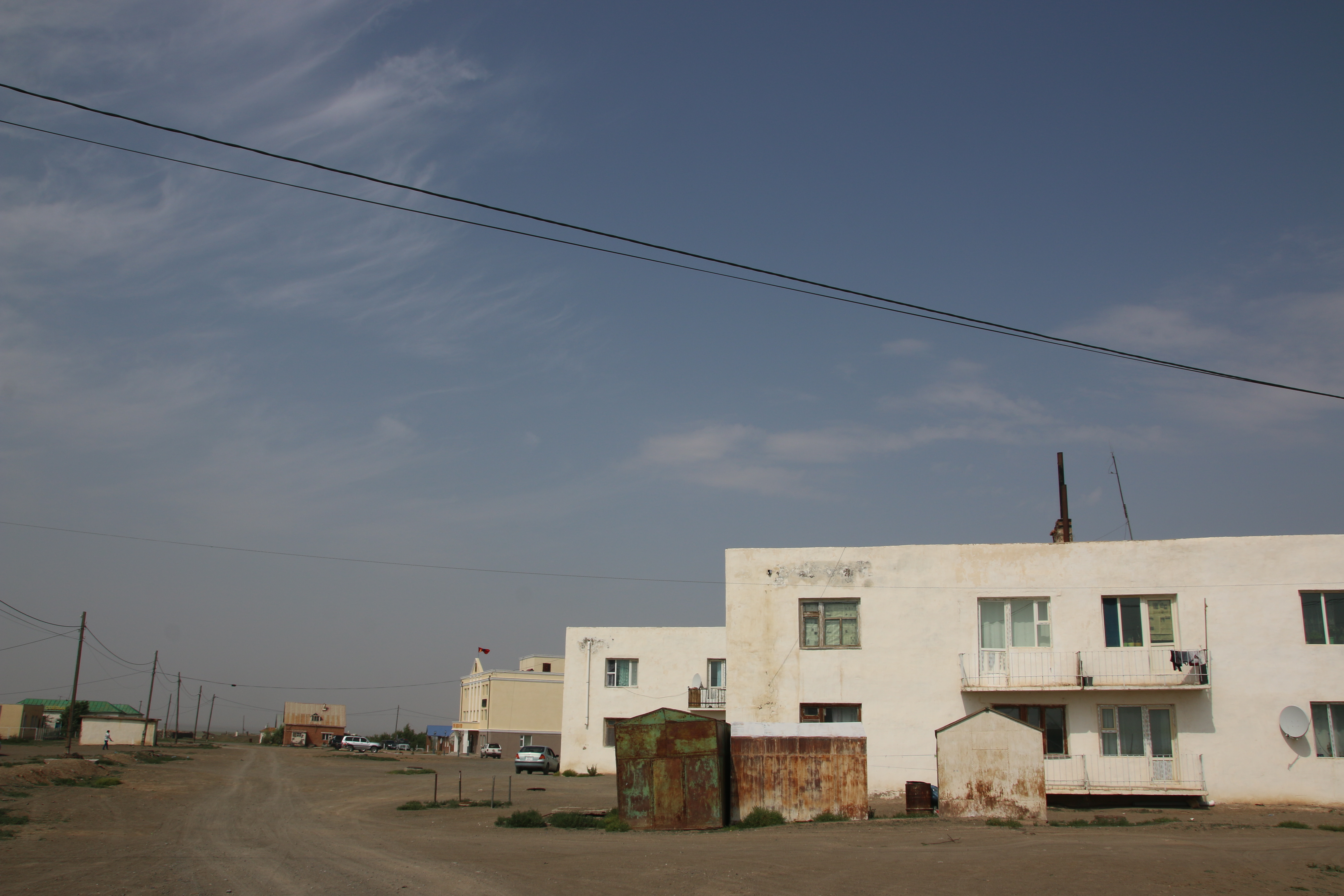
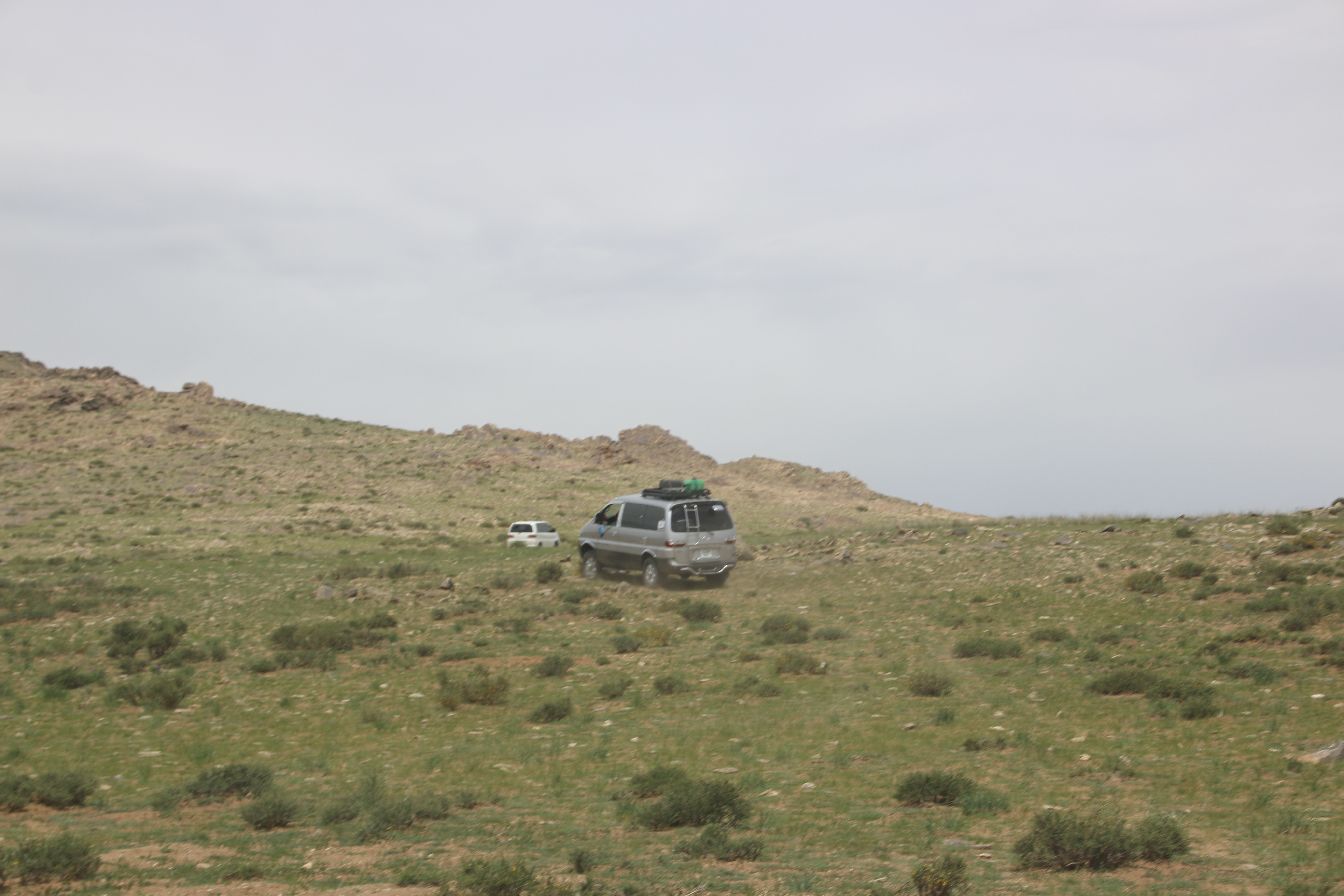
At some points the four vehicles are racing side by side on this 44 lane Santa Pod, rough track, off-road highway. Gentle rises and dips spread ahead through the hard landscape, the only difference being that over the hours the vegetation dies out even more and the rocks and stones and dust take over permanently. Having covered 400 kilometres over this harsh, hard, unrelenting surface, hammering along at speed over the rough side of a cheese grater for 12 hours, we arrive at a small town. We officially name it ‘The Middle of Nowhere’ or Nowhere for short. In Mongolian it is Bayangobi ……… in the Middle of Nowhere.

This is the small town/village of Sevrei ….. in the Middle of Nowhere.

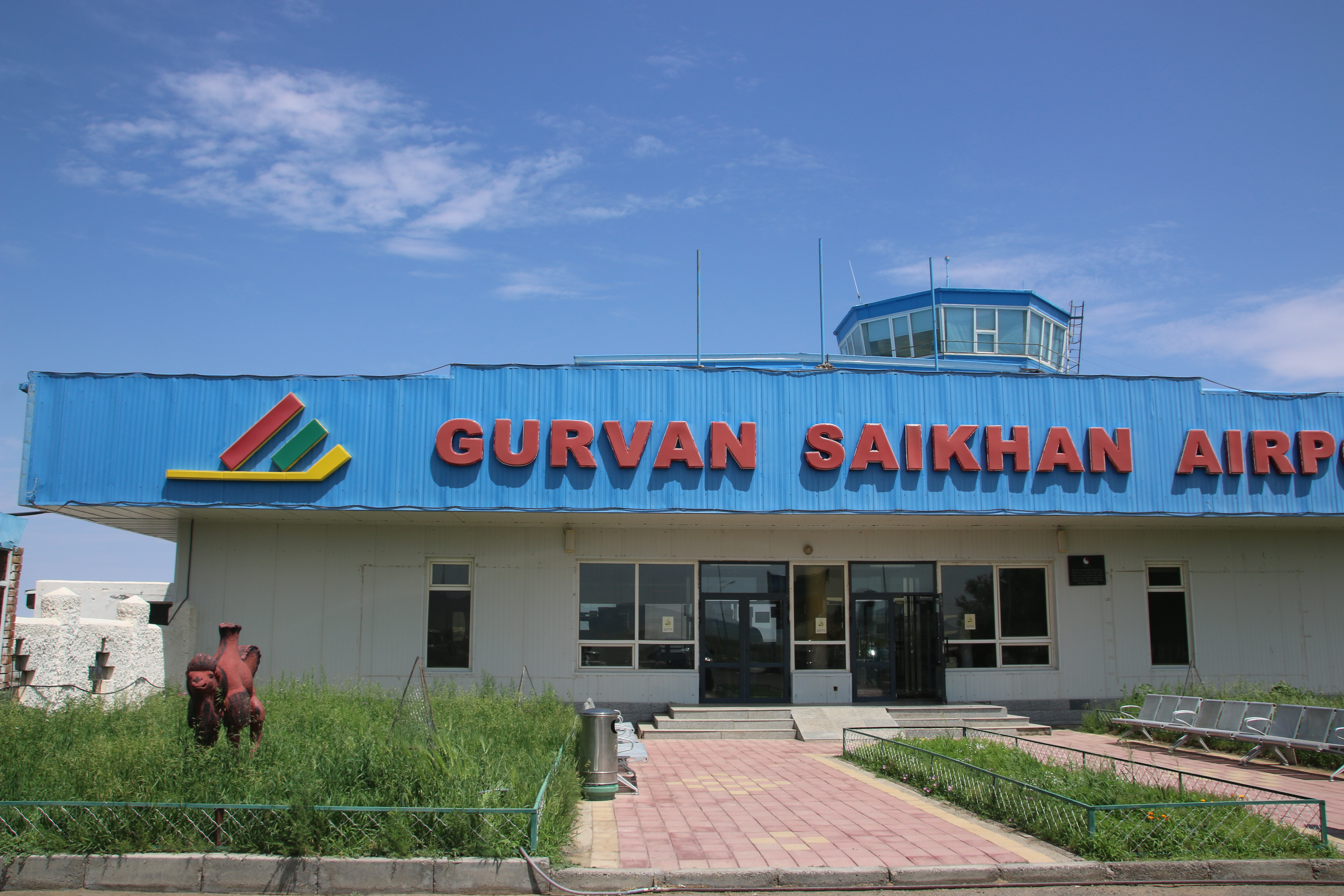
And this is Bayanzag which has a small regional airport ….. in the middle of nowhere and serving ….who, exactly – other than tourists who want to get our of Nowhere.


Lost and found in the Gobi Cheesegrater

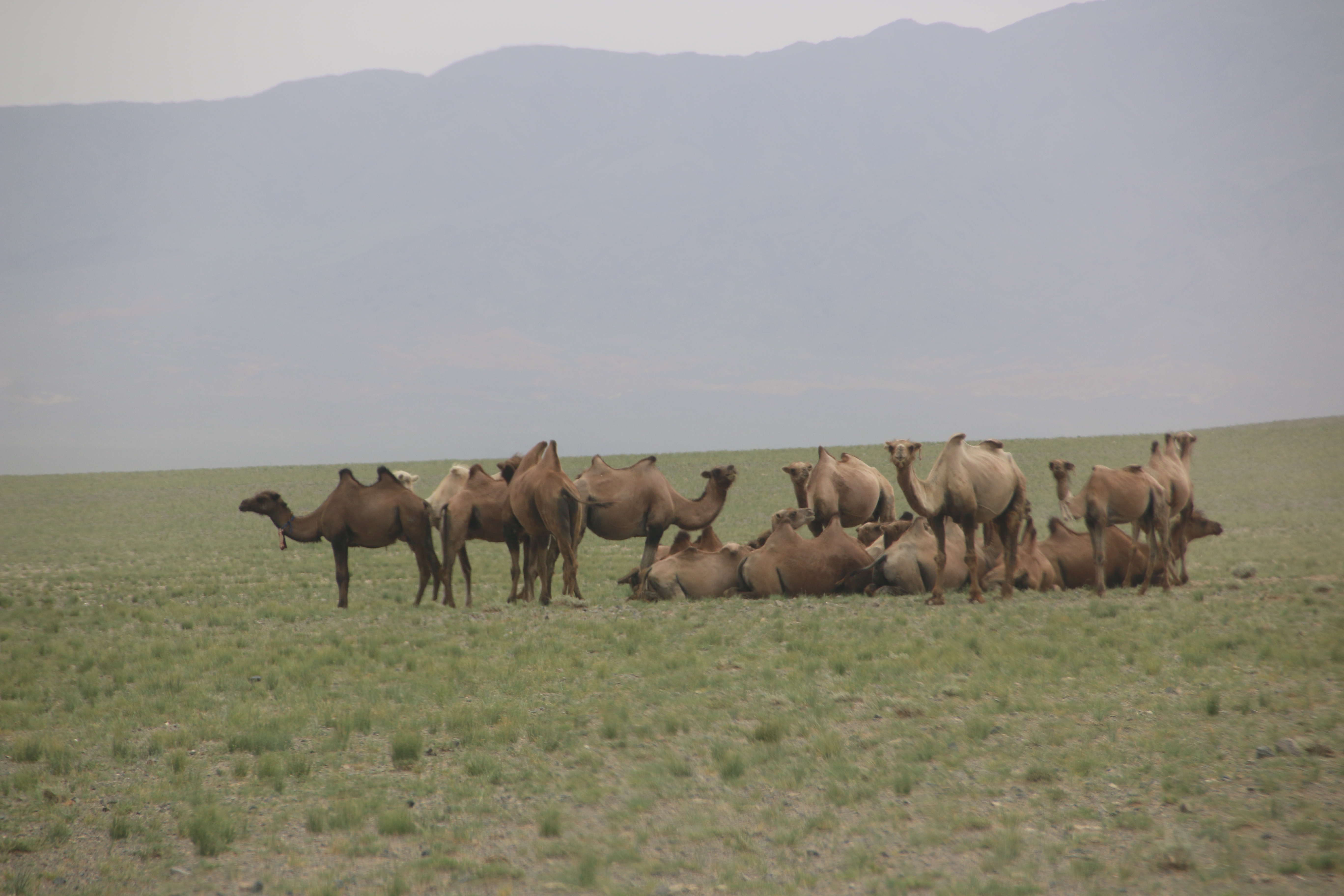
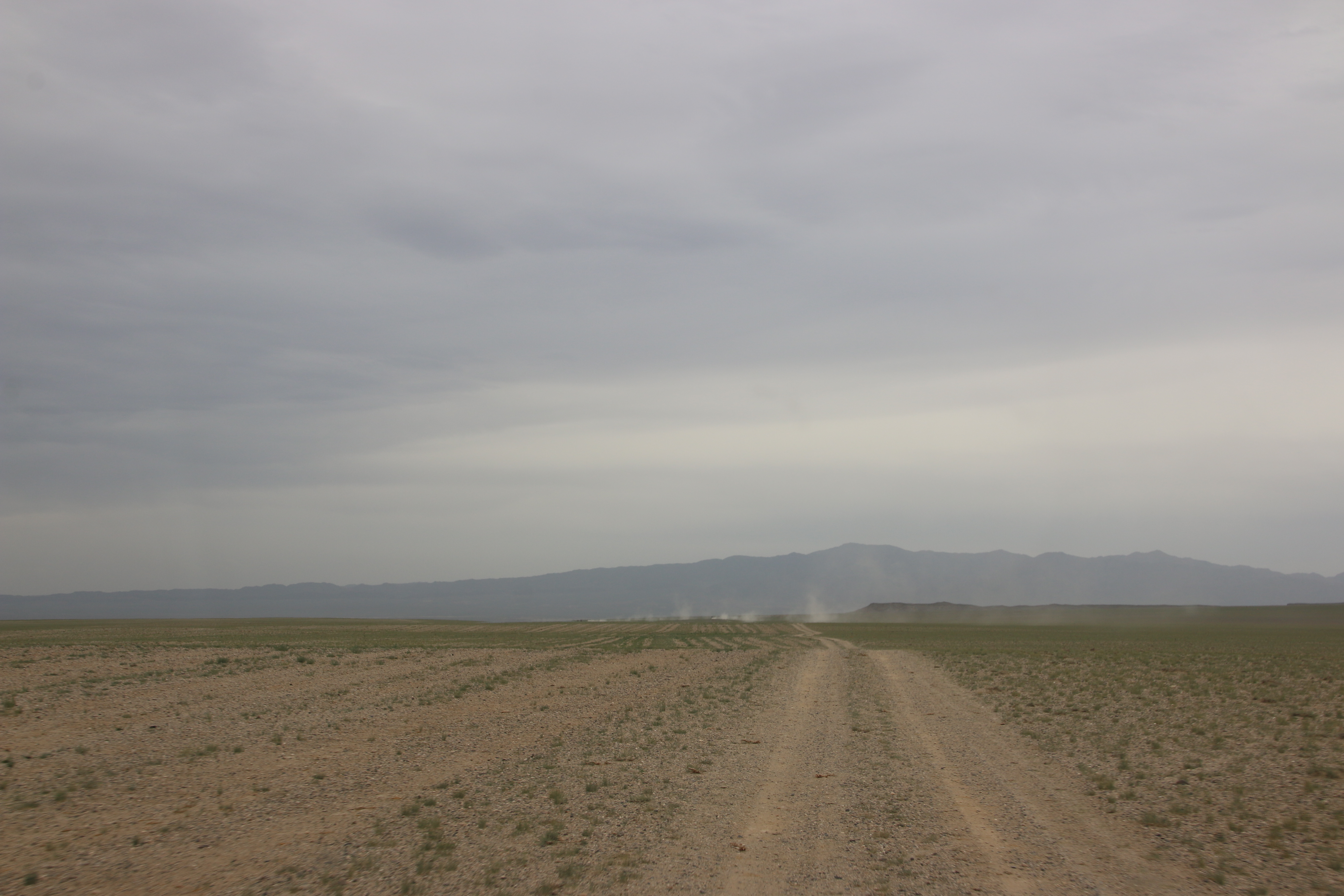
So this is the Gobi. No romantic crescents of towering arcs of soft sand in oranges and reds with a robed tribesmen, piercing blue eyes pinning your heart to his from behind his headscarf, navigating his noble camel down to your caravan. Sorry, no. The Gobi is hard, uncompromising, hot, dusty, grey and empty with camels that grunt and complain and groan and spit and smell and slobber.

Today we expect to drive 300 km to the overnight stop. On the way we are seeking some caves where some Stone Age Men and their families lived many years ago. The fist part its easy enough. We start off in good spirits refreshed in Nowhere. The route is flat with only the occasional gulley when the driver has to brake sharply and ease the vehicle down one side and up the other. Easy. The sun is not yet fully up. Music is placing – a random selection of Mongolian throat singing, light Mongolian opera, some cowboy clip-cloppy stuff, Mongolian hip hop, some very inappropriate US rap and some Kylie.

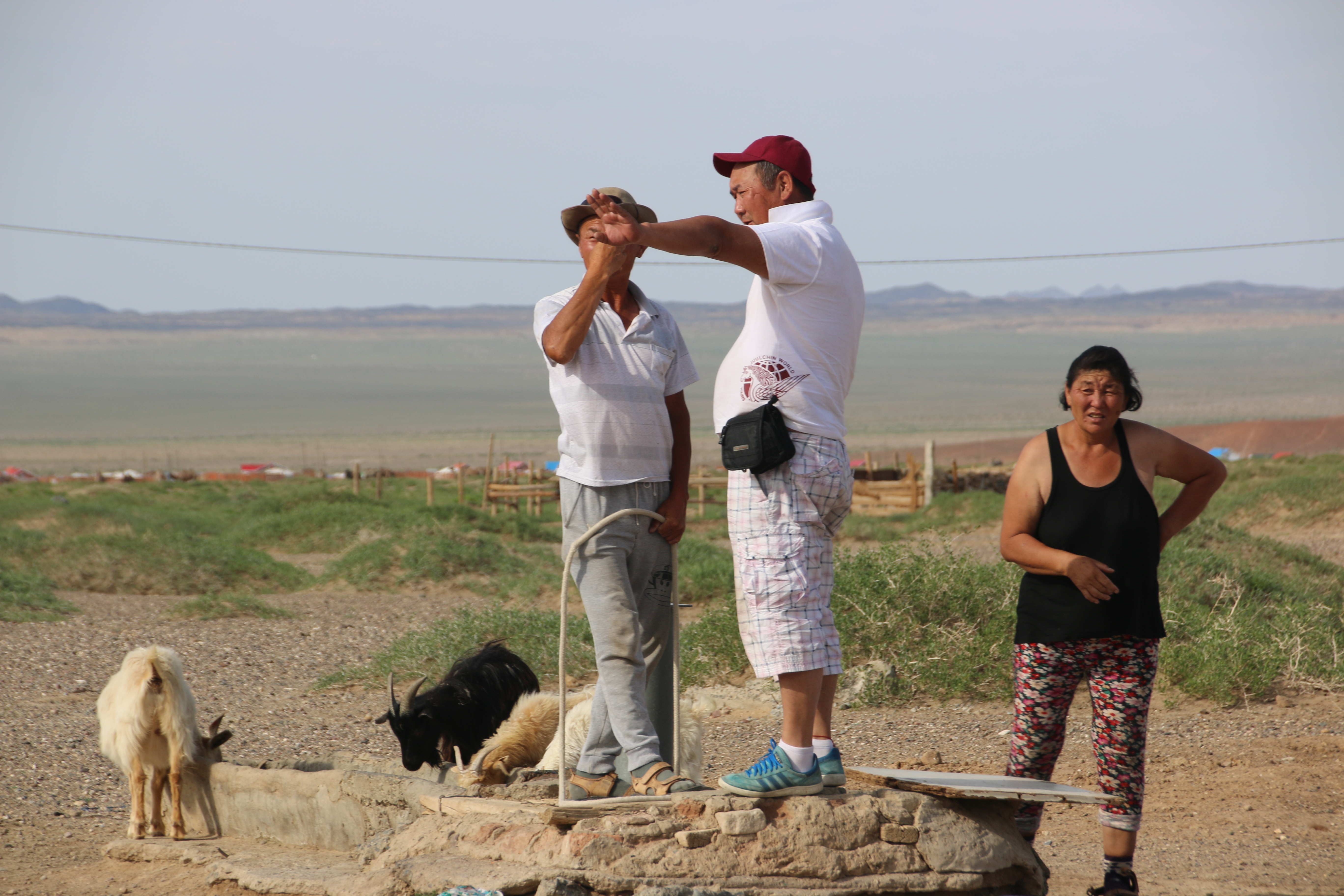
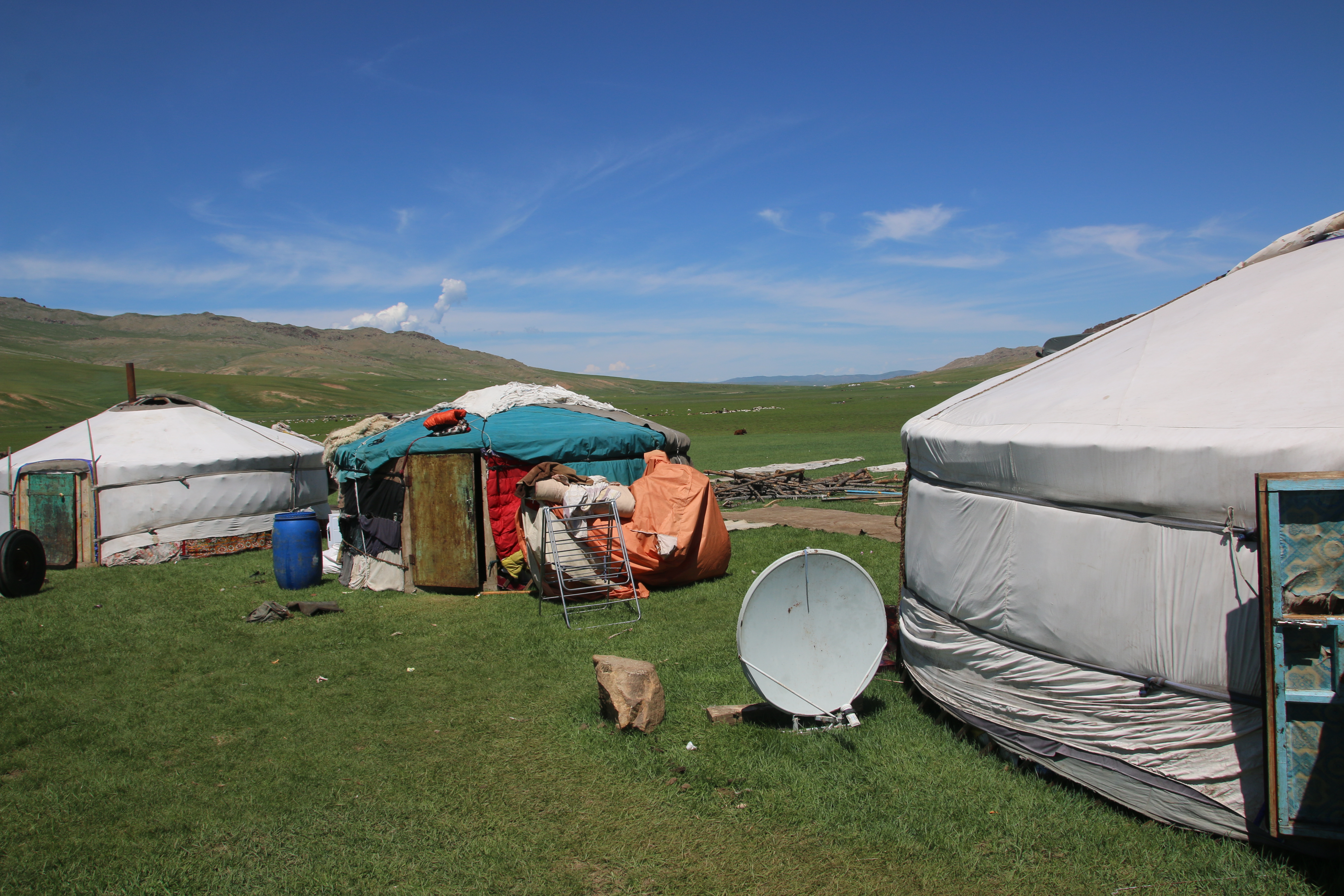
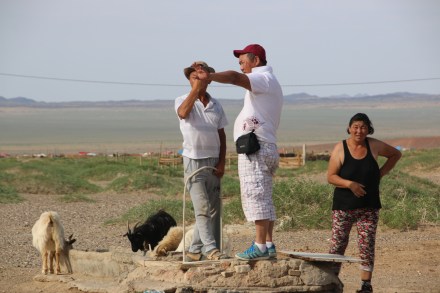
It is unclear where this cave is, so our magnificent team of drivers stop at a group of gers and ask a herdsman, who is watering his goats from a well. A lot of gesturing and pointing takes place and that’s where it all starts to go wrong.
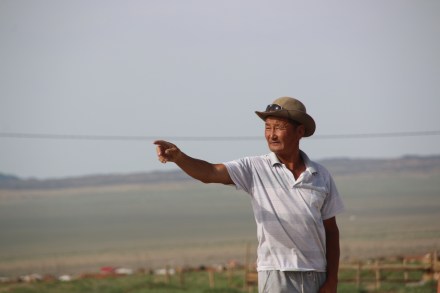
Our convoy becomes divided. Two vehicles, including mine, head off to the left following a set of energy wires towards the mountains in the distance. 
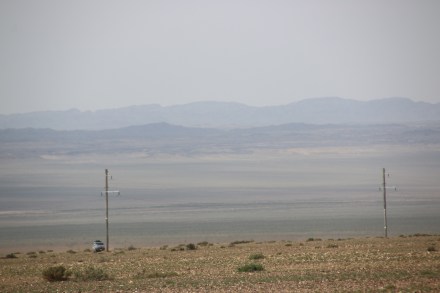
I call this part of the journey the Rally Cross Fun Fair. We are going across the landscape and crossing all the dry streams and water courses that would be torrents when the shows melt in the hills. So, every few meters there is a steep gulley, river bed, rut, dip, mound, wadi which has to be traversed with a similar technique – brake at top, descend sharply, hit bottom with a shake, rattle, roll, fling up to roof, grind up the other side with a churning of tyres, hit the top and dump over ready for the next one. It is just like a fun fair. I’ve named some of the rides – The Rough Track Helter Skelter, The Brocking 4×4 Bronco, The Gravel Slide Waltser, The Rally Cross Spider, The Dried Watercourse Roller Coaster. At one point vehicle number 2 gets pinned in the bottom of a gully with its back wheels clean off the ground.

We reach the mountains, which up close resemble even more the teeth in a crocodile’s jaw. We drive along the face for 30 minutes, rollercoasting the scree fans, eventually giving up this line of approach by descending a 75° slope, spotting a lad on a motorbike. When asked, he points. Oh no, not the dreaded pointing arm. 
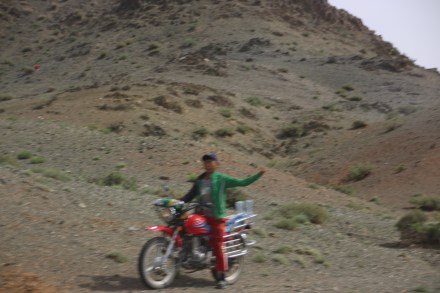
The two vehicles, feeling cocky, chase off into the crocs teeth, following a dried river course up into the hills taking the wrong choise at any diversion of a line of wheel tracks in the gravel. We find ourselves up in some high grasslands but, judging by the more frequent stops and the more frantic conversations between our drivers, utterly lost. It is beautiful though. Not helpful. There follows half an hour of animated chat and lots of pointing. ‘Call the other vans on mobile’…….’no reception’. ‘Use your satellite phone’……’only got one so they can’t receive the call’. ‘Sat Nav’ is very similar in Mongolian.

There follows 15 minutes of searching through bags for the day nav and leads. Our drivers then pile into one van and screw up their faces as they study the screen. At this point the passengers were outside keeping themselves amused. We play I Spy (that did not take long), I went to a Mongolian Market. We made up jokes – There were 4 Brits, 2 Irish & 3 Mongolians lost in the desert….. Imagine our surprise when their vehicle moved around in 90° sectors obviously trying to find their position. Hmmmmm. I suspect the screen showed no roads or building and was just……..green.
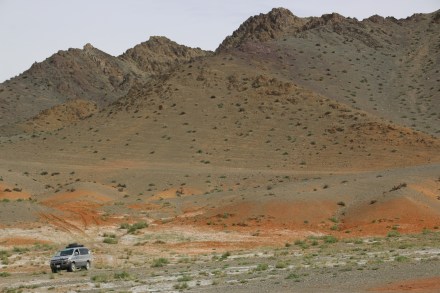
Ok. Some thinking required. Let’s go back and find someone to ask the way!!!!!!! This sounds a good idea. Except, this is the middle of the Gobi. There is no sign of a dwelling, a vehicle, a person. Look, a herd of goats in the distance. Up and over hillsides, scatter the herd, no herdsman. There he is, over on that hillside. Up and over hillsides. Yayyyy. ‘Cave?’. More pointing. Oh no.
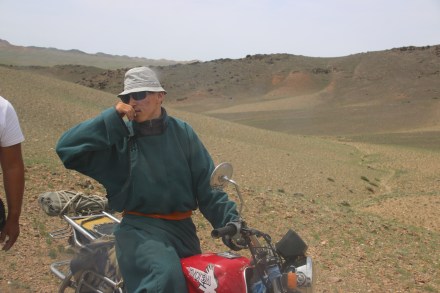
 

But, despite misgivings, after another 40 minutes of up and over hillsides, there in the distance, tiny, are two parked vehicles alongside a tiny orange roofed shelter.
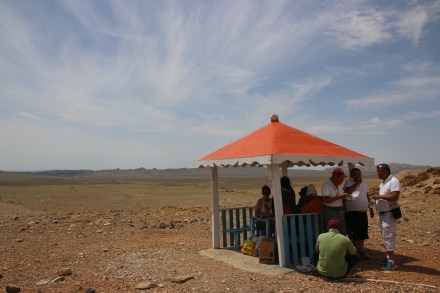
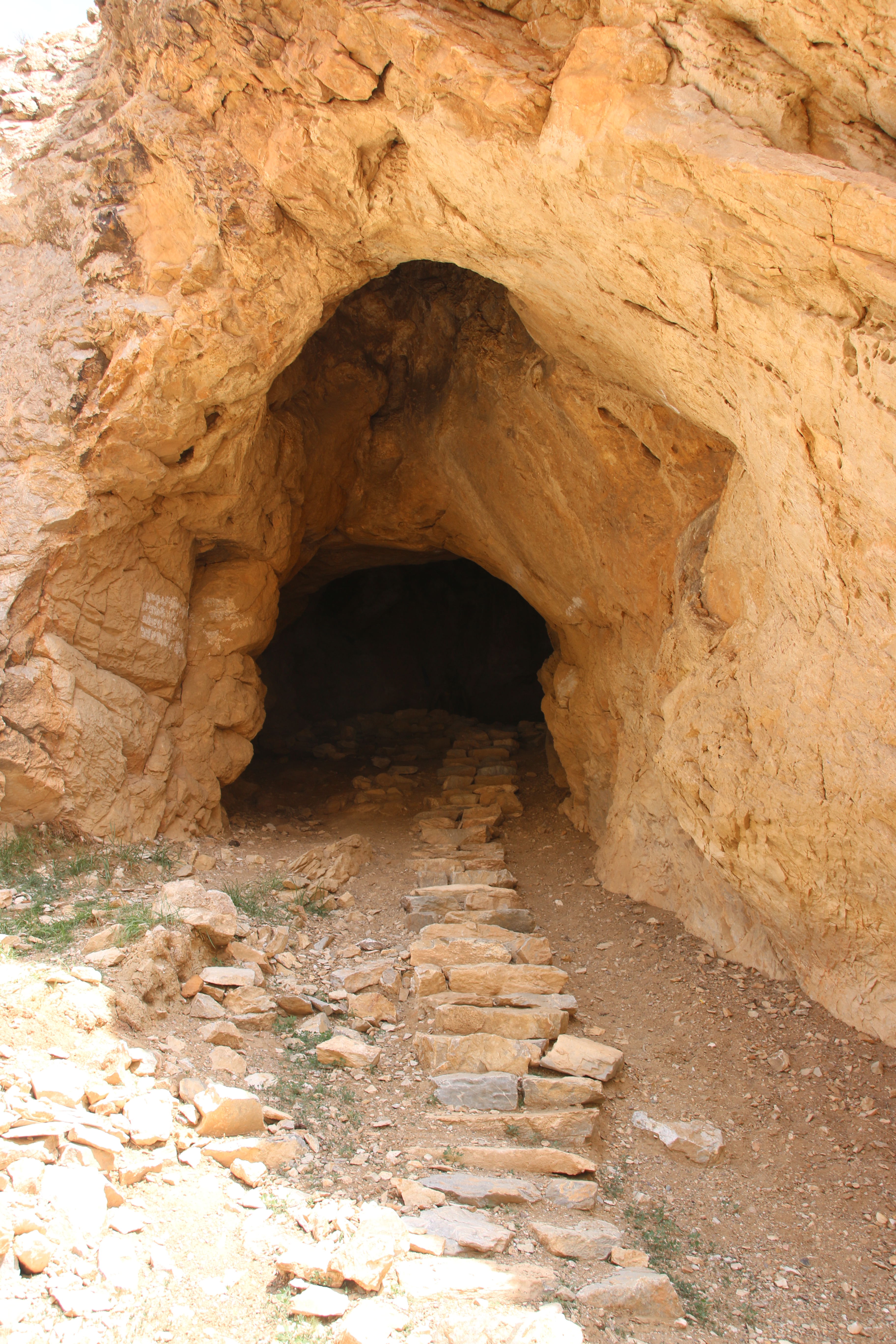
That is what we’ve been looking for two hours. It marks the entrance to the cave.

Lost and found in the Gobi. How many people on this planet can claim bragging rights to that? Quite a few, it seems. It happened on four more occasions before we arrived at our overnight ger camp.. ‘Good game. Play it at home’.

Shankh chantings and airag

Today I really get the feel for life in this unique country. Firstly, I continue the drive across empty grasslands using tarmac roads and then dirt tracks and then off roading completely. The speed is constant whichever surface we traveled over – an even 60mph, swirling and curling to avoid the potholes on each of them. We are heading for a small town called Arvaikheer.

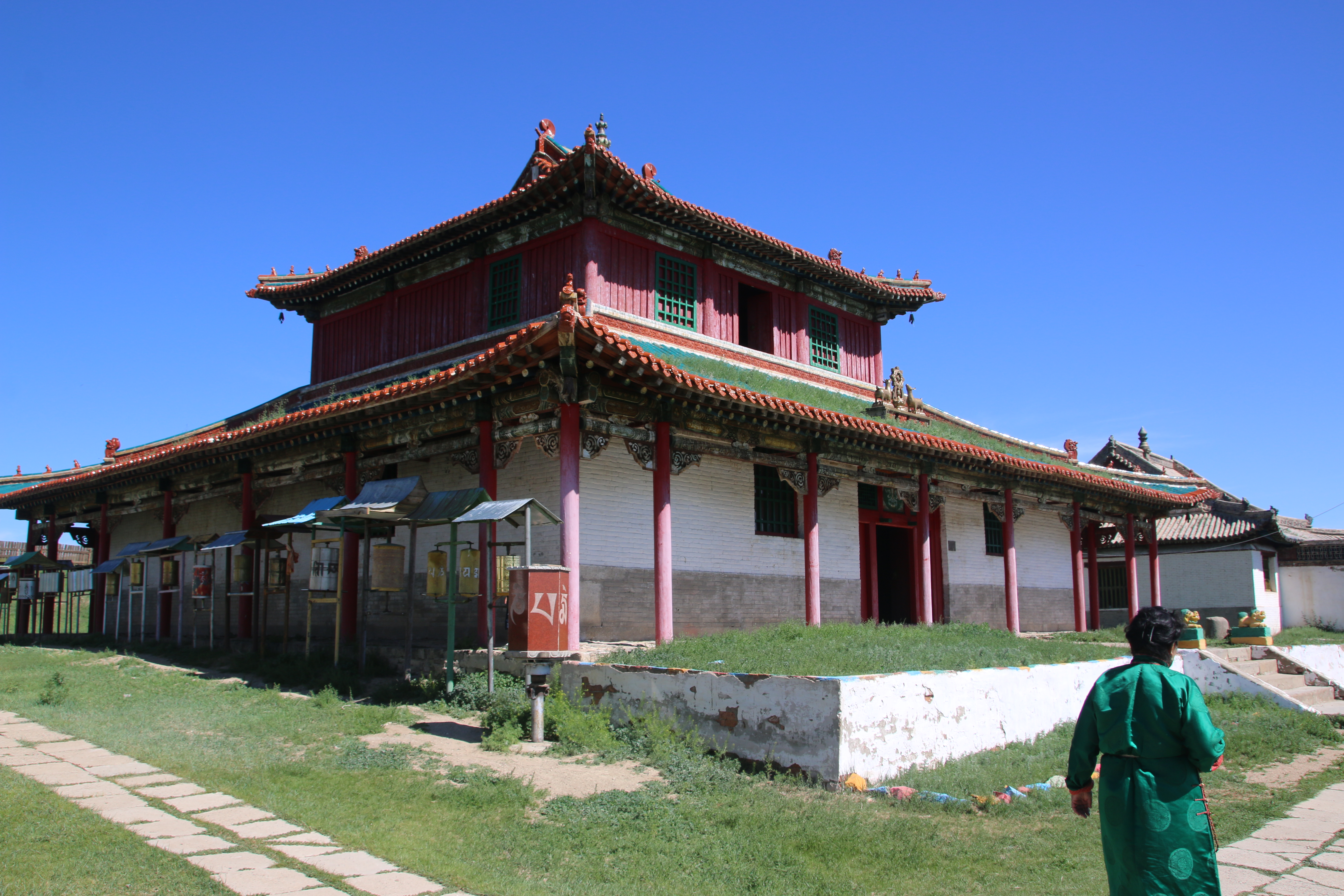
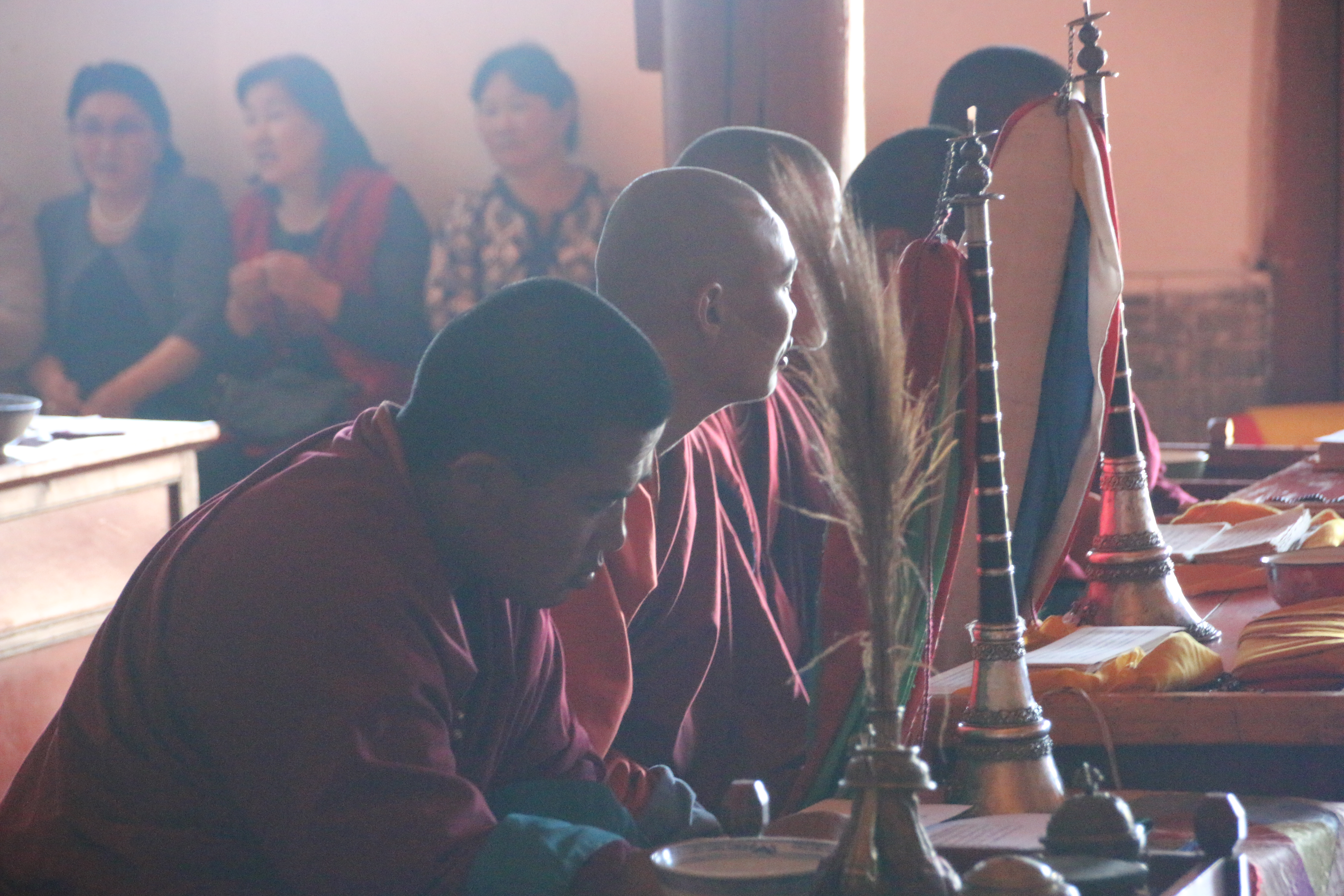
The stop at Shankh Monastery is truly magnificent. It seems today is a particularly auspicious day and the monks have begun their two hours of chanting sacred prayers, joined by the local villagers. A large bowl of airag awaits visitors and monks alike. One of the locals encourages us to try it out to the great amusement of some of the ladies.This is fermented mares’ milk. It tastes of light, cheesey yogurt with a strong alcoholic kick. After 4 or 5, the harmonies sound great and the climaxes of clashing symbols, two tone horns and wailing clarinet thingies, mixed with some smoke and incense, sets a spiritual atmosphere.

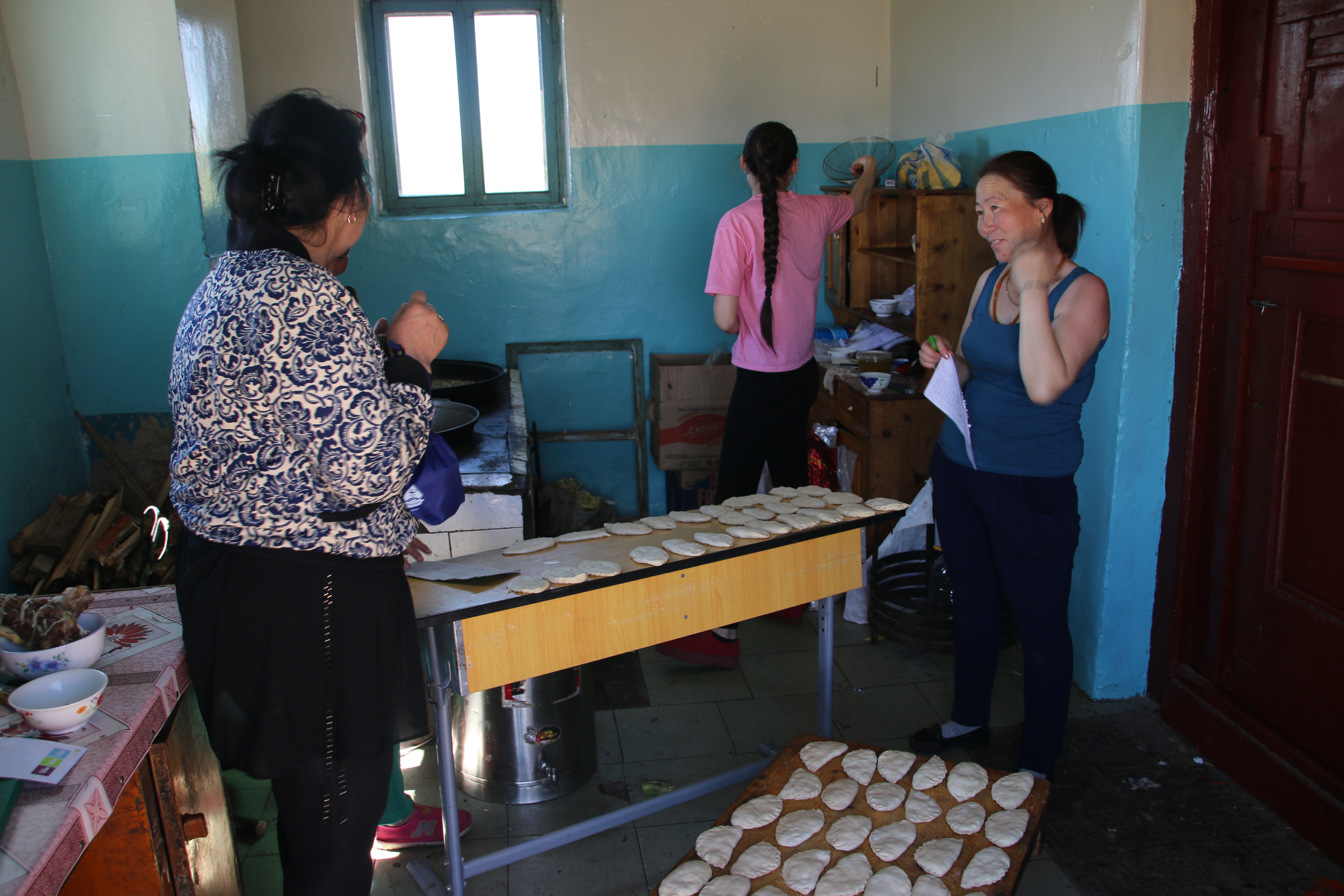
Outside the old men have had enough and are sitting around in the shade. The women are busy cooking little pasty things for the monks when they finish. At first, both groups are very shy. Eventually they relent.

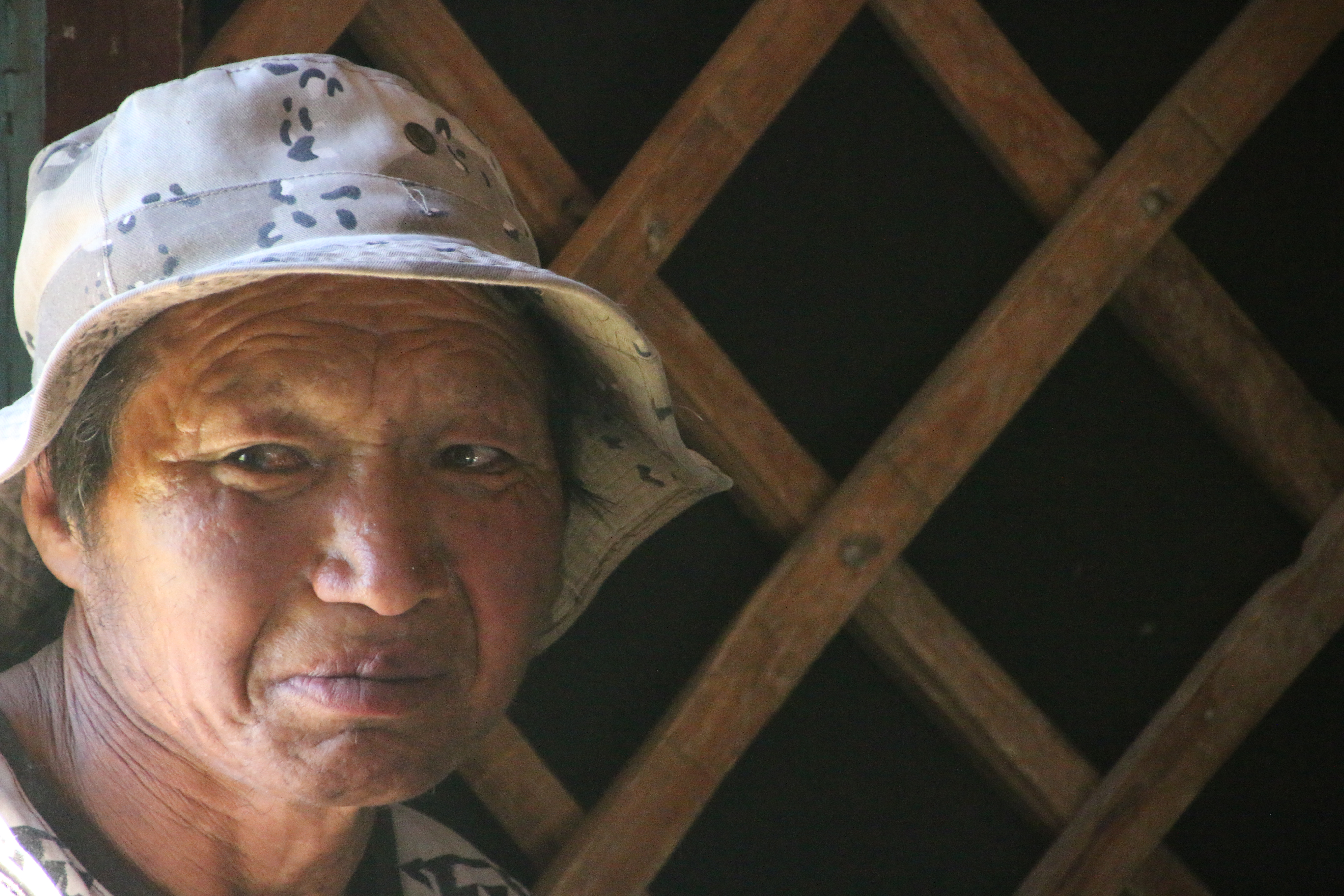
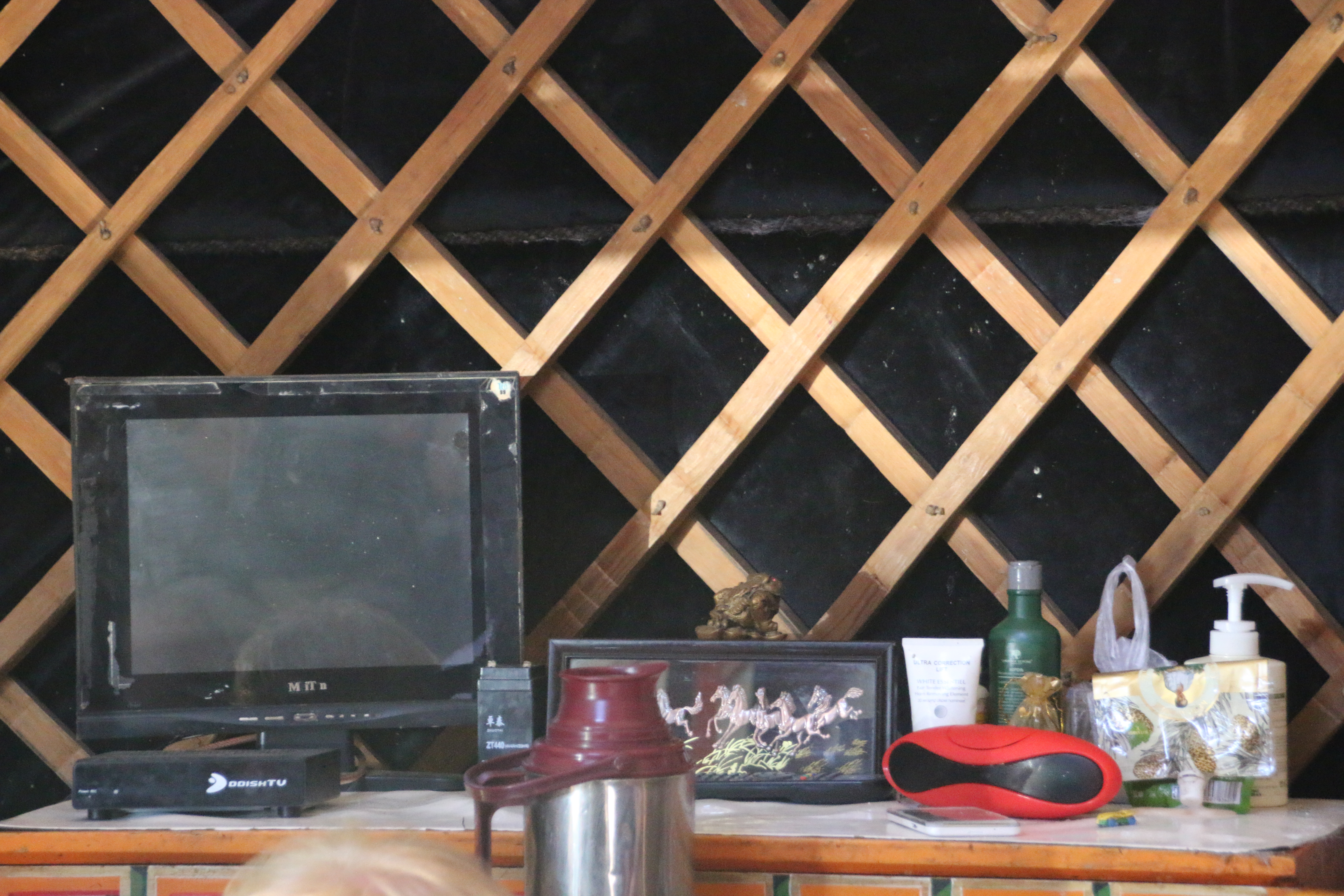
Further up the valley we literally drop in to visit a nomadic family completely unannounced. Their culture dictates that all visitors are made welcome. Dad has set up his gers here for the summer. He has cattle, horses and yaks. He lives in three gers with one of his daughters and her two daughters and one son. We are invited in and we sample her yak curd (tangy cheese) and butters and cheeses from the mares that she milks every two hours. A large, plastic tub of airag stands in the corner waiting to be agitated. In the winter, from September to May, when snow covers the ground, they will move, with the other families, to find somewhere more sheltered and bunker down for 9 months. A really tough life.


Steppe-ing out onto the Mongolian steppes

Now this is delicious.. This is what I thought Mongolia might be like – miles around miles and miles of open grassland and rolling hills disturbed by absolutely nothing. Not a tree in sight, not a fence, not a wall, not a building nor a barn. Only the shadows of passing clouds corrupts the greenness but only by placing irregular patterns of darker shades on the troughs and folds and dips and rises of this expanding landscape.

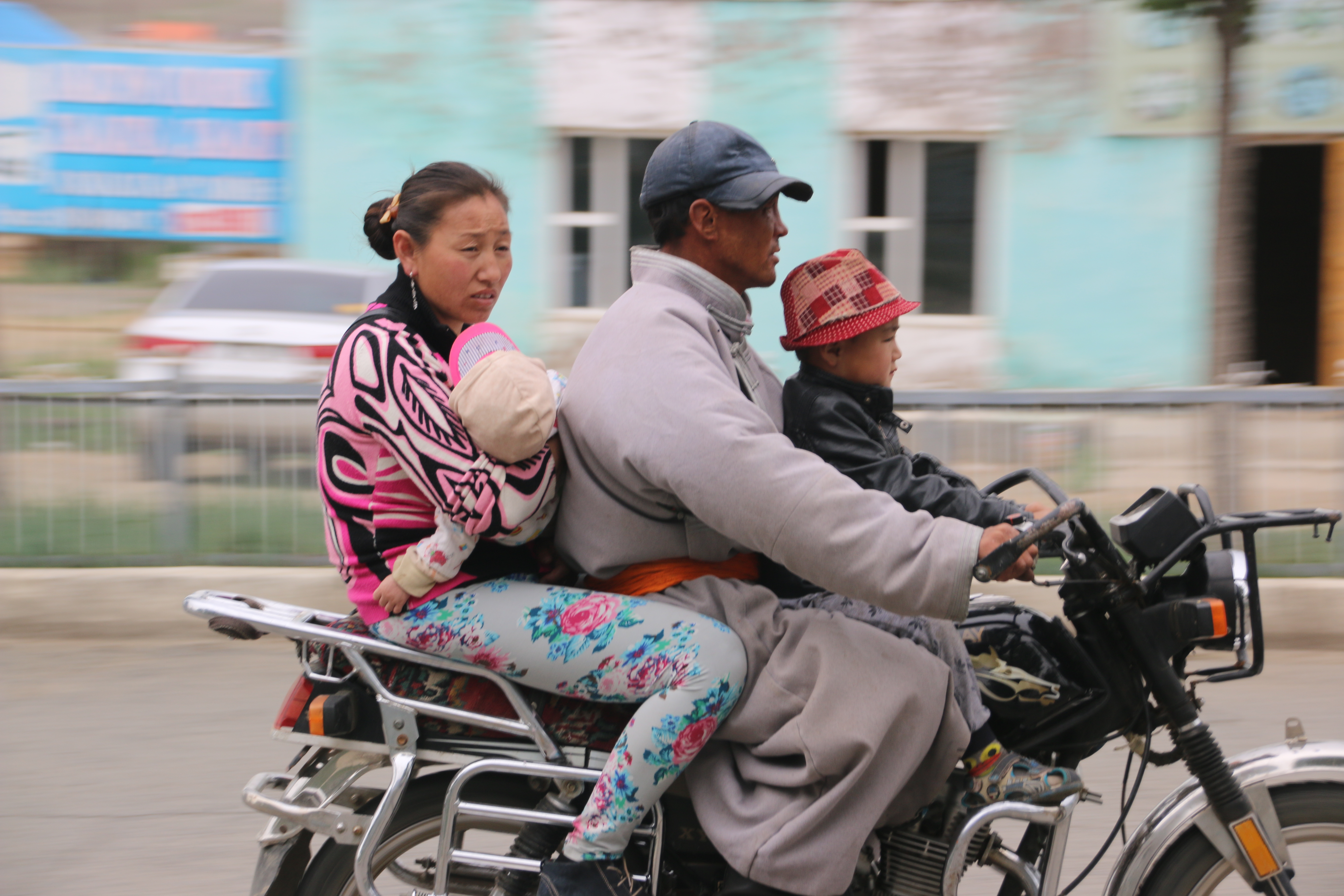
Largish, grazing herds of sheep or goats or cattle wander contentedly yet arbitrarily,  mostly unaccompanied, although occasionally pushed along by a single herdsman on horseback or even a motorbike. I saw a pair with the woman on the back shaking a rattle made out of a large beer bottle with some stones inside. These herds criss-cross the steppes like moves on a chess board, the purpose of their journey only clear in their own minds.

Rogue groups of more lively horses and ponies canter about showing off to anyone watching until the midday sun quietens them down and they settle into groups, nestling close together to provide shade for each other. The odd collection of yaks or camels look imperious on the side of the road, waiting to be loaded up with goods or tourists to earn their men a keep. They frown or groan or chomp or even spit if their slumber is disturbed in any way.

Karokorum was the 13th century capital of the Mongol Empire. Built up with palaces and temples by Ogedei, the third son of Genghis Khan, it remained the centre until Khublai Khan established Bejing as a new centre of the Yung dynasty. Erdene Zuu (Hundred Treasures) Monastery was the largest in Mongolia and built in 1586 on the ruins of the ancient capital.

And the usual tat alley outside.


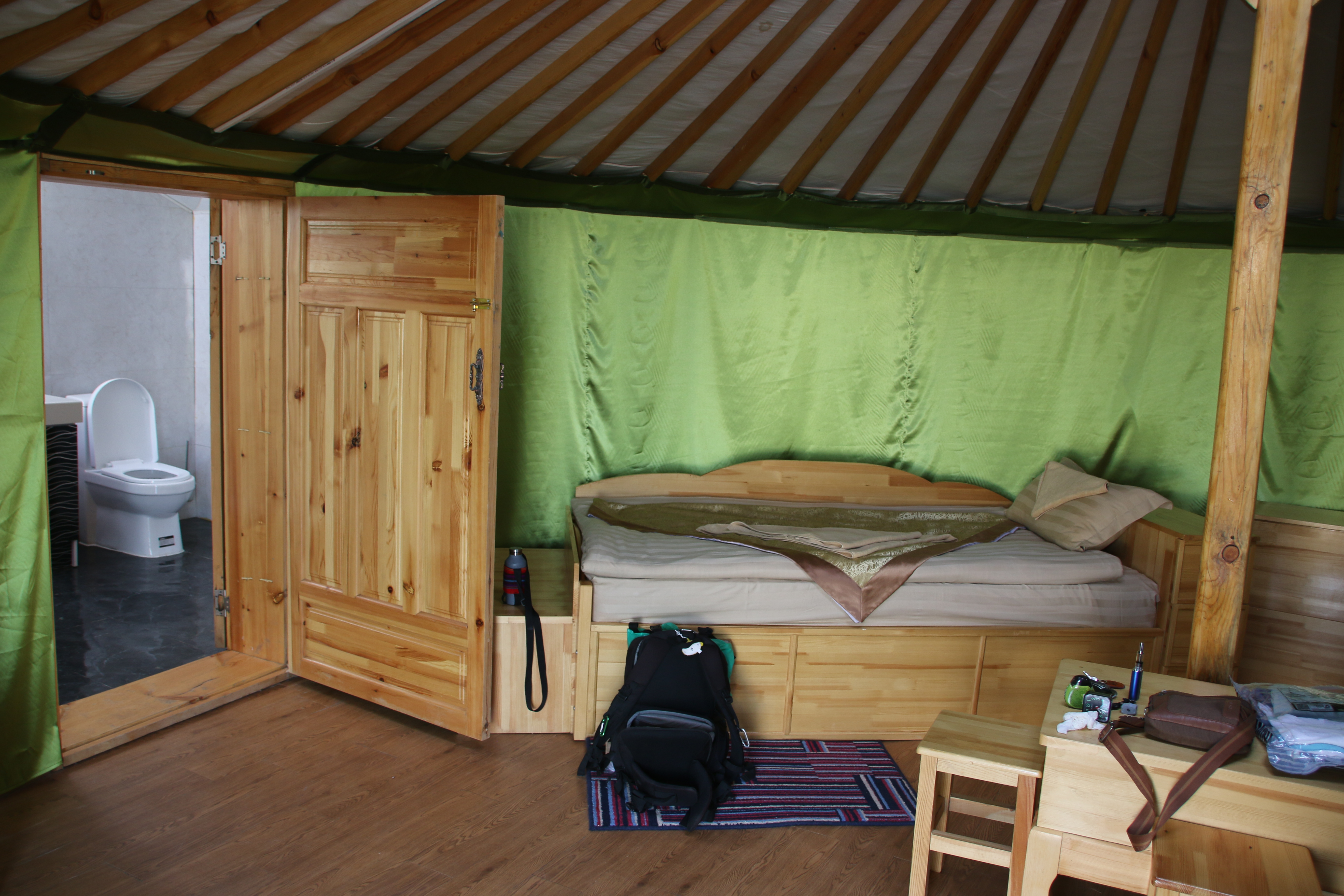
First night in a ger camp

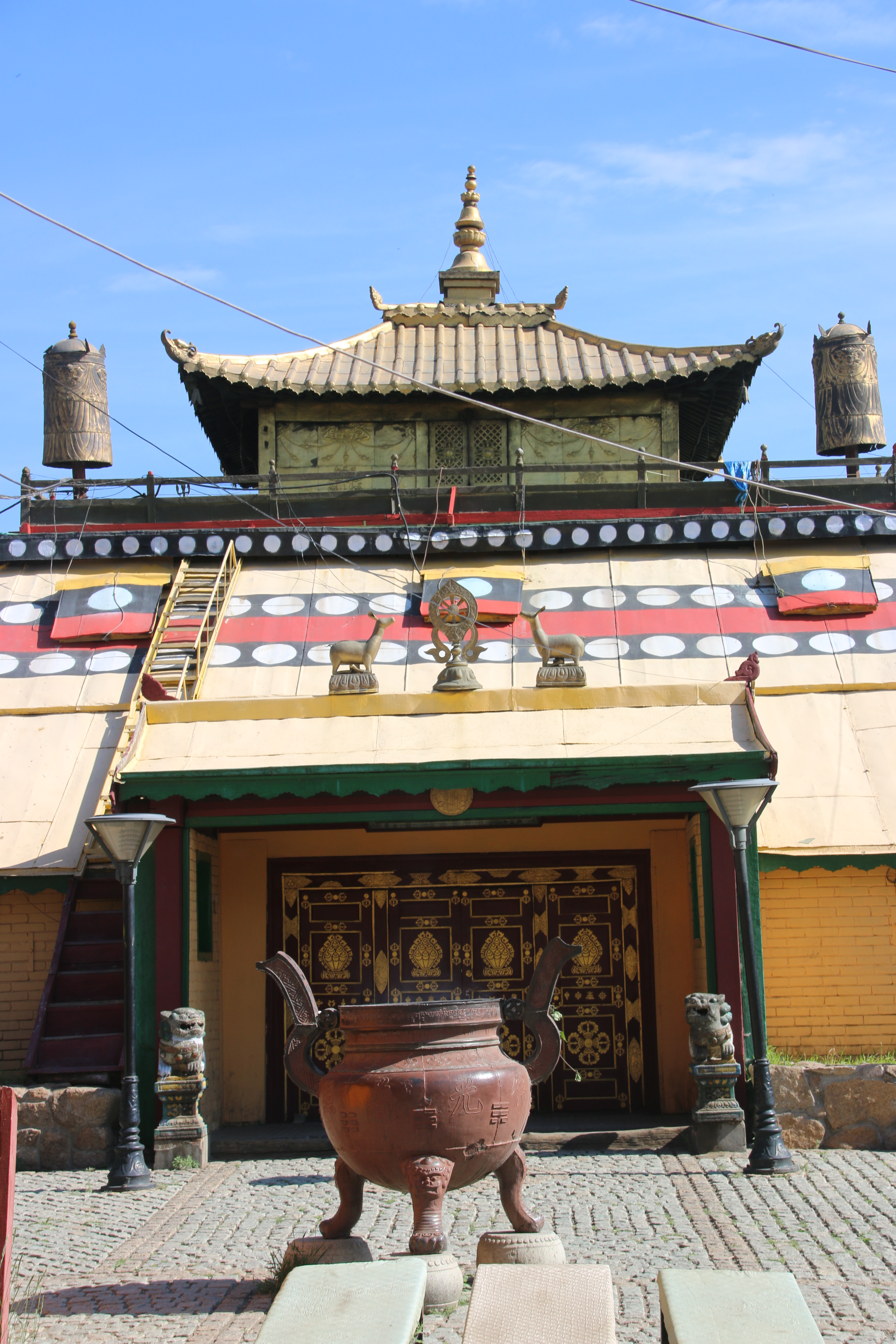
We followed the main road out of Ulaanbaatar, on the way dropping into Gandan monastery, the largest functioning lamasery in Mongolia and the seat of Buddhist studies. 70% Mongols are Buddhist.

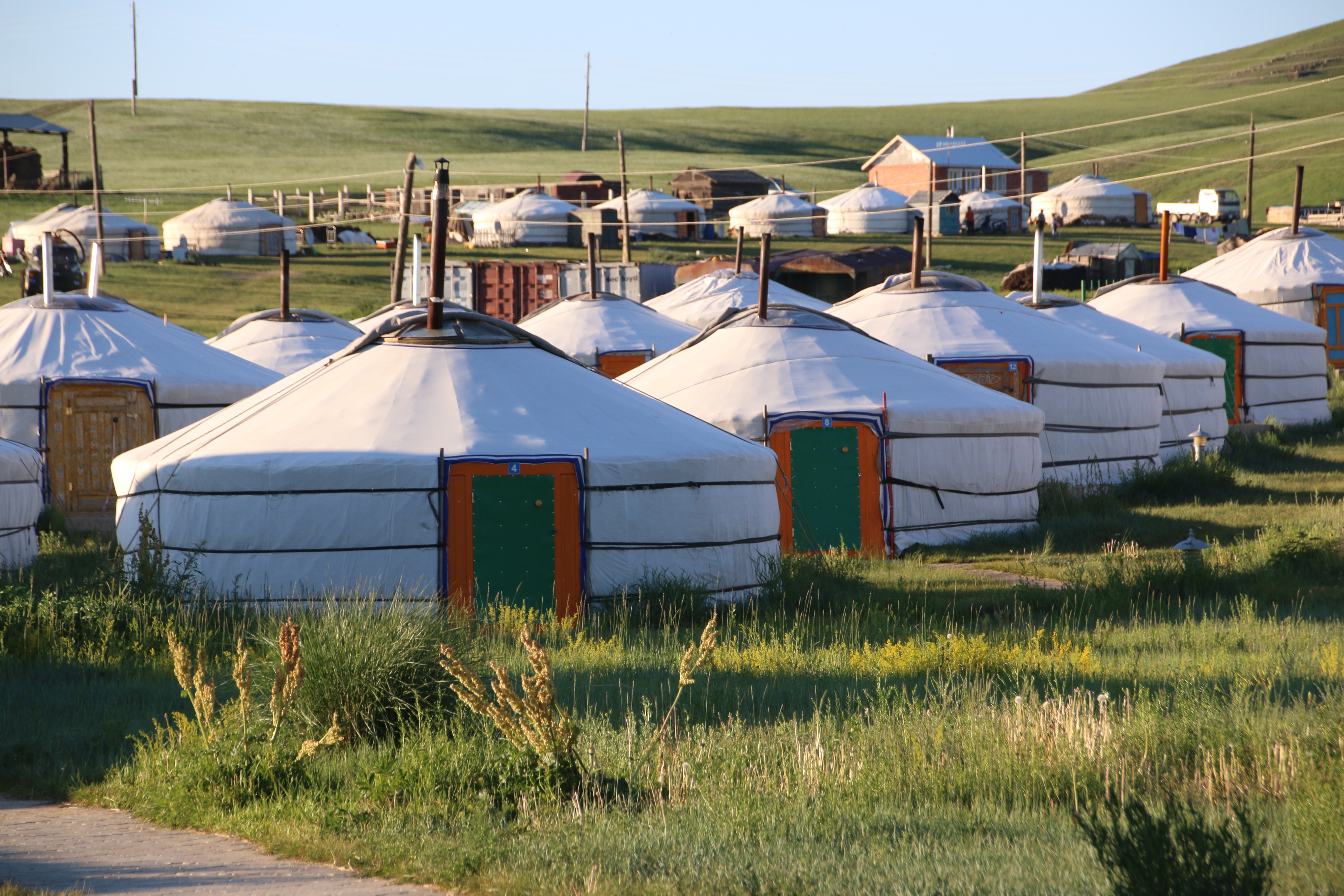
Gradually the commercial and industrial areas peter out and the grasslands begin to show. The emptiness starts to stretch away from us on all sides. The road rulers straight ahead to the horizon on the gently undulating folds of a puckered up table cloth. Every few miles, off on one side or the other, a collection of low, squat circles or peaked painted rooves indicates a settlement of some kind, with horses stirring up the dust. Then we turn off onto a gravel track and head inland towards the ger camp and away from the road and humanity. The drivers take no hostages. Foot down, they charge through the scenery until we stop at the top of a small range of hills. Wowsa. Look at this. Just empty.

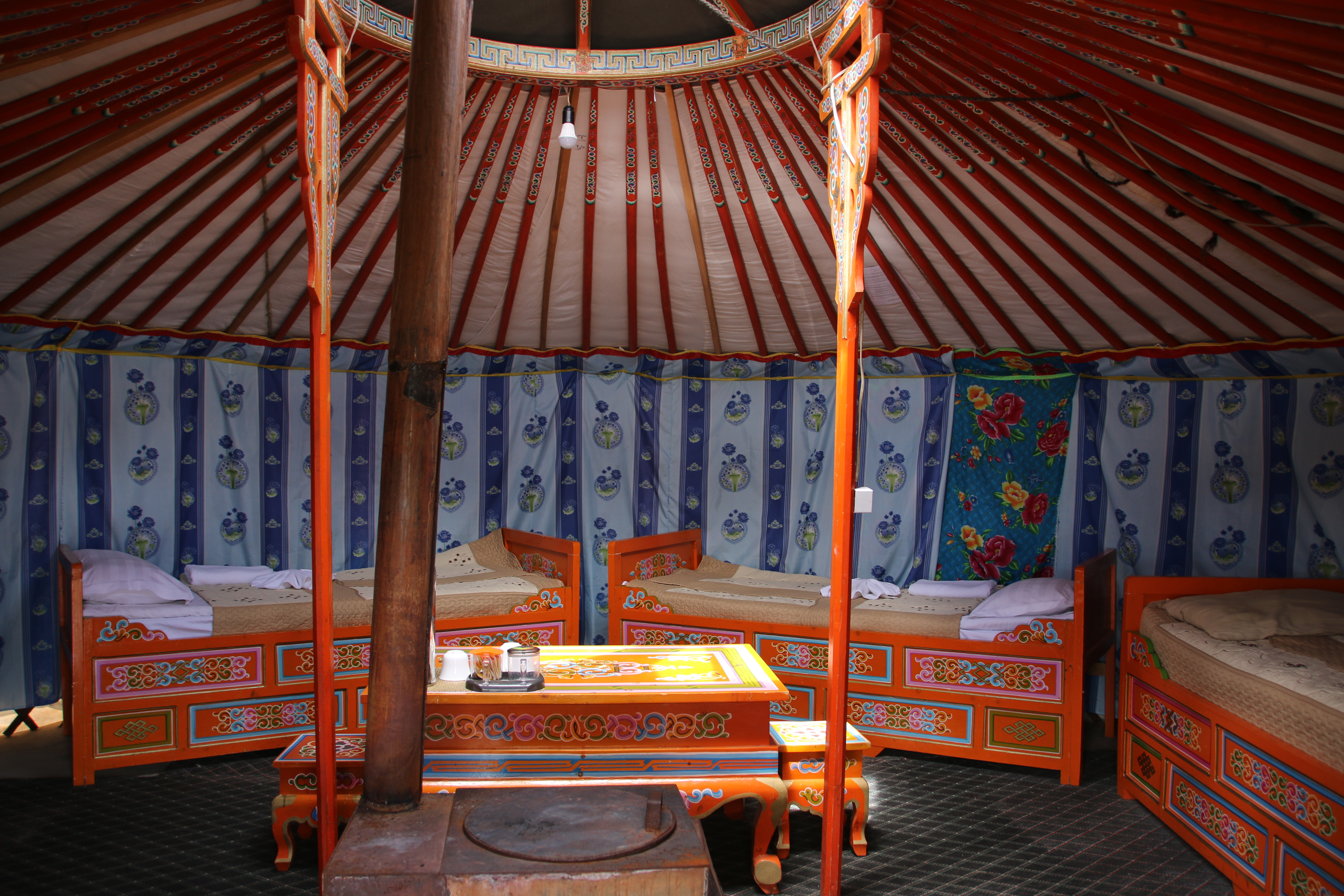
I am now, sitting outside my beautifully constructed ger. It is like a little felt house for three equal sized bears. Its lattice walls and painted timber rafters can be put up in a few hours. It has four little painted beds, a low table painted preamble with swirls & curls, with 4 little painted stools  around it. It just needs Goldie Locks to make the party complete.

These Mongols must have been small. I have already scraped or banged the top of my head on numerous occasions. The best was when I was putting on my Tshirt as I was leaving the ger. I hit the flat of my forehead on the top of the frame with such force that I dislodged two of the rafters which clattered to the ground past my shoulders. Didn’t hurt at all. Sounded good though.

The afternoon is spent searching for the Przewalski wild horses. I am sure that you all know that this is an unique species of horse that nearly became extinct but now over 300 survive on the Mongolian steppes. It is a bit like whale watching in the Indian Ocean. Instead of boats chugging about to get the first sighting, 4x4s charge along the dirt tracks, stopping, offloading their passengers, pointing at rocks that may or may not move. They are eventually seen cantering down to the grass by a small stream, where they stop and pose for photos from an appreciative audience. That’s them, the famous horses in the far group. 

The next day the real stuff starts. There is a bit of a health warning here. Many of the images are taken from the inside of one of the vehicles. I have included them to try and give you a flavour of the landscape and people rather than for their photographic qualities. Having picked up provisions, the four 4×4 set off out of town on the last proper road that we’ll see for seven days. A picnic lunch of mutton dumplings (like a donna kabab in a pasty shell) and we hit the dirt track. At this point the steppes are green and luscious. Gers dot the landscape and herds of cattle, sheep and horses wander and graze contentedly. All is at peace with the world.


Gradually, almost imperceptibly, the grassland becomes tired, gers become fewer and it is a motorbike rather than a truck parked outside and the herds are less frequent, goats and camels take the place of the others. The rimming mountains push out and away until they are only a faint outline on the far horizons. A hard, flat surface hammers out as far as one can see in every direction, punctuated only by tufty grass and small, scrawny, low bushes called saxaul trees.

The dirt track has simply vanished. In its place is a fan of light parallel ruts that head of in front of the vehicles and occasionally come together and cross before heading out on their own again. The drivers hammer along these ruts at anything up to 80 kph making strategic decisions at every junction about which route to take out. I think we are heading south into the desert. The heat is intense. Only one vehicle has working air con, the rest of us sit in the hair drier breeze from open windows. The only indication that you have any human company at all are the little squirts of dust far ahead or far behind from the other vehicles. Oh, just in case you wanted to know where you were, we pass two sign posts in the course of the day! Do you like this one?


A day in Ulaanbaatar, the capital of Mongolia

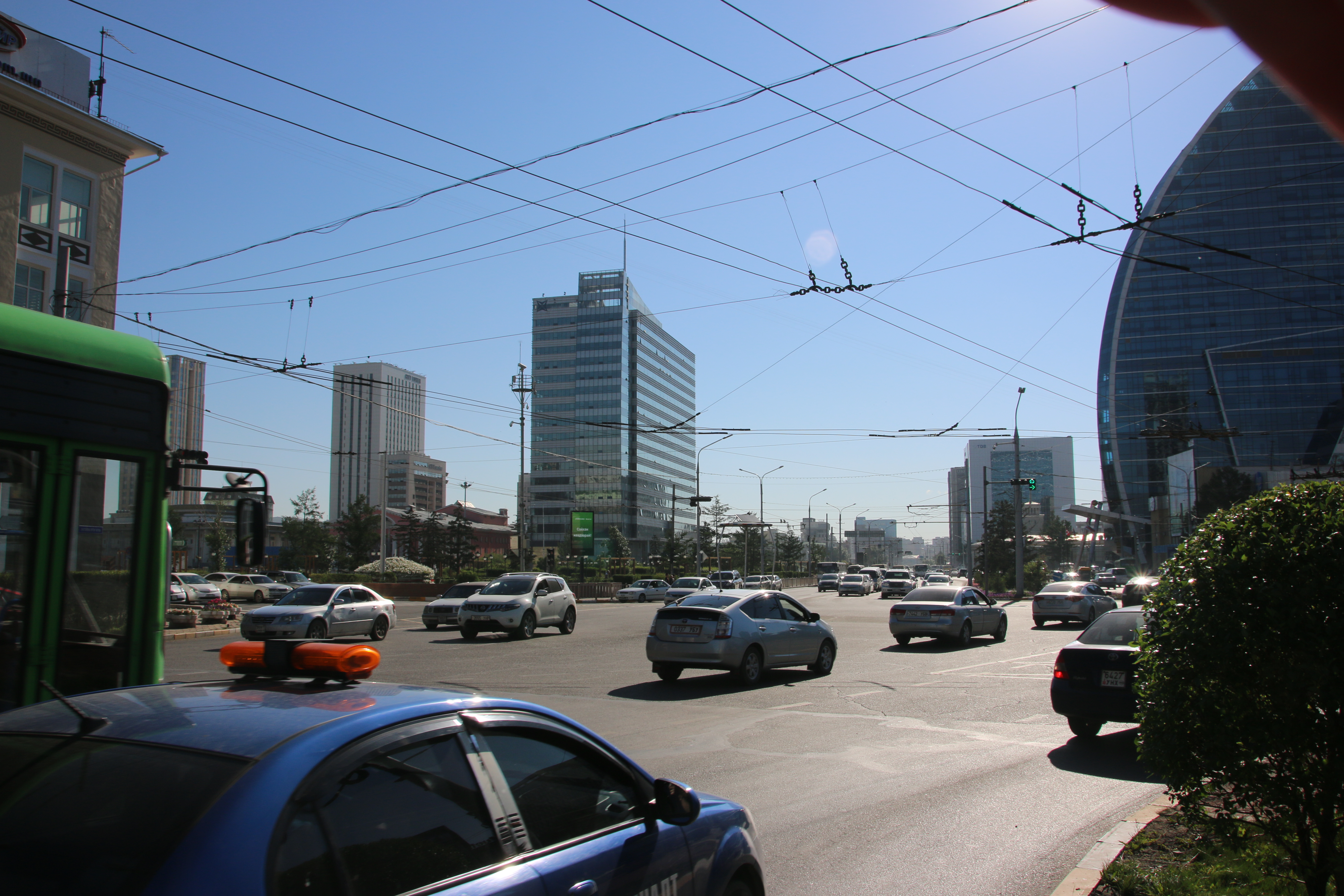
The train drew into the station at 7 o’clock which gave me a day to explore Ulaanbaatar. 3 million people live in Mongolia and half of them live here. I was surprised that this country is so different from its Russian neighbors. Gone are the stern Caucasian faces, replaced by Mongolian features that are much more ready to break into a smile or give a warmer welcome.

Gone are the battered Ladas and trucks of southern Siberia, replaced by shiney Japanese motors. Gone are the grey suits and Baboshka scarves, replaced by Western T shirts & colour & style.

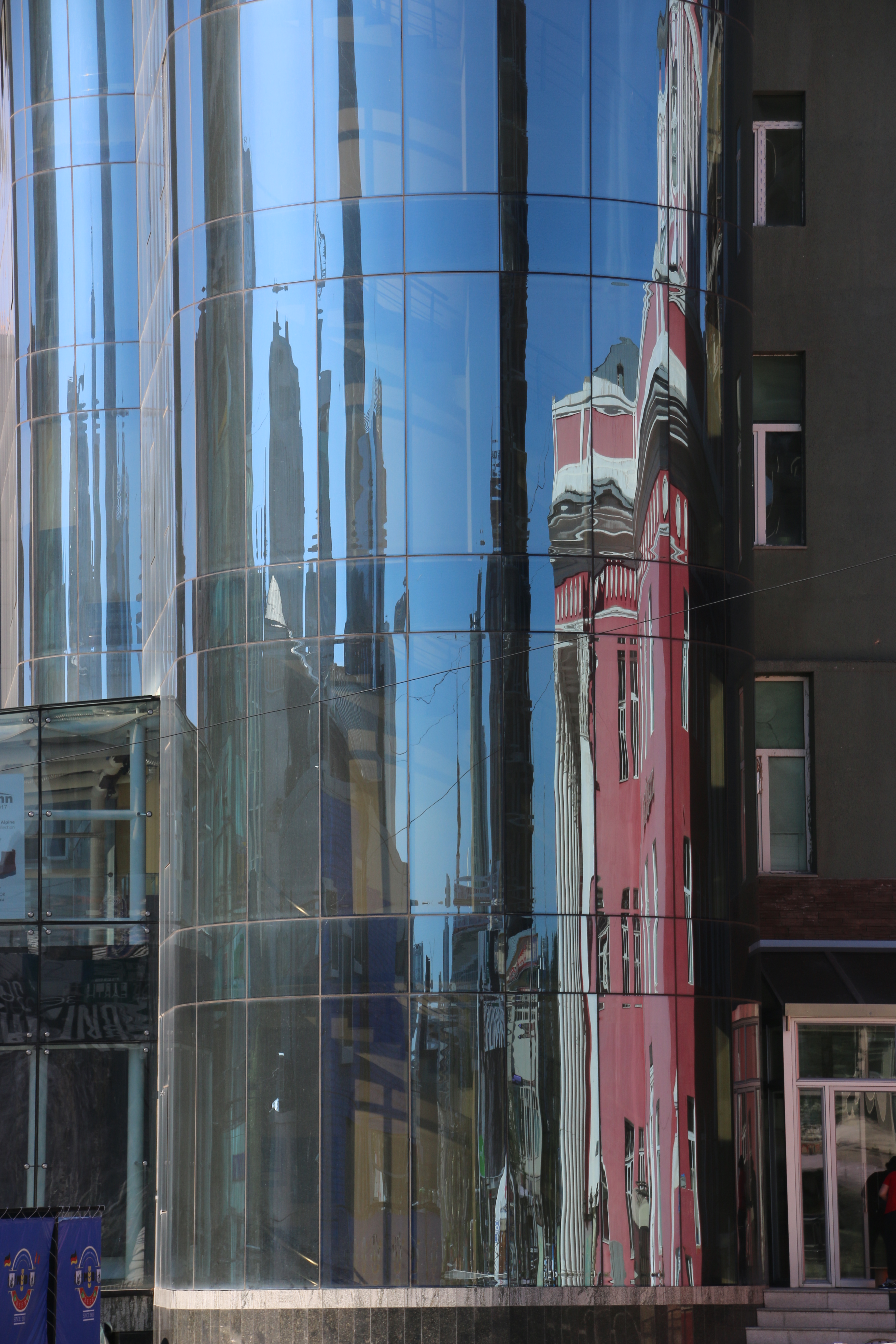
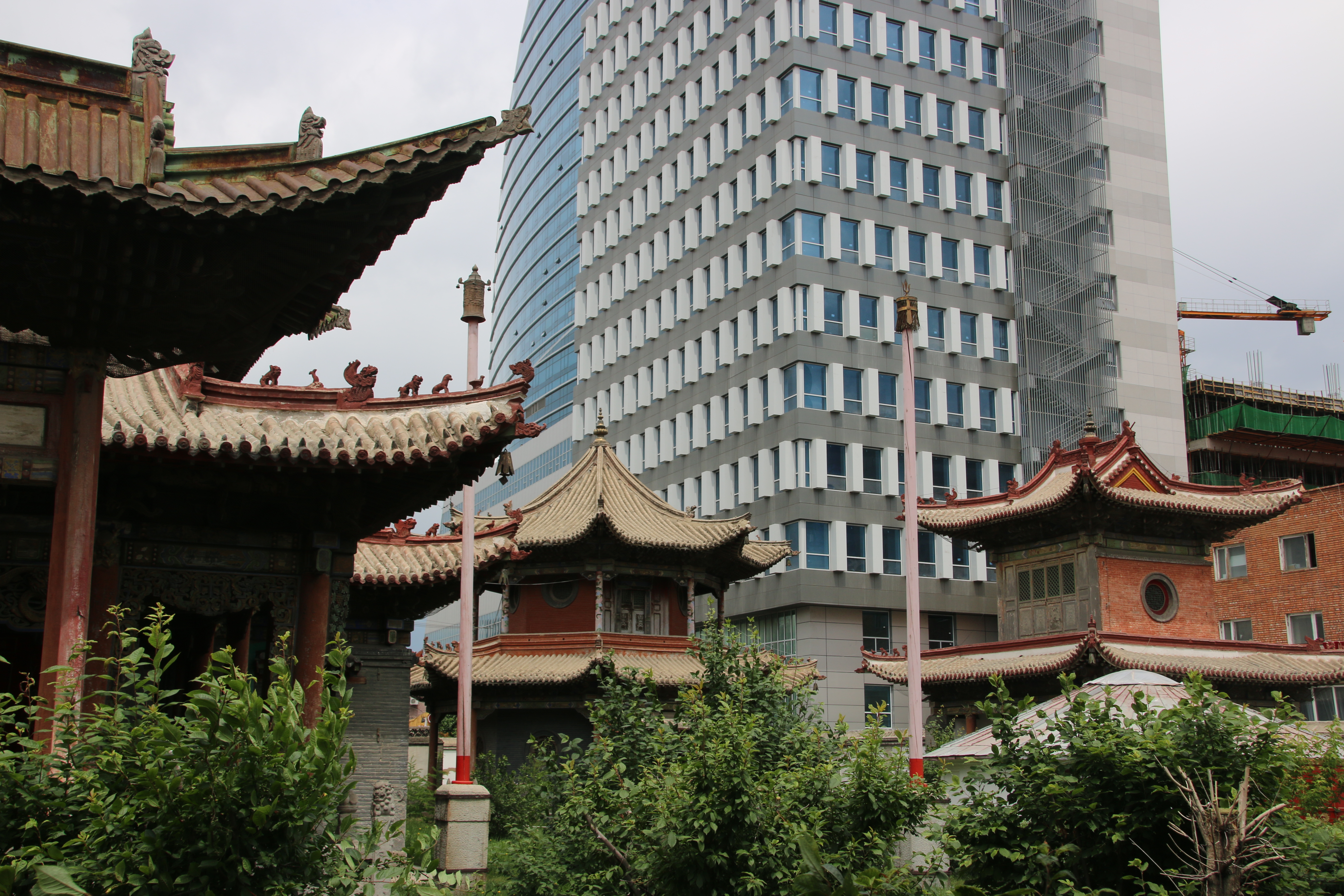
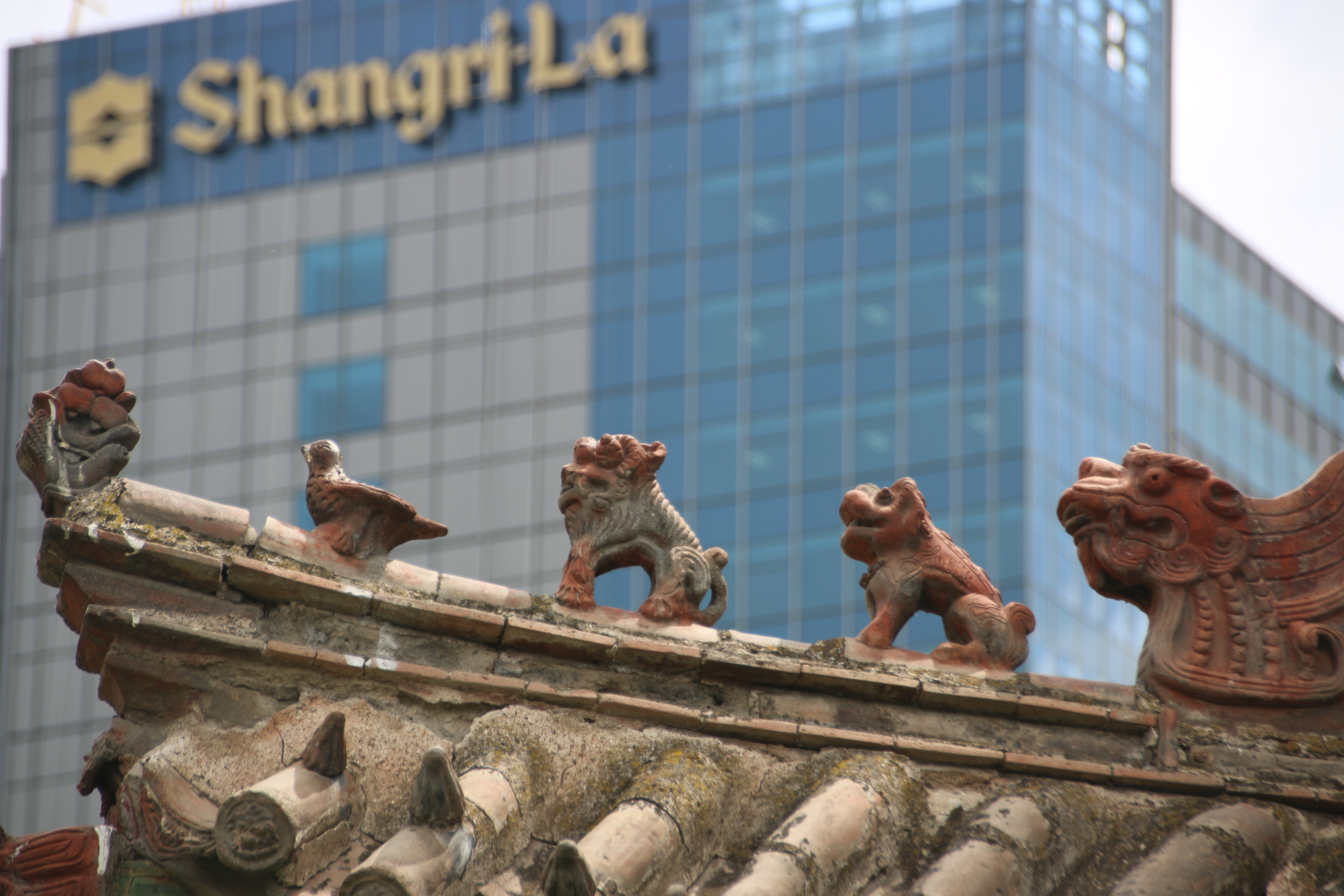
Ancient Buddhist temples rub their faded shoulders with glassed giants of offices and new apartment blocks.

I hope these images have given you a flavour of this busy, seemingly affluent, busy city. Mongolia’s economy is based on mining and exporting minerals, especially copper and gold to its two neighbors Russia and China. Agriculture is just as important with the processing and exporting of products from cows, horses & sheep.

Tomorrow I am out to the Gobi desert for eight days. I will be staying in ger camps. Those low, round huts constructed from a framework of wooden poles covered in skins or felt. I am told there will be generators to charge phones but only one camp has Wi-Fi. So, sorry guys, it’s more of those days of famine followed by a day of plenty. At least, because I’m traveling in a 4×4, I’ll be limited in what I can write each day. So, once again……..see you when I see you.

And then there was One

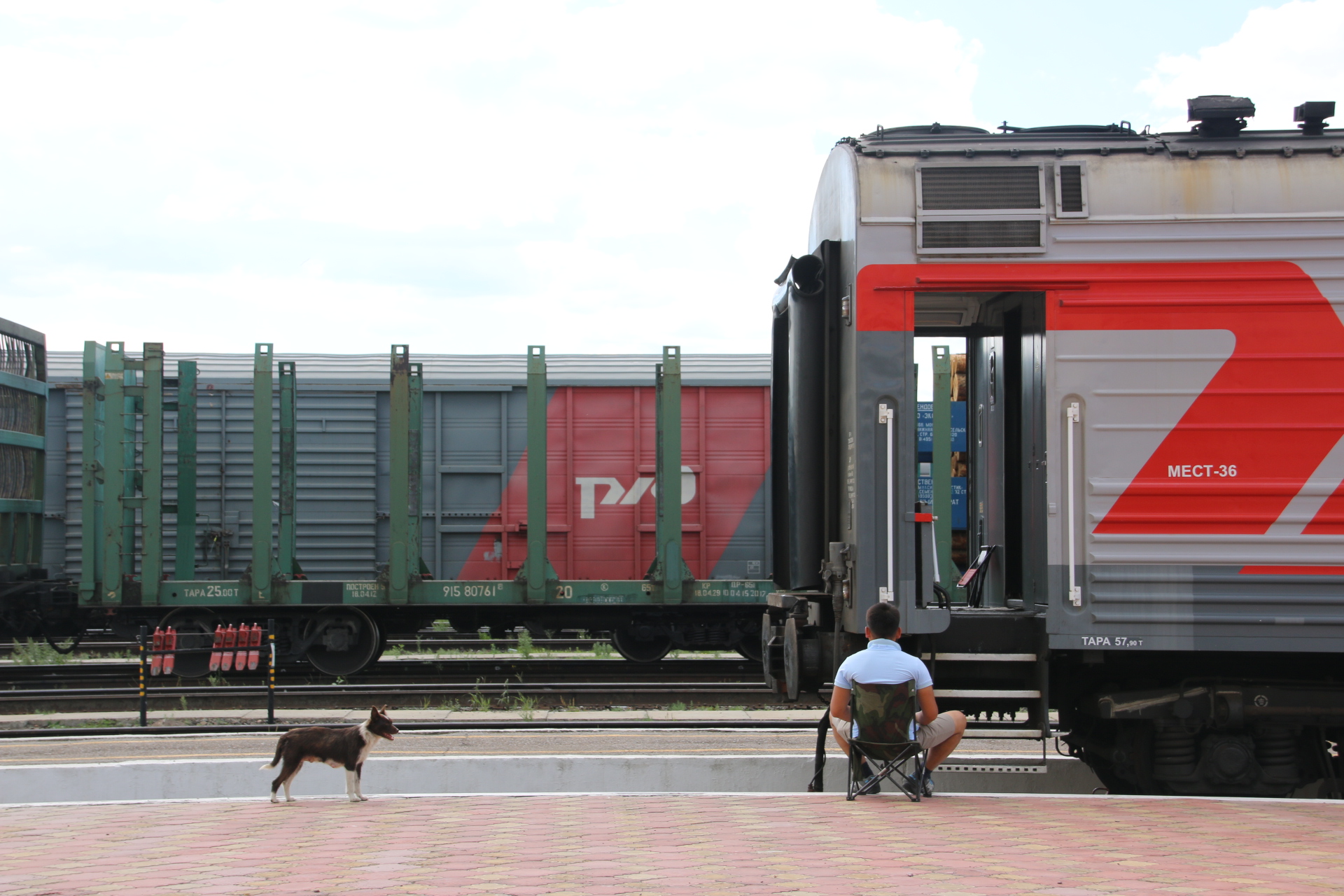
The last leg. The train trickles south west from Irkutsk over the Siberian steppes to the Mongolian border.

During the night, through a mist of sleep and semi consciousness, strange things begin to happen. In the darkness, the train starts to hum and then breaks out into 3 parts like a Rock Choir warm up without the lyrics. The resonance of the wheels on the rails produces humming harmonies in time  to the rhythm of the bogies (a railway term for the pairs of wheels at each end of each carriage and responsible for that clickerty clack sound, I hasten to add). If only the train could get some lyrics it could put on a summer concert all on its own or accompany a church service. Beautiful.

Mysterious energies are at work. I get off at the first stopover. 7 of the 11 original carriages have disappeared. My carriage is now the last one. Behind us is nothing, empty, just tracks leading back to the far horizon. Sometime during the night a ghoul has diverted them to a different destination and devilled them away into this new landscape.

wp-1467266917004.jpg

This is southern Siberia. Gone are the continuous flashing streaks of silver birch and pine. Gone are the large industrial oases in the flat desert of wood and forest. Gone are the acres of timber yards & marshalling sheds and the huge rivers and glimpses, through the strobing trunks, of far off horizons. Here it is open land rolling away on either side in undulating patterns of scruffy grass and dirt roads. Rolling hills line our route in humps and bumps and soft boobs and bellies, the shadows of cotton wool clouds marked out on their multitude of faces to wrap the landscape in a patchwork of greens.

Winding, wriggling rivers dissect the land. A group of horses patter & paw & shuffle around in a small dust bath, showing their enjoyment with swirling tails and rubbing necks. Low, single storied houses, built in wood with corrugated asbestos rooves, painted in green or purple, to give the weathered, timber houses a unique character, cluster around platforms in towns and villages throughout this rolling, open scenery. It is immediately obvious that the one thing these settlements all lack is any sign of mechanised transport – no cars, no lorries, no bicycles even. How do they get around between villages and towns? Where are the shops? What do they do during a long Siberian winter? (I can think of some answers to that last one)

wp-1467267064327.jpg

wp-1467267142204.jpg

wp-1467267193180.jpg

So the border approaches. The train stops. Documents are checked. That takes 3 minutes and then we have to stopover in this one horse border town for over 4 hours. So up the road to find a bar amongst the wooden dwellings.

wp-1467267987215.jpg

wp-1467268331060.jpg

Back to the station and onto the platform. The ghoul has struck again. 3 carriages have disappeared. Even the locomotive has abandoned the single carriage that stands all alone on platform 1 with several rather anxious passengers waiting outside its locked doors.

wp-1467268221645.jpg

After an hour or so, a reversing engine appears, locks itself like a guppy onto our carriage and, with a spring in its wheels, drags us off and away to the border, unused to its ultra light load.

We come to a stop after 10 km and Mongolian bureaucracy takes over. This time the stop over takes 4 hours. Go into town, buy an ice cream, take photos, chat. Return to platform to find out solitary carriage again has no engine and is now hidden behind the twelve carriages of a Mongolian train. All is well though. We are shunted along, hooked up to the end  and finally chugged off to Ulaanbaatar on our first night in Mongolia. The whole process has taken over 8 hours. 

Still, I have had lots of time to reflect on my fascinating 6 day, 5,867 km journey through Russia. It’s been a bit like chalk and cheese. Moscow holds the chalk, making good, multicoloured marks with money, power & privilege. Outside, life is tough and grey, with empty pages lacking any marks or colour most of the time, especially during a long, hard winter. Maybe that is why there have not been a lot of laughs and smiles on the trip, at least not from the Russian travellers. An occasional nod or a grunt are more common place although the blank stare is most prevalent. I leave you with some images of the chalk and the cheese.

wp-1467269504375.jpg

wp-1467269271130.jpg

wp-1467268369713.jpg


Follow the Green Line into historic Irkutsk

After 5,178 km the train draws into the city of Irkutsk where a break in the journey has been planned. Yes – a night in a hotel with a bed that does not rock and roll. Yes – a proper meal and a large cold beer. Yes – a long hot shower after four nights in the same clothes with only a pack of Boots wipes to take into the cramped toilet. The shower was magnificent, the meal was glorious and the beer was out of this world. The bed was so soft. Sadly the body was on Moscow time (you did get all that stuff about the time on the railway system?) so in effect I was going to bed at 7 o’clock. Little sleep followed.

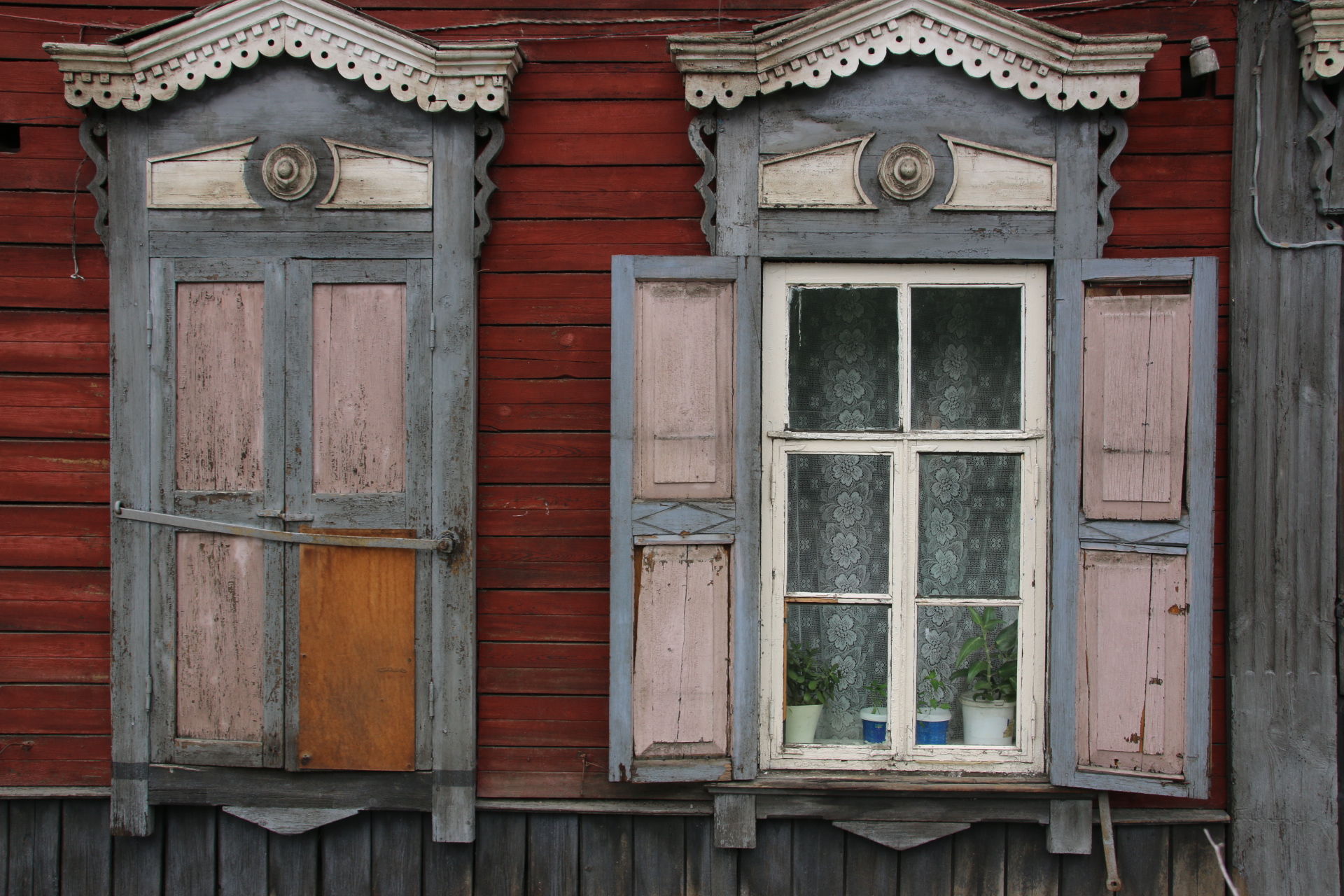
Still, a day to spend in a large Russian railway city. How best to see it? Follow the faint green line, painted on the pavement around the the historic centre. Tall apartment blocks stand out above the wide streets of weathered traditional houses all standing at rickety angles and defying gravity by just remaining upright for the inhabitants.

wp-1467112943202.jpg

wp-1467112977926.jpg

wp-1467113017143.jpgwp-1467113056262.jpg

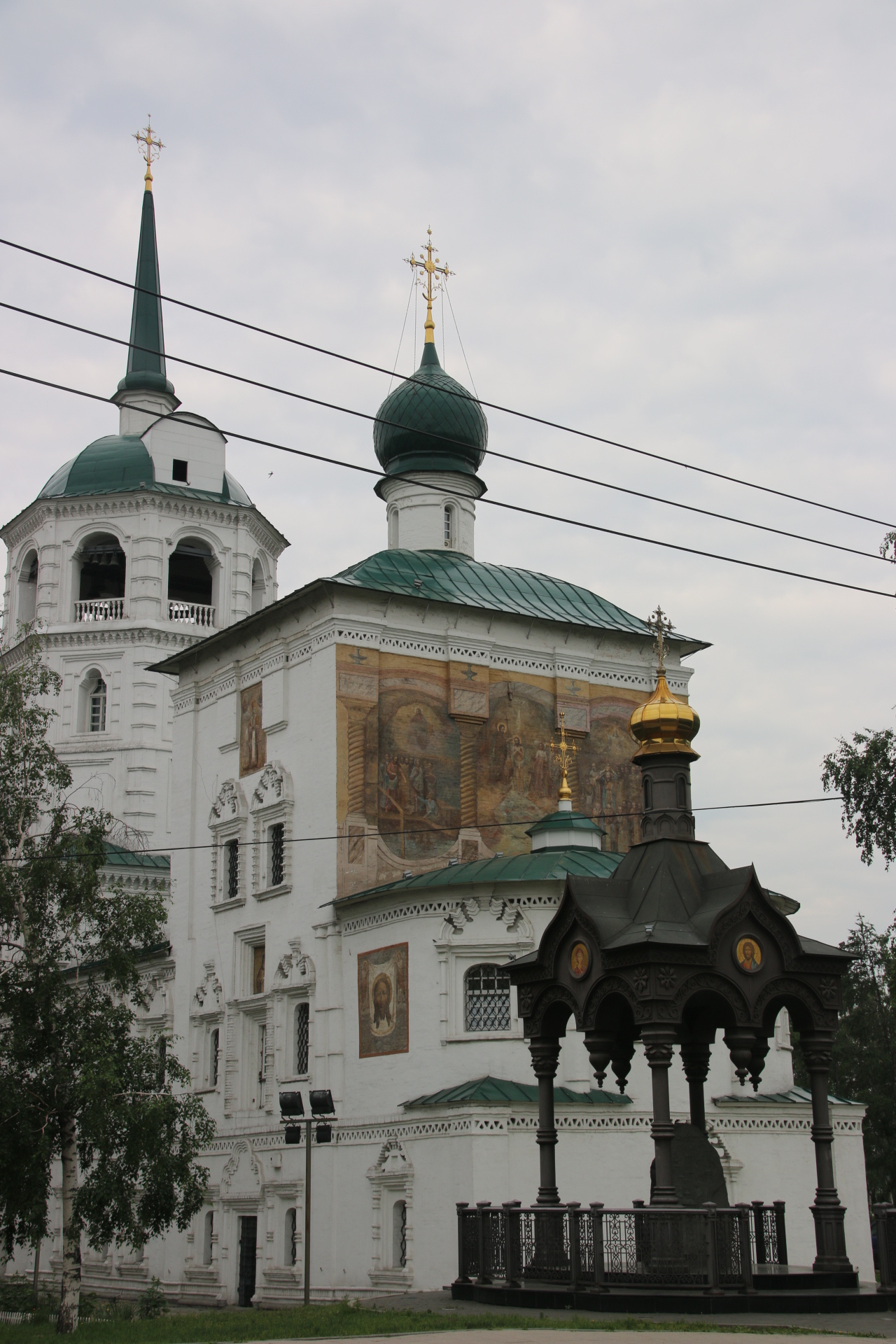
Statues abound – Lenin, of course, lords it over Lenin Street. Down by the wide river the two Russian Orthodox Churches and the single Catholic Church pop their heads over the promenade to oversee the fishermen holding steady in the swirls of the current.

wp-1467113283691.jpg

wp-1467113325185.jpg

wp-1467113349247.jpg

wp-1467113369972.jpg

Enjoy the images of this large, industrial city. Tonight I return to the train for the last leg of my journey to Mongolia. See you in a few days.

The elusive cheese omelet

Let me tell you a bit about the Pectopah.

wp-1467044074116.jpg

Firstly you have to understand that time stays still on the railways. Wherever you are on the system, on a train or within a sstation it is Moscow time, 2 hours ahead of the UK. The timetable is Moscow time. Times, by the way, are amazingly punctual with arrival and departure and stopover times accurate to the minute even thousands of miles along the track. Time only passes outside in the real world. Put simply, every 24 hours traveled equates to putting the clock on 1 hour. That is outside the train. So 4 days out of Moscow, train time is 0830, outside time is 1330, UK time is 0630. Got it?

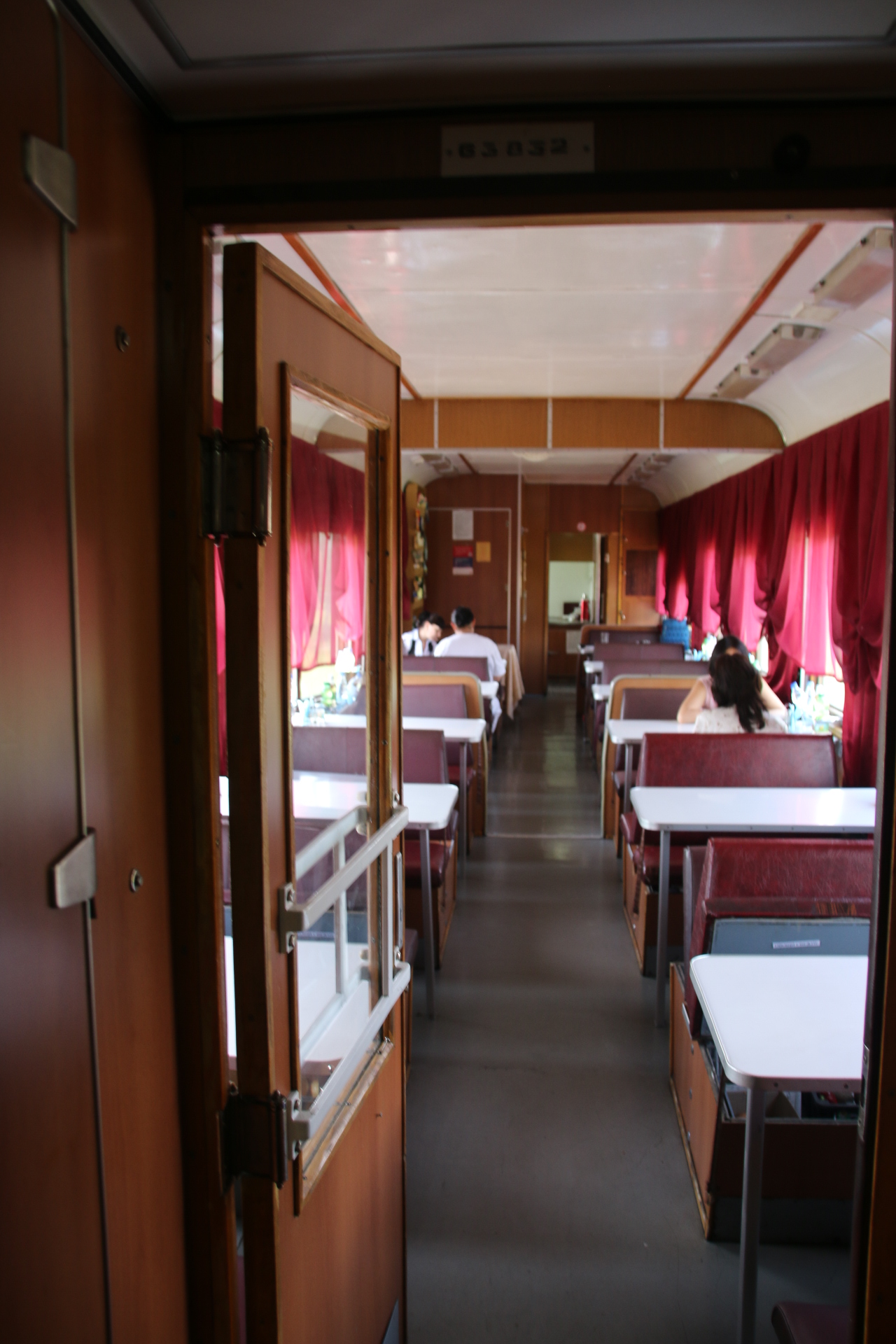
So, the restaurant car its found a few carriages up. Images of a comfortable bar area with tableclothed tables set out with napkins and place settings and glasses are immediately dashed. A stulag dining room comes to mind with Formica tables and functional benches aligned on each side and lacey maroon curtains around the windows. If not a stulag then a chapel at a crematorium.

The place is empty except for two females counting till receipts. Characters out of Dickins come to mind. They look up. A frown reinforces the tight lipped scowl that greets me. One is young, skinny, pale & a bit spotty. In her black uniform and regulation tights, she seems to be looking longingly at my neck. The other is a large lady wearing a floral nightie and displaying huge trunk legs. She looks as if she should be a friendly, bubbly character. She is not. The faces stare. Neither moves. ‘Food’ I mime. Nothing. I mime again and go and sit down. The skinny one sighs, gets up, comes over. ‘Beer, beer, beer’ she says. No food.

wp-1467044243705.jpg

This is the beginning of the search for the cheese omelette. The following lunchtime, at 1145 I return. This time the skinny one brings up a menu. Quite extensive sounding good. The menu is in two sections: breakfast 1000 to 1200, lunch 1200 to 1400. The assumption is Moscow time. We’d been warned off anything with mayonnaise by the American missionary from Milwaukee. So the ‘eggs with cheese’ sounded a good choice. No. Forceful shaking of hand. No, that it’s on breakfast menu and that’s over. Anyway, no eggs. Ok. So the choice of a cheese sandwich from the lunch menu seems obvious. It is  completely under-whelming, consisting of half a slice of the smallest brown bread covered with two thick slices of cheese. Goodness knows where the other half slice went to but it didn’t go on top. I order a second.

Thinking I have grasped the concept of the menu, I return the following day at 1900 for dinner. The two are still counting till receipts. At the stopover two crates of eggs are seen to disappear into the kitchen. Yes, omelettes must be on. No, no, no. NIET. Eggs and cheese are on breakfast menu. Loudly she flicks the pages and points, exasperated, to items from the lunch menu. my friends opt for salmon with lemon (3 minute slices on a saucer). I go for meat soup (a reasonable soup of onions and potato with 4 hunks of gristle; suitable fayre in a gulag).

I return the following morning to ascertain when the breakfast menu is available. I get a smile from the skinny one. Maybe she too is fed up with gristle and its holding herself back from diving into my jugular. With the help of drawings I ascertain that breakfast time is Moscow time plus 5 hours. The Pectopah is the only place on the whole Russian railway system which does not keep to Moscow time. Conspiracy theorists might argue that the staff just add hours so passengers always miss breakfast and they never have to cook a cheese omelet.

These guys have nothing to do with omelets. They were on the platform the stopovers. The style police might be hauling them up.

wp-1467044400015.jpg

wp-1467044433253.jpg


The Locomotive Gang

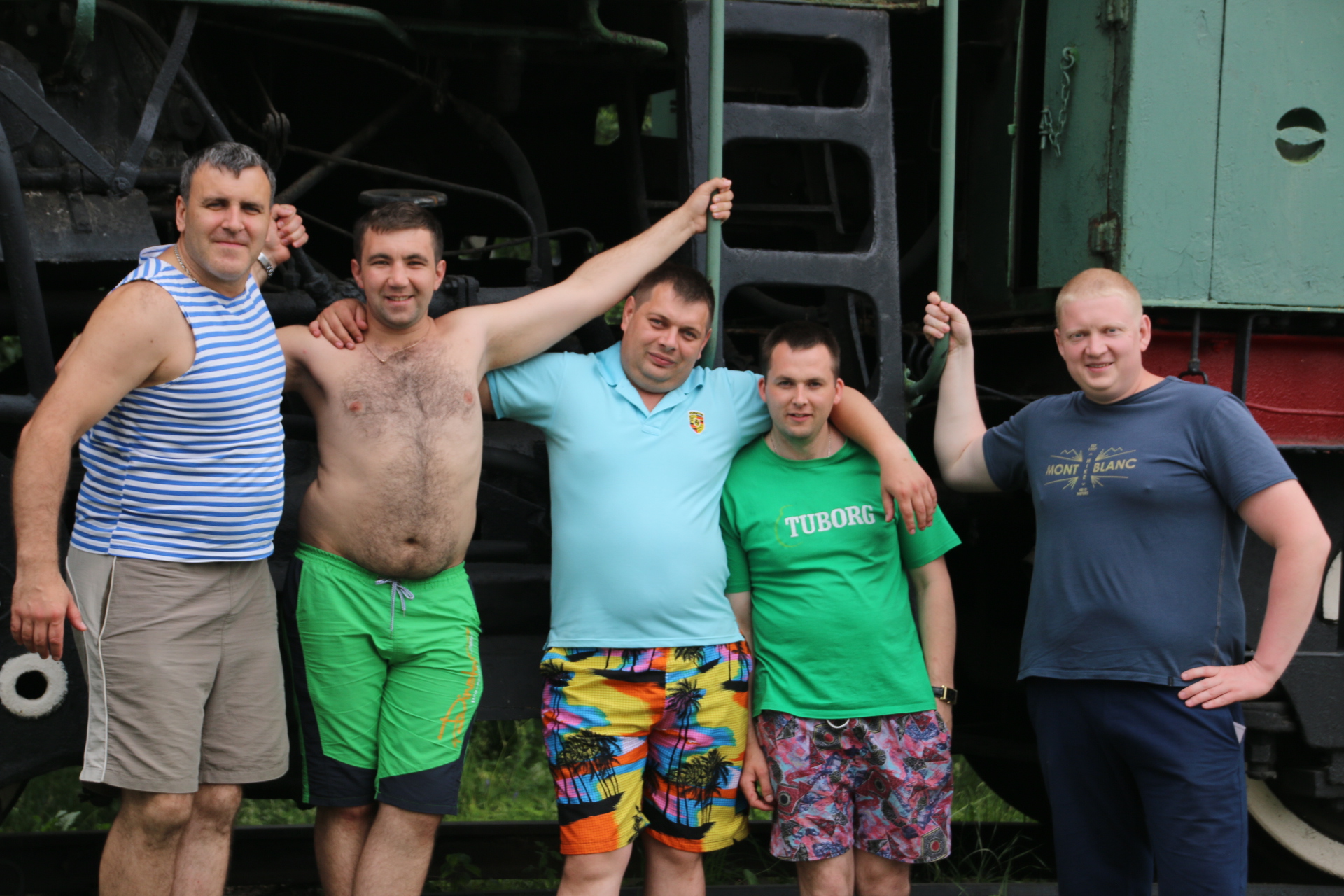
I have made some new friends this morning. From compartments 6 & 7 tall figures emerge with mugs in their hands to worship at the urn of boiling water. As the morning develops I start chatting to the tallest, Ivanovitch. It turns out that the whole group are engine drivers from Siberia. I meet Igor, Alexi, Constantine, Andrew, Ivan. No-one speaks any English. I watch countless images of their blue engine on Constantine’s phone, friendship between UK & Russia is proclaimed, vodka is offered but refused, temporarily (it is only 1030 after all), although I do take a glass of beer and smiles all around and back smacking till in hurt. Later in the morning Ivanovitch appears at the door with a gift for me – a Russian flag from the front of his locomotive. Yes, the actual one from the photograph. A few minutes later Ivan appears with 2 fridge magnet images of Russian locomotives. So touching.

wp-1467043059946.jpg

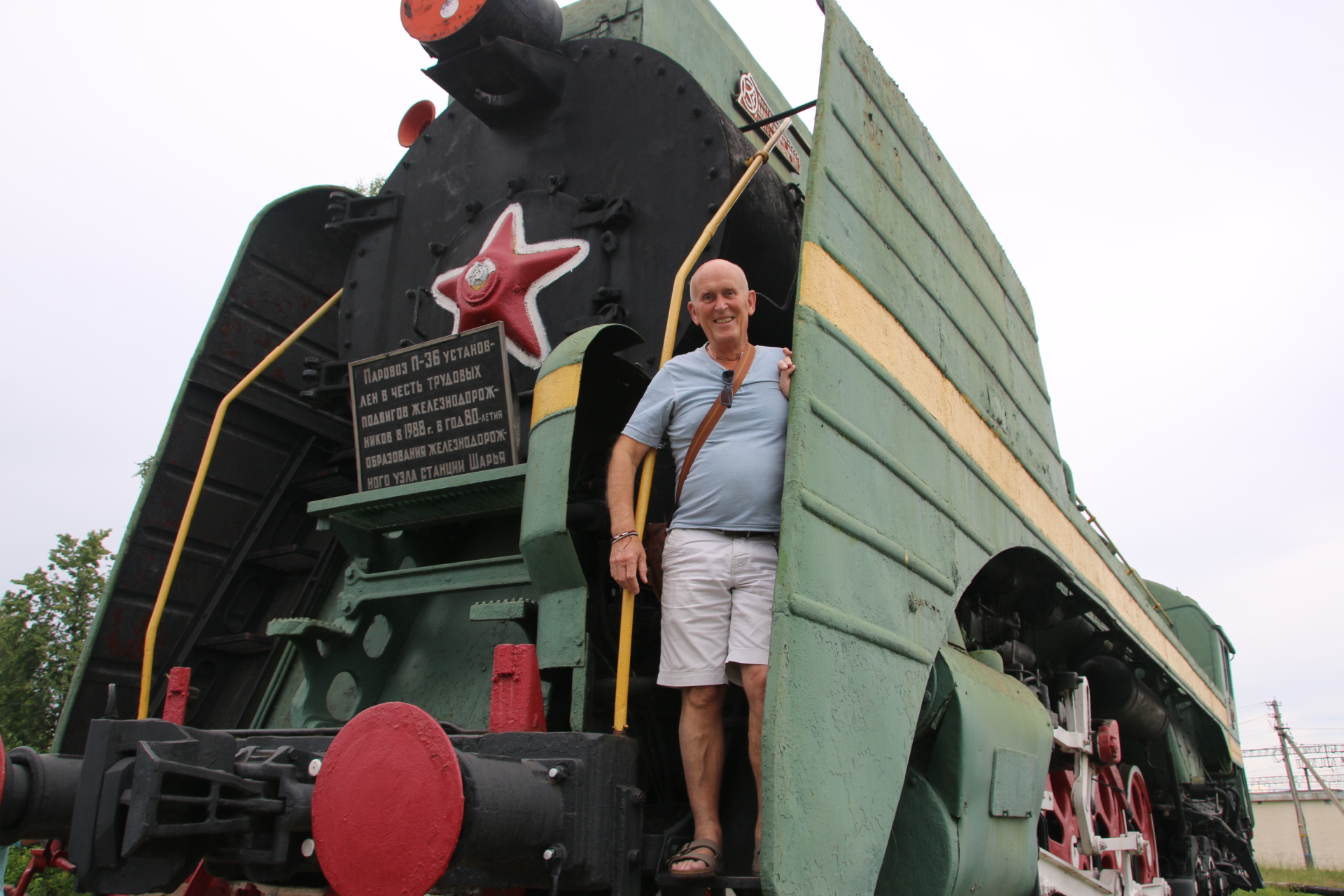
Our relationship blossoms. We talk about steam locomotives in very effective sign language. We stop for half an hour and I go exploring and I find, guess what, yes, an old steam locomotive. This really fired them up. We clambour all over it going ‘choo Choo’. They take my photo, I take their photo. On the way back to the train, they force another driver to allow me up into the cabin of a huge loco where I can take pictures of  the controls to add to my collection. So exciting.
wp-1467043102925.jpg
They promise me a surprise at the next stop where they present me with a mug of wild strawberries. At the one after that it’s a huge chocolate ice🍦-cream, with a soggy wafer, I have to tell you. I feel like a pampered pet. They just refuse to say no. So frIendly.

Life on board the Trans Siberian Railway

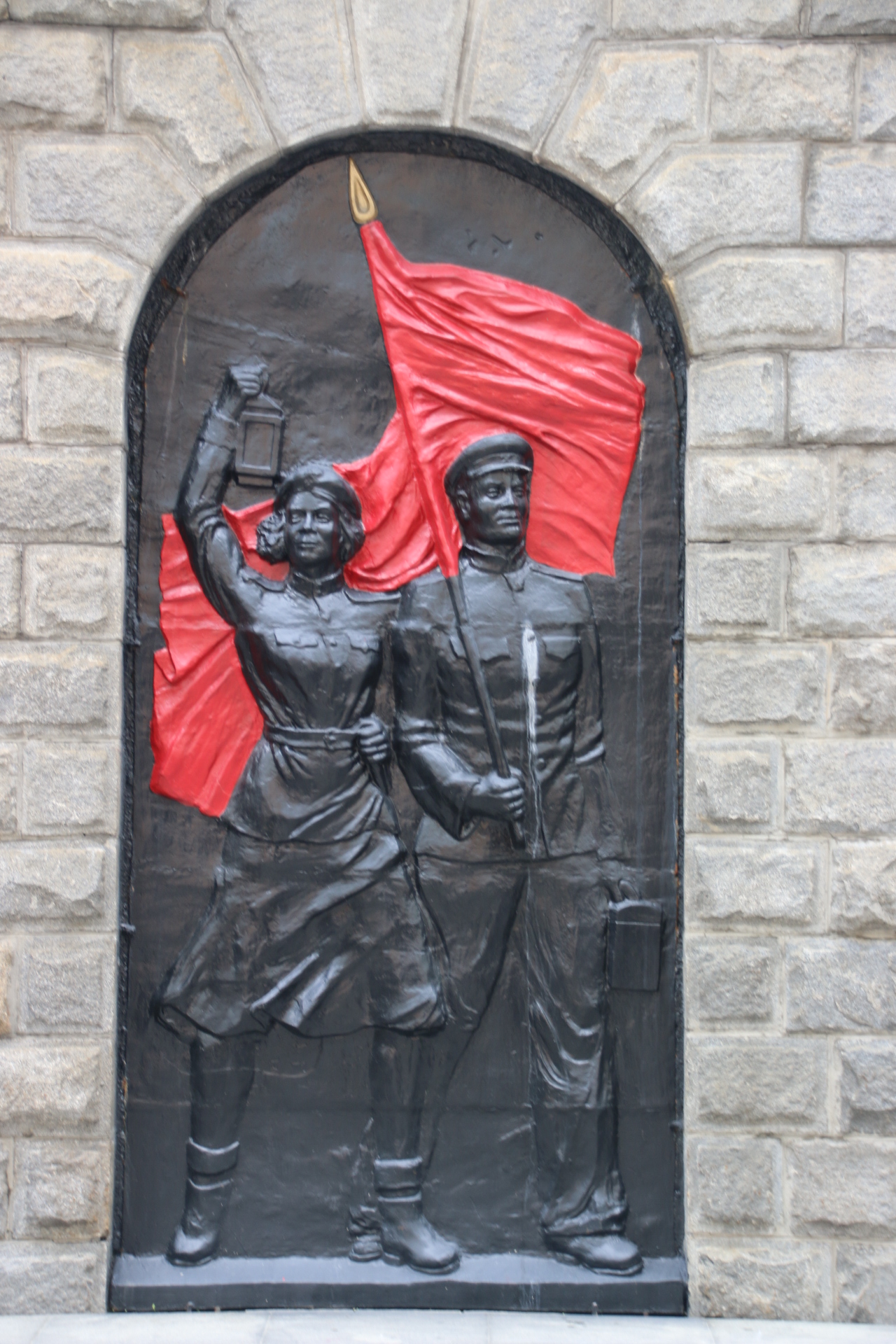
So let me tell you about life on the Trans Siberian Railway. Firstly, the outside bit rarely changes – silver birch and pine blur past continuously. Their flow is occasionally disrupted by the appearance of weathered, wooden, ginger bread villages or the even more occasional sizable town of apartment blocks, railway marshalling yards and uninspiring, functional housing. At the centre of every one, whatever size, will be a statue of Lenin or another revolutionary figure, stretching out to indicate the way forward.

wp-1467042274445.jpg

wp-1467043576553.jpg

wp-1467043742464.jpg

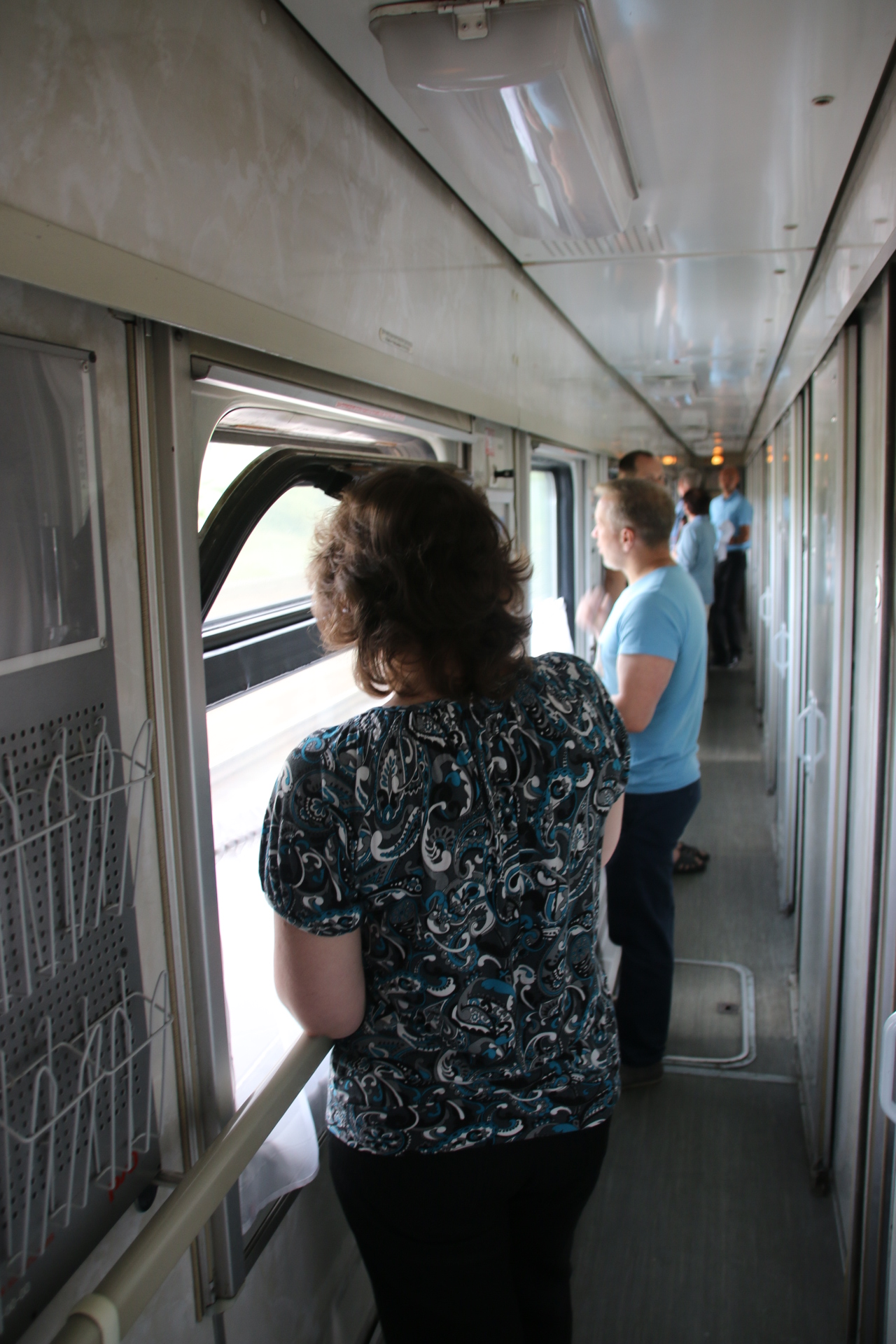
No, real life only carries on inside the train. Attire for men is simple: a pair of light, airy, shorts. Hairy backs, fronts, bellies, shoulders all proudly on display. As they pass in the narrow corridor, the feel of static electricity remains as a light kissing blush of soft fur on any exposed skin.

wp-1467042388621.jpg

Meal times revolve around the provisions you have bought on board or those you have been able to supplement in the station kiosks en-route. Inevitably crisps, cereal bars, biscuits form the basis of train diet, enhanced with cuppa soups and noodles. I never want to see another cuppa soup.

The routine on board is quite simple. It tends to revolve around sleep. Mornings are filled with excited anticipation about the day to come. The first hours of flashing trees quickly dampens that. After that any journey through the carriages will be like a sci-fi adventure with sleeping or dozing crew laid flat out in their cocoon cabins waiting to emerge at journey’s end.

wp-1467042465922.jpg

Time flows past like the trees. Every few hours the train stops to refresh the clientele. Old friendships, made in the narrow corridors, end with a hand shake or an awkward hug. They are replaced with a catalogue of Russian humanity who will continue the confusion of unintelligible language and life stories. It is truly amazing how long conversations can last when there is absolutely no common language. Why is it that some people are convinced that if they shout louder and louder that the other person will eventually understand what they are trying to say? Continue reading

Two Provodnitsa, Sergei and I on the Trans Siberian Railway

wp-1467040922831.jpg

The 44/100 to Vladivostok is pulled into platform 1A by a small diesel with its big, big brother that will take us there, silently gliding in backwards. I start walking along the carriages. Am a bit concerned that the end carriage, which is first, if you see what I mean, is number 20. Half a mile further on is home for the next three days – carriage 4 and compartment 9.

Teams of provodnitsa control each carriage.  Now don’t get excited, picturing young sexy, red suited and booted Virgin staff. 

wp-1467041588701.jpg

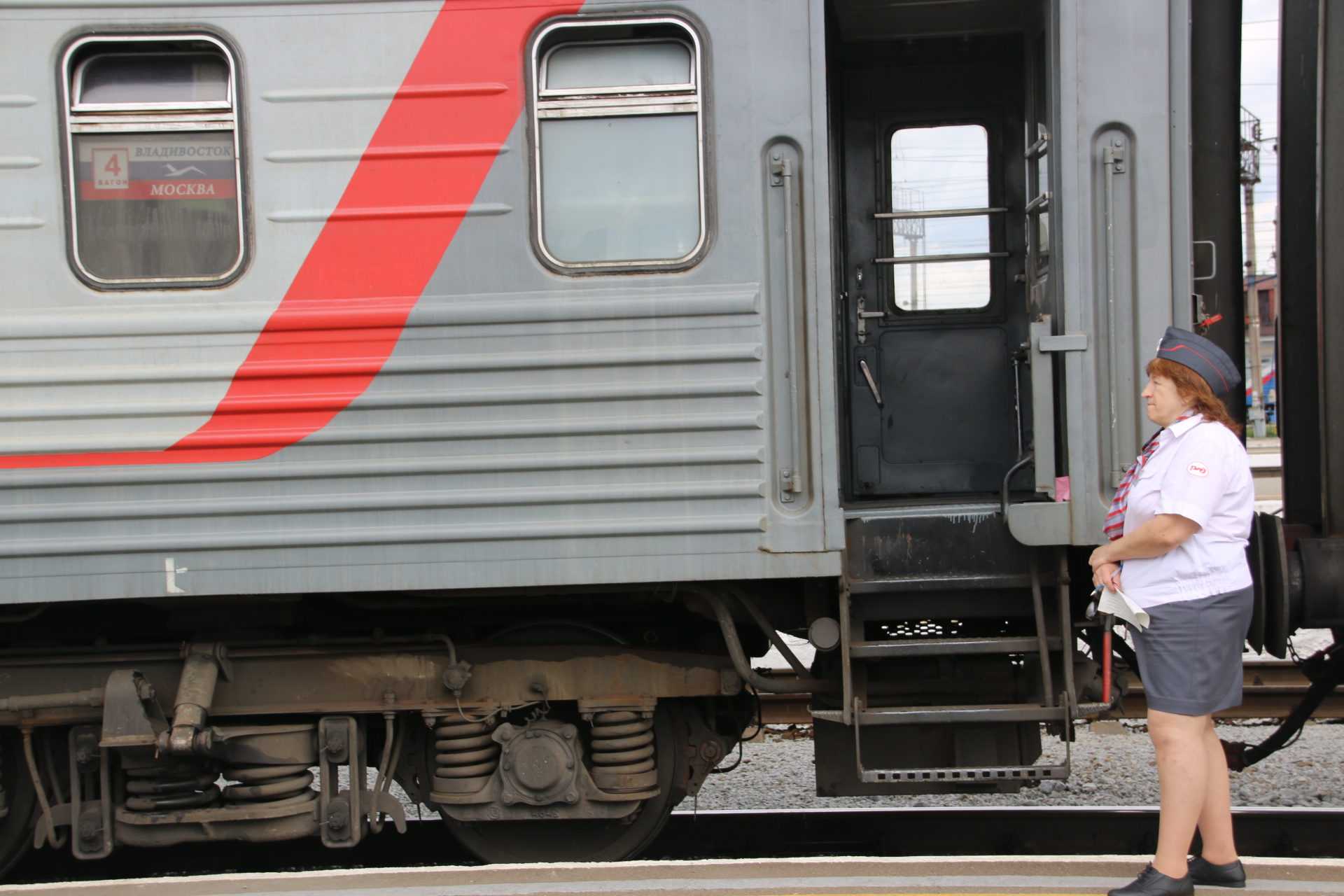
Let me introduce you to one of the two provodnitsa that guard the steps to carriage number 4.

wp-1467041041948.jpg

It’s a bit like being in charge of a dormitory at boarding school with a uniformed, Stalinesque matron. Keep on their good side and keep smiling and there is a perceptible softening of their facial features, the stern facade drops ever so sIghty and, with considerable trepidation, an approach might be considered. Like most Russians they speak no English and don’t even try. I had to mime the fact that we’d run out of toilet paper – use your imagination!

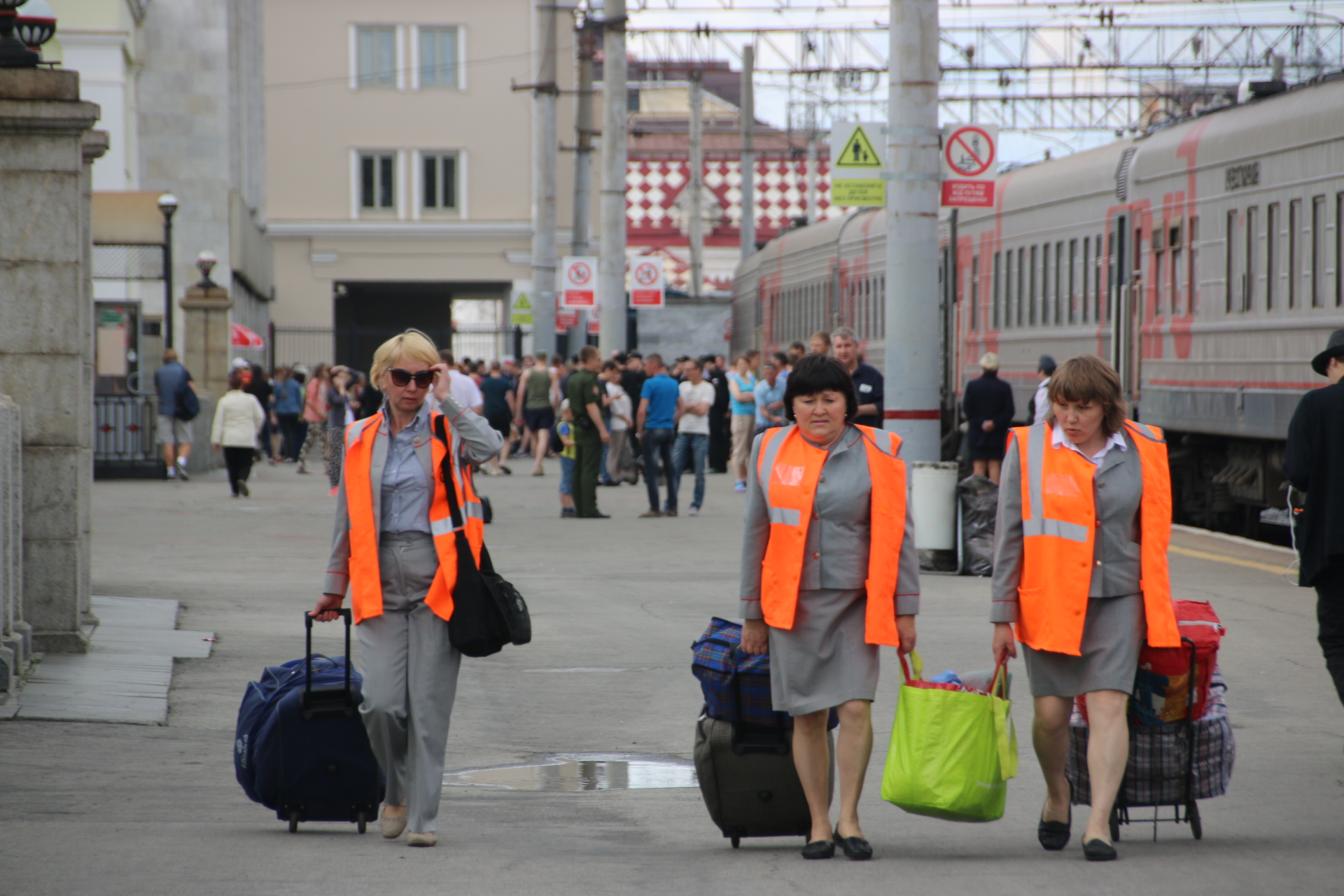
In pairs they tag team their own carriages, one on nights, the other on days. They sort dirty linen, hand out clean sheets, empty rubbish bins, clean the corridors and the two toilets, act as ‘no fuss’ security guards by their door whenever the train stops, check tickets and very occasionally grimace which is the only indication that you have been accepted. They give the only sign that the train its about to depart which takes the form of a curt nod. If you miss it, you face a long walk.

wp-1467042515735.jpg

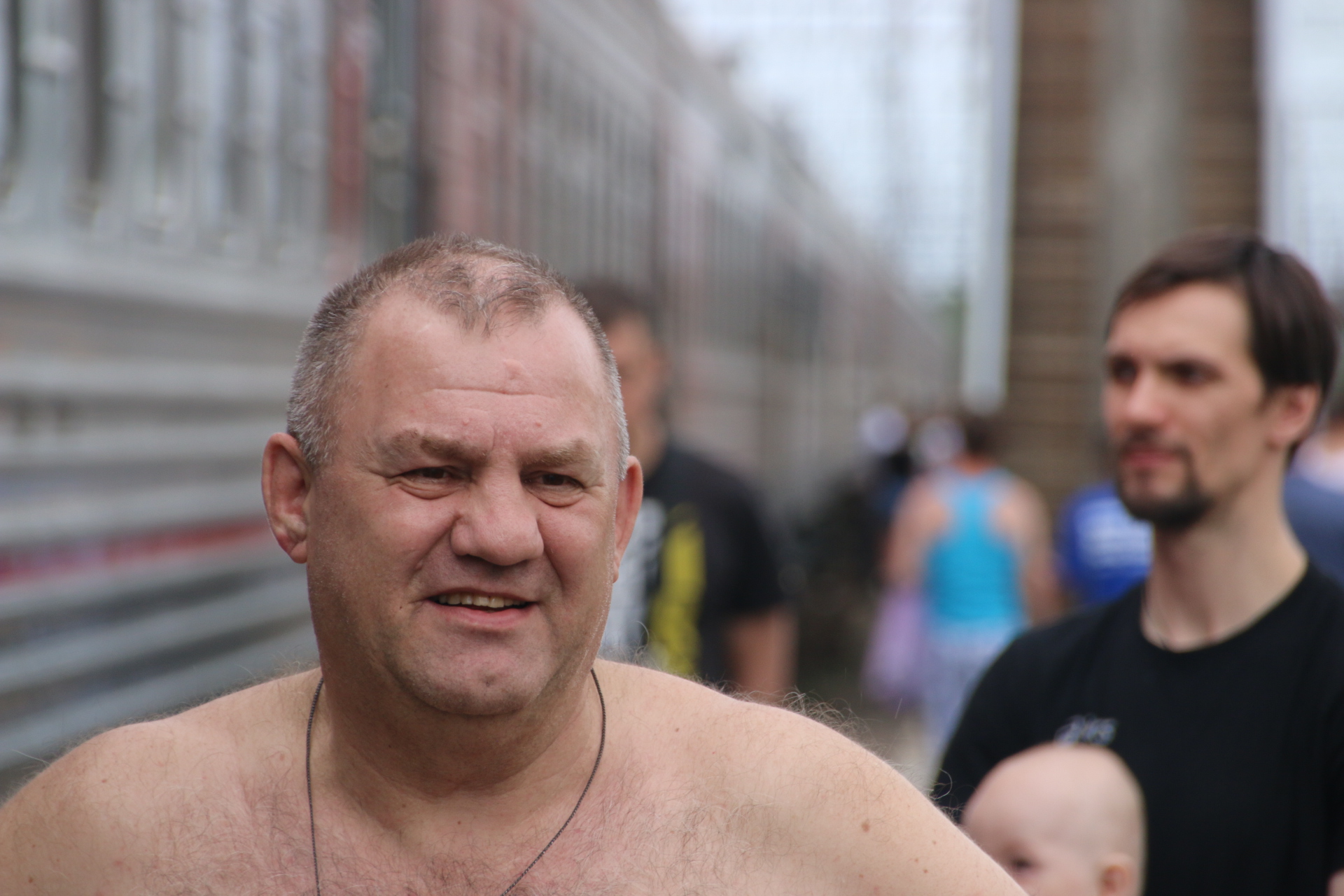
I fall at the first hurdle in Moscow. A rather large, hairy Russian gentleman its settling into carriage 9. He is not supposed to be in here. Despite numerous approaches to the provodnitsa and the full catalogue of smiles and charm, there is no option – Boris, as I have decided to call him although his name is Sergei, has to stay. He doesn’t help his popularity rating as he spends most of the time in shorts displaying an extremely large and hairy torso, particularly around the shoulder area. I have to emphasise that these are not the largest of compartments. Boris clambers up to a top bunk and stares down at the interlopers, like a large primate contemplating his next swing down. Pushing away images of King Kong grasping out for little old me, I settle down below and let the rhythm of the tracks take me to the land of nod.

wp-1467041863159.jpg

The noises eminating from Boris are enough to eventually end my first night of light slumbering.  Every carriage has a big urn full of boiling water. I take my teabag and mug, make my tea and watch the sun come up over the passing forest of silver birch & pine.This will be the scene for the next five days and 4,000 miles. Very cathartic.


Golden onions and traffic outside Red Square

I am in room 2538 of my very functional hotel. Yes, on the 25th floor and there are three hotels of equal size, side by side, like packs of cards on their end and all full of rushing, excited, impatient, busloads of Chinese or Japanese or South Koreans tourists. Like an oriental ant-hill, they disgorge the winged adults in a huge swarm and their coach larva process into town to absorb the touristy delights of central Moscow.

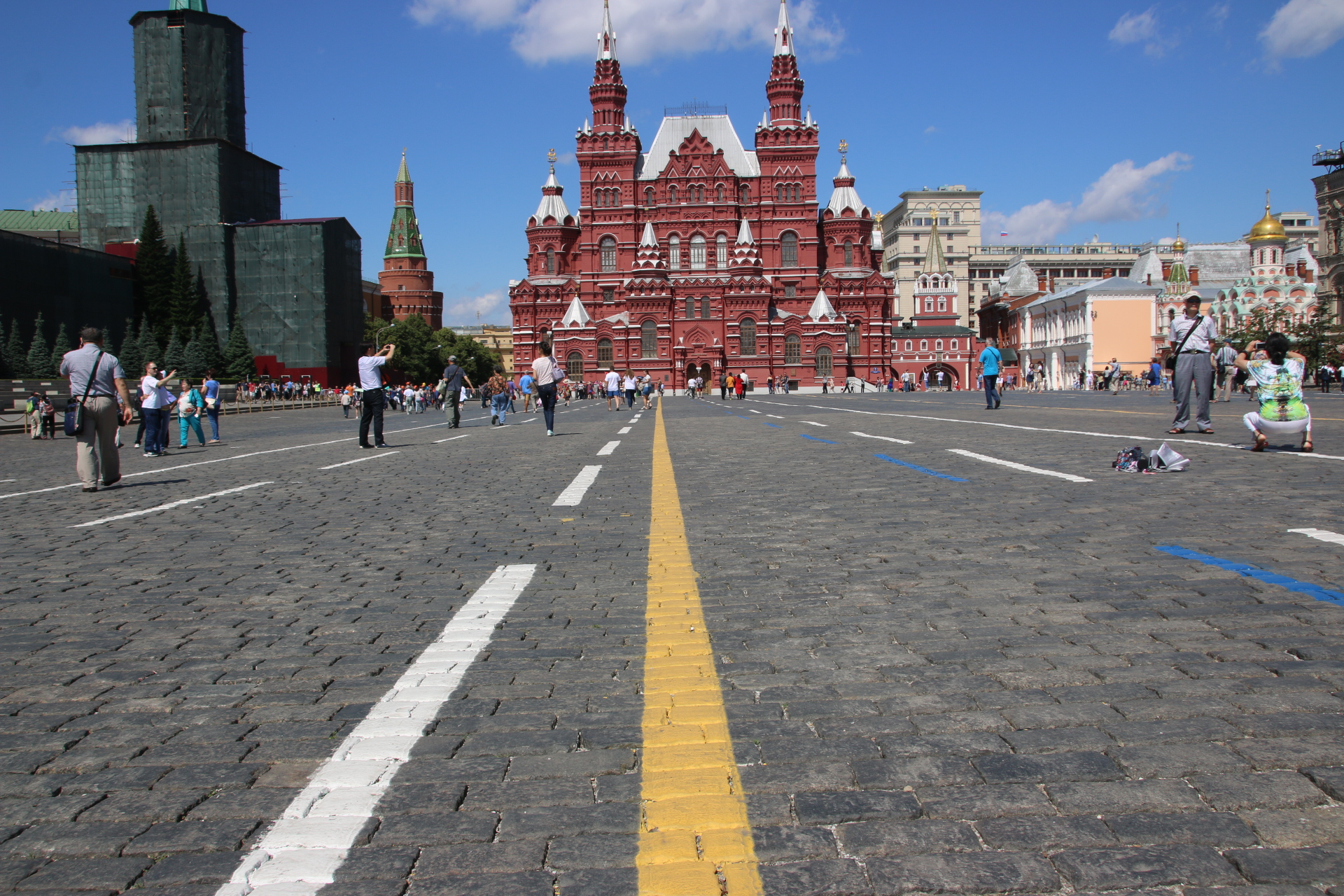
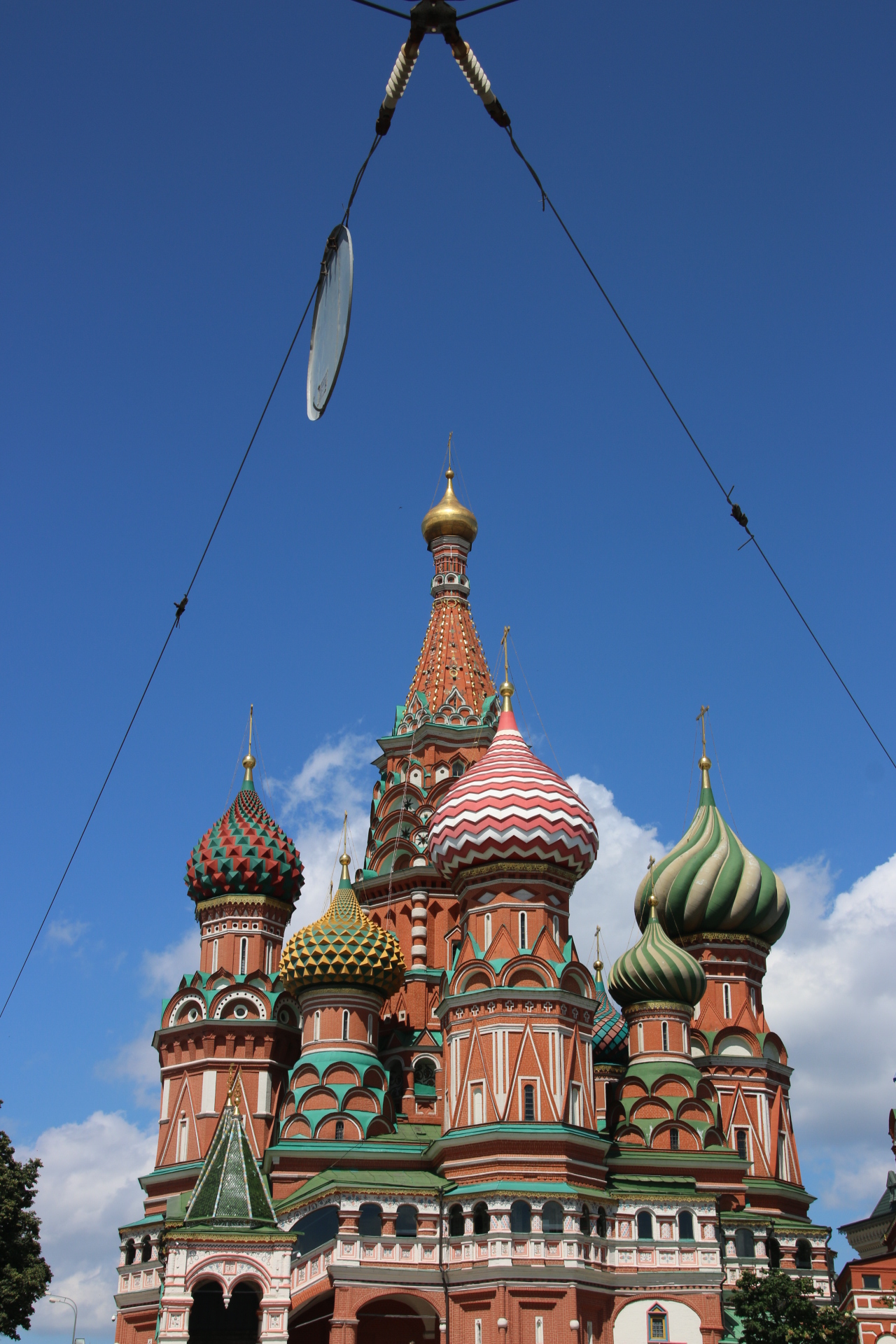
Putin was entertaining yesterday so decided, on a whim, to close himself inside the Kremlin and prevent us tourists from getting up close and familiar. So full of anticipation it was another trip to Red Square to get tickets to enter Russia’s centre of government. Street, no. Thursday is a ‘non-work day’ at the Kremlin so it its closed. Its golden onion domes can, again, only be appreciated from outside the walls.

wp-1466695718522.jpg

wp-1466695639924.jpg

wp-1466695762755.jpg

So other places and sights have to be found. This is a mixed blessing. Having spent time around Moscow’s main/only tourist site around Red Square, the sight seeing has to spread along the Moscow River and the real impact of the three T’s can only then be fully appreciated. “Oh, the big red bus is a good way too see the city ……and sit in traffic, Traffic, TRAFFIC and be a tortoise. The bridges across the river are simply grid locked and it can take over an hour to cross one.

Still the sun is shining, beetroot soup and a beer fills the stomach and all is good with the world. The big, red bus tour does have its advantages, particularly when linked to the big red boat tour. Every church, every collection of golden onion heads, every Stalinist power house advert statue of a war hero or a revolutionary soldier or a conquering chariot can be seen from every direction. Canons and Nikon are in charge here.

wp-1466695800787.jpg

The most impressive sites can be found deep underground where only Moscovites can readily appreciate the magnificence of Moscow’s Metro system. The lenses of coach carried tourists will miss the grand spaces of statue lined corridors and escalators of this really efficient method of carrying humanity from A to B. Alcoves and pillars and ledges reveal grand carvings of Homeric heroes or powerful angels or crouching soldiers, protecting its the traveller as well a reflecting the glories of the revolution and the motherland. Journeys are dead cheap- 50p and people give up their seats for its seniors. All very efficient, especially when one he’s worked out the squiggles that indicate the stations on the tube map. Few people speak English.

The real journey starts later this evening. I will write and take photos every day but am unsure when I will pick up Wi-Fi . I will blog when I am able to. You may get several in quick succession followed by silence for a few days. See you when I see you. I leave you with my friend from the perfumery in Dum.

wp-1466695838163.jpg


A day out in Moscow

Well, here I am at the beginning of my new adventure to the Nadaan Festival in Mongolia. That lies three weeks, six time zones and thousands of miles on the Trans-Siberian Railway head of me.

My journey starts in Moscow and a few days taking in the sights. Of course I’ve got to take in Red Square, the Kremlin and Lenin’s tomb.

wp-1466615756965.jpg

wp-1466615800545.jpg

wp-1466615848774.jpg

wp-1466615880127.jpg

wp-1466615924330.jpg

There is also this magical place!!!! Goodness knows what function it serves-a Russian Disney World? Full of Korean tourists anyway.

wp-1466615966948.jpg


Real people live and work amongst the visiting tourists

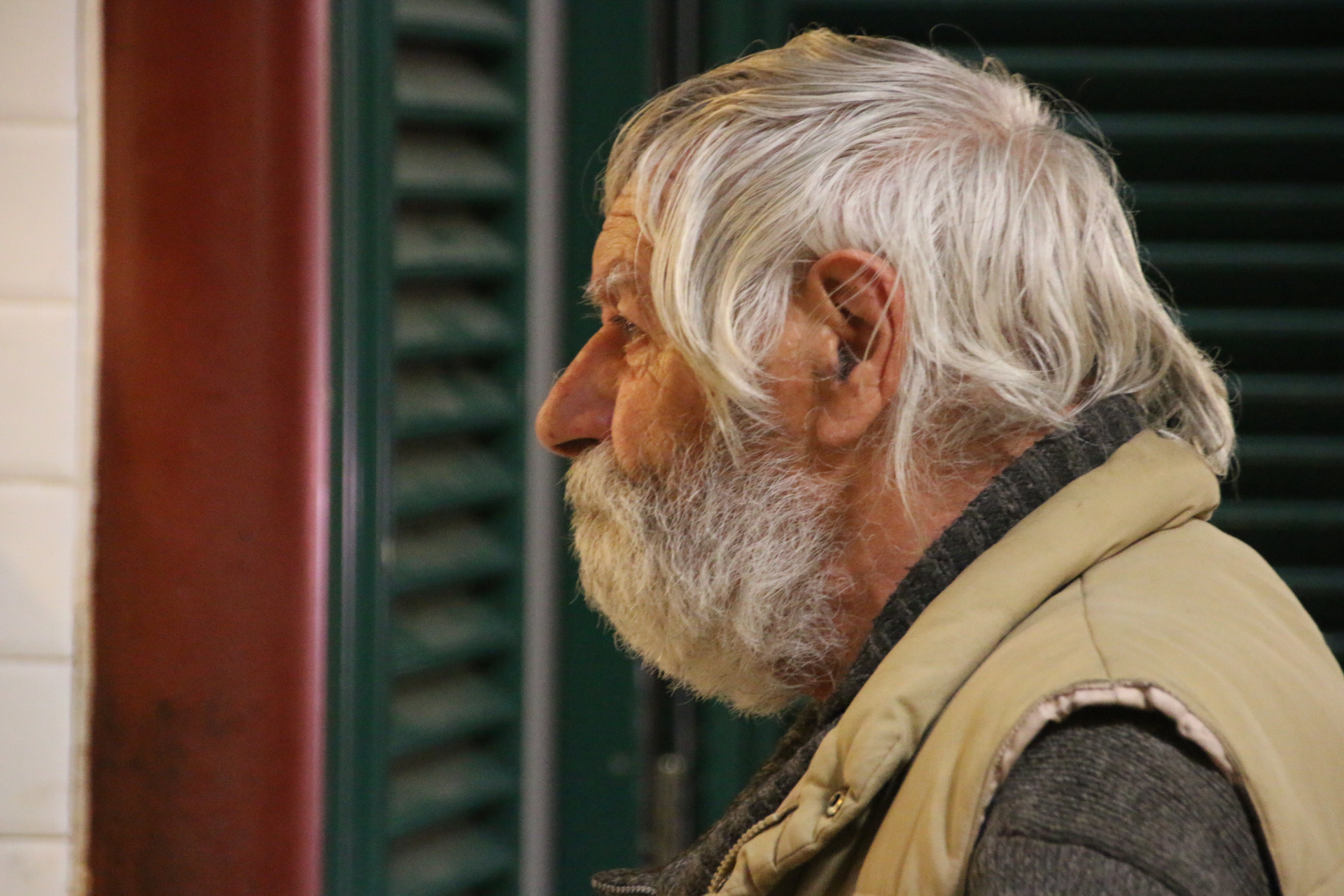
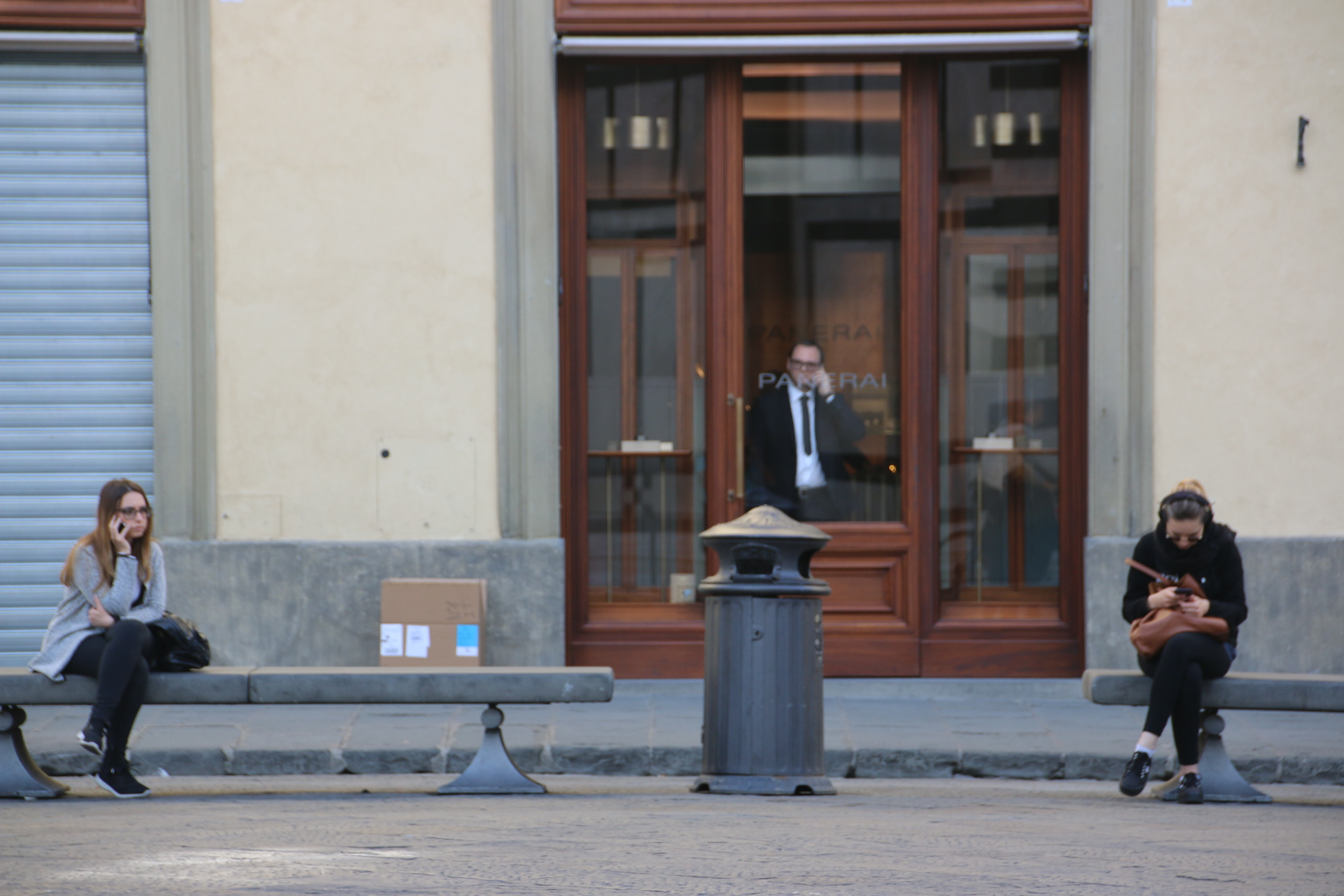
When one visits Florence for the day, it is easy to forget that real people live and work and earn a living from the flocking tourists. The coaches unload their lines of gaping visitors, all processing after each other like goats on a hill path, the lead goat identified by the raised arm and the majorette’s baton raised aloof. The locals begin their daily routine of entertaining, feeding, quenching, sketching, guiding these columns of multicolored, umbrellared, sunglassed, overheated, dehydrated ants.

wp-1465753203196.jpg

wp-1465753260931.jpg

wp-1465753096470.jpg

Amongst this turmoil the locals go about their business. They shop in the market. They grab a coffee on the way to work. They celebrate their saint’s day. They deliver goods. They drive buses and take their children to school.

wp-1465753148045.jpg

wp-1465753059951.jpg

But Florence is not all crowded piazzas of camera clicking guests where couples and groups shuffle in competition with other to take the best selfie in front of the duomo or medieval bridge or the statue of David or the one with the fig leaf over the necessary bits. Come late afternoon, the columns of exhausted, rather ratty guides show their charges onto their coaches and bid a fond farewell with a huge sigh of relief and a slight niggle at the meagerness of their tip. The city also sighs. Gradually the streets empty and life can go on uninterrupted, as it has done since the Medicis ruled this city centuries ago.

wp-1465753328351.jpg


Florence, Italy – I must be Rennaissance Man

wp-1464719074659.jpg

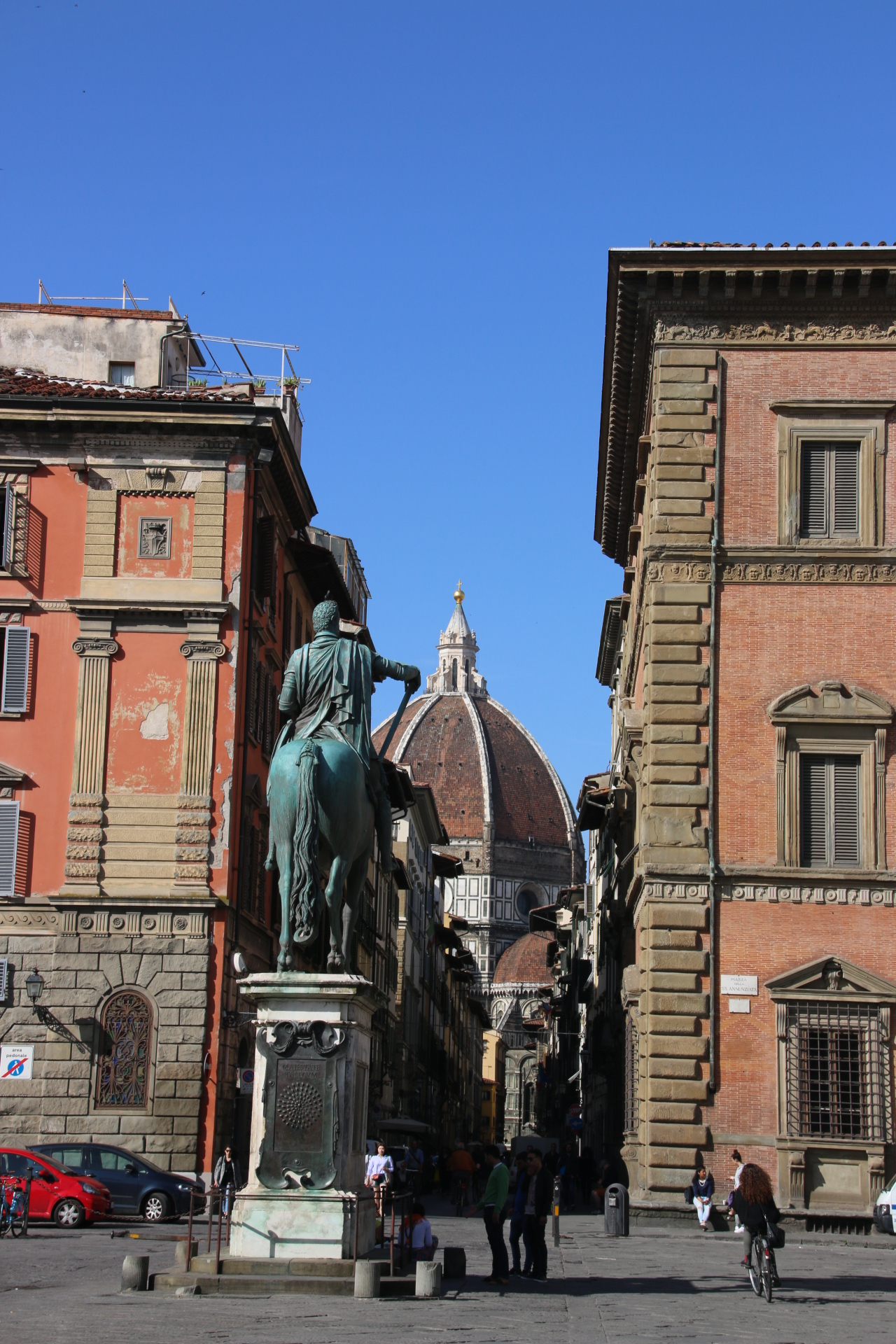
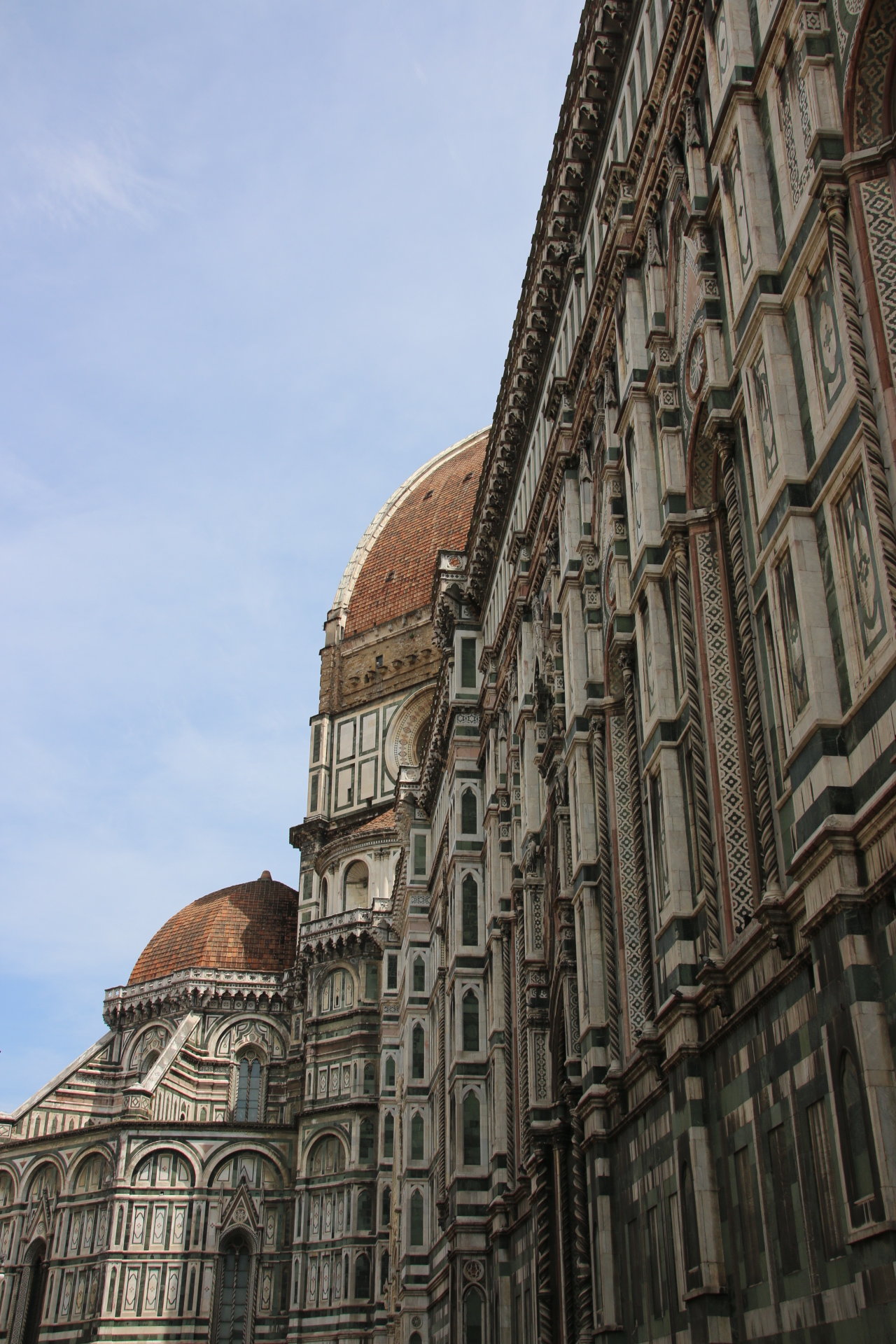
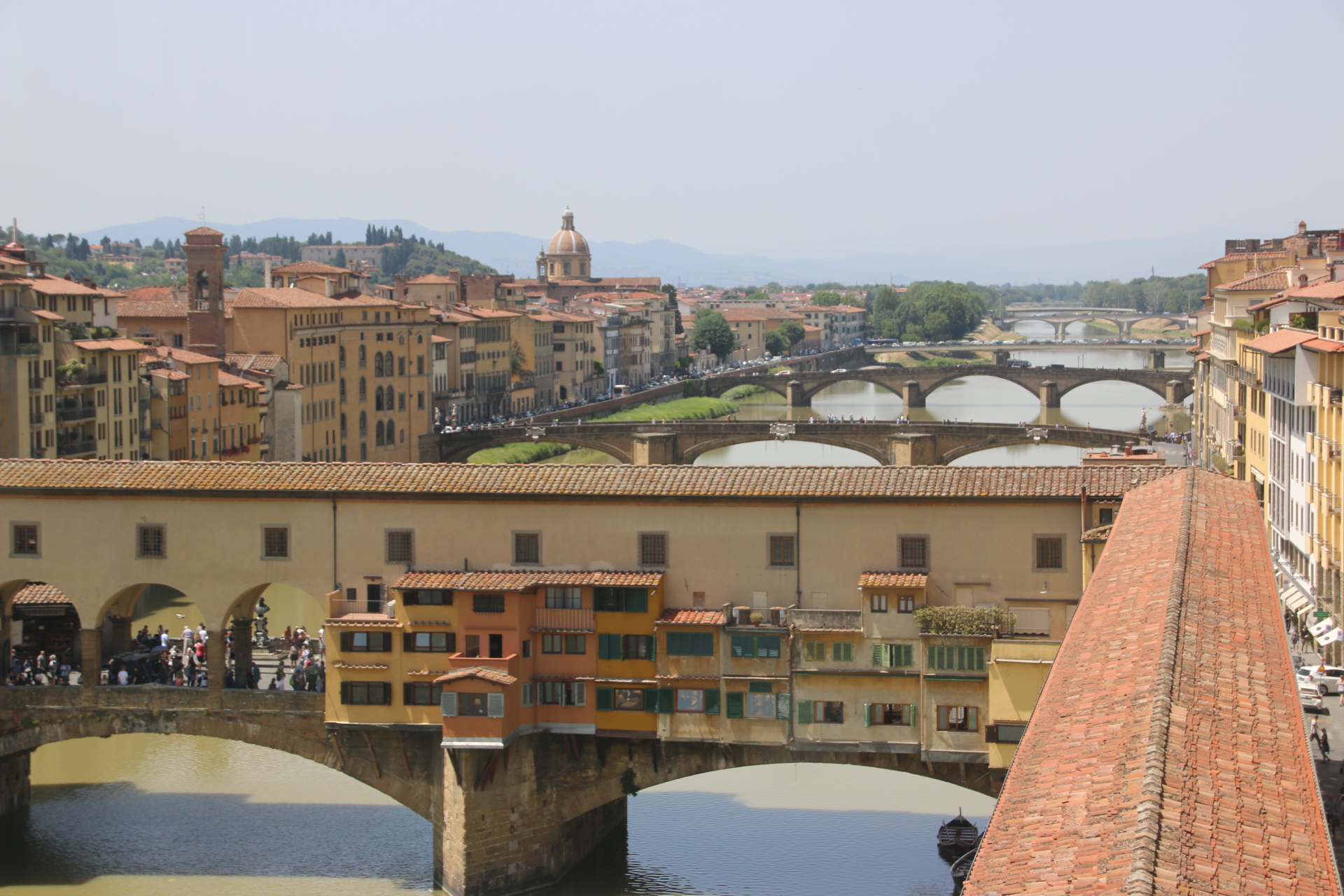
Like a favourite pair of fluffy, old slippers, it feels so good to be wriggling my toes back in the comfort of Italy and visiting Florence in particular. This place sums up the whole country in the space of such a small area. From the small roof top terrace that pops it’s head above the red clay tiled roof tops, I am at the same level as the Duomo, the famous, dome of the cathedral. It is just there, standing gloriously tall above the deep shaded maze of narrow streets and sun blazed piazzas, the points of cypress trees stand guard on the foliaged hillside to the south of the River Arno, scooters putt around, horns beep, sirens tangle in echoes through the hazey hot atmosphere, even in May. The laughter and cries of children always succeed in reaching the ears before any other sounds, however high up. On the hour a cascade of deep bells boom and bombard the ears of the city, competing for the ears of the faithful to remind them what they should really be thinking about. Just add the pasta and the food, and stir with copious amounts of classy Chianti, consumed by classy guys in their waistcoats & suits with their wavy curls & twinkling eyes and even classier, elegant women and you have that special, Italian way.

wp-1464718644912.jpg

wp-1464718709080.jpg

wp-1464718681040.jpg

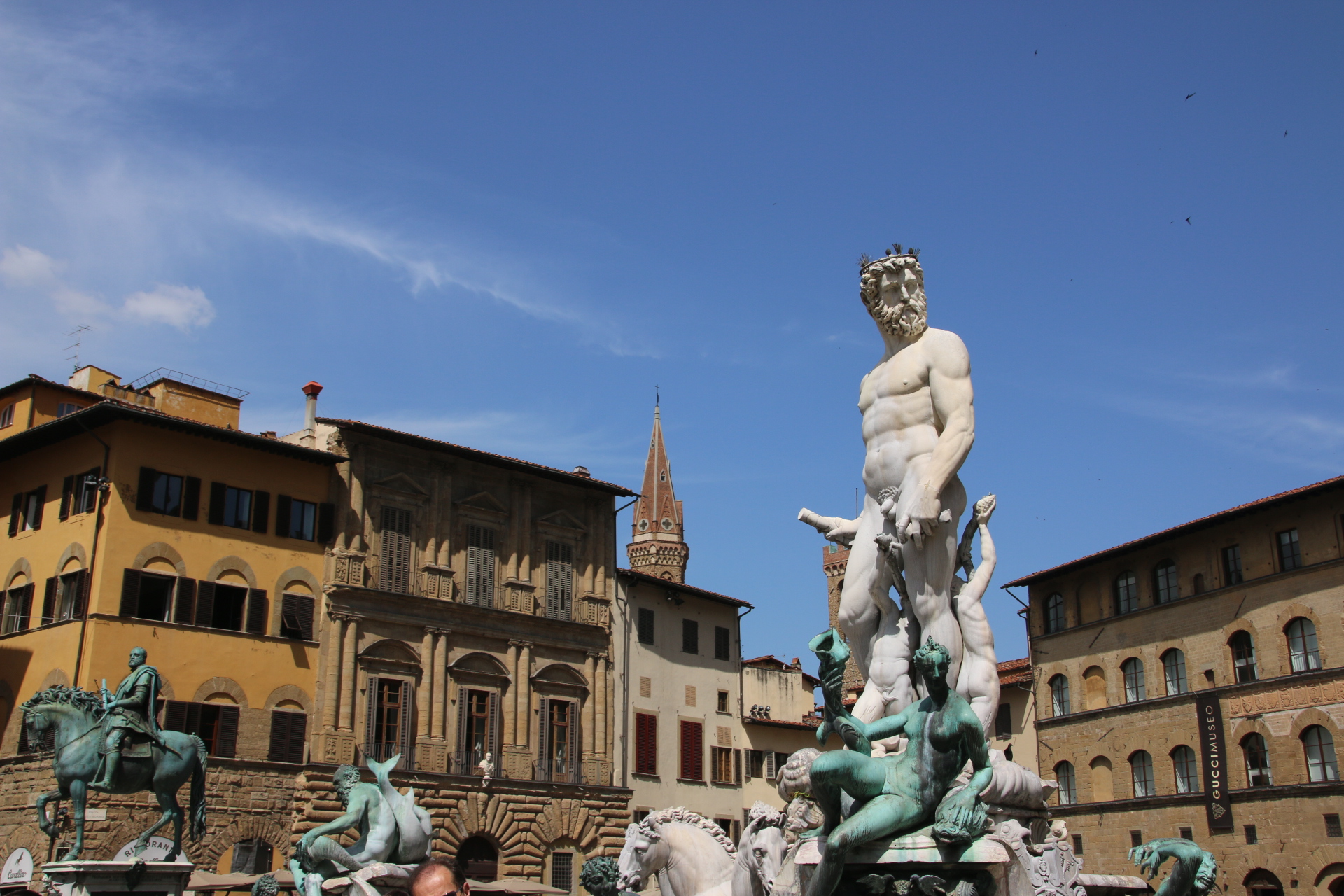
I am going to have to let the images tell the story of this place. It is just so magnificent. Every piazza, every hillside, every surrounding ridge is set off with a a marble facade, a church or cathedral or religious house, a steeple, a tower, a dome or a crescent of tiles. And within the squares and piazzas, or dwarfing the steps of religious houses, framed by these wonderful 13th century buildings are awesome statues and sculptures of bottoms and bulges and boobs and …..other, hanging bits. Angels and gladiators and biblical he men compete with galloping horses and rearing creatures, all larger than life and 10 times more imposing than us lowly mortals. And I’ve not been inside yet. Enjoy.

wp-1464718934988.jpg

wp-1464718976814.jpg

wp-1464719008074.jpg

wp-1464719039193.jpg


A Filipino Farewell

So that’s it. Home tomorrow via a few days in Hong Kong. Sadly, two and a bit weeks in The Philippines has come to an end. Am sitting in the shade with mango juice in hand, looking out over an ivory beach with turquoise blue sea and white surf hissing up the the sands, reflecting on the trip. I have really enjoyed these wonderful islands and these lovely people.

20160208030902_IMG_3525 20160210025854_IMG_3995 20160210031907_IMG_4011_1

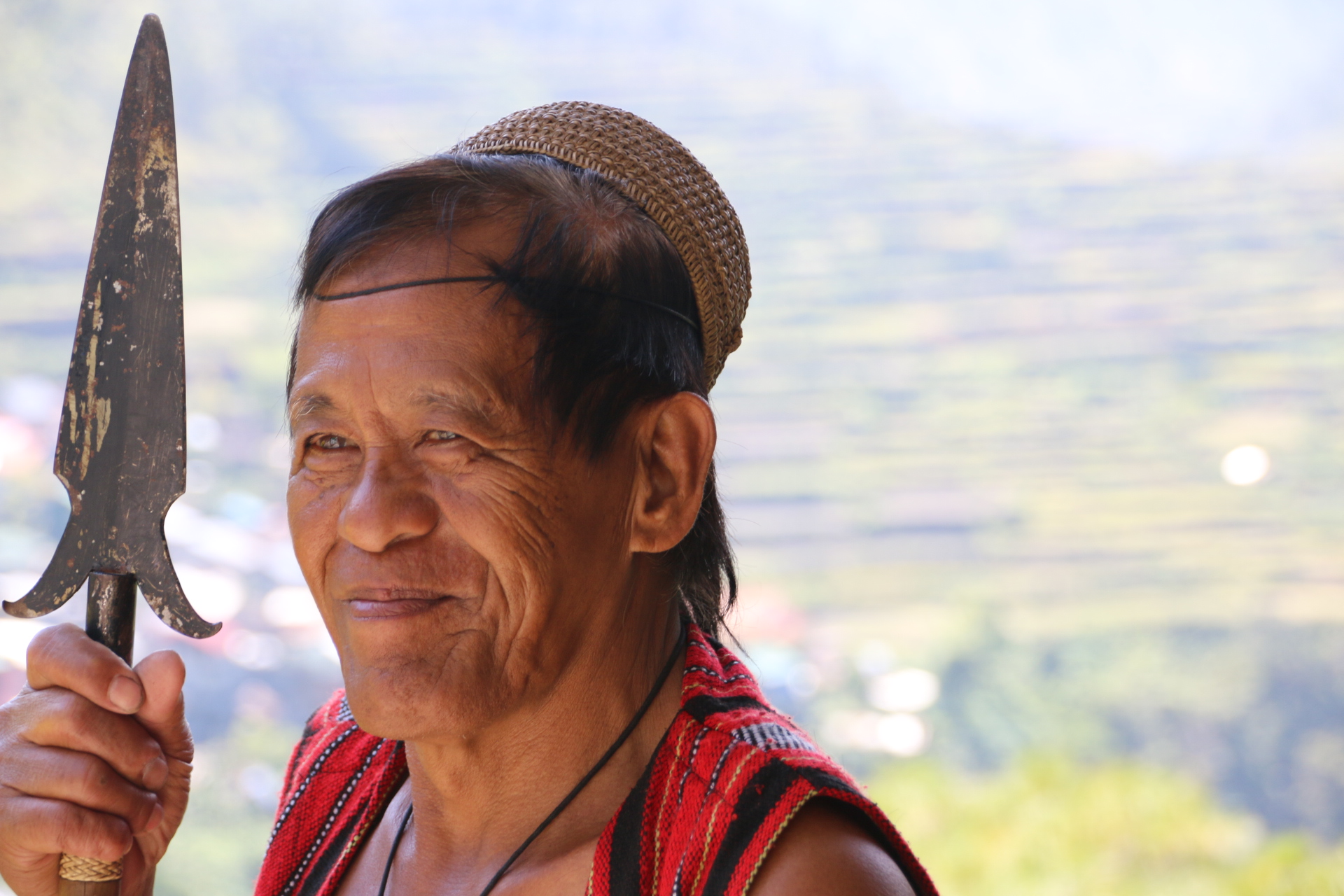
My lasting memories will be the smiles on open.friendly faces, the welcome at every stop, their politeness and respect. I have been addressed as ‘sir’ on every occasion, in every situation, on the street or in restaurants and hotels where you’d expect it maybe, by a cheerful, seemingly happy Filipino. Yet most of these guys earn a pittance, 30% of the population is below the poverty line, with an average income of 2 dollars a day. If they can keep a smile of their faces all the time why can’t we?

20160207234515_IMG_3362 20160209052219_IMG_3793 20160207102310_IMG_3290
The scenery, upland to lowland, is also rather special. Sunshine, ivory sanded beaches, green jungle foliage, pine stretching ridges, river carved ravines and gorges, patterns of emerald rice terraces contribute to a rich textured tapestry outside the brieze blocked, cemented, corrugated ironed towns and villages.

20160210083328_IMG_4040 20160211074847_IMG_4185_1 20160214070544_IMG_4773
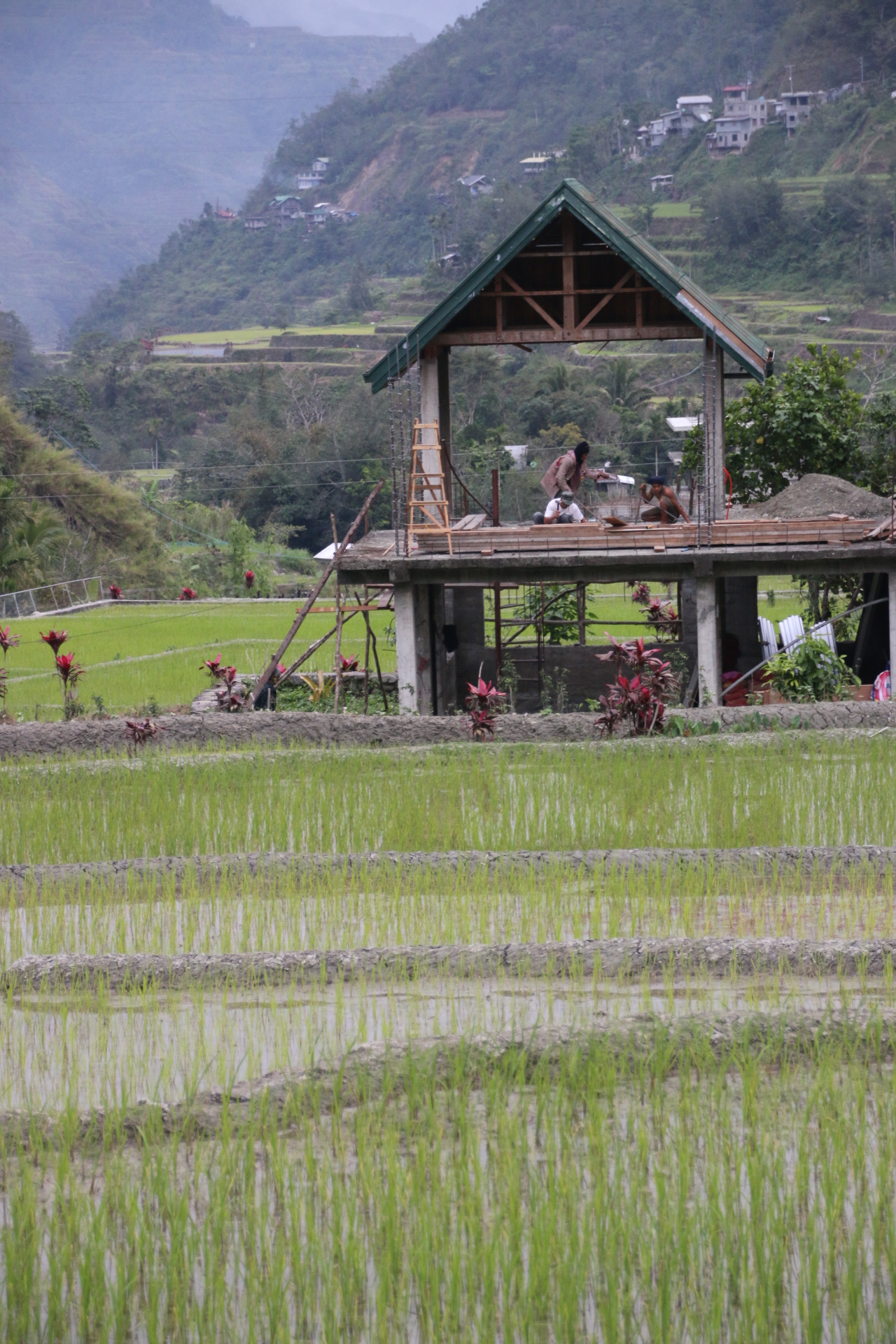
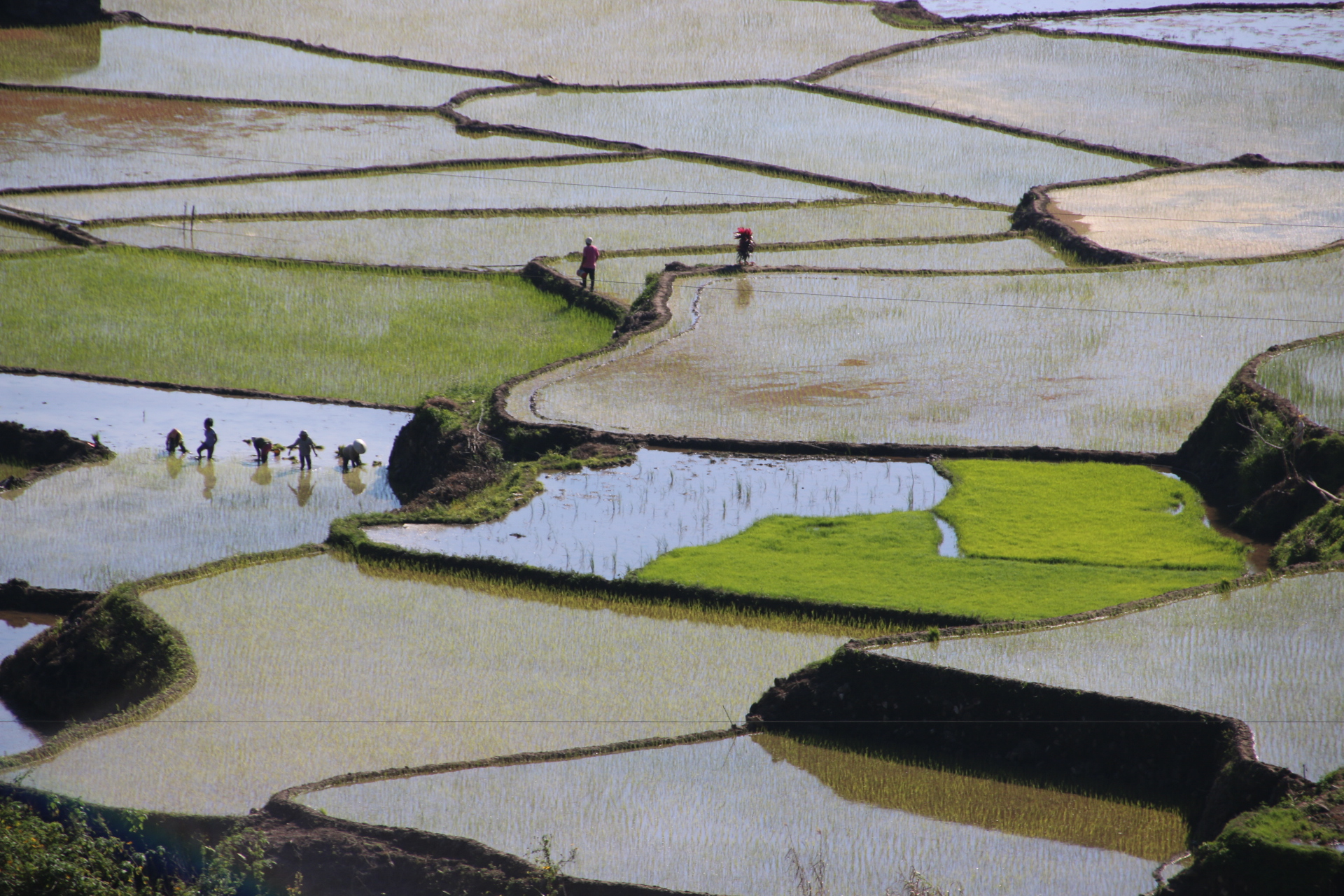
The signature image is that of rice terrace. Rice production is evident through out the countryside – terraces, paddy fields, irrigation, planting, harvesting, threshing, drying, bagging. In the highlands they manage one harvest a year, in lowlands up to three harvests.

20160212040401_IMG_4317_1
Towns are a dumbledore of dwellings, shops, tangles of electricity cables, lines of uniformed school kids, exhausting jeepnies, motorbikes, zooped up motor trikes. The most impressive buildings in every town and village is always the large Catholic churches. That’s not to say that Ameicanisarion has not hit this place hard. In every town at least one McDonald’s, Jollibee (the Philippines’ KFC whose speciality is the Yum Burger), 7 Eleven, Starbucks, Maxs-The House That Fried Chicken Built, Subway stand bright and shiny in amongst the local businesses and stores.

20160208035709_IMG_3624 20160210074242_IMG_4037_1 20160210073340_IMG_4035
Food, hmmmm. Lots of rice and more rice, with chicken or pork. It can be quite tasty. I spotted chicken and sweet potato chips on the menu. The chicken was lovely and crispy. Potato chips arrived with a sachet of sugar – literally, sweet potato chips!

20160211054833_IMG_4163
The whole country is so youthful and full of laughter and smiles. The place has a gentle, friendly buzz with youngsters giggling their way to school or hanging out together, families sitting around or choring together, men rocking in the shade and chewing the cud, shopkeepers quietly anticipating customers under dusty, shaded awnings, convoys of bike trikes with teeth gleaming riders and oustretched hands of greeting. I loved the whole experience. Try and get here if you can.

20160213233737_IMG_4732 20160210074844_IMG_4038_1

20160219234834_IMG_5578


Outrigging it off Alona Beach on Bohol Island

Sorry about this bit, guys. A short flight from Manila brings me to Bohol Island and the resort of Alona Beach. It’s not quite what I expected in so far as it is a beautiful coral sand beach but it is in the early stages of developmen and there are signs that its days of quiet, retro charm are limited. It reminds me of those beautiful Thai beaches, ten years ago before full on tourism and buckets of cocktails and full moon parties changed paradise forever. So still unspoilt but newer, larger hotels are being built to cater for the increased numbers of westerners and Koreans that a new airport will bring to the island.

20160219232349_IMG_5544 20160219232532_IMG_5549
So for now take advantage of Alona Beach while it is quiet with only a handful of hotels and hostels. The beach is still quiet with tons of space to find chill out time in the shade of leaning pesos or to bar-b-que the tan out in the full glaze and, boy, are there some tans that have been nurtured for weeks! There are two obvious groups who strut their stuff, parading up and down the beach – young western backpackers showing of their pecks or bikinis and young Koreans showing of their beach garb to stay as covered up as possible even when swimming.

20160219233617_IMG_5568
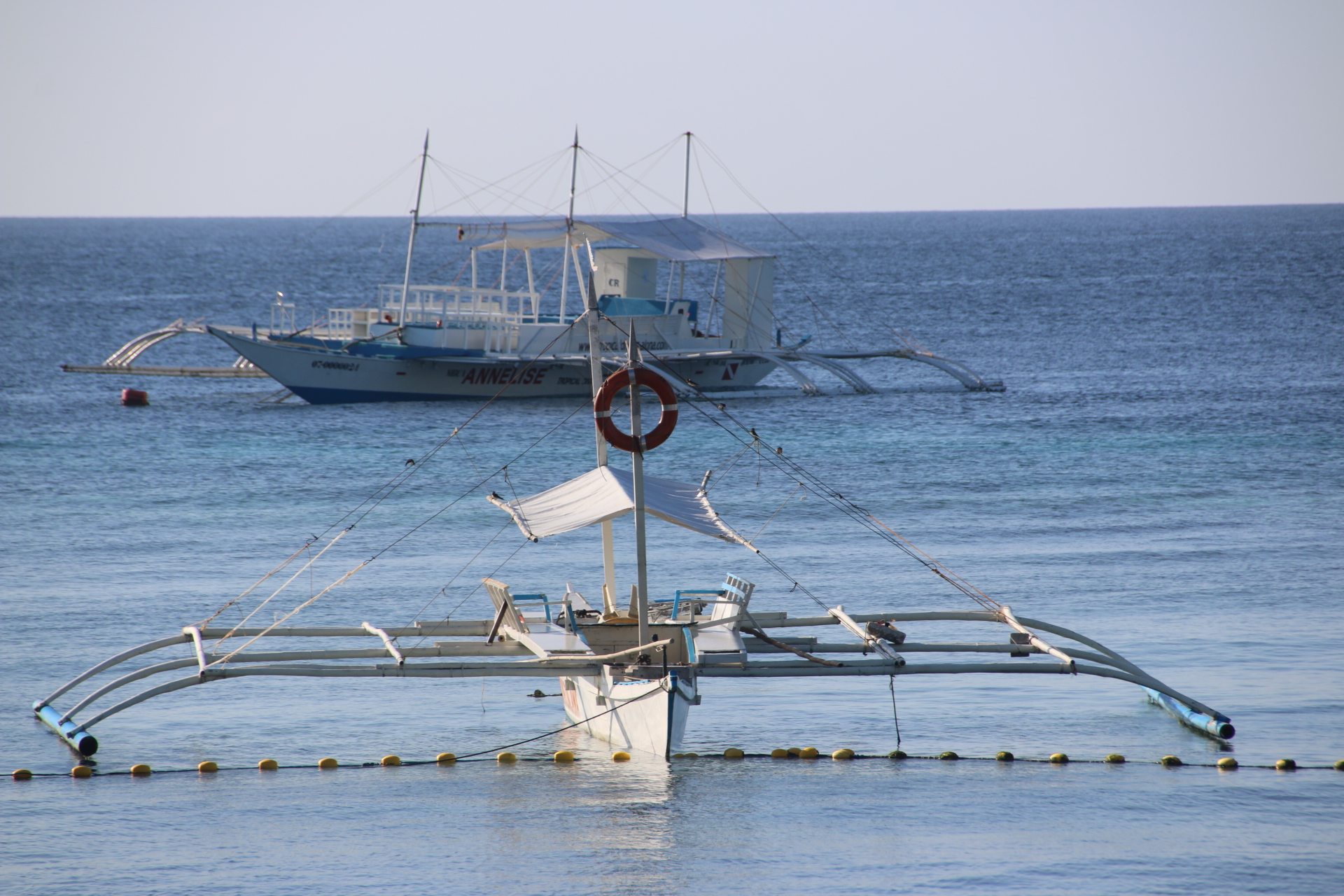
The main entertainment, after sun bathing, is going out in one of the hundreds of outriggers that ply their trade from the beach. Aloma Beach is a diving and snorkeling centre but I joined Capt. Gabriel and his passengers to visit nearby islands. It was great to get away from baking Alaska on the beach and to smack through the waves, with the wind cursing in my hair accompanied by the smell and noise of an ancient diesel engine. Other outriggers kept us company like crabs scuttling sideways across the ocean. The boats collect together along the coral white beaches of the islands and unload their human cargo of travellers who trot off to snorkle a line of buoys or drop off bigger crabs to dive deeper reefs or dash to the shaded to drink coke or eat grilled Jackfish or maybe wander through the blitzing sun taking in the array of craft before joining fellow travellers in the shade.

20160219234834_IMG_5578 20160219232648_IMG_5551
I suppose I shouldn’t complain about the blazing sun, the feel of the sun on the body, the crust of salt on the skin from cooling down in the clear waters of the South China Sea, the smell of grilled fish on the bar-b. It is lovely showering off the day, lotioning up, stretching out on a bed under the air con, anticipating a beer and bite later. After all, this will be all over in a day or two and I’ll be back home with you and it will all be just a lovely warm memory. Enjoy it with me while you can.

20160219234711_IMG_5575


Village life in Luzon Province

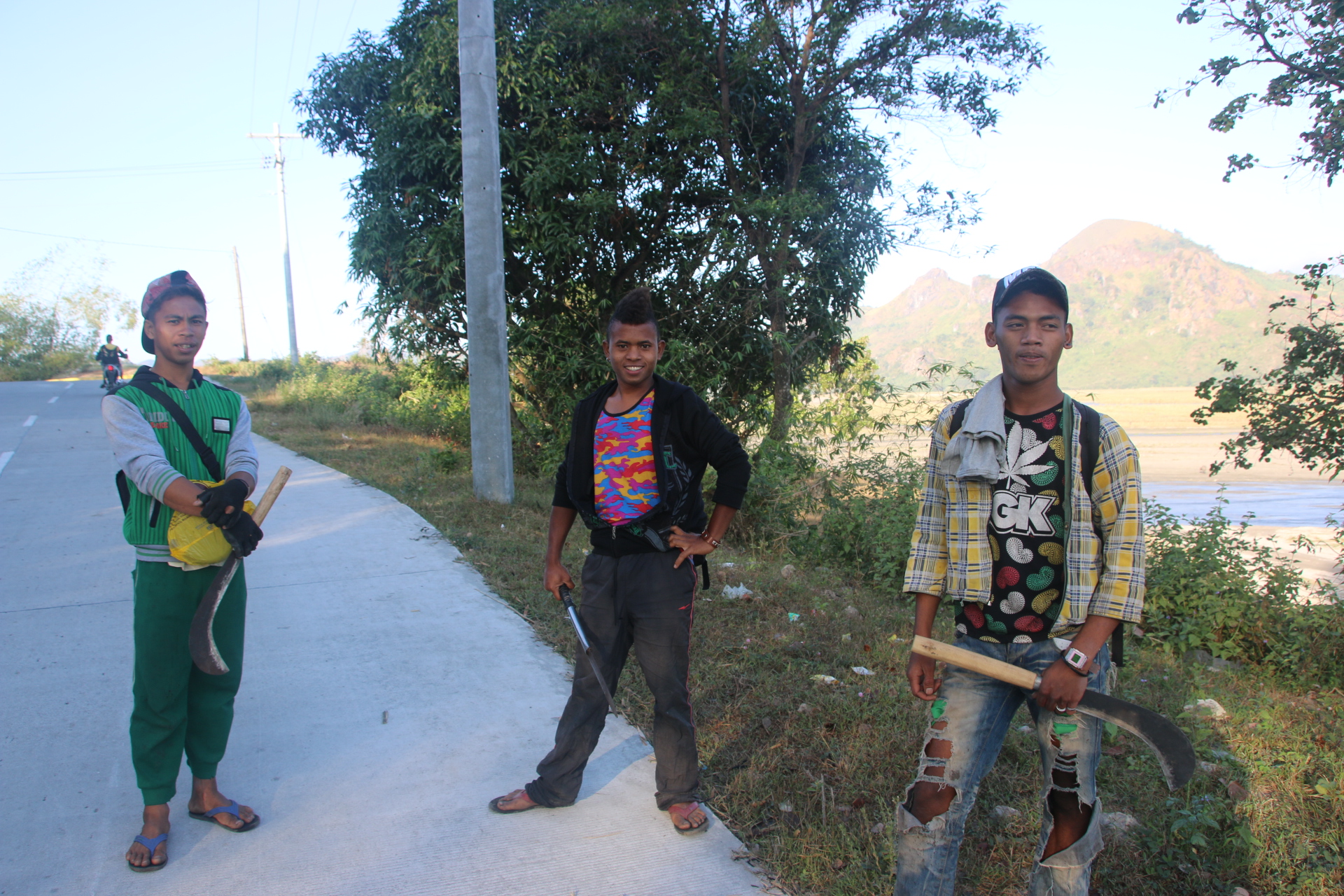
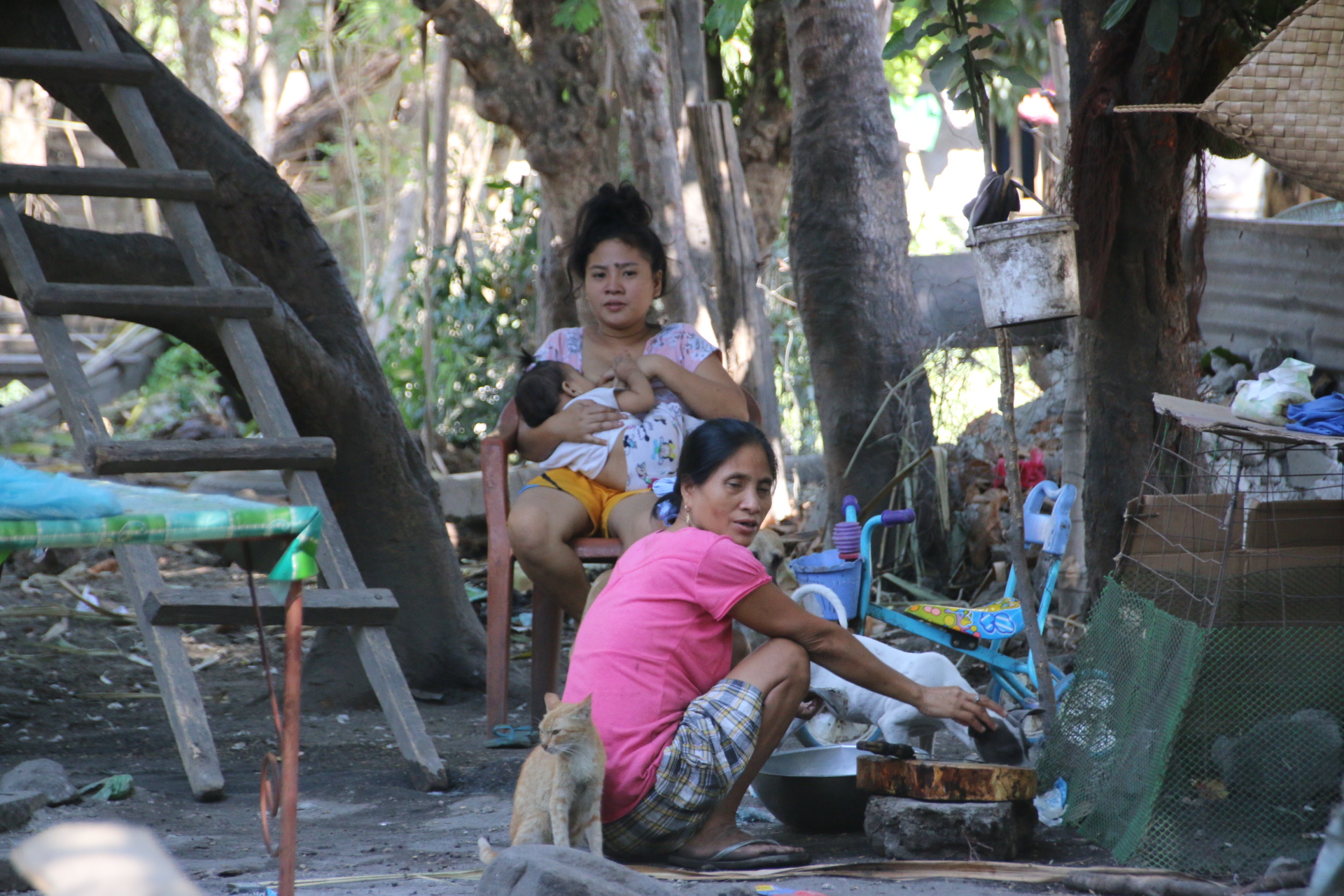
So now it’s back down though the cloud and mist and grey to the lowlands on the way to Manila to grab a flight south to the beach. First is a drop off in a small settlement called Sta. Juliana, a one street village in the middle of a military firing range. Most of the locals are either farmers or earn a living in their 4x4s driving tourists up to the start of a trail up to the crater of their local volcano, Mount Pinatubo. I’ve put this collection of images together to show what village life is all about – from cool dudes with machetes to kids with catapults to mums with amazing babies to dads  in carts pulled by caraboue to even cooler cowboy dudes. I you get a sense of timelessness and peace and calm and the inevitability of this life.

20160217225721_IMG_5352

20160217232742_IMG_5411 20160217234951_IMG_5439 20160217233042_IMG_5415 20160218022201_IMG_5488 20160218021344_IMG_5475 20160217233529_IMG_5425 20160218021817_IMG_5481

20160217231806_IMG_5398

Exploring Banaue’s famous rice terraces in a jeepny

20160216072334_IMG_5265 20160216072635_IMG_5270

These mountain towns have a character all of their own. Banaue is no exception. The first impression is slab like buildings created using blocks, planking and cement and then covered with corrugated iron to keep out the elements. It doesn’t help that the cloud is low, a polite way to say it is raining, and everything is seen through a gloom.

20160216071417_IMG_5257

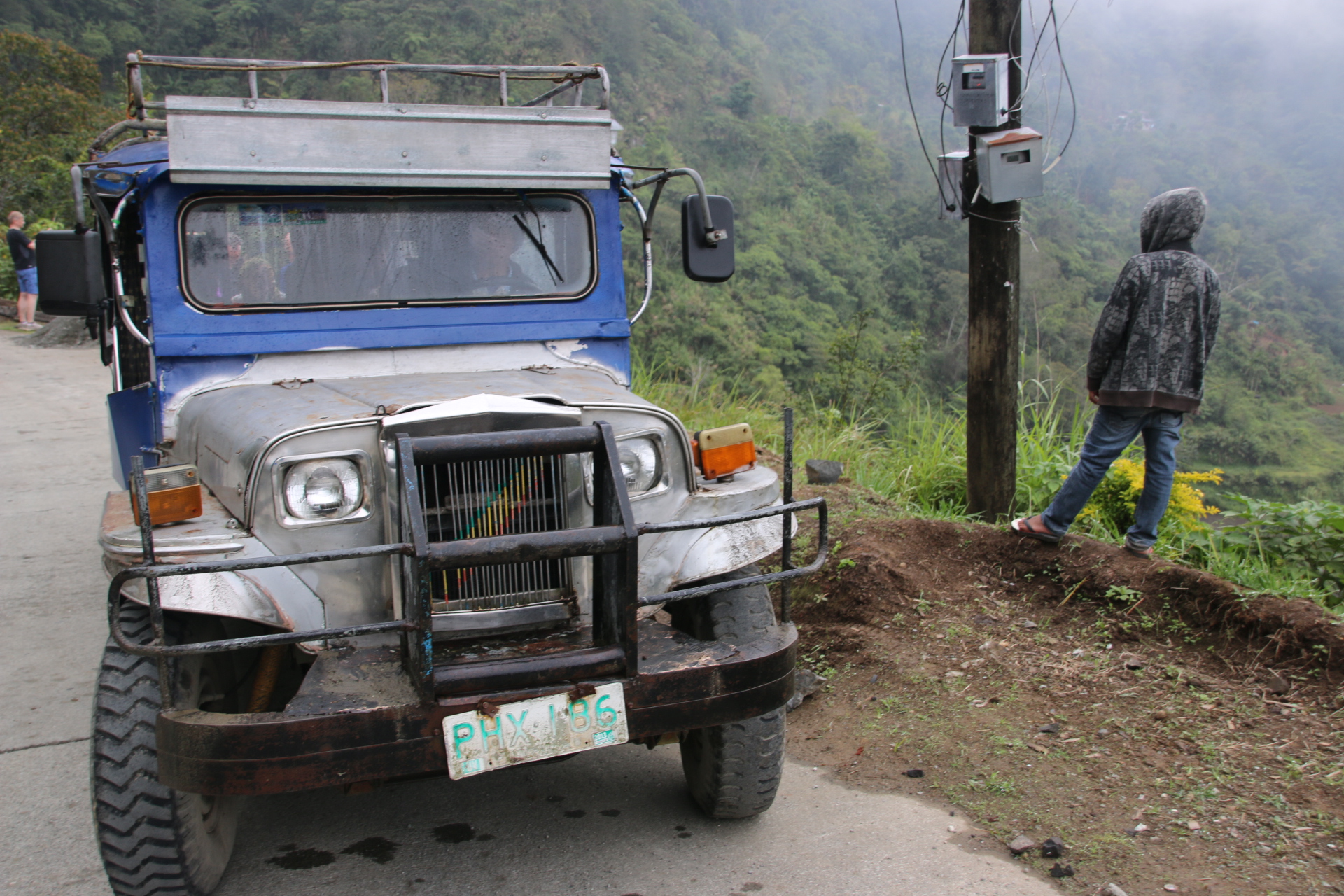
Jeepnies are more substantial to deal with the gradients and are enclosed to keep the passengers dry and warm. That does not mean they enjoy any modern mechanics. Most are held together with wire and any concept of an MOT passed them by years, nay decades ago.

20160216071911_IMG_5259

There are thousands more rice terraces around the town which, if unravelled and placed end to end, would stretch halfway around the planet. On a grey morning the bashed up jeepny roars out dollops of grey exhaust and struggles out of town and up and over to the surrounding valleys leaving the grey structures of Banaue behind us in the mist.

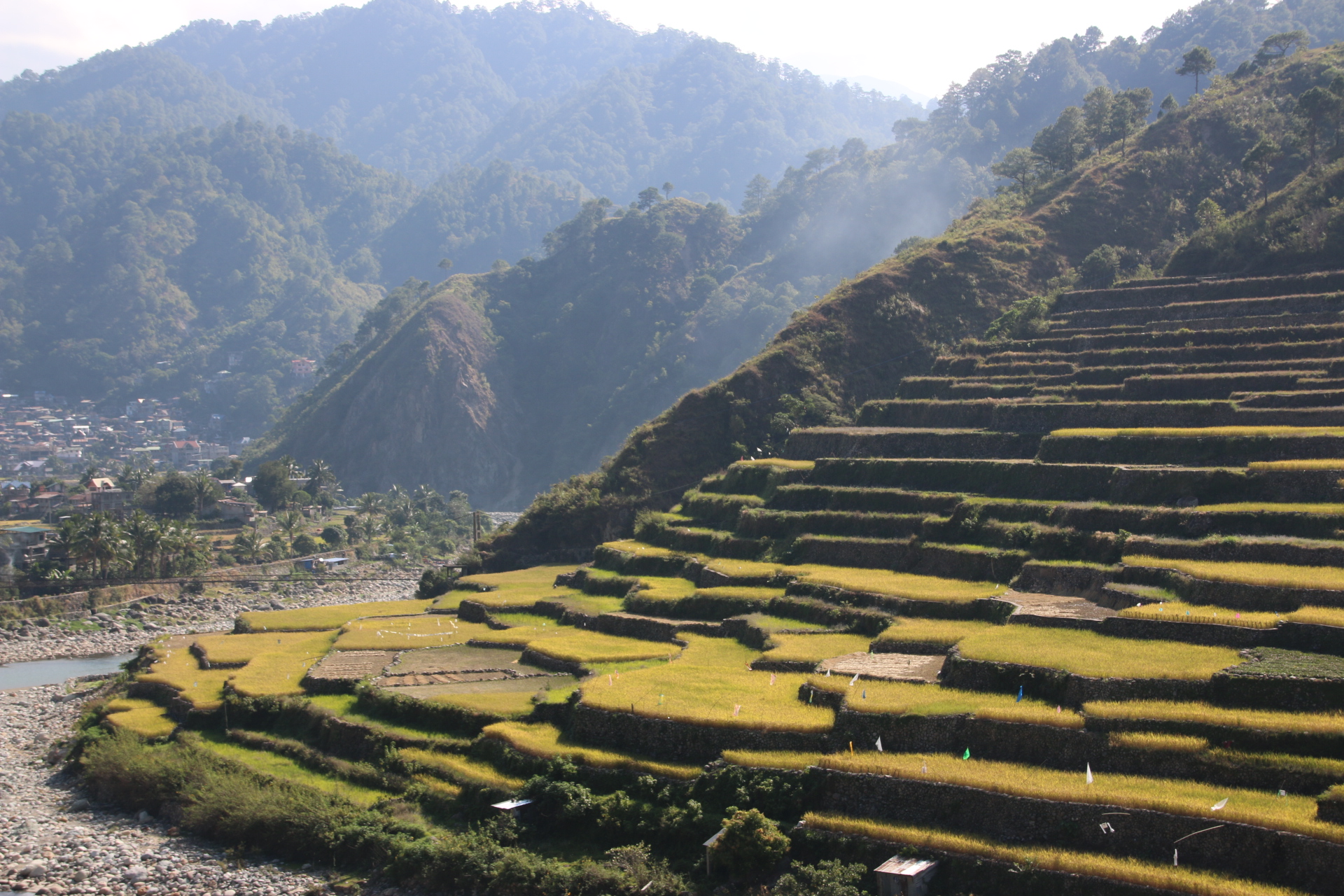
Eventually the cloud has swirled away enough to spy in the gloom the patterns of three rice terraces around their respective villages.

20160216023522_IMG_5147 20160216053245_IMG_5240 20160216071113_IMG_5251

And here are a few of the locals.

20160215042516_IMG_4940 20160215042959_IMG_4959 20160215045627_IMG_5000


The Hapau River Rice Terraces

The drive through the highlands from Sagada is dramatic. This is real mountain territory with high sharp peaks and forested ridges cut apart by dry cobbled river beds wishing for the monsoon rains to top up their levels. The road follows the same meanders as the rivers although clinging right up on the sides of the ravines, peering down to the bottom as it rises through high trunks that cling into the rocky ground for dear life. There are so many giants around here. The backs of their hands positioned side by side on a table and their huge arthritic, gnarled hands and knuckles and veins are a challenge for all but the most competent of drivers. The rivers have cut deep into the mountains forming deep canyons, sharp ravines and rocky gorges.

20160215013142_IMG_4853

Wherever the river flattens out for a short while, terraces rise from both banks and follow the line of the tumbling waters as it stretches up the valley keeping the river company, way below us.

20160215030505_IMG_4907

Crawling up to the ridge top, engine grinding all the way up the gradient and then ahead there is nothing above us, no sharp ridge, no tall timber, just blue sky. So then, with a huge last desperate roar, it’s up and over and down into the neighbouring valley with a huge gasp of exhaust  and engine relief (did you like the way I did that?). 

Then down, down, approaching the crossing point at the bottom, through the corrugated iron that makes up the village or town there, over the rickety rackety bridge and then it starts all over again, grinding our way up the other side.

Along the road and along the rivers every space possible is terraced up to enable the locals to carry out their family farming. Valley sides and valley bottoms host the flattening effects of terraces where rice, in particular, and vegetables are grown in contour hugging collections of shape and size and colour and texture.

20160215033225_IMG_4933
If you get a chance check out a guy called Masferre. He was a Spanish Filipino photographer who took some wonderful images of tribesmen and village life in the Bontoc of region. Truely stunning. I think I have a fair bit to go.

The Hapao Rice Terraces, just outside the town of Banue, are the main man when it comes to rice terraces.

20160215072643_IMG_5023 20160215074602_IMG_5048 20160215082624_IMG_5096 20160215080418_IMG_5071

They have been here for over 2000 years and were the prototype for all terraces in the Philippines. Some are created with mud walls, which can collapse after heavy rain, and others, the stronger ones, with stones and boulders. All are irrigated efficiently and have clear water trickling through or beside them in narrow channels with simple weirs to control the flow.

20160215083454_IMG_5113

The hanging coffins of Sagada

Today is a long drive southeast to the rising hills of the highlands. The road passes through emerald green and harvested brown paddy fields, squares of sun drying yellow corn and white flecked rice, chomping, humped, white cattle, cash crops of maize or onions. Hamlets, villages then towns line the route. Construction tends to be the same – concrete blocks with the omnipresent corrugated iron roof. In the county there tends to be simpler, bamboo shacks mixed in and in the towns, multi-storied houses with balconies and chrome bling add variety and indicate greater wealth.

Every town has an imposing church lording it over the skyline. The Spanish friars certainly did their job well. The buildings themselves20160213233835_IMG_4734

date from different times, ancient and modern, but all were established in the 16th century when the conquistadors first arrived. 

20160213232711_IMG_4712

The domination of the church of Santa Maria over the hearts and minds of the faithful is complete. Dating from 1810 and constructed in brick its faded glory stretches along the ridge for 90 metres. The fact that it’s Sunday and mass is taking place just adds to its peace and harmony, not just of spirit but also of ambiance as beautiful singing nightingales out of the open doors from the packed congregation who express their delights and celebrations over the surrounding scene.

20160213233201_IMG_4723

Then the bus starts to climb. Within a few moments the road is wiggling and winding up through jungle foliage and palms and stretching branches. Then it is into the sharp, taloned chicken feet of forested high valleys and ridges, carved and dissected by water into a scenery of gnarled fingers and arthritic knuckles on a tapestry of hands.

My destination is Sagada. Sagada is a small scruffy little town, full of corrugated iron and wooden panels, high up in the highlands and a favorite, for some reason, with the young couples celebrating Valentine’s Day. Being at 1400 metres the air is fresh and even chilly at night. The locals dress up in fleeces and woolly hats to keep out the cold that they seem to feel.

20160214092708_IMG_4827

20160214092236_IMG_4813

The town is renowned for a truly remarkable practice. The locals have been air burying their dead in coffins perched high on cliff faces for over 2000 years. Why? It could be to keep the preserved bodies away from wild predators or they may have believed it took their loved ones that much closer too heaven. Whatever the reason, it’s all a bit macabre. Thoughts of falling skeletons from worm rotten coffins comes to mind but it is reassuring to know this rarely happens due to the hardness of the wood. It is still done today with the latest body buried in this way in 2010. There are several cliff faces for this use.

20160214063122_IMG_4758 20160214085959_IMG_4803

At least the Spanish introduced cemeteries and underground burials even though gravestones and slabs are not so picturesque as hanging coffins.

I had lunch in  the hills just outside town in a stilted cafe overlooking the houses and paddy fields. I love this image.

20160214071228_IMG_4779

The charming, cobbled streets of Hispanic Vigan

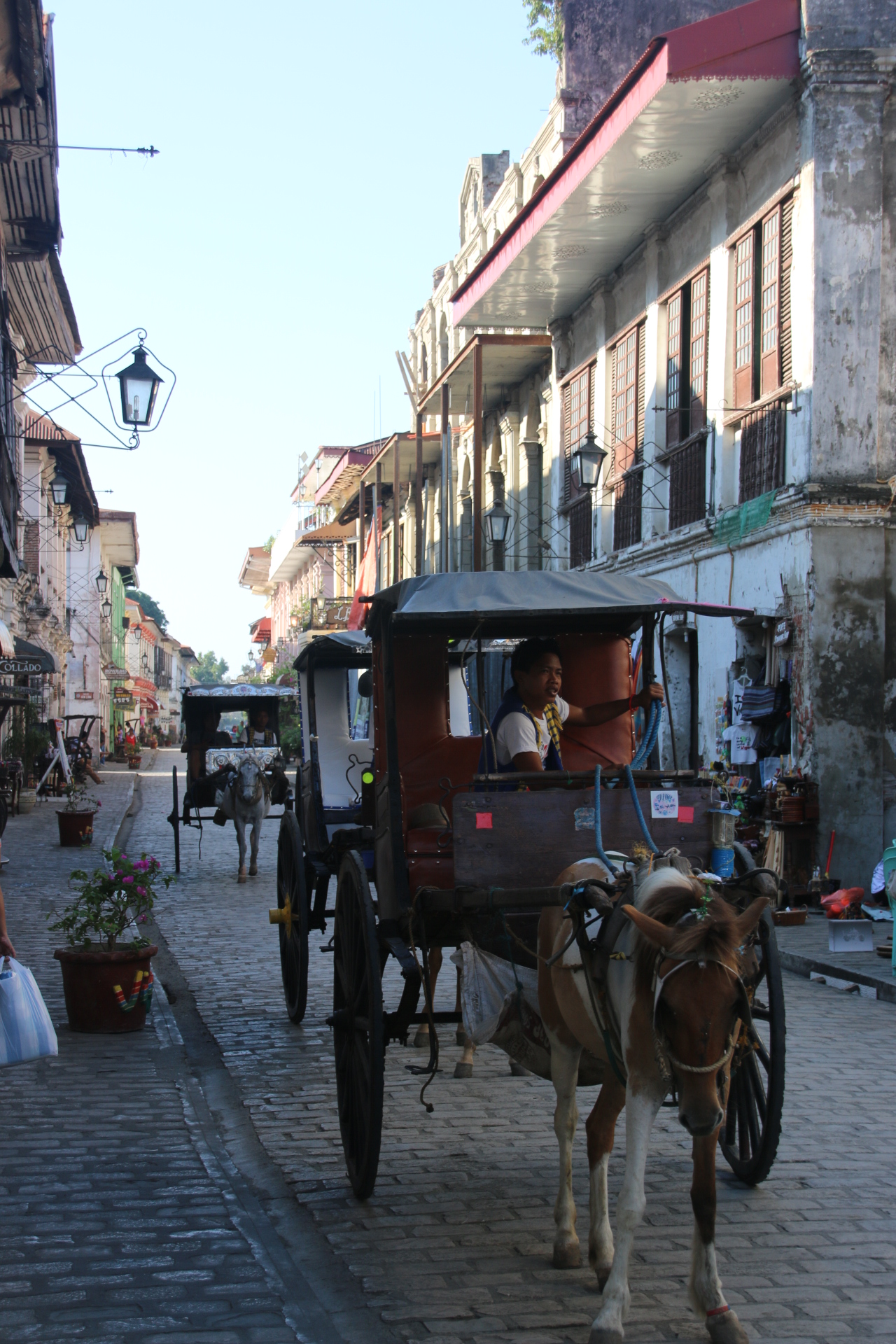
Vigan has a charm all of its own which is felt immediately you wander through the narrow streets, avoiding the buzzing motor bike/sidecar tuktuks, whose body work, here, resembles Roman legionnaires, and the loud clip clopping nags pulling their elegant, two wheeled tourist carriages, into the gentle hubbub of the plaza. It is one of the few Hispanic towns left in the Philippines and a reminder of the arrival of the Spanish searching for spices for their dishes and souls for their church. 

20160212075301_IMG_4401 20160213004052_IMG_4506

The plaza, as with all Spanish towns home and abroad, is the centre of town life. Vigan is no exception and has a few unique features. The traditional eateries are common, as are the families and groups sitting around passing the time together. The skate boarders trying out their skills are slightly more unusual. But what about these guys?

20160212092615_IMG_4425
And this is a first. The only ice skating rink in the Philippines. I really had to pinch myself and chuckled out loud at the sight and particularly the plastic polar bear aids. The queue to get in was phenomenal. They have no idea what snow is like, they’ve never seen it. They now think it is white plastic stuff which is really hard to fall on and that polar bears are less than a metre high.

20160212093109_IMG_4434
The grid ironed streets are lined with elegant colonial houses with carved wooden facades to the upper stories and torn plaster covered brickwork at ground floor level. Although tatty and run down the place still oozes atmosphere throughout it’s shady, overgrown centre. The Spanish conquistadors, the Chinese before them and the local Filipinos have all had an influence on the architecture and layout of the town.

20160212110647_IMG_4485 20160212110848_IMG_4488 20160212104558_IMG_4473
Nighttime is quite magical. The old street lights give a warm glow to the wood and the broken plaster. Restaurants and bars seem doubly welcoming as the streets are taken over by tables and tat shops open up to the souvenir hunters. The old tourist carriages negotiate a path through.

In daylight the tourist trail is a bit arbitrary. It covers the cathedral, where two funerals are taking place at the same time, three museums, a pottery, a weavers, a garden centre for lunch (they’ve copied the UK’s diversification from plants into meals although it was nice and shady), and a farm with the young workers putting on a cultural show. See if you can match these images with the activities.

20160213020923_IMG_4577 20160213025230_IMG_4611 20160213051501_IMG_4652 20160213060914_IMG_4684
The best bit was the day spent in the carriages clip clopping between all these places both in town and a bit further out in the country, passing through villages and hamlets, through fields of maize. It felt a bit like royalty passing as we waved and smiled back at waving and smiling locals.

20160213065239_IMG_4705 20160213020725_IMG_4572 20160213024024_IMG_4595

We did get into trouble though. The mayor saw our convoy of 8 carriages with their skinny nags and the main man of the drivers was called to account in his office for speeding. Some chance.

Cockpits, residential palaces and Baroque churches

Cockfighting sounds pretty barbaric. Every town and village seems to have at least one breeding centre. Certainly at five in the morning, where ever you are in this country, a chorus of crowing birds greets the dawn and it sounds like that is a complete underestimate. Hundreds of roosters all sound off at each other, a bit like boxers at the weigh-in trying to outdo each other.

20160212024451_IMG_4262 20160212024725_IMG_4269

These roosters are magnificent birds, full and plump and powerful. They gleam with strength and colour. They have their own shelter of slab tiles where they are tethered in the shade,  lined up in a yard with fifty or so tilted homes. They are fed up, food ways I mean but I am sure the other way as well, and watered. They peck about and strut and scream out to assert their position in the pecking order. See how I did that? Anyway, as the big day approaches I am told they are starved until they are desperate for food, razor blades are tied to the backs of their legs and they are thrown into the pit to battle it out to the death; feathers and blood and gore. It’s rowdy and raucous with men yelling their bets and encouragement.

20160208013410_IMG_3431 20160208013350_IMG_3430
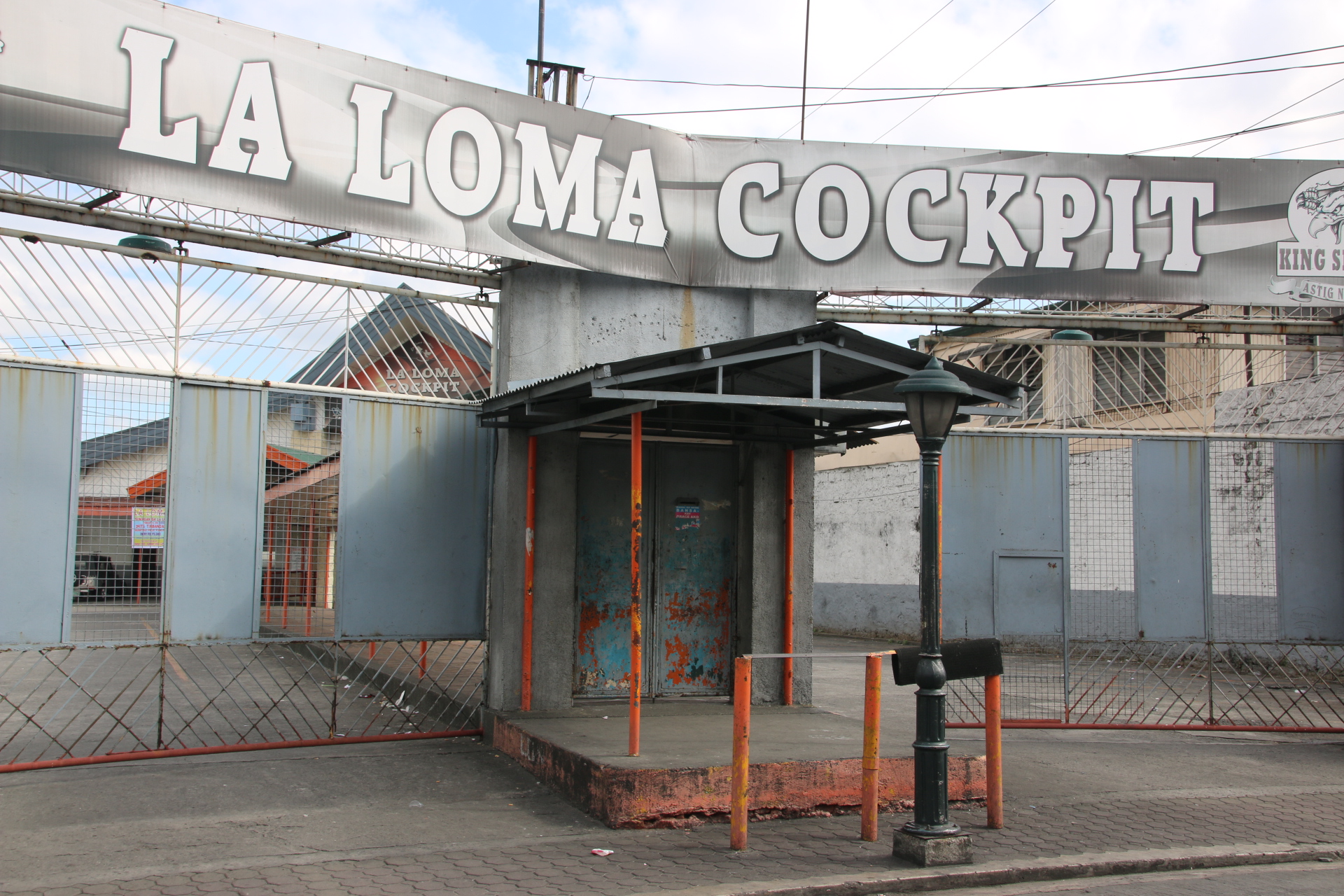
Every town has a cockfighting pit. These are not small structures. They are more like stadium with room for hundreds of spectators. This is the one in Manila which is named after King Slasher, king of the ring, a champion of the razor kick.

Today is a leisurely drive down the coast to the heritage city of  Vegan. On the way a pop into Marcos’s northern palace is in order and also this wonderful church built of brick and stone.

20160212040401_IMG_4317

The cornerstone was laid in 1704 by the Augustinian friars who had arrived in the 16th century. When in danger of falling down, 12 buttresses were built on each side, constructed from stone and smoothed coral. That didn’t help the protection of the local reefs.

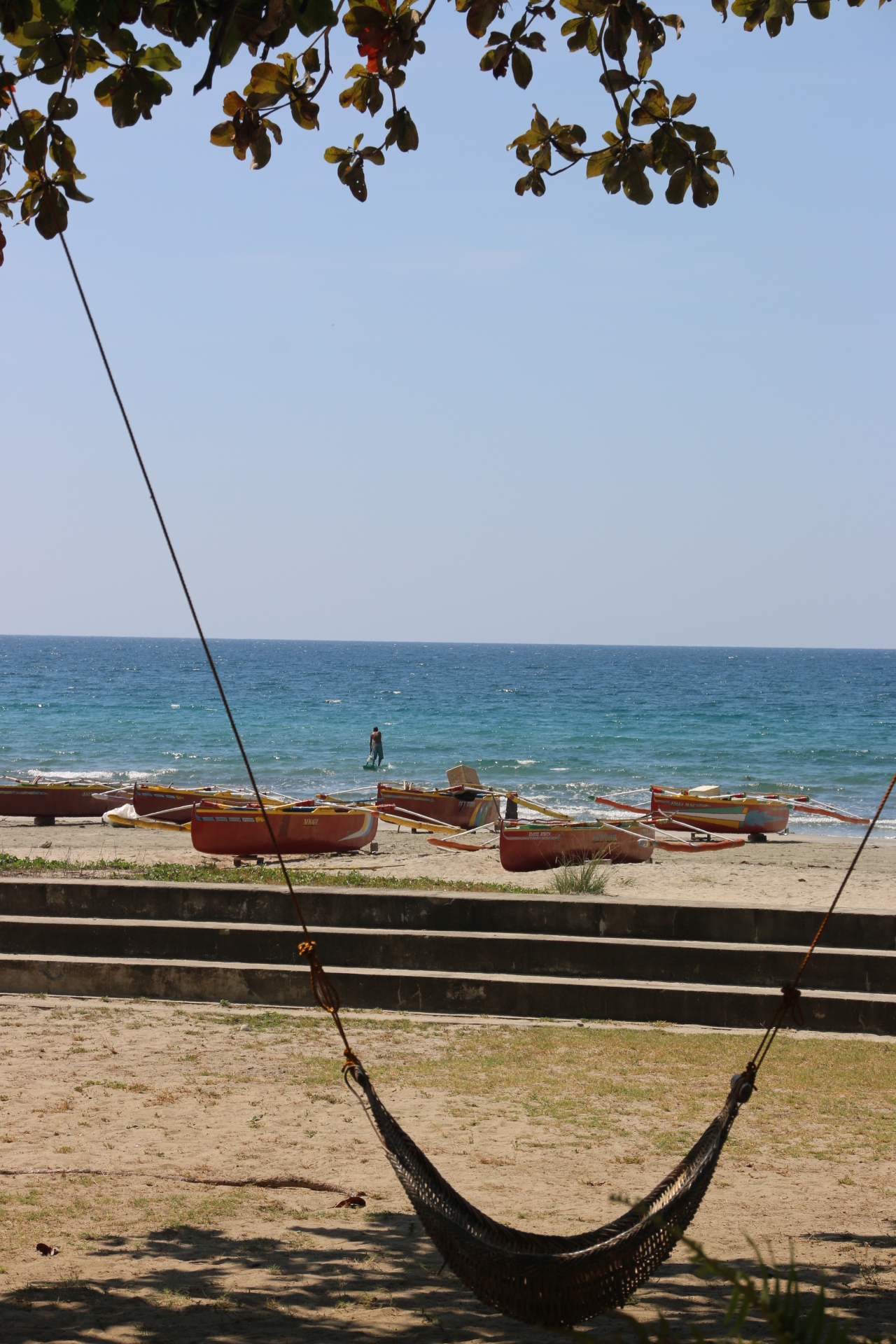
A comfort break and a refuge from the heat and the dust of travelling is required. Sitio Remedios is just that, reinvigorating the spirit in particular. A true oasis of calm and peace on the edge of the ocean.

20160212045712_IMG_4359 20160212050056_IMG_4371

I could have stayed for ever in the hammock, in the shade, listening to the silence and losing myself in the monotony and perpetual motion of surf on sand out there in the blazing sun.

20160212050352_IMG_4378


Exploring the coast north of Lauag

The Republic of the Philippines is made up of 7,107 islands in the Pacific Ocean the largest of which is Luzon. It is a short flight from Manila up to Laoag in the north of the island. Today is spent exploring the most northern part of Luzon. And it’s beach day!

But first of all a stop in Batac. This is a small town whose main claim to fame is the centre of support for the famous, or is it infamous, President Marcos. Here is his mausoleum and a museum dedicated to his life. It is a small town with lovely people going about their business. These lovely ladies were preparing the local delicacy of empanadas.

20160211015023_IMG_4072

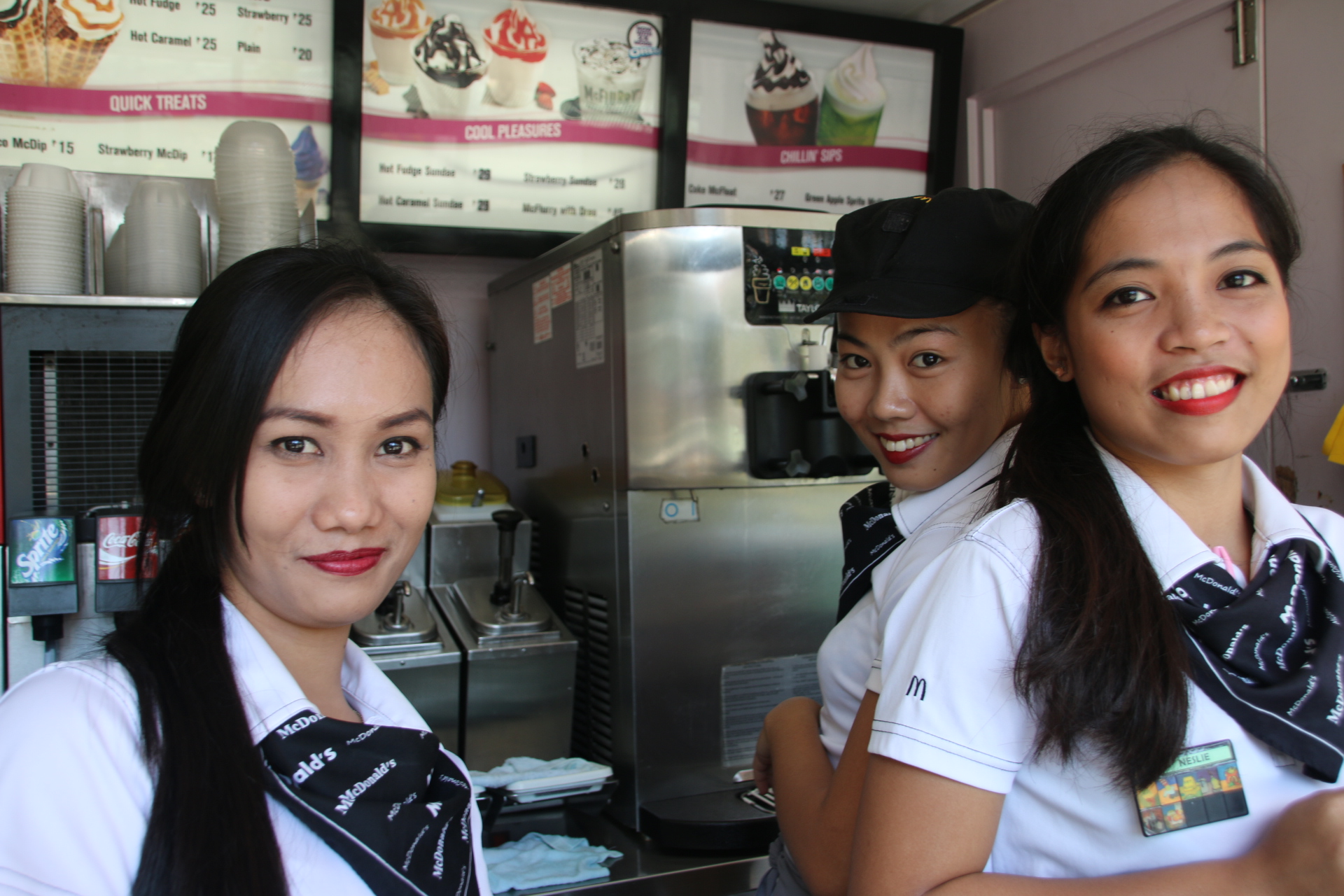
and these lovely ladies were ready to take orders in their air conditioned Makky D’s.

20160211020455_IMG_4094

Then it’s up the coast road. The jungle is far behind us. Now it’s dry arid scrubland with the occasional settlement of low scruffy one storey dwellings surrounded by simple fishing outriggers nesting on the flat coastline. There are no golden beaches yet. Volcanic clinker is the main element of this coastline. Up here the main source of income is the manufacture and selling of salt and the sale of small onions and garlic.

20160211031241_IMG_4097

The lighthouse was built in 1892 and is still in use.20160211035910_IMG_4133

The ride up on the space shuttle bikes is cool. I was a bit suspicious of my driver as he did not seem to know the rules of the road. Would you trust him?

20160211040935_IMG_4147
A quick stop off at the market to buy lunch. Now careful. Traditional dishes are poki poki, fried vegetables mixed with shrimp paste (very strong), or fried aubergine. Neither of which are to my taste so maybe I’ll order pulled pork from the menu. The Filipinos do like their pork, pulled or otherwise. Oh, you need to be careful. Poki in Chinese means vagina.

And then the beach at last. 🙌 🙌 🙌. The landscape has changed over the past few miles as the highlands rear up inland. It is more luxuriant, back amongst the palms and jungle foliage and rice paddies. Then following a sign to Ivory Sands it is through Veronica’s restaurant and there is this long, palm fringed crescent of soft, inviting, silver sand around a turquoise loop with darker patches of fronds of gently lapping seaweed cruising around flattened coral. Sorry guys but I have to put this image up. Yes, the water was as glorious as it looks.

20160211074847_IMG_4185

Swiming in the South China Sea before a cool beer and, I decided on, a plate of fried calimari, was just heaven.

Village life in the land of volcanoes

20160210074242_IMG_4037

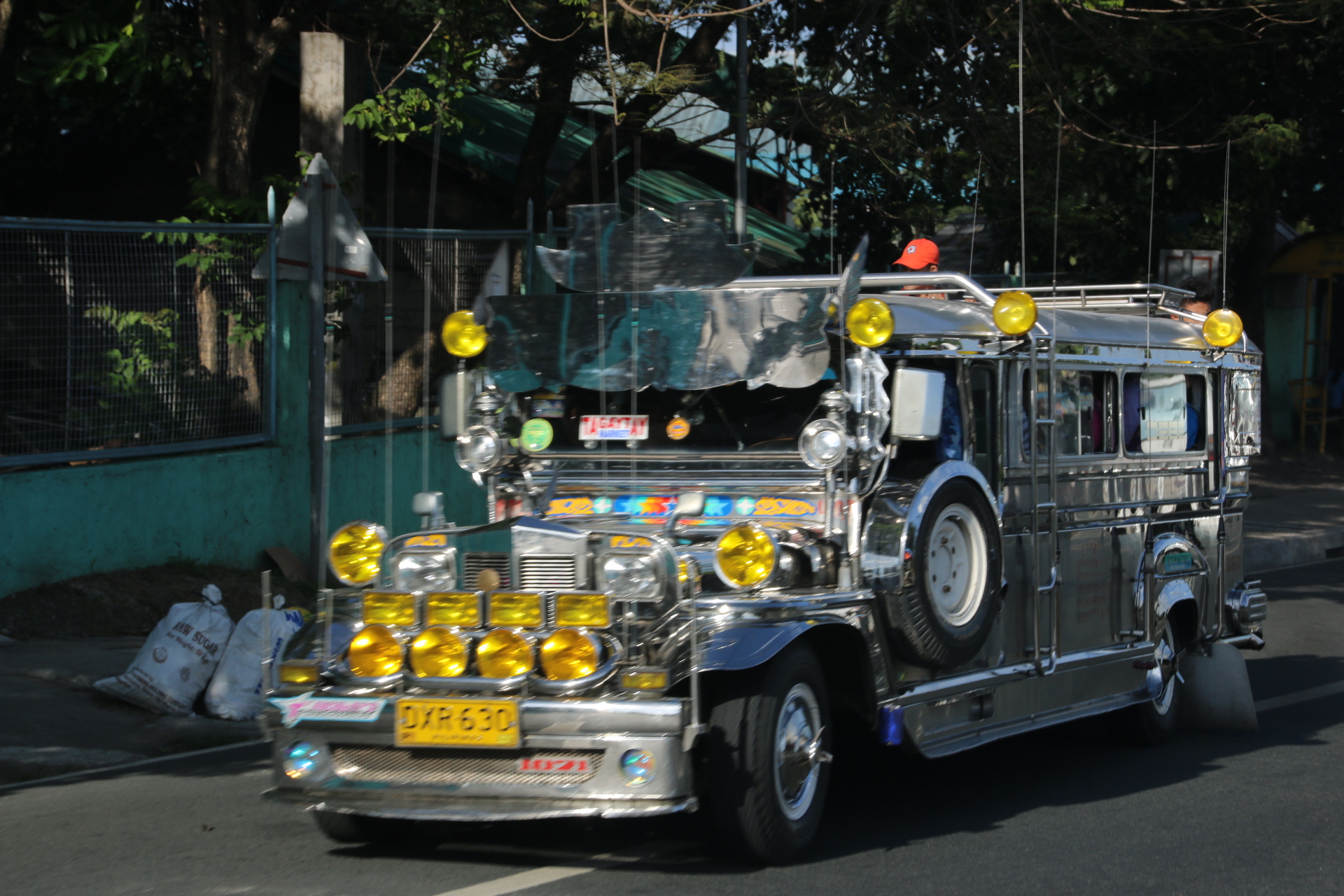
I know a few things about jeepnies now. The base unit is the military Willis jeep, left by the US after the war with two bench seats, each designed for three personnel.They were surplus to requirements when the Americans left and some in factory condition. Local Filipino mechanics would use their inventiveness to extend the chassis and bodywork to fit up to 20 passengers. To power this beast they would whip out the original engine and put in a Mitsubishi truck engine. And there you have it – the jeepny. That was interesting wasn’t it?

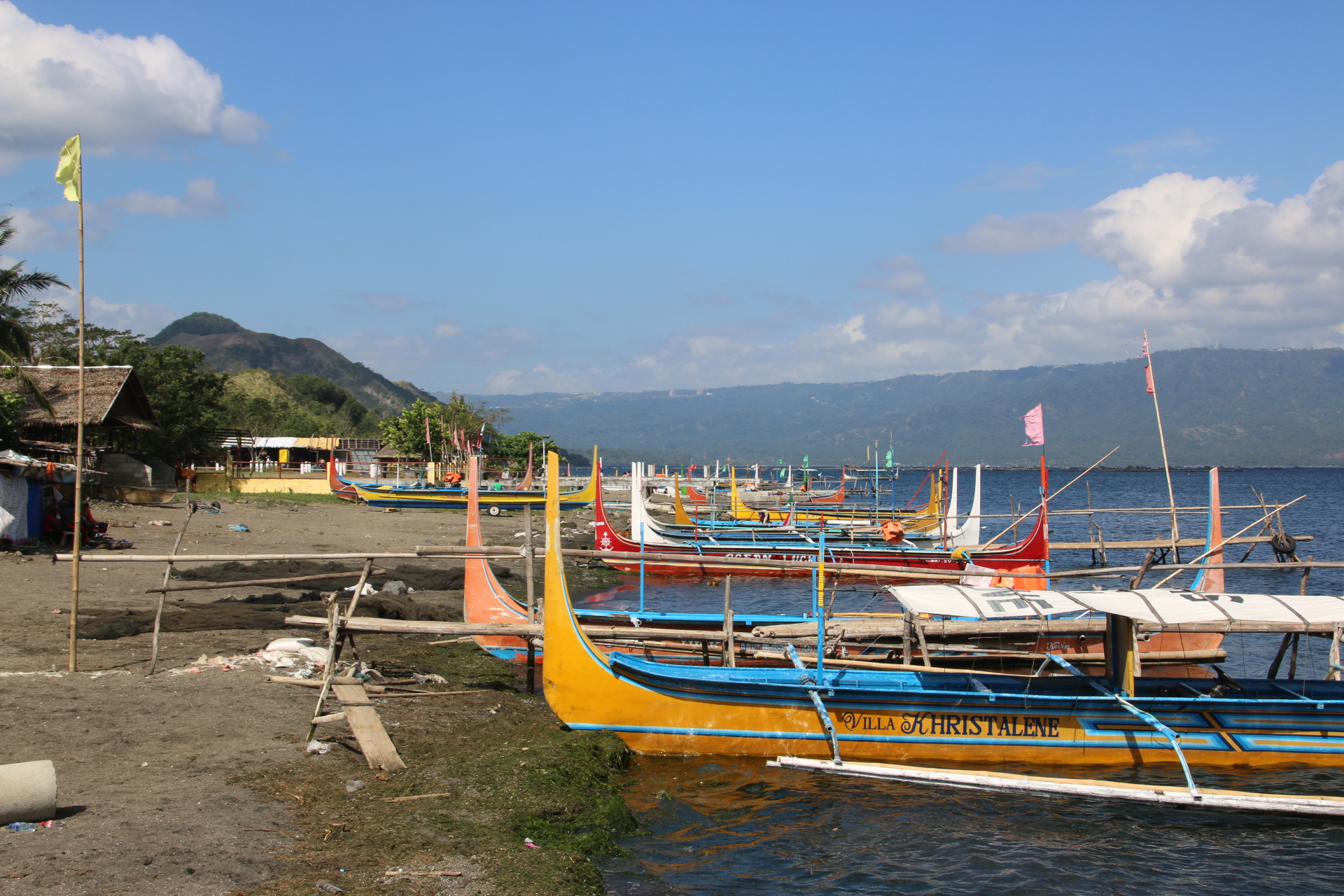
Anyway, this is volcano land. I stayed in Tagaytay on the edge of a large fresh water lake which must have formed part of a volcano at some point in the past. So, after clambering aboard an outrigger and a short hop over the lake to Taal Crater Island which so looks like a proper volcanic come.

20160210015919_IMG_3920

Then I have a choice. I either hike up to to the top of crater rim or I wander around the village at the bottom. Hmmmm. Quite easy really as I have seen quite a few volcanoes in my time and that incline is quite steep enough.

Firstly I explore the small centre where the locals hire out their skinny nags to take tourists up the volcano.

20160210014430_IMG_3886 20160210014458_IMG_3887 20160210014627_IMG_3897 20160210015136_IMG_3909
Having had a rather disgusting cup of Nescafe and take the very difficult decision to walk left along the beach rather than right. Soon I am amongst the village houses and livestock and families. Such a joy.

20160210023216_IMG_3938

The camera opens up smiling faces and roars of laughter and shy grins.20160210025642_IMG_3987 20160210023903_IMG_3956 20160210031907_IMG_4011

What a lovely, warm, friendly people with no axe too grind and no agenda other than to make a crust by tapping up the tourists or managing their offshore fish farms. Life is pretty basic and simple but a smile comes to their faces quick enough and they seem content with very little. Maybe we could learn a thing or two.

I love these two images. They seem to sum the whole thing up.

20160210023842_IMG_395220160210024151_IMG_3965


Bamboo rafting on Pandin Lake

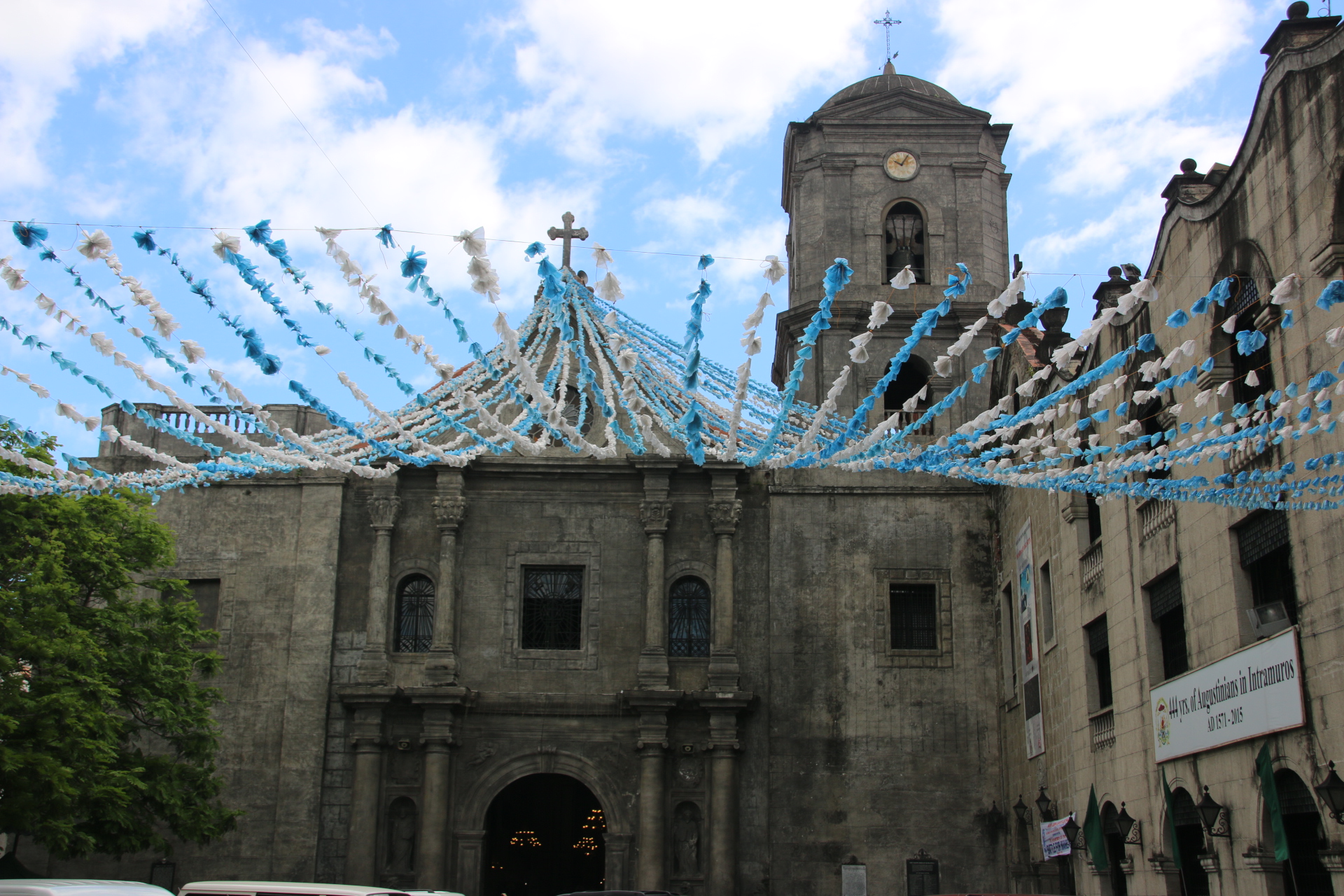
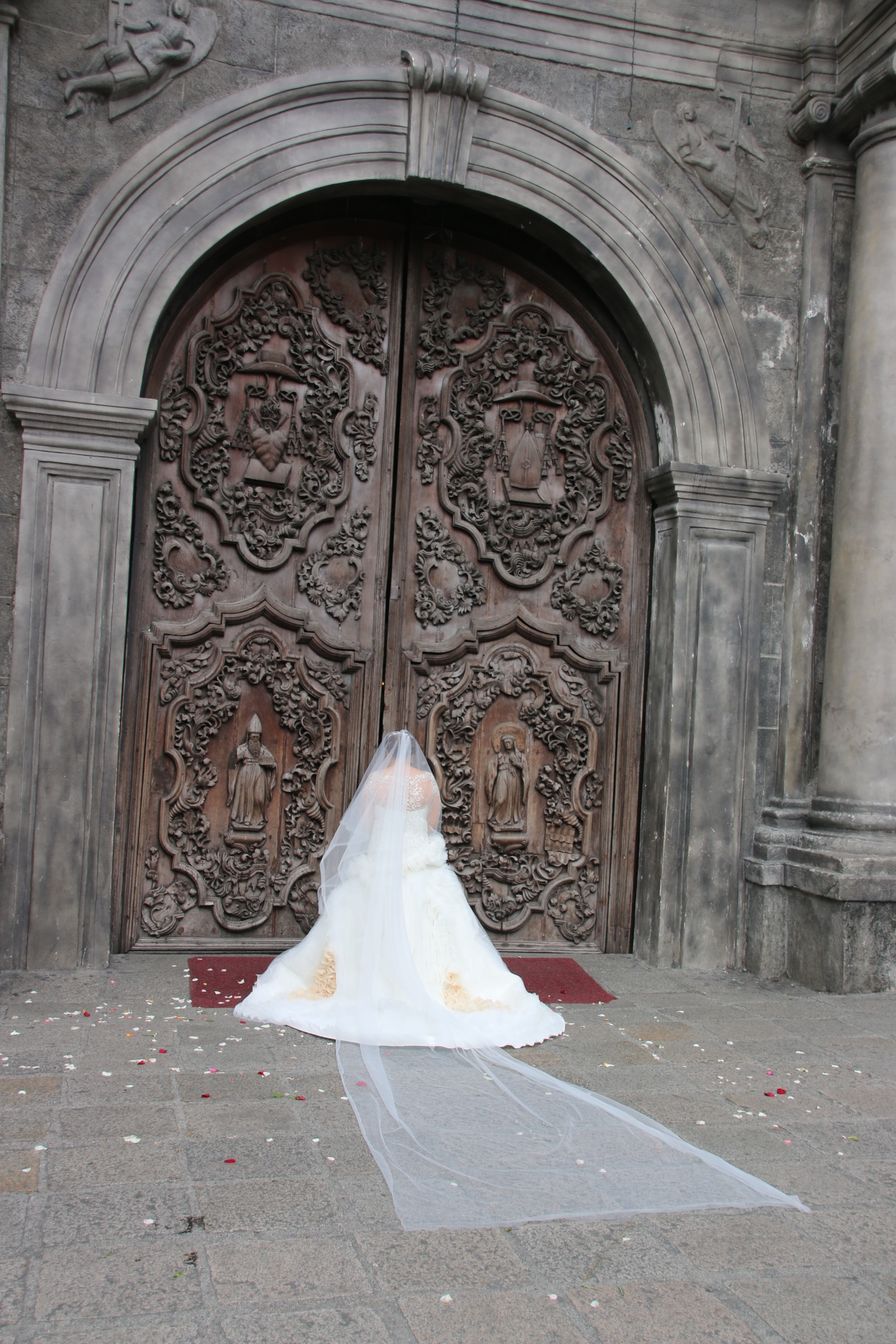
After the day spent at carnival the peace and shade of the oldtown within the walls is a welcome respite from the clangs and drums of the Dragon performance. Two churches survive the devastation of the war. The church of St Agustin is built of volcanic stone and is the oldest church in the Philippines built by the Spanish friars around 450 years ago. There is a conveyor belt of wedding parties waiting for their slot to tie the knot. Even though Catholic, there must be something auspicious about being wed on the first day off the year of the monkey.

20160208062110_IMG_3688 20160208072202_IMG_3717 20160208063304_IMG_3699 20160208064518_IMG_3704

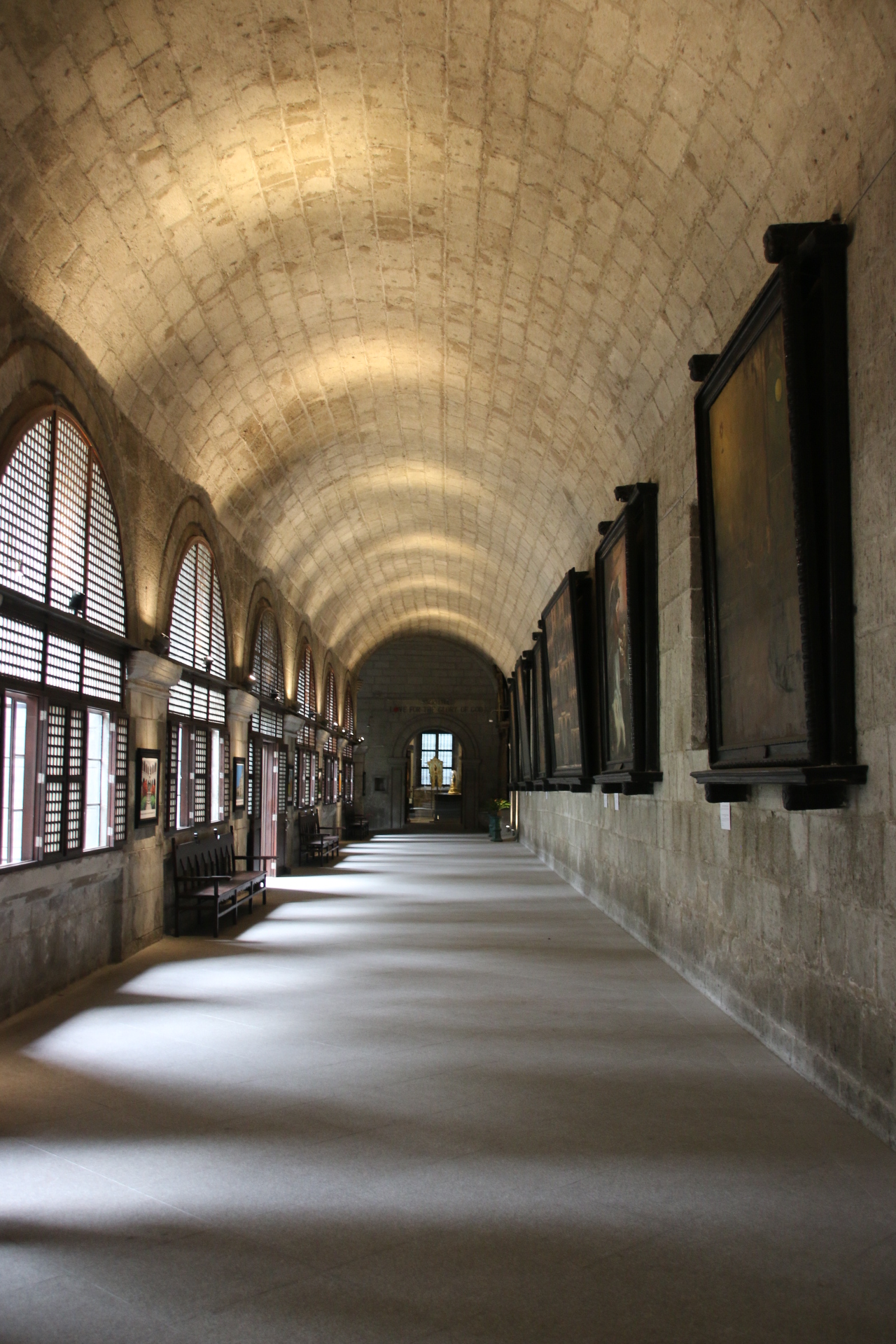
Manila cathedral takes up the slack with the faithful, providing space and opportunity for prayer and reflection.

Today brings the real Manila to life. The streets fill with school children filling like ants to their places of learning. It seems that so many Filipinos work abroad that the young are left to build their country’s future. Traffic builds amongst the growing pedestrians walking the old streets within the wall. From above the tricycles skittle their way around and through the gates in the wall like mini robotic toys on mini tracks on endless journeys to locality nowhere. The main roads fill with traffic a thousand of commuters put into town. Every other vehicle is a jeepny with its cargo crouching down to get some air into its squashed confines. The occasional bigger coach, Toyota taxis,shiny private cars compete for space amongst the gridlock of the main routes into the commercial centre of bright lights, posh shops, tight uniformed security guards, retail outlets, western coffee houses and stretching Hightower apartments and offices.

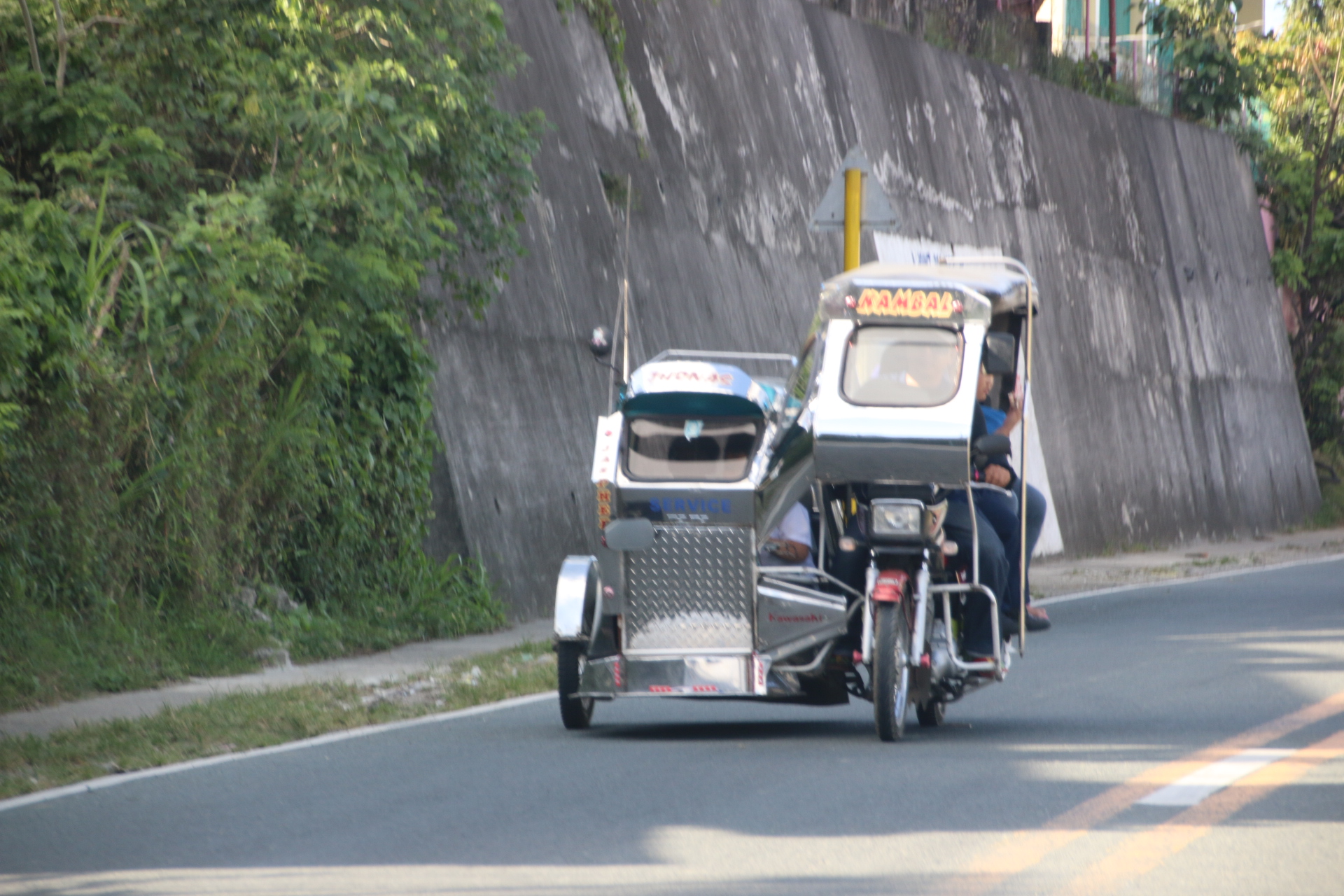
Travelling by bus I am squeezed out onto the skyway heading for the provinces and the open spaces to the south of Manila. Outside the capital the jeepny is no longer king. Here the motorised tricycle tuktuk has taken over as the main form of public transport. These are the shiny silver cockpits of space modules attached to the side of a motorbike and will take two passengers in a rather intimate space plus one on the pillion.

20160209035226_IMG_3737

20160209044006_IMG_3766

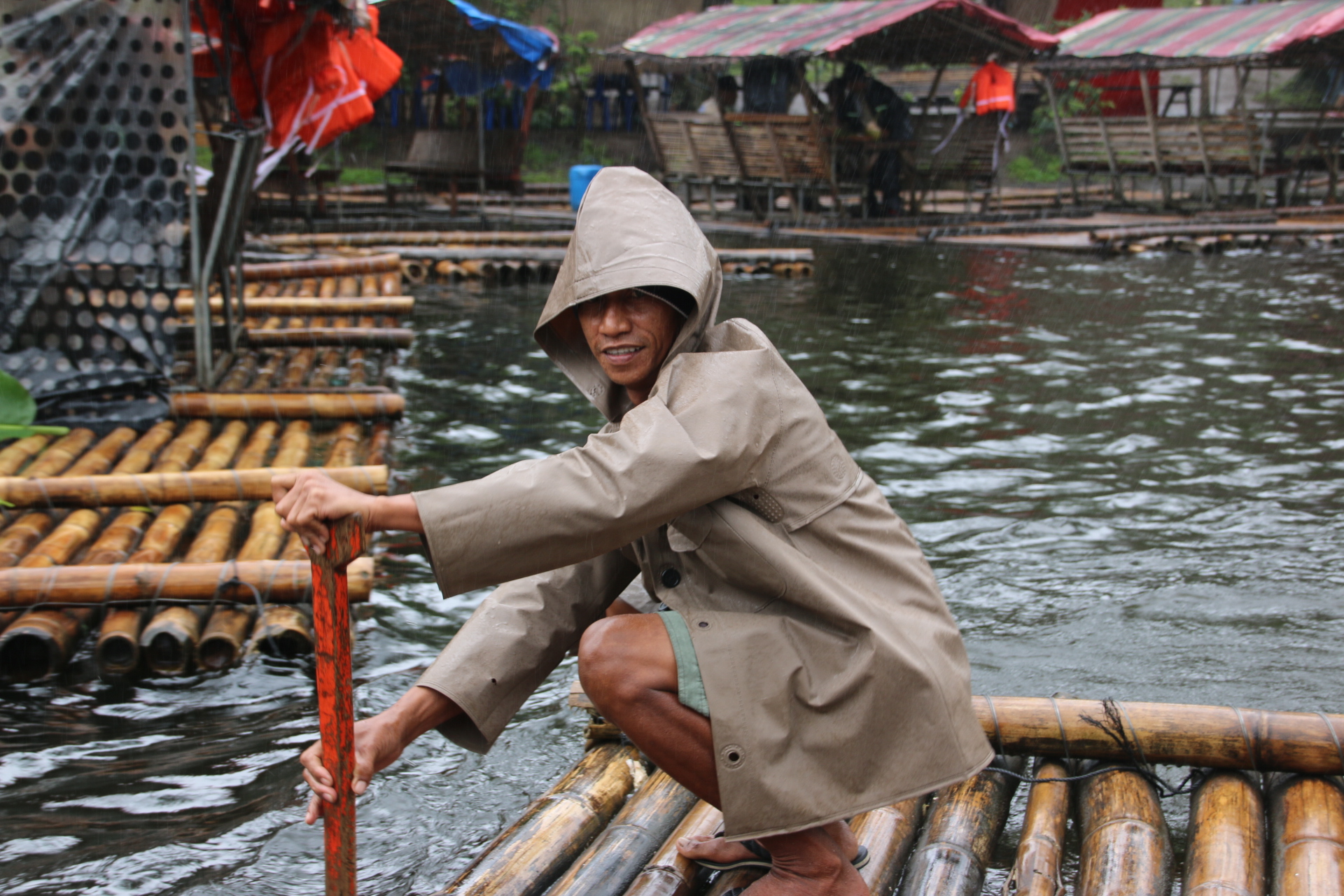
Pandin Lake, outside San Pablo City, is enclosed by a jungle of palms and bananas and coconuts. The rains come for a while as the path to lakeside passes the corrugated iron security fence of a cock fighting breeding farm emitting the perpetual crowing of hundreds of birds. Cock fighting is the national sport of the Philippines along with boxing and basketball. Bamboo rafts, propelled by locals, men and women, pulling hard at a rope strung across to the far side, plough a lazy channel over to the far side and back again. Quite why I am not sure. Maybe just an attraction to get the tourists in. On the return leg the sun comes out making the scenery so much more attractive and enhancing the whole experience. These are some of the guys working the rope.

20160209043639_IMG_3749 20160209043852_IMG_3761 20160209050228_IMG_3778 20160209050424_IMG_3782


Happy New Year from the Philippines

Welcome to the year of the monkey.  I am told that I have struck lucky. I fly into Manila, the capital of the Philippines, at Chinese New Year and the place is so quiet. Well that’s what the locals say. The trip from the airport to the hotel only takes 25 minutes and the next day is a bank holiday so I can explore the city without getting gridlocked with the added bonus of the excitement of street celebrations.

A quick bit of context. The Philippines has 100 million people and 17 million of them live in Manila.80% are Catholics and 5% are Chinese. The islands were colonised by the Spanish in the 16th century who were looking for spices and converts. The Brits invaded for a couple of years and then the US took over as part of a deal at the end of their war with Spain in the 19th century. During WWII Manila was smashed by the Japanese in their occupation and then by Americans as they took back the islands and the capital. The country finally became independent in 1947. The people speak English because of the American context and operate the world’s call centres.  There’s a surprise.

20160208031106_IMG_3529 20160207234203_IMG_3358 20160207230007_IMG_3338

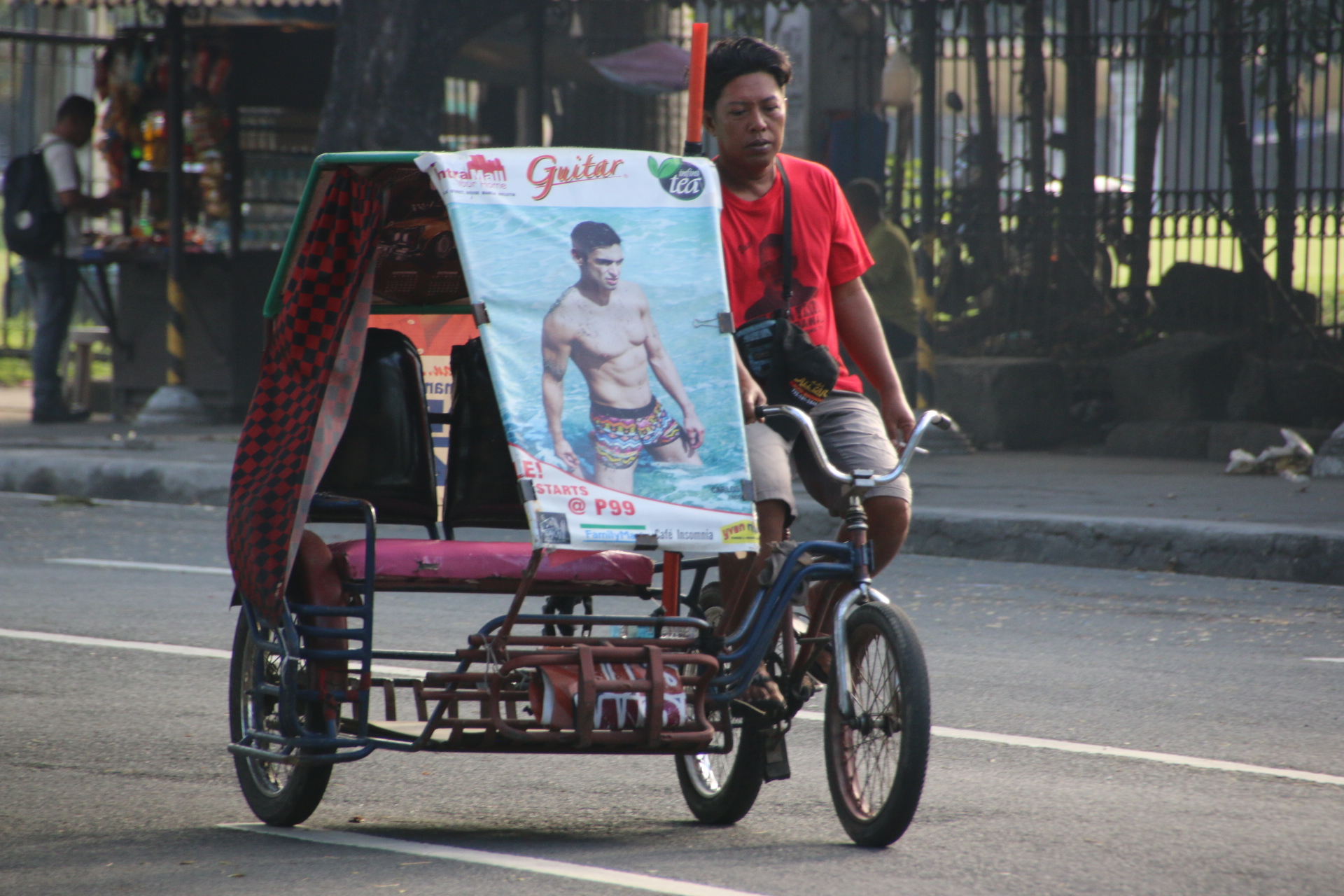
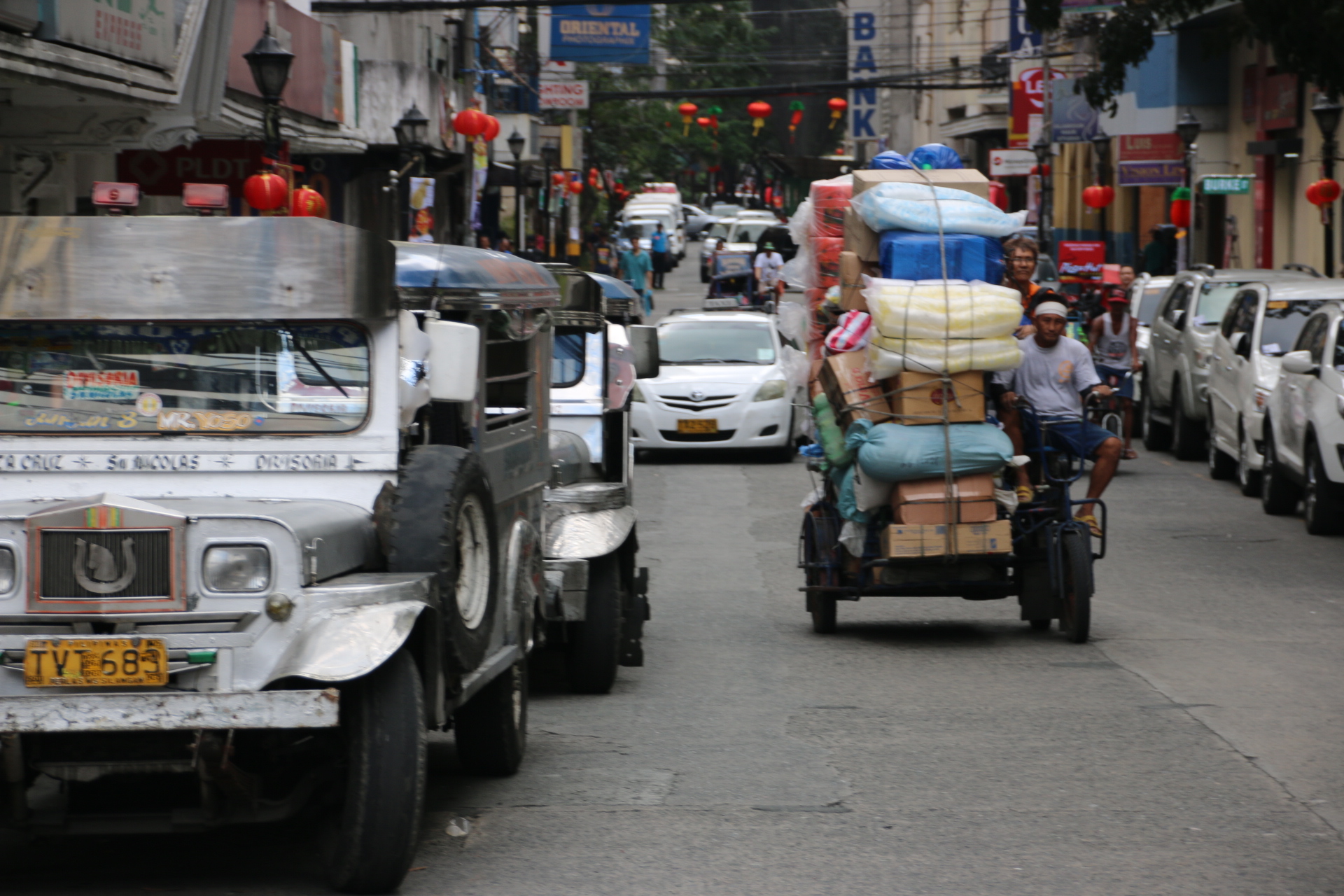
Ok into downtown Chinatown. Public transport is completely different to other Asian cities. First are the jeepnies. These are a. cross between a bus and a taxi. and are brightly coloured converted jeeps that the Americans left at the end of the war that have been extended to seat up to 14 passengers. They bang along their designated routes belching out smoke and gently sounding horns. Passengers flag them down, pay their 7 pesos (10p) and bang on the roof when they want to get off. Then comes the modern Toyota taxi with its air con-the Prince of the road. At the bottom of the heap are hundreds of mostly pedal powered tricycles where every journey costs 3 pesos..

20160208001318_IMG_3393

20160208000334_IMG_3374 20160208030644_IMG_3513 20160208043822_IMG_3670
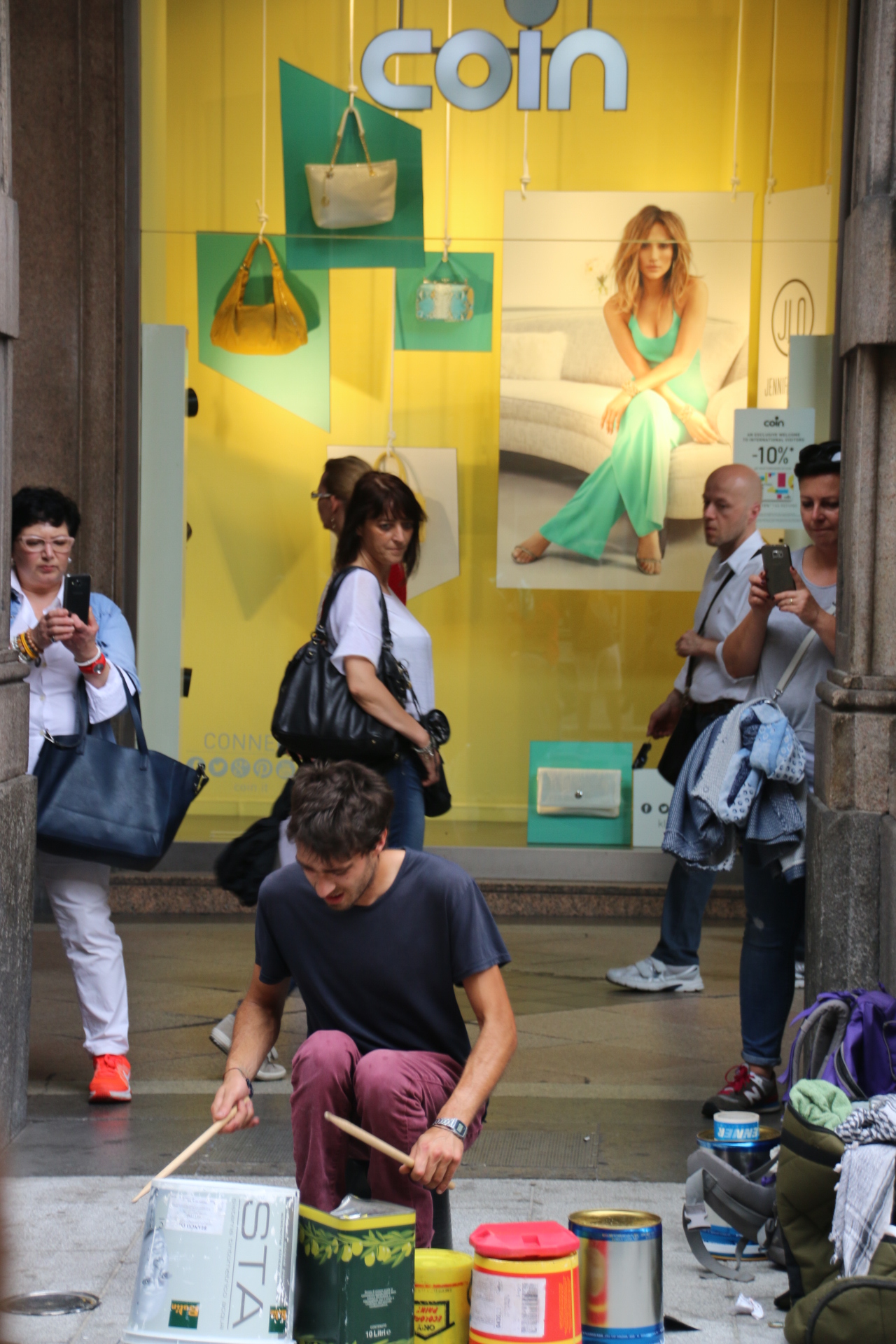
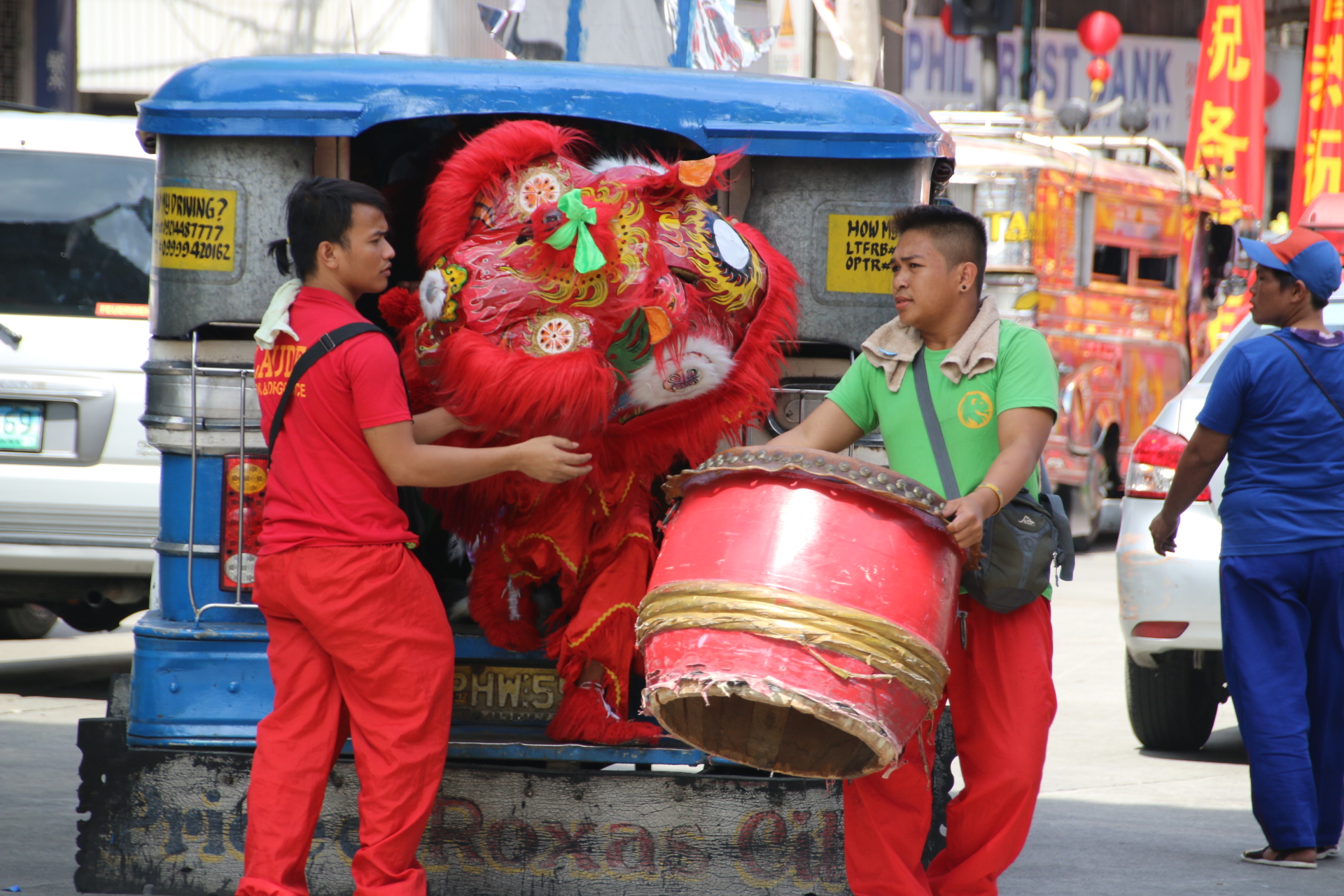
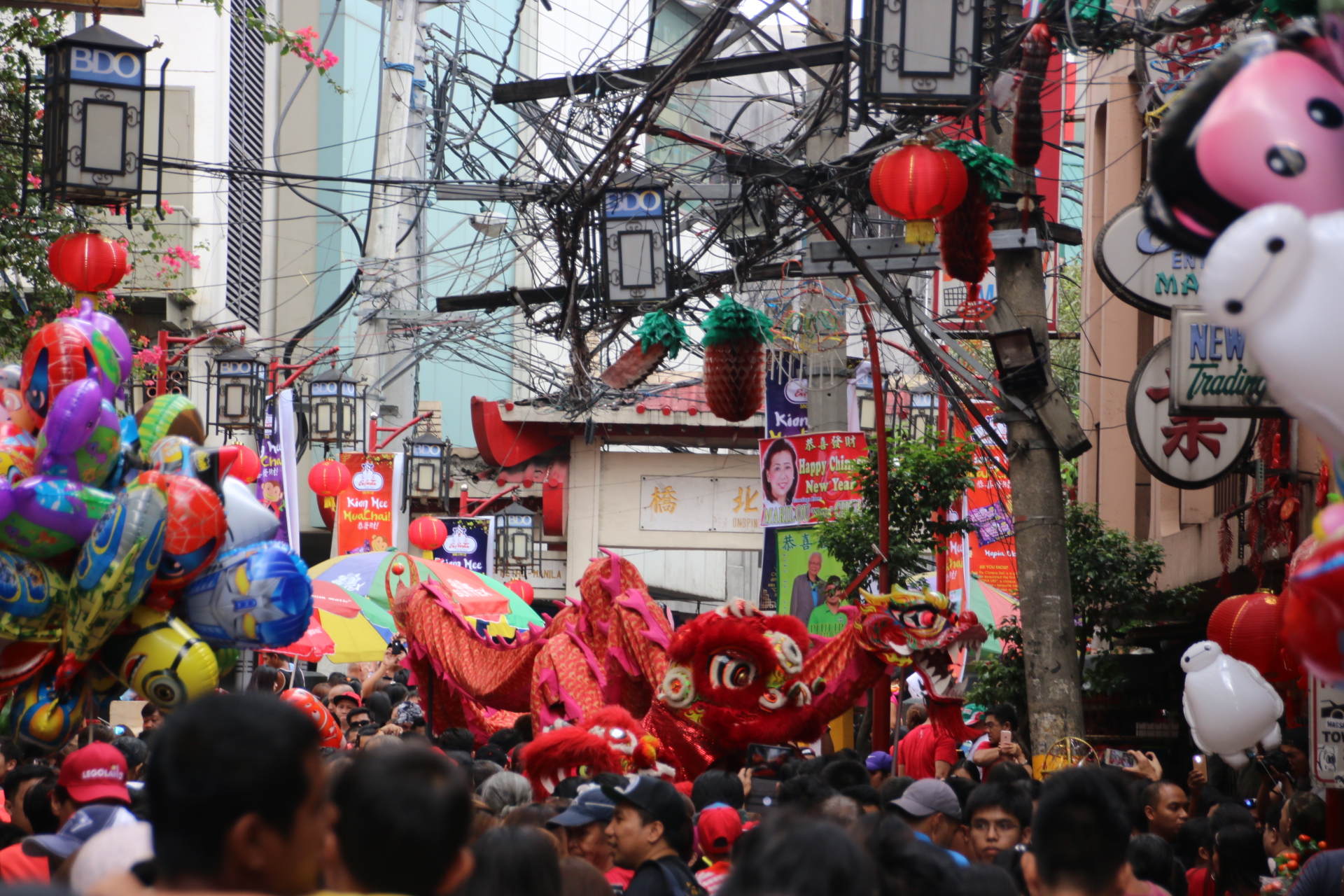
So down into the chaos of Chinatown. The noise of cymbals and drums and canned music compete with cries of sellers and screaming kids and music boxes and street bands. Snaking dragons and fluorescentmoths rear up at clusters of brightly coloured Mickey Mouse balloons or knock on the door of banks or shops.The most inventive are the street kids banging out a funky rhythm with two bits of wood on an olive oil can or a large water container while their mates do the moves holding a plastic veg tray on their head covered with a dirty sheet. Brilliant. There is definitely a place for the Horns and if a band of Manila’s ladyboys can get a samba groove together there is certainly a place for Larkrise.

20160208025814_IMG_3475 20160208030809_IMG_3519 20160208034350_IMG_3596 20160208034602_IMG_3600 20160208041332_IMG_3649 20160208032900_IMG_3571 20160208042508_IMG_3658

Its quite nice to get into the old town and visit a few churches. The pace drops, the temperature drops and everything gets calmer. What a great first day.

Farewell Laos

I have spent my last night in Laos in a cabin in the southern jungle. I am sitting on a bench overlooking this waterfall absorbing the early morning sounds of cascading water, humming insects, screeching birds & leaves disturbed by a general, fresh breeze.

20151123015004_IMG_3272

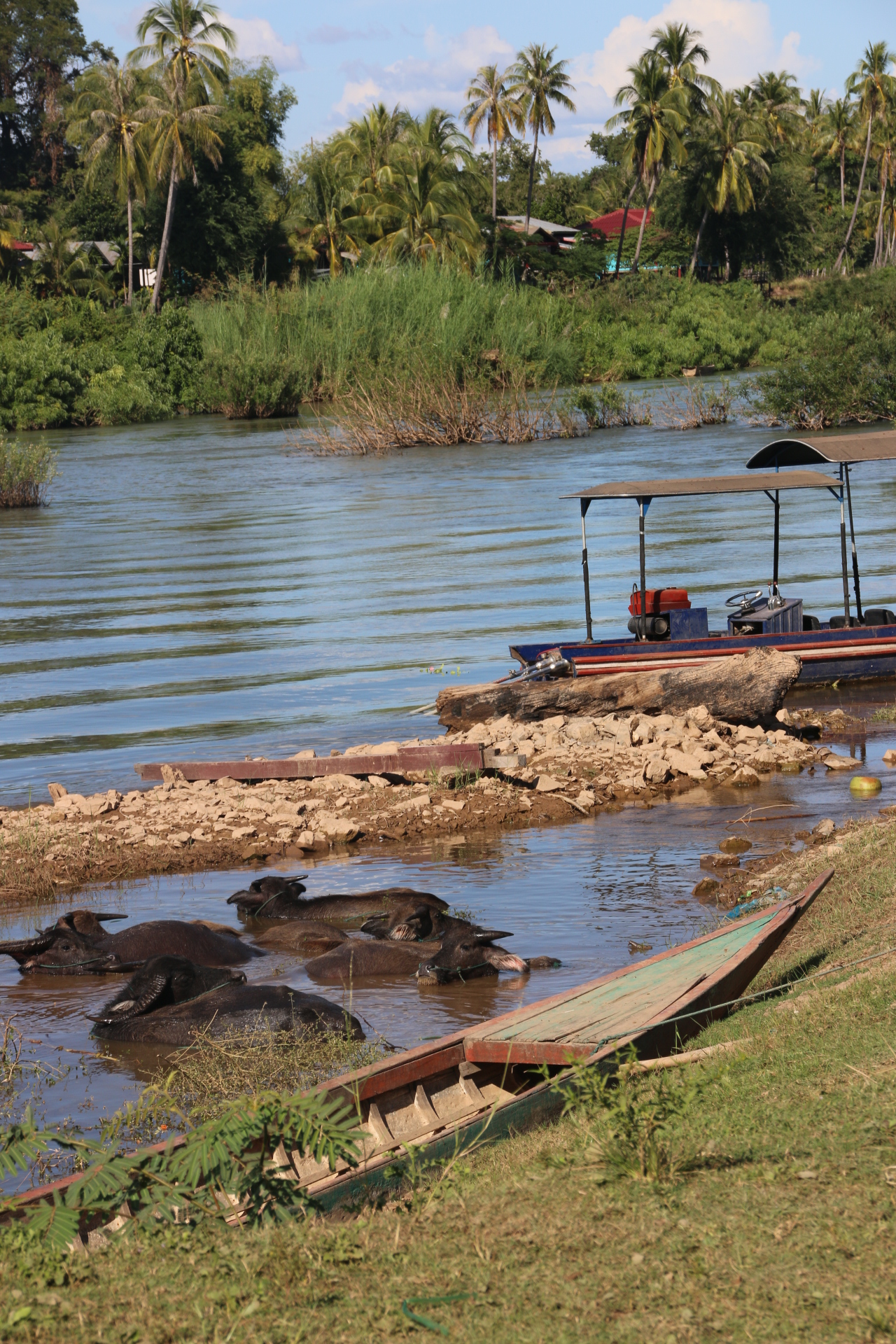
Today it is across the Mekong border to Thailand & then home. Memories like this that I take back with me – sunrises & sunsets, lazy rivers & dusty lands, high forested peaks & tangled wet jungles, wriggling leeches & cool water buffalo, the class & sophistication of Lubang Prabang & Vientiane & the relentless challenge of harvesting & working the land elsewhere, modern crew cab trucks & 2 stroke tuk tuks & scooters & small Honda motorbikes, waterfalls & wide sandbanks. Thank you Laos for your tapestry of life in your hard but beautiful land.

A day exploring the Mekong’s 4000 Islands

Today it is boat, tuk tuk, boat, tuk tuk, boat, bus, walk & electric buggy, followed by bus as the day is spent exploring the Mekong from dawn to dusk.
The sun comes up over the jungle-lined far bank drawing out the first fishermen on the still water and the procession of grave monks, intent on their ant like progress collecting sticky rice from their followers, on the awaking land. The early rays give the river a classic mirror surface, disturbed only by the widening wake of a longtail or the growing circle of a thrown net. The saffron of the monks absorb & reflect a glorious golden sheen.

20151120233941_IMG_2875

20151121232849_IMG_3234
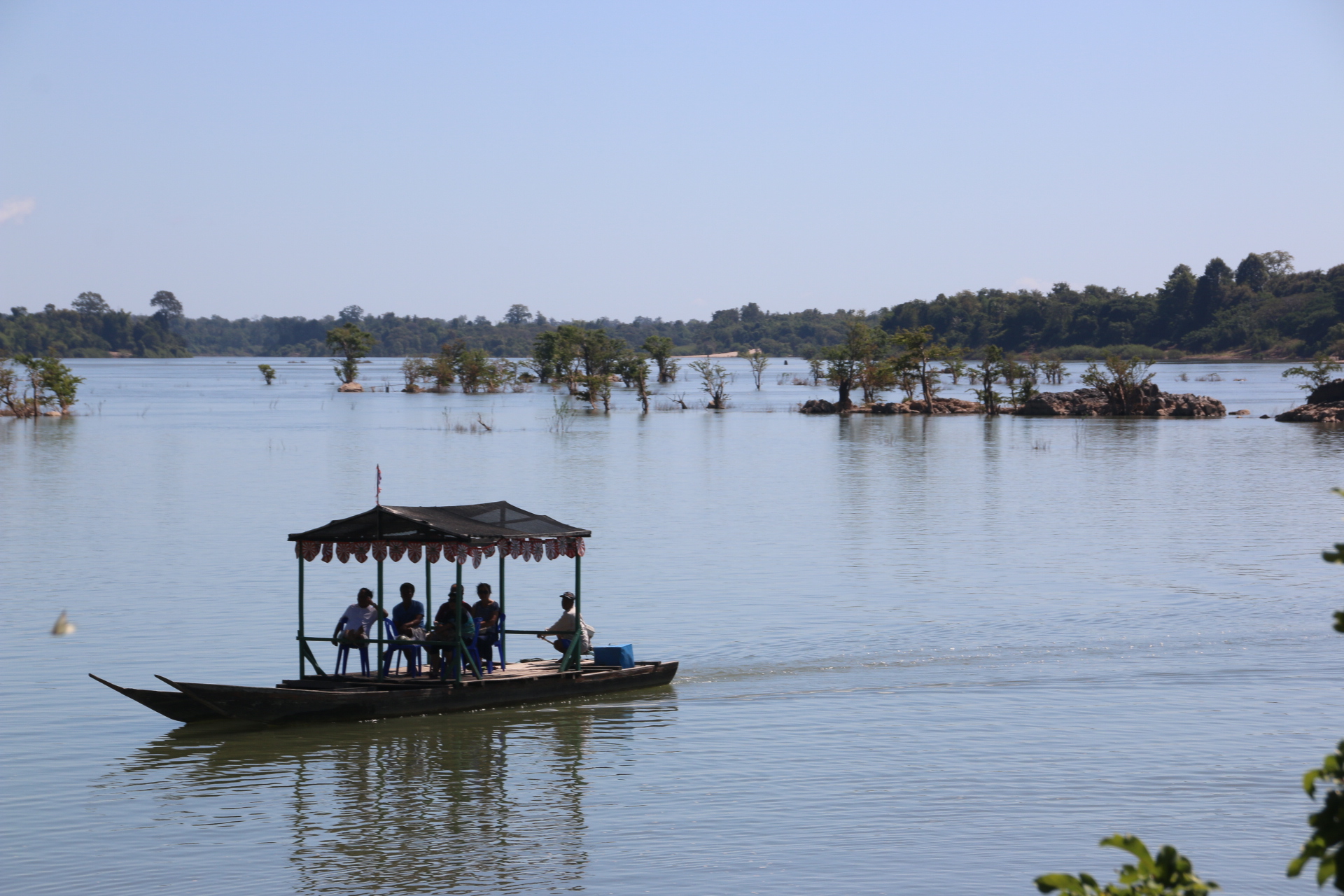
Then into the longtail boat and downstream to explore the lower part of the river. At its widest point the Mekong is 20 km wide. The area here is called 4000 Islands made up of sandbanks , collections of rocks & trees & larger, inhabited islands several kilometres across, linked by bridges & even a railway built by the French. There must be fish around the arches of the new road bridge as 20/30 thin boats collect there like small leeches wriggling their bodies from a single anchor point on a mirror clear surface. Their occupants twiddle their small paddles to remain stationary & lay out a line or an arching net.

20151121012831_IMG_2906
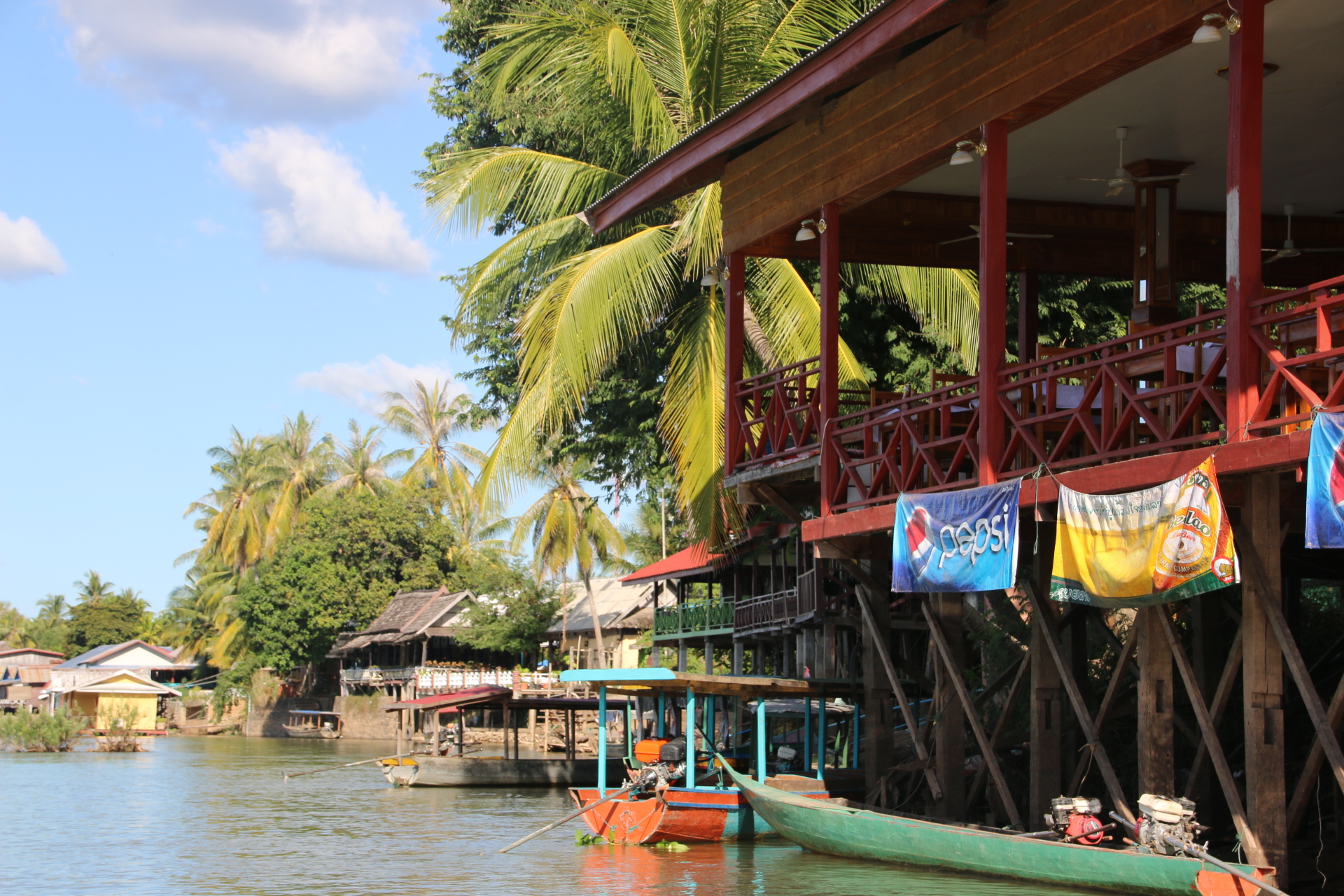
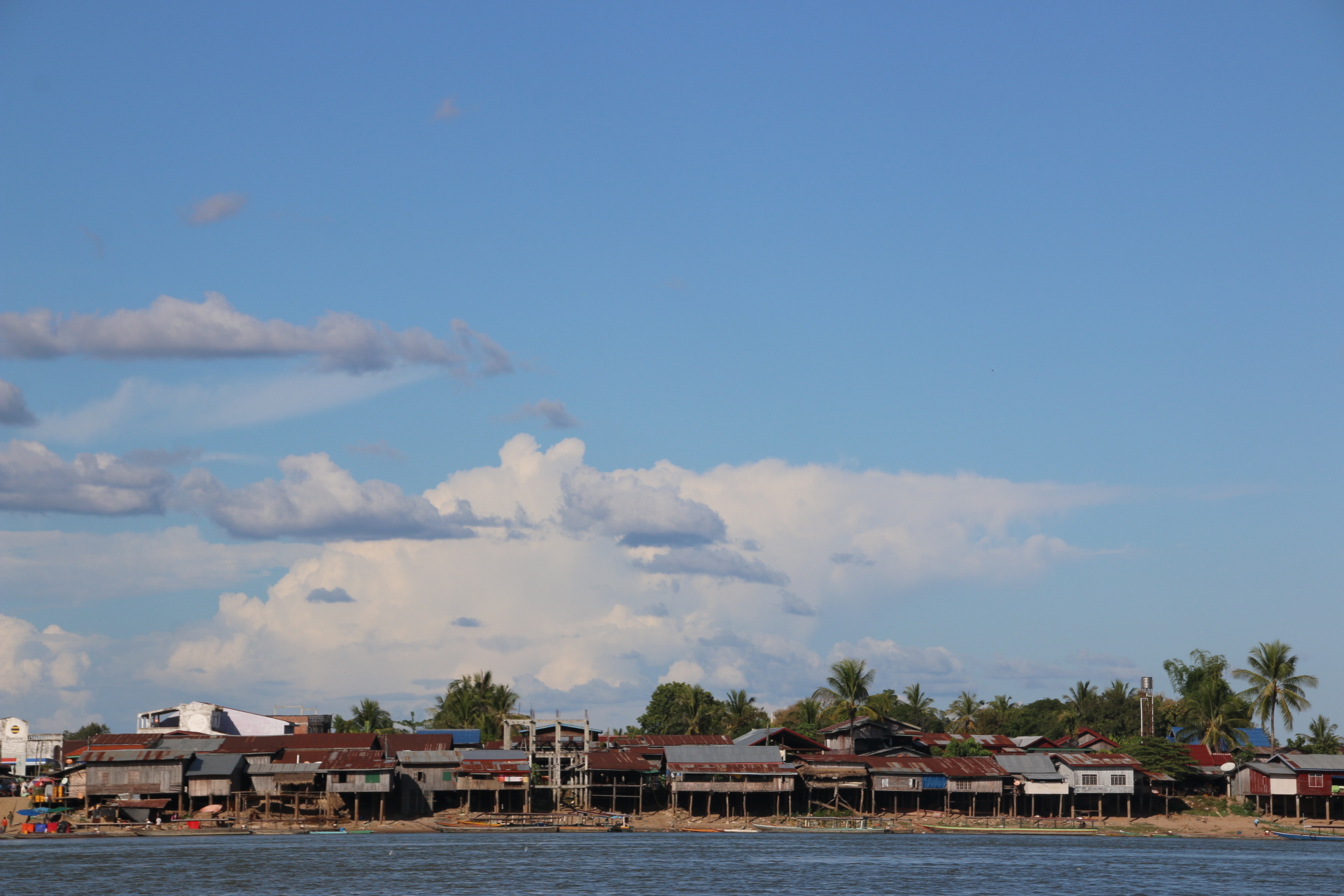
The bank flashes past accompanied by the roar of the longtail ‘s open engine. Jungle, palms, stilted houses, banana trees, satellite dishes, moored boats, fronded shelters merge together in a mosaic of colour & texture. The raised dwellings provide shade & coolness during the day, storage & living space & protection above if the river ever floods.

20151121020812_IMG_2942

20151121030745_IMG_3014
The engine slows its roar to more of a snarl & we offload into a riverside village of stiled homes, general stores, free standing fridges, farmsteads & the occasional guest house. Children play, women work around the homes & men pull & cut & tug & hack as they harvest the rice & straw in the fields. Conicalled figures make small clusters of animated activity amongst the patchwork of dried paddy fields.

20151121074736_IMG_3088

20151121024407_IMG_2972

20151121073938_IMG_3071

20151121075424_IMG_3093

20151121030406_IMG_3005
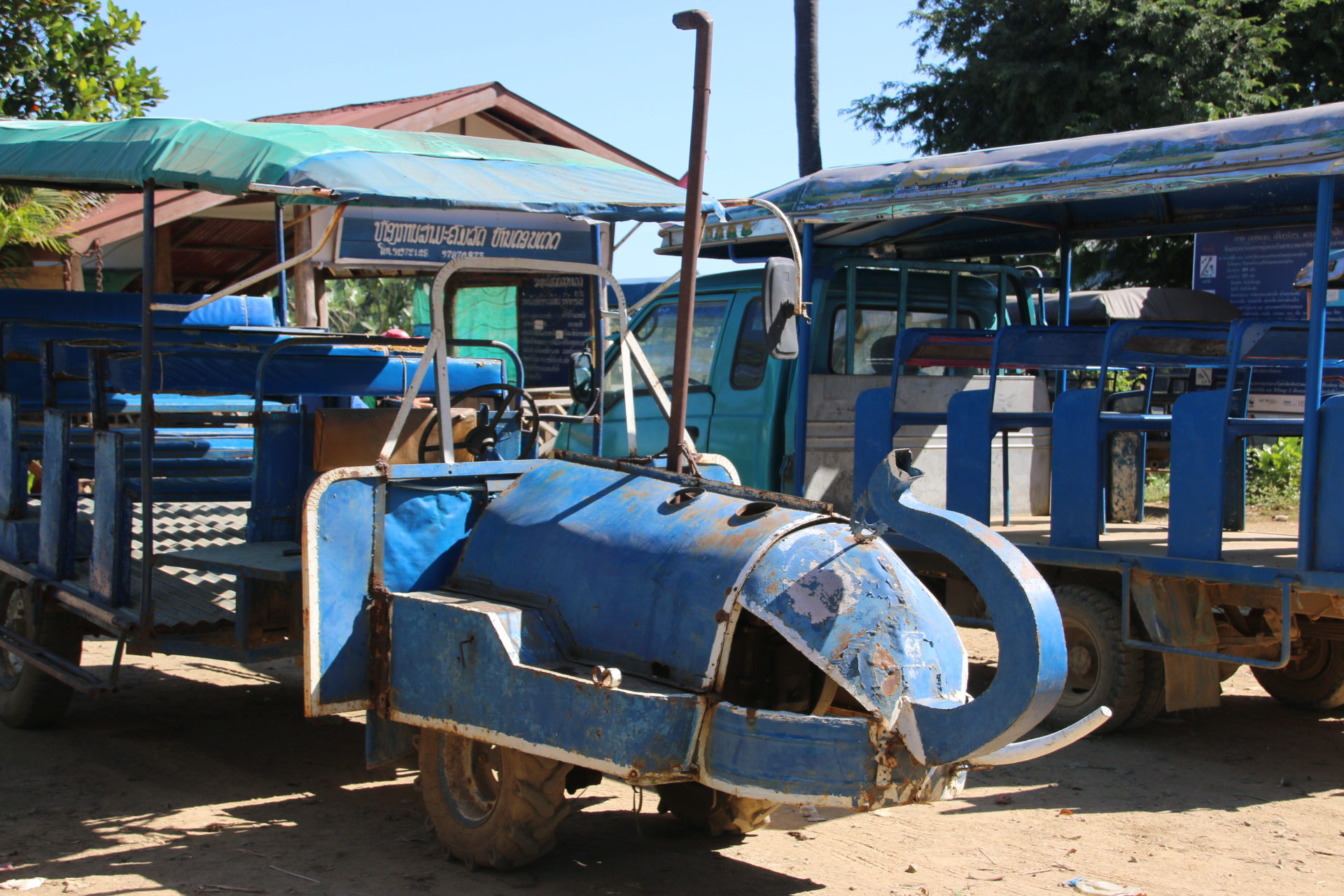
Now a new form of transport is chosen in which to cross this island. This must be the gaveyaard of all large tuk tuks. Lined up, ready to go in order like Oxford cabs down George Street, are the largest selection of rusty, dusty scrap iron vehicles you could imagine could transport people. These would be credible extras in any Mad Max movie. My favourite is this mechanical elephant with one tusk missing – ivory poachers missed one?

20151121024930_IMG_2979

Sadly he is not next in line so another beast is chosen – one which crunches & grinds its way through its antiquated gear box. Gear box is a bit of an exaggeration as it goes no further than second where it roars & branches & howls in protest as the engine growls & cranks against the metal cogs. 7 km takes about an hour through the dry countryside. At the end boats await & we take to the water to spot Irrawaddy dolphins (look them up if you interested!).

20151121035158_IMG_3042
Lunch is taken in another riverside village. During the heat of the day most locals flop about between the stilts of their homes in the shade as heat & sun beat up the land.

20151121081516_IMG_3108

20151121085819_IMG_3130
The Khong Phapheng Waterfalls are the widest in SE Asia. A huge, jagged, horizontal lightening bolt slashes its way in the normally glass like progress of the Mekong to the sea. Here, the waters have scarred a drop through 15 metres as they cascade in a crescendo of foam & fury from the tranquility of the top level to regain its peace down below at the bottom level.

20151121090827_IMG_3136
Dusk brings down the curtain on the day. The goldness returns to the landscape. The clouds billow in never ending structures of water vapour & the reflected glory of the sun gives the river a purple sheen as it returns to its mirror-like flatness & clarity.

20151121101514_IMG_3150

Out come the evening fishermen in their leechlike boats. Paddles doodle, nets curl through the air, lines are set out – the world returns to its proper state of calm contentment.

20151121103817_IMG_3193

The day ends, helped by a Beerlao!

Life on the Mekong

Bus, plane, bus, boat, bus, boat, walk, boat, bus south from Vientiane to spend time down on the lower reaches of the Mekong where the river is at its widest and the flow is at its slowest. Heavy with silt from the north and waiting for rain upstream to refresh & invigorate & re-energise these slow grinding waters, the river flows sedately downstream.

20151120025331_IMG_2702

20151120042617_IMG_2743

There is a calmess about this journey. The occasional fisherman doodles with his paddle & plays about with his net. Other than that, nothing disturbs the surface except for a swirl or two which hides an underwater obstacle or a clump of weed or foliage which protrude through the shallow waters, both of which the boatman skilfully avoids. The banks are so far apart that one has to turn ones’s head 180° to observe them both. They are lined with jungle with the isolated flashes of colour to suggest hidden villages or temples.

20151120091352_IMG_2838

A sand bar indicates a long island. Don Daeng Island is 7 km long with a Mohican haircut of jungle down its length. The local Low Lao people make a living from fishing & growing sticky rice. The long fishing boats are tethered in the shallows awaiting their owners to take them out in the afternoon coolness, like dogs eagerly anticipating their evening walk.

20151120082209_IMG_2802

20151120083530_IMG_2807

20151120083713_IMG_2813

The cross-river ferry terminal is a wonderful collection of jumbled up timber, rope & corrugated iron – vessels & pontoons & buildings. Several ferries cross the Mekong at this point. Each one is numbered. Each ferry has a superstructure constructed on 3/4 metal boats – a bit like a catamaran but there the likeness ends. From each side of the planked floor a ramp is suspended from two vertical poles so the vessel can dock facing any direction. A shabby wooden hut painted blue seems to offer passengers some shelter whilst the captain drives this contraption from an open, single cabin. When the engine starts up to move away from shore a huge plume of black smoke spurts up from one side suggesting that this is the back and the crab/dragon splurts & farts its way into20151120091451_IMG_2839

20151120092106_IMG_2853

20151120092310_IMG_2861

movement. Heath Robinson would be proud of the whole enterprise. The shadows lengthen, the silhouettes of hills & vessels & poles & cabins intensify and the Mekong starts to settle for the night. The river will carry on its perpetual movement, gliding past like a mirror reflecting some glassy surface.

20151120092658_IMG_2871


Everyone wants their photo taken in Vientiane, the Lao capital

It’s now a short flight south west to Vientiane the present capital of Laos. Destroyed by Siam invaders in the 15th century it was only rebuilt by the French colonialists in the mid 19th century when it was used once again as the political capital of Laos. 800,000 people live here on the banks of the Mekong opposite Thailand. Like most capital cities grand buildings, reflecting those who control power, mix with temples, small businesses & international franchises on leafy wide streets choked by traffic, fumes & dust. There are three sights of interest in this functional city.

The That Luang Stupa – said to house a bone of Buddha.

20151119042258_IMG_2542

Inside, the monks with their iPads & their colour coordinated iPhone cases are busily clicking away with the stupa in the background. Even the tuk tuk boys are happy to get involved. Cool one, boys.

20151119040538_IMG_2514

20151119042340_IMG_2544

Victory Gate was built 50 odd years ago to commemorate victory in the war with the US.

20151119043516_IMG_2548

Rather than climb up the 190 steps I take photos of the local boys taking photos of the tourists. There are 30 or so of them who, having clicked off a few images, rush to their scoters where a digital printer sits on the back pillion. They print out A4 images and rush back to sell to gleeful Chinese &, I think, Lao visitors. I share my images of the guys with the guys & jokingly try to charge 5000 kip. Great fun. Here are a few.

20151119050803_IMG_2582

20151119051458_IMG_2594

Others just want to do it themselves. Which pose do you like? Well I will decide for you – this one! I have about 15 different ones but have only posted one to save you endlessly scrolling between them all.

20151119050349_IMG_257120151119050402_IMG_2575

I changed my mind. Here’s a second so you can really judge the quality of the poser.

Wat Sisaket is the oldest temple in Vientiane and houses thousands of images of Buddha. It is a calm, peaceful place, in amongst the embassies & grand houses. He seems completely unperturbed about who is taking his picture.

20151119063434_IMG_2645

20151119061846_IMG_2617

20151119063411_IMG_2644

Buddha Park is at the other extreme, about 25 km outside the capital. Constructed in the 1950’s it houses 200 images of the man himself in a field of glorious tat. The representations are built using brick and cement. Absolutely, tackily gorgeous.

20151119074426_IMG_2663


The Mines Advisory Group clearing the Plain of Jars

Sorry, folks. My figure of yesterday was over exaggerate. The true figure is still just as appalling. Since 1974 there have been 20,000 casualties from unexploded cluster bombs – children or farmers.

The Plain of Jars mixes the old with the new. Scattered across hillsides & open countryside over 300 of these stone vessels lie at different angles. They date somewhere betweeen 300BC to 300AD. Their original purpose is in dispute but consensus says that these were, in some way, to do with the death ceremonies of local tribes on the trade route north from Vietnam & Thailand. Bodies may have been stored or ‘processed’ in these stone containers which range from 30 or so centimetres tall to some that are over 4 metres.

20151117023815_IMG_2184

This area also saw some of the heaviest US bombing of the war. Large craters, about 4/5 metres across punctuate the ground amongst the Jars. Jars have been split apart by the explosions. For safety, locals hid in caves when the bombs started to fall. Some of the statistics are horrifying. During the Indo-China War, as the Laotians call it, 580,000 bombing missions were flown by the US with 2 million tonnes of mainly cluster bombs dropped. These are designed to kill personnel. Between 1964 & 1973 270 million bombies were dropped on Laos and up to 30% failed to detonate meaning 80 million plus bombies remain undetonated.

20151118033111_IMG_2427

20151118033022_IMG_2426

Here is the open casing of one cluster bomb. You can see inside some of the small bombies. Most will contain up to 180 tennis balls from hell. The casing splits open and these balls of doom are released spinning through the air. The force of that spin should denonate each one a few metres above the ground releasing 100 or so ball bearings to tear through flesh & organs. If not denonated on their journey to the ground they may have a soft landing in a paddy field or the grasping fingers of as bamboo. There they can wait hidden by foliage or grasping mud until a child picks it up or a farmer makes contact with a hoe. And they are everywhere.

MAG, Mines Advisory Group, are a charity that trains locals to educate villagers & townsfolk to the dangers of handling these horrors and equip local teams to identify and destroy such bombies. Look them up online and help save lives.

20151117040903_IMG_2257

20151114234547_IMG_1967


The past still haunts large parts of Laos

I have come east now to Phonsavan, a town of 150,000 people. I have put up images of the journey through the mountains & life in the rural parts of the country. Hugely impoverished these communities farm small bits of land growing rice or wheat to feed their families

20151116041032_IMG_2062

20151116041209_IMG_2066

20151116085738_IMG_2132

20151117033605_IMG_2211

20151117040008_IMG_2239

New building is going on in the towns but it is only the 20% who work for the government who cah projects and who receive a decent wage, a pension, free schooling for their children & health care. The rest work hard scraping a living for an average weekly wage of $100. Weaving in a silk farm or driving a tuk tuk are two ways for families to support themselves.

20151117052422_IMG_2276

20151117084336_IMG_2389

20151117082502_IMG_2337

20151117074837_IMG_2322

Over here in the east and south of the country there is evidence of the traumas that hit this land during the Vietnam War. The US dropped millions of tons of cluster bombs on this small country in the biggest bombing campaign on any country in history. Muang Khong was the old capital of Laos. The Americans completely flattened the town with only the 18th century stupa left standing. The temple took a direct hit.

20151117054503_IMG_2290

20151117054645_IMG_2294
30% did not explode and are a real danger to children and farmers who will disturb them when playing in, or tilling the fields. Each cluster bomb contains over 300 ‘bombes’, the size of a small rubber ball and each of these contains hundreds of ball bearings which every day kills of maims people. It will take decades to complete the work of clearing these killers of innocent people. When walking through the Plain of Jars we had to stick within the white markers and were warned that outside these mines and bombs would be hidden. Every year 100,000 injuries & deaths are caused by unexploded ordinance and the farms & fields & homes & streets show relics from this time.

20151117073803_IMG_2319


The start of the daily grind in Luang Prabang

20151114224557_IMG_1757

Early morning in Luang Prabang and the monks snakes out in different directions to collect their alms. Their devotees line the streets from five. The alms traditionally consists of a handful of freshly cooked sticky rice supplemented by anything from bananas to chocolate bars to packets of crisps.

20151114230312_IMG_1776

20151114230614_IMG_1787

20151114231502_IMG_1816

At the bottom of the street the river flows, muddy & brown. The cafe on the corner is busy and the tables outside on the street & the small terrace overlooking the waters start to fill up. On the menu is fresh coffee, freshly baked baguettes, fresh sausages & noodle soup. Groups gather to chat about the day or last night’s events. At the bottom of the steps the boats drop off women with empty baskets from across the river and takes off the few with full baskets who have already completed their shopping.

20151114232437_IMG_1868

20151114232619_IMG_1875

20151114232735_IMG_1887

In the market jaded stallholders are still yawning behind their neatly displayed goods & produce. Their customers, at this time of day, are mostly tourists, snapping away, capturing images of local life for private consumption back home. Sadly, I have to include myself in this group. I can engage with the locals if there is an opportunity for a laugh & a bit of humour. But it is no fun with so many Canon & Nikon being slung around. The locals lower their gaze from the clicking lenses, just like the little chicks captured beneath the wicker frames & ready for sale, and wait for us to get tired & go back to our hotels & guesthouses for breakfast so they can get on with their day. I capture a couple of images & slide away to a good cup of coffee and feeling slightly embarrassed.

20151114233812_IMG_1929

20151114234053_IMG_193720151114234909_IMG_1982

Some factoids about Laos:
Smoking is not permitted in the streets of Luang Prabang.
All towns & city have a curfew. In Luang Prabang this is midnight with bars & clubs closing at 2330.
Westerners are not allowed guests in their rooms.
It is illegal for a Lao woman to have sex with a westerner unless they are married.
Lao is a one party state. Only party members and their families & descendants are able to vote in local & national elections. The rest of the population are unable to vote.
In the jungle bamboo grows at the rate of 3cm a day.
If you serve a jail sentence your family & friends have to provide all your food.


Zen by day. Groovy by night in Luang Prabang

The phrase on the bottom of the receipt at Utopia Bar. Sums up life really; and Luang Prabang.

Luang Prabang is host to the upper & lower echelons of the international travelling public. At one end of the scale young, long-limbed, tanned girls & guys wander around the streets killing time until the next excursion leaves to dote on baby elephants or to frolic in the waterfalls just out of town or darkness falls to get to the next bucket of cocktails or the next plate of chicken fried rice. At the other end of the scale classy, more mature travelers sup their breakfast lattes in banana leaf shade beside the rivers around the edge of town, writing postcards home or checking their iPads & discussing how they will get to the airport to move on to their next port of call.

Luang Prabang was the original Lao capital before the French colonised the country and then the Communists took over after the Vietnam War. The royal family were shown the door and the capital moved to Vietiane. It is an elegant city with a neat centre reflecting its colonial past. Wide boulevards & shadey gardens provide a warm backdrop for smart hotels & guesthouses, restaurants with crisp white table clothes & tall glasses for wine. Bijou boutiques stand beside tat shops but both seem at home catering for their particular class of traveller.

20151114043002_IMG_1698

20151114025852_IMG_1551

20151114062046_IMG_1735

20151114044152_IMG_172720151114042136_IMG_1690

20151114030319_IMG_1564
Evidence of a long, impressive past is found in the numerous Wats that exist in the city. The Vat Visounnarath complex also houses the Thad Makmo Stupa.

20151114015927_IMG_1487

20151114024359_IMG_1530

Wat Xiergthang, the Golden Temple was built in 1559. The outside of the temple buildings are decorated in brilliant red & gold designs depicting Lao life. One golden fronted building houses the royal barge and mosaics abound on every surface reflecting the sun and adding to the glory of the place. What a spot to have your wedding photos taken.

20151114035439_IMG_1657

20151114033413_IMG_1610

20151114033958_IMG_1622

20151114034203_IMG_1627

Continue reading

Longtailing down the River Ou through to the Mekong

It is a 350 km drive south east from almost the most northern part of Lao near the Chinese border to Nong Khiaw on the Nong Ou River, which we will follow downstream to where it flows into the Mekong near the Vietnam border. Much of the road is under construction. There are occasions when the road is closed for an hour or so to enable work to be completed. This will range from gangs of men & women picking through rocks or shovelling shingle to huge lorries tipping mountains of hardcore for tag teams of Mad Max road rollers to crunch & grind it to flatbed fitness. At times the lines heavy traffic have to negotiate its way through the work gangs & machines, winding between tippers & rollers & landslips & root banks. Inevitably progress can be painfully slow. It is such a good spectator sport for the locals when this road show reaches town. The plastic chairs come out, groups assemble outside homes with refreshments and families giggle & laugh & point & smile as these gigantic beasts pound their new high street and tiny tourists buses try to get around them in an attempt to make up lost time. Yep, this is our road through town. Fun & games!

20151112075816_IMG_1084

Arrival in Nong Khiaw is compensation for the trials of the journey. In the evening dullness stilted cabins can be seen from the bridge, gazing out over the river & town through the mist & drizzle.

20151112103045_IMG_1097

Underneath my mosquito net, just before dawn, the sounds of the day starting penetrate my sleep & I go with it: a cockerel in the far distance faintly begins a progressing chorous that gradually gets closer until the cacophony hits, dies down & then is started up again, probably by the same darn cockerel; a couple of dogs reenact duelling banjos for a while before returning to silence; cicadas constantly rub their back legs chirpily; a longtail engine splutters & splurges into life & potters up the river, any silencer long expired; a motor bike croans across the bridge; the sound of metal pots being scrapped across ranges adds an extra touch of humanity to the dawning of a new day. Then the darkness lightens and from the gloom of dawn, rooves, limestone hills & foliage appear from the low shroud of cloud & swirling mist. The sound of longtail boats becomes more frequent – a paddle monotonously dragging the surface, a light engine whirring its propeller, larger engines gunning their power to hit the downstream current. A radio comes to life with a broadcast of language & military music. Dawn has broken & the day begins.

20151113002247_IMG_1155 20151113001317_IMG_1129 20151113015205_IMG_1182 20151113035047_IMG_1288

We board our boats on the Nam Ou and roar out of town towards the Mekong. Halfway there were have to leave the river at the recently constructed dam and travel by bus to the Pak Ou Caves on the Mekong. Sacred Buddhist shrines are housed in two caves in the limestone cliffs and thousands of Buddhist images are crammed onto loads of rock shelves.

20151113030918_IMG_1263


20151113061626_IMG_1355

20151113072058_IMG_1436

20151113065806_IMG_1397


#Jungle. Jungle. Jungle, jungle rock in Luang Namtha

So today it’s a trek through the jungle around Luang Hamtha passing into several tribal villages on the way. The day starts with blue skies and yesterday’s rain is a distant memory. First it is down to the market to buy lunch which we will cook in the jungle – fish, vegetables, bananas & omelettes.

20151111022119_IMG_0827 20151111022745_IMG_0847 20151111023104_IMG_0856 20151111023318_IMG_0864 20151111024720_IMG_0890 20151111025032_IMG_0901

Then, in large took tooks, we travel to the first tribal village of the Lantern people. Dressed in black with white bandage leggings, they come out to sell us their embroidery.

20151111031534_IMG_0961 20151111030625_IMG_0950_1 20151111025942_IMG_0915 20151111030057_IMG_0925

Then it is on to the jungle. The trek starts at the site of an old stupa that was bombed by the US during the Vietnam War. A new gold painted one has been constructed in its place. As we explore this, a party of 50 or so officers from the Vietnamese High Command, with hats & medals & glossy uniforms appear. They start taking photos of our party of white Europeans and we do the same. The boot is on the other foot as they turn their screens to show the pictures they have taken of us as we reciprocate with them. Both groups laugh together at this random meeting of two cultures in the middle of the jungle.

20151111034629_IMG_0987 20151111034809_IMG_1000 20151111034624_IMG_0985 20151111034634_IMG_0989

Wet & damp from the rain of yesterday we slip & slide along a narrow path avoiding Tarzan vines, hanging caterpillars, thin grasping creepers & large dripping leaves & fonds. Hot, steamy & overpowering, warnings of leeches are at the front of minds. The path scrambles up & down steep valley sides and meanders around tree root & holding branches. After two hours of hacking through this luxurient vegetation the goodies are prepared, the bar-b-q lit from forest litter and the table laid. Only then is the first leech found as blood appears on my foot. Quickly that is treated and lunch is started. The sky darkens. Torrential rain falls soaking everyone & everything. Lunch is abandoned as we slide out of the jungle to cross the bridge to the tribal village only to find the rope banister along the twin bamboo bridge over the stream to have been cut. of course it is Sod’s Law that at this point the sun comes out and we steam contentedly. We have to clamber 100yards upstream & wade across the stream. Then we group together & like gorillas in the mist pick the leeches off each other. Only six have drawn blood! What a bizarre day.

20151111035332_IMG_1009 20151111062846_IMG_1028 20151111065004_IMG_1032


Continue reading

Up to Luang Hamtha in northern Laos near the Chinese border

Ban Houie Sai at dawn is quiet & serene. At first sight Main Street is deserted. But then I spot groups of kneeling women hidden amongst the parked scooters. The sound of bells & drums comes closer and two lines of saffron monks come down the steps from the monastery and split at the bottom. One group leads off to the left down Main Street and another right. As they pass the kneeled figures sticky rice is placed in their bowls, a prayer is given and the saffron line moves along to the next group.

20151109235525_IMG_0600 20151109234435_IMG_0587 20151109234527_IMG_0595

The town then slowly comes to life with doors & shutters opened and stalls arranged on the pavements. Mothers pack their uniformed children off with satchels & lunches carried in plastic bags, some walking and some, as young as ten, riding motorbikes & scooters to school. The Mekong lazilly shimmers through the haze and small eddies swirl and gurgle around sandbanks. Fishing families splutter their longtail boats into the current & disturb the stillness.

20151110004905_IMG_0623

After breakfast the bus takes me up into northern Laos up to Luang Hamtha near the Chinese border. This is jungle country with high, sharp peaks & ridges covered in a tangle of groping trees and strangled vegetation. The empty road crosses rivers & streams through luxurient countryside of greens and emeralds. The Lao locals keep to the numerous ethnic minority villages which are an architectural expression of corrugated iron & banana leaf structures mixed with modern constructions of cement and tiles. As the bus crawls up sharp cornered roads, up & over peaks and down, the watching vegetation is hidden by mists, then drizzle through to torrential rain. These clear to reveal a velvet green landscape of small harvested fields of tobacco & rice & wheat surrounded by the tangled jungle before the rain cycle starts again.

20151110031823_IMG_0795 20151110030755_IMG_0789 20151110030057_IMG_0778 20151110065651_IMG_0814

At the town market the locals are shy at first and hold back. A friendly approach from the white strangers and the sharing of photos quickly brings down barriers and giggles & laughter can soon be heard echoing across the stalls as the locals cackle in glee at their own image on the screen. They love it even more when you try local delicacies – tapioca is not so bad; frogs legs, sparrows or various bits of offal are an acquired taste!

20151110014516_IMG_0659 20151110015319_IMG_0694 20151110015857_IMG_0723 20151110015837_IMG_0720 20151110020007_IMG_0731 20151110021118_IMG_0745