A UK Coastal Trip – North and South Shields

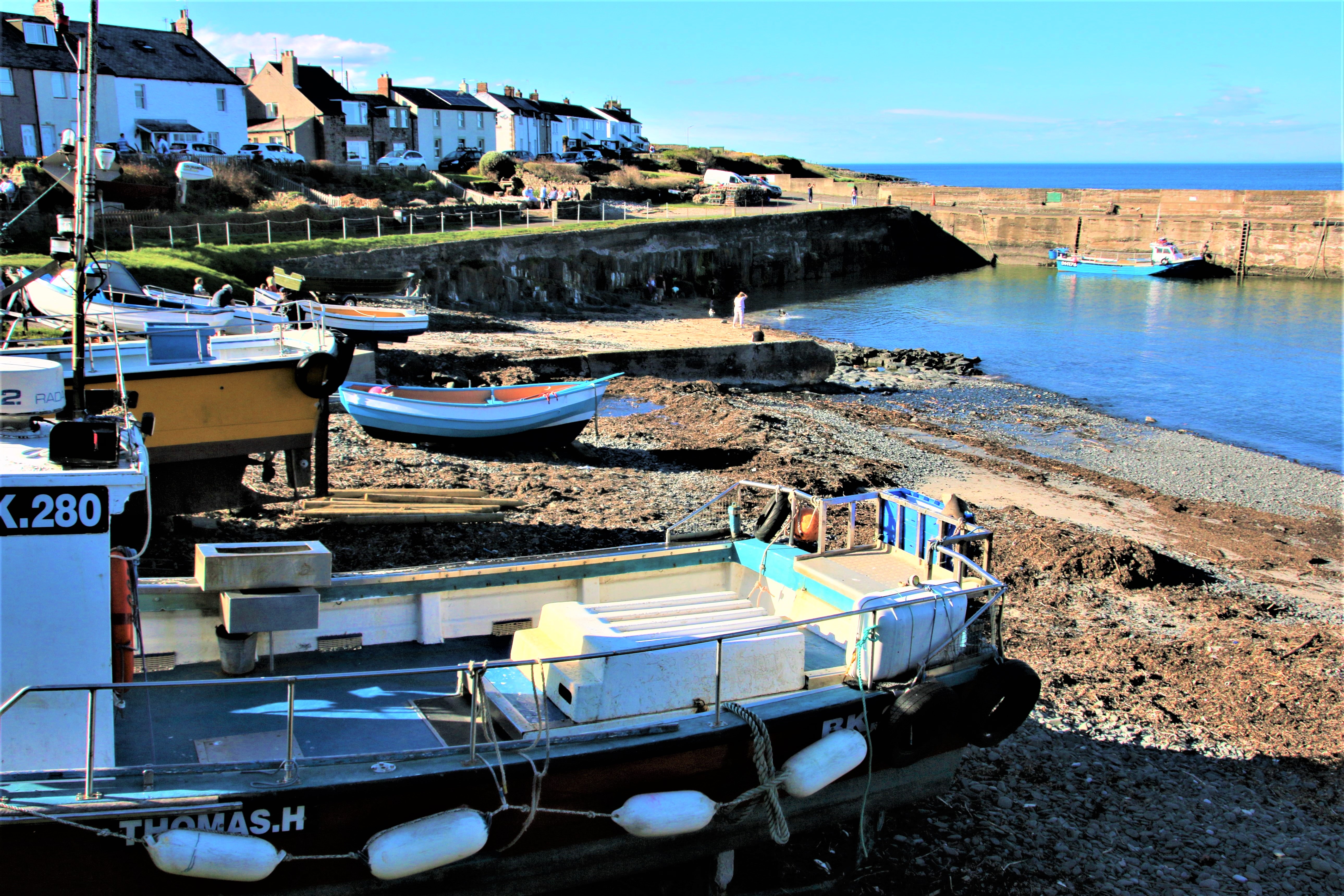
The coastal settlements of Tynemouth, North Shields and South Shields lie on the north and south bank of the estuary of the River Tyne. North Shields is slightly further down from Tynemouth and connected to its namesake on the other side by a passenger ferry. The towns’ name derives from the Middle English word ‘schele’ meaning ‘temporary sheds or huts used by fishermen’.
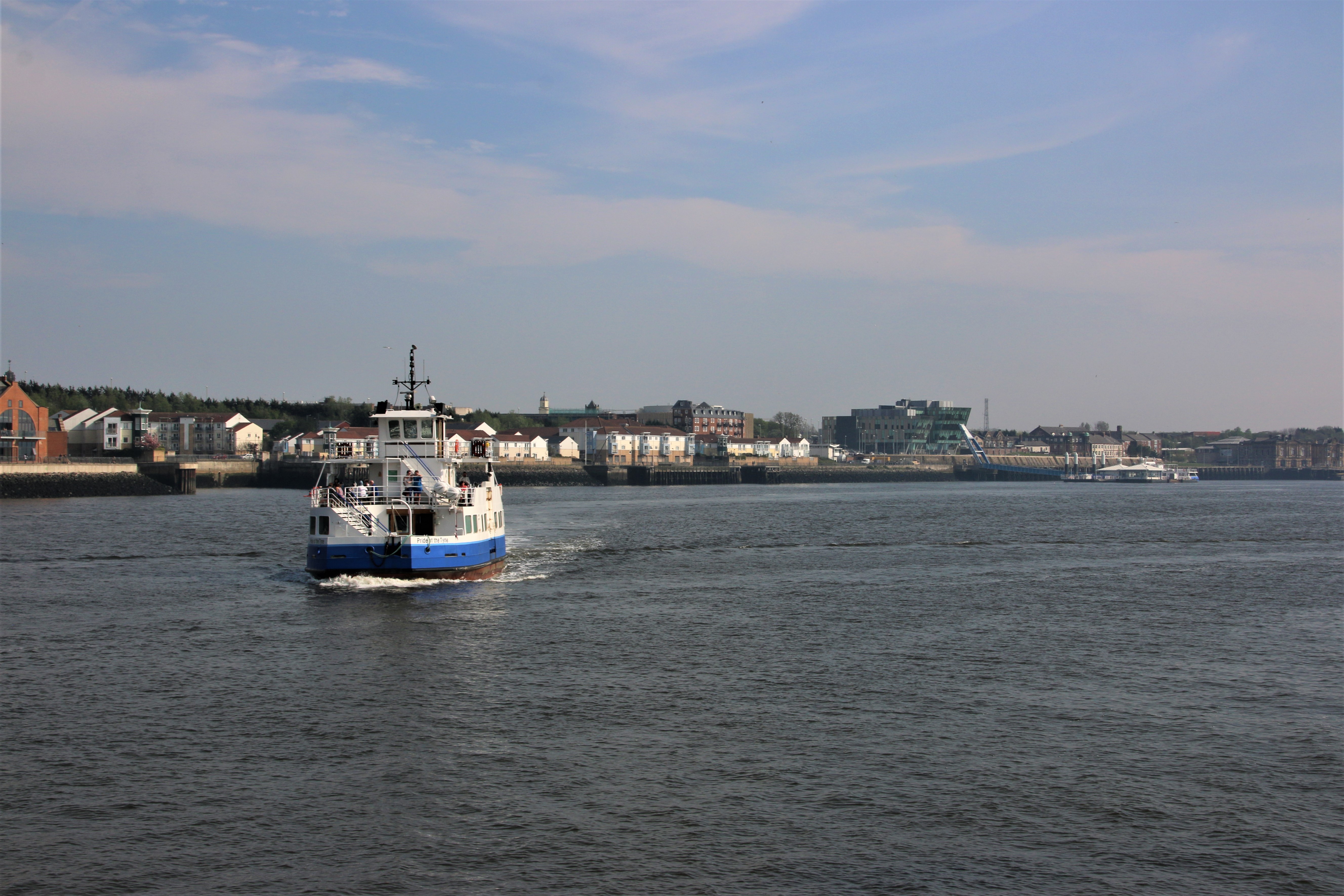
North Shields

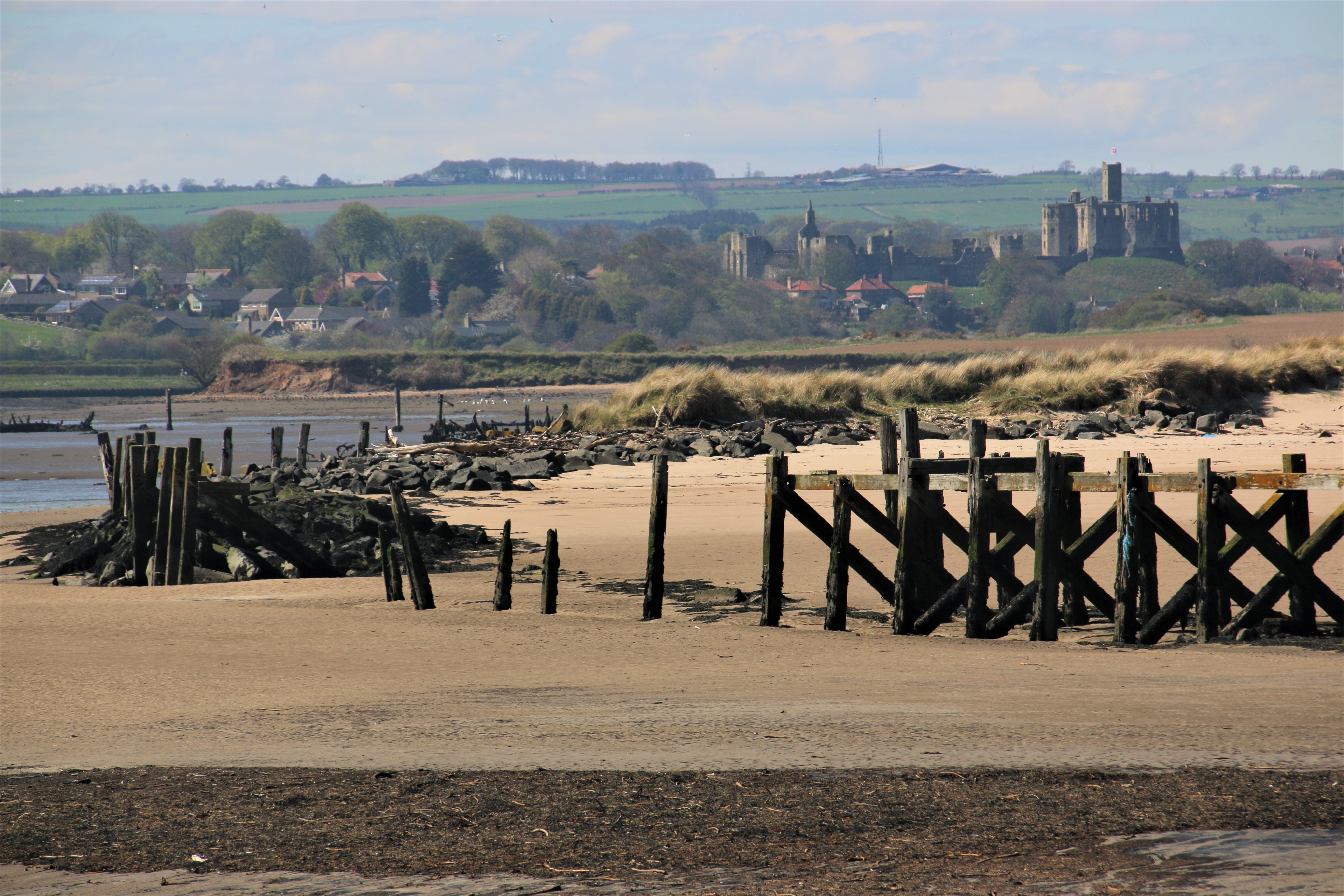
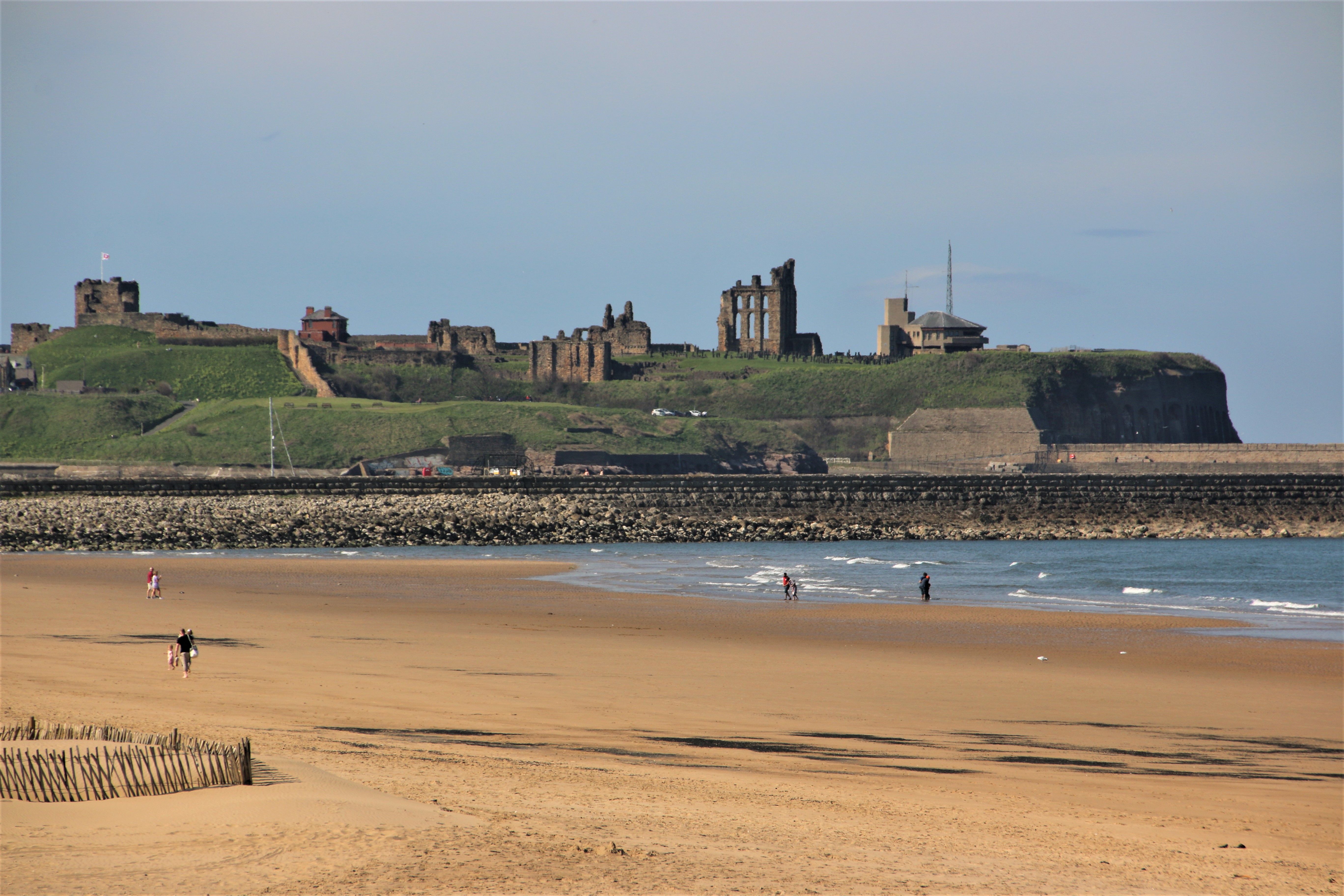
A settlement was first recorded here in 1225 when the Prior of Tynemouth decided to build wooden quays here to land fish to send up to feed the priory. The priory, seen here from the south side of the estuary, also owned local collieries and used the port to send out coal.
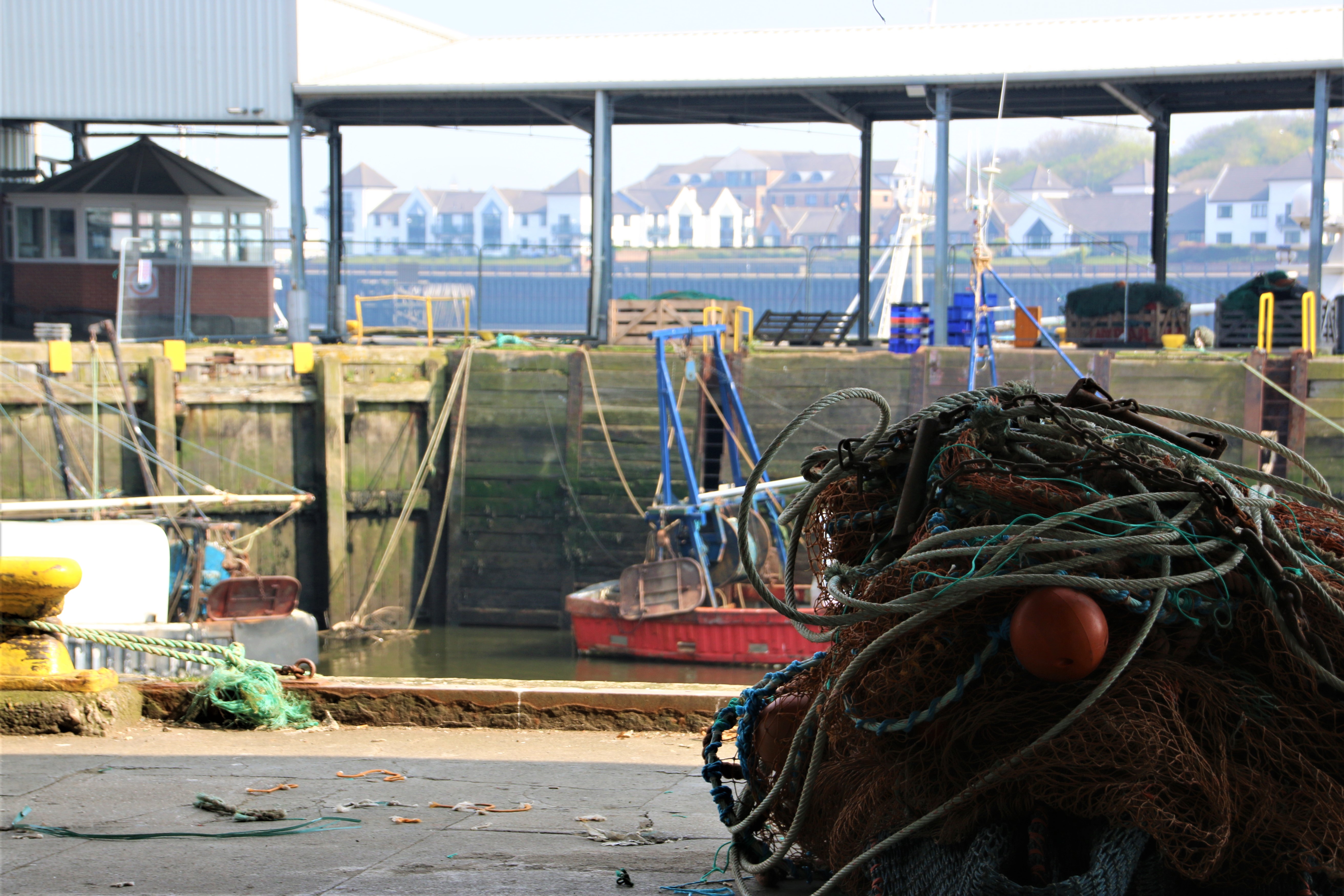
As the population increased business men and merchants built houses on the plateau above the old, overcrowded, insanitary dwellings along the river. The businesses on which the town depended like fishing, ship building and marine engineering continued to be based down here. Sadly, none remain. In 1870 the Fish Quay was built near the fish market to provide shelter for the moored boats. This whole area has been transformed with the building of luxury apartments and streets alive with the buzz of classy fish restaurants and bars. Fishermen still unload their catch at the Quay.

South Shields

South Shields is on the south side of the mouth of the Tyne and faces the North Sea. Its coastal and riverside walks provide excellent views over the waters to Tynemouth and to North Shields. The town was founded in 1245 and grew as a fishing port. Over the centuries other industries in the town included ship building, fishing, coal mining and glass manufacturing. These provided employment, attracting workers from the countryside, and created wealth in the town. Sadly, none of these industries remain in present times. Today the local economy revolves around port-related activities, ship repair work, manufacturing and, increasingly, tourism.

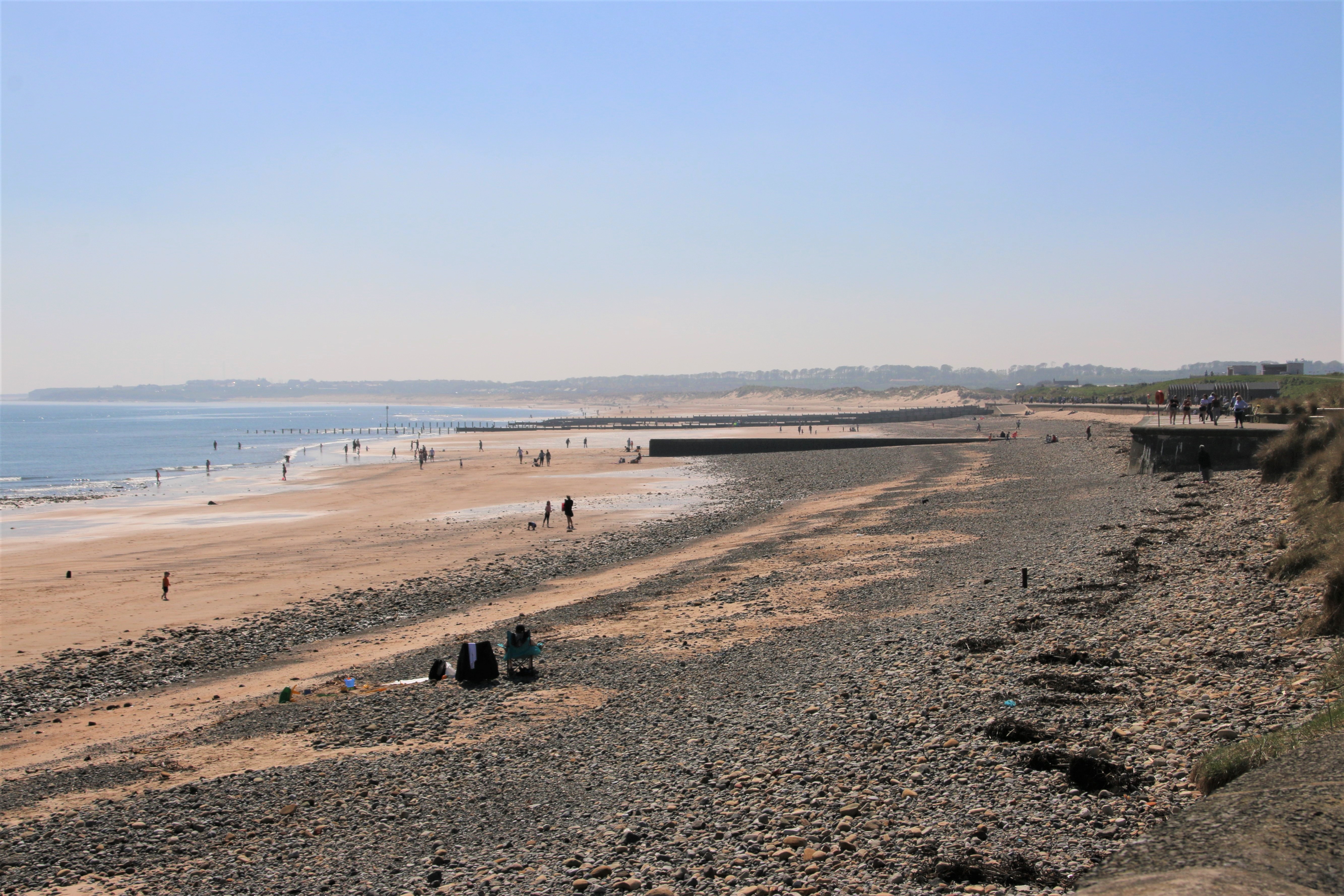
New multi-million projects along the beach have created a wide promenade and a network of walkways, Ocean Beach Pleasure Park with fairground rides and arcades and a wide, family-friendly beach with golden sands and easy, safe bathing, all of which look across the estuary to the ruins of Tynemouth Priory & Castle on the far side.

North and South Tyne Piers

North and South Tyne Piers were between 1854 and 1895. The original plan was for each pier to curve out from below the priory to the north and from the end of the beach to the south, creating a set of callipers to protect shipping as vessels entered and left the River Tyne.
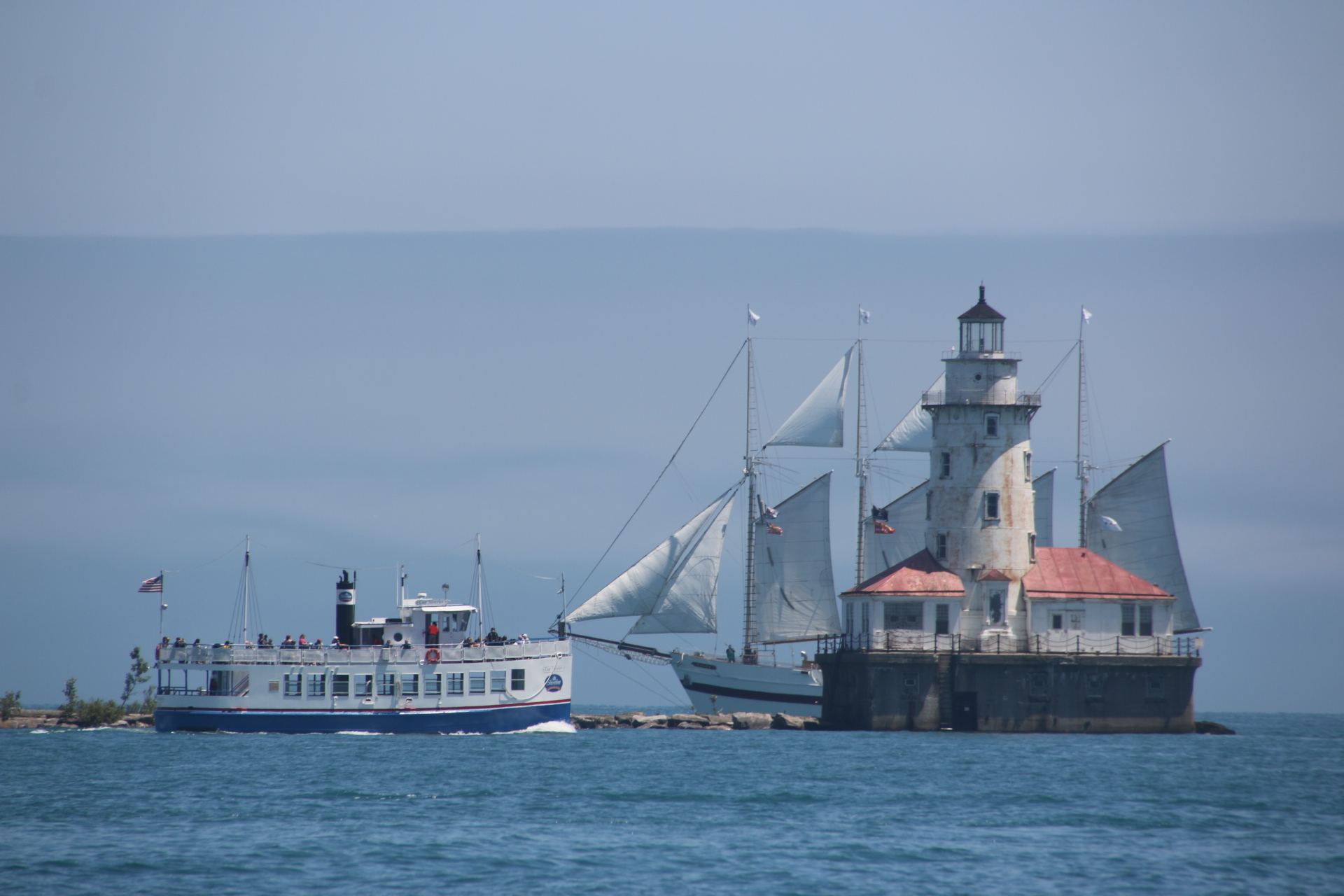
The North Pier, hidden at the back, was supposed to match its southern partner in shape. But the central part was breached on several occasions after a series of heavy storms. A new pier with a straighter line replaced it and in 1909 a lighthouse was built at the sea end.

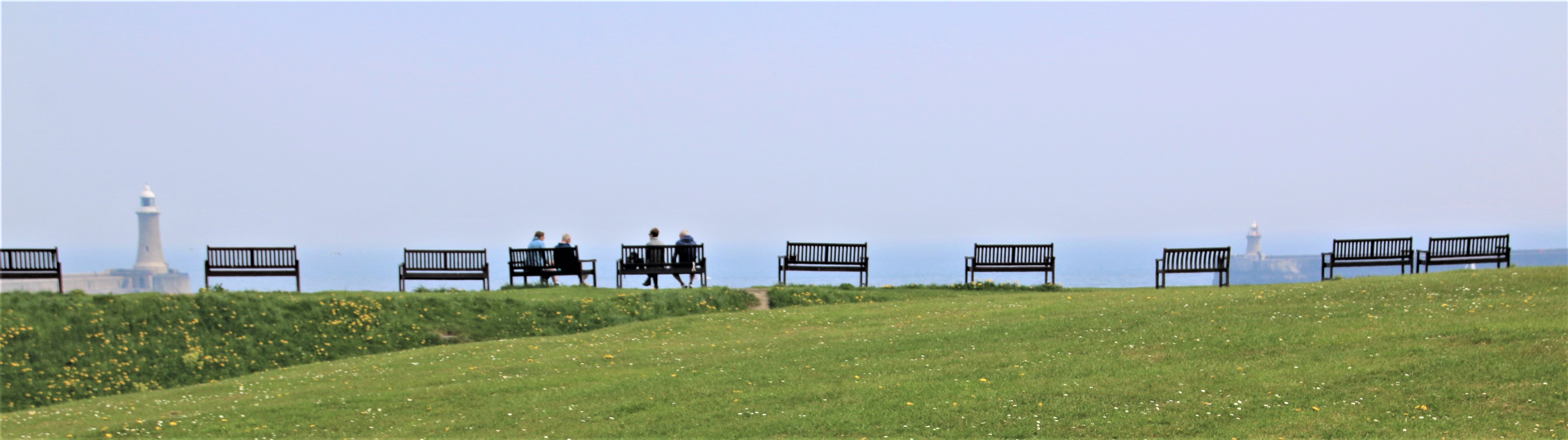
The South Pier had no such issues. It was never breached and maintained its original shape and structure. It is 1.5km in length and curves out to sea. It also has a lighthouse at the far end. It is accessible from South Shields’ seafront and is open to the public if the weather is set fair.
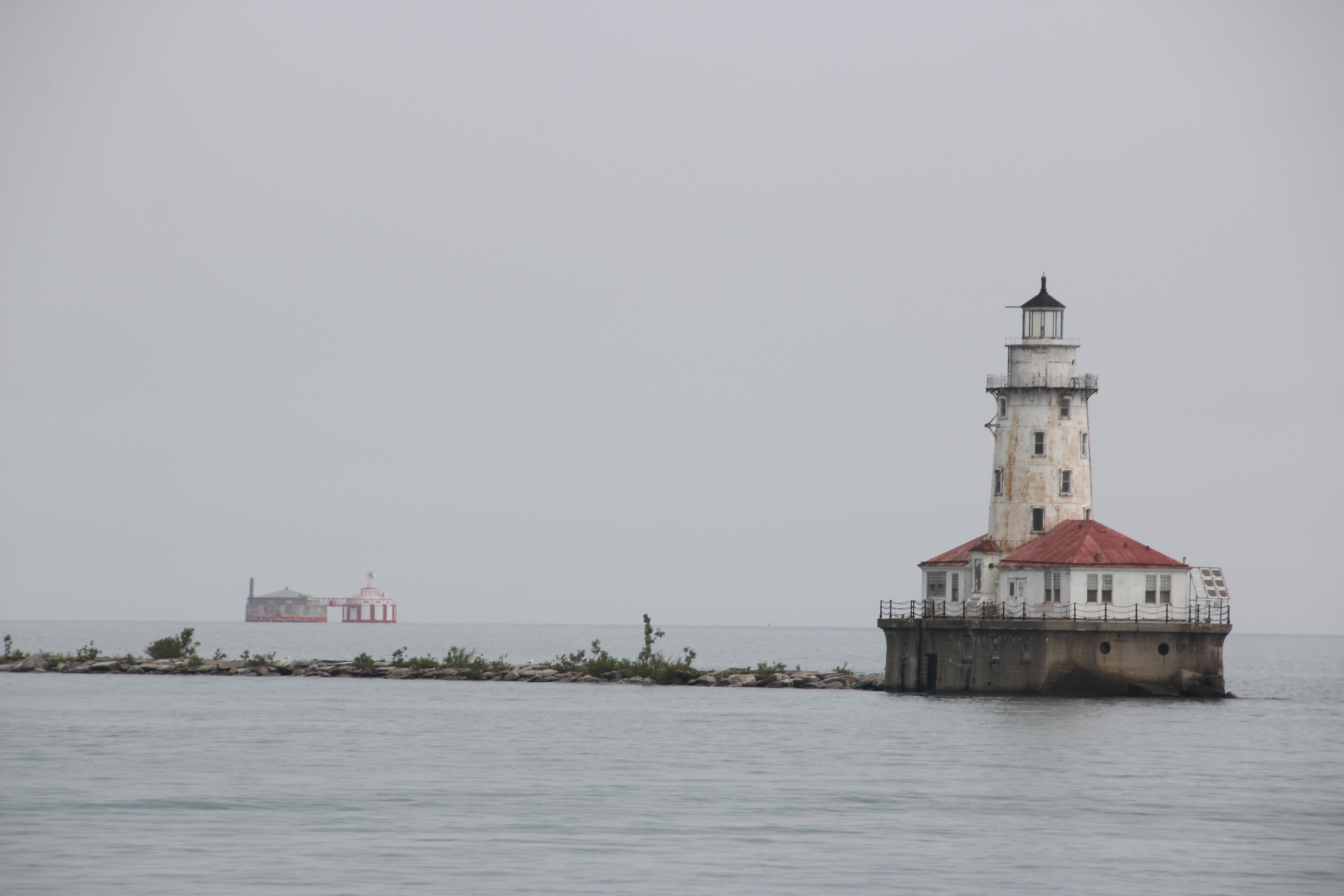
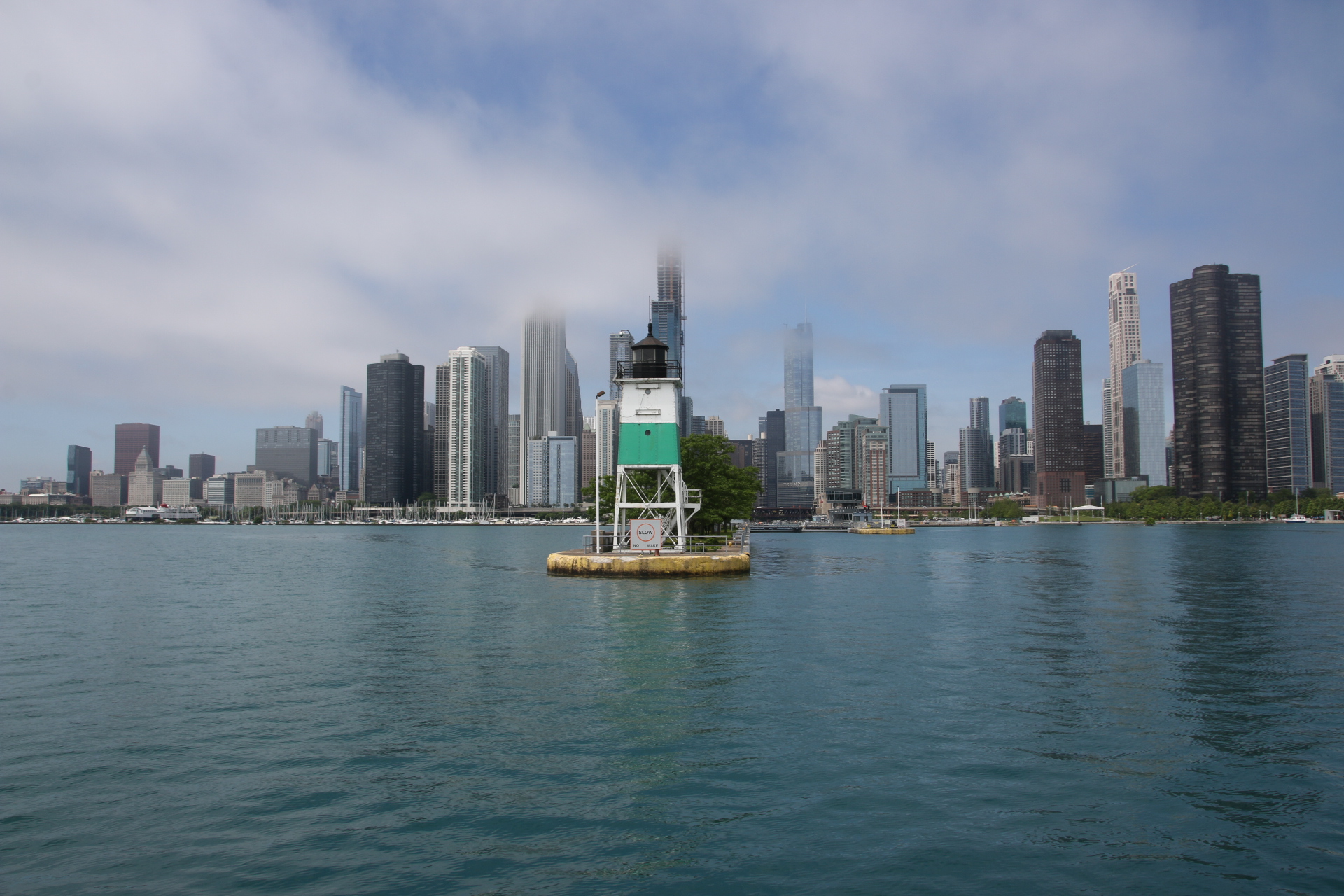
A third lighthouse stands slightly further upstream on a site between North Shields and South Shields to warn shipping about sand banks in the river. The Herd Groyne lighthouse, painted red, has an upper part of corrugated iron and wood which sits on 12 cylindrical steel legs.


A UK Coastal Trip – Tynemouth

Blyth

The busy, port town of Blyth anchors the northern end of a long stretch of golden sandy beach. There has been a settlement here since the 12th century but it was in the early part of the 18th century that real developments took place with the rise of coal mining, ship building, the railway and modern fishing methods. The port handles more than 1.5m tonnes of cargo each year. On the edge of the town the coast road passes a marine engineering business where huge wheels of cable can be seen through the railings, along with the rising skeletons of deep-sea drilling rigs.
Seaton Sluice


The southern end of this magnificent beach is anchored by the village of Seaton Sluice. All the way along grassy dunes run behind the golden sands. The village with pubs, shops and cafes, is at the mouth of the Seaton Burn and has a small harbour, created in1660, to export coal & salt.

The coastline from Blyth down to Tynemouth consists of wide beaches of glorious soft sand, backed by imposing dunes in places, but more often by low cliffs which provide more sturdy foundations for resort towns to grow up catering for Newcastle’s working population and an increasing number of visitors.

St Mary’s Lighthouse

St Mary’s Lighthouse was built on a small rocky island on the site of an 11th century monastic chapel. It is reached by a causeway at low tide. The monks maintained a lantern on the tower to warn passing ships of the danger of the rocks. It was completed in 1898 but went out of operation in 1984. The lighthouse, and the former keepers’ cottages, are now open to the public with great views for those prepared to climb the 137 spiral steps to the top. The island contains rockpools, clifftop grassland and a beach.

Whitley Bay

All along here the shore reveals evidence of a long history of coal mining, many seams dug far out under the sea. The decline of coal mining coincided with the emergence of several seaside holiday resorts. Whitley Bay was one of these. The North Tyne Loop railway was opened in 1882 and connected a number of coastal villages to Newcastle. Today’s metro system follows the same line and it is not uncommon to see folk travelling out from the centre of the city in their beachwear and flipflops. The areas around Spanish City and the promenade have been redeveloped and the town has a lively night scene, particularly at weekends.

Cullercoats

Cullercoats was founded in 1539 as a fishing harbour. As a port, salt and coal were exported from here. However, the salt industry declined and the growth of the railways led to coal going elsewhere. The last salt pans moved to Blyth in 1726. In the 19th century, piers were built on either side of the harbour to provide shelter for the many open top fishing vessels, called cobles. At the same time, they created a safe beach making it popular for families and young people alike. Dove Marine Laboratory is a research centre for Newcastle University.

Tynemouth

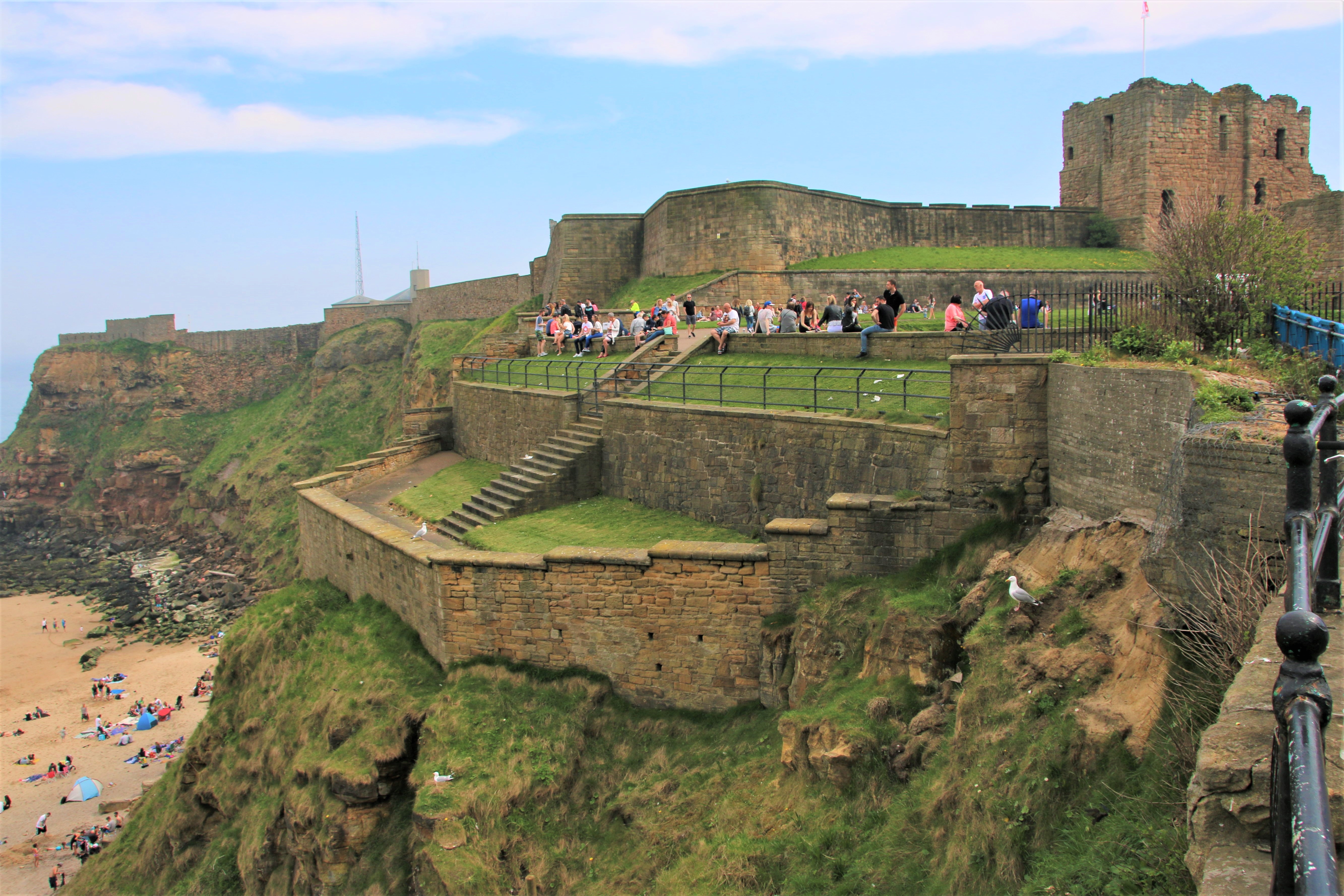
The ruins of Tynemouth priory and castle stand on a rocky headland at the mouth of the River Tyne. In the 7th century a monastery was built here and later fortified. During troubles with Scotland, English kings and queens stayed in the castle and priory. Villagers settled in the shelter of this fortified priory. Around 1325 the priory built a port for fishing and trading.

From the foot of the priory cliff a huge, long breakwater stretches out to sea, forming the northern half of the sea defences to the mouth of the River Tyne. The centre part of its original curved design, completed in 1895, was destroyed by a storm. A new pier with a straighter line replaced it and in 1909 a lighthouse was built at the sea end. A broad walkway on the top allows locals and visitors to stroll along its length when the weather is clement.

The main part of the town stands back from the cliffs, its many popular bars and restaurants and coffee-shops make it an attractive destination for holiday makers from all over. Historic buildings and grand houses share the sky-line above the award-winning beaches which attract many visitors. Georgian terraces are around the corner from Victorian ship-owners’ houses and executive homes from more modern times.

A UK Coastal Trip – Newbiggin-by-the-Sea

Alnmouth

Alnmouth is a lovely village of colourful cottages and old houses, best known for its wide expanse of golden, sandy beaches. There is a good variety of restaurants, pubs, tea shops, gift shops and a golf course. It used to be an important grain port until, in 1806, a huge storm altered the course of the river and its estuary where it entered the sea, silting up the harbour. It is easy to get to by local bus and train, being on the East Coast Mainline.

Amble

Amble is a town at the mouth of the River Coquet. There are numerous cafes, bars, restaurants and fish & chip shops to satisfy the appetite of its many visitors. Its history stems from the sea and it still has a fishing industry, with marine repairs also carried out focussing on yachts and pleasure craft.


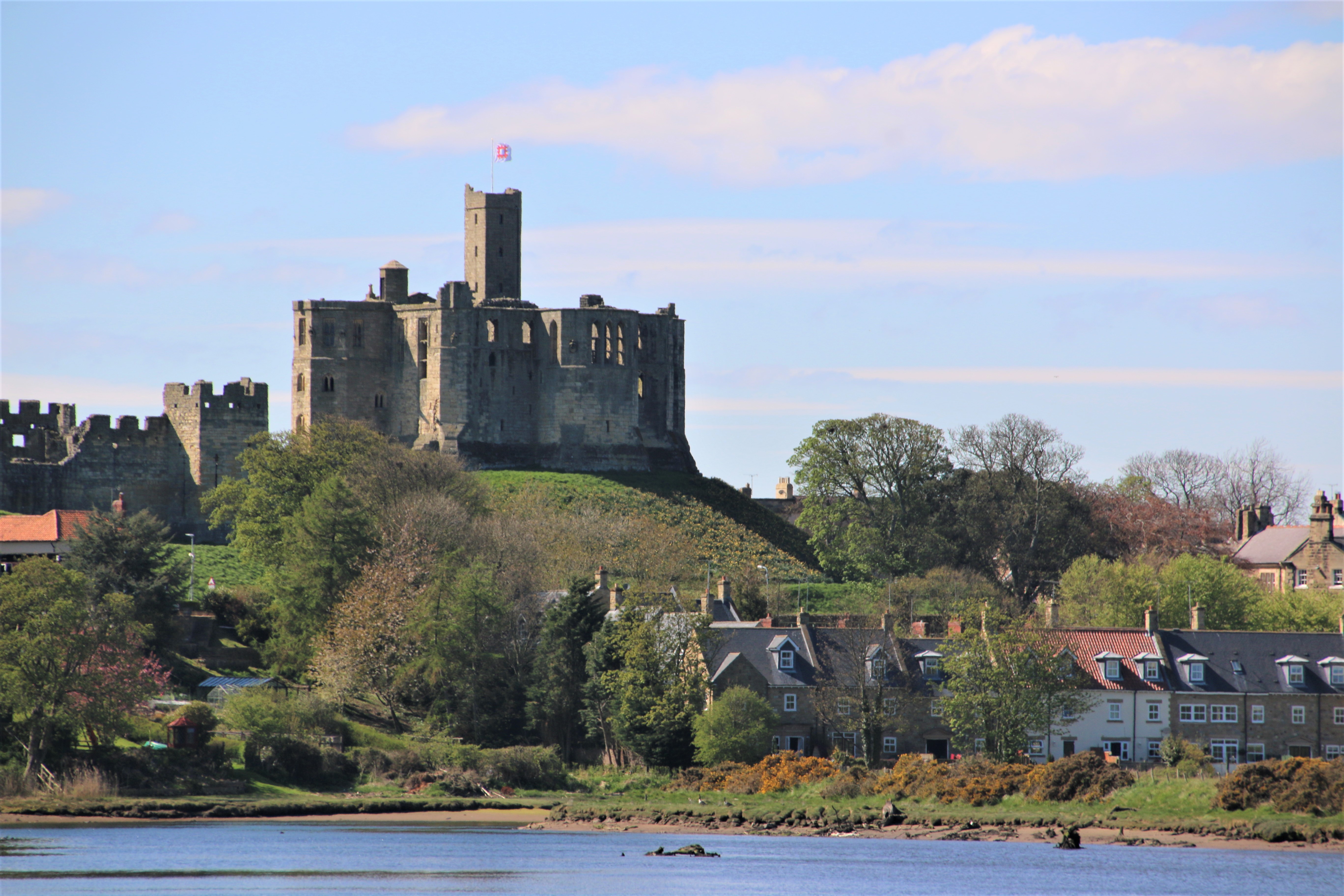
A mile up the River Coquet is Warkworth Castle, where the powerful Percy family lived from the 14th century.

Here you can act as king or queen for the day or be rowed across the river by the boatmen of Warkworth Hermitage. Only accessible by boat, this 14th century chapel is hewn from the rock face. It was here that monks prayed for the souls of the Dukes of Northumberland. Today you might catch sight of seals and otters swimming up to this curious cave-like chapel.

Cresswell

Two holiday caravan parks line the main road through the village, facing the open sea. The gentle slope of the beach is backed by extensive sand dunes. There is an ice-cream shop and a café down on the shore.

Newbiggin-by-the-Sea

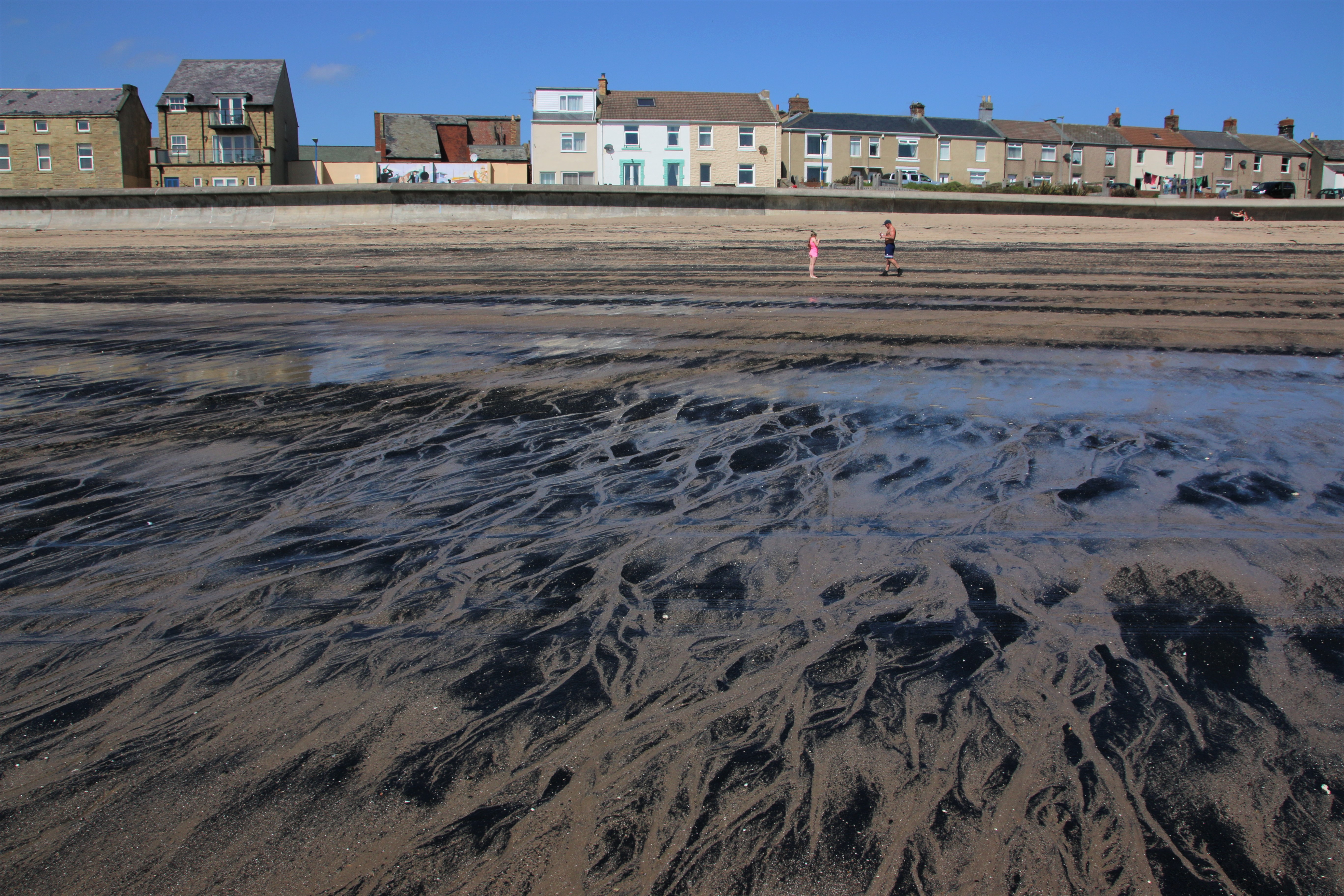
Lining a vast sandy beach, with black streaks of coal that have risen to the surface in tendrils of darkness reaching out to sea, is a wide promenade atop a massive sea wall. The town bunkers down behind it. Half a million tonnes of sand from Skegness was used to rebuild the beach in 2007, along with the construction of a breakwater, decorated with a 12.5m high sculpture by Sean Henry called The Couple.

Newbiggin was an important port in the Middle Ages, only Hull and London shipped more grain. As a result of its wealth, the town was granted a weekly market and a yearly fair by Henry III. It was a coal mining town and had a small fishing industry. By the 19th century visitors started arriving, attracted to its sandy beaches, and hotels, guesthouses and bathing facilities grew up to serve these holidaymakers. The Maritime Centre stands at the end of the promenade and features exhibits on local history and the town’s maritime heritage. It also tells the story of the development of the telegraph. In 1868 a telegraph cable was laid from Cable House in Newbiggin to Jutland in Denmark. In the nearby village of Woodhorn is the Colliery Museum which uses the original pit buildings to depict the lives of mine workers.

A UK Coastal Trip – Dunstanburgh Castle

Low Newton-by-the-Sea

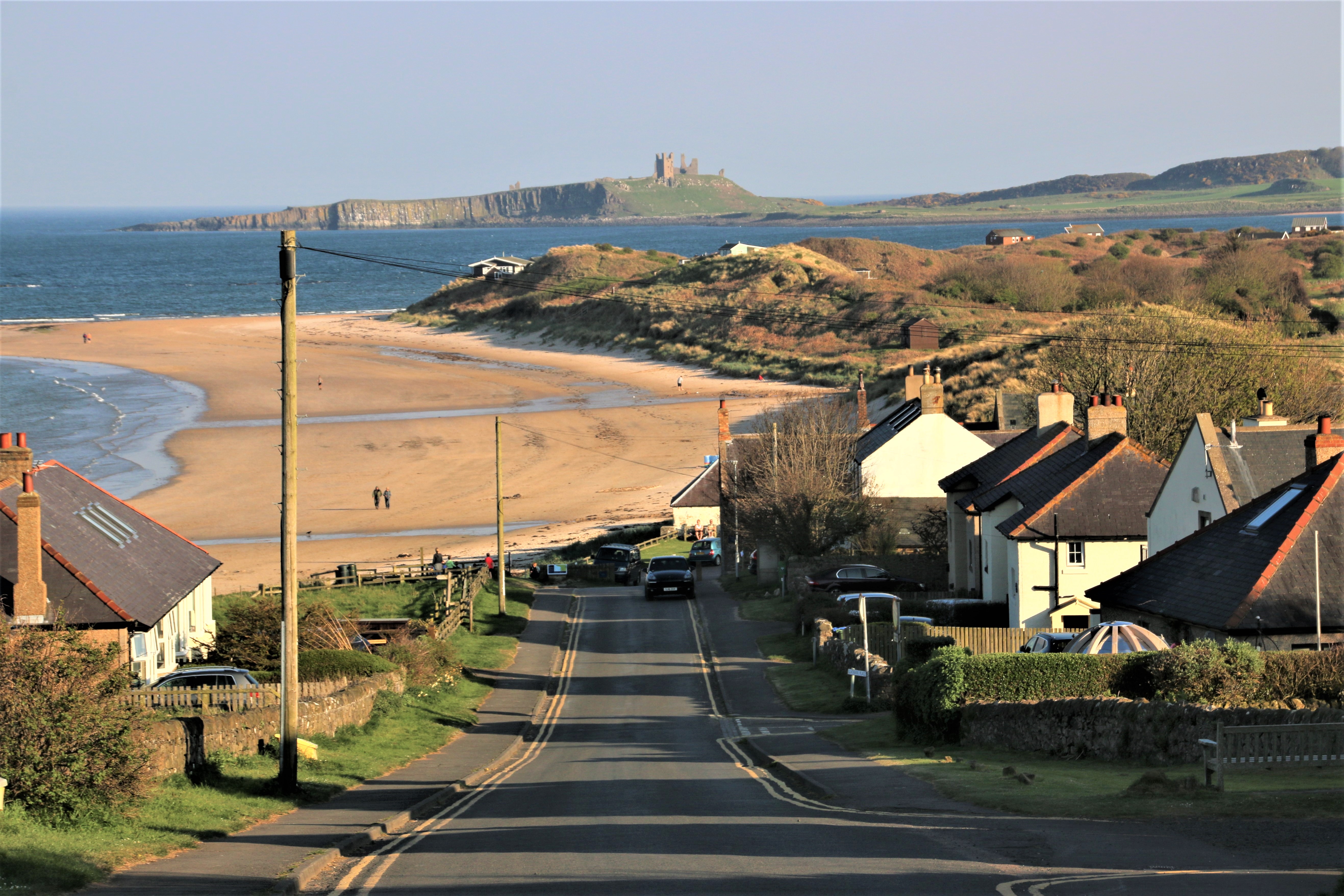
From the top of the hill on the approach to the village of Low Newton, there is a good view of the entire settlement nestling on the beach and dunes. In the past the locals made a living from fishing. The village pub at the bottom provides a clue.  An open-ended square of cream-washed cottages, in the centre of which The Ship Inn, originally known as the Smack Inn, looks directly out onto the glorious sandy beach. In the far distance the ruins of Dunstanburgh Castle can be seen on the other side of Embleton Bay.

Craster

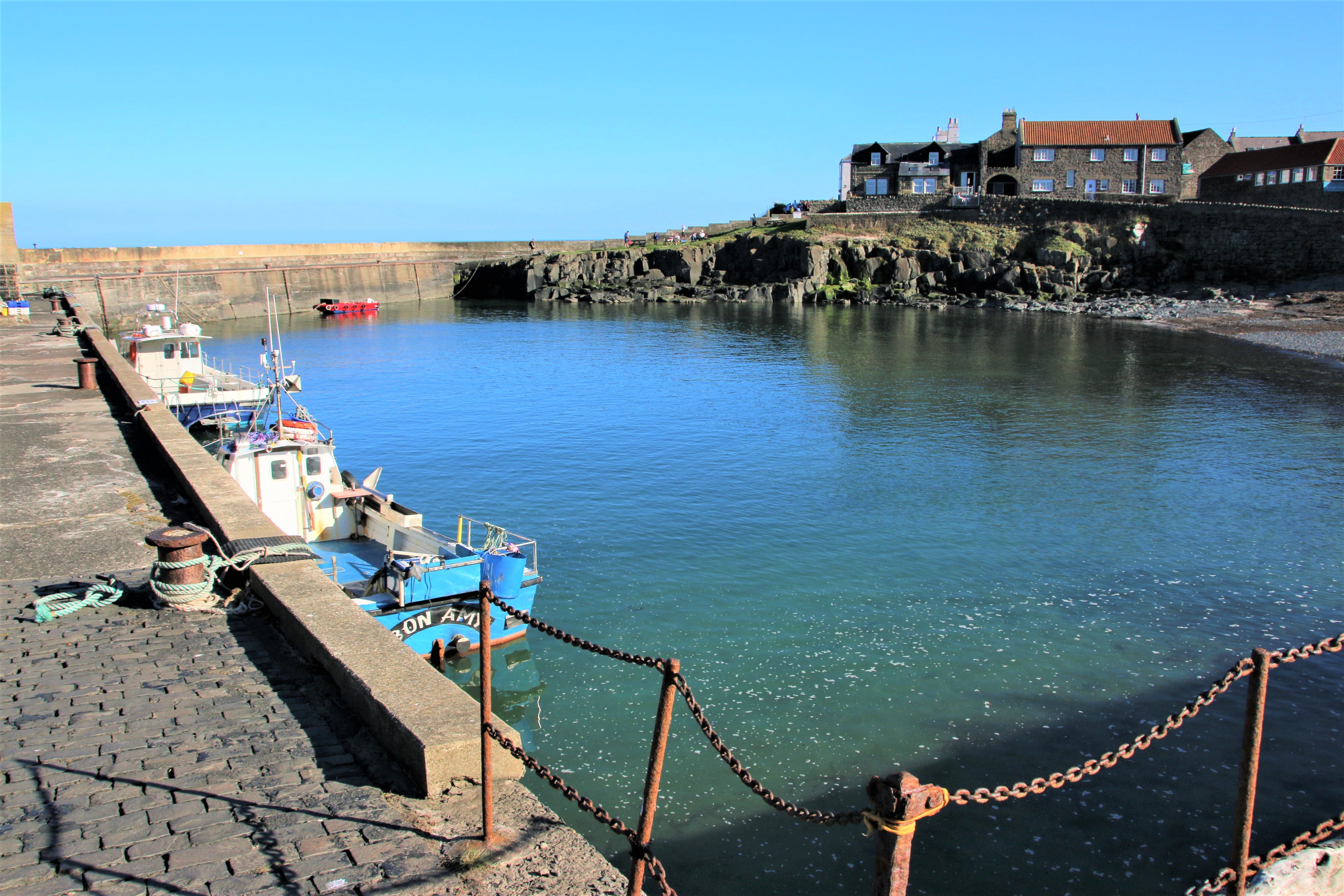
A smoking shed and a ring of houses overlook Craster’s small harbour. The village and estate have been owned by the Craster family since 1272. The harbour, built in 1904, was used to load local stone into boats which was then shipped to London and used as kerb stones. Today it is used by leisure boats and a few cobles that fish for lobster and crab. Craster is famous for producing kippers (cured herring) which are served in several establishments in the village which is a good base for coastal walking and fishing

Dunstanburgh Castle

From Craster it is a magnificent walk northwards along the cliffs for a mile or so to the stark ruins of Dunstanburgh Castle.

These stand on a rocky promontory sticking out into the North Sea. Work began on the castle in 1313. Thomas, Earl of Lancaster, who had inherited the Barony of Embleton, was a man of immense power and great wealth. He chose this spot as the place to build the ultimate status symbol of the day. Thomas commissioned the renowned mason, Master Elias, to build his castle. To impress folk, he gave instructions to build a ‘gatehouse 80ft high with a tower on either side’. In 1362, the castle came into the possession of John of Gaunt, the younger son of Edward III who turned it into a proper fort by strengthening its defences. These were needed for the first time in 1461 during the Wars of the Roses, when it was held by Sir Ralph Percy for the Lancastrians against Yorkist forces. Dunstanburgh then became a real backwater, so much so that by 1470 its garrison had turned to piracy to supplement their income. By the early 1500s it had fallen into ruin.

 Boulmer

The hamlet of Boulmer is a fishing community with a long stretch of low houses and bungalows along a flat, empty beach. Above the high tide mark the dry sand is littered with tatty, fishing paraphernalia and the occasional fishing coble is drawn up here when it is not moored off the beach. In the 18th/19th centuries Boulmer was notorious for its involvement in smuggling and piracy.  Crews came from up & down the coast, and from as far away as Scotland, to deal their ill-gotten gains. This included spirits from the Netherlands, salt and tobacco. The Village pub, The Fishing Boat Inn, was at the centre of this smuggling activity.

A UK Coastal Trip – Bamburgh Castle

Waren Mill

Further down the coast road from Beal, with Lindisfarne clearly in sight across the water, we come to the hamlet of Waren Mill on the edge of Budle Bay. At low tide the bay consists of weed-covered mud flats in front of soft sand dunes. It the far distance a ridge of sand almost cuts it off from the sea. It can be dangerous to venture out too far because of fast incoming tides. It is part of Lindisfarne Nature Reserve, popular with birdwatchers. As its name suggests a corn mill is first mentioned here in 1187. The present building dates from 1780 and was still working as a maltings in the early 1920s. Unused from 1978, it was eventually converted into holiday flats despite the objections of Lindisfarne Nature Reserve. The place has an industrial past. In the 13th Century it was a busy port although the harbour has now disappeared beneath rising silt.

Bamburgh

The village of Bamburgh lies on the main road with its pubs and guest houses and the small RNLI Grace Darling Museum.


Bamburgh Castle itself occupies a strong defensive position on a volcanic crag outside the village directly overlooking the beach.

There has been a fortified settlement here since Anglo-Saxon times when it was capital of Northumbria. Vikings destroyed it in 993. The Normans built the first proper castle on the site and its keep, 3 metres thick in places, still stands proud within its walls. The union of the Scottish and English crowns in 1603 ended its role as a border fortress. It changed ownership a few times and, in 1704, Nathaniel Crewe, Bishop of Durham, bought it. Under his Trustees it housed a school and a hospital. It was the centre of its own mini ‘welfare state’. In 1874 it was purchased by a wealthy industrialist, Sir William Armstrong, who completed the renovations, turning it into the Victorian ideal of what a medieval castle should be like. His family still own it today and it is open to the public.

Seahouses

Terraces of grey-stoned houses overlook this little port. The working quay is covered in ropes, nets, crab pots, fish boxes and clusters of marker buoys.

Shuttered shacks advertise sea fishing trips and boats out to the Farne Islands.

Beadnell

The sea has nibbled its way into the land to create a hard, stony beach with fingers of concrete and rock strata crossing it in a diagonal direction. A minor road sweeps around the bay protecting the crescent of homes from the elements.

A UK Coastal Trip – The Holy Island of Lindisfarne

A narrow lane descends down through the hamlet of Beal to the shore. At low tide a causeway is revealed which allows vehicles to cross the muddy-mixed sands to the Holy Island of Lindisfarne, a place that oozes history, religion and past spirits.

But beware – twice a day the tide comes in and covers this whole stretch, between the island and the mainland. Wooden poles mark out the pedestrian routes and high refuge boxes have been constructed along the way, just in case any of the many visitors are caught out by the tide.

The car park is large, the tea rooms plentiful and the atmosphere wild and intriguing.


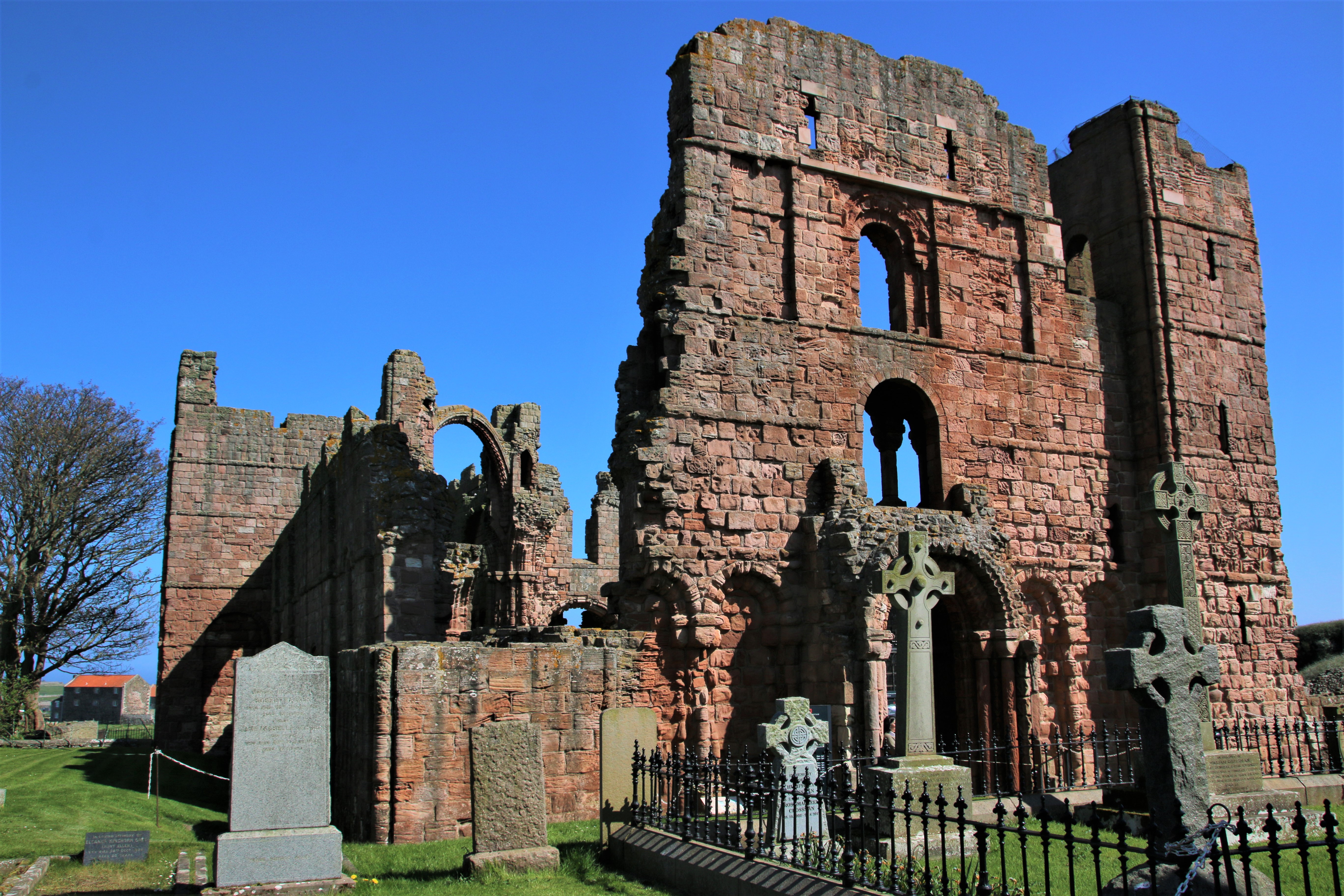
St Aiden came from Scotland to convert Northumberland to Christianity. He founded the Lindisfarne Priory in around 634 AD. It eventually fell into disuse, leaving the extensive ruins that can be seen today. The island is still a place of pilgrimage and it is the final destination on the long-distance walking route of Saint Cuthbert’s Way.


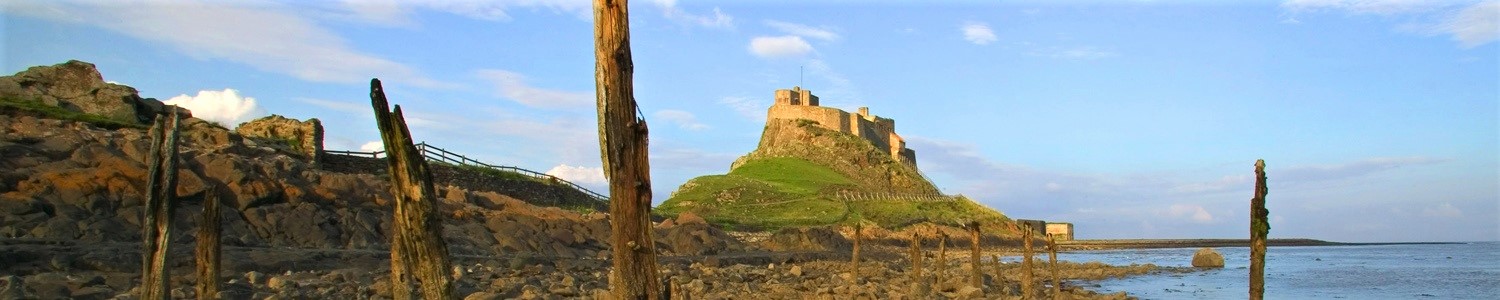
Rising from the sheer rock face at the tip of the island is Lindisfarne Castle. Built in 1550 using stone from the abandoned priory buildings, it defended the harbour against attack from Scots and Norsemen. In 1901 Edward Hudson bought Lindisfarne Castle and gave it a luxurious makeover, turning it into a comfortable but quirky holiday home. In 2017 the castle underwent extensive renovation and is managed by the National Trust. My photograph shows this work taking place under its protective tent.

from http://www.visitnorthumberland.com

The castle is open to the public, as are the nearby lime kilns at Castle Point. Lime was used in constructing the homes and to enrich the soil. Numerous pubs, hotels, tea rooms and guest houses service the thousands of visitors who come to the island to immerse themselves in its history, to appreciate its wildlife or to enjoy its fine beaches.

A UK Coastal Trip – Berwick-upon-Tweed

Hi Everyone,

Well, here we all are stuck in our little bubbles hoping the world will stay away and not burst through to harm us, our loved ones or those out there least able to deal with such adversity. We are all out of sorts and unsettled, unsure for how long the present crisis will last. At some time in the future we will get our lives back. Let’s hope our world will not have changed too much by then and we can return to whatever it is that gives us our happiness, our harmony and our value.

So, what to do in the meantime? As you know over the years I have been sharing a blog of images and words, reflecting my travels and my passion for new places and cultures. So, I thought: use my catalogue of experiences and images to show what a wondrous world still exists out there and provide inspiration for planning visits and travel once life returns to some normality.

Firstly, I am going to share with you my journey around the coast of the United Kingdom. It is incomplete at this juncture. I had planned to cover the last regions (the West Country, the North West and, maybe, Scotland) in the coming months but the present situation has put a kibosh on that. However, the internet is a powerful tool, so where I lack my own material, I will draw on information put up by local tourist boards.

This project started 6 or so years ago as an attempt to visit the many places of the UK that I had never visited before. I decided to visit every settlement, every hamlet, village, town and city, that is sited on our coastline and take an image of the shore or from the shore. I started in the North East, purely because most of the east coast was largely a mystery to me, and moved clockwise around the UK.

Our journey starts –

Berwick-upon-Tweed

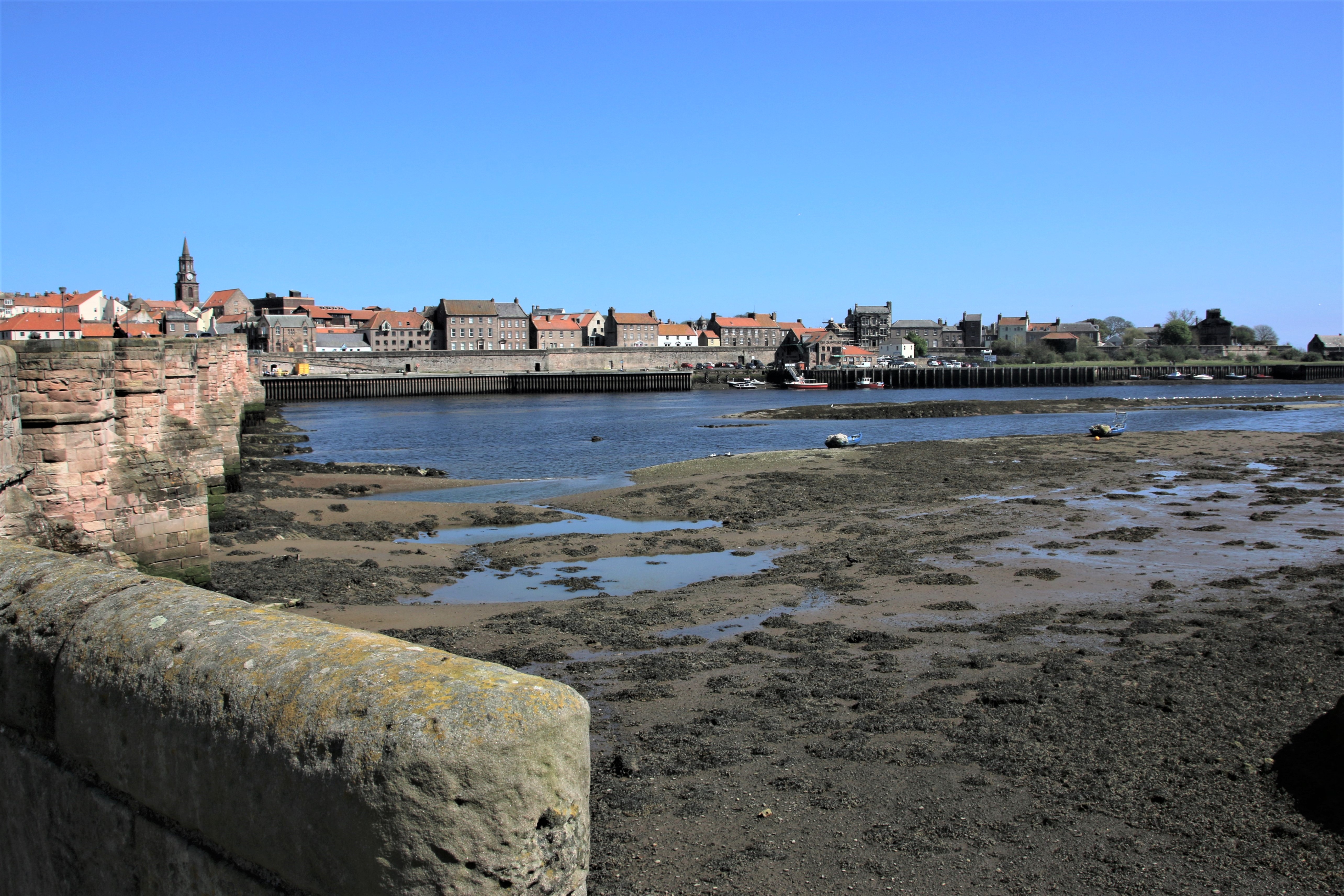
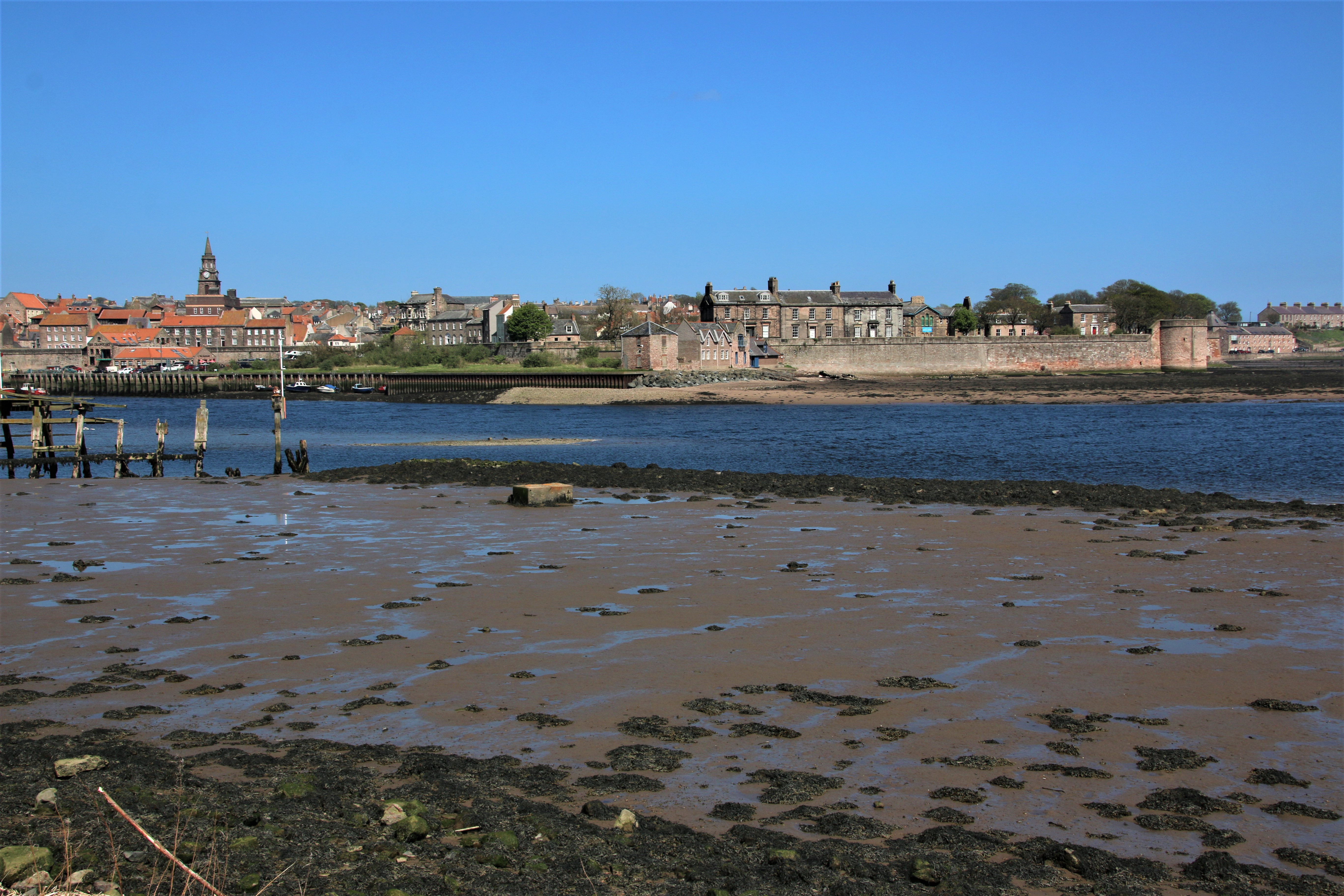
Berwick is a town full of history and memorials from a turbulent past and just 3 miles from the Scottish border. In medieval times it passed backwards and forwards between the Scots and the English. It was captured and sacked13 times before finally falling into English hands in 1482. It still retains close connections with Scotland as demonstrated by the fact that the town’s football team plays in the Scottish League. The town is on the north bank of the River Tweed. Three bridges cross the estuary at this point.

The first, seen here, is the Jacobean Berwick Bridge, built of stone between 1611 & 1635 which now takes one-way traffic from east to west. Behind that is the four-arched Royal Tweed Bridge, built in concrete, which takes the A1 main road around the town. The third, the Royal Border Bridge was built by RL Stephenson in 1847 to take the main line railway over the estuary.

Berwick’s walls and ramparts were built in Elizabethan times to protect the town from the invading Scots. These defences, wide and extensive, can still be clearly seen. The road to the golf club, the cliffs and the town’s small beach cuts through the thick stonework in a narrow tunnel.

Tweedmouth

On the southern bank of the River Tweed, Tweedmouth is part of the suburban overflow of Berwick-upon-Tweed.

King John attempted to fortify Tweedmouth against the Scots in 1203, but building the defences were interrupted twice, and his half-finished castle was finally destroyed when William the Lion of Scotland occupied Berwick. In an annual ceremony dating back to 1292, Tweedmouth schools elect a Salmon Queen to mark the start of Salmon Week, a traditional celebration which dates to medieval times.

Spittal


The small resort town of Spittal lies further along the south bank. Its lovely, soft sandy beach can be seen beyond the RNLI Station. It is backed by a Victorian promenade and ‘Venetian’ pavilion, built in 1928. Berwick’s Lighthouse can be seen far away on the far side of the estuary.

Goswick

A single-track road runs through the fairways of Goswick Golf Club, parallel to the dunes and between the railway line and the sea. It acts as an artery for the homes and the smallholdings that form this hamlet.

2 days in classy San Sebastian

San Sebastian is in the Basque country of  northern Spain, close to the French border. What a delightful place it is. The sun was shining brightly on the Sunday afternoon as we got off the bus that bought us from Bilbao airport. So the first stop had to be the wonderfully soft sands of what must be the best town beach in the whole of Spain, and that is saying something.

100 San Sebastian Playa de la Concha 111

The beach stretches around the bay in an almost perfect crescent, pulled between the two rocky hills which anchor its ends where the sea first broke through to the softer rock. Tall elegant apartment blocks and a wide promenade look down to the sands through a intricately patterned wrought iron balistrade. Families and friends lie out on a mosaic of towels absorbing the warm autumn rays and enjoying the cool waters of the Bay of Biscay.

100 San Sebastian Playa de la Concha 114

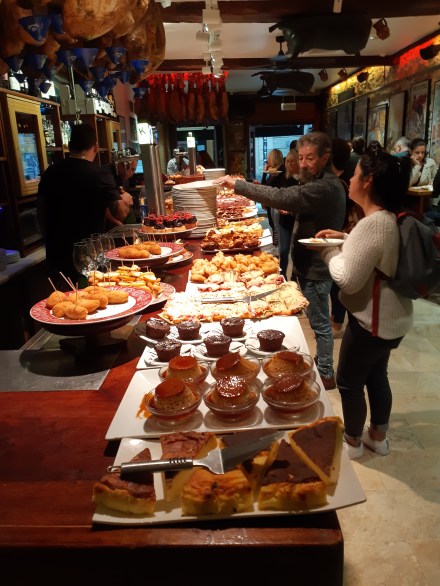
The Old Town is a grid of narrow streets which hide San Sebastian’s signature hot spots – eateries. Flash Michelin Star restaurants play neighbours to so many pintxos bars of all shapes and ages which provide a feasting experience for locals and visitors alike. Pintxos is the Basque word for tapas. They are a great way to sample some of the most fantastic cuisines in the world, cheaply and risk-free. Portions are small, prices low, and service quick. Many bars have food on the bar-top that you can either help yourself to or point to purchase. 101 Pintxos in the Old Town 3

And the best thing? It is all washed down with red Rioja at 1.85 Euros a glass. Heaven.

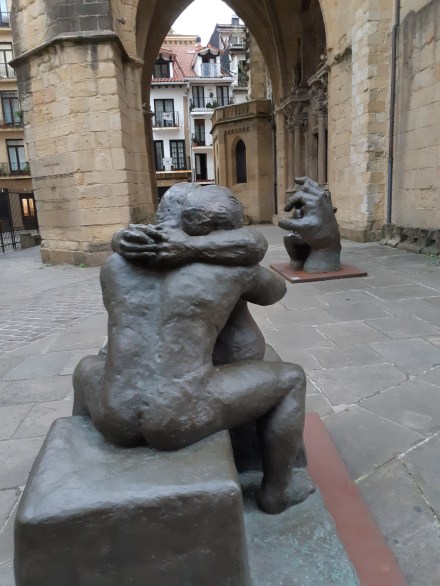
Days are spent window shopping in the elegant shopping streets or finding something more local in some of the smaller alleys of the old town. It was reassuring to still find specialist shops flourishing like chandellors or hat shops or the ‘bedtime shop’ which sold pjamas, dressing gowns, bras and hats (hmmmm).  Old churches can still be found in numbers around the backstreets which lead to the harbour.

103 Basílica de Santa María del Coro110 Harbour 1105 Church of San Sebastian

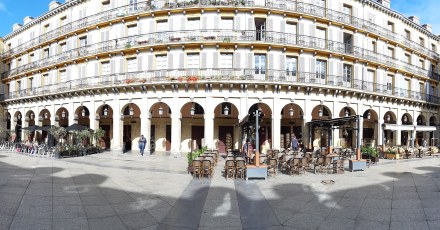
Squares and open spaces provide a relief from the heat of the summer and the storms of the winter and provide the town with a feeling of culture and elegance. Constitution Square is one example.

106 Constitution Square 2106 Constitution Square 5

All in all, San Sebastian has a feel of class and elegence and grace, both its buildings, its boulevards, its atmosphere and the dress and attire of its inhabitants, particularly the older generation. There are things going on which contribute to this cosmipolitan feel – theatre, music, street art. I loved it.

Georgia – where east meets west and west meets east

Georgia is a beautiful country, especially at this time of year in the early stages of autumn.

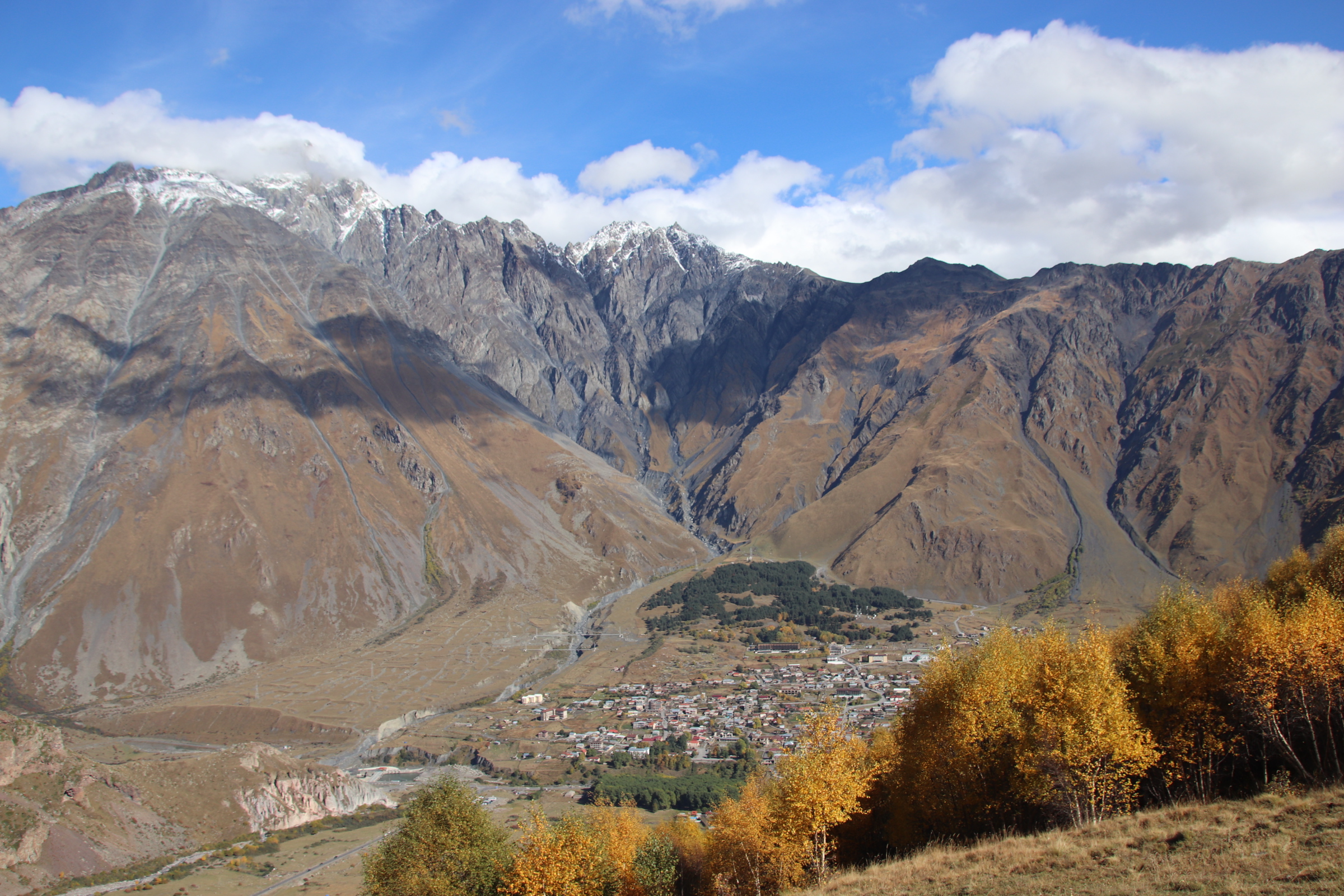
Much of it lies in the Caucasus Mountains. Rivers have cut down through the rock to create deep valleys, the sides and ridges covered in mixed deciduous woodland and pine forest.

These valleys control all the major road routes through Georgia and dictate where people live and work.

At the same time the country’s recent history has a huge impact on the landscape.

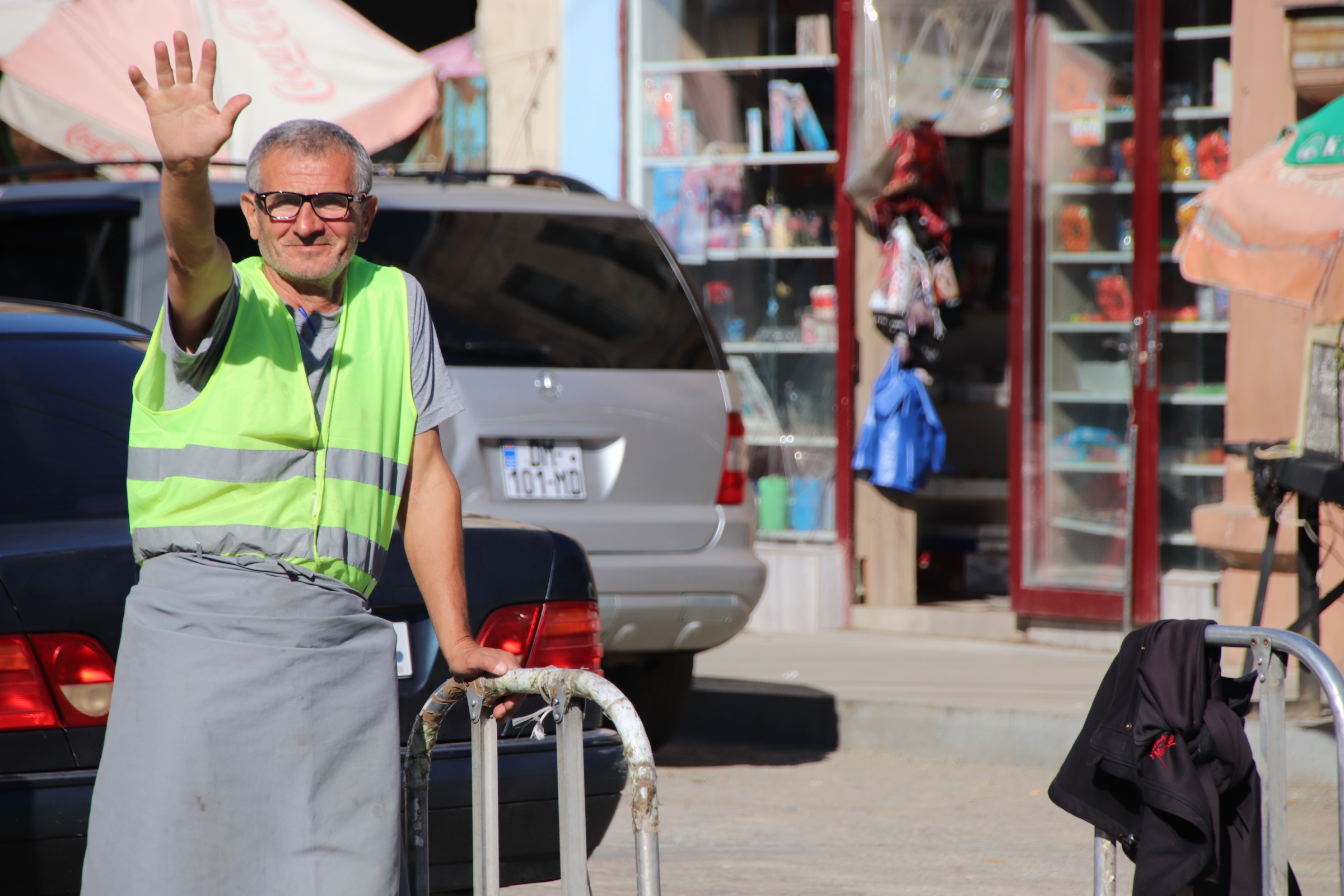
You can be driving in late, shadowy sunshine, winding a colourful road surrounded by the oranges and yellows and greens of woods and forests and orchards and then you come into a large town. When the Soviet Union collapsed the local economies collapsed at the same time. Suddenly local industry could not get parts and raw materials and more distant markets in Russia disappeared. So now factories lie rusting and the people who worked in them have to scratch a living by selling produce from the road side like honey

or sweet bread or homemade liquor or making home-deliveries on a simple trolley. Maybe the birth of Amazon!

Homes in the countryside tend to be single-storey and quite basic, set amongst mature fruit trees against a backdrop of turning autumn.

In the towns ghastly, tired, cement-built apartment blocks, constructed in the 50s in the Soviet era, house the people and the workforce. These sentinels stand out above the bungalows and detached homes of the more affluent suburbs.

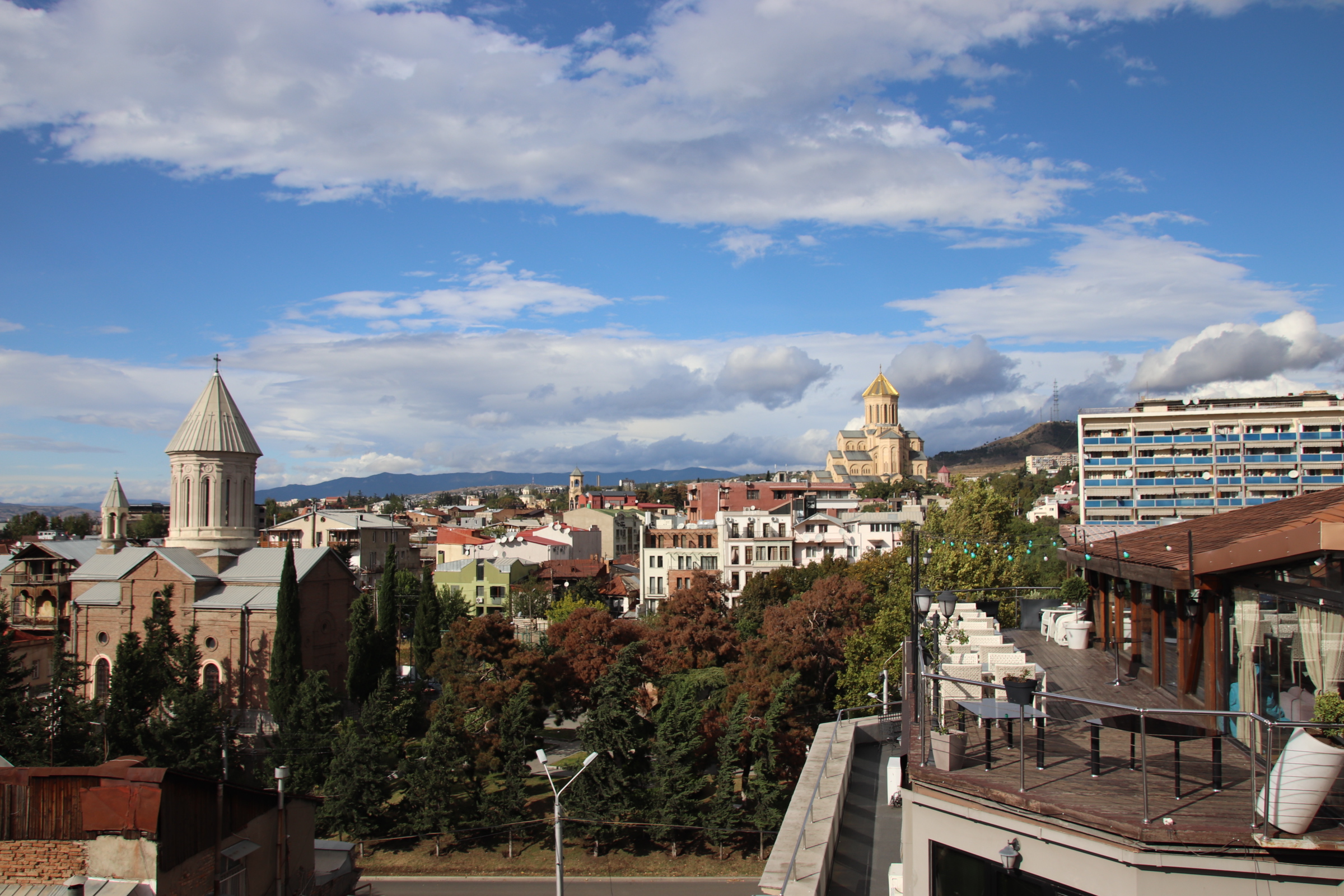
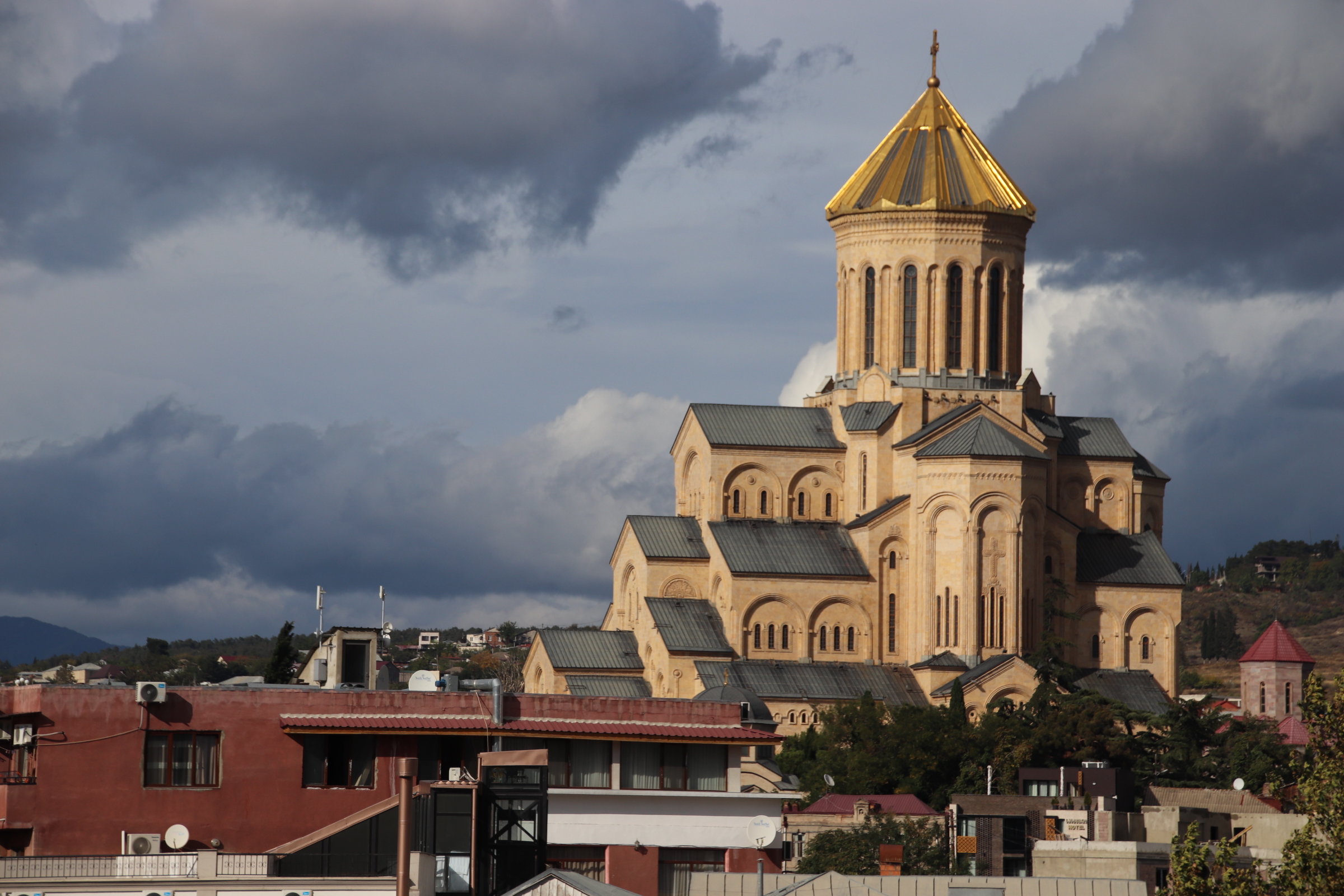
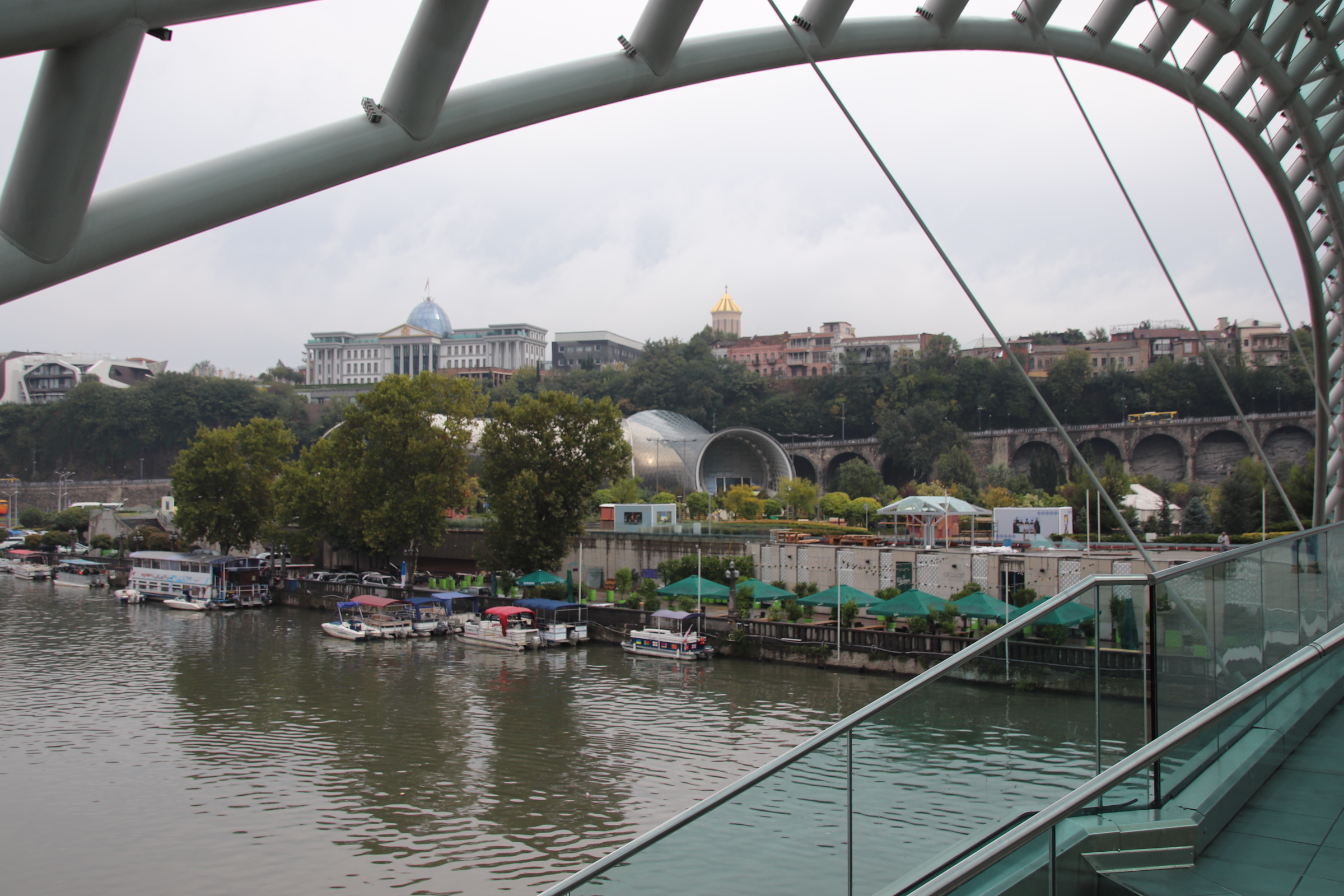
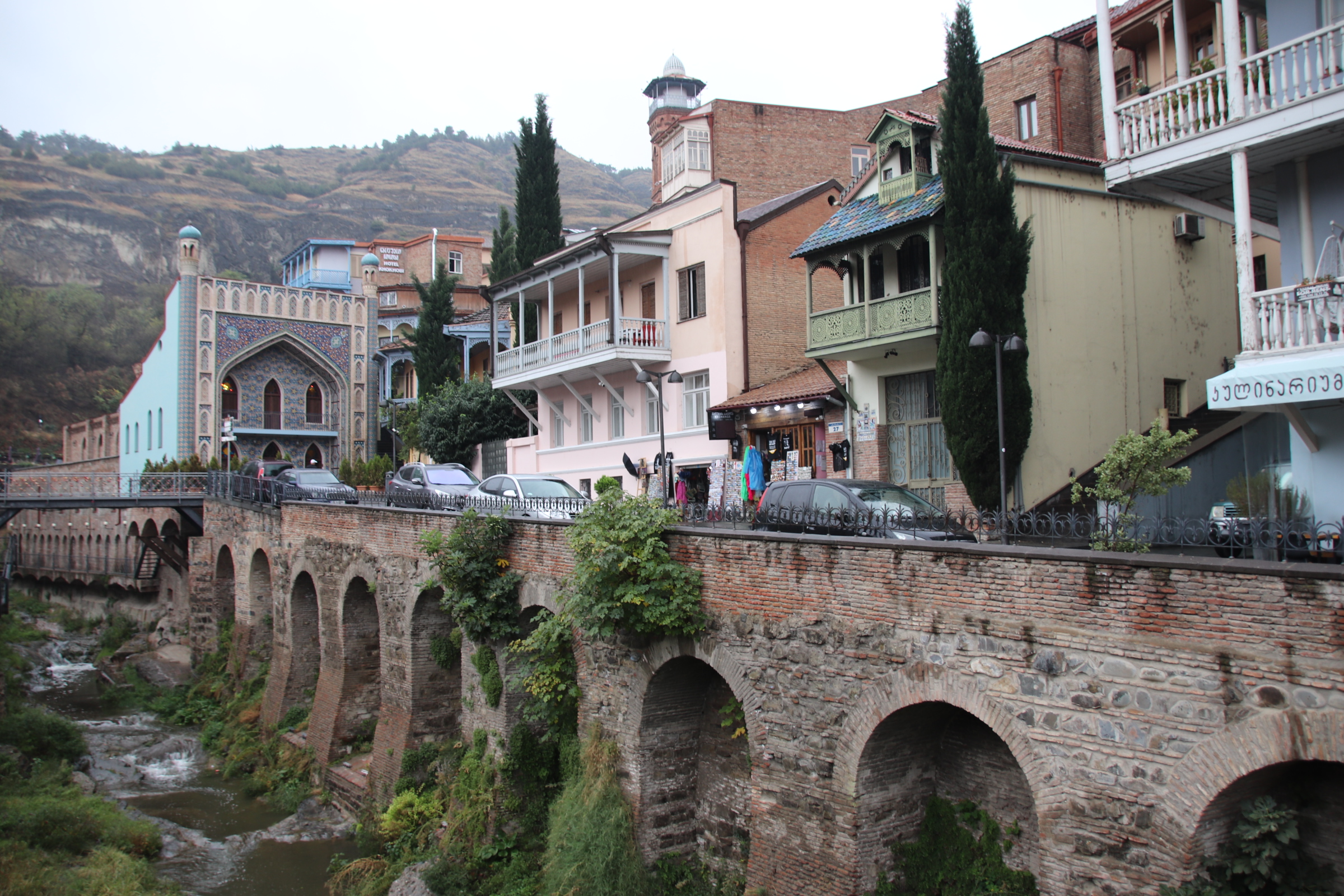
Tbilisi is an attractive, modern, cosmopolitan city. There is bit of a buzz about the place with the beat of music clubs mixing it with the clatter of glitzy restaurants and local eateries and bars. The centre is dotted with historic sites and churches alongside modern government buildings constructed with glass to signify the new climate of openness.

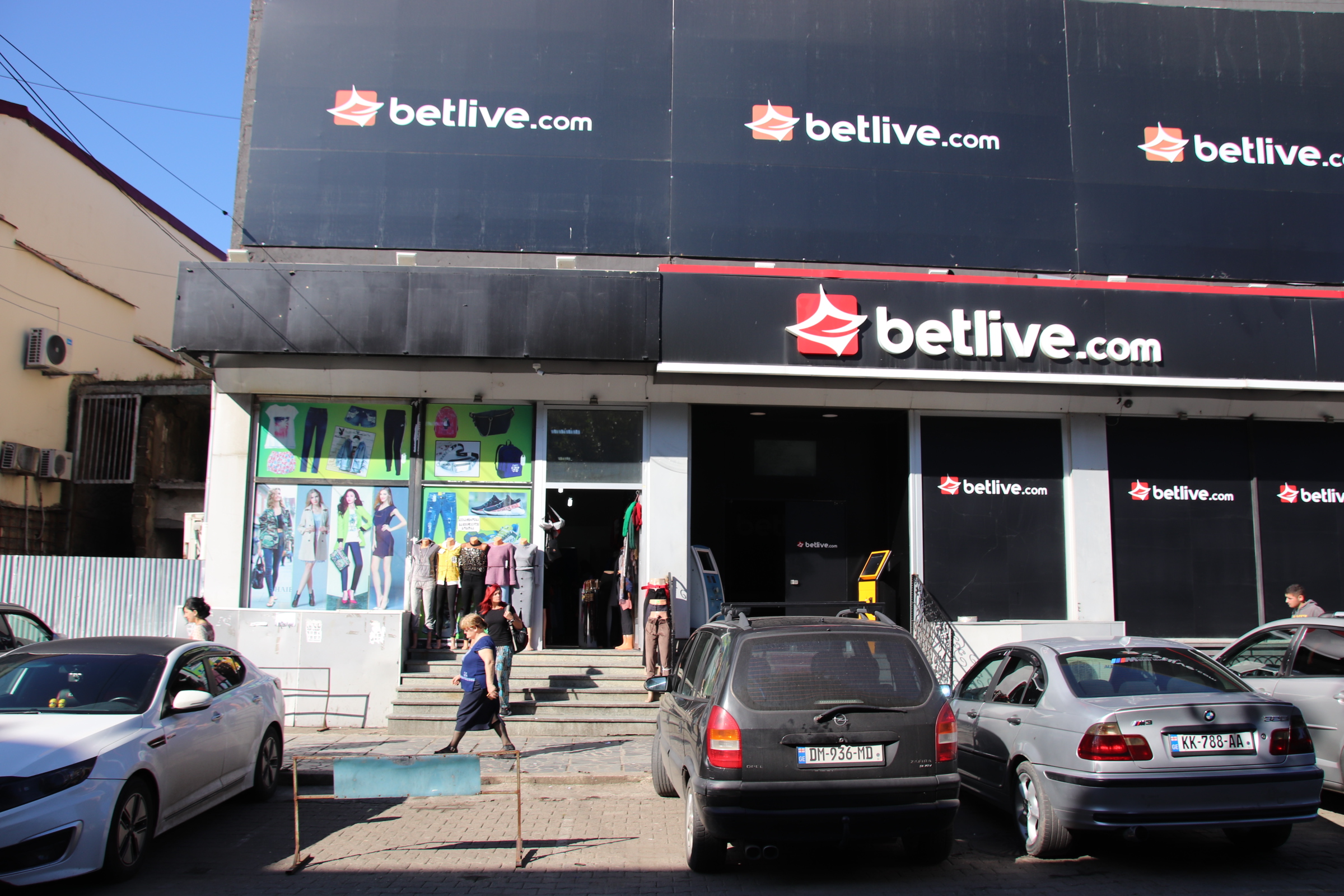
Outside the capital life is hard. Little has changed since the Soviet era. But progress is being made. New building is taking place in the mountains to develop the infant ski industry. A new motorway is being constructed to the west of Tbilisi. Tourism may well be the way forward for many.

Georgia is good place to visit, particularly Tbilisi.. Hotels are good, food is hearty and tasty, eating out is cheap, beer and wine are excellent and inexpensive. People are unused to foreign visitors and can appear suspicious, but they do crack into smiles and laughter if approached and engaged.

The air is clean, the scenery magnificent and it is what it says on the tin – the place where east meets west, where Asia meets Europe. Well worth a visit.

Georgia – the cradle of wine

I have left the best until last and that is Georgia’s ancient wine industry. In Tbilisi every street has a wine shop where you can sample wine, taste wine, buy wine. Outside the capital there are signs everywhere for vineyards, wine cellars, wine producers, wine routes.

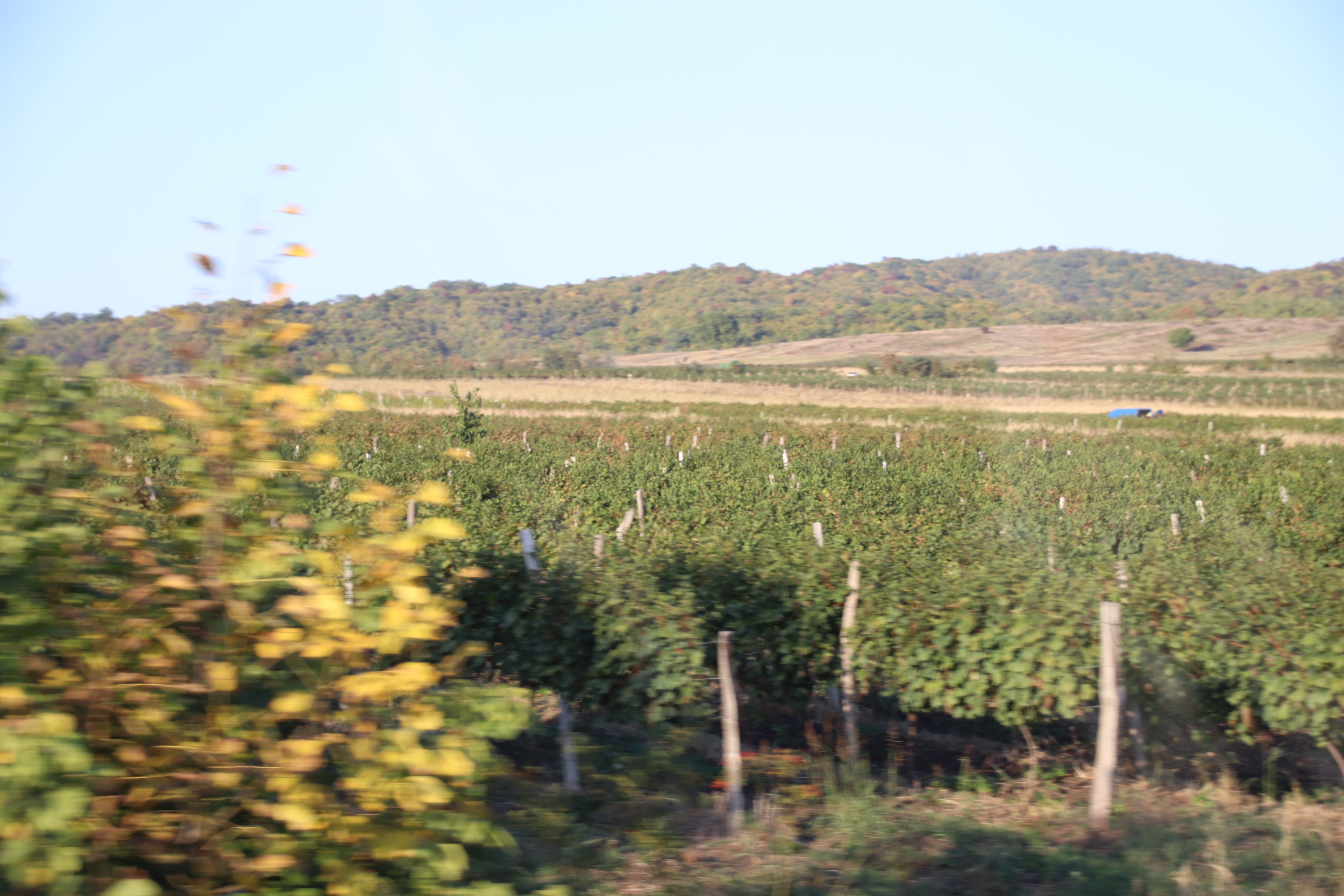
The wine region of Kakheti lies in the fertile lands in the eastern part of Georgia. 70% of Georgia’s vines are grown here.

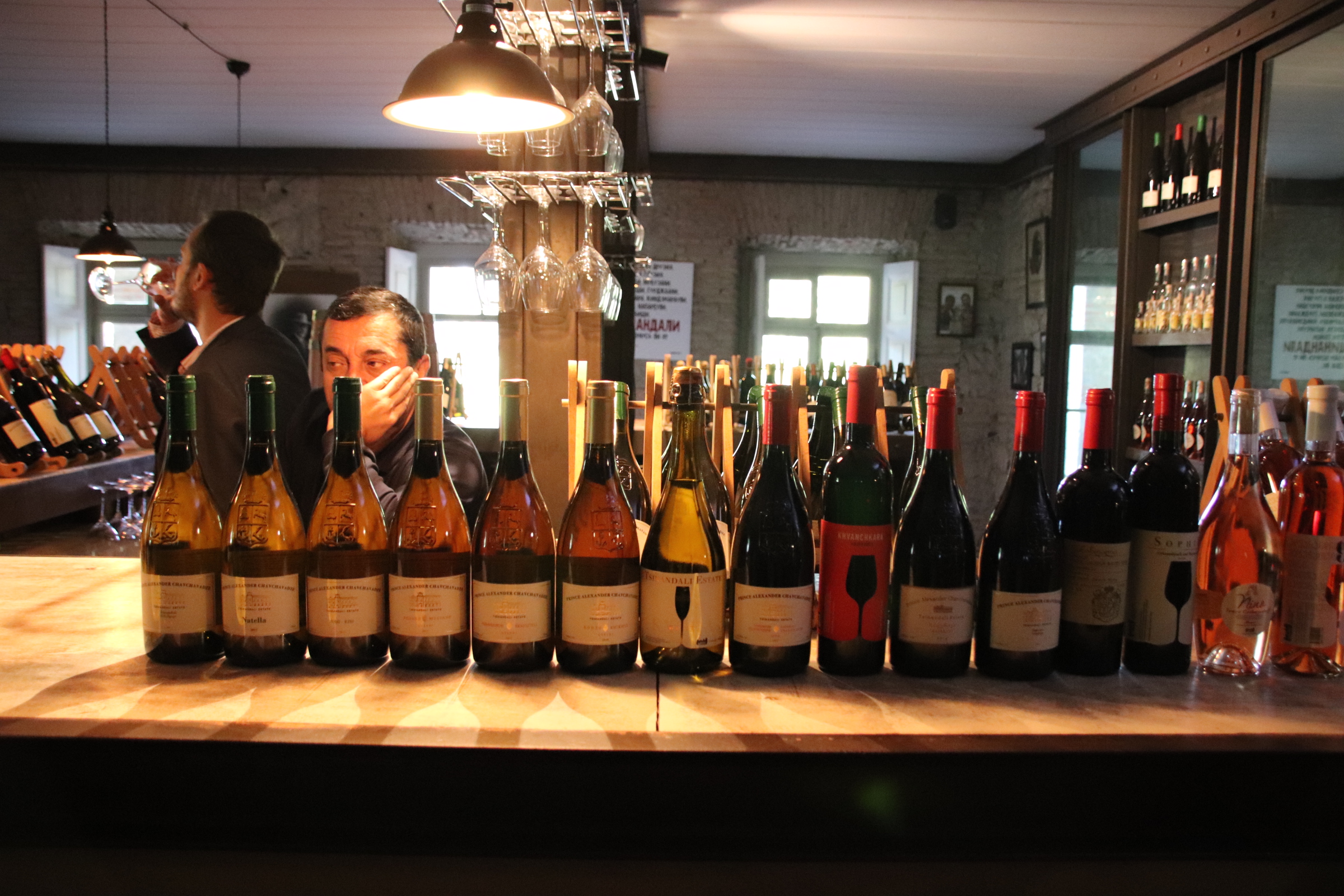
It was 6000 BC when the first grapes were found in Georgia which is why they proudly boast to be the cradle of wine. They produce 520 varieties of wine in the country. Alexander Chavchavadze bought European methods of wine production to Georgia in the early 19th century. The cellar at his summer pad still sells wines and chacha using local grapes.

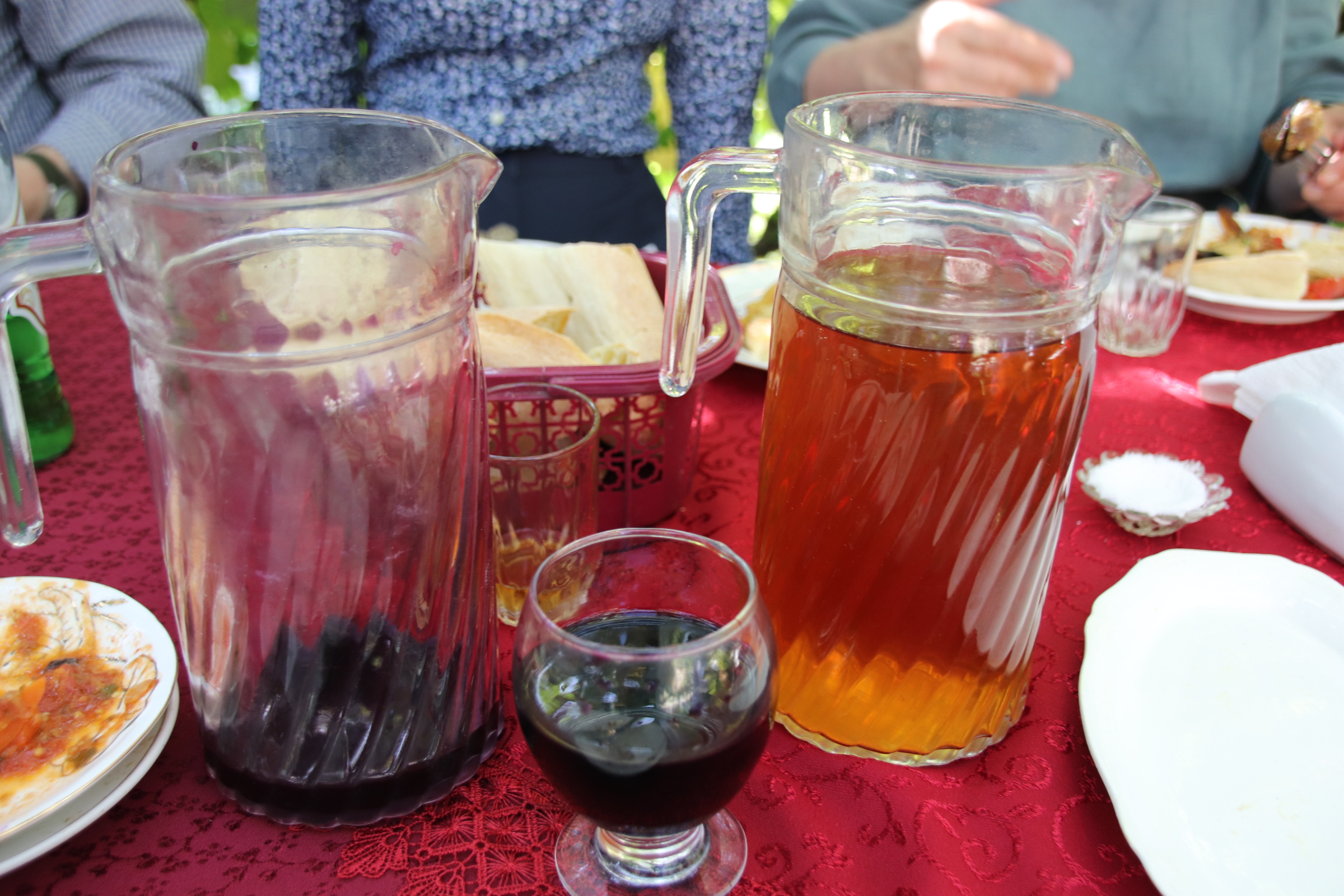
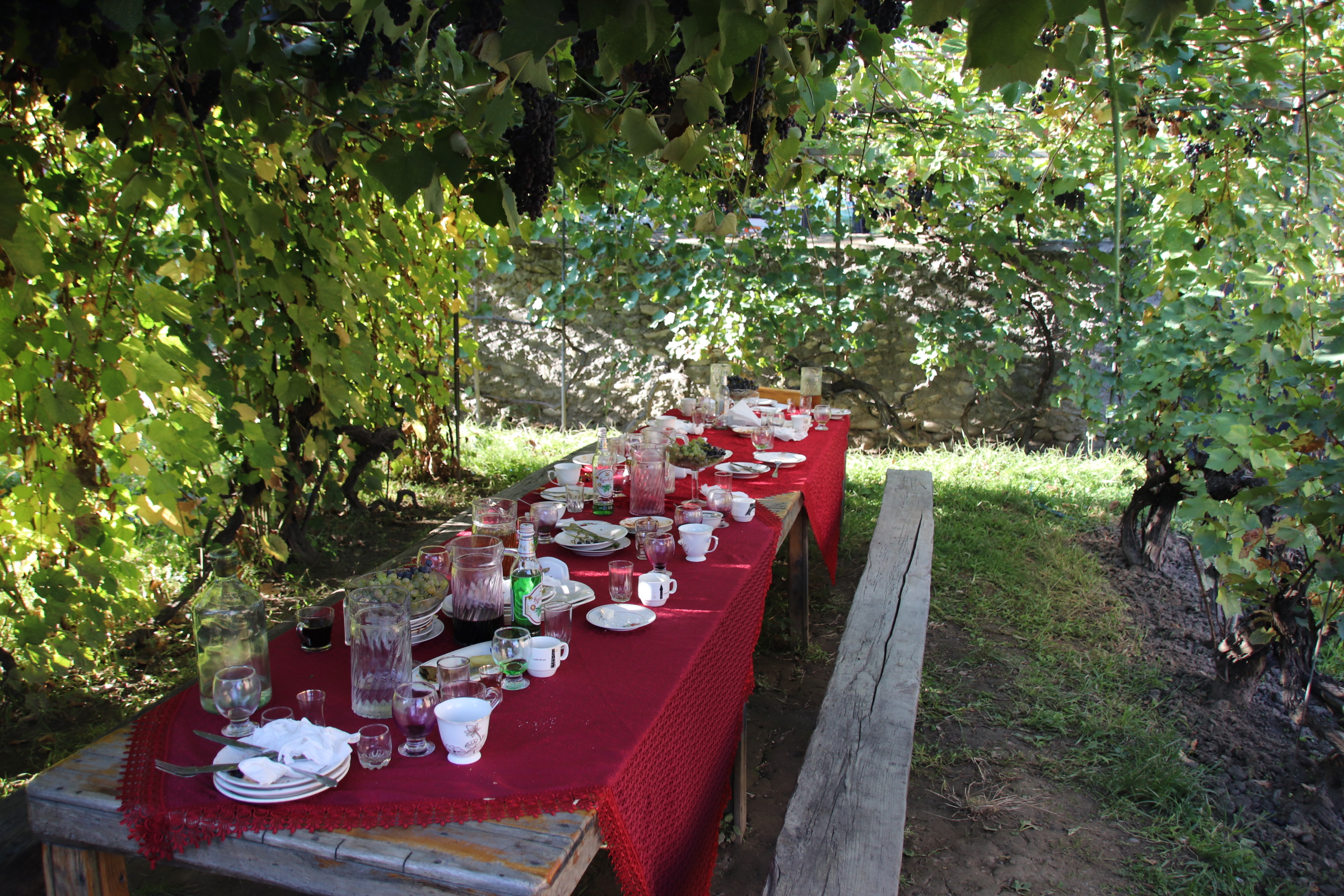
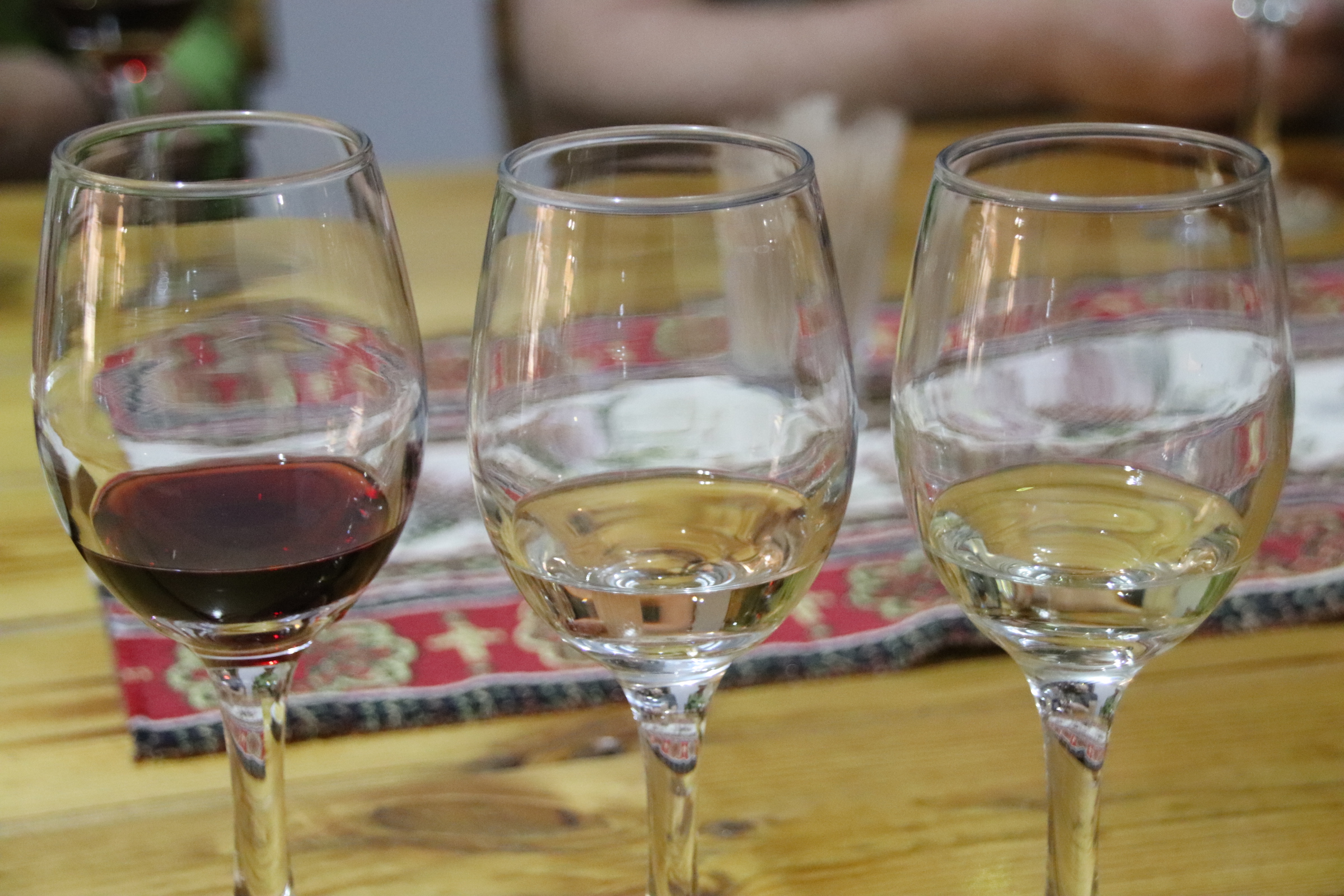
We stop for lunch with a local family who have their own vineyard and produce their own wine – dry red and dry white, the latter more like amber.

The white is…..well, a bit iffy for my palette. The red is great from the start. And it was the start of a great meal, in the sunshine, in the shade of fruit-laden vines. Great fresh food and copious amounts of the family’s very drinkable plonk.

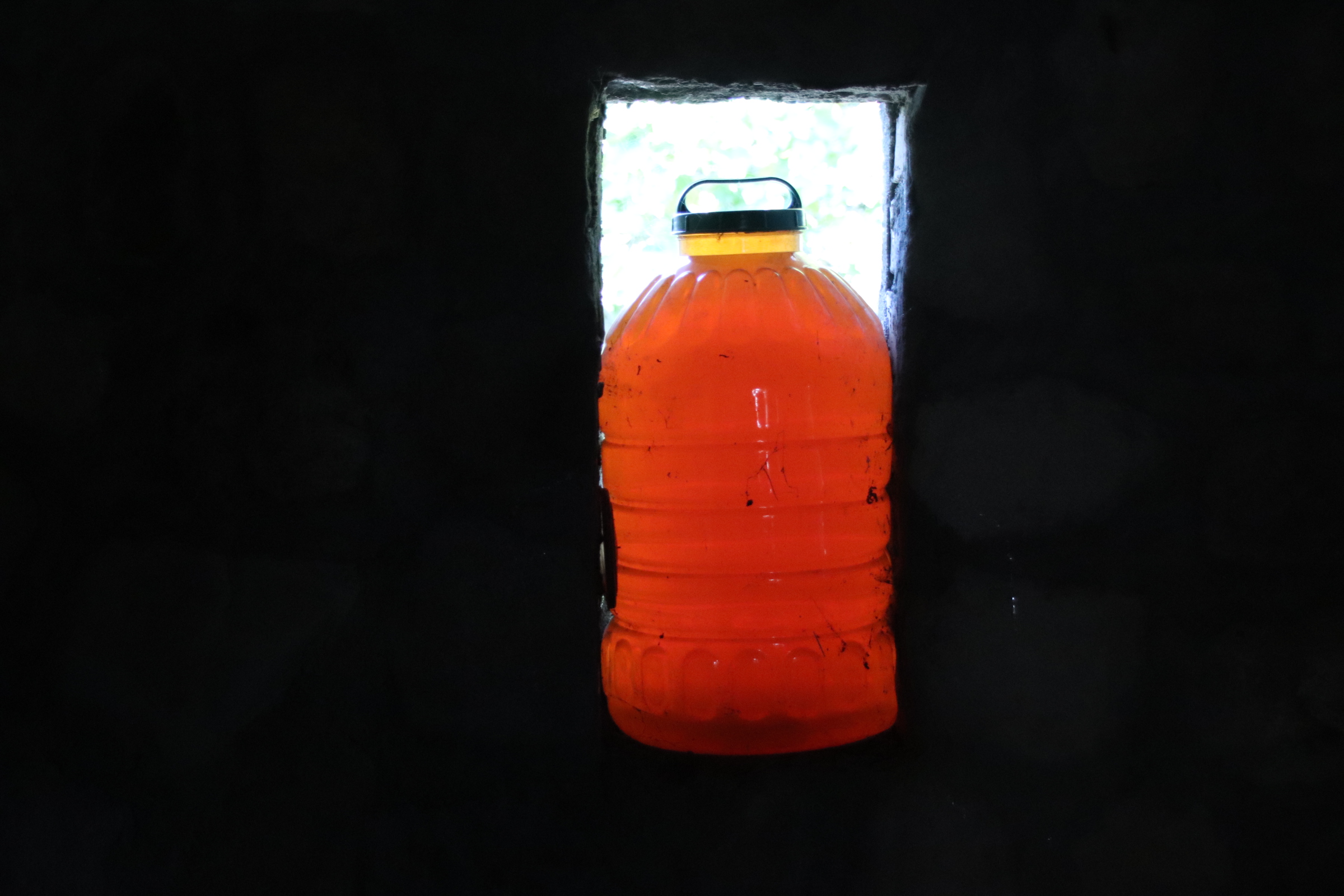
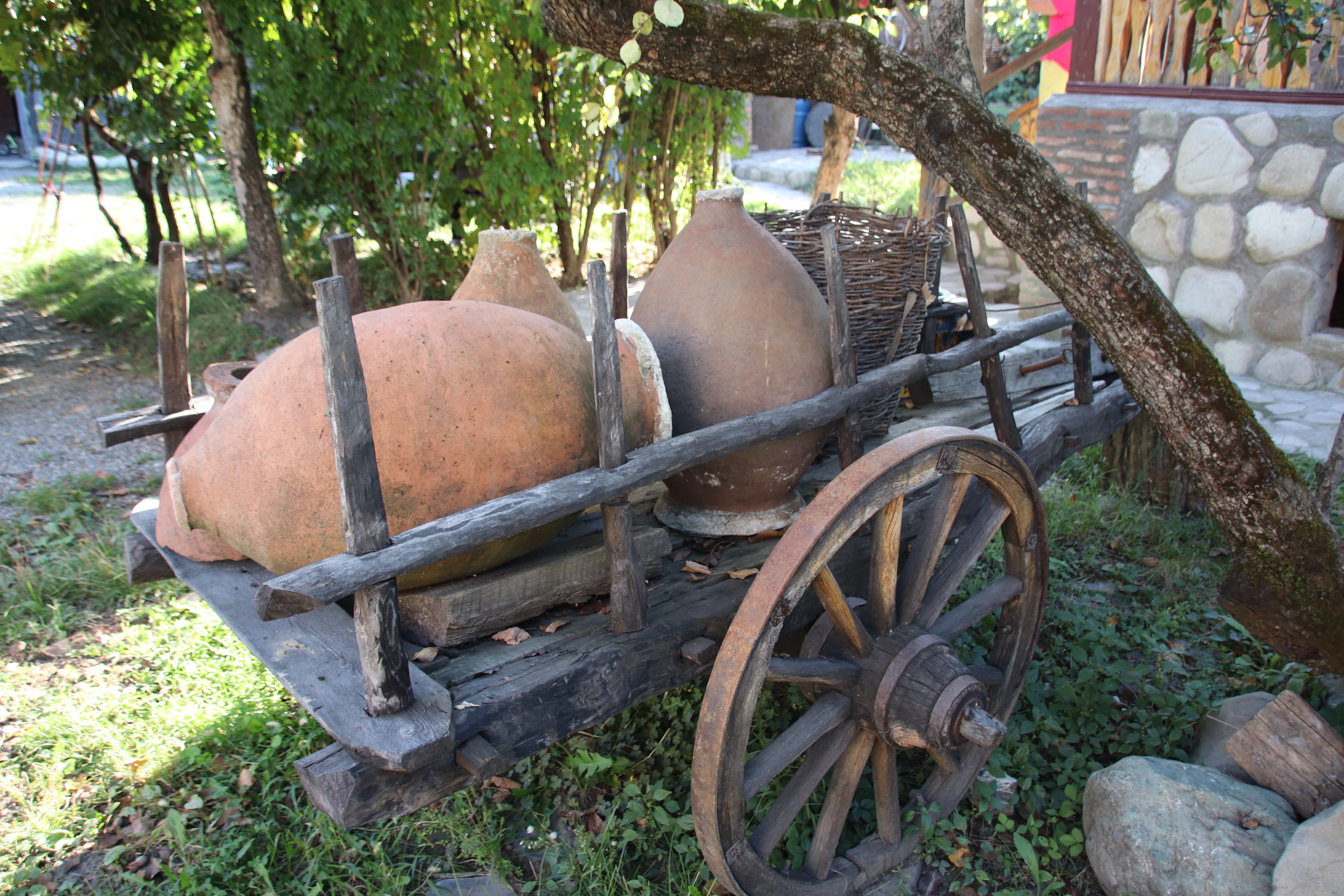
A bit of methodology for you….. The grapes in the fields are harvested. The harvest is thrown through the hatch of the 150 year old wine cellar and into the trough where feet trample and squish the grapes. The liquid drains into one of the three underground vats, which, once filled, is sealed.

Fermentation takes place. When ready the wine is removed with the help of a clay jug and allowed to settle in large jars before being bottled.

A further step is to create chacha. The grape leftovers are mushed together and placed into large clay pots where fermentation continues. The vessels are sealed. After 6 months or so it is filtered and decanted into smaller vessels. Repeat filtration creates a stronger spirit called chacha, rated 50%+ on the Richter scale of spirits.

What a great lunch. I don’t know what happened to the rest of the day.


Mtskheta, Georgia’s former capital

A drive back to Tbilisi today, by way of Mtskheta, the former capital of Georgia.

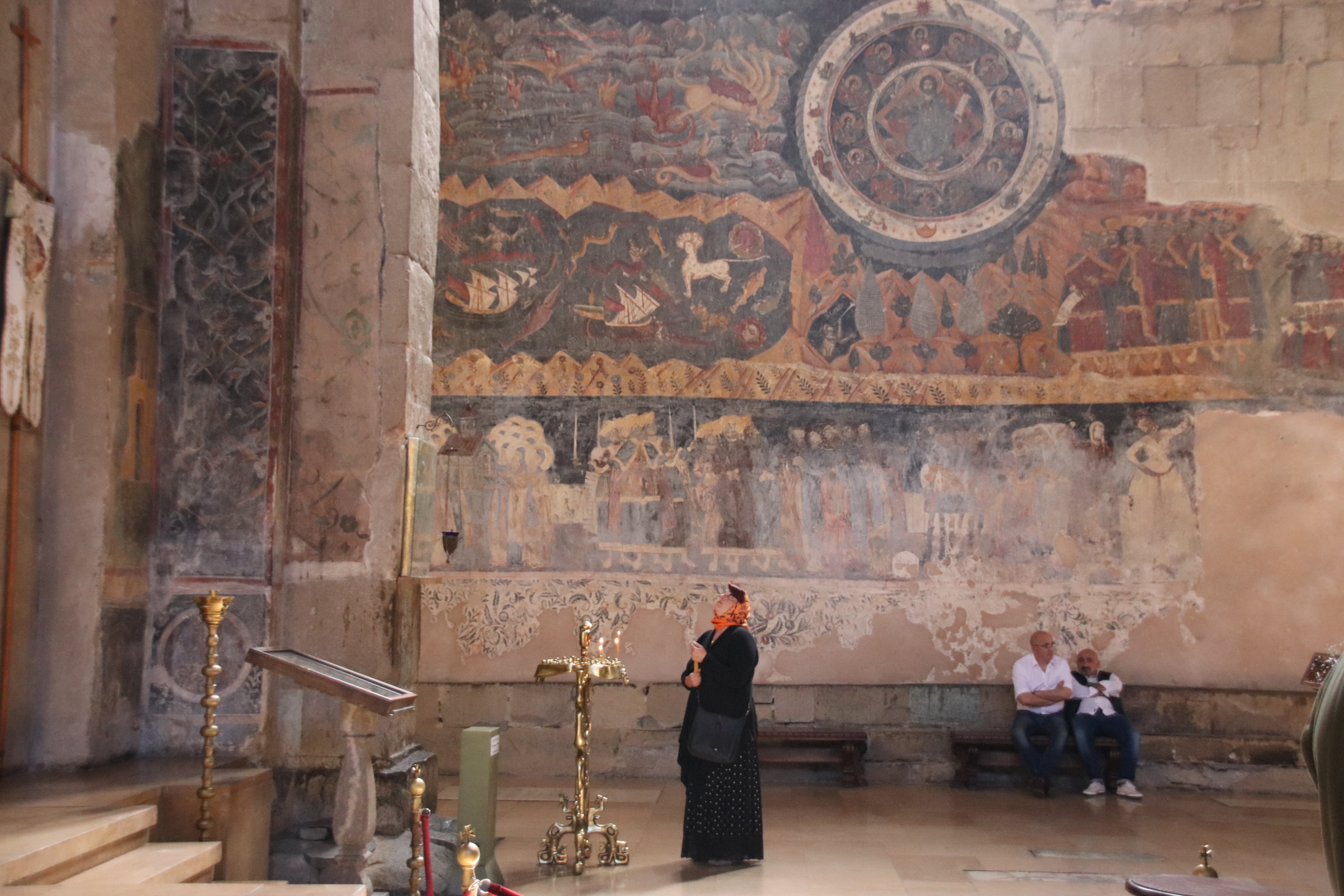
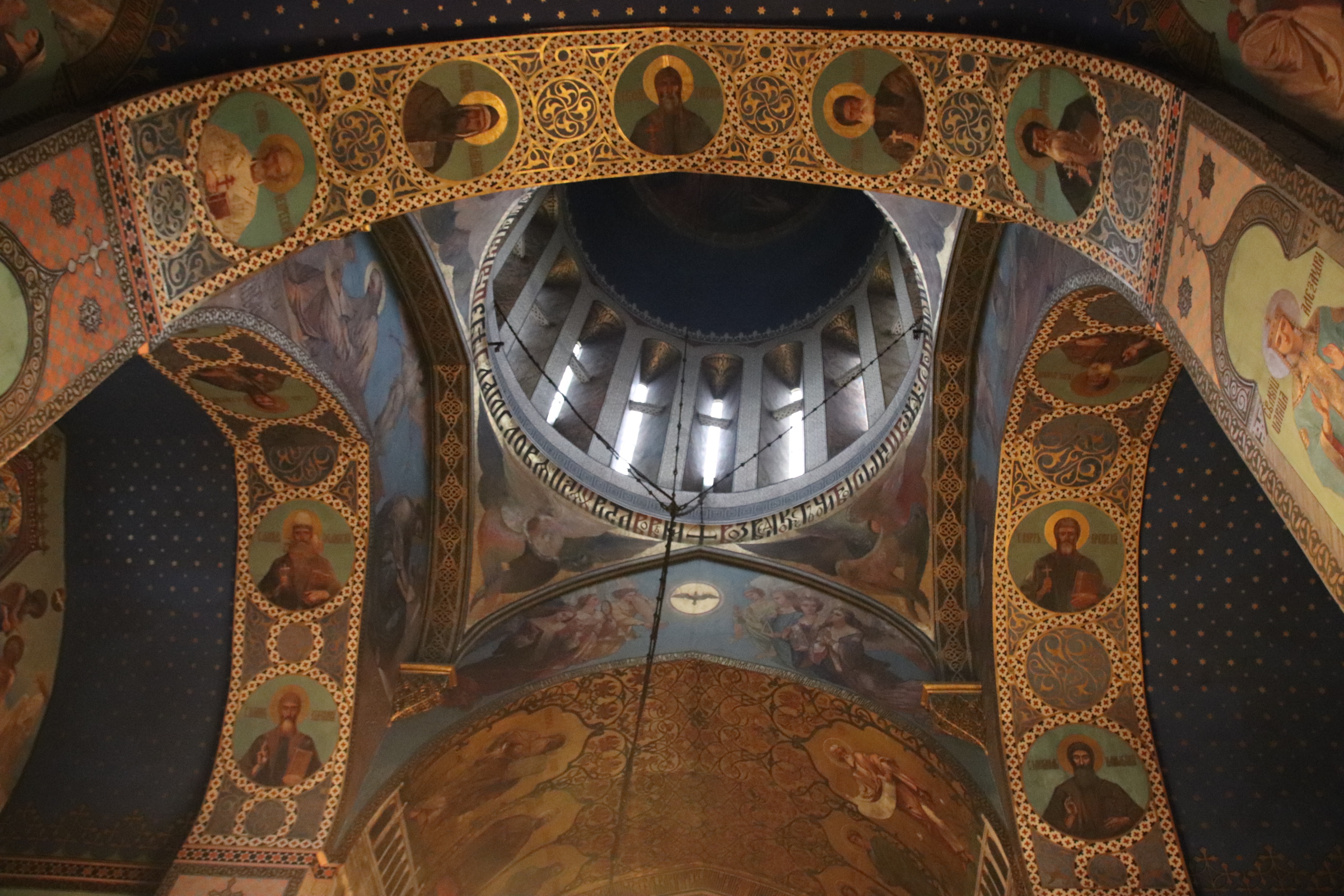
The 11th century Sveti-Tskhoveli Cathedral is the largest functioning cathedral in Georgia.

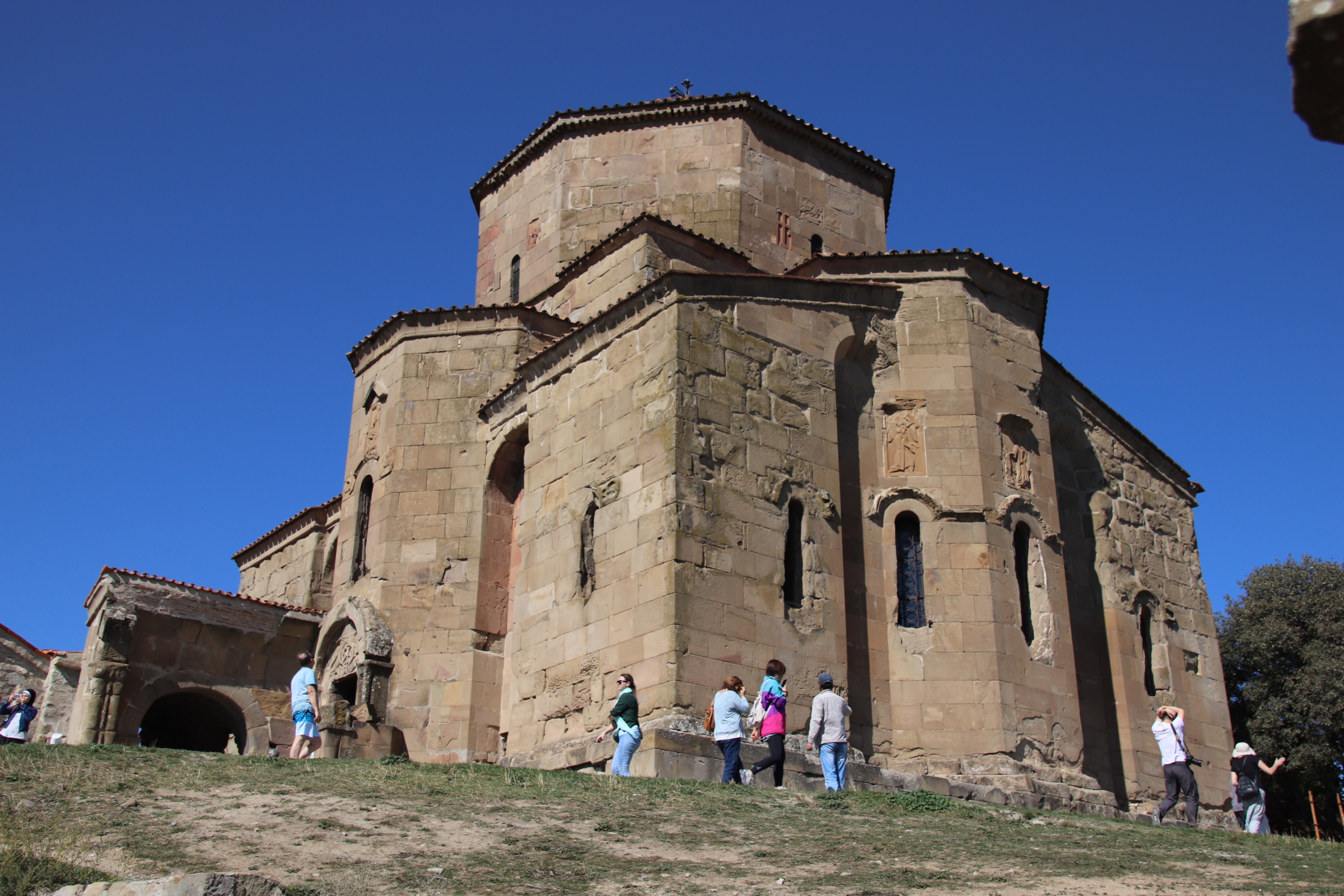
Jvari church is perched high up on a hill overlooking the valley. It is the spot where St. Nino set up her cross in the 4th century which converted the town from paganism to Christianity.

To contrast with this ancient place I attach some images from the drive back into Tblisi. Modern history is just as poignant.


Moving about the provincial towns of Georgia

These three days spent out of Tbilisi give a real insight into everyday life in Georgia. Wherever the destination it requires a long drive along one of the country’s few major roads. The number of motorways can be counted on one hand. I must share this image of the gents’ toilet in one service station.

The mountain regions present their own transport problems besides the normal steep, winding roads and that is convoys of those huge 18 wheeled lorries that slave it up the inclines and then race it down the other side. These single lane mountain highways are not built for overtaking, particularly by the trucks. But they take ownership of the road. They are just as forceful as the cars, thundering past other transport and forcing their way in before the approaching calamity just misses their front wing. Sometimes there are three of these juggernauts belting along in opposite directs but ending up side by side with inches between each of them.

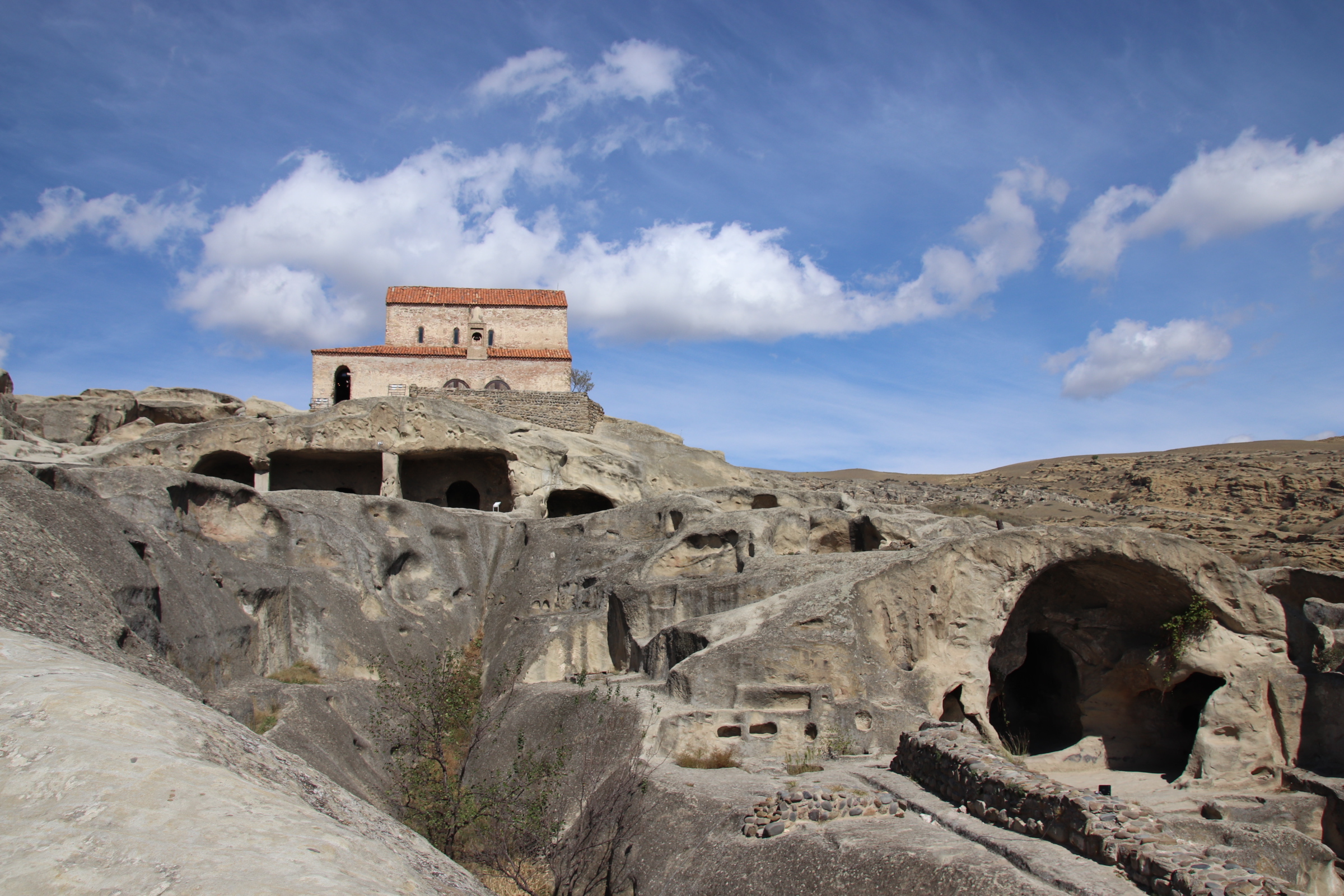
Uplistsikhe is a large pre-Chrjstian cave town, now with a more recent church built at the top. Ancient temples and theatres can still be seen and water was collected from the river by way of an underground tunnel.

Gori is the birthplace of Joseph Stalin. There, that is Gori. Not a lot else to say.

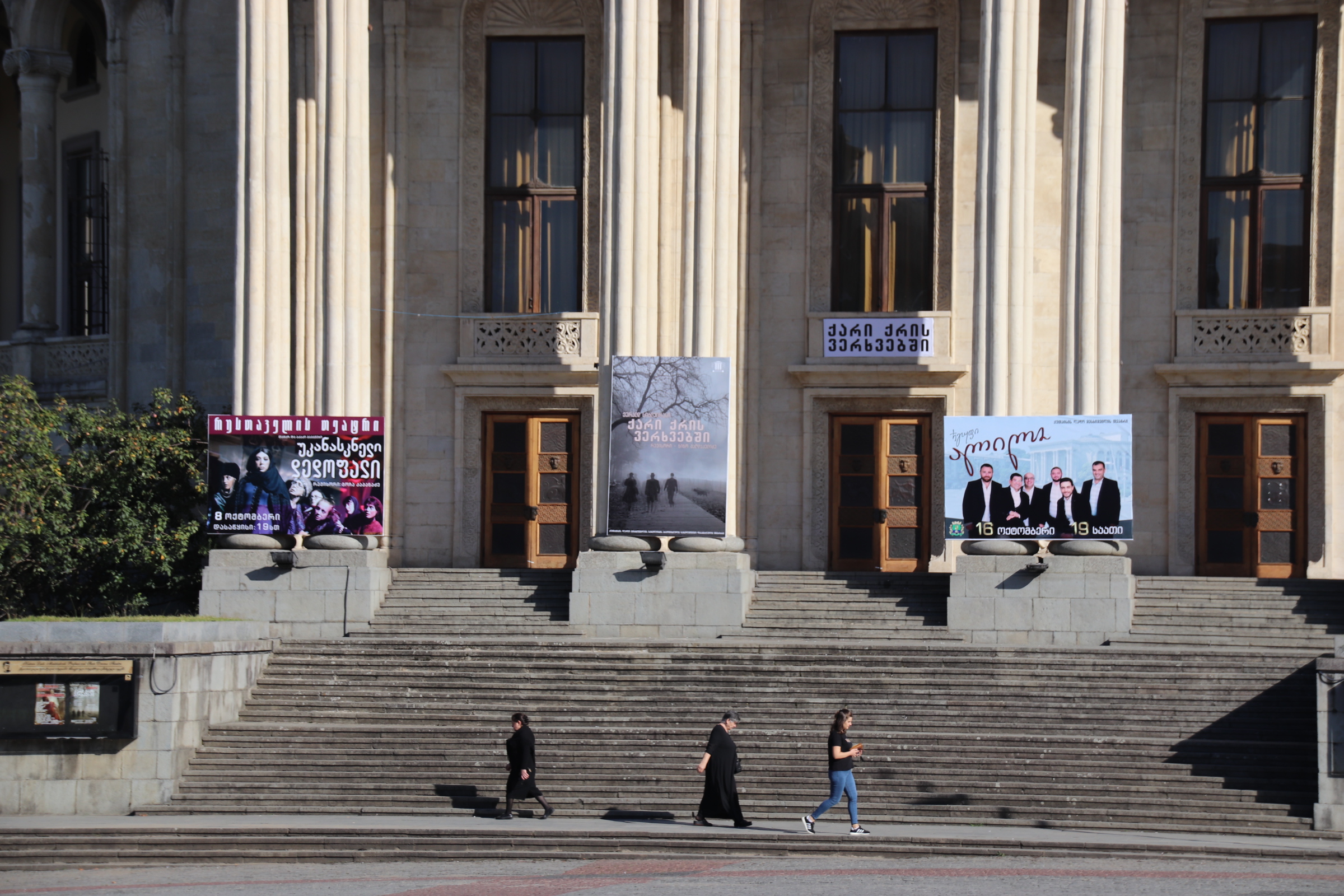
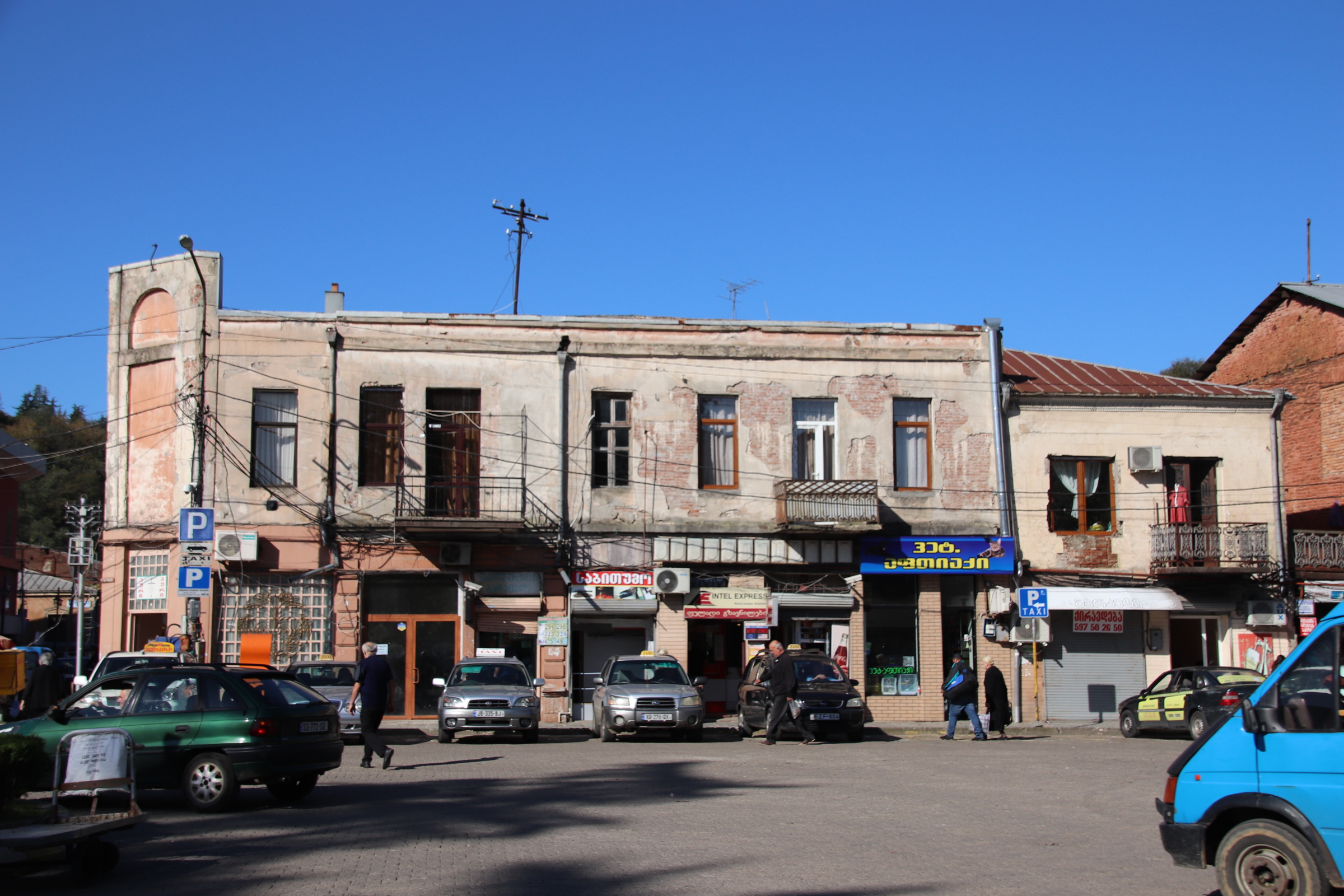
Kutaisi is a pleasant city with a wonderful fountain at its centre. A large park provides shade and opportunities to wander, relax and appreciate statues of national figures. It has an Opera House and a theatre…. and a Macdonalds!.

Blocks of traditional buildings stand next to modern constructions. I got caught up with the locals. I found my two brothers amongst the taxi drivers.

This lovely lady worked in the cafe under the tree.

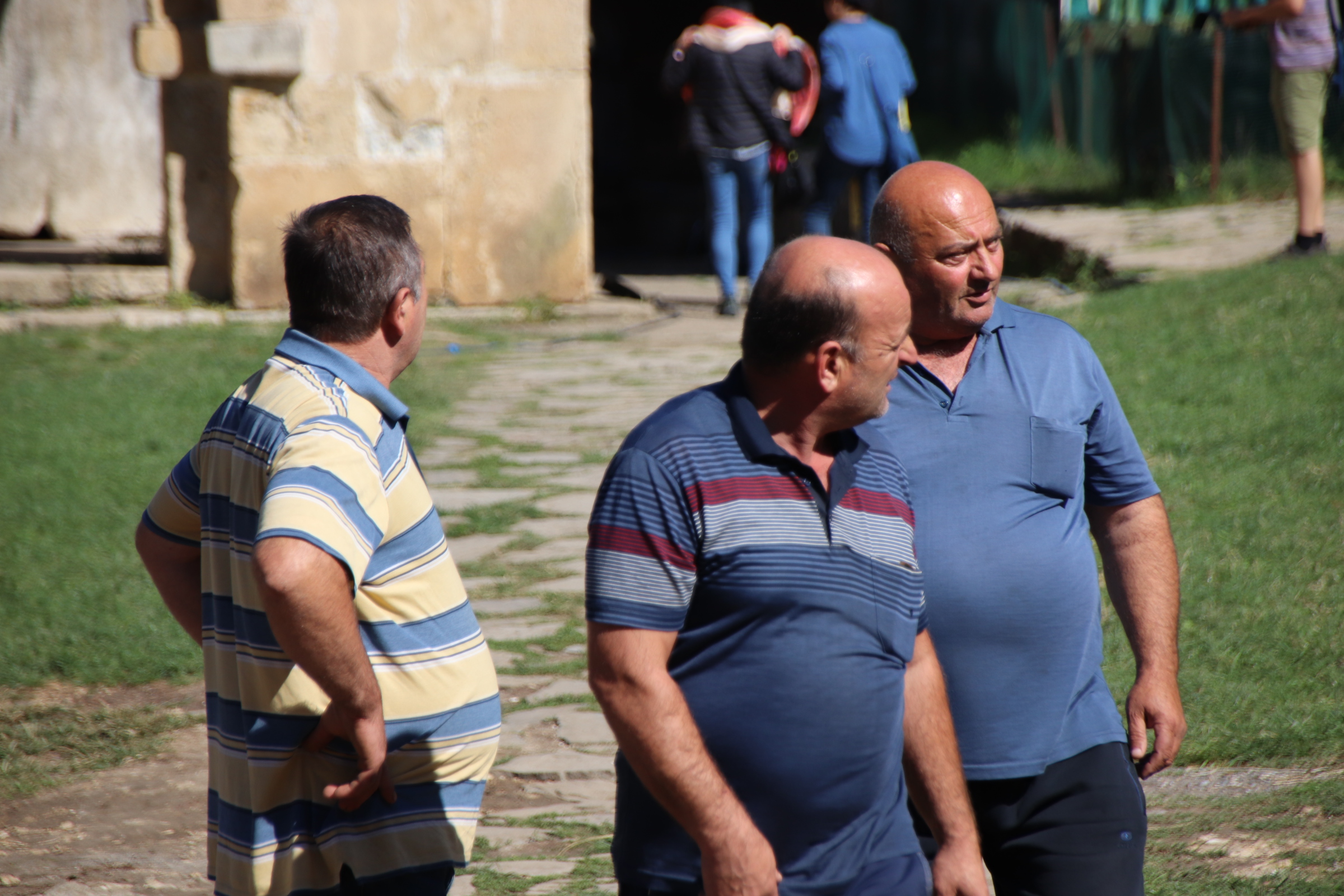
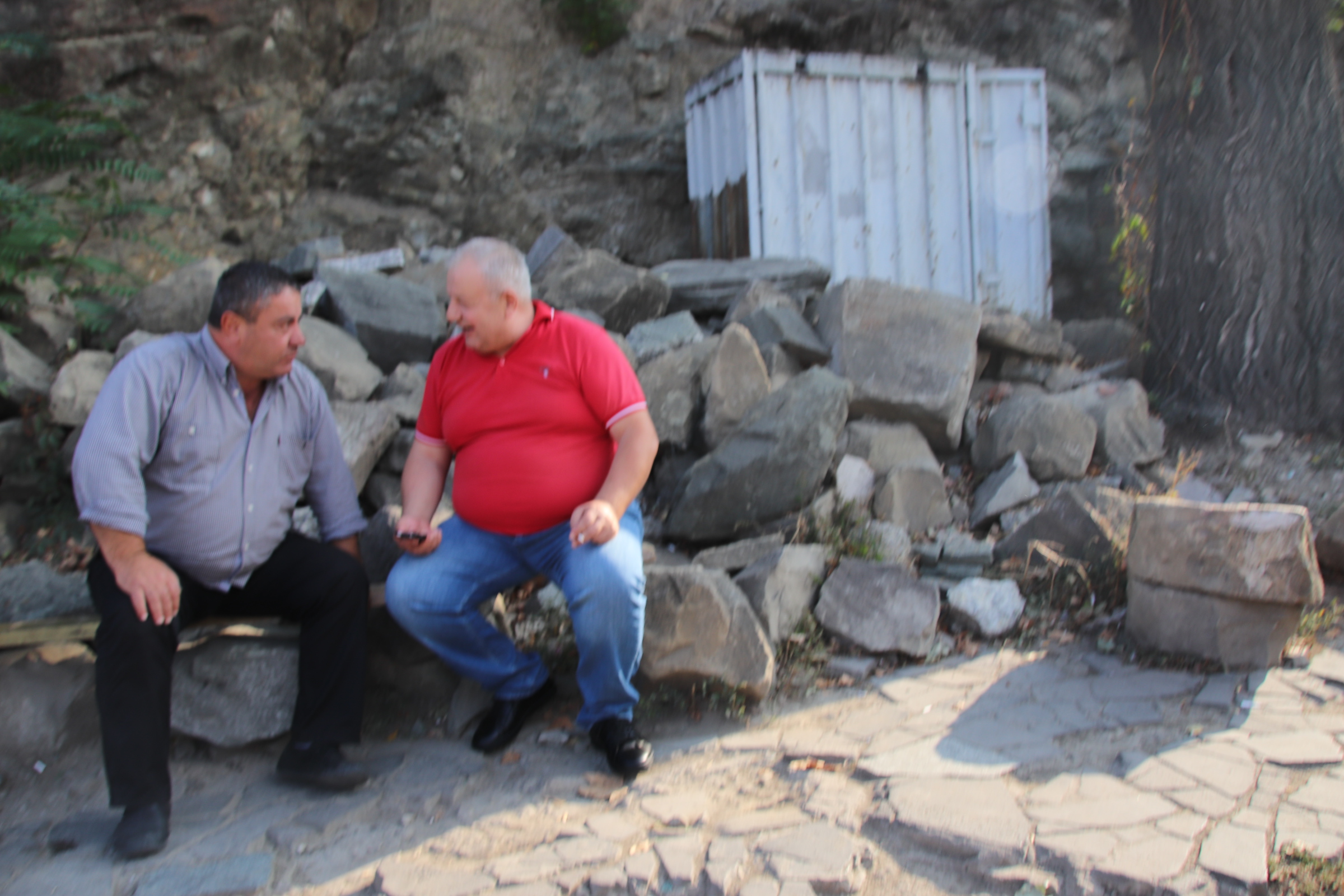
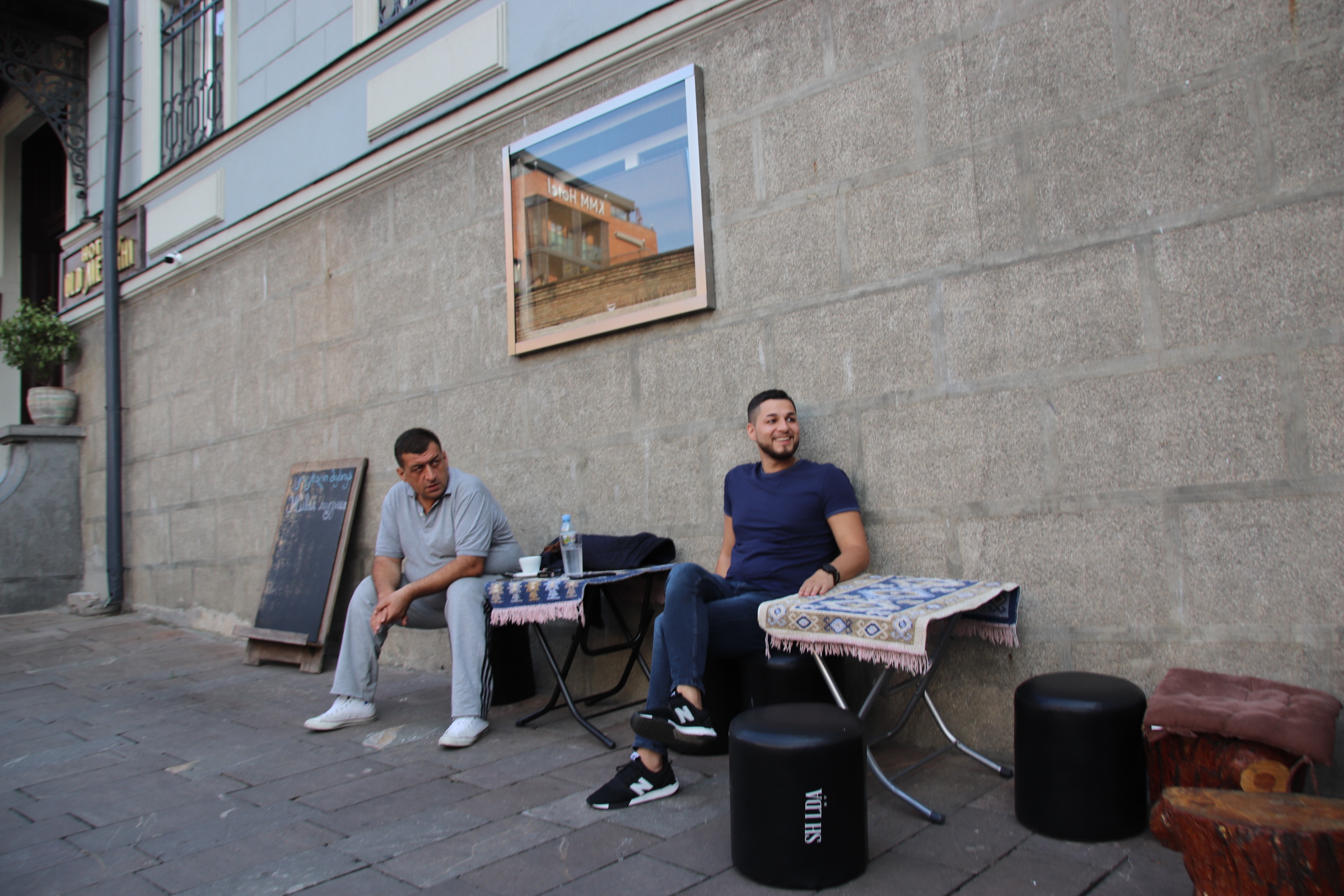
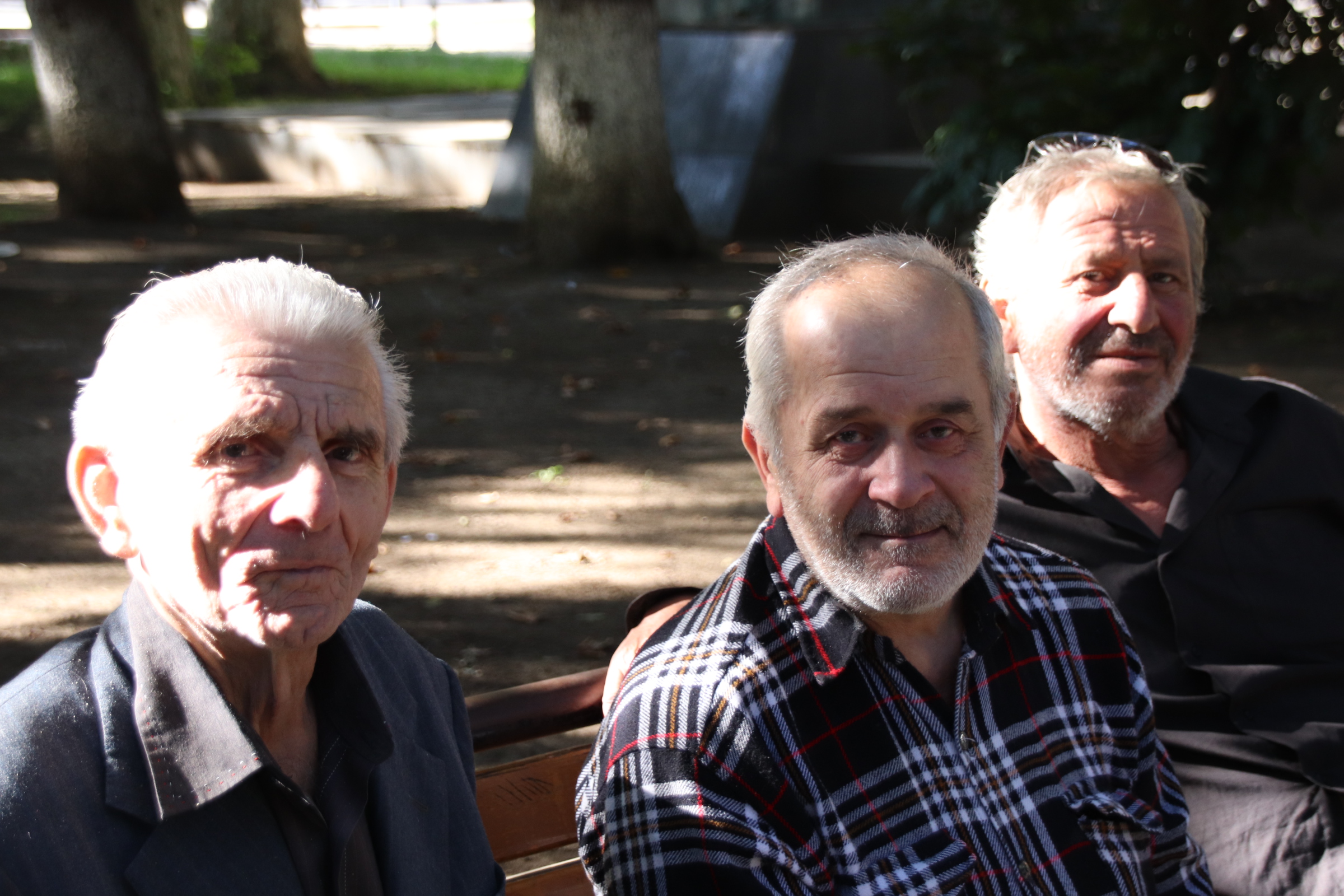
These guys were simply passing the time of day. So chilled….and pleased to be asked to have their photo taken.

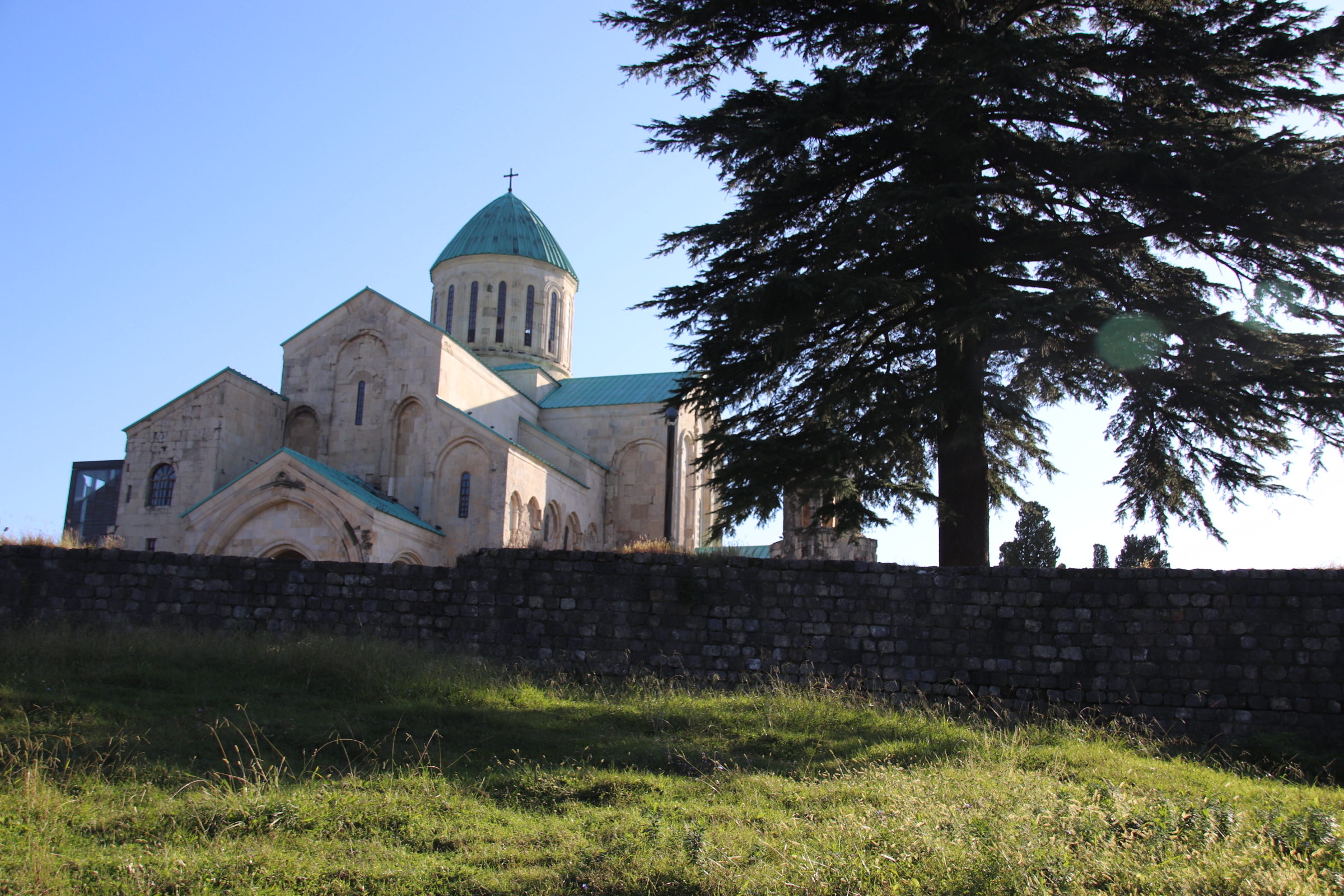
The 11th century Bagrati Cathedral stands in a prominent position above the river. It suffers the indignation of being one of those few sites to have its UNECO World Heritage in Danger status withdrawn due to a very unsympathetic, modern renovation at the side.

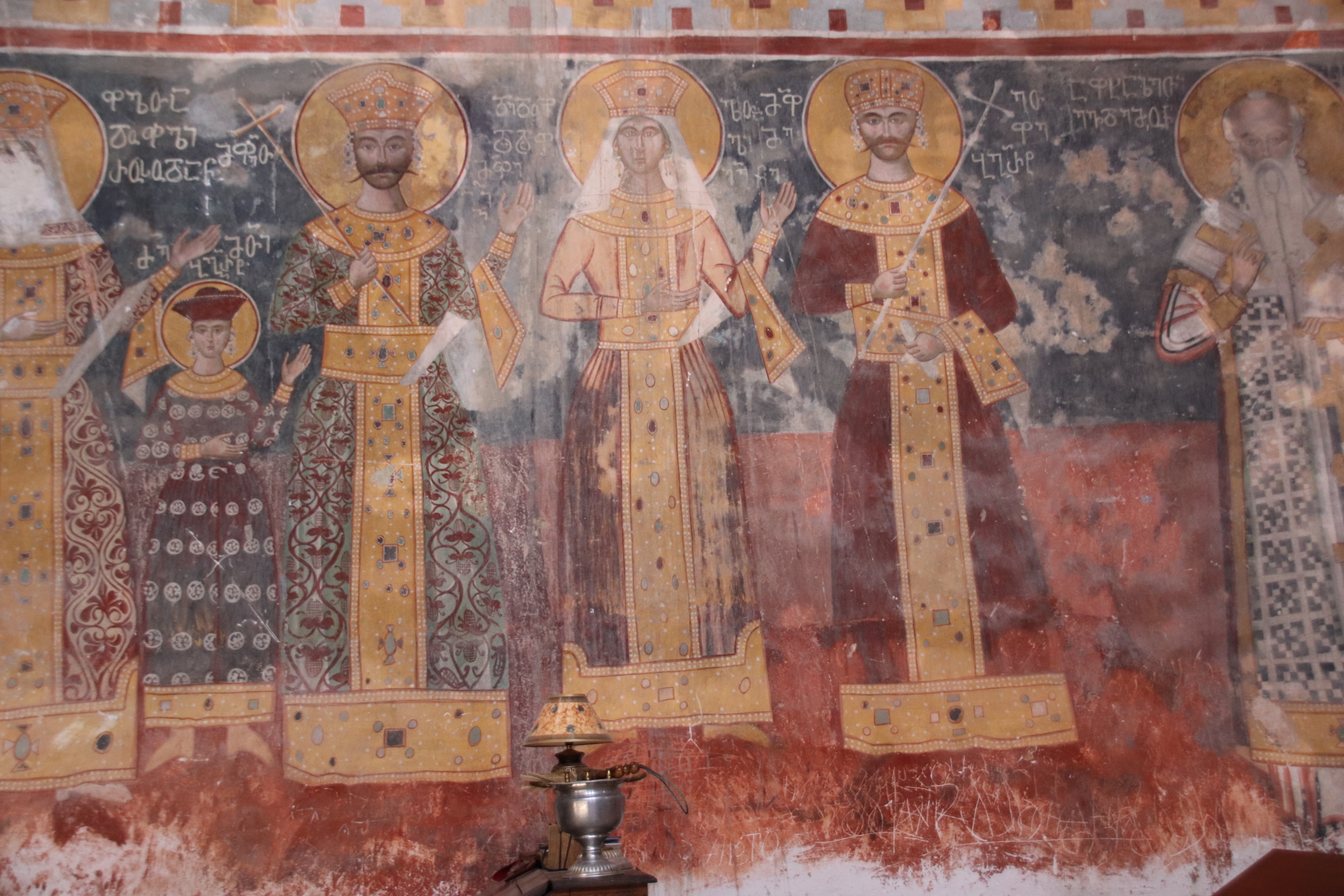
The frescoes within the buildings that form the Academy & Monastry, founded in the 12th century by King David the Builder zf Gelati, are magnificent. The main church and the smaller chapels are covered in images from the life and death of Christ, dating from the 16th century. Awesome.

I should at this point share with you the fact that Georgia and England both share their same patron saint, as will as the same flag – a red cross on a white background. Needless to say, the Georgians got there first. English crusaders heard about this legendary figure in the Holy Land and decided to adopt him as their own – the dragon representing the infidel.

An awesome drive up the Georgian Military Highway

Georgia are playing Uruguay in the 2019 Rugby World Cup today. So the day has to start in a bar in the old town. The idea of going to a bar to watch sport has not reached Georgia. There was a dozen or so expats and a handful of very passionate locals. Still, at least they opened early and were showing it…..and Georgia won.

So then I had to play a bit of catch up.

The drive north out of Tbilisi on the Georgian Military Highway is awesome. We follow the river out of the city and soon start to wind our way through the Caucasus Mountains. It is wide at this point, maybe 500 metres across. Well into the mountains a reservoir has been formed behind a large dam, creating the energy to generate hydro-electric power. Behind it the river bubbles along in a shallow channel lacking any real force until the spring snows melt.

The rest of the width of the valley is taken up by rusty excavating machinery collecting gravel and sand. Inflatables lie in clusters waiting for the white water and the tourists. We pass the occasional village looking idyllic, faded houses hiding amongst old established fruit trees and mounds of hay.

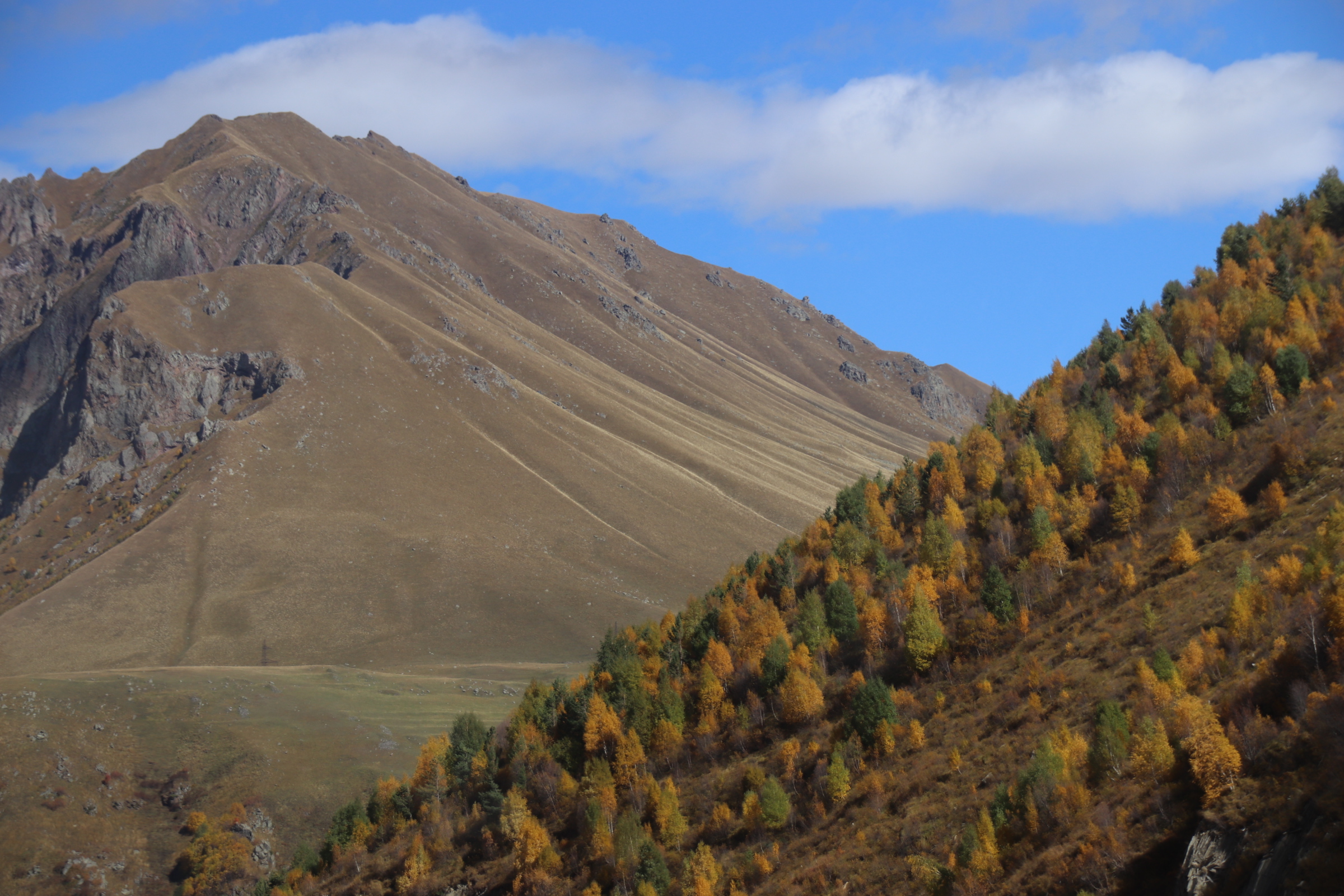
The valley sides, and the slopes behind, have a dense fuzz of low deciduous trees displaying a blanket of turning autumn colours.

The valley becomes narrower and the road starts to climb into the mountains. The sides close in, the gradient increases, the slopes loose their tree cover and bare rock dominates. These are Georgia’s ski slopes and a fair bit of development is going on.

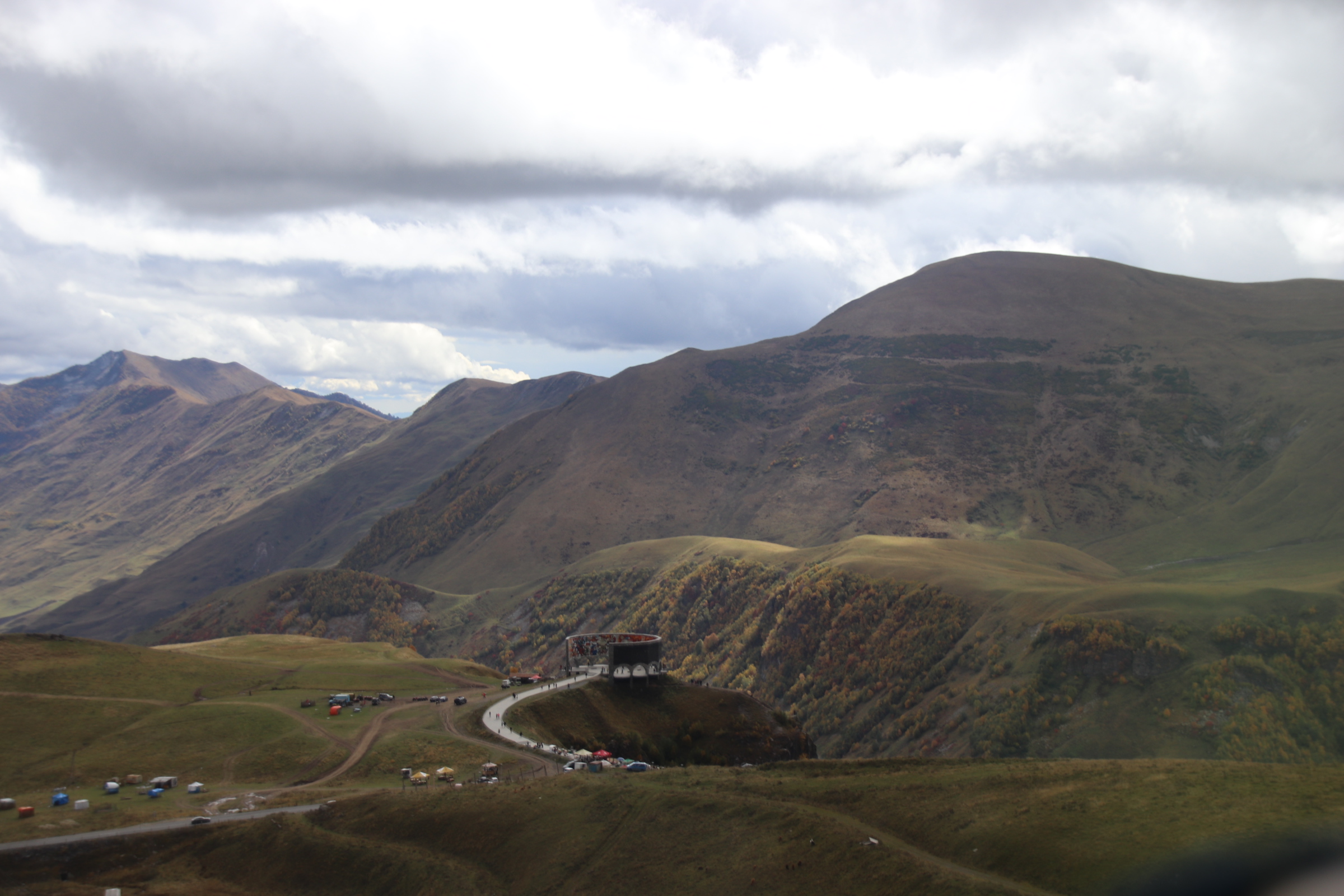
The road was built after the Soviet invasion of Georgia and is the main artery from Russia south. It is used by convoys of heavy lorries which trundle up and over the pass, maneuvering around the mountains bends with great difficulty.

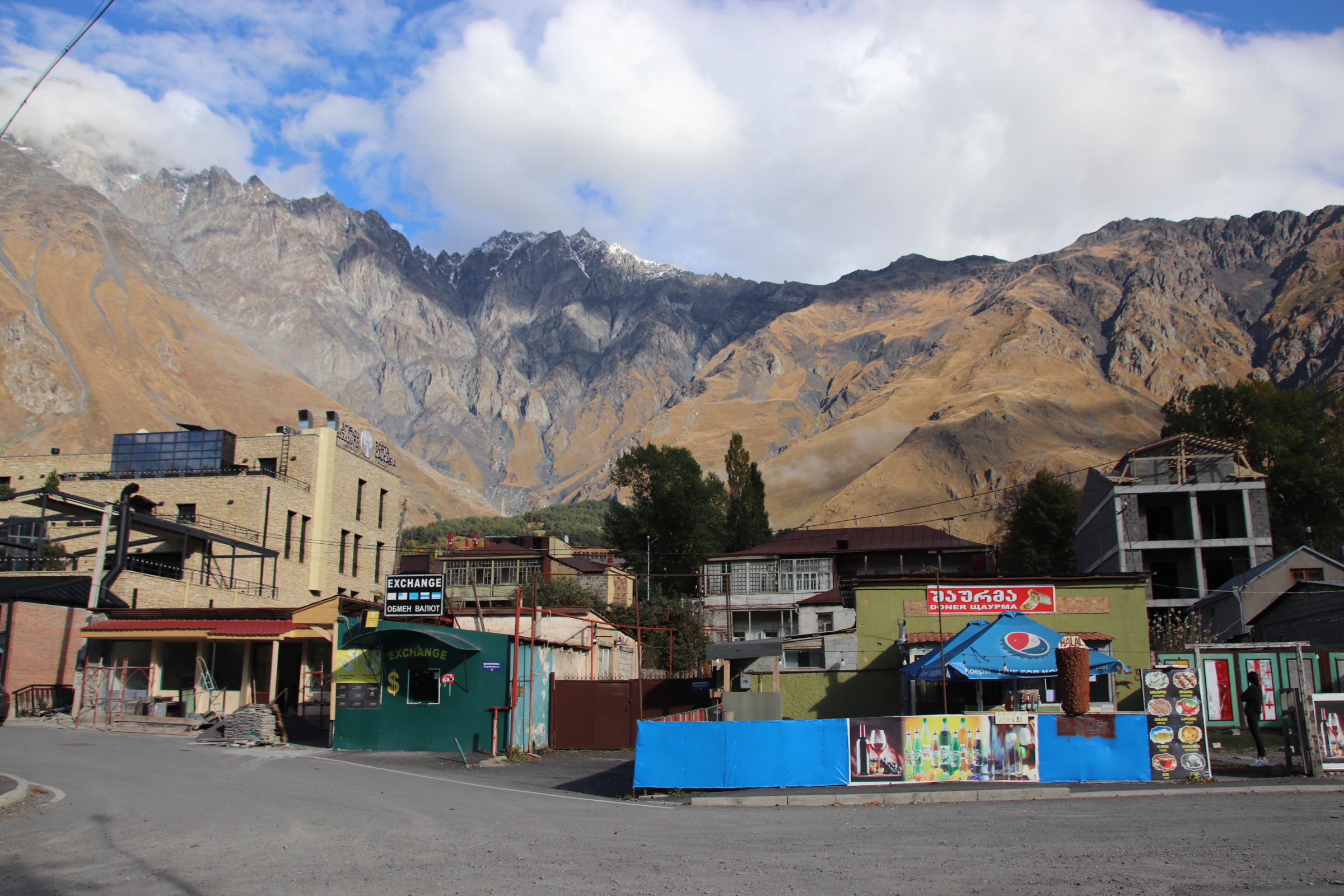
Stephantsminda is a mountain village with one main attraction – Holy Trinity Church. The church stands high above the settlement.

There are two ways to reach it – walk or ride in a jeep. Sorry folks, I took the easy option. The landscape at the top is truly special, especially with the backdrop of autumn yellow in the trees and grasses.

As the sun slopes off, the temperature drops like a stone and cloud starts to whisp in around the houses down in the village, creating layered patterns of bonfire-like haze.

The delight that is Tbilisi, the capital of Georgia

We cross over the border into Georgia and it immediately feels like the different country it is. New language, new alphabet. The place where wine was first produced and where European Man first lived. The world’s first thread was found here, and also honey, thousands of years before Christ. Saint Nino is one of Georgia’s most iconic saints.

And St George is one of the country’s patron saints. Yep, the same as England. Have a look at the Georgian flag. Maybe we’re related.

Georgia has a population of 3.7 million and 1.1 million live in Tbilisi, the capital.

Tbilisi is true to its history. Old and new stand shoulder to shoulder, each contributing to the atmosphere and character of the capital.

The lemon squeezer towers of the cathedral and 12th century churches and the fortifications standing up on the high ground, overlook the shiny edifices of 21st century architecture. A smart cable car system links the two and making a clear statement that Georgia has arrived.

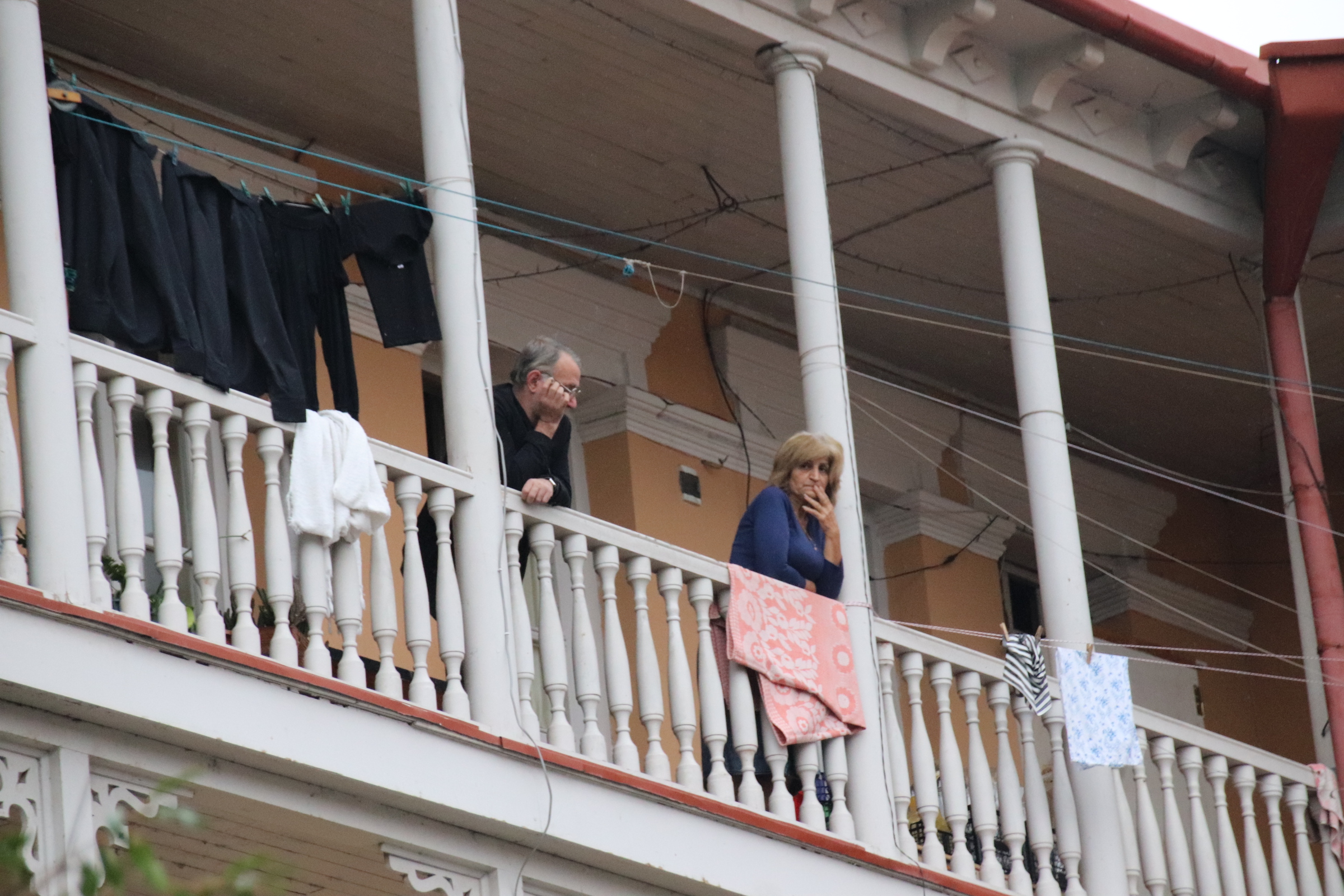
Most locals live in the many, large estates of 7/8 storey Soviet apartment blocks that cluster around the approaches to the city. The old town is home to many.

Locals are happy to sit and chat on the pavements and squares.

Tbilisi is a bright, vibrant place. Vehicles are modern and buses are bright and clean. Even the Hop On/Off buses look at home and are evidence of a booming tourist scene. Traffic moves freely through the wide tree-lined avenues, not always keeping to the speed limit.

Large parks and open squares combine to give the city its green credentials and a feeling of calm and freshness. The river adds to the feeling of peace and tranquility as it winds its way to the Black Sea.

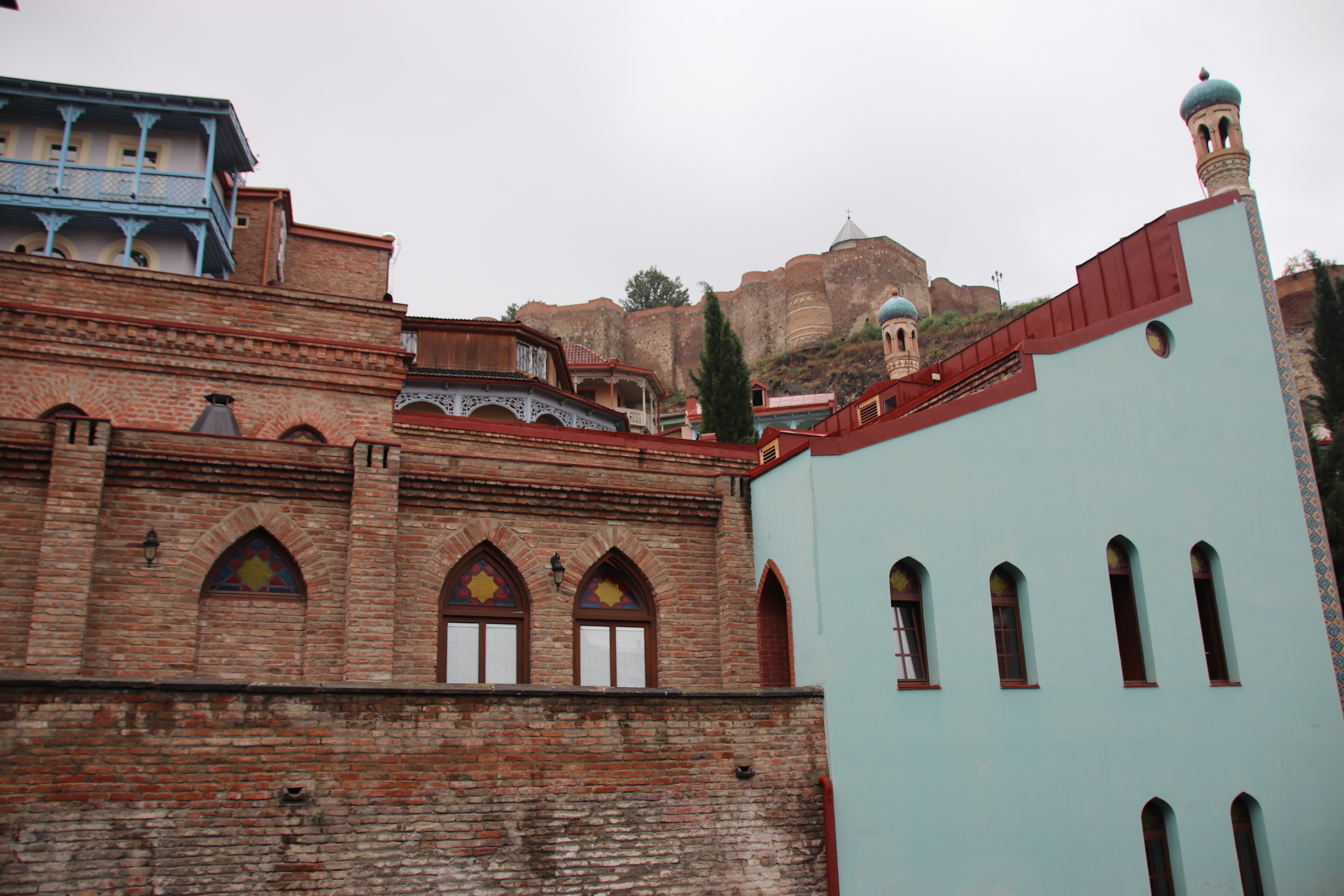
Initially, Tblisis feels like any other European city. But as you delve deeper the influences of east and west & of ancient and modern are clear to see, giving the city a unique feel. The bathhouse complex, still operating, is one example.

Georgia was on the Silk Route and this is one of the many caravanserai in the cathedral, converted from a resting place for merchants and soldiers into a cultural center.

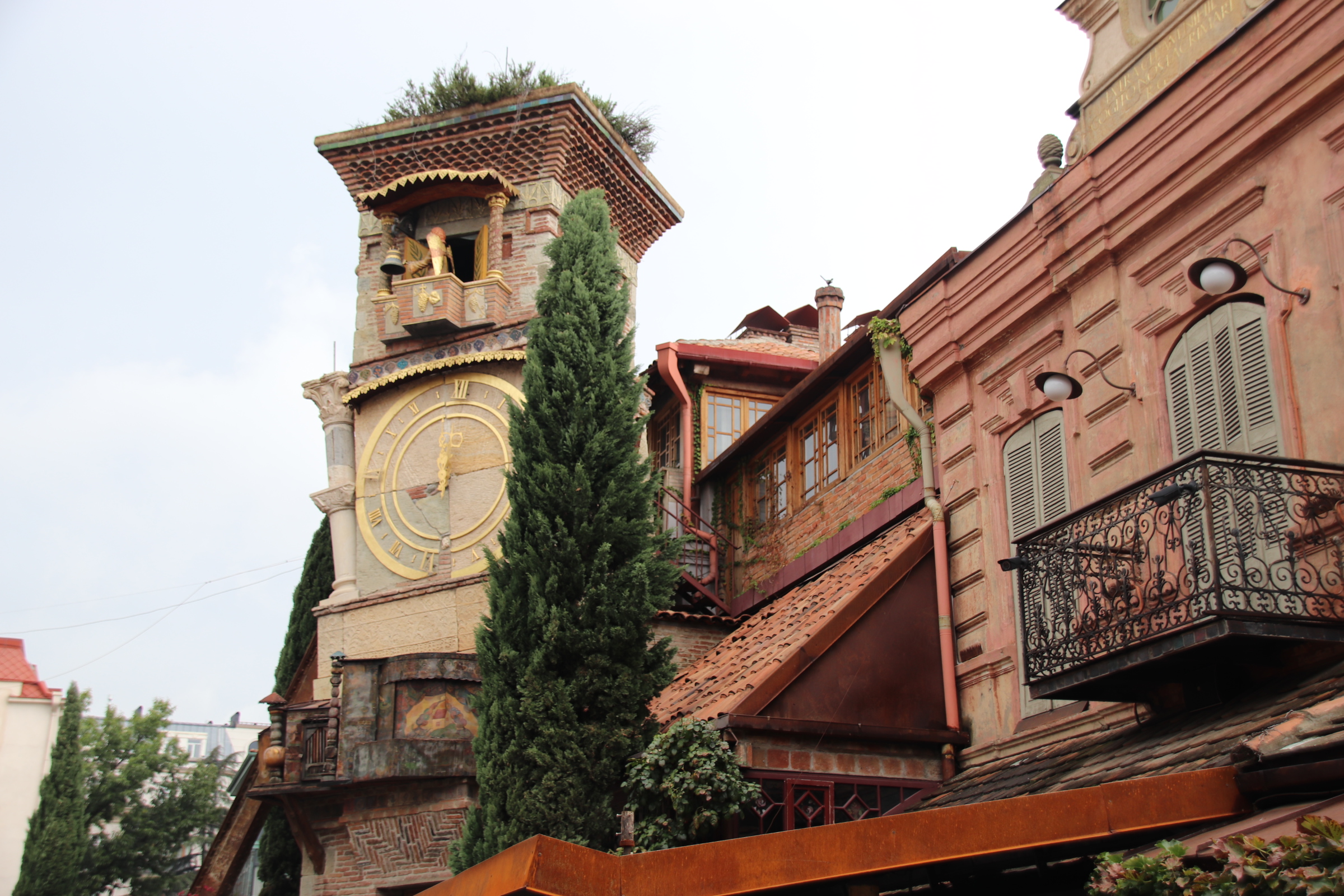
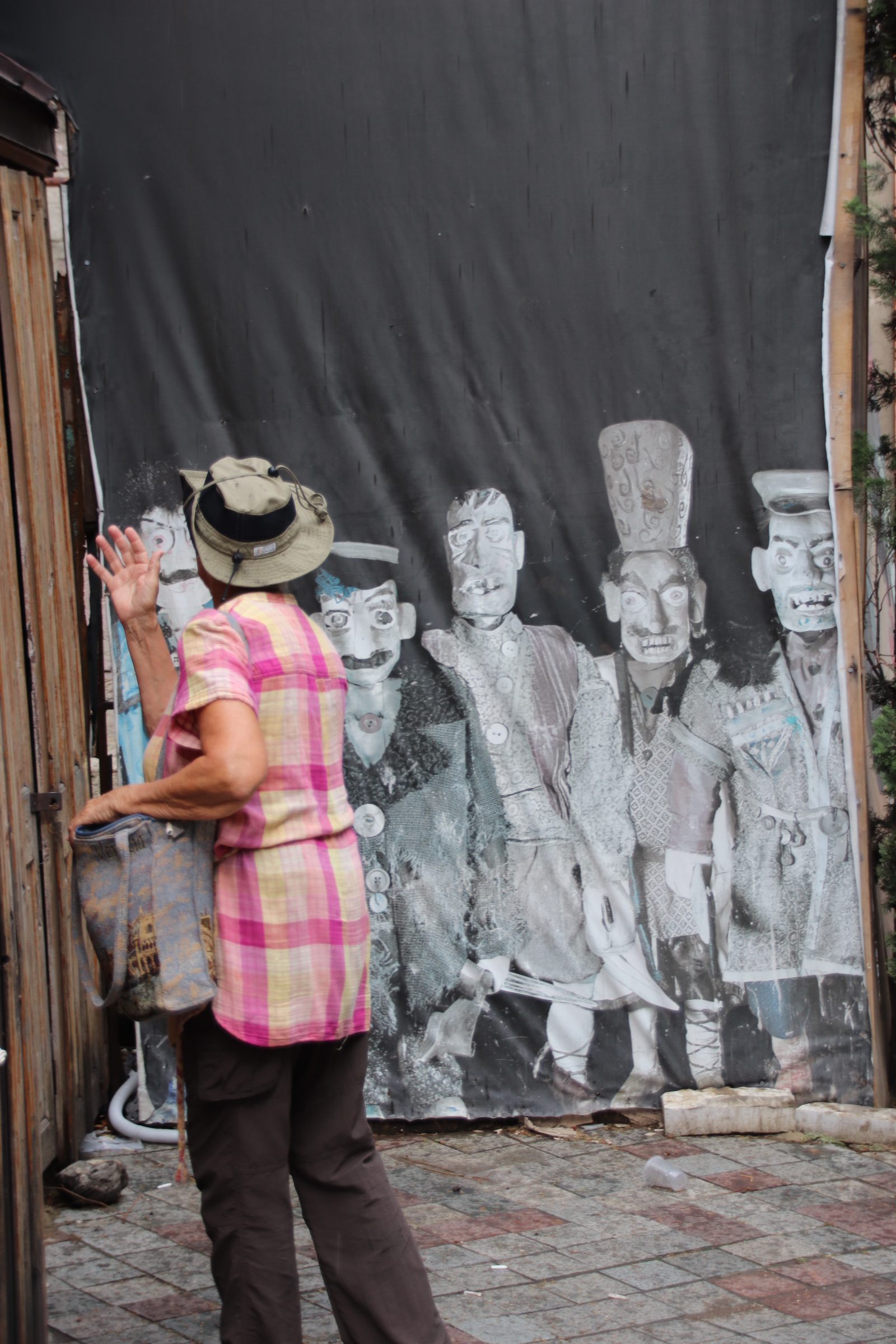
Elegant, modern architecture stands next to glass-roofed government buildings and then to cultural attractions like the puppet theatre, here, with its extravagent@y unique ticket office.

Tbilisi is well worth a visit.

What is the way ahead for Armenia?

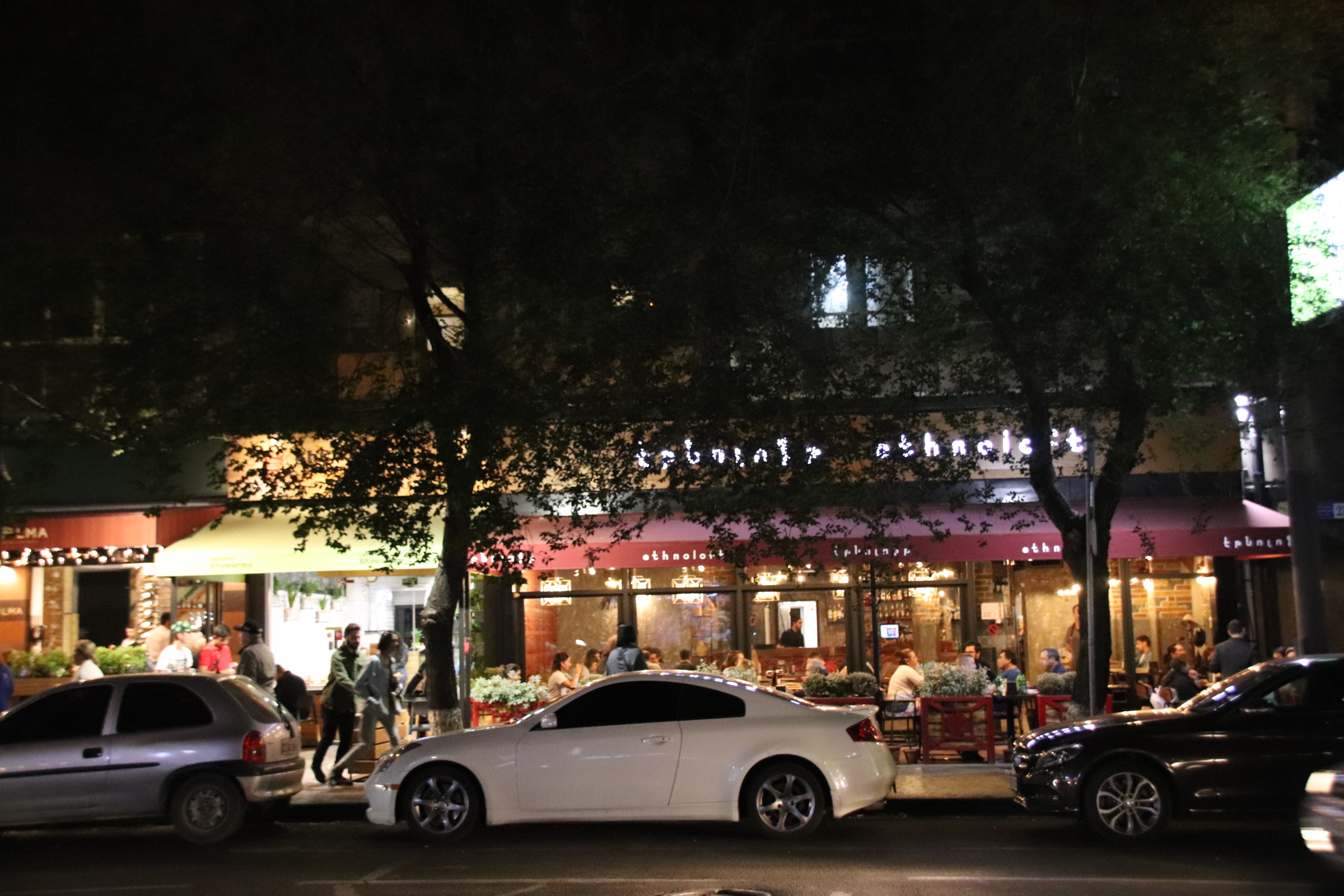
I don’t really know what to make of Armenia. I’ve really enjoyed travelling around this country where everything is so very different. First impression from Yerevan is that it is a cosmopolitan, cultured place with a very western feel.

As one moves further away from the capital the mountains increasingly dominate.

Whether you live high up on the high ridges or down on the valley farmlands or in the concrete and steel of the towns and cities, life is hard, really hard. There is little money, winters are long and raw, industry and the infrastructure is painfully run down. The beauty of the landscape cannot hide the fact that with the collapse of the Soviet Union the country has been in a time warp for fifty odd years and it will require a superhuman effort to overcome the legacy of the past.

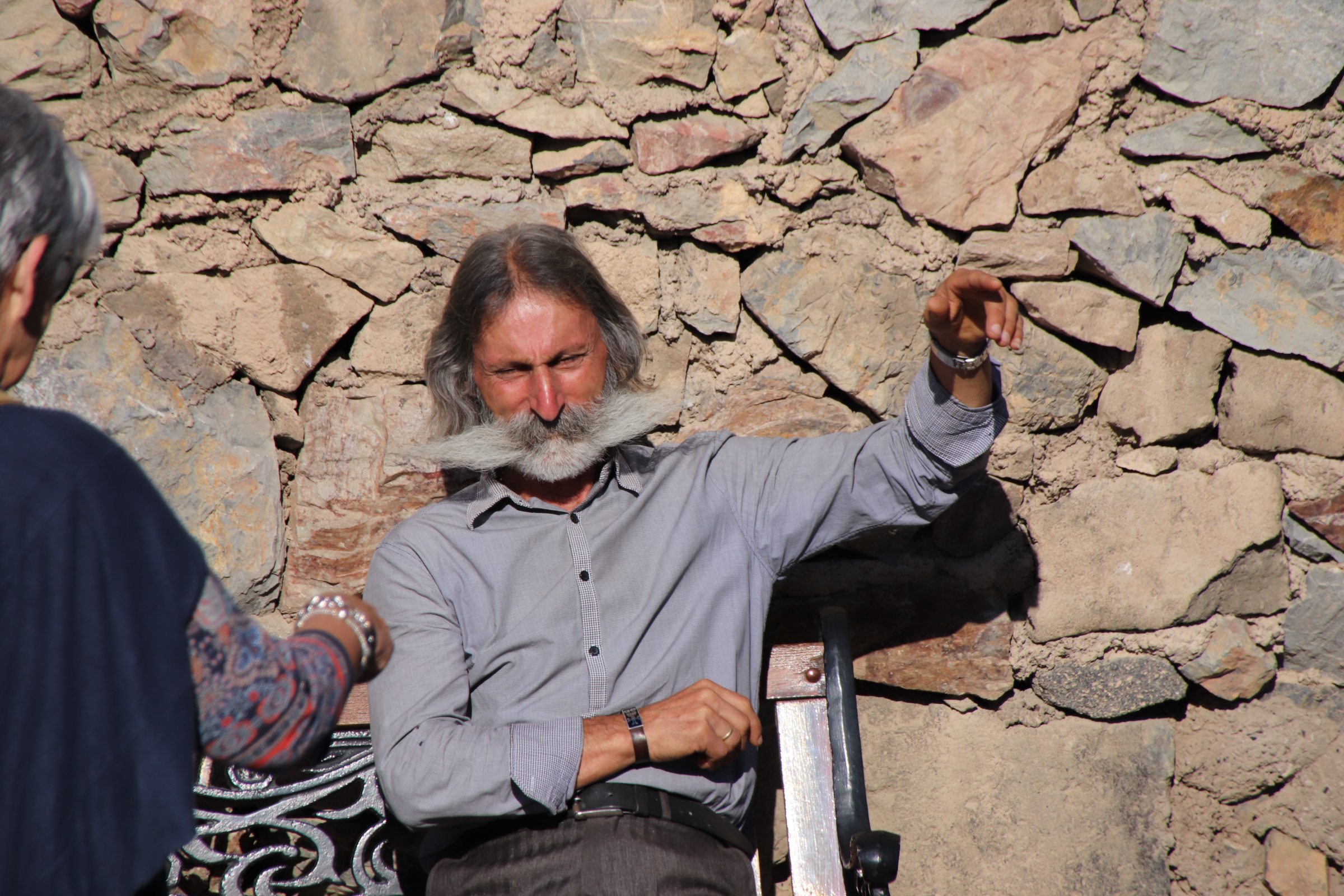
I can visit spiritual places and medieval monasteries and beautiful forests and eat juicy tomatoes and drink wonderful wine. I can interact with the locals in gardens and bars and share a laugh and shake a hand.


But then I pass through Alaverdi and any optimism hits rock bottom. This city used to have a copper factory. No longer. It now feels like a war zone with empty, wrecked buildings and a feeling of desolation and hopelessness.


From the 16th century Eastern Armenia came under the influence of Iran and Western Armenia became part of the Ottoman Empire. By 1800s the former was occupied by Russia and the western part, the vast proportion of the Armenian ancestral lands, remained in Turkey.

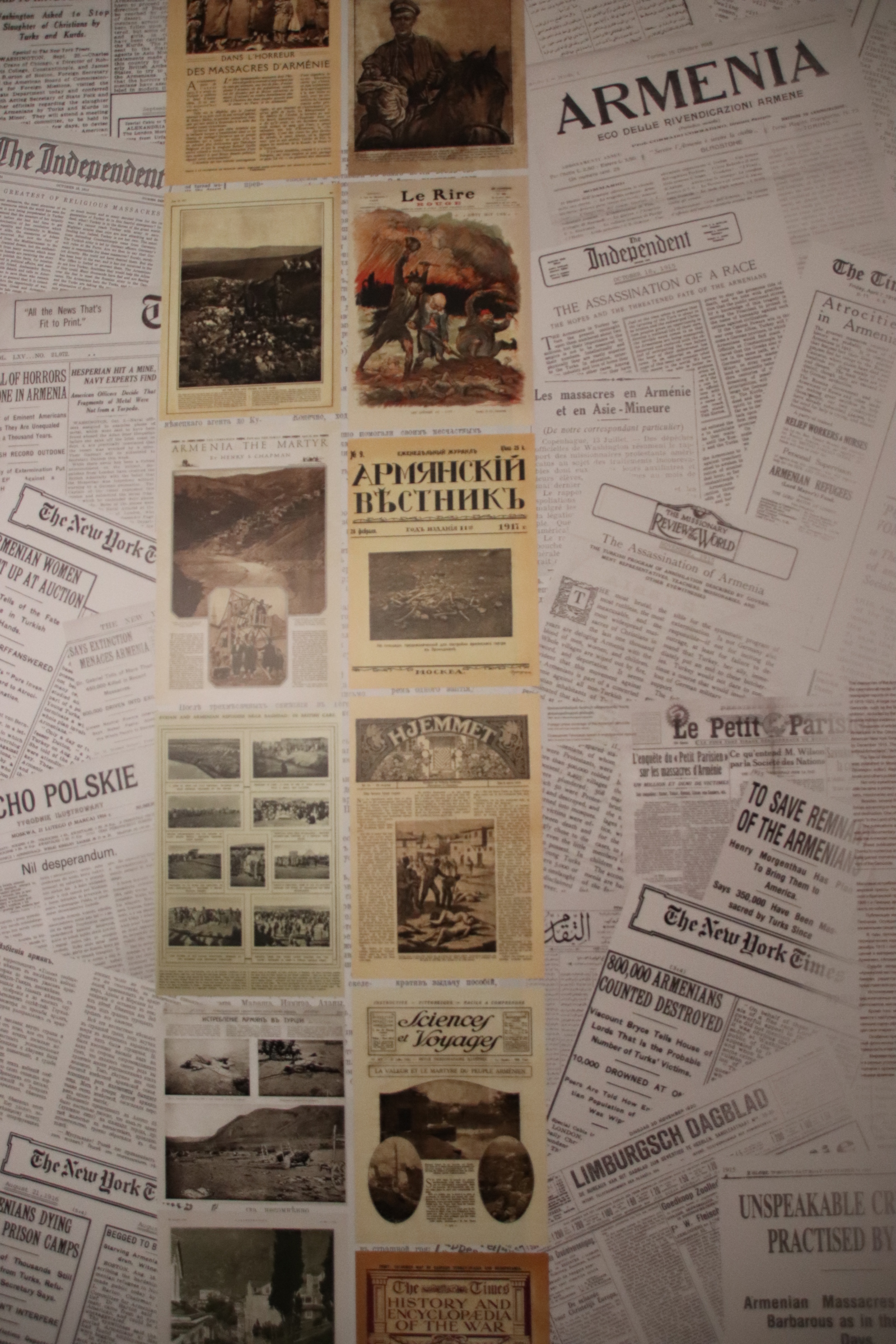
Towards the end of the 19th century, the Turks began the process of genocide against the western Armenian territories. In 1894/6 villages were razed to ground and 1000s killed. East Armenia sided with Russia in WWI. In 1915 the Turks began the ‘Turkification’ of the Armenian population. The men were treated as virtual slaves and labourers. Their families were sent into desert where they suffered enormously. Of a population of 2 million Armenians in 1915, only 388,000 remained in 1922.

This is the main reason why the population of present-day Armenia is 2.5 million and over 10 million ethnic Armenians live elsewhere in the world. The fact is that only 10% of Armenia’s ancestral land lies in the present-day republic. 90% of it lies in Turkey.

There is still much evidence of the Soviet Union throughout Armenia. The Russians are popular with many. They came to the aid of Armenia against foreign aggression throughout recent history and they still guard the border between Armenia and Turkey today.

The job ahead is huge. But the people are focussed on creating a fair society where people from different backgrounds can live together in harmony, reflecting the strength of their history and the nature of their geography. Good luck to them.

Armenia

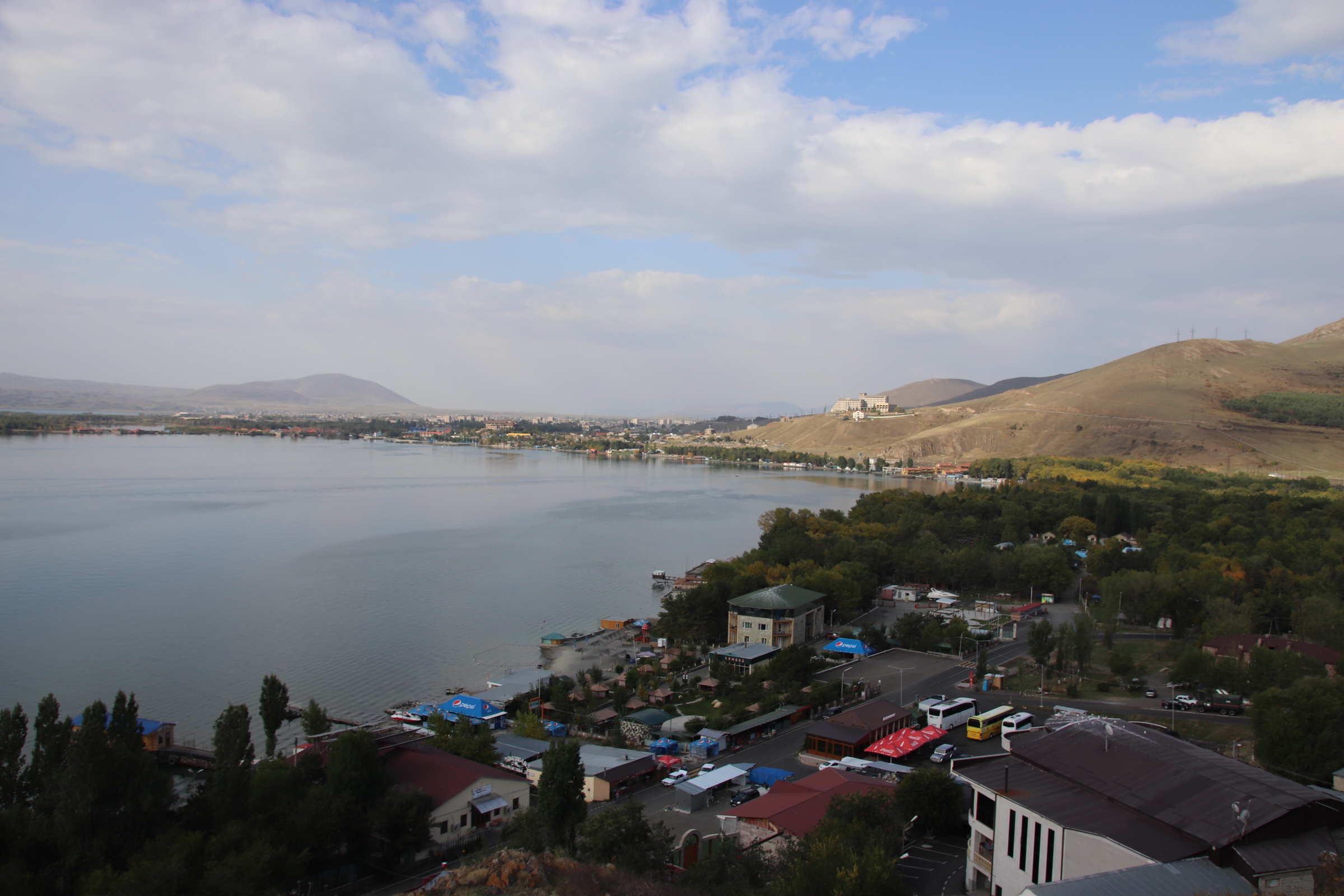
Lake Sevan is hugely important as a provider of energy, a resort area for locals and visitors and as the source of irrigation for the orchards and farms of the hinterland. Fish from the lake, particularly trout, are an important source of food. 28 rivers flow in, only one flows out. There are 6 hydro electric power stations which use the waters of the lake to produce energy.

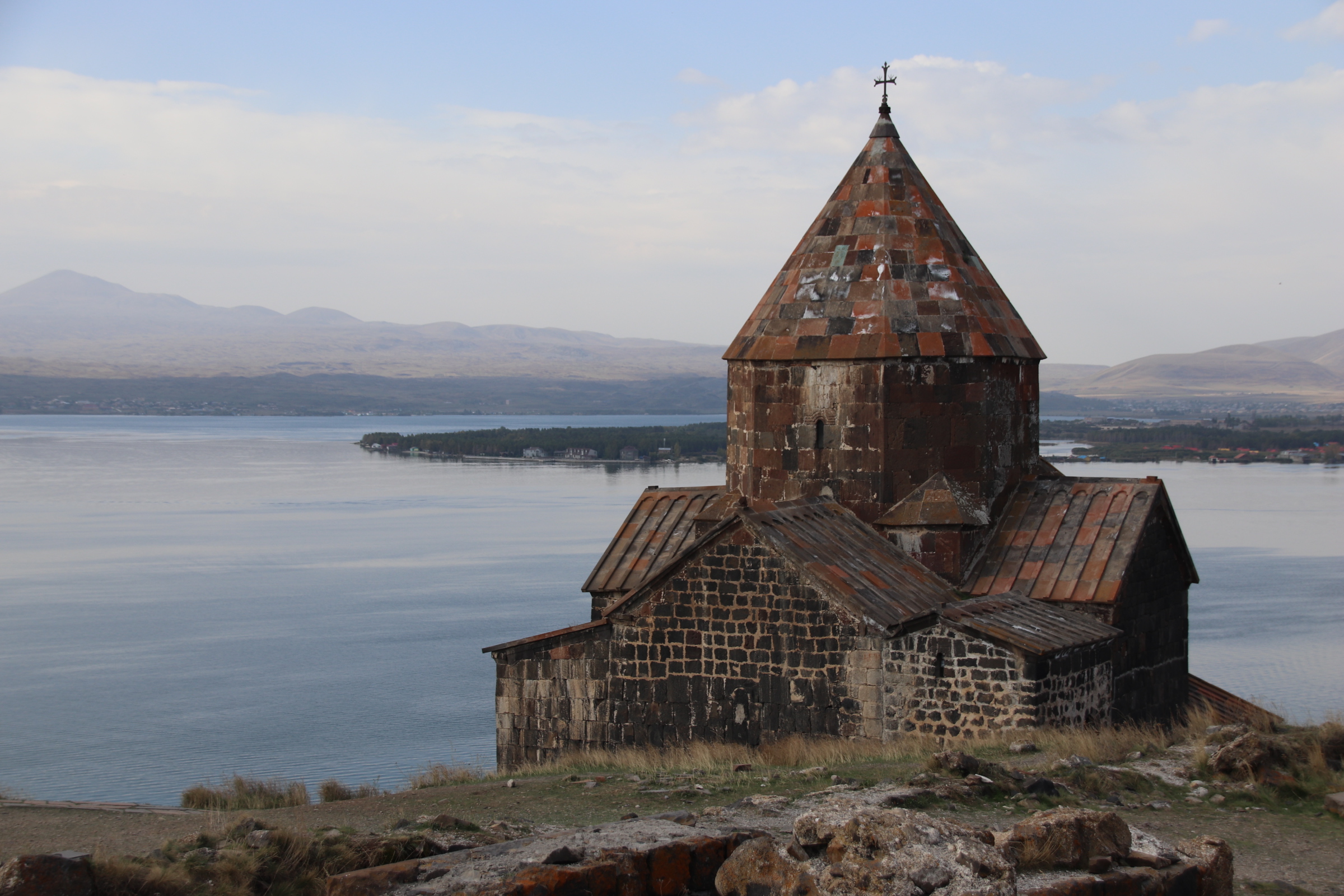
The monastery at Sevanavank holds a commanding position over the lake and the resort that has grown on the shore near the President’s summer residence.

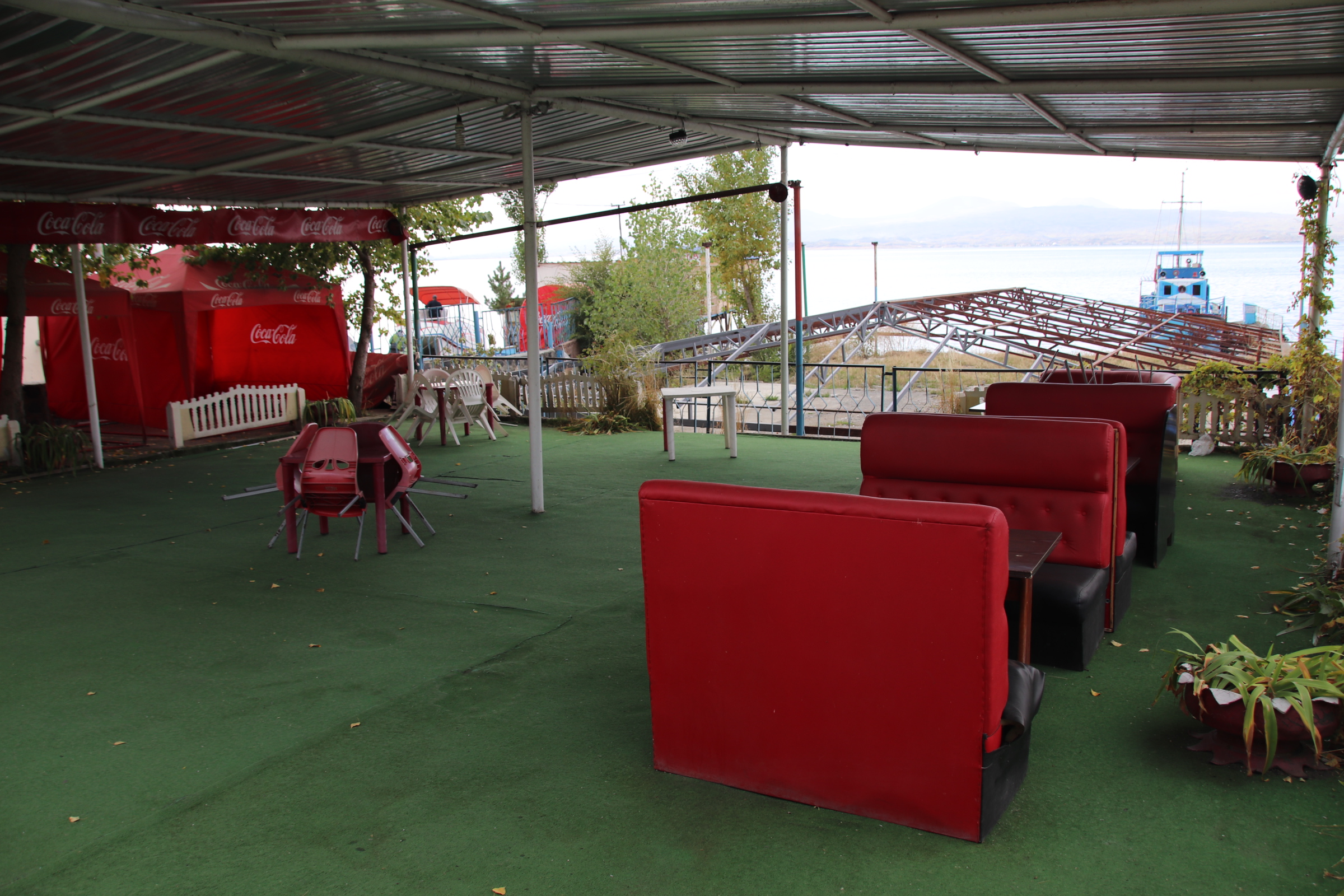
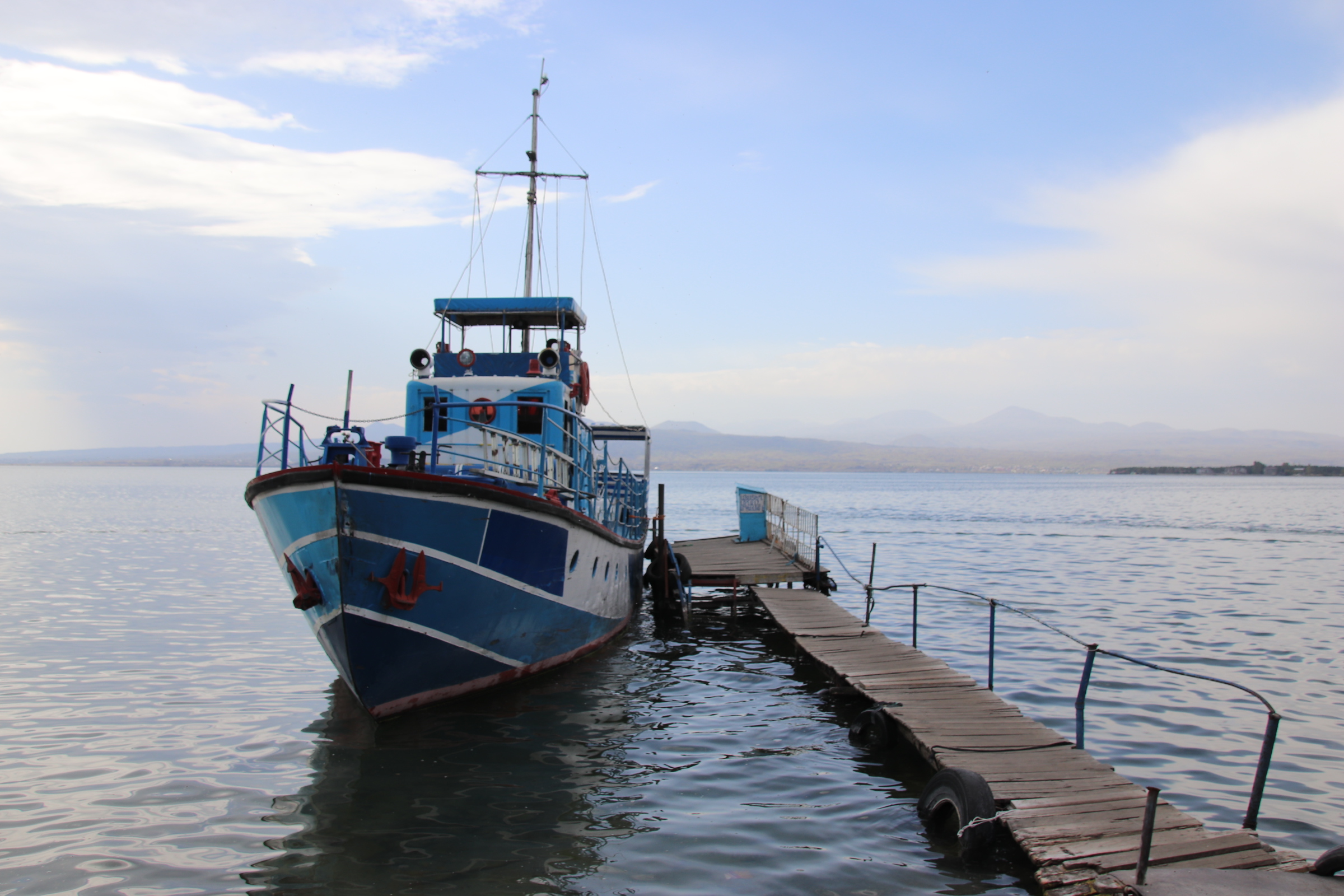
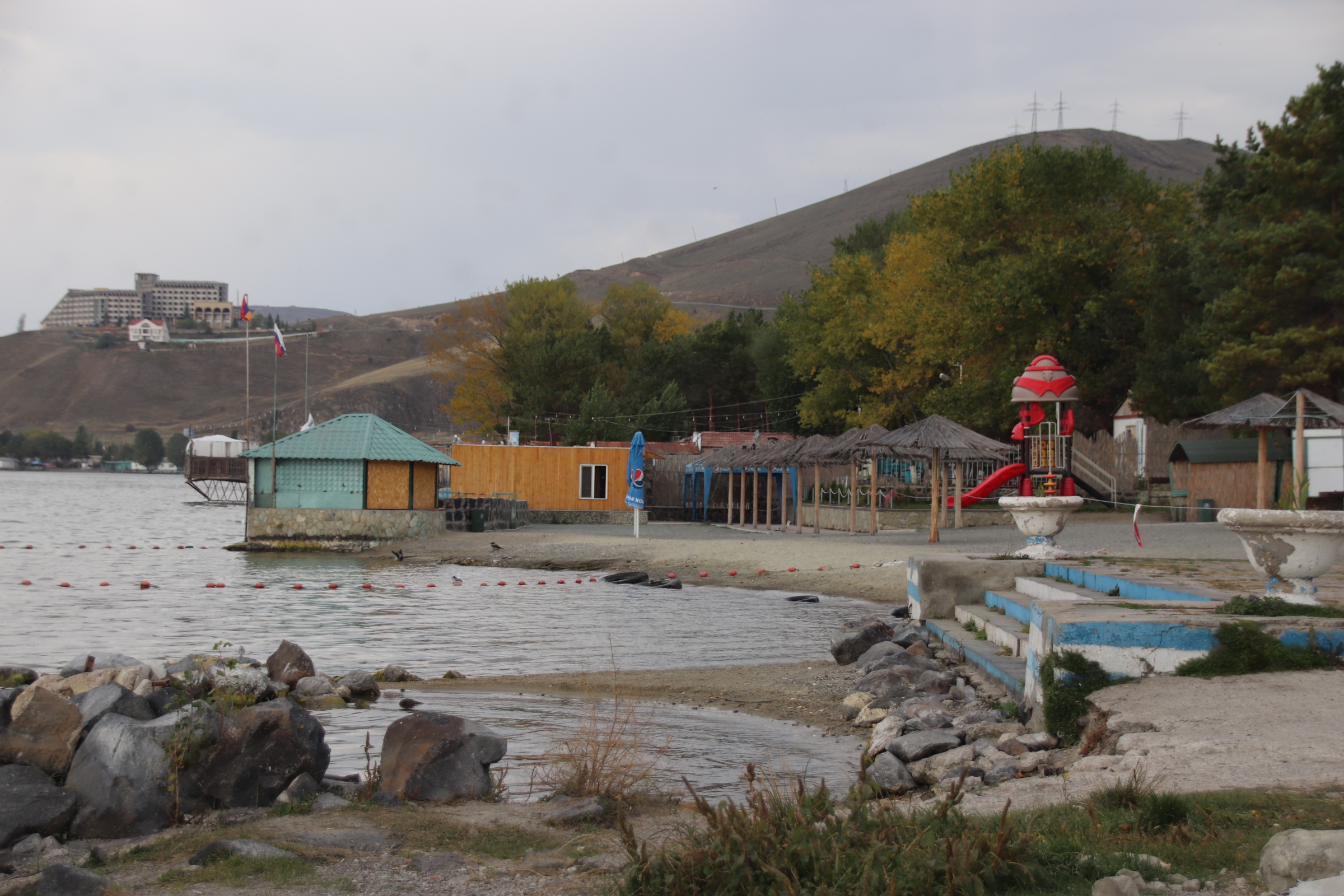
Lake Sevan is Armenia’s seaside. The resort is full of reminders of what Soviet summer fun must have been like. Bleached walkways lead to the water, rusty metal umbrellas cover flaking seats, tired bamboo shield picnic tables from the wind off the lake. Leather-skinned men, with cigarettes glued to their lips, offer boat rides.

The hawkers are here selling cheap jewellery, precious stones and local produce.

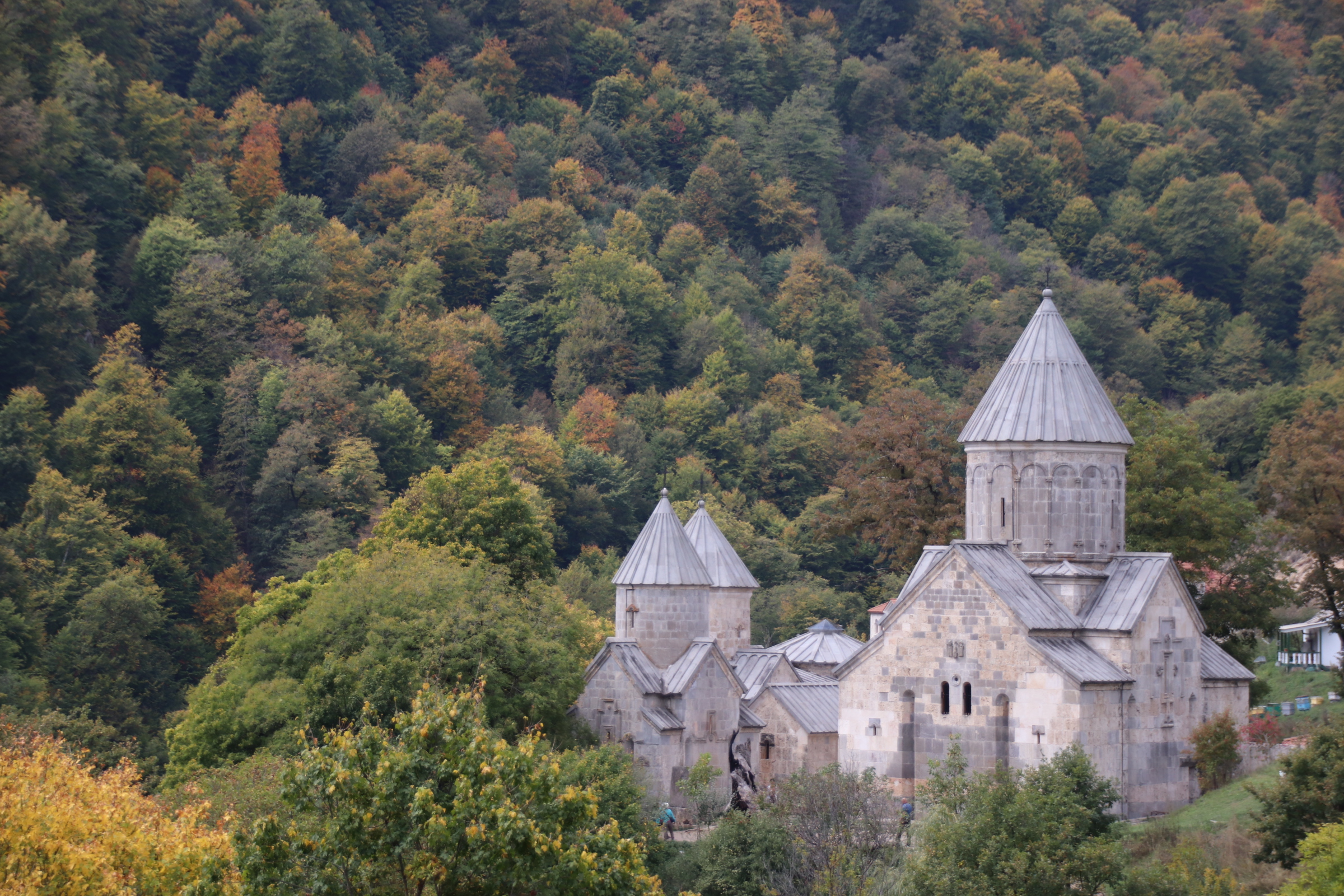
Then it is a drive into the Caucasus Mountains proper. The landscape changes completely. This feels like mountains. Tall deciduous forest grows up the side of canyons and gorges and through their turning foliage the highest ridges are bare and exposed. Streams provide a harmonious accompaniment of trickles and hushes on their descent through the trees. The road winds through this natural cathedral where sky and rock and flora combine to lift the spirit. Haghartsin Monastery is hidden away in the forest.

Dilijan is a small town nestling in a valley.

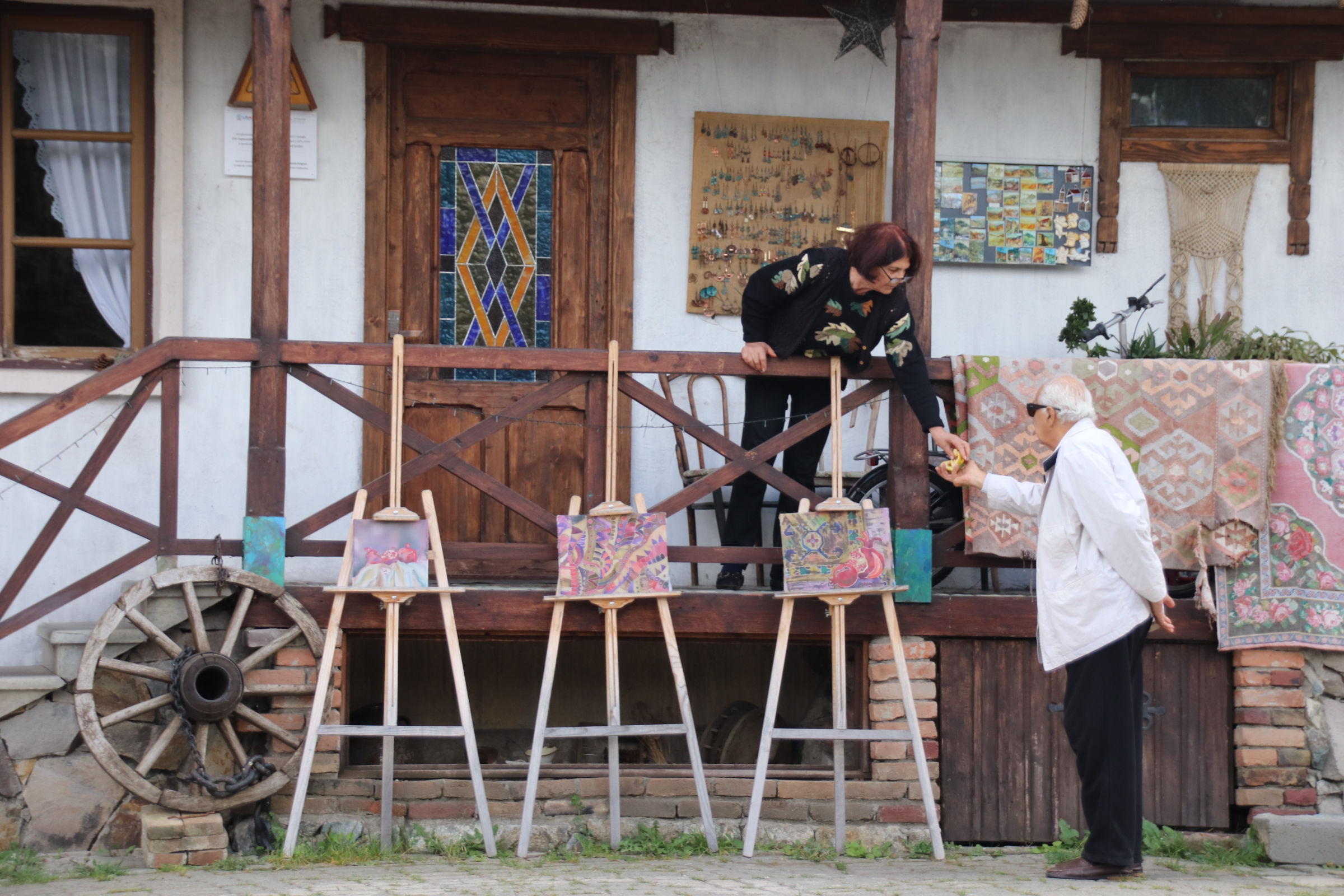
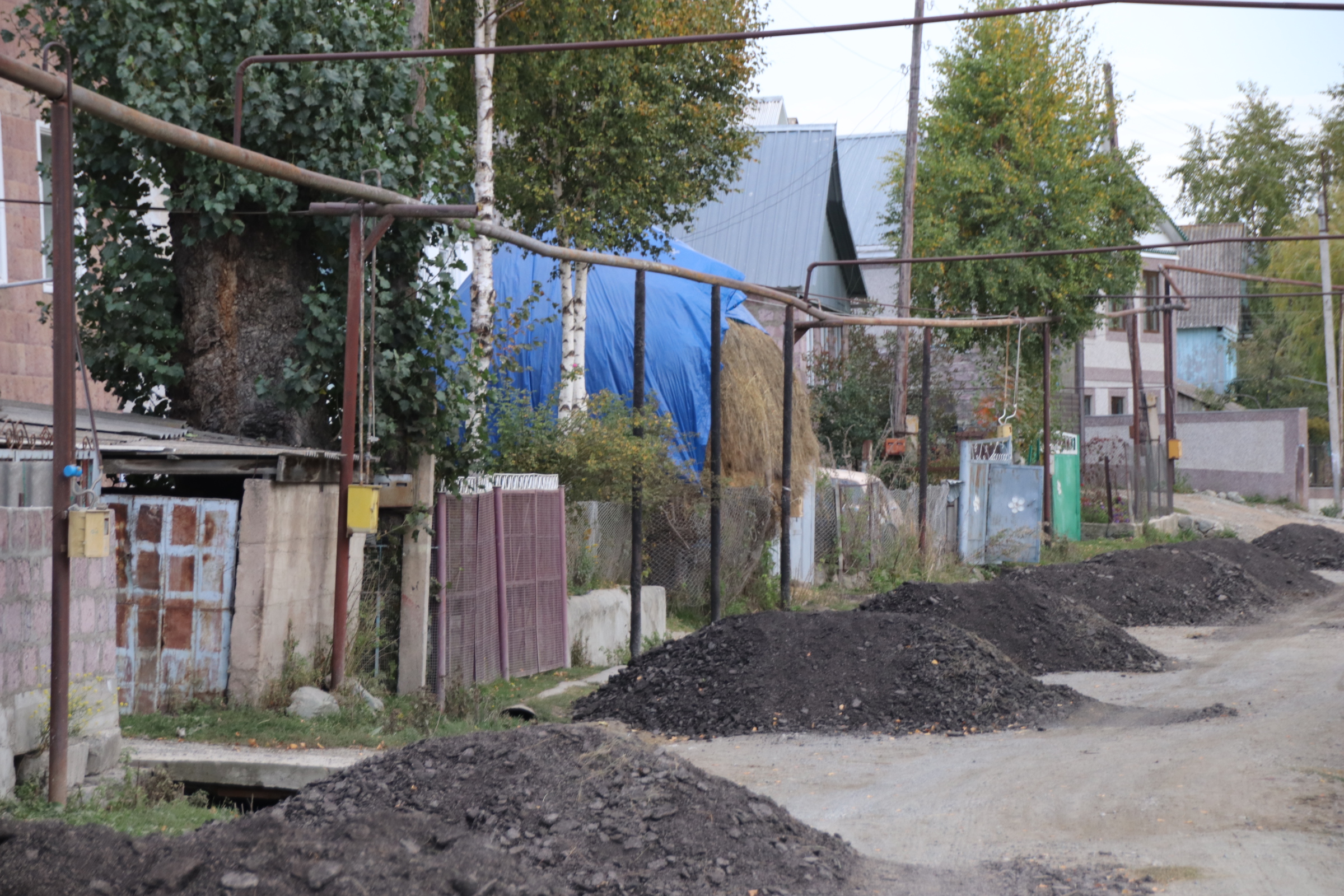
We pass through a Molokan village and drop into a home for tea. They are a sect of Russian Old Believers who live in their own communities and lead a very simple, rural life. Tea is very simple- tea, potato doughnuts, lavash (thin, floppy pancake-type pitta breads) with home made apricot jam.

One last night in Armenia.

The Wings of Tatev

Today we fly with eagles. We are taking the Wings of Tatev, the world’s longest reversible aerial tramway running 5,752 metres from the terminal down to Tatev Monastery. The journey takes 12 minutes. Two cable cars cross the valley,  suspended from two sets of cables running between 4 huge pylons. Below, the sharp faces of the Voratan Canyon are starting to display their autumn foliage.

At one point a relay of three golden eagles ride the thermals around the cable car.

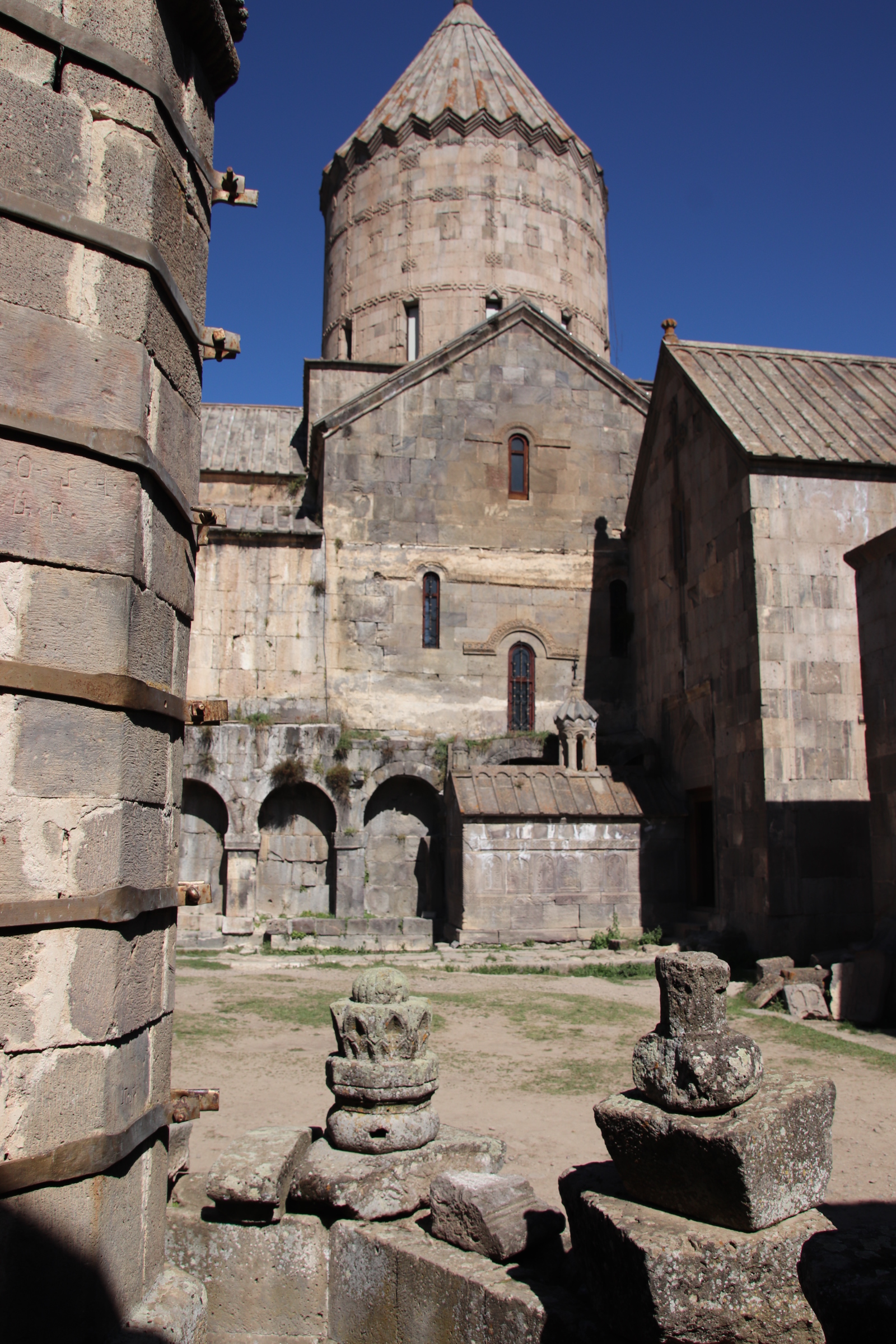
The monastery consists of numerous churches, a university, a library and a refectory and dates from the 10th/13th centuries.

Now it’s time to head northwards across the mountains to Lake Sevan.

The Silk Road is not a single route. Numerous routes crisscrossed the area moving goods between the markets of Europe and Asia. Different routes travelled across this dry, dusty landscape – north-south and east-west. Caravanserai were overnight halts, or inns, where traders and merchants could rest up and replenish themselves and their animals before moving on. Selim was one such caravanserai, originally built in 1332.

Different spaces had specific uses: the central area was for the animals; the sides were to store the goods being carried; there were biars at the edge for fodder for the animals; troughs carried running water for man & beast. They were secure and offered protection to travellers on their long journey between China and the markets of Europe.

200 km to Goris in the southern Caucasus

Today we head south. The road crosses the flat, barren plain outdide Yerevan sandwiched between parallel lines of well maintained orchards of fruit – apricots, apples, plums, all displayed on the road-side stalls of the farmers. At one point rectangular lakes of water appear on one side. Strangely this is a big fish farming area and the signs over the stalls depict a range of similar looking fish.

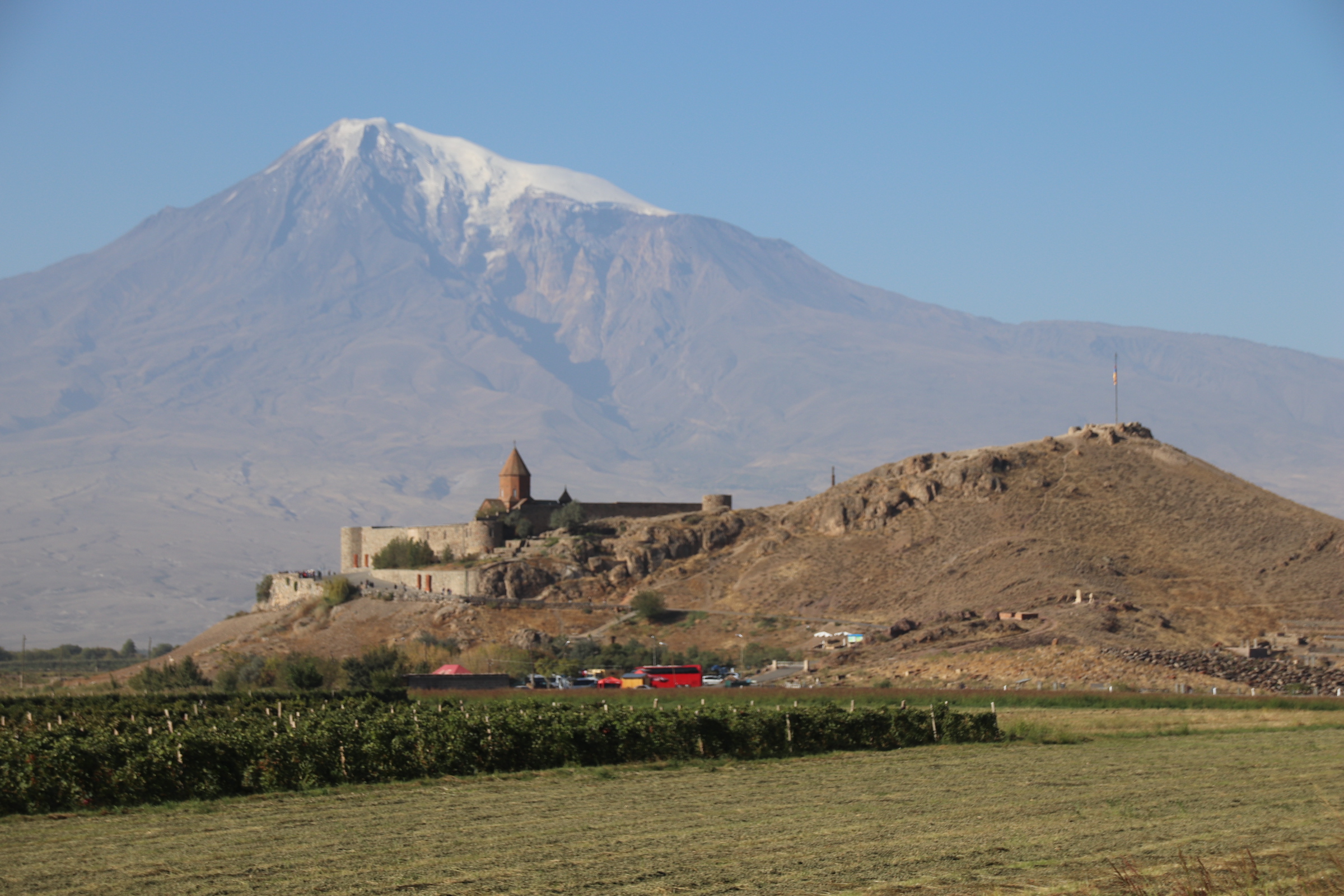
We divert to spend time at Khor Virap Monastery. This was built in 1662 around the remains of a 6th century chapel where Gregory the Illuminator was imprisoned for 14 years.

You can climb down a set of scary steps to visit the cave where he was imprisoned…as long as claustrophobia is not one of your conditions. The hole is 40cms in diameter!

The further south we go is like heading further back in time. The strip of orchards continues on either side, only its character changes. Soon we are in the wine producing area. Very good reds. Whites are a bit sweet. Irrigation pipes have been constructed alongside the road, like complicated, open Marble-Run systems running all the way from Lake Sevan.

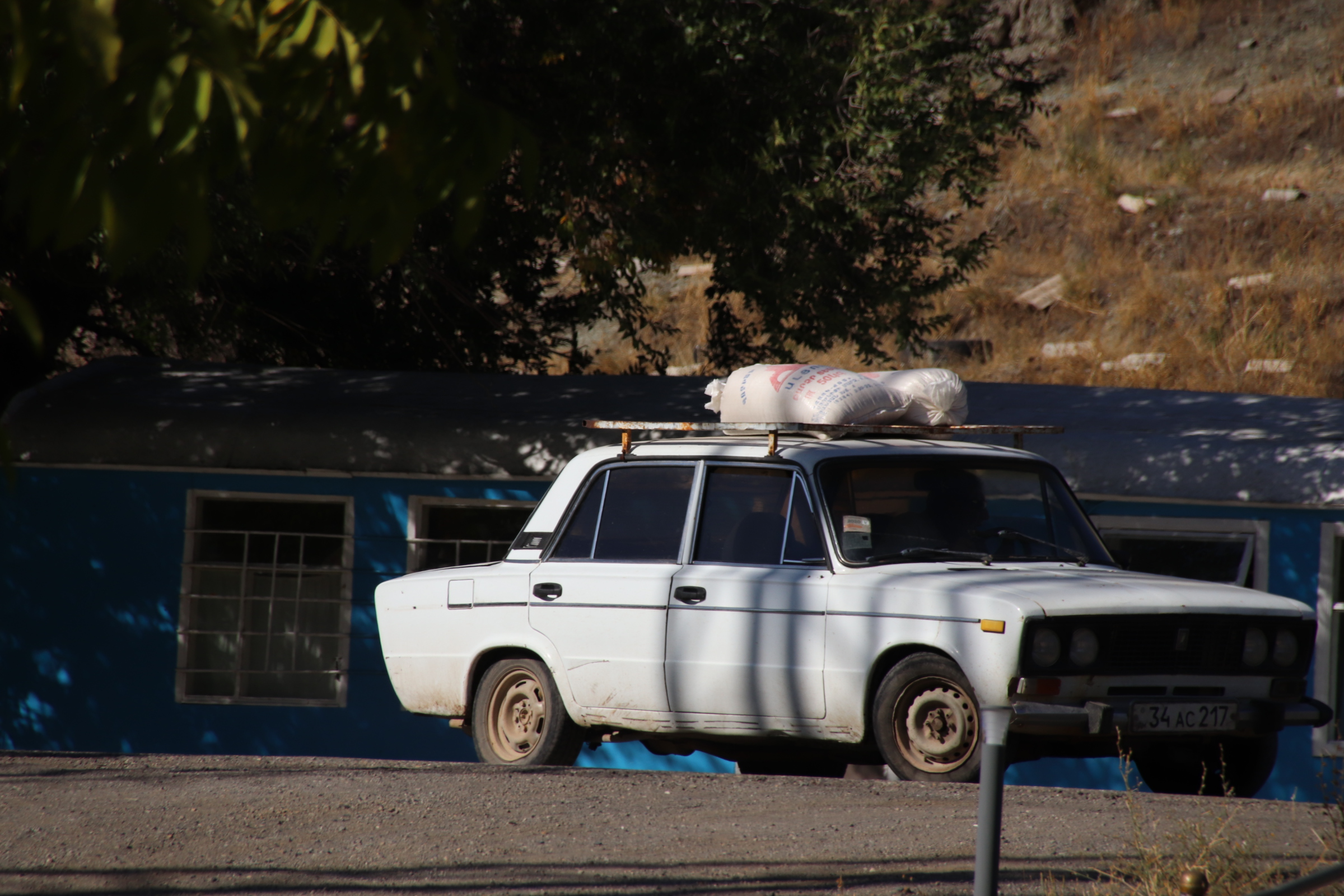
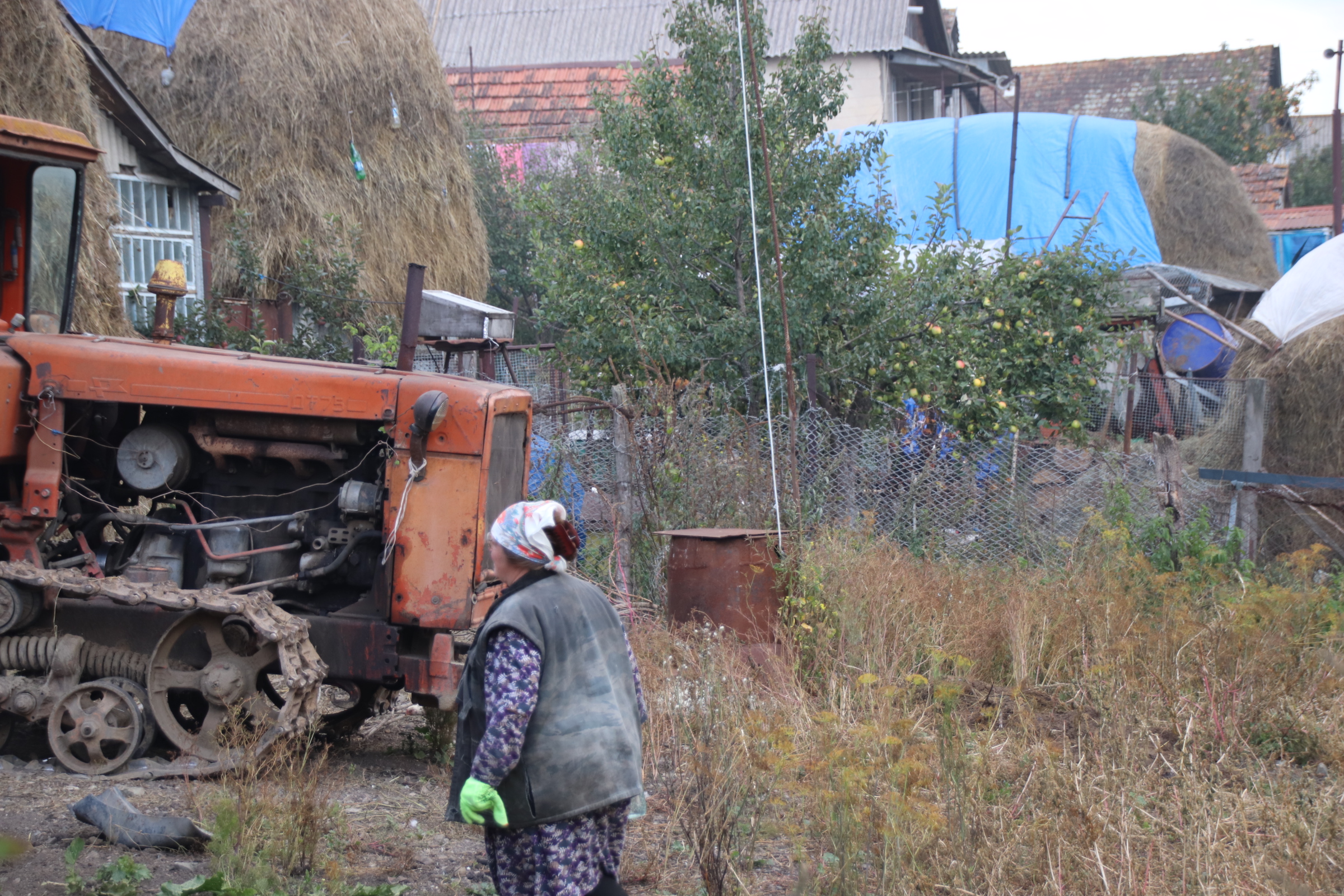
The roads are very basic. In places only they are just passable and in places construction crews are laying new tarmac. The vehicles are also varied. New Mercedes lorries and coaches share the road with rusty trucks, Ladas and old Opel, many held together with wire and a smile. Ask your parents what a Lada is.The road starts to climb out of the valley and into the high rolling landscape of the mountains. It realy is layers of mountains, in front of layers of mountains against a backdrop of layers of mountains. Not the peaks of Europe but a more gentle, grass covered landscape of rolling bands of ridges and undulating folds of expansive green-tufted blankets and rugged rugs.


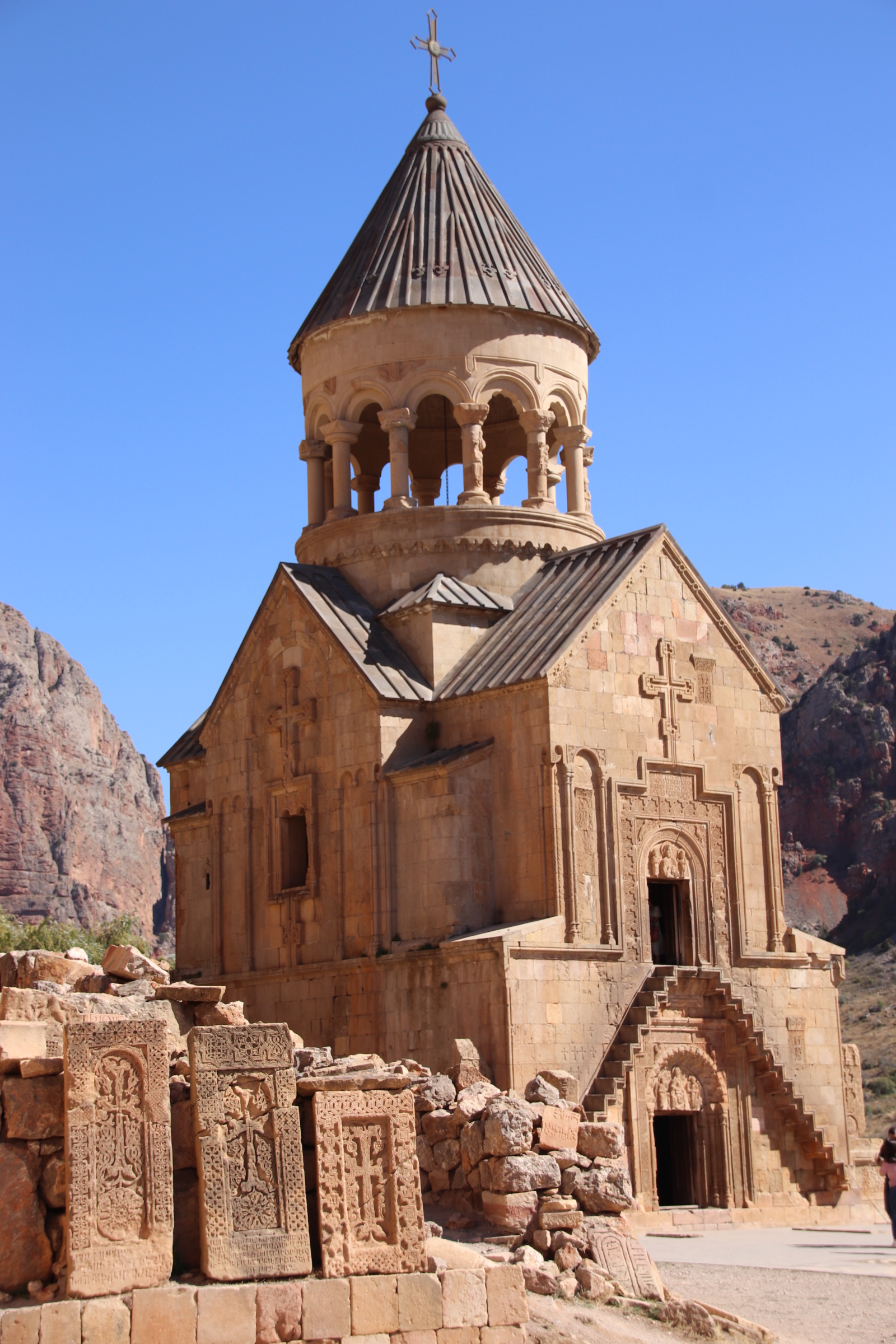
Meandering around the lines of valleys & high ranges, the road enters passes and climbs gorges and descends high canyons. Noravank Monastery, built in the 13th century, is set at the head of one of these gorges.
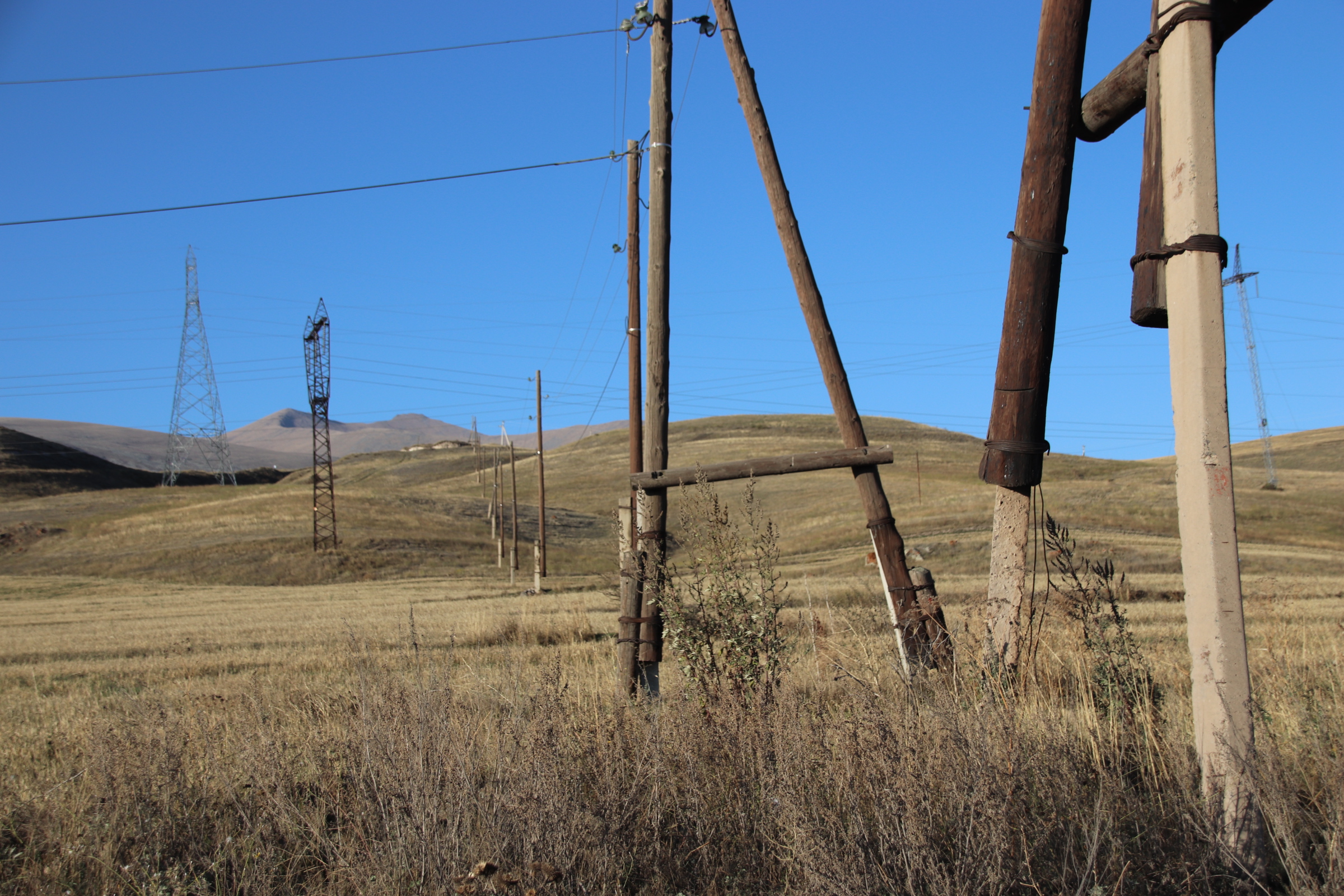
The road twists and turns following the tight contours of the land, up and down the curves and courses of the peaks and troughs. It goes on for miles upon miles with the only changes in the roll of the gradient and the changing lines of different types of electricity pylons.

Occasionally the road descends into a village where underground springs nourish summer trees or some basic crops on which to feed a few cattle and sheep and goats. It might provide a bit of energy to produce cement or other building materials. With no timber out clay in evidence corrugated iron takes its place as an essential pay of the building process. The motorway services….

Goris is our overnight stop.

Magical moments at Gehard Monastery

Armenia is so intriguing. It is only day two but I am already fascinated by this ancient country. There is some pretty nasty historical stuff which I will share with you at a later date but I want to give you a flavour of the place today as I find it, unpicking its many different layers to get to its core.

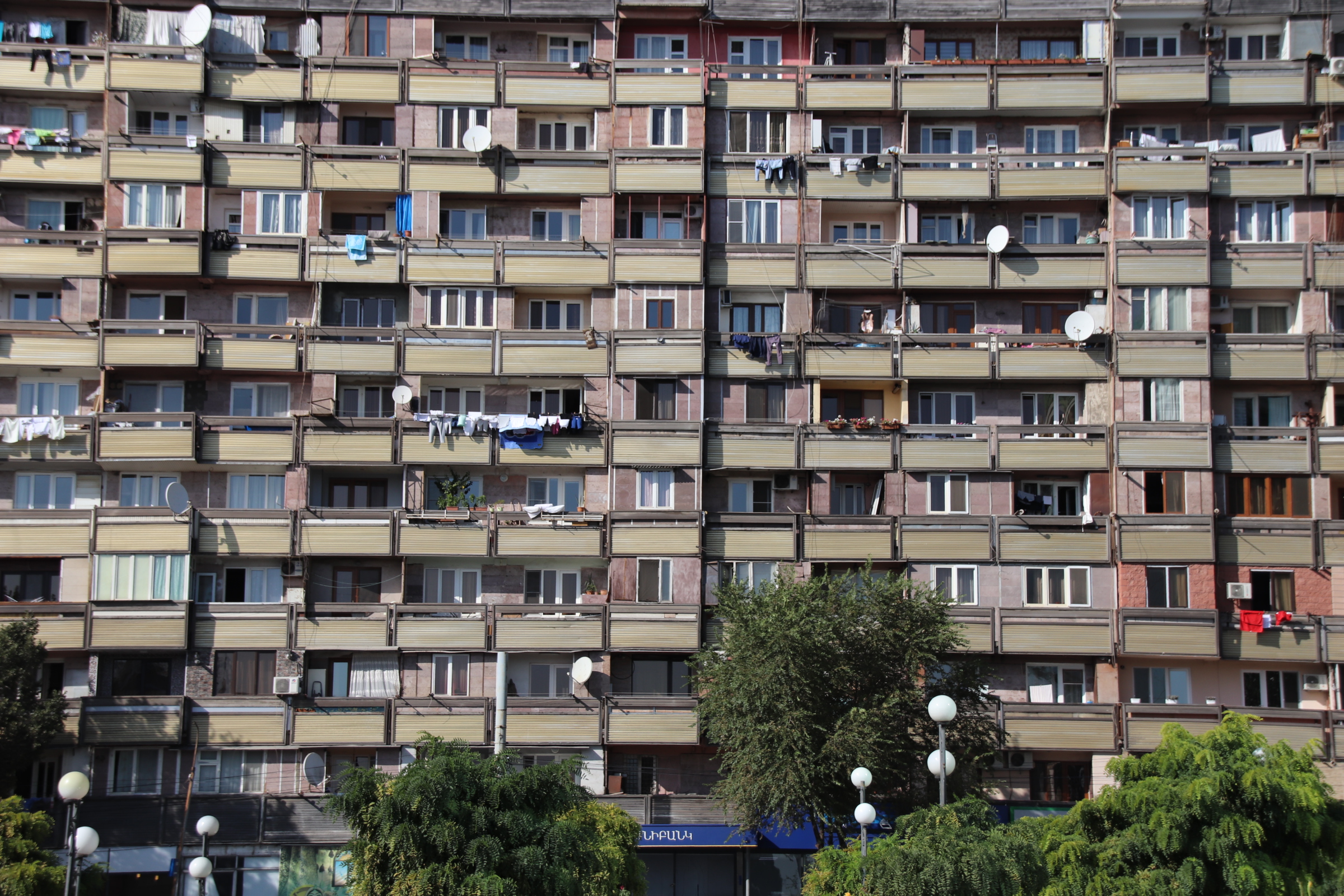
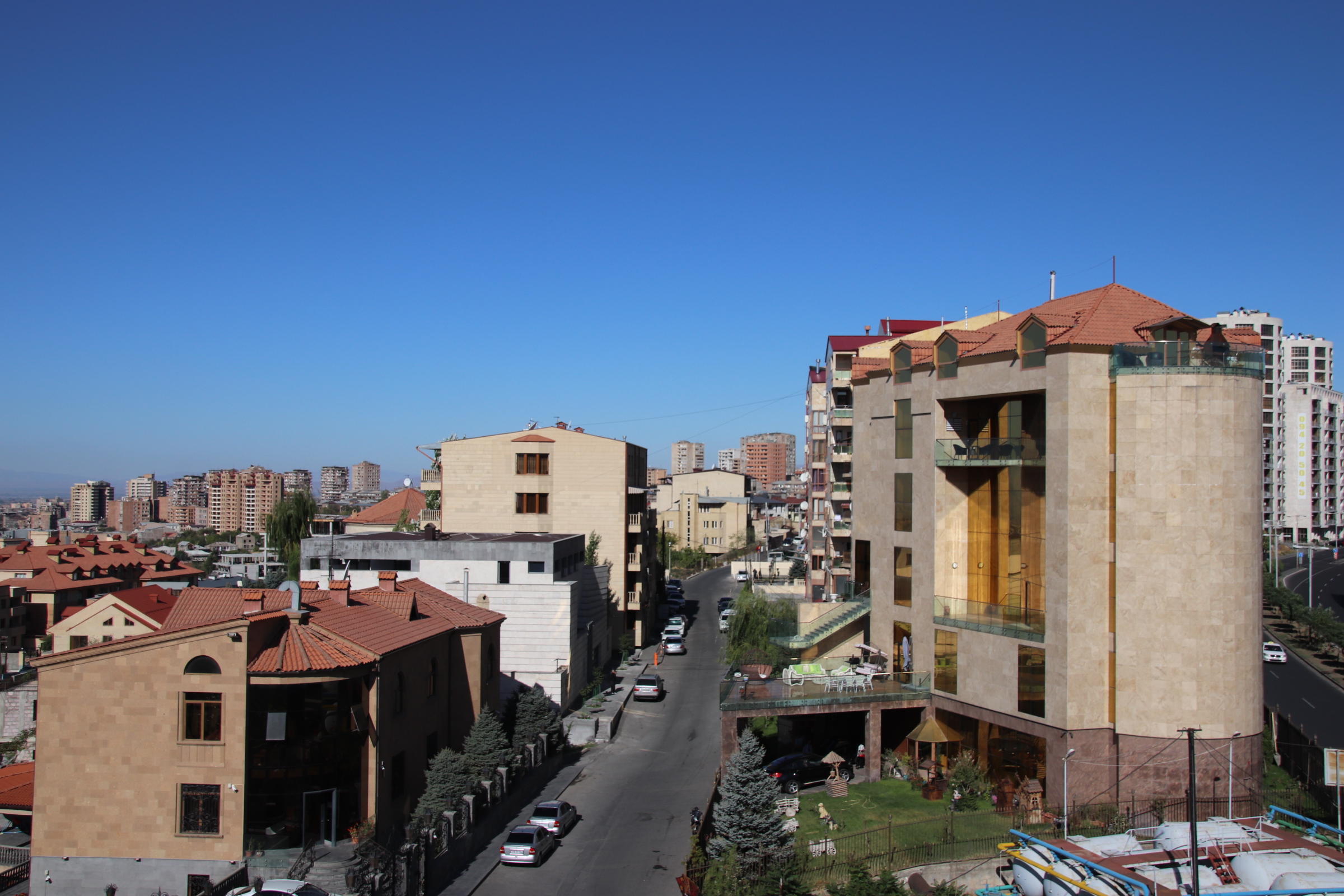
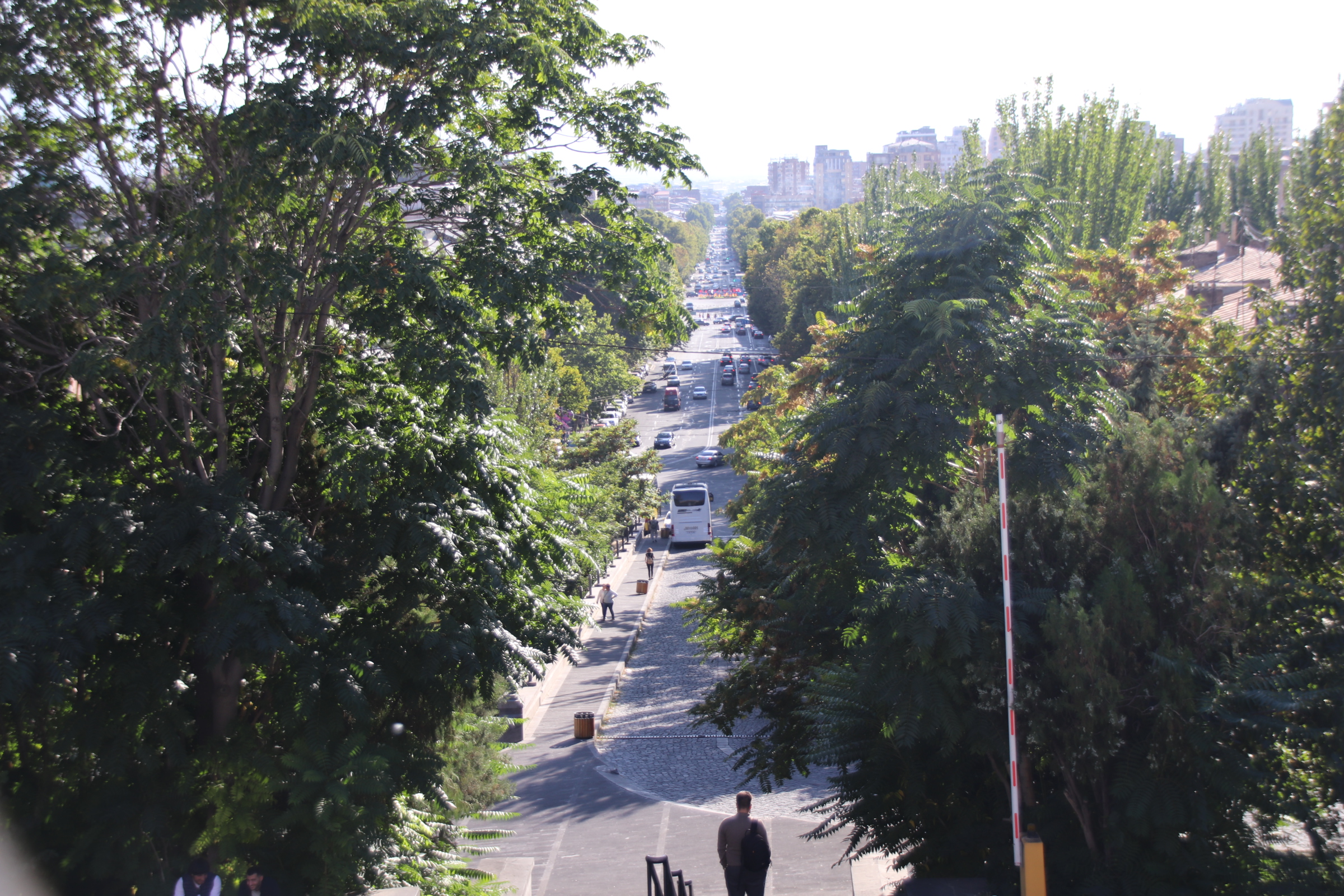
So, some images to extend your understanding of life in Yerevan. The wide, tree-lined boulevards give the city its cosmopolitan feel. But people need somewhere to live and work and the city expanded outwards in the 1960’s with tall blocks standing functional and strong to catch for the needs of ordinary people.

Today we drive out of town into the mountains. Armenia is made up of rocks and stones and mountains, with mountains behind mountains, hiding behind even more mountains. Once out of the city this becomes obvious.

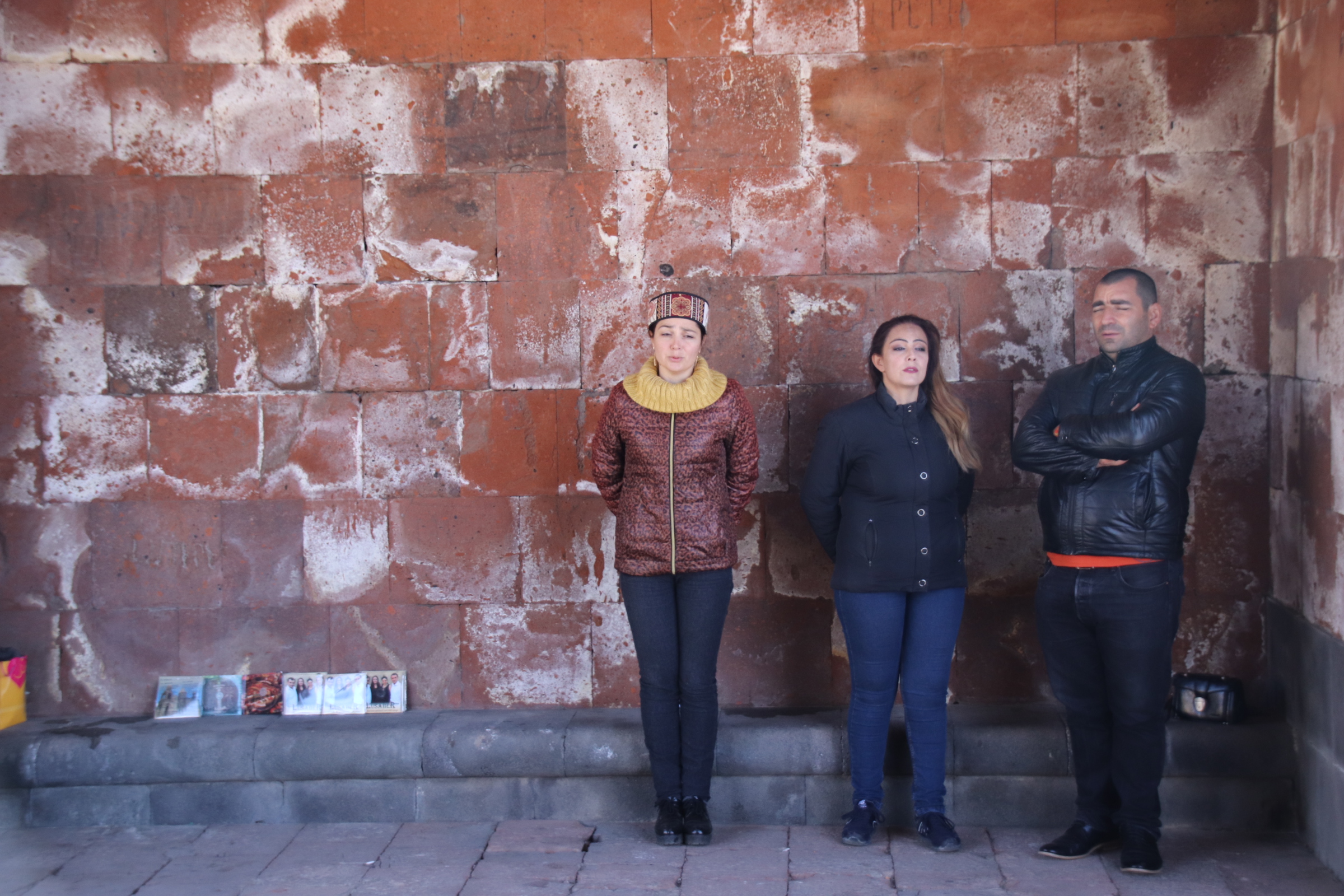
These guys were singing in a small arched gateway looking out over the rolling hills. Awesome.

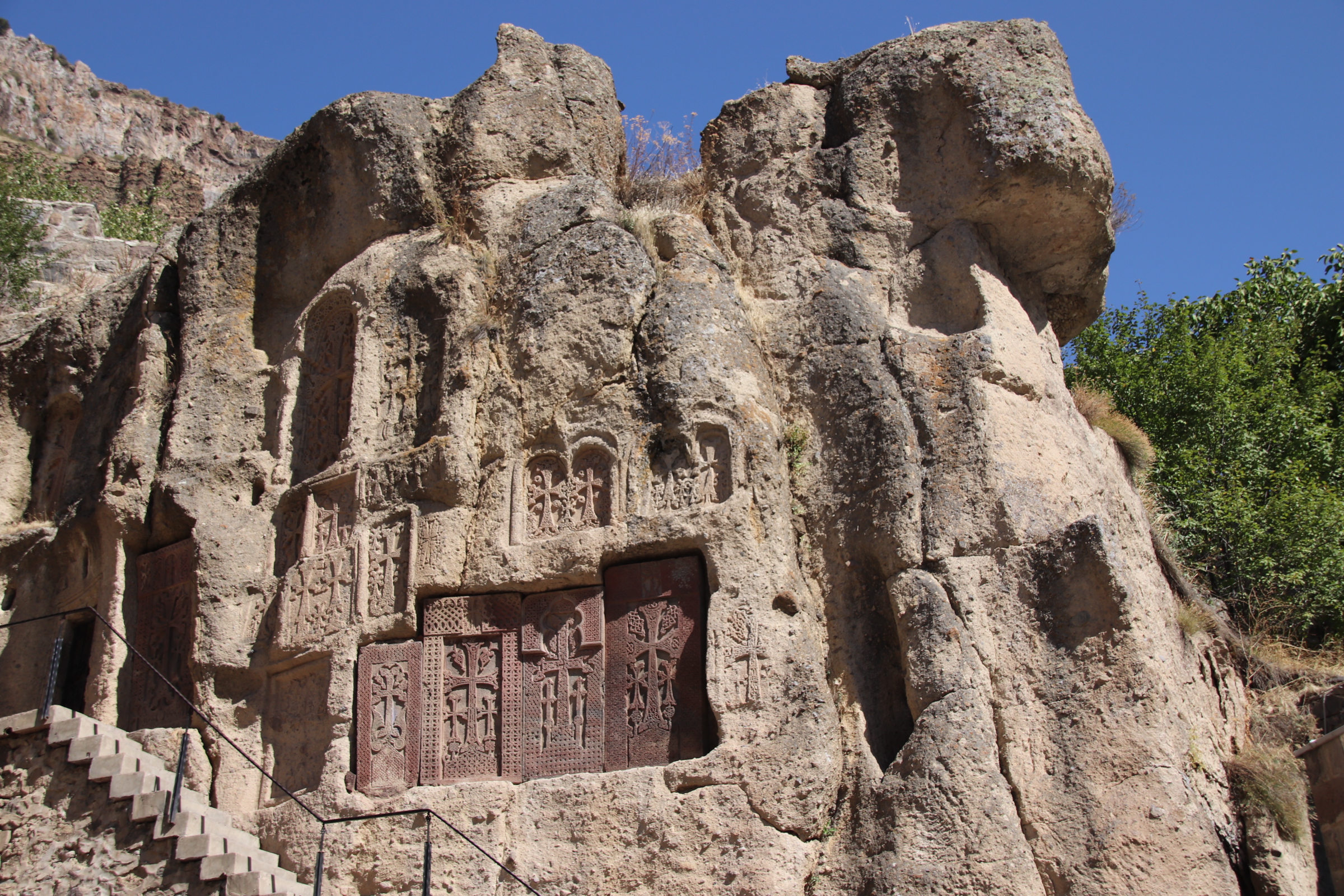
Gerhard Monastery is our destination, where caves in the hillside housed monastic cells and cluster around a collection of churches. The main cathedral was built in 1215. Let me take you on a magical journey. First we go up past the locals selling breads, sweets and dried fruits.

Through the gateway into the courtyard, the main buildings can be seen on the left. You know you are somewhere special when you are surrounded by ancient carvings and stonework.

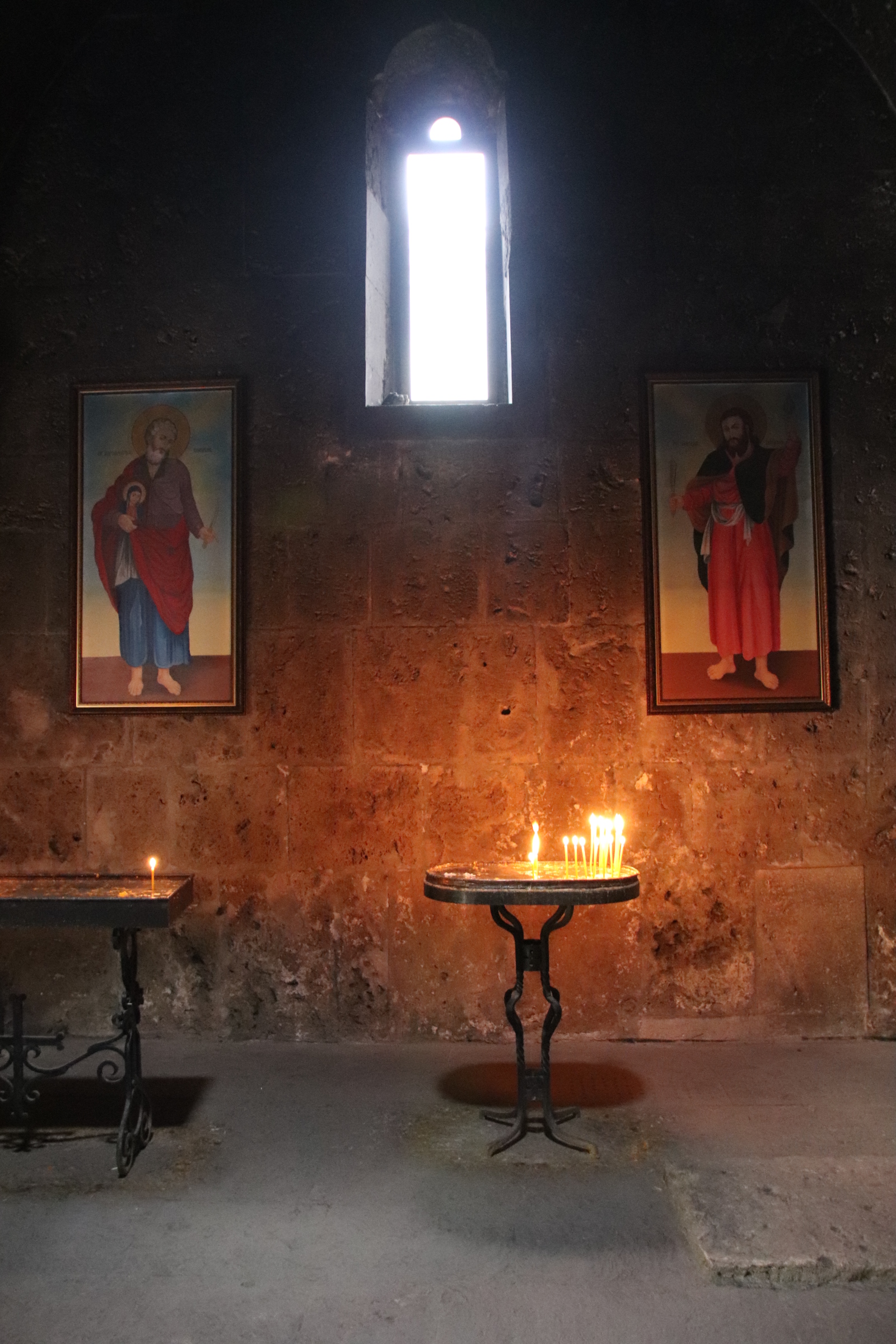
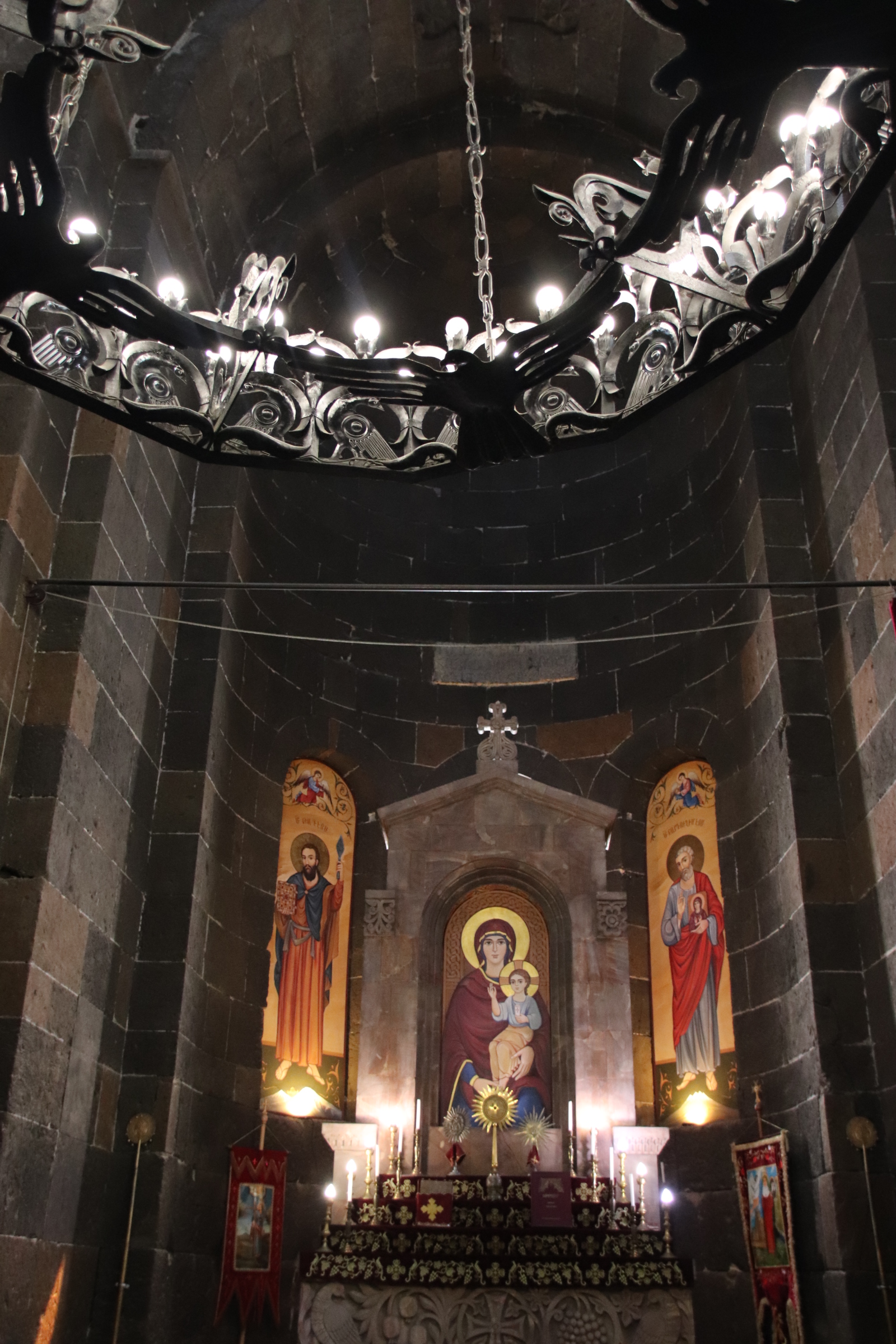
It gets really special when you get inside a number of these worshipping spaces.

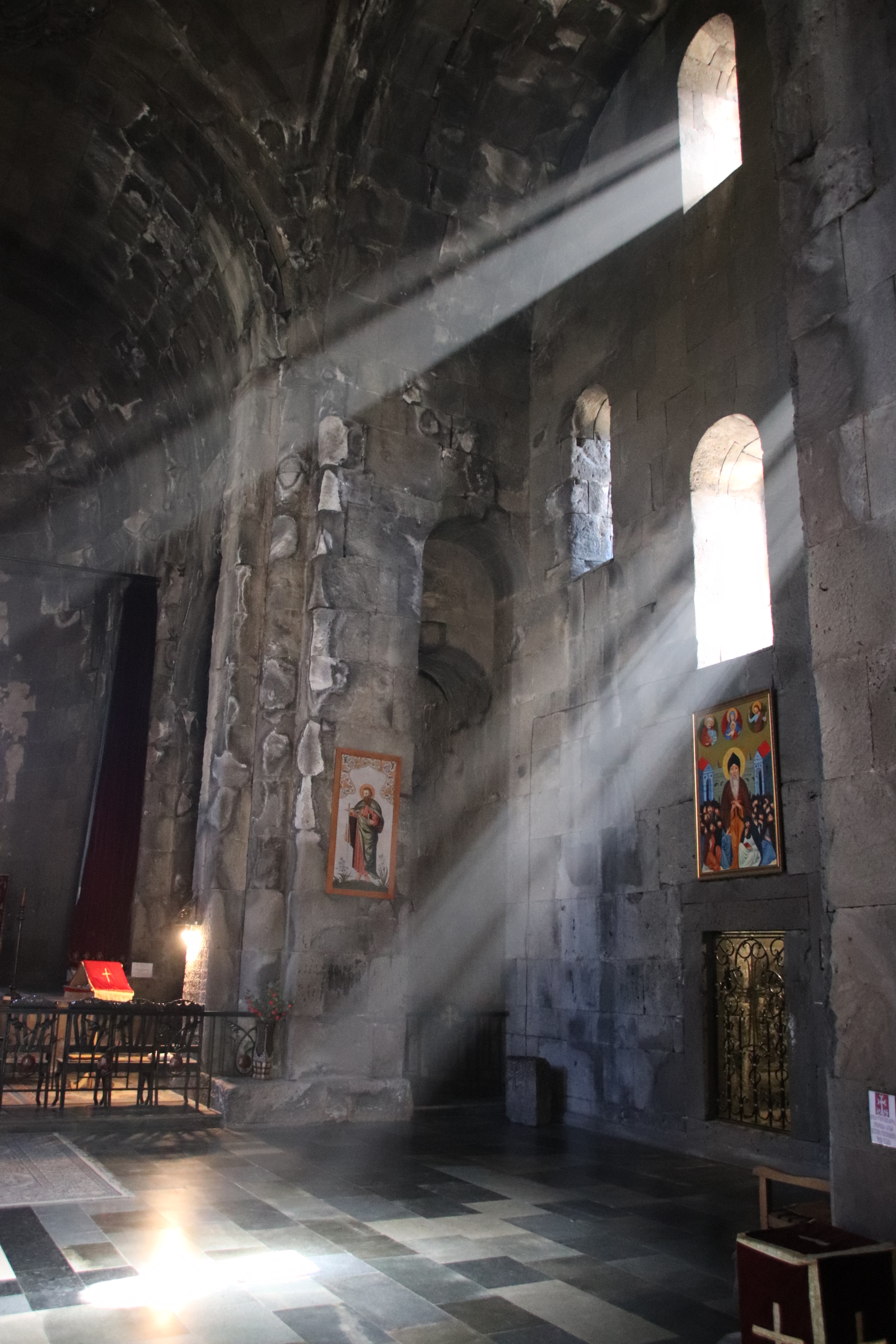
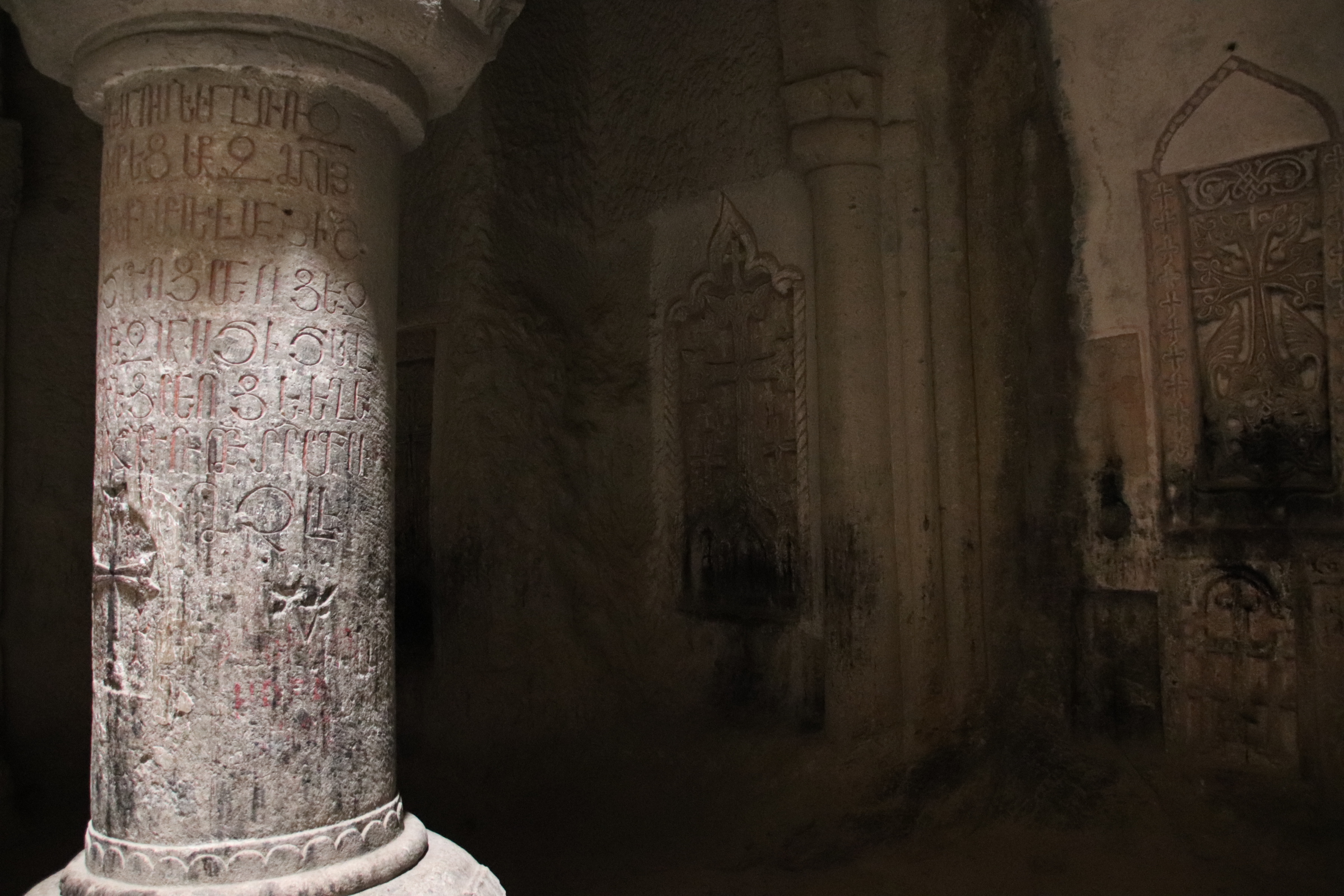
I am drawn to one. I think it’s the cathedral. It is dark and only lit by a central hole high above.

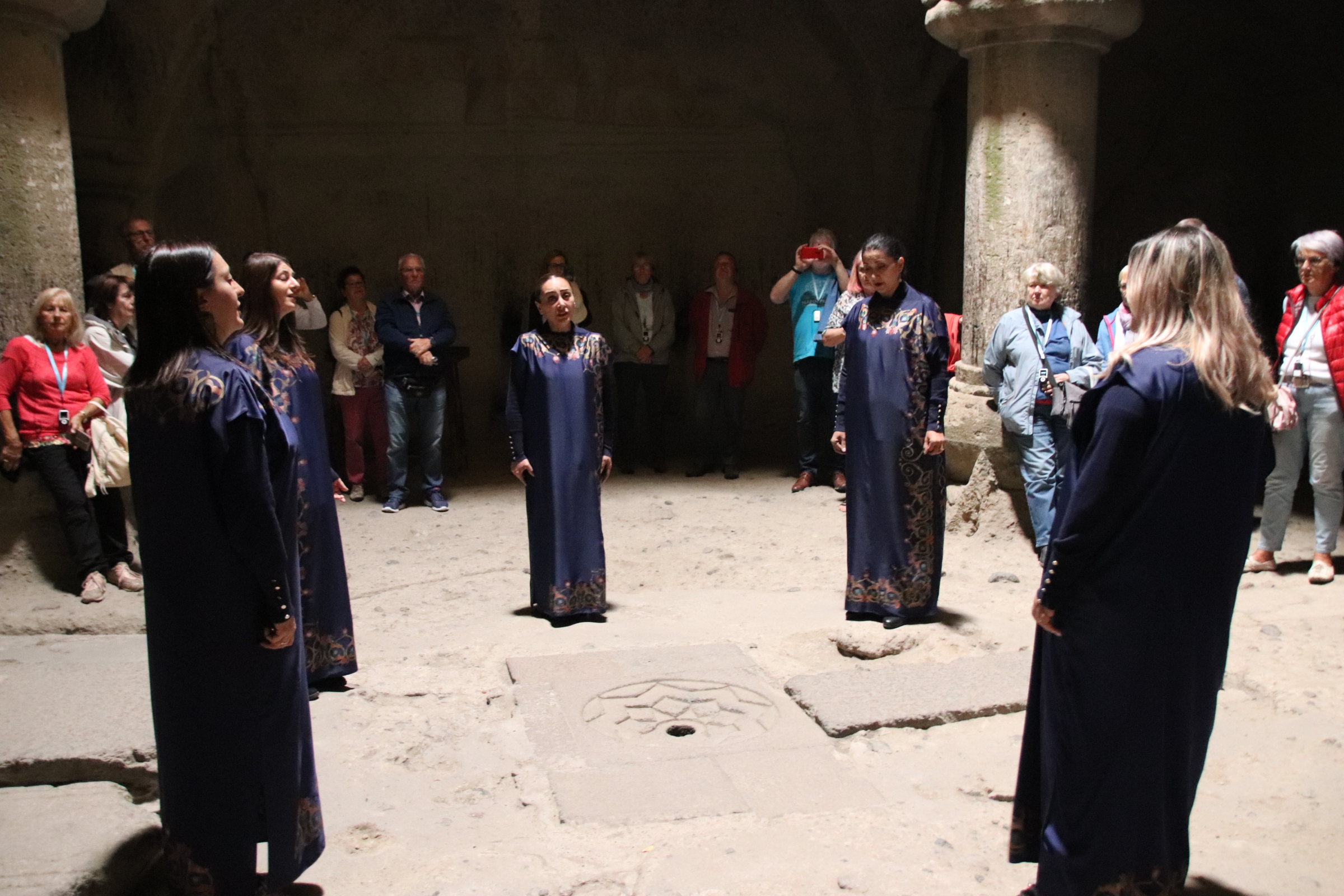
Three groups of singers come into my space and take me somewhere I’ve never been to before. Surrounded by dusty ancient pillars and carvings, their voices chant and hum and exist around me releasing emotion and releasing tears of wonder from my eyes. Wow!

So, you see, in one day you get Armenia – ancient and modern.


Adventures in Armenia

OK. After several years of playing my travelling very safe I decided it was time to push back my horizons and try a new adventure to somewhere a bit out of the ordinary and where I have never travelled to before. So I am off to the former Soviet republics of Armenia and Georgia, travelling northwards through one to the other. New language. New alphabets. New cultures. New environments. These countries between the Black Sea and the Caspian Sea straddle the Caucasus Mountains. The caravans of the Silk Route started and ended their journeys around here and criss-crossed the area on their way to and from Europe and Asia.

The adventure starts in Yerevan, the capital of Armenia from way back in 180AD when Christianity was first adopted by the Armenian people. How about this for the view out of my window on the first morning.

Yes, that’s snow on that peak reflecting the rays of the morning sun. I learnt, as the day progressed, that views of Mount Ararat, the place where Noah set down his ark, would accompany us all the time we were in the city.The place has really developed since the turn of the 20th century. Grand 9/10 storey apartment buildings line wide leafy boulevards. It has the feel of a cosmopolitan Paris. Statues of writers, leaders, artists, soldiers (even Armenia’s favourite son – Charles Asnavor) peer through the spreading branches of columns of plane trees on every street.

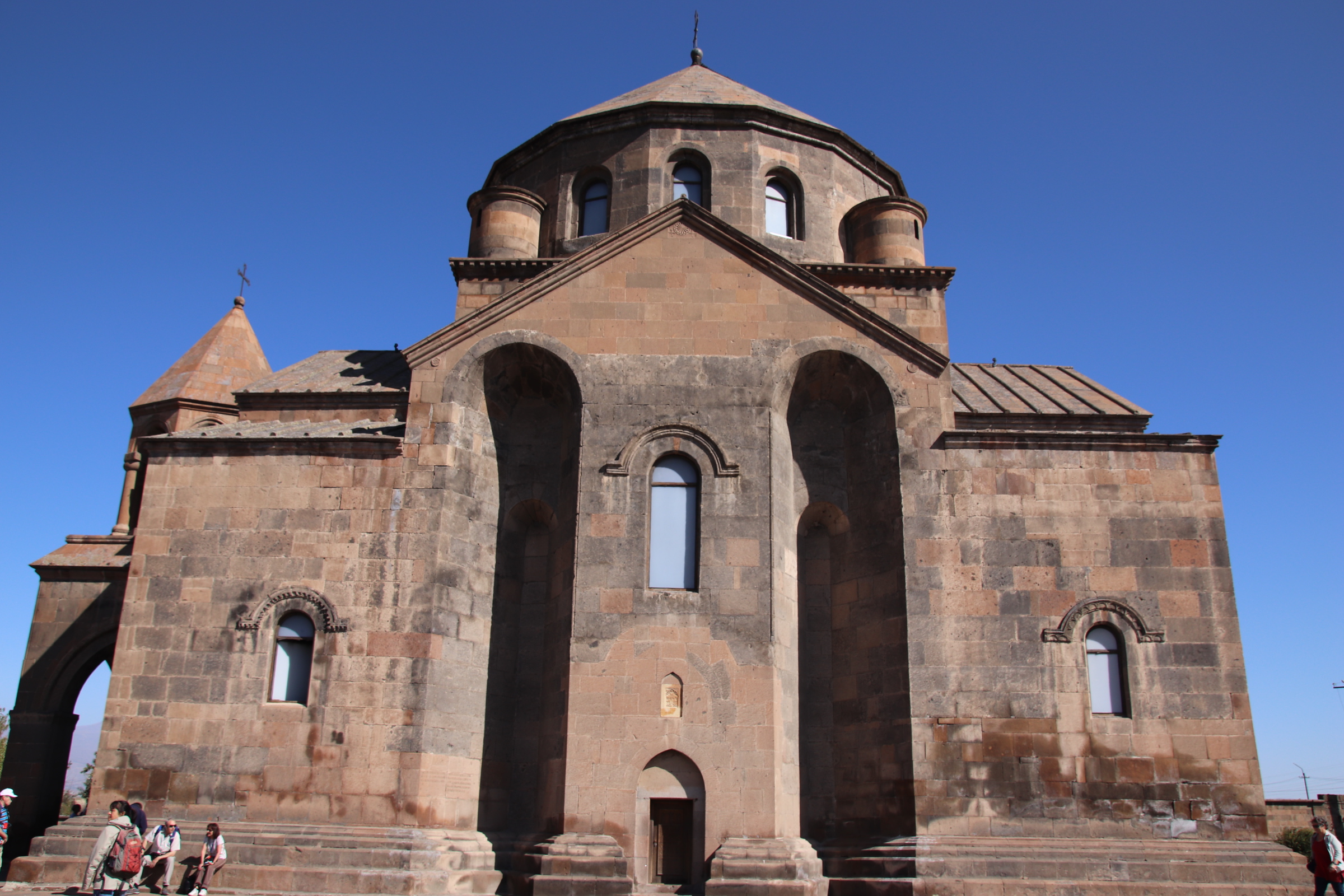
It’s Sunday. So it seems appropriate to go to church…..well, 2 churches and 2 cathedrals to be precise. First stop is the ancient church of Hripsime.

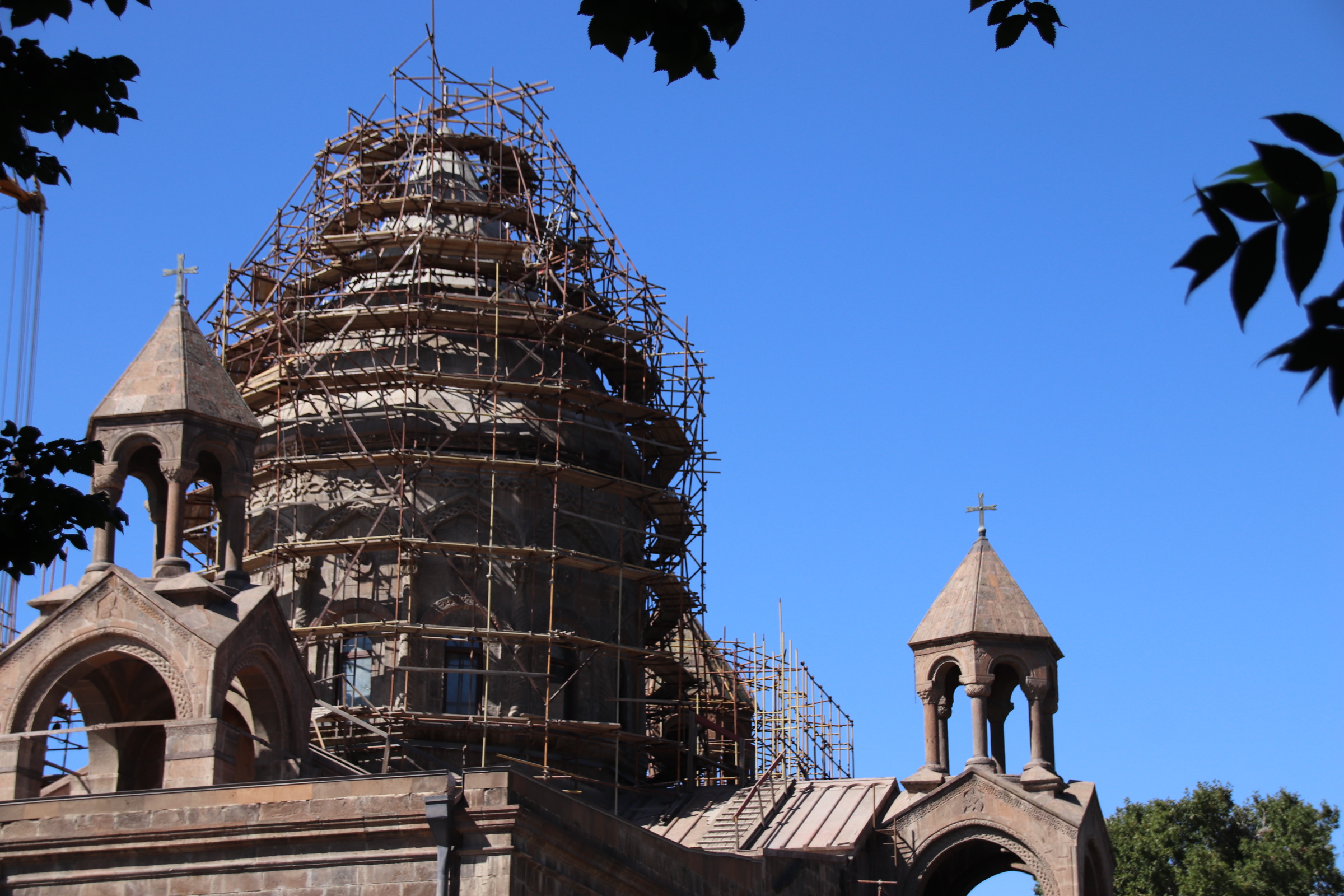
The next stop is the church of Gayane, covered with its 21st century shell of scaffolding.

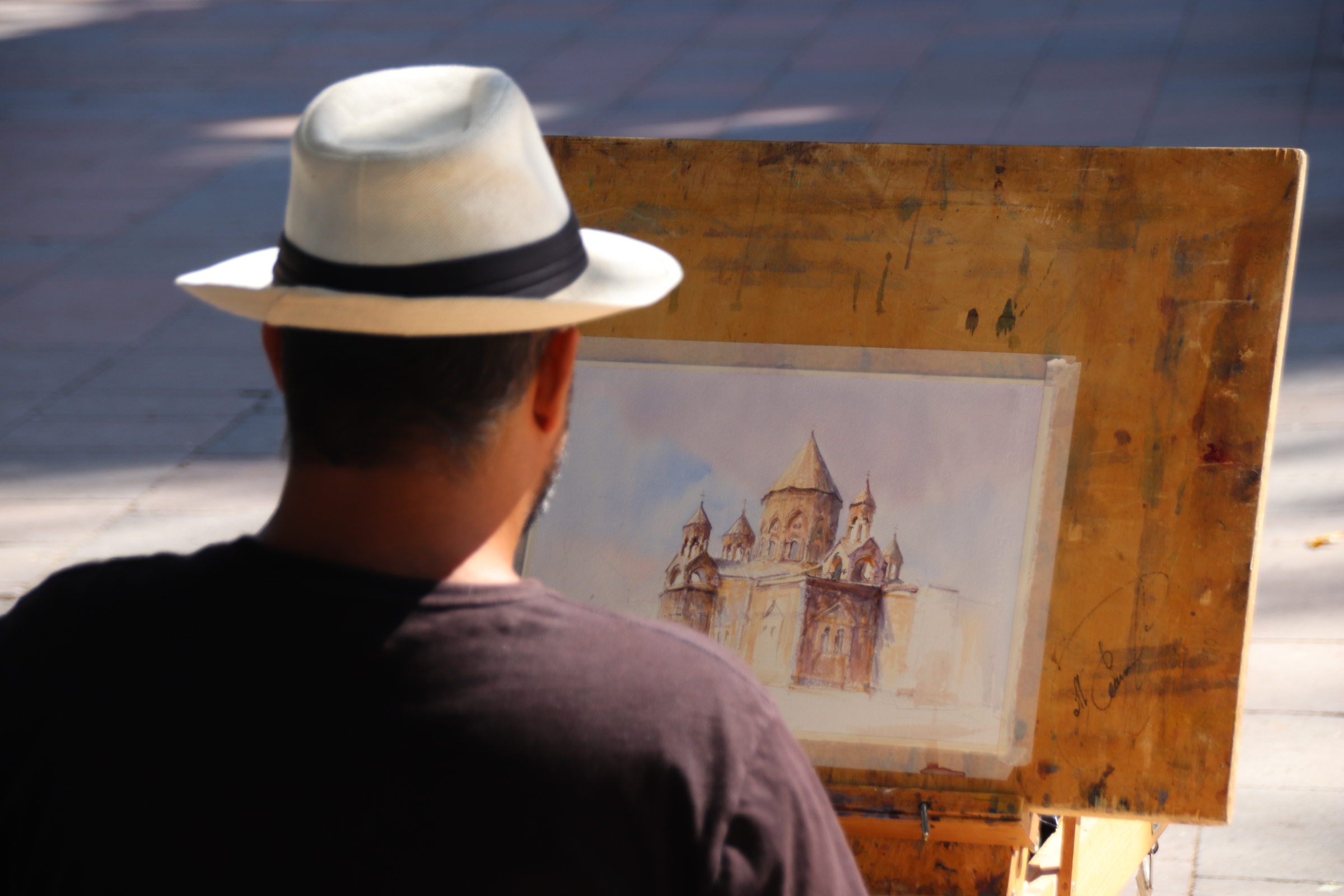
The artist managed to capture is grace and form using his imagination. These guys are only too pleased to have their photos taken in the shaded peace of the gardens.

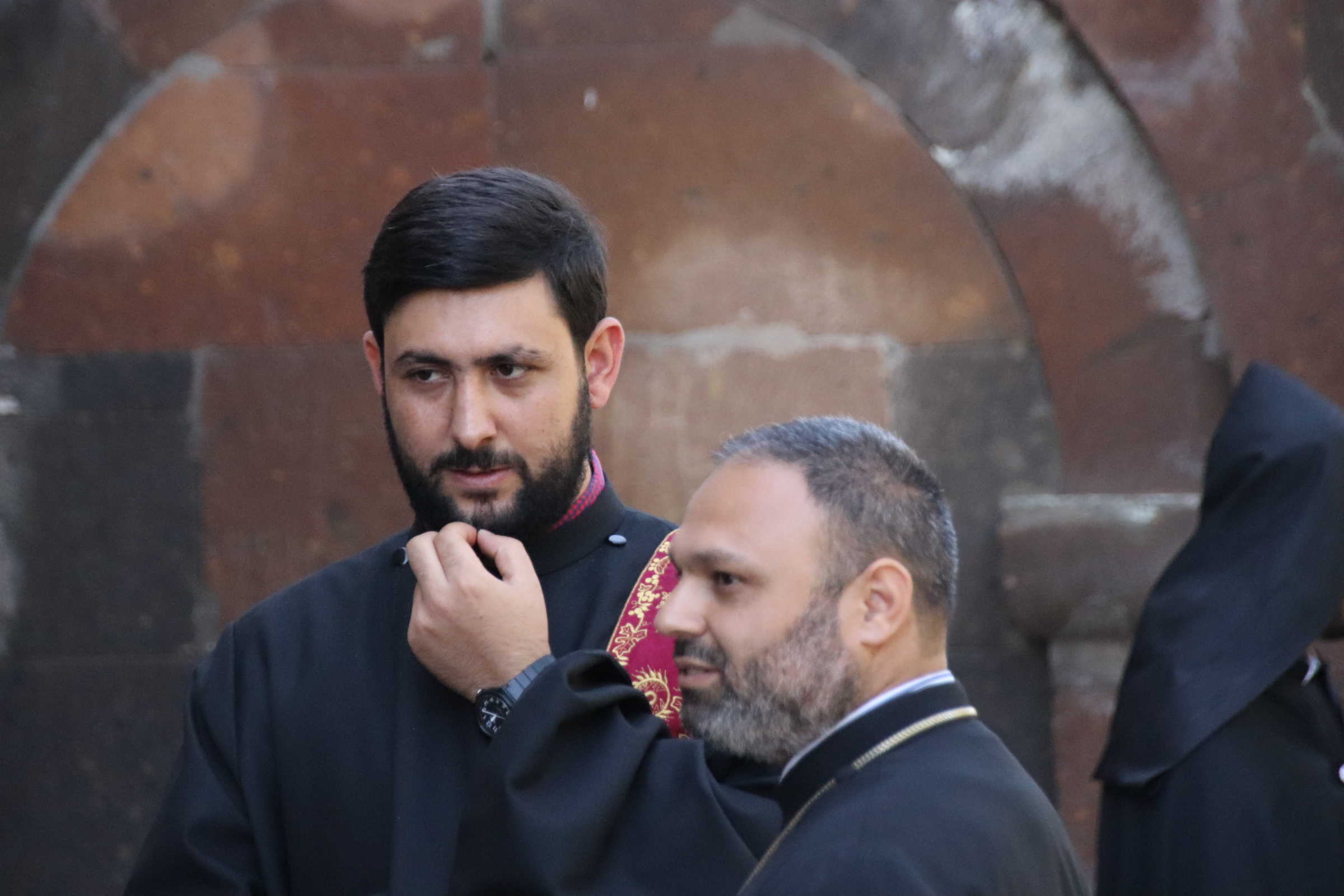
The service was in full flow in the cathedral of Echmiadzin with a packed congregation and tag teams of clergymen preaching in all four corners before heading away from the chants, the singing and the haze of incense into the fresh air outside. Bearded clergy stand around discussing theology and putting the world to right, and maybe heaven.

The 7th-century ruins of Zvartnots Cathedral kindles images of those first days of the bible and the birth of Christianity, especially as the silhouette of Mt Ararat holds firm between the pillars.

What an amazing first day in Armenia.

Sartene is Corsica in a nutshell

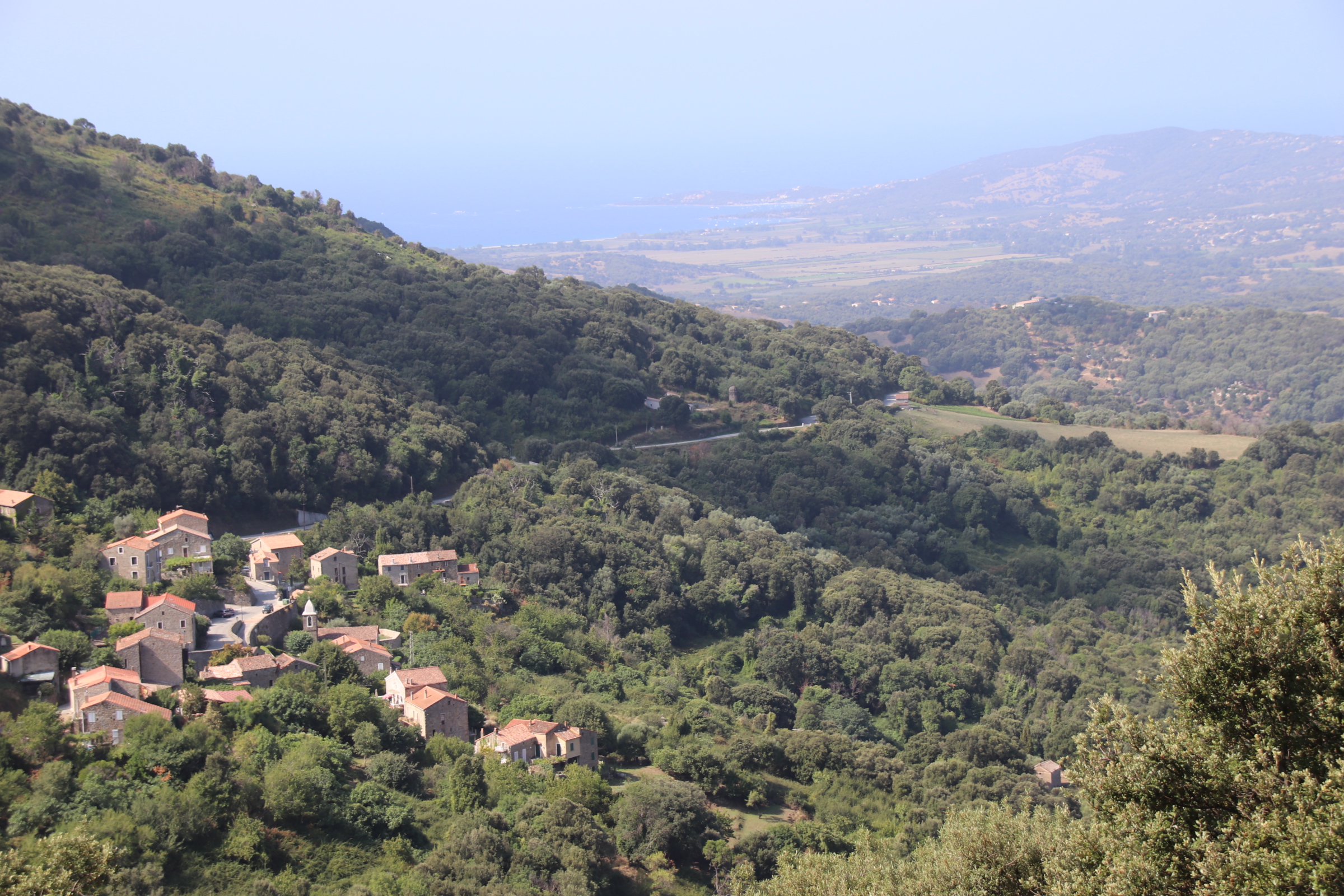
So, the last day before a return to the UK and time to share one last place with you. Sartene could be Corsica in a nutshell, set in the ancient hills of this mountainous island.

The town’s pride in its culture and history is reflected in the evenings performance of local, traditional choral pieces in the church. Sartene is well known for its wine along with having a long history of piracy, banditry and gangsters.

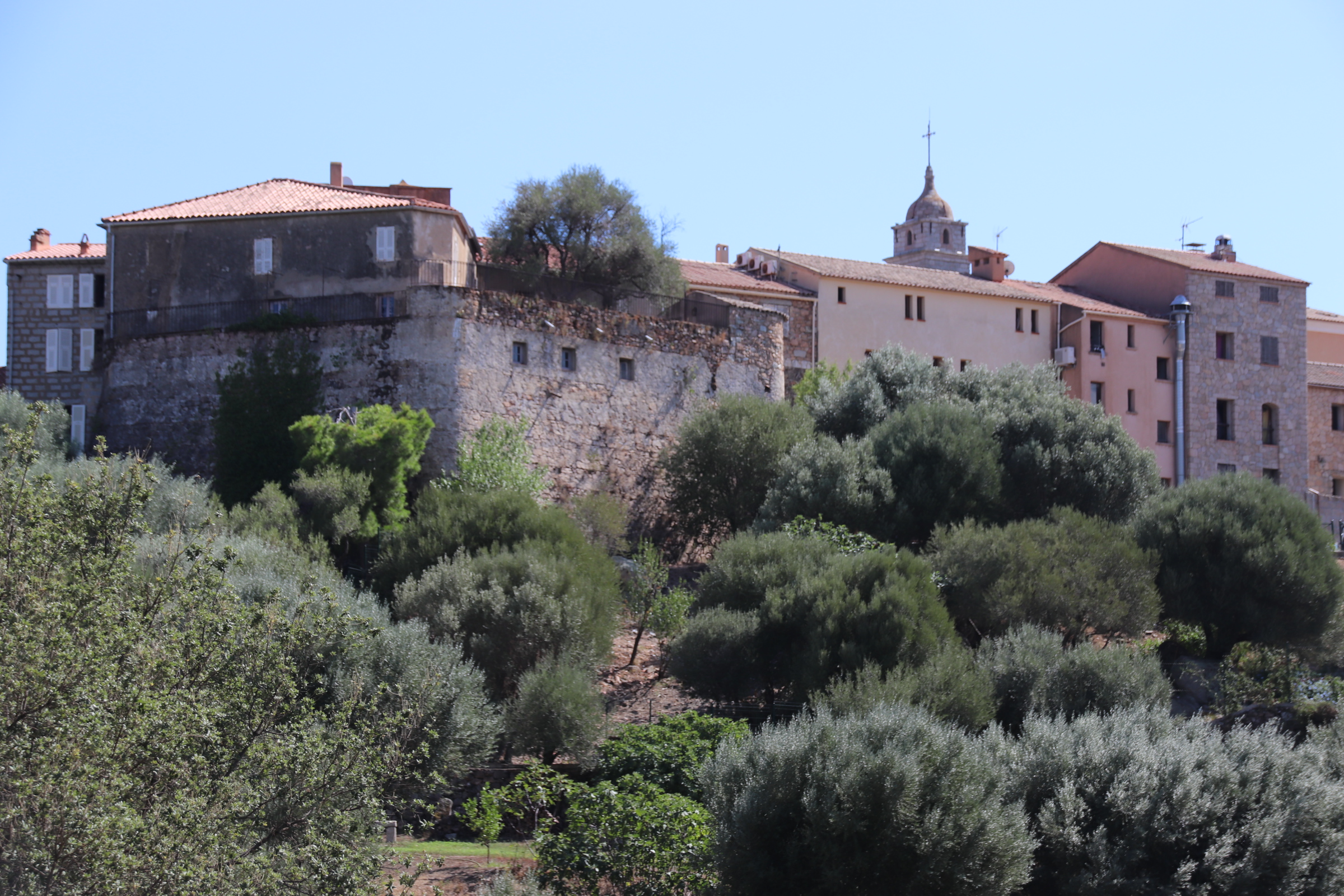
The evening sun gives the tall buildings, built in the same rock as the steep hill on which they stand, a sunny glaze, allowing them to be absorbed by the surrounding landscape of rock and wooded mountain peaks and ridges.

Having had a break in one of the cafes of the Place Porta, it’s time ťo track back in time into the fascinating old town of Santa Anna which spreads down the hill within ancient walls.

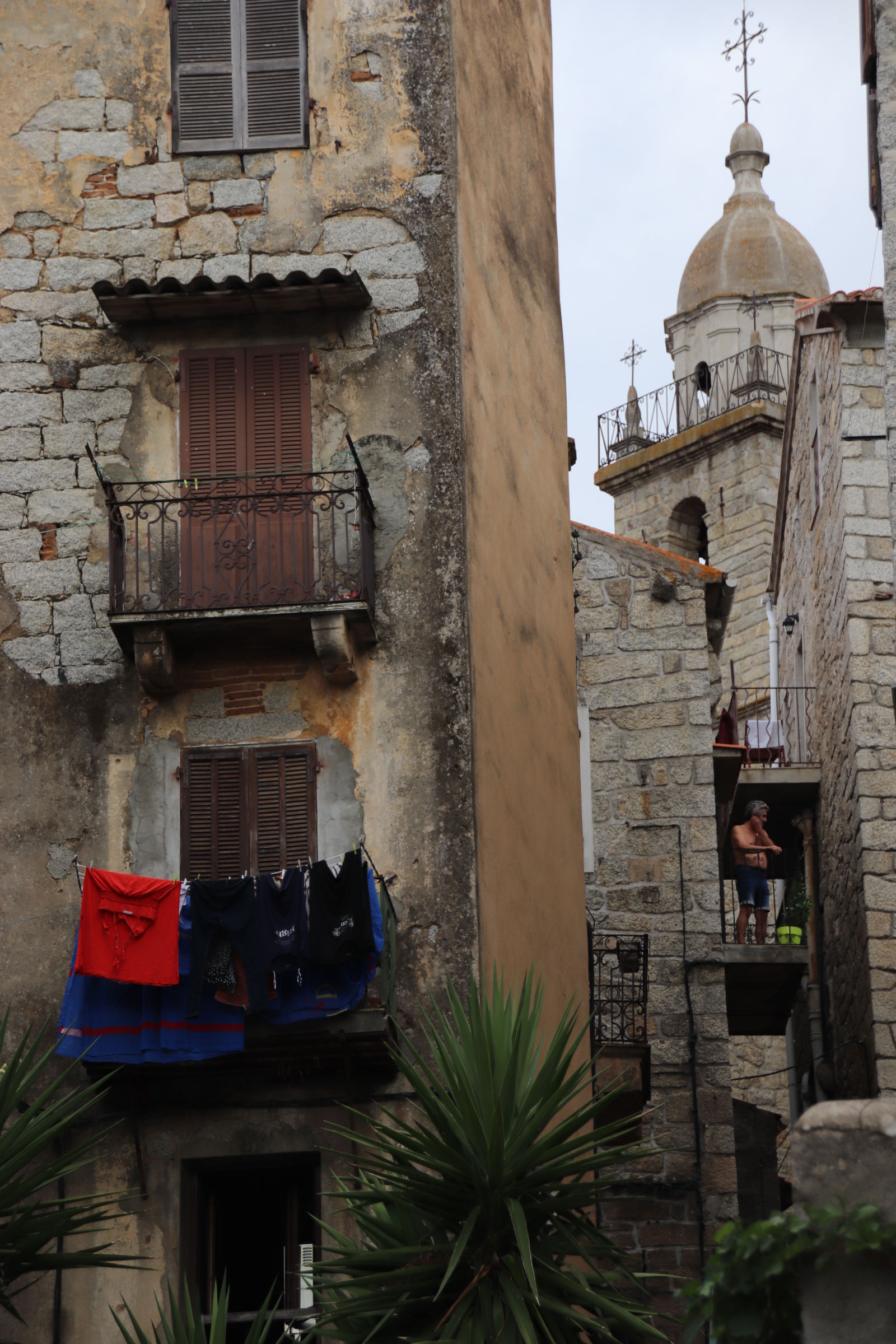
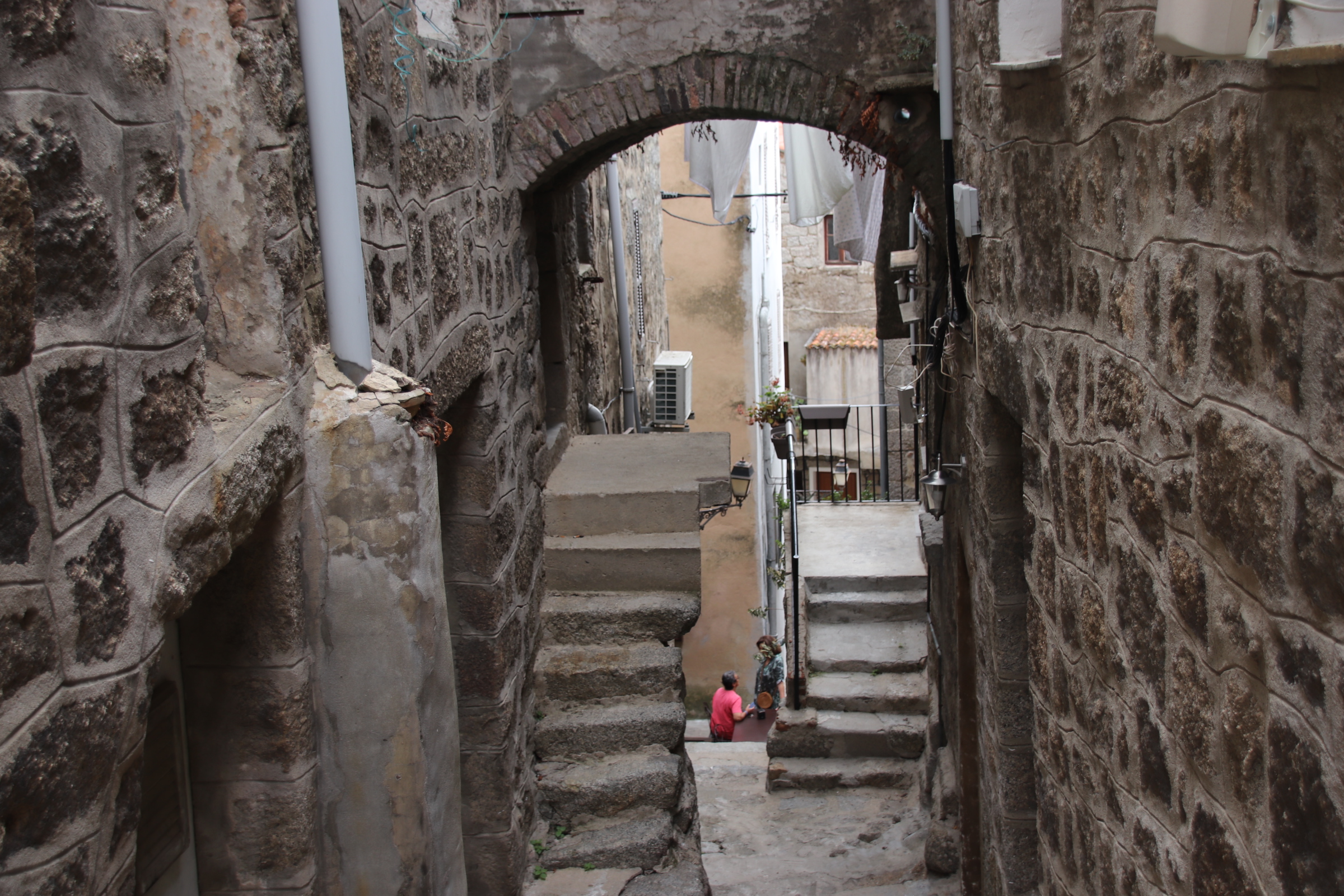
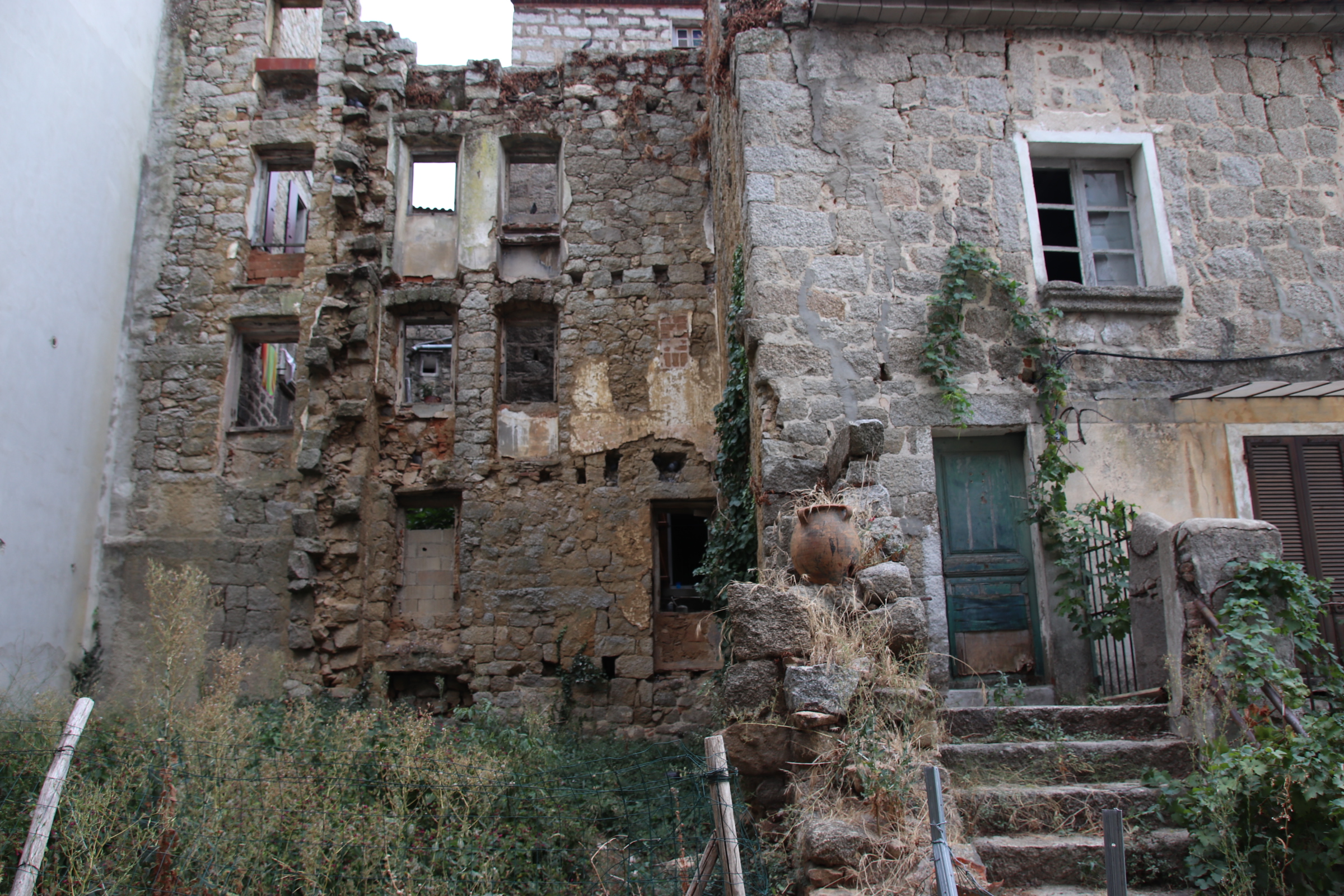
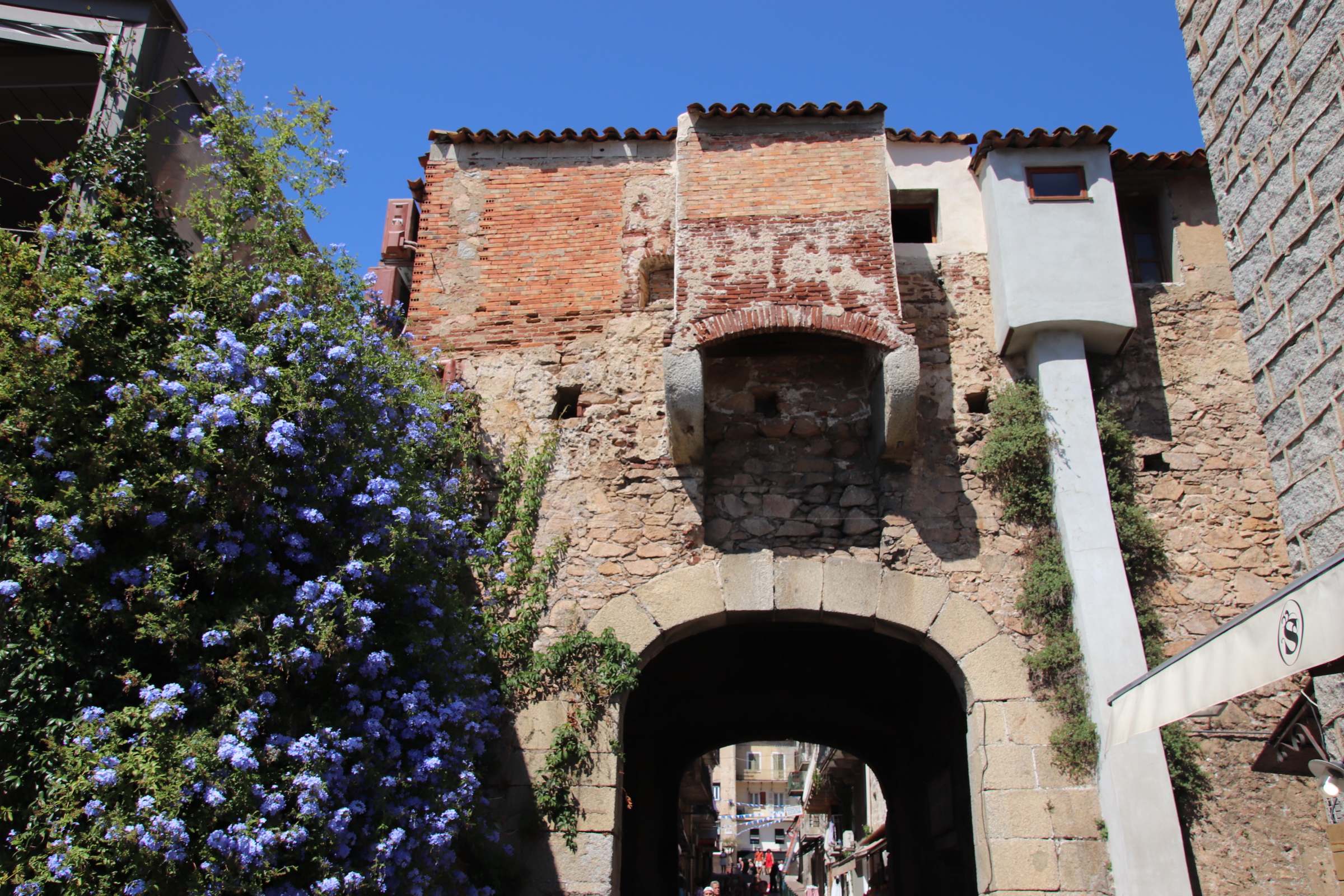
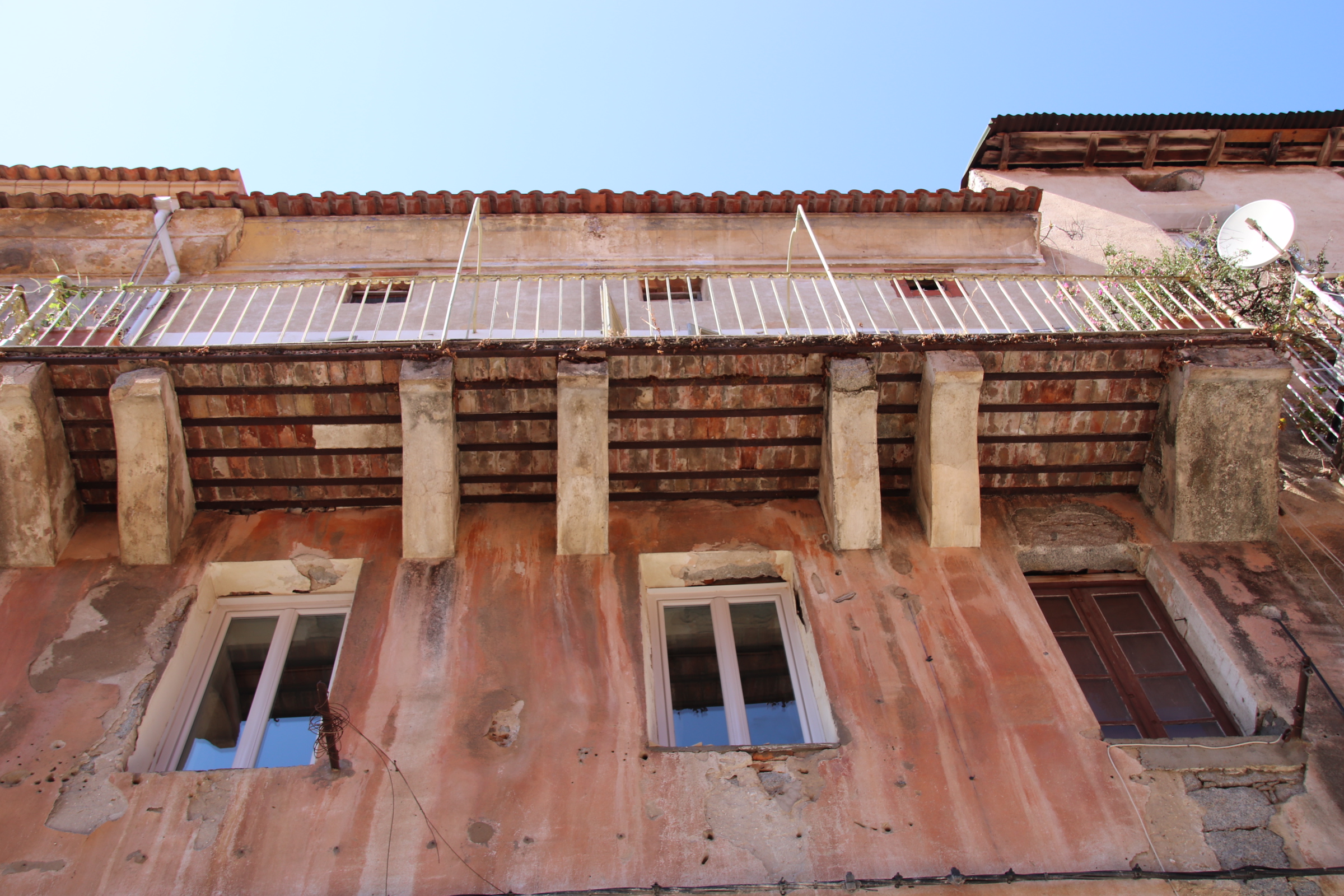
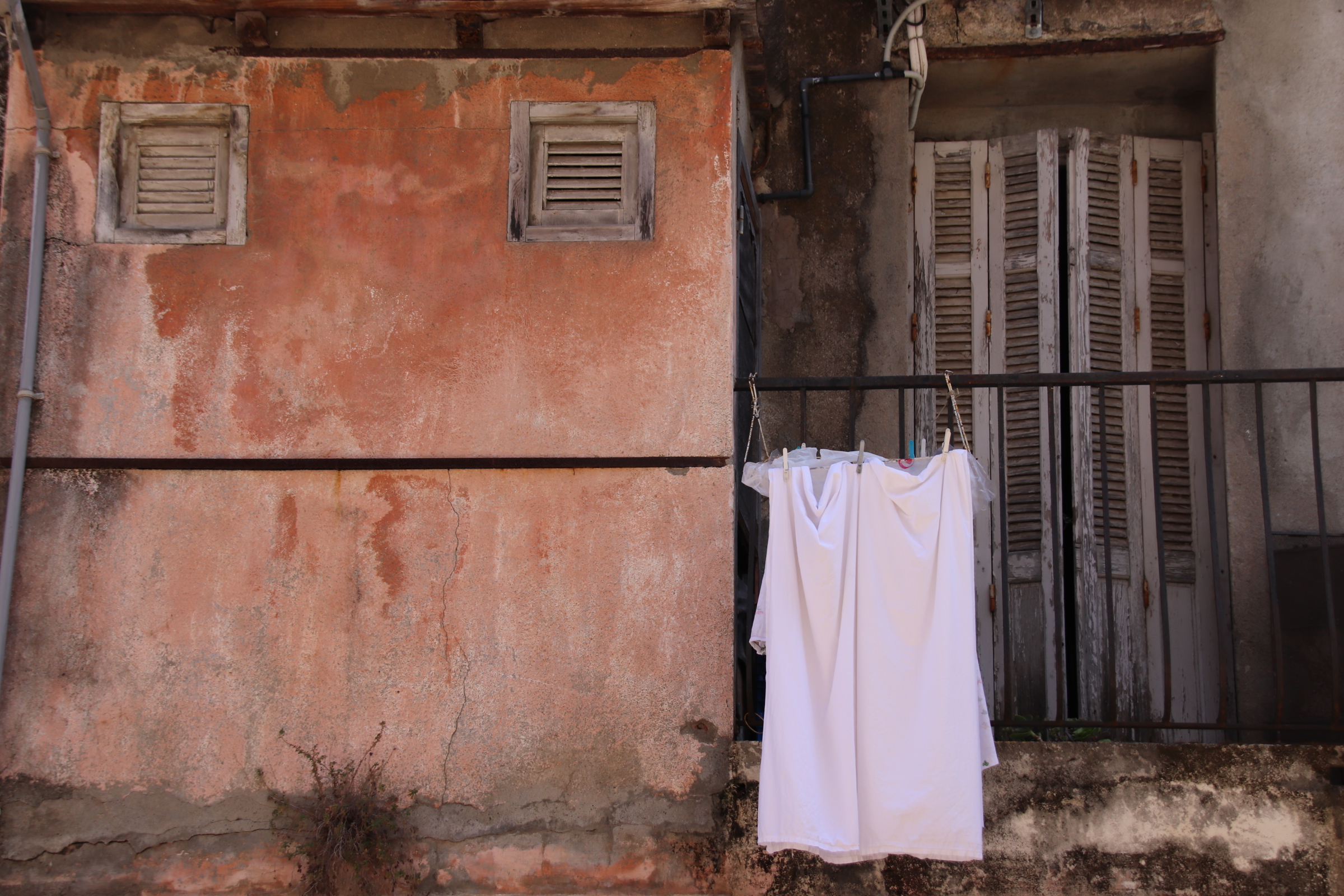
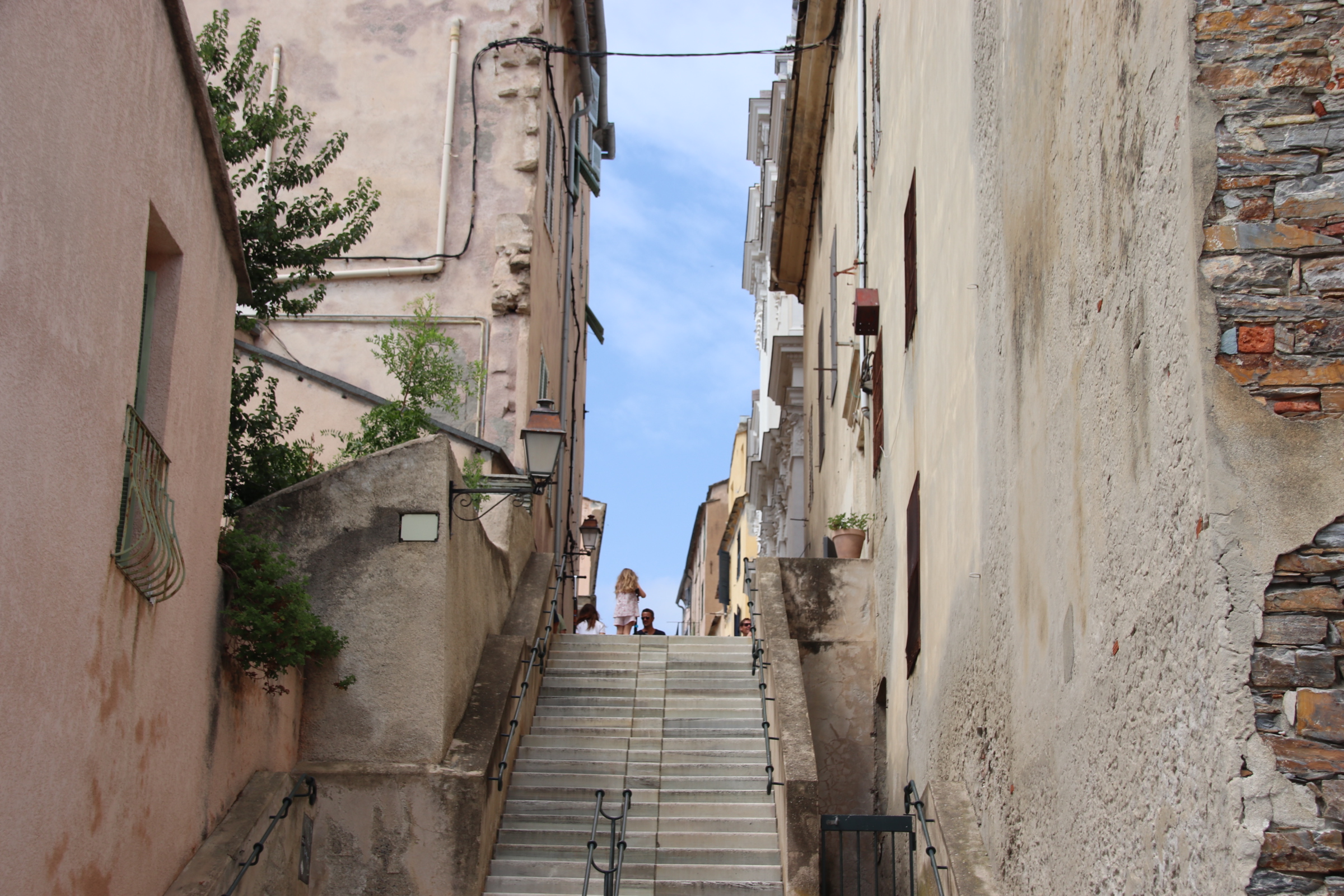
Its narrow streets are crammed with a incredible medley of tall ancient houses, linked by arches, arcades and alleys, and sometimes blocked by unexpected rocks and stairwells.

Life in medieval times had not changed one bit. You can feel the cramped, squalid living conditions and imagine wonderfully gnarled and evil characters and celebrate that one lives in the 21st century and not the 15th.

I’ve enjoyed Corsica. Never easy to get anywhere on its appendix of roads but always worth it when you do.

The journey is always as good as the destination. It’s scenery of tall peaks and grand forests, of soft-sanded bays and craggy coastlines, of ragged rocks and granite outcrops, the wild Corsica is never far away. This is balanced out with ancient, historic harbours, a proud history symbolised by the Corsican flag of a headscarfed pirate, classy hotels and chic residences for the rich and famous, traditional dishes from the land and the sea and local wines and customs that celebrate an independent and unique culture.

The charm of Port Vecchio

A few days have been spent enjoying the sun, admiring the views, counting the layers as the sun sets behind the rows of hills that lead to the sea, cosying into warm, soft sand on local beaches and only coming up for light refreshment and a cooling off in the gentle waters of the Med. The nearest beach is 20 minutes away.

ou can see the line of the surf from the terrace. Driving the roads here is like driving through the wiggles of a long appendix. Monotonous maybe but it’s easy. Nothing can overtake, everything goes at 40 mph. At this time of year parking has been easy and eateries and beach bars serve easily and quickly.

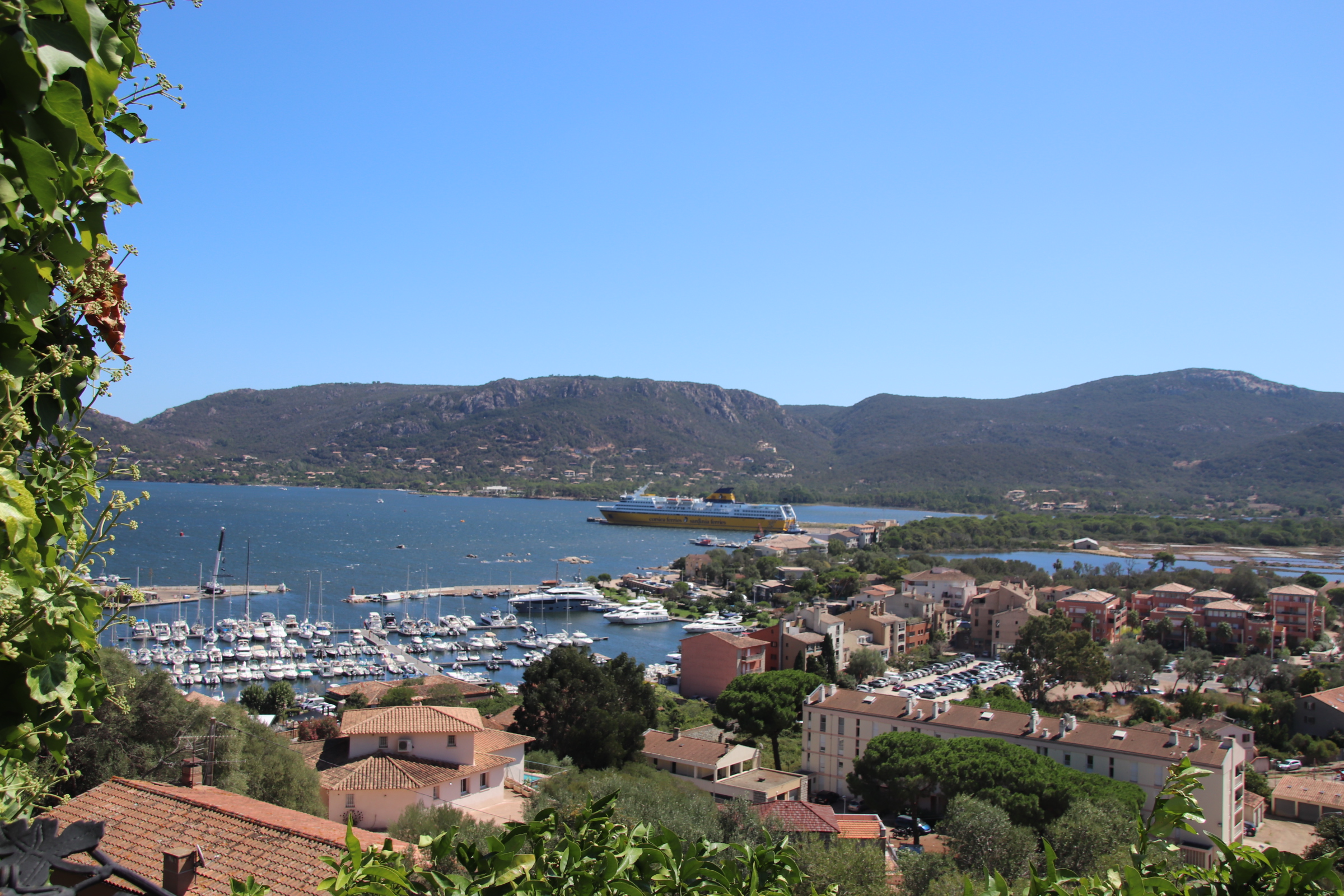
Still the holiday marches on and full advantage must be taken. The delights of Porto Vecchio, on the south-east coast are an hour or so away. So an early start means we set off and arrive for coffee. The old town walls overlook the approach to the harbour.

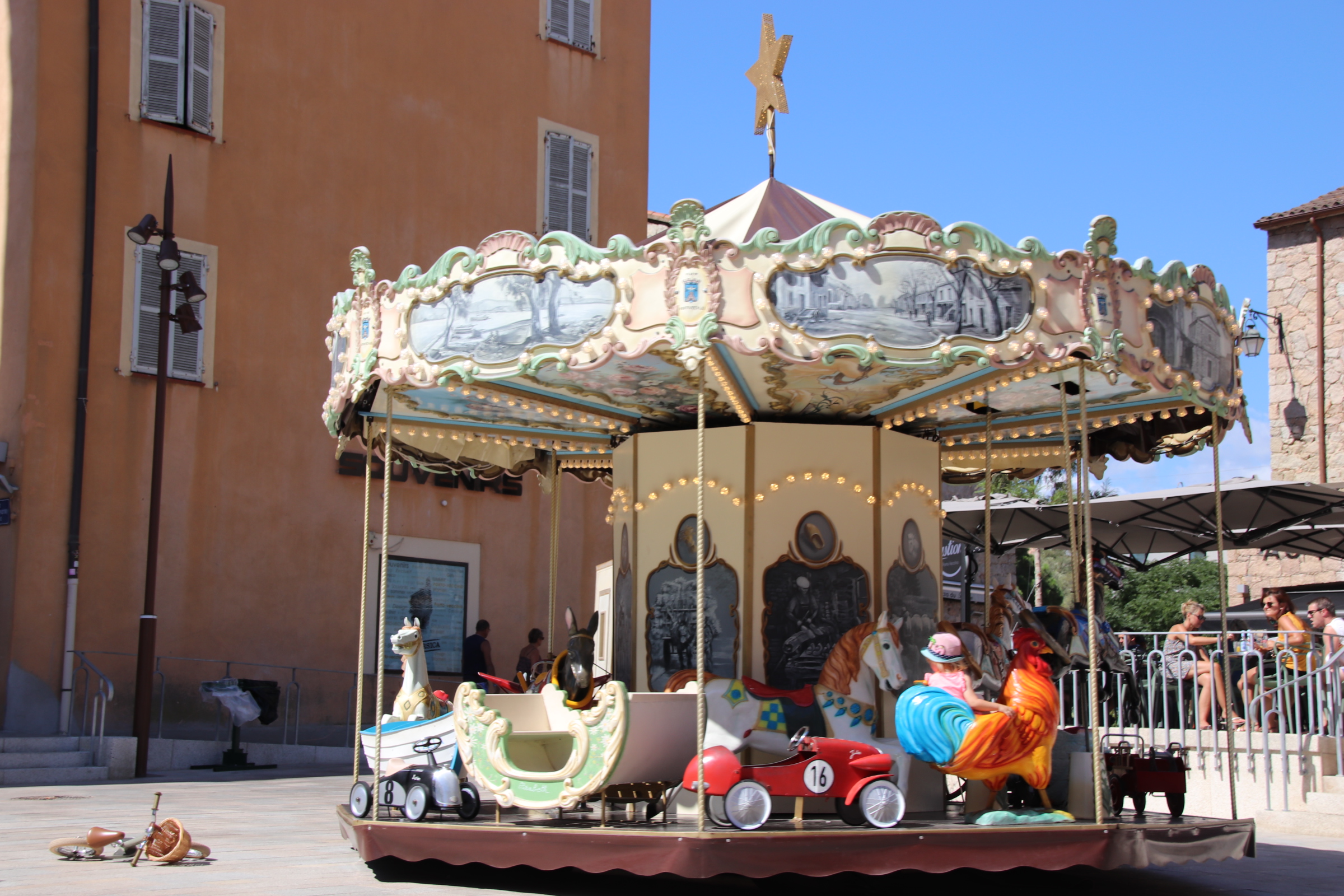
The old town is delightful. It’s not huge – a little square with tidy houses around the edge and a quaint, little roundabout for small kiddies.

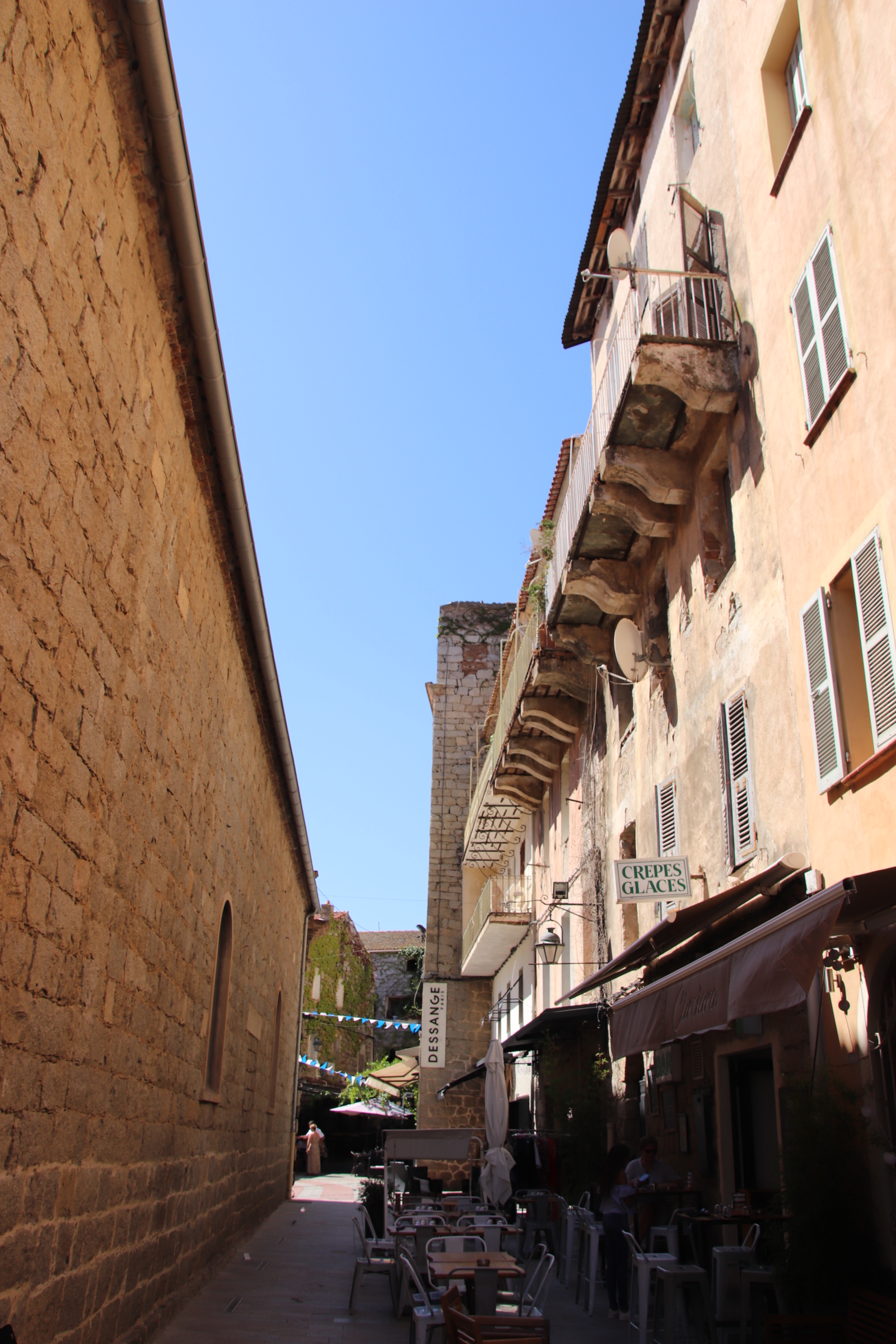
Cafes abound with everyone trying to find some shade under umbrellas or up narrow streets.

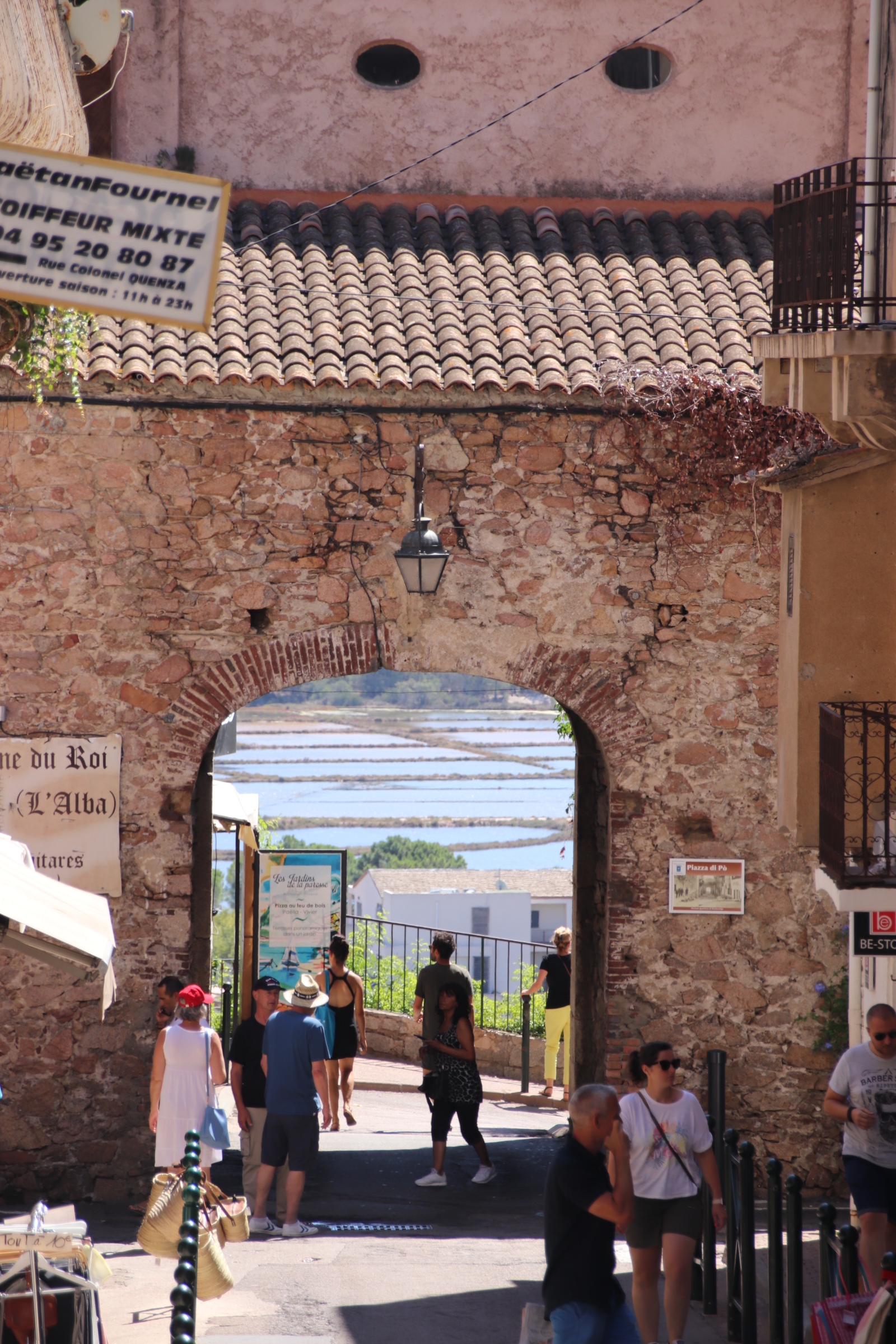
From the church at the highest point cobbled streets leaf down to gateways through which the harbour seen and the salt flats on the far side.

Shops are classy and expensive, restaurants are of good quality. It is a cosmopolitan place with its own charm and warmth.

Worth a visit.

Taking the rough with the smooth in south-west Corsica

Having spent at enjoyable day in Bodifacio full of dusty history with flavours of the rich and famous, I assumed that I was getting to get more of the same when I visited the beaches and ports and harbours of the south west. Wrong!

First is Propriano. It looks great from a distance.

There is a suggestion of an old harbour with a few oldish buildings lining the quayside behind the cabins offering boat trips and fishing excursions. An evening night market of tat and restaurants offers pizzas and moules to the flotilla of sails that have assembled on the pontoons. Nothing jumps out saying ‘eat me, eat me’. All is very tame and unexciting.

Porto Pollo is the nearest beach to the house.

It takes about 25 minutes in the car and the bay has the softest sand. It is easy to park on the road at this time of year and cut through the small passages, past purple and pink flowering tall shrubs, to a sparsely crowded bay of empty towels and uninhabited umbrellas. And supervised by a team of lifeguards. All very civilised.

At the far end, a harbour of small, gleaming boats preens itself in the setting sun.

And then the capital, Ajaccio.

Oh dear. Two cruise liners were in town. One was so large – at least 10 decks. It was a monstrosity. The passenger contents had unloaded and blue- stickered groups were led through the tat streets by paddle numbers held high in the air, searching for souvenirs and anything of interest. There was very little of this. No old town, no old streets, no old harbour. I missed the citadel and the cathedral was closed. So no great shakes there. And everywhere was teaming and steaming, stocked with hot, squeezing people, shoving and elbowing to the few bits of shade offered by buildings. I took a few images but really could not get excited.

Napoleon was born in Ajaccio. The Napolean Museum is up a narrow street. We didn’t go in but had a drink outside, listened to the bawdy, recorded singing and watched the progress of the tourist parties as they promenaded behind their guide in their limited time ashore.

It was so good to escape to the winding roads back home.

The rich and famous, and lots of ordinary folk, in Bonifacio

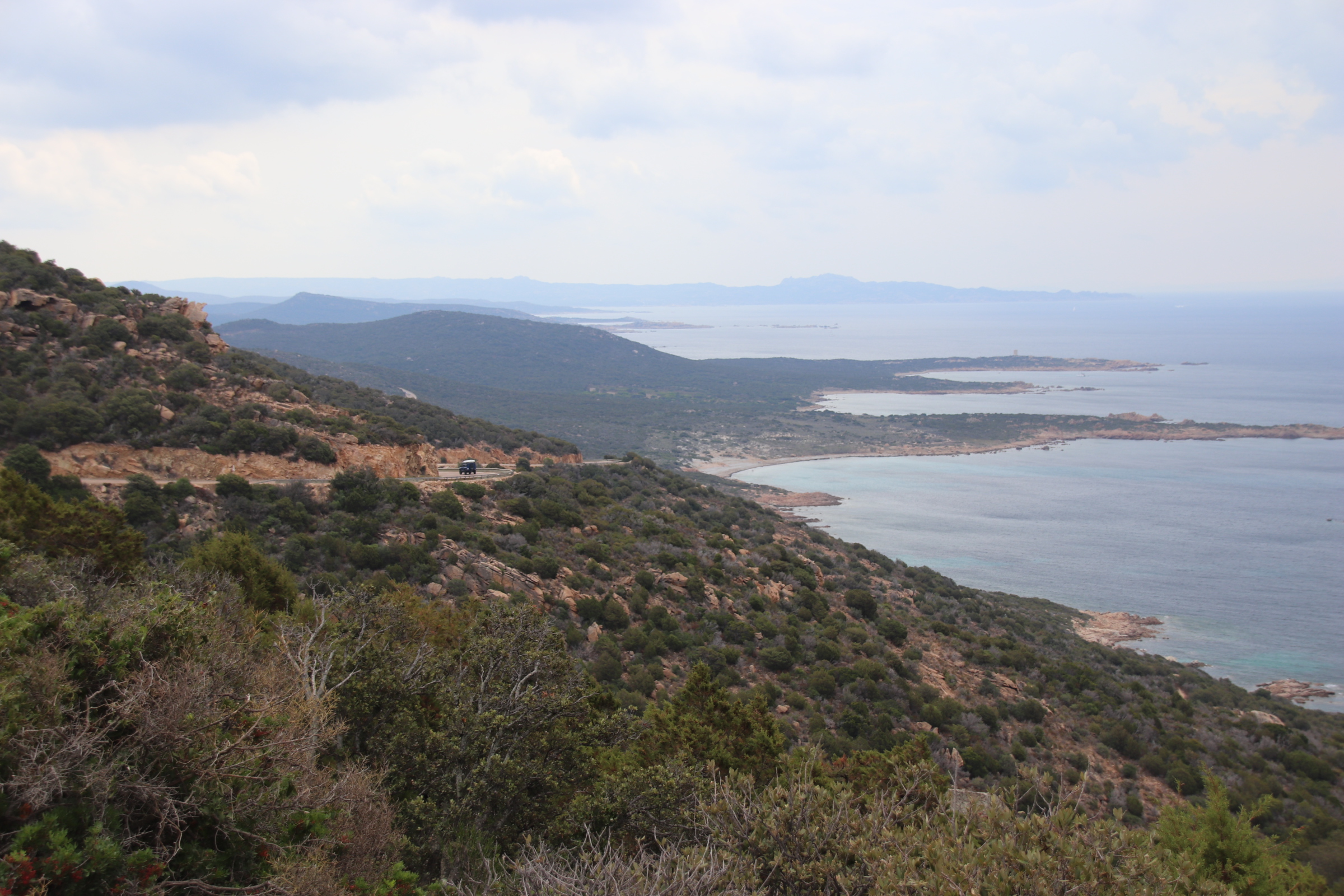
As the sun took a day off today it was time to go exploring in the car. Roads follow the coast and wind through the contours that mark the mountains and ravines. It takes forever to travel any distances and the sat nav shows why. The routes are shown as a long, tight snakes lassooing its way through scrubby green terrain. Following the coast road south, these images are typical of the glorious open space that is Corse.

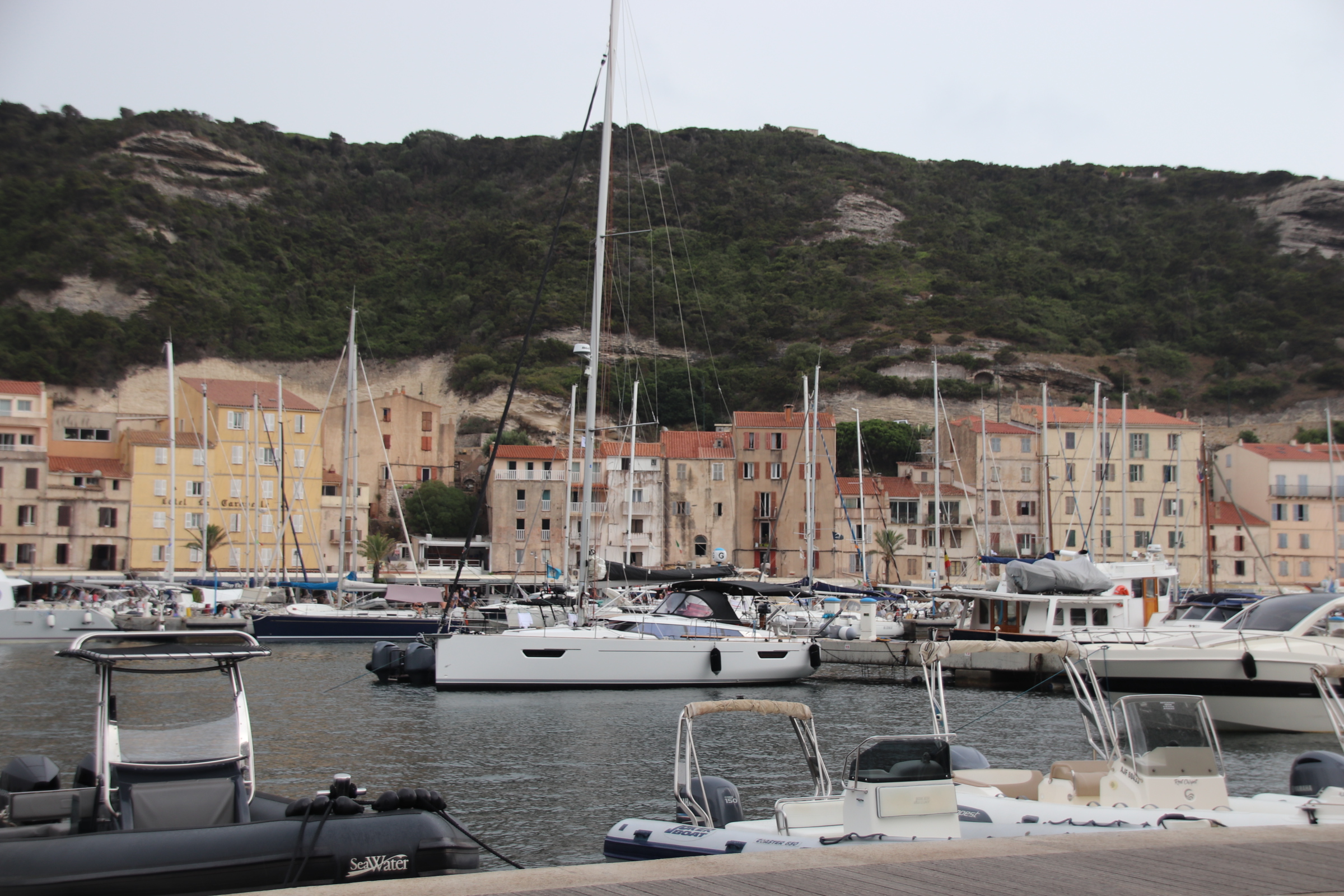
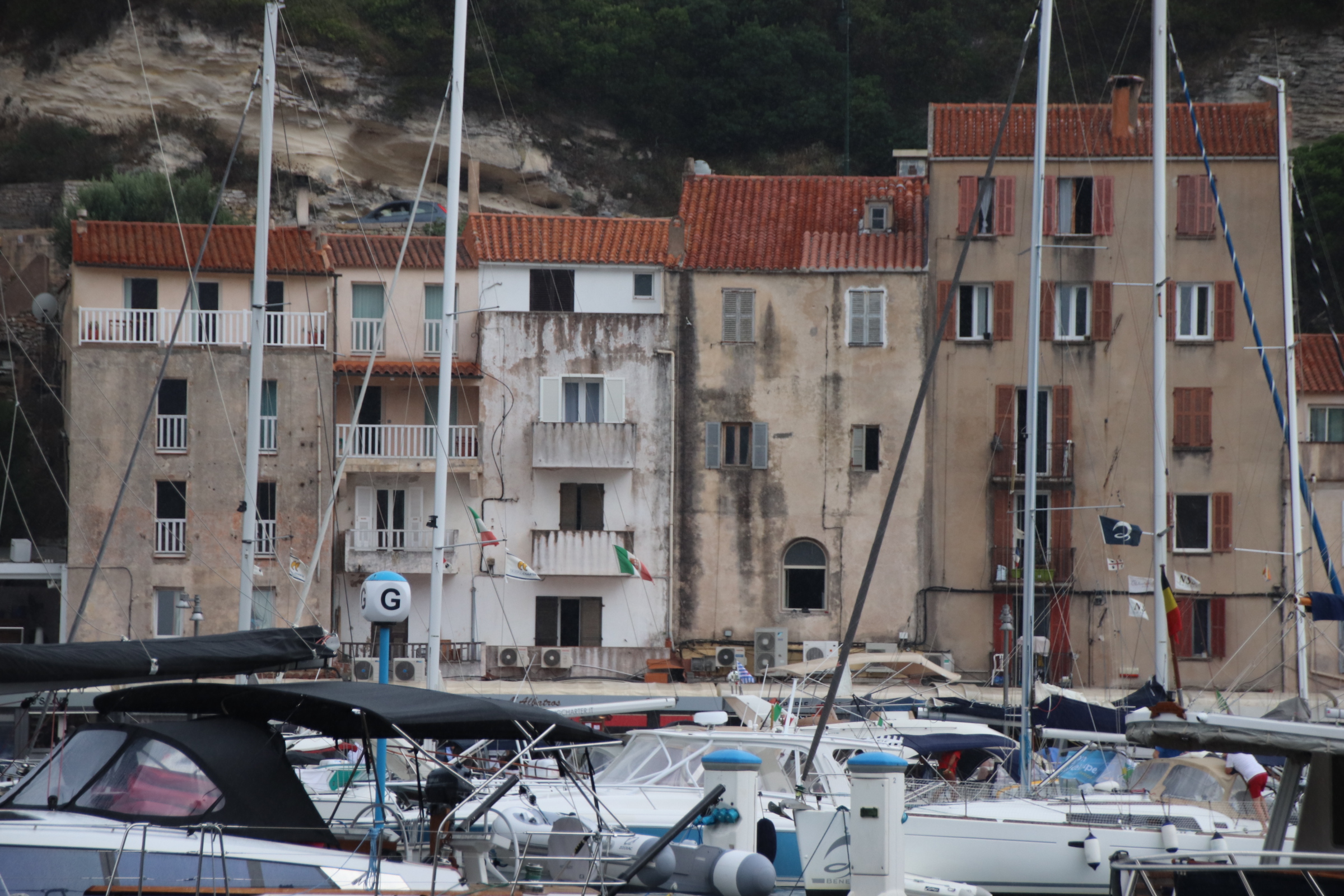
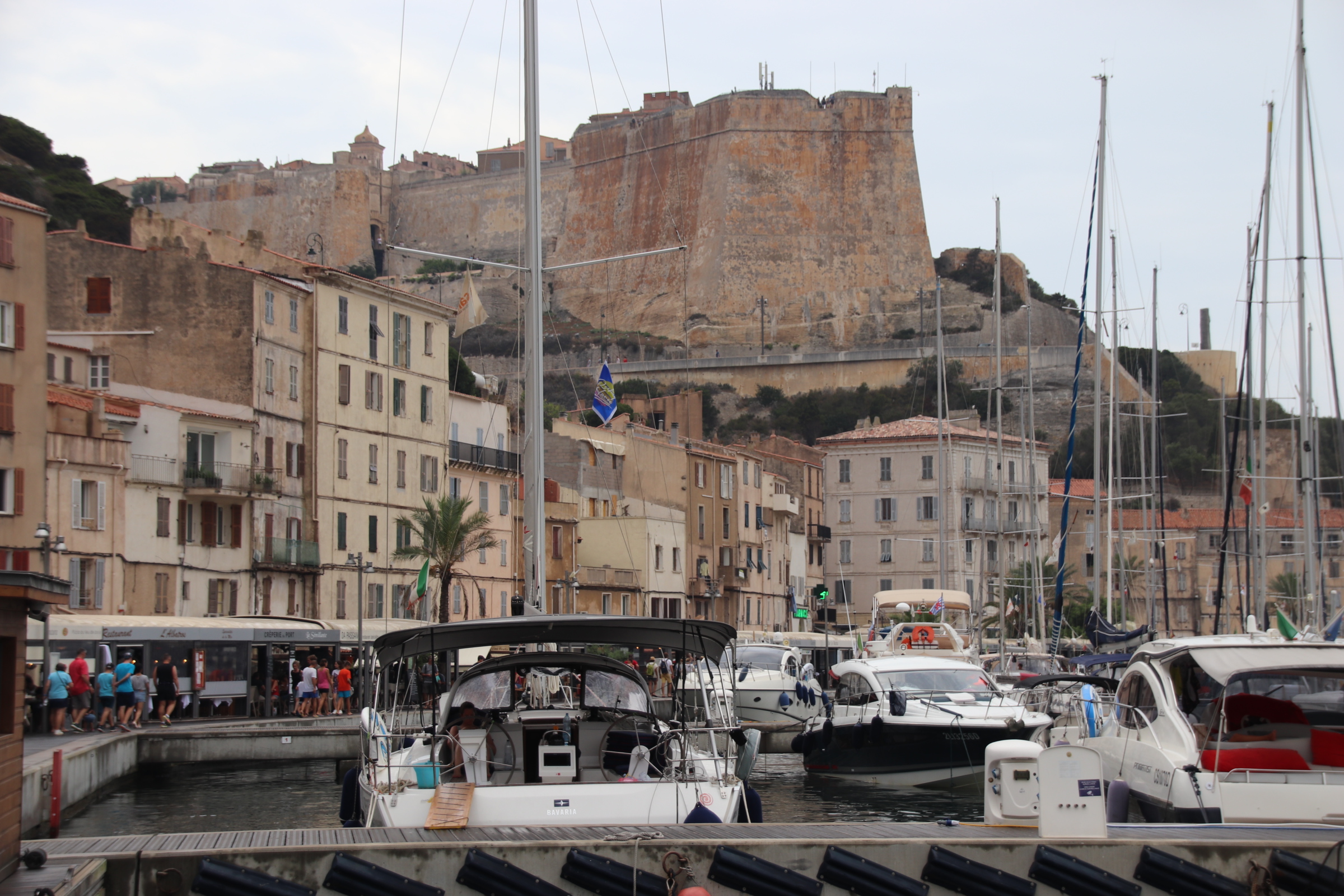
Our destination is Bonifacio, right at the south of the island. Strategically the town was at the crossroads of the early trading routes between Italy and Spain and north Africa. Pisa was the first country to govern here until the end of the 12th century. It’s position bought wealth and revenues to the town through fishing and trade. Initially the port was simply a beach where fishing boats were drawn. After 1900 the marina was build up and the quayside cafes and eateries established, making it a docking place for the yachts and boats of the rich and famous, many dwarfing the dusty, faded buildings.

A long terrace of classy table layouts and extortionate menus pull well-heeled owners from their gin palaces to pose for the rest of us as we shuffle along at our visitors’ pace like groups of penguins in awe of another species.


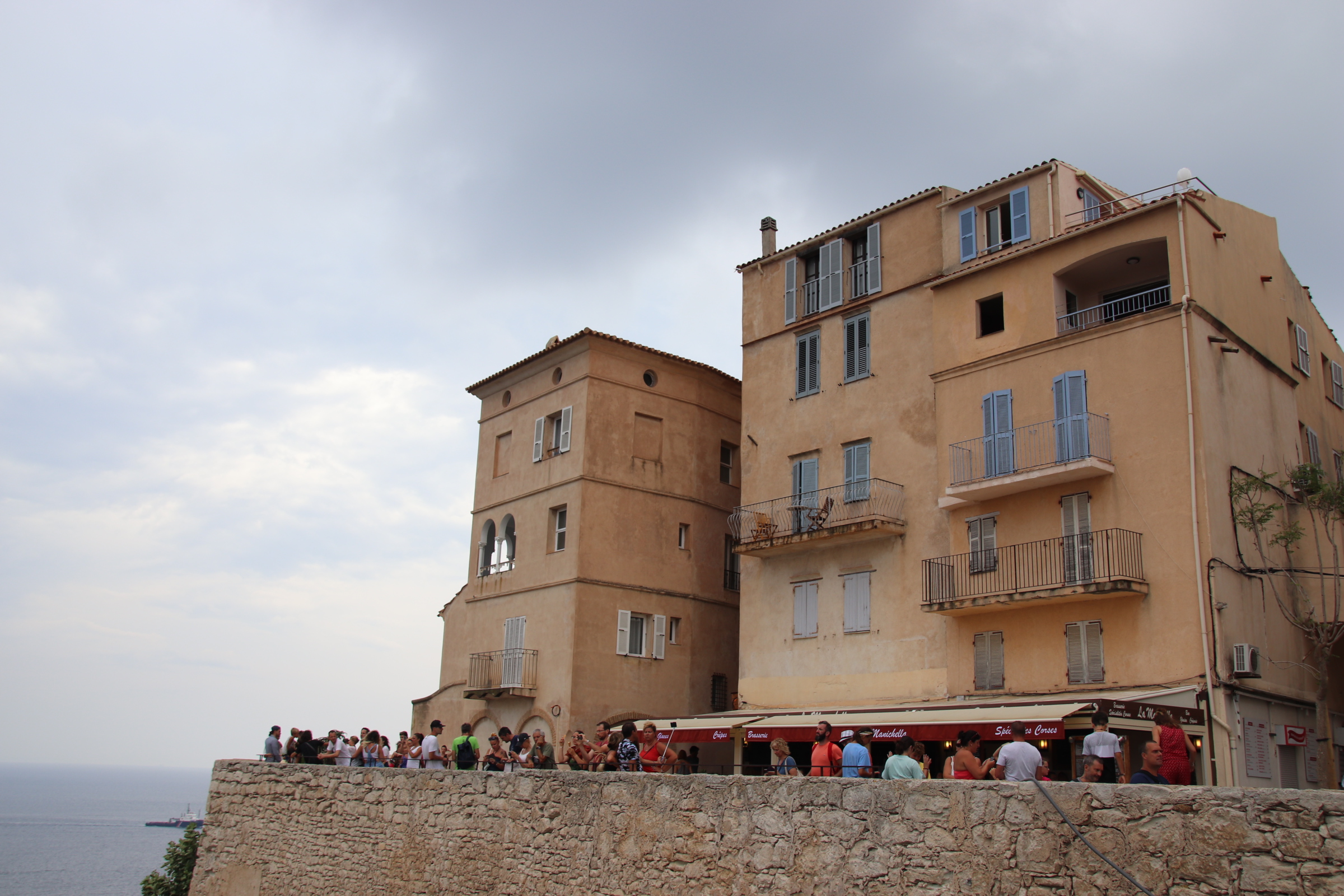
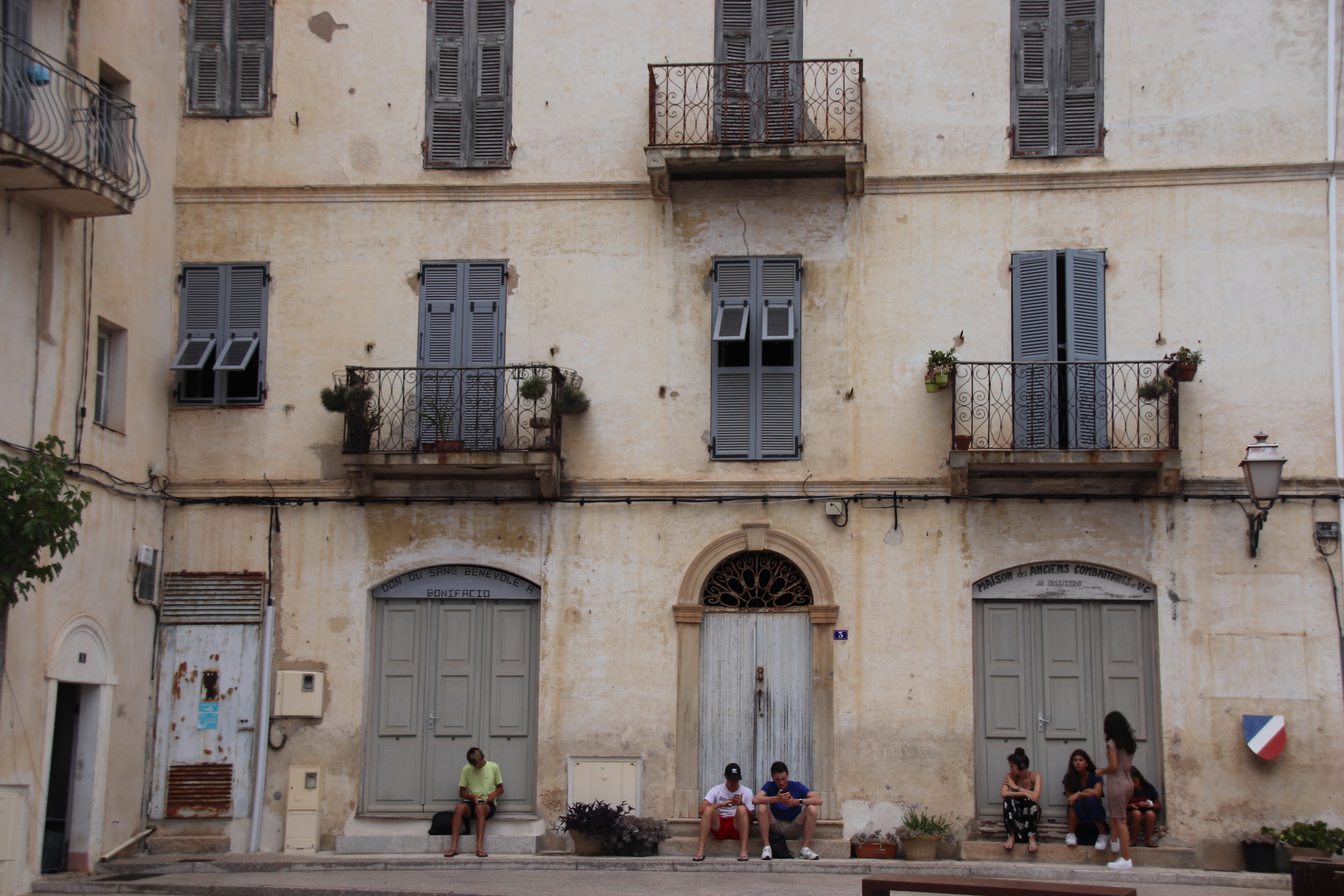
Overlooking the harbour scene from its position on the tall limestone cliffs is the old town, guarded by the massive, medieval citadel, built in the 9th century. It is in its narrow streets that the full force of the tourist can be felt. Trails of cars move into town to squeeze every space from the car parks, releasing families and groups to zig-zag their way up cobbled steps and inclines to the massive gates and shops, built to keep seafaring enemies away and not cash-touting visitors.

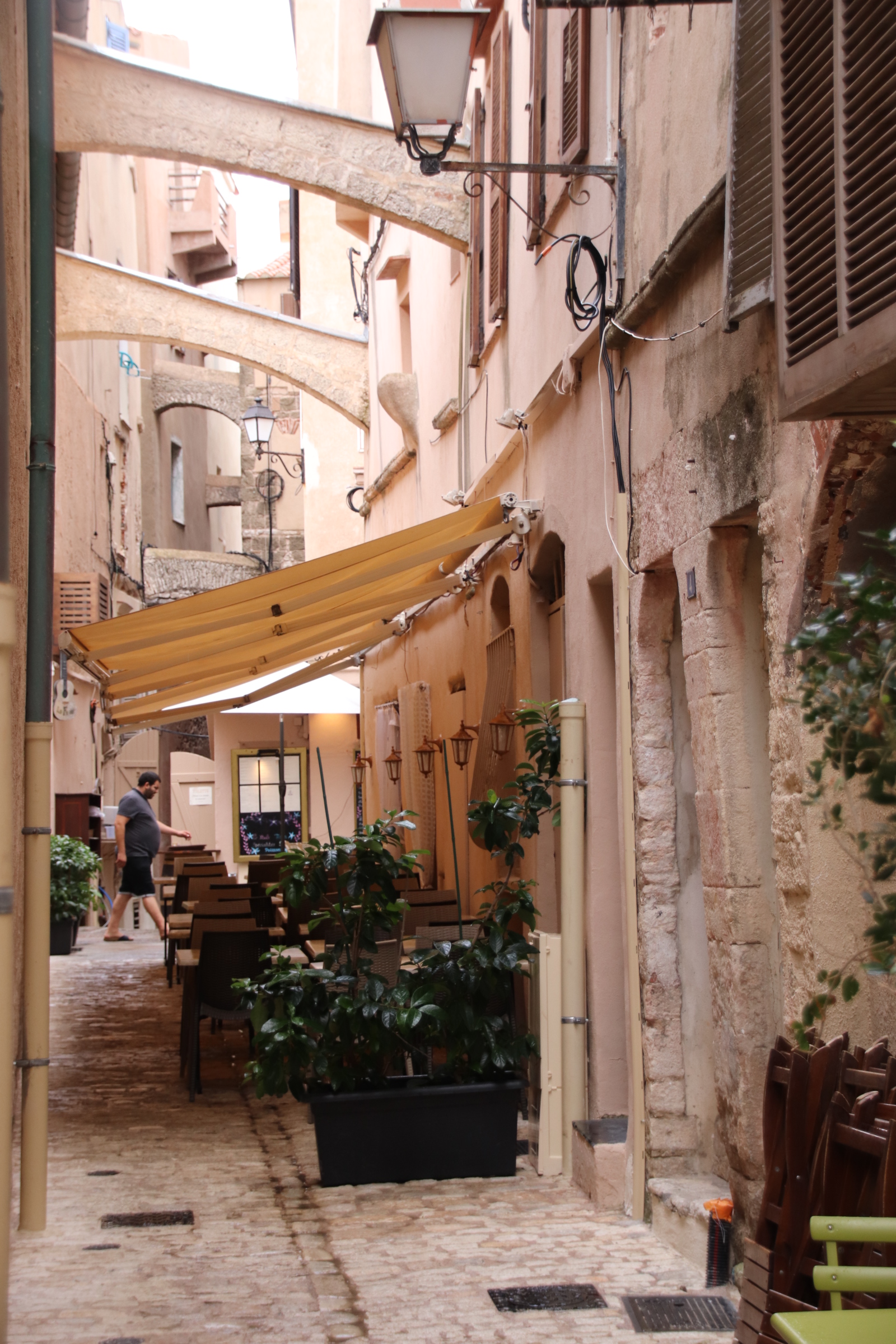
The cobbled streets, particularly around the Church of St Marie Majeure, the oldest building here, are squashed between tall buildings linked by lines of flying buttresses. These are evident throughout the old town and are not required to support the buildings but are gutters which distribute rainwater around the settlement and into water tanks. Substitute pirates and merchants and fishermen and capes and gowns for the skimpy shorts and the strappy tops and the buggies and the carriers and the streets ooze history and times past. Romeo art thou there?

Base camp in Sollacaro

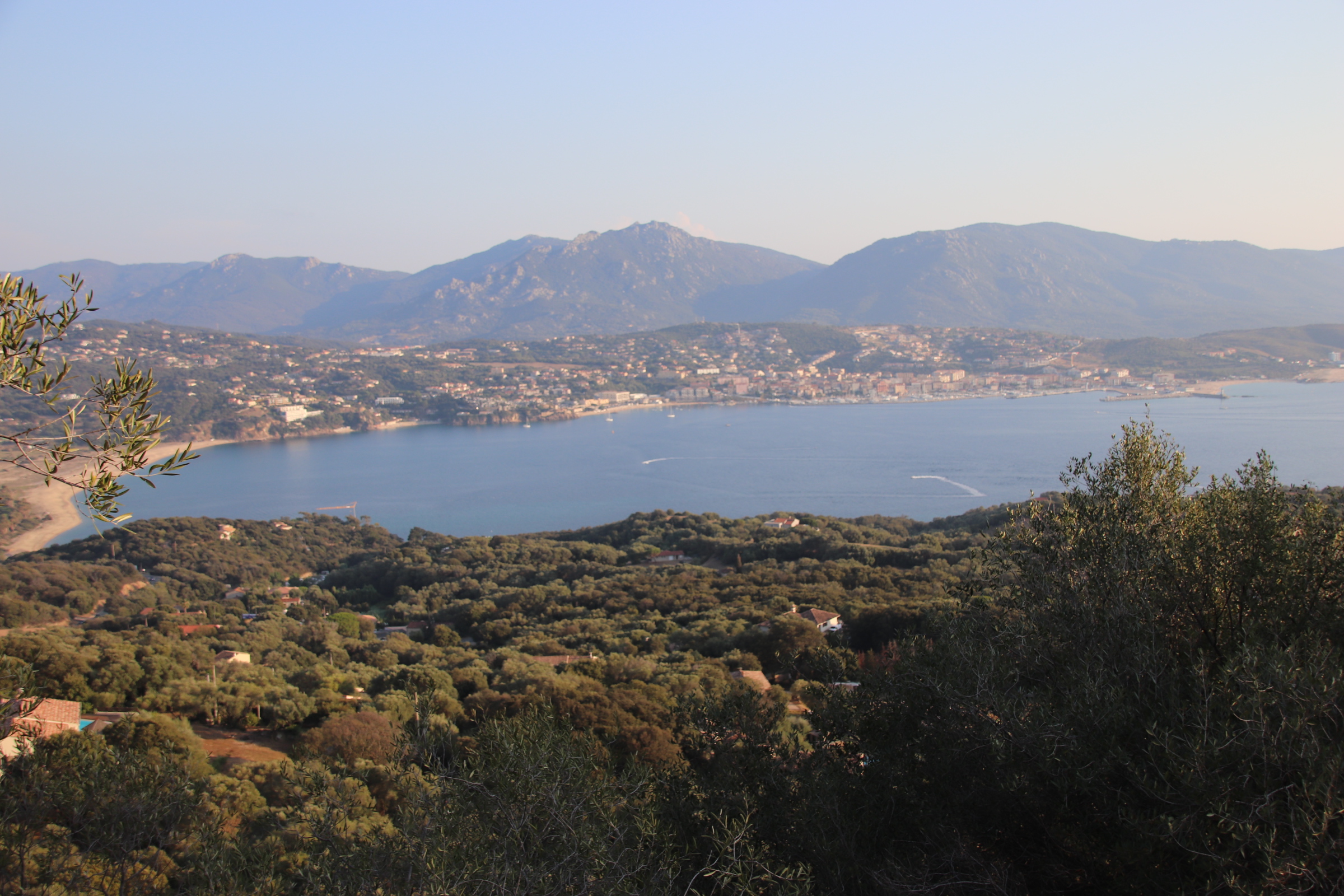
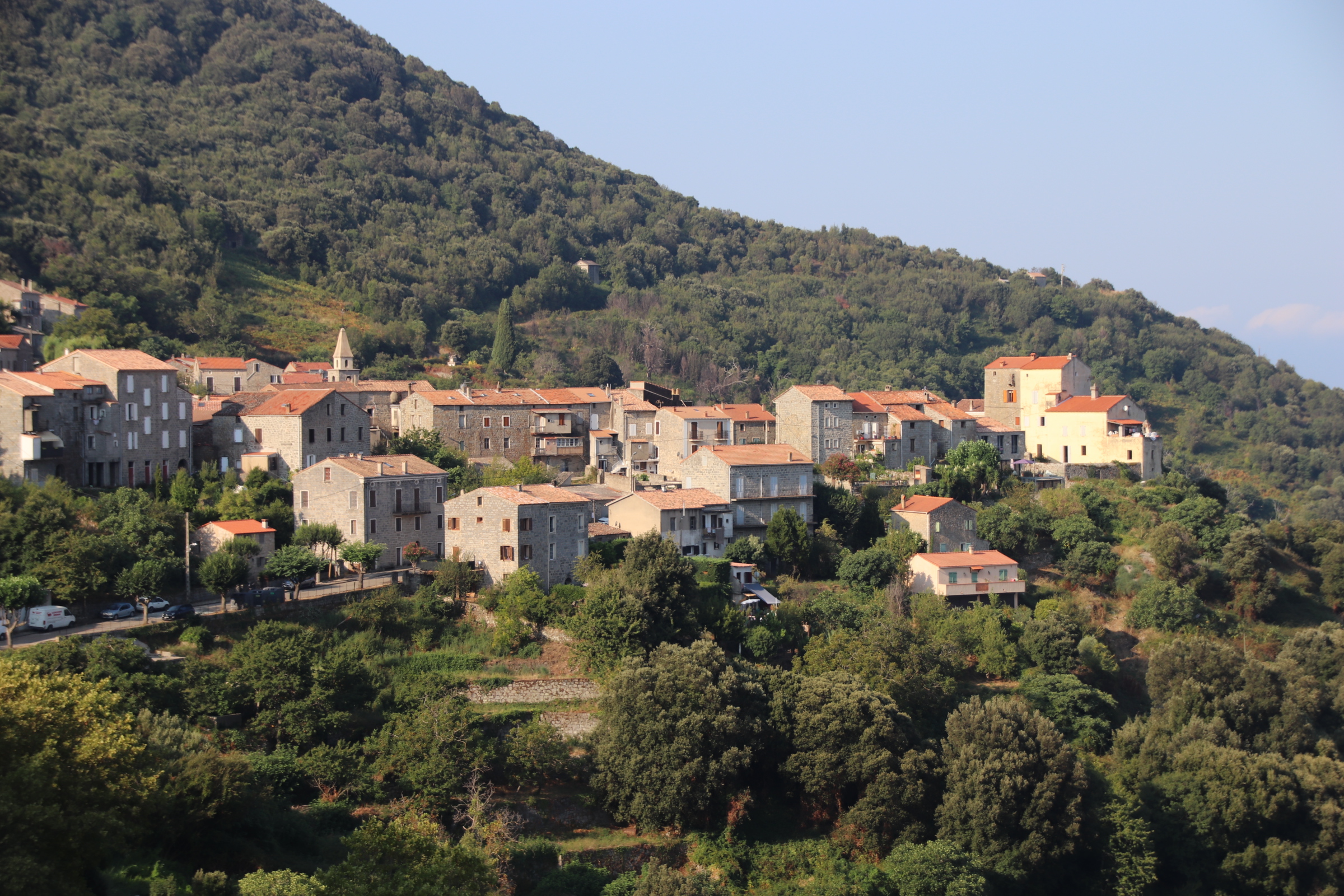
The base for this trip is the small village of Sallacaro on the edge of the mountains on the south west corner of Corsica. The house has amazing views from its terrace. To the left a dart of caramel-coloured houses stands out of the fluffy, scrubby trees that cover the hillside.

The arrow-head points to the coast in the distance straight ahead. A broken mirror of water shines as the sun sets over it in the west. To the right, tree-covered peaks and slopes run down in diagonal lines, heading directly towards the small bays of sand and flat agricultural land that lines each one for a short distance inland.

Sallacaro is a small, friendly village. About 50 houses line the road as it meanders down the hillside. There are two stores, epiceries, two restaurants, two bars, one that serves pizzas, a church and an elementary school with a post office sharing the same building.

The centre is the sharp curve of a band at the far end, marked by the tallest house, all four storeys of it. This is the social centre of the village with all four eating & drinking places next door out opposite each other. There’s no need to go any where out of the village!

From the terrace of the house the weather presents itself. If it’s feeling mischievous then the sun sets, dropping its core gently behind the bumps and lumps of the distant layers, creating a devil’s palette of oranges and reds. Sometimes the weather sends over mackerel clouds to remind us that nothing should be taken for granted. As the day passes and the heat grows these build in intensity and the atmosphere gets heavier. Gradually dark slabs of uniform darkness spreads over from the mountains. Watching clouds build and feeling the atmosphere intensifying sets up the rain dance at different tempos – gentle, short, swathes, deluge, storm, cracking. Wagner comes to mind. One thing is perpetual – it always ends, it moves off, it leaves an empty sky and then builds for another performance a few days/weeks later, also to be witnessed from the same terrace.

Courting Corte, the old capital of Corsica

An evening out in Bastia gives a real flavour of what is to come on Corsica. The island is a fusion of Italian roots, French history, a hard mountainous spine and the coastal romance of the sea. Music, menus, culture, sport, place names reflect both Italy and France.

The town’s petanque competition brings locals out in their droves. Held over several days on the wide open square by the modern port, all ages and genders, from 7 to 70 perform in their teams and leagues to win the top prizes.

From Bastia it is a long drive through forested peaks across the spine of the island to the south west. From the 11th to 13th centuries Corsica was ruled by the Italian city-state of Pisa, superseded in 1284 by Genoa. To prevent seaborne raids, mainly from North Africa, a massive defence system was constructed that included citadels, coastal watchtowers and inland forts.

An hour out is the old capital of Corsica – Corte. In 1755, after 25 years of sporadic warfare against the Genoese, Corsicans declared their independence, led by Pasquale Paoli (1725–1807), under whose rule they established a National Assembly and adopted the most democratic constitution in Europe. They made the inland mountain town of Corte their capital, outlawed blood vendettas, founded schools and established a university. But the island’s independence was short-lived. In 1768 the Genoese ceded Corsica to the French king Louis XV, whose troops crushed Paoli’s army in 1769 and the island has since been part of France except for a period (1794–96) when it was under English domination, and during the German and Italian occupation of 1940–4.

The steep, narrow, frequently cobbled streets and tight squares still remember those days of local patriots and pride in Corsican values.The many statues of Paoli always points the way for each following generation.

Where next – of course it’s Corsica

Hi everyone. Well, you may have wondered where I’ve been. Since last blogging to you I have been on a trip to Barcelona. It was a real adventure. I joined Chloe, Alexa & Toby on the first leg of their railway adventures around Spain. On the first evening I had a run-in with a bag-snatcher. He was not content to simply pick my pocket. No, I stupidly placed temptation right in front of him, or her, and he/she swiped the whole bag, camera and all, from the back of my chair in a restaurant and no-one saw a thing. Hence no photos and no blog.

Three weeks further on I have replaced my kit and I am back on my adventures. You find me in Corsica, that small island off the coast of France which was the birthplace of Napoleon. We fly into Bastia, in the north of the island, and the next day is spent exploring this historic port, through which most of Corsica’s trade and goods arrive on and leave the island. Established by the Genoese in 1487 the narrow, dusty streets ooze history.

There are three main areas to this historic town. The old town around the cathedral & square of St Jean-Baptiste.

The old port.

The citadel.


Anglesey come rain or shine

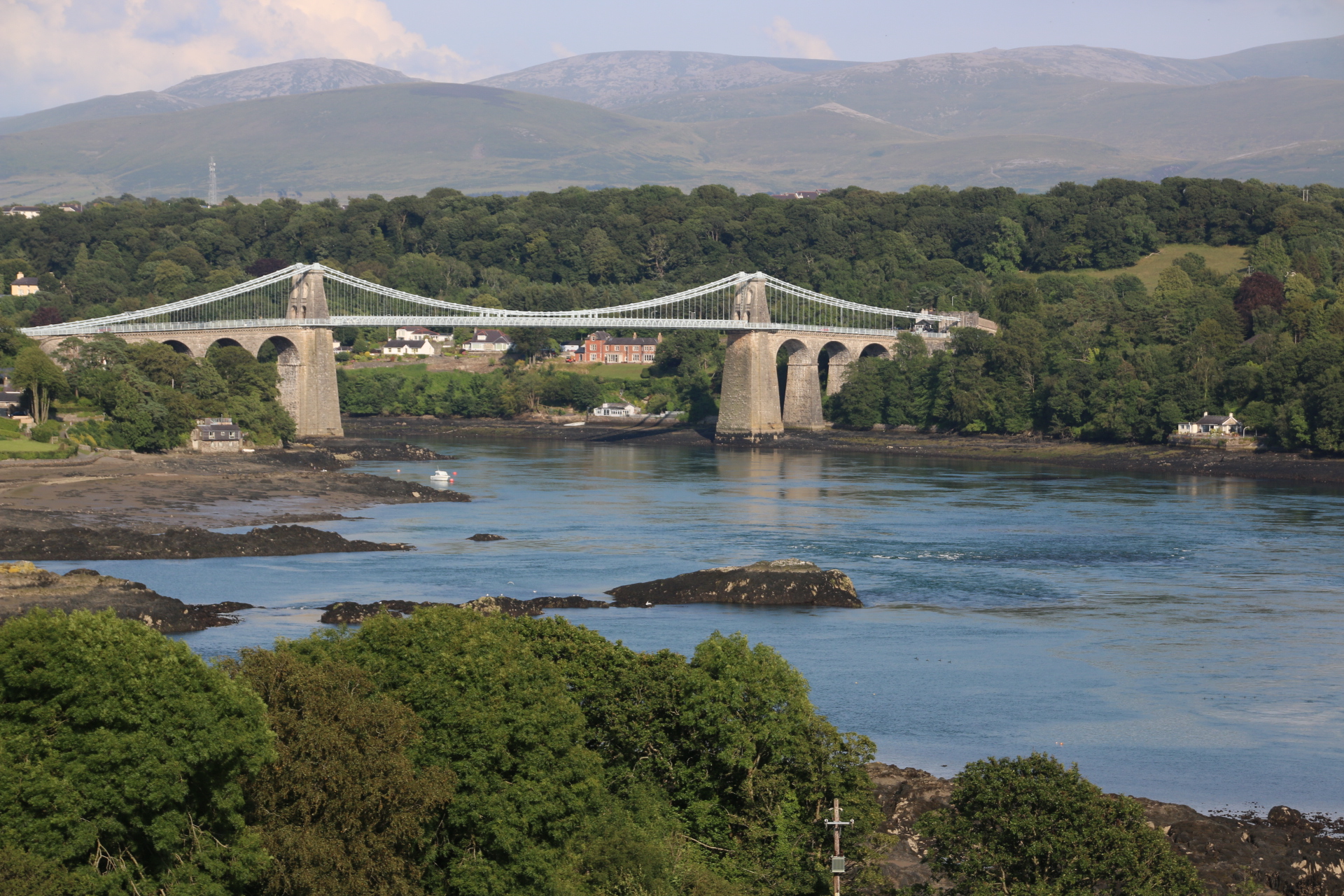
I crossed over to the island of Anglesey on the Menai Bridge, built to take stagecoaches in 1826 by Telford. Not much has changed, only the vehicles using it.

I decide to go anticlockwise around the coast of the island.The island is a poor neighbour compared with the grandeur of neighbouring Snowdonia but it can piggy back on the peaks in the distance which overlook the Straits, so narrow in parts and include them as part of their own. The landscape is more mellow but striking has a unique feel with low rolling fields and open land playing host to grazing animals.

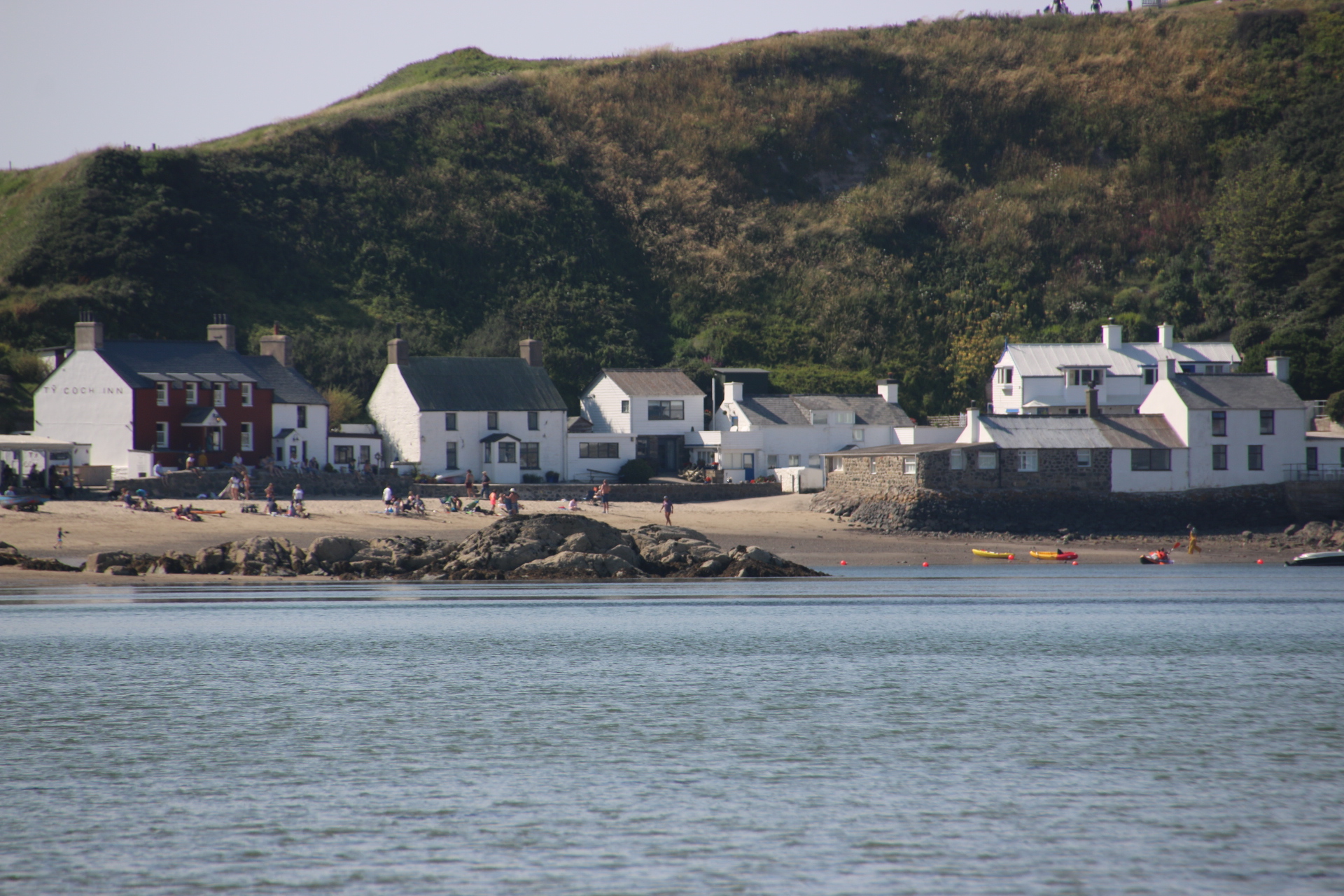
The weather is breaking. I am aware that rain is forecast later in the day. You’ll see from the images where I have to play hide and seek with the drizzly showers. But not in Beaumaris, my first stop. In the fading sun the magnificence of the scene is amplified. It boasts a pier. However this structure would not push anywhere in the UK Pier of the Year competition. It may be the best, well only, pier in Anglesey. However it could be top in the Best Spot for a Pier league. Look around and see what you think.

Red Dwarf Bay is such a cool name for a settlement. And the Ship Inn makes the most of its position on the edge of the bay.

Moetfre is absolutely charming.

In the past the area around Amlwich was the largest copper mine in the world. Cooper was used to line ship’s bottoms and to mint coins of the realm. The port was a bustling centre where copper was sent off around the world. It still has a certain atmosphere with an outer harbour used by modern fishing vessels and an inner harbour with evidence of its historic past.

Cemaes has a lovely little harbour.

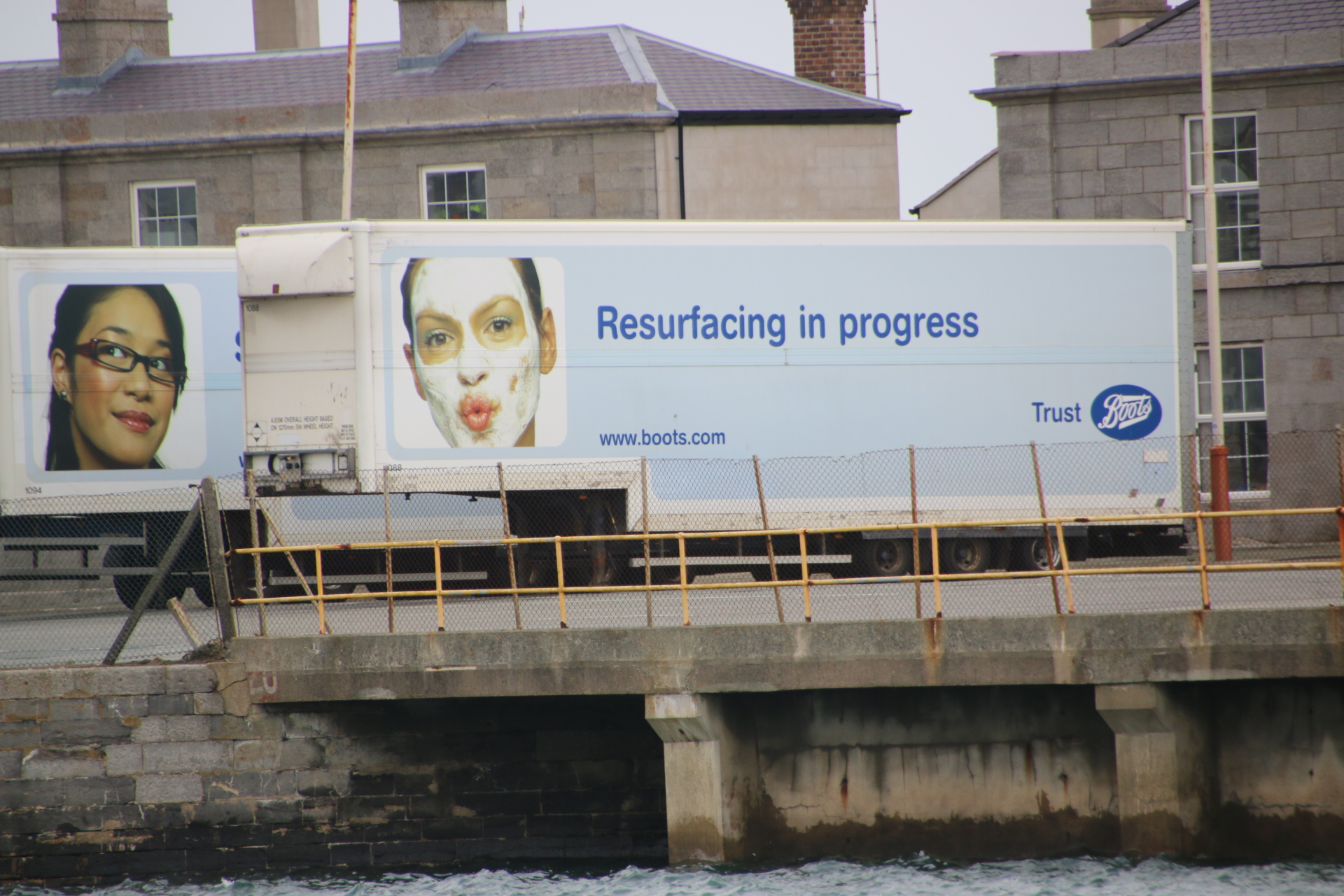
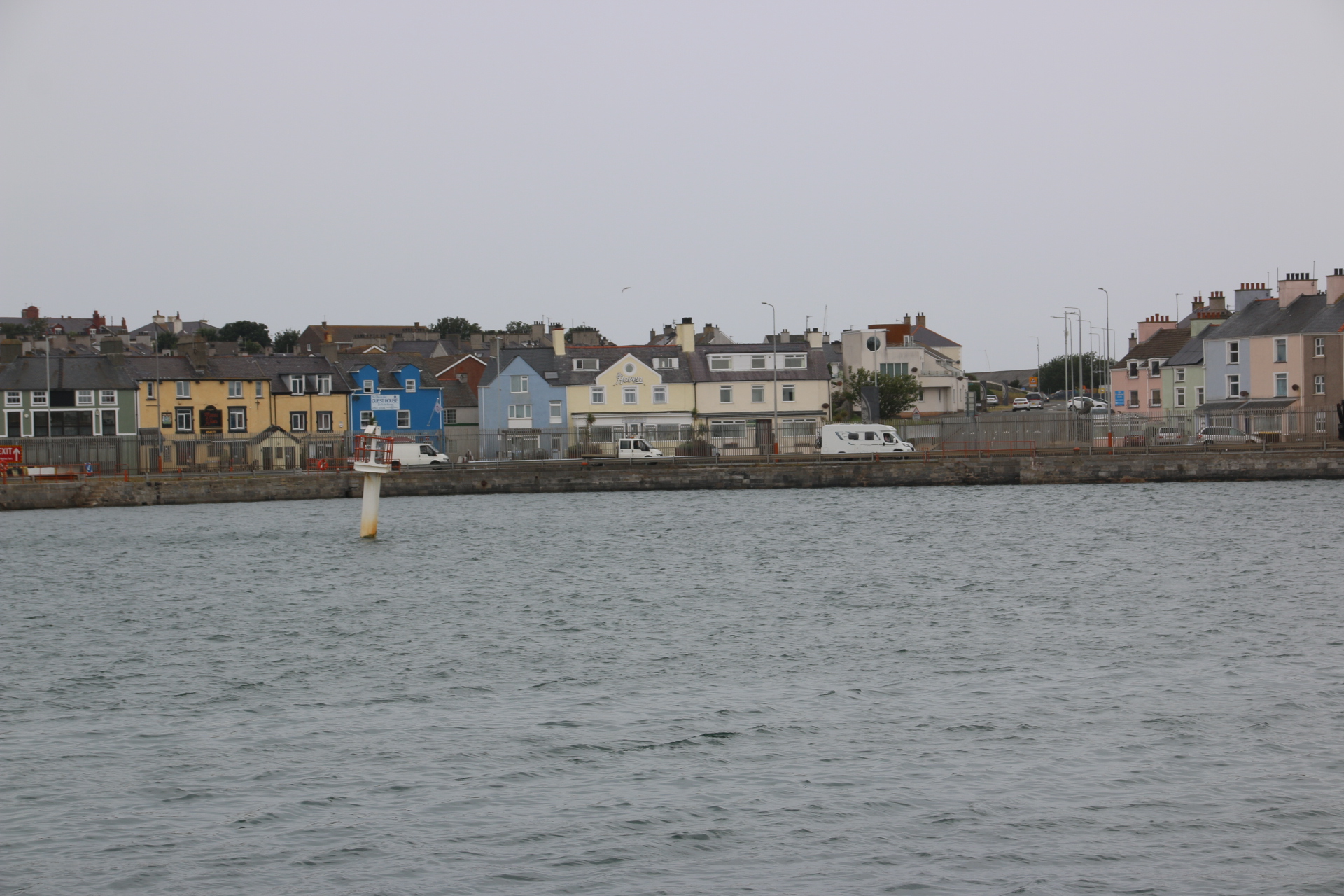
I cross to Holy Island. Holyhead is the largest town on the island and the departure point for ferries to Ireland. It seems like a town that the world has forgotten. Everyone seems to pass through it and be on the way somewhere else. Its streets are full of tired buildings and shops I have never heard of advertising cheap goods from faded window displays. Locals are hanging around nursing cups of tea in cafes with 1950’s decor. I found the harbour as the drizzle hardened. It seemed appropriate somehow.

Here are the last few coastal settlements on the western side of Holy Island and across to Anglesey.


Rhoscolyn

Rhosneigr

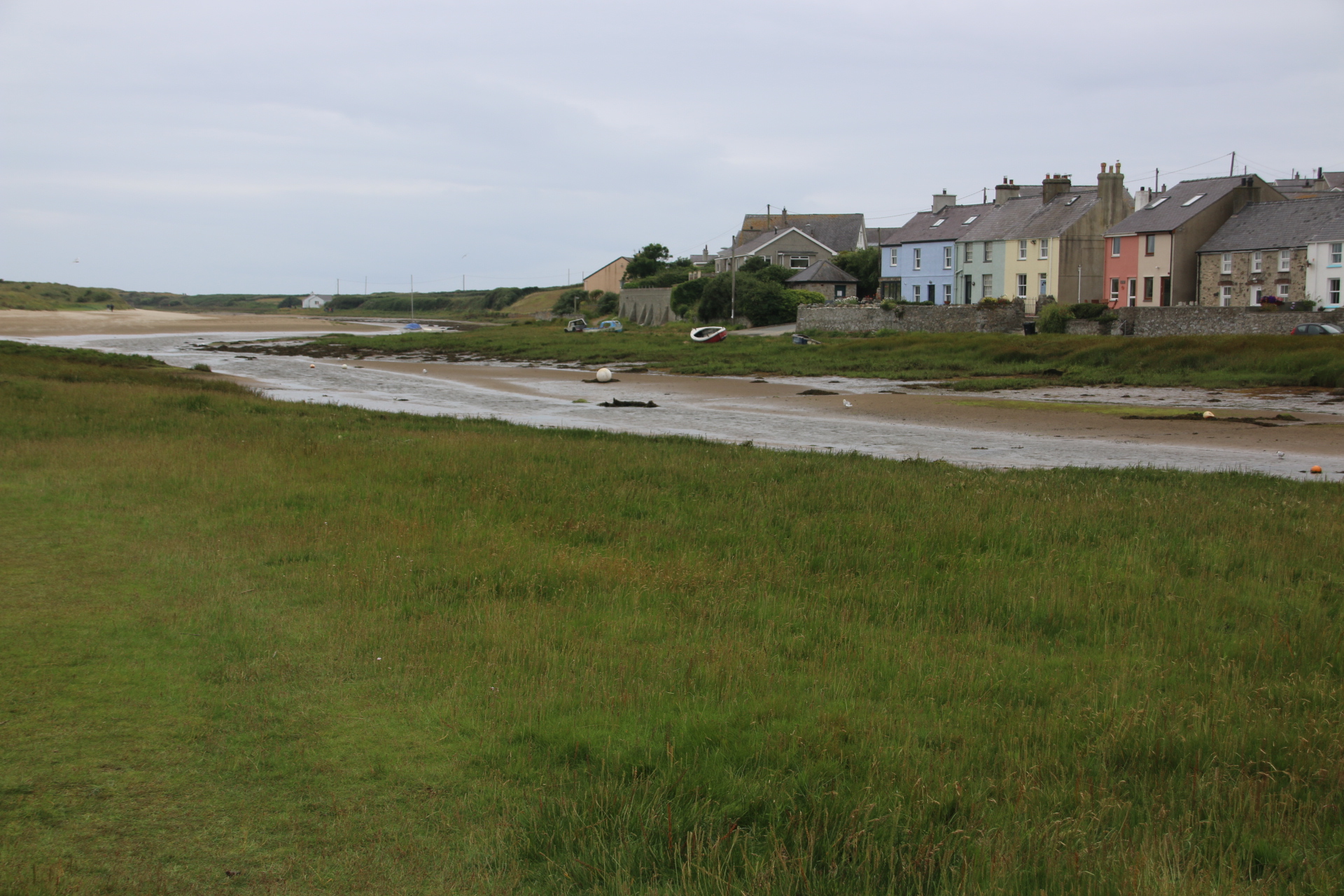
Aberffraw is on an estuary but such a lovely spot that I’ve included it…and you can see the dunes that line this part of the beach.

So I have completed my two island tour and arrive at Brittania Bridge, built by Robert Stevenson to carry rail traffic direct from London to Holyhead. In 1972 a fire destroyed much of the structure. On the original piers a new bridge was built with two levels – the railway crosses on the bottom and a new road bridge was built on top.

I have now completed the whole Welsh leg of my project, visiting every sizable settlement with a beach of one kind or other. I’ll see you on the next leg.

The rough and the smooth of the North Wales coast

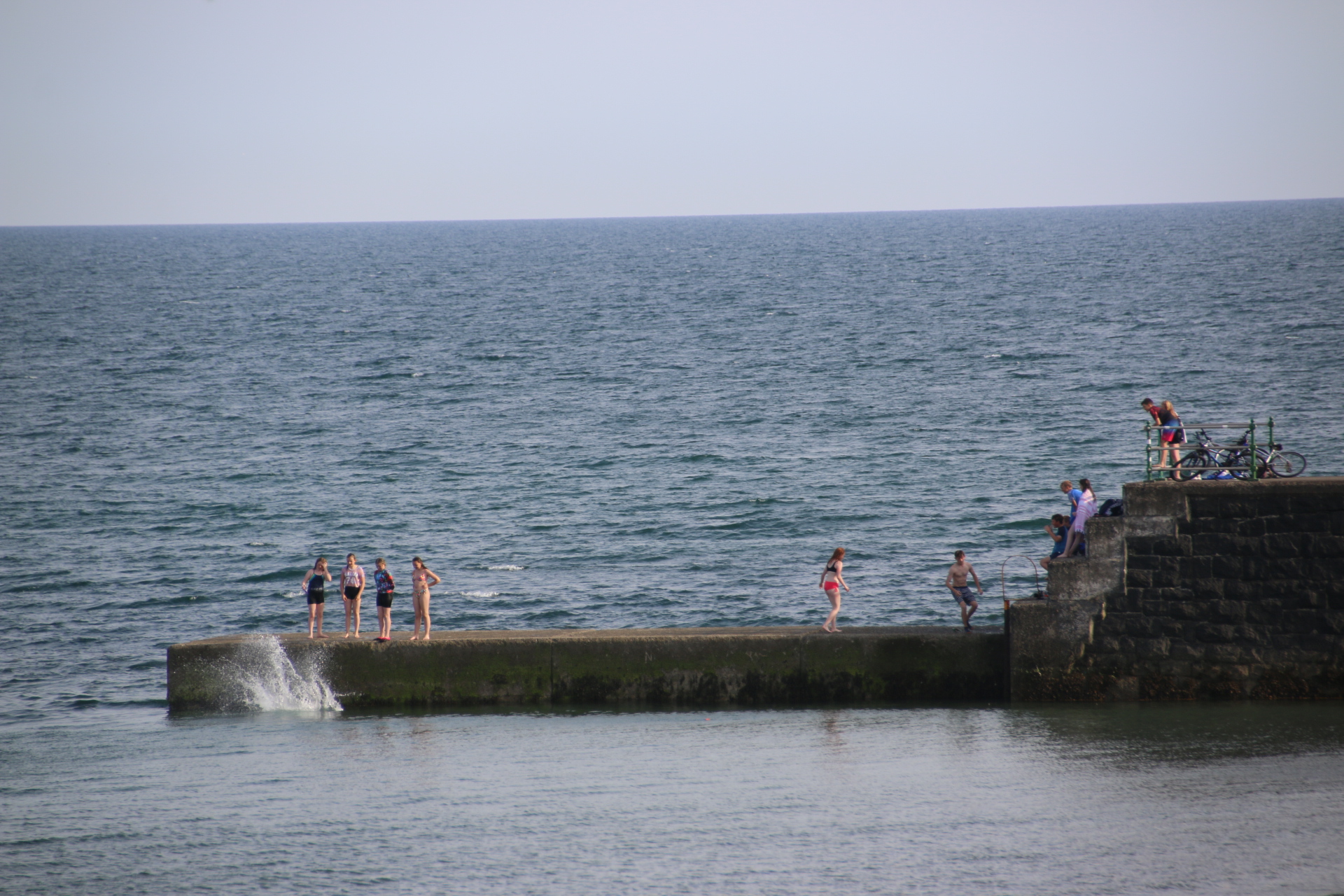
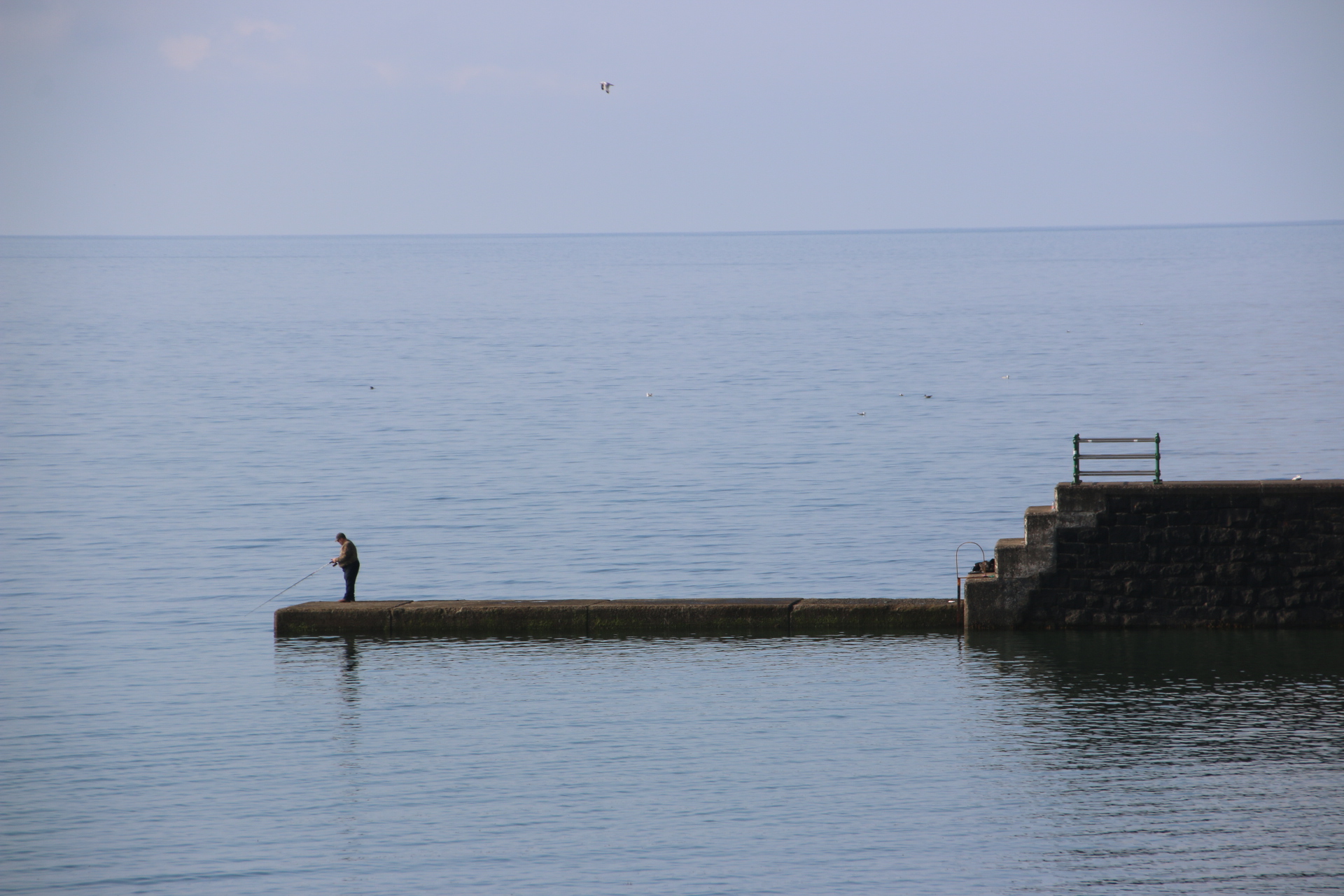
I have to share these two images from Criccieth. They both capture a moment on the jetty. Last night the local girls & boys came out to play. This morning a lone angler was trying his luck in the dawn peace.

Today was a day with a lot of smooth and a bit of rough thrown in towards the end. I popped into Caernarfon on my way along the north coast of the mainland – well worth a return visit. An historic walled town on the Menai Straits, it overlooks the coast of the island of Anglesey a few hundred metres away. Its narrow streets and many arched gates match the huge defensive tower that faces out to sea.

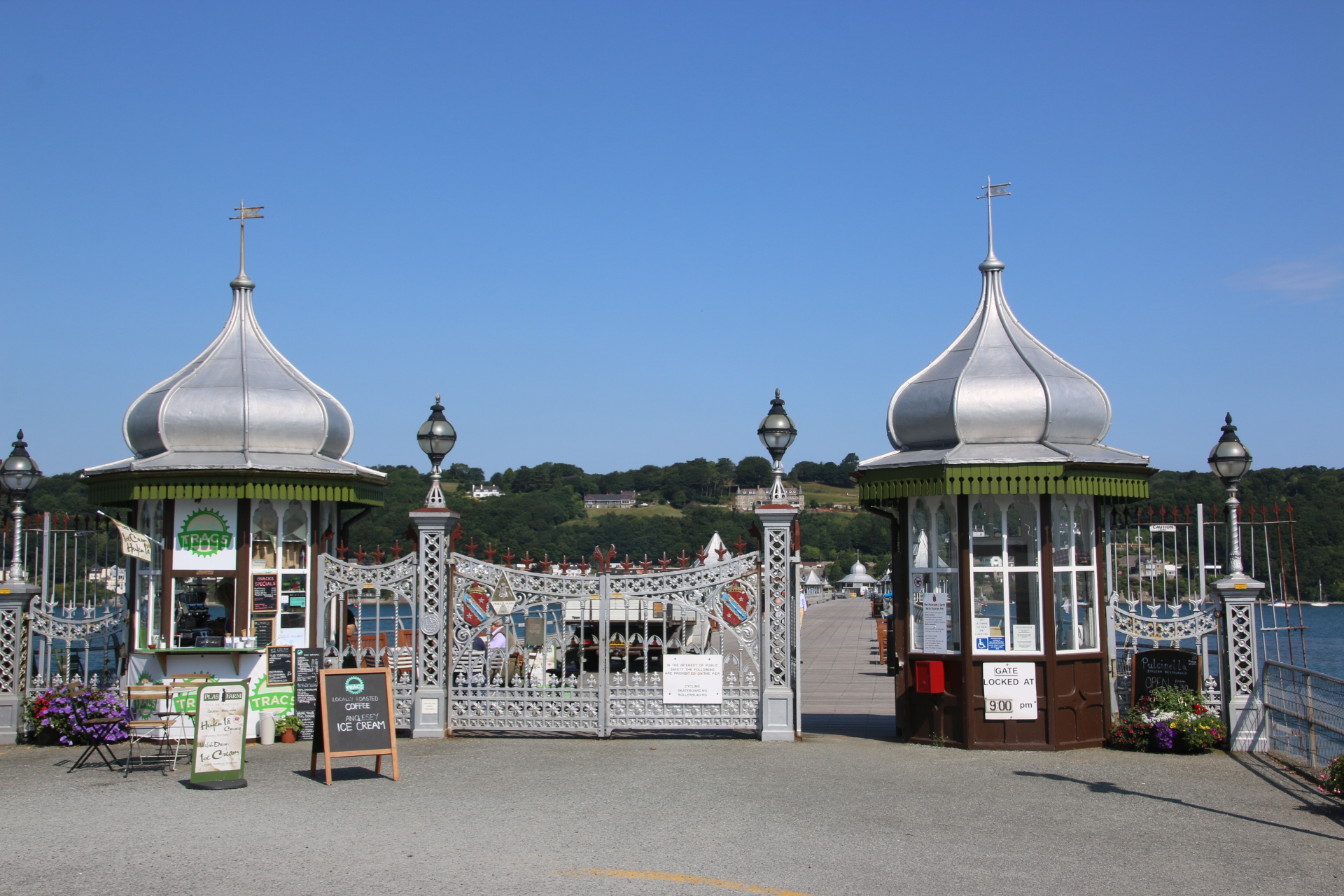
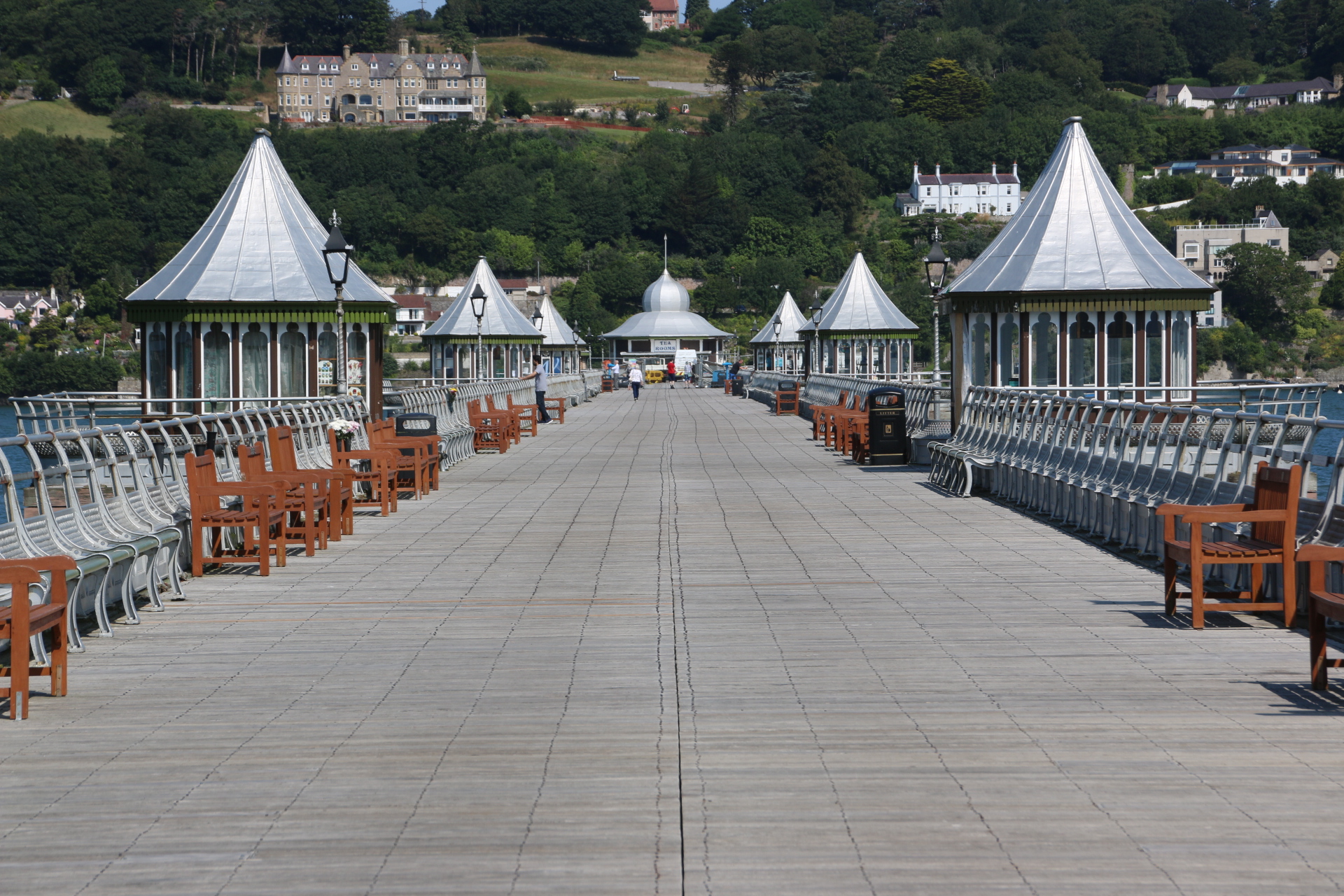
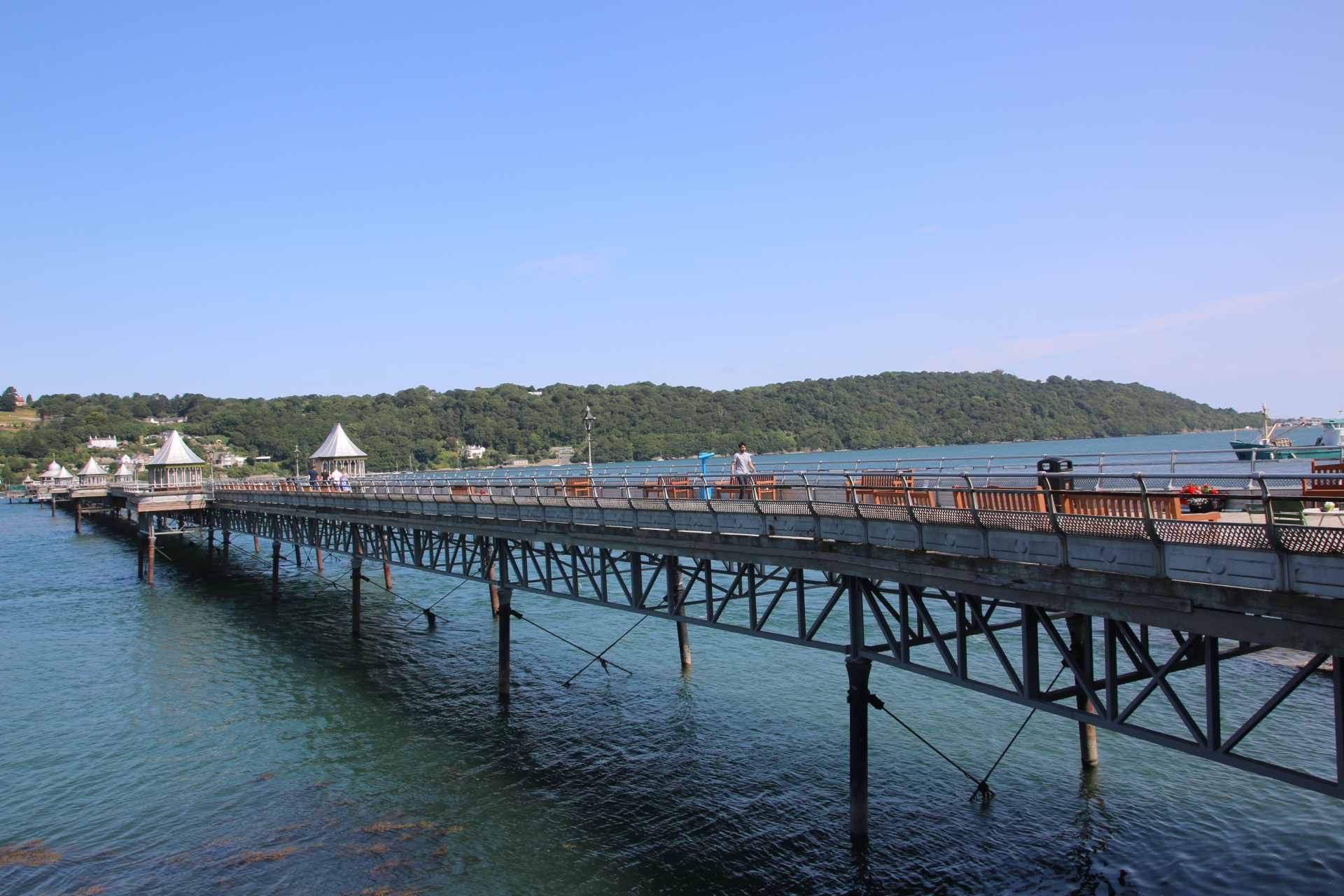
Now I have a problem. I thought when I discovered Bangor pier that I had found my new, favourite pier. It is really hard to find. Any signs for the pier abandon you in the middle of town with no direction to go in. Sleuthing my way through the towns streets I eventually find the pier at the end of a series of residential streets. Coming around a corner it takes your breathe away with its elegant turrets and weathered boardwalk. It is 1/3 mile long, almost touching Anglesey. At low tide the whole Strait is dry with only a narrow channel of water at the far end to allow sea—going vessels through.

‘So what’s the problem?’ you ask. Well Llandudno is the problem. What a gem of a place this is and what a magnificently glorious pier struts its stuff out into the line between the blues of sea and sky.

Both are magnificent. I thought that when I found Colwyn Bay Pier that there would be a third competing for the accolade of THE pier of North Wales. Well no. I drove along and around the promenade at least three times until I spotted something:

I stopped and asked two local guys who confirmed that I had guessed right. This was all that remains of the famous pier. Last year, 2018, it collapsed after years of neglect and the council had to remove all the wreckage except for this monument to past glories.

I stopped at other places on my way around the coast – Deganwy, Rhos-on-Sea where the clouds gathered to keep me on my toes

Rhyl had some photo opportunities. It is amazing how a low tide transforms all these places. A high tide and you think ‘oh, there’s a few nice buildings’. A low tide adds colour and atmosphere and scale and turns it into a completely different place. Look at these two images. The boys, especially, are so absorbed in messing around in the sand & water.

Prestatyn

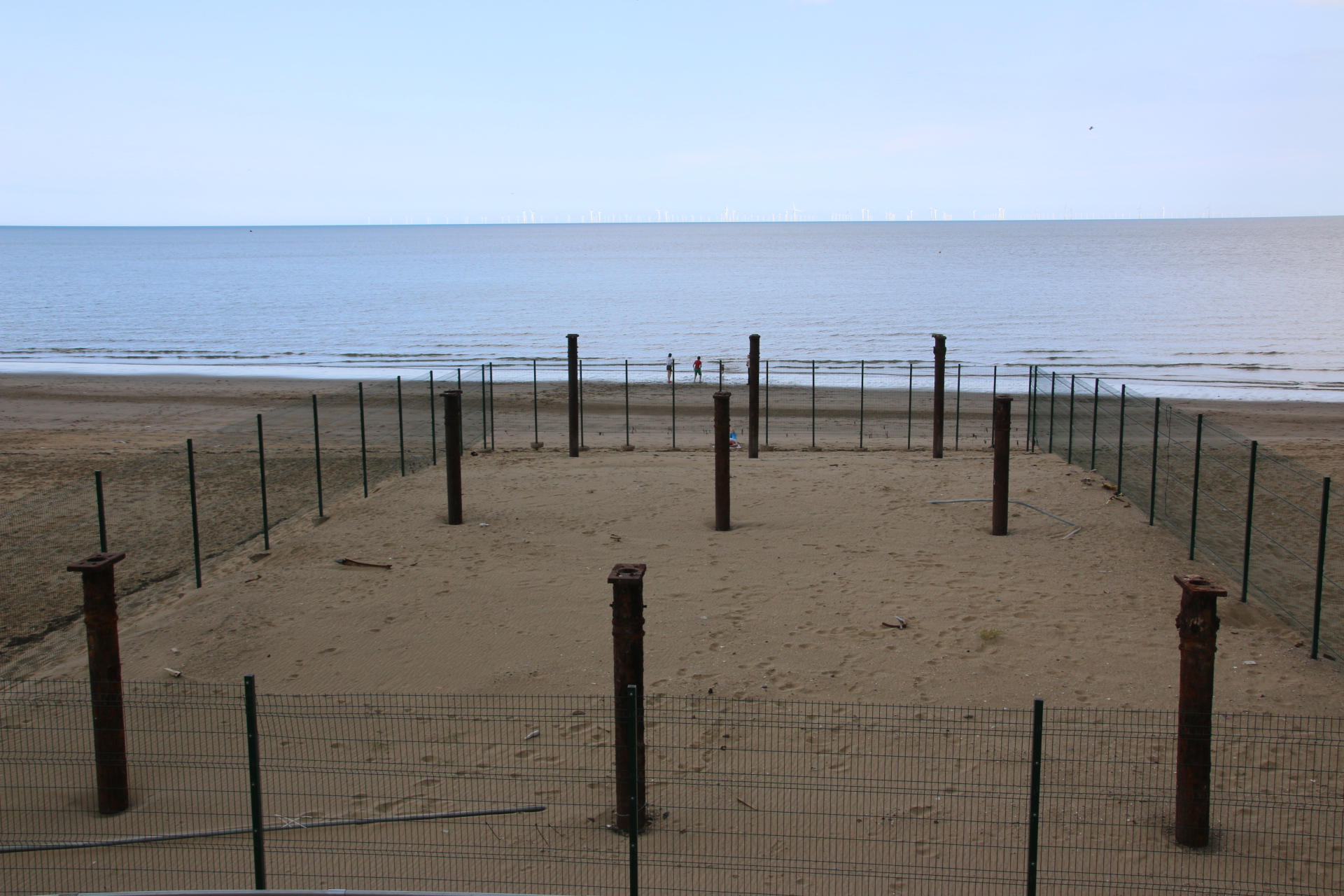
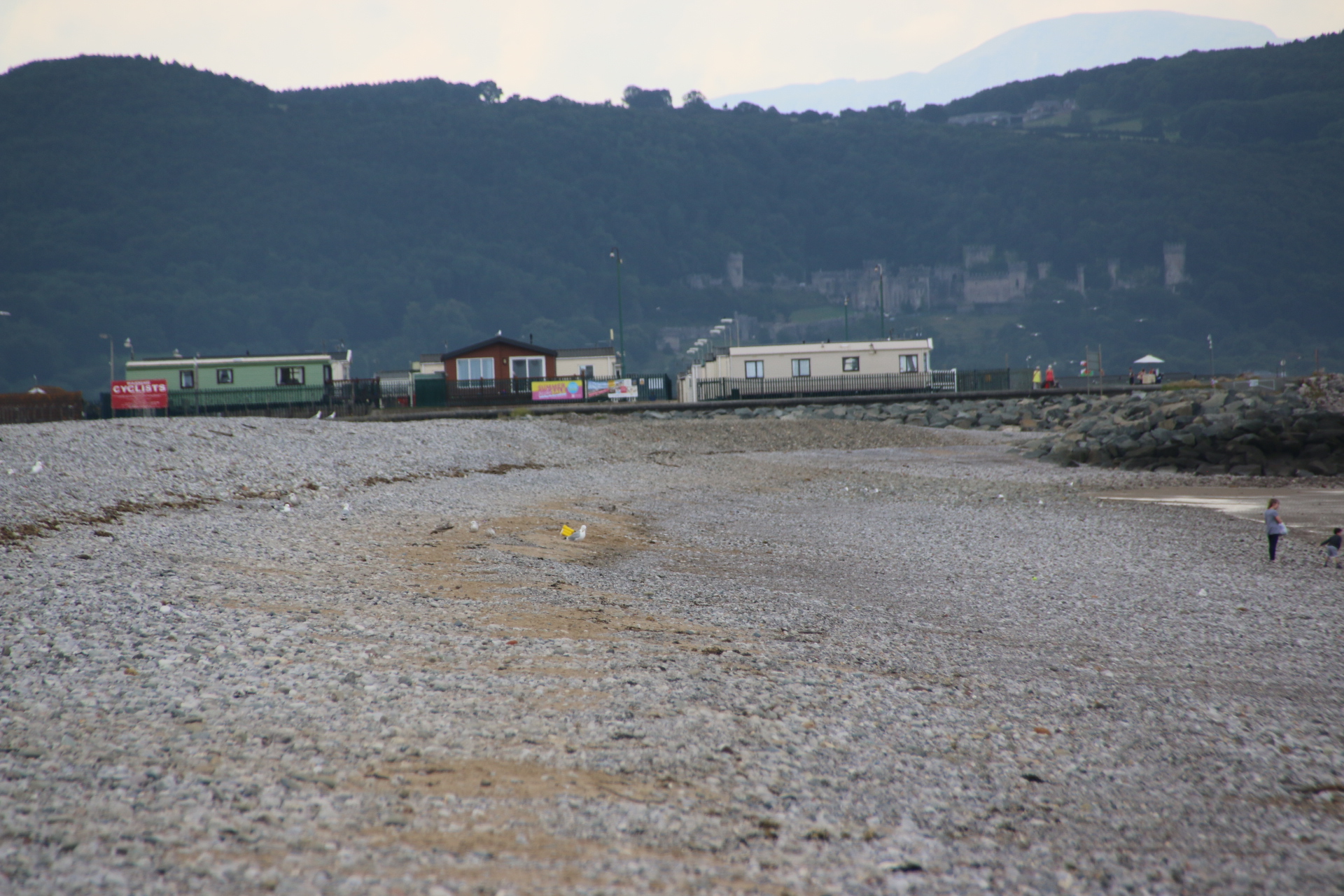
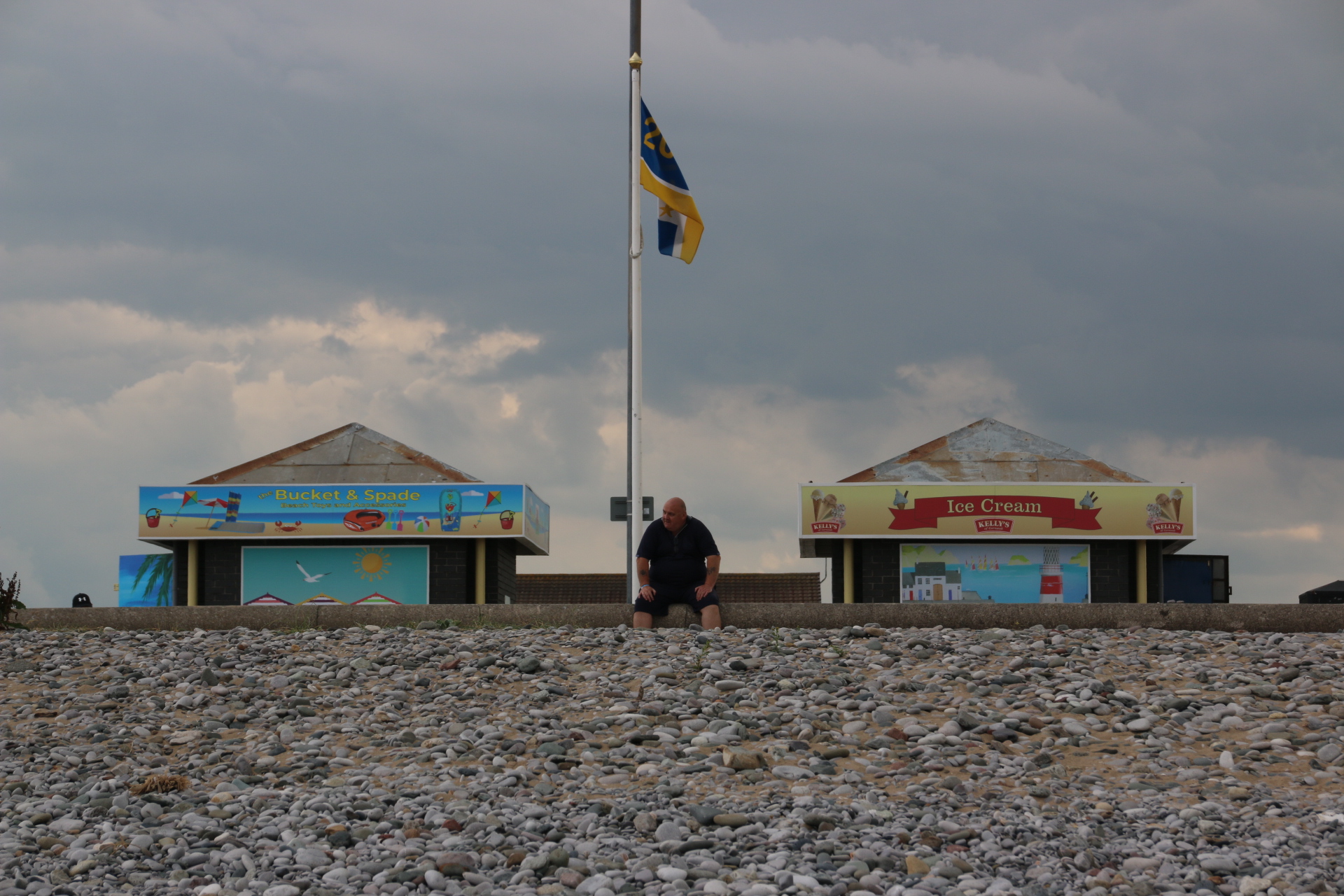
So now to the bit of rough. It’s not rough if you like static caravans. Towyn is my idea of caravan hell. I’m going to design a computer game entitled ‘Escape To wyn’ (clever title, eh?). I have to explain that along here the coast is hogged by the inhabitants of Towyn. Towyn consists of acre upon acre upon acre of blocks of static caravans. A maze of grid-ironed routes tangle themselves around these between high pre-cast concrete walls only disrupted by the occasional entrance to a ‘park’ or a ‘camp’ or by an arcade of arcades or a speakered line of ‘factory shops’.

I eventually emerge unscathed and risk a cuppa tea at the bijou seafront refreshment stall on the edge of this nightmare.

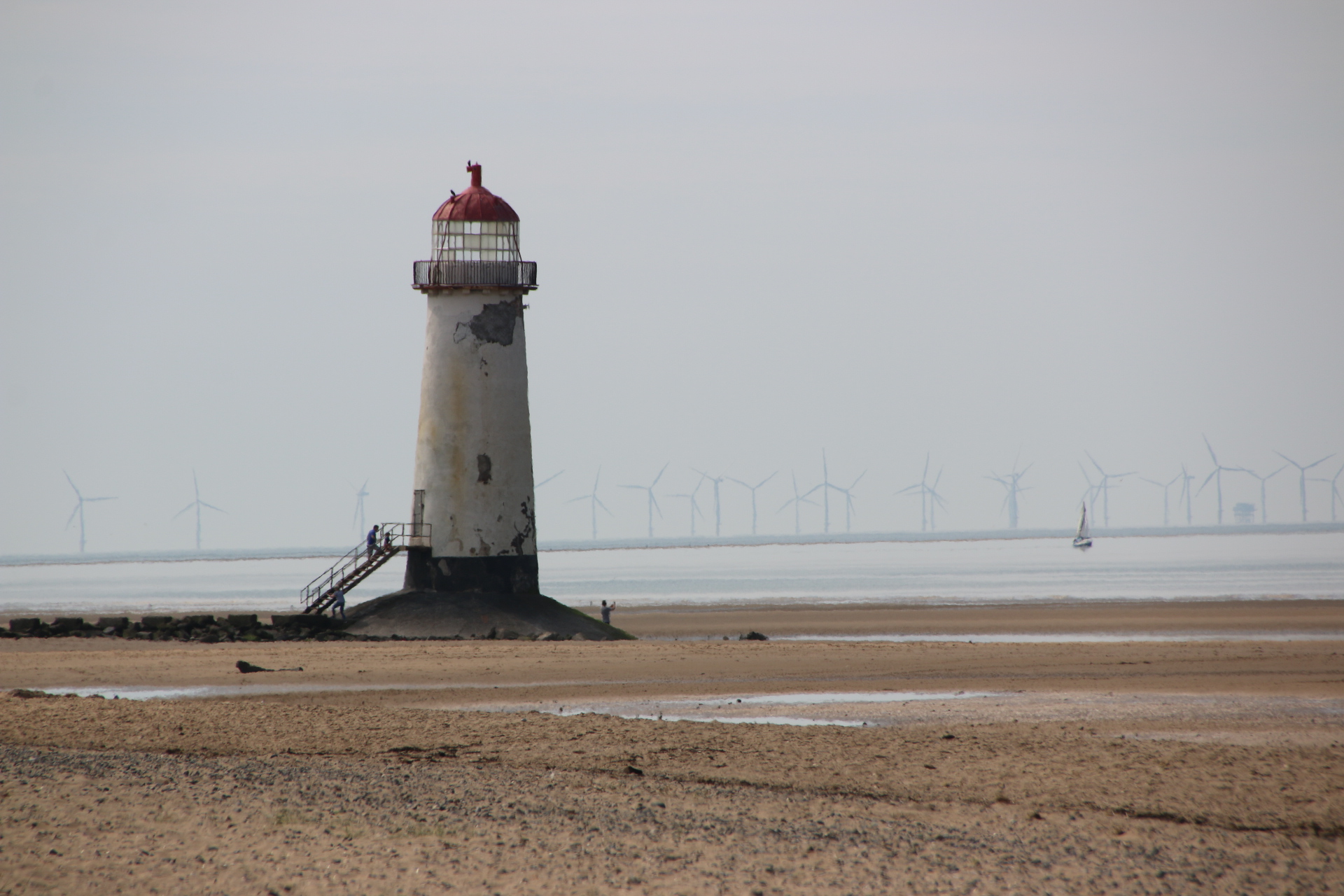
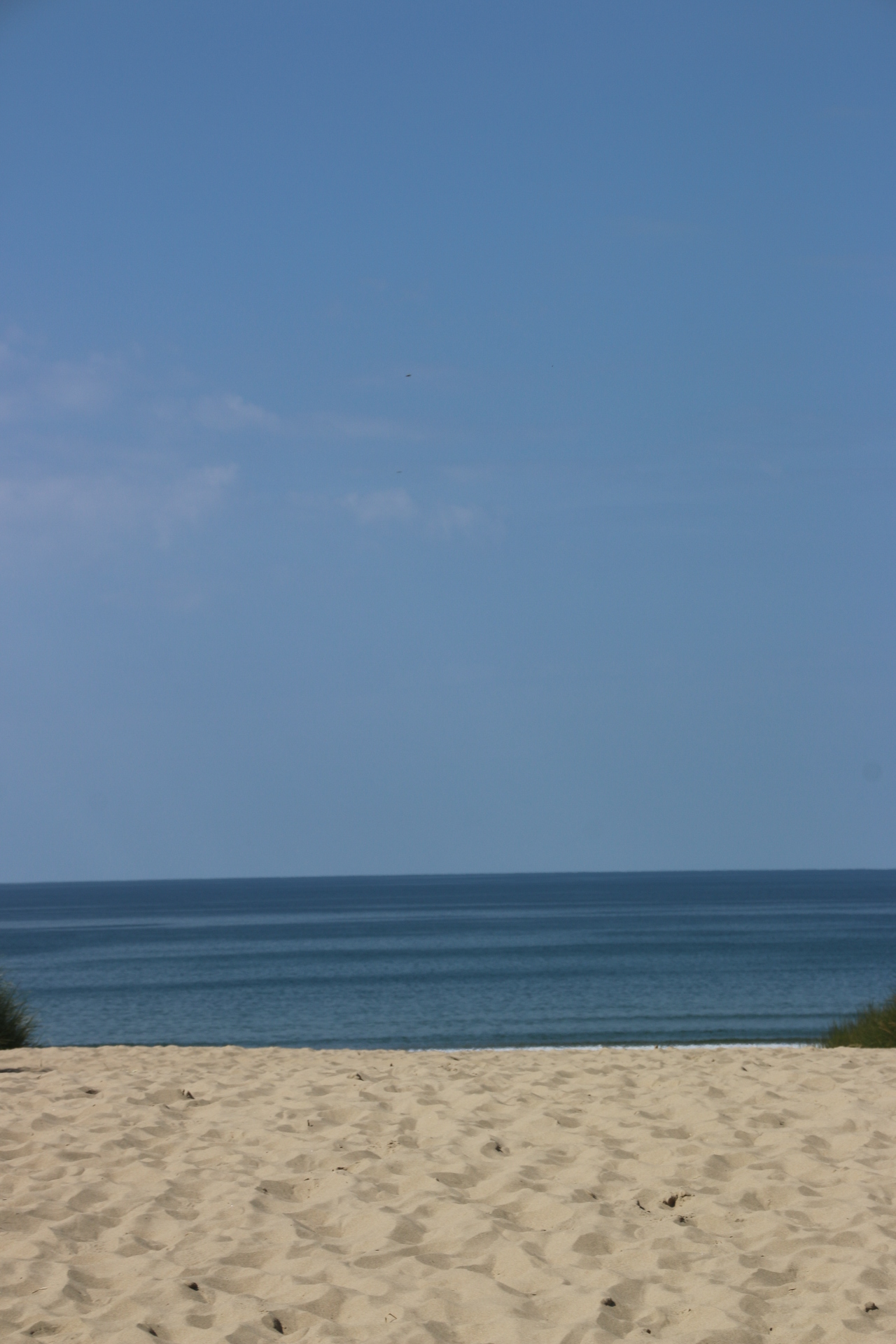
The day ends on a high though. The last place on this part of the coast before you each England, is called Talacre. It doesn’t look much on the map – a load of camping and caravanning symbols and, yes, you have to go through both. Make the effort. Take the walk from the pub, through the car park, across the rough ground and through the gap in the dunes. There is hardly anyone there but these images show why this is one of my favourite beaches.

Awe and Wonder on the Snowdonia coast

Although this project is about coastal settlements, the great thing is that I have to drive through some wonderful country to reach each one. And today was the best. Further up the coast from Aberyswyth is Barmouth. I head there through the wonders of Snowdonia National Park. Roof down, sun up high, music on…..hair flowing (maybe not!). Forests, woods, farmland, streams, rivers, bridges, moor, marshland, lakes, hills, distant mountains. Then to arrive at wonderful beaches backed by dunes. What else can this man ask for?

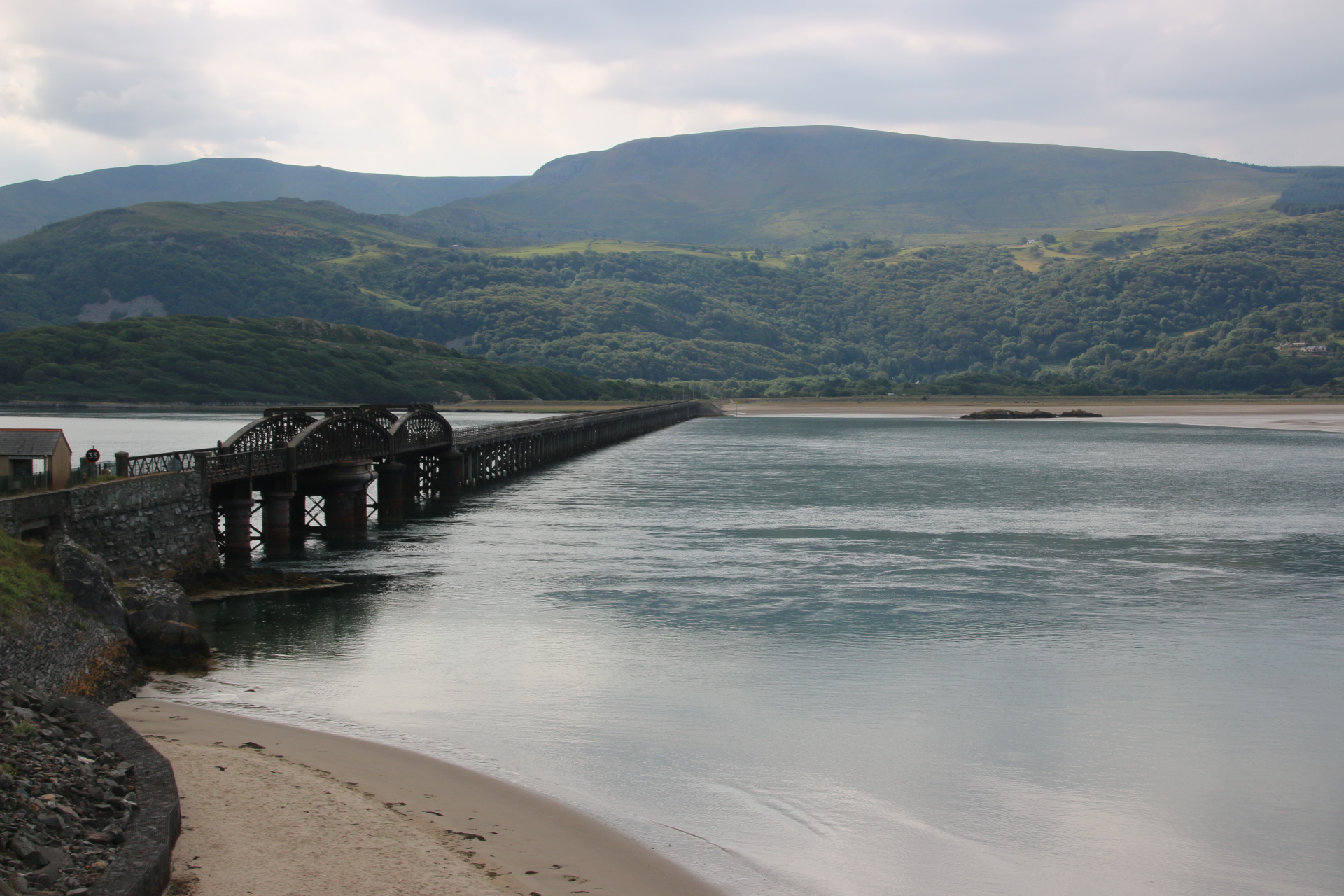
Barmouth sounds quite ordinary. I think it mostly is. The west coast main line crosses the river on a wonderful Victorian gantry of a bridge.

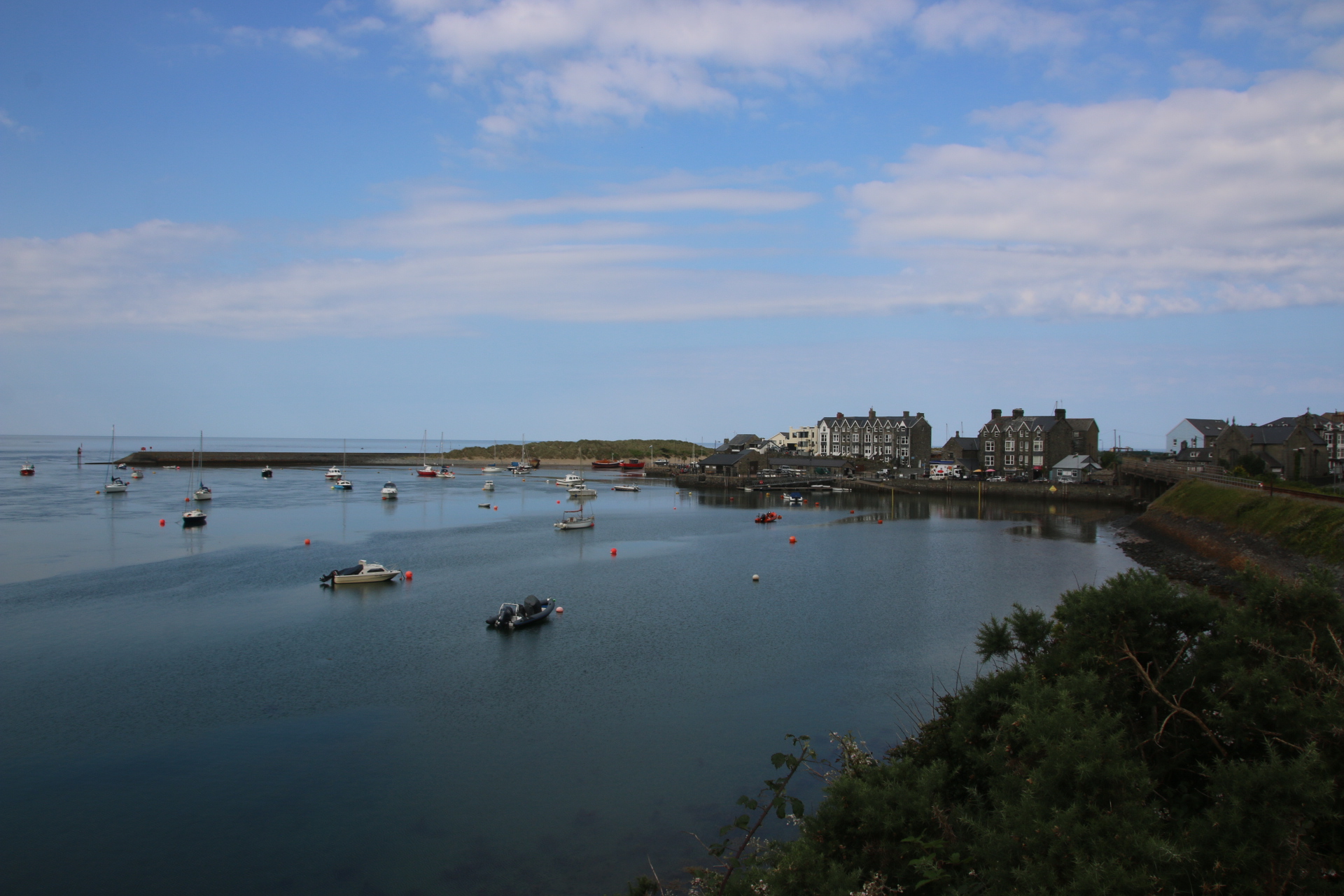
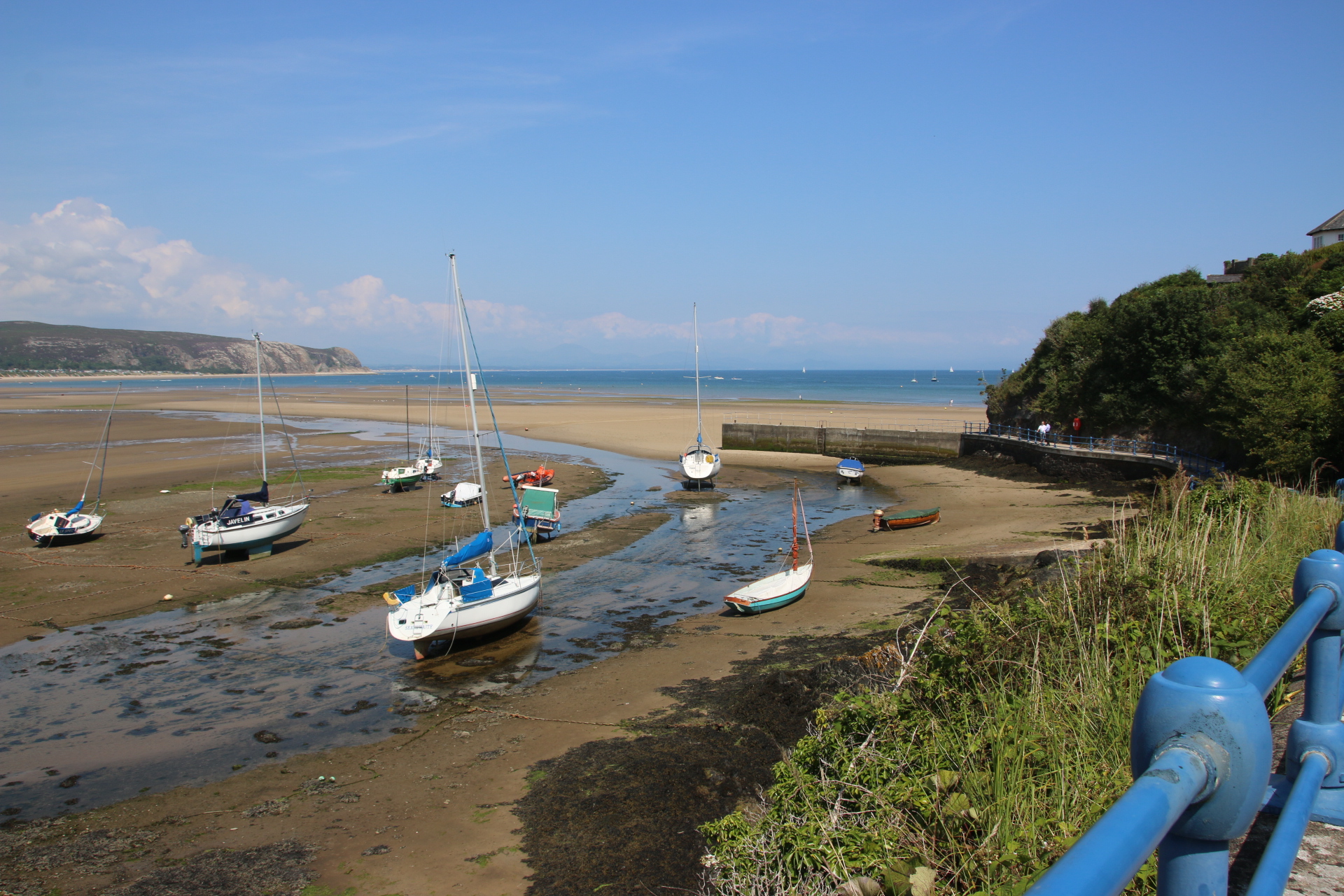
Here I came across the harbour in the early morning. Not a lot is going on. There is no evidence of the passenger ferry over the estuary to Fairbourne – surely we are in high season. It is July. The main beach of soft sand and low dunes and the car park and small fun fair is on the other side of town.

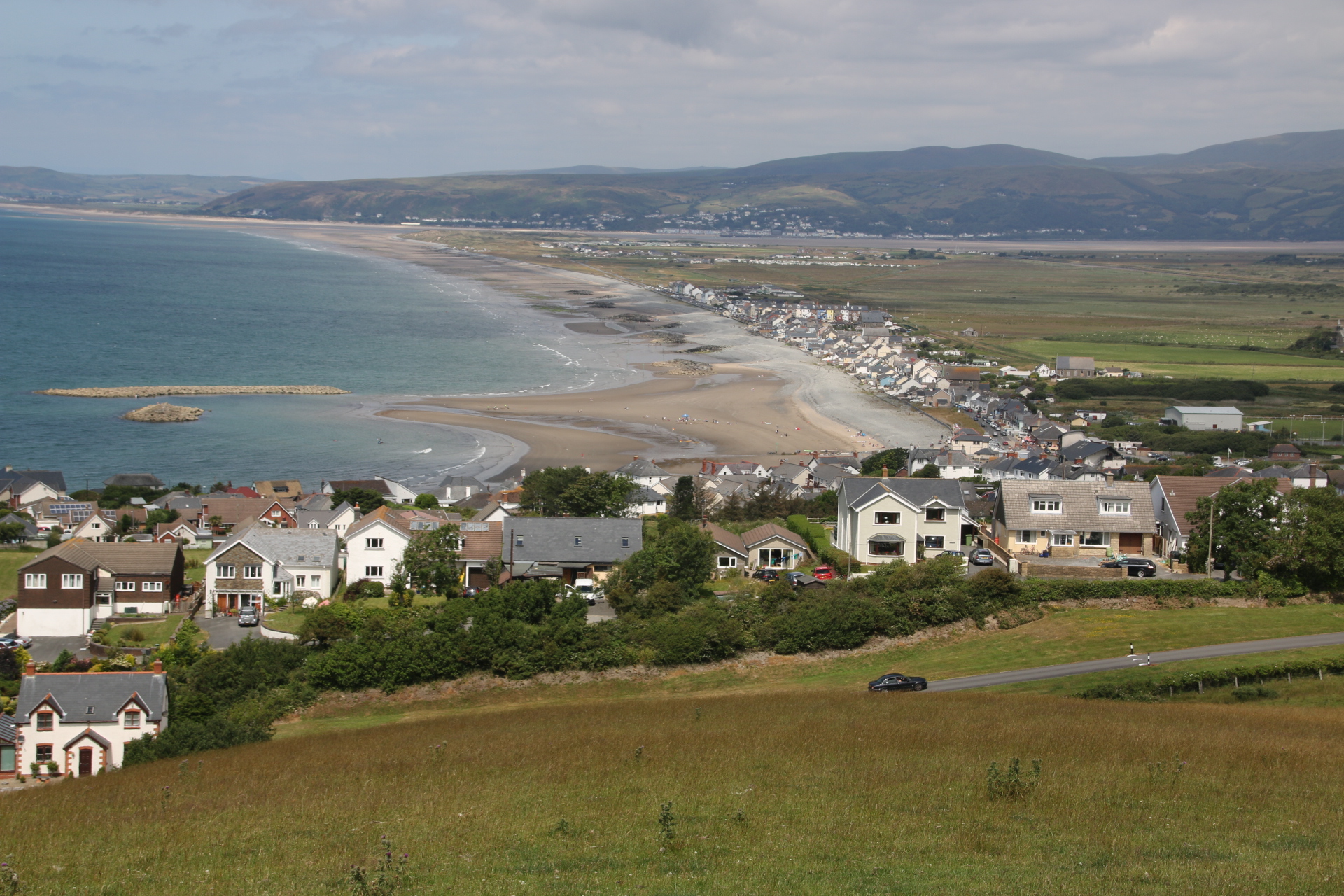
Along the coast there a numerous small settlements, identified from a distance by a church tower/spire, usually surrounded by bungalows and static caravans. Spaced out between them are clusters upon clusters of holiday caravan parks. Were do all these holidaymakers come from? And where do they spend their time?

The next large settlement is Harlech with its huge castle ruins looking out over the coast, keeping am English eye over its Welsh inhabitants. Funny how they both play cricket in the same test team now. This was going to be my favourite beach, long, soft-sanded dunes, almost empty; but I doubt on to see so many similar ones that it is impossible to pick one above another.

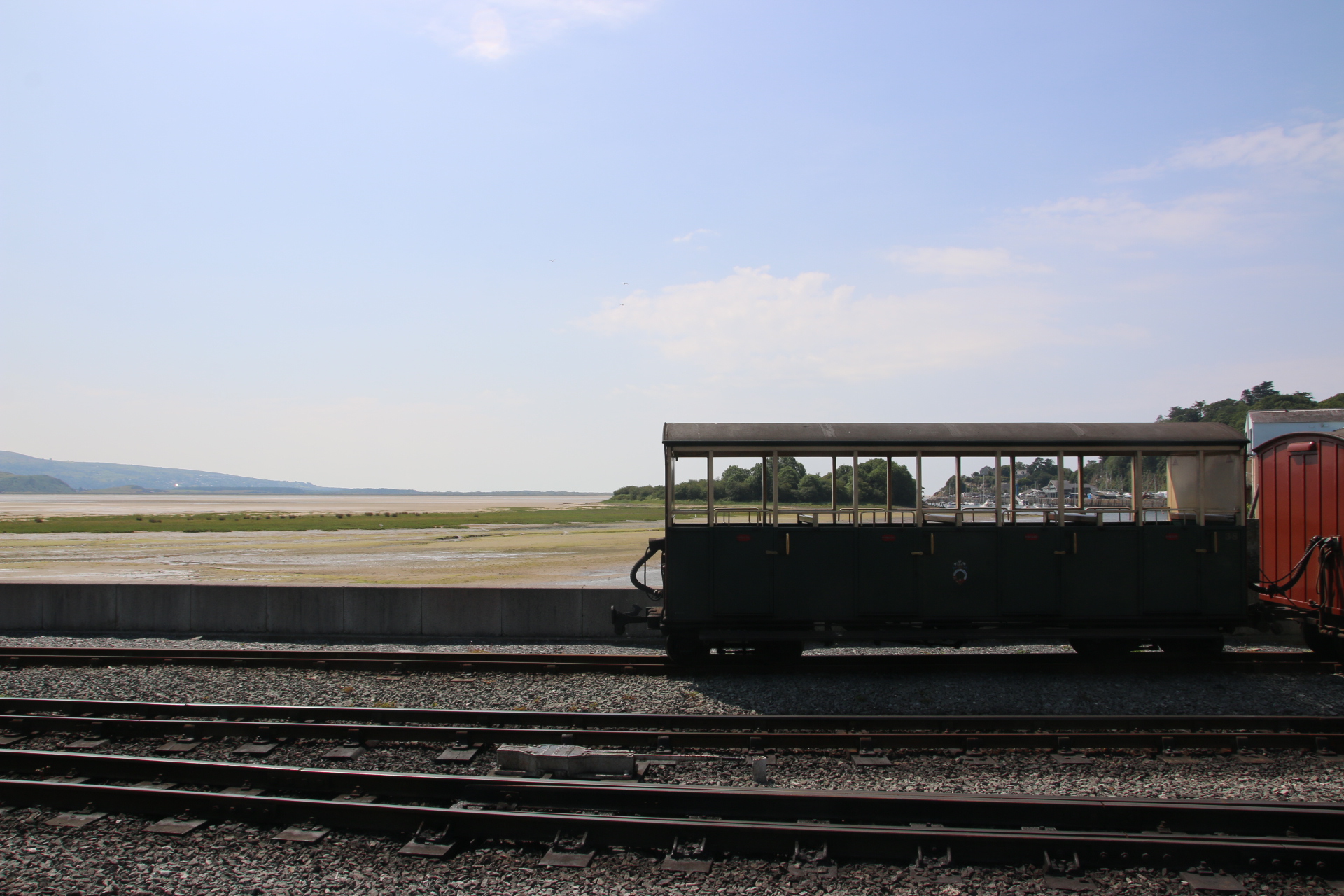
Porthmadoc is a terminus for the Ffestiniog (don’t know the spelling) Railway and the station/bridge acts as a barrier to the sea. Grim one side you can see sea in the far distance. From the other you can look up the valley and get a view to die for. People would travel 1000s of miles to get a view like that.

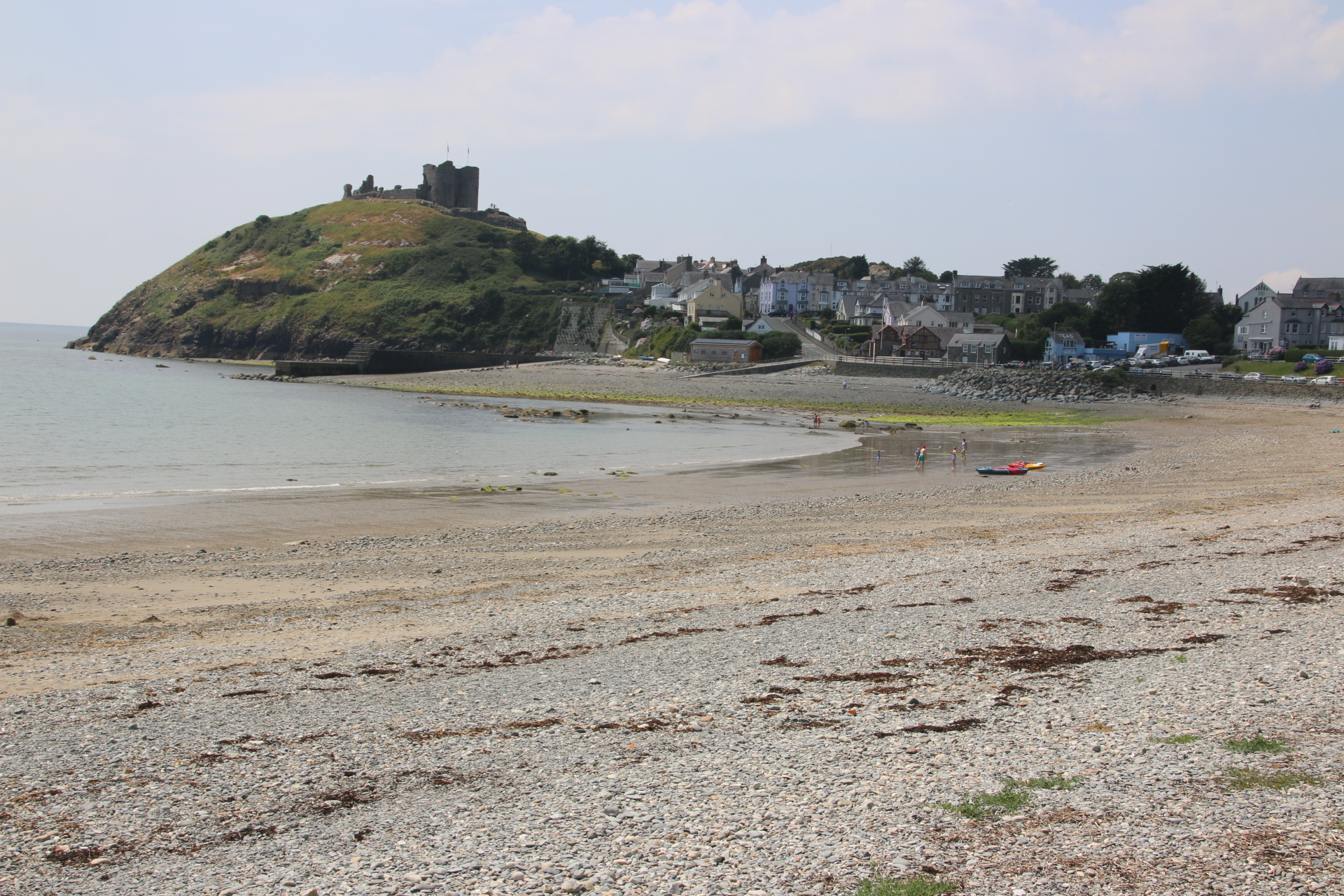
I’m going around the peninsula now. I will show you each largish village in turn, not, I hasten to add, the campsites or static caravan parks. First Criccieth

Pwllhewi

Llanbedrog

Abersoch, which I quite liked – a bustling, popular holiday village with bars & a bit of shopping

Aberdaron


And the best – Morfa Nefyn

Aberystwyth and beyond

This first day of the next leg of my coastal journey is full of sunshine and reaffirms for me that the UK is full of wonderful, magnificent, beautiful places. Today was full of them. I am in mid, moving into north, Wales. How about this for my first glimpse of these powerful headlands and those gloriously soft, sandy beaches, at least when the tide is out, in crescent shaped bays.

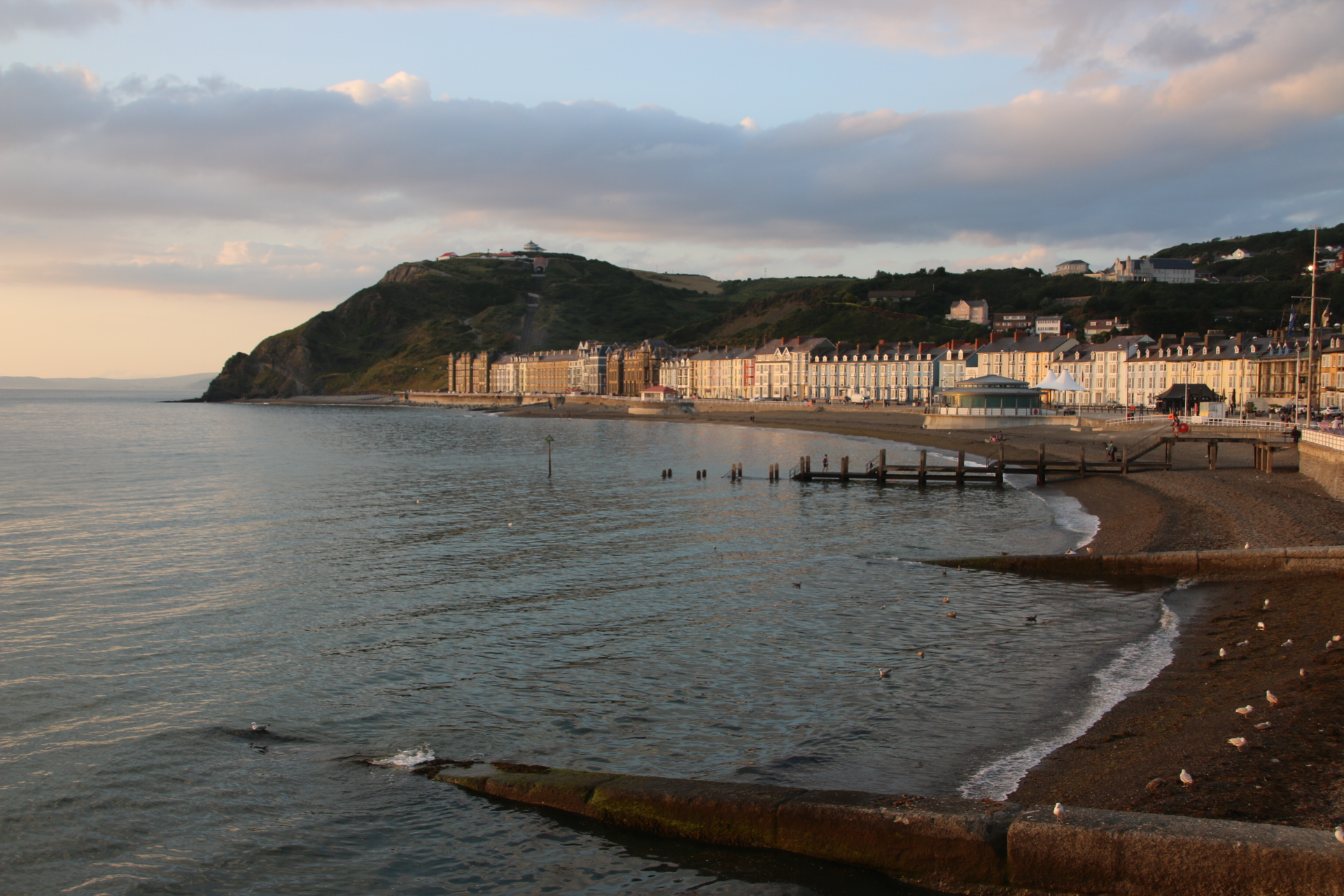
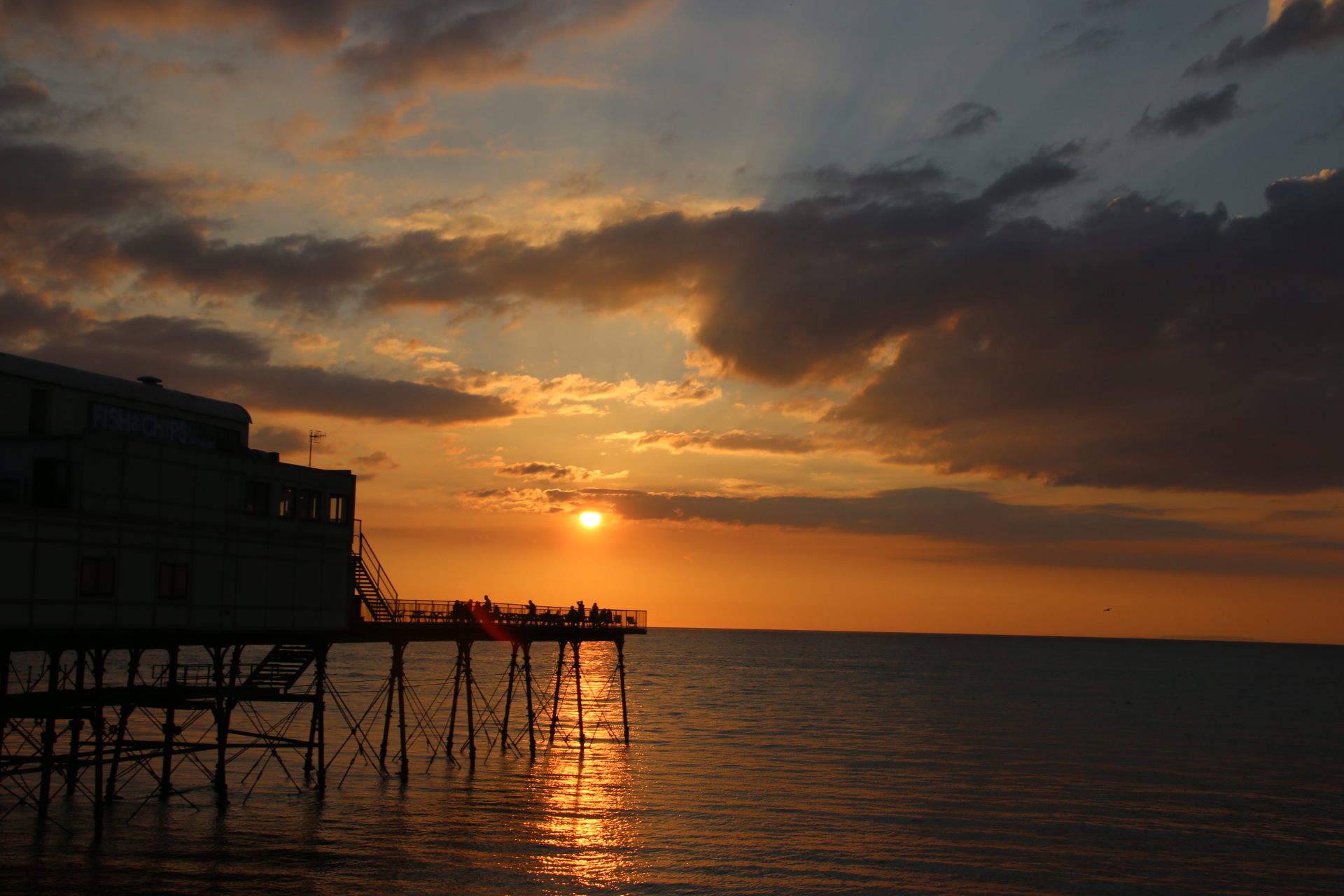
First stop Aberystwyth. Like many of these resort towns it mixes Victorian charm with some history, in this case castle ruins, and adds Kiss Me Quick hats & buckets & spades and loads of fish & chips. The pier is rather good; not long but nicely regal even if it is full of slot machines. In the background you might spy the vertical line of the track of the cliff railway. There are two beaches, separated by a headland where the castle ruins anchor the short pier to the land.

The evening light of dusk and the incoming tide give the same view a completely different feel. I prefer it.

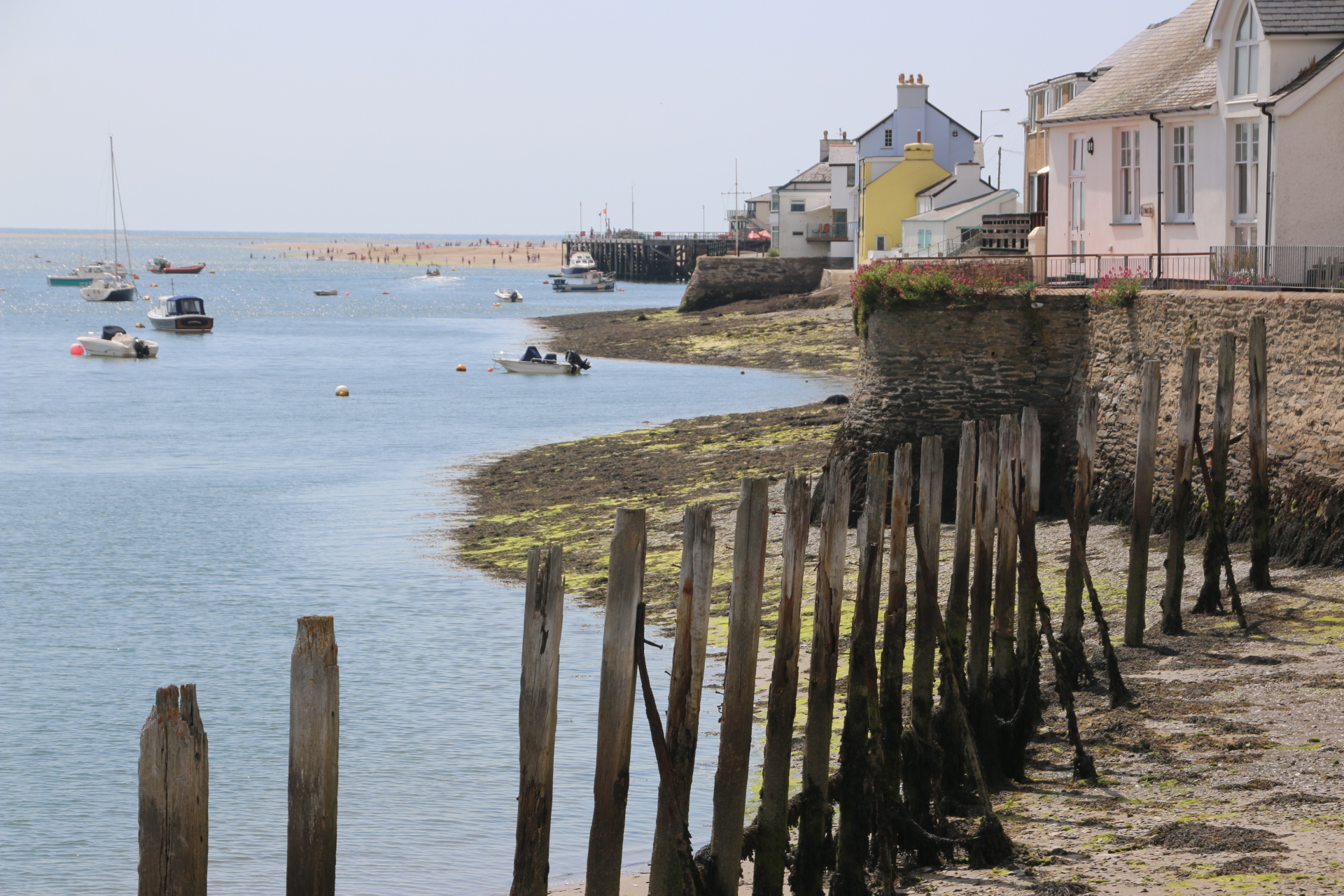
Borth Sands stretches out in a wonderful coastal crescent. The low tide exposes the soft sand as the village hides behind the sea defences, spewing out beach-happy families to spend the day in the sun, layered in lotion, I hope.

From the desert dunes at the far end of the peninsula, across the slow-moving river, the village of Aberdyfi can be seen glistening in the sun.

It lives up to its potential when one takes the drive up one side of the estuary and down the other to explore Aberdyfi in more depth.

All in all, a great day and not a single disappointment. Good place for a holiday around here – family, beach, soft sand, hikers, hills, even a mountain close-by!

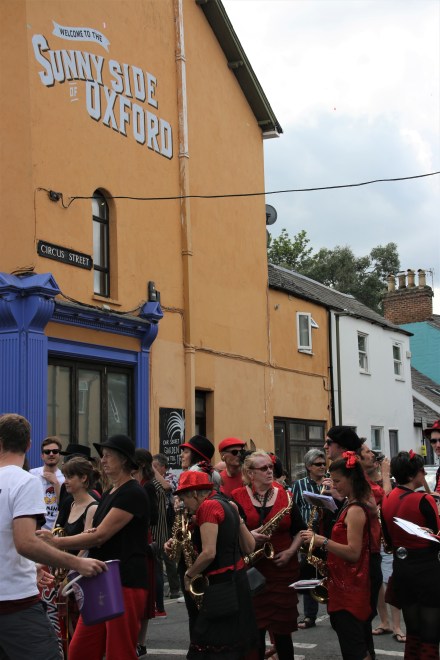
The Sunny Side of Oxford – the Cowley Road Carnival

IMG_2080a

I rarely write about my home town but I thought that should end, especially when I have the wondrous Cowley Road Carnival on my doorstep. It seems this is the second largest street carnival after Notting Hill in the UK. So let’s take the day as it unfolds.

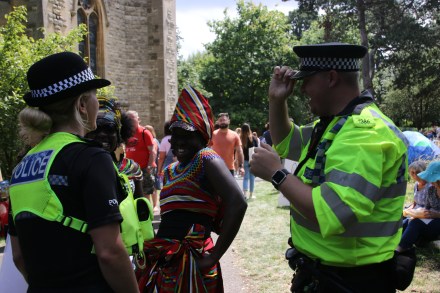
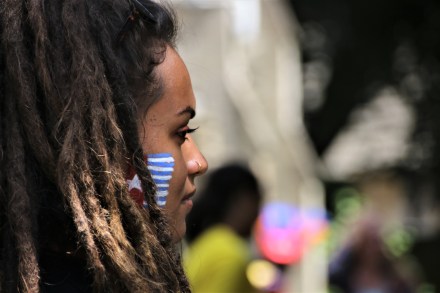
The street is shut to traffic first thing in the morning and local and visiting organisations set up their stalls and start to assemble. The Cowley Road area is home to a diverse, eclectic mix of families from all over the world. A harmonious community most of the time, families live and work and play alongside each other in schools, restaurants and places of worship. The Carnival happens every year in July and is a celebration of diversity and culture.

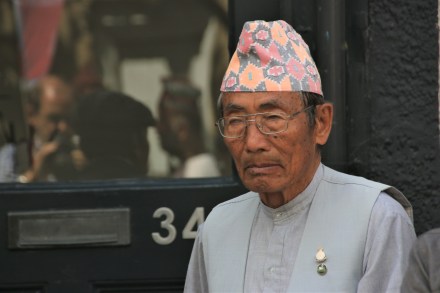
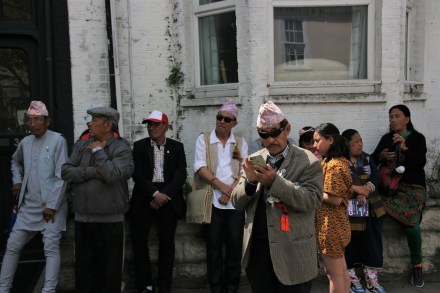
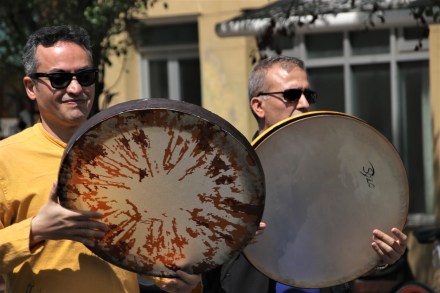
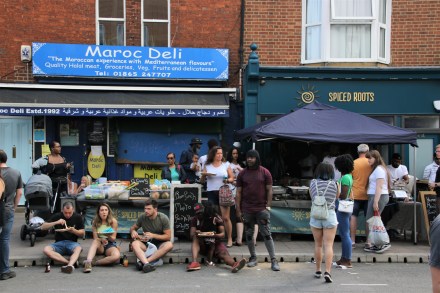
Local restaurants and visiting vendors set up their stalls, selling street food to the 30,000 who will join us for the day. Places in the parade are proudly taken by community and cultural groups and from mid morning they begin to assemble at their allocated postion. As well as folk in traditional costumes with a host of unfamiliar instruments, generations of family members lean against walls to give their support to their musicians and dancers. The Nepalese community are no exception.

IMG_2055aIMG_2044aIMG_2042aIMG_2041a

The grills get hot and start to sizzle their barbed aromas across the road. Food from everywhere you can imagine.IMG_2058a

The beat increases with huge sound systems winding up their sounds outside bars, pubs and restaurants. The atmosphere is good-natured. Crowds start to gather on each side of the road and local bands and groups as well as excited visitees start to limber up and tune in their drums and tambors and trumpets, waiting to move off.

IMG_2073a

IMG_2034a

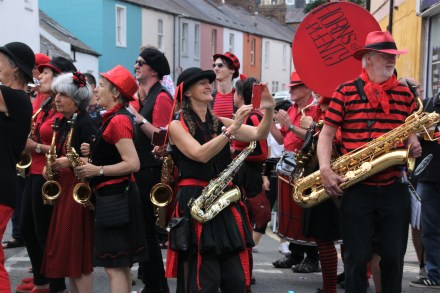
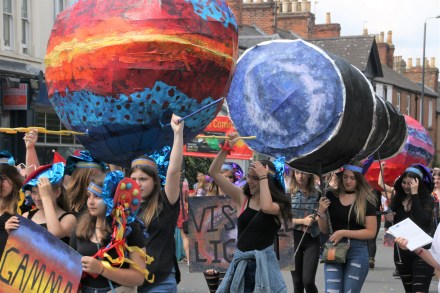
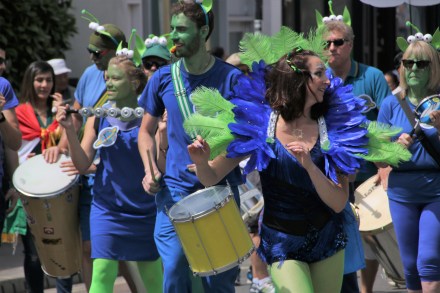
And then the parade begins its tortuous, tip toe shuffle up the road in a clangour and a clammer of bangs and clashes and sambas and salsas. Schools follow community groups who follow samba bands from home and abroad who follow street bands and local artists and businesses. Smiles on everyone’s faces.

IMG_2084aIMG_2091aIMG_2106IMG_2140aIMG_2151a

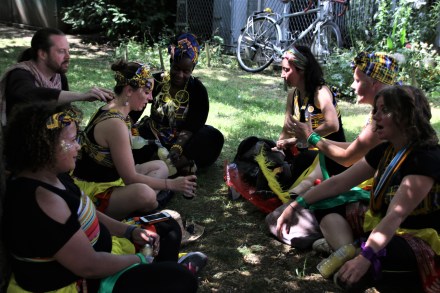
The end is reached 500 metres or so further on – St Mary & St John’s Churchyard. Here the participants collapse in the shade. Frequently groups join together in a jam sessions that brings together a new fusion of culture and sound.

IMG_2202aIMG_2201aIMG_2175aIMG_2176aIMG_2199aIMG_2200aIMG_2195a

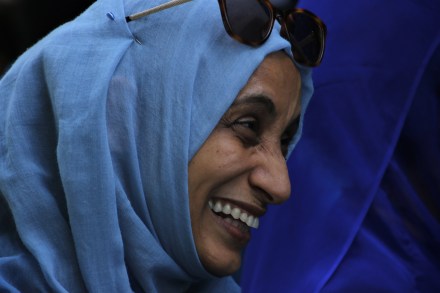
Back on the street food is consumed and crowds wander. Folk find places to chill – on a wall, in front of a stage and absorb the practised performances of dance and music or appreciate the impromptu expression of feeling and creativity.

IMG_2216aIMG_2219aIMG_2220aIMG_2223a

Most things come to a halt at 6.00pm. People accept it, however reluctantly. The street cleaning vehicles start their work very punctually, sweeping through the still packed streets. Everyone knows that if there’s no fuss it will be the same next year.

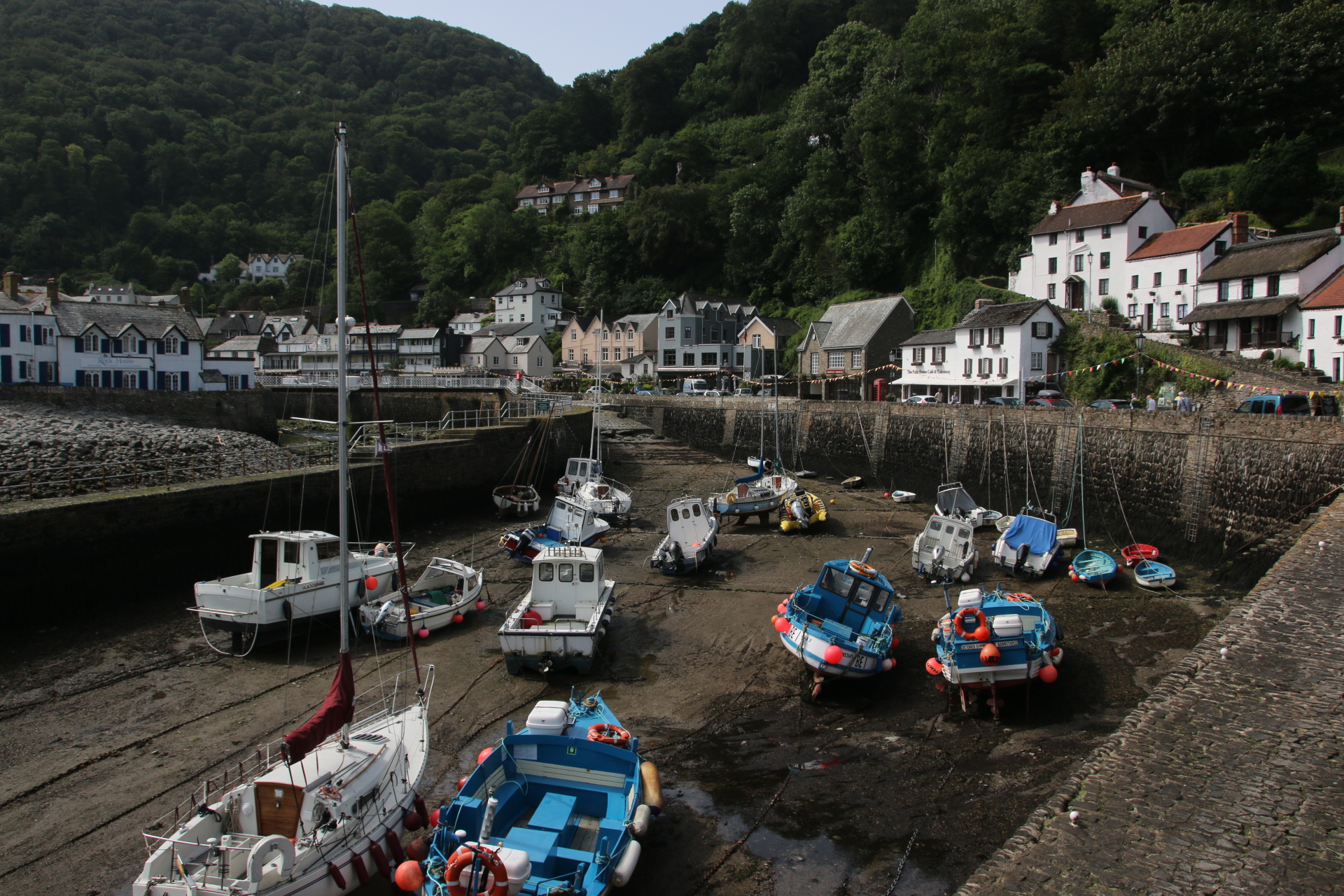
A homage to Lynmouth

I forget how divine this length of coast is. I spent the night at Minehead and drive to Porlock Weir, a delight in its own right.

I then drove up the hill out of the village and out onto the wide open spaces of Exmoor – a real ‘awe & wonder’ moment, a cry out loud celebration of all that is good about this world and about life – the sea on one side with lines of white horses snuffling the bays and headlands , the stretching moorland cut by deep valleys on the other. Free air above in a cloudless sky and the open road ahead with the roof down. If only I had hair to blow free in the breeze. I stop to overlook Lynmouth before driving down into the village.

1952. The year the rains came, the East and West Lyn rivers roared off the moors bringing boulders & earth & trees and taking cars & vans & sheds on a dreadful journey of devastation through the village. 34 people died in the resulting chaos.

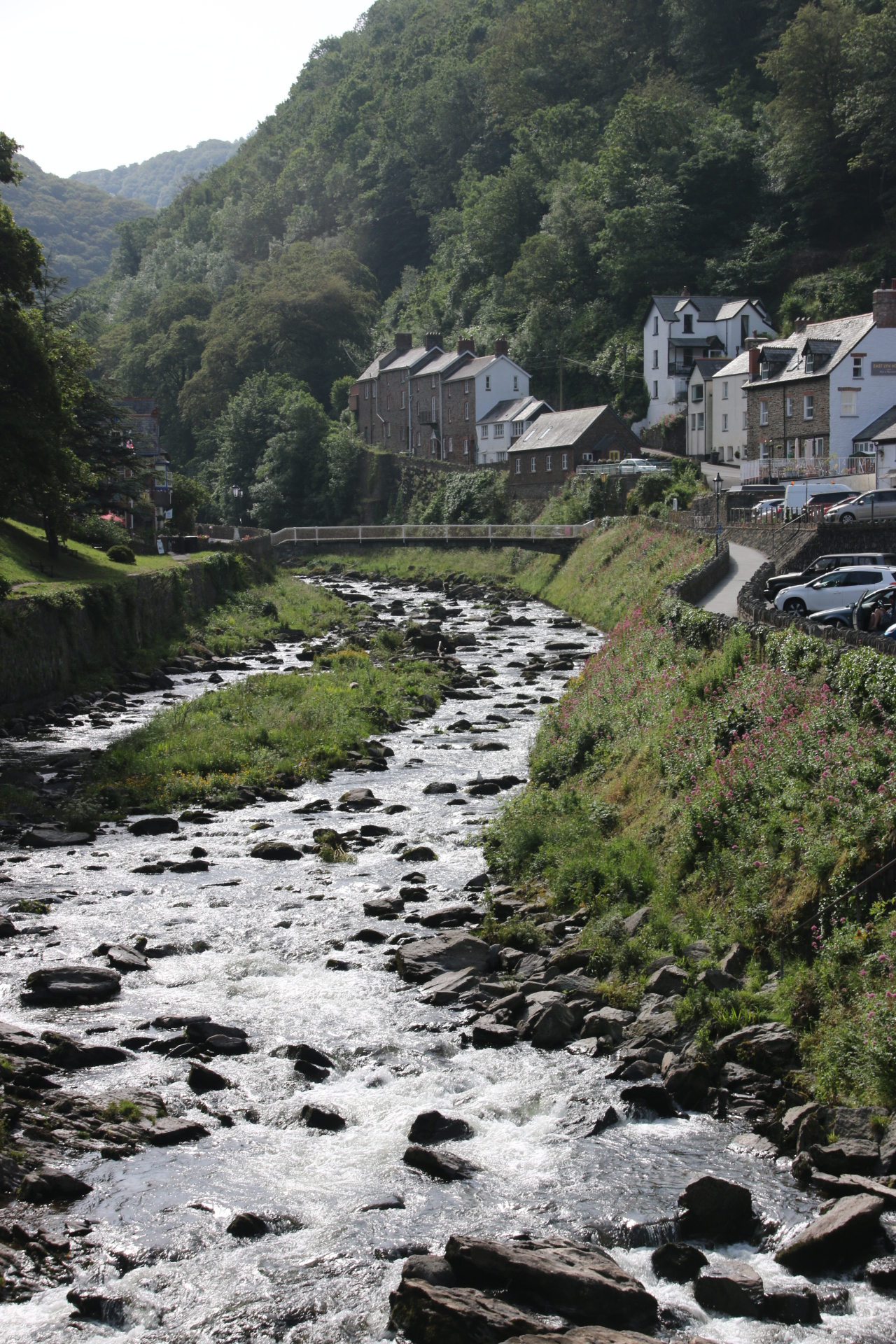
I forget how charming the village now is, both up the two rivers to the moors and downstream to the sea. It’s Victorian splendour has been recaptured from its wrought iron balconies to the Rhenish Tower.

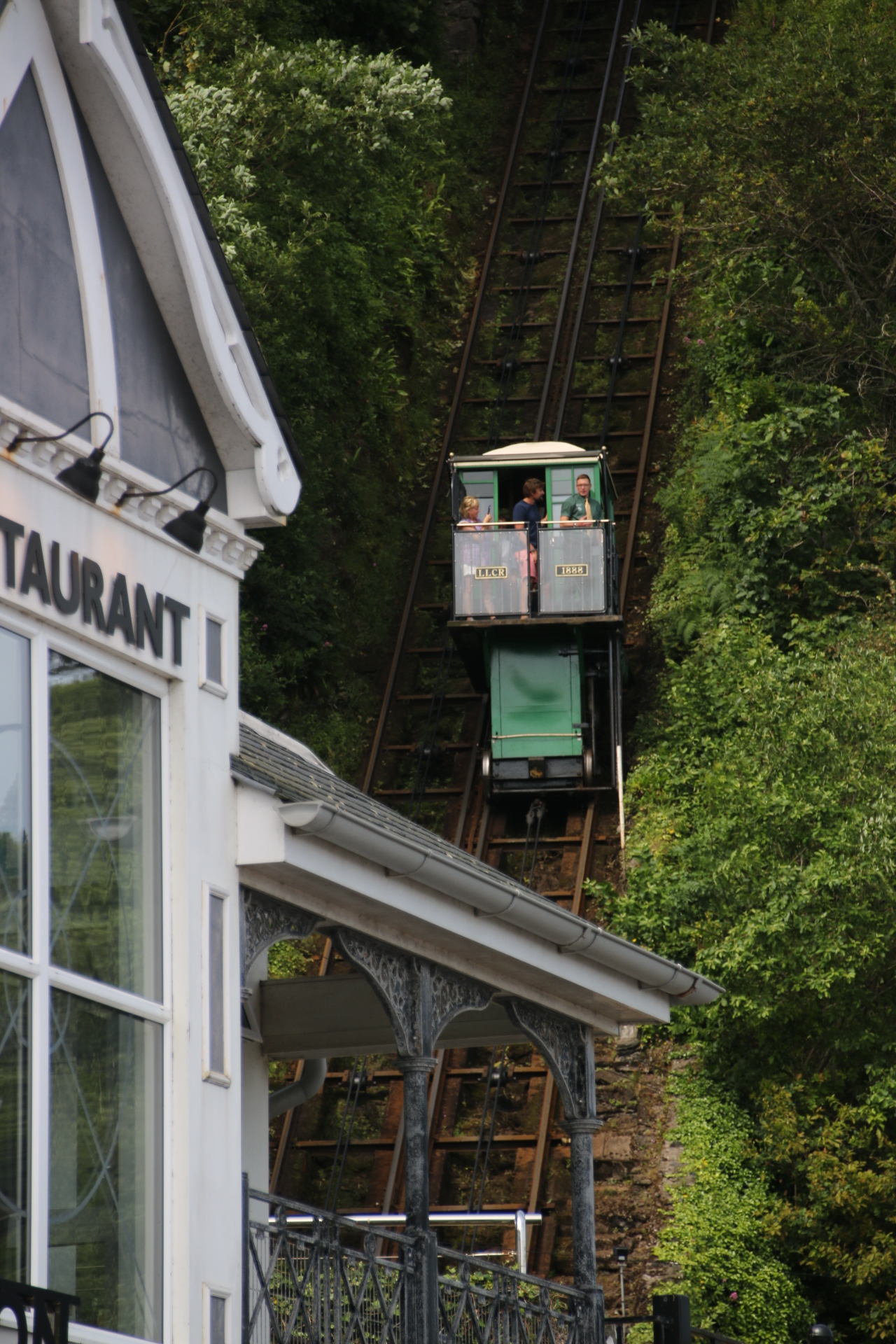
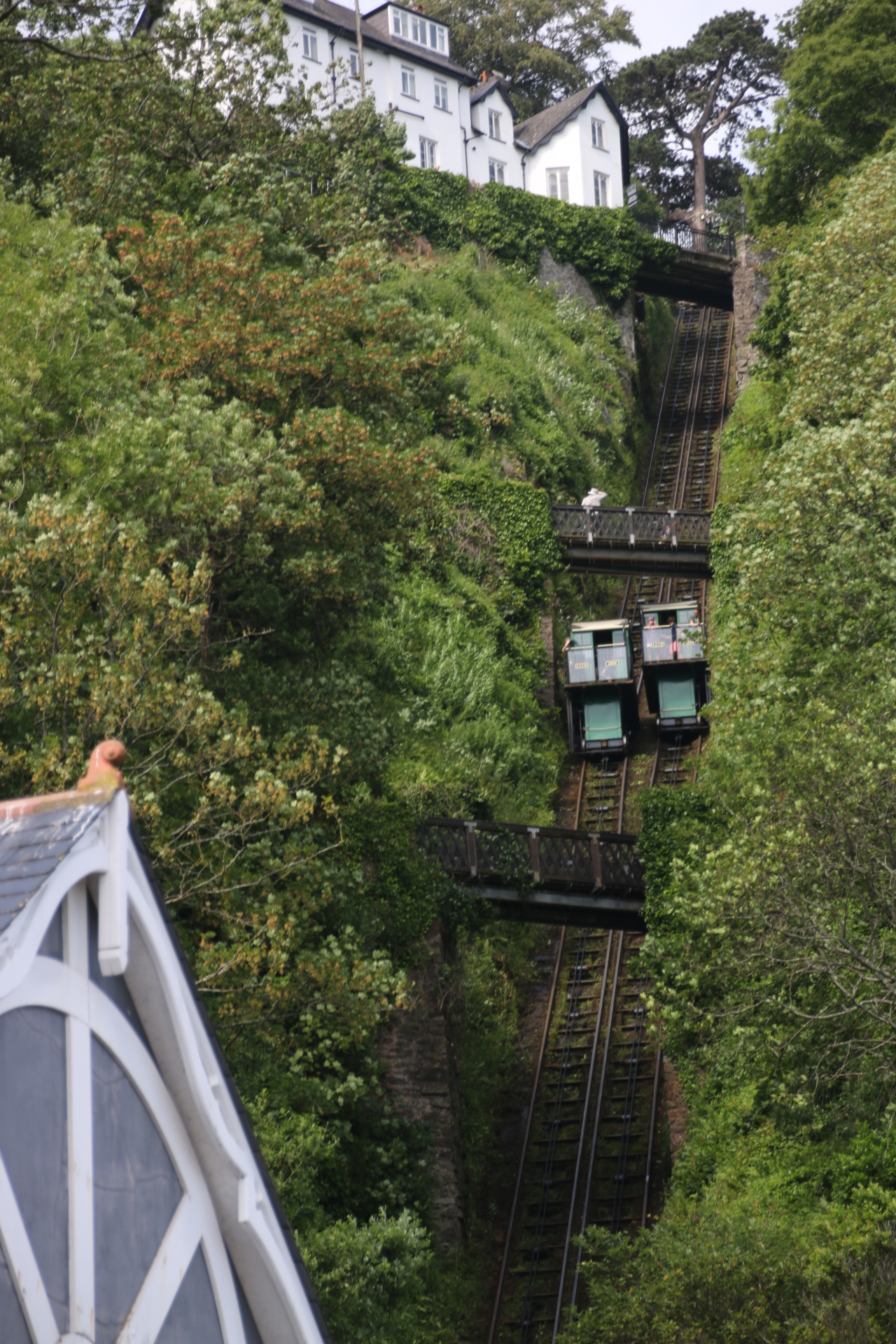
The waterpowered Cliff Railway toils up & down, filling its top water tanks after each journey linking Lynmouth with its high neighbour on the cliffs


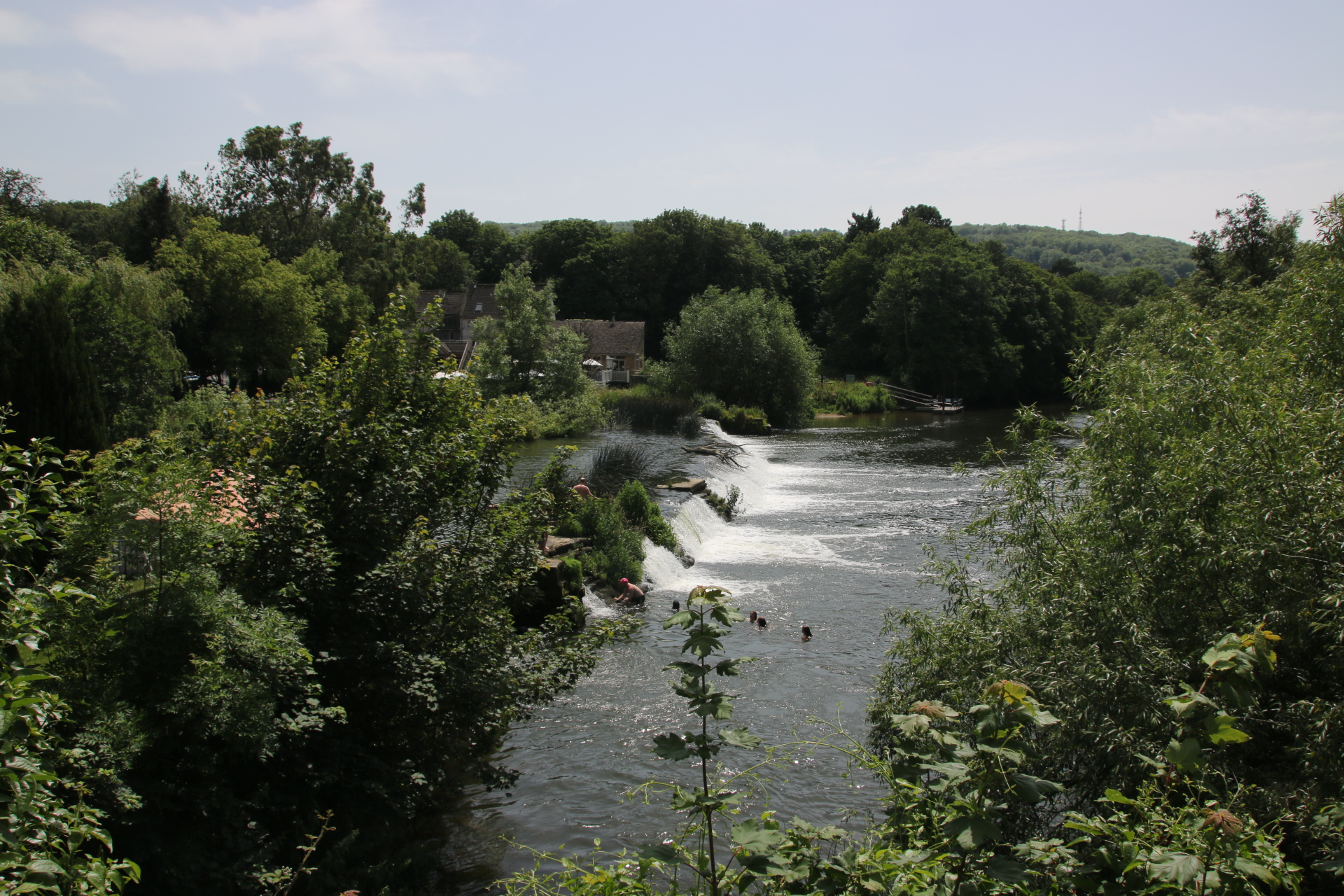
I have to leave you with two bathing places on the Kennet & Avon Canal which I included on my way home. The first is on the River Avon, not the canal itself, at Bathampton, by the tall bridge.

The other is at Clavendon Pumping Station. To get to it you have to walk down a narrow track, over the canal bridge, over the pedestrian gate across the main line to Bath and into the meadows where the Avon smoothes over a weir. Both places are glorious in weather like this, even if the locals have claimed them already. There is space for all.

From Watchet to Porlock Weir

Two days of hot, sunny weather is forecasted so the routine goes out the window and out comes the camera. I have two legs I want to complete – past of the coast in Somerset/Devon and a small section of the Kennet & Avon Canal. They are in the same direction so I decide to do the former first and complete most of it today leaving the other for the way home.

So I head for Steart on a peninsula, west of Barnstable, sticking out into the Bristol Channel. There’s not a lot here.

It’s not called Steart Marshes for nothing even if some small settlements hug any firm land they can find. Sheep and cattle graze the lush grasses, rushes line the vast expanse of clinging mud and large pebbles form an impossibly hard beach to manoeuvre. Hartland Point Power Station is the main, man-made feature on this part of the coast.

The first real settlement is Watchet. A delightful harbour town which is also on the West Somerset Railway line. You can almost feel the history ooze its way out of the Flag stones around the harbour.


Blue Anchor is a long, wide strip of pebbles backed by a road, backed by a line of static caravans. Each end is stapled to the ground by a group of more permanent detached houses.

Dunster Beach is the coast side of Dunster Castle and of Dunster medieval village. There is a refreshment van and then a wide strip of parked cars and vans with their owners sitting out on camping chairs devouring the Sun or the Mail. The other end consists of a never-ending crescent of large, almost bungalow-sized beach huts which line the heart of the bay.

Minehead had its glory days in Victorian times when it’s rather remote location only allowed the wealthy to make the journey to its glam hotels and bathing huts. When the railway arrived the hoy poloy were able to holiday here. This was exaggerated further when Butlins established a holiday camp here in the 50s, which now has an almost permanent presence in the town, swamping any history the harbour might try to show off.

Porlock Weir is delightful. A fishing and trading centre for the Porlock Estate, the harbour still provides shelter for private boats while the bars and hotels refresh the crews and the more up-market souvenir shops like Exeter Glass satisfy the shopping visitors.

3 days and 3 nights in Chicago

You’ve not heard from me for a while. In fact I’m back. I simply had no time to write my blog while in Chicago. I was so busy exploring a whole new side to this city. So, I’ll put a jumble of images together for you to try to encapsulate what a fantastic place this is – in terms of music, food, experiences & history:

An evening at the home of Blues – Kingston Mines. Every night, 365 days of the year, two bands alternate on two stages, each for three sets of 40 minutes.

A visit to Garfield Conservatory. It’s free.

I’m told the weather gets warm/hot. Go to the beach. Lifeguards are included if you fancy a dip.

Exploring, on foot, Downtown and images around the famous elevated ‘L’ (elevated!!) Loop.

Exploring the local neighbourhood at night after a wonderful meal in Chicago’s own Beatnick Restaurant

How about these two? The second one is a diner.

If you do come to Chicago you must do the Segway Tour. Not only do you visit tourist hotspots like Soldier Field Football Stadium, Shedd Aquarium, the Field Museum, but you duo it on a Segway which is so much fun. I have to say taking a photograph on the phone with one hand, whilst balancing the machine at their same time,is a real feat.


Another high spot, in two meanings of the word, is brunch on the 95th floor of the Hancock Tower. Not only a fantastic meal but a fantastic view up the lake.

And that’s not to mention the Supermarket Wine & Food Tasting, the Puerto Rican meal, the numerous bars, the creamed corn to go with the pork ribs, the Blind Barber in the old Meatpackers’ District (you walk through an actual barber shop, through a narrow door and into a bar, a very trendy bar at the back; you can get an actual hair cut too!!) and the subterranean lands under the river bridges.

Navy Pier in the fog

Chicago really does live up to its name of the Windy City. The weather is so changeable. It can be a warm 26°C (although the Americans use Fahrenheit just to confuse us Europeans even more) one minute and a chilly 7°C the next. The branches of the trees are a good indicator. When they sway, more than likely the wind will be coming from the north, from over the lake, bringing the weather in with it, dropping the temperature and snuggling in fog, cloud, rain and worse. Quite literally it is possible to have all four seasons in one day, even in one hour, at this time of year.

For once the weather behaved itself today although Windy still managed to dominate proceedings. We headed for Navy Pier. Despite a sunny, warm morning at home, as we approached lakeside the fog descended, hugging us down with a white-grey blanket of cold air. Only the bottom 3/4 floors of the surrounding buildings could be seen.

The Navy Pier was built before the Great War to handle cattle shipments and the flow of immigrants that came to the Promised Land. Now it is a playground for tourists. Sightseeing cruises leave from here. There are bars and cafes and a theatre and a fairground. Not to be outdone by Monsieur Eiffel in Paris, a Mr Ferris built the first ever Ferris Wheel close by for Chicago’s 1893 World Fair.

When we arrived the fog hid the other side of the harbour. We were there for an hour long Architectural Tour of the lake side on the Windy, a traditionally-rigged, sailing tall ship. We walked down the line of vessels – brash but rather sorry-looking cruise ships with 3/4 decks, water taxis, fluorescent Seadog 50-seater speed boats….and there’s our elegant, classy, sophisticated three masted schooner. We are assured that we’ll sail so we retire for a coffee and watch the fog rise to release us from its clutches, warming up the day as it does so.

As we cast off the whole of Navy Pier is revealed although tongues of fog still lick across the bottom floors of the high-risers.

We gently move out into the harbour on the engine. The boat comes to a gentle station in the middle of the harbour. The crew, dressed as pirates of the day which slightly brings down the tone of the voyage, then proceeded to instruct us in the raising of the sails, which, I have to say was very hard work….and a bit futile….there was no wind, none, not even a huff. So from our silent, peaceful spot we watched the fog rise and fall creating some wonderful images of the shoreline.

From out here the lighthouse guarding the entry to the harbour can be clearly seen with the marker on the other side. With the lights now being automatic, the building lies empty, no longer the home of the Guardian of the Light.

Out in the distance lies the entry to the water supply for the whole of the city.

After a while sitting out here in the gently lapping peace, a return to the quayside is ordered by our captain. By this time the sun has almost fully burned off the remaining fog and the full shoreline and the fairground can be clearly seen as we head for home.

The afternoon is spent sitting in the sun, watching the vessels mess about with each other, cross-crossing the harbour.

The Chicago Fire Department Fire Boat was the highlight as it showed of its full array of powerful water cannon….effective in putting out fires or dealing with rioters and lesser vessels. Big show off.


So much to do, so much to see in Chicago

Sunday is spent back at the Taste of Randolph Music Festival – more beer, more bands, more Country, more burgers.

Two stages & a Dance set up.

At least 10 bands on each stage with five on Friday. Not bad – 30 bands for $10.

Monday is spent visiting & revisiting new and old hot spots. Firstly, a walk around the Bean in Millenium Park.

Watch the crowds around Crown Fountain.

A Chicago Dog for lunch and a game of table shuffle-board in the Athletics Club

before visiting the Japan Festival in the Cultural Centre.

Pop into Macey’s to see the Tiffany ceiling.

In the underpass on the walk along the river to the lake, study the tiled mosaics that tell the story of Chicago. The two panels below describe how the city decided, in 1848 to turn the flow of the river away from the lake to create the Chicago Sanitary & Ship Canal. Previously, the river had been used to clean out the cattle yards where hundreds of thousands of cattle were housed and then slaughtered.  The city’s human waste and sewage also emptied into it and so flowed into the lake from which the inhabitants drew their drinking water, becoming rather ill in the process. By taking advantage of the lake being at a higher level than the river, a wider canal was dug to a lower level which created an increased flow thus changing its direction.

Take a water taxi through the centre of town up the Chicago River to China Town.

Then head out to a local bar for eats and beers to end the day, a very busy day.

Neighbourhood festivals of live music

There is so much live music in this city and music of every genre to meet everyone’s taste. We take full advantage of it. Last night was an evening in Ravinia Park to hear the legendary Buddy Guy, the King of the Blues. His voice and the handling of that guitar is still out of this world. Thousands eat their fancy picnics and then sit around and listen out on the grass, even in the pouring rain as the main man does his stuff under cover in the open-sided auditorium.

In the morning a coffees is required. In the US there are two types of coffee. There is the refill mug -you purchase the mug and a bottomless pot of filter coffee keeps coming around. The other is the craft coffee based on Italian shots and this takes place in some very trendy buildings like this converted factory at the edge of the meat packing district. Craft coffee is so trendy that it takes 10 minutes or so to prepare a simple latte.

Over the summer months there are 100 plus neighbourhood concerts. Each weekend in a different district a road is closed. Stages are set up, stalls erected and music, beer and street food tents established. The music plays from Friday until Sunday Night. This weekend we have a choice of two – Randolph Avenue is a short walk and gets the vote over Ribfest which is a lot further out.

Randolph Avenue is usually a busy dual carriageway full of traffic entering & leaving the city. Initially the empty road echoes the sounds of the first bands playing to a handful of festival goers.

The first bands on the West & East Stages start to warm the place up.

As the day progresses, the crowds increase and the bands perform their sets, each one appealing to their own band of loyal followers.

Sangria & beer flow. Burgers & kebabs & corn & tortillas sizzle and steam. Posters & T shirts are studied and purchased.

The world loves a good festival especially as the sky darkens and the base pounds out.

Me, I think of my warm bed and snuggling under the duvet.

Back in a new neighbourhood of Chicago

Well here we are in the Windy City again. Chicago – Frank Sinatra sang about it, the weather gave it its reputation and the Irish, cattle-men and the mob gave it its history. I love the place. Its iron bridges & overhead metro are a constant reminder of industry and power, pounding and clacking out the mantras of past & present moguls, opportunists, industrialists & businessmen. Urban Blues was born here, celebrated every year at the annual Blues Festival.

This is an oportunity to catch up with my daughter. She has moved to a new neighbourhood – West Town.

This morning, jet lag put on the back burner, is spent exploring these streets around Chicago Avenue. Yes please, we go out for breakfast and choose American Breakfast II, which includes the crispy bacon, from Breakfast Club.

Then a wander along Chicago Avenue. Here’s a selection of images from this cosmopolitan, diverse neighbourhood. It feels very similar to East Oxford.

We head for Alcala’s Western Wear. A store with everything a cowboy or a cowgirl needs from lassoes to chaps to hats to buckles to jeans to shirts. Madame from Mexico serves everyone with a huge smile.

It’s Fathers’ Day tomorrow. Amazing how many women were buying a shiny buckle for their man or a mooing hobby-cow for their sons (or daughters).

A leisurely stroll been on the other side of the street takes us home with a new view on to the buildings lining our route.

Fisherman’s friends in Port Isaac

Before leaving Bude there’s time to explore its two beaches. I like Bude. It feels like a town with a special character of its own and not just a holiday destination for visitors. It is early. The beach is empty. The lifeguards are setting up and the first dog walkers are out. The first activity on both beaches is from the surfing schools who have done their warm ups and force their way through the surf to begin a day on the water.

Down the coast the view from Widemouth is amazing.

Crackington Haven is a great name. A few people are having tea in the shop which doesn’t stop the surfing school from assembling down by the spray.


Boscastle feels a little bit precious. However it did not back in 2004 when the river flooded and caused havoc and chaos all the way down the valley. Now it feels fresh and sparkling and full of visitors.

Real people do live and work here.

Tintagel Castle was a fortified port between 2/500AD and the place Arthur was said to have been born. Ruins are all that remain but it is enough to appreciate the footprint it makes on the landscape and the extent of the defences of this old castle.

Port Isaac is such a gem. Quaint, atmospheric, historic…a lovely place to explore.