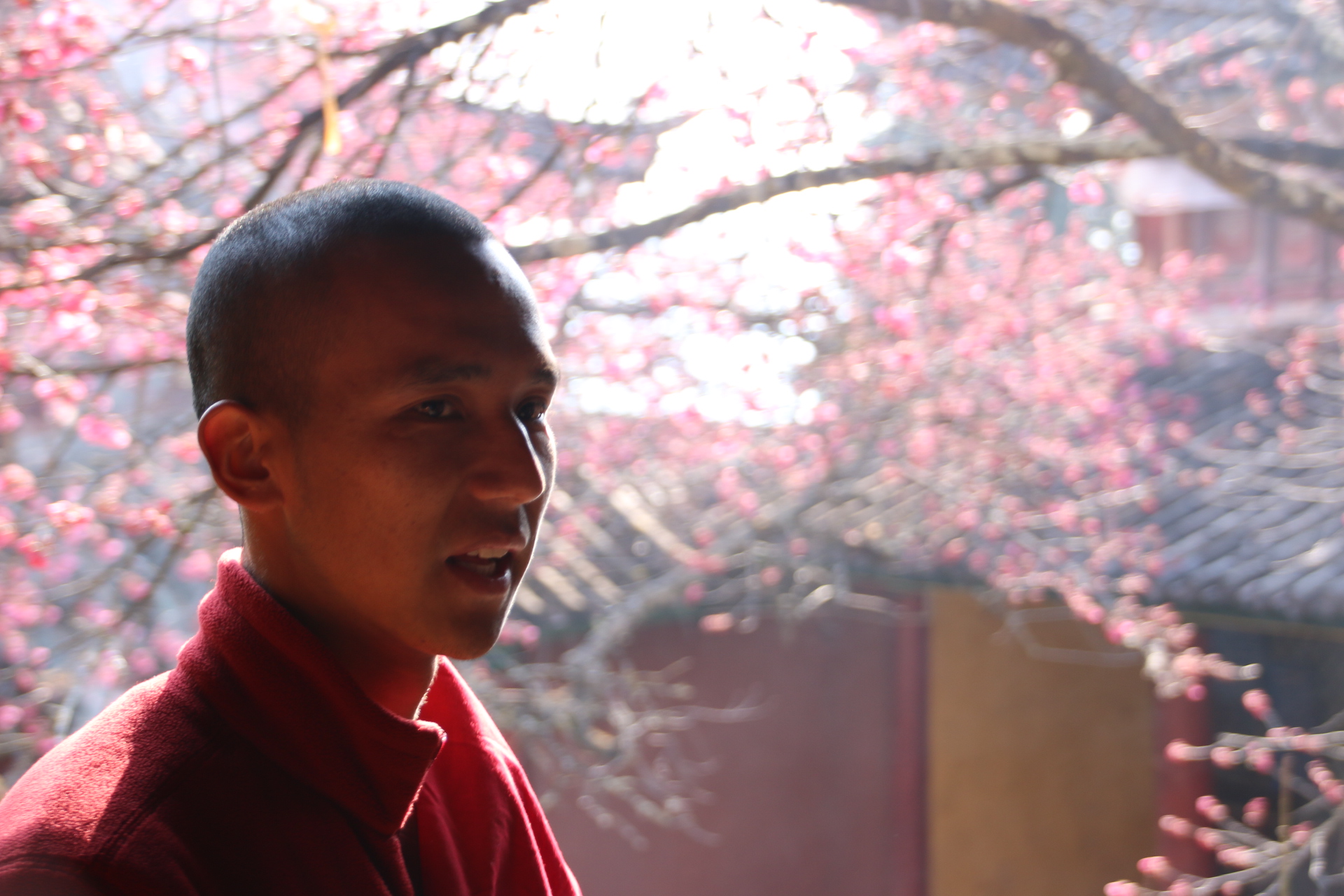
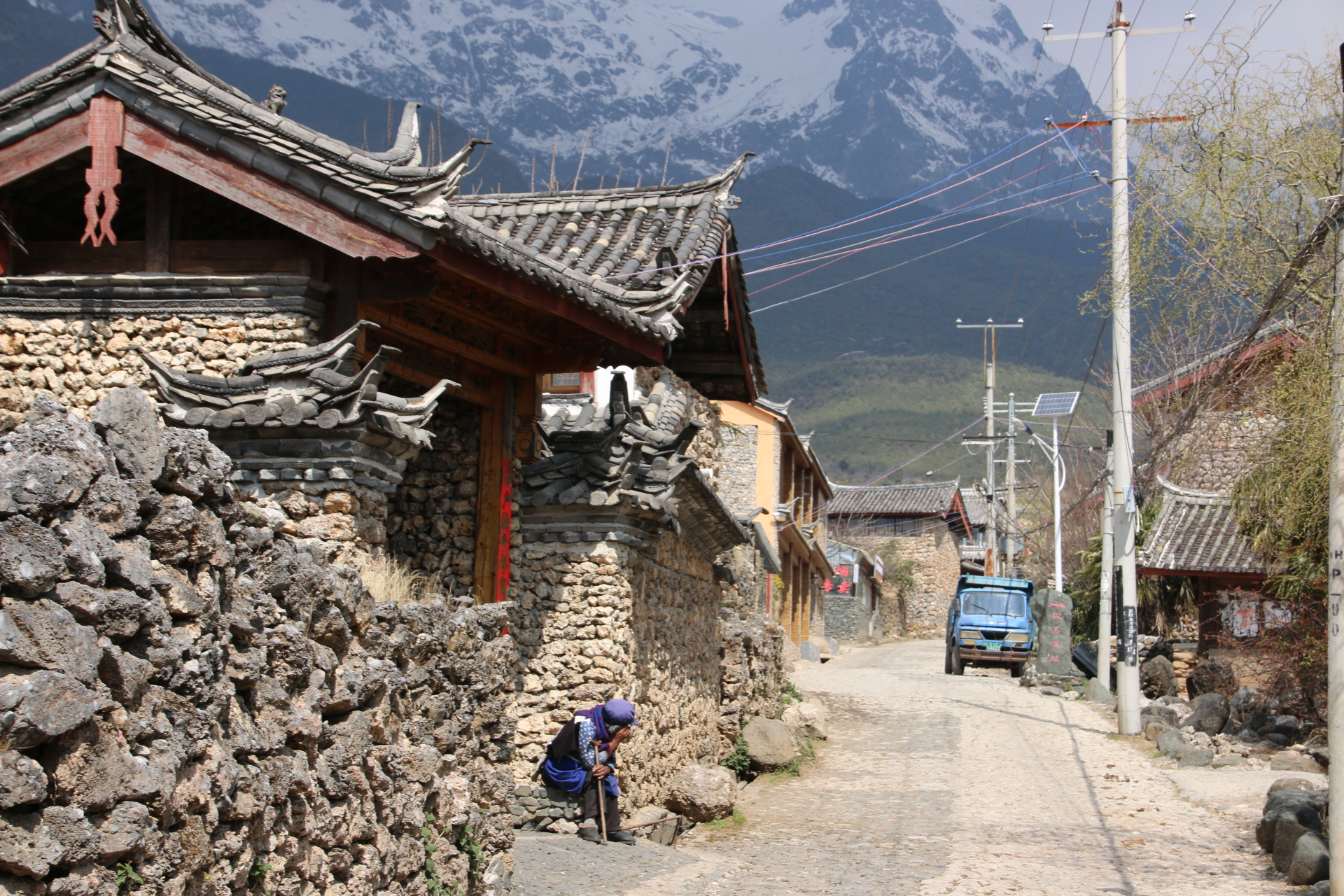
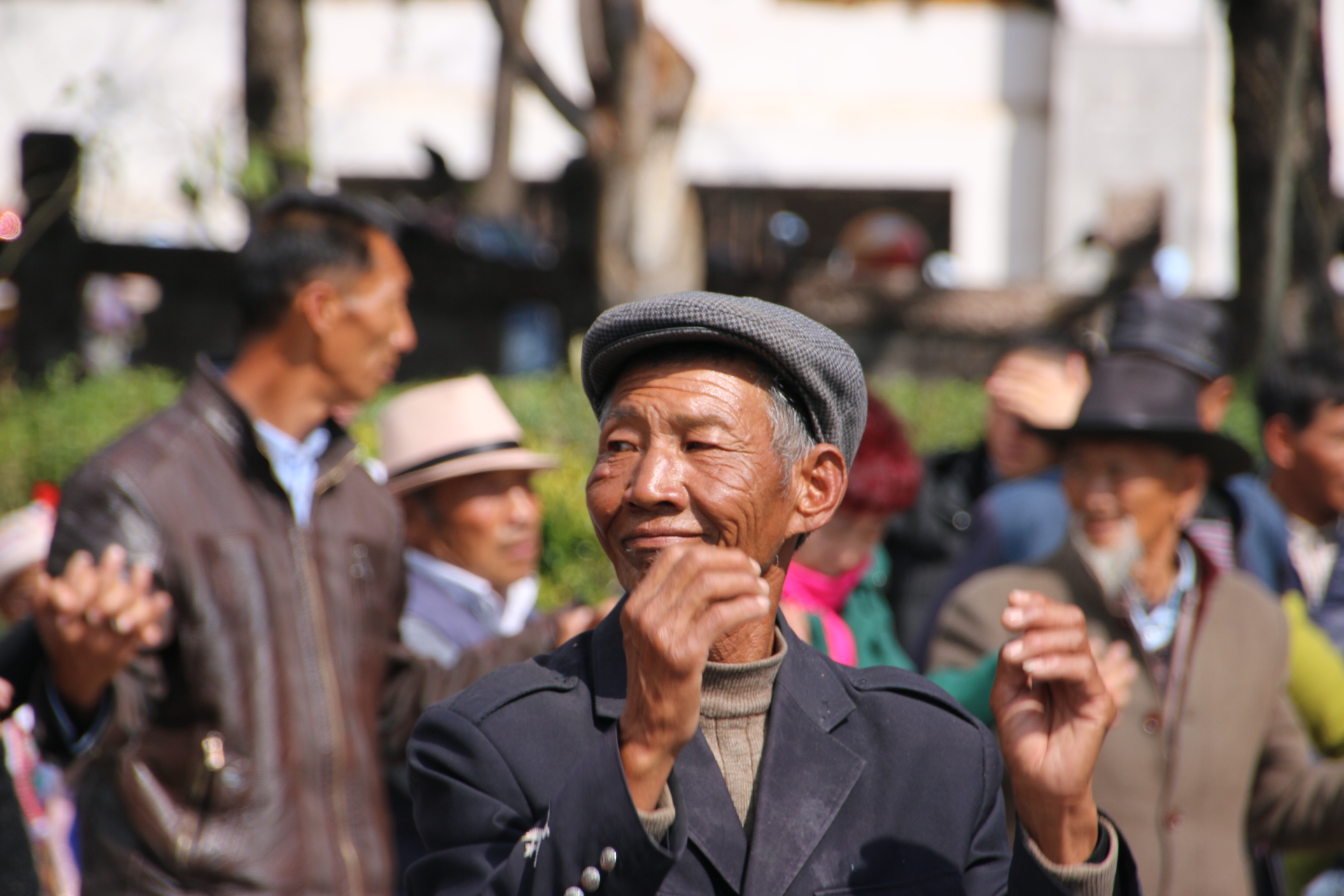
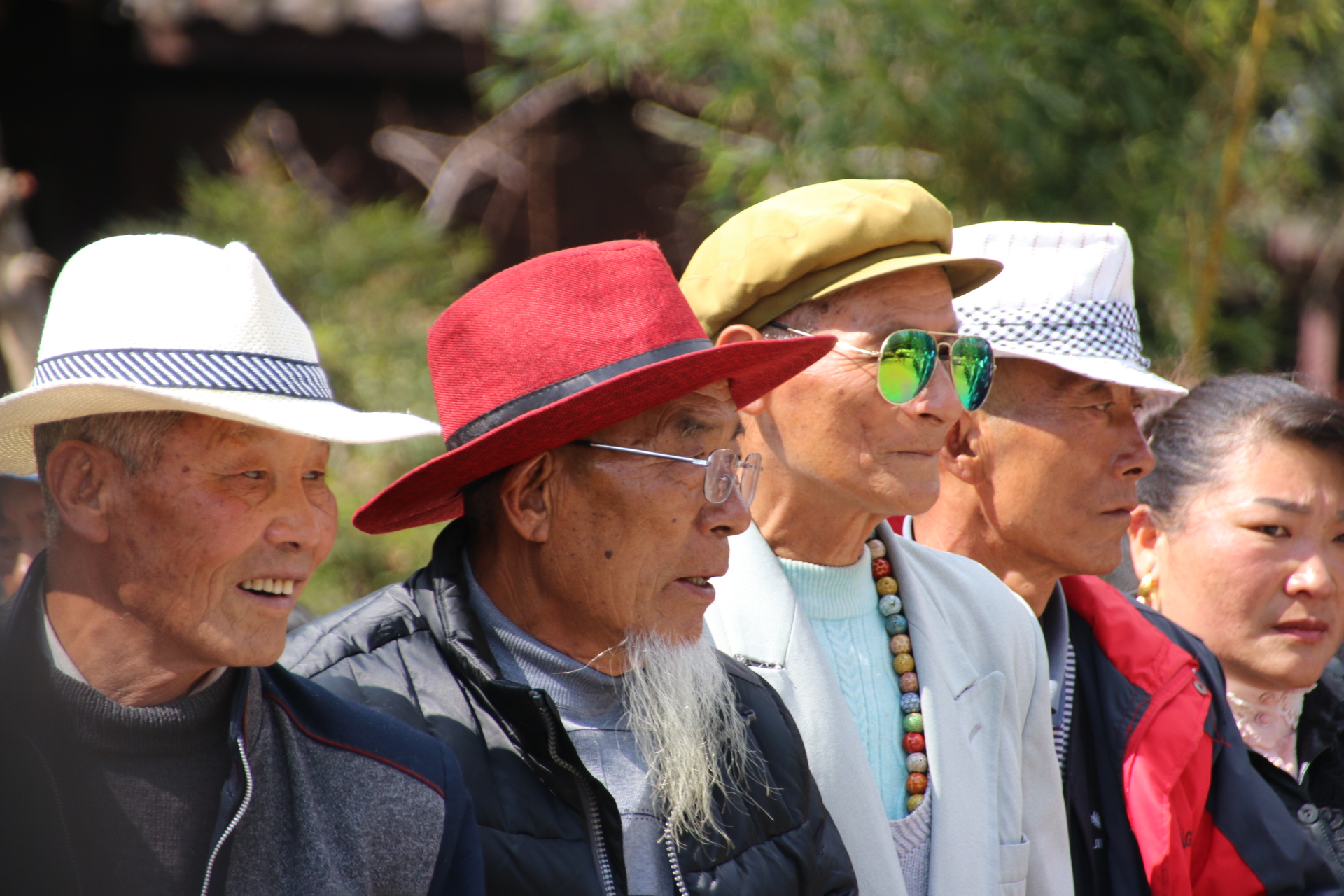
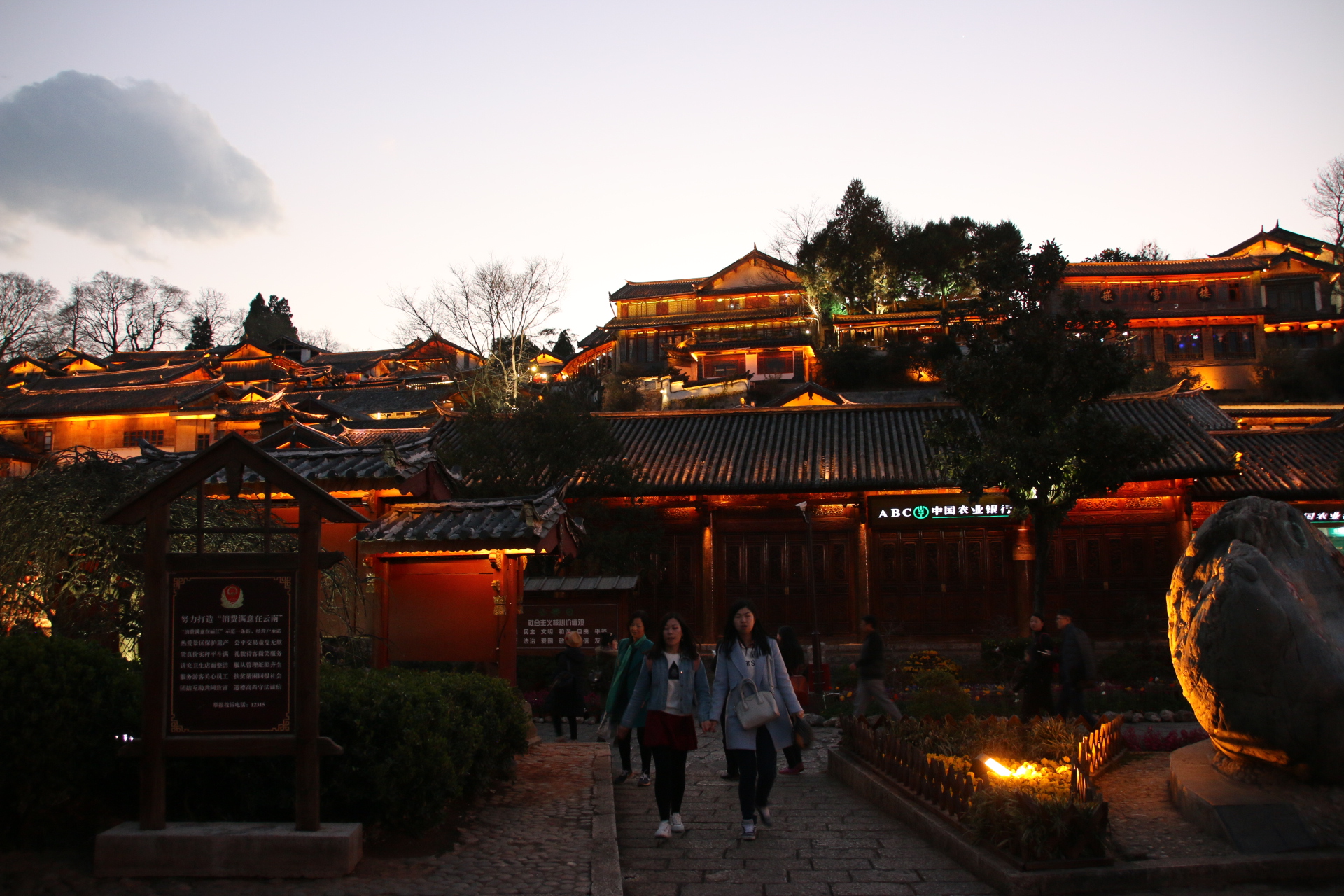
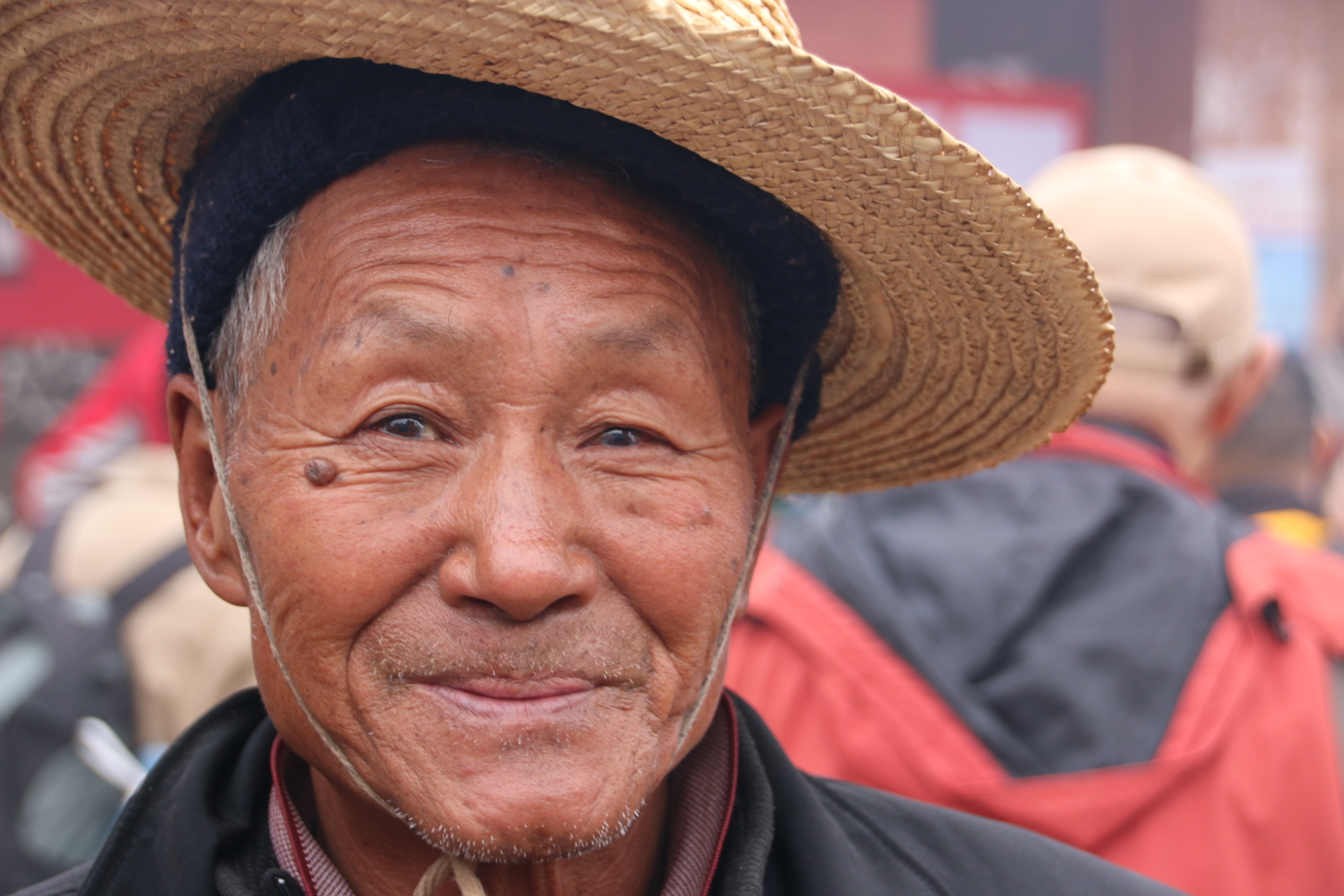
Double dose from the fire festival

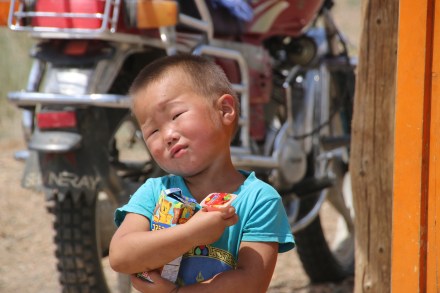
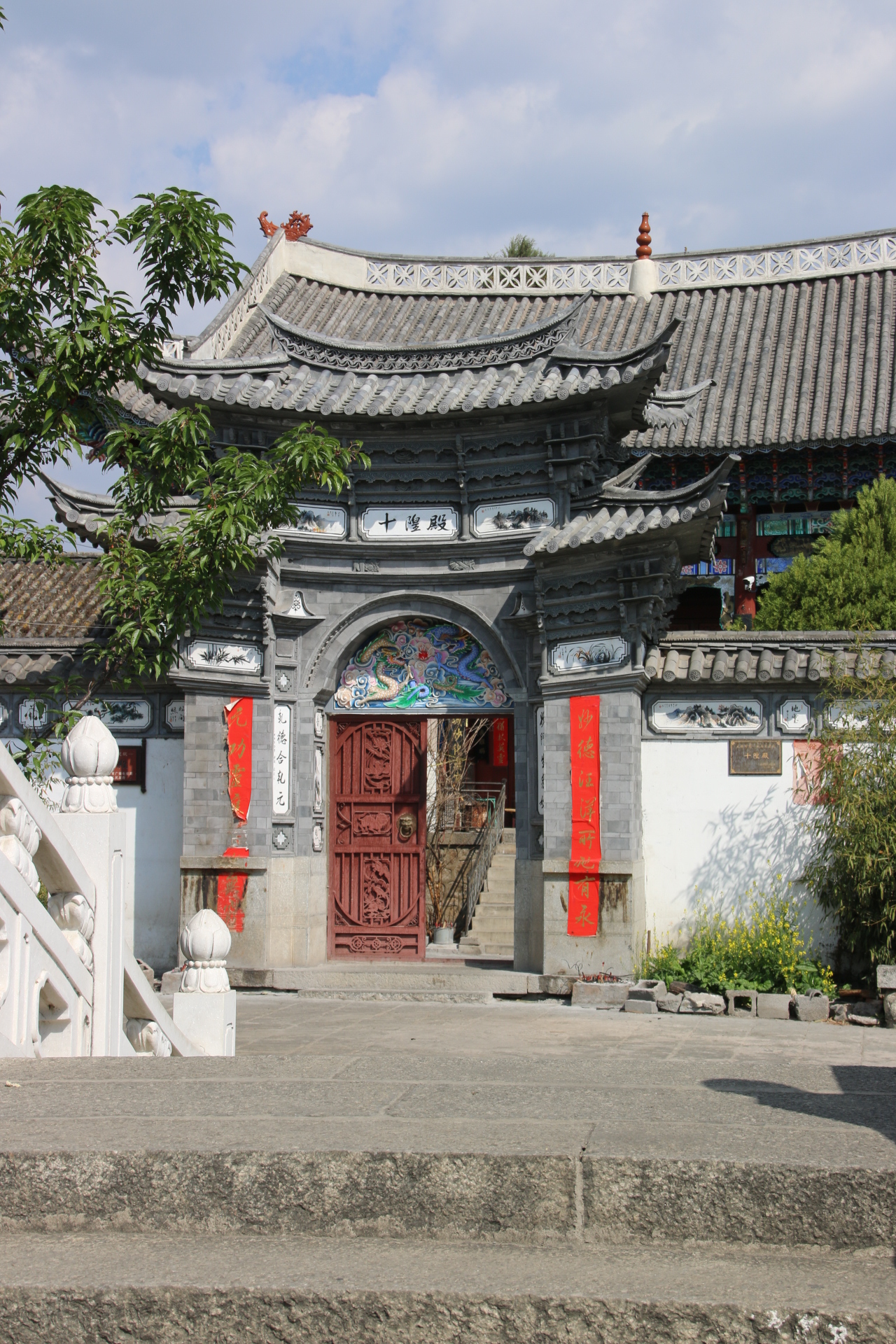
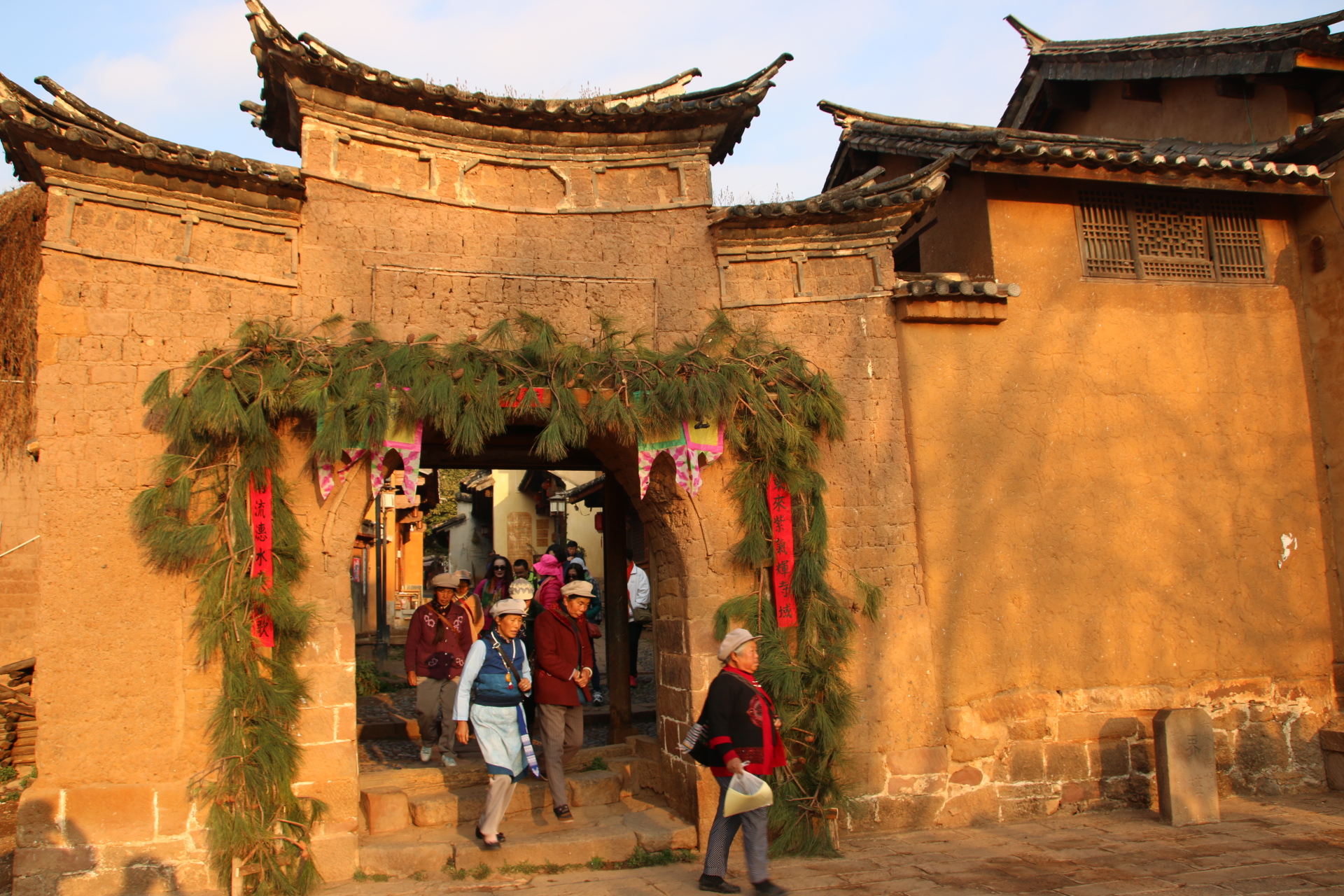
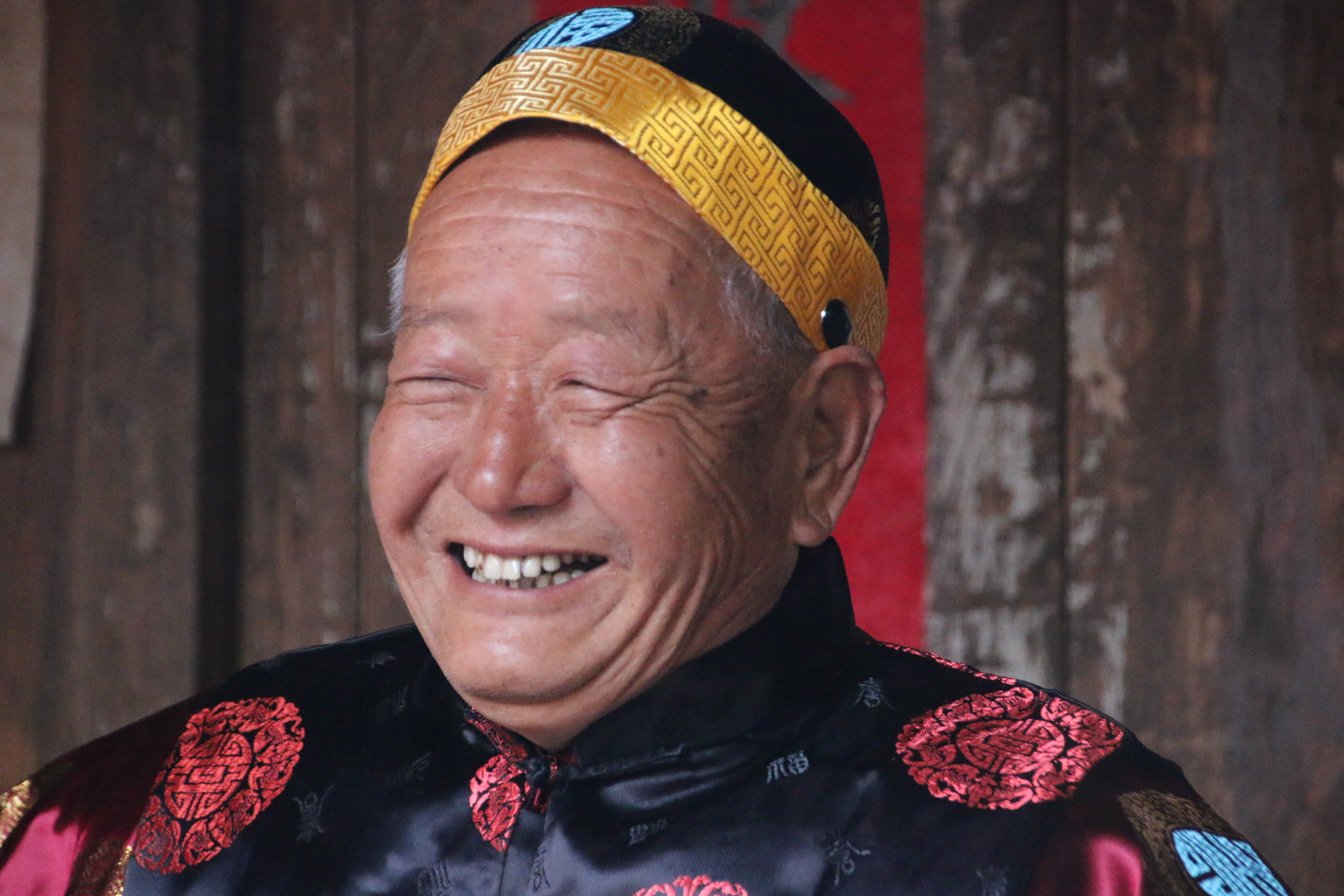
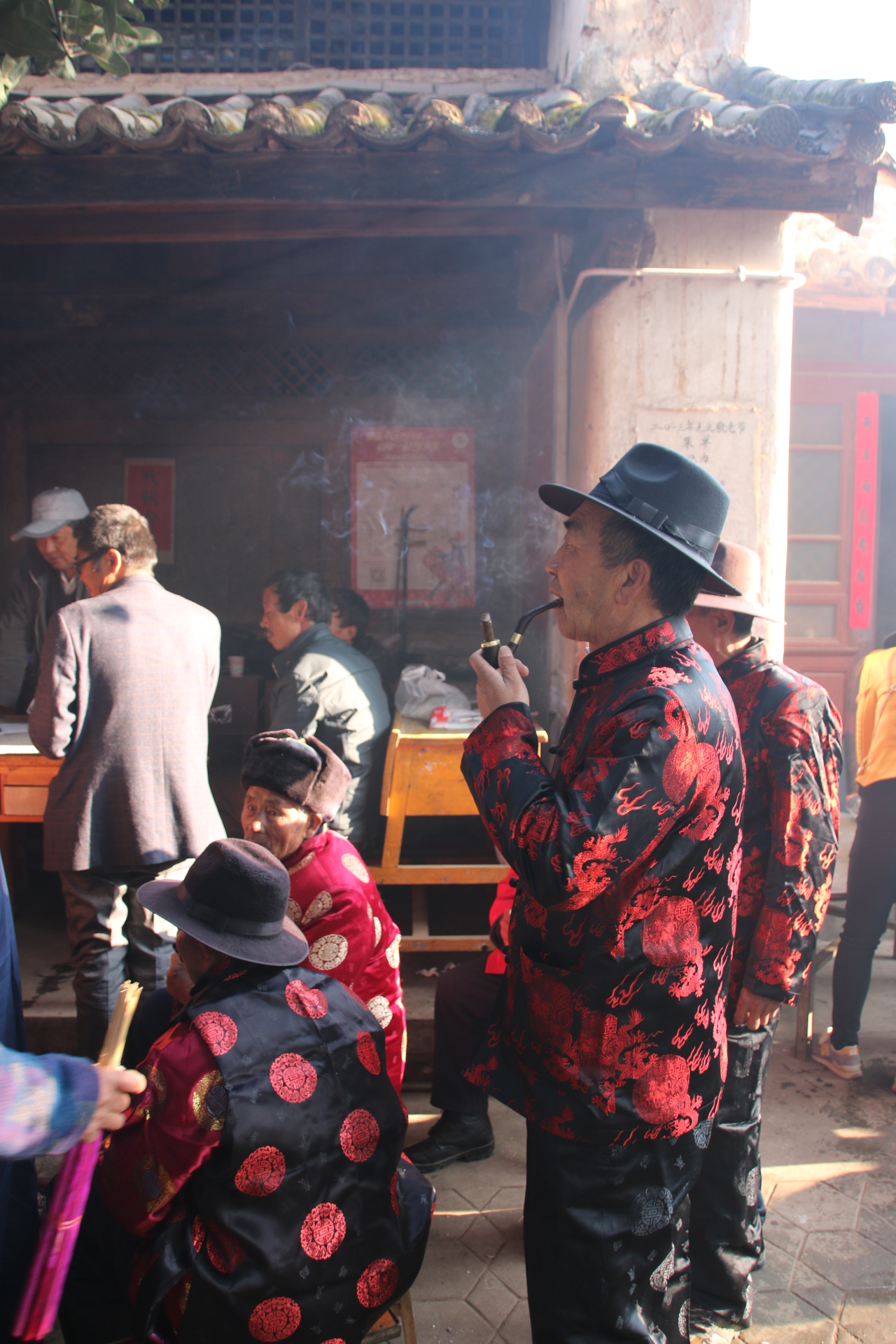
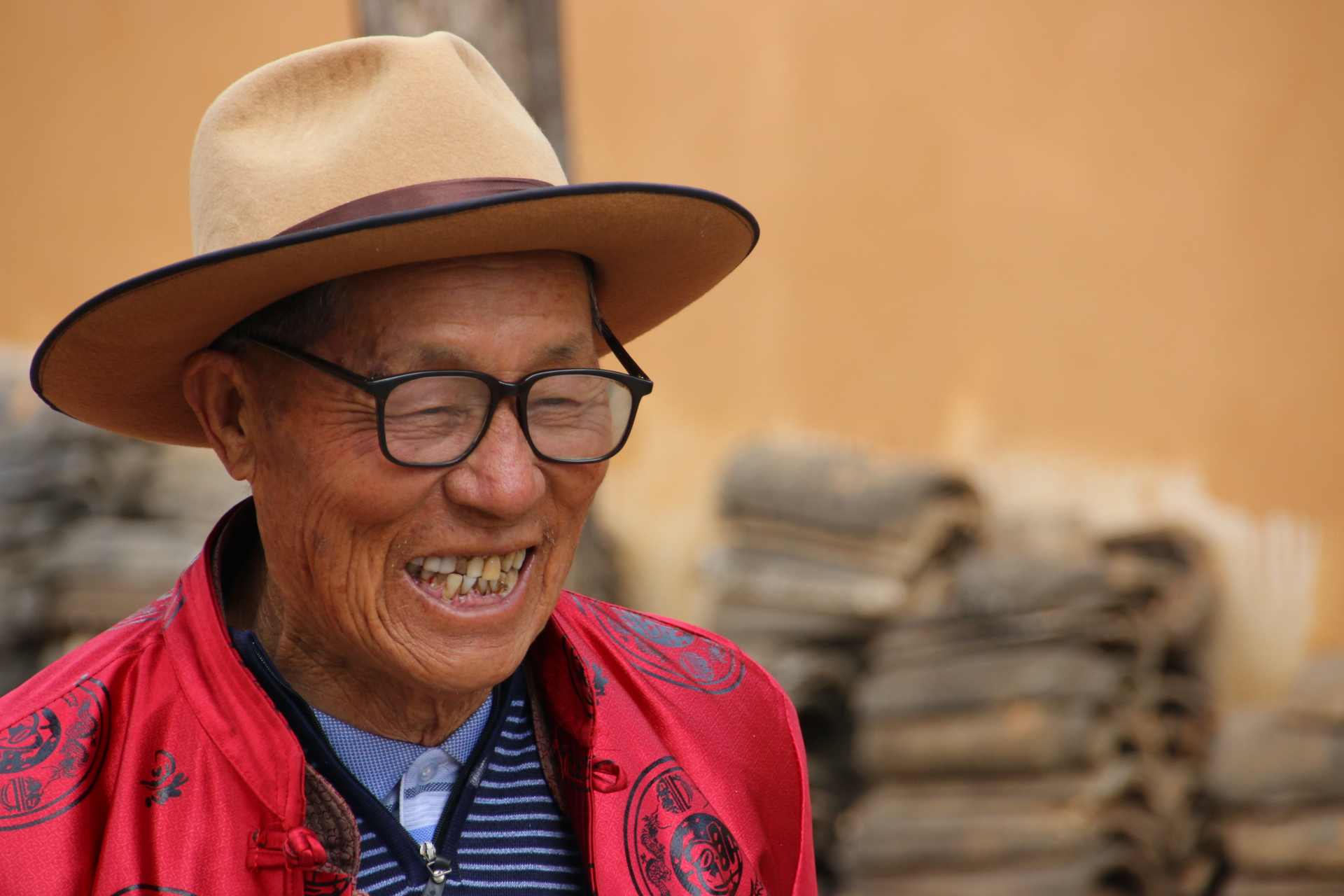
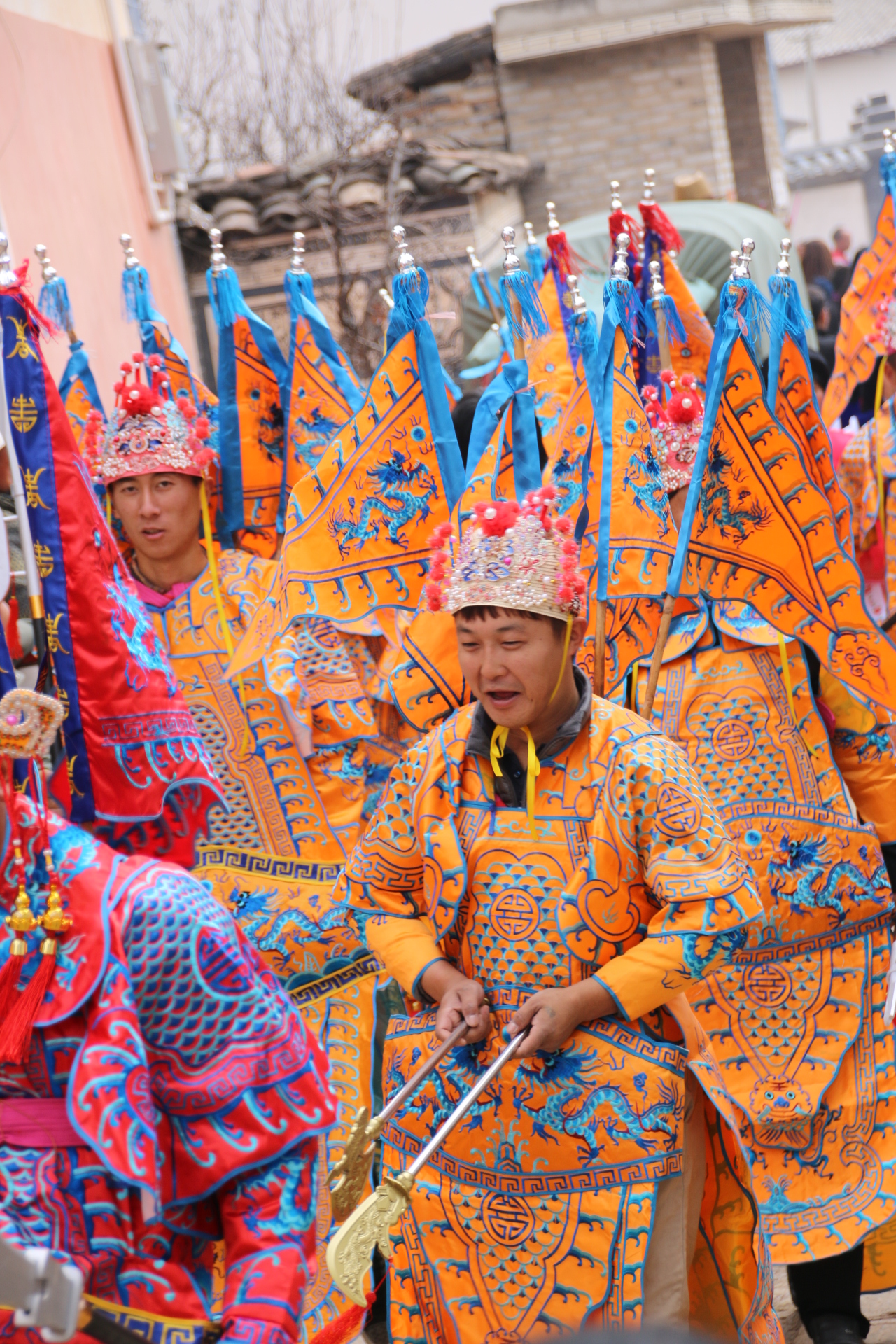
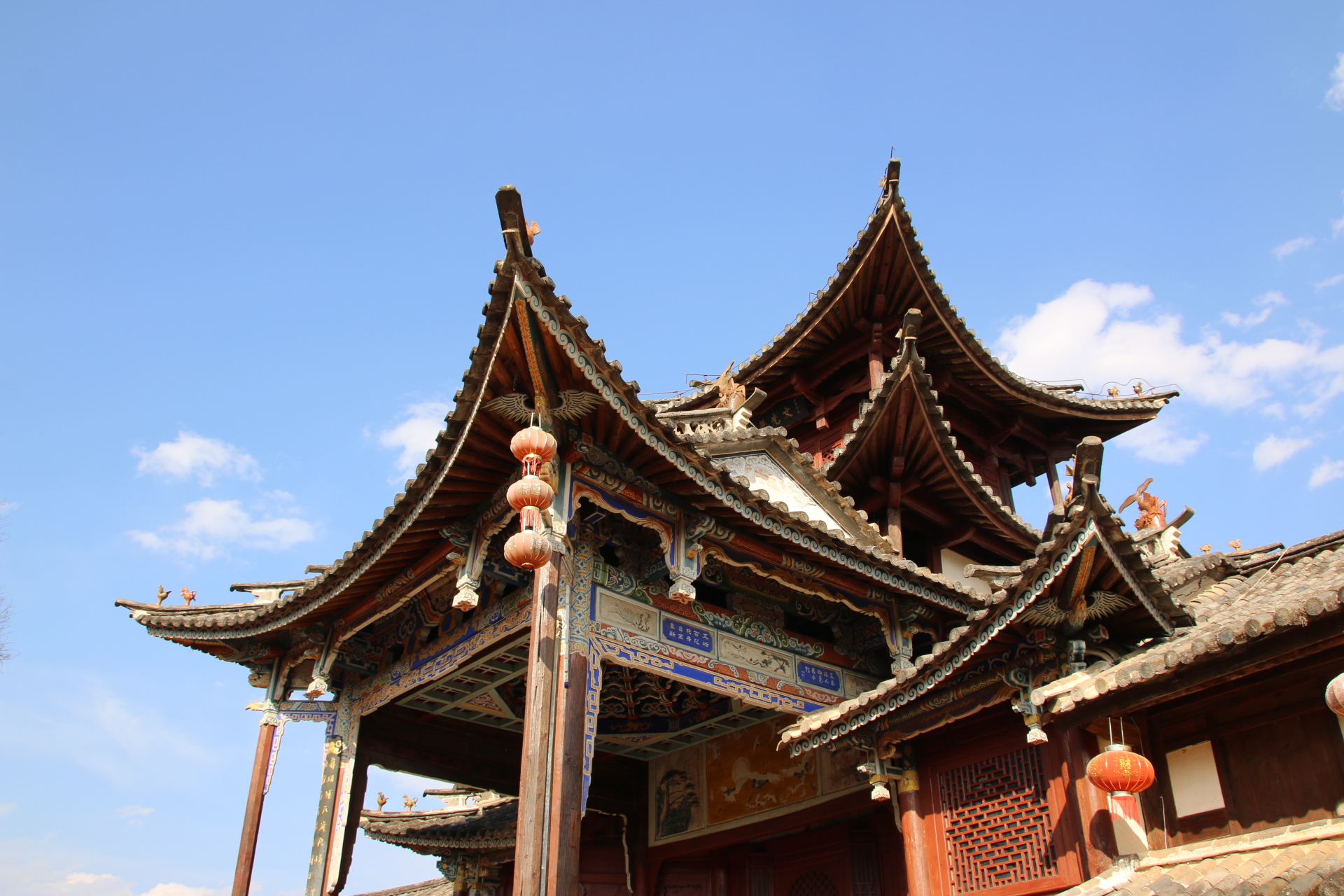
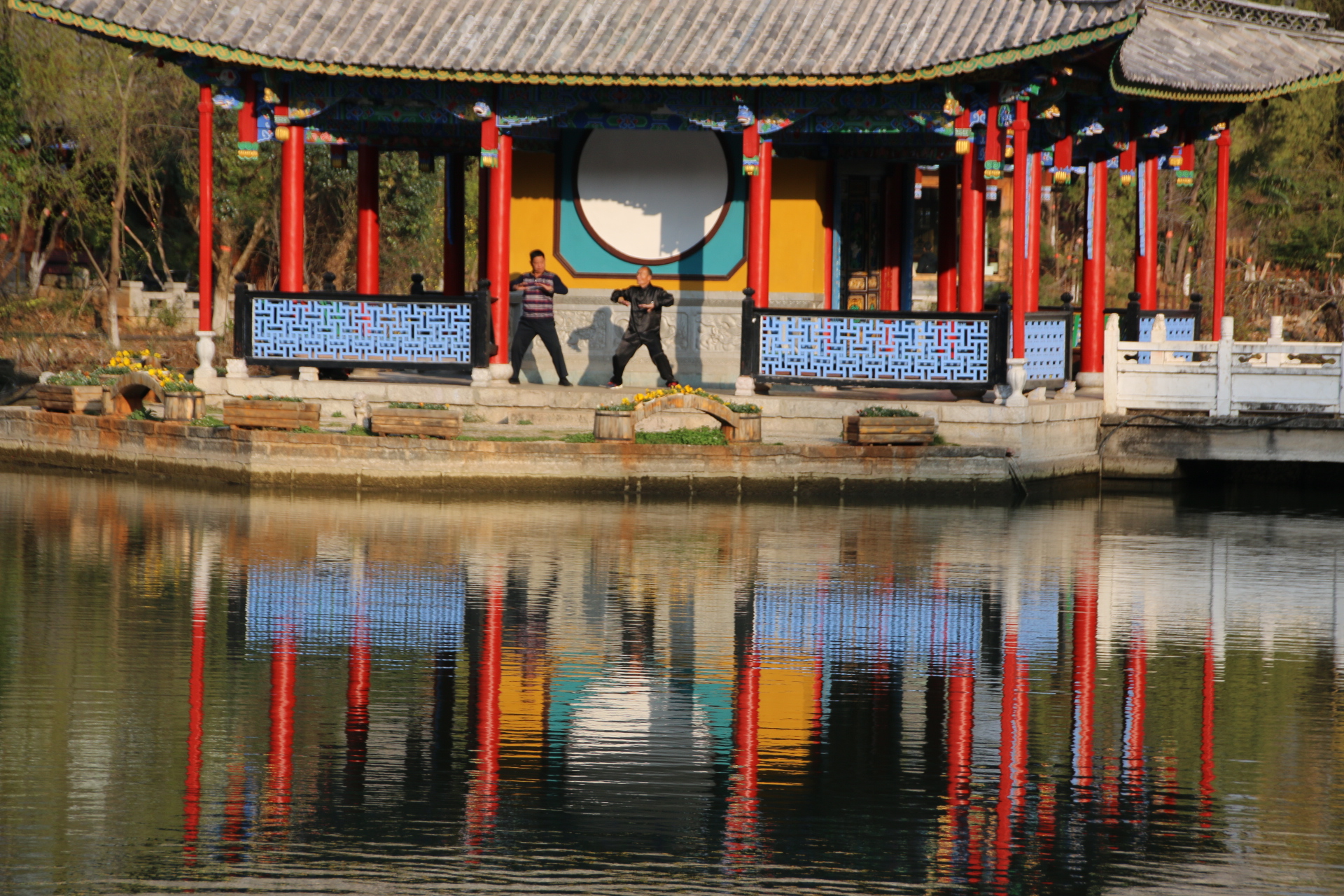
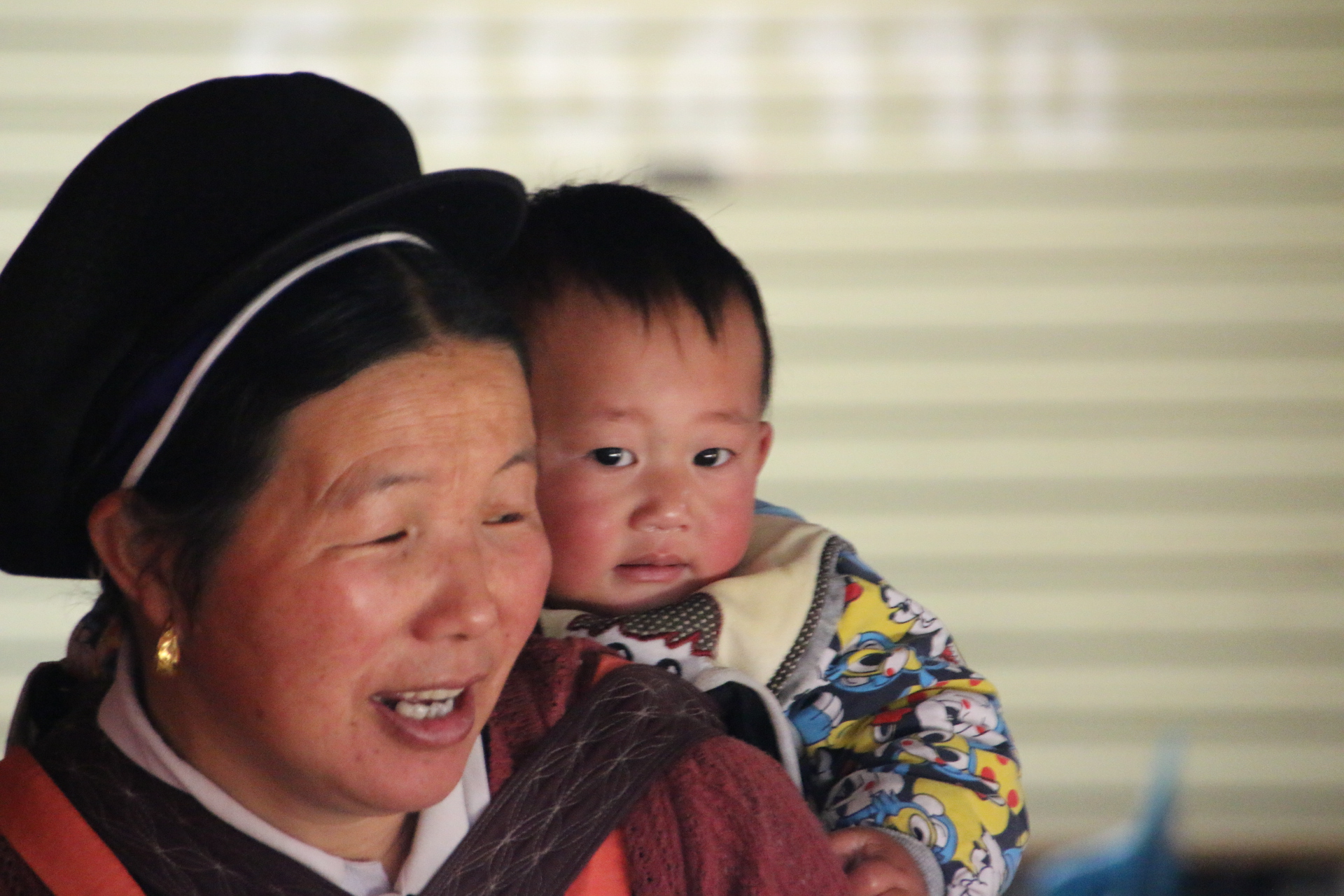
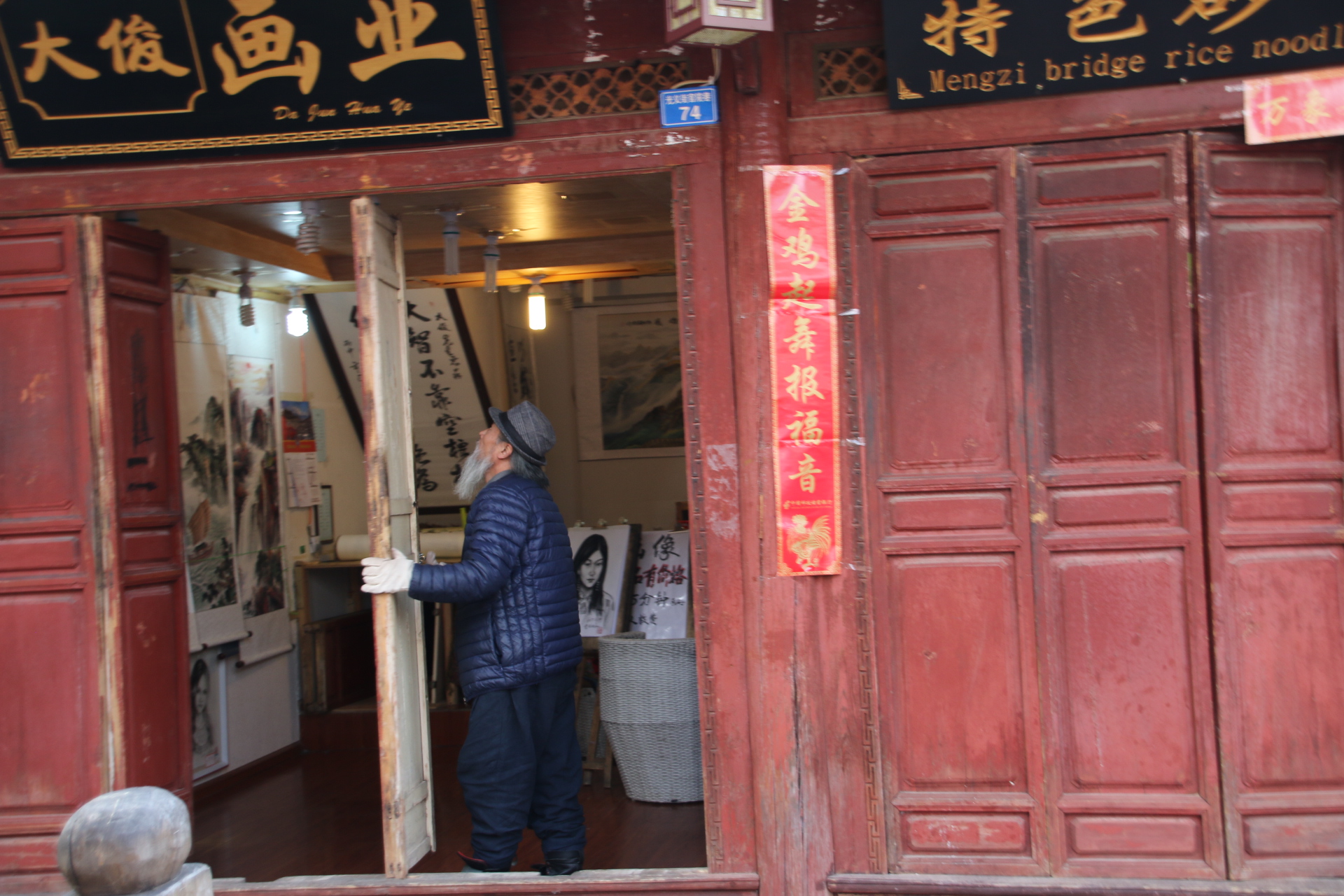
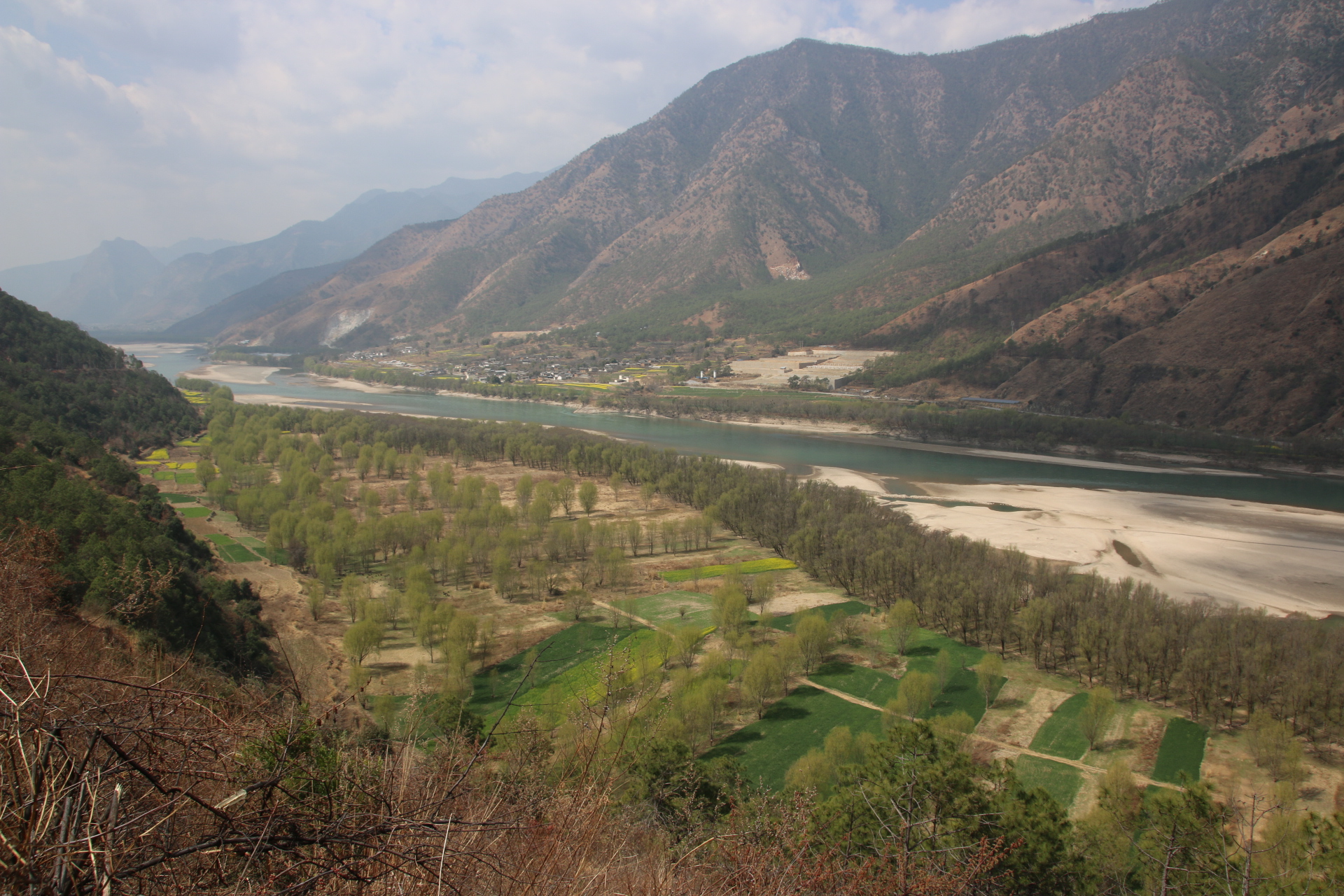
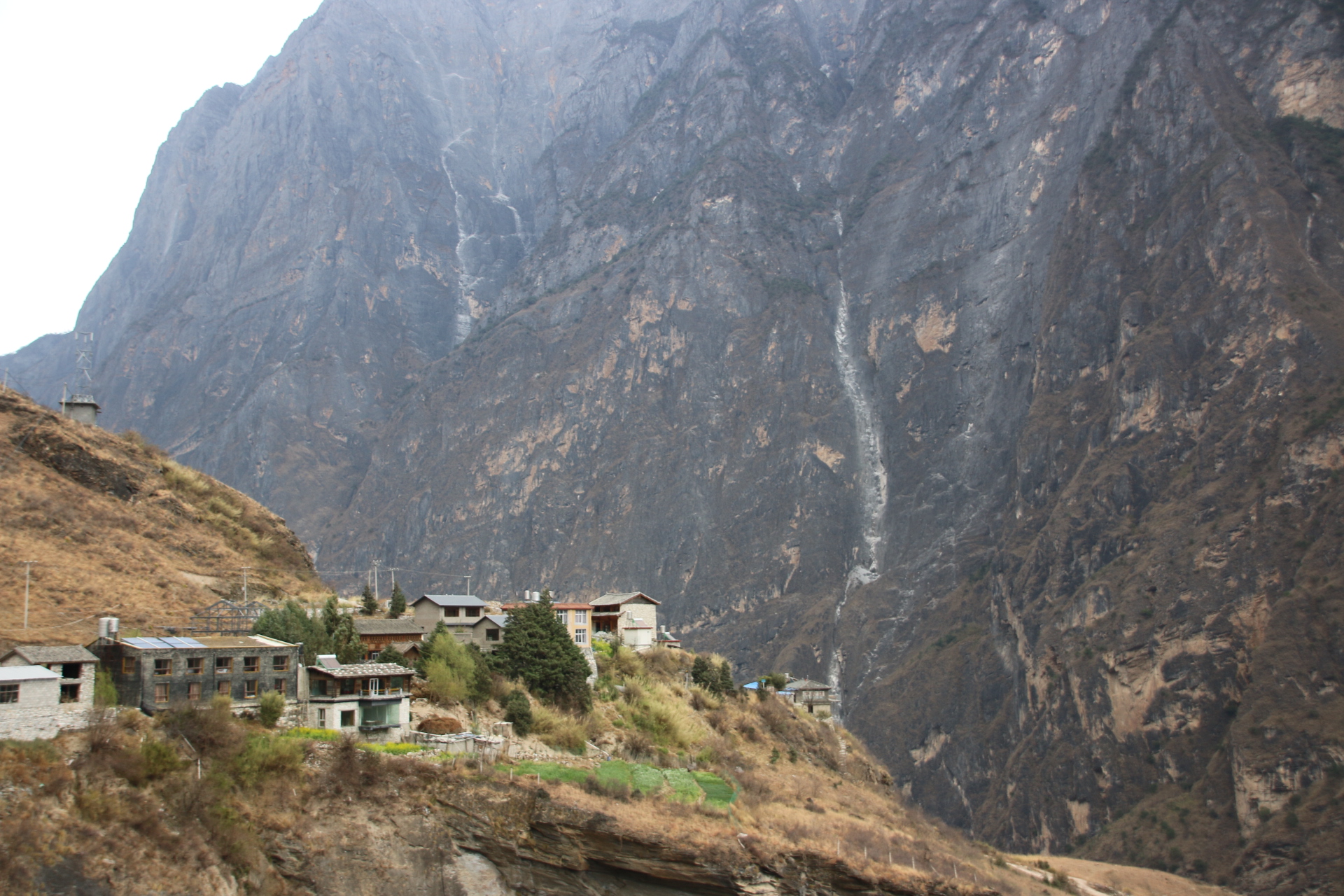
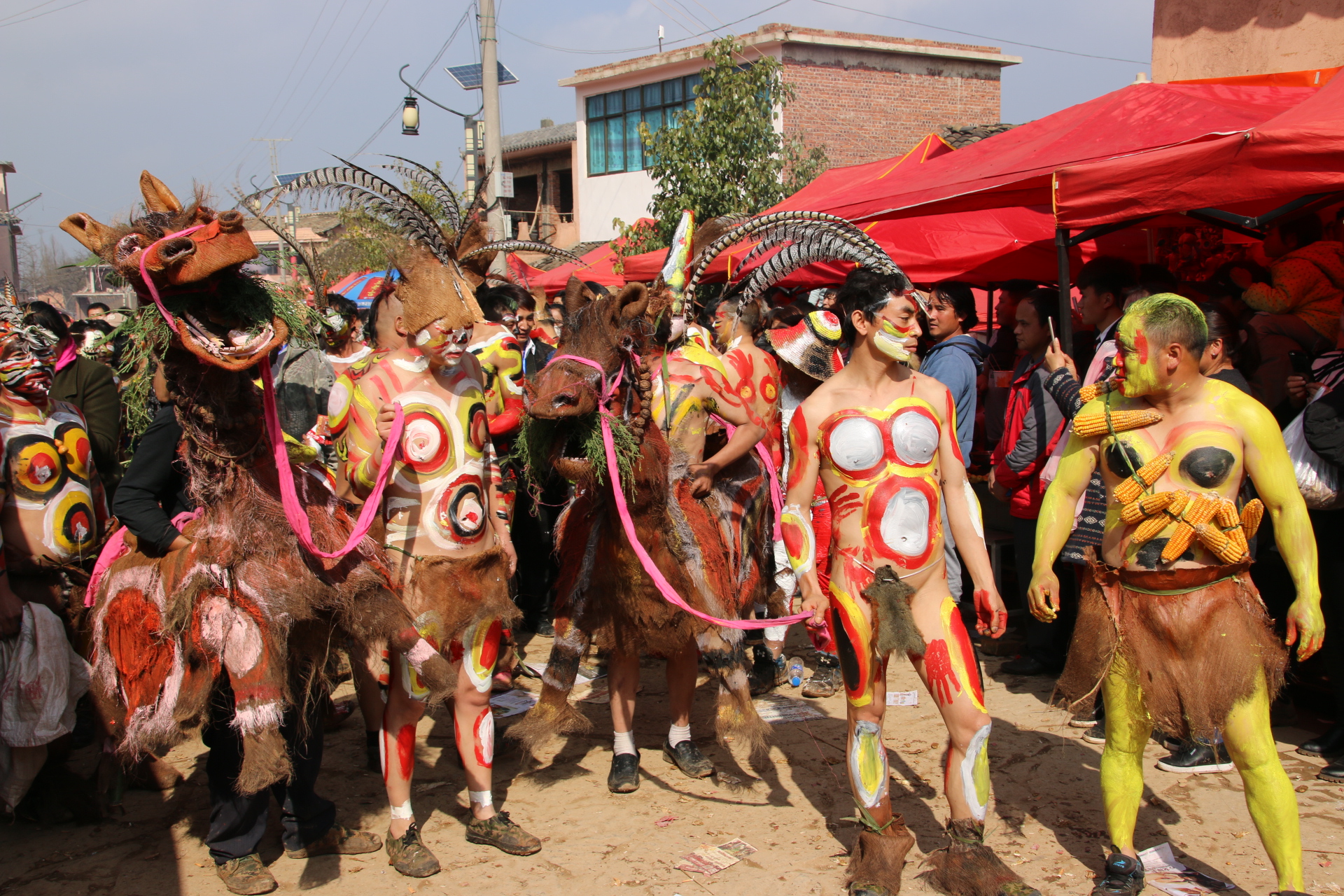
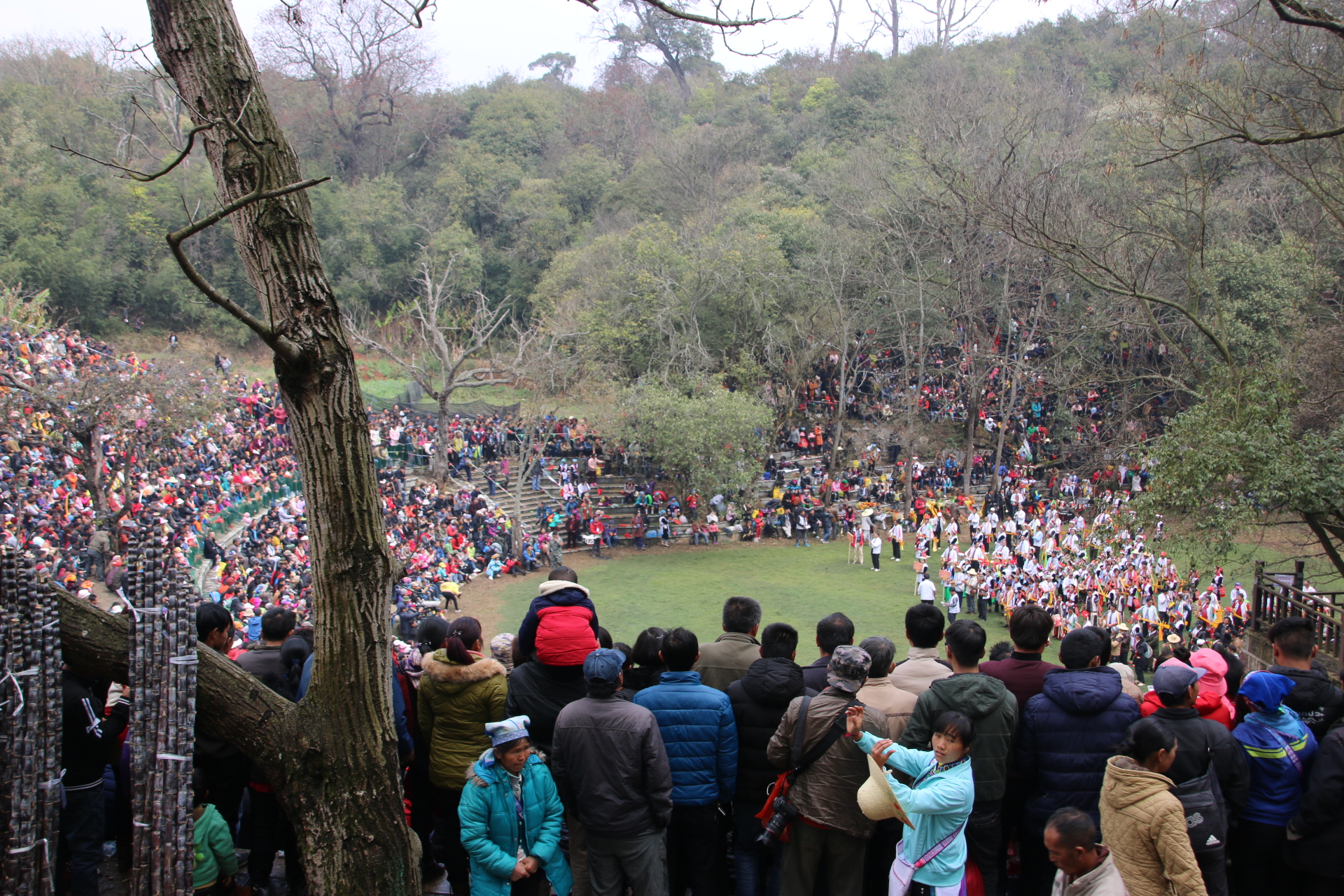
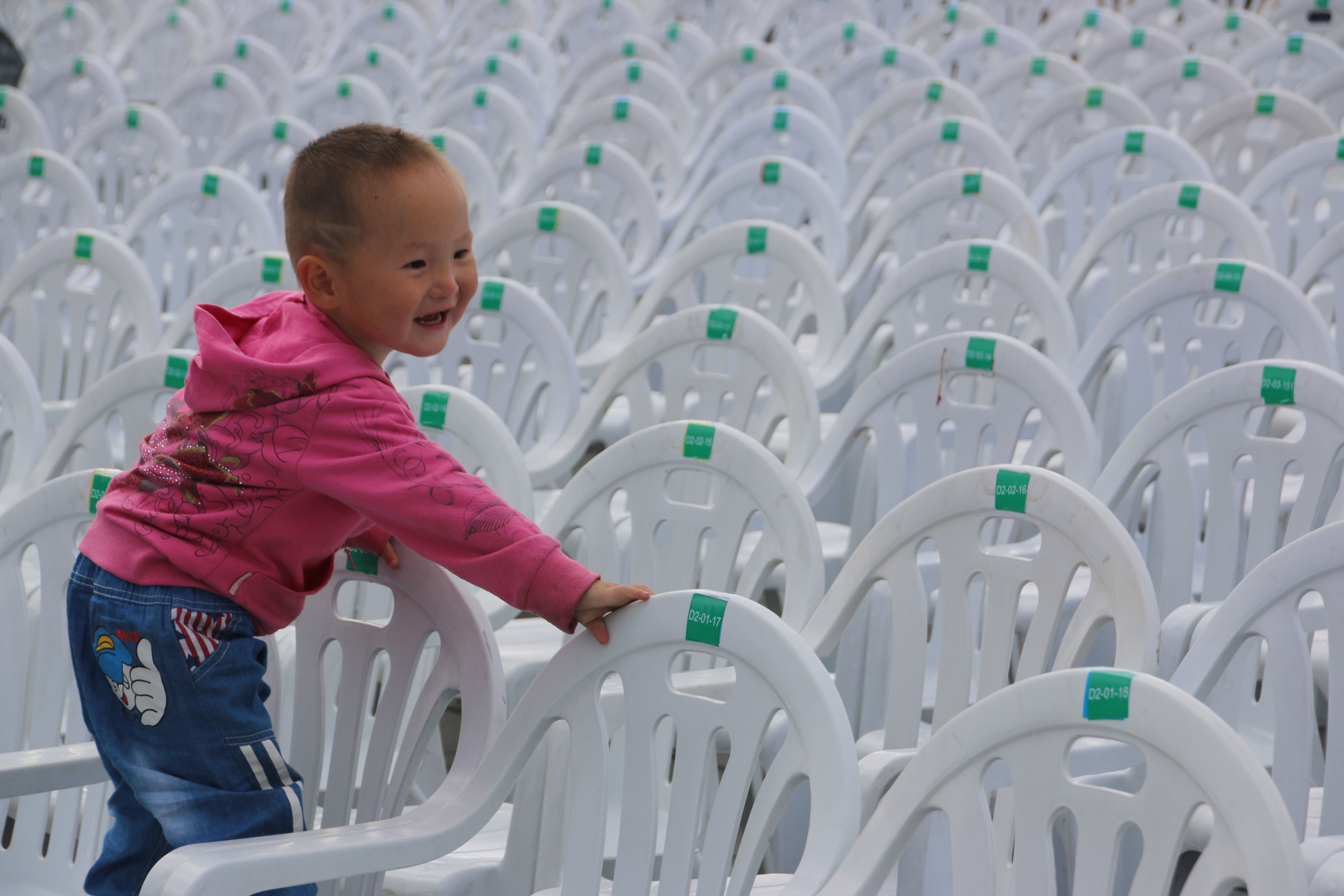
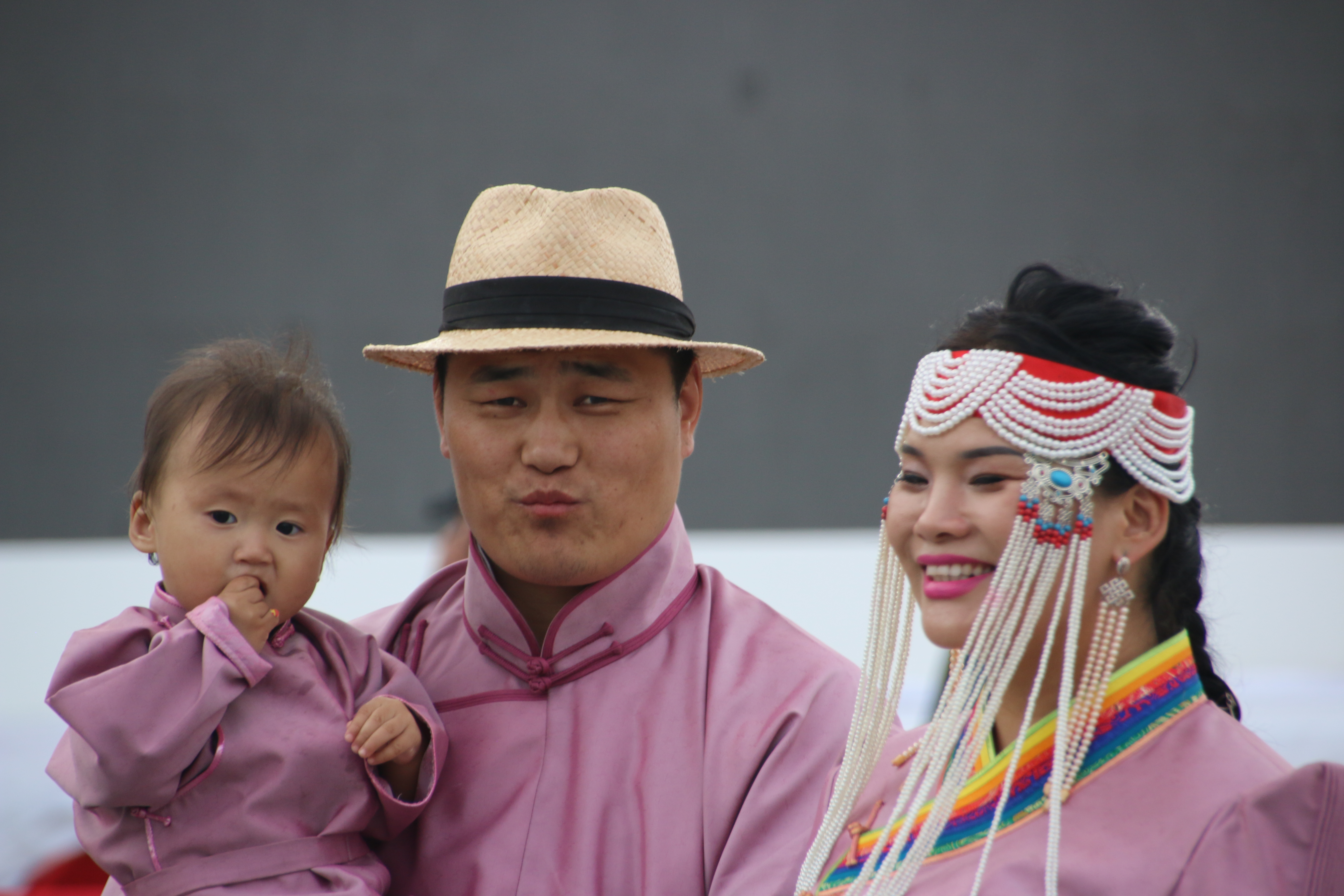
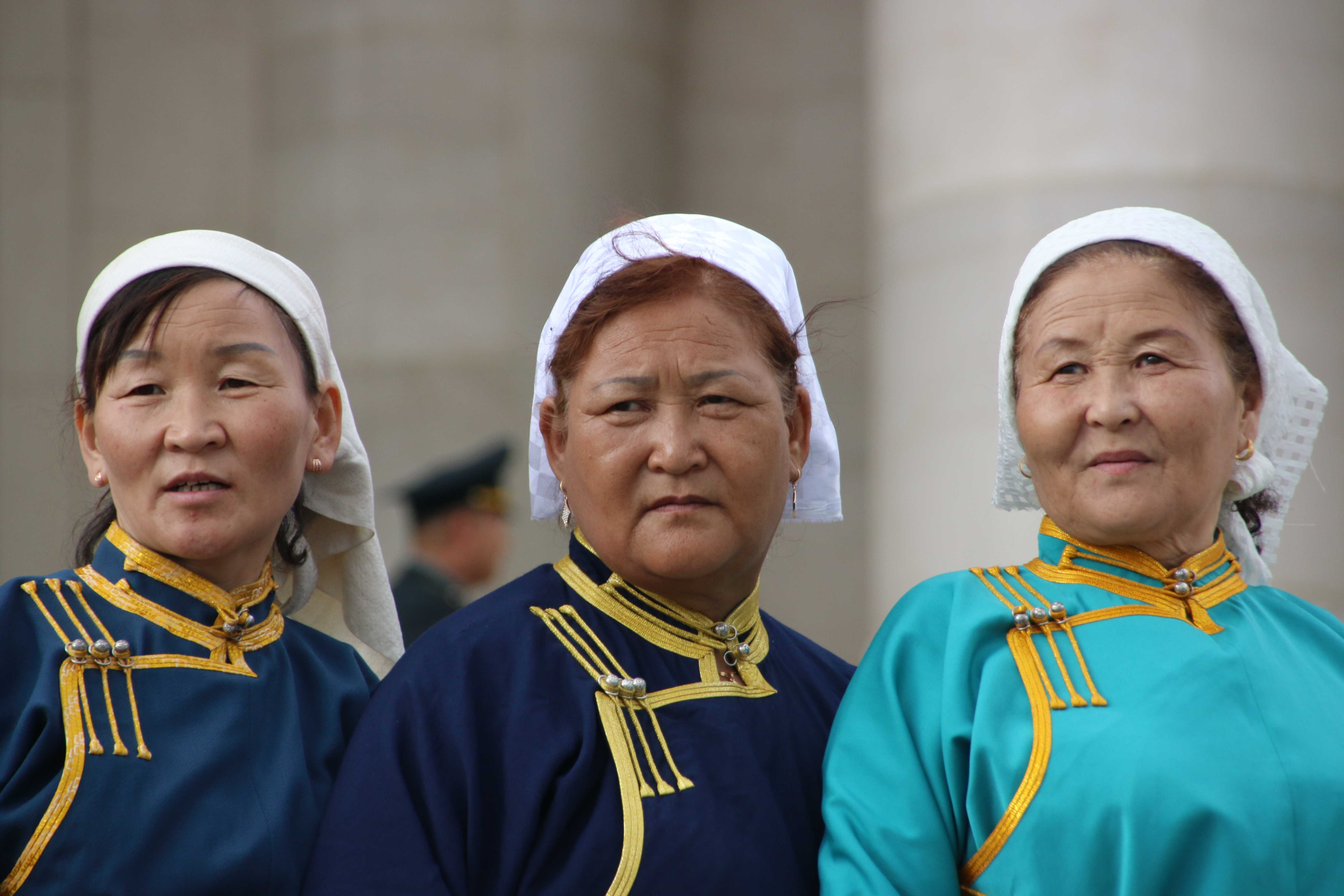
After the welcoming ceremony the crowds squeeze their way up the narrow main street to have the communal lunch and then gather around the village square. Boy, do these Chinese have some kit – huge lenses, I phones, selfie sticks all focused on the, now hammered, painted lads who do a circuit, light a fire, sacrifice a chicken ( yes, truly) and proceed to the main hillside where the thousands gather to watch the dancing and enjoy all the fun of the fair

20170228051703_img_4587

20170228051707_img_4590

20170228074812_img_4735

20170228055106_img_4616

20170228063117_img_4687

20170228070223_img_4719


The Fire Sacrifice Festival in Hongwa Village of the Yi People

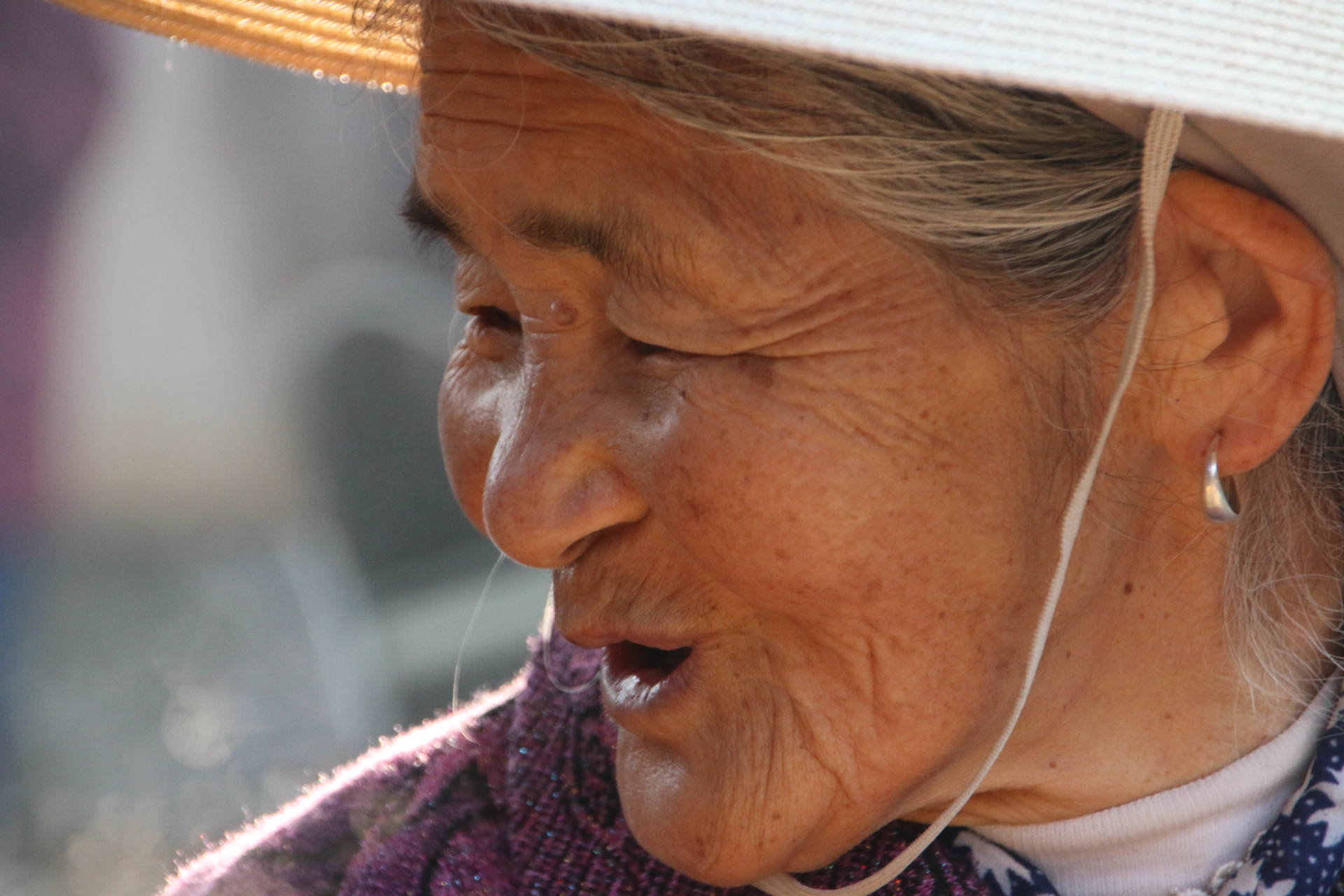
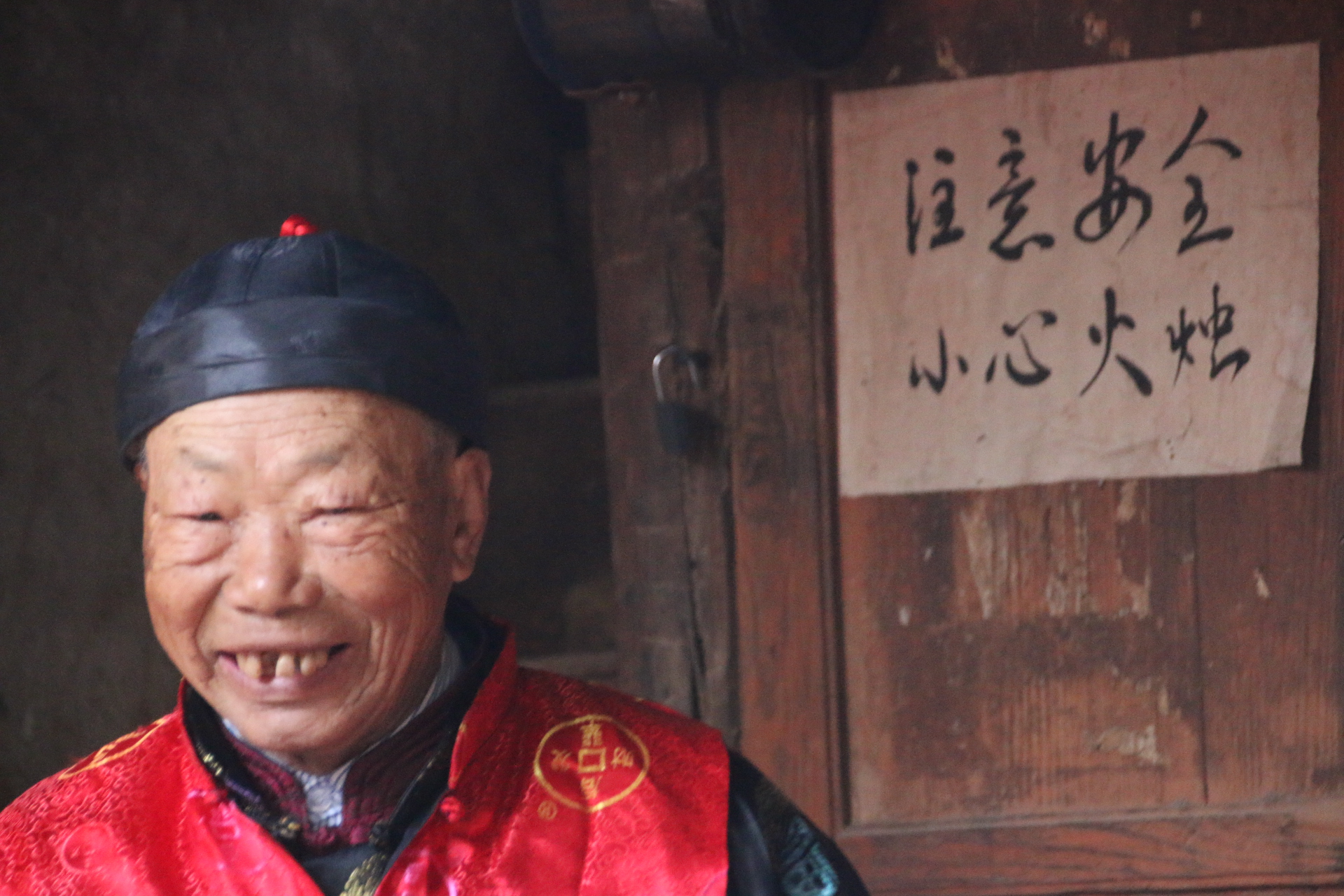
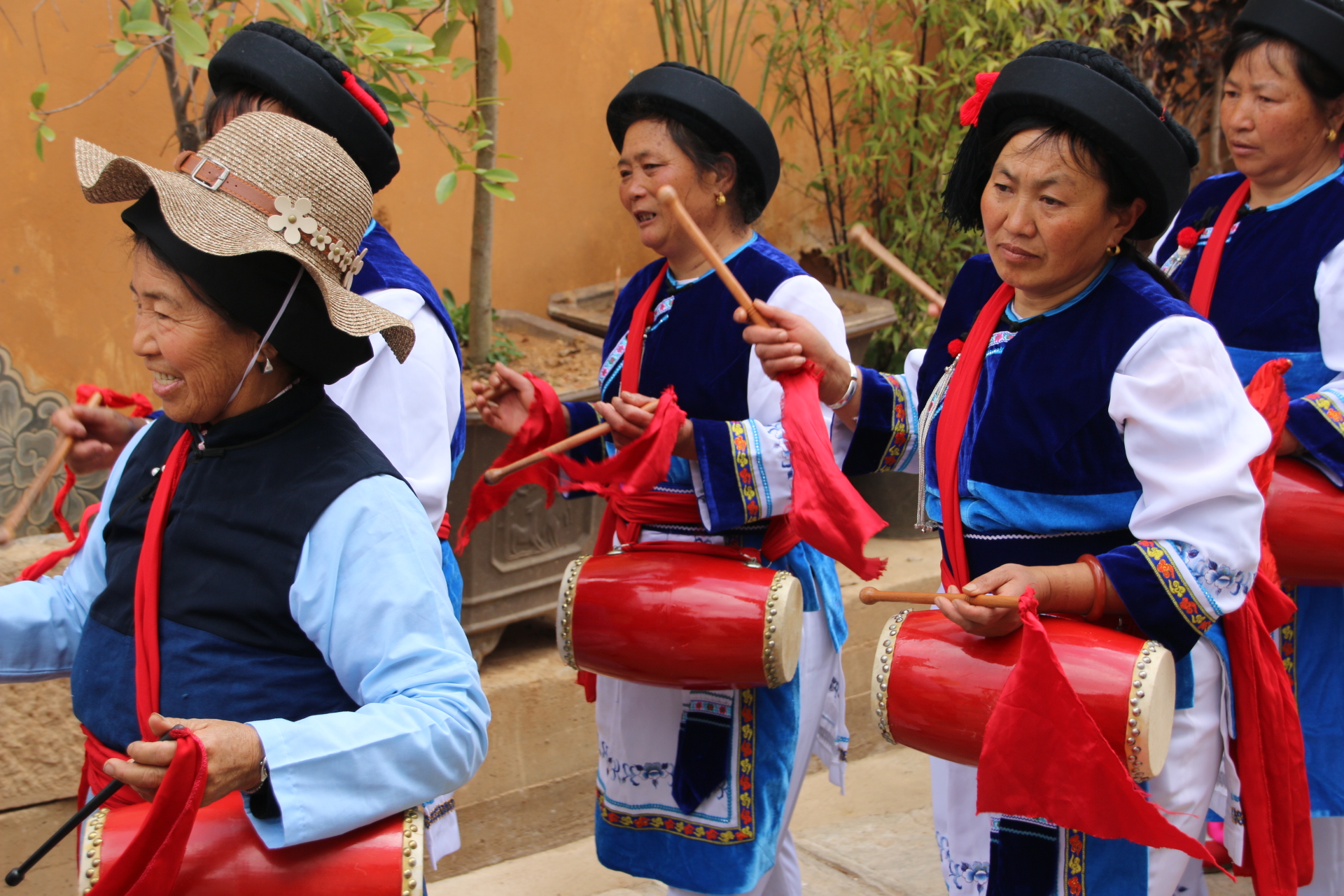
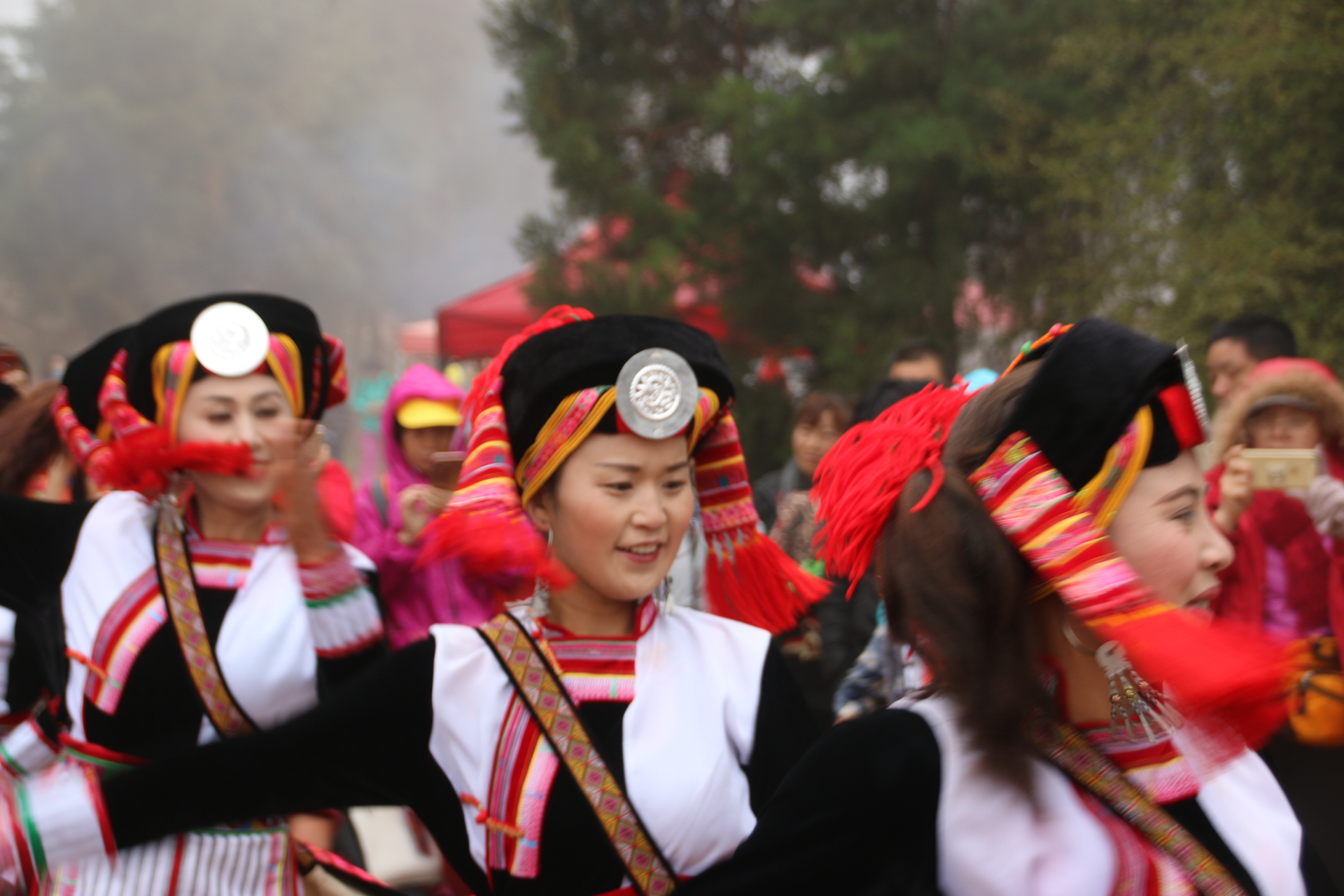
This annual festival celebrates the first making of fire on which the tribes existence depends – for warmth, for cooking around for protection against wild animals. Up tho 30,000 people descend on this small village. After a welcoming ceremony there is a communal lunch, followed by a reenactment of the discovery of the fire when the local lads get painted up, and pretty tanked up, and parade semi naked through the village. The afternoon is spent watching a dancing competition between the girls and grannies representing neighbouring villages to win the covered’best in show’ prize.

I’ll let my images tell the story of the day, starting with breakfast in the early hours in the town of Mile.

20170227230633_img_4139

20170228014308_img_4293

20170228021303_img_4362

20170228012754_img_4246

20170228012805_img_4248

20170228034046_img_4471

More to come soon.


The start of my China adventures

This is my first trip for a while and my first visit to China. I am really excited. I have lots of preconceptions about China, mostly formed in my youth, so I am really intrigued to see what it is like. I have come to Yunnan province in the south of China next to the border with Vietnam. 27 different ethnic groups live around here and many celebrate festivals at different times of year for one reason or another.

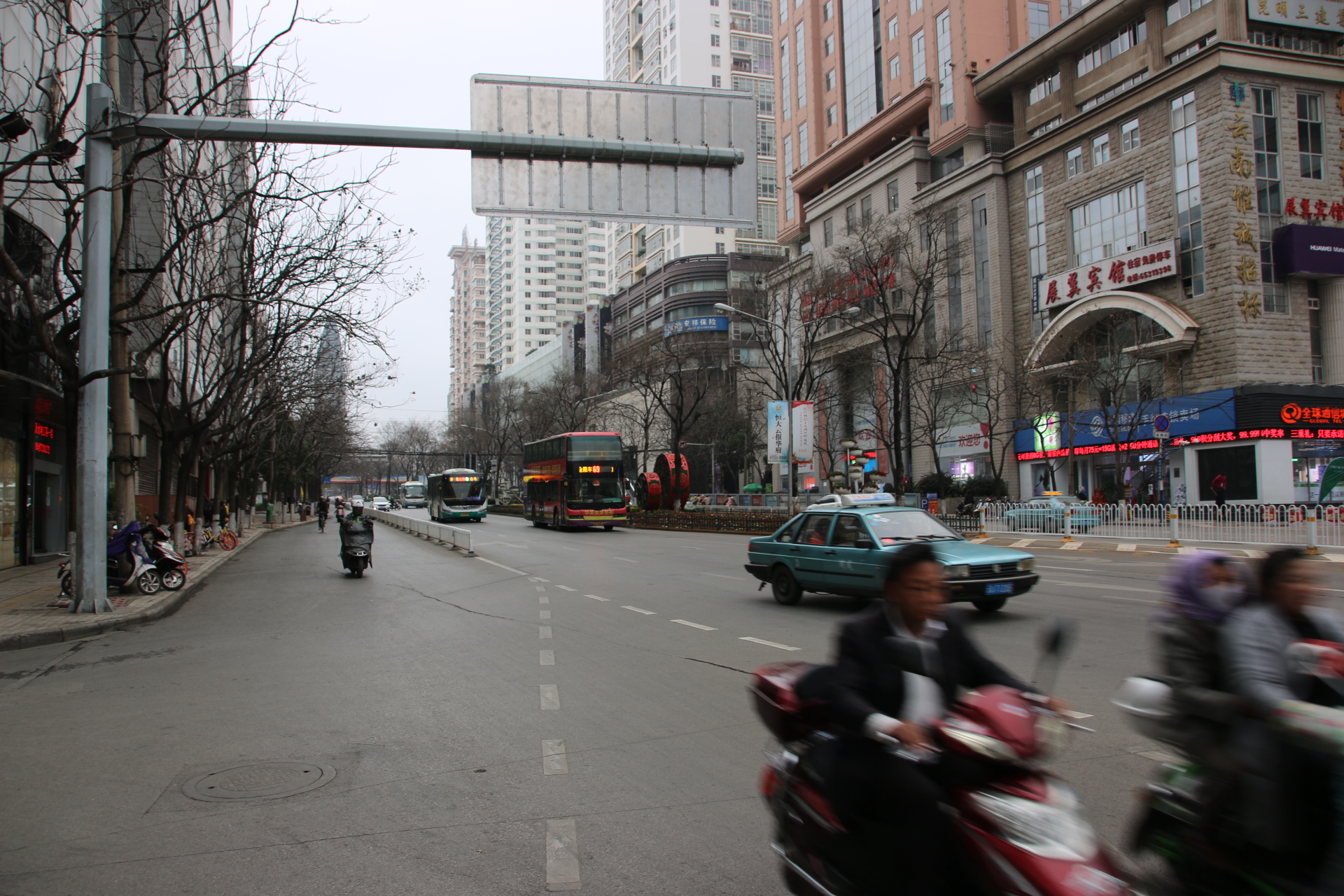
I fly into Kunming, the largest city in Yunnan. 6 million people live here. It is similar to many in China and South East Asia. Concrete slabs of tall, imposing, multi-storey buildings house shops, apartments, shopping centres, department stores & businesses. No surprise there then.

20170227012328_img_4001

The main surprise is the traffic on the streets. It is so quiet. The hundreds of scooters are electric and creep up on you quietly; most of the buses are electric so no noise there; and most of the cars are electric too, and so no sound from them. It all makes for busy streets that are silent – surreal and no exhaust fumes. Oh, the white sections of pedestrian crossings are purely ornamental. Traffic ignore any group of pedestrians trying to cross, who like owls turn heads 360° in an attempt to spot the speedy approach of packs of silent predators.

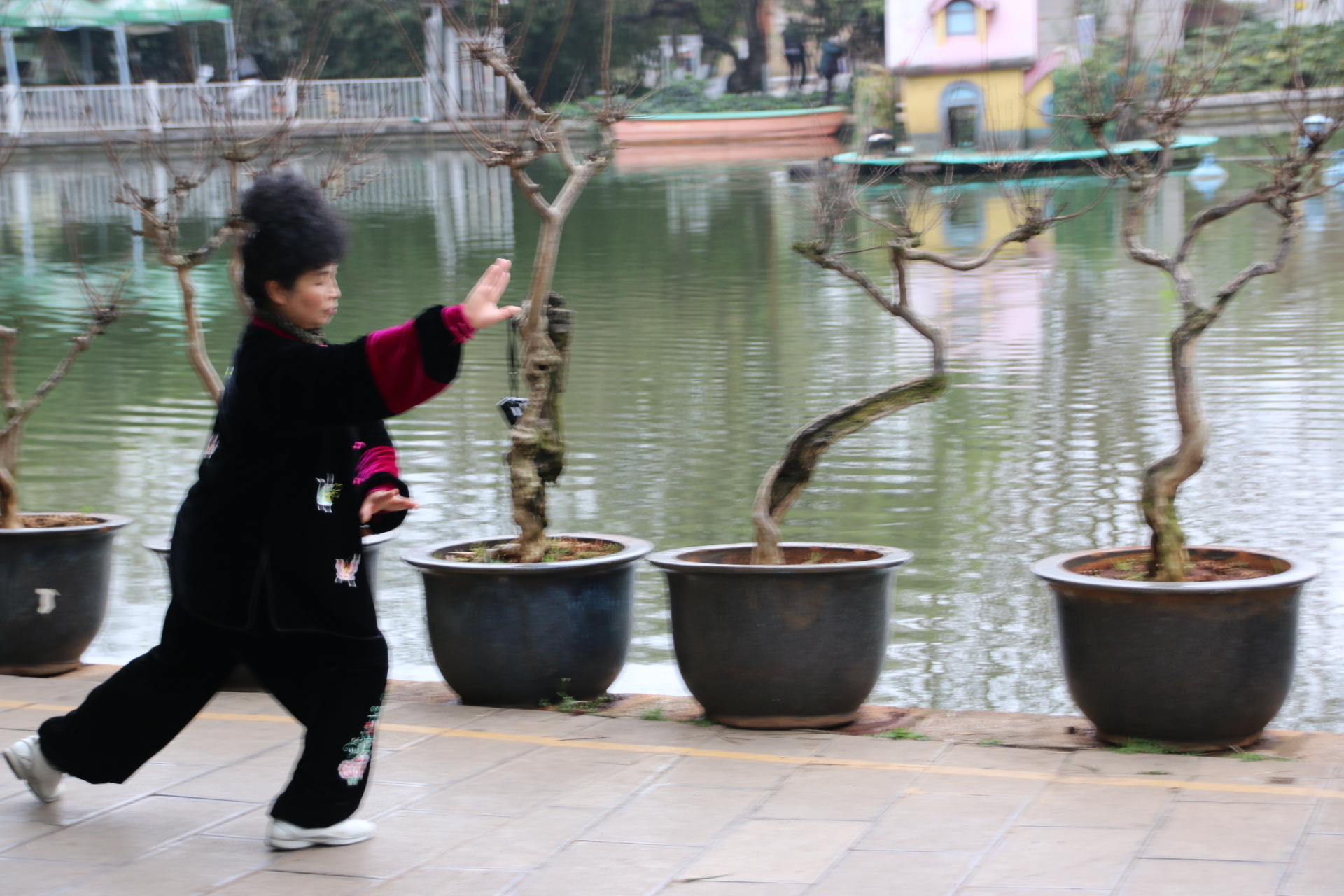
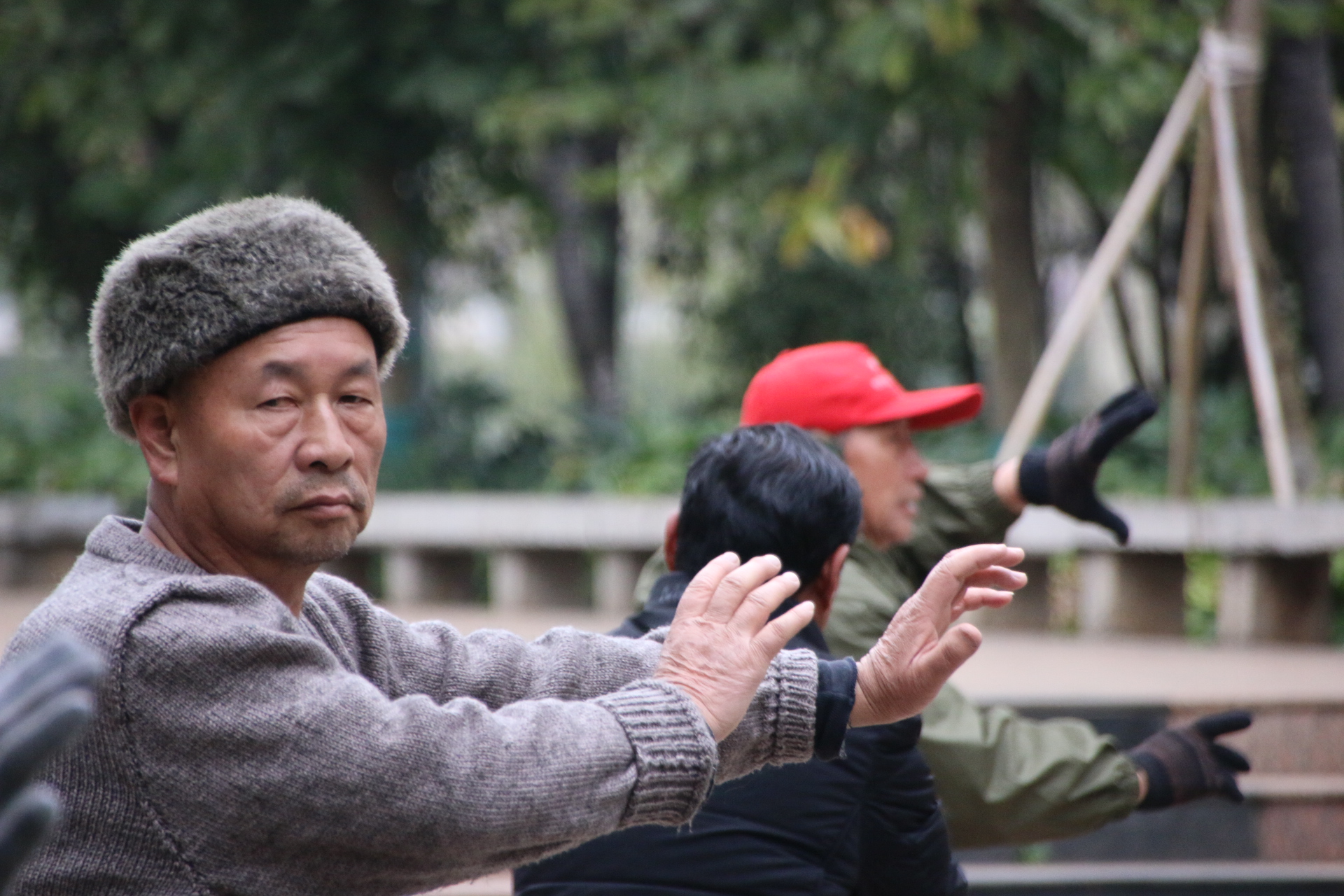
These living concrete blocks hide the heart of the city. It all feels very western with wide tree-lined, KFC next to McDonalds, Audi’s & Range Rovers alongside double decker buses, locals in jeans & smart coats. Open spaces provide room for morning exercise and recreation.

20170227020438_img_4050

20170227022237_img_4069

20170227015247_img_4028

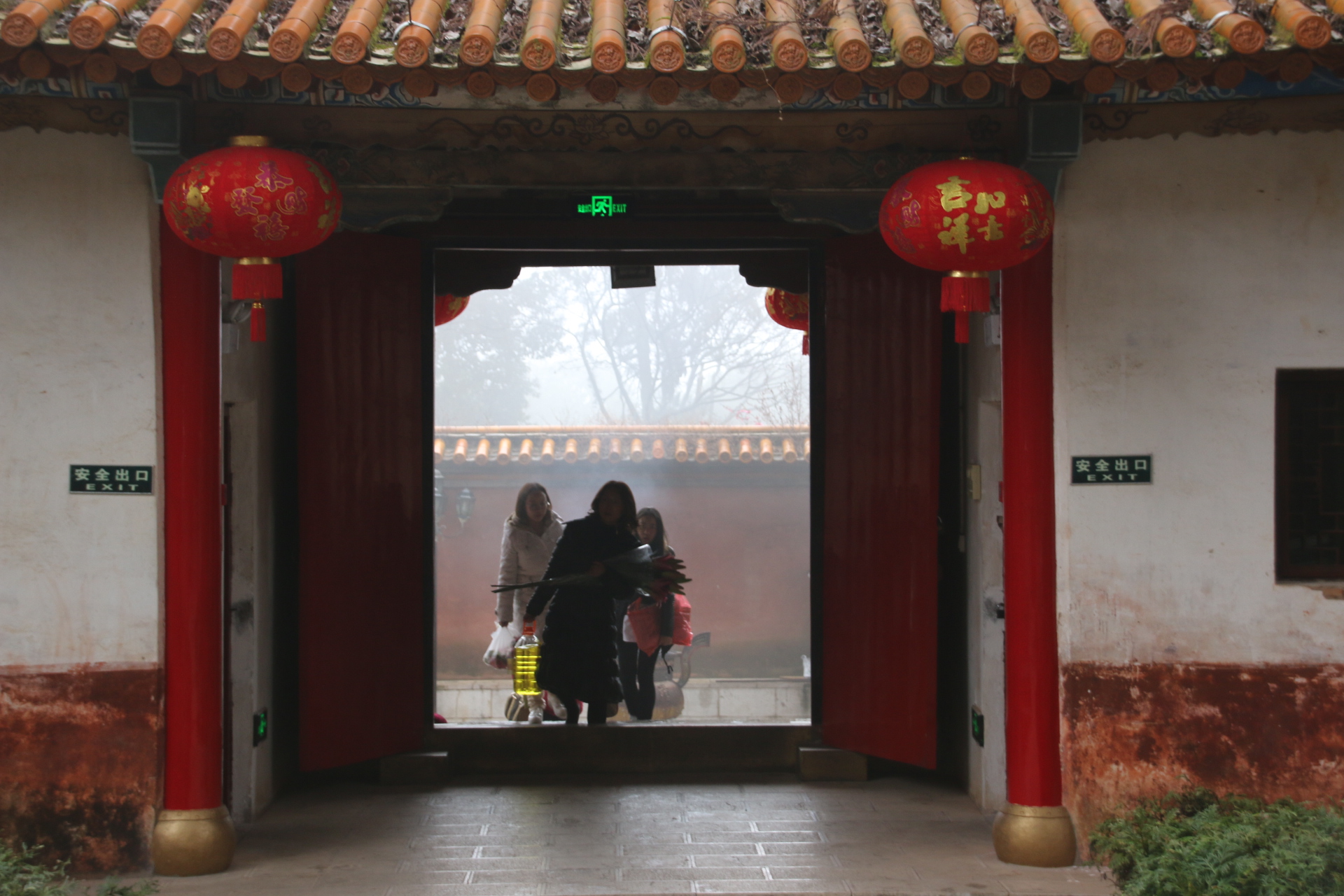
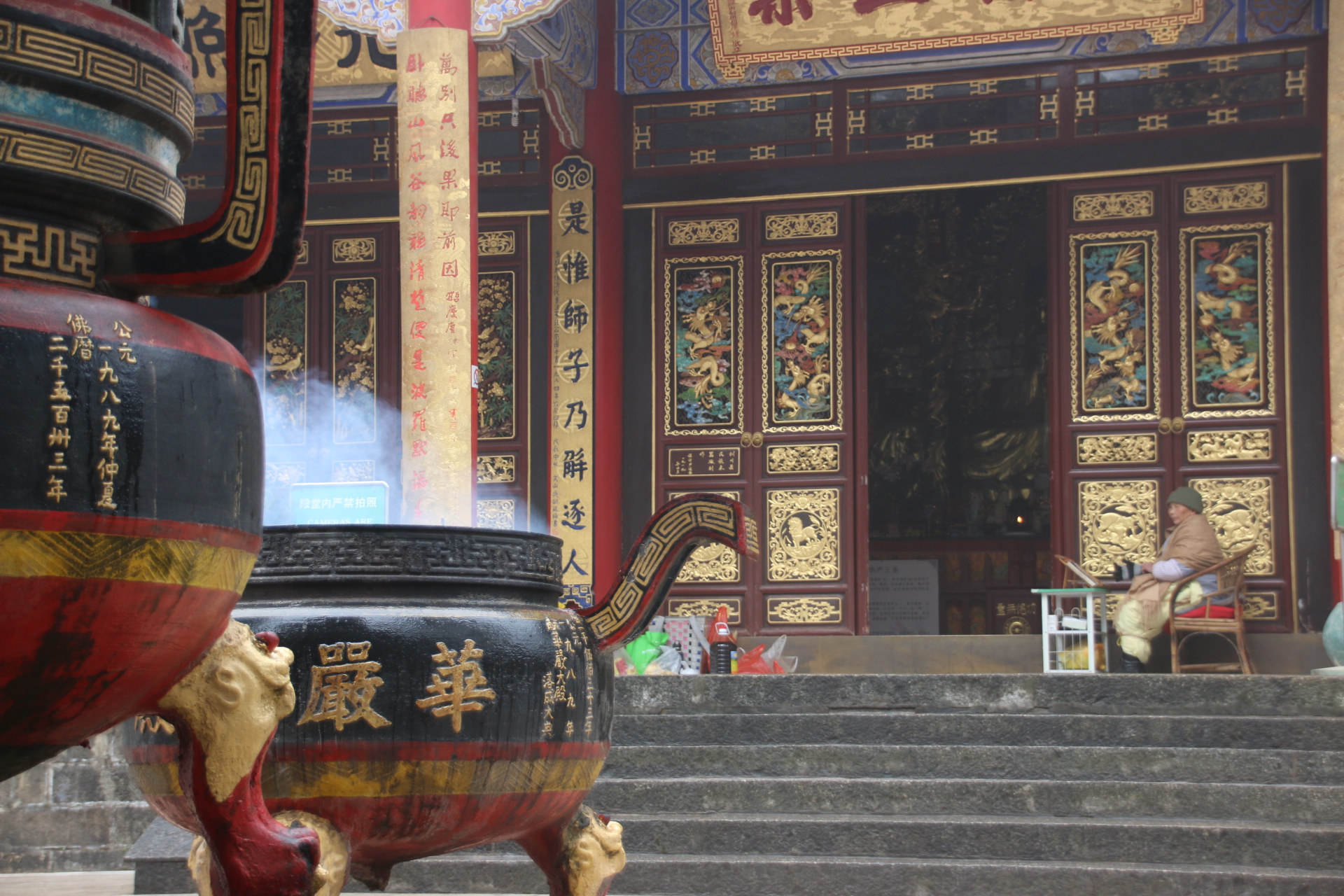
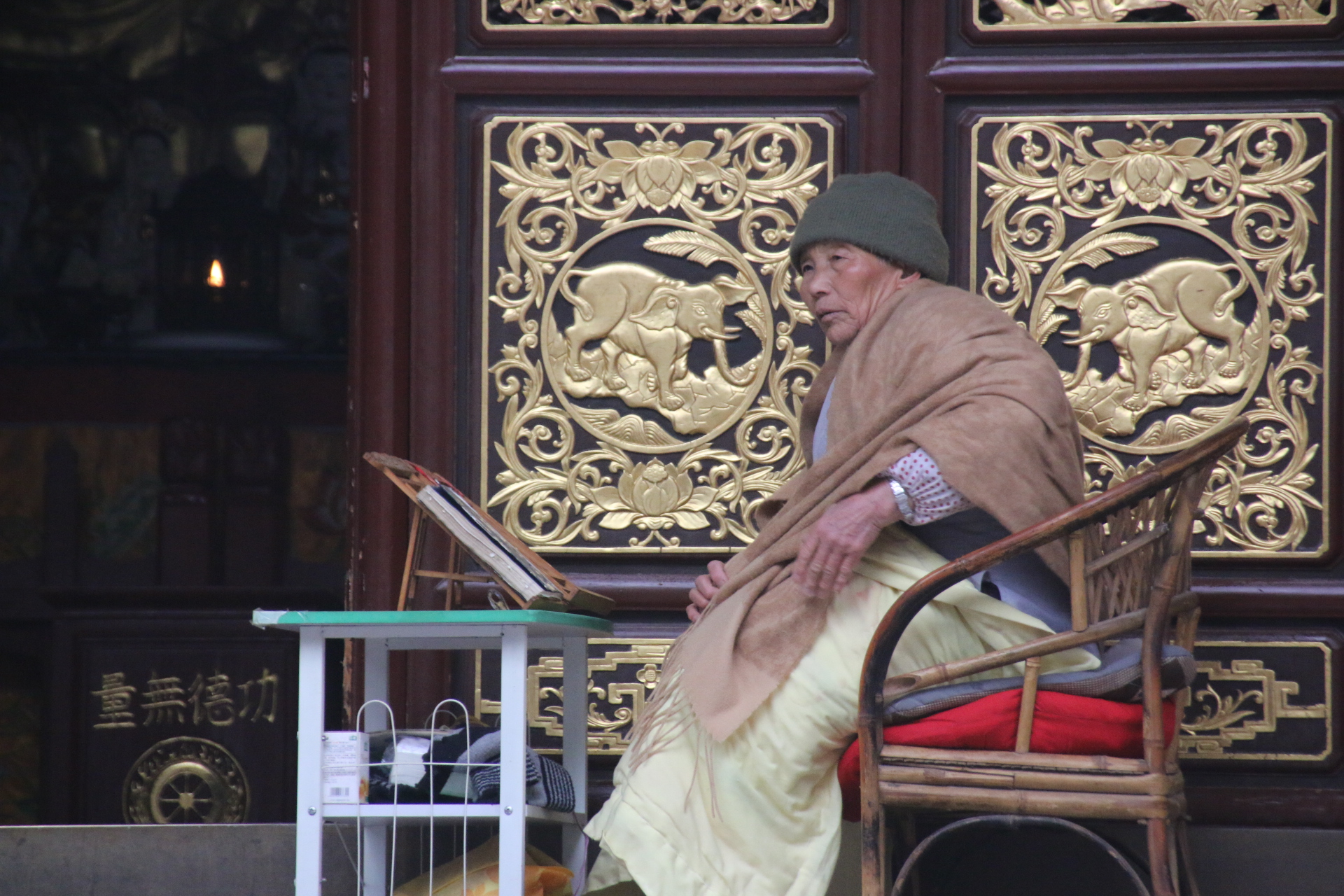
The Bamboo Temple nestles in the damp mist amongst the woods and mountains that overlook the city giving the land and the people a spiritual & cultural framework. It really is ancient & modern living side by side, each giving reason for the others’ existence & identity.

20170227035359_img_4082

20170227041503_img_4120

20170227041333_img_4113


South to Fishguard: guarding fish?

20161231124549_img_3752

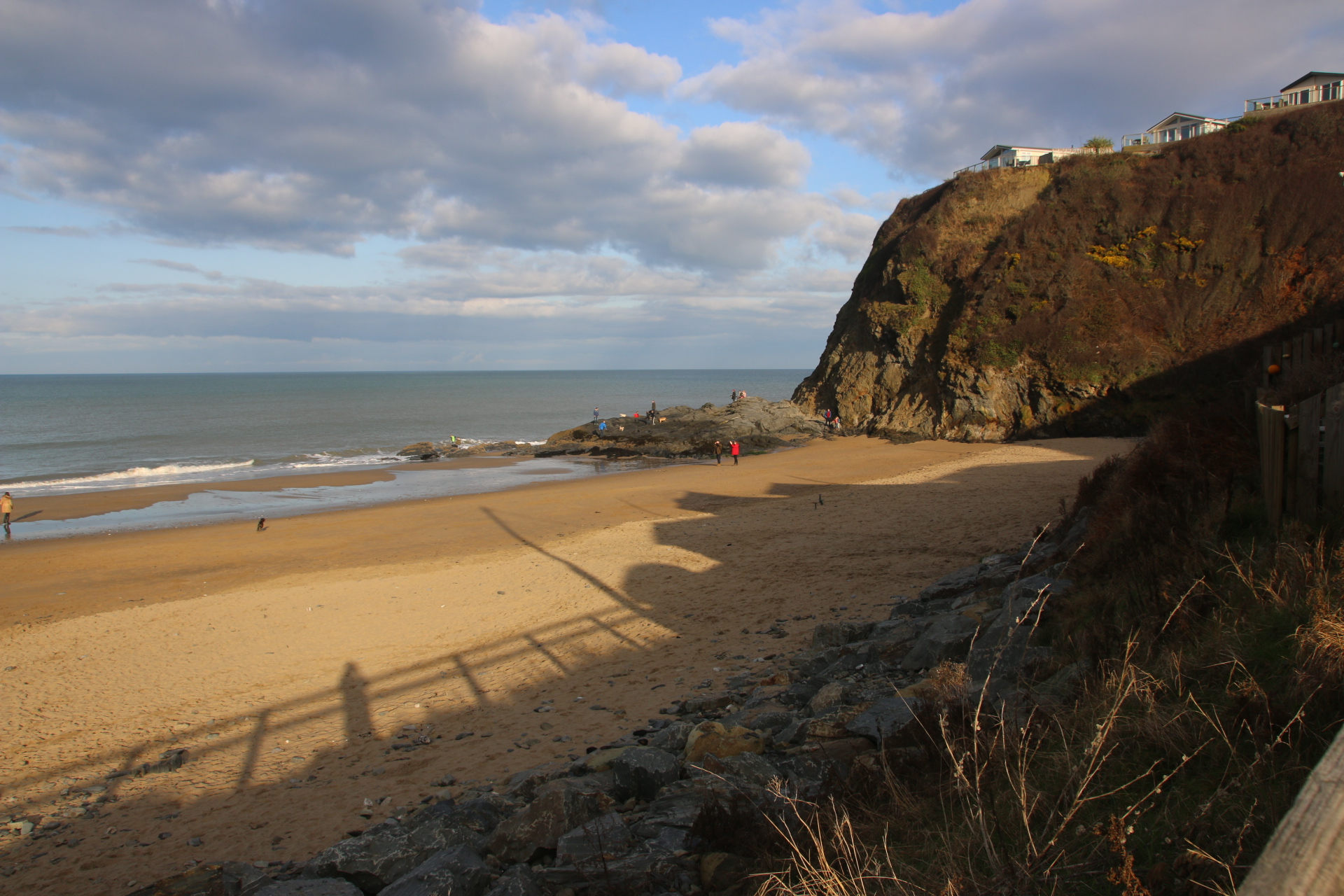
South of Llangrannog lie several settlements. First is the small village of Tresaith. Just a few houses huddle around a steep descent to the beach. One tea room serves the few families who are exploring the sands. The ubiquitous mobile homes gaze down from the surrounding cliffs.

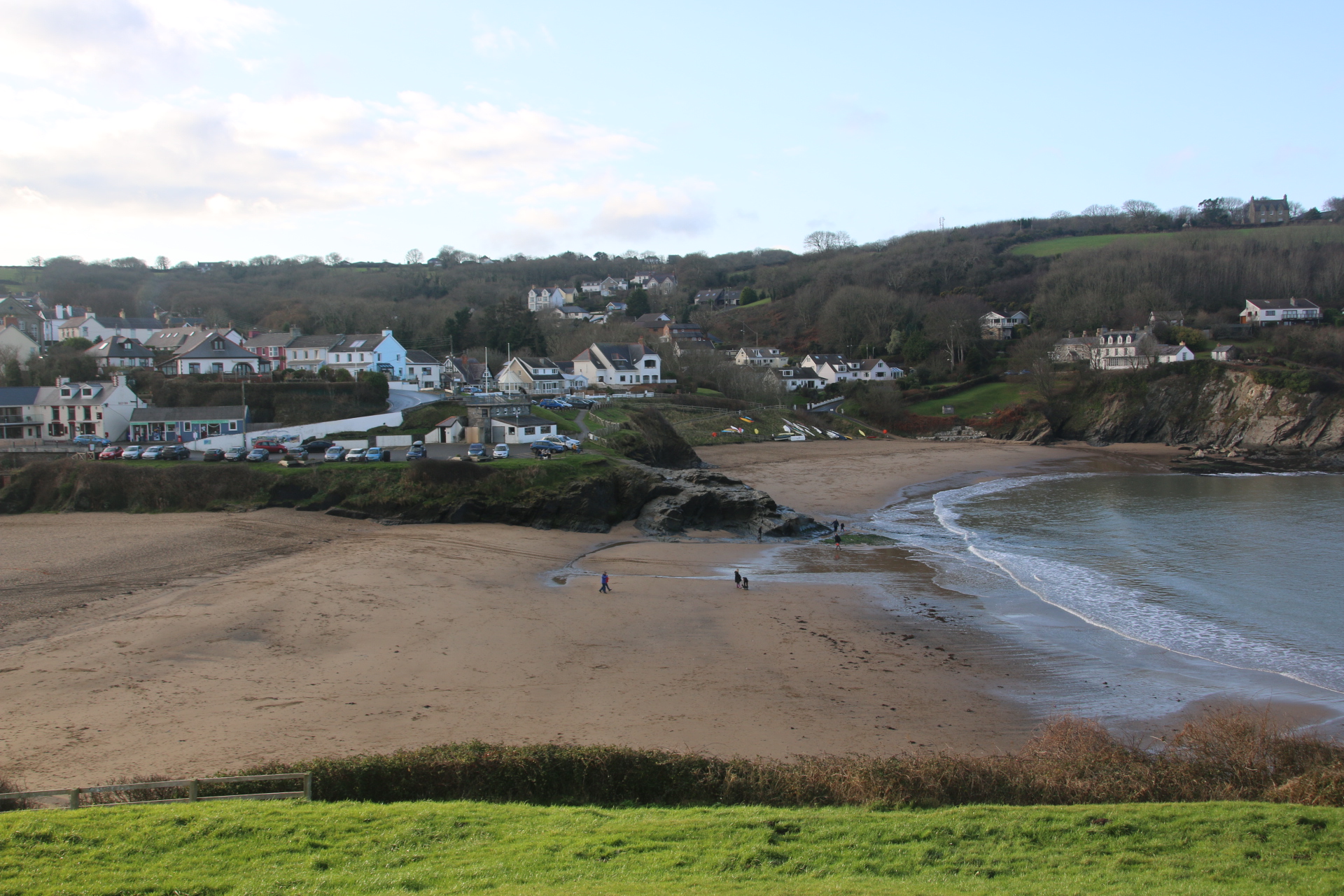
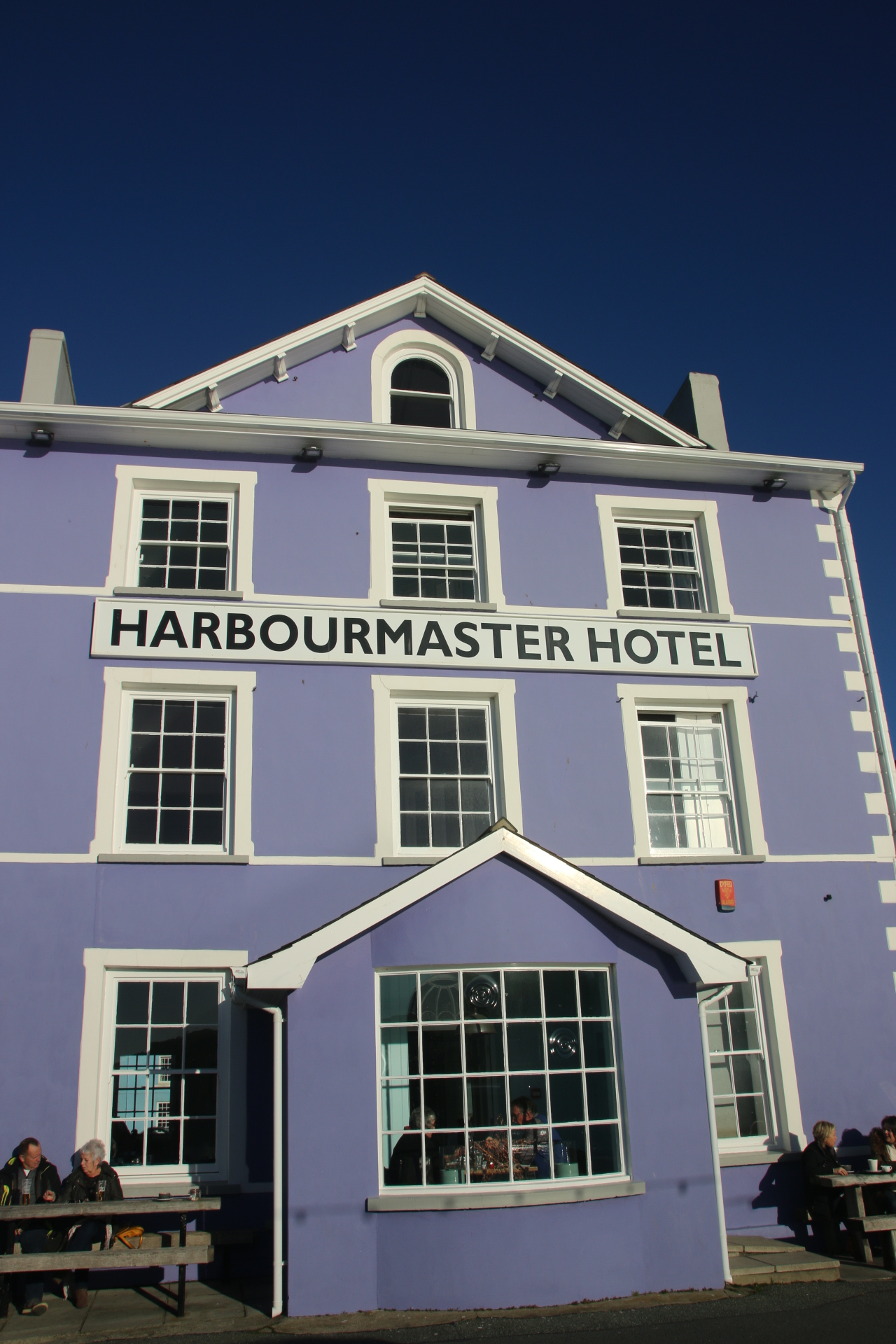
Next, just before the estuary town of Cardigan (Aberteifi), comes Aberforth.

20161231130216_img_3762

After the glorious view of the two beaches from the cliffs on the approach to the town, my lasting impression of Aberporth is the smell of old oil that oozes into the atmosphere from the chippy and rests in nostrils, hair and clothes. Shame really as the beach is great.

Gwbert lies on the headland overlooking Poppit Sands on the estuary of the River Teifi. Yep, a good location for a holiday home park.

20161229145554_img_3709

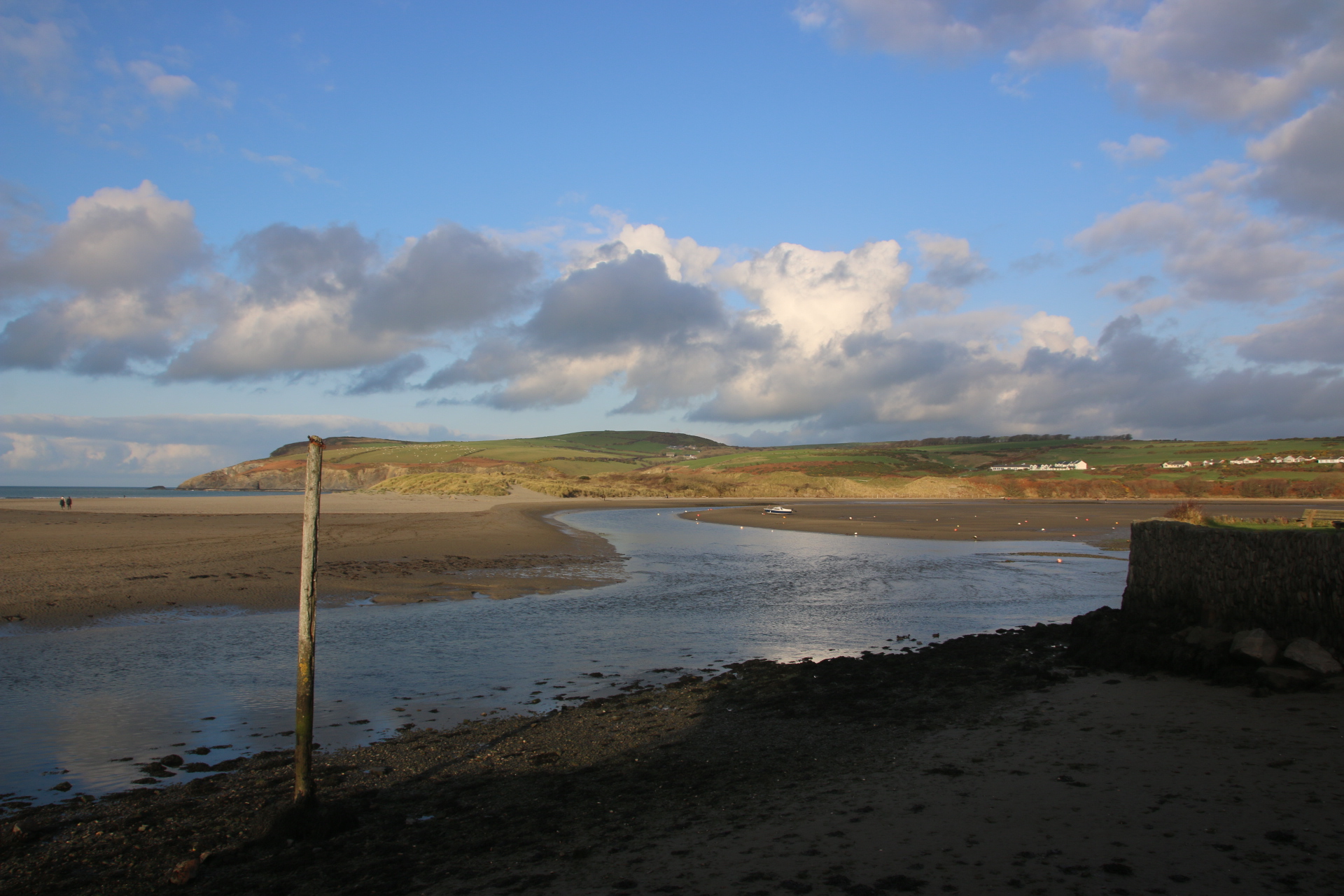
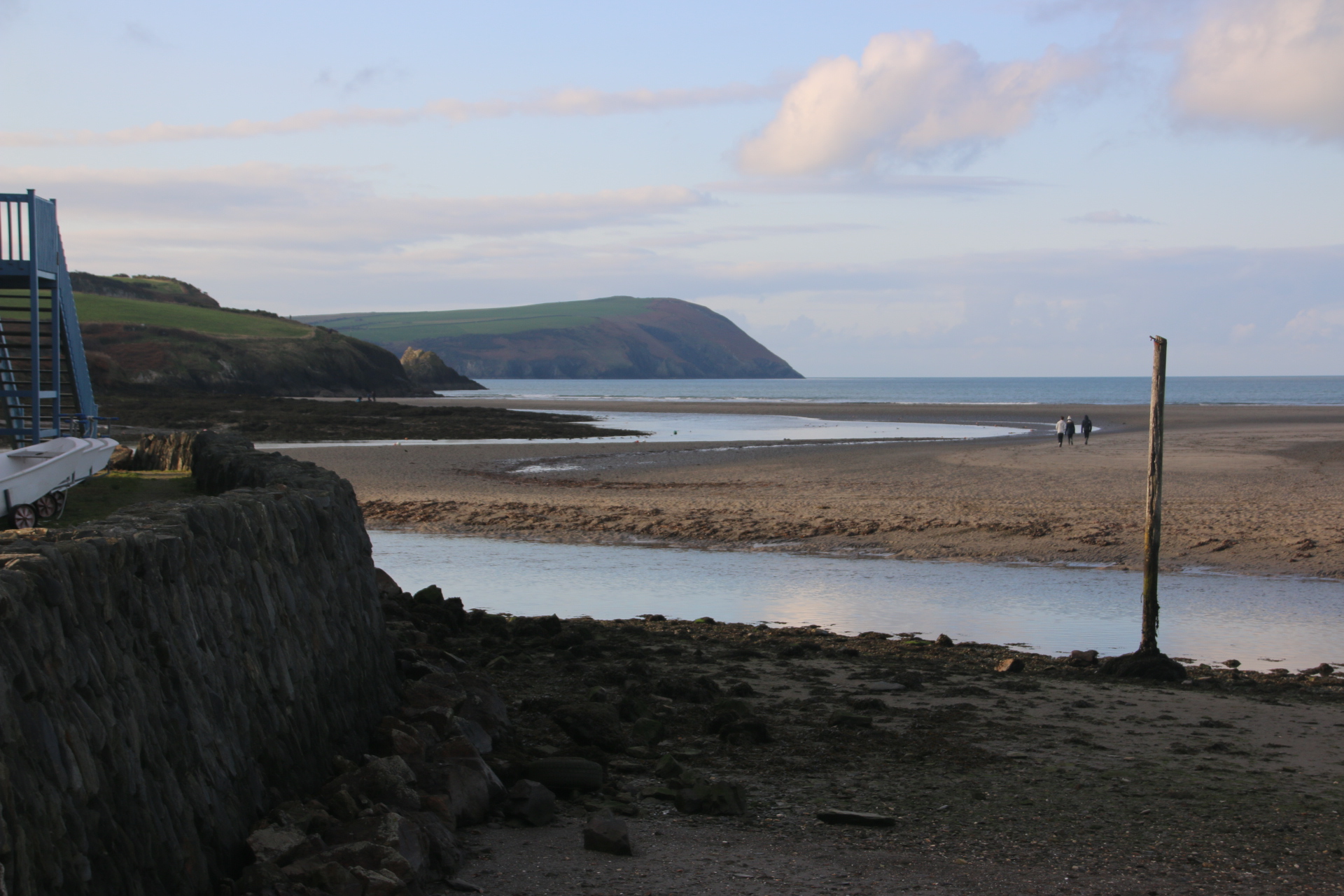
Newport (Pems) is a lovely small village with tea rooms, quaint nik-nakky shops and a classy oasis for visitors and locals alike. Down through its heart one comes out over Parrog and its beach and harbour. From its flat, muddy banks can be seen the silt of Newport Beach in one direction and the casual meanders to the Irish Sea in the other.

20161231141025_img_3776 20161231141310_img_3780

Finally Fishguard plonks itself on the coast.

20170103125229_img_3874

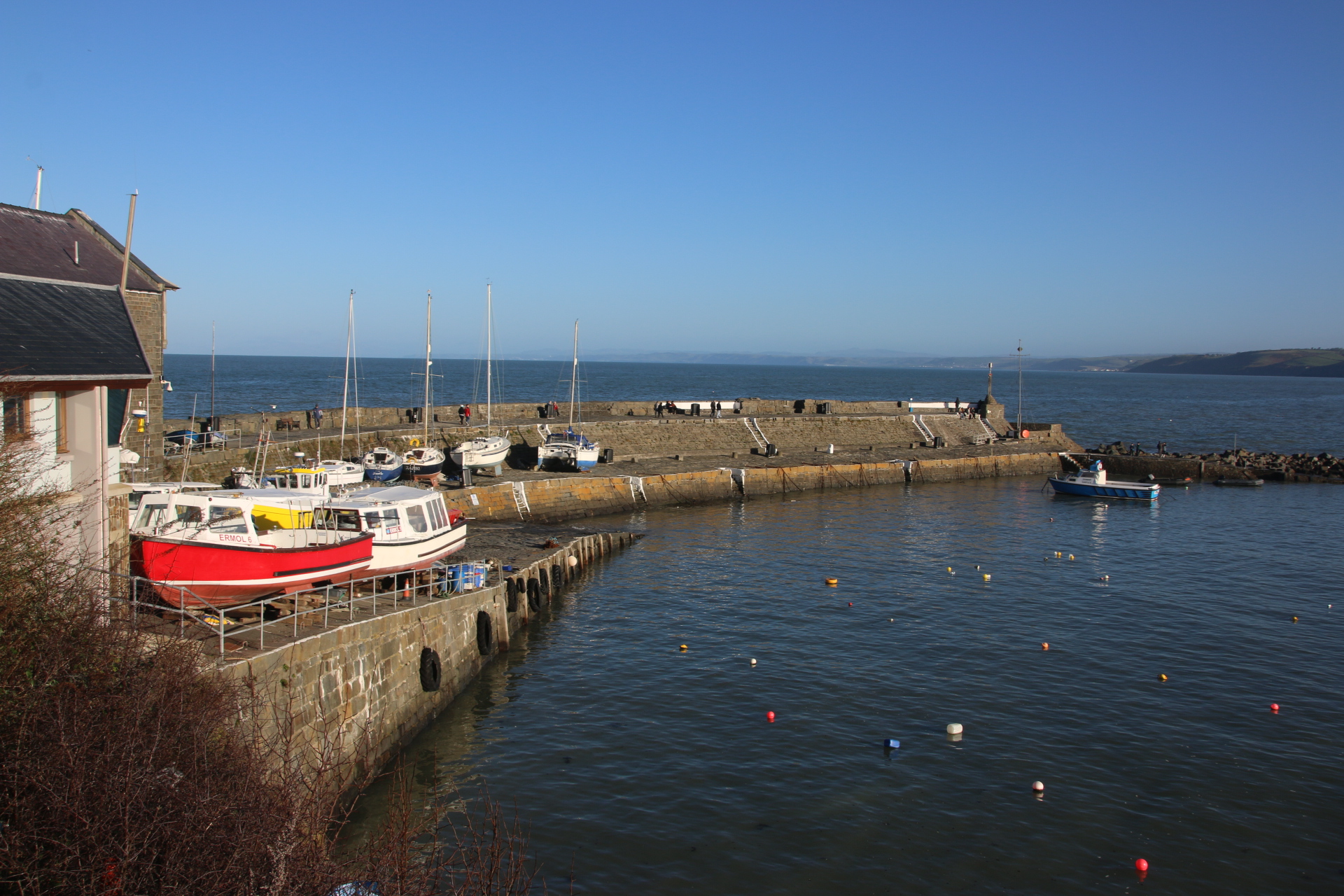
The small old harbour is lovely, lined by brightly coloured homes and a wonderful Victorian factory of some kind. It is overlooked by the fort with its cannon peeking over the battlements, keeping an eye on the far quays & sea defences where the huge Stena Line ferry waits for its cargo of cars and lorries to cross to Ireland. The road climbs up and over the headland and there is the town , the working, seaside port spread below, helping to provide income and jobs to the area.

I’ll let you know when I go back to complete more of the coastal settlements of the UK.


Two up from Llangrannog and out comes the sun

20170102120008_img_3803

New Quay is the next village up the coast. Signs advertise boat trips for dolphin watching. At this time of year car parks are half empty and a handful of holiday makers shuffle about eating the compulsory fish & chips out of plastic trays and drinking steaming cups of weak tea. Oh the joys of holidaying in the UK. The carpet of holiday homes on the headland to the side gives an indication of what high season might bring to the village.

20170102122124_img_3819

The next place up the coast is Aberaeron – a delight. The town car park is filled with resting yachts propped up, up on blocks with their empty rigging playing concertos in the breeze.20170102133840_img_3839

A walk up the estuary of, presumably the river Aeron, beside the empty harbour to the bridge takes the visitor over to the slight bustle of a sizable village/town. Touristy eateries share streets with ordinary shops so tourists and locals are both catered for.

20170102135816_img_3860


Travel west, young man

Well, I am back in the saddle. I journey to some amazing places around the world and I realised some while back that there are some equally amazing places around the UK that I have never visited. It was then that I started a long term project to visit every settlement on the coast of England, Wales and, maybe, because it’s just so long & wiggly, Scotland. I am going to start to share these adventures with you so you can appreciate, with me, some of the wonderful places that lie on our doorstep.

I bought the new year in by kick starting my travels, after a 4 month lay off, with a visit to west Wales. I left a damp, grey misty, nay foggy Oxfordshire and drove west through the gloom, avoiding traffic and more traffic. The further west I travelled saw fewer and fewer vehicles on increasingly windy and smaller and smaller roads, more and more hills and rivers and valleys and trees and fields, and less and less cloud and gloom, replaced by clear blue sky.

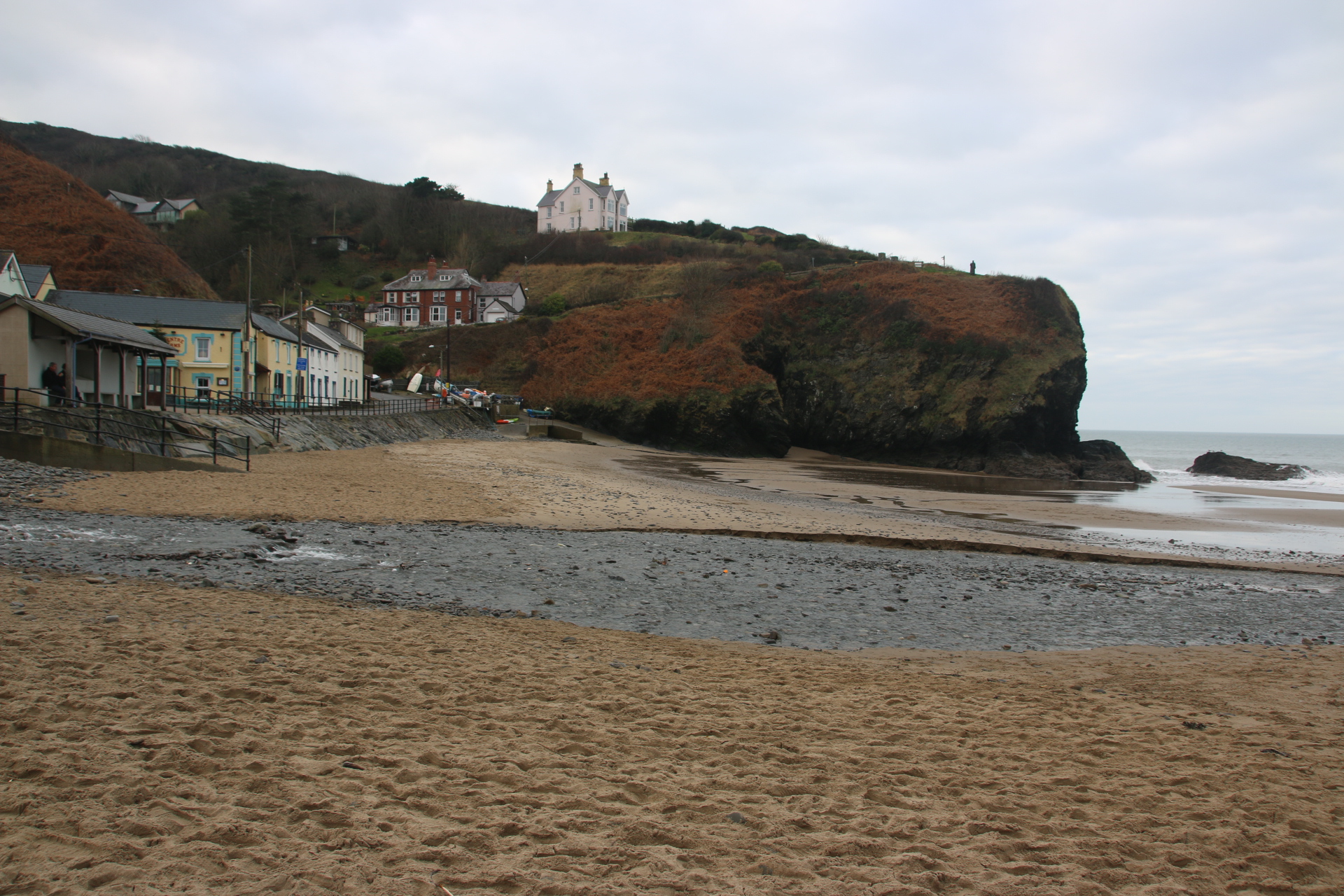
I was heading to Llangrannog, a small village on the coast, north of Cardigan. A final narrow lane, ground down by centurIes of wheels from carts and tractors and wagons and lorries add trucks and cars threads its way towards the promise of ocean and sea ahead. Stone-lined banks, disguised as tall grass walls , and hedges tower above the metal track. Like a horse wearing blinkers there is only one way to go. Glimpses of the natural wonders ahead are caught through the bare trees and the occasional farm gates to the side.

20161230123201_img_3725

Then the panorama is spread before me like a patchwork feast of farmland with sharp line at the furthest edges where a Stanley knife has precisely cut through the block of countryside butter to create the razor – sharp boundary between land and sea. Is the Iron Man with the glowing red eyes going to appear above the line of running fields. To the side, through a gate, lies one of those moments. The coastline meanders away like a huge mouse has gouged its way into a slab of Cheddar. Small, intricate lines of trees and hedgerows, with their fine detail of spreading branches, are silhouetted on the skyline. Behind, the sky with its setting sun merges its lines of blues and clarets and oranges with the purples and browns and greys of the land until the hues on the artist’s palette simply take one’s breathe away. I have arrived.

Llangrannog is a small village of a hundred or so houses. In the past ships, yes ships not just boats, were built here. Now it has a few houses for locals, a lot of quaint rental properties, a coffee shop, two pubs serving food and a small store. The beach is backed by high cliffs with a huge slab of slate dividing it in two at low tide.

20161230123628_img_3733


Thames Crossings

Many of you have so enjoyed my blog over the past few years that you suggested that I write a book. Well, I heard you and I have done just that. I chose a journey that started close to home in Oxford. Over weeks and months last summer, I travelled along the towpath of the River Thames from its source in fields around Kemble in the Gloucestershire Cotswolds to its estuary into the North Sea. As I journeyed I photographed every crossing over and under the river. These take the form of bridges, tunnels, fords and ferries and even include a cable car. I have carried out research on every crossing and written some blurb about what is there now and what was there in the past..

12-old-mans-bridge-5895 16-newbridge-5655

53-gatehampton-railway-bridge-0194 113-tower-bridge-9555


Well, my dear friends and followers, you can now buy this book – £14.95 plus postage and packing. I have set up a website called Clay Kettle Books through which you can order as many copies as you wish (an ideal Christmas present for friends and family). Even if you don’t wish to purchase a copy have a look at the website. There is a gallery of images from my travels and you can also access my blog from there. Put it in your favourites – it will be the platform through which future publications will be available.

To order all you have to do is log onto www.claykettlebooks.com and contact me there or email me at claykettlebooks@gmail.com. Once I hear from you I will respond with payment details and time scale. Thanks for reading.

I’ll be back in the blogging saddle in 2017 with a trip to Yunnan’s Fire Sacrifice Festival in Southern China. See you all then.

Lost in France

You may have been wondering why things had gone quiet From your favourite blogger since Mongolia. Has he finally settled down beside the waters of Lake Victoria? Is he being held for ransom somewhere and no-one is prepared to pay the £100 for his release? Maybe he bought that Harley and it’s now motoring through South America through the dust of the Pan American Highway. Hey, he could have been put into a home by his family and friends so we don’t have to suffer any more of  his rambling accounts of his latest trip.

Well, my friends, I was cut off from all techno contact when all my techno gear was nicked, stolen, burgled in France. I say ‘all’. They didn’t take my camera (thank you Spirit in the Sky) nor my car. So I was cut off from you, my friends, and everyone else I should add. I am getting my stuff back gradually, thanks to insurance, and am now able to ‘share’ again. ‘Oh goodie’ I hear you all cry. Do let me tell you what happened.

Having spent a few days in Provence enjoying the company of friends, the wine, the food, the sun, the heat, the smells, I moved over to the foothills of the Cevenne to a small village outside Uzes. I had rented an old family stone built house for two weeks. Set on two floors, the bedrooms were on the lower floor with an outside door and the living area was on the upper floor, accessed by two sliding French Windows, we were in France after all.

It was the second night. It was 3 o’clock. It was dark and still. I was sleeping in my new bed. Dreaming. In my dream I could hear footsteps walking above me. I opened my eyes to discover that there were footsteps walking about in the living space above my head. ‘Hello’ I cry out in my innocent daze. ‘Oh, it must be the owner popping in to say hello’. Derrrrh. I get out of bed. I put on my M&S pants (the white ones) and I go out into the downstairs reception area. There is a cool breeze from the back door which is wide open. Up the stairs a light goes on. I call out again and do what no sensible person should do. In my white underwear, I climb the stairs calling out some nonsense as I go.

Obviously, whoever it was caught sight of my manly physique, heard the authority in my voice and not wanting to be attacked with the bare hands of a bald headed, semi naked, retired English gent decided, like any cornered rats would do, to run out of the top doors with all the loot in their swag bags. By the time I got to the door and rather nervously looked out, all that could be seen was the disappearing headlights of a 🚗.

I took stock….. The story does go on – being locked in the gendarme compound, of scene of crime taking swabs to find DNA, of the retrieval by a local farmer of my passport & Nector card & bus pass (thank goodness for the latter items, Ay?). But hey, you don’t want to hear all that. You will just be pleased that I survived this experience and that I am now back in the blogging seat again.

Oh, Please text me with your numbers as they took my phone so I have lost all my contacts.

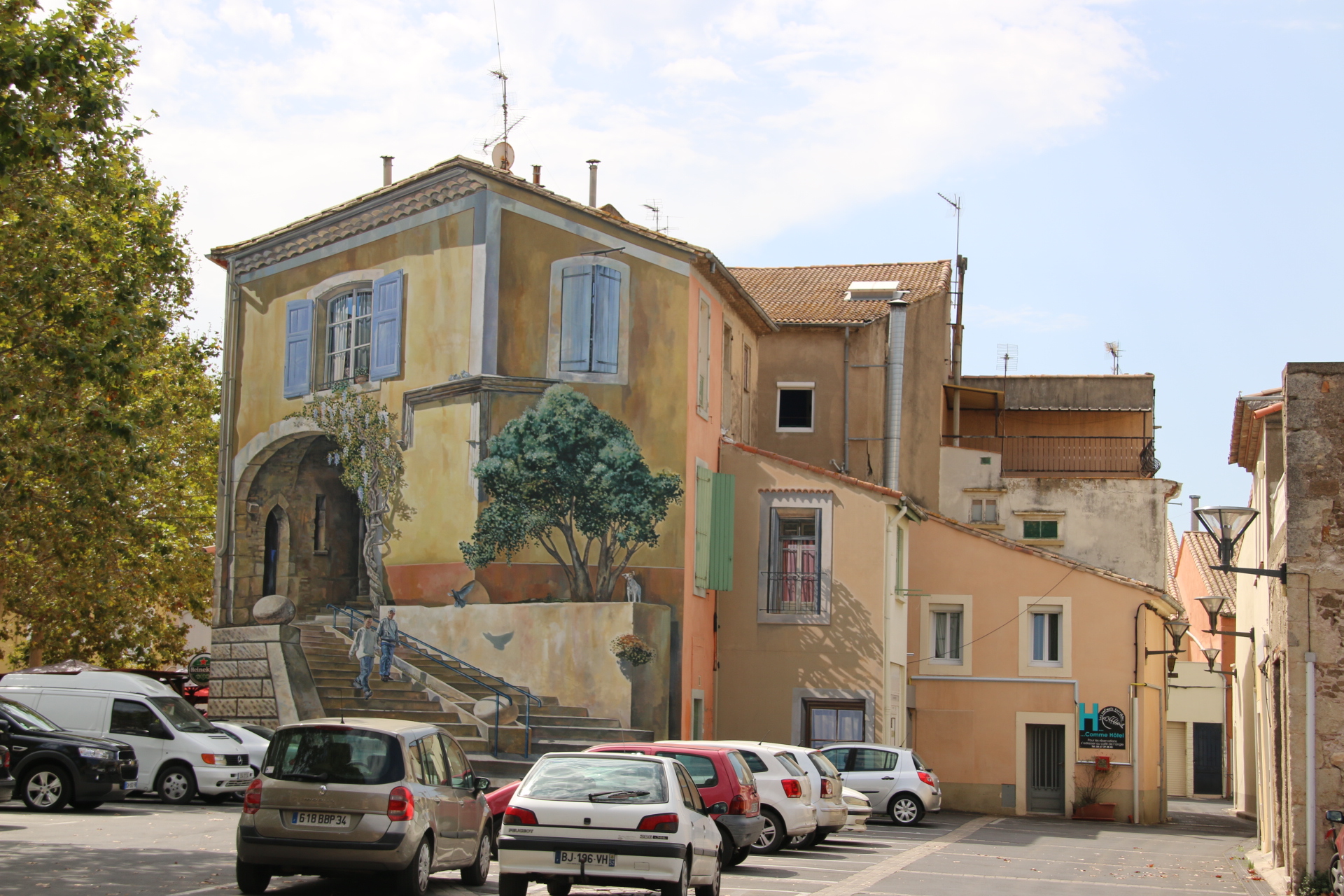
A few images of the following weeks of my journey through Provence, the Camargue and Languedoc-Roussillon. I know you’ll be upset if you have no pretty piccies to look at.

20160829110813_img_3381 20160829104014_img_3375 20160828103847_img_3318 20160828154602_img_3326 20160828154649_img_3328 20160824132057_img_3299 20160824124131_img_3288 20160824123304_img_3269 20160824095639_img_3237 20160823190857_img_3220 20160813100833_img_3078


Farewell to Mongolia

wp-1468392979009.jpg

So it’s farewell to this unique country and it’s wide, open spaces and calm, colourful people. Immediately I crossed the border from Russia it was noticeable how different this country is. People smile more. They wear colourful Western and traditional dress. Their cars are new white and grey Japanese numbers. In the capital there is new building of office and apartment blocks on a colossal scale. Hundreds of cranes fill the sky line. This is all down to the discovery of new copper and gold deposits in the south of the country.

Hate are a few interesting facts to leave you with:

50% of the 3 million population live in Ulaanbaatar

The first dinosaur egg was discovered in the Gobi Desert

At the age of 18 the government gives every citizen a plot of land of 500 square metres. They immediately put a wooden fence around the perimeter and erect their ger inside.

There are still 300,000 nomadic herders on the steppes

There’s are still shamans who follow their ancient ceremonies

Mongolians are so very proud of Genghis and there are images of him everywhere although he died over 900 years ago.

These images reflect the many different feature of this magnificent country. I will miss the huge, flat vastness of the desert and the steppes and the peace and calmness that that brings. I will so miss the quiet and the opportunities for reflection.

Till next time and my next adventure.


A day at the races

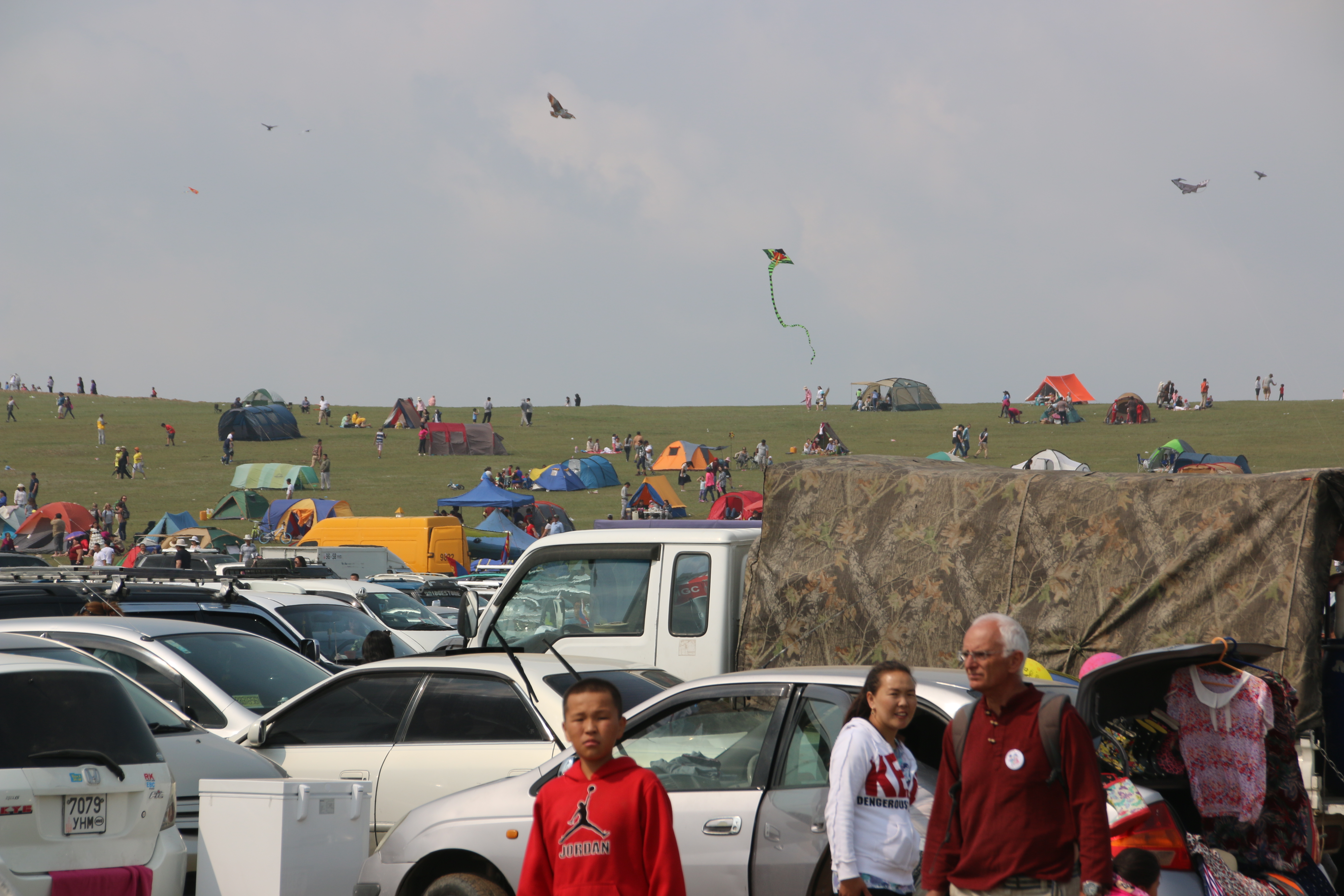
Horses are the stars in Mongolia. Star horses have monuments, songs, paintings, lyrics, music and dances named after them. For every person in this country, there is an equal number of horses, making over three million in total.  They really do follow the horses. The final event of the Naadam is the horse racing which is held on flat, open ground about 30km out of the capital. Over 250,000 descend on the rolling course.

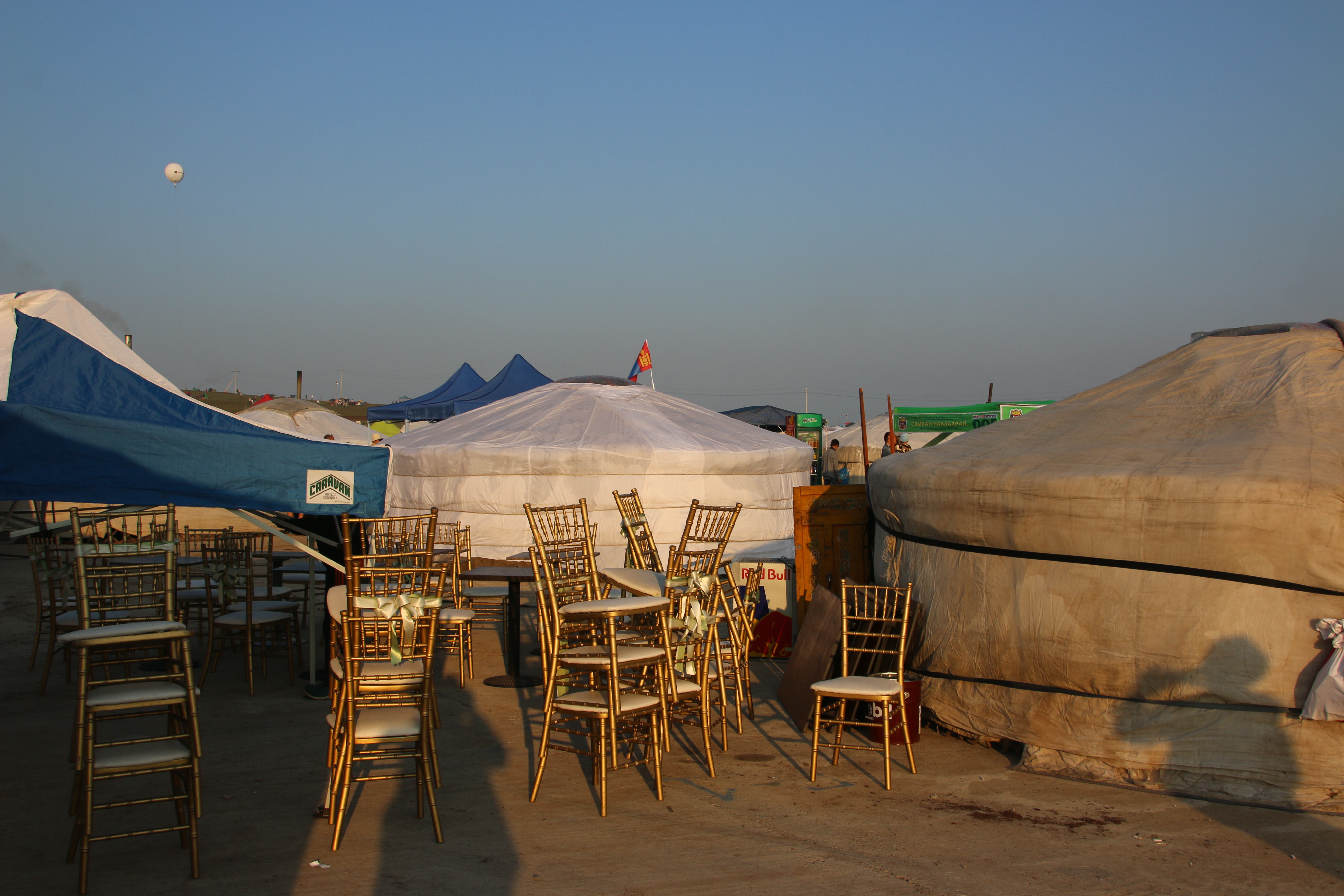
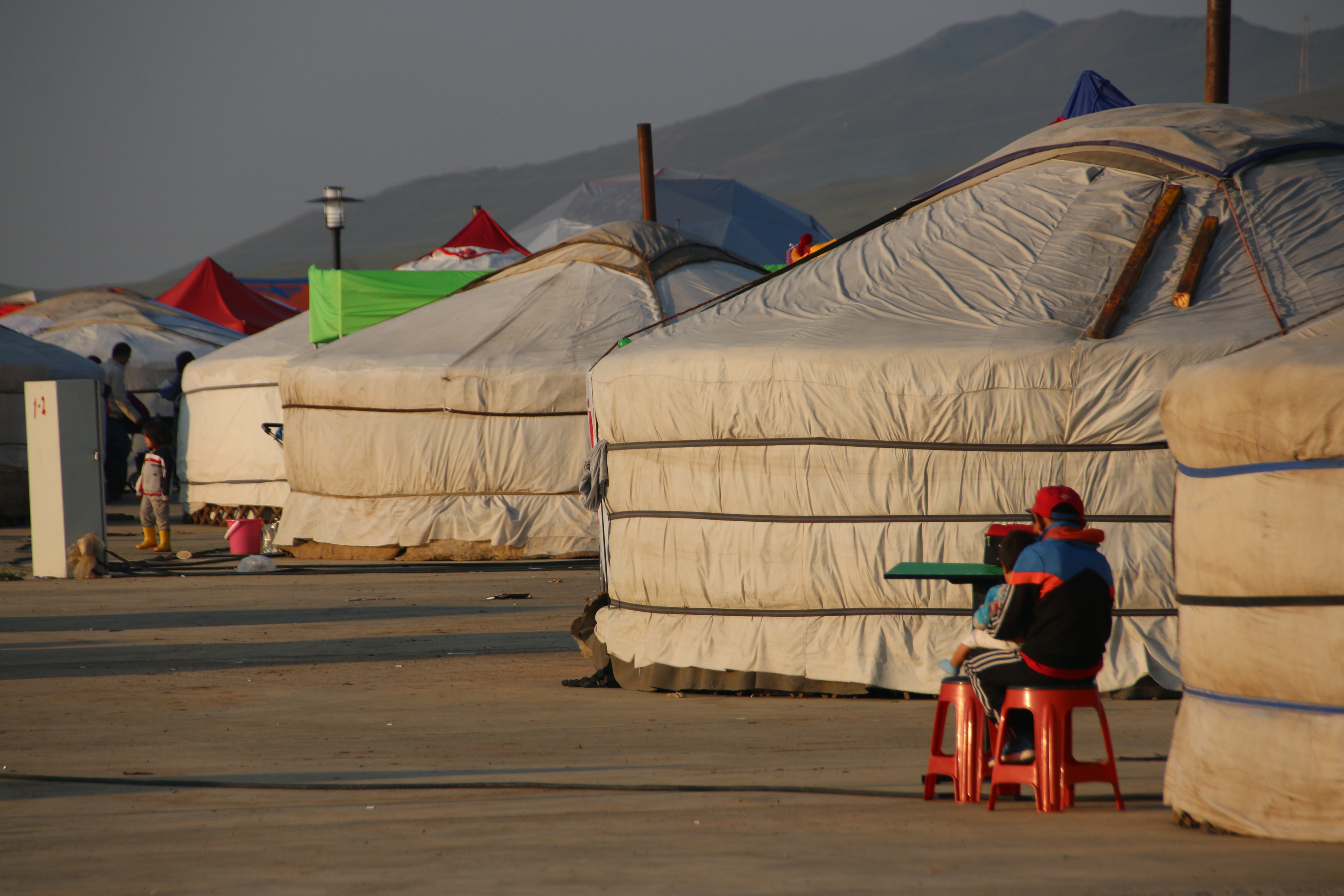
We arrive early to beat the traffic. A golden dawn lights up hundreds off refreshment gers who are just opening up for a busy day.

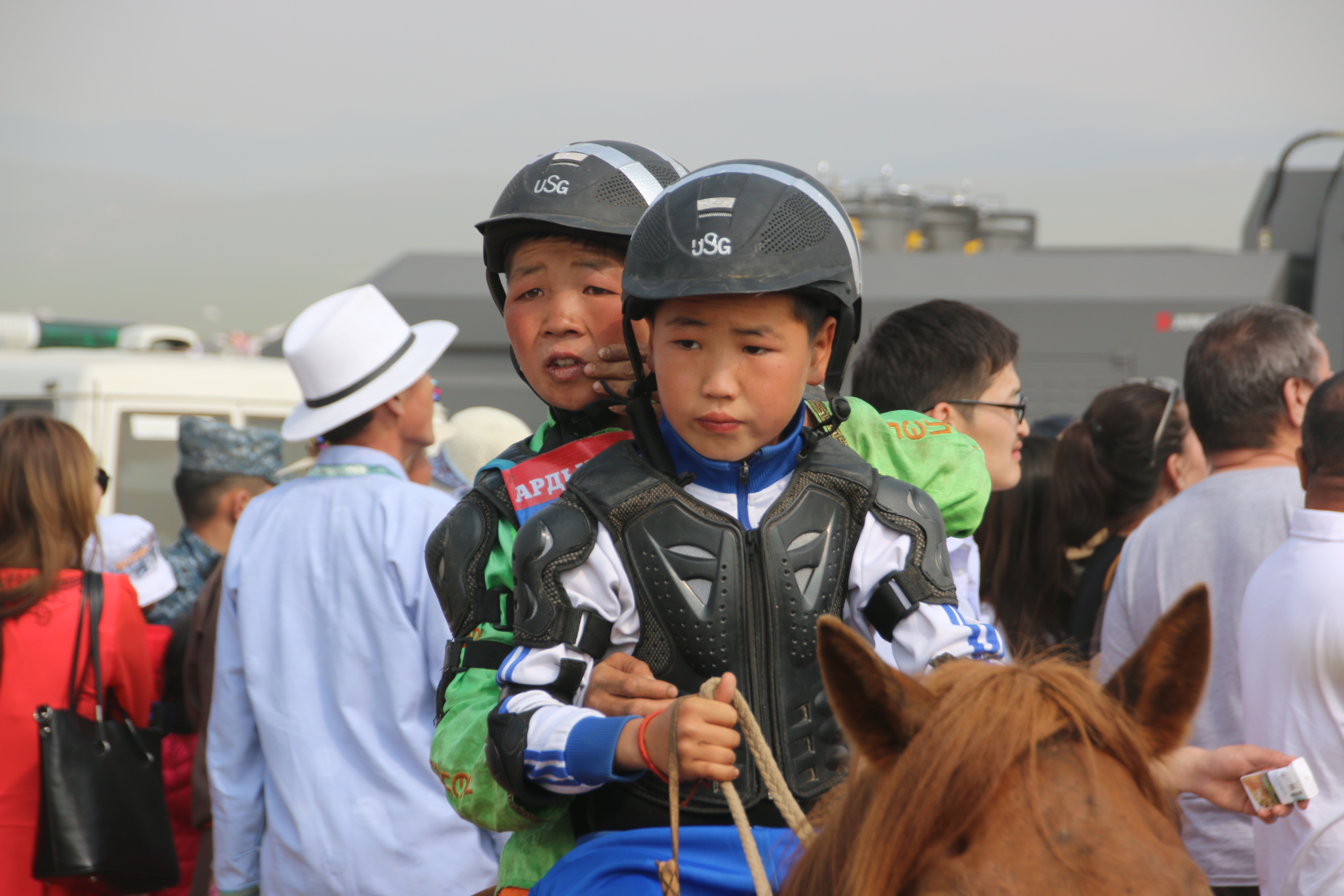
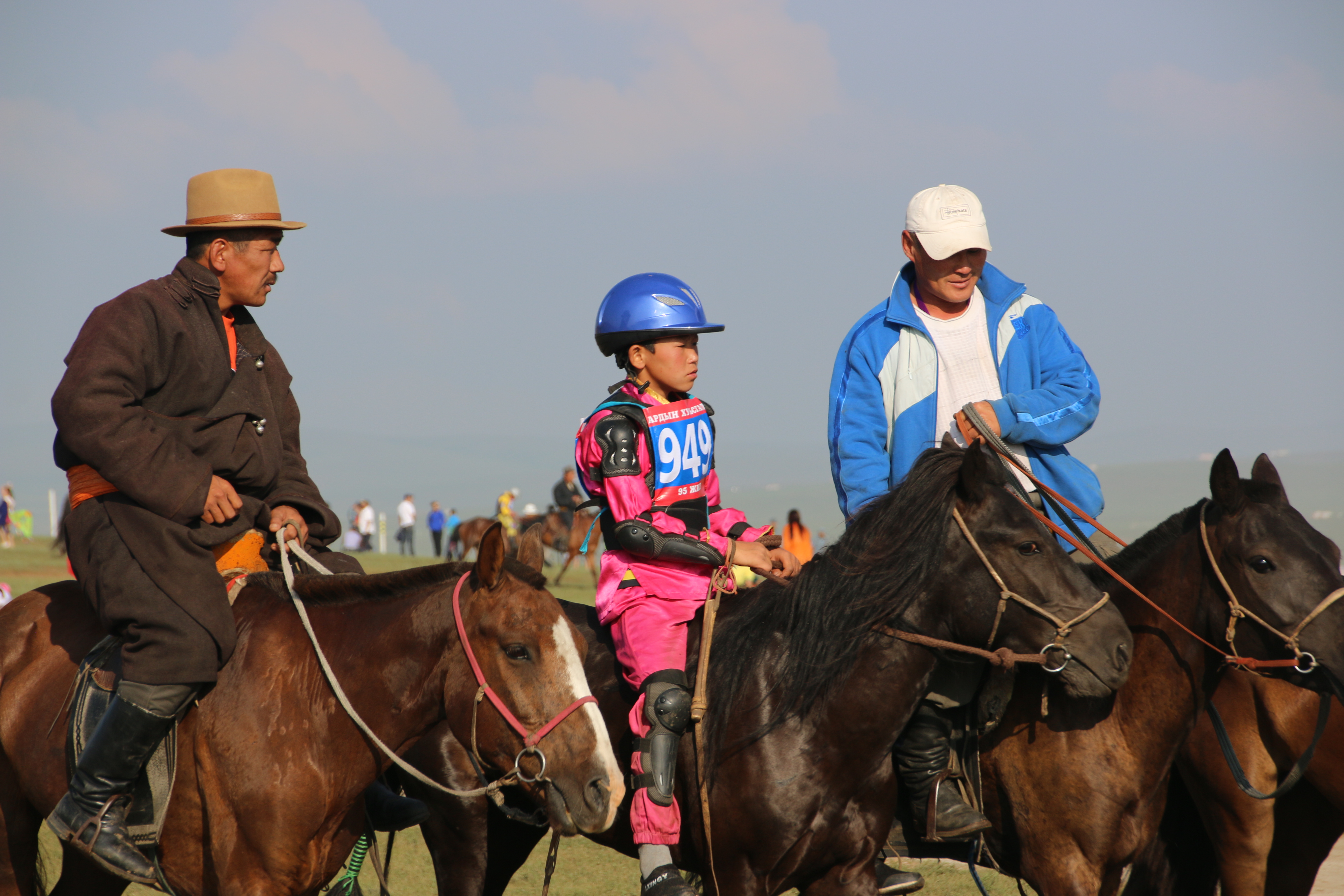
A number of races are on the card, dependent on the age of the horse. We are going to watch the Soyolon, a race for 5-year olds, over 22-24 kilometres. There are two things you need to know about Mongolian horse racing. The first is that all the horses are ridden by child jockeys aged between 7 and 13, although many look younger than that., and the second is that many ride bare-backed.

The races are ridden over a straight course over the steppe. Hours before their start time the young jockeys walk their mounts from the finish up to the start, over the hills and far away. They then turn around and race for home. It takes about half an hour to race back and the crowd crowds into ramshackle, stepped platforms to watch the final stages. The first sign of the approaching field is a gathering storm of dust in the far distance. Up to 100 horses can take part in these races. Tension mounts and the locals rise with a roar as the leading horses take form, accompanied by a small flotilla of outrider cars. The locals scream and shout and applause and whistle and yell encouragement as the winner leads the rest of the field in. Every finisher is greeted and it may go on for 30 minutes or so as many of the horses are exhausted having raced that far. Only one comes in riderless. I hope he didn’t come off too far out.

The rest of the day is spent with family and friends, on foot and on horseback.


The race over and it’s back to the struggles of the huge crowd, and, boy, is it huge and unrecognizable from earlier. Masses of spectators and family groups kick up a dusty haze as they move around the open hillside enjoying all the fun of the fair. There are some official looking rides and inflatables but most seem to be simple, traditional fairground activities set up by anyone with a bit of initiative. I saw one guy who was making ak killing with some half empty water bottles, some notes attached to each with an elastic band and some plastic hoops. He has a crowd off 50 strong, yelling encouragement and no lack of people wanting to pay to have a go. He has a huge wad of bills in his hand and his home-made hoopla stall is obviously a huge success. Other stalls include a host of Throwing Darts at a Rack of Balloons, Water Bottle Skittles, Paper Balls at Cans. All seems to require little brain and a lot of braun, judging by the prowess of the guys showing off to the pack.

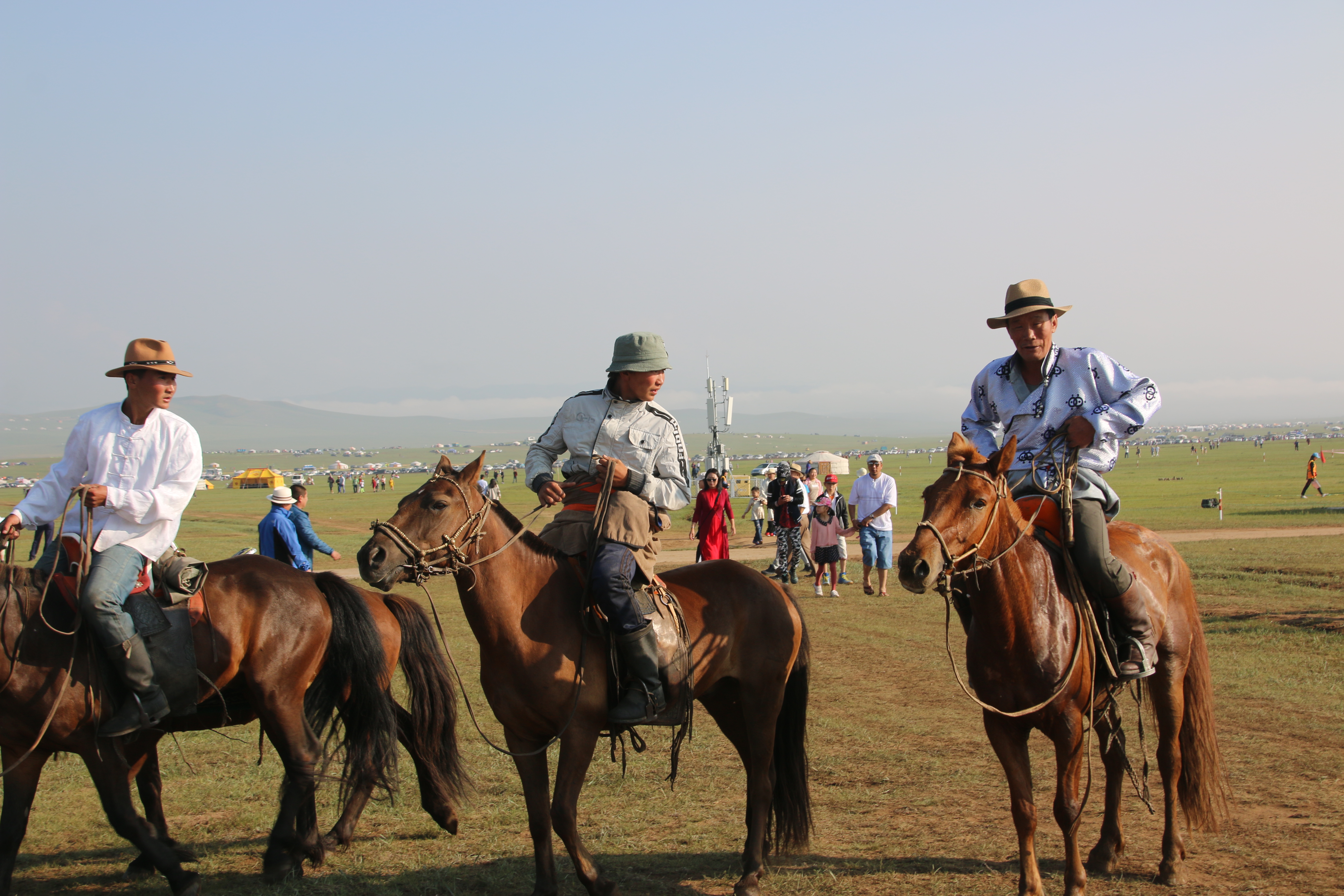
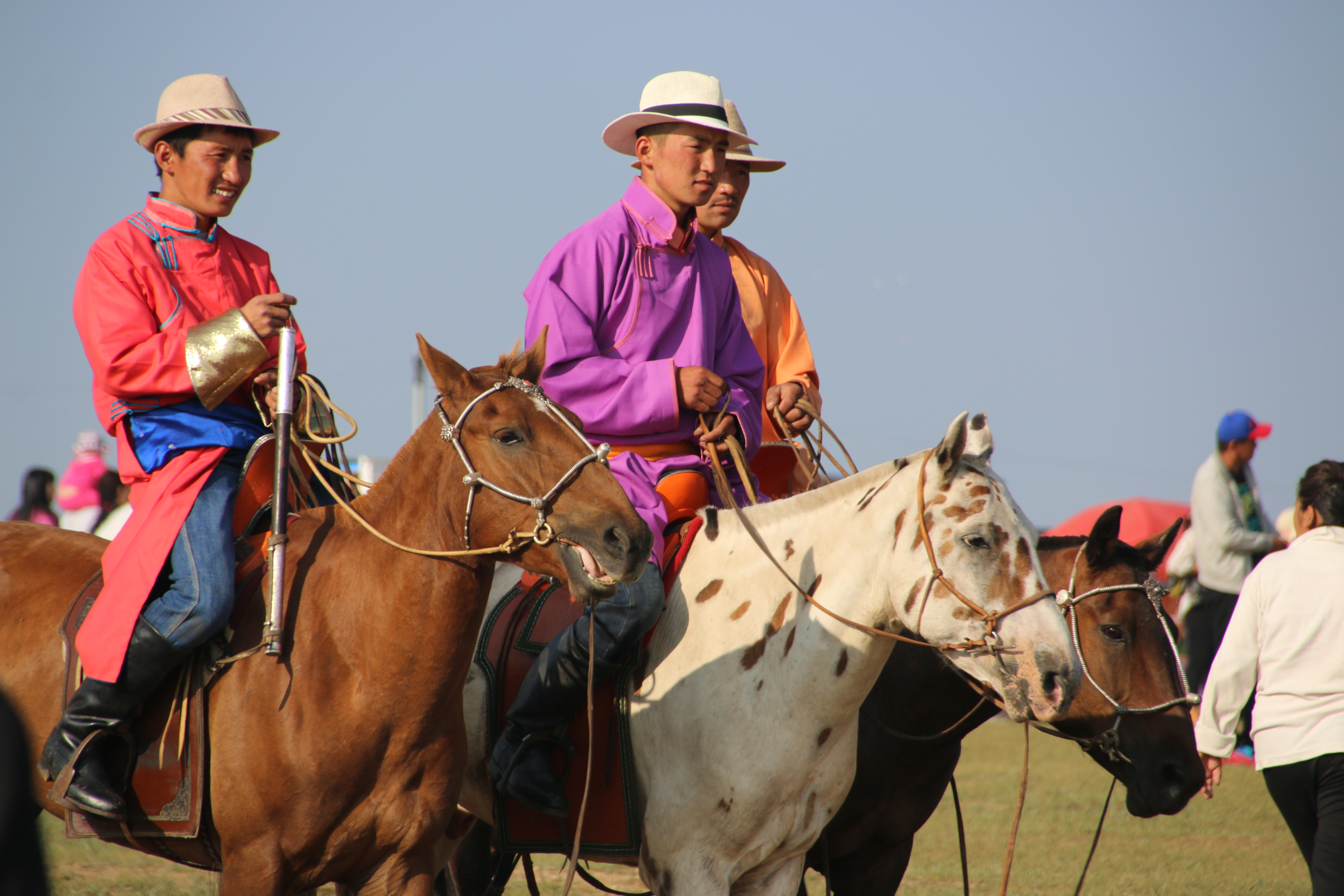
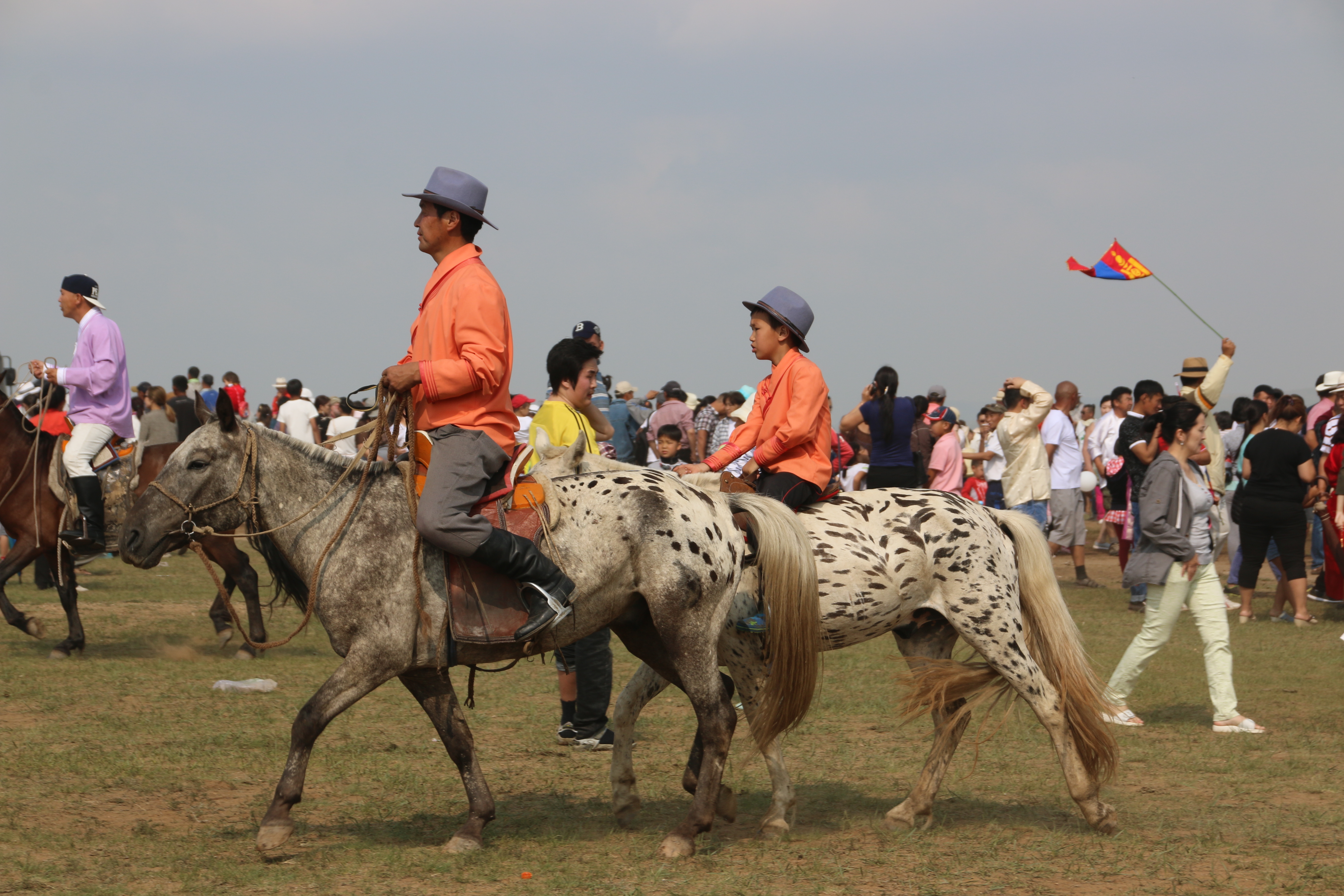
Mixed in with the thousands on foot, are those on horse-back. You have to watch it as they come up behind you, unheard. The family groups proudly show off in their steed and matching livery. The more mature men go around in their Sunday best, standing straight and aloof. The problem is the young tearaways who at the earliest opportunity gallop at full speed into any open ground like lads doing spin turns in Blackbird Leys.

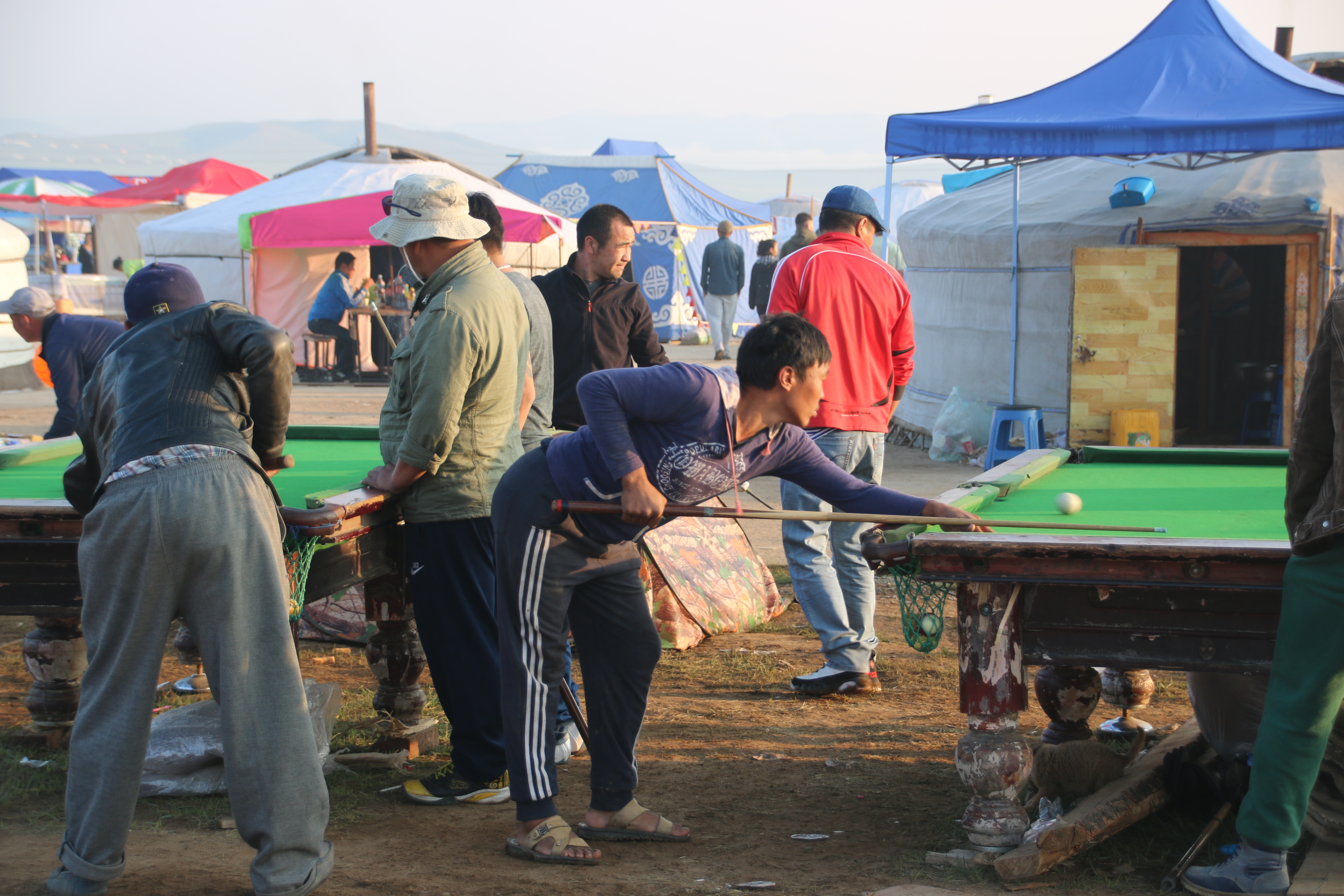
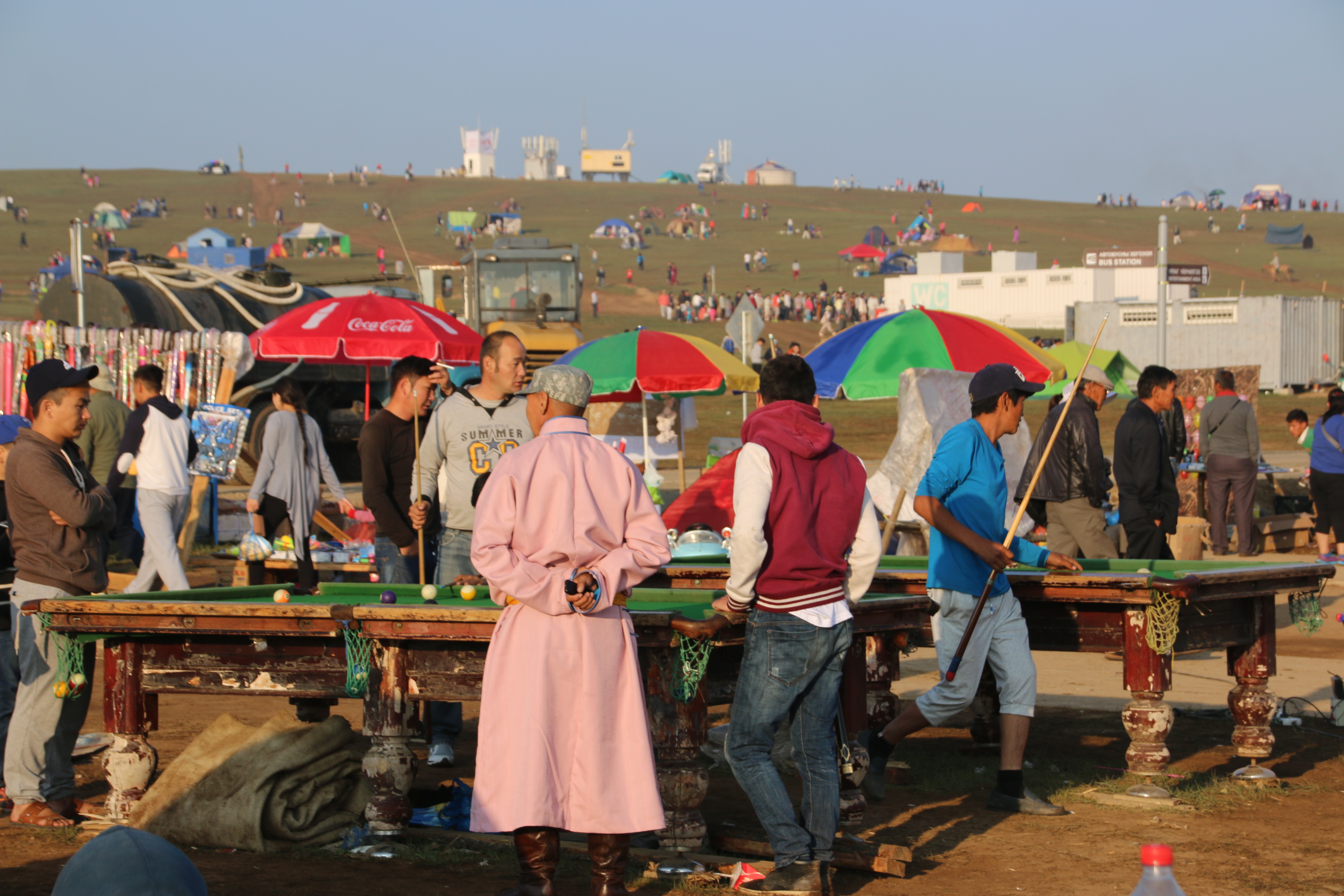
In fact initiative is the word. Every other van is crammed full with large plastic bottles of coke or lemonade or the bright colours of plastic toys or dolls or kites or home goods. They’d called in at the cash & carry on the way, set up on the grass and were flogging any tat to the passing crowd. There are several outdoor pool tables, pony rides, have your kiddies photo taken in front of this poster. The ladies has set up little stoves and are frying up meat dumplings to sell. Great for the cholesterol. The noise, the sounds, the colour, the smells, the press, the emotion of so many folk pushing about together is absolutely brilliant. Oh, I should add that there is no betting in Mongolia and limited prize money. It is all done for the pride of participation and winning is acknowledged with awards and certificates. Sounds like my kind of school.

Robin Hood or William Tell?

Archery is what it says on the can. Literally in the case of Mongolian archery. Rather than shooting at a target, archers shoot at rows of red or brown baked bean cans, made of leather, called hasaa and standing two or three high. If any part of the row is hit the judges start chanting and throw their hands in the air like the flying geese in the wrestling, to indicate success. If the arrow misses they indicate with their hand the height it passed over the top.

Men and women take part, the women over 60 metres and the men 75 metres. It is not just a question of hitting the row of hasaas. A score is only recorded if any one hasaa moves at least 8cm. Not a easy as it looks.

Each competitor is given 40 shots. 20 are used to hit a row of 20 hasaas stacked three high. The next 20 chances are given to hitting 30 hasaas lined in two rows.


Them bones, them bones, them ankle bones

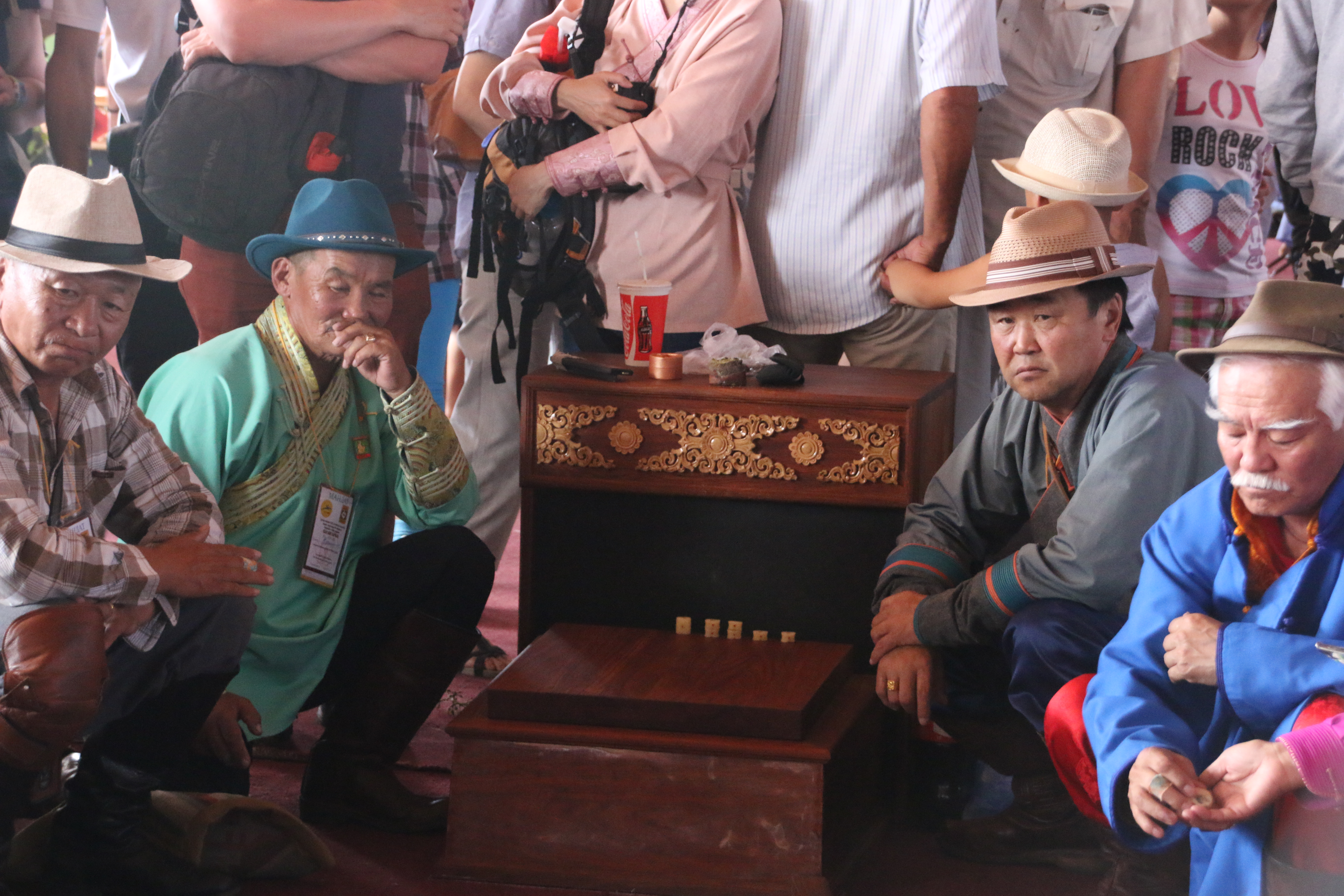
This is played in a large shed in the stadium complex. The Ankle-bone Shooting competition involves the champion team from each province. Teams are made up of six to eight players of mixed ages, some old guys, some young, even some children.

Ankle-bone Shooting is a bit like a cross between bowls, Aunt Sally and Tiddley Winks. Two teams line up on low seats opposite each other. One or two shooters from each team face the far end of the carpet where there is a small wooden structure. Stood within it will be a number of ankle bones from a small animal. The further into the game you get, the fewer target bones there are. The winning team is the one that has knocked down the most bones, which is shown by the number stacked up on their side of the carpet.

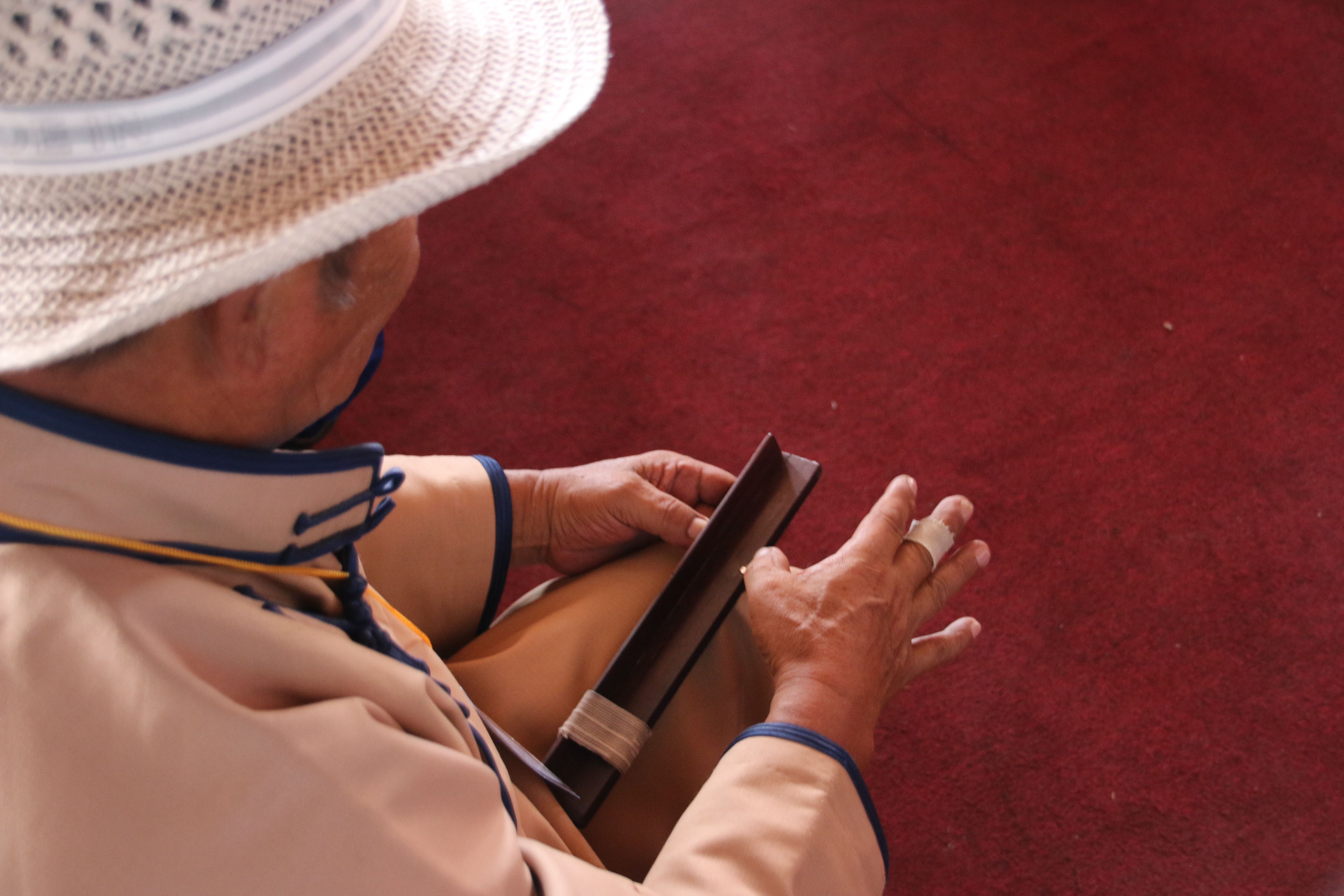
Each shooter has their own style. A small, rectangular, piece of deer’s horn is used as the bullet. It is flicked from a polished ruler with a low edge along one side. The shooter will use his knee to steady the ruler and aim. He will use his middle finger to flick the bullet to knock target bones off the line. Each team will collect these on their own sides of the target box.

Ankle-bone Shooting is a noisy affair. Team members line up to take their shot. As each concentrates, his own team sounds out a mellow melody whilst the opponent’s team will try to distract the shooter with loud, sharp sounds and voices. Large cheers will go up when a bone its dislodged. With a many as twenty games going on at the same time you can imagine how loud it is.

“The games social role is to reach the younger generation to compete politely, to work together as a team and to have a calm team spirit.” Maybe the Premiership could learn a thing or two.


The Good, the Bad and the very Ugly Wrestlers

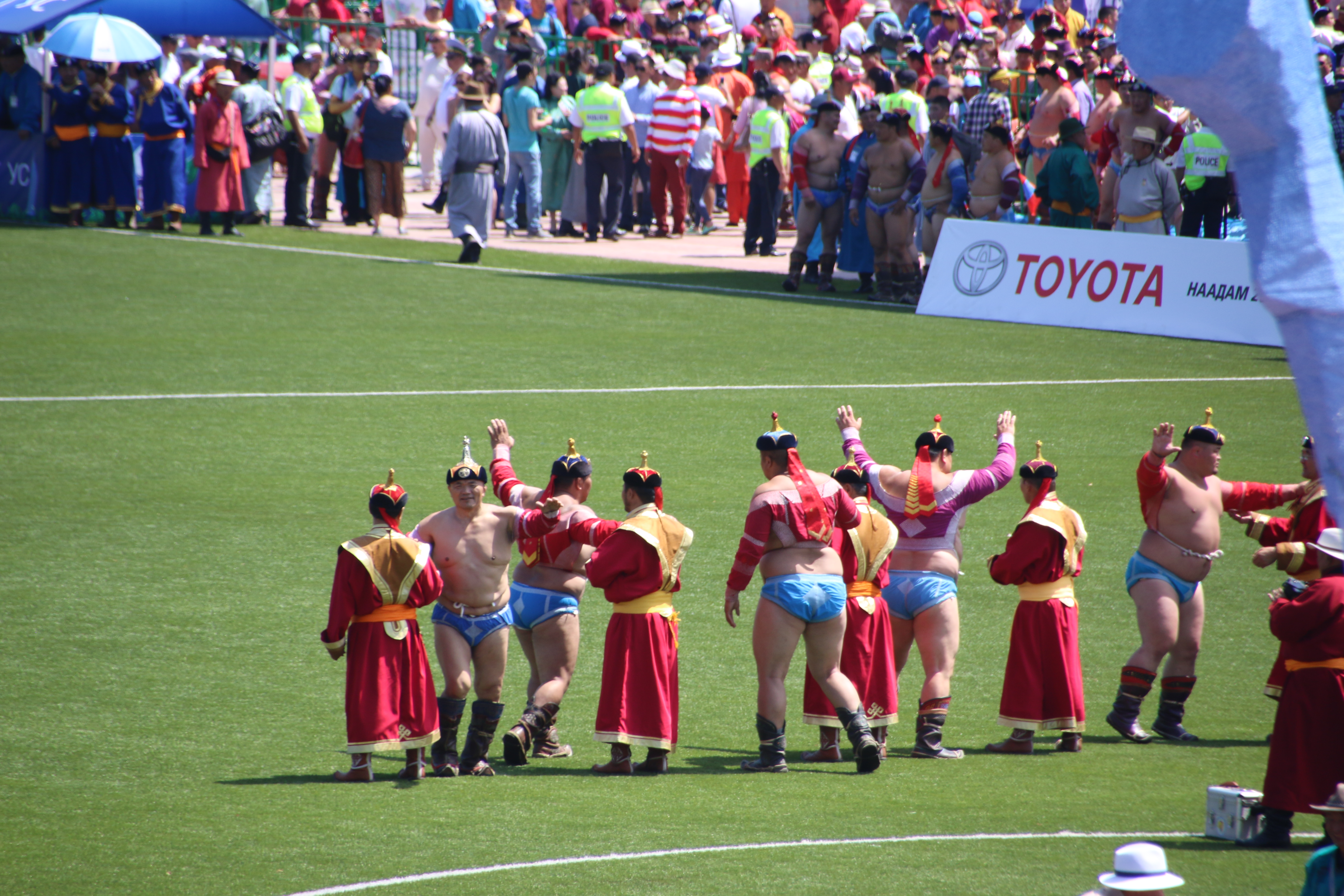
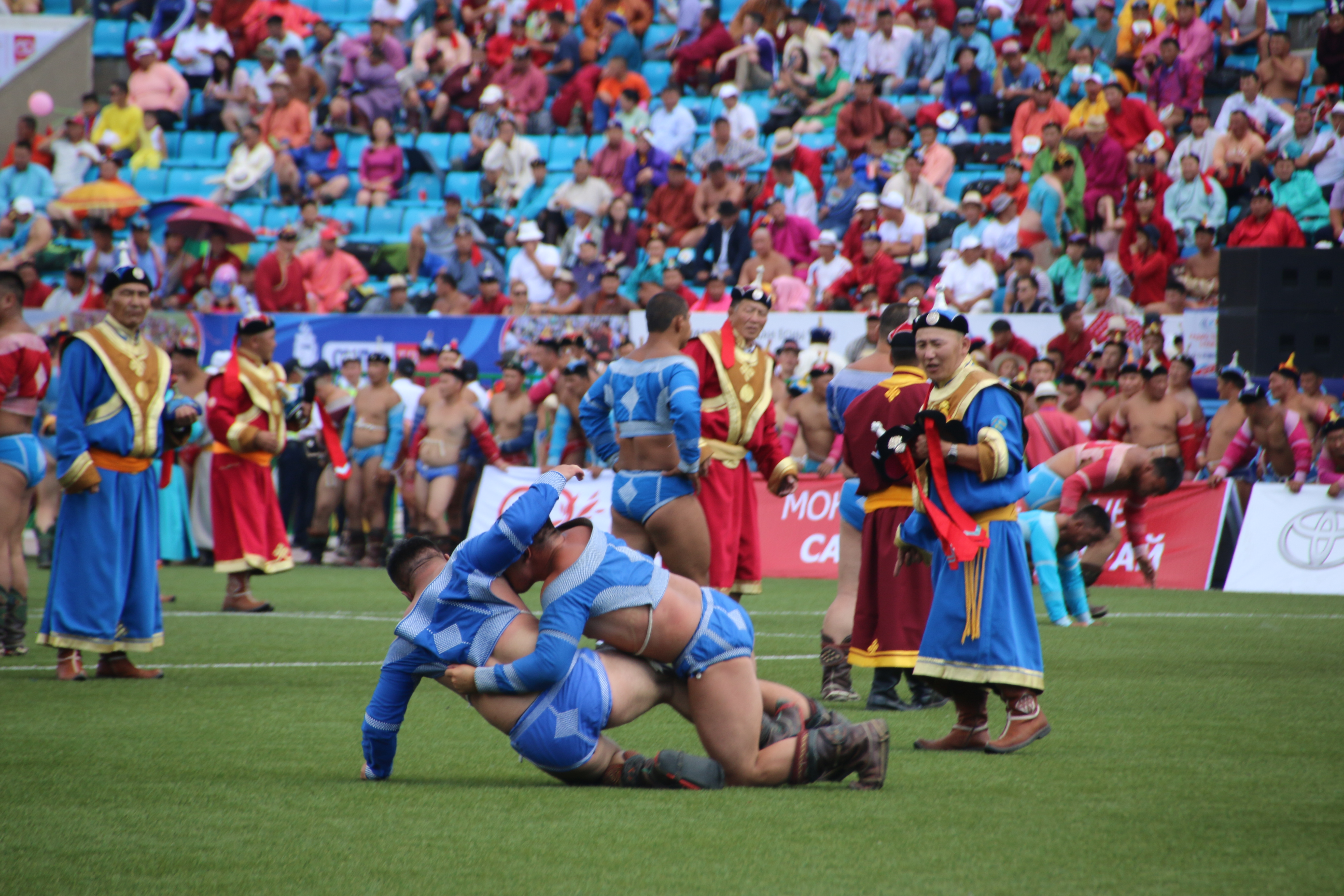
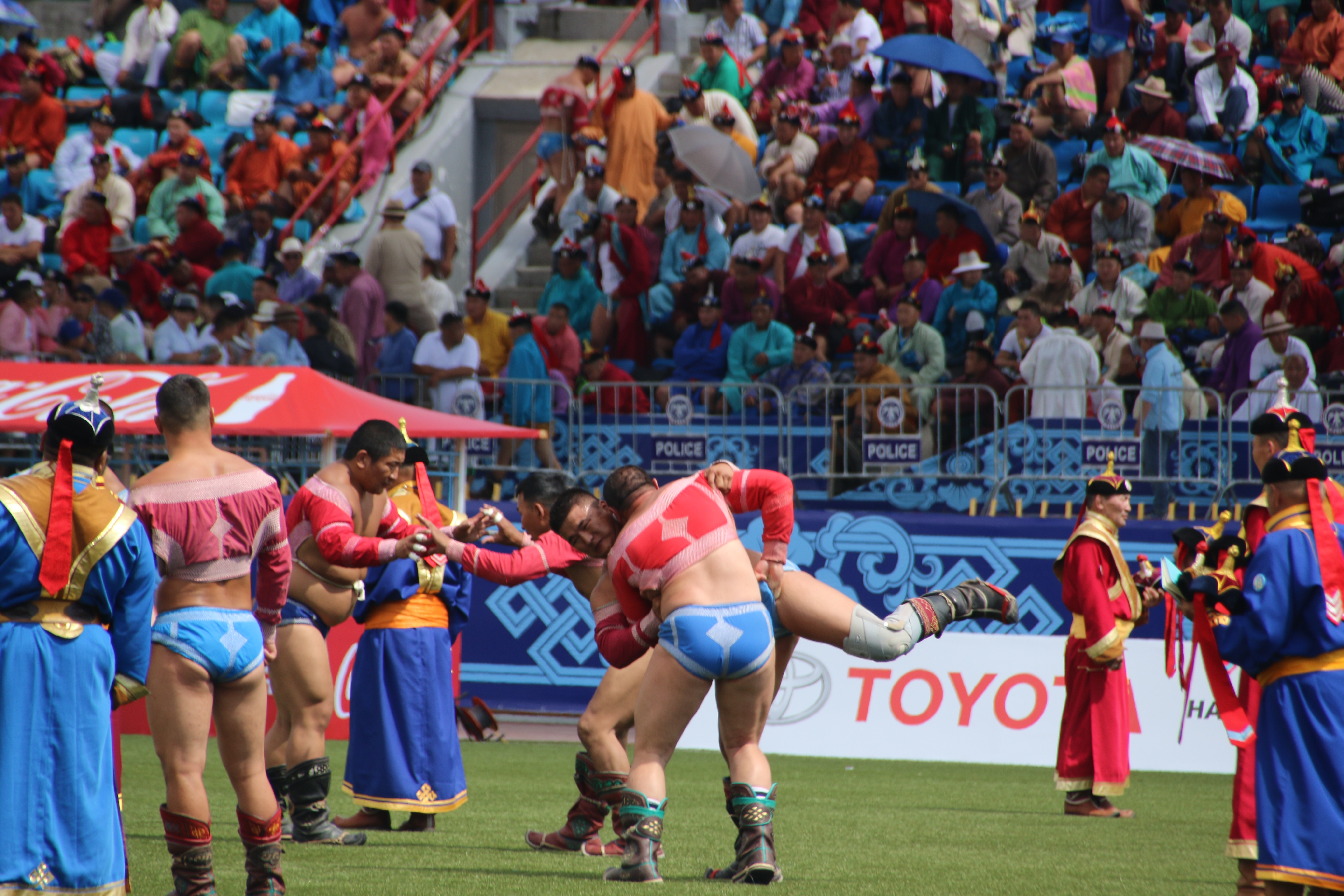
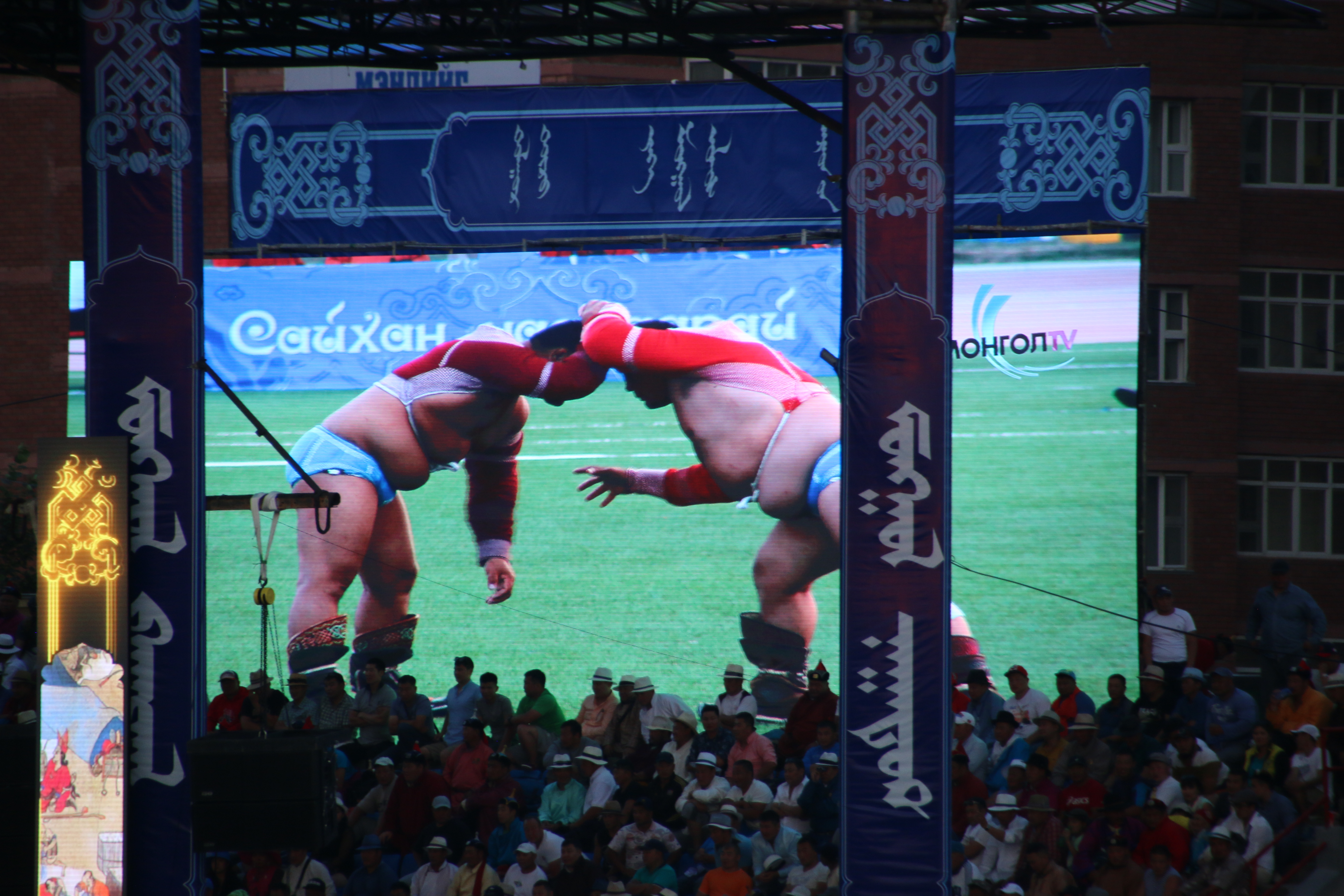
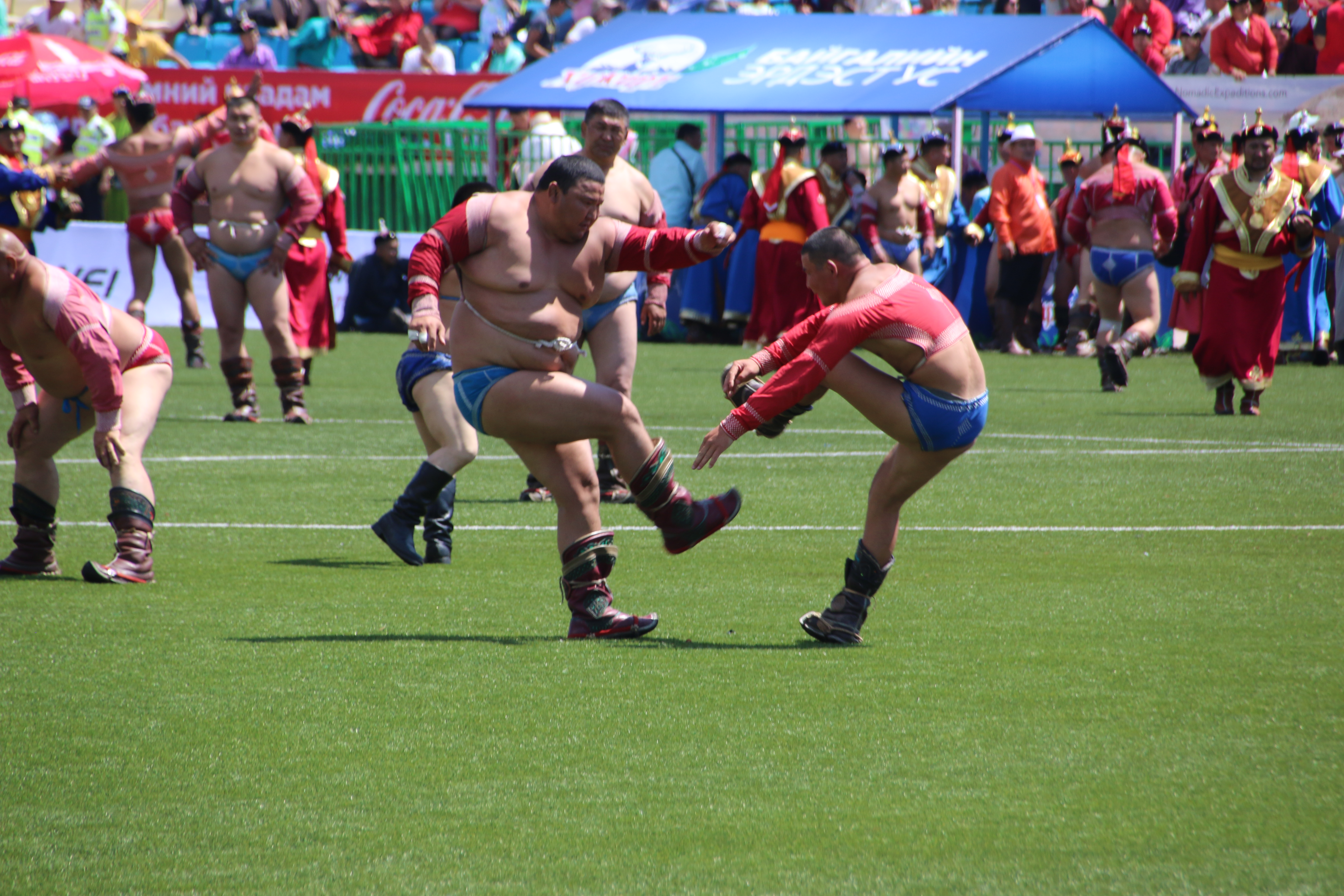
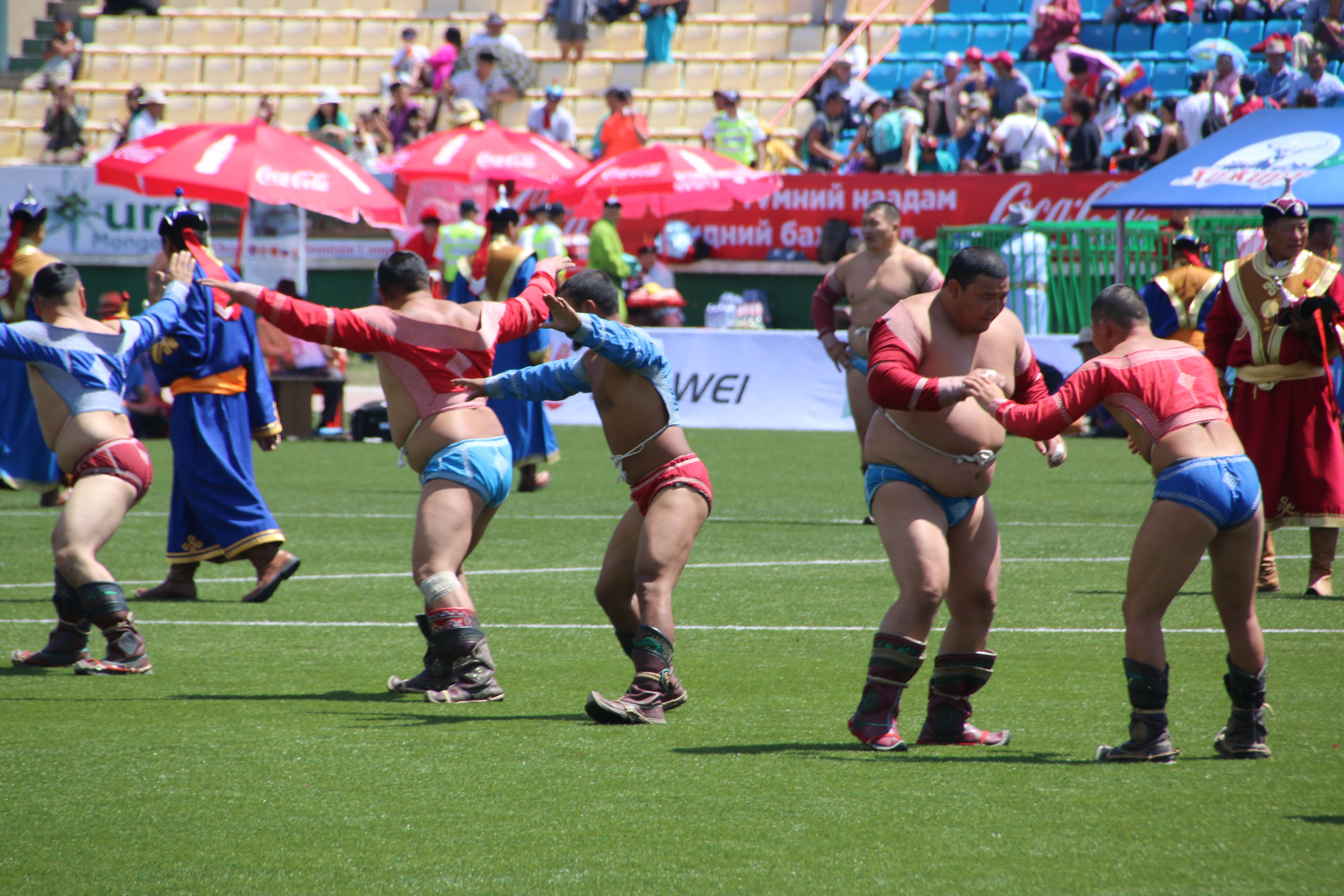
Immediately after the opening ceremony the wrestling starts in the stadium. Each province’s top wrestlers take part, 512 in total. They wear similar outfits which, so the story goes, is open chested so everyone can see they are male. In the past, when they were clothed, a woman took part and beat some of the guys until she was recognised by a family friend. Each bout has a judge allocated. The judges are the ones decked out in the dark blue and red. There are a whole loads of bouts going on at the same time with a tangle of wrestlers hard at it, judges observing, victors jogging about celebrating and four static soldiers whose job it is to guard the Nine Banners, representing the 9 horsetails of Genghis’ 9 Mongol tribes.

Some things you need to know about Mongolian wrestling. Firstly, and most importantly, there are no weight categories. So the lightest guy may have to fight the heaviest, and some of them are heavy. So, in the early rounds there are complete mismatches and if there is a chance that a thin guy can get one over a heavy one, the spectators give him all their support.

In the later rounds only the heavy, thick guys are left. The last 8.

Two of the last 4.

Secondly, ‘knee-dirtied’ is the Mongolian term for defeat. In other words, if you can get any part of your opponent’s body to touch the ground, you are the winner. Here are a few moves.

Once you have put your opponent down, you flap your arms in the air like a goose trying to take off, you rock around 360° stiff legged before jogging off to give thanks to the Nine Feathers. You return to your defeated opponent and run clockwise under his outstretched arm to mask respect for his participation. You then collect a token from the judge and progress to the next round.

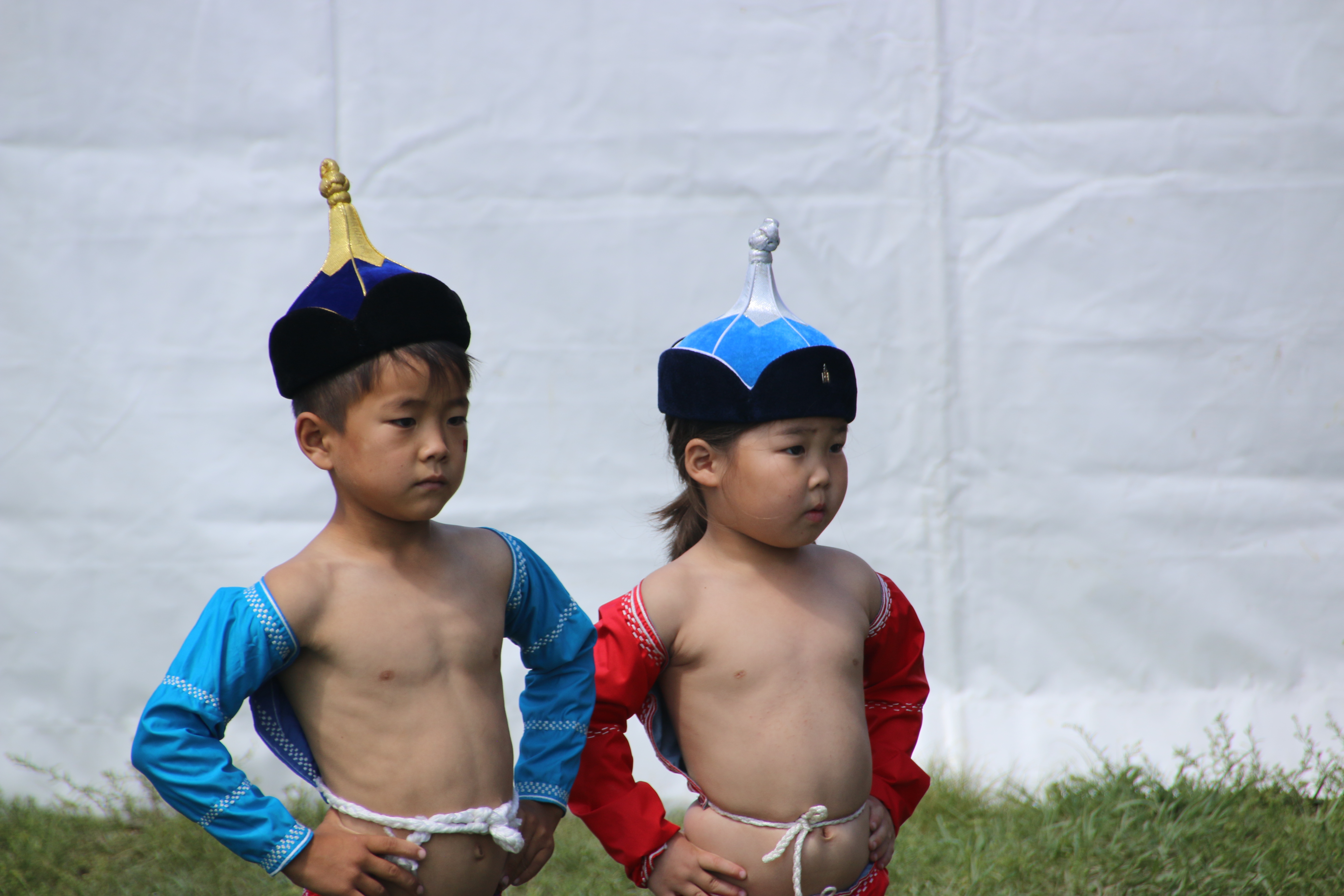
Thirdly, there is no time limit so the bout can go on for 3 seconds or 30 minutes of even longer. Because of this the closing ceremony is always a movable feast. They start ’em young in Mongolia.


The Opening of the Naadam Festival

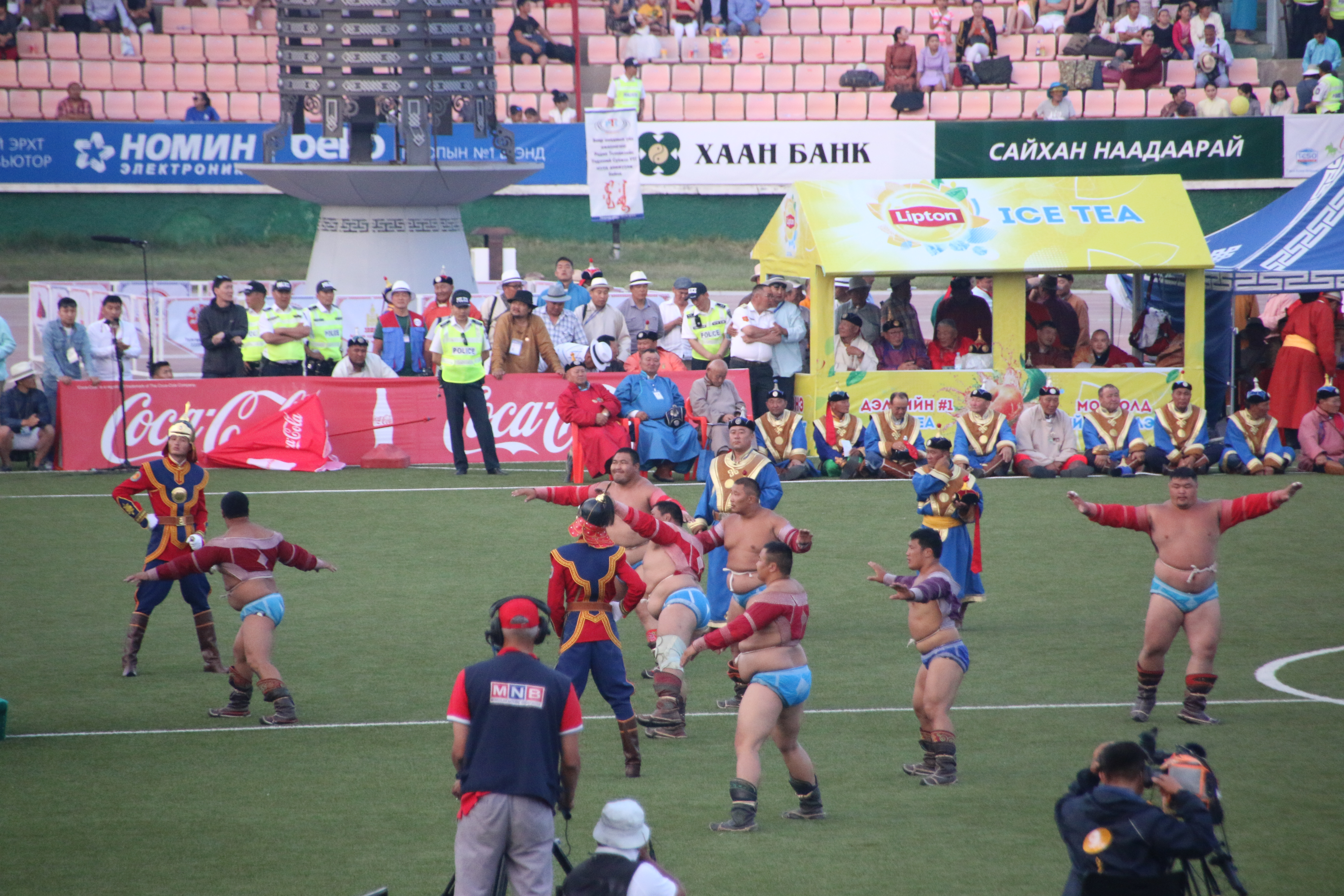
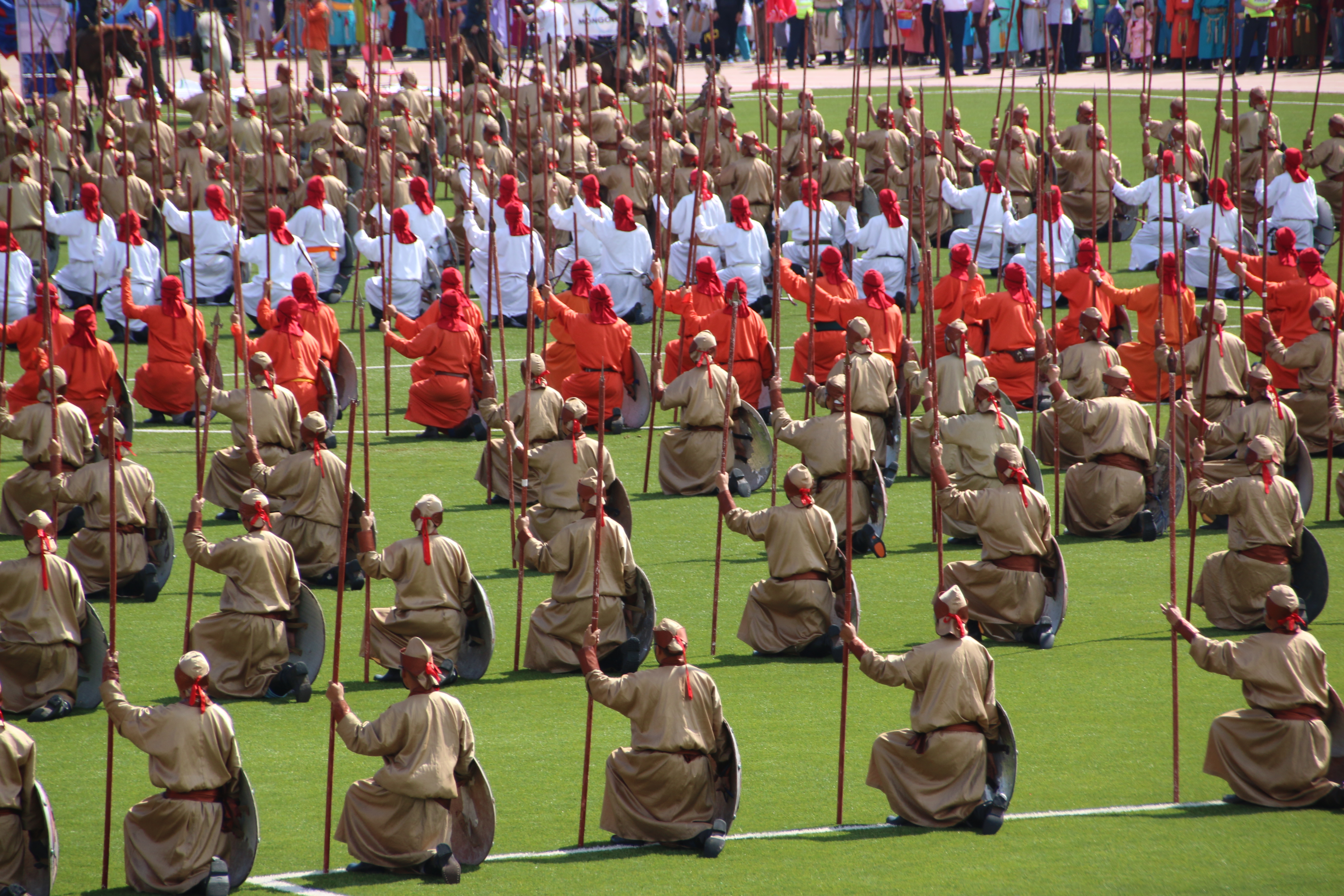
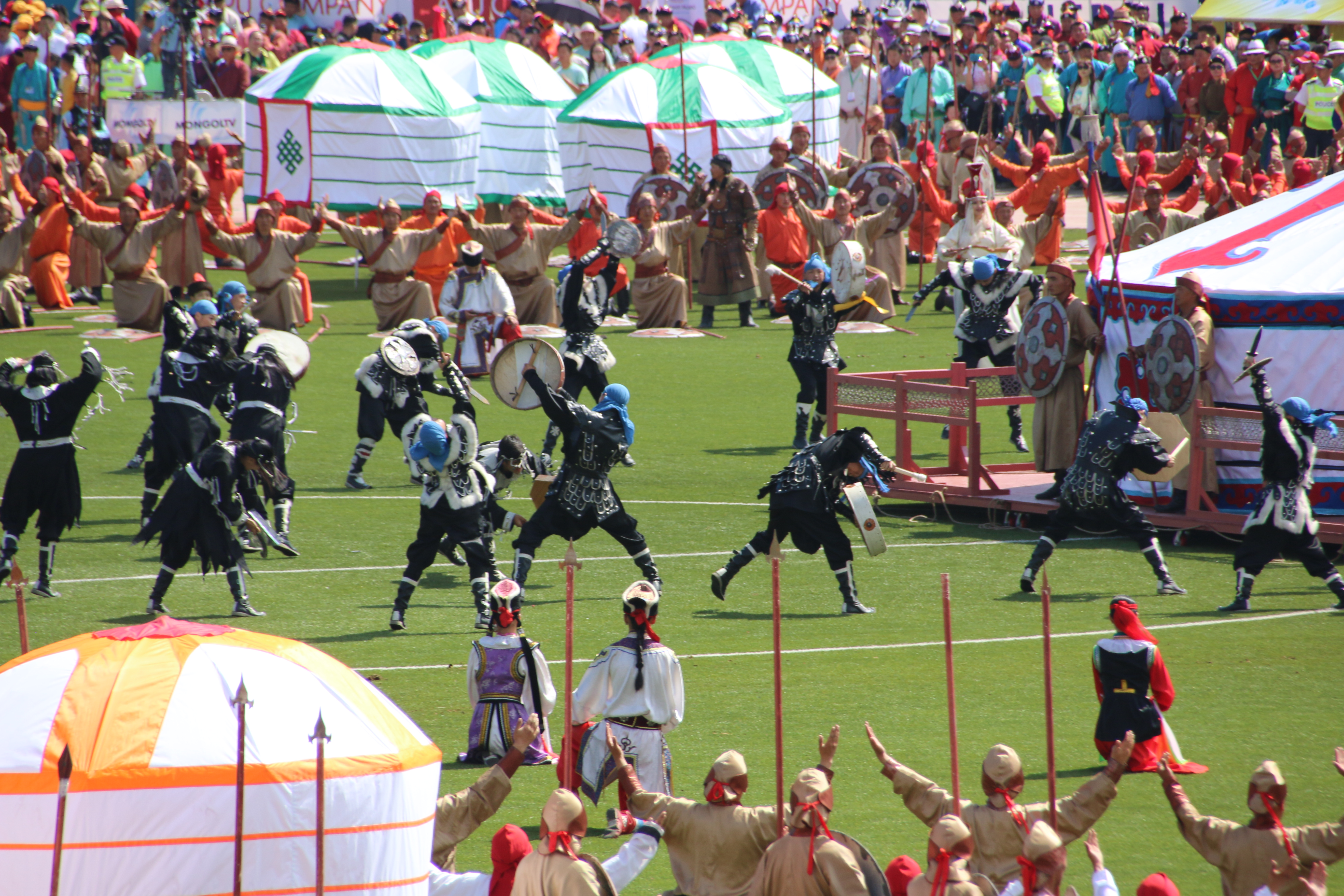
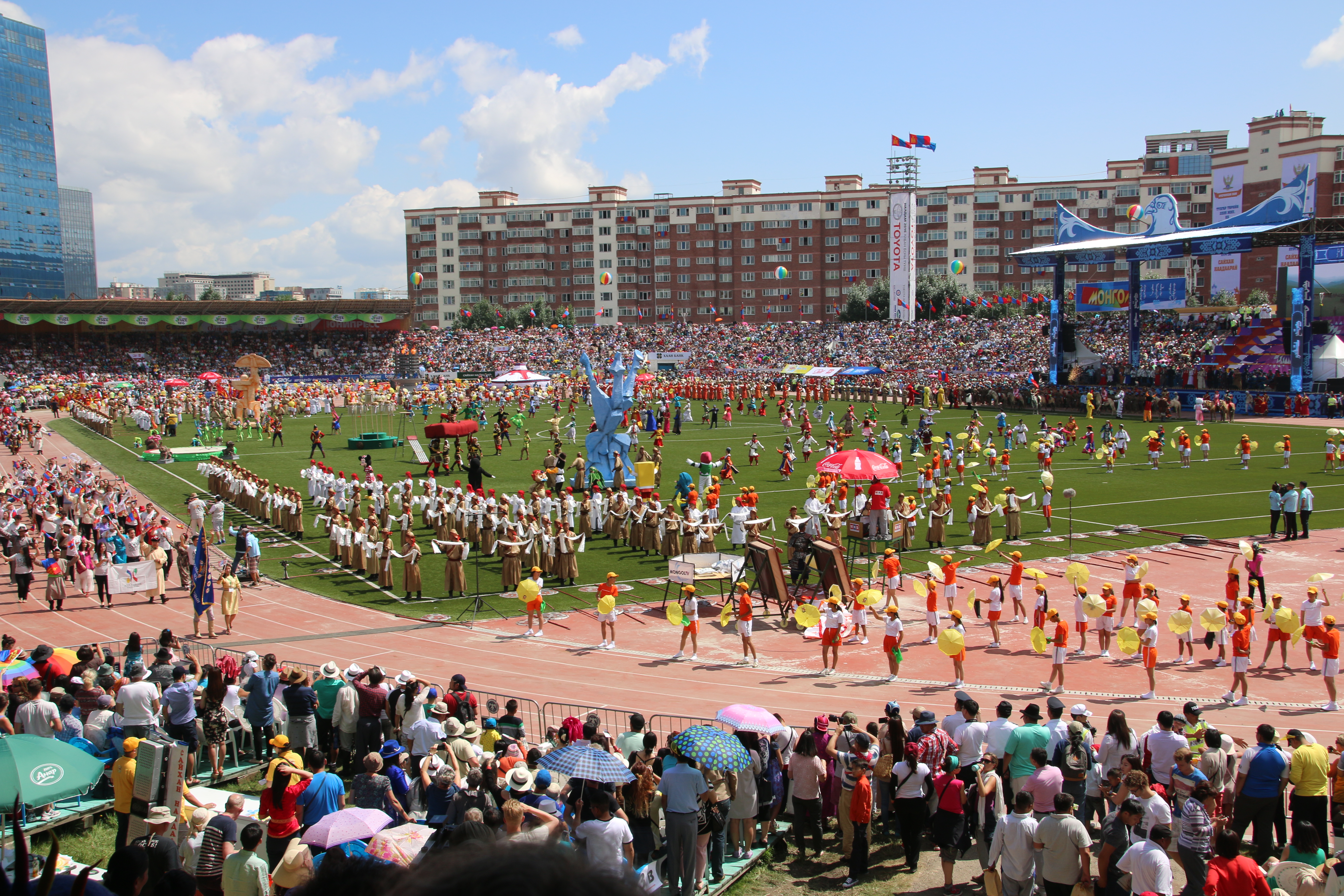
The annual Naadam Festival has been held over centuries. Originally it was a gathering of the Mongol tribes where the champions of each one would compete in three ‘manly’ events to establish who was the overall champion in each. These were wrestling, horse riding and archery. Ten years ago a fourth event was added, ankle bones (more on this later). Now it is a competition between the nine provinces that make up Mongolia today.

The Naadam Festival proper kicks off in the morning with a lavish opening ceremony involving 2,000 or so participants. This traces the history of Mongolia from early times, concentrating in particular on the uniting of all the tribes and the vast empire established by Genghis Khan which, at one point, stretched from Europe through to China and Vietnam. His grandson Khublai founded the Yung dynasty in China and moved the capital to Bejing. The period following communist control, independence and the subsequent growth of pride in traditional values is celebrated. In 1990 the population was 2 million. Now it has reached 3 million. The finale involves hundreds of youngsters, demonstrating their promise and potential for the future of this ancient yet young country.

Enjoy the scenes. Olympics, eat yer heart out.

Mongolia’s Day of National Costumes

Now it’s back to UB for the Naadam festival (see how I use the local vernacular for Ulaanbaatar). The only problem is that having survived 40+° heat and 7 days on the Cheesegrater the weather forecast is for rain. The Mongolian forecast is as reliable as the BBCs.

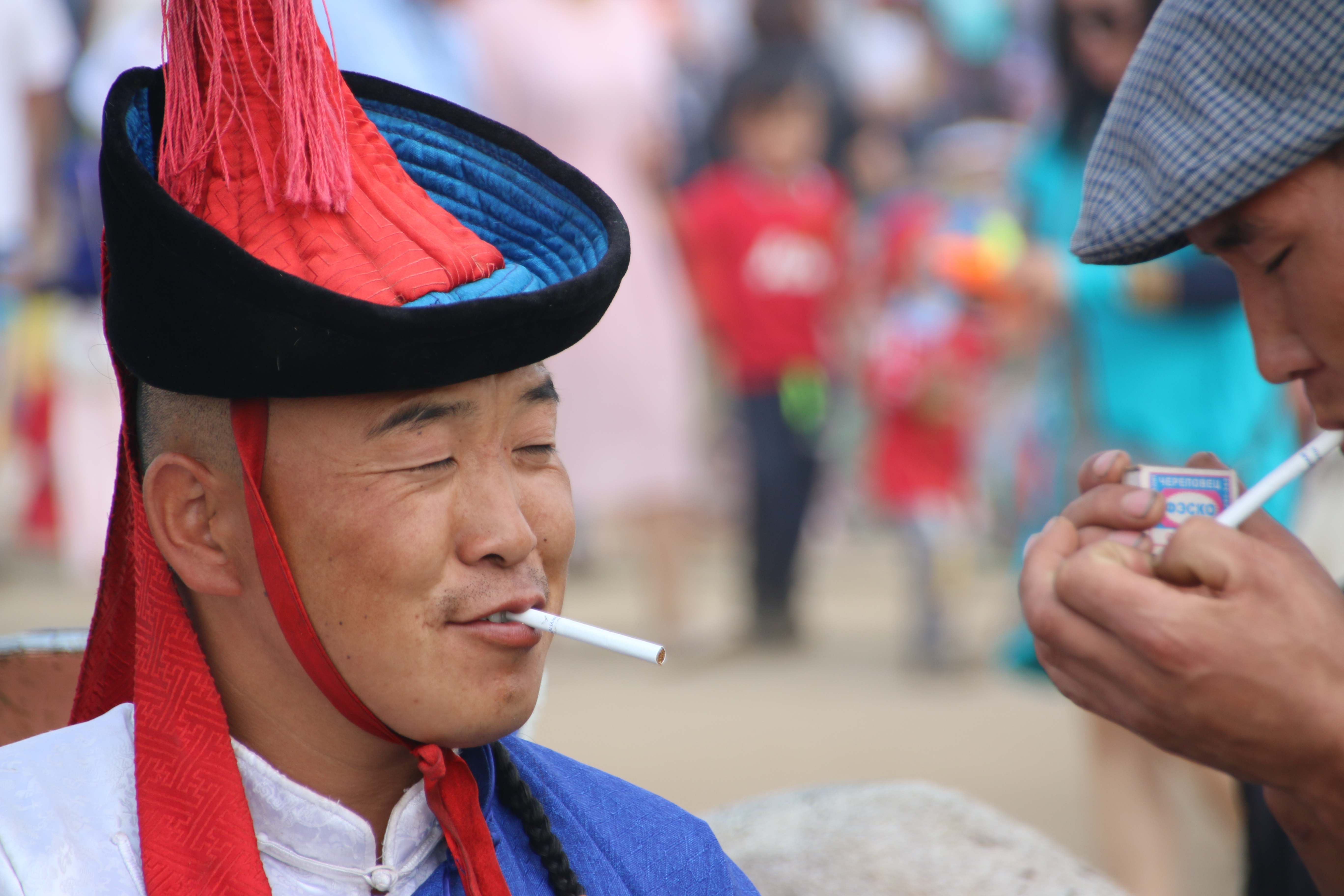
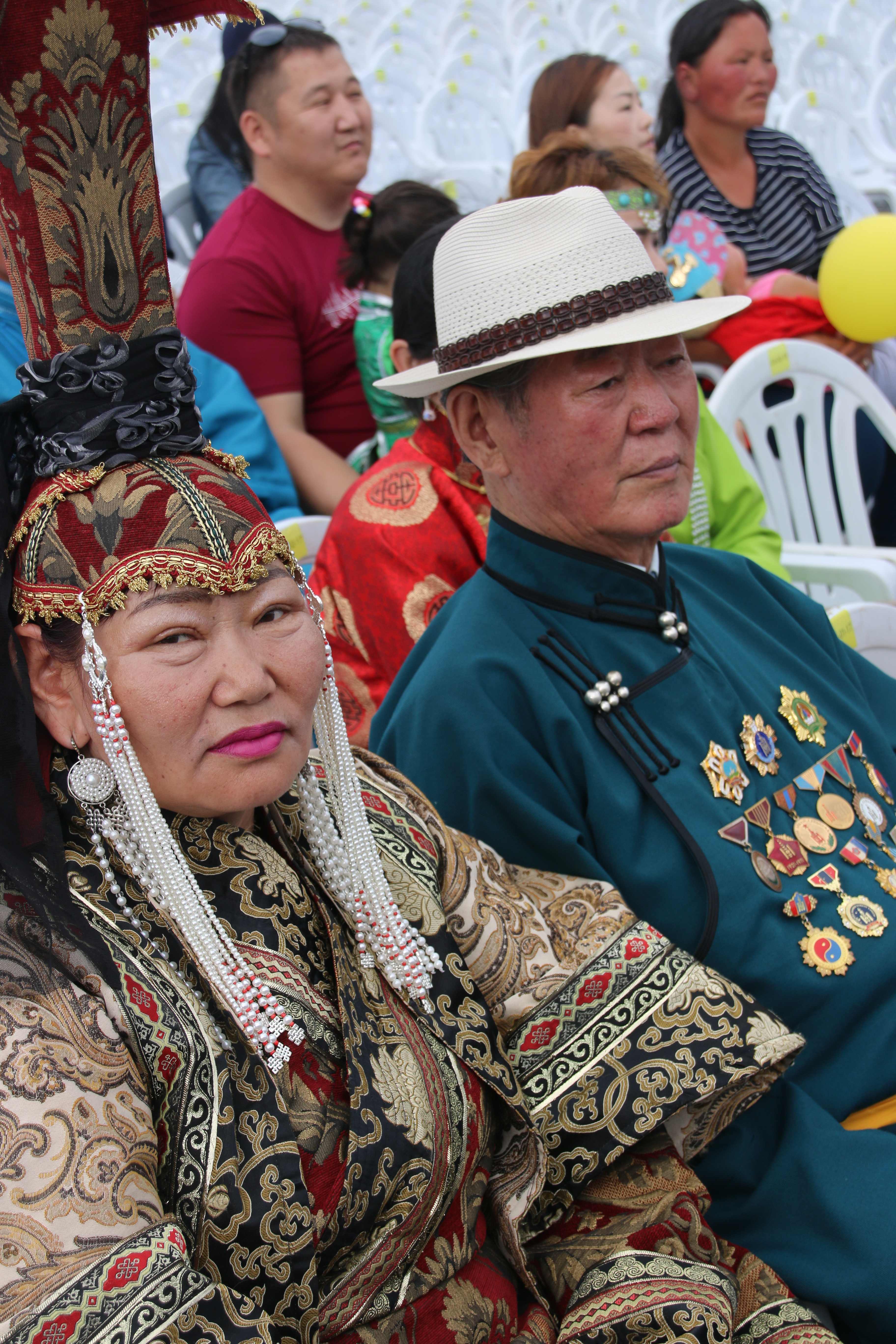
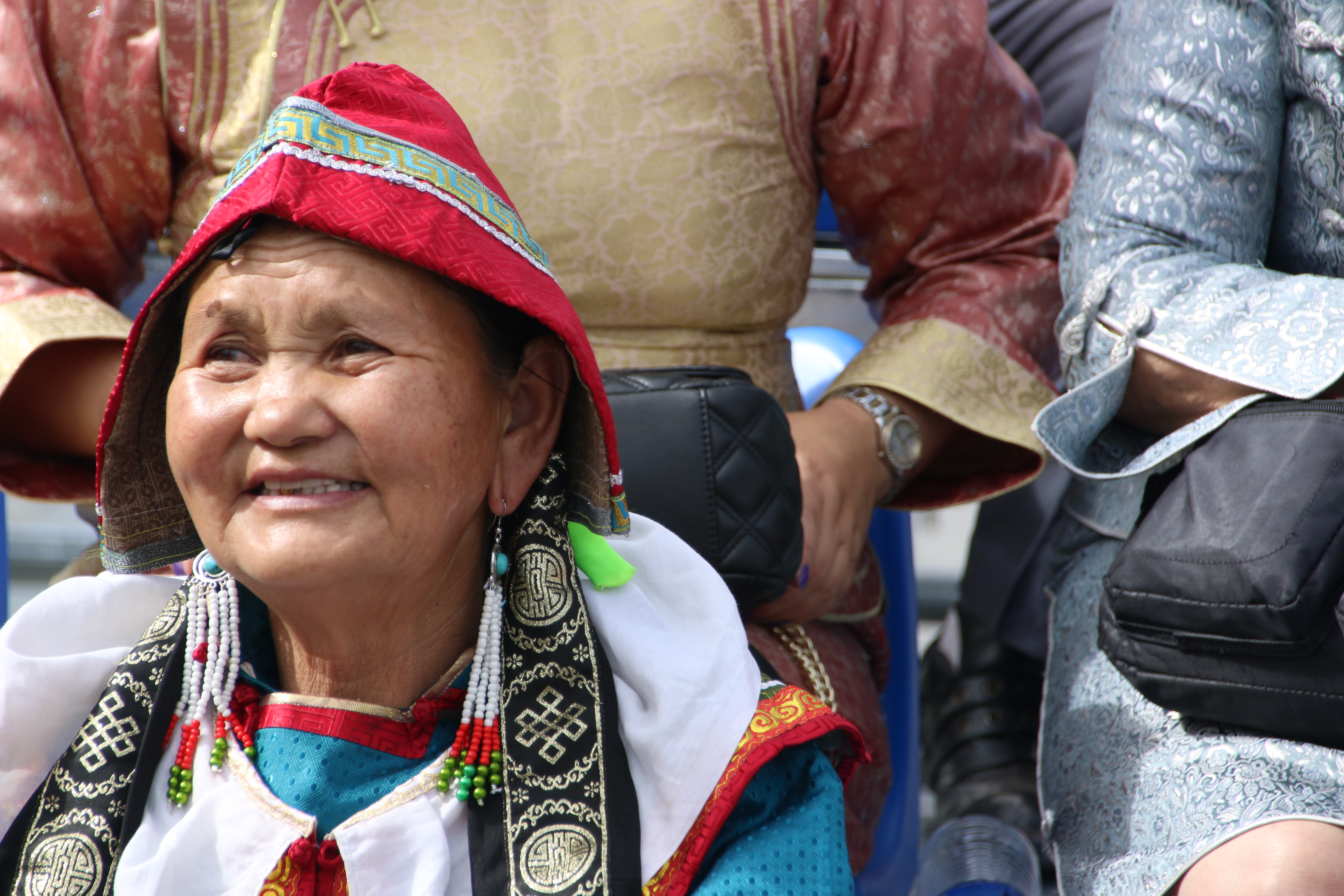
The whole thing kicks off with Mongolia’s Day of National Costumes when everyone, young and old, gets togged up in traditional dress for the day. This culminates in a cultural show on a large stage in the main square. 50 or so acts,aged from 8 to 80 go up and perform, dressed in some wonderful and amazingly colourful gear. They strut, sing, dance, parade, throat sing, and do things that Mongolian have been doing for 100s of years. These guys set up the largest land empire in history and they are so proud of their traditions and customs. Enjoy the audience and the performers.


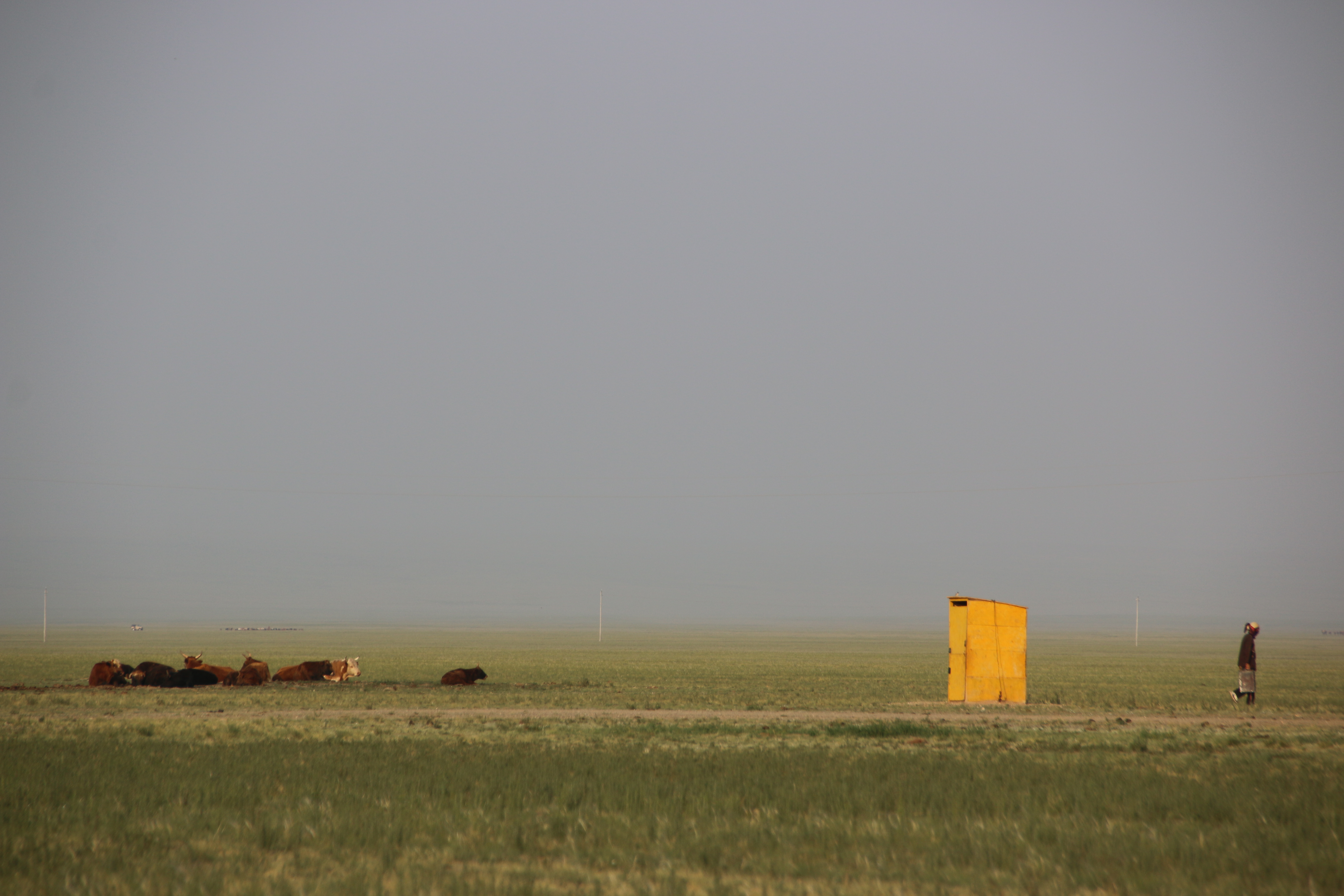
24 hours with a nomadic herder

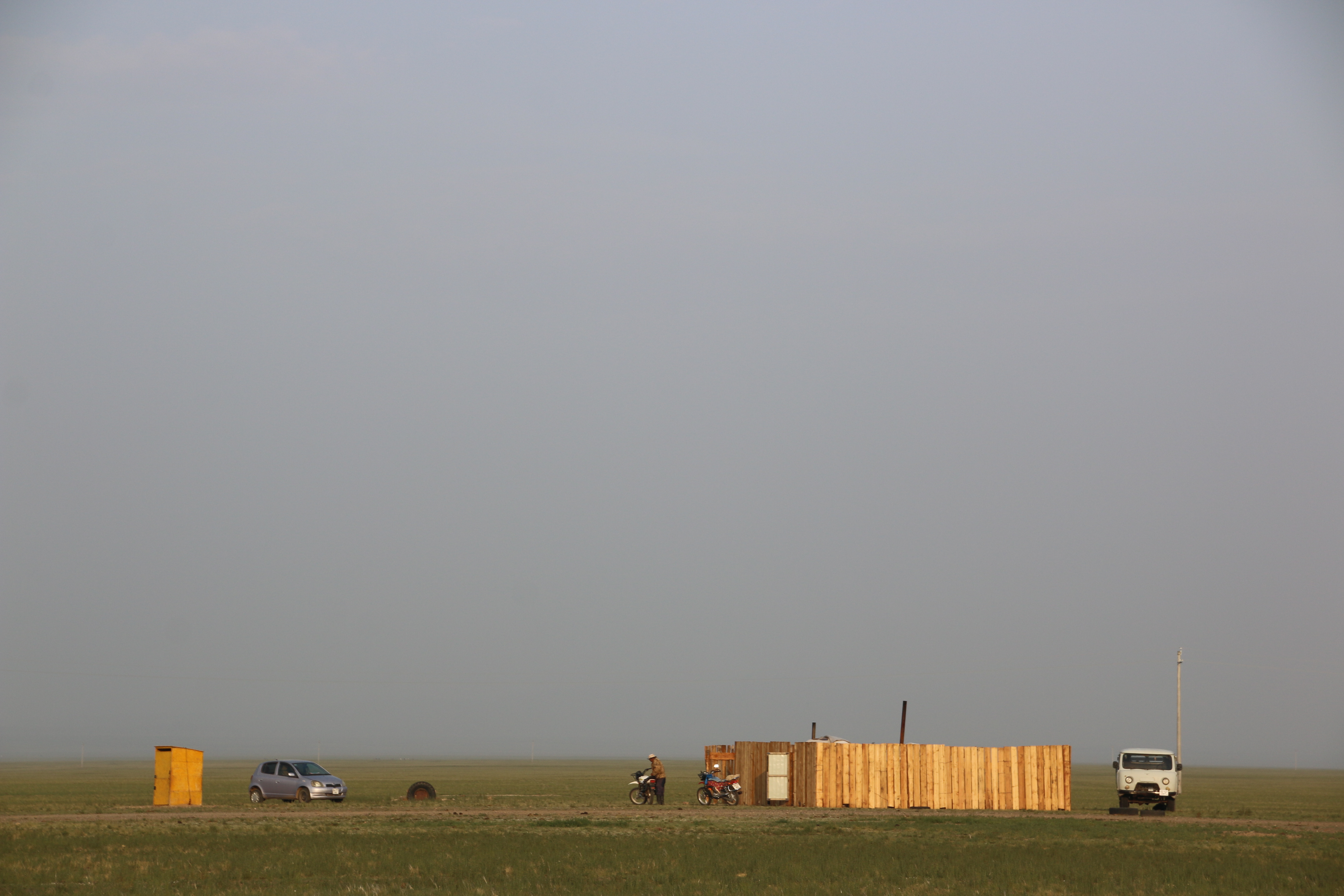
Just outside a stopover is the summer location of a small herder’s ger surrounded by the typical tall, wooden fence. The stove pipe protrudes over the top. On one side is his old, Russian built van. On the other are two standing motorbikes and a small, family saloon. A suitable distance from the stockade is his private Big Drop toilet, grandly painted a sunrise yellow. On the other is a wellhouse, a large concrete cube with a rusty metal door on one side and a pipe sticking out from the bottom leading into a long open trough.

I thought it might interest you to record the activity around this ger at different times of day.

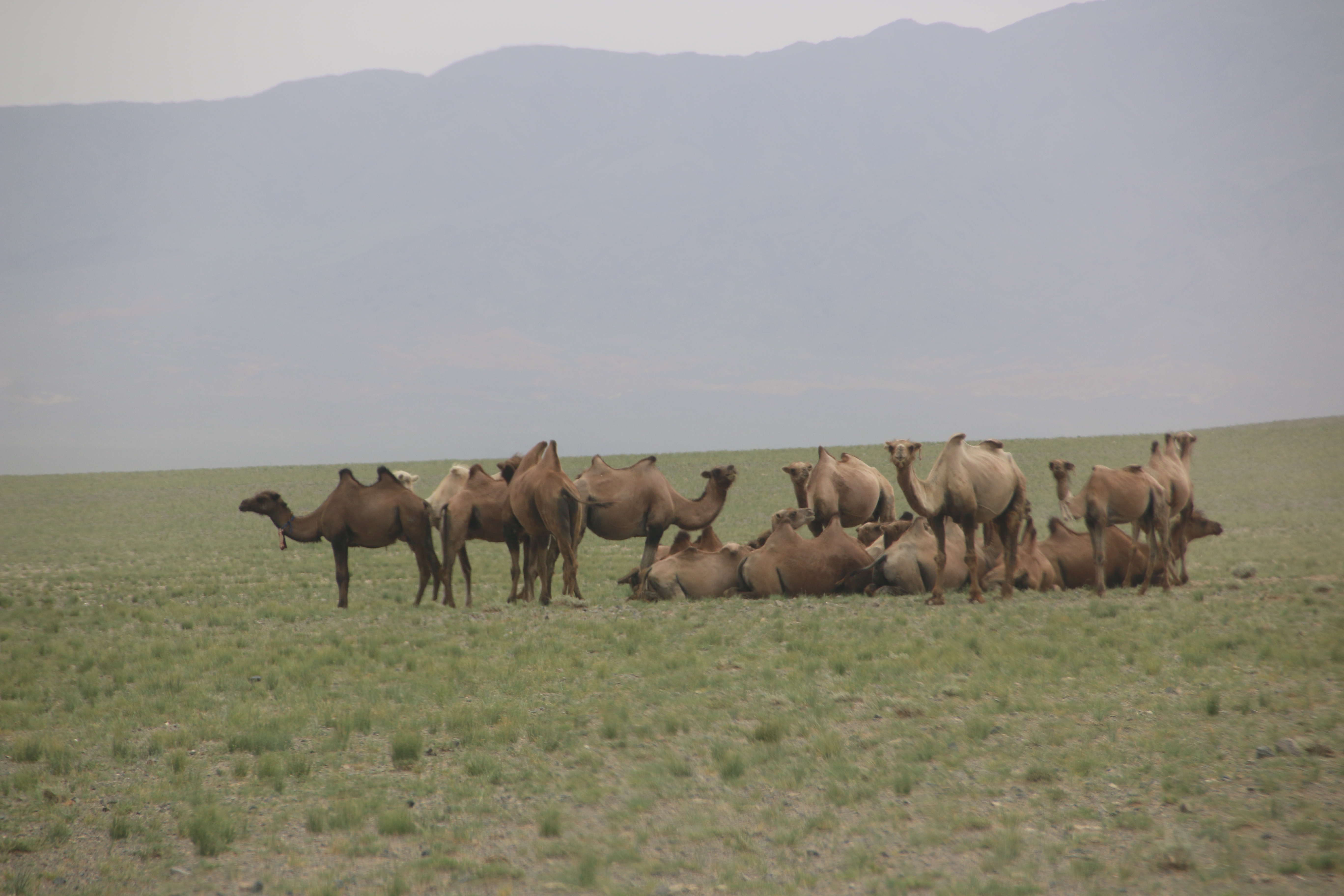
Dawn is around 6. A herd of cattle are chewing the cud in the fresh, morning sun. A bit further away a large group of camels are penned into a small circle.

 The metal door on the left opens. Dad comes out, lifts the bonnet of the saloon, inspects the inside, closes the hood and goes back inside. A little lad in a red T shirt comes out, doesn’t make it to the Big Drop and piddles by the motorbikes.

A bit later two female figures, gran, daughter or wife, walk over to the cows and disturb their slumber as they reluctantly get to their feet. They milk them and return to the ger with a silver pale in each hand.

Around 9am, dad appears, gets on one of the motorbikes and drives off.

In 30 minutes he returns. Gone to check on one of his herds maybe. He wanders over to the standing cattle and moves them away into the desert leaving a small group of calves on their own. These wander off on their own eventually. Sometime or other the camels have been released from their pen and wandered off.

All goes quiet. Around lunchtime, a large herd of goats wander in from a different direction and hang around the wellhouse in a long line. The ger door opens and dad goes over. He claps them away from the rusty door and raises some water into the gulley. By throwing stones and shouting, he manoeuvres them to the water in groups and then dismisses the whole lot back the way they came, before going indoors.

Then the camels plod in from the west. They stand guard over the wellhouse and the gulley. Indignantly they spy the calves who are trying to sneak in to grab some refreshment. A couple of camel outsiders see them off and then the whole herd of snoitytoity bullies move off to the east having occupied the wellhead for a couple of hours.

At tea time the herd of cattle reappears, herded by dad on his motorbike. Having spent a bit of time drinking at the gulley they settle down for the night in their allocated spot.

As dusk falls, the camels appear, herded by a figure I have not seen before, riding a horse. They are corralled over by the yellow toilet. By dawn they will be gone on their travels. I don’t know where the goats spend the night.


In the Middle of Nowhere

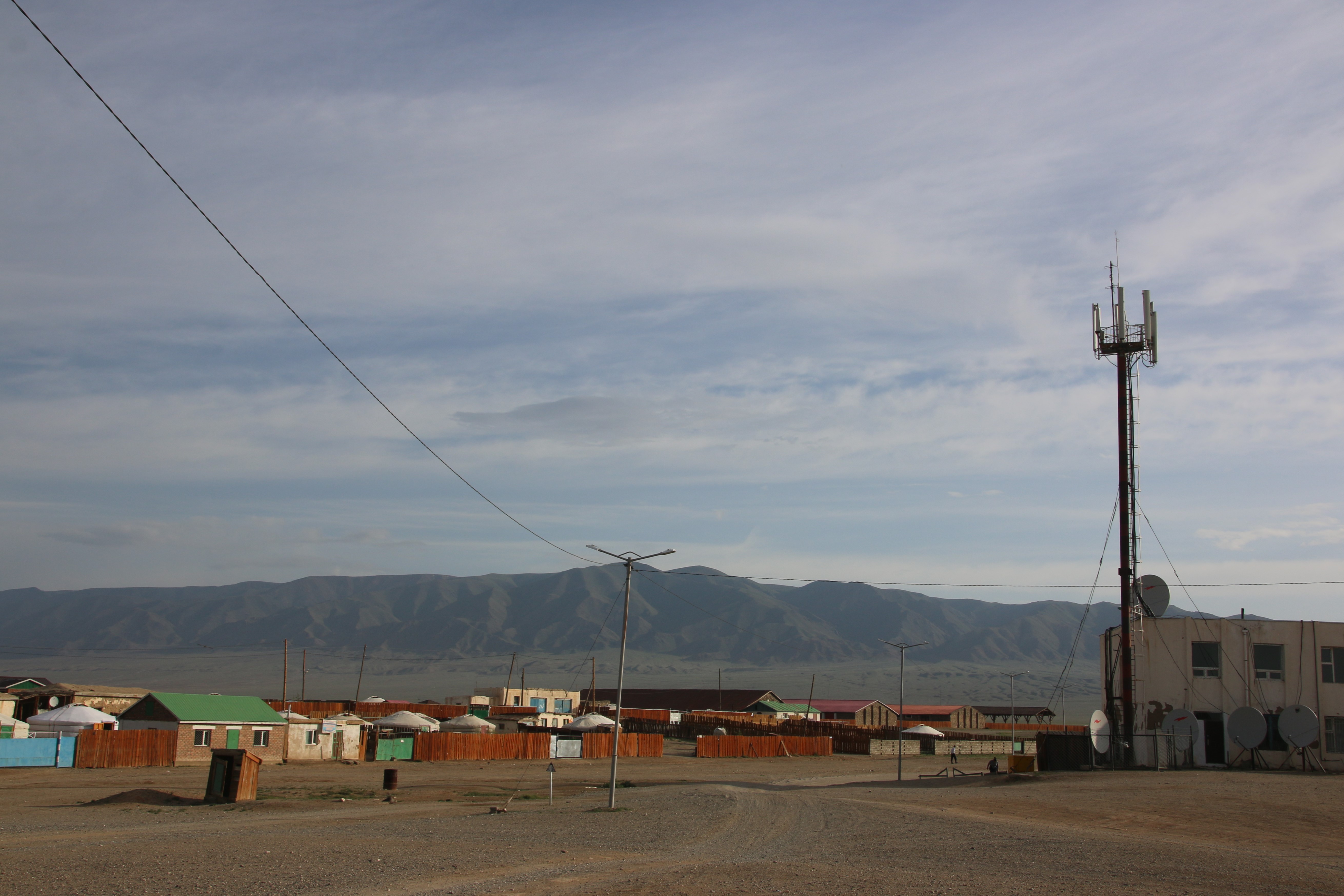
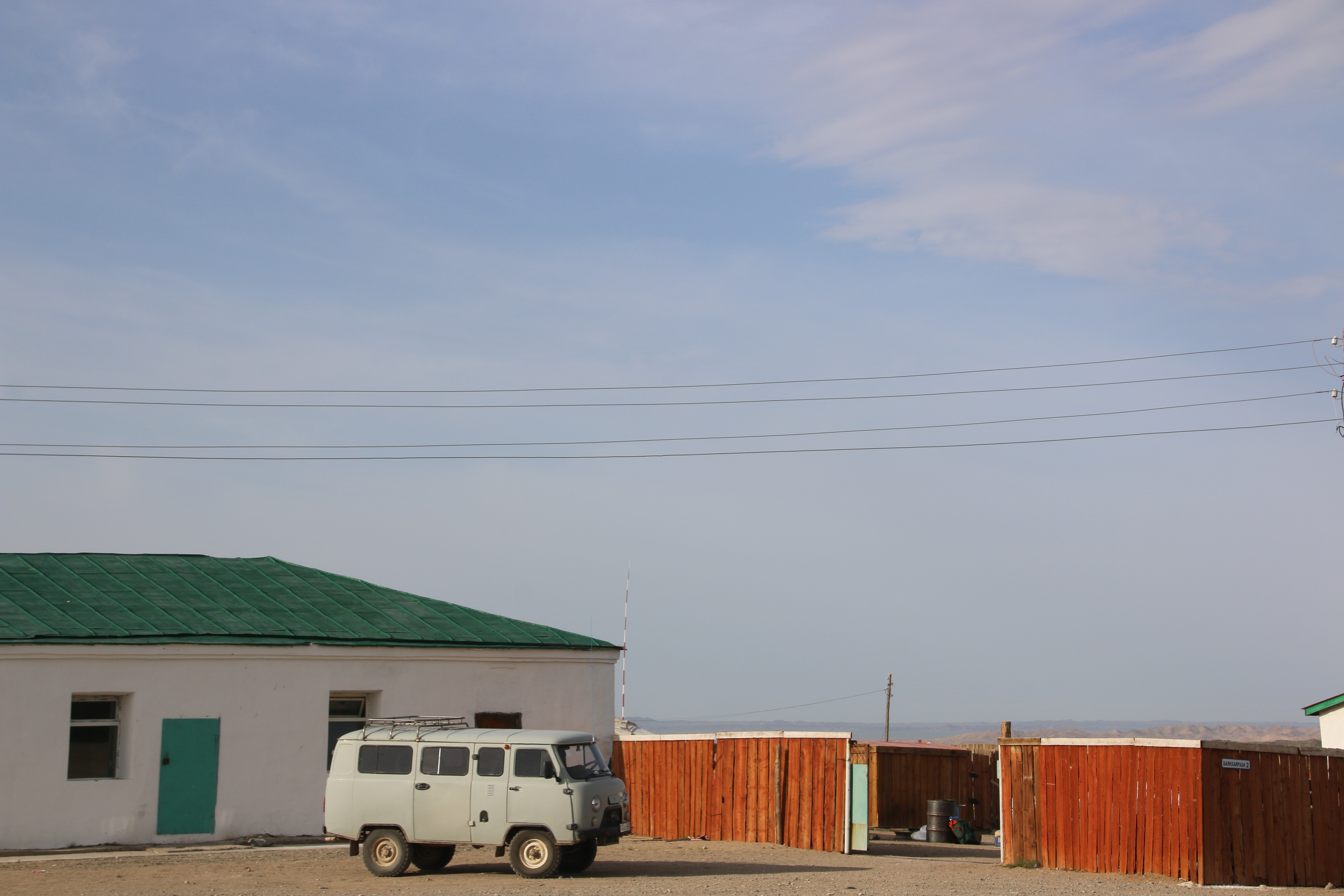
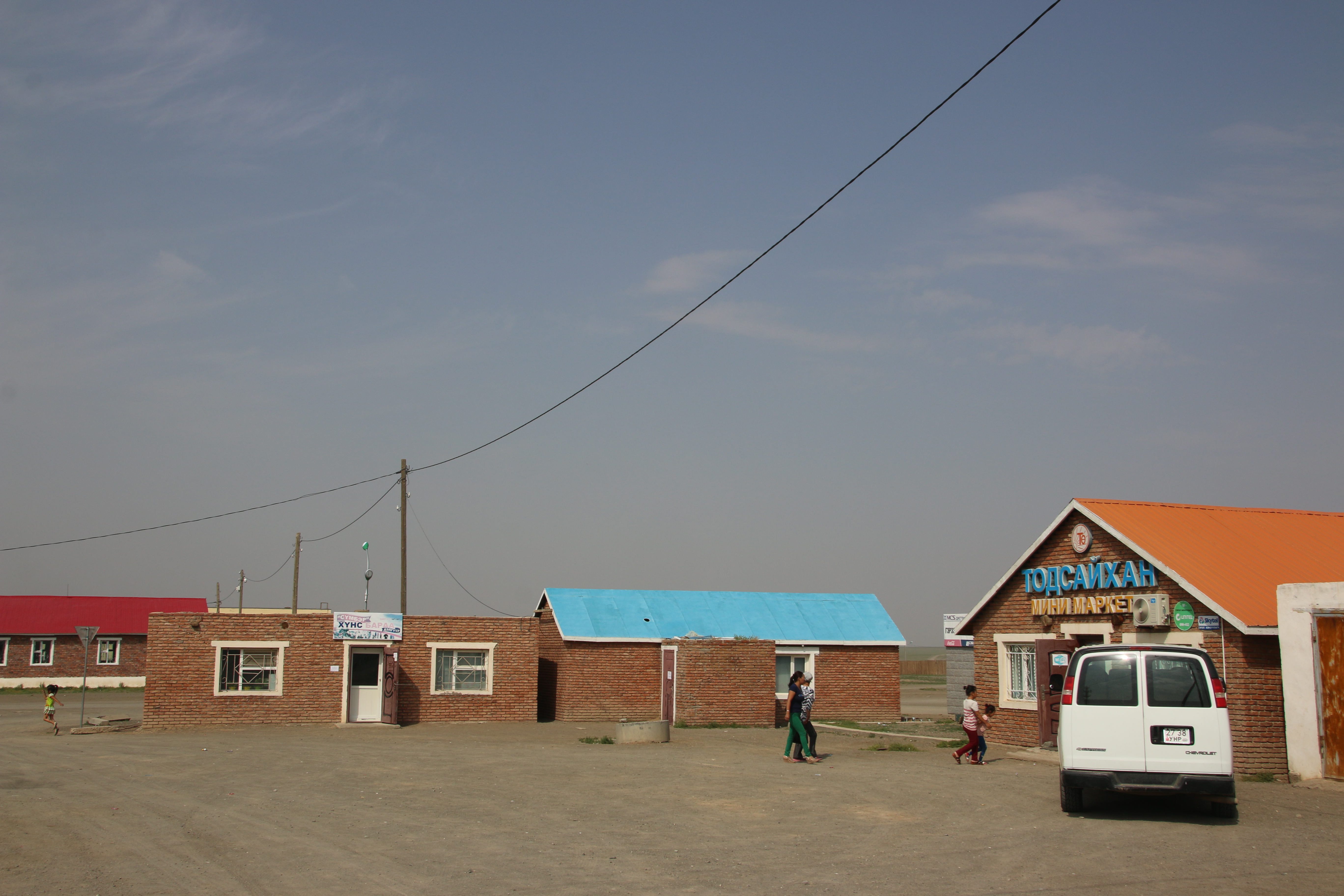
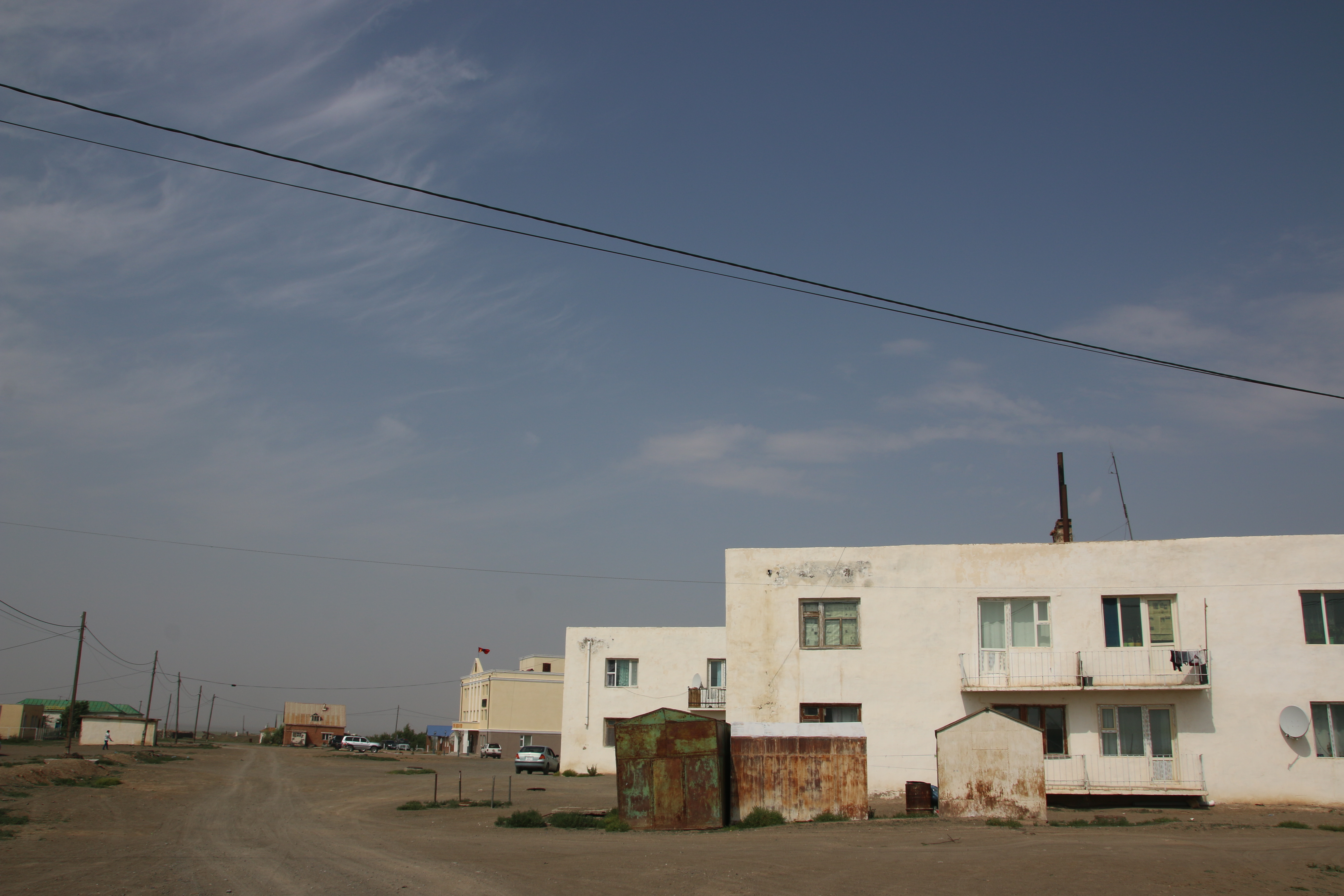
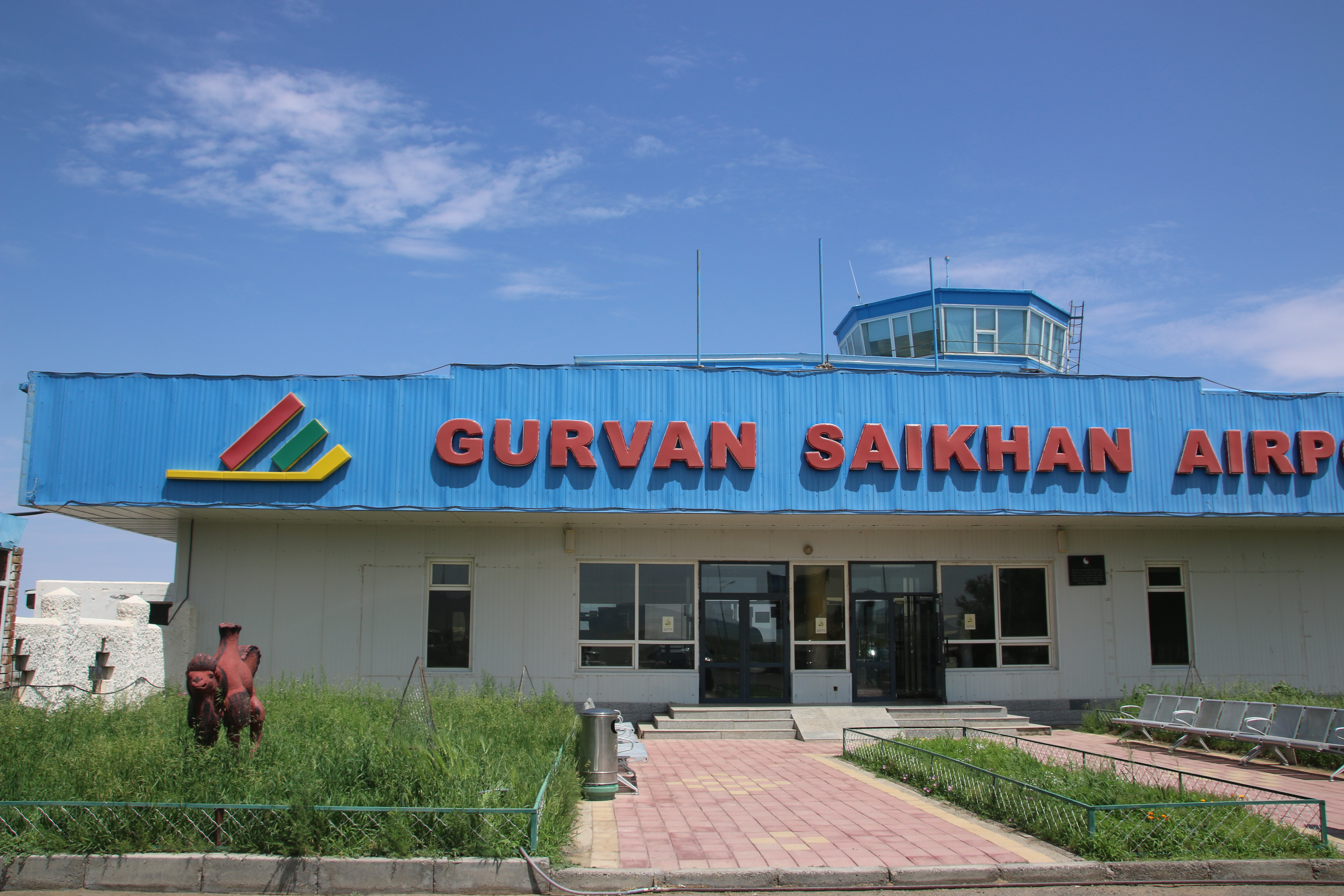
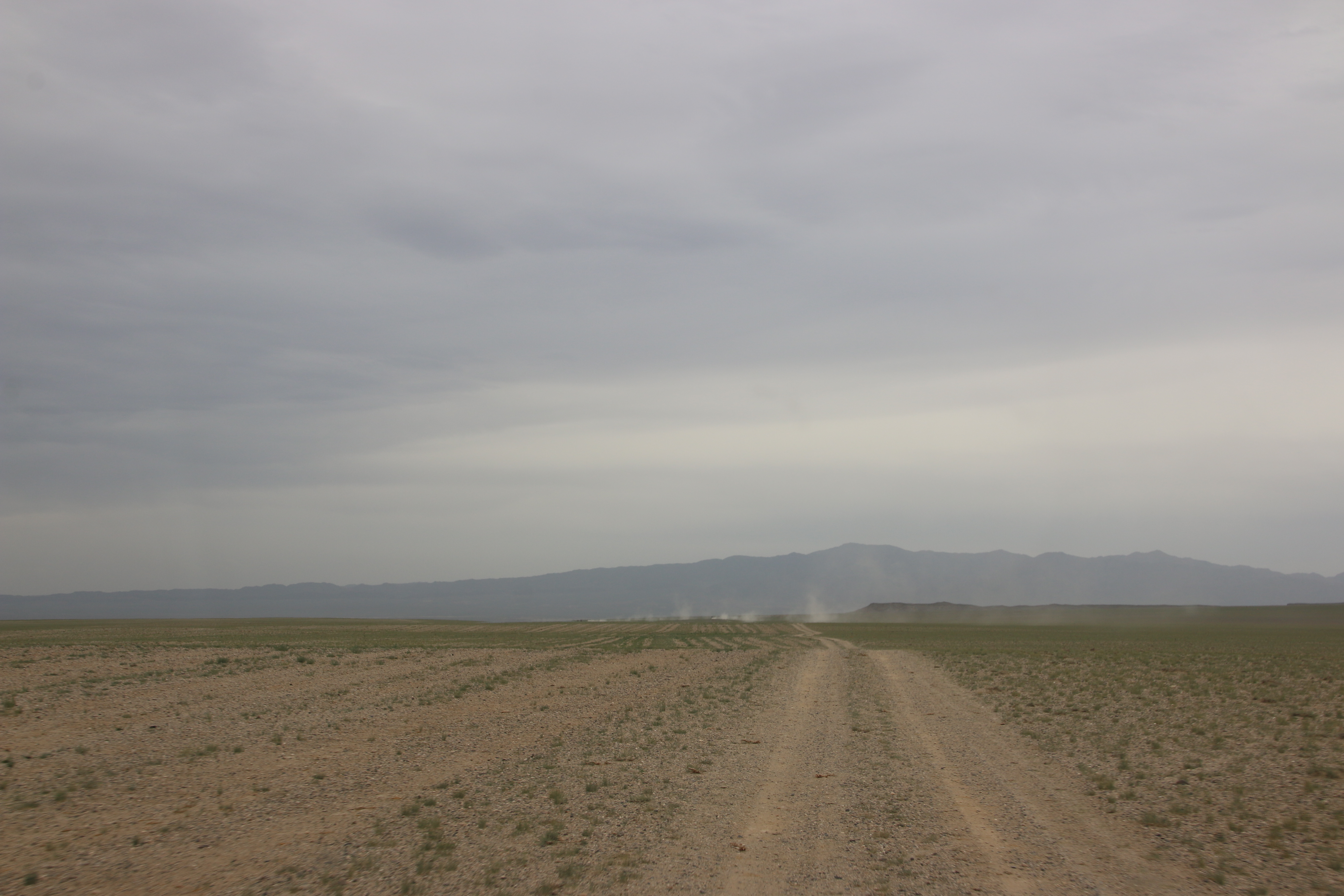
At some points the four vehicles are racing side by side on this 44 lane Santa Pod, rough track, off-road highway. Gentle rises and dips spread ahead through the hard landscape, the only difference being that over the hours the vegetation dies out even more and the rocks and stones and dust take over permanently. Having covered 400 kilometres over this harsh, hard, unrelenting surface, hammering along at speed over the rough side of a cheese grater for 12 hours, we arrive at a small town. We officially name it ‘The Middle of Nowhere’ or Nowhere for short. In Mongolian it is Bayangobi ……… in the Middle of Nowhere.

This is the small town/village of Sevrei ….. in the Middle of Nowhere.

And this is Bayanzag which has a small regional airport ….. in the middle of nowhere and serving ….who, exactly – other than tourists who want to get our of Nowhere.


Lost and found in the Gobi Cheesegrater

So this is the Gobi. No romantic crescents of towering arcs of soft sand in oranges and reds with a robed tribesmen, piercing blue eyes pinning your heart to his from behind his headscarf, navigating his noble camel down to your caravan. Sorry, no. The Gobi is hard, uncompromising, hot, dusty, grey and empty with camels that grunt and complain and groan and spit and smell and slobber.

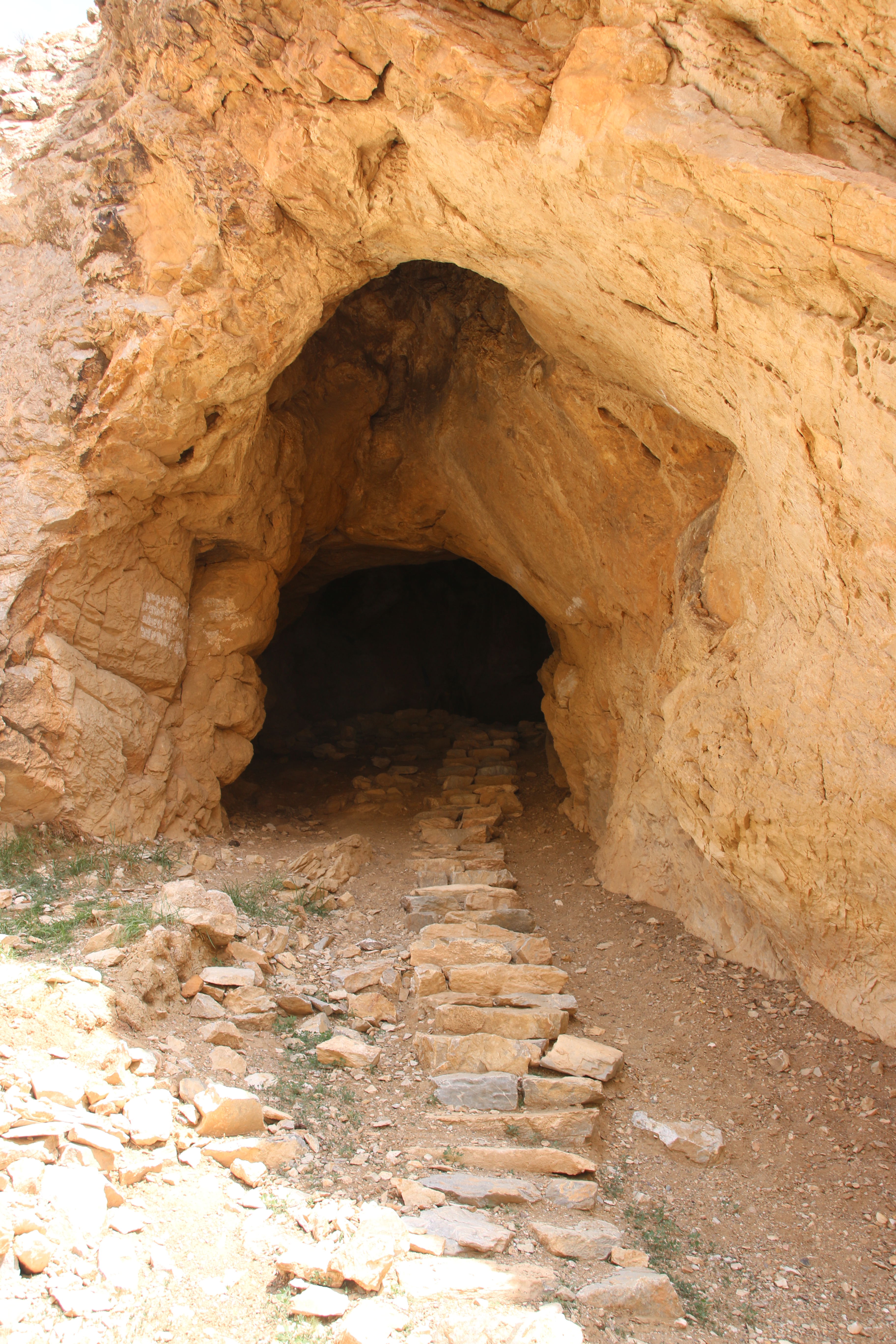
Today we expect to drive 300 km to the overnight stop. On the way we are seeking some caves where some Stone Age Men and their families lived many years ago. The fist part its easy enough. We start off in good spirits refreshed in Nowhere. The route is flat with only the occasional gulley when the driver has to brake sharply and ease the vehicle down one side and up the other. Easy. The sun is not yet fully up. Music is placing – a random selection of Mongolian throat singing, light Mongolian opera, some cowboy clip-cloppy stuff, Mongolian hip hop, some very inappropriate US rap and some Kylie.

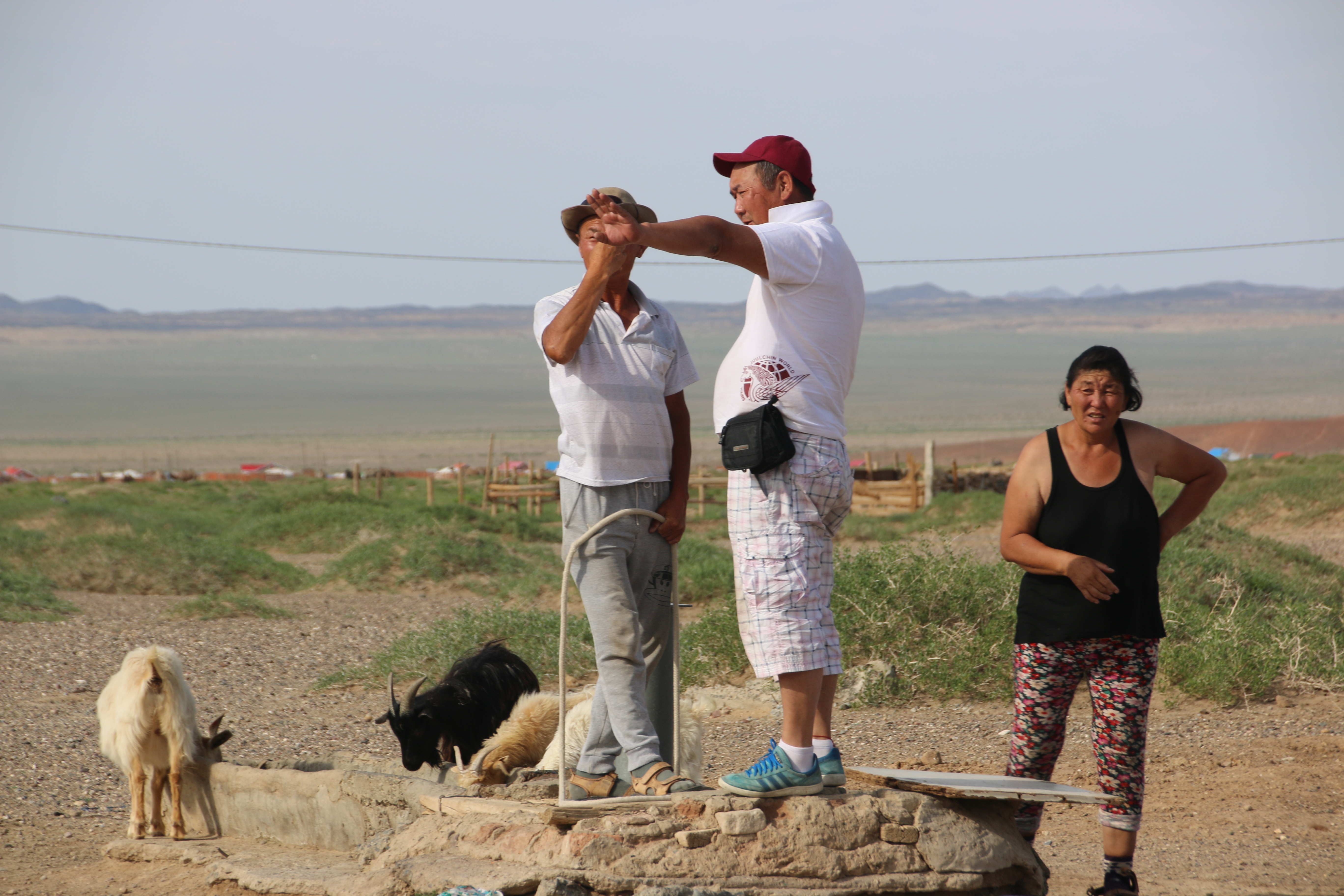
It is unclear where this cave is, so our magnificent team of drivers stop at a group of gers and ask a herdsman, who is watering his goats from a well. A lot of gesturing and pointing takes place and that’s where it all starts to go wrong.
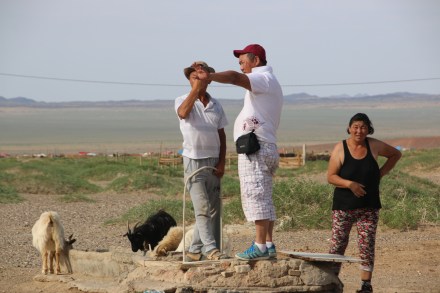
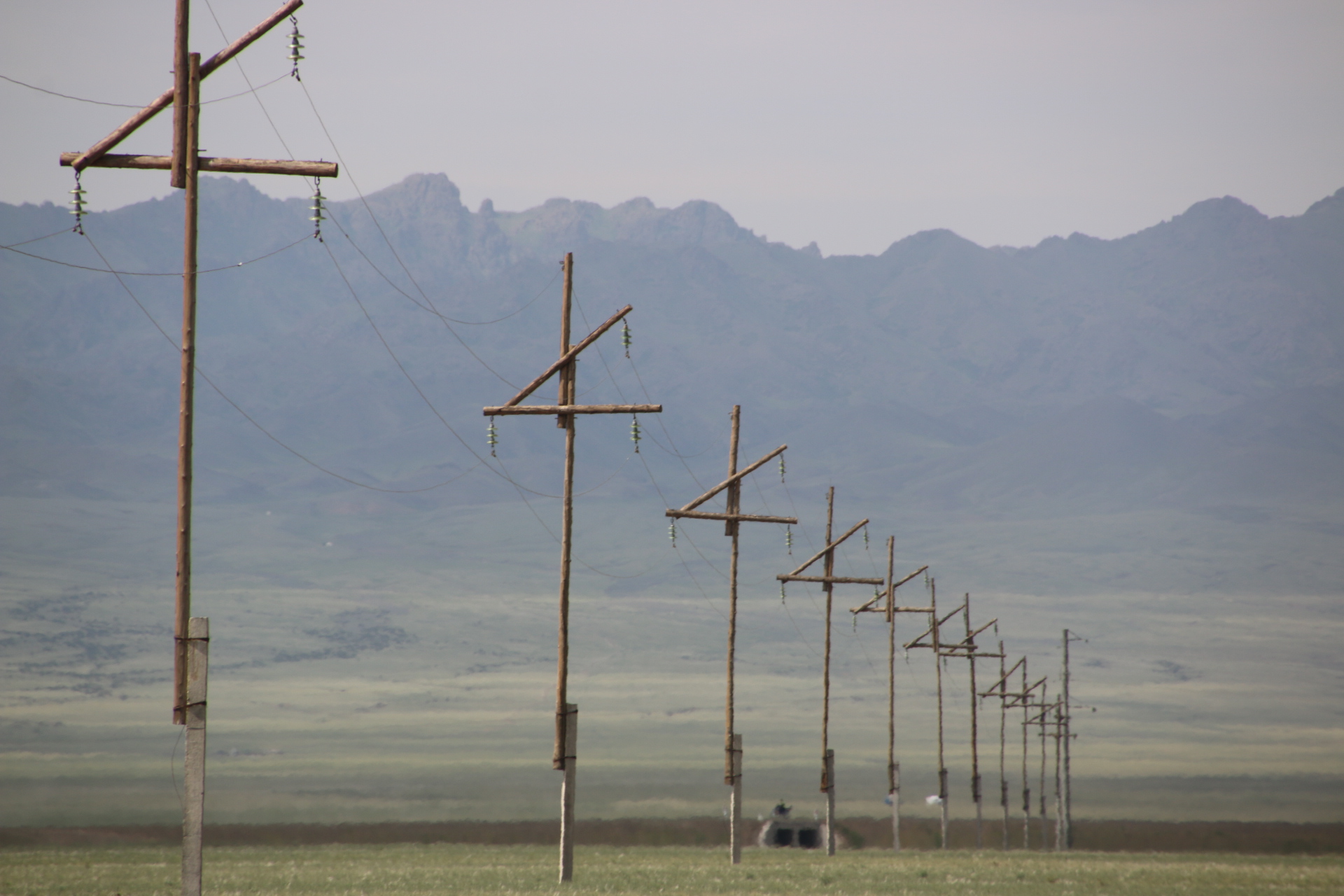
Our convoy becomes divided. Two vehicles, including mine, head off to the left following a set of energy wires towards the mountains in the distance. 
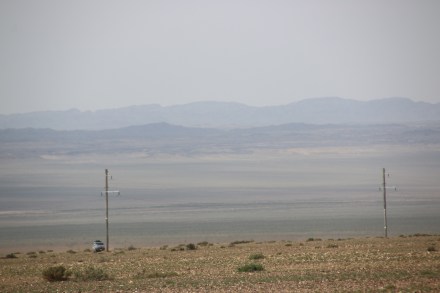
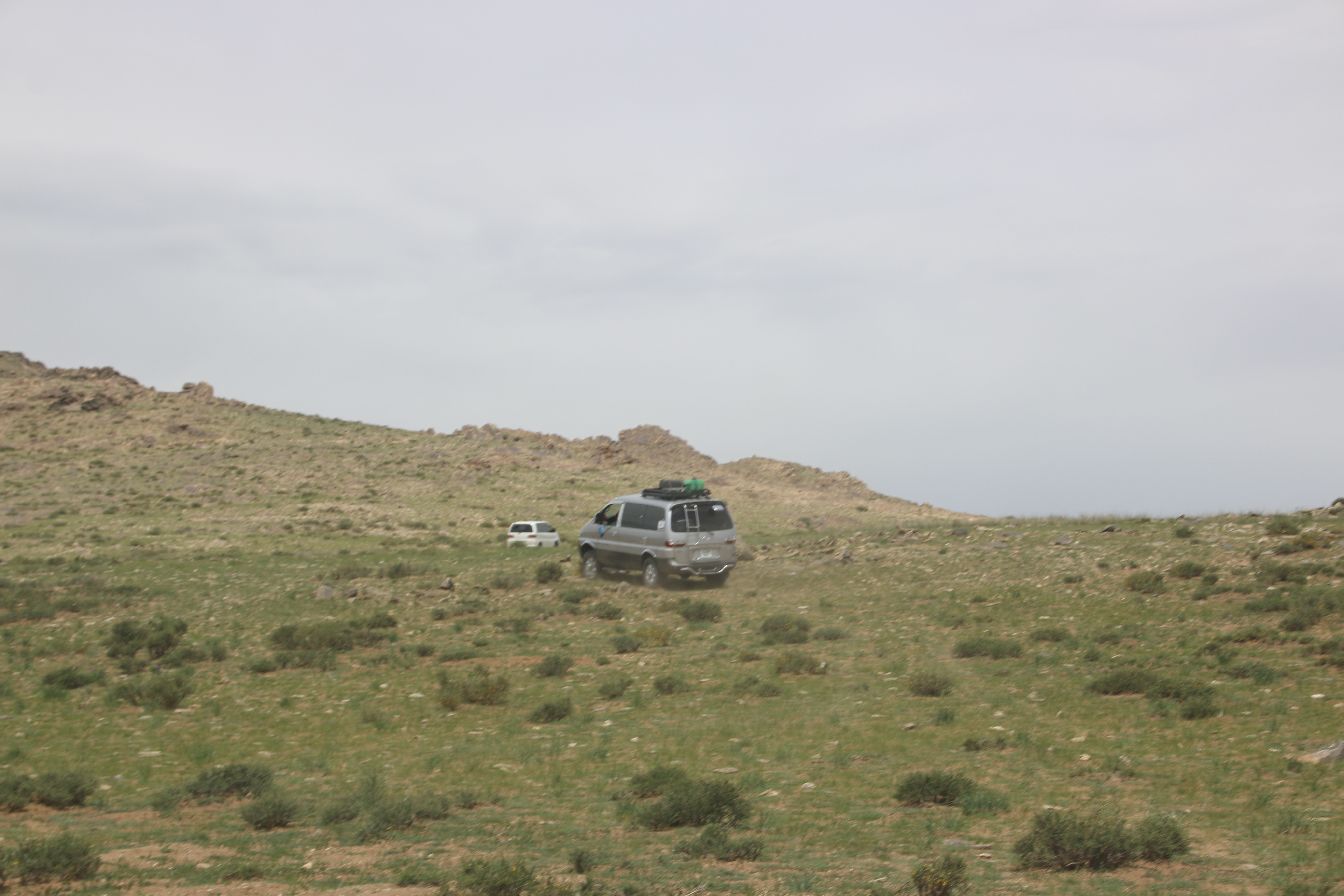
I call this part of the journey the Rally Cross Fun Fair. We are going across the landscape and crossing all the dry streams and water courses that would be torrents when the shows melt in the hills. So, every few meters there is a steep gulley, river bed, rut, dip, mound, wadi which has to be traversed with a similar technique – brake at top, descend sharply, hit bottom with a shake, rattle, roll, fling up to roof, grind up the other side with a churning of tyres, hit the top and dump over ready for the next one. It is just like a fun fair. I’ve named some of the rides – The Rough Track Helter Skelter, The Brocking 4×4 Bronco, The Gravel Slide Waltser, The Rally Cross Spider, The Dried Watercourse Roller Coaster. At one point vehicle number 2 gets pinned in the bottom of a gully with its back wheels clean off the ground.

We reach the mountains, which up close resemble even more the teeth in a crocodile’s jaw. We drive along the face for 30 minutes, rollercoasting the scree fans, eventually giving up this line of approach by descending a 75° slope, spotting a lad on a motorbike. When asked, he points. Oh no, not the dreaded pointing arm. 
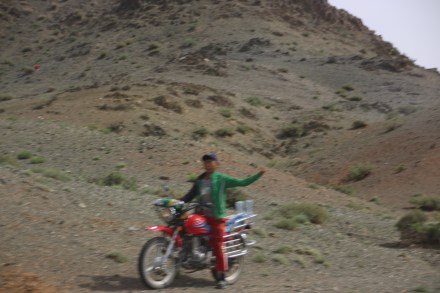
The two vehicles, feeling cocky, chase off into the crocs teeth, following a dried river course up into the hills taking the wrong choise at any diversion of a line of wheel tracks in the gravel. We find ourselves up in some high grasslands but, judging by the more frequent stops and the more frantic conversations between our drivers, utterly lost. It is beautiful though. Not helpful. There follows half an hour of animated chat and lots of pointing. ‘Call the other vans on mobile’…….’no reception’. ‘Use your satellite phone’……’only got one so they can’t receive the call’. ‘Sat Nav’ is very similar in Mongolian.

There follows 15 minutes of searching through bags for the day nav and leads. Our drivers then pile into one van and screw up their faces as they study the screen. At this point the passengers were outside keeping themselves amused. We play I Spy (that did not take long), I went to a Mongolian Market. We made up jokes – There were 4 Brits, 2 Irish & 3 Mongolians lost in the desert….. Imagine our surprise when their vehicle moved around in 90° sectors obviously trying to find their position. Hmmmmm. I suspect the screen showed no roads or building and was just……..green.
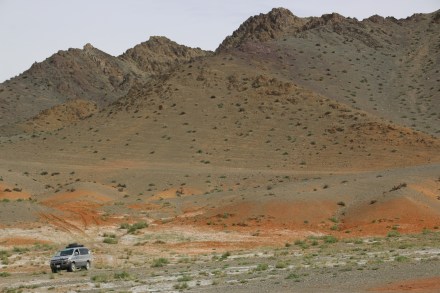
Ok. Some thinking required. Let’s go back and find someone to ask the way!!!!!!! This sounds a good idea. Except, this is the middle of the Gobi. There is no sign of a dwelling, a vehicle, a person. Look, a herd of goats in the distance. Up and over hillsides, scatter the herd, no herdsman. There he is, over on that hillside. Up and over hillsides. Yayyyy. ‘Cave?’. More pointing. Oh no.
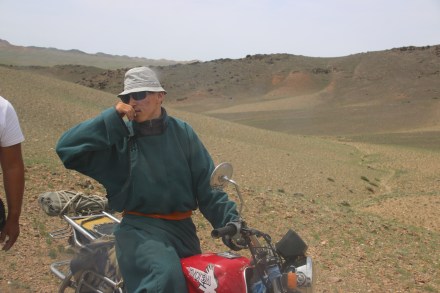
 

But, despite misgivings, after another 40 minutes of up and over hillsides, there in the distance, tiny, are two parked vehicles alongside a tiny orange roofed shelter.
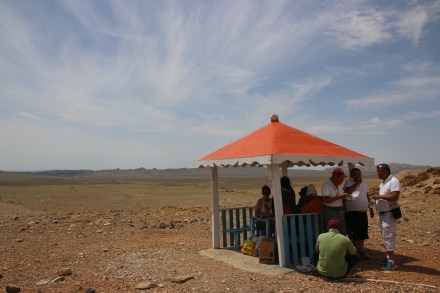
That is what we’ve been looking for two hours. It marks the entrance to the cave.

Lost and found in the Gobi. How many people on this planet can claim bragging rights to that? Quite a few, it seems. It happened on four more occasions before we arrived at our overnight ger camp.. ‘Good game. Play it at home’.

Shankh chantings and airag

Today I really get the feel for life in this unique country. Firstly, I continue the drive across empty grasslands using tarmac roads and then dirt tracks and then off roading completely. The speed is constant whichever surface we traveled over – an even 60mph, swirling and curling to avoid the potholes on each of them. We are heading for a small town called Arvaikheer.

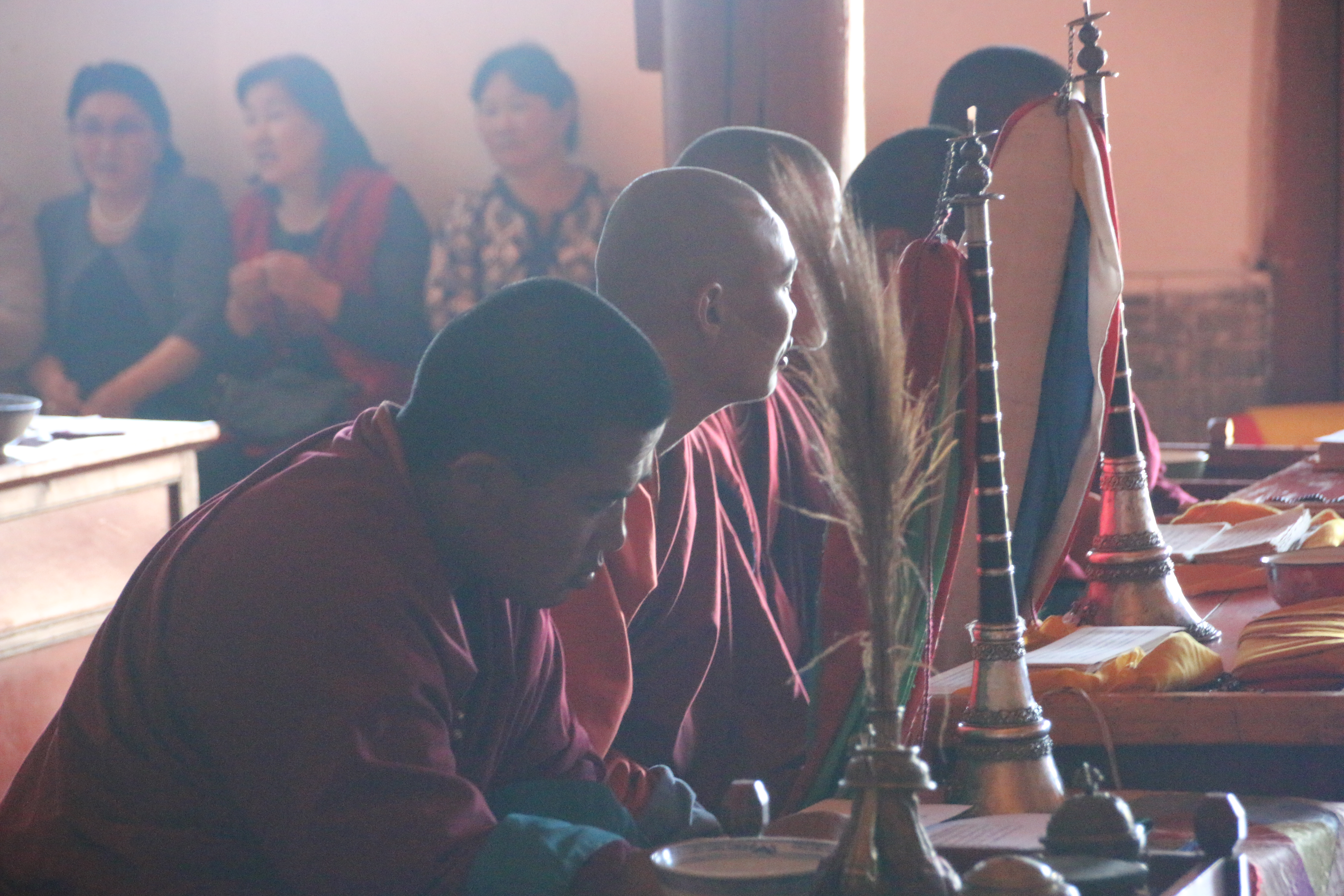
The stop at Shankh Monastery is truly magnificent. It seems today is a particularly auspicious day and the monks have begun their two hours of chanting sacred prayers, joined by the local villagers. A large bowl of airag awaits visitors and monks alike. One of the locals encourages us to try it out to the great amusement of some of the ladies.This is fermented mares’ milk. It tastes of light, cheesey yogurt with a strong alcoholic kick. After 4 or 5, the harmonies sound great and the climaxes of clashing symbols, two tone horns and wailing clarinet thingies, mixed with some smoke and incense, sets a spiritual atmosphere.

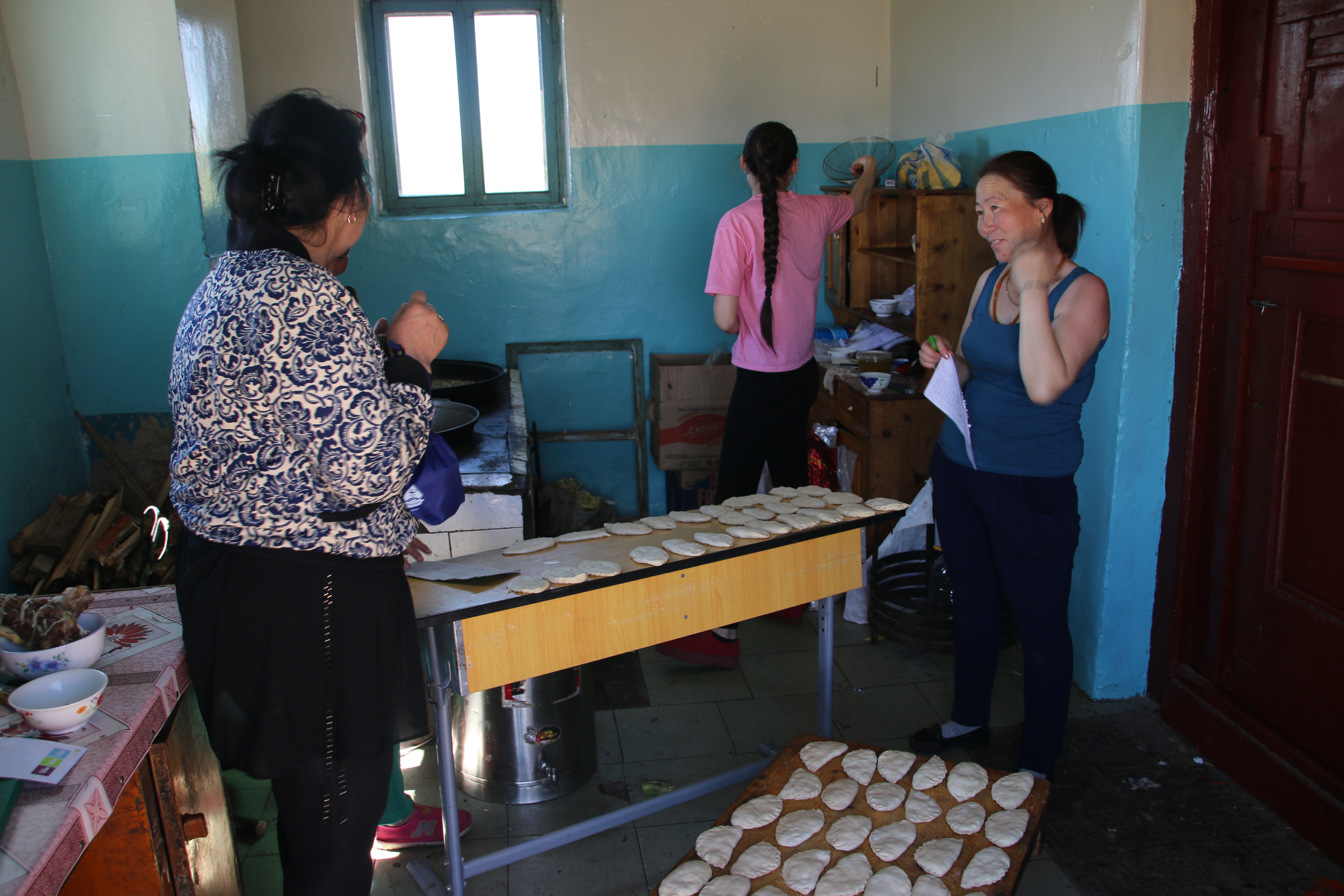
Outside the old men have had enough and are sitting around in the shade. The women are busy cooking little pasty things for the monks when they finish. At first, both groups are very shy. Eventually they relent.

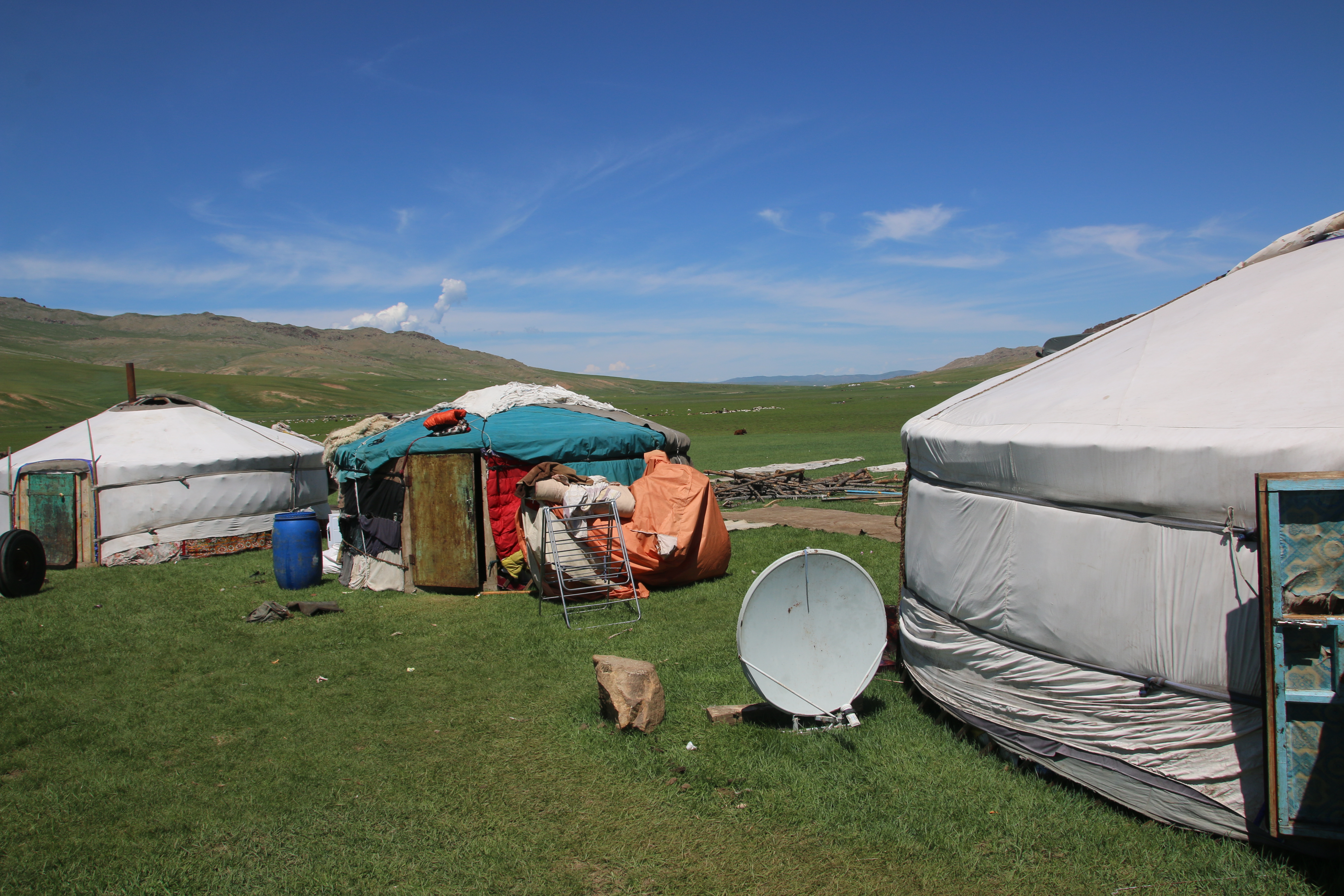
Further up the valley we literally drop in to visit a nomadic family completely unannounced. Their culture dictates that all visitors are made welcome. Dad has set up his gers here for the summer. He has cattle, horses and yaks. He lives in three gers with one of his daughters and her two daughters and one son. We are invited in and we sample her yak curd (tangy cheese) and butters and cheeses from the mares that she milks every two hours. A large, plastic tub of airag stands in the corner waiting to be agitated. In the winter, from September to May, when snow covers the ground, they will move, with the other families, to find somewhere more sheltered and bunker down for 9 months. A really tough life.


Steppe-ing out onto the Mongolian steppes

Now this is delicious.. This is what I thought Mongolia might be like – miles around miles and miles of open grassland and rolling hills disturbed by absolutely nothing. Not a tree in sight, not a fence, not a wall, not a building nor a barn. Only the shadows of passing clouds corrupts the greenness but only by placing irregular patterns of darker shades on the troughs and folds and dips and rises of this expanding landscape.

Largish, grazing herds of sheep or goats or cattle wander contentedly yet arbitrarily,  mostly unaccompanied, although occasionally pushed along by a single herdsman on horseback or even a motorbike. I saw a pair with the woman on the back shaking a rattle made out of a large beer bottle with some stones inside. These herds criss-cross the steppes like moves on a chess board, the purpose of their journey only clear in their own minds.

Rogue groups of more lively horses and ponies canter about showing off to anyone watching until the midday sun quietens them down and they settle into groups, nestling close together to provide shade for each other. The odd collection of yaks or camels look imperious on the side of the road, waiting to be loaded up with goods or tourists to earn their men a keep. They frown or groan or chomp or even spit if their slumber is disturbed in any way.

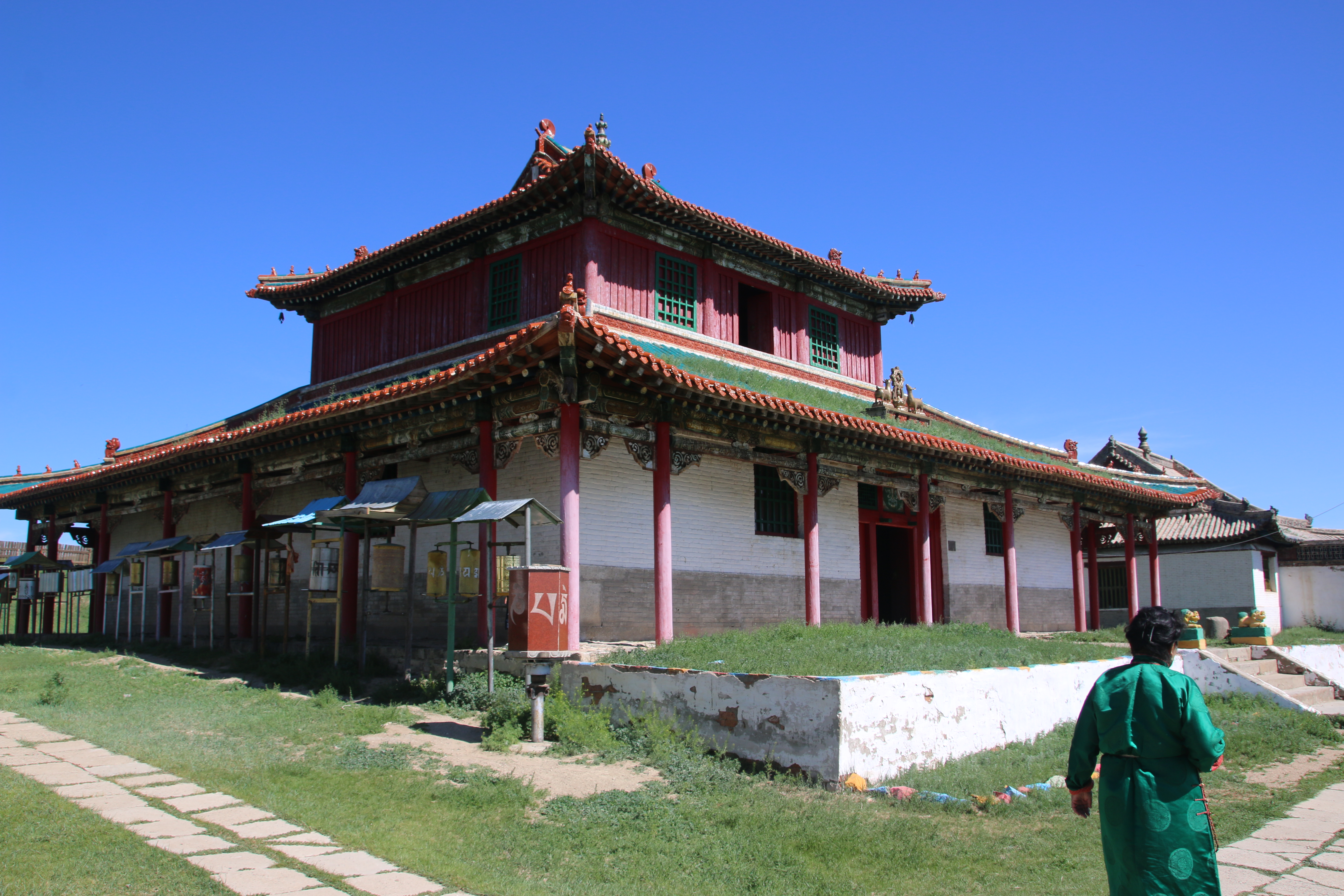
Karokorum was the 13th century capital of the Mongol Empire. Built up with palaces and temples by Ogedei, the third son of Genghis Khan, it remained the centre until Khublai Khan established Bejing as a new centre of the Yung dynasty. Erdene Zuu (Hundred Treasures) Monastery was the largest in Mongolia and built in 1586 on the ruins of the ancient capital.

And the usual tat alley outside.


First night in a ger camp

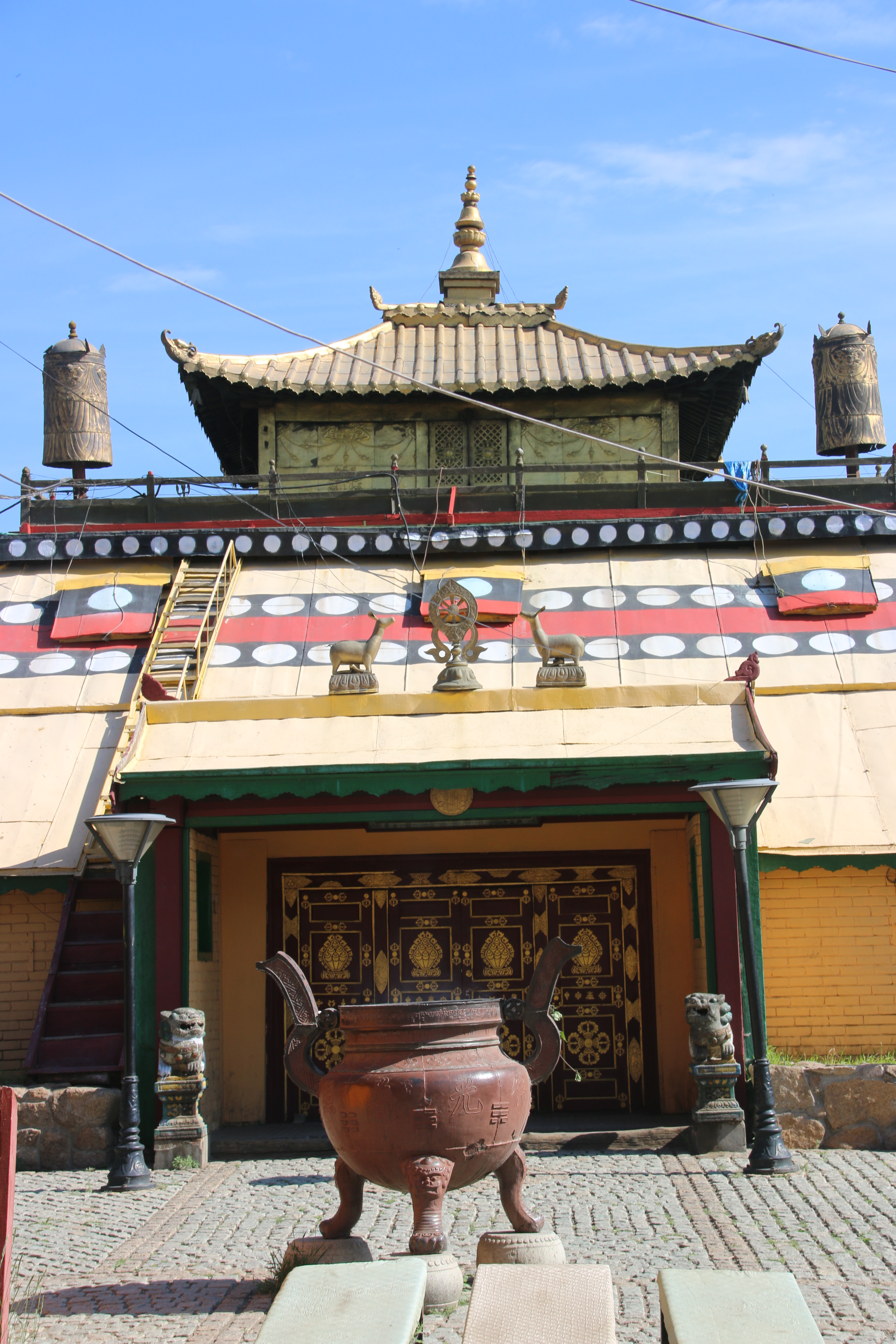
We followed the main road out of Ulaanbaatar, on the way dropping into Gandan monastery, the largest functioning lamasery in Mongolia and the seat of Buddhist studies. 70% Mongols are Buddhist.

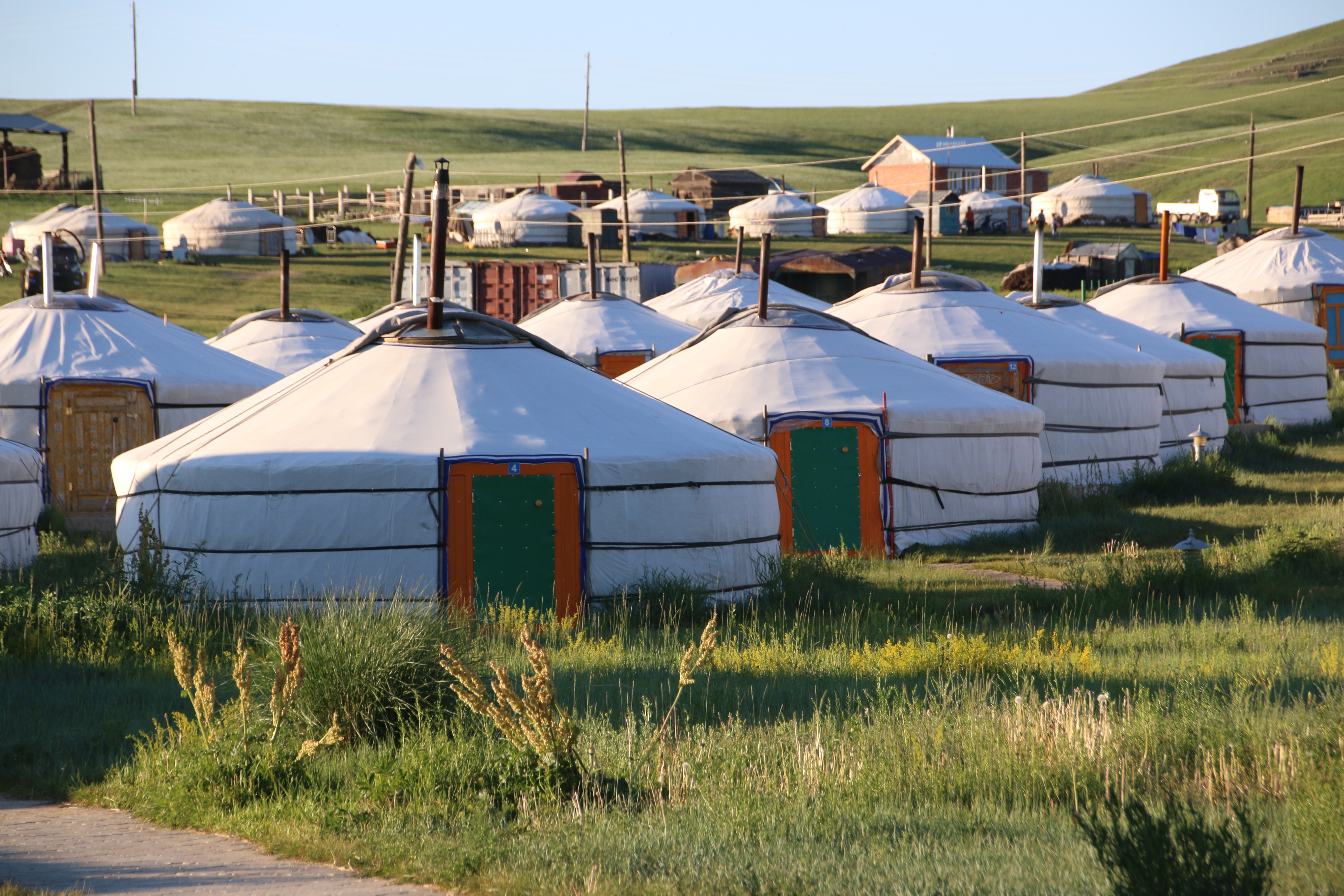
Gradually the commercial and industrial areas peter out and the grasslands begin to show. The emptiness starts to stretch away from us on all sides. The road rulers straight ahead to the horizon on the gently undulating folds of a puckered up table cloth. Every few miles, off on one side or the other, a collection of low, squat circles or peaked painted rooves indicates a settlement of some kind, with horses stirring up the dust. Then we turn off onto a gravel track and head inland towards the ger camp and away from the road and humanity. The drivers take no hostages. Foot down, they charge through the scenery until we stop at the top of a small range of hills. Wowsa. Look at this. Just empty.

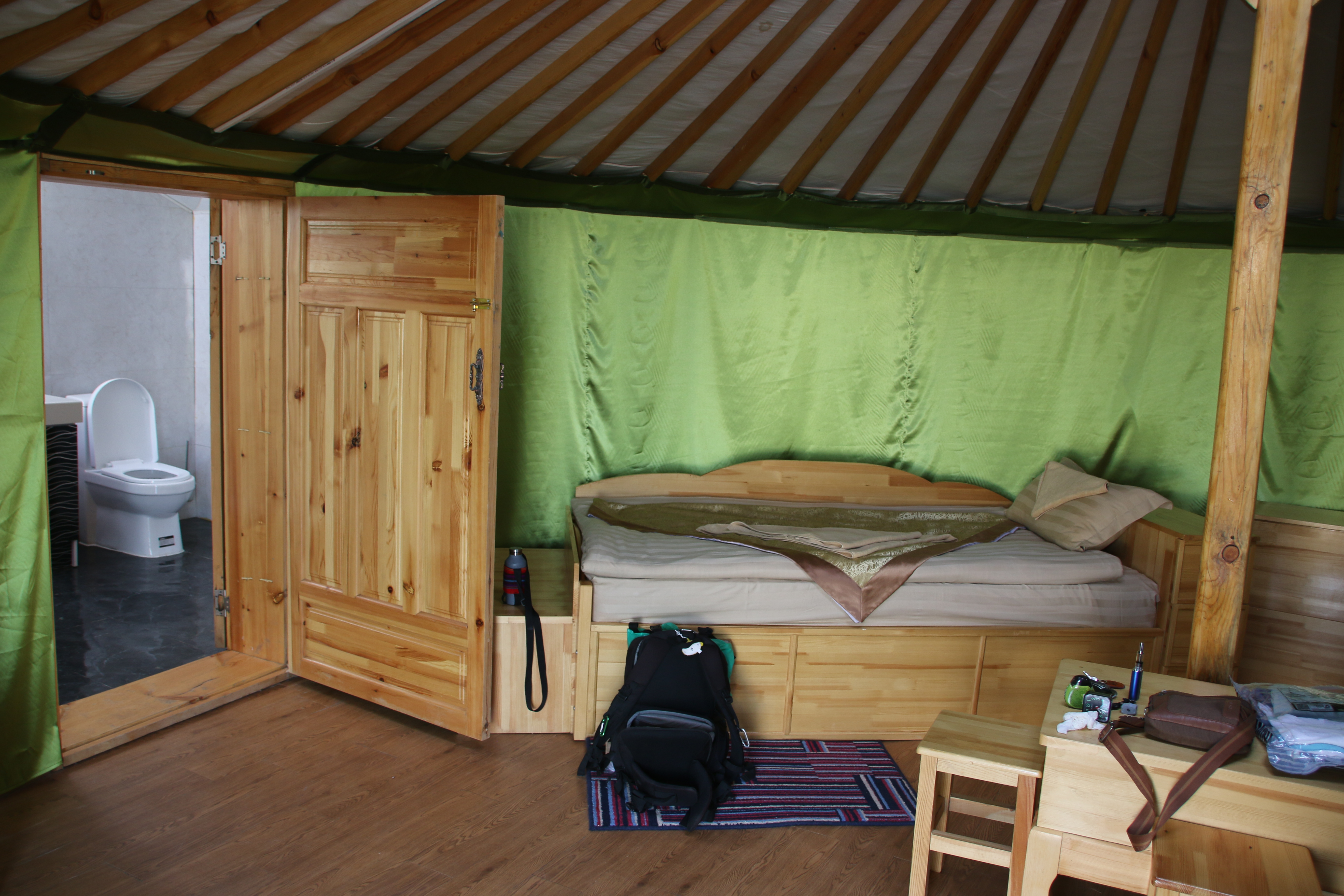
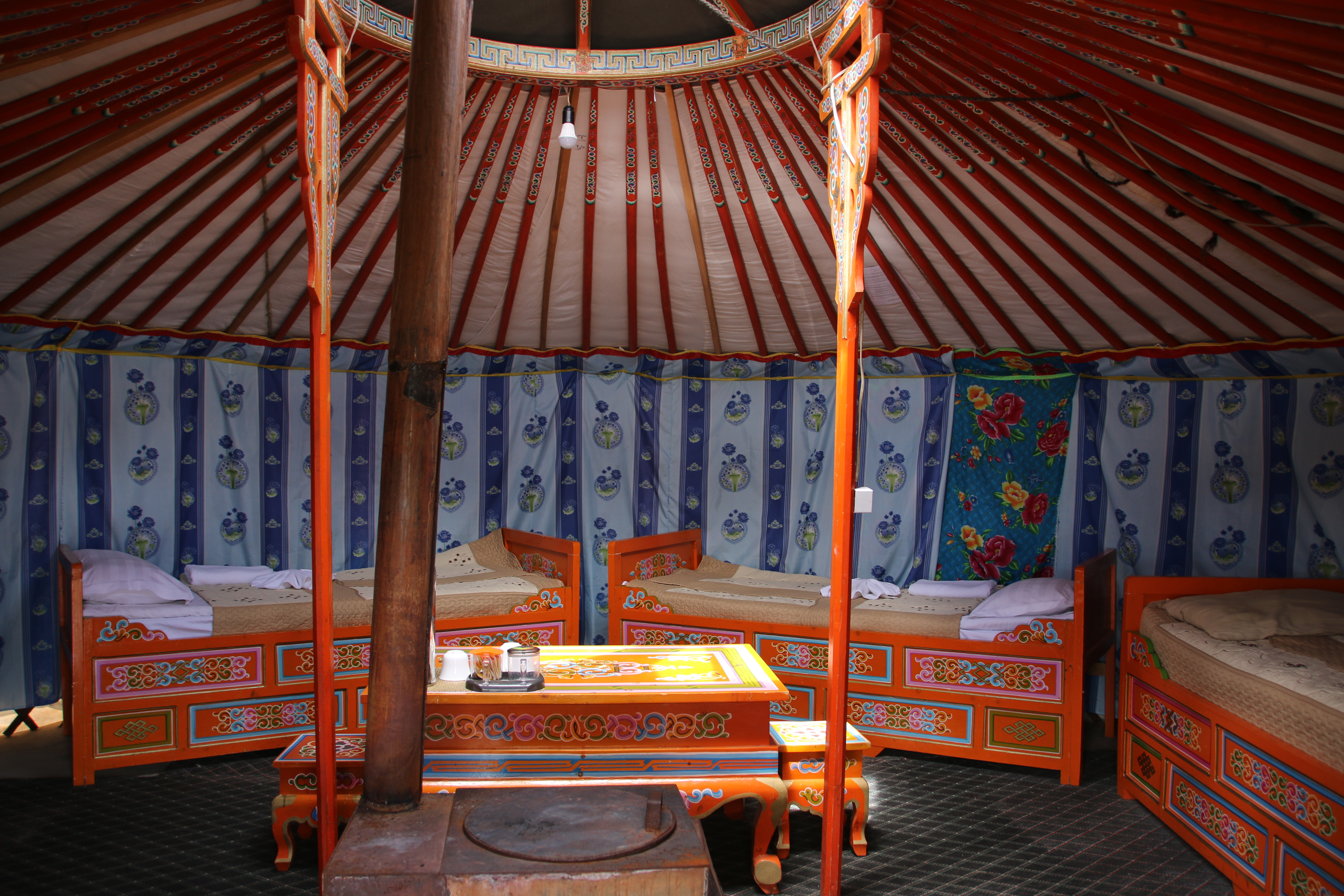
I am now, sitting outside my beautifully constructed ger. It is like a little felt house for three equal sized bears. Its lattice walls and painted timber rafters can be put up in a few hours. It has four little painted beds, a low table painted preamble with swirls & curls, with 4 little painted stools  around it. It just needs Goldie Locks to make the party complete.

These Mongols must have been small. I have already scraped or banged the top of my head on numerous occasions. The best was when I was putting on my Tshirt as I was leaving the ger. I hit the flat of my forehead on the top of the frame with such force that I dislodged two of the rafters which clattered to the ground past my shoulders. Didn’t hurt at all. Sounded good though.

The afternoon is spent searching for the Przewalski wild horses. I am sure that you all know that this is an unique species of horse that nearly became extinct but now over 300 survive on the Mongolian steppes. It is a bit like whale watching in the Indian Ocean. Instead of boats chugging about to get the first sighting, 4x4s charge along the dirt tracks, stopping, offloading their passengers, pointing at rocks that may or may not move. They are eventually seen cantering down to the grass by a small stream, where they stop and pose for photos from an appreciative audience. That’s them, the famous horses in the far group. 

The next day the real stuff starts. There is a bit of a health warning here. Many of the images are taken from the inside of one of the vehicles. I have included them to try and give you a flavour of the landscape and people rather than for their photographic qualities. Having picked up provisions, the four 4×4 set off out of town on the last proper road that we’ll see for seven days. A picnic lunch of mutton dumplings (like a donna kabab in a pasty shell) and we hit the dirt track. At this point the steppes are green and luscious. Gers dot the landscape and herds of cattle, sheep and horses wander and graze contentedly. All is at peace with the world.


Gradually, almost imperceptibly, the grassland becomes tired, gers become fewer and it is a motorbike rather than a truck parked outside and the herds are less frequent, goats and camels take the place of the others. The rimming mountains push out and away until they are only a faint outline on the far horizons. A hard, flat surface hammers out as far as one can see in every direction, punctuated only by tufty grass and small, scrawny, low bushes called saxaul trees.

The dirt track has simply vanished. In its place is a fan of light parallel ruts that head of in front of the vehicles and occasionally come together and cross before heading out on their own again. The drivers hammer along these ruts at anything up to 80 kph making strategic decisions at every junction about which route to take out. I think we are heading south into the desert. The heat is intense. Only one vehicle has working air con, the rest of us sit in the hair drier breeze from open windows. The only indication that you have any human company at all are the little squirts of dust far ahead or far behind from the other vehicles. Oh, just in case you wanted to know where you were, we pass two sign posts in the course of the day! Do you like this one?


A day in Ulaanbaatar, the capital of Mongolia

The train drew into the station at 7 o’clock which gave me a day to explore Ulaanbaatar. 3 million people live in Mongolia and half of them live here. I was surprised that this country is so different from its Russian neighbors. Gone are the stern Caucasian faces, replaced by Mongolian features that are much more ready to break into a smile or give a warmer welcome.

Gone are the battered Ladas and trucks of southern Siberia, replaced by shiney Japanese motors. Gone are the grey suits and Baboshka scarves, replaced by Western T shirts & colour & style.

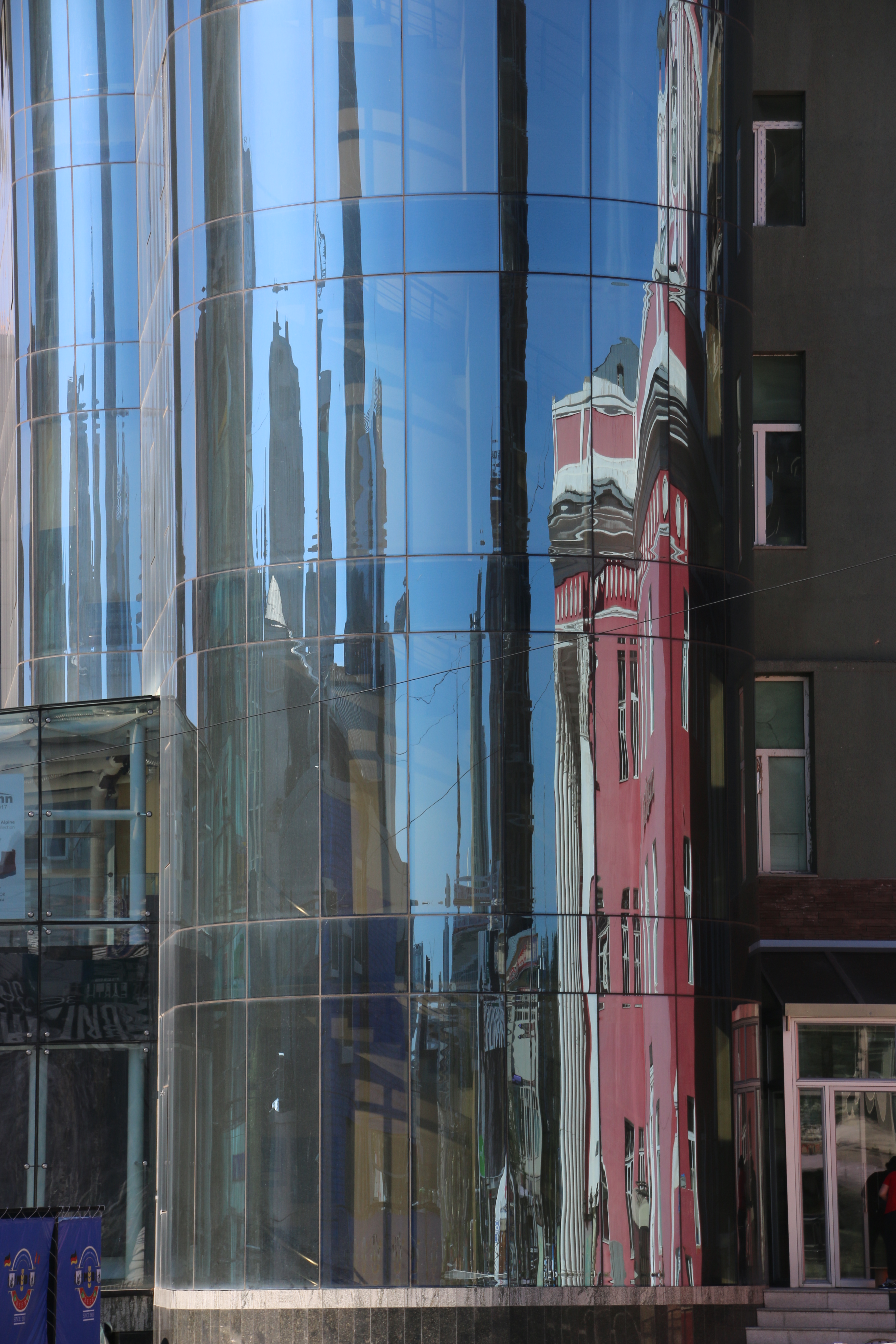
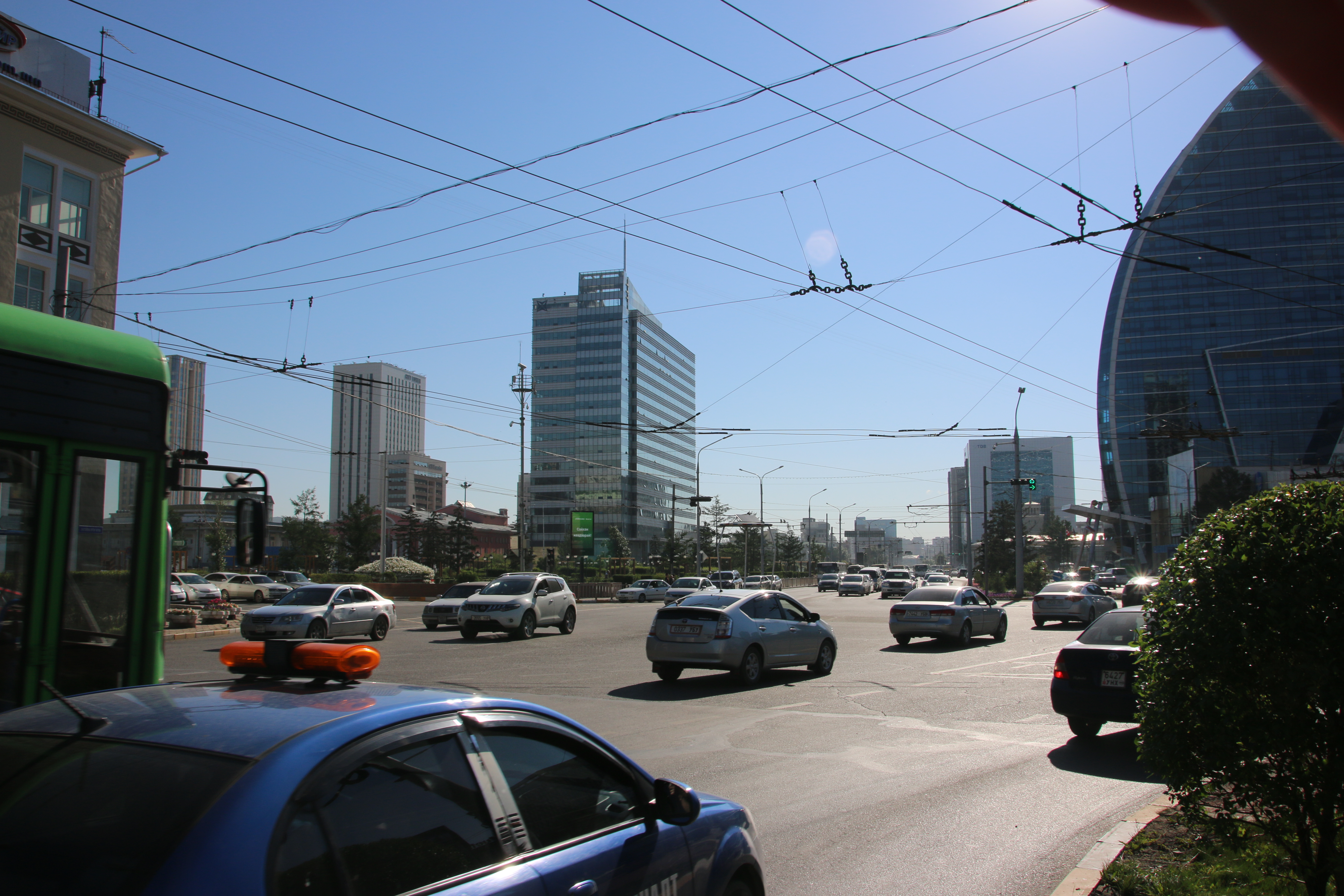
Ancient Buddhist temples rub their faded shoulders with glassed giants of offices and new apartment blocks.

I hope these images have given you a flavour of this busy, seemingly affluent, busy city. Mongolia’s economy is based on mining and exporting minerals, especially copper and gold to its two neighbors Russia and China. Agriculture is just as important with the processing and exporting of products from cows, horses & sheep.

Tomorrow I am out to the Gobi desert for eight days. I will be staying in ger camps. Those low, round huts constructed from a framework of wooden poles covered in skins or felt. I am told there will be generators to charge phones but only one camp has Wi-Fi. So, sorry guys, it’s more of those days of famine followed by a day of plenty. At least, because I’m traveling in a 4×4, I’ll be limited in what I can write each day. So, once again……..see you when I see you.

And then there was One

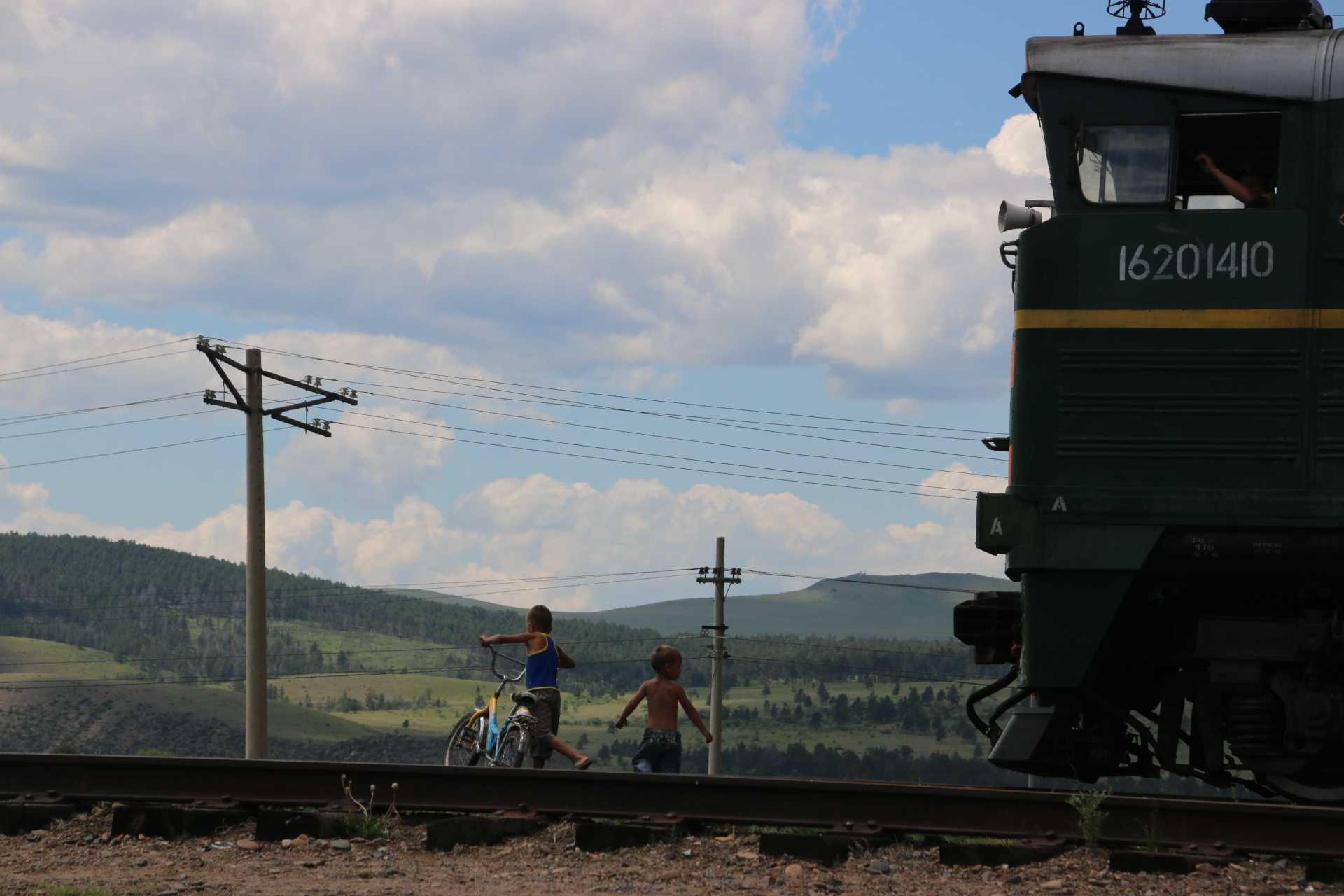
The last leg. The train trickles south west from Irkutsk over the Siberian steppes to the Mongolian border.

During the night, through a mist of sleep and semi consciousness, strange things begin to happen. In the darkness, the train starts to hum and then breaks out into 3 parts like a Rock Choir warm up without the lyrics. The resonance of the wheels on the rails produces humming harmonies in time  to the rhythm of the bogies (a railway term for the pairs of wheels at each end of each carriage and responsible for that clickerty clack sound, I hasten to add). If only the train could get some lyrics it could put on a summer concert all on its own or accompany a church service. Beautiful.

Mysterious energies are at work. I get off at the first stopover. 7 of the 11 original carriages have disappeared. My carriage is now the last one. Behind us is nothing, empty, just tracks leading back to the far horizon. Sometime during the night a ghoul has diverted them to a different destination and devilled them away into this new landscape.

wp-1467266917004.jpg

This is southern Siberia. Gone are the continuous flashing streaks of silver birch and pine. Gone are the large industrial oases in the flat desert of wood and forest. Gone are the acres of timber yards & marshalling sheds and the huge rivers and glimpses, through the strobing trunks, of far off horizons. Here it is open land rolling away on either side in undulating patterns of scruffy grass and dirt roads. Rolling hills line our route in humps and bumps and soft boobs and bellies, the shadows of cotton wool clouds marked out on their multitude of faces to wrap the landscape in a patchwork of greens.

Winding, wriggling rivers dissect the land. A group of horses patter & paw & shuffle around in a small dust bath, showing their enjoyment with swirling tails and rubbing necks. Low, single storied houses, built in wood with corrugated asbestos rooves, painted in green or purple, to give the weathered, timber houses a unique character, cluster around platforms in towns and villages throughout this rolling, open scenery. It is immediately obvious that the one thing these settlements all lack is any sign of mechanised transport – no cars, no lorries, no bicycles even. How do they get around between villages and towns? Where are the shops? What do they do during a long Siberian winter? (I can think of some answers to that last one)

wp-1467267064327.jpg

wp-1467267142204.jpg

wp-1467267193180.jpg

So the border approaches. The train stops. Documents are checked. That takes 3 minutes and then we have to stopover in this one horse border town for over 4 hours. So up the road to find a bar amongst the wooden dwellings.

wp-1467267987215.jpg

wp-1467268331060.jpg

Back to the station and onto the platform. The ghoul has struck again. 3 carriages have disappeared. Even the locomotive has abandoned the single carriage that stands all alone on platform 1 with several rather anxious passengers waiting outside its locked doors.

wp-1467268221645.jpg

After an hour or so, a reversing engine appears, locks itself like a guppy onto our carriage and, with a spring in its wheels, drags us off and away to the border, unused to its ultra light load.

We come to a stop after 10 km and Mongolian bureaucracy takes over. This time the stop over takes 4 hours. Go into town, buy an ice cream, take photos, chat. Return to platform to find out solitary carriage again has no engine and is now hidden behind the twelve carriages of a Mongolian train. All is well though. We are shunted along, hooked up to the end  and finally chugged off to Ulaanbaatar on our first night in Mongolia. The whole process has taken over 8 hours. 

Still, I have had lots of time to reflect on my fascinating 6 day, 5,867 km journey through Russia. It’s been a bit like chalk and cheese. Moscow holds the chalk, making good, multicoloured marks with money, power & privilege. Outside, life is tough and grey, with empty pages lacking any marks or colour most of the time, especially during a long, hard winter. Maybe that is why there have not been a lot of laughs and smiles on the trip, at least not from the Russian travellers. An occasional nod or a grunt are more common place although the blank stare is most prevalent. I leave you with some images of the chalk and the cheese.

wp-1467269504375.jpg

wp-1467269271130.jpg

wp-1467268369713.jpg


Follow the Green Line into historic Irkutsk

After 5,178 km the train draws into the city of Irkutsk where a break in the journey has been planned. Yes – a night in a hotel with a bed that does not rock and roll. Yes – a proper meal and a large cold beer. Yes – a long hot shower after four nights in the same clothes with only a pack of Boots wipes to take into the cramped toilet. The shower was magnificent, the meal was glorious and the beer was out of this world. The bed was so soft. Sadly the body was on Moscow time (you did get all that stuff about the time on the railway system?) so in effect I was going to bed at 7 o’clock. Little sleep followed.

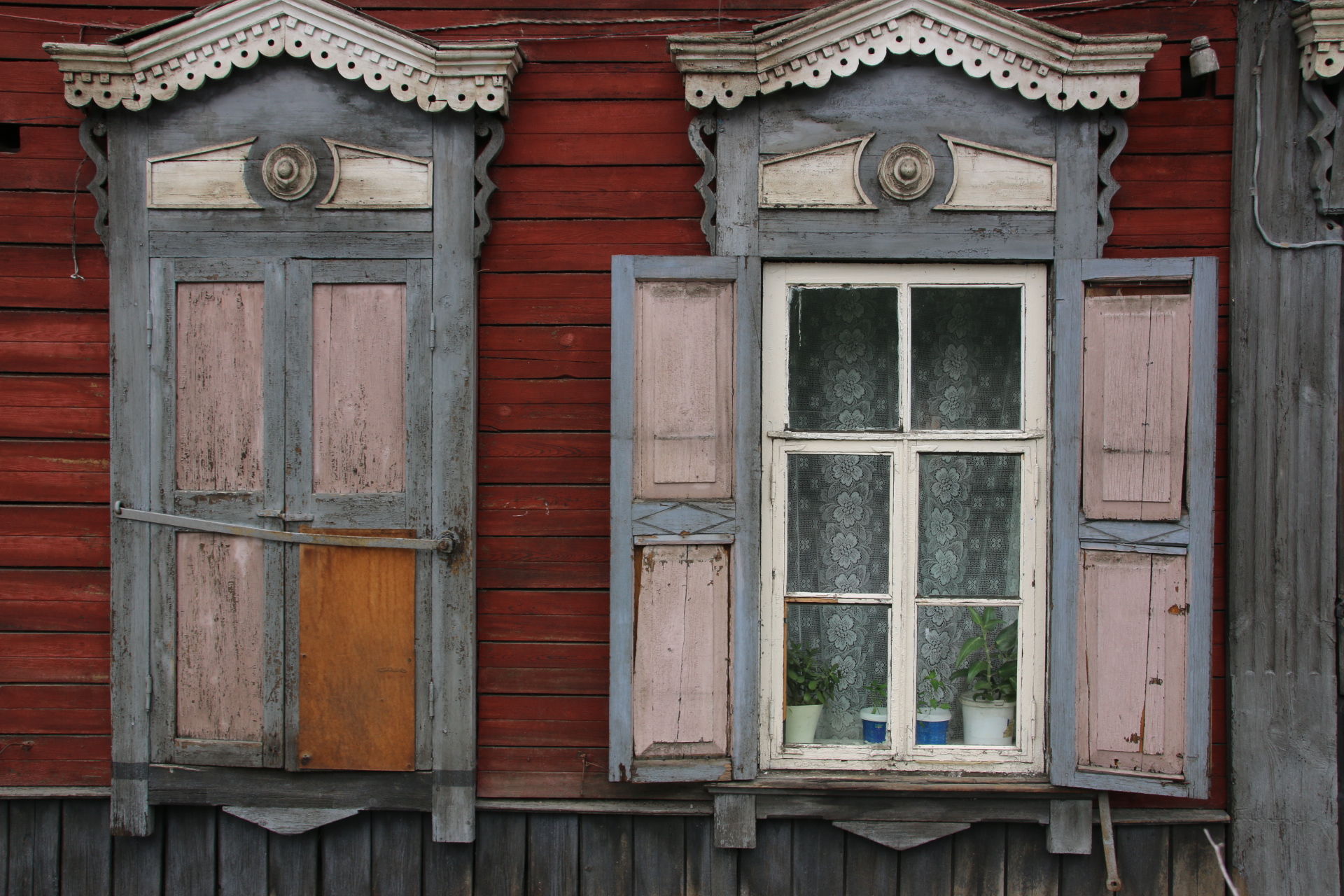
Still, a day to spend in a large Russian railway city. How best to see it? Follow the faint green line, painted on the pavement around the the historic centre. Tall apartment blocks stand out above the wide streets of weathered traditional houses all standing at rickety angles and defying gravity by just remaining upright for the inhabitants.

wp-1467112943202.jpg

wp-1467112977926.jpg

wp-1467113017143.jpgwp-1467113056262.jpg

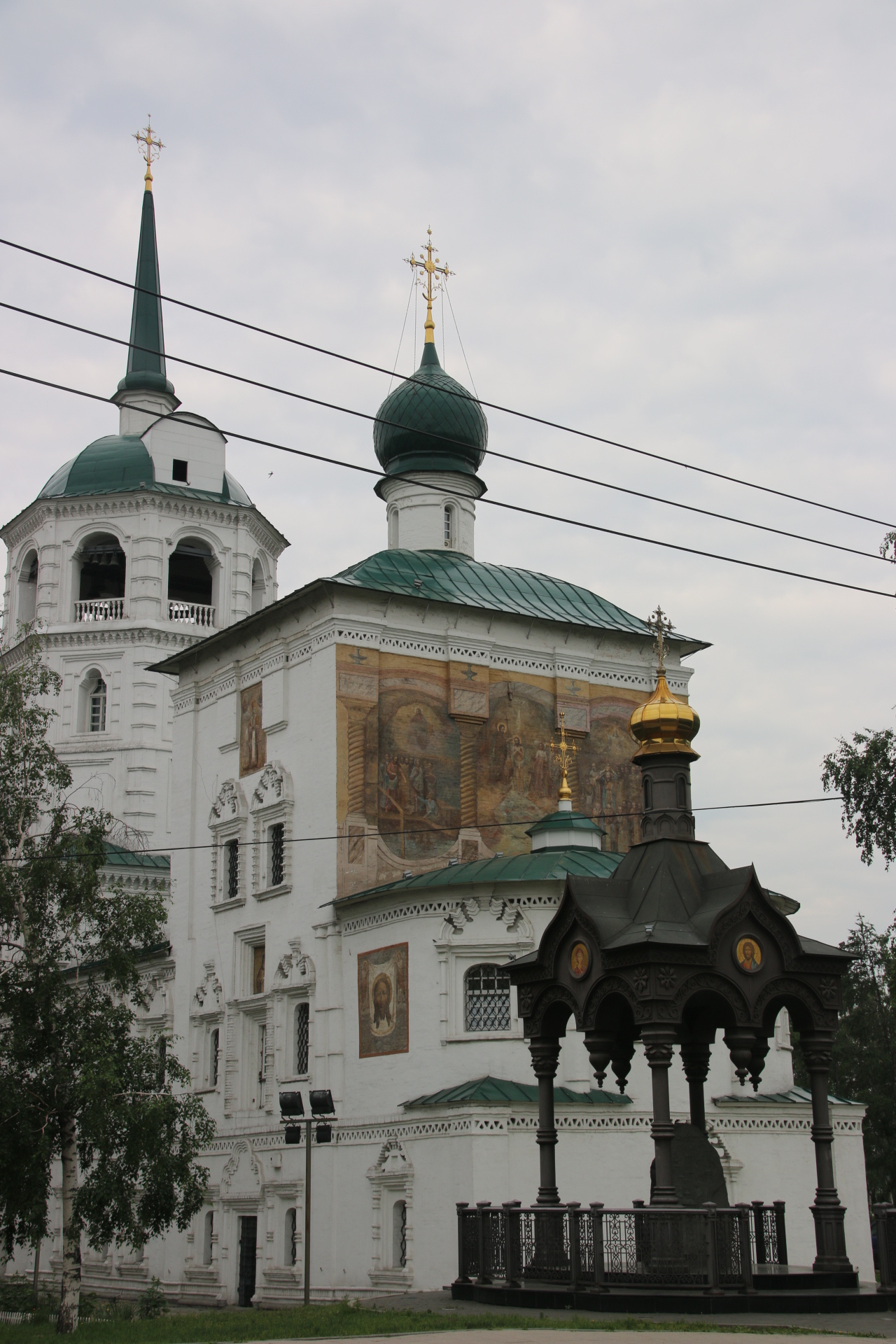
Statues abound – Lenin, of course, lords it over Lenin Street. Down by the wide river the two Russian Orthodox Churches and the single Catholic Church pop their heads over the promenade to oversee the fishermen holding steady in the swirls of the current.

wp-1467113283691.jpg

wp-1467113325185.jpg

wp-1467113349247.jpg

wp-1467113369972.jpg

Enjoy the images of this large, industrial city. Tonight I return to the train for the last leg of my journey to Mongolia. See you in a few days.

The elusive cheese omelet

Let me tell you a bit about the Pectopah.

wp-1467044074116.jpg

Firstly you have to understand that time stays still on the railways. Wherever you are on the system, on a train or within a sstation it is Moscow time, 2 hours ahead of the UK. The timetable is Moscow time. Times, by the way, are amazingly punctual with arrival and departure and stopover times accurate to the minute even thousands of miles along the track. Time only passes outside in the real world. Put simply, every 24 hours traveled equates to putting the clock on 1 hour. That is outside the train. So 4 days out of Moscow, train time is 0830, outside time is 1330, UK time is 0630. Got it?

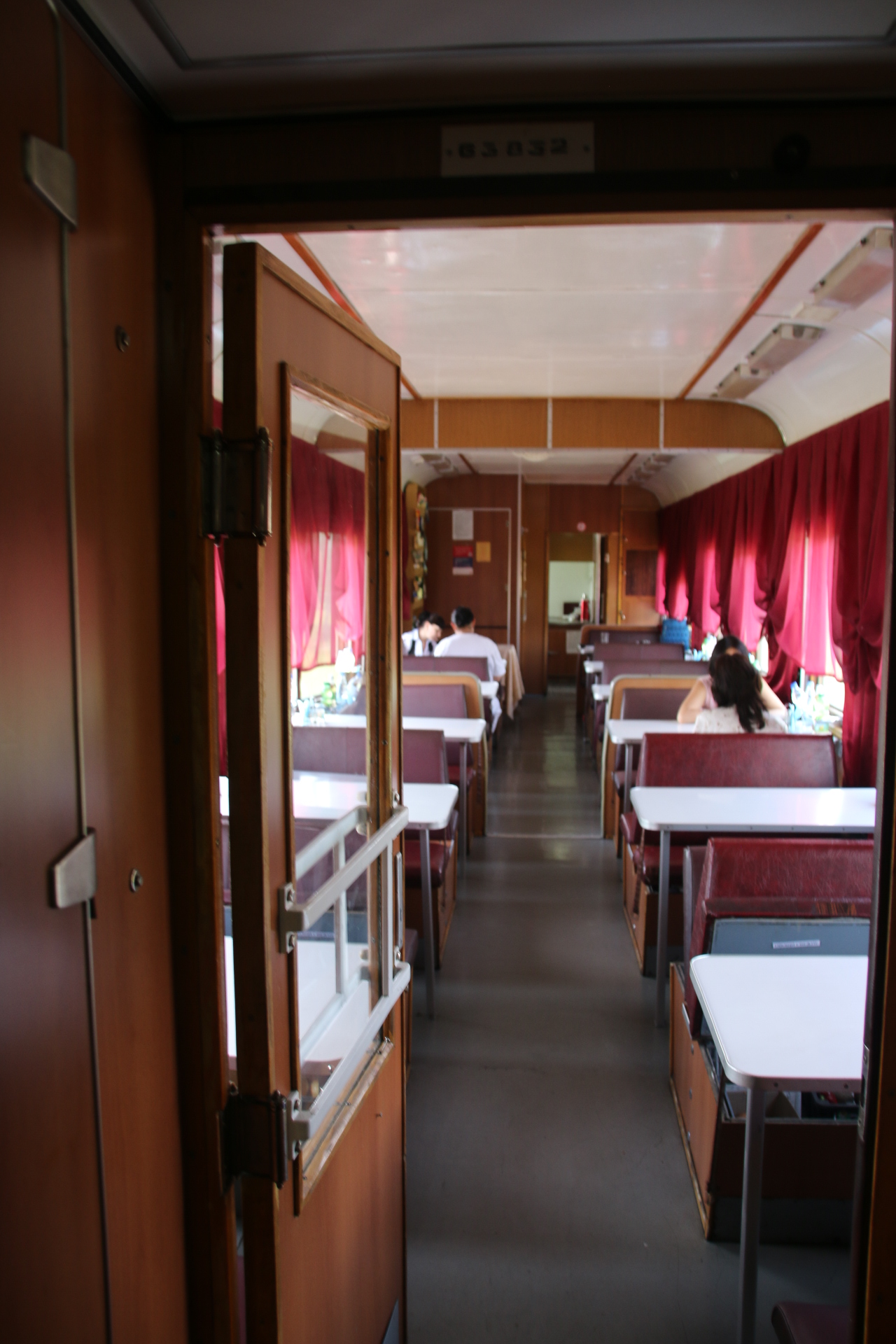
So, the restaurant car its found a few carriages up. Images of a comfortable bar area with tableclothed tables set out with napkins and place settings and glasses are immediately dashed. A stulag dining room comes to mind with Formica tables and functional benches aligned on each side and lacey maroon curtains around the windows. If not a stulag then a chapel at a crematorium.

The place is empty except for two females counting till receipts. Characters out of Dickins come to mind. They look up. A frown reinforces the tight lipped scowl that greets me. One is young, skinny, pale & a bit spotty. In her black uniform and regulation tights, she seems to be looking longingly at my neck. The other is a large lady wearing a floral nightie and displaying huge trunk legs. She looks as if she should be a friendly, bubbly character. She is not. The faces stare. Neither moves. ‘Food’ I mime. Nothing. I mime again and go and sit down. The skinny one sighs, gets up, comes over. ‘Beer, beer, beer’ she says. No food.

wp-1467044243705.jpg

This is the beginning of the search for the cheese omelette. The following lunchtime, at 1145 I return. This time the skinny one brings up a menu. Quite extensive sounding good. The menu is in two sections: breakfast 1000 to 1200, lunch 1200 to 1400. The assumption is Moscow time. We’d been warned off anything with mayonnaise by the American missionary from Milwaukee. So the ‘eggs with cheese’ sounded a good choice. No. Forceful shaking of hand. No, that it’s on breakfast menu and that’s over. Anyway, no eggs. Ok. So the choice of a cheese sandwich from the lunch menu seems obvious. It is  completely under-whelming, consisting of half a slice of the smallest brown bread covered with two thick slices of cheese. Goodness knows where the other half slice went to but it didn’t go on top. I order a second.

Thinking I have grasped the concept of the menu, I return the following day at 1900 for dinner. The two are still counting till receipts. At the stopover two crates of eggs are seen to disappear into the kitchen. Yes, omelettes must be on. No, no, no. NIET. Eggs and cheese are on breakfast menu. Loudly she flicks the pages and points, exasperated, to items from the lunch menu. my friends opt for salmon with lemon (3 minute slices on a saucer). I go for meat soup (a reasonable soup of onions and potato with 4 hunks of gristle; suitable fayre in a gulag).

I return the following morning to ascertain when the breakfast menu is available. I get a smile from the skinny one. Maybe she too is fed up with gristle and its holding herself back from diving into my jugular. With the help of drawings I ascertain that breakfast time is Moscow time plus 5 hours. The Pectopah is the only place on the whole Russian railway system which does not keep to Moscow time. Conspiracy theorists might argue that the staff just add hours so passengers always miss breakfast and they never have to cook a cheese omelet.

These guys have nothing to do with omelets. They were on the platform the stopovers. The style police might be hauling them up.

wp-1467044400015.jpg

wp-1467044433253.jpg


The Locomotive Gang

I have made some new friends this morning. From compartments 6 & 7 tall figures emerge with mugs in their hands to worship at the urn of boiling water. As the morning develops I start chatting to the tallest, Ivanovitch. It turns out that the whole group are engine drivers from Siberia. I meet Igor, Alexi, Constantine, Andrew, Ivan. No-one speaks any English. I watch countless images of their blue engine on Constantine’s phone, friendship between UK & Russia is proclaimed, vodka is offered but refused, temporarily (it is only 1030 after all), although I do take a glass of beer and smiles all around and back smacking till in hurt. Later in the morning Ivanovitch appears at the door with a gift for me – a Russian flag from the front of his locomotive. Yes, the actual one from the photograph. A few minutes later Ivan appears with 2 fridge magnet images of Russian locomotives. So touching.

wp-1467043059946.jpg

Our relationship blossoms. We talk about steam locomotives in very effective sign language. We stop for half an hour and I go exploring and I find, guess what, yes, an old steam locomotive. This really fired them up. We clambour all over it going ‘choo Choo’. They take my photo, I take their photo. On the way back to the train, they force another driver to allow me up into the cabin of a huge loco where I can take pictures of  the controls to add to my collection. So exciting.
wp-1467043102925.jpg
They promise me a surprise at the next stop where they present me with a mug of wild strawberries. At the one after that it’s a huge chocolate ice🍦-cream, with a soggy wafer, I have to tell you. I feel like a pampered pet. They just refuse to say no. So frIendly.

Life on board the Trans Siberian Railway

So let me tell you about life on the Trans Siberian Railway. Firstly, the outside bit rarely changes – silver birch and pine blur past continuously. Their flow is occasionally disrupted by the appearance of weathered, wooden, ginger bread villages or the even more occasional sizable town of apartment blocks, railway marshalling yards and uninspiring, functional housing. At the centre of every one, whatever size, will be a statue of Lenin or another revolutionary figure, stretching out to indicate the way forward.

wp-1467042274445.jpg

wp-1467043576553.jpg

wp-1467043742464.jpg

No, real life only carries on inside the train. Attire for men is simple: a pair of light, airy, shorts. Hairy backs, fronts, bellies, shoulders all proudly on display. As they pass in the narrow corridor, the feel of static electricity remains as a light kissing blush of soft fur on any exposed skin.

wp-1467042388621.jpg

Meal times revolve around the provisions you have bought on board or those you have been able to supplement in the station kiosks en-route. Inevitably crisps, cereal bars, biscuits form the basis of train diet, enhanced with cuppa soups and noodles. I never want to see another cuppa soup.

The routine on board is quite simple. It tends to revolve around sleep. Mornings are filled with excited anticipation about the day to come. The first hours of flashing trees quickly dampens that. After that any journey through the carriages will be like a sci-fi adventure with sleeping or dozing crew laid flat out in their cocoon cabins waiting to emerge at journey’s end.

wp-1467042465922.jpg

Time flows past like the trees. Every few hours the train stops to refresh the clientele. Old friendships, made in the narrow corridors, end with a hand shake or an awkward hug. They are replaced with a catalogue of Russian humanity who will continue the confusion of unintelligible language and life stories. It is truly amazing how long conversations can last when there is absolutely no common language. Why is it that some people are convinced that if they shout louder and louder that the other person will eventually understand what they are trying to say? Continue reading

Two Provodnitsa, Sergei and I on the Trans Siberian Railway

wp-1467040922831.jpg

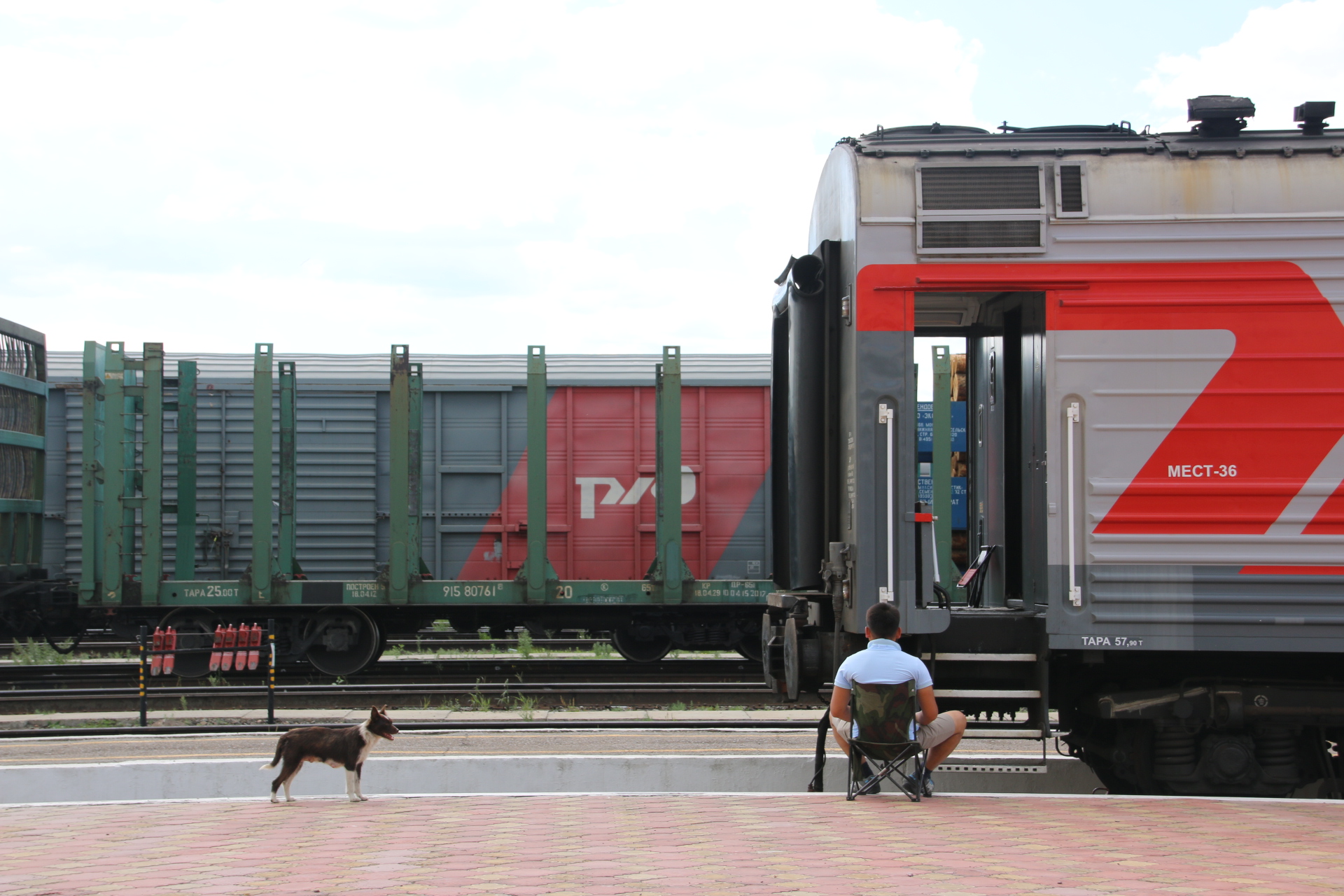
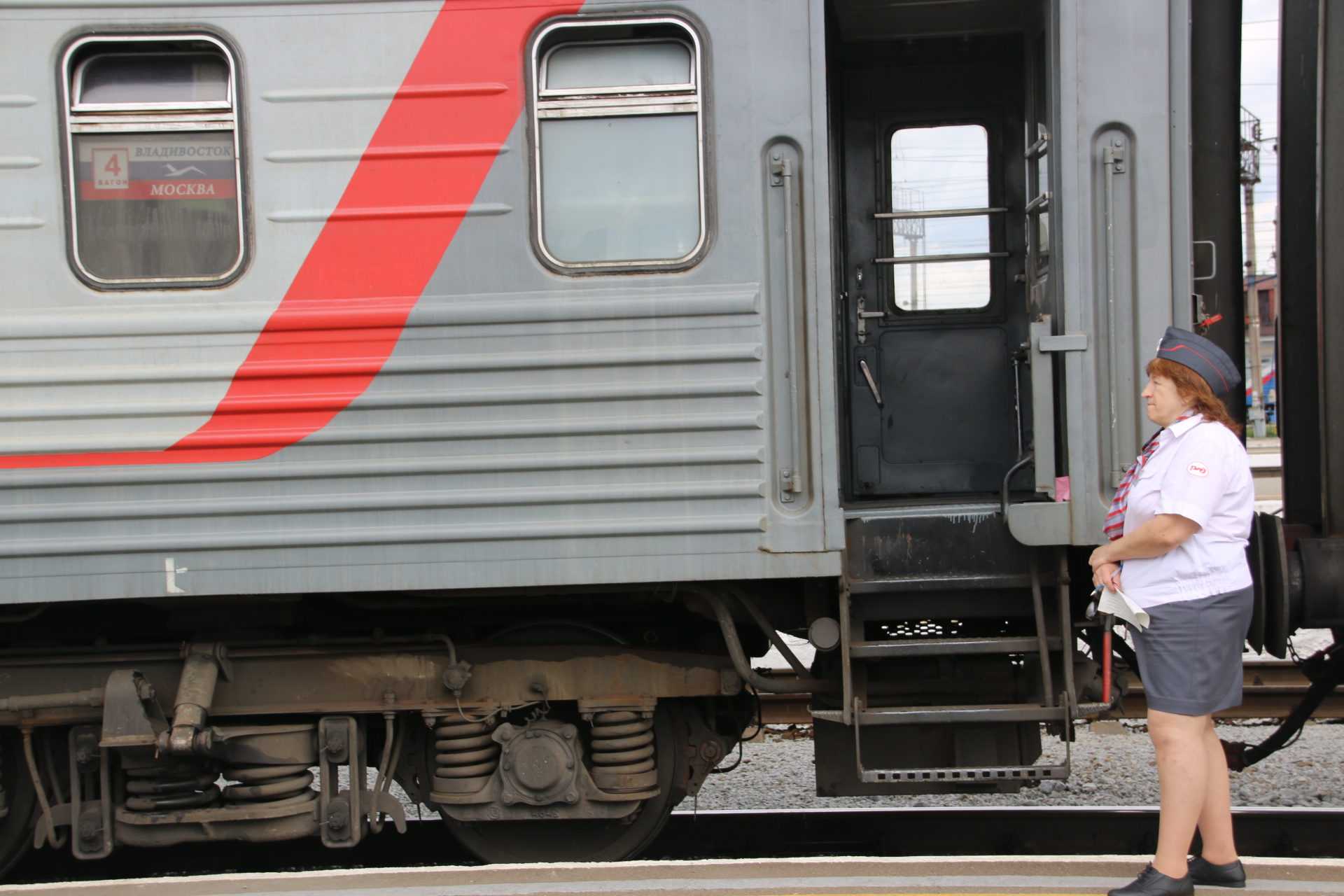
The 44/100 to Vladivostok is pulled into platform 1A by a small diesel with its big, big brother that will take us there, silently gliding in backwards. I start walking along the carriages. Am a bit concerned that the end carriage, which is first, if you see what I mean, is number 20. Half a mile further on is home for the next three days – carriage 4 and compartment 9.

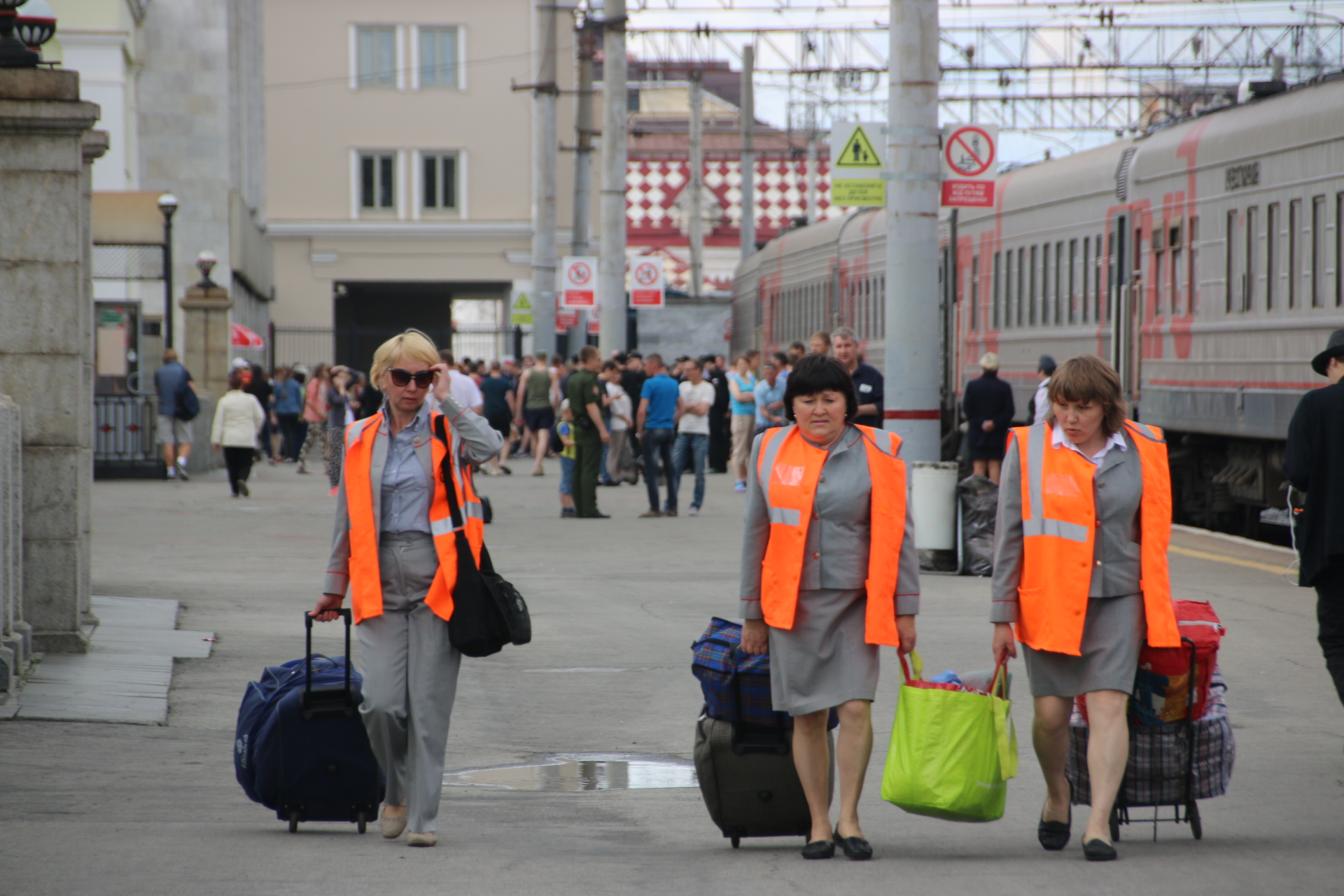
Teams of provodnitsa control each carriage.  Now don’t get excited, picturing young sexy, red suited and booted Virgin staff. 

wp-1467041588701.jpg

Let me introduce you to one of the two provodnitsa that guard the steps to carriage number 4.

wp-1467041041948.jpg

It’s a bit like being in charge of a dormitory at boarding school with a uniformed, Stalinesque matron. Keep on their good side and keep smiling and there is a perceptible softening of their facial features, the stern facade drops ever so sIghty and, with considerable trepidation, an approach might be considered. Like most Russians they speak no English and don’t even try. I had to mime the fact that we’d run out of toilet paper – use your imagination!

In pairs they tag team their own carriages, one on nights, the other on days. They sort dirty linen, hand out clean sheets, empty rubbish bins, clean the corridors and the two toilets, act as ‘no fuss’ security guards by their door whenever the train stops, check tickets and very occasionally grimace which is the only indication that you have been accepted. They give the only sign that the train its about to depart which takes the form of a curt nod. If you miss it, you face a long walk.

wp-1467042515735.jpg

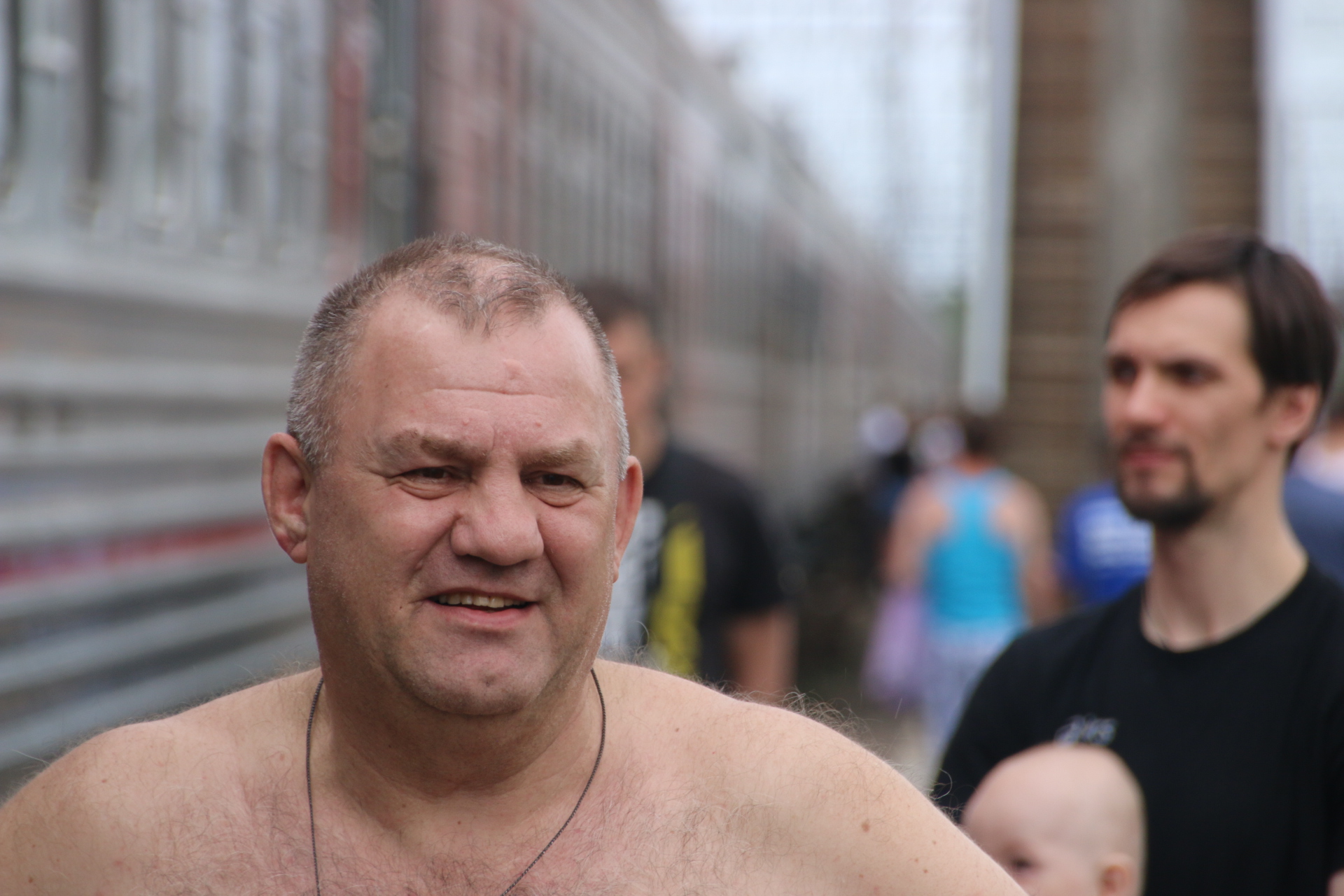
I fall at the first hurdle in Moscow. A rather large, hairy Russian gentleman its settling into carriage 9. He is not supposed to be in here. Despite numerous approaches to the provodnitsa and the full catalogue of smiles and charm, there is no option – Boris, as I have decided to call him although his name is Sergei, has to stay. He doesn’t help his popularity rating as he spends most of the time in shorts displaying an extremely large and hairy torso, particularly around the shoulder area. I have to emphasise that these are not the largest of compartments. Boris clambers up to a top bunk and stares down at the interlopers, like a large primate contemplating his next swing down. Pushing away images of King Kong grasping out for little old me, I settle down below and let the rhythm of the tracks take me to the land of nod.

wp-1467041863159.jpg

The noises eminating from Boris are enough to eventually end my first night of light slumbering.  Every carriage has a big urn full of boiling water. I take my teabag and mug, make my tea and watch the sun come up over the passing forest of silver birch & pine.This will be the scene for the next five days and 4,000 miles. Very cathartic.


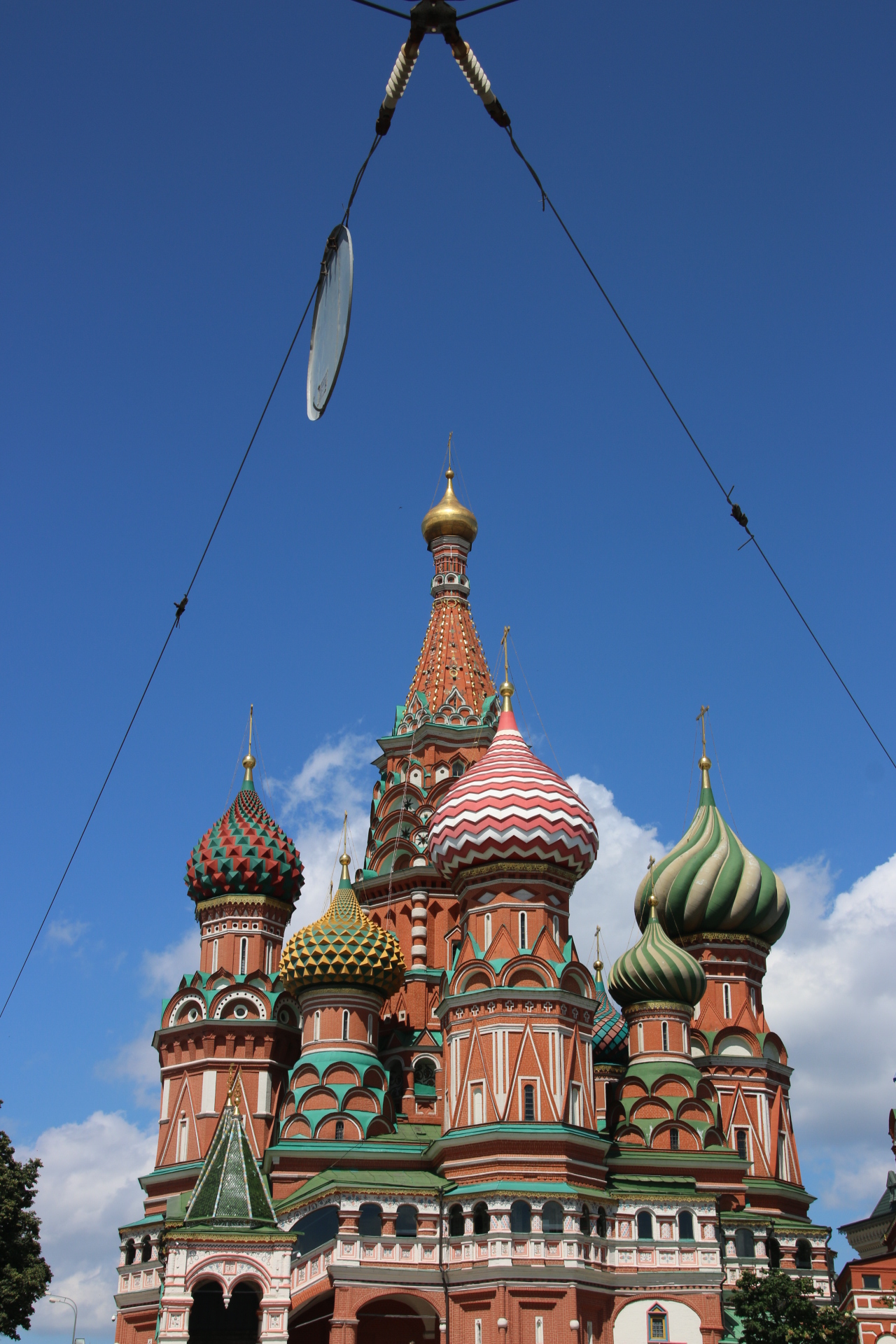
Golden onions and traffic outside Red Square

I am in room 2538 of my very functional hotel. Yes, on the 25th floor and there are three hotels of equal size, side by side, like packs of cards on their end and all full of rushing, excited, impatient, busloads of Chinese or Japanese or South Koreans tourists. Like an oriental ant-hill, they disgorge the winged adults in a huge swarm and their coach larva process into town to absorb the touristy delights of central Moscow.

Putin was entertaining yesterday so decided, on a whim, to close himself inside the Kremlin and prevent us tourists from getting up close and familiar. So full of anticipation it was another trip to Red Square to get tickets to enter Russia’s centre of government. Street, no. Thursday is a ‘non-work day’ at the Kremlin so it its closed. Its golden onion domes can, again, only be appreciated from outside the walls.

wp-1466695718522.jpg

wp-1466695639924.jpg

wp-1466695762755.jpg

So other places and sights have to be found. This is a mixed blessing. Having spent time around Moscow’s main/only tourist site around Red Square, the sight seeing has to spread along the Moscow River and the real impact of the three T’s can only then be fully appreciated. “Oh, the big red bus is a good way too see the city ……and sit in traffic, Traffic, TRAFFIC and be a tortoise. The bridges across the river are simply grid locked and it can take over an hour to cross one.

Still the sun is shining, beetroot soup and a beer fills the stomach and all is good with the world. The big, red bus tour does have its advantages, particularly when linked to the big red boat tour. Every church, every collection of golden onion heads, every Stalinist power house advert statue of a war hero or a revolutionary soldier or a conquering chariot can be seen from every direction. Canons and Nikon are in charge here.

wp-1466695800787.jpg

The most impressive sites can be found deep underground where only Moscovites can readily appreciate the magnificence of Moscow’s Metro system. The lenses of coach carried tourists will miss the grand spaces of statue lined corridors and escalators of this really efficient method of carrying humanity from A to B. Alcoves and pillars and ledges reveal grand carvings of Homeric heroes or powerful angels or crouching soldiers, protecting its the traveller as well a reflecting the glories of the revolution and the motherland. Journeys are dead cheap- 50p and people give up their seats for its seniors. All very efficient, especially when one he’s worked out the squiggles that indicate the stations on the tube map. Few people speak English.

The real journey starts later this evening. I will write and take photos every day but am unsure when I will pick up Wi-Fi . I will blog when I am able to. You may get several in quick succession followed by silence for a few days. See you when I see you. I leave you with my friend from the perfumery in Dum.

wp-1466695838163.jpg


A day out in Moscow

Well, here I am at the beginning of my new adventure to the Nadaan Festival in Mongolia. That lies three weeks, six time zones and thousands of miles on the Trans-Siberian Railway head of me.

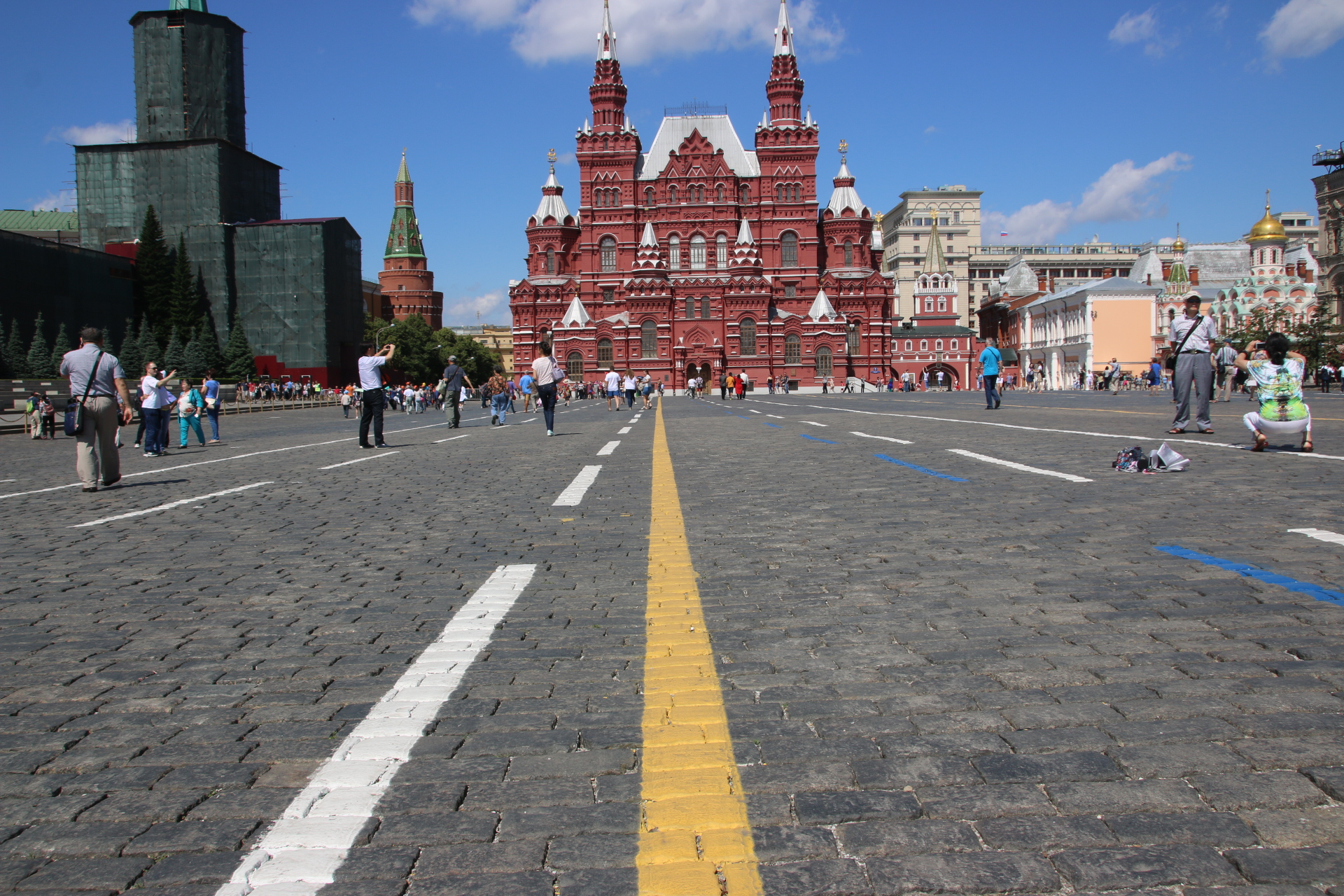
My journey starts in Moscow and a few days taking in the sights. Of course I’ve got to take in Red Square, the Kremlin and Lenin’s tomb.

wp-1466615756965.jpg

wp-1466615800545.jpg

wp-1466615848774.jpg

wp-1466615880127.jpg

wp-1466615924330.jpg

There is also this magical place!!!! Goodness knows what function it serves-a Russian Disney World? Full of Korean tourists anyway.

wp-1466615966948.jpg


Real people live and work amongst the visiting tourists

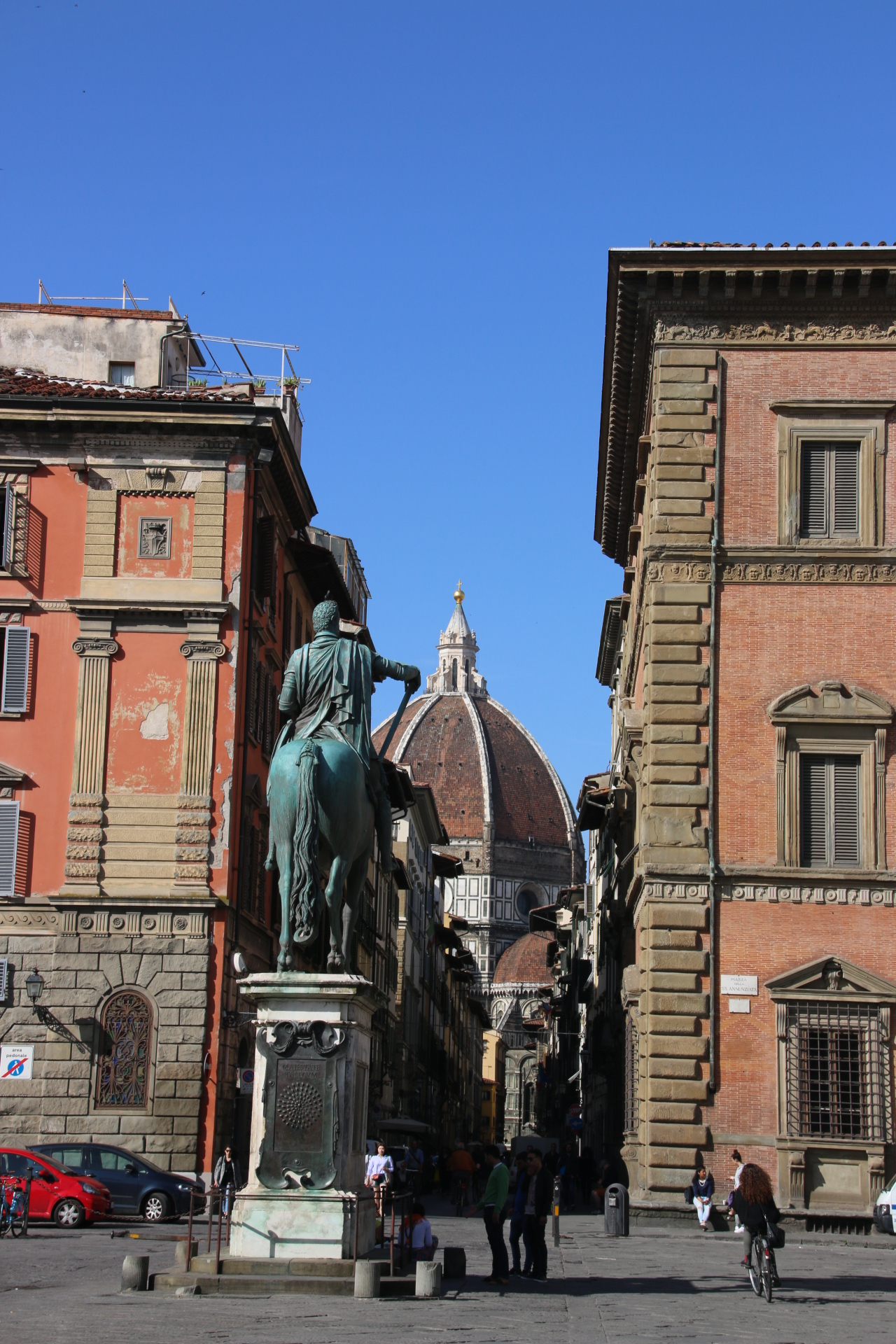
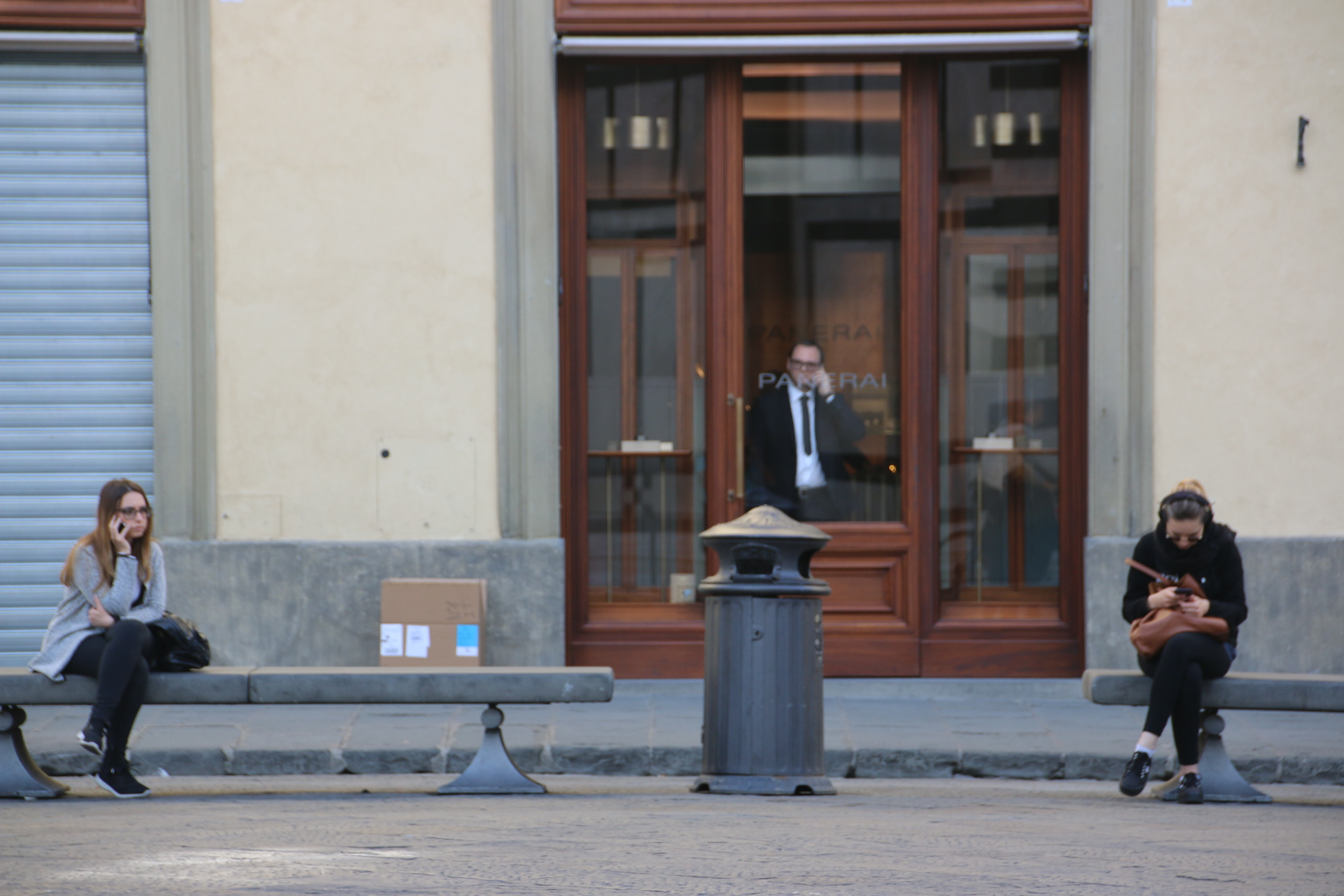
When one visits Florence for the day, it is easy to forget that real people live and work and earn a living from the flocking tourists. The coaches unload their lines of gaping visitors, all processing after each other like goats on a hill path, the lead goat identified by the raised arm and the majorette’s baton raised aloof. The locals begin their daily routine of entertaining, feeding, quenching, sketching, guiding these columns of multicolored, umbrellared, sunglassed, overheated, dehydrated ants.

wp-1465753203196.jpg

wp-1465753260931.jpg

wp-1465753096470.jpg

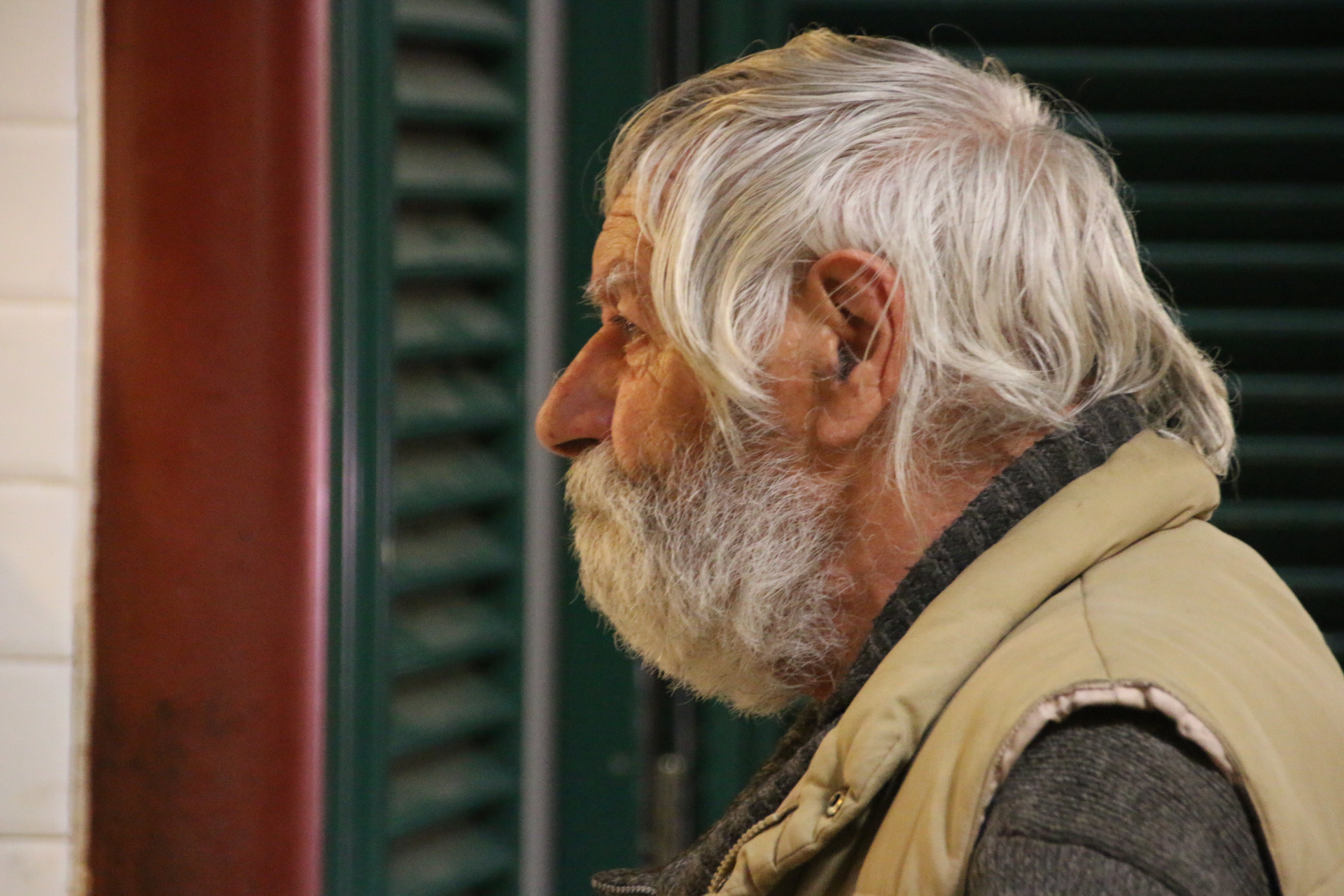
Amongst this turmoil the locals go about their business. They shop in the market. They grab a coffee on the way to work. They celebrate their saint’s day. They deliver goods. They drive buses and take their children to school.

wp-1465753148045.jpg

wp-1465753059951.jpg

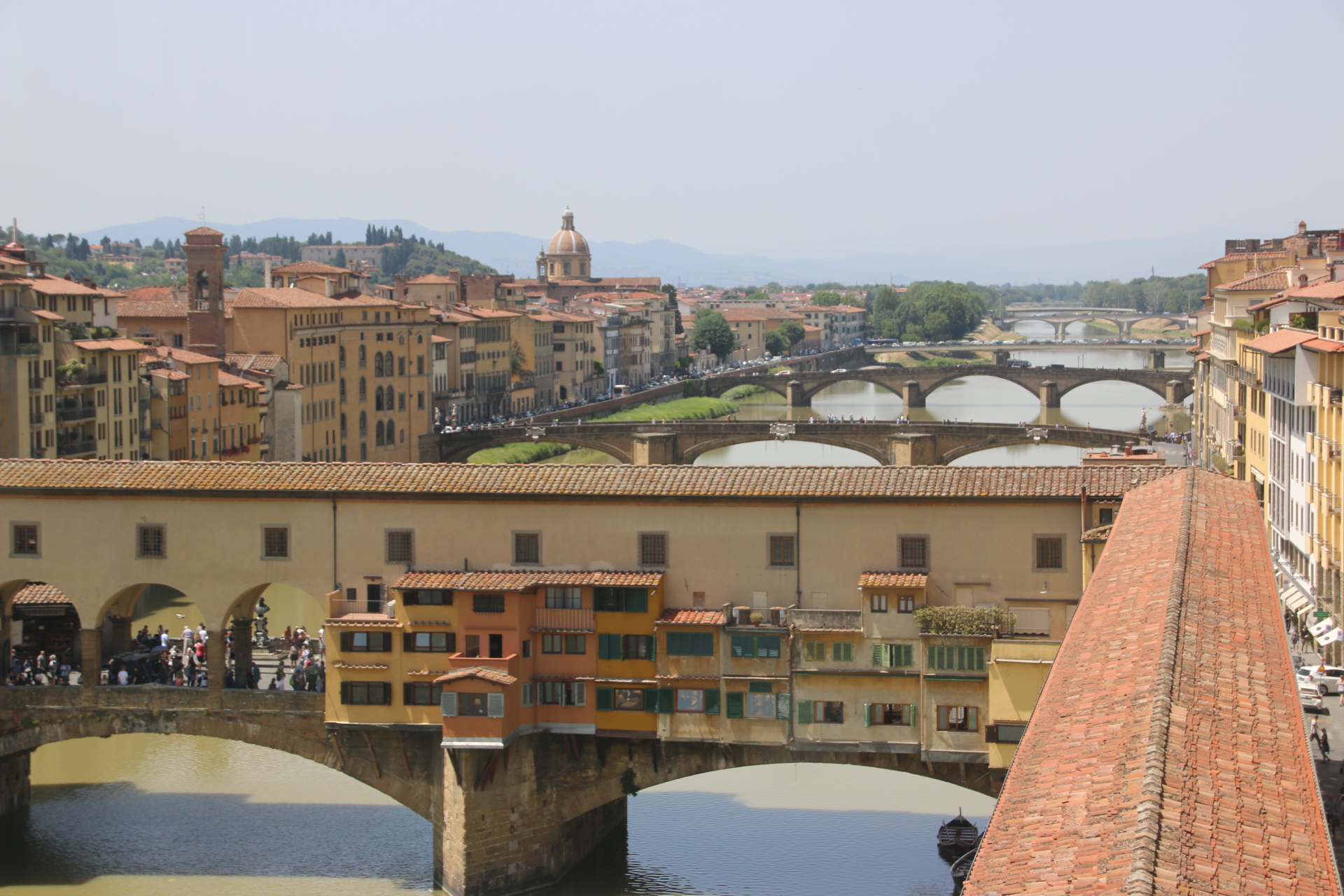
But Florence is not all crowded piazzas of camera clicking guests where couples and groups shuffle in competition with other to take the best selfie in front of the duomo or medieval bridge or the statue of David or the one with the fig leaf over the necessary bits. Come late afternoon, the columns of exhausted, rather ratty guides show their charges onto their coaches and bid a fond farewell with a huge sigh of relief and a slight niggle at the meagerness of their tip. The city also sighs. Gradually the streets empty and life can go on uninterrupted, as it has done since the Medicis ruled this city centuries ago.

wp-1465753328351.jpg


Florence, Italy – I must be Rennaissance Man

wp-1464719074659.jpg

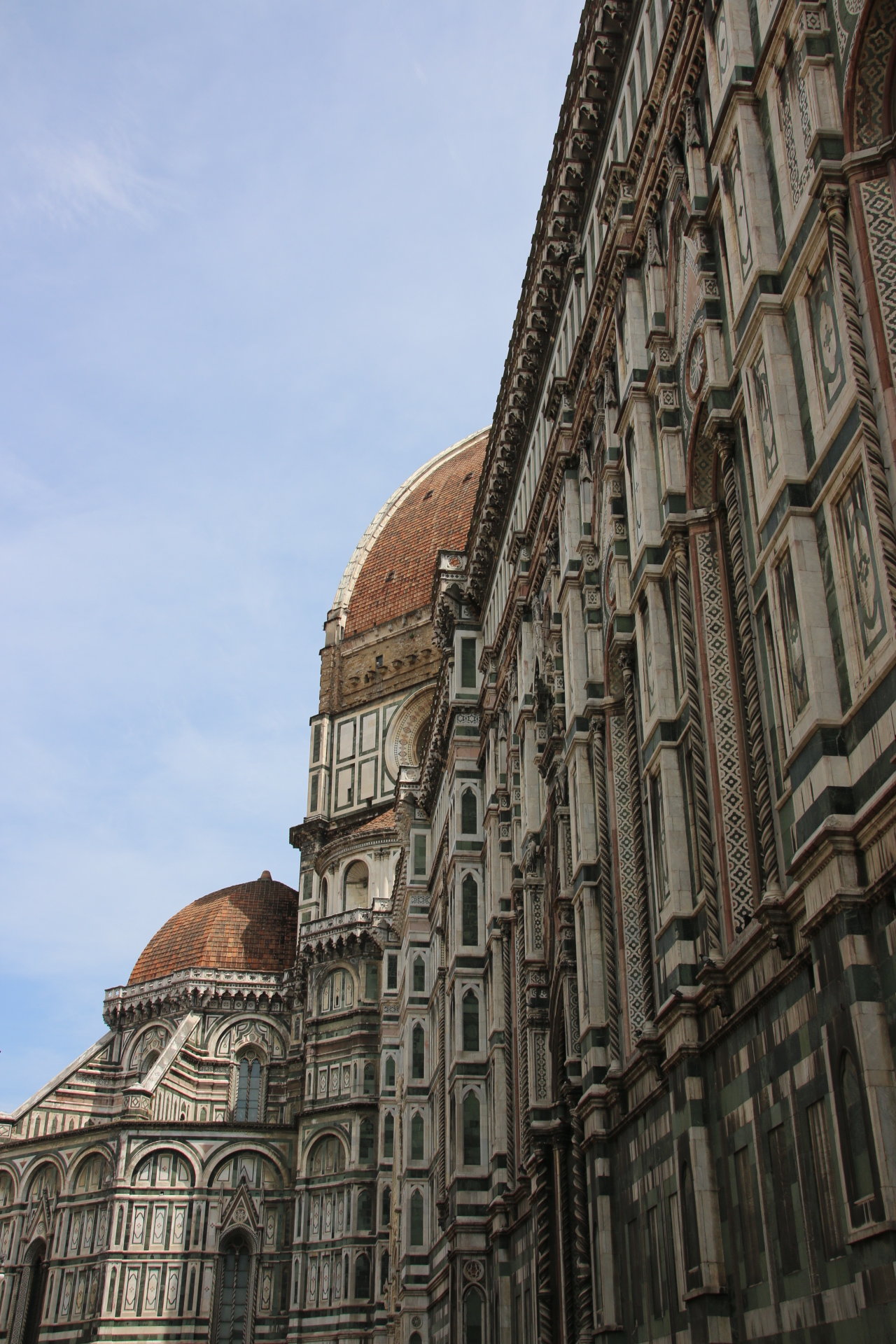
Like a favourite pair of fluffy, old slippers, it feels so good to be wriggling my toes back in the comfort of Italy and visiting Florence in particular. This place sums up the whole country in the space of such a small area. From the small roof top terrace that pops it’s head above the red clay tiled roof tops, I am at the same level as the Duomo, the famous, dome of the cathedral. It is just there, standing gloriously tall above the deep shaded maze of narrow streets and sun blazed piazzas, the points of cypress trees stand guard on the foliaged hillside to the south of the River Arno, scooters putt around, horns beep, sirens tangle in echoes through the hazey hot atmosphere, even in May. The laughter and cries of children always succeed in reaching the ears before any other sounds, however high up. On the hour a cascade of deep bells boom and bombard the ears of the city, competing for the ears of the faithful to remind them what they should really be thinking about. Just add the pasta and the food, and stir with copious amounts of classy Chianti, consumed by classy guys in their waistcoats & suits with their wavy curls & twinkling eyes and even classier, elegant women and you have that special, Italian way.

wp-1464718644912.jpg

wp-1464718709080.jpg

wp-1464718681040.jpg

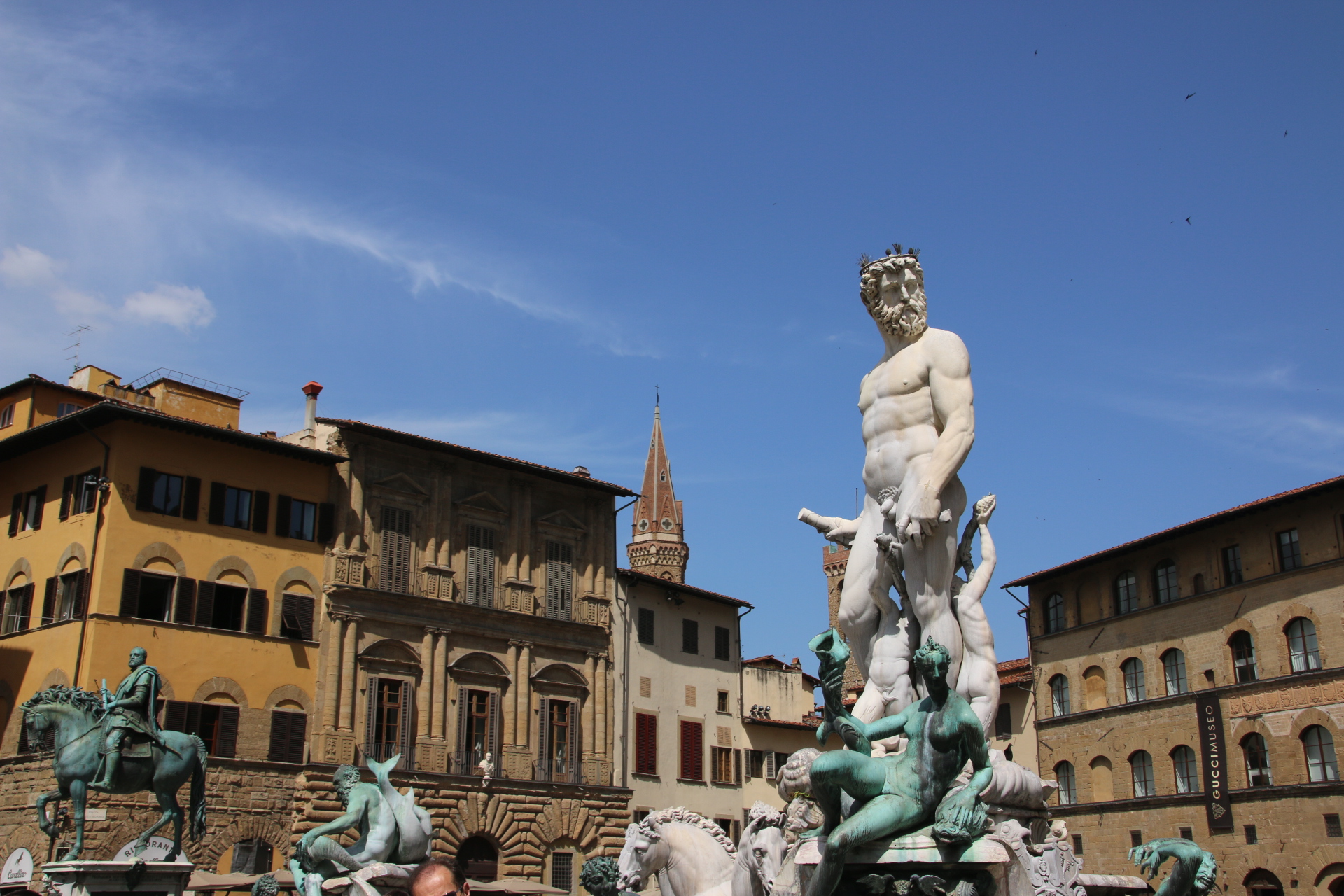
I am going to have to let the images tell the story of this place. It is just so magnificent. Every piazza, every hillside, every surrounding ridge is set off with a a marble facade, a church or cathedral or religious house, a steeple, a tower, a dome or a crescent of tiles. And within the squares and piazzas, or dwarfing the steps of religious houses, framed by these wonderful 13th century buildings are awesome statues and sculptures of bottoms and bulges and boobs and …..other, hanging bits. Angels and gladiators and biblical he men compete with galloping horses and rearing creatures, all larger than life and 10 times more imposing than us lowly mortals. And I’ve not been inside yet. Enjoy.

wp-1464718934988.jpg

wp-1464718976814.jpg

wp-1464719008074.jpg

wp-1464719039193.jpg


A Filipino Farewell

So that’s it. Home tomorrow via a few days in Hong Kong. Sadly, two and a bit weeks in The Philippines has come to an end. Am sitting in the shade with mango juice in hand, looking out over an ivory beach with turquoise blue sea and white surf hissing up the the sands, reflecting on the trip. I have really enjoyed these wonderful islands and these lovely people.

20160208030902_IMG_3525 20160210025854_IMG_3995 20160210031907_IMG_4011_1

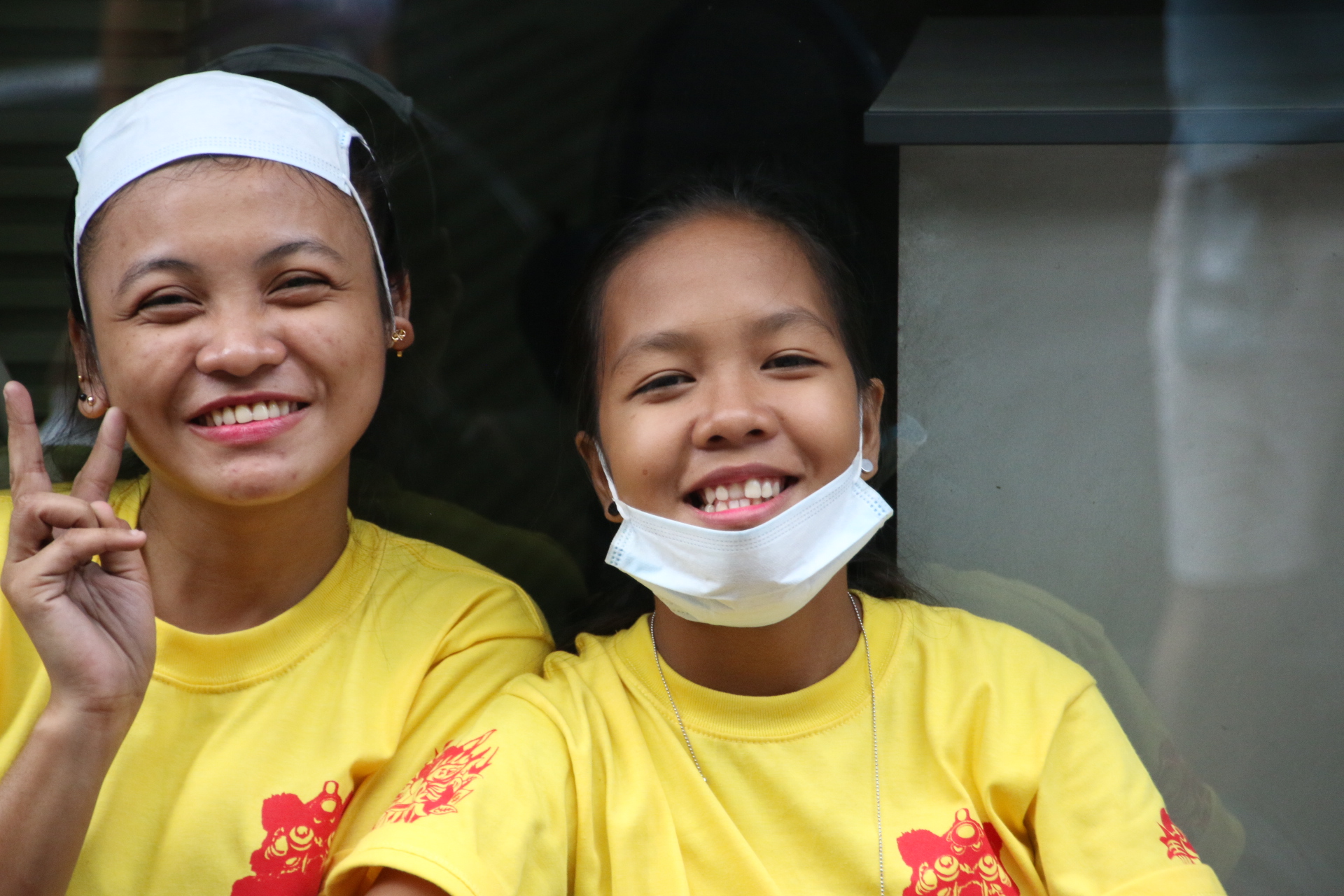
My lasting memories will be the smiles on open.friendly faces, the welcome at every stop, their politeness and respect. I have been addressed as ‘sir’ on every occasion, in every situation, on the street or in restaurants and hotels where you’d expect it maybe, by a cheerful, seemingly happy Filipino. Yet most of these guys earn a pittance, 30% of the population is below the poverty line, with an average income of 2 dollars a day. If they can keep a smile of their faces all the time why can’t we?

20160207234515_IMG_3362 20160209052219_IMG_3793 20160207102310_IMG_3290
The scenery, upland to lowland, is also rather special. Sunshine, ivory sanded beaches, green jungle foliage, pine stretching ridges, river carved ravines and gorges, patterns of emerald rice terraces contribute to a rich textured tapestry outside the brieze blocked, cemented, corrugated ironed towns and villages.

20160210083328_IMG_4040 20160211074847_IMG_4185_1 20160214070544_IMG_4773
The signature image is that of rice terrace. Rice production is evident through out the countryside – terraces, paddy fields, irrigation, planting, harvesting, threshing, drying, bagging. In the highlands they manage one harvest a year, in lowlands up to three harvests.

20160212040401_IMG_4317_1
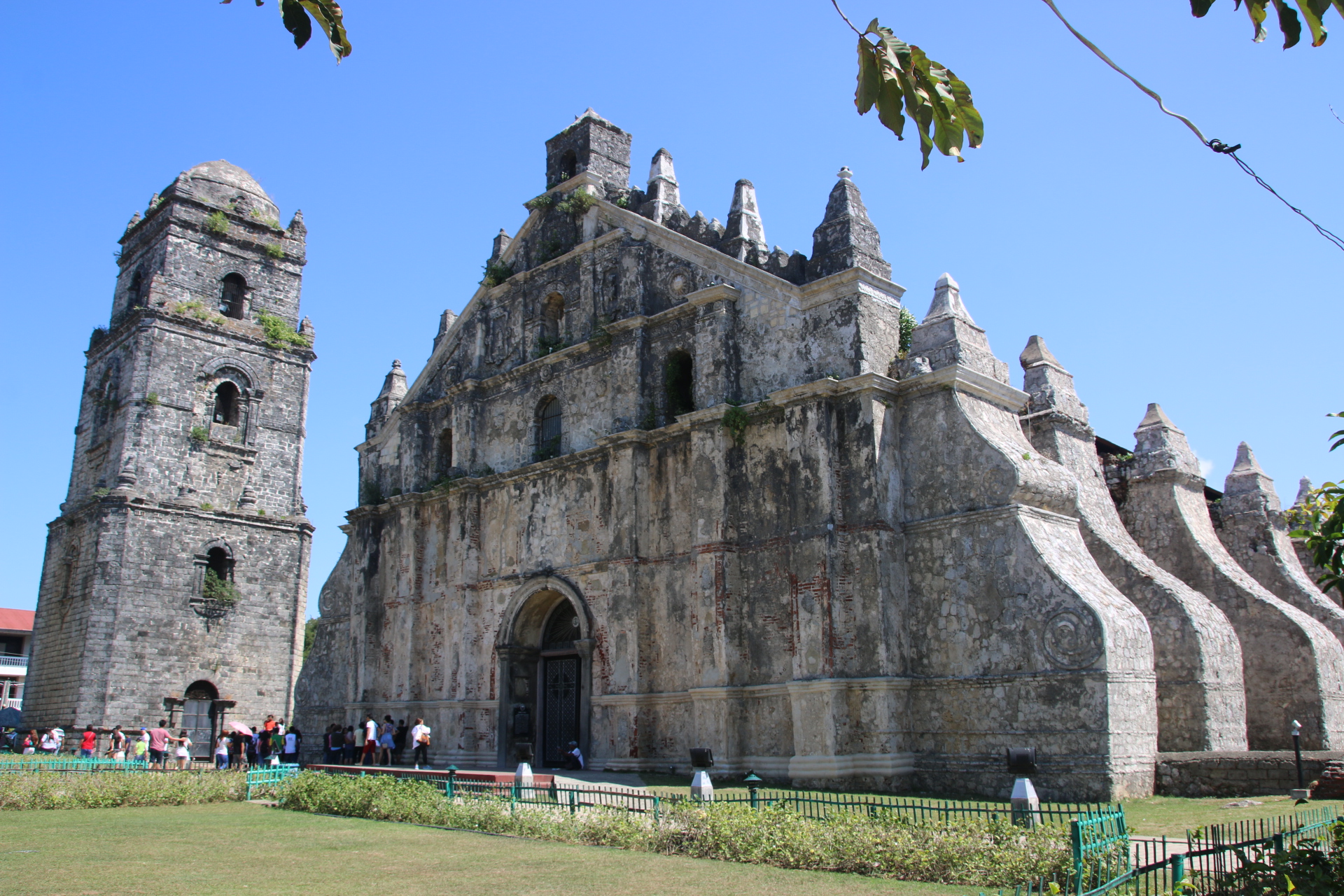
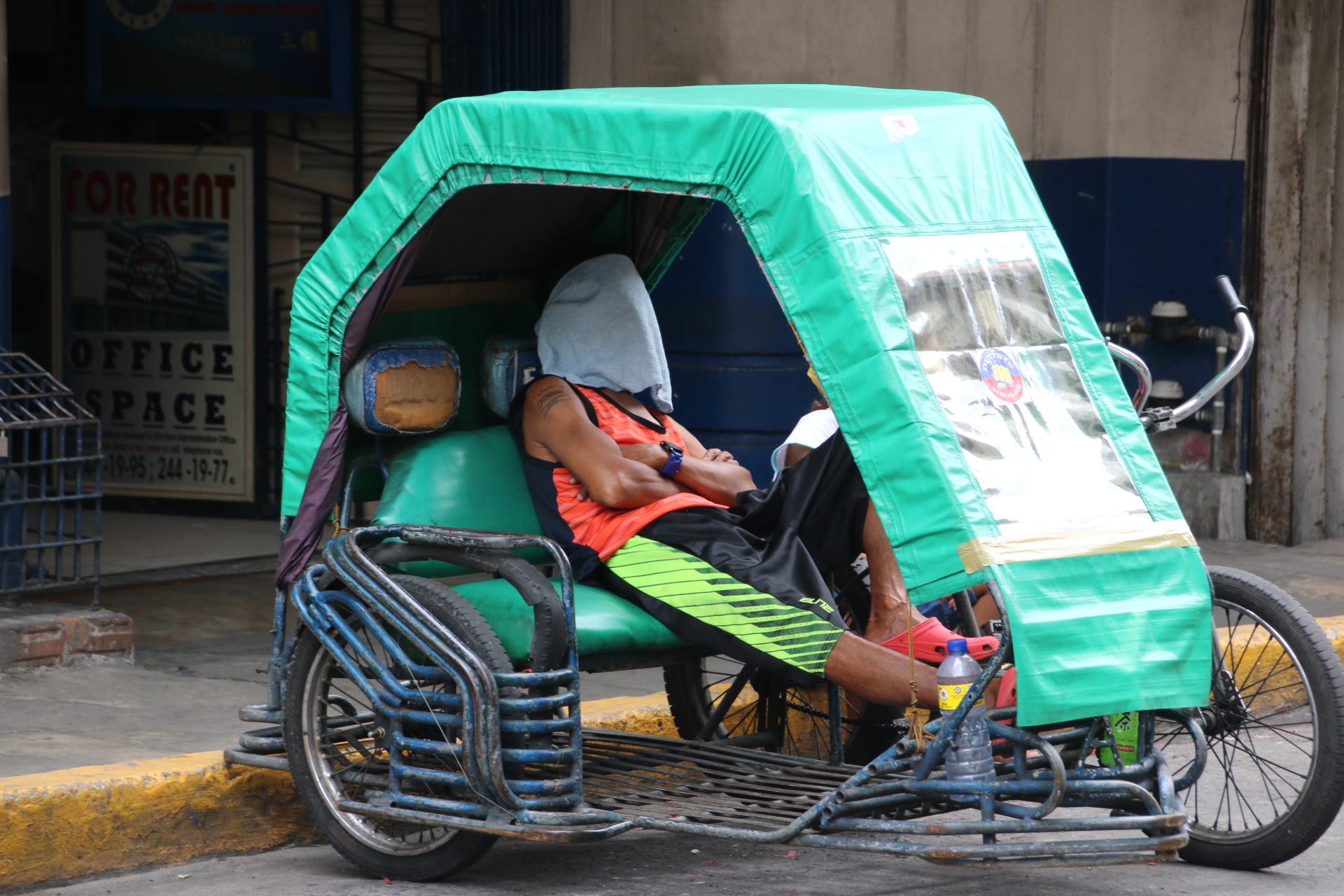
Towns are a dumbledore of dwellings, shops, tangles of electricity cables, lines of uniformed school kids, exhausting jeepnies, motorbikes, zooped up motor trikes. The most impressive buildings in every town and village is always the large Catholic churches. That’s not to say that Ameicanisarion has not hit this place hard. In every town at least one McDonald’s, Jollibee (the Philippines’ KFC whose speciality is the Yum Burger), 7 Eleven, Starbucks, Maxs-The House That Fried Chicken Built, Subway stand bright and shiny in amongst the local businesses and stores.

20160208035709_IMG_3624 20160210074242_IMG_4037_1 20160210073340_IMG_4035
Food, hmmmm. Lots of rice and more rice, with chicken or pork. It can be quite tasty. I spotted chicken and sweet potato chips on the menu. The chicken was lovely and crispy. Potato chips arrived with a sachet of sugar – literally, sweet potato chips!

20160211054833_IMG_4163
The whole country is so youthful and full of laughter and smiles. The place has a gentle, friendly buzz with youngsters giggling their way to school or hanging out together, families sitting around or choring together, men rocking in the shade and chewing the cud, shopkeepers quietly anticipating customers under dusty, shaded awnings, convoys of bike trikes with teeth gleaming riders and oustretched hands of greeting. I loved the whole experience. Try and get here if you can.

20160213233737_IMG_4732 20160210074844_IMG_4038_1

20160219234834_IMG_5578


Outrigging it off Alona Beach on Bohol Island

Sorry about this bit, guys. A short flight from Manila brings me to Bohol Island and the resort of Alona Beach. It’s not quite what I expected in so far as it is a beautiful coral sand beach but it is in the early stages of developmen and there are signs that its days of quiet, retro charm are limited. It reminds me of those beautiful Thai beaches, ten years ago before full on tourism and buckets of cocktails and full moon parties changed paradise forever. So still unspoilt but newer, larger hotels are being built to cater for the increased numbers of westerners and Koreans that a new airport will bring to the island.

20160219232349_IMG_5544 20160219232532_IMG_5549
So for now take advantage of Alona Beach while it is quiet with only a handful of hotels and hostels. The beach is still quiet with tons of space to find chill out time in the shade of leaning pesos or to bar-b-que the tan out in the full glaze and, boy, are there some tans that have been nurtured for weeks! There are two obvious groups who strut their stuff, parading up and down the beach – young western backpackers showing of their pecks or bikinis and young Koreans showing of their beach garb to stay as covered up as possible even when swimming.

20160219233617_IMG_5568
The main entertainment, after sun bathing, is going out in one of the hundreds of outriggers that ply their trade from the beach. Aloma Beach is a diving and snorkeling centre but I joined Capt. Gabriel and his passengers to visit nearby islands. It was great to get away from baking Alaska on the beach and to smack through the waves, with the wind cursing in my hair accompanied by the smell and noise of an ancient diesel engine. Other outriggers kept us company like crabs scuttling sideways across the ocean. The boats collect together along the coral white beaches of the islands and unload their human cargo of travellers who trot off to snorkle a line of buoys or drop off bigger crabs to dive deeper reefs or dash to the shaded to drink coke or eat grilled Jackfish or maybe wander through the blitzing sun taking in the array of craft before joining fellow travellers in the shade.

20160219234834_IMG_5578 20160219232648_IMG_5551
I suppose I shouldn’t complain about the blazing sun, the feel of the sun on the body, the crust of salt on the skin from cooling down in the clear waters of the South China Sea, the smell of grilled fish on the bar-b. It is lovely showering off the day, lotioning up, stretching out on a bed under the air con, anticipating a beer and bite later. After all, this will be all over in a day or two and I’ll be back home with you and it will all be just a lovely warm memory. Enjoy it with me while you can.

20160219234711_IMG_5575


Village life in Luzon Province

So now it’s back down though the cloud and mist and grey to the lowlands on the way to Manila to grab a flight south to the beach. First is a drop off in a small settlement called Sta. Juliana, a one street village in the middle of a military firing range. Most of the locals are either farmers or earn a living in their 4x4s driving tourists up to the start of a trail up to the crater of their local volcano, Mount Pinatubo. I’ve put this collection of images together to show what village life is all about – from cool dudes with machetes to kids with catapults to mums with amazing babies to dads  in carts pulled by caraboue to even cooler cowboy dudes. I you get a sense of timelessness and peace and calm and the inevitability of this life.

20160217225721_IMG_5352

20160217232742_IMG_5411 20160217234951_IMG_5439 20160217233042_IMG_5415 20160218022201_IMG_5488 20160218021344_IMG_5475 20160217233529_IMG_5425 20160218021817_IMG_5481

20160217231806_IMG_5398

Exploring Banaue’s famous rice terraces in a jeepny

20160216072334_IMG_5265 20160216072635_IMG_5270

These mountain towns have a character all of their own. Banaue is no exception. The first impression is slab like buildings created using blocks, planking and cement and then covered with corrugated iron to keep out the elements. It doesn’t help that the cloud is low, a polite way to say it is raining, and everything is seen through a gloom.

20160216071417_IMG_5257

Jeepnies are more substantial to deal with the gradients and are enclosed to keep the passengers dry and warm. That does not mean they enjoy any modern mechanics. Most are held together with wire and any concept of an MOT passed them by years, nay decades ago.

20160216071911_IMG_5259

There are thousands more rice terraces around the town which, if unravelled and placed end to end, would stretch halfway around the planet. On a grey morning the bashed up jeepny roars out dollops of grey exhaust and struggles out of town and up and over to the surrounding valleys leaving the grey structures of Banaue behind us in the mist.

Eventually the cloud has swirled away enough to spy in the gloom the patterns of three rice terraces around their respective villages.

20160216023522_IMG_5147 20160216053245_IMG_5240 20160216071113_IMG_5251

And here are a few of the locals.

20160215042516_IMG_4940 20160215042959_IMG_4959 20160215045627_IMG_5000


The Hapau River Rice Terraces

The drive through the highlands from Sagada is dramatic. This is real mountain territory with high sharp peaks and forested ridges cut apart by dry cobbled river beds wishing for the monsoon rains to top up their levels. The road follows the same meanders as the rivers although clinging right up on the sides of the ravines, peering down to the bottom as it rises through high trunks that cling into the rocky ground for dear life. There are so many giants around here. The backs of their hands positioned side by side on a table and their huge arthritic, gnarled hands and knuckles and veins are a challenge for all but the most competent of drivers. The rivers have cut deep into the mountains forming deep canyons, sharp ravines and rocky gorges.

20160215013142_IMG_4853

Wherever the river flattens out for a short while, terraces rise from both banks and follow the line of the tumbling waters as it stretches up the valley keeping the river company, way below us.

20160215030505_IMG_4907

Crawling up to the ridge top, engine grinding all the way up the gradient and then ahead there is nothing above us, no sharp ridge, no tall timber, just blue sky. So then, with a huge last desperate roar, it’s up and over and down into the neighbouring valley with a huge gasp of exhaust  and engine relief (did you like the way I did that?). 

Then down, down, approaching the crossing point at the bottom, through the corrugated iron that makes up the village or town there, over the rickety rackety bridge and then it starts all over again, grinding our way up the other side.

Along the road and along the rivers every space possible is terraced up to enable the locals to carry out their family farming. Valley sides and valley bottoms host the flattening effects of terraces where rice, in particular, and vegetables are grown in contour hugging collections of shape and size and colour and texture.

20160215033225_IMG_4933
If you get a chance check out a guy called Masferre. He was a Spanish Filipino photographer who took some wonderful images of tribesmen and village life in the Bontoc of region. Truely stunning. I think I have a fair bit to go.

The Hapao Rice Terraces, just outside the town of Banue, are the main man when it comes to rice terraces.

20160215072643_IMG_5023 20160215074602_IMG_5048 20160215082624_IMG_5096 20160215080418_IMG_5071

They have been here for over 2000 years and were the prototype for all terraces in the Philippines. Some are created with mud walls, which can collapse after heavy rain, and others, the stronger ones, with stones and boulders. All are irrigated efficiently and have clear water trickling through or beside them in narrow channels with simple weirs to control the flow.

20160215083454_IMG_5113

The hanging coffins of Sagada

Today is a long drive southeast to the rising hills of the highlands. The road passes through emerald green and harvested brown paddy fields, squares of sun drying yellow corn and white flecked rice, chomping, humped, white cattle, cash crops of maize or onions. Hamlets, villages then towns line the route. Construction tends to be the same – concrete blocks with the omnipresent corrugated iron roof. In the county there tends to be simpler, bamboo shacks mixed in and in the towns, multi-storied houses with balconies and chrome bling add variety and indicate greater wealth.

Every town has an imposing church lording it over the skyline. The Spanish friars certainly did their job well. The buildings themselves20160213233835_IMG_4734

date from different times, ancient and modern, but all were established in the 16th century when the conquistadors first arrived. 

20160213232711_IMG_4712

The domination of the church of Santa Maria over the hearts and minds of the faithful is complete. Dating from 1810 and constructed in brick its faded glory stretches along the ridge for 90 metres. The fact that it’s Sunday and mass is taking place just adds to its peace and harmony, not just of spirit but also of ambiance as beautiful singing nightingales out of the open doors from the packed congregation who express their delights and celebrations over the surrounding scene.

20160213233201_IMG_4723

Then the bus starts to climb. Within a few moments the road is wiggling and winding up through jungle foliage and palms and stretching branches. Then it is into the sharp, taloned chicken feet of forested high valleys and ridges, carved and dissected by water into a scenery of gnarled fingers and arthritic knuckles on a tapestry of hands.

My destination is Sagada. Sagada is a small scruffy little town, full of corrugated iron and wooden panels, high up in the highlands and a favorite, for some reason, with the young couples celebrating Valentine’s Day. Being at 1400 metres the air is fresh and even chilly at night. The locals dress up in fleeces and woolly hats to keep out the cold that they seem to feel.

20160214092708_IMG_4827

20160214092236_IMG_4813

The town is renowned for a truly remarkable practice. The locals have been air burying their dead in coffins perched high on cliff faces for over 2000 years. Why? It could be to keep the preserved bodies away from wild predators or they may have believed it took their loved ones that much closer too heaven. Whatever the reason, it’s all a bit macabre. Thoughts of falling skeletons from worm rotten coffins comes to mind but it is reassuring to know this rarely happens due to the hardness of the wood. It is still done today with the latest body buried in this way in 2010. There are several cliff faces for this use.

20160214063122_IMG_4758 20160214085959_IMG_4803

At least the Spanish introduced cemeteries and underground burials even though gravestones and slabs are not so picturesque as hanging coffins.

I had lunch in  the hills just outside town in a stilted cafe overlooking the houses and paddy fields. I love this image.

20160214071228_IMG_4779