Off season on the Calabrian Mediterranean

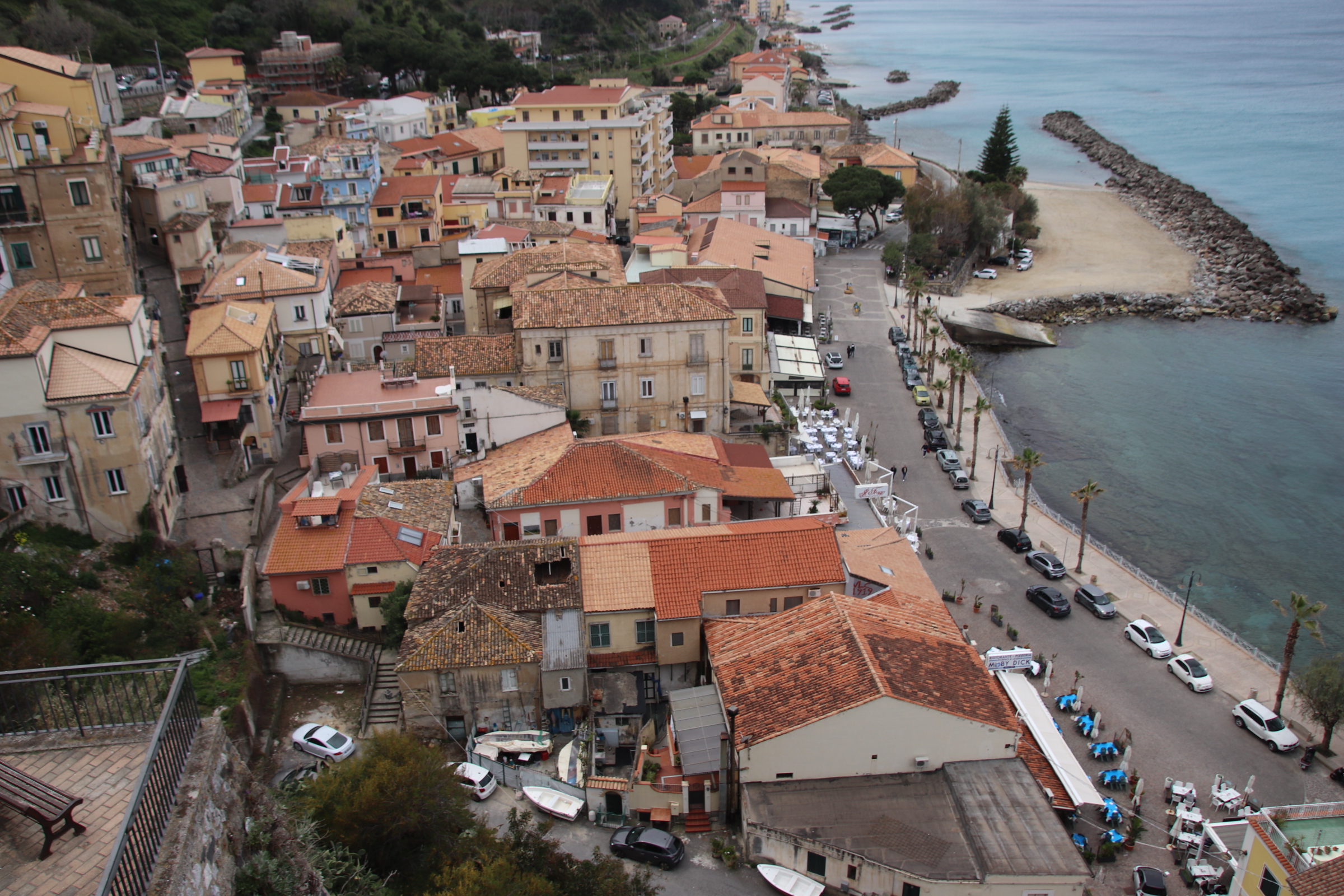
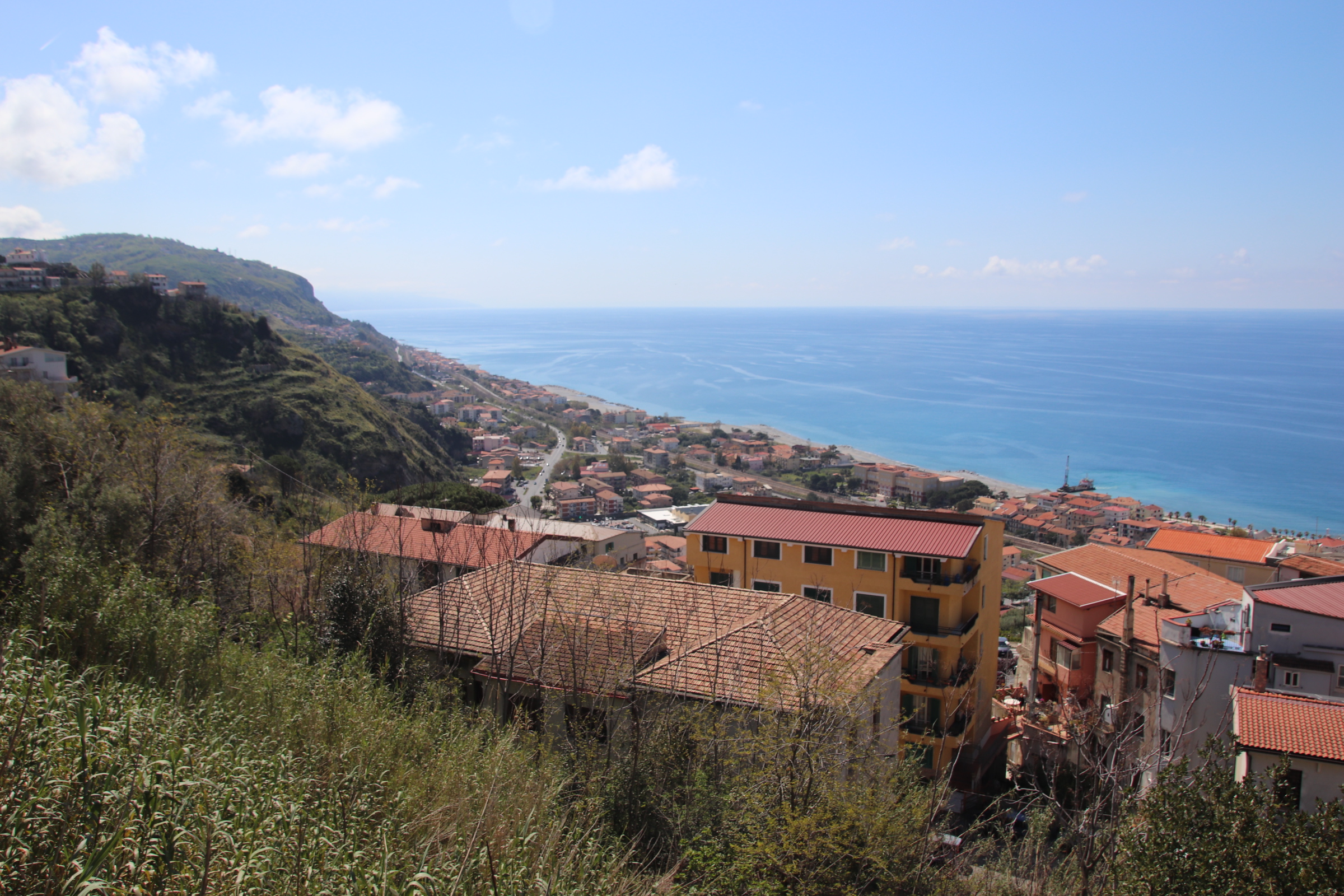
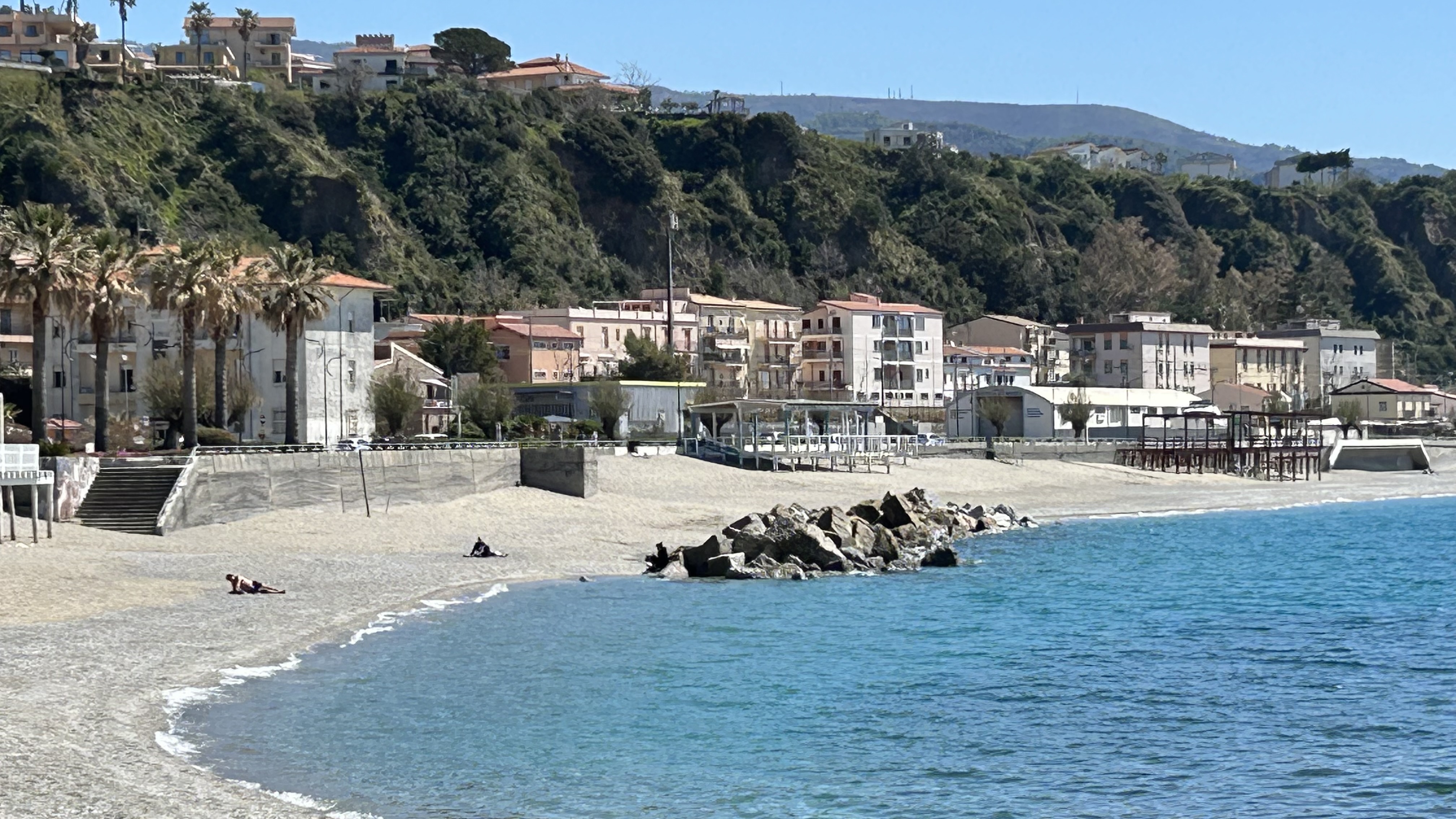
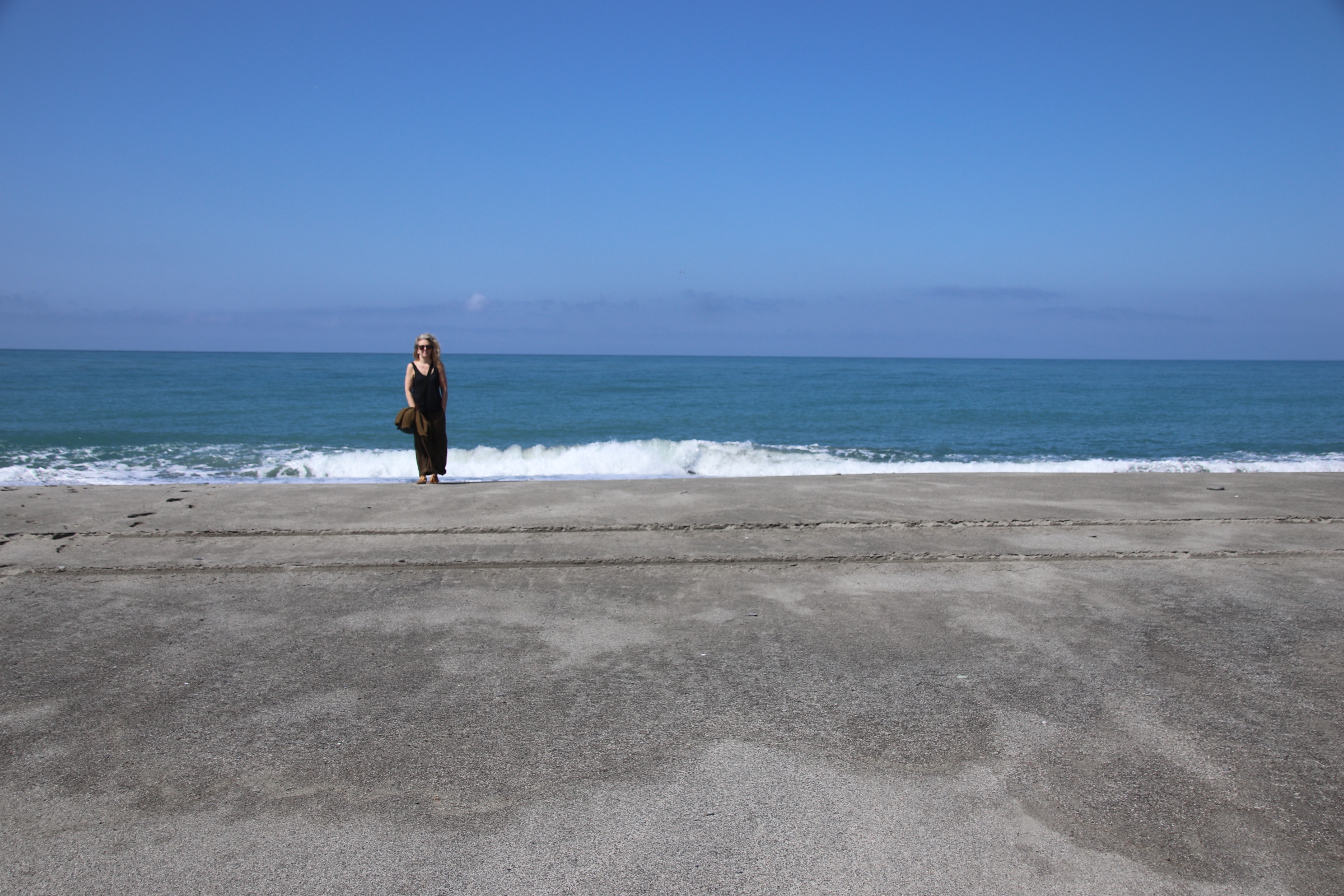
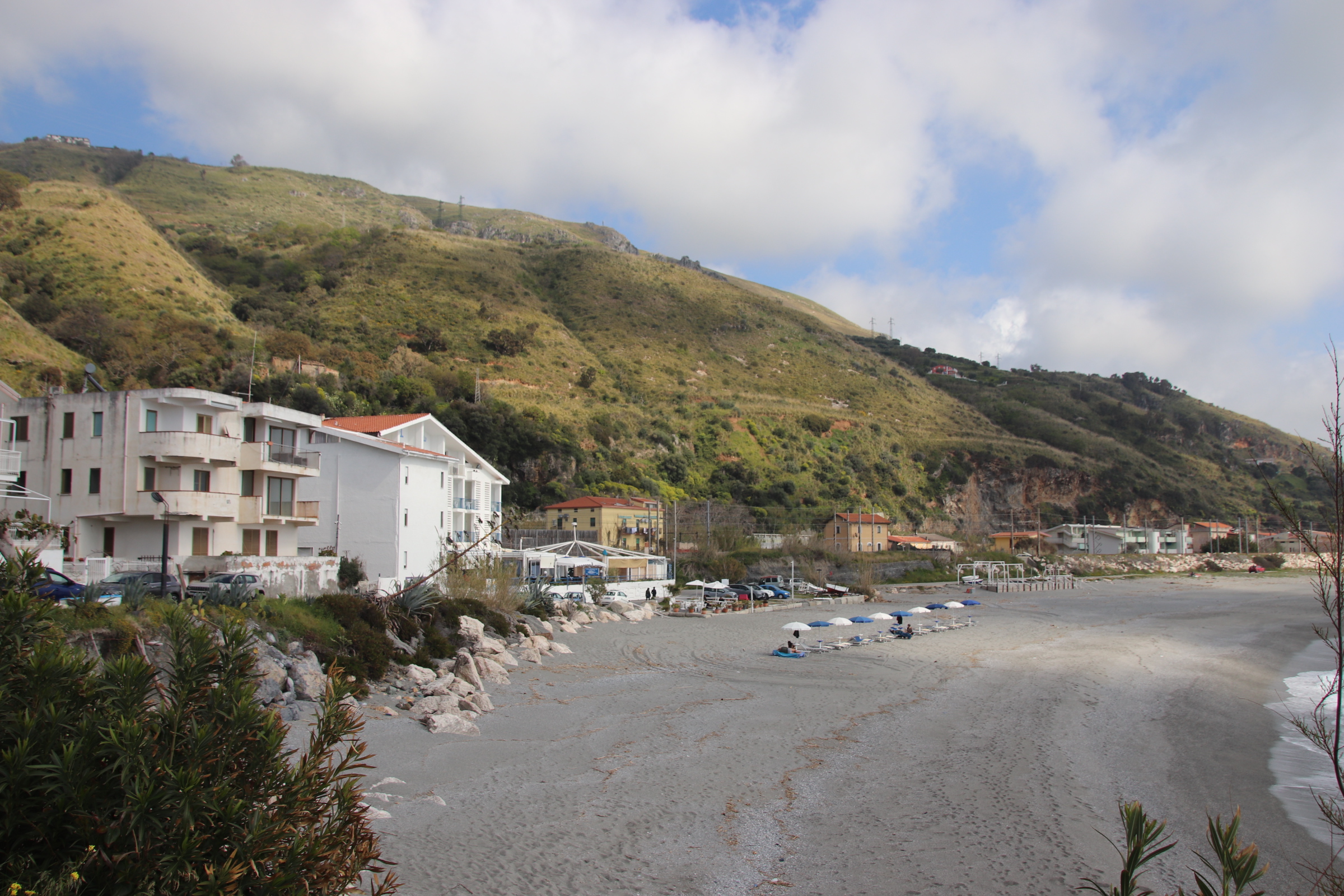
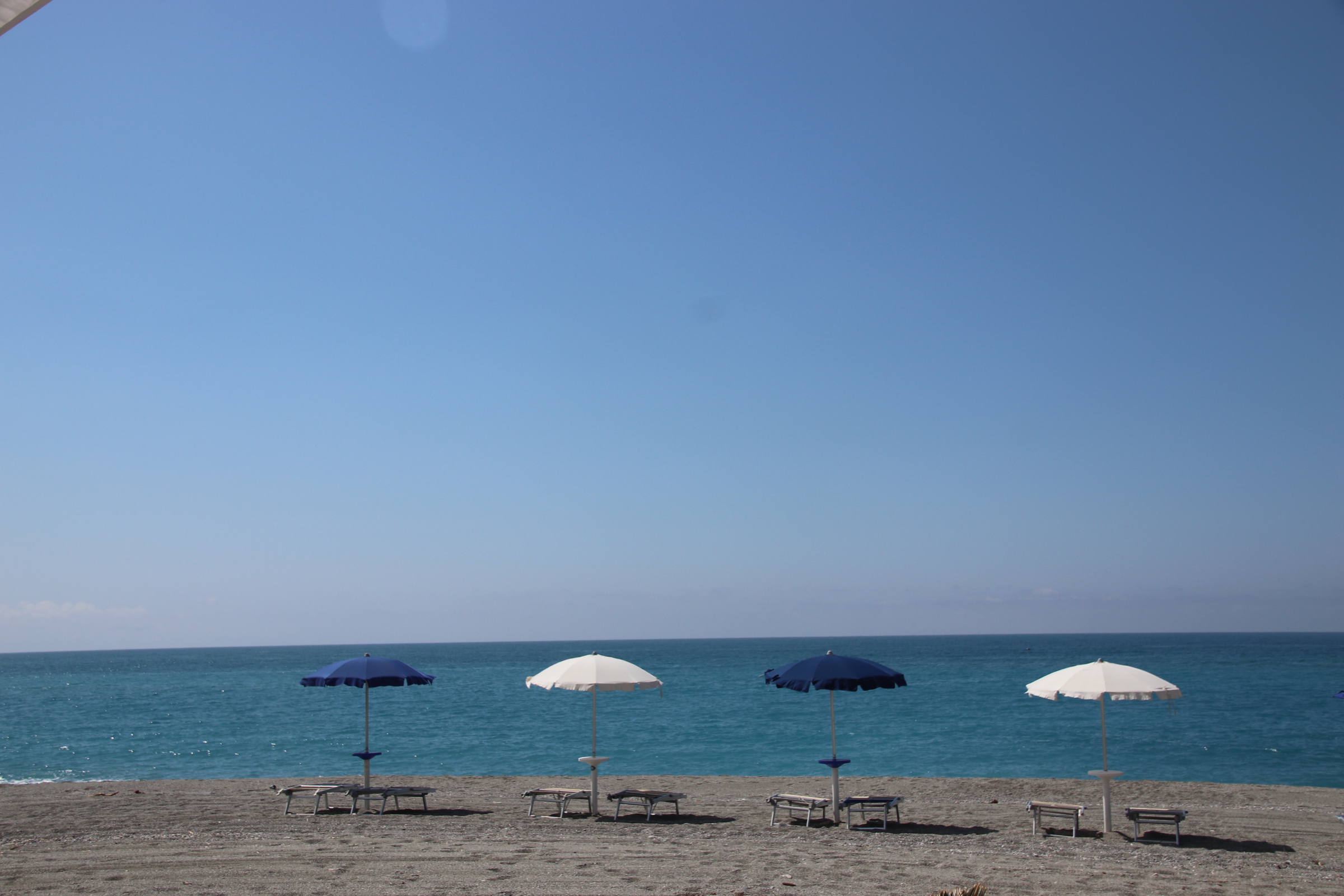
All the way down the Mediterranean coast, geological mice have nibbled perfect concave shapes between irregular ribs of rocky cliffs & crags of a huge slab of cheese creating a grater of soft-sandy beaches against gently lapping turquoise waters, backed with shuttered bars & apartments, restaurants & holiday clubs – ghost towns in paradise in April.
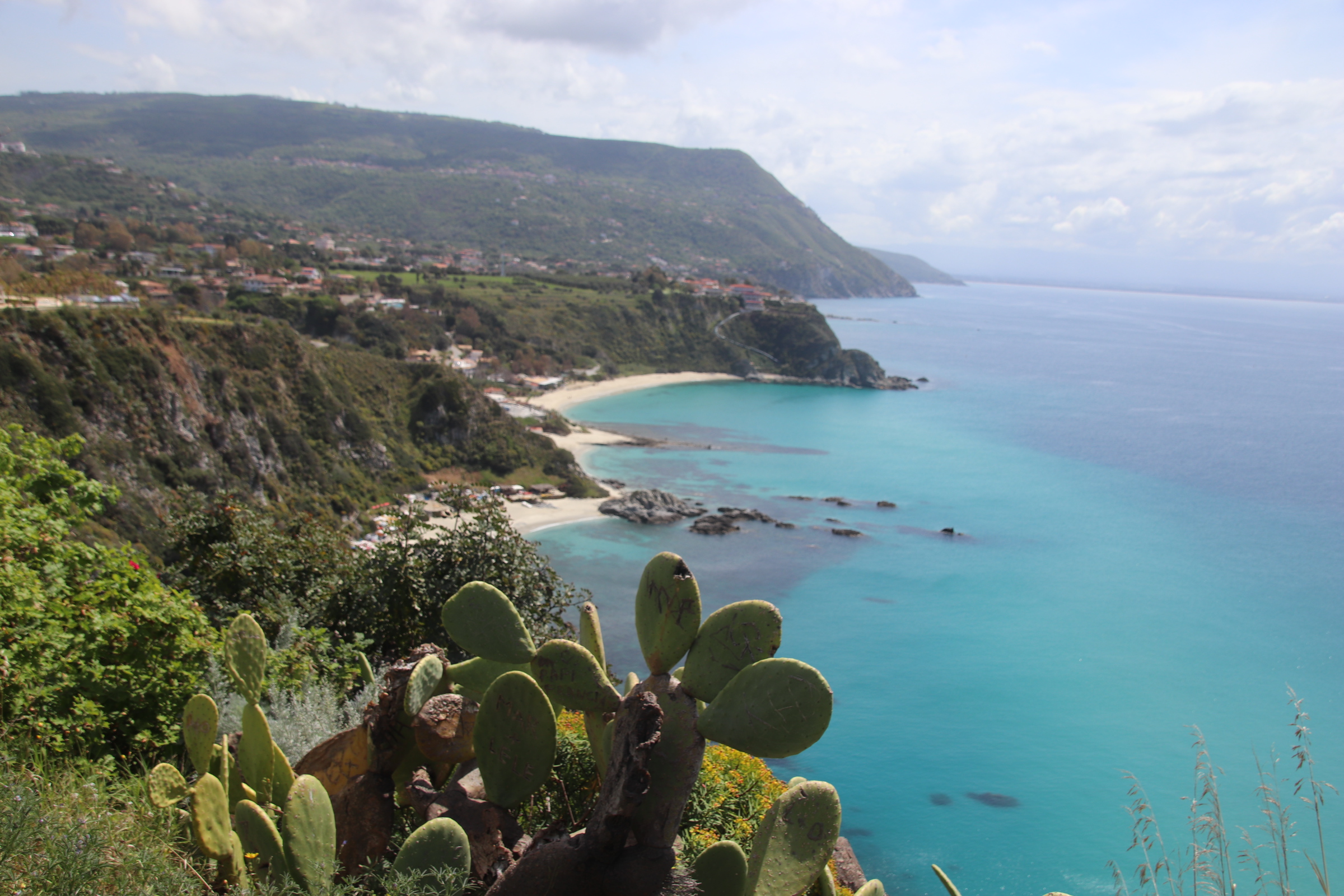
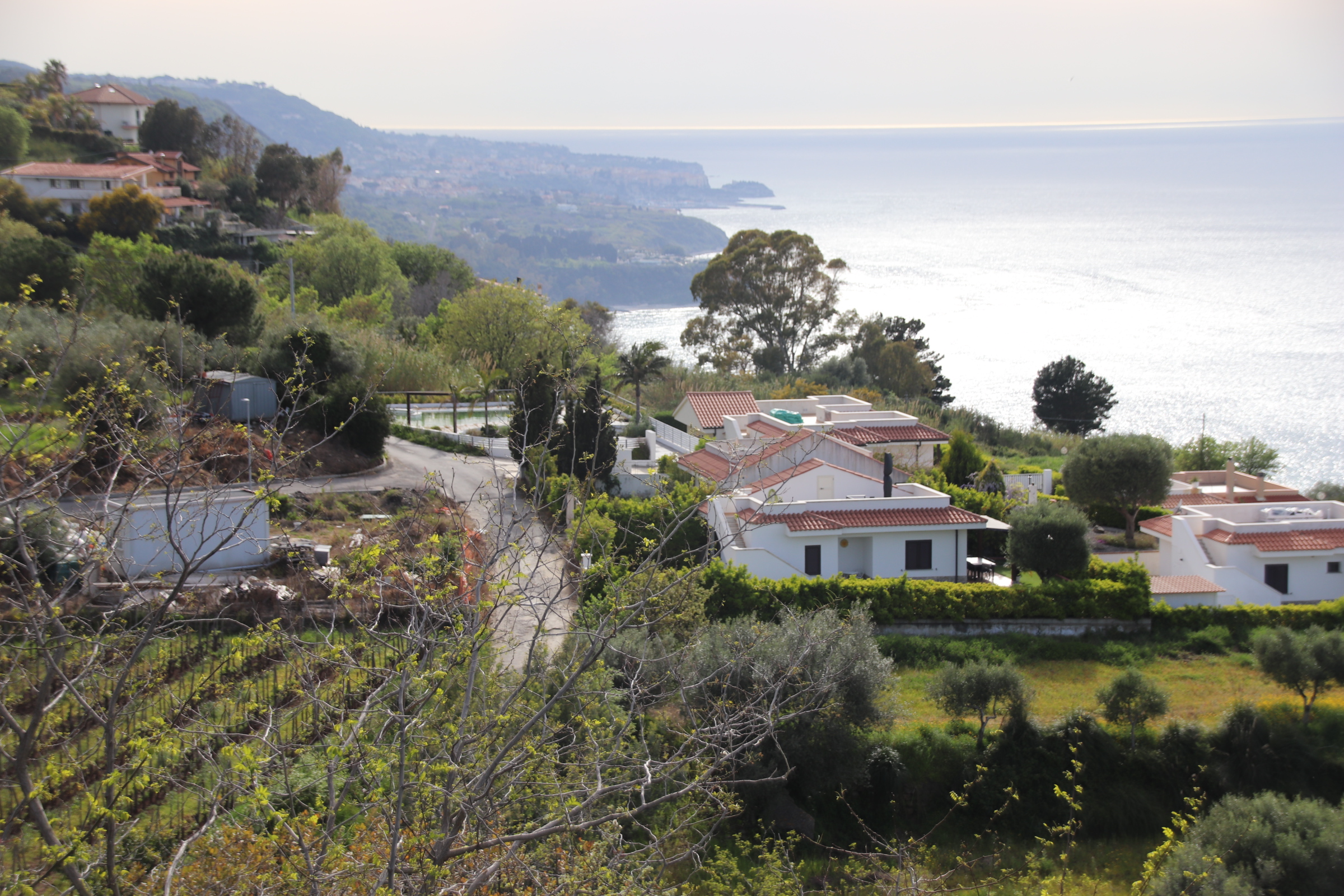
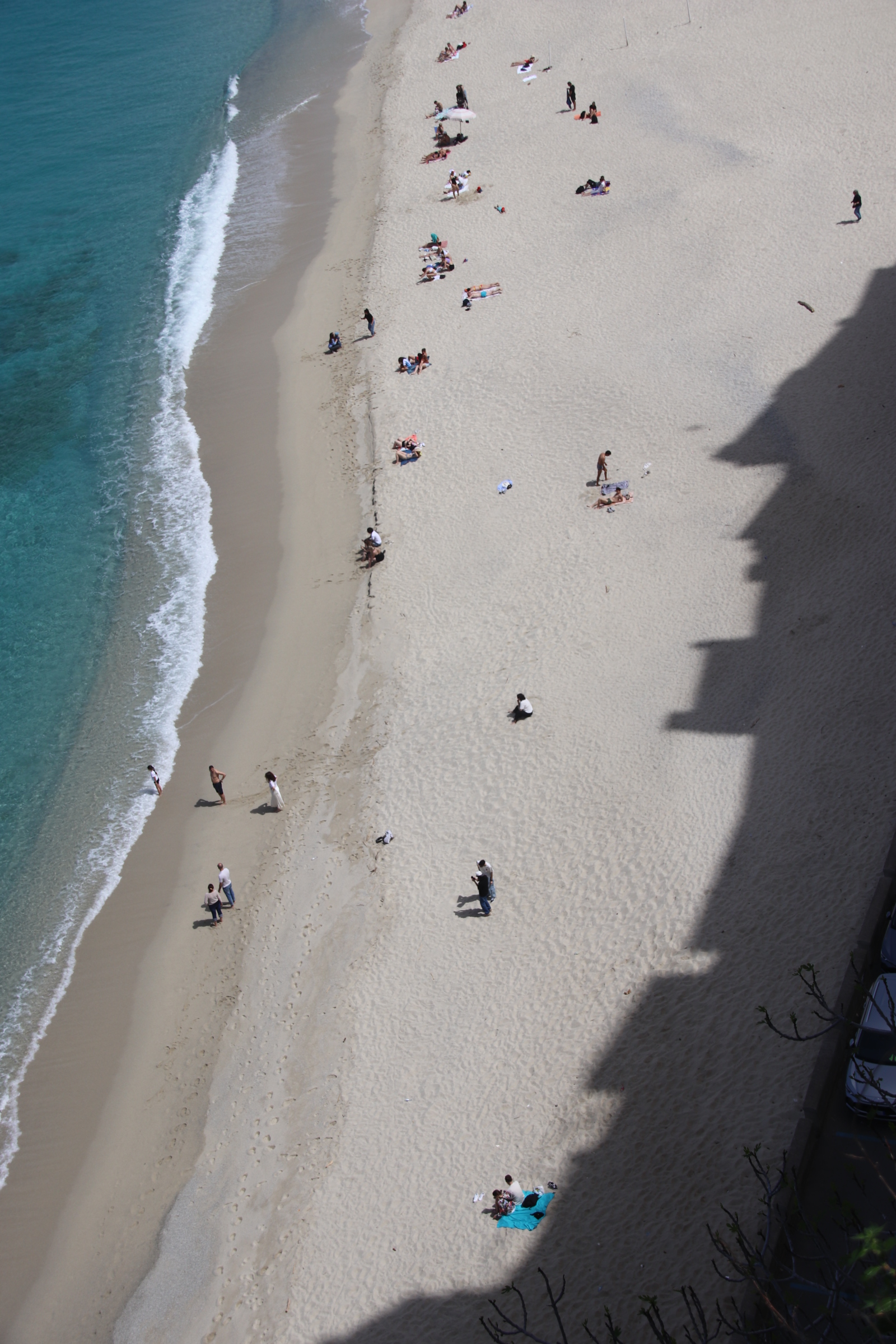
Down below us, the beach of silver soft sand glistens in the sun, waving down those who overlook the sea from their newly fashioned villages & hamlets, their renovated villas or freshly built holiday homes, even the increasing number of compact being-constructed, summer estates or campuses that have spread throughout the foothills.
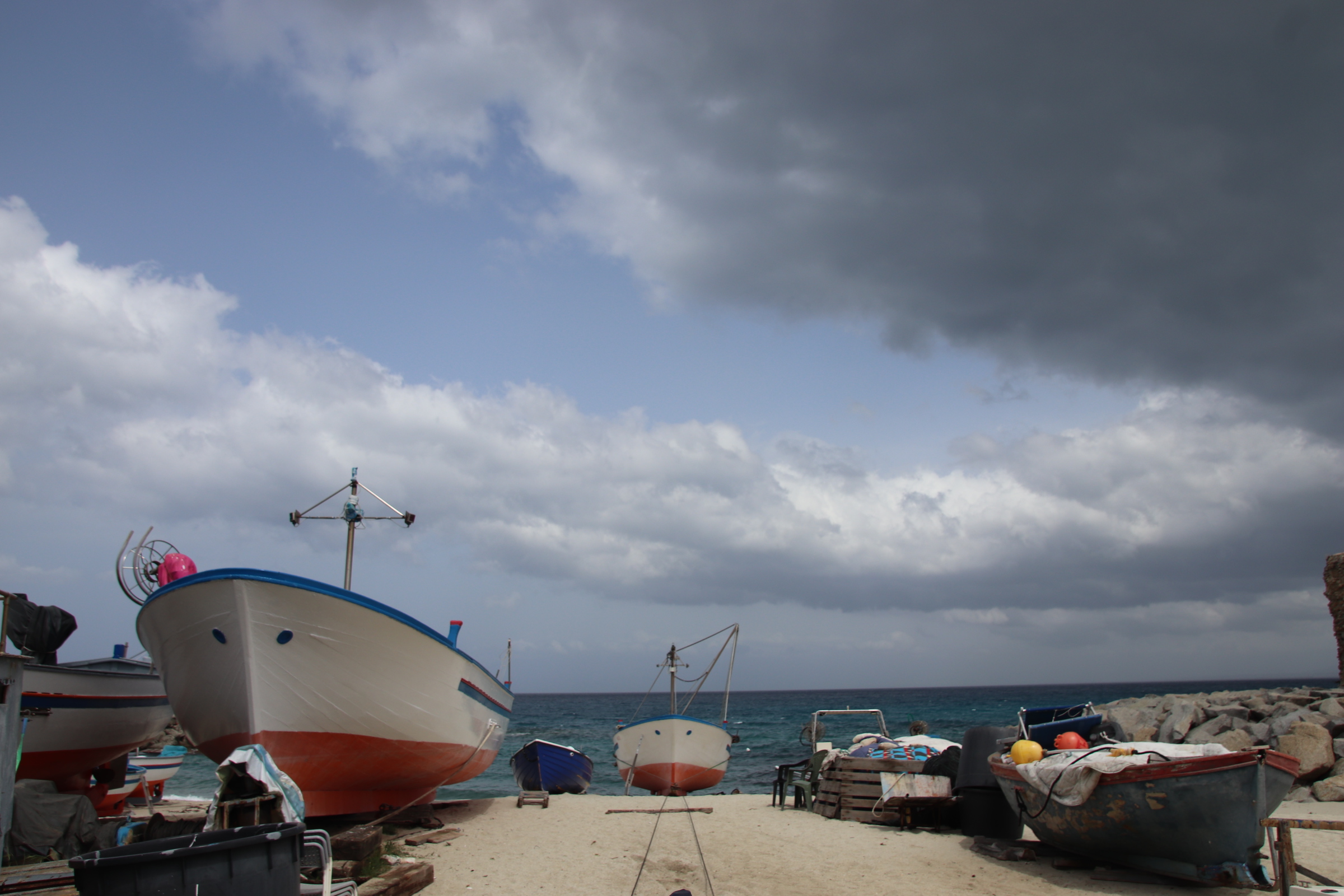
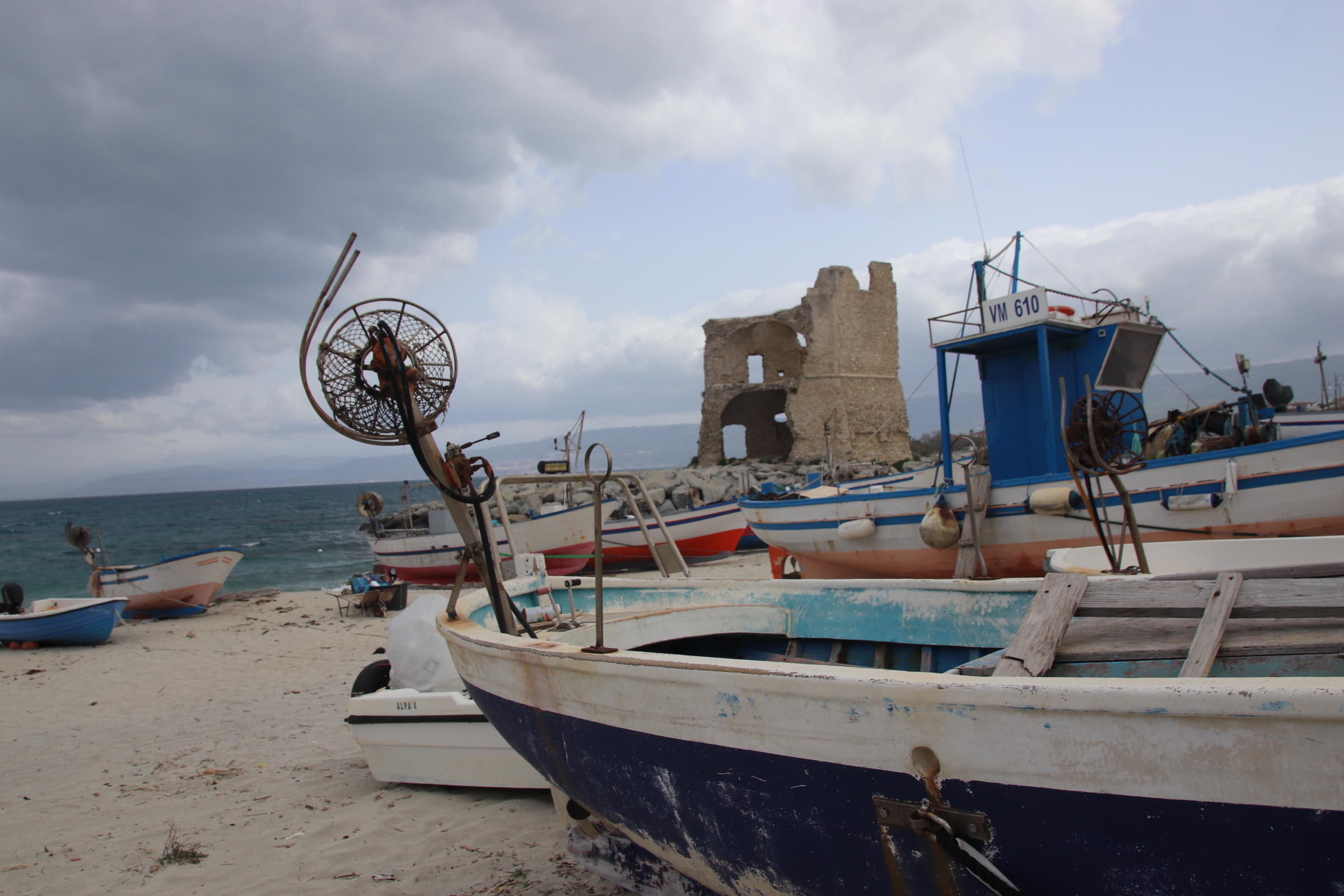
Briatico is shell with a few random cars, the odd lines of washing & a tired, semi-deserted supermercado indicating any human life for this time of year. In summer it must be heaving. Its one saving place is a patch of sand with a collection of fishing boats drawn up on the beach with some ramshackle sheds at one end & a ruin of a watchtower at the other, waiting for history’s Saracen invaders.
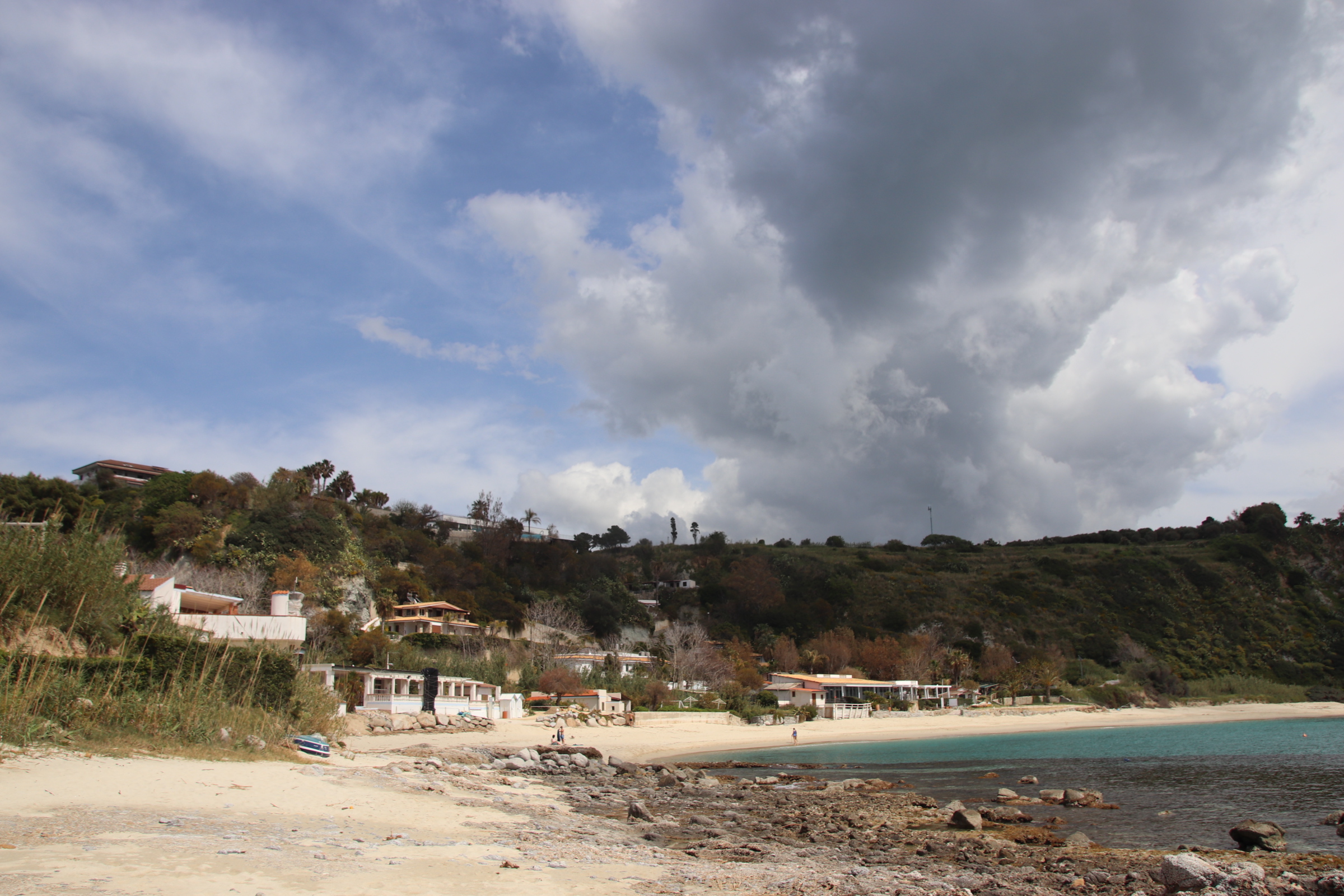
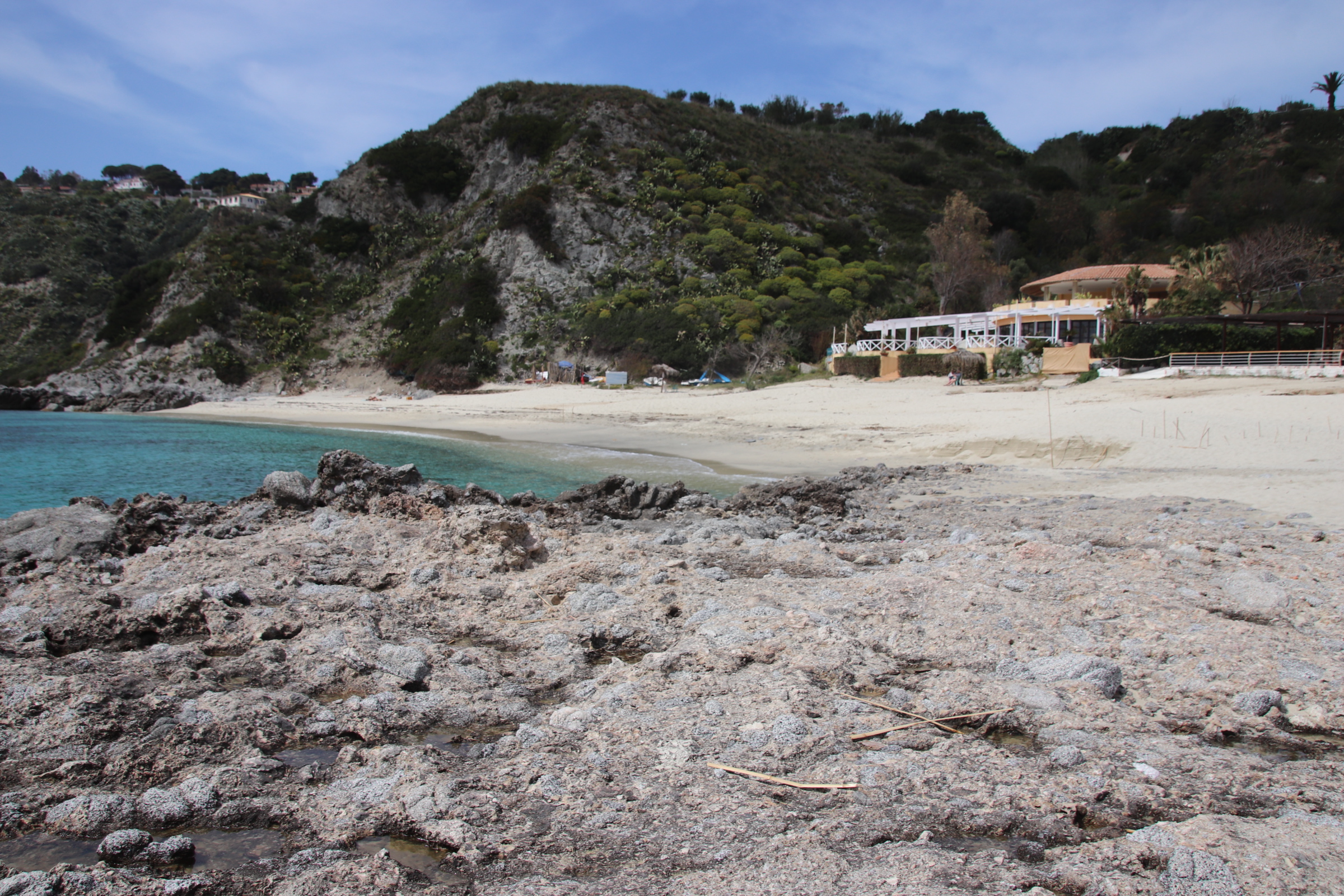
Below Tropea, numerous small villages, seemingly deserted in April, dot every cove. In the summer months they host Italian holidaymakers in particulard. Brave the skelter of a lane down to the beach at one such village, Ricadi, negotiate the resurfacing team with their huge lorries, their steaming, tar-laying machine & their creaking, beaping bulldozer who will stop for no man but just beckon you past on their freshly-laid tarmac, & find a beautiful, paradisicle beach of soft sand, eroded pools of volcanic rocks, backed by palms & luscious vegetation & a few empty, boarded up beach bars. In the far distance a few figures wander the empty sands or settle to appreciate the isolation.
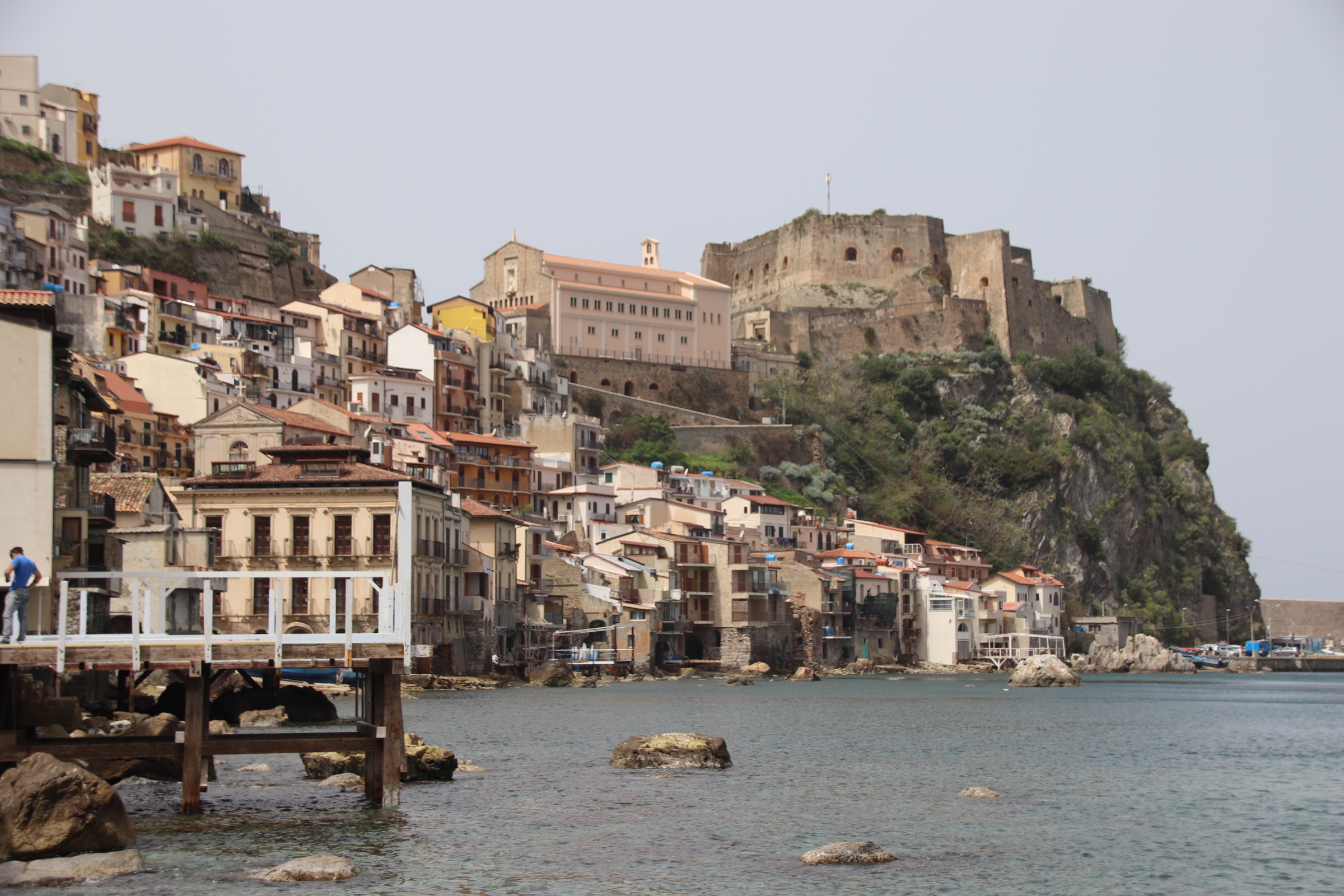
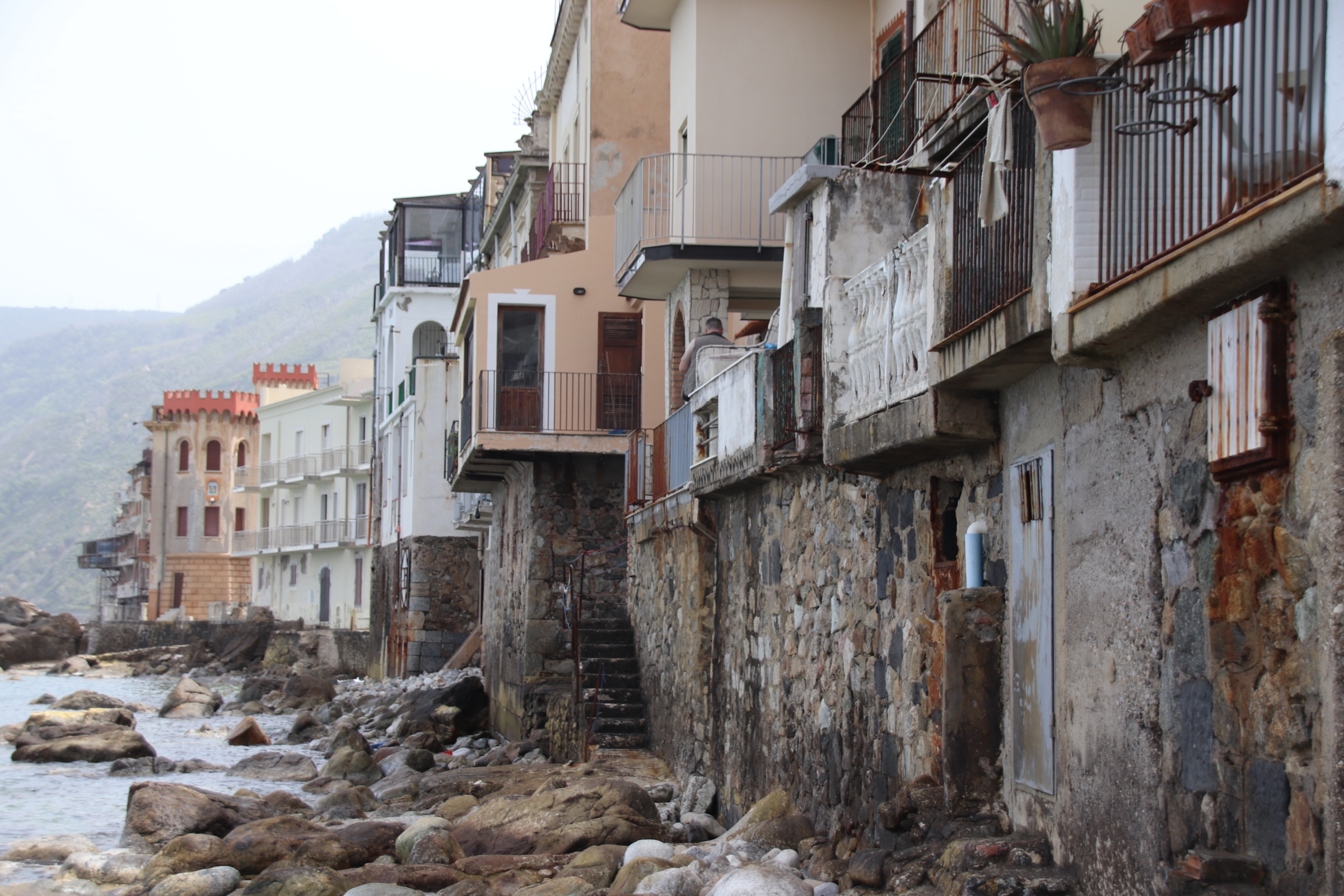
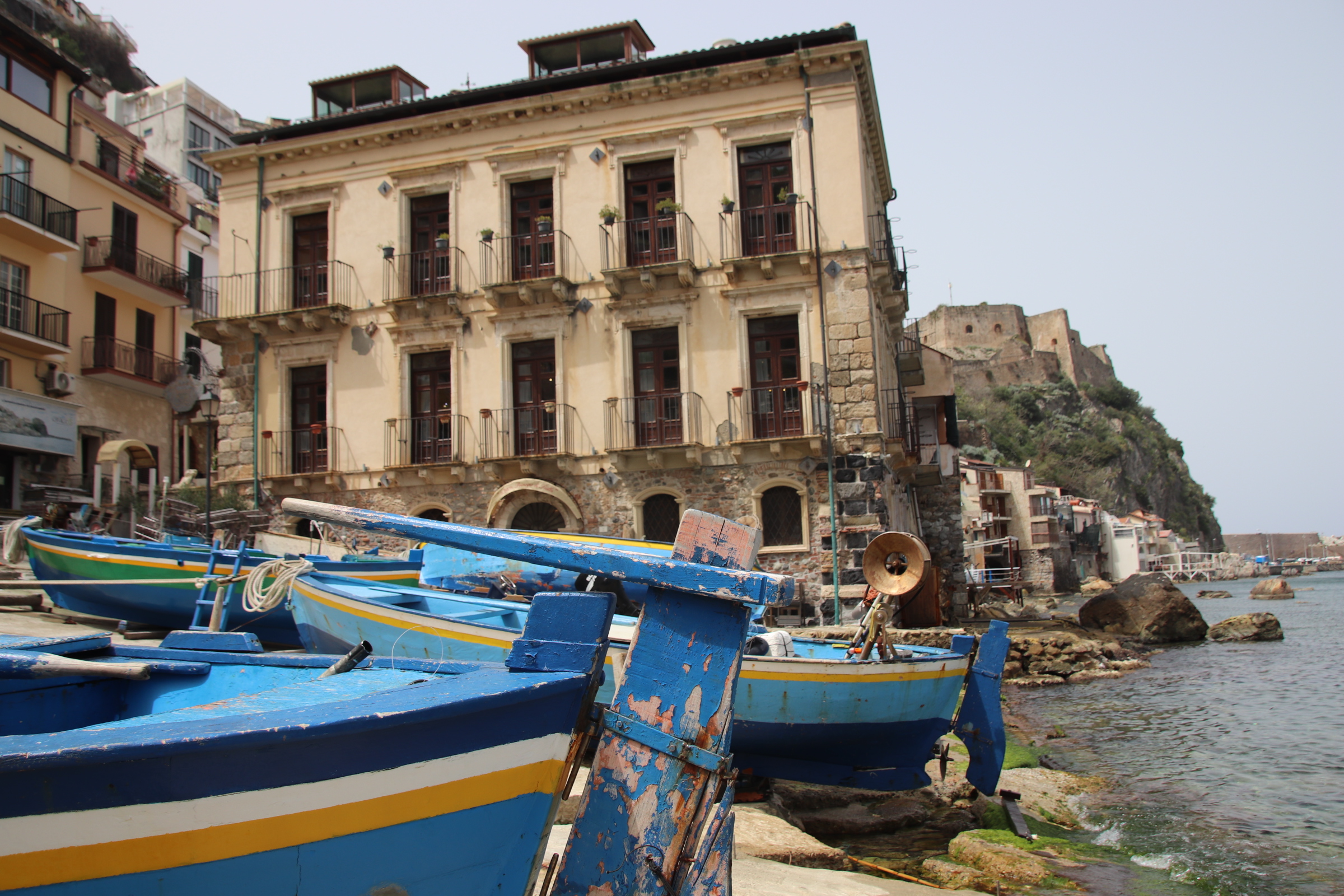
Scilla was founded by Tyrrhennian Sea pirates around the 5th century BC. Swordfish boats still go out from sloped launchways to bring home their traditional catch to be cooked & served in the tourist restaurants that stand on covered platforms up to their knees in the sea.
Be blown away by Tropea

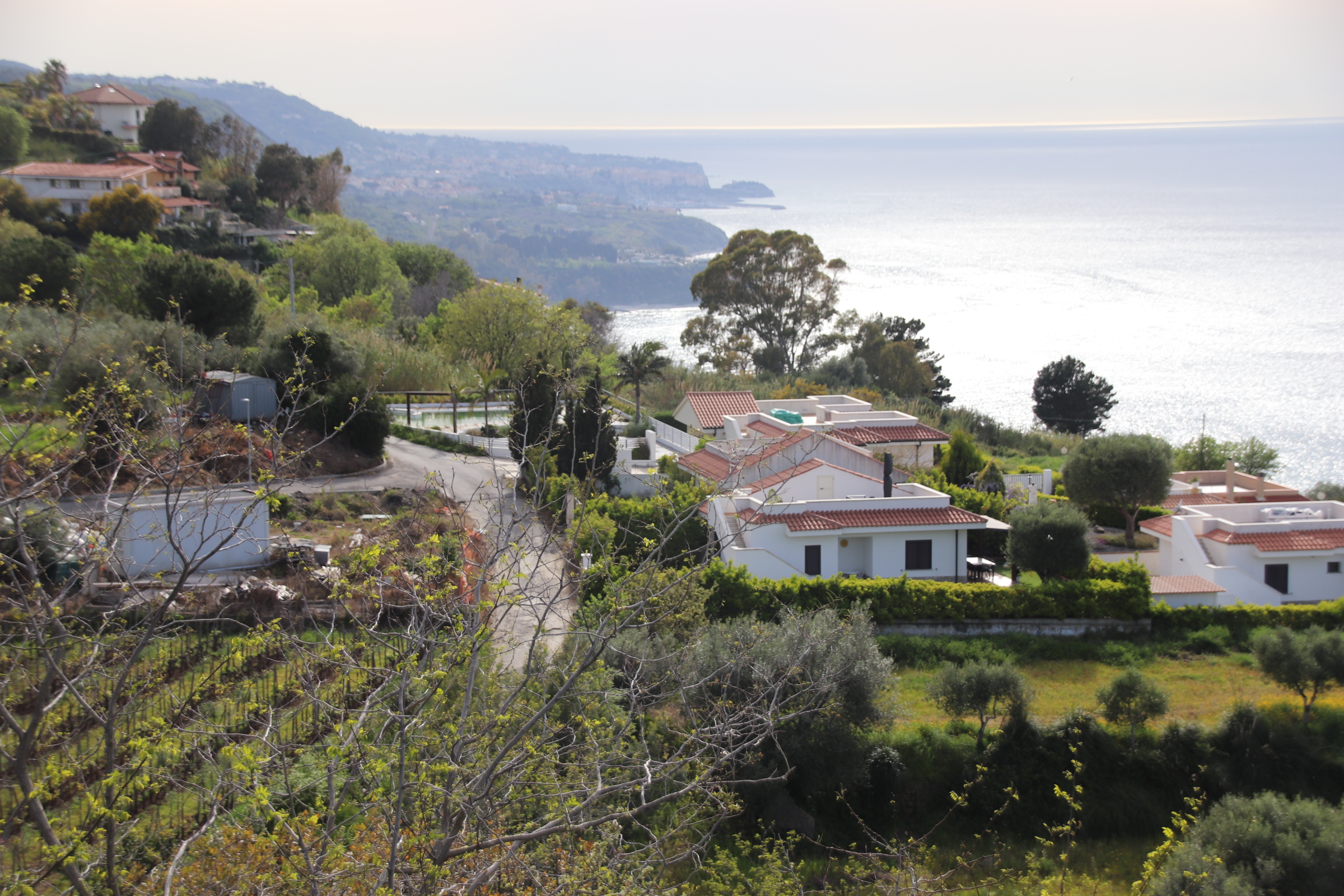
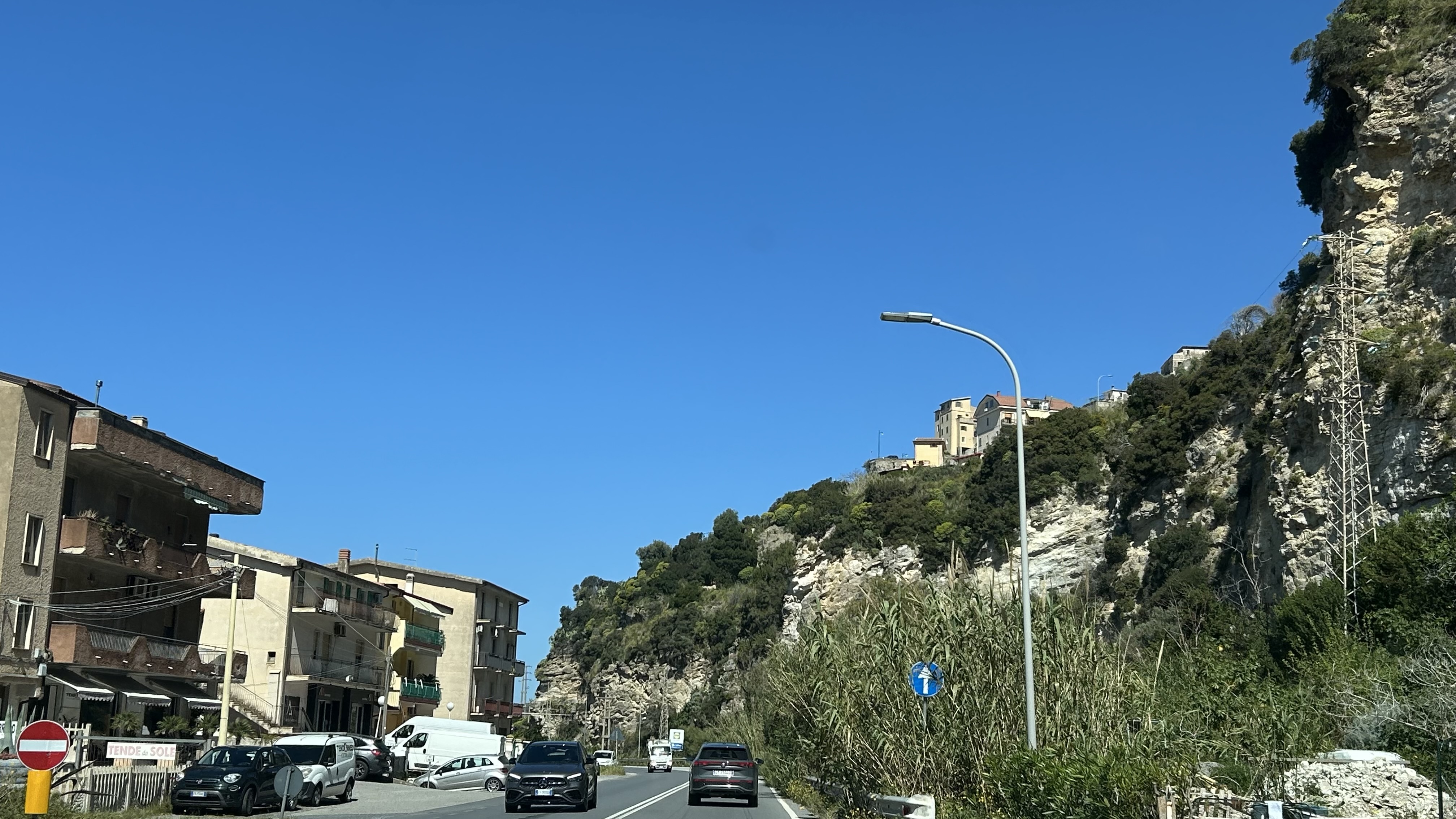
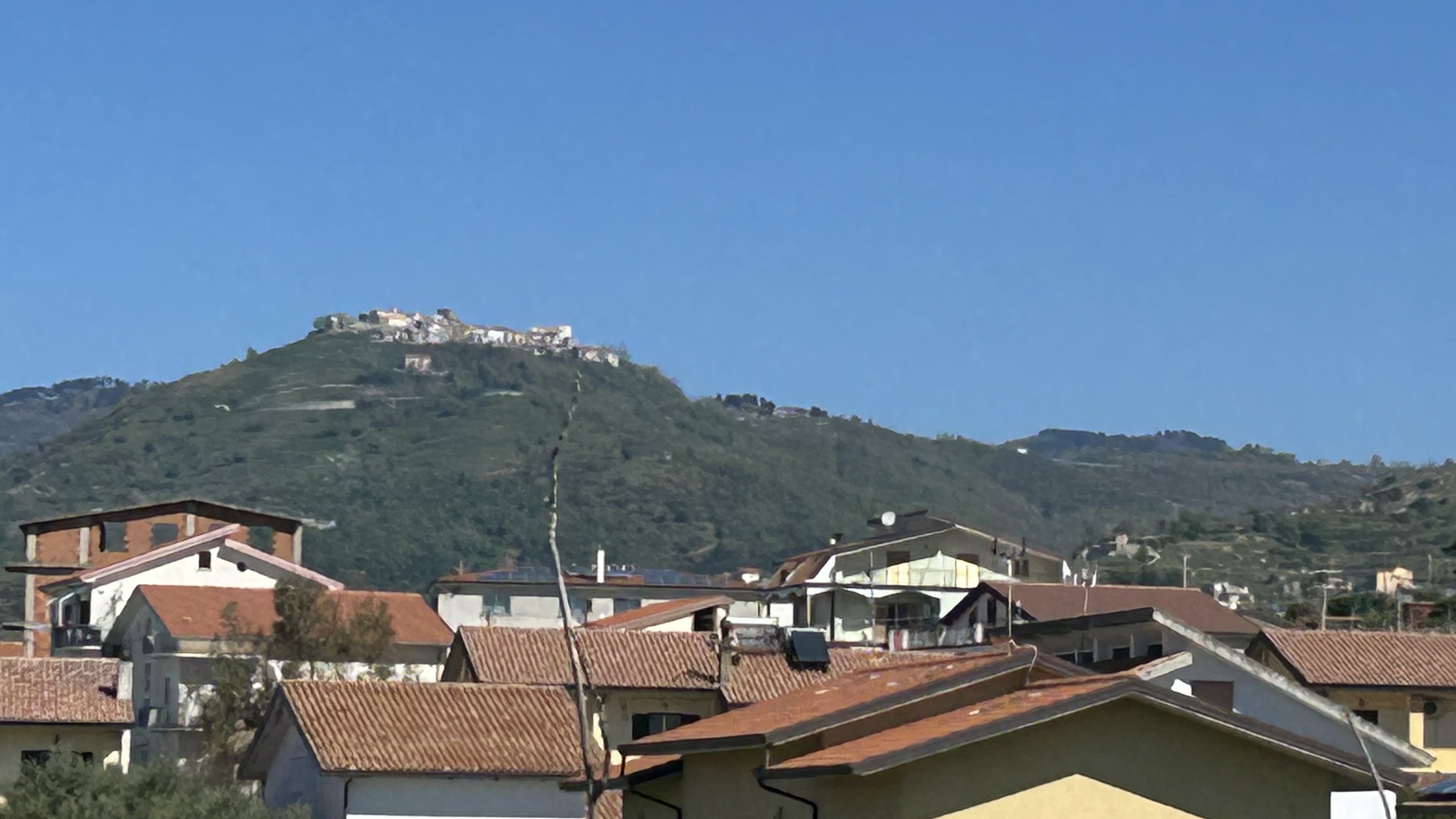
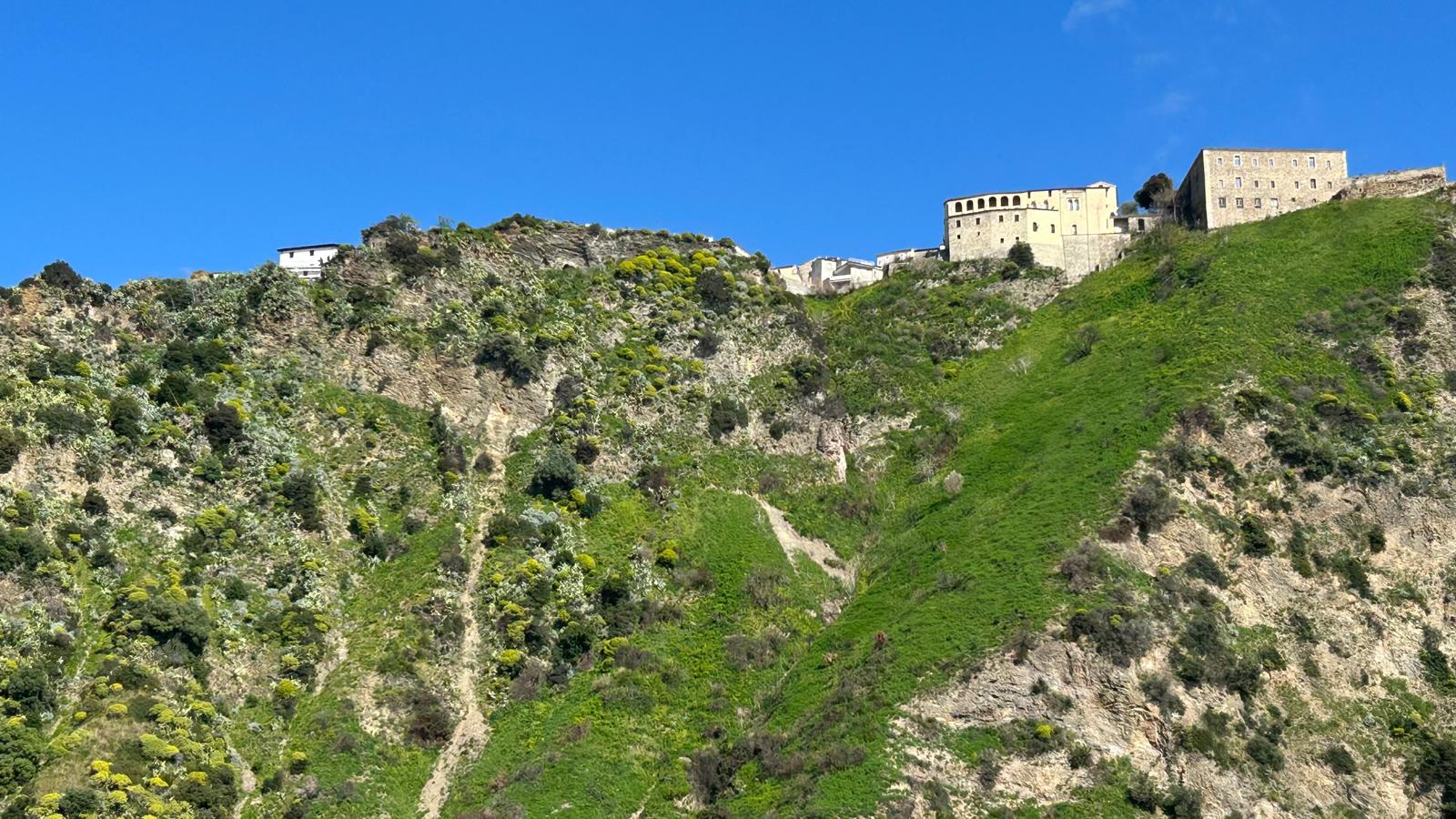
This is the view from the terrace of our new abode, in southern Calabria with the town of Tropea on the high cliffs in the far distance. It overlooks the Mediterranean coast where wooded cliffs & crags separate crescents of soft sand all the way to the toes of Italy’s stilletoed foot. This part of Calabria bulges out into the sea in a huge big lump leaving the mountains a fair bit inland & the course of the main road & railway still driving southwards in a straight line well away from the coast. The fertile, soft valleys & sharpish ridges of these foothills are covered in a variety of textures & shades reflecting the fresh greens & colours of spring growth. The effect is a landscape of vibrant, freshness, highlighted by lilac wisteria & bright yellow gorse & laburnum and emphasised by shapes of grasping foliage & bubbling canopies. So different to other parts of Italy with quite an individual feel to it.

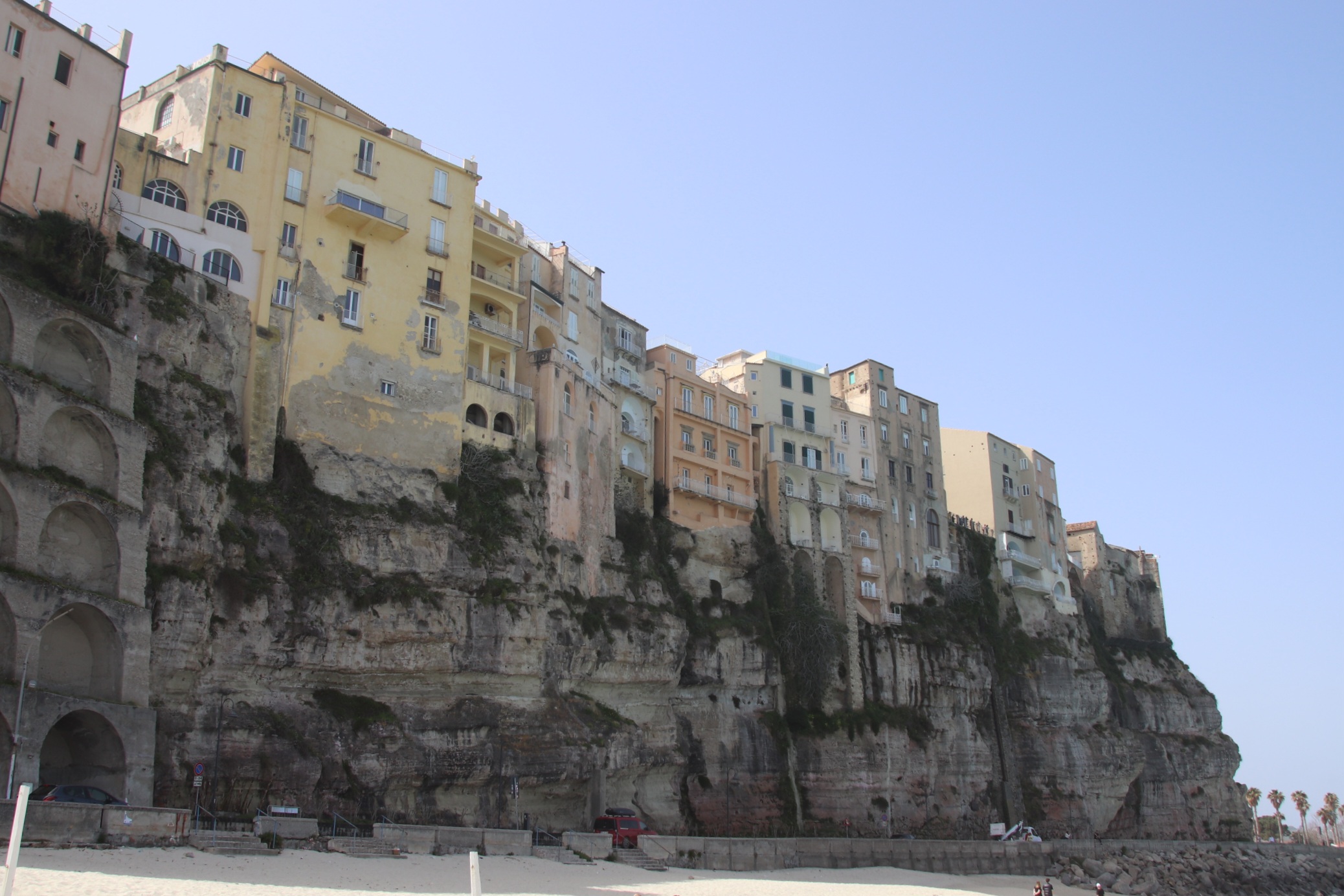
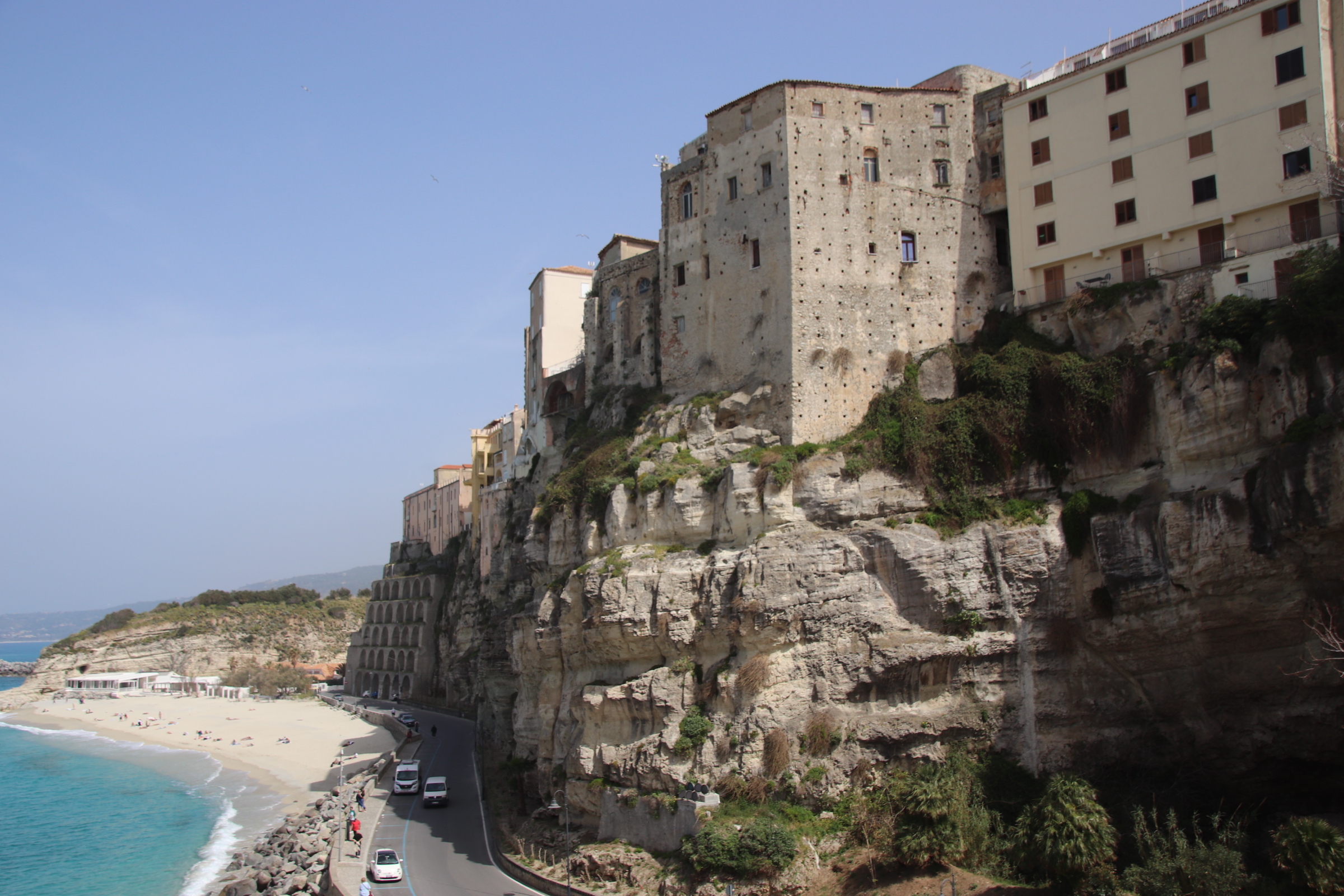
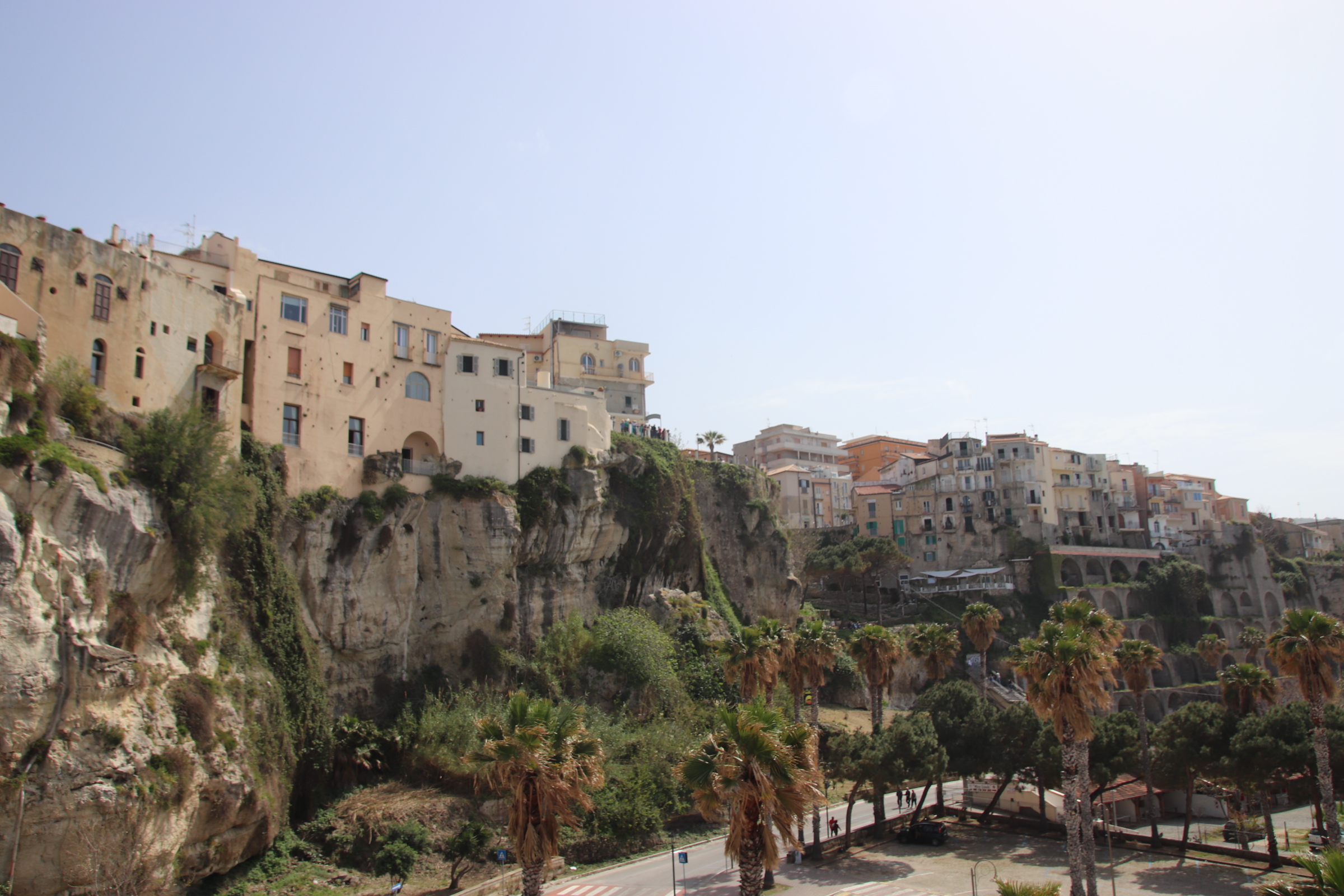
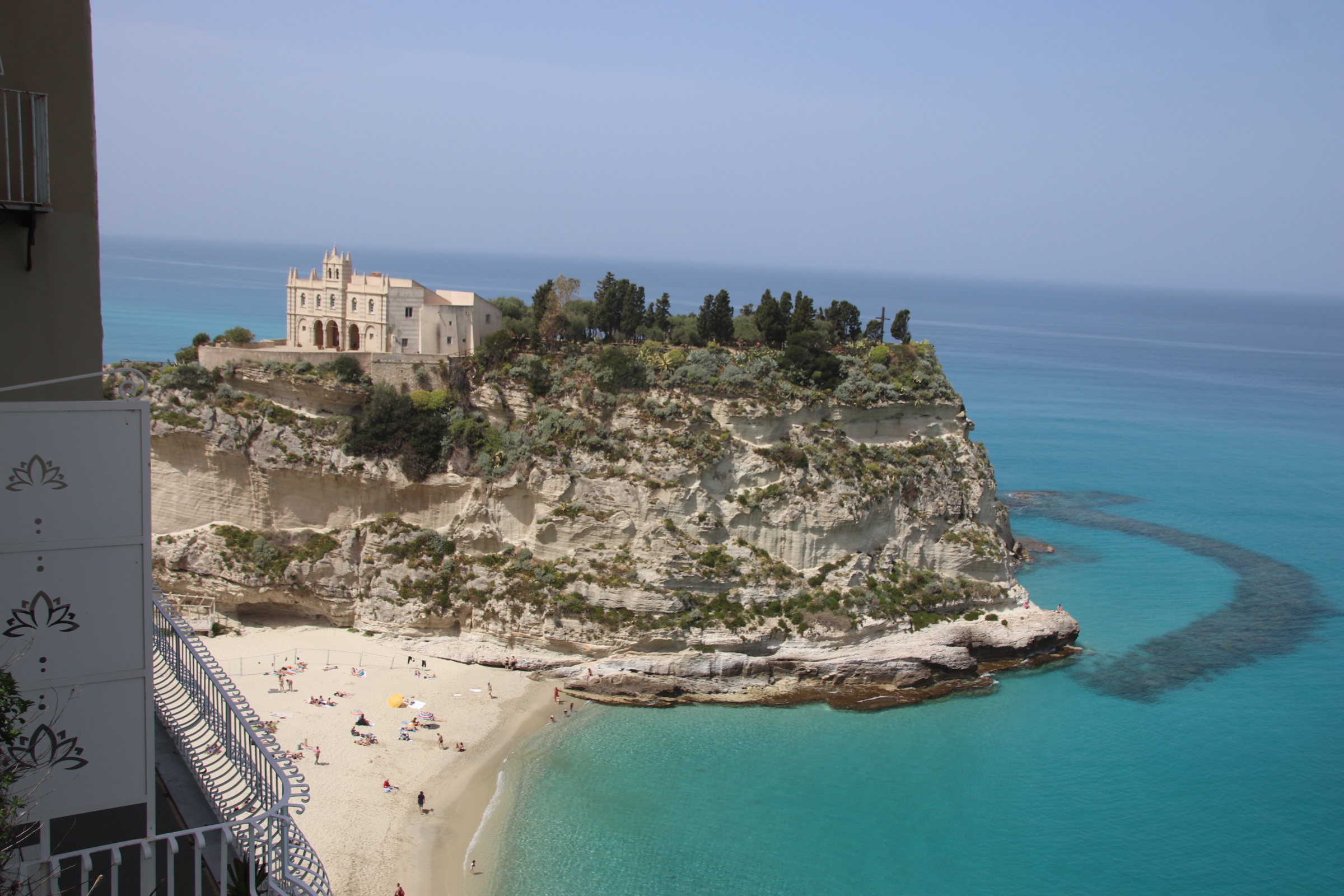
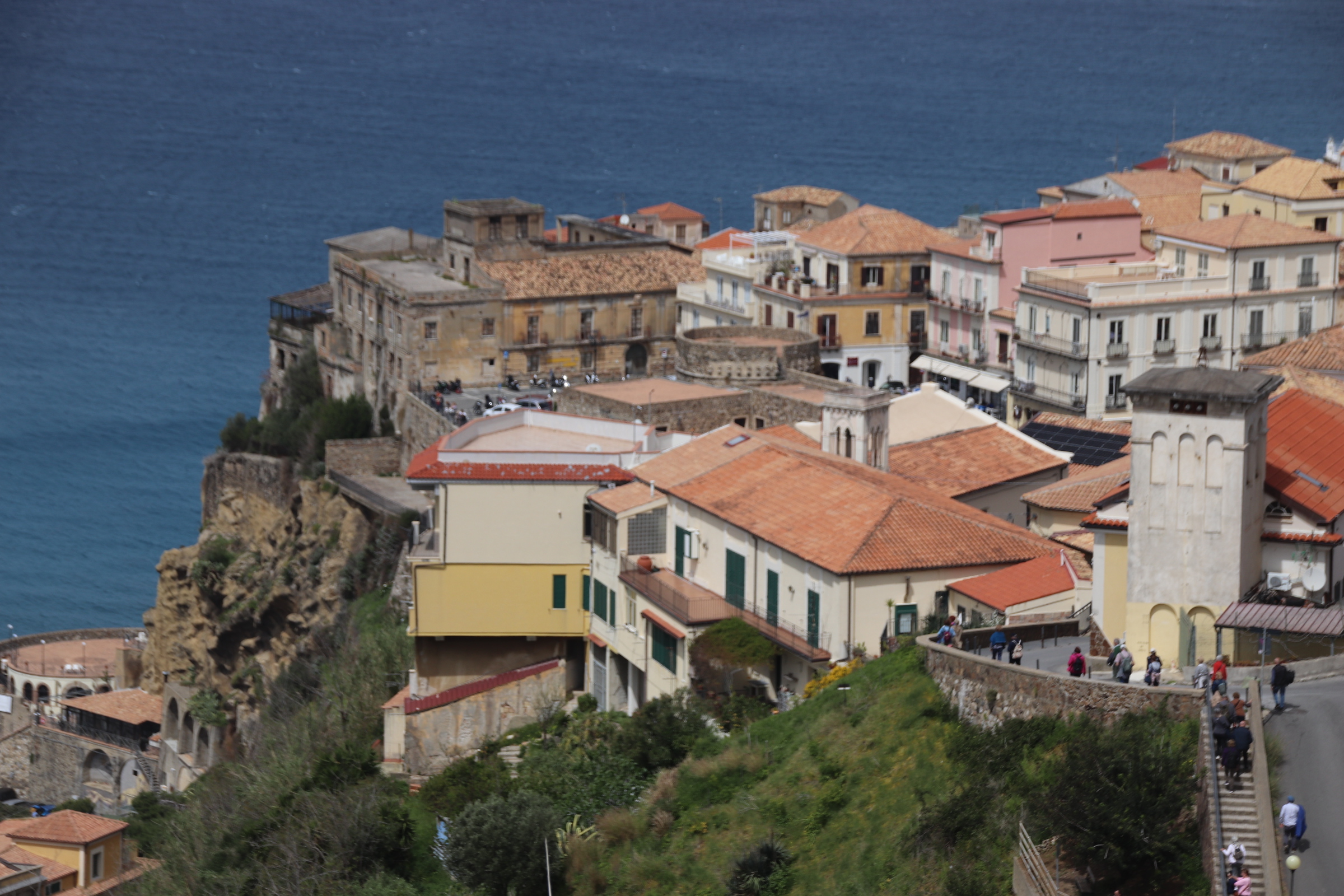
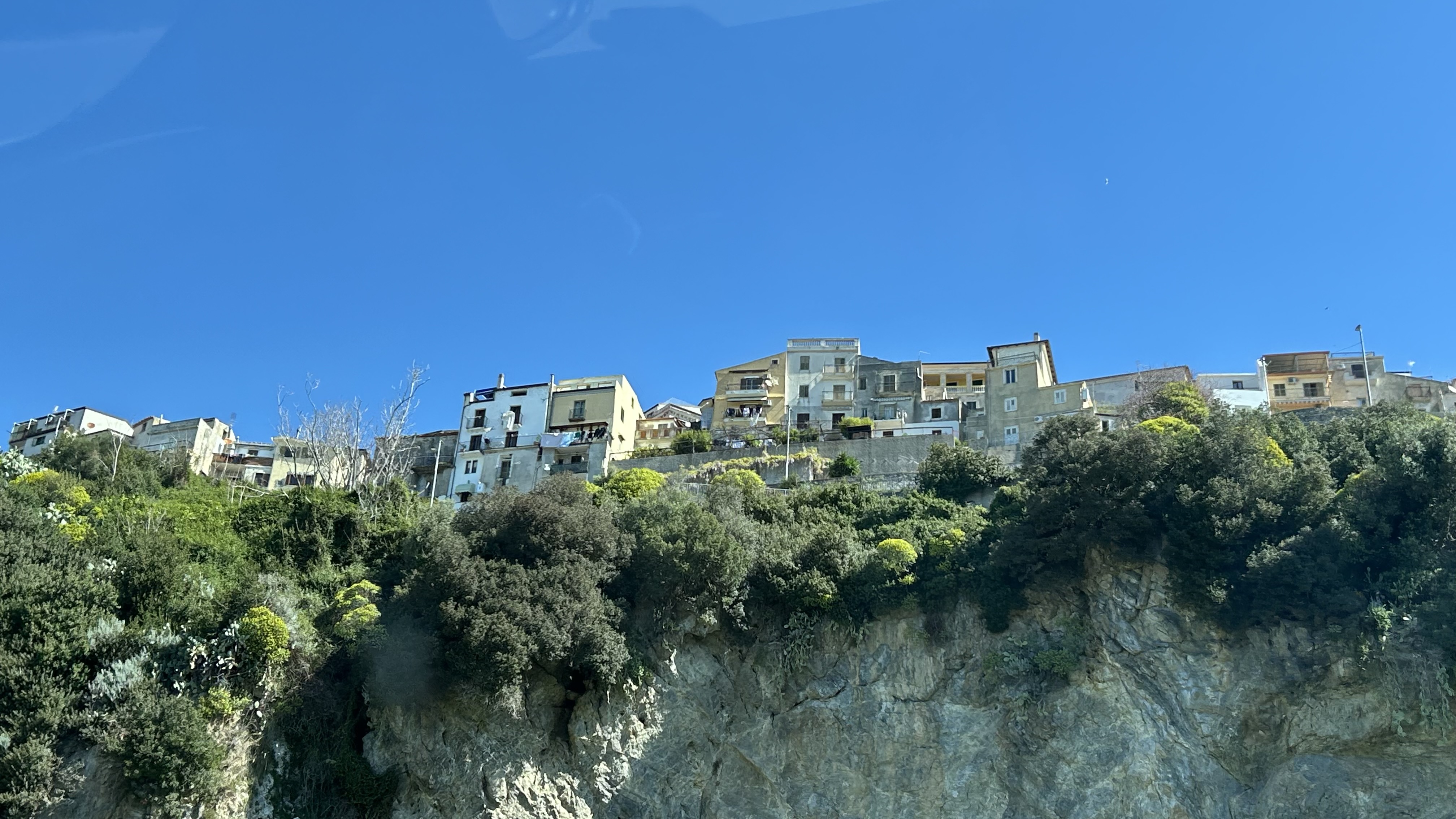
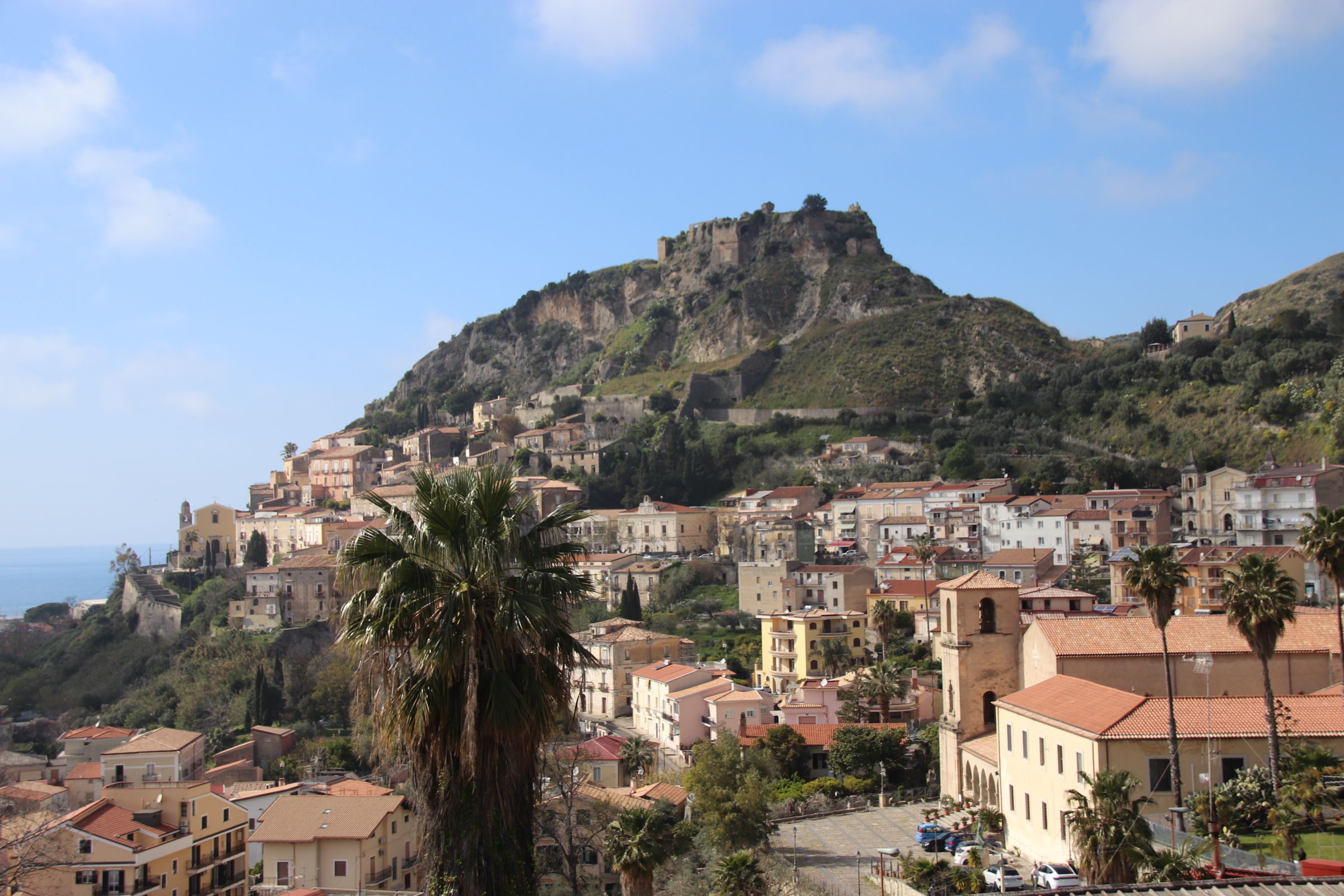
Built on high, perpendicular cliffs, Tropea was established to protect the harbour of a Roman trading port in the 1st century BC. It prospered during medieval times & became a cultural & intellectual centre developing its own character as a royal city-state. In the following centuries, noble palaces & villas were built here, many of which still have an impact on the skyline today.

Hard-faced facades of historic buildings merge seamlessly with orche-stoned cliffs, standing with such strength, & contrasting with the feminine beauty of the silver beach & turquoise, white-horsed surf below.

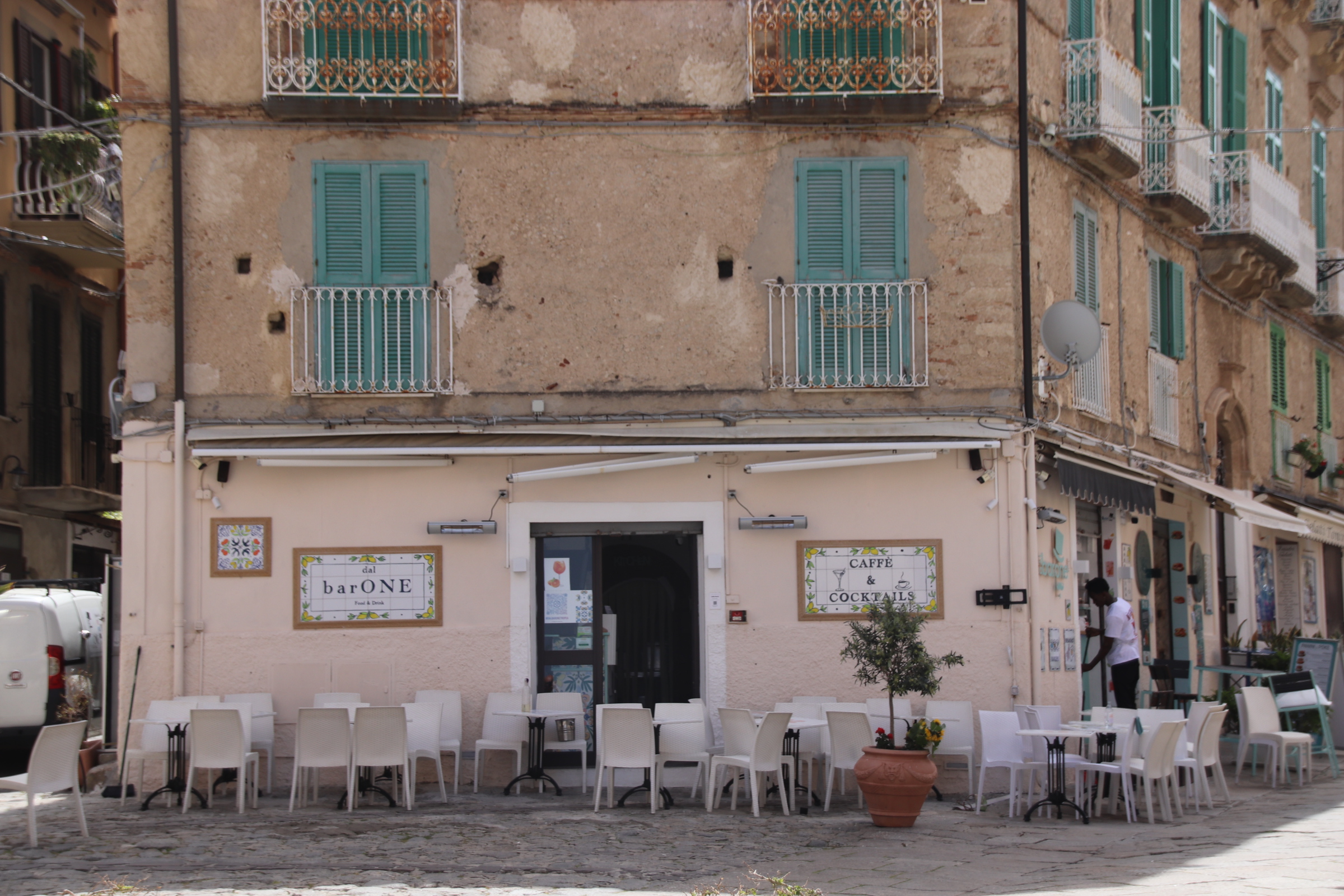
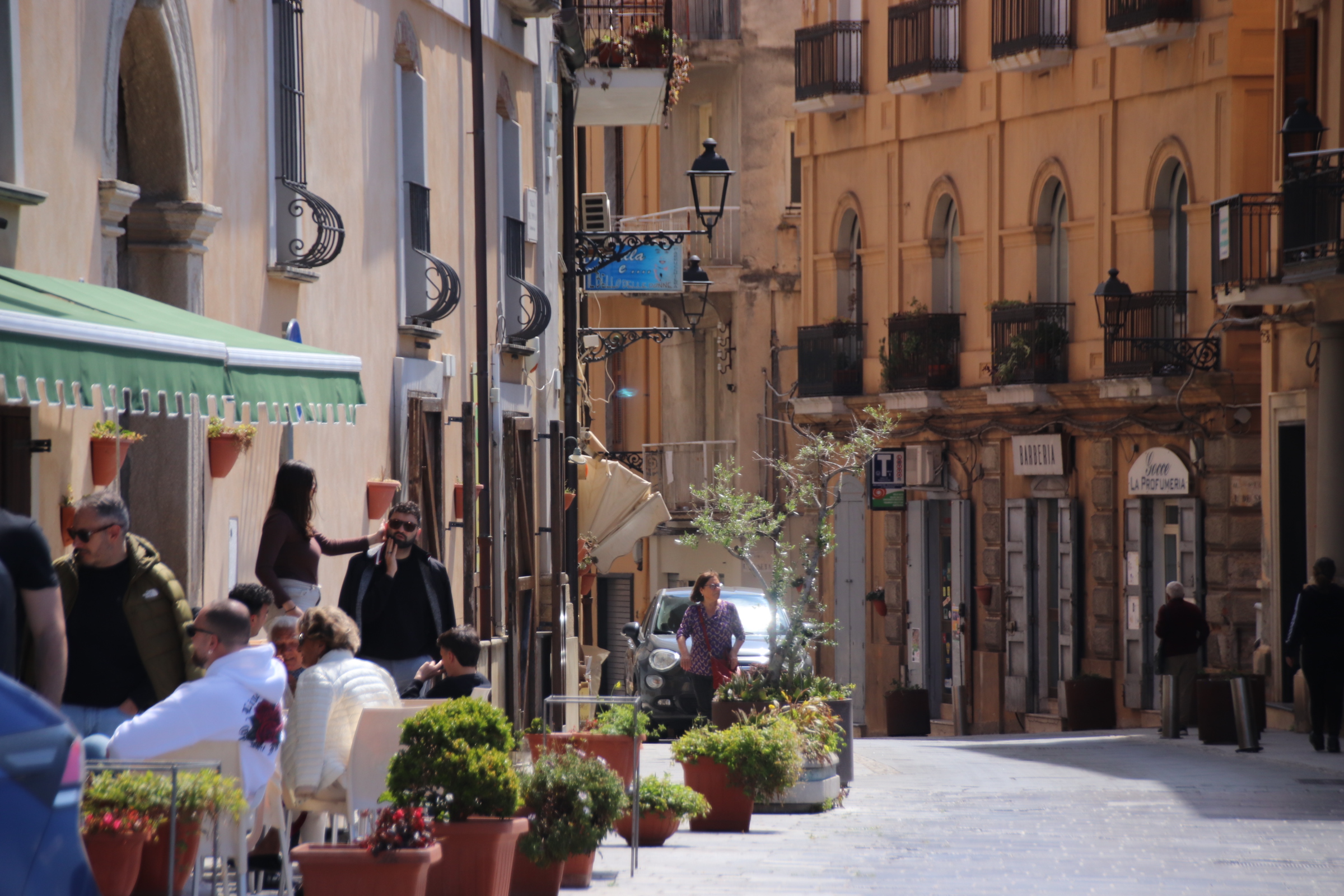
Behind the intrepid might of these power-blank facades, only penetrated by sets of muscle grabbing steps or occasional gaps of odd viewing platforms, a jumble of narrow, cobbled streets & attractive piazzas make up the historic centre of this fascinating town. Filled with cafes, restaurants, independent shops & classy boutiques it has a strong, attractive personality of its own.

Sunday in Pizzo

It’s Sunday & a drive south. The coast & the railway are reassuringly present for much of the journey. On the left, the mountains, with their collections of human habitation scattered amongst the foothills, watch with interest as the moving traffic, on road & rail, head to their individual destinations. Where the mountains recede inland, creating more flat space, farms & smallholdings have appeared with fields of vines & maize, cultivated crops & plastic hot houses. At the side of the road, a number of grizzled farmers man shabby stalls with boxes of strawberries or broad beans for sale to passing trade.

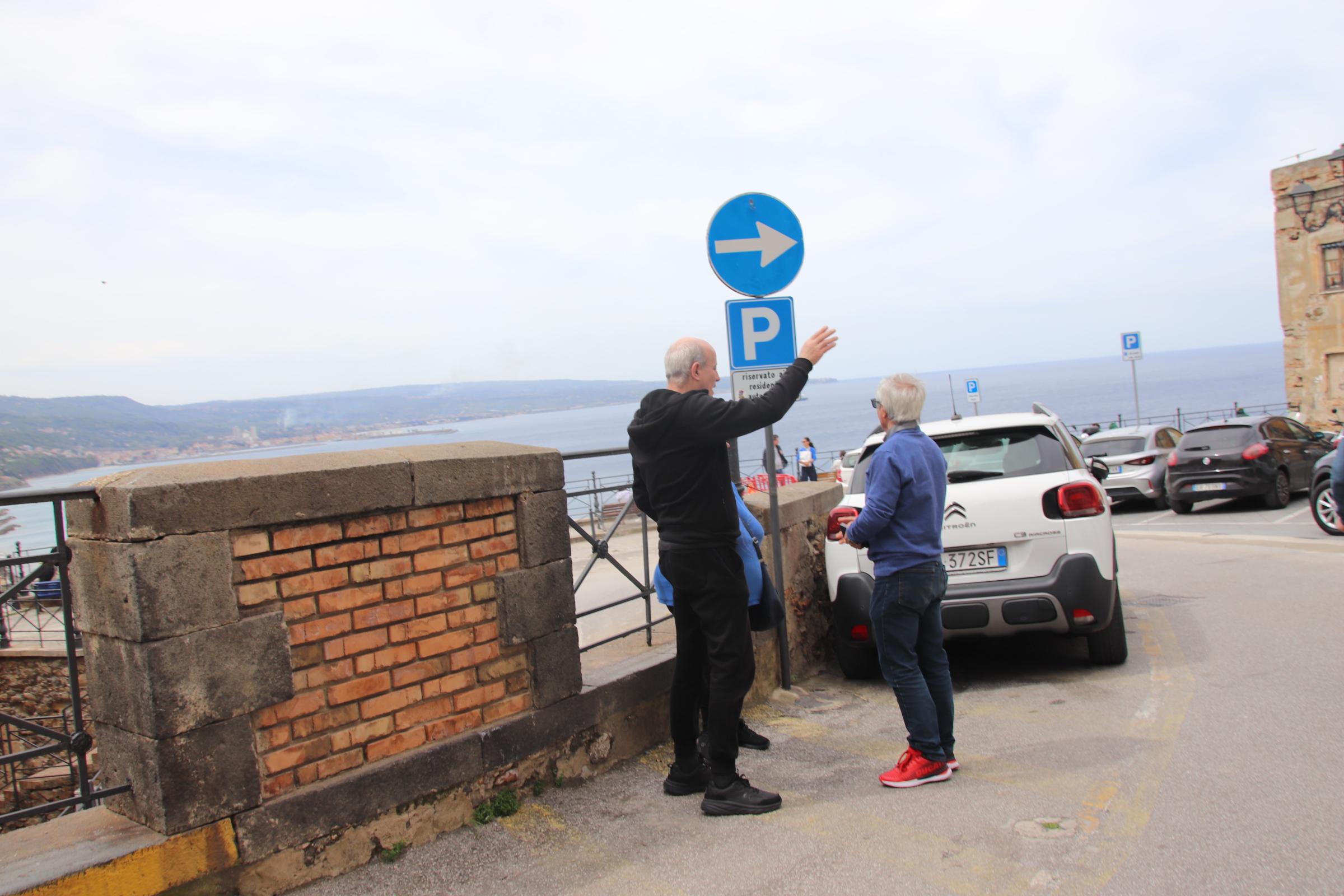
So, the first thing to do when we reach Pizzo is find a parking space. A blue one requires payment at a meter. There follows 9 attempts to enter data on reg no & credit card which all result in being thrown out. Ah, Italians turn up….I stand back & watch. After 3 attempts they simply enter a €2 coin & get a ticket. A €2 coin mind you – not a credit card, not 2 x €1 coin. They stay & help. After 6 more goes – yayyyyyy – all purses have been searched & the coin found, it all slots through & yes …..a ticket for 2 hours is churned through to huge cheers from all 6 interested parties.

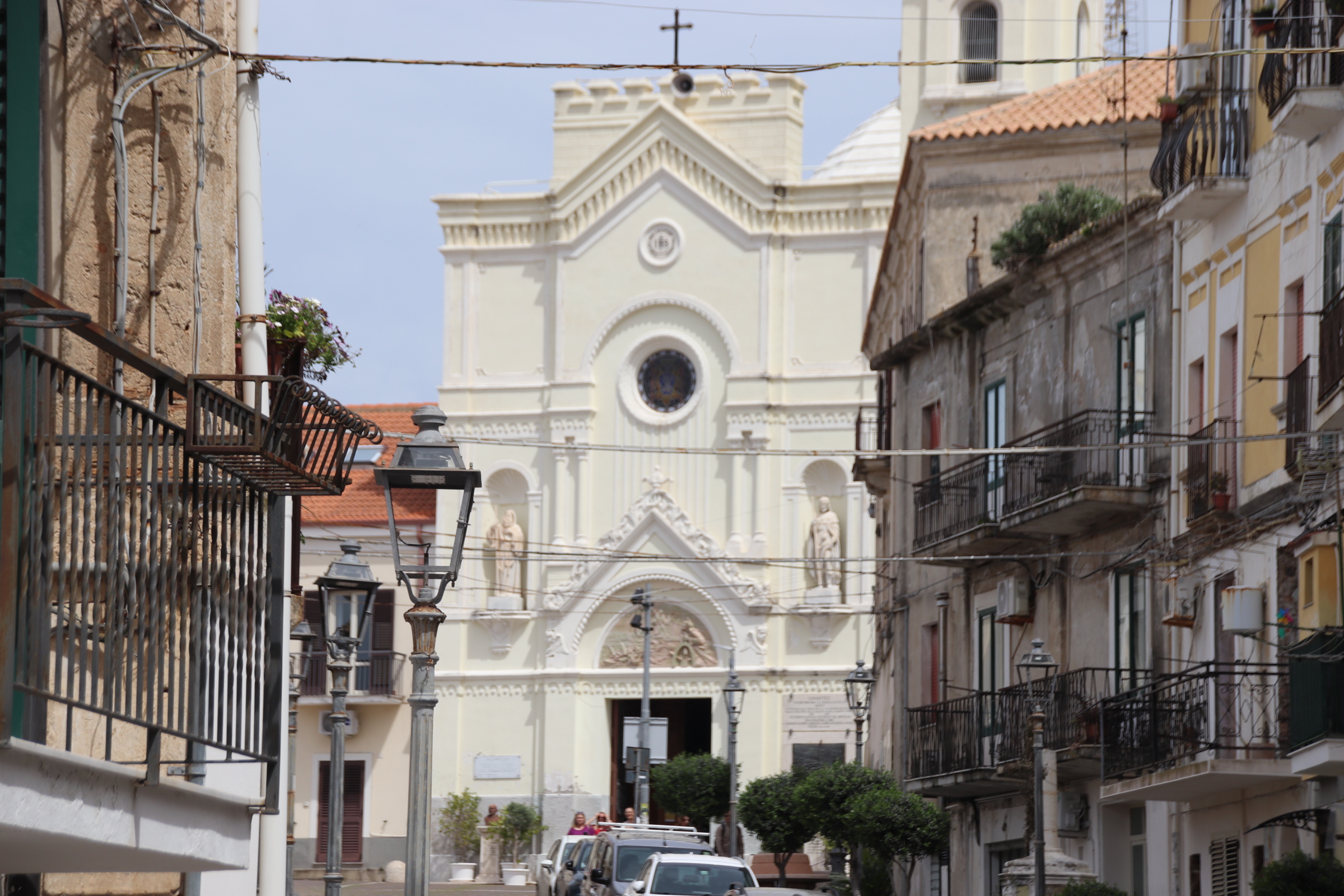
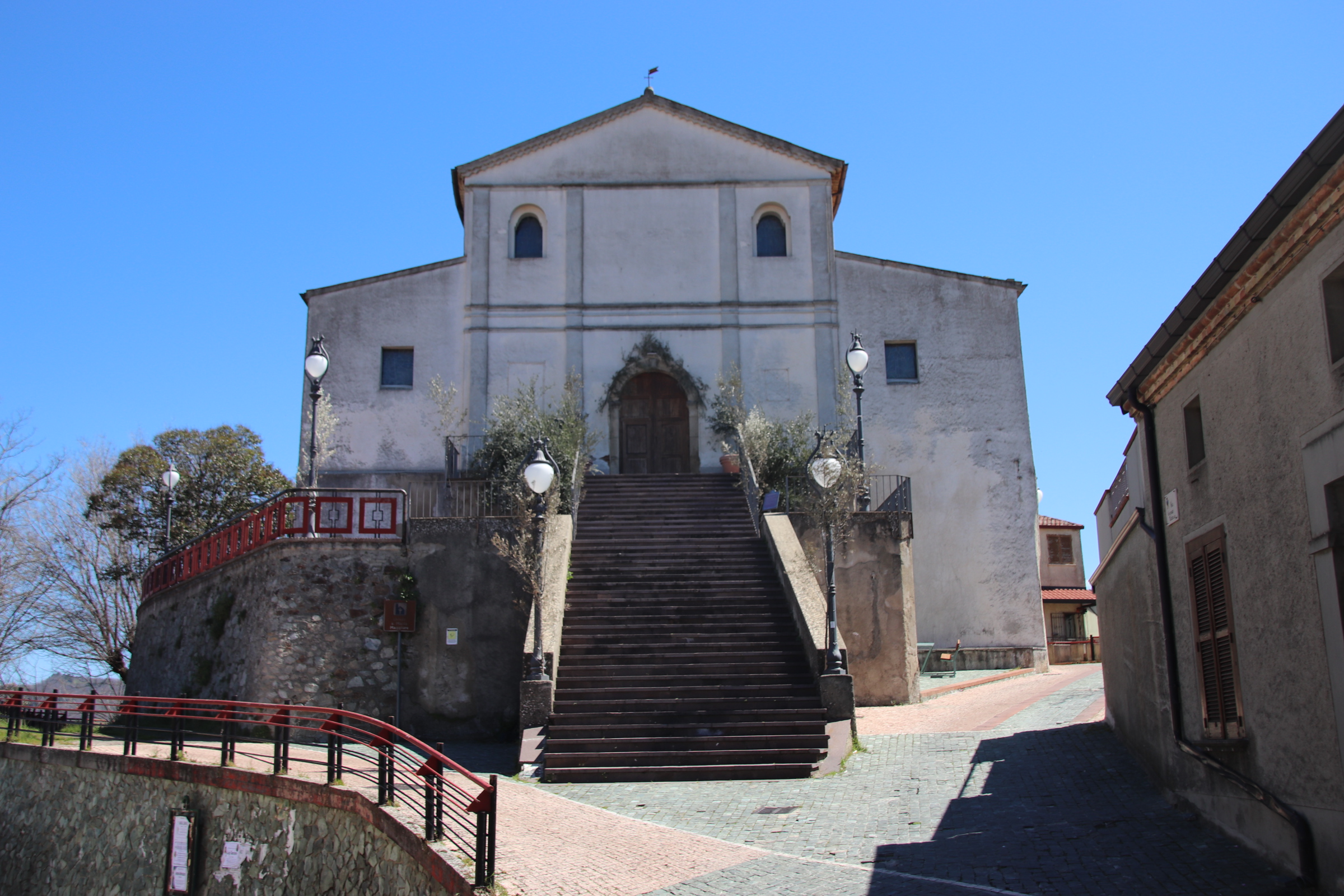
At the top of the main street into town the huge church doors are open to allow the sound of an angelic chorister to escape & fertilise the souls of parishioner.

Then down into Pizzo’s piazza. The town started life in the 13th century on a high cliff as a fishing village with a fort.

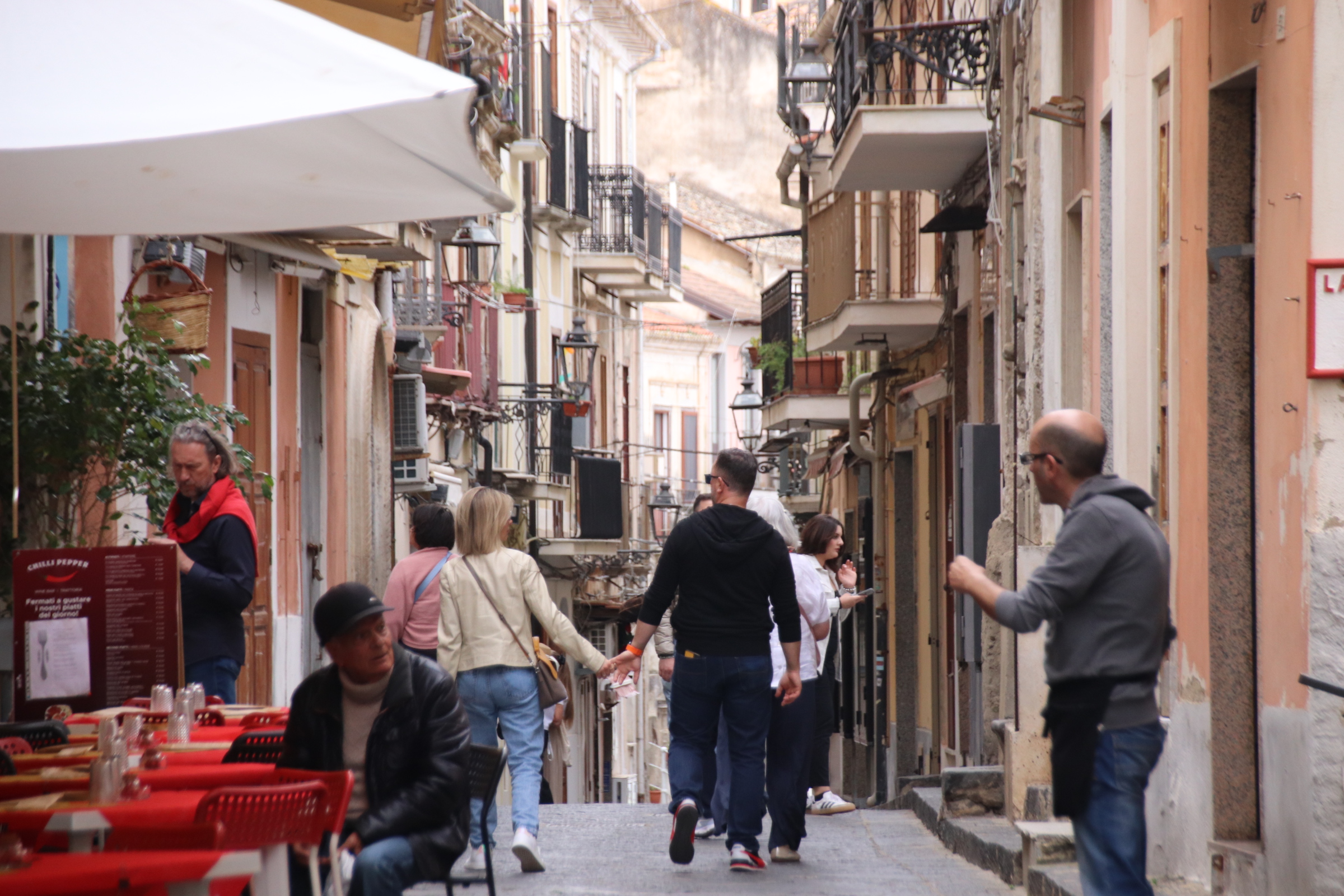
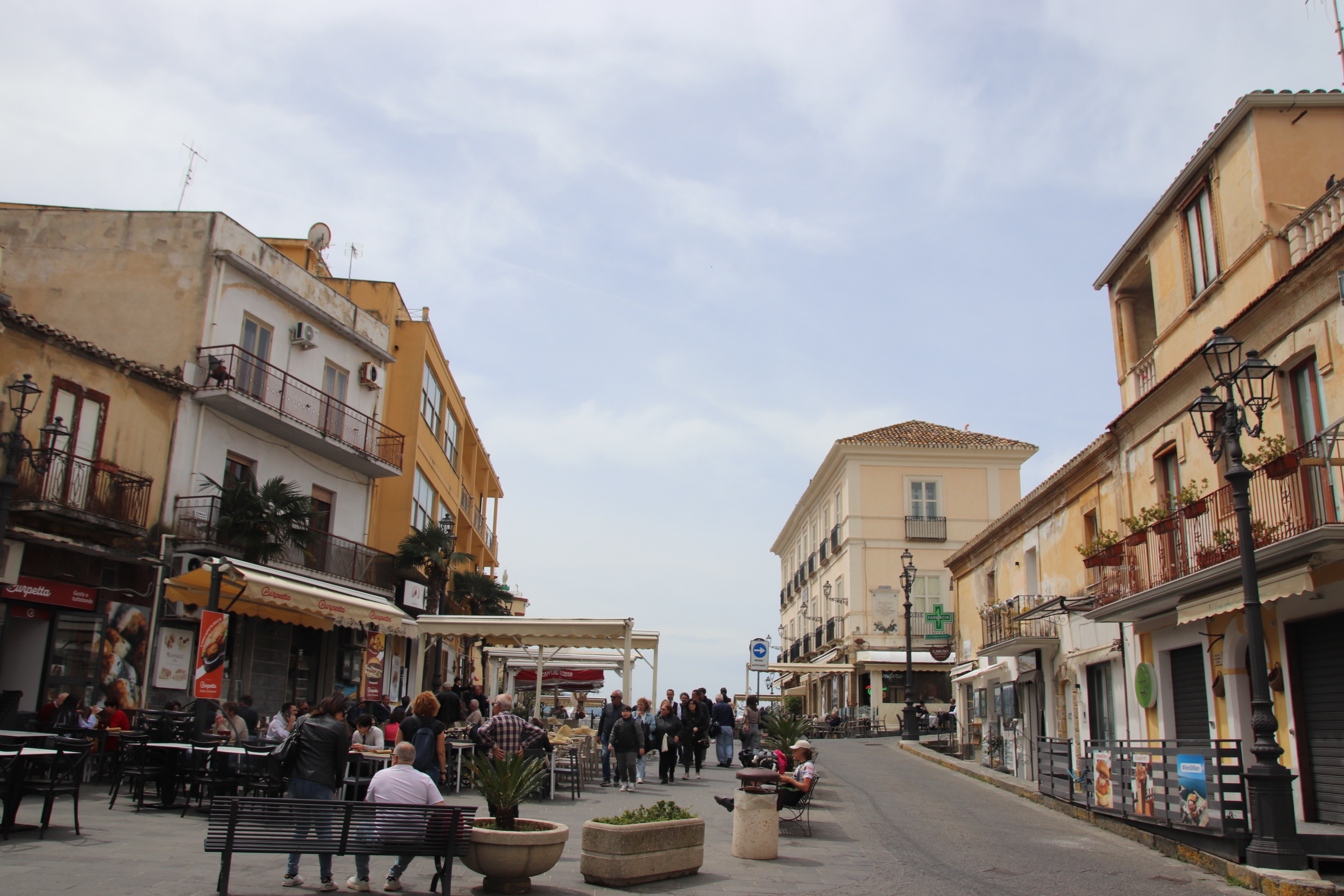
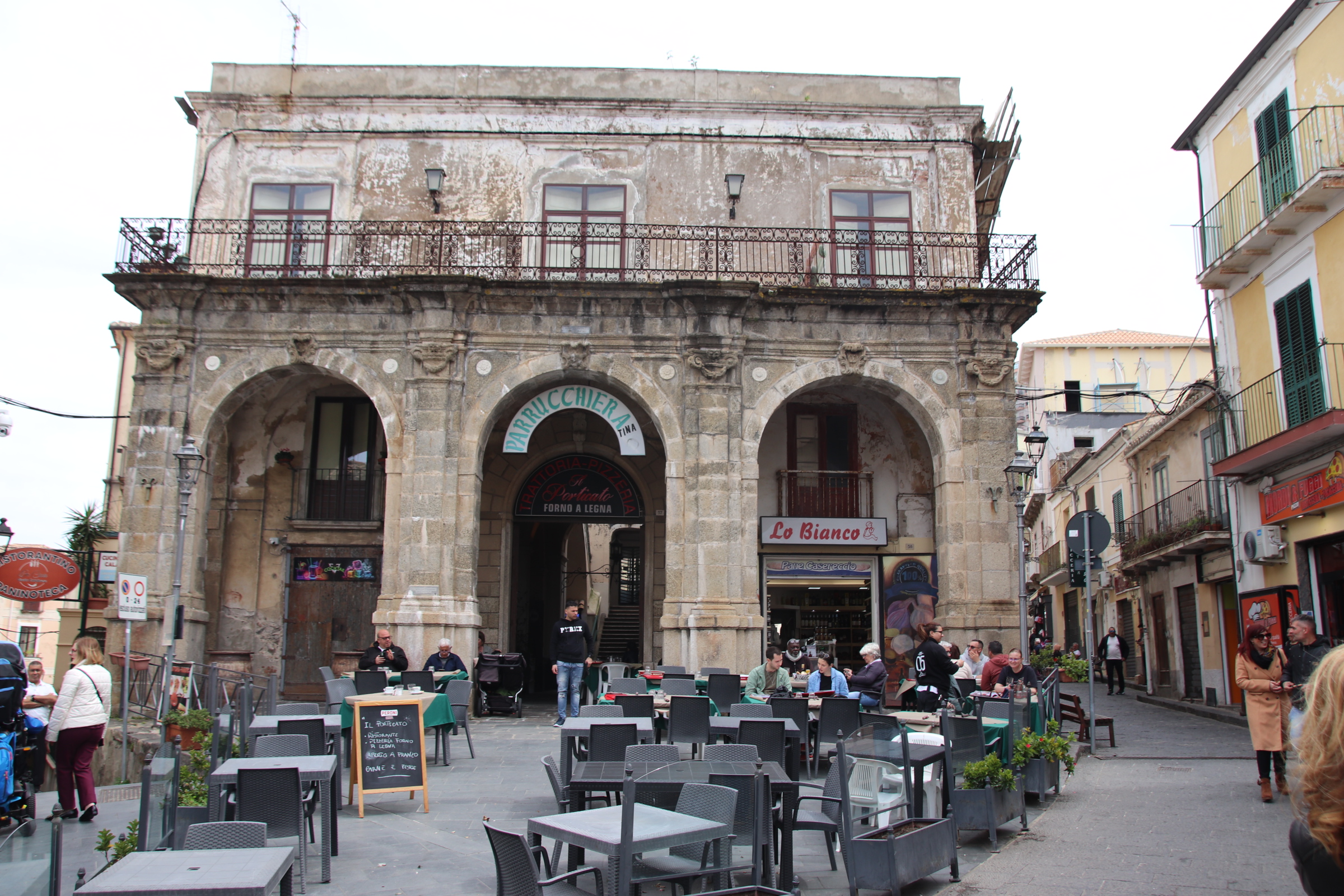
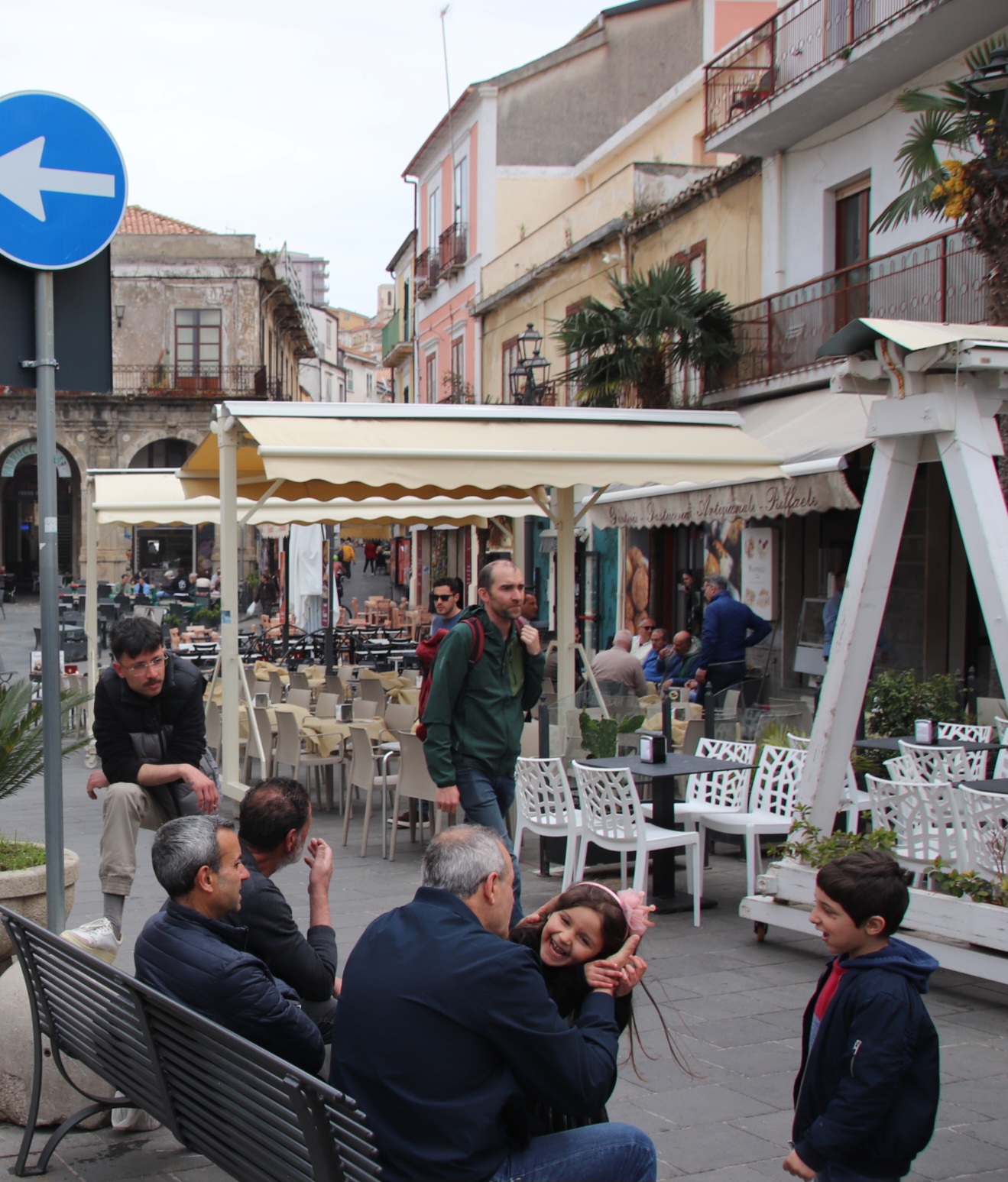
A Sunday in April allows the locals to emerge to do what they always do on the day of rest while a handful of tourists try unsuccessfully to dilute the authenticity of the place.

Midday is greeted with a cacophony of haphazardly rung bells from several churches which drown out the interactions within the ancient piazza. Locals & visitors then continue about their traditional Sunday business.

Us? Having wandered the streets we spy a corner pizza stall charging €1.50 a 🍕. We choose our elements & retire to a metal bench to consume the best slice of salami topped, pizza, ever.

Eat your heart out Pizza Express!

Exploring north up Calabria’s coastal lining

This runs all the way from Reggio Calabria in the south, up to Salerno & the Bay of Naples & beyond, a distance of at least 350 km. With the sea on one side & the cliffs & craggy foothills of the mountains on the other, this stretch of coastal lowland is only a few hundred metres wide for most of its journey north.

The road & the track run together, side by side, with the latter built on an embankment. At regular intervals minor roads veer through narrow, really narrow, tunnels under the tracks to reach the crowded holiday strip on the coast. Here clubs & bars, beach clubs, cheap hotels & low apartments are cluttered together, randomly placed to provide holiday pleasures along the entire route.

On the land side, the gods have sprinkled a stardust of recently built or renovated farmhouses, villas, homes, factories, barns, low apartments, amongst the contours of the green, surrounding foothills. A strip of a hamlet follows a bending lane, an odd steeple stands out in a clay-tiled cluster of a village, a shiny barn adds a further element to distant, neat rows of vines or olives.

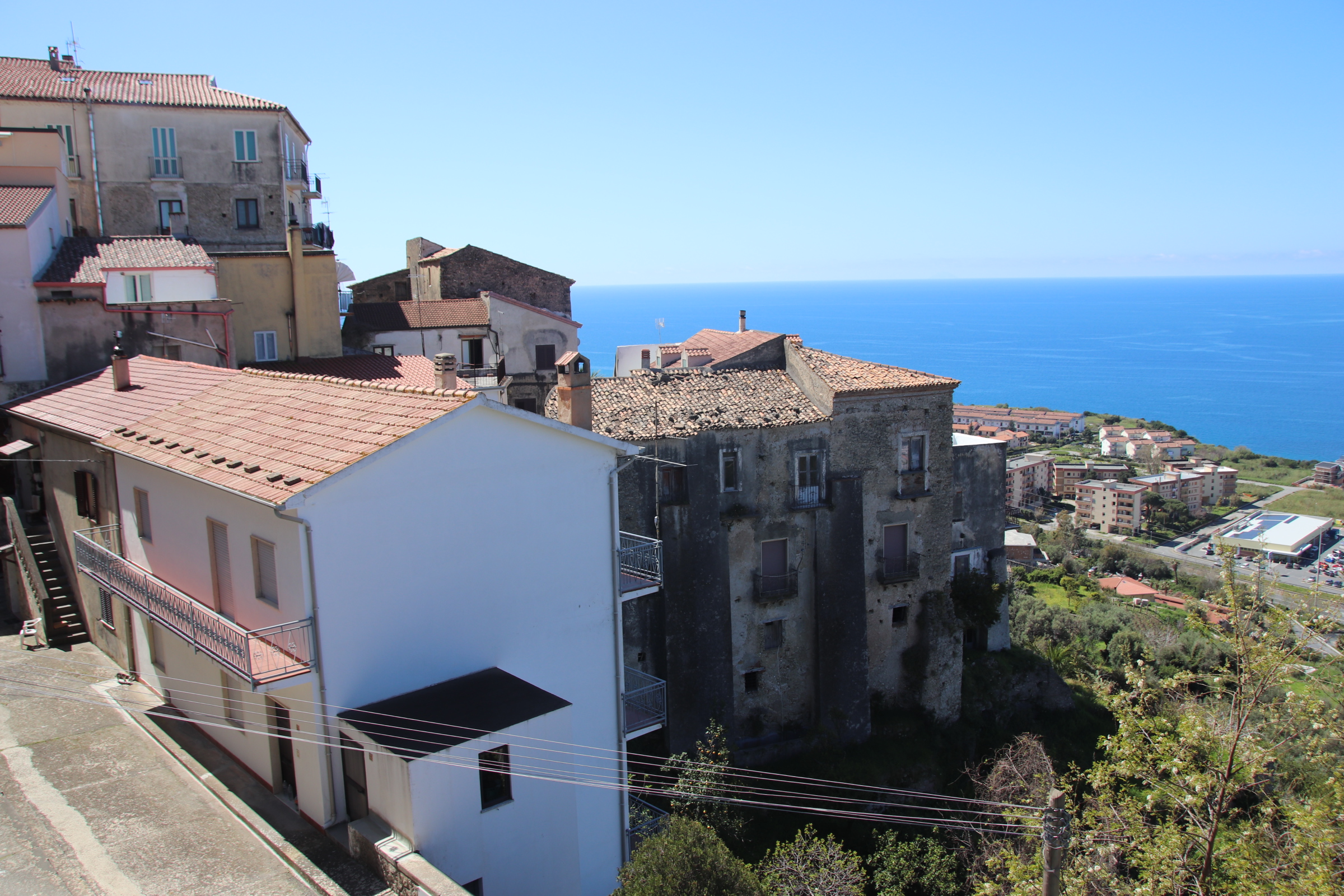
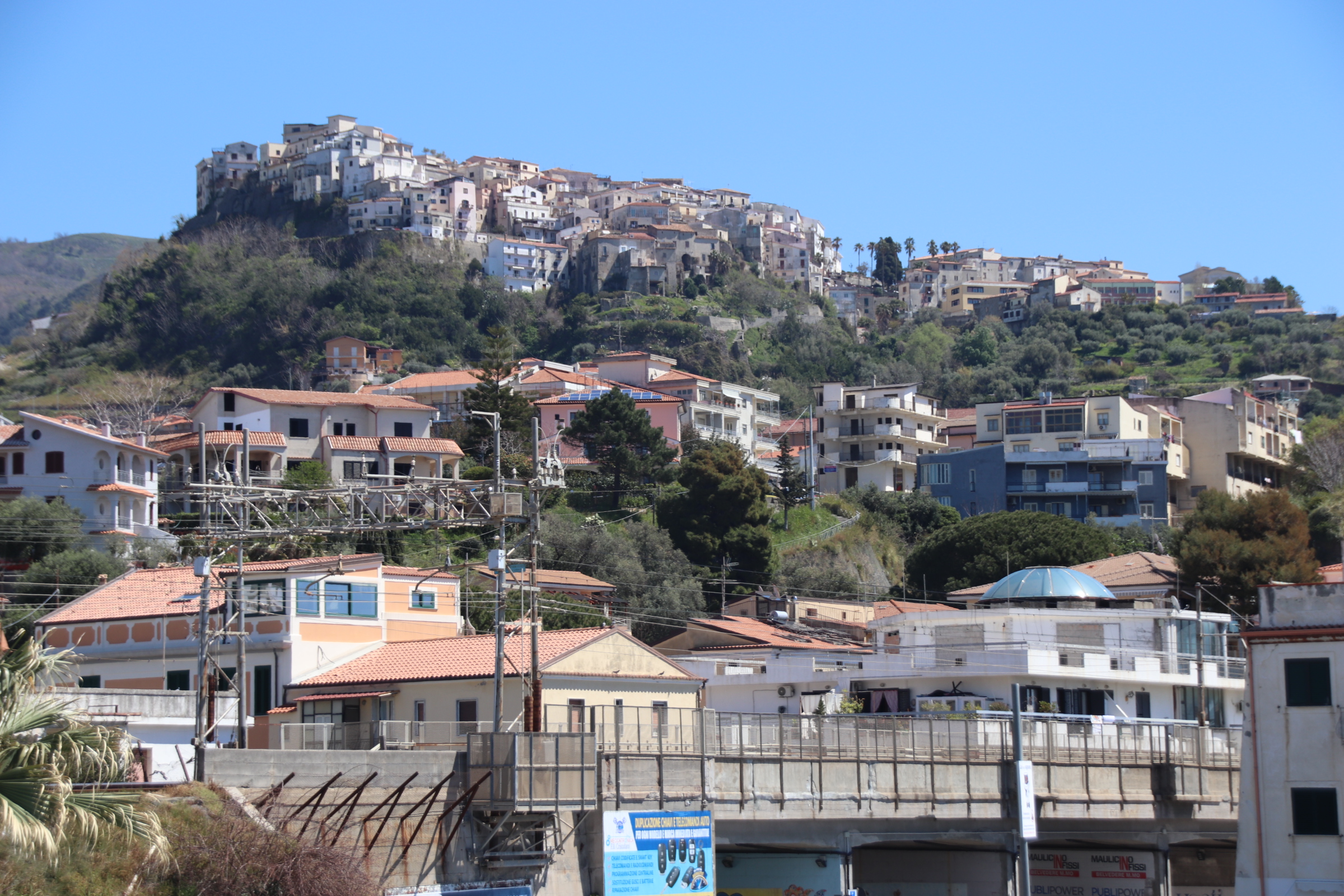
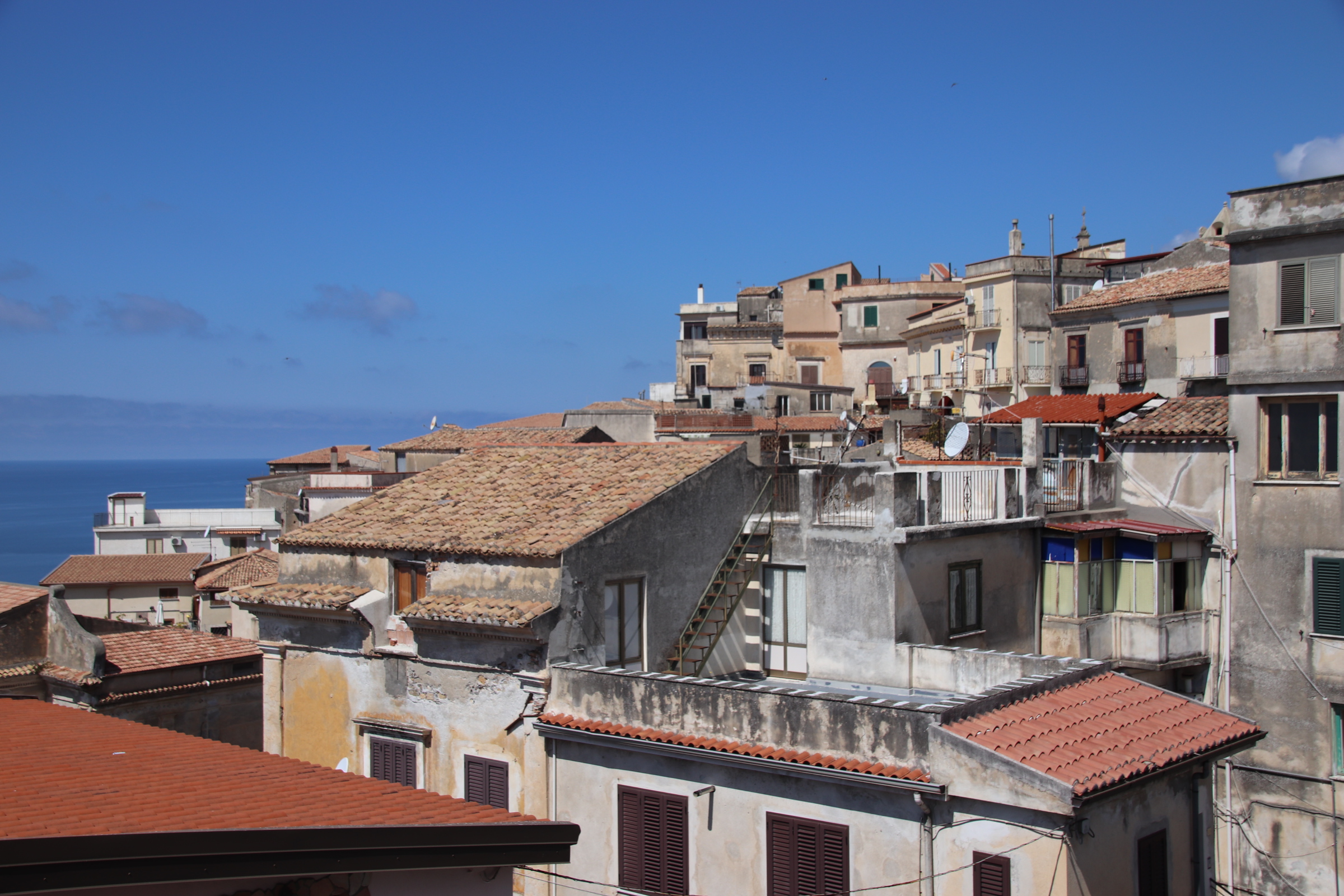
Small towns & villages with any historic interest occupy high positions on a crag or a cliff edge, imposing power & importance over the low plain that borders the coastline below. It is a helter-skelter ride up to the cherry on the top with more climbing to & from any available parking & around the town or village….but well worth the effort. Most have an ancient, medieval centre if you have the patience & the legs to keep searching for it.

Cetraro & Belvedere di Marittino are two such towns with similar roots but very different in character. Both are high in the foothills above the coastal strip & require a steep walk from the car. Both have fascinating back streets, full of character & history & are rich in buildings dating back to medieval times.

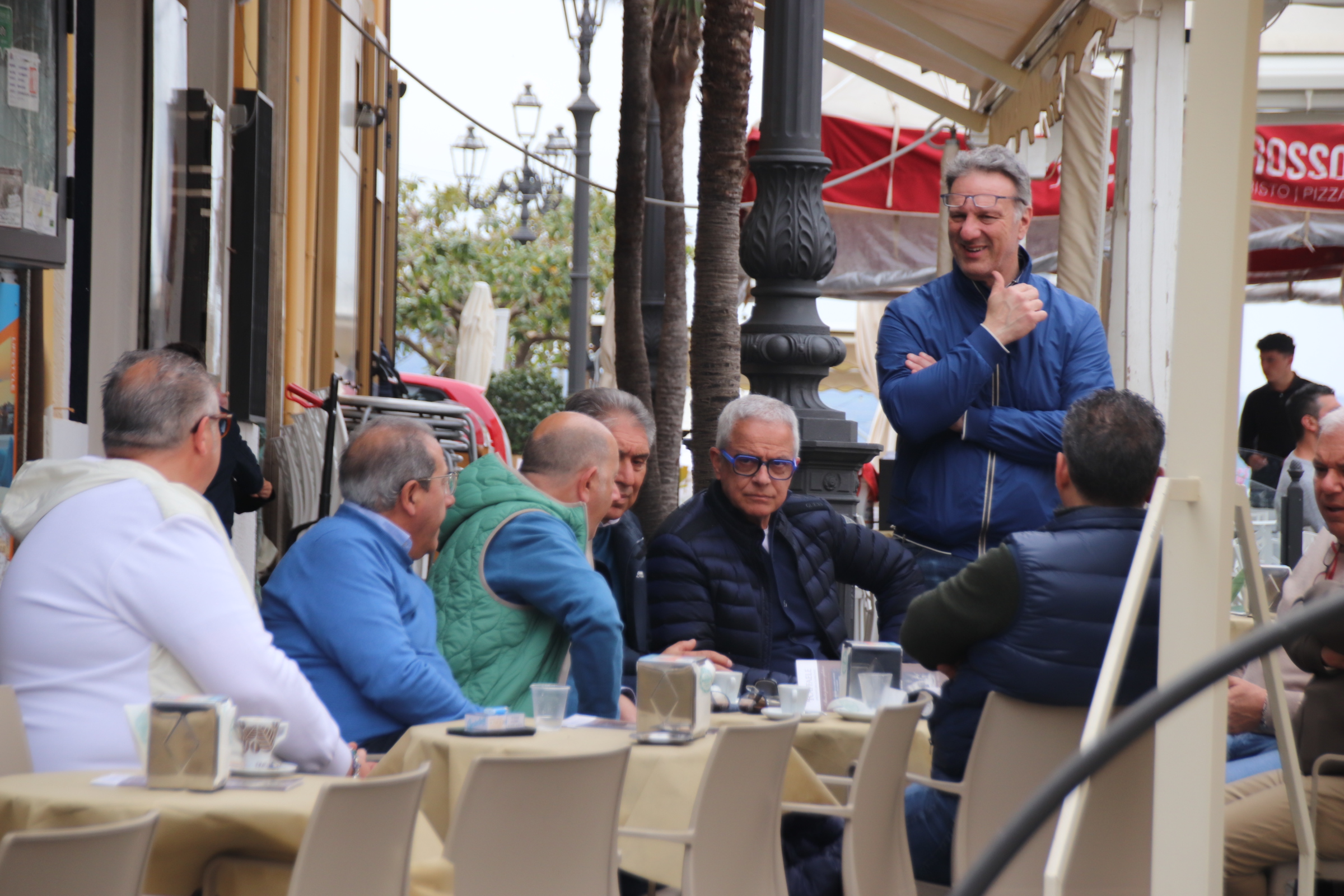
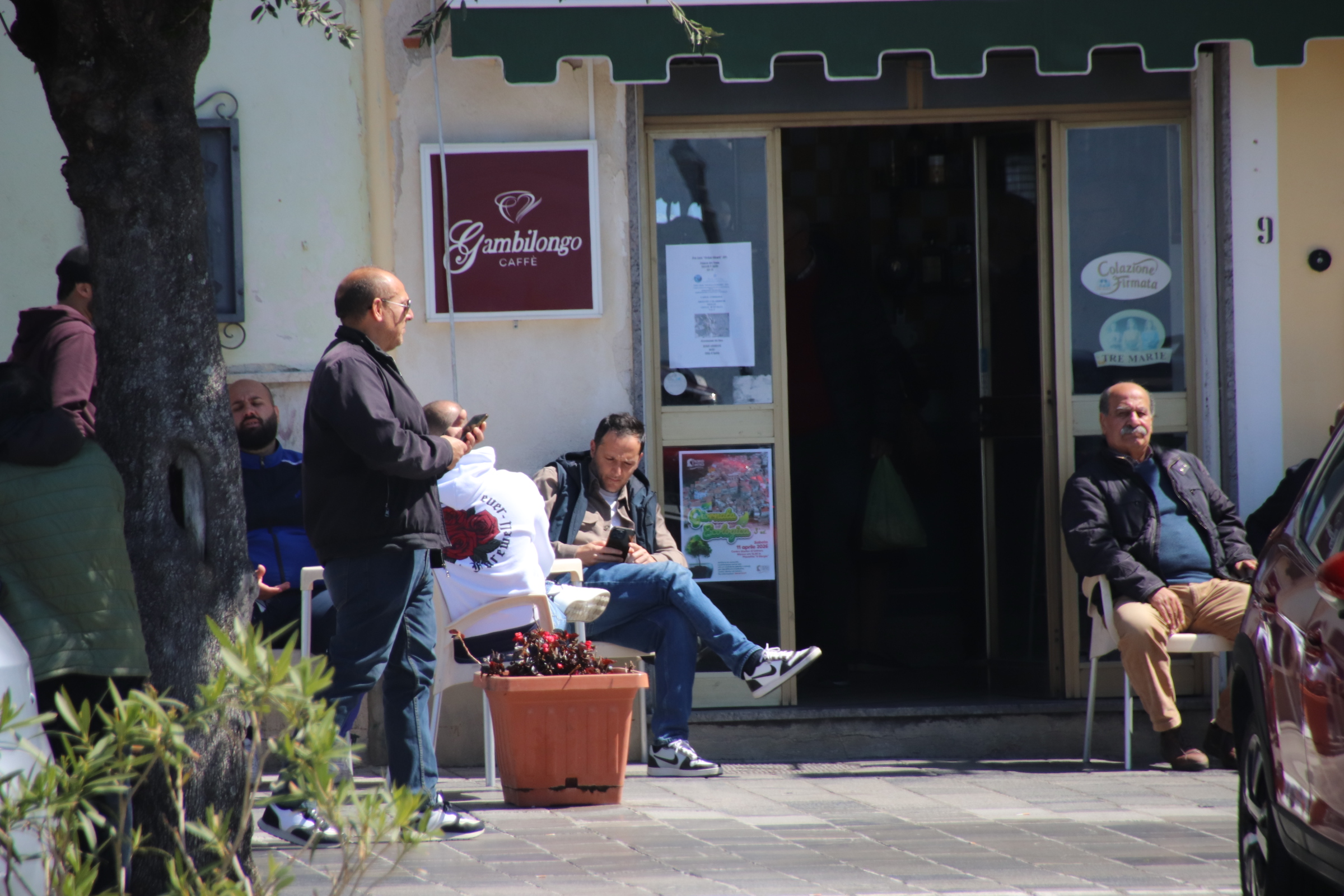
The steep slalom up to Cetraro enters the market place which, despite a wonderful panorama front the redeveloped square is crazy with cars. Cafes are confined to pavements & groups of men hover in doorways or sit outside at tables talking ‘business?’. There are few women to soften the scene. It all feels a bit menacing. The old streets are tall & gloomy where no light can penetrate & the sun is an old enemy.

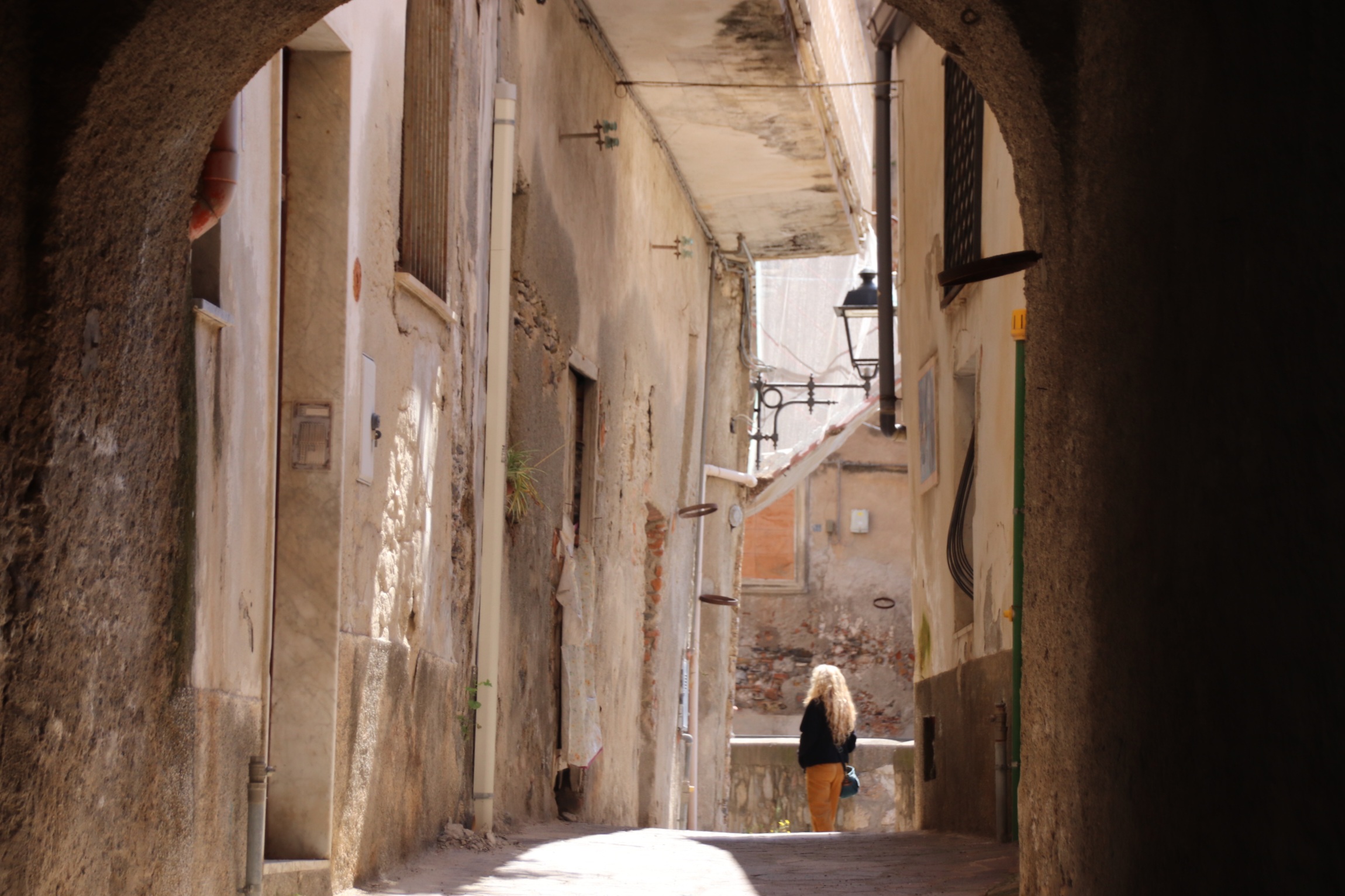
Bellvedere di Marittino also has a square but this is light & bright. Three town policia are present all the time, moving cars on & offering local advise. The cafe offers seats at tables on a small terrace & the surrounding buildings are attractive with ornamental trees & potted greenery to provide colous & diversity. The medieval back streets are clean & wide with grand houses incl four palaces & castle walls & a tower creating a very different atmosphere

It is good to see the different faces of Calabria.

The cramped tiers of Paola’s ancient auditorium

After the wonders of the mountains of Calabrian, it is back to the coast for a few days in Paola. Let me say at the start that Paola is utterly fascinating. It has grown up on the narrow strip of shore between the sea & the mountains. Beside the shore the modern part spreads in both directions with all the trappings of modern life – apartment blocks, schools, railway tracks & station. It doesn’t really count for much; just an ordinary, functional, modernish kind of town.

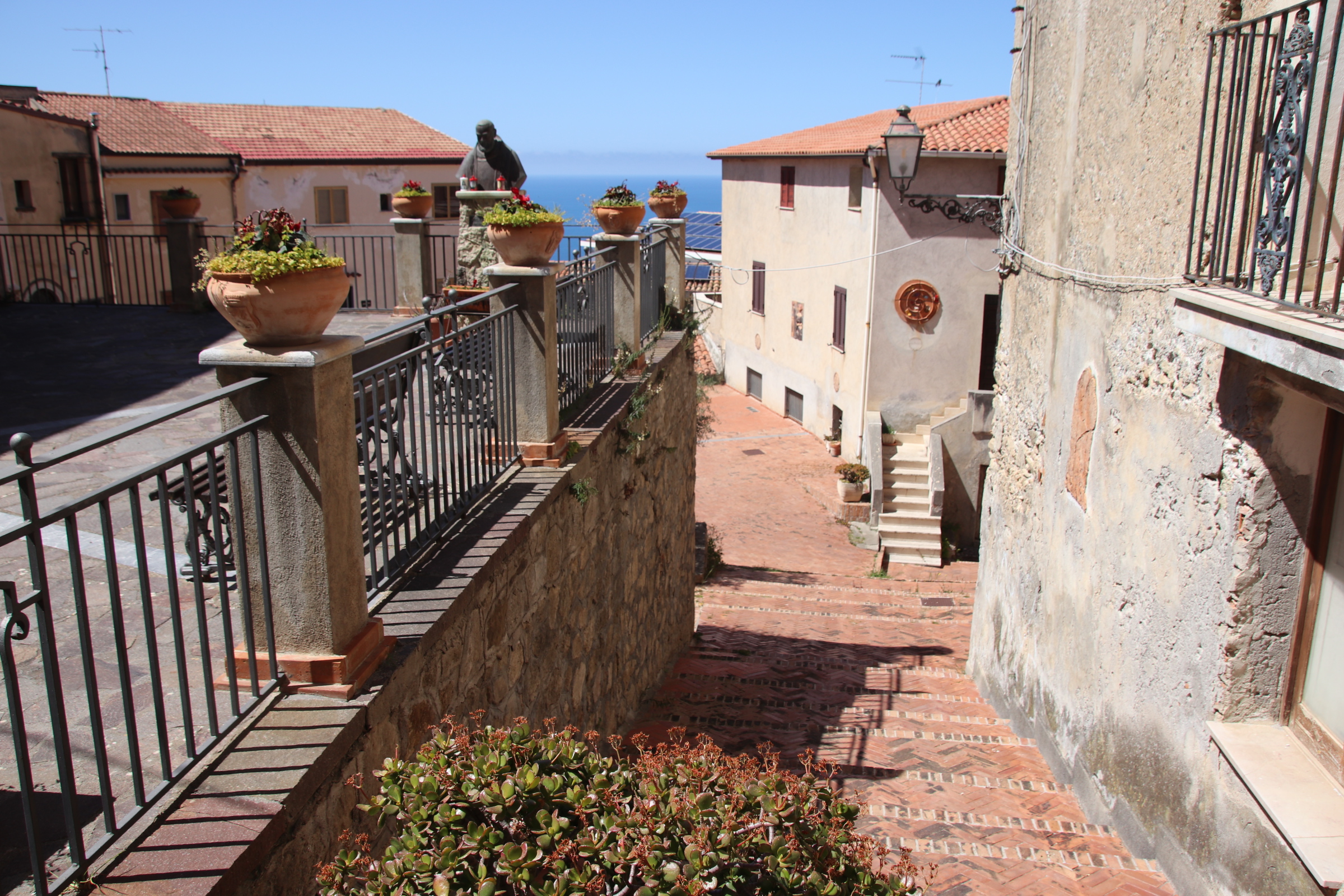
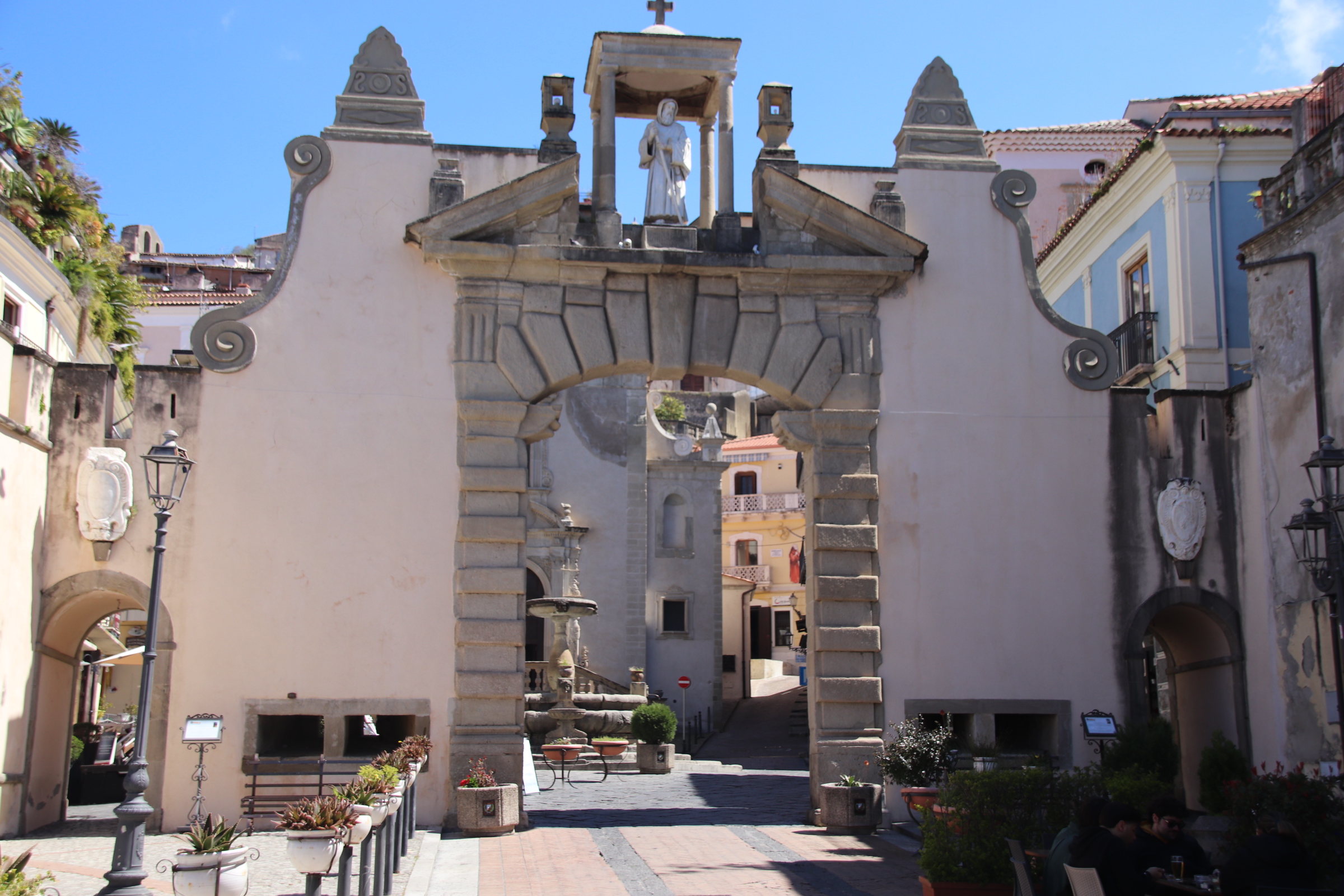
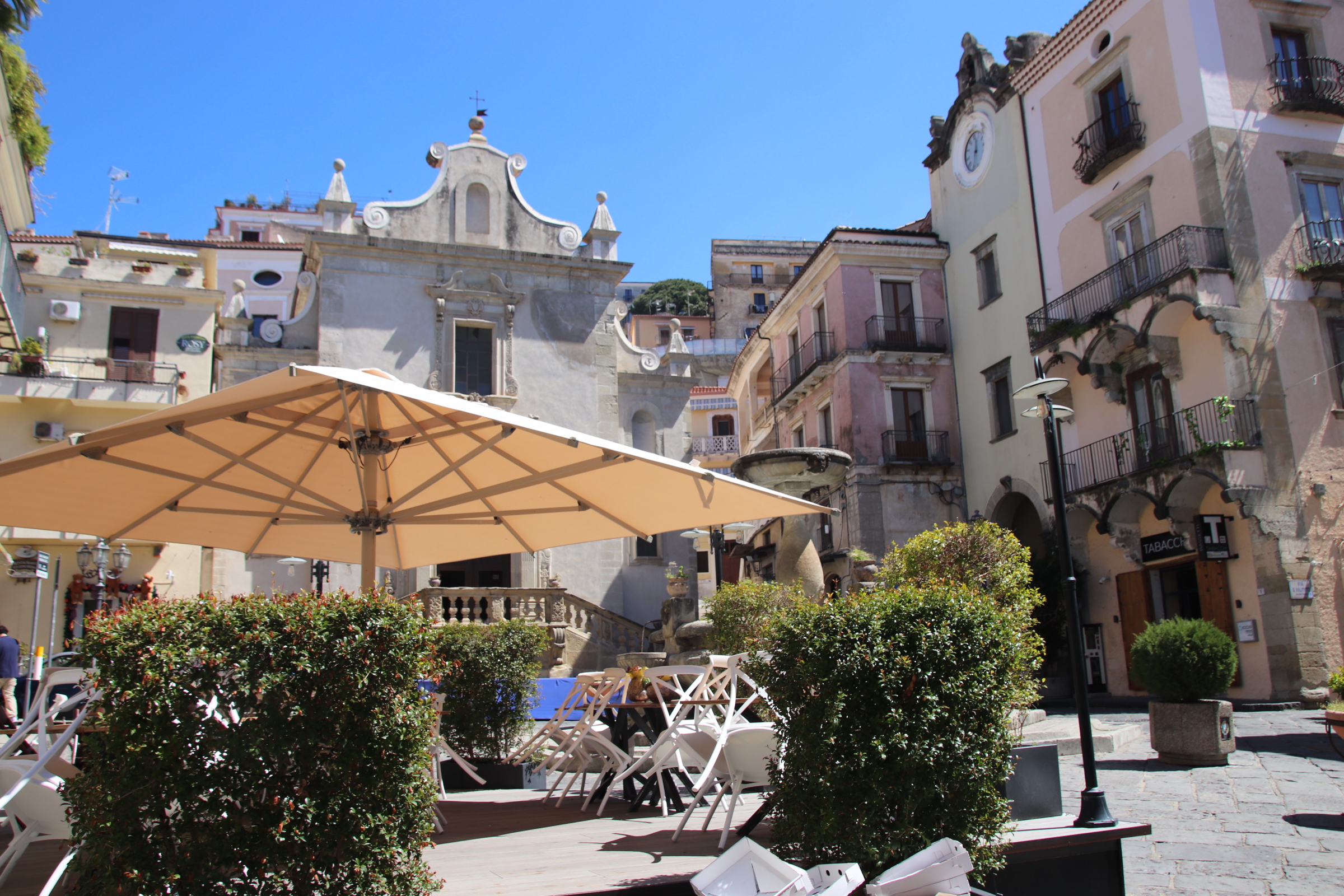
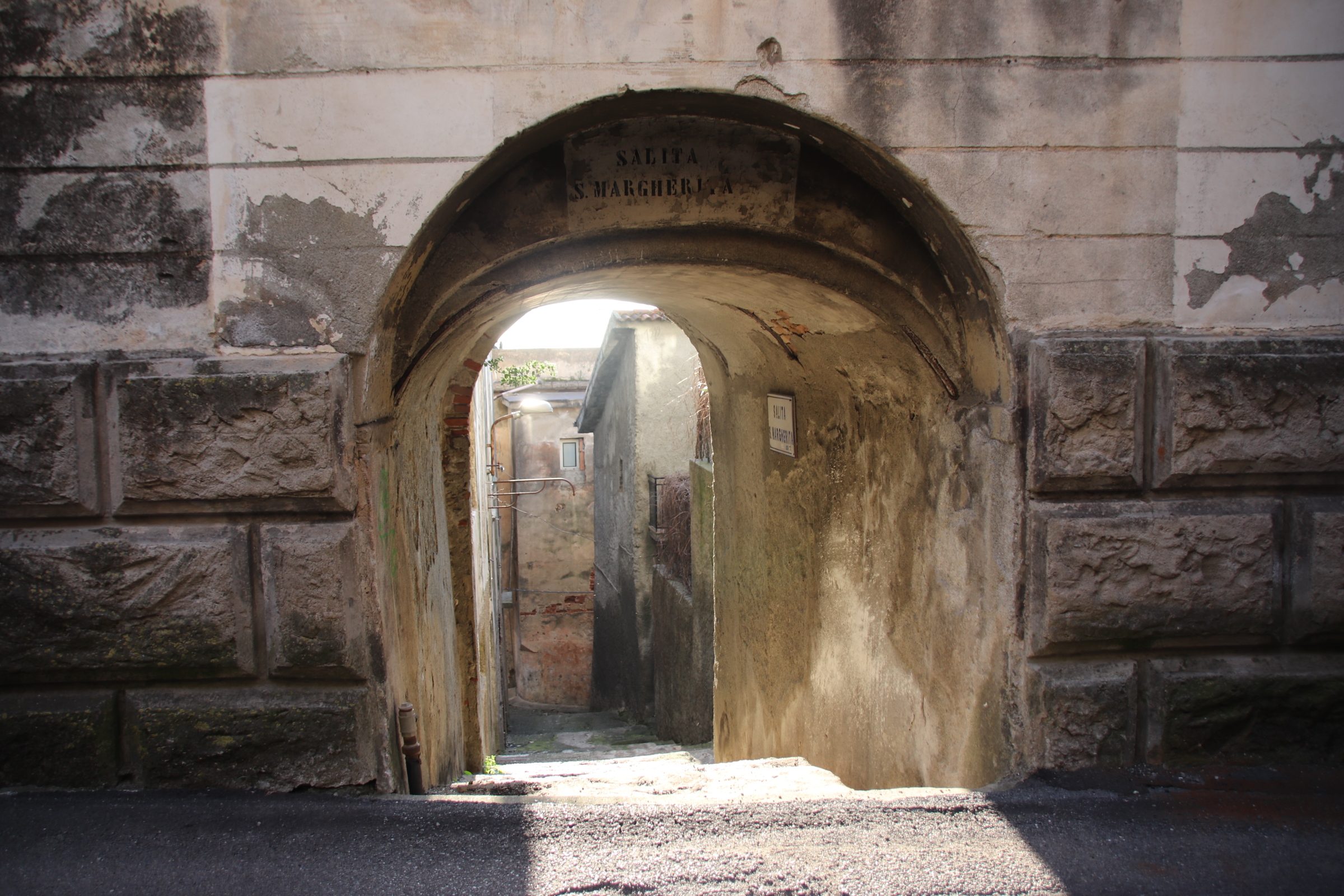
However, once through the arch into the first square, a delicious feast of ancient living awaits. with the old town spreading its tetra-blocked tendrils up against the perpendicular cliffs & gritty bedrock face of Calabria’s hard inside.

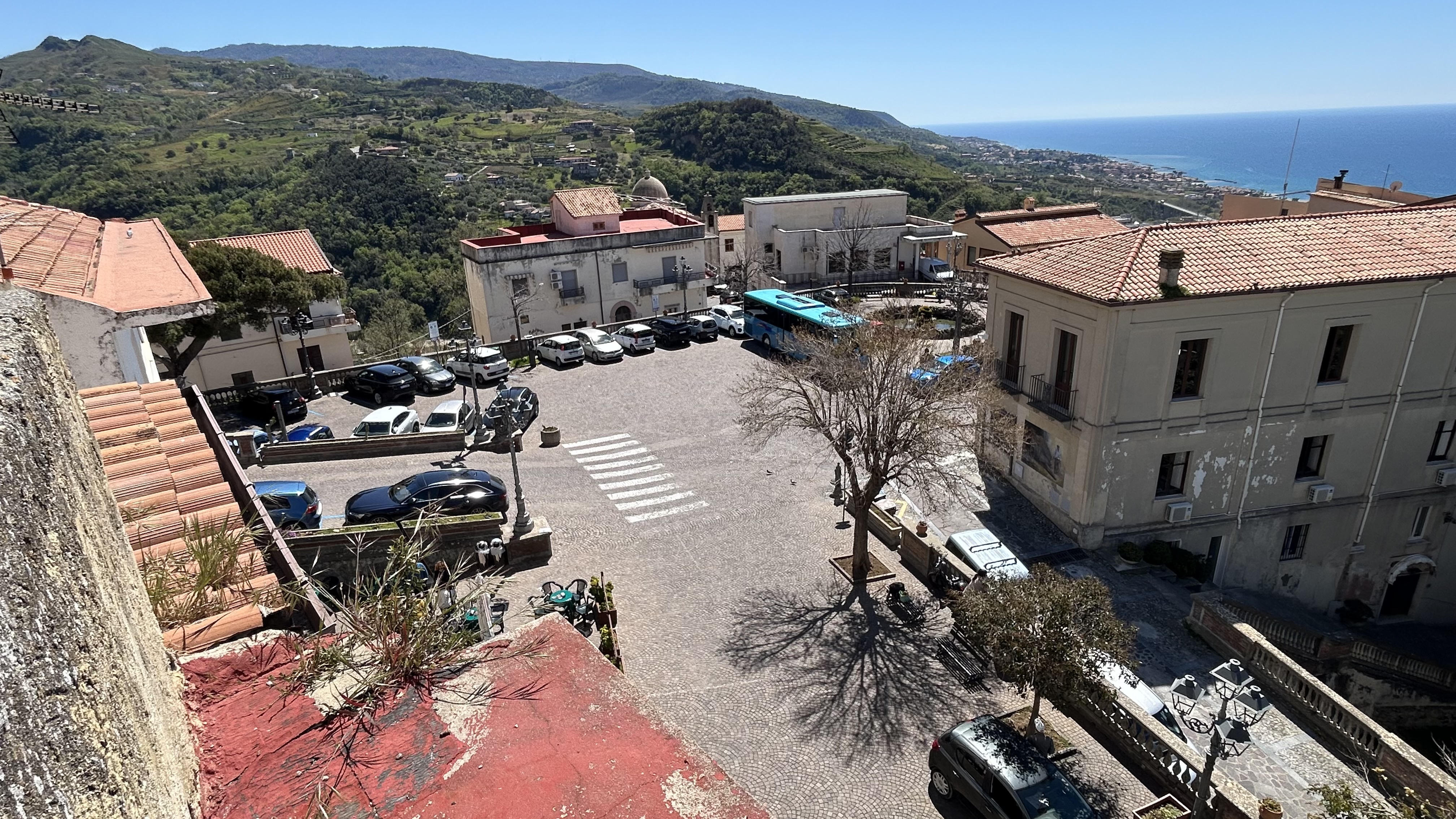
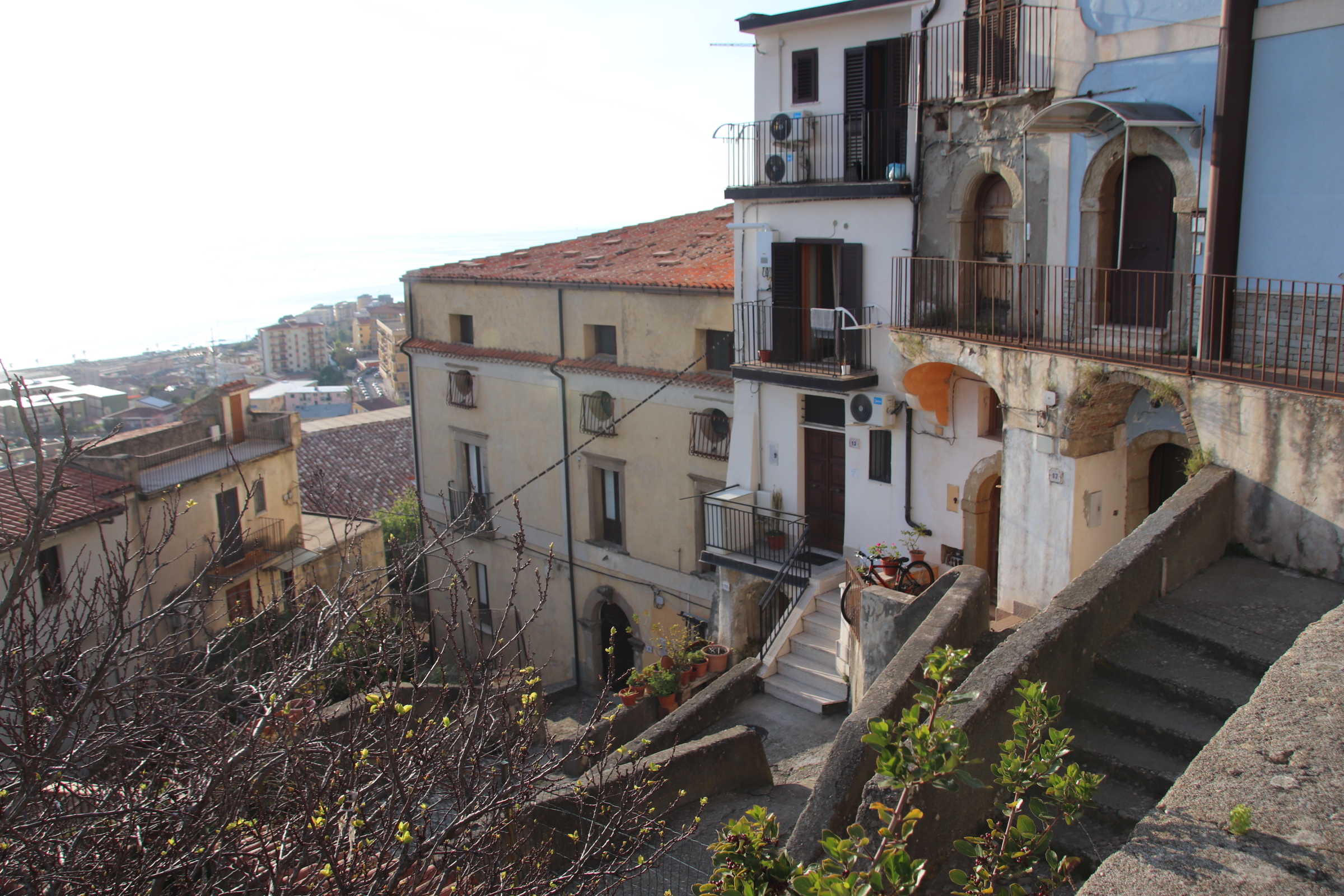
Our accommodation Is high up on the top tier of the balcony of some ancient theatre, dropping down tier by layer of concentric semi-circles, focused on the stage at the bottom formed by the duomo, a fountained piazza & celebration arch where all the historic action has taken place.

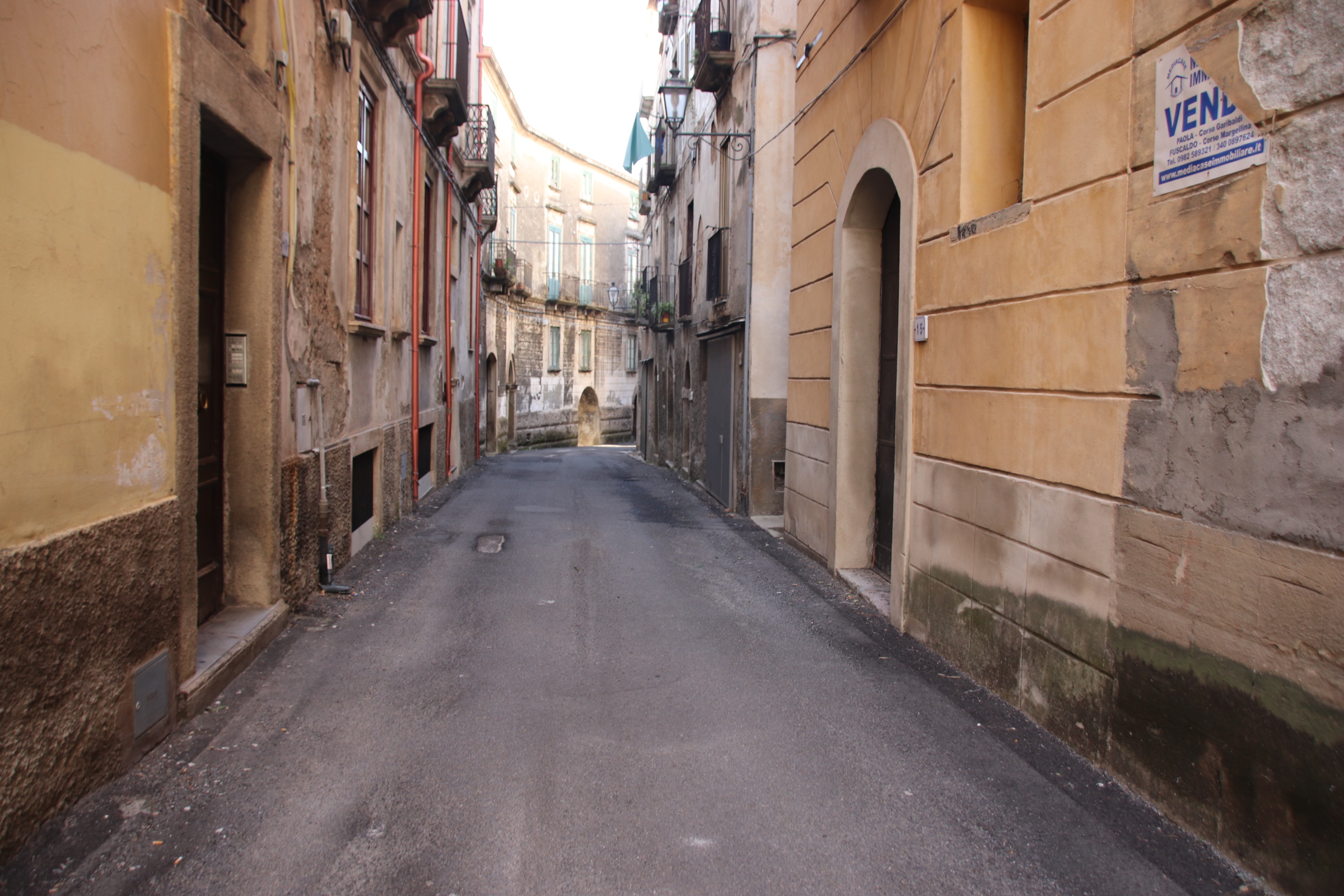
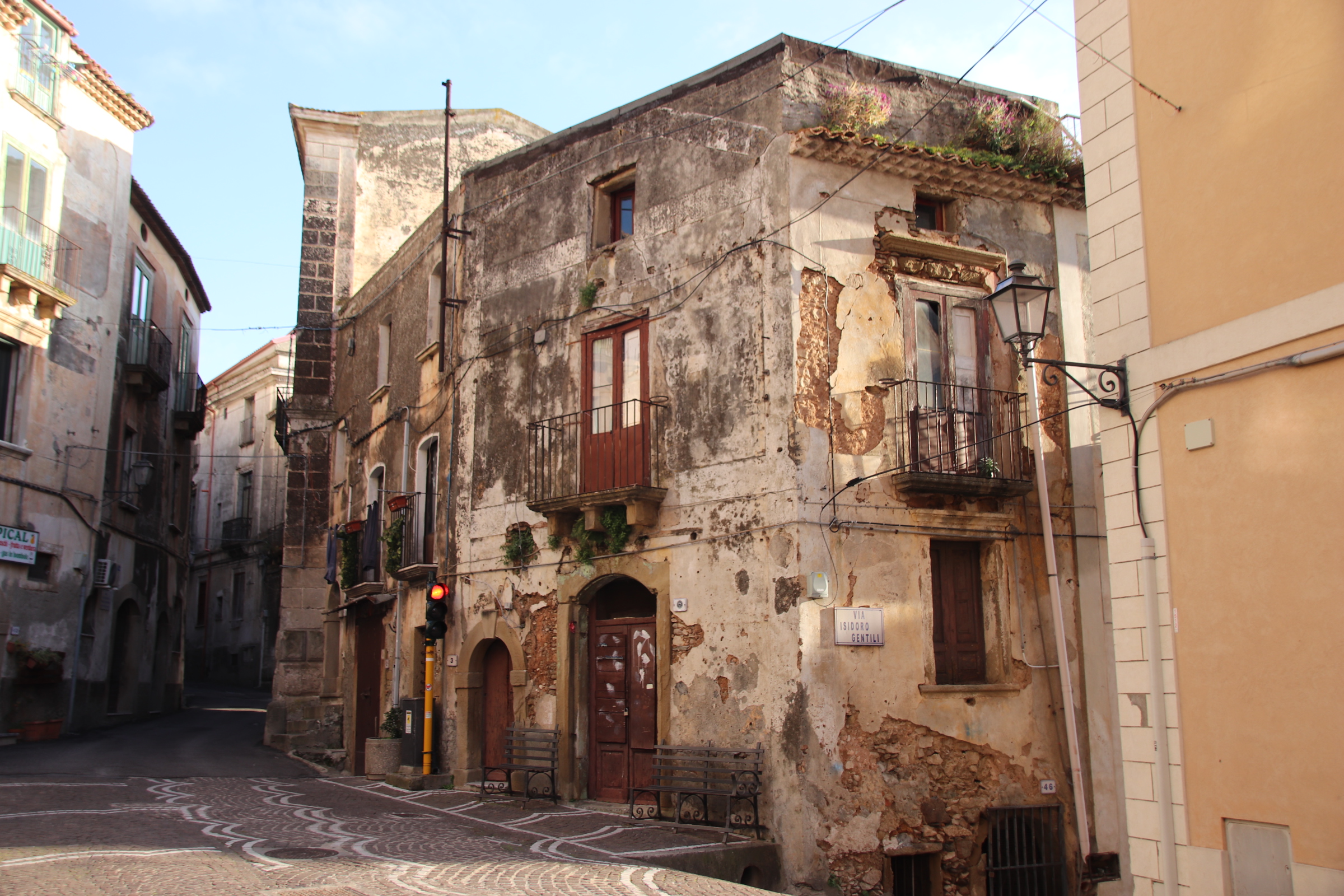
Running under the concrete piles of the top ring road, ancient, flaking tenements, some elegant, some requiring a bit of work, leave narrow spaces between their gloomy facades, so narrow that traffic lights are required to allow one line of vehicles through at a time.

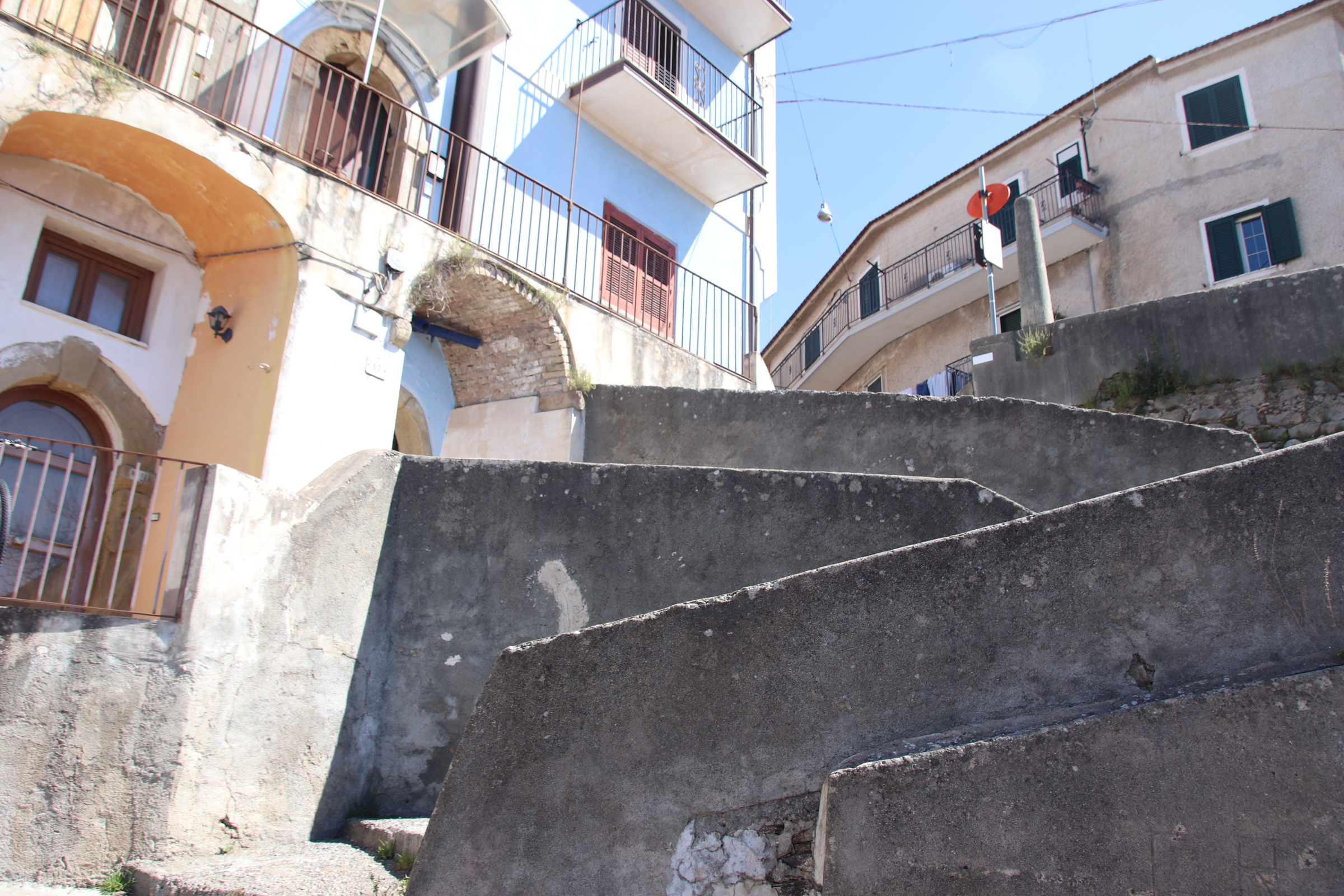
This top road follows the contours of the cliffs surrounded by tall, grey-orche camouflaged, apartment buildings is connected to parallel tiers of lanes & alleys by a snakes & ladders set of interlacing stairs & steps.

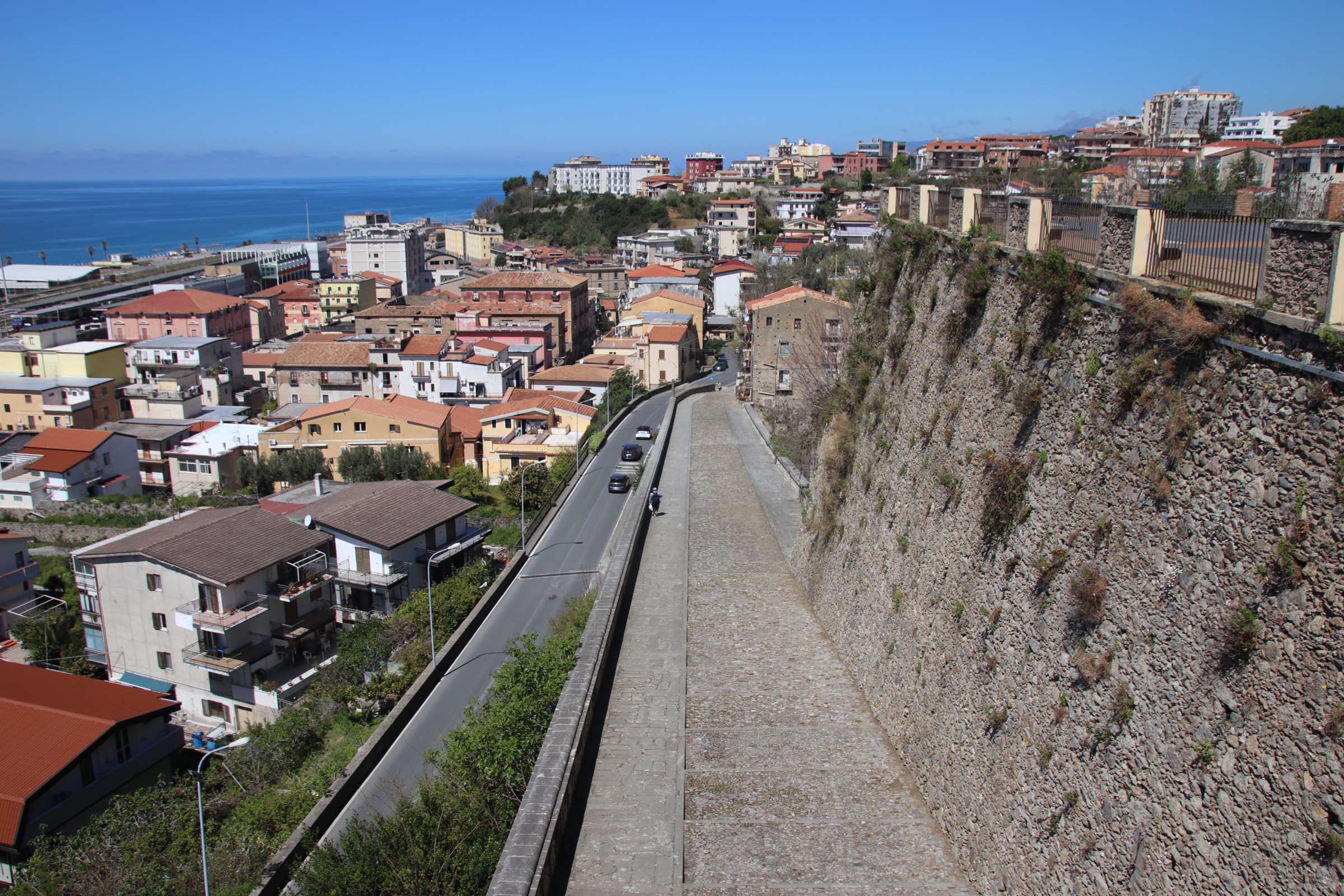
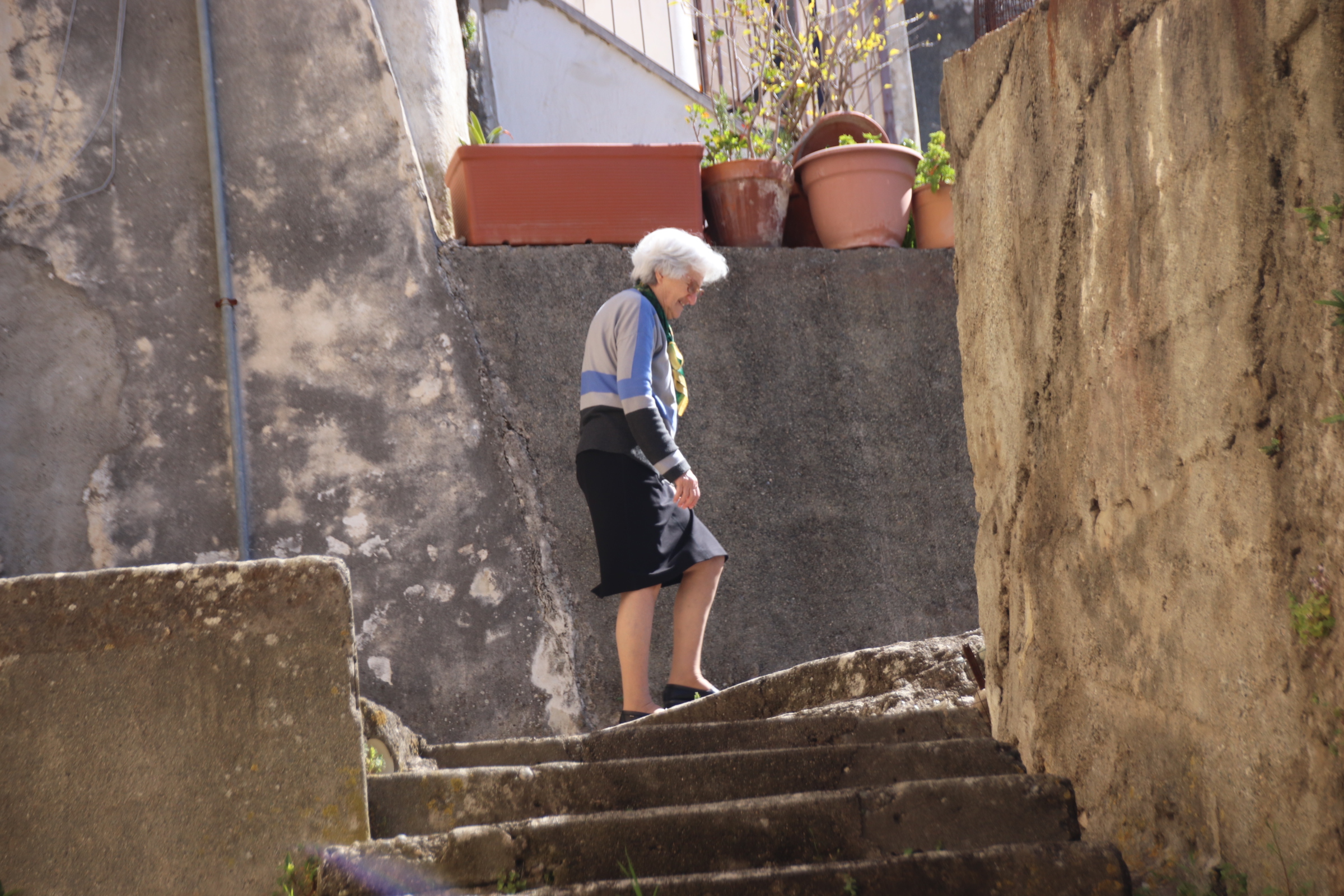
It’s an easy decision to take the steps down to the centre of town. But it has to be remembered that there is always the coming back up. The steps are steep; going down takes 15 minutes; coming back up is an exhausting 30/45 minute work out. Who needs a gym membership? These lovely sprightly ladies have done it for decades, everyday of their lives.

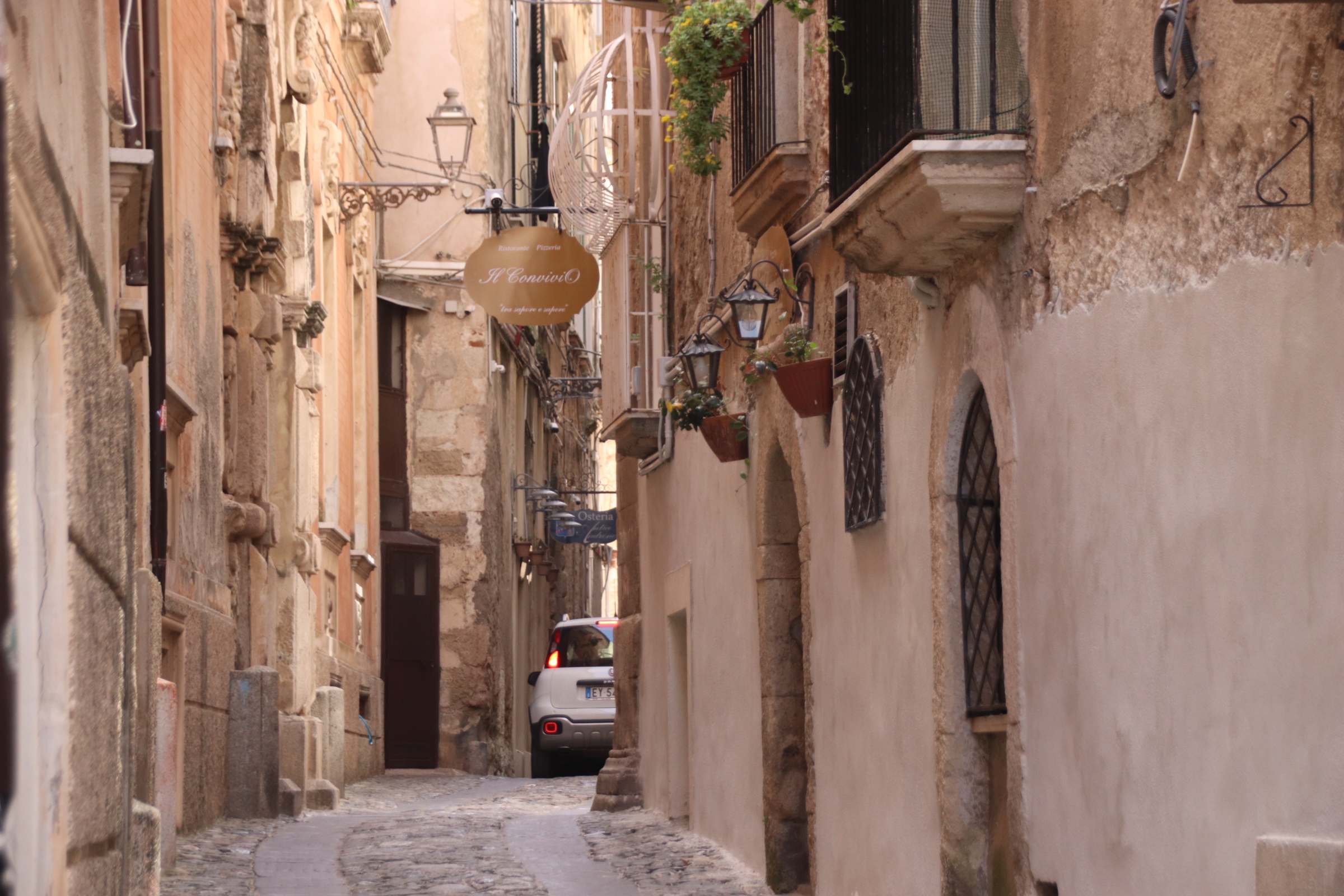
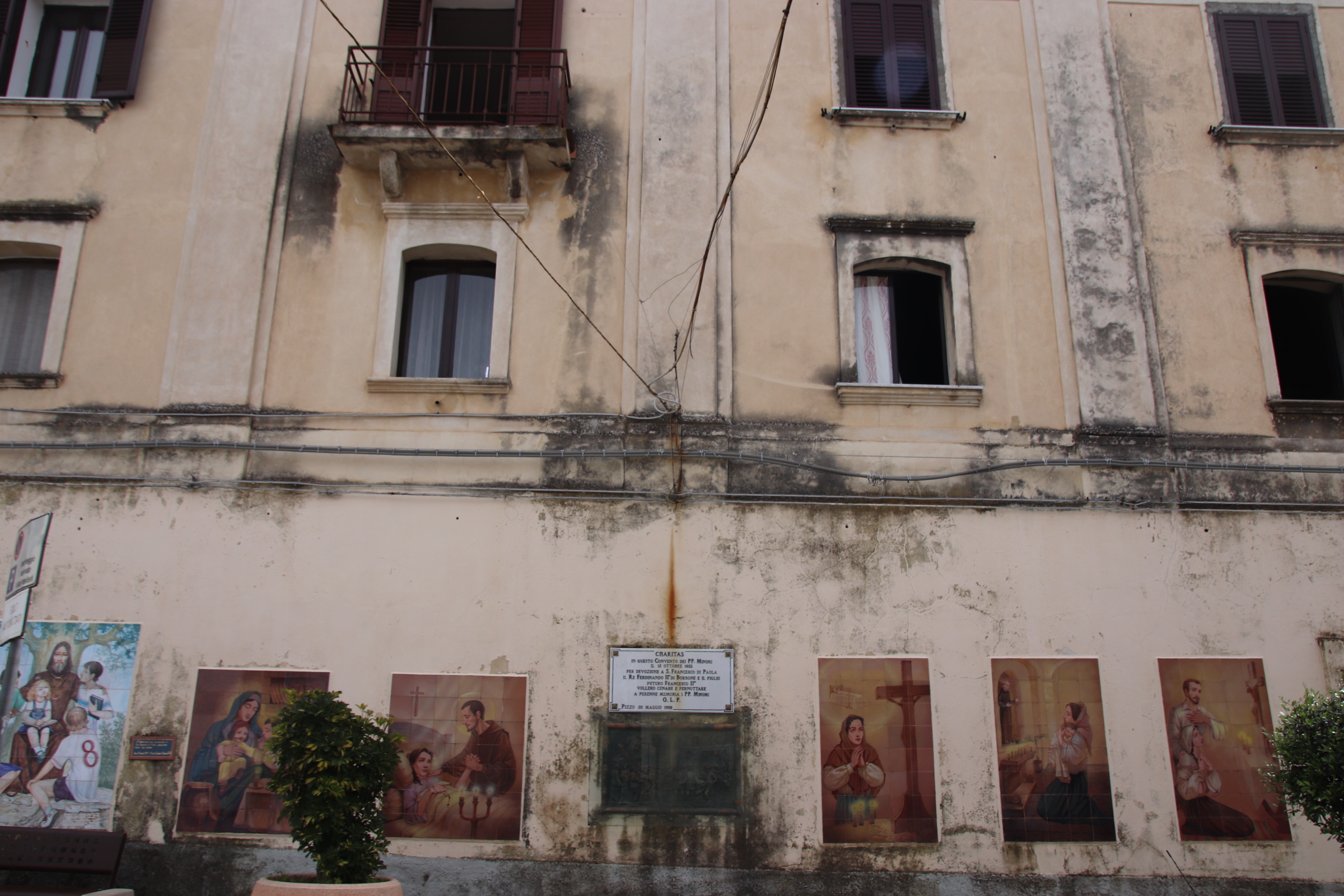
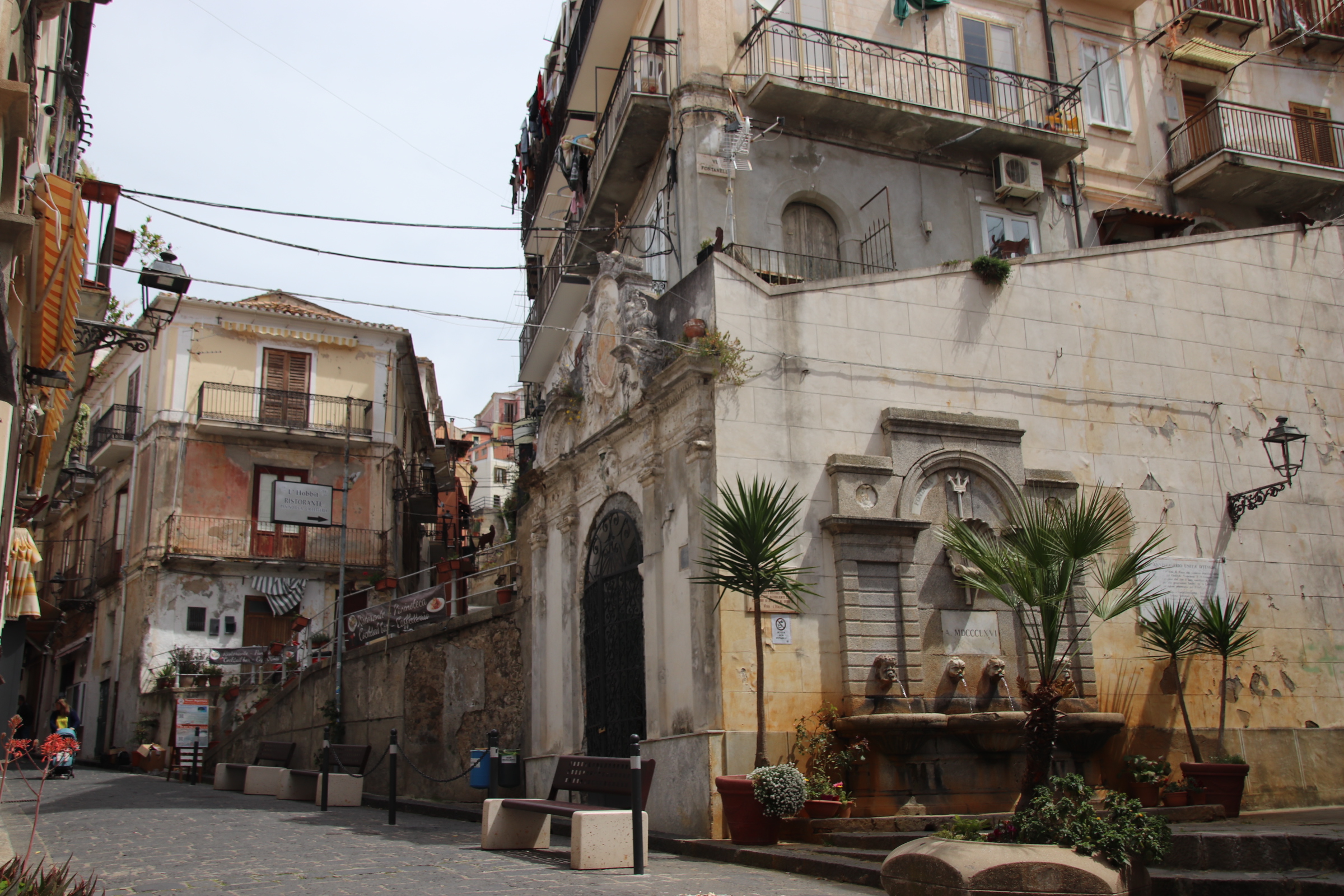
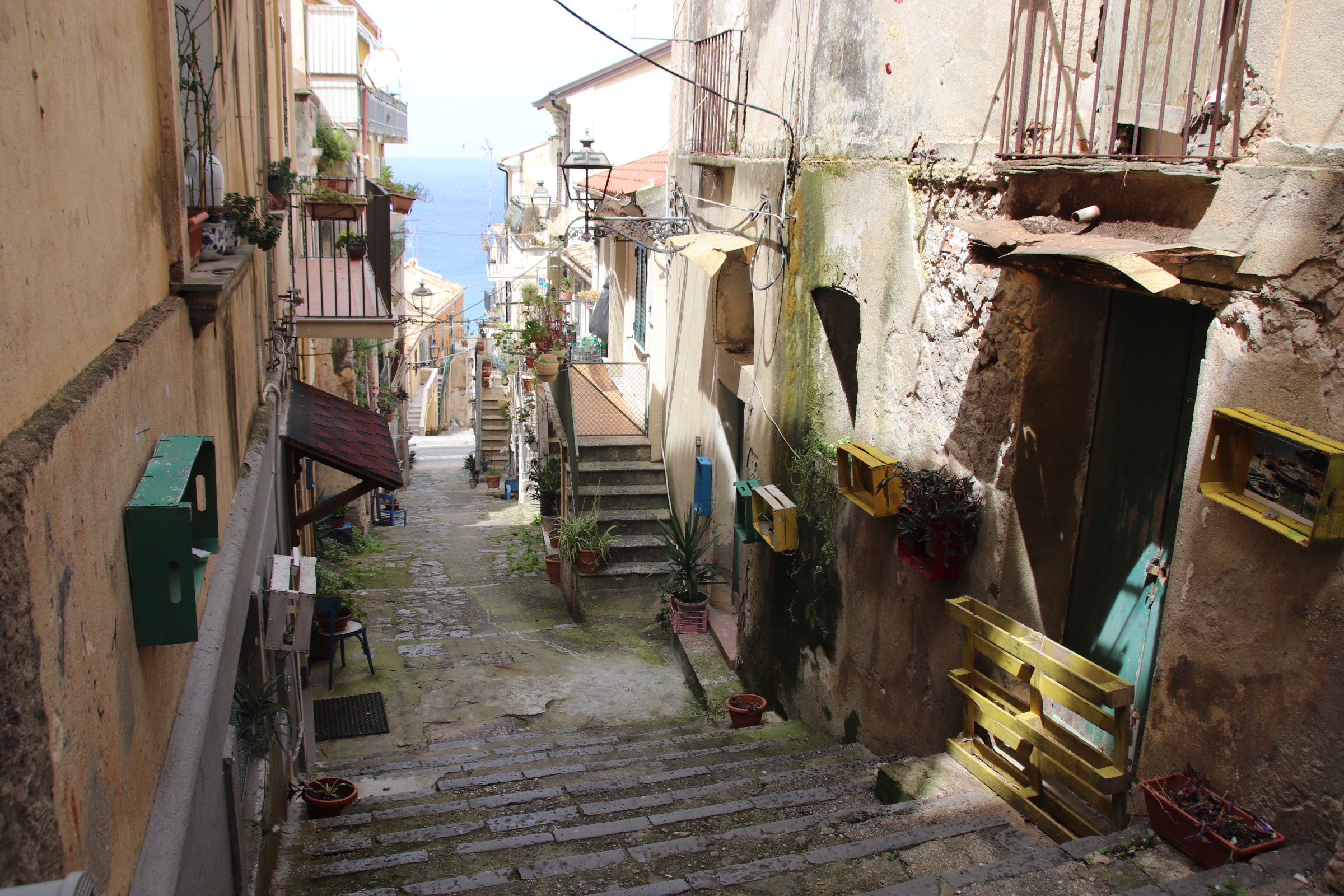
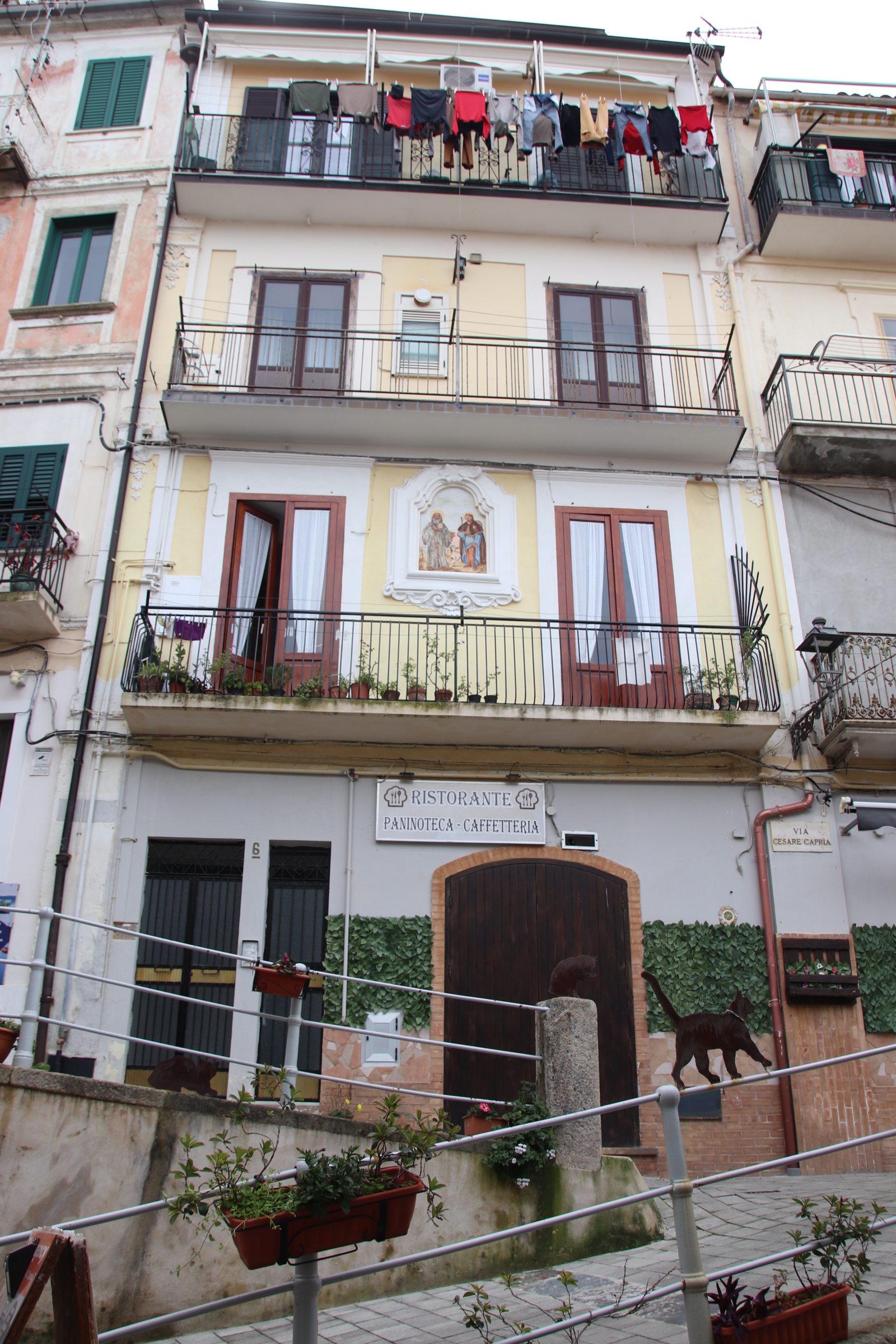
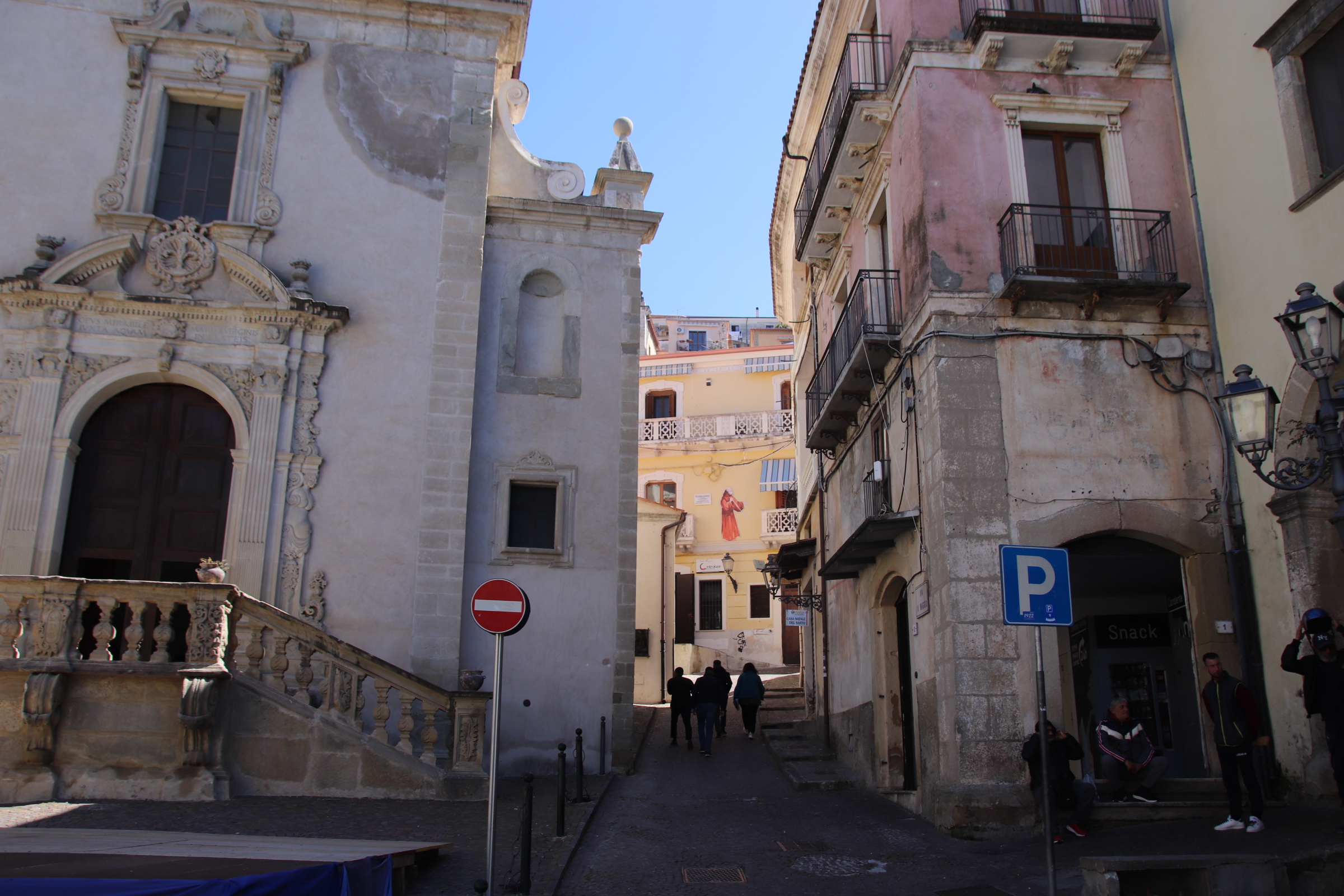
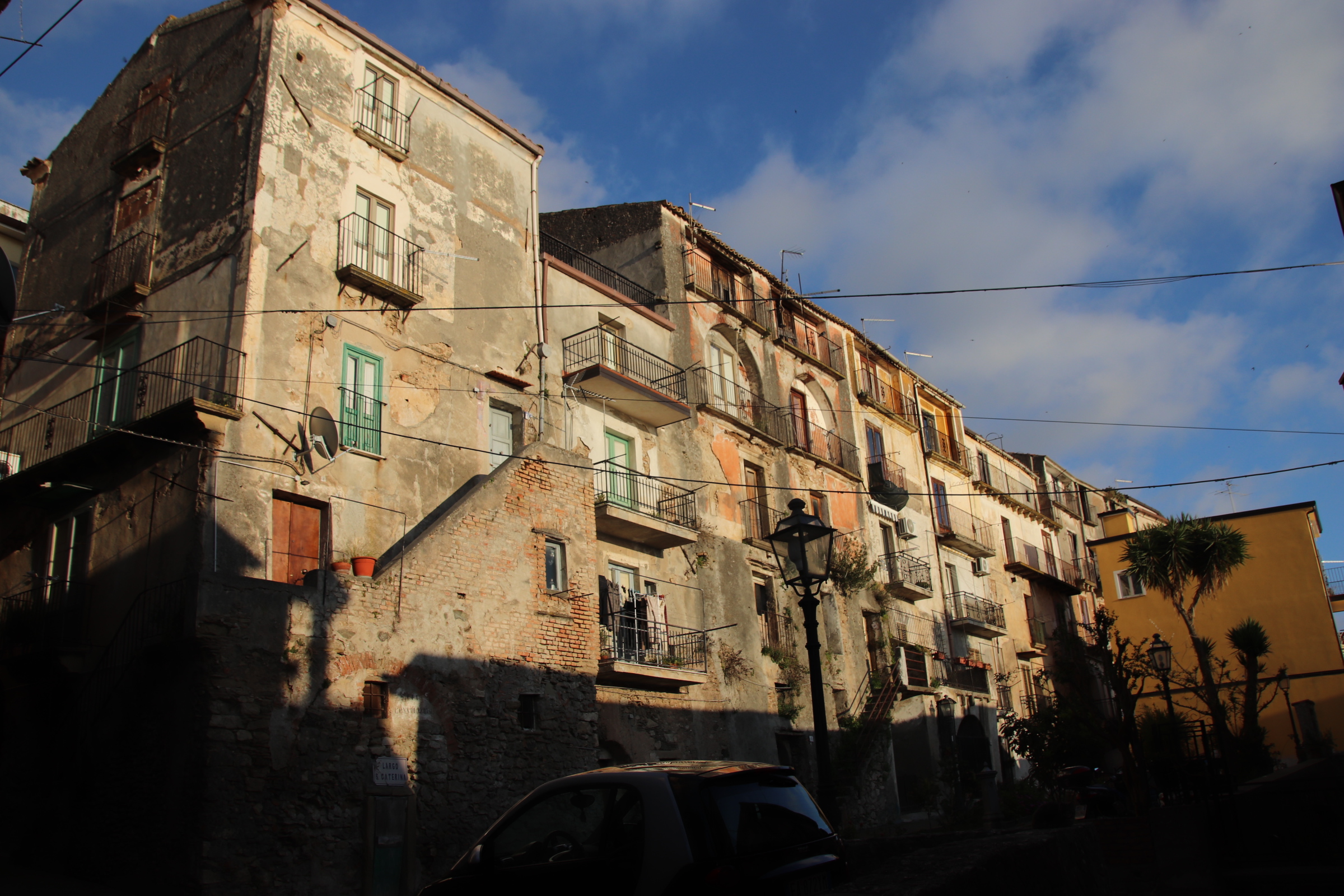
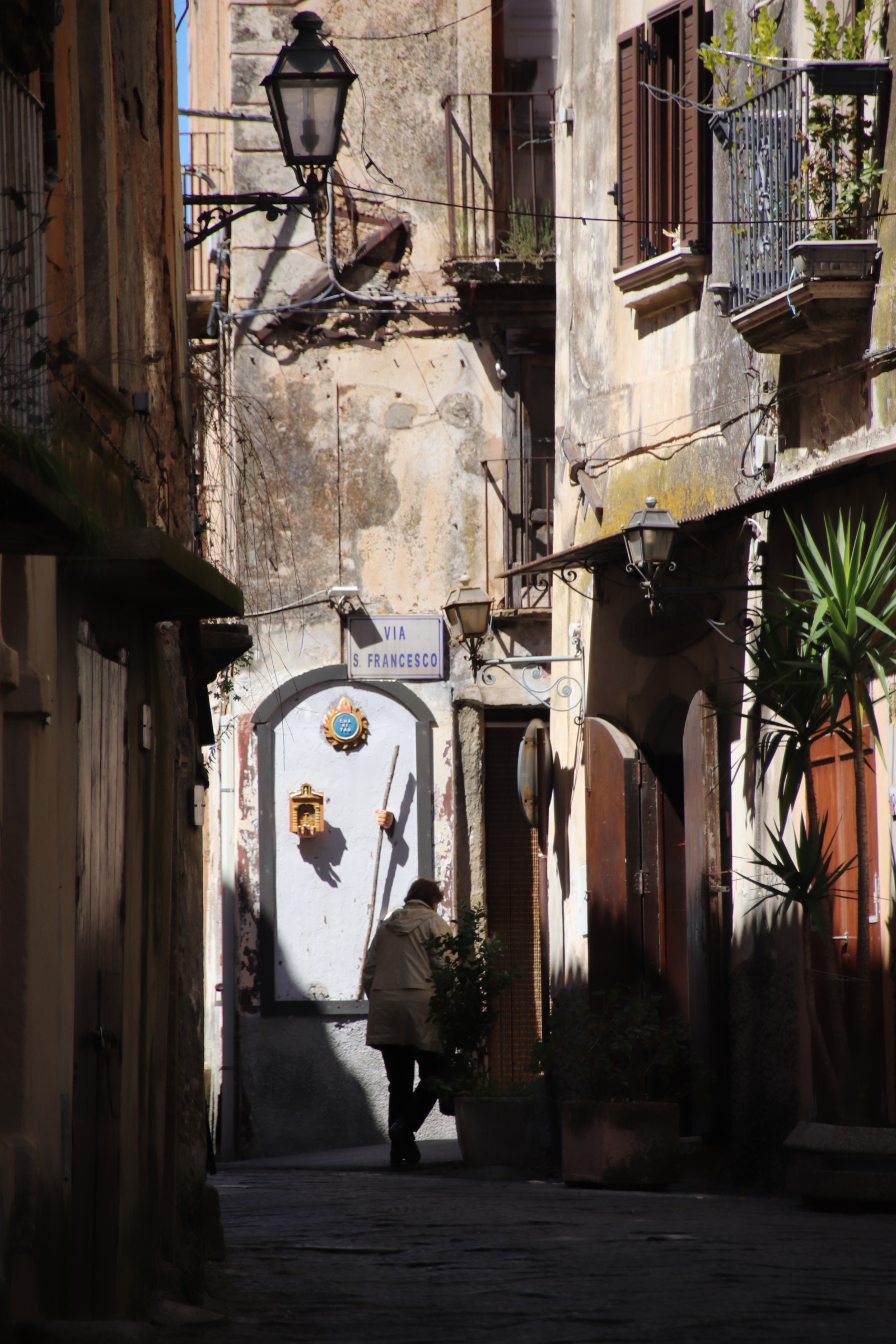
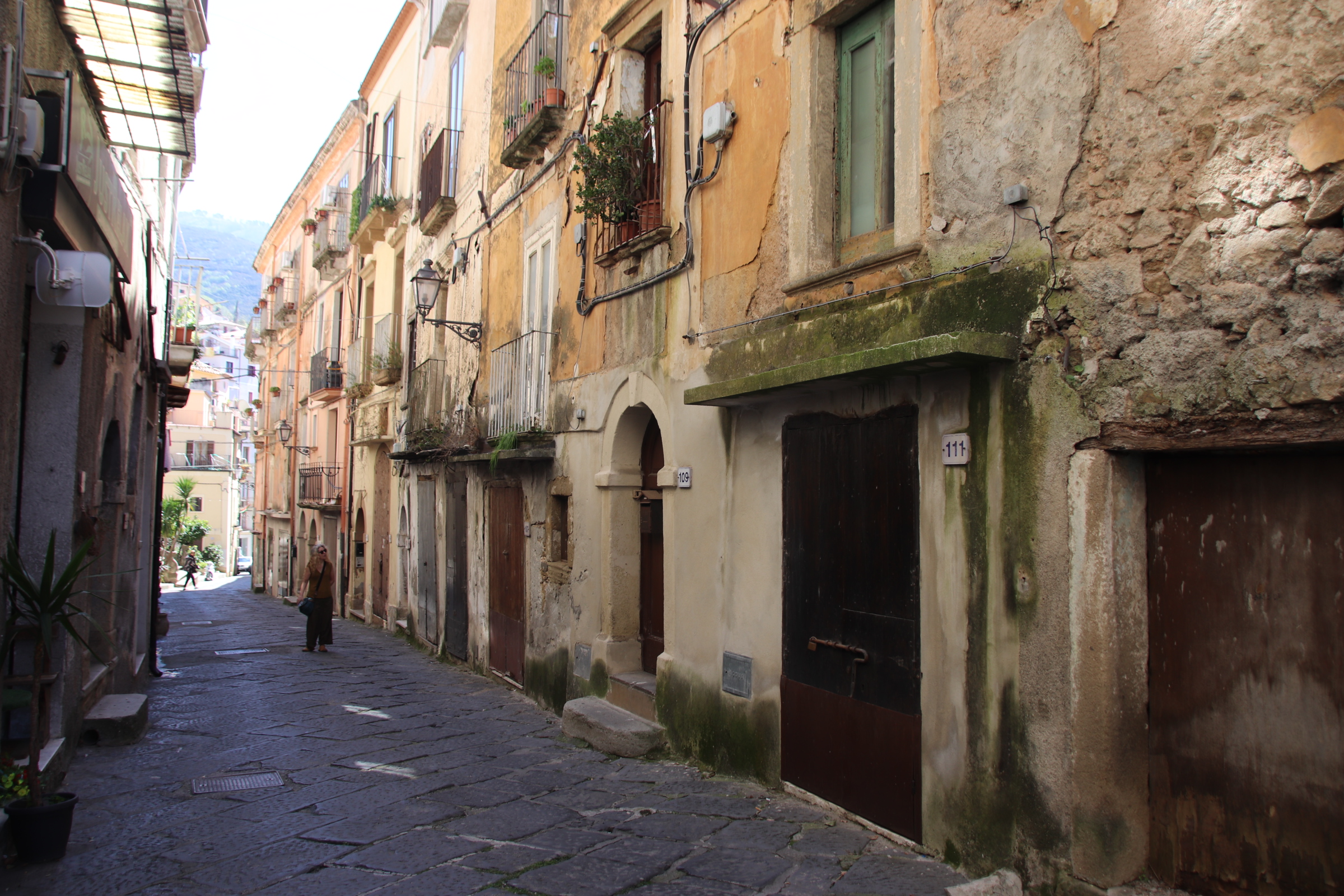
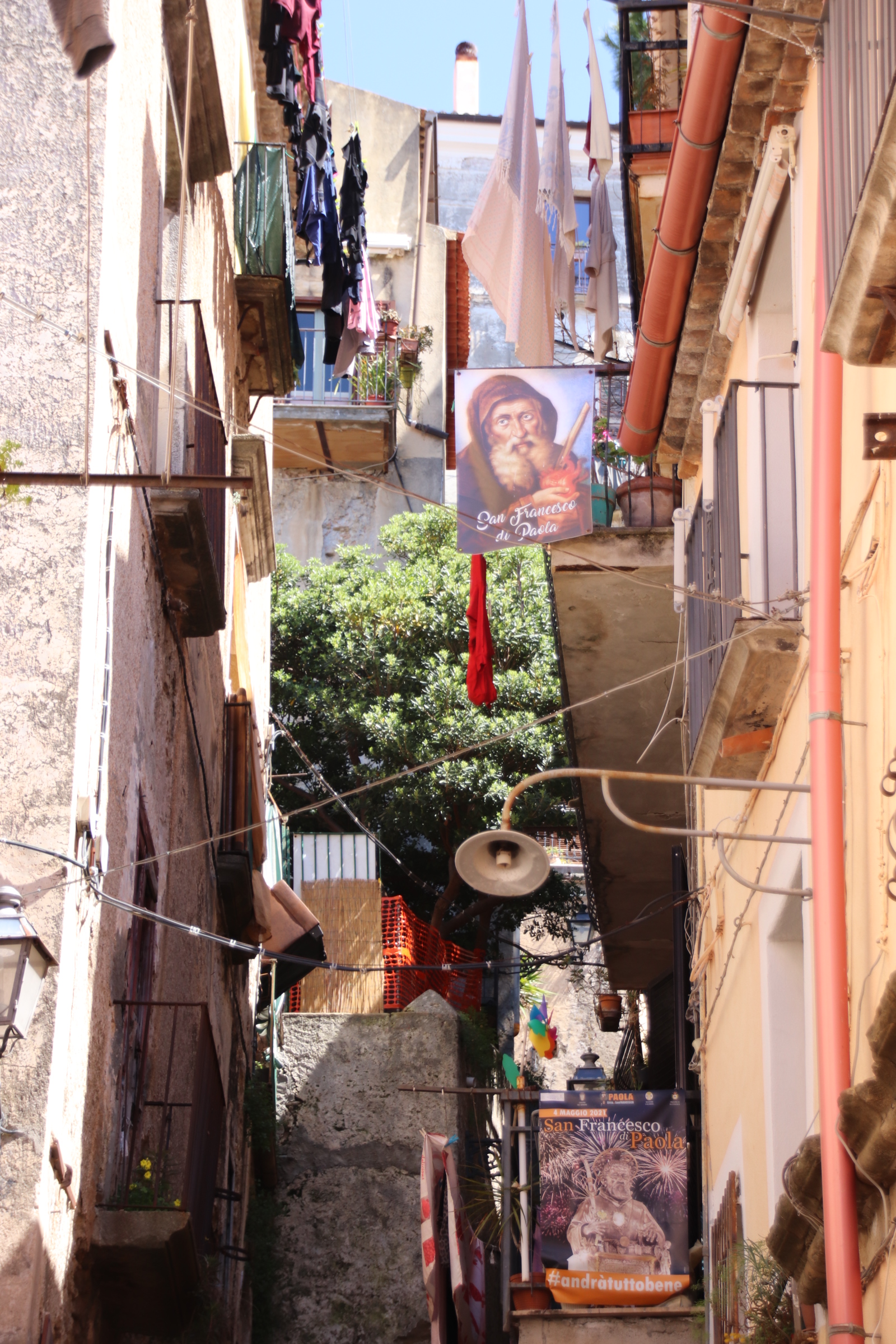
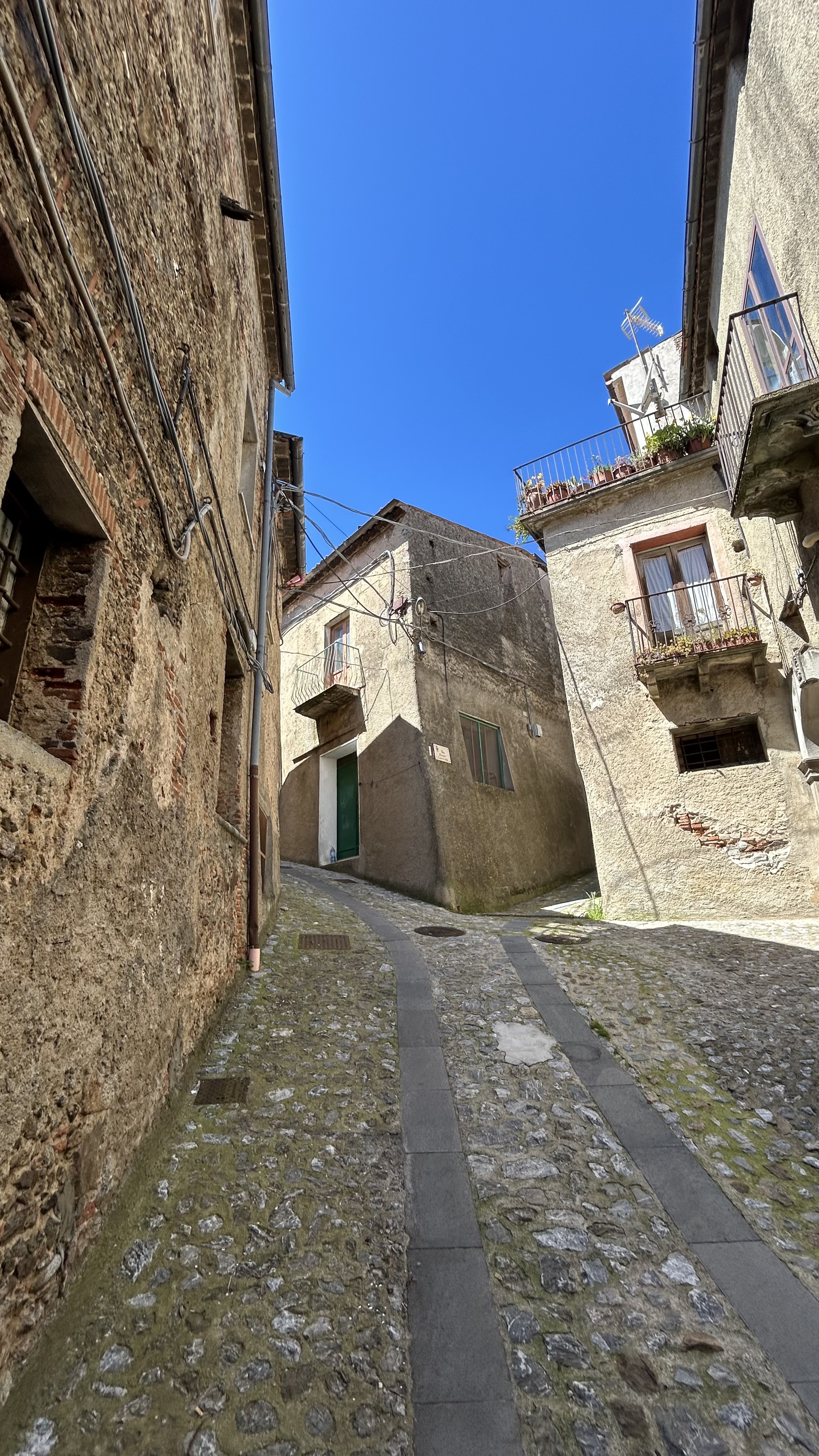
Once inside this tangle of lanes & steps where time stops still, & the sun dares not shine but just appears in the distance as a promise that there is a way out, you can easily be overwhelmed by the past -. the stones, the tenements, the religious images painted on the walls, hanging washing, dark gloomy alleys, shadowed stairways, flaky facades & peeling doorways; they all present the past to those who live within and those who have the strength to traverse the stairwells.

Reminiscent of a Dickensian nightmare, it is a relief to emerge from the shadows into the brightness of an Italian spring.

The impressive mountains of Calabria

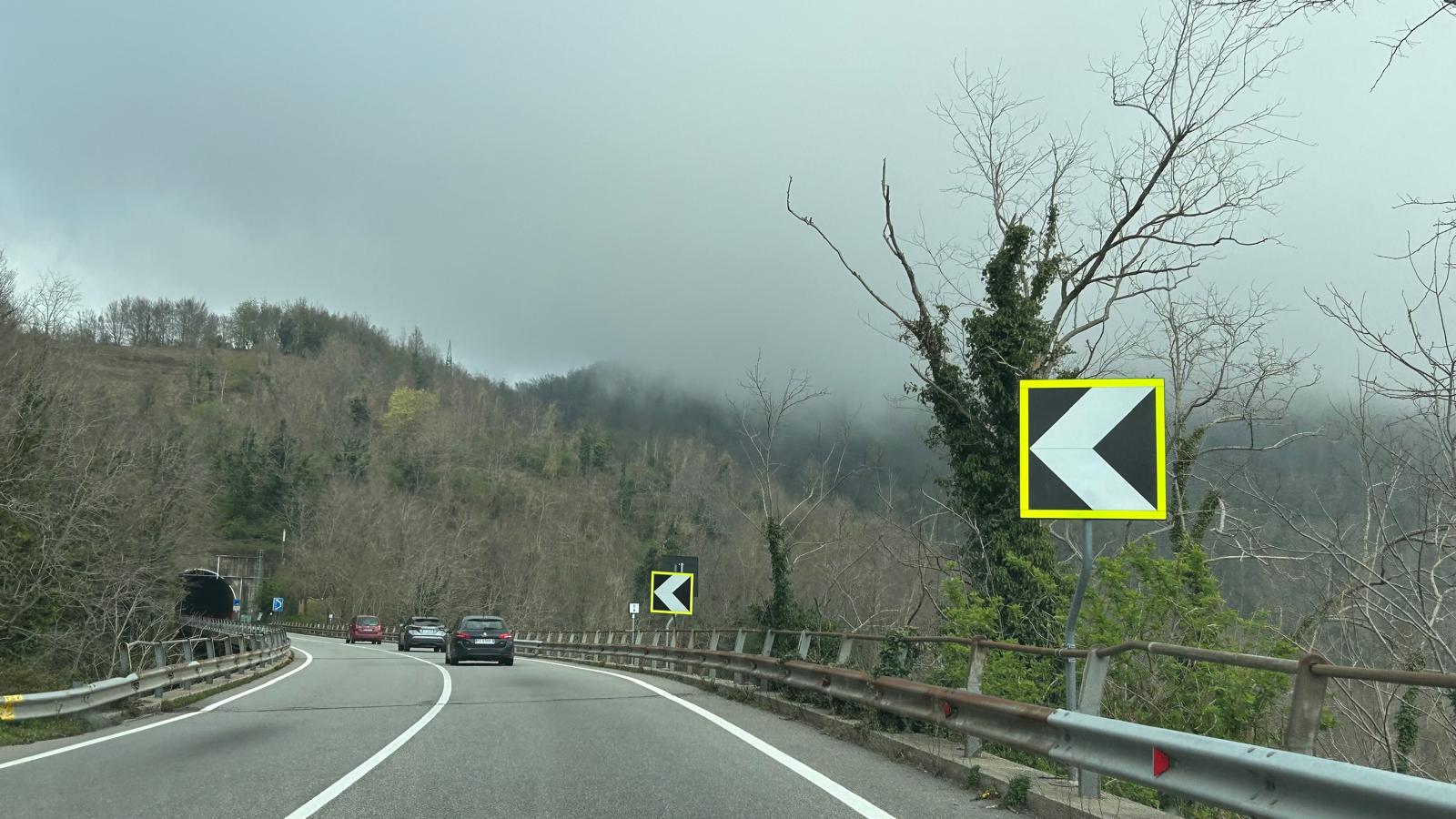
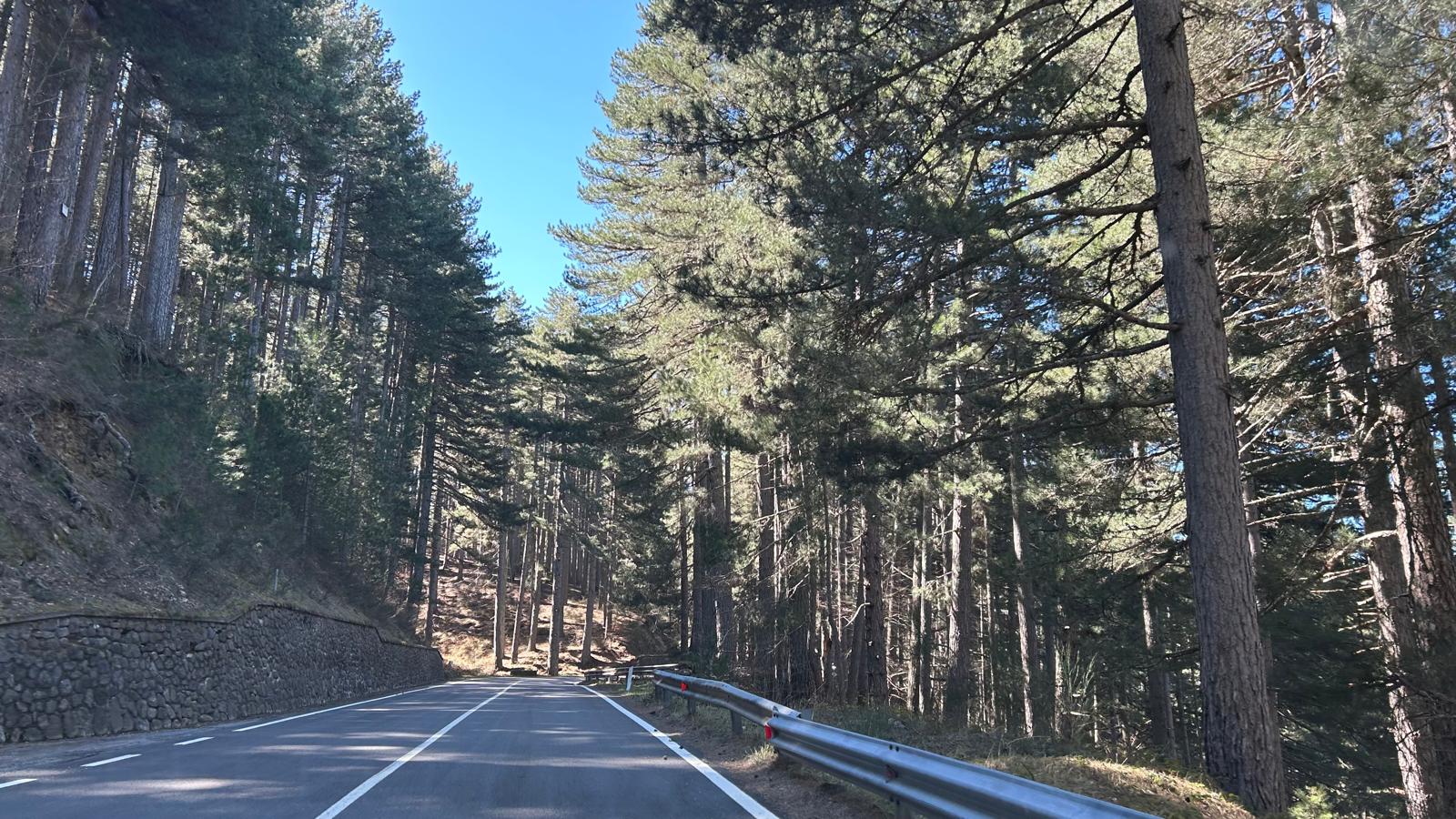
Calabria is shaped like a long tongue with all the taste buds in a narrow coastal strip around the low edge of the thick muscular mass of mountains & valleys. Travelling up the coast for most of the day we were overawed by the layers of brooding storm clouds that hid the mountains beside us. On the coast we were in the sun, but the tops of the mountains beside us were hidden by intensities of grey. We were turning inland to expereience life inthe mountains. Our destination was an agritourist centre in the heart of the Calabrian Mountains, within the peaks, lakes, streams & valleys that make up the Sila National Park. To reach our goal, we turn up through the clouds & grey pines where trolls & goblins hang out.

The road passes through several tunnels, the longest 1.5km, & we emerge into brilliant blue skies. Our journey has been transformed.

Our accommodation Is on a very efficient, working farm. Agritourisimo BioSilva has several large function rooms, a farm shop, restaurant, & rooms for overnight guests. Being Easter, the place is absolutely heaving during both Sunday & Monday, at least during the day. Some very classy cars drop off 100s of men & women dressed in black. I won’t mention the ‘M’ word but there was a certain feeling. 😆. Once the limos & mercs took their human cargo off home, we were the only guests there!!

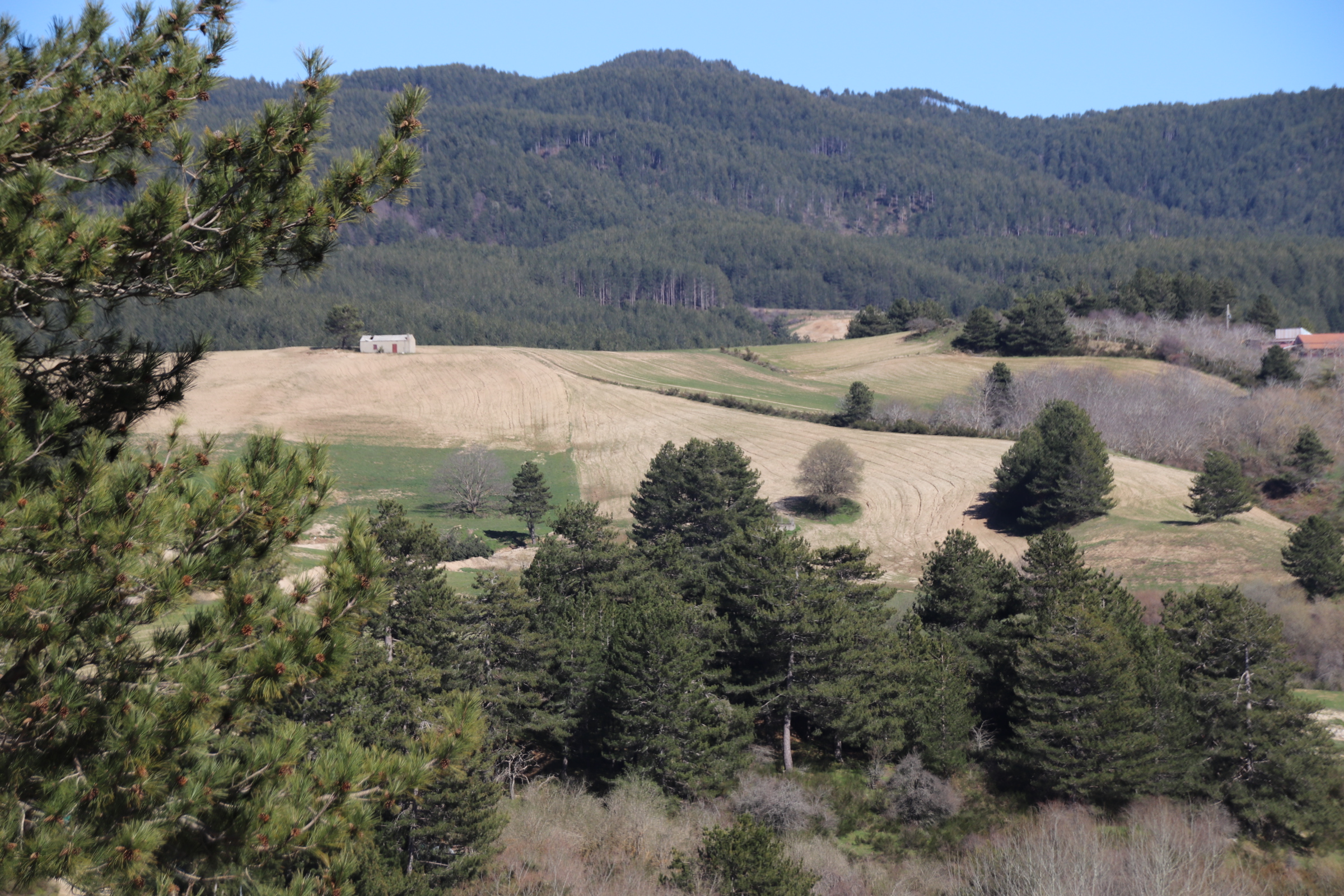
Ahead, farmed hills & timbered ridges veer off around us. Those wonderful intestined roads, take us past open land, up & down & around sweeping bends over gushing streams, through giant pine collections. Whenever the landscapes open up, the hillsides are dotted, decorated, with white villas & clusters of traditional villages topped with clay tiles & a church spire. It’s difficult to tell if these are new builds or renovations. The countryside feels prosperous with an overall veneer of affluence although life seems harder in the towns & villages.

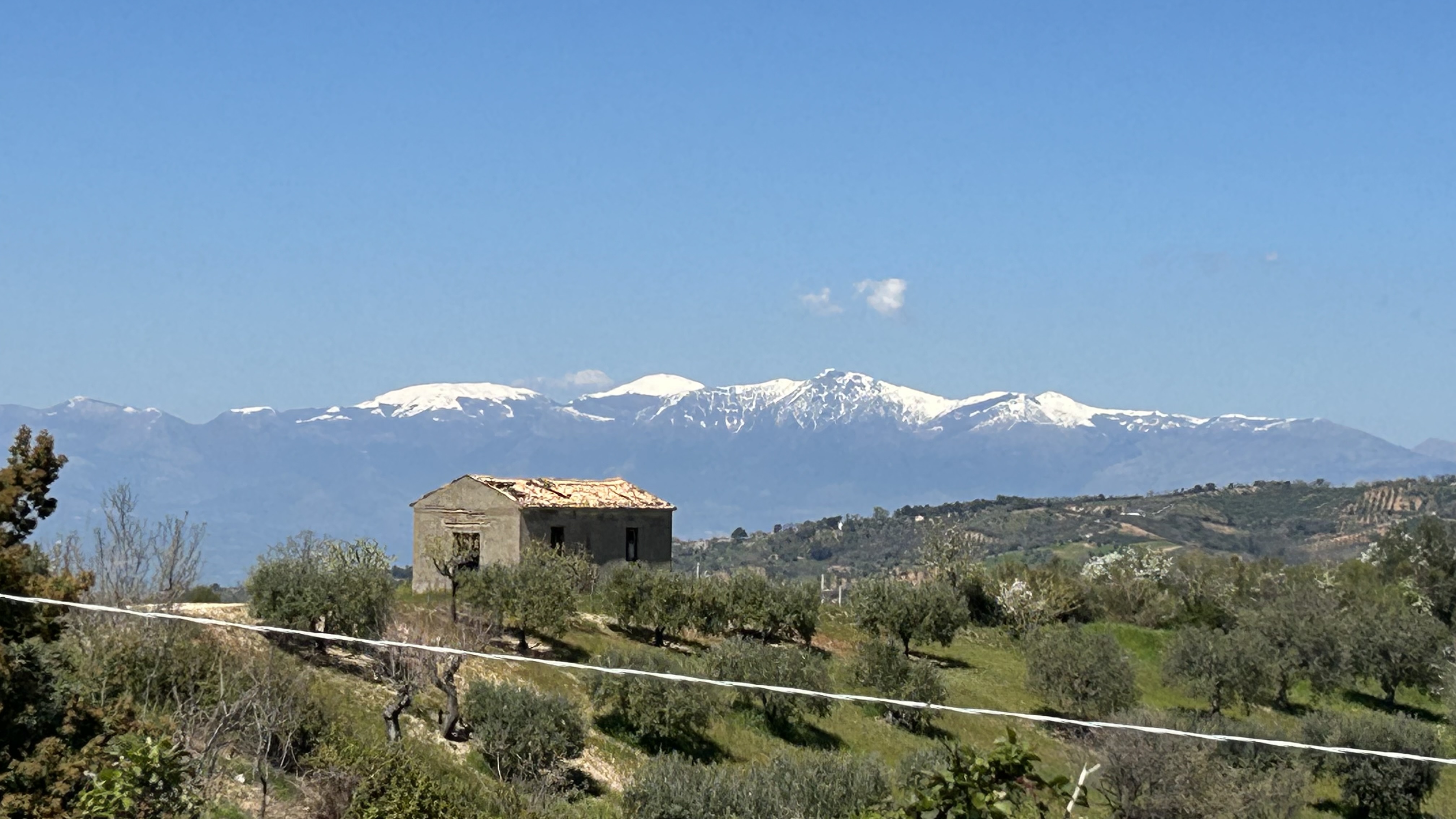
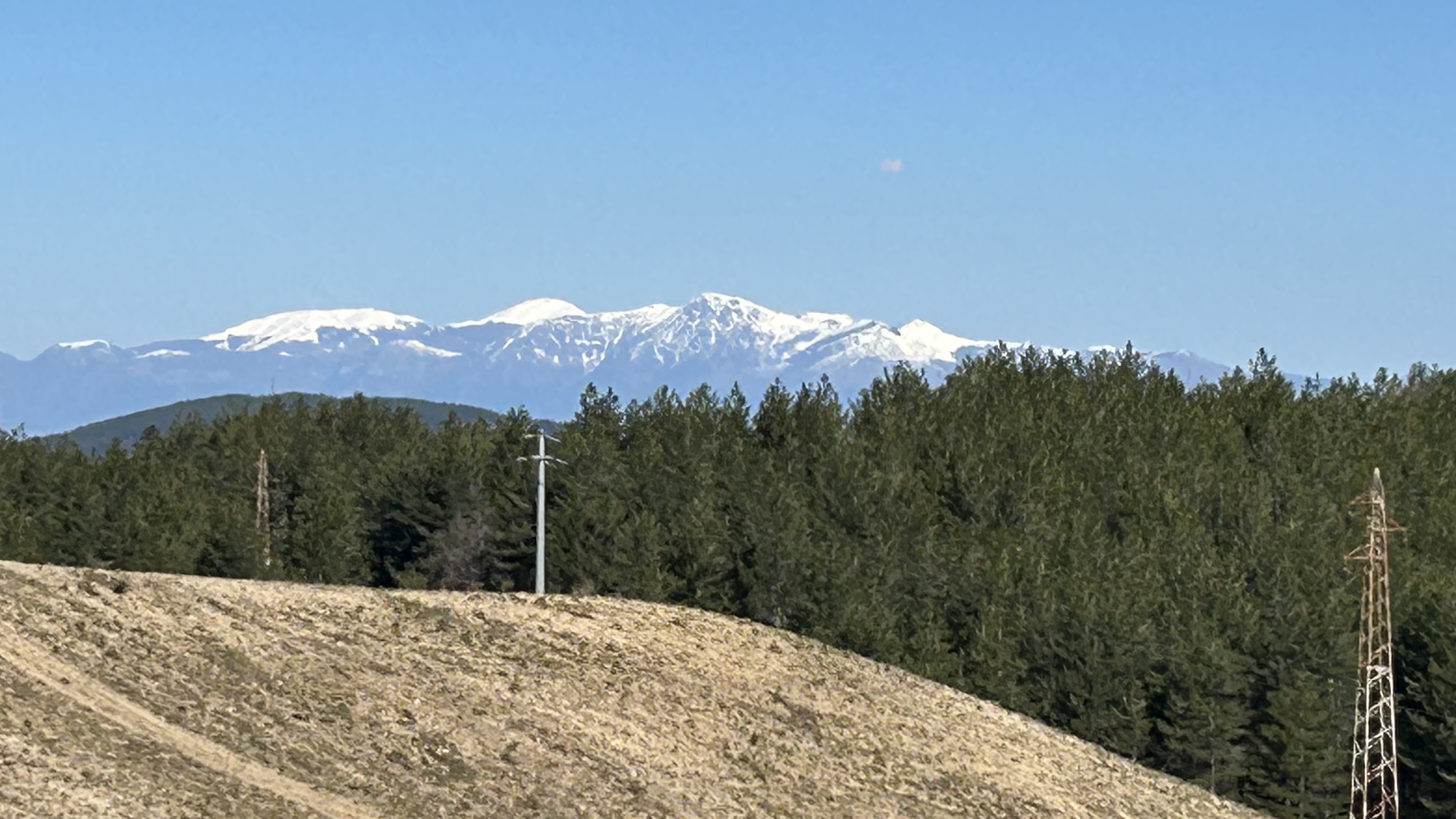
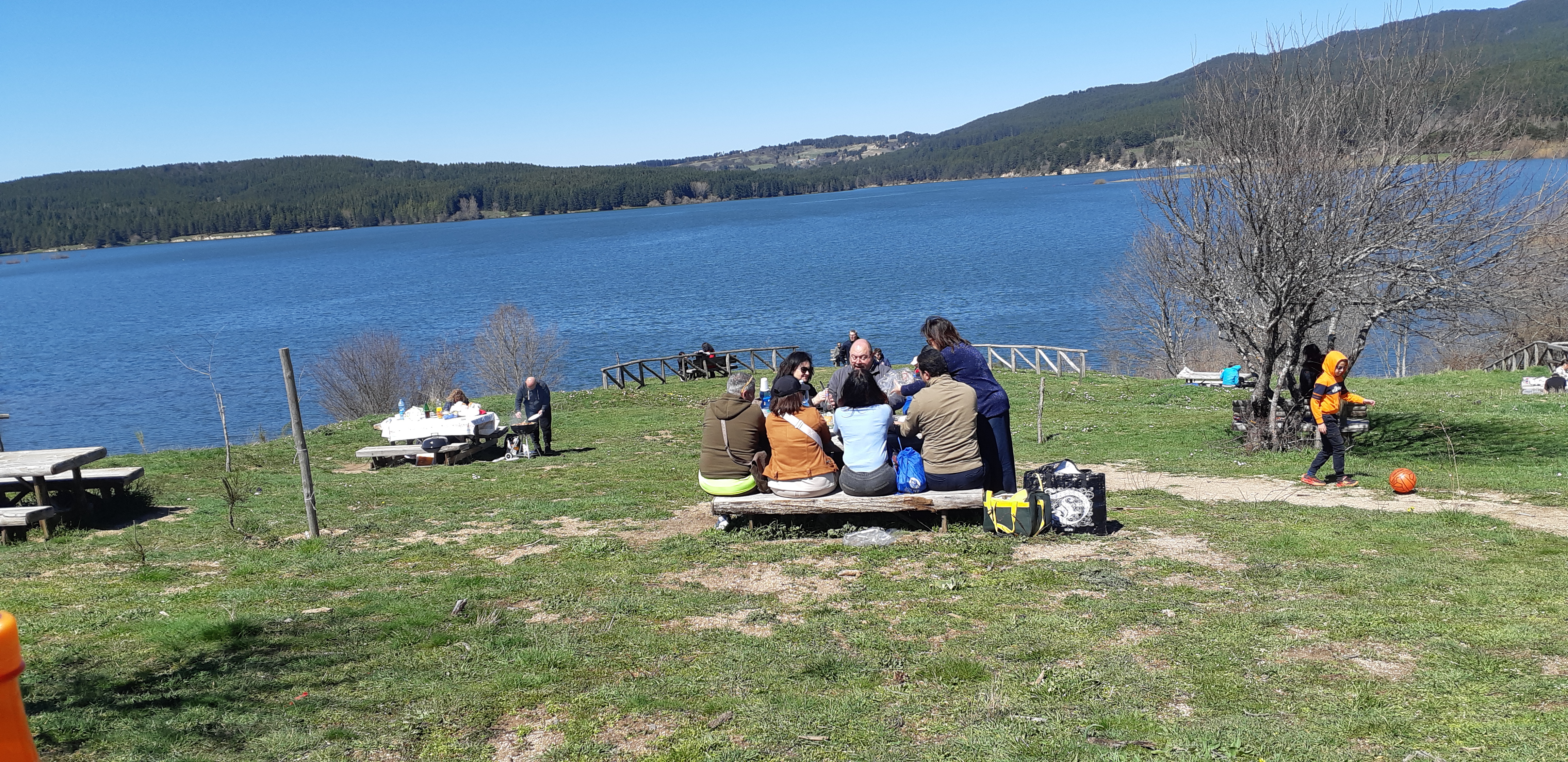
In the far distance a rim of peaks is topped in brilliant white, snow capped to show off the contrasts of stone structures & pine & harvested fields. Up here, 1,000 metres high , snow still lies on the ground. Locals drive up here with picnics & barbqs, with family & friends to take in the clean air & the freshness of the mountains.

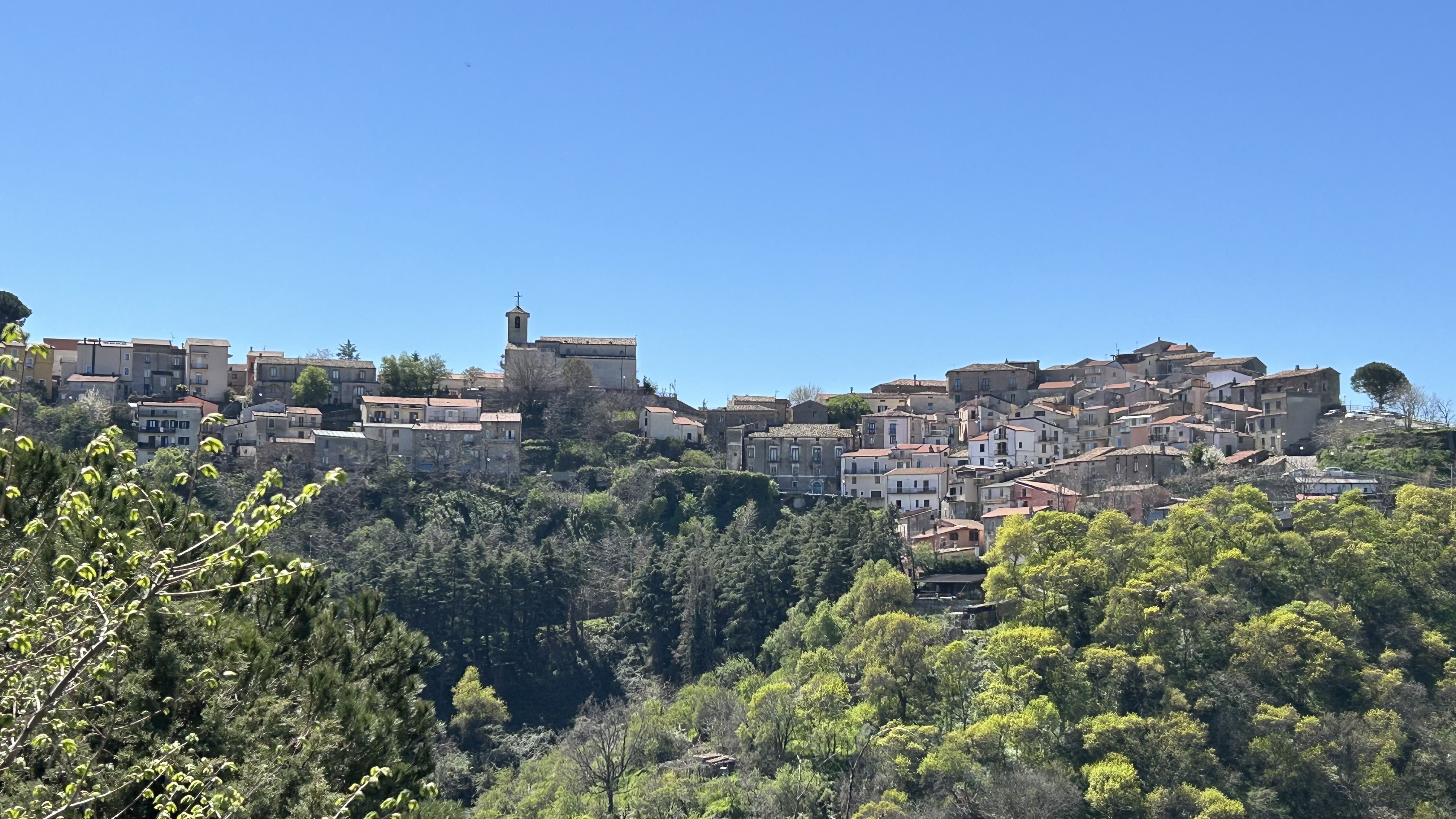
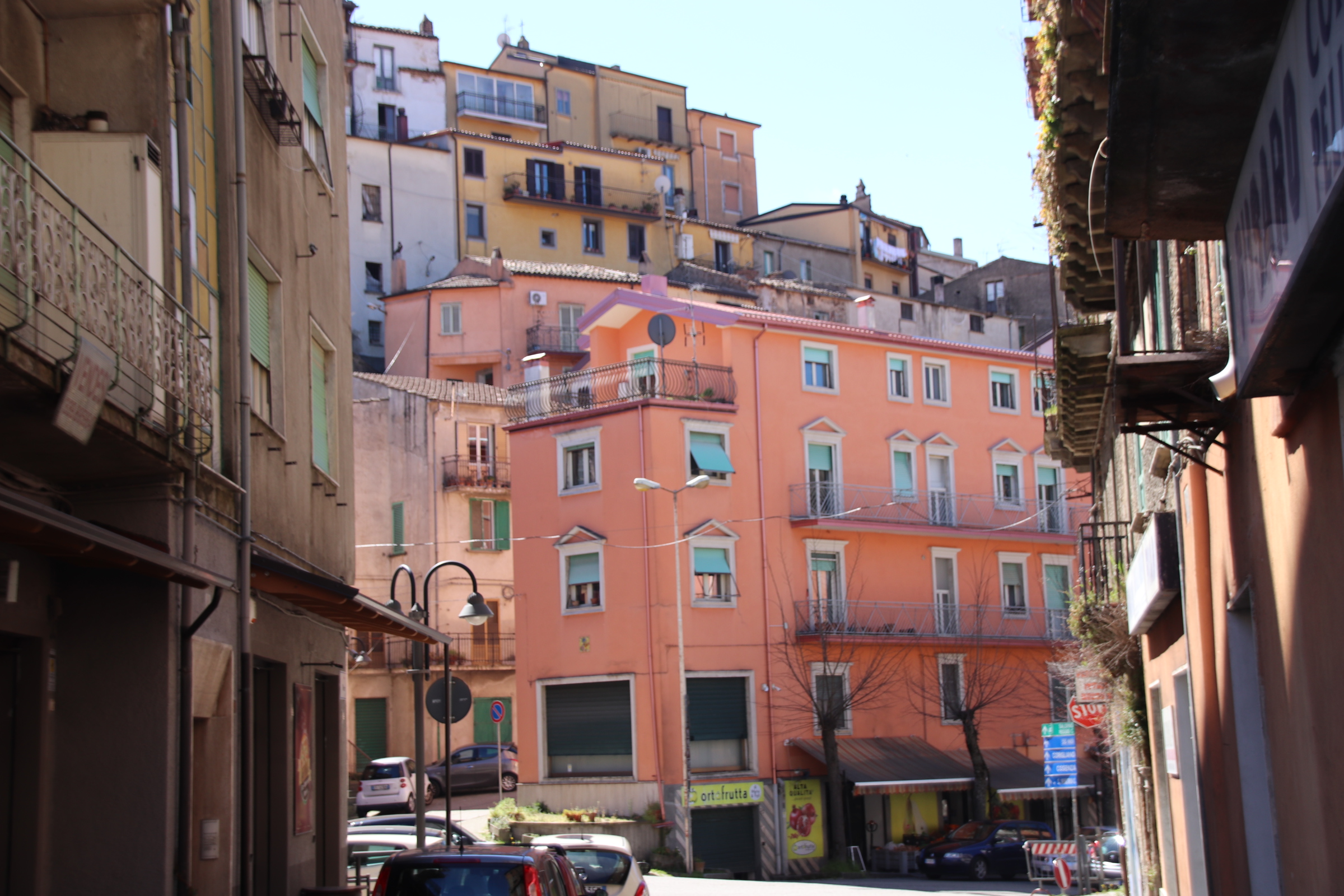
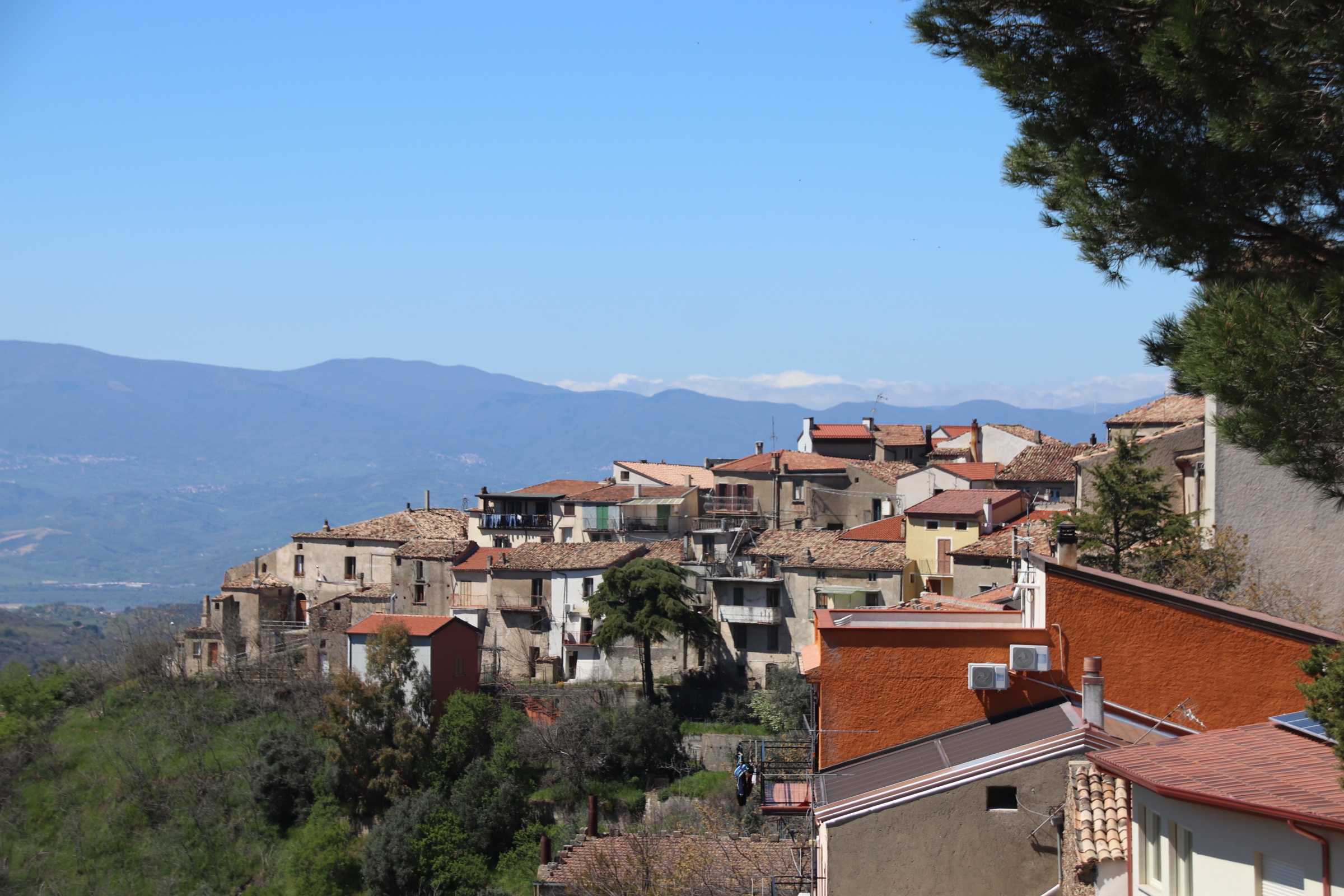
There are numerous villages & small towns spread around the mountain scenery. Acri is just one – a modernish town that settled around the foot of an ancient village perched at the top.

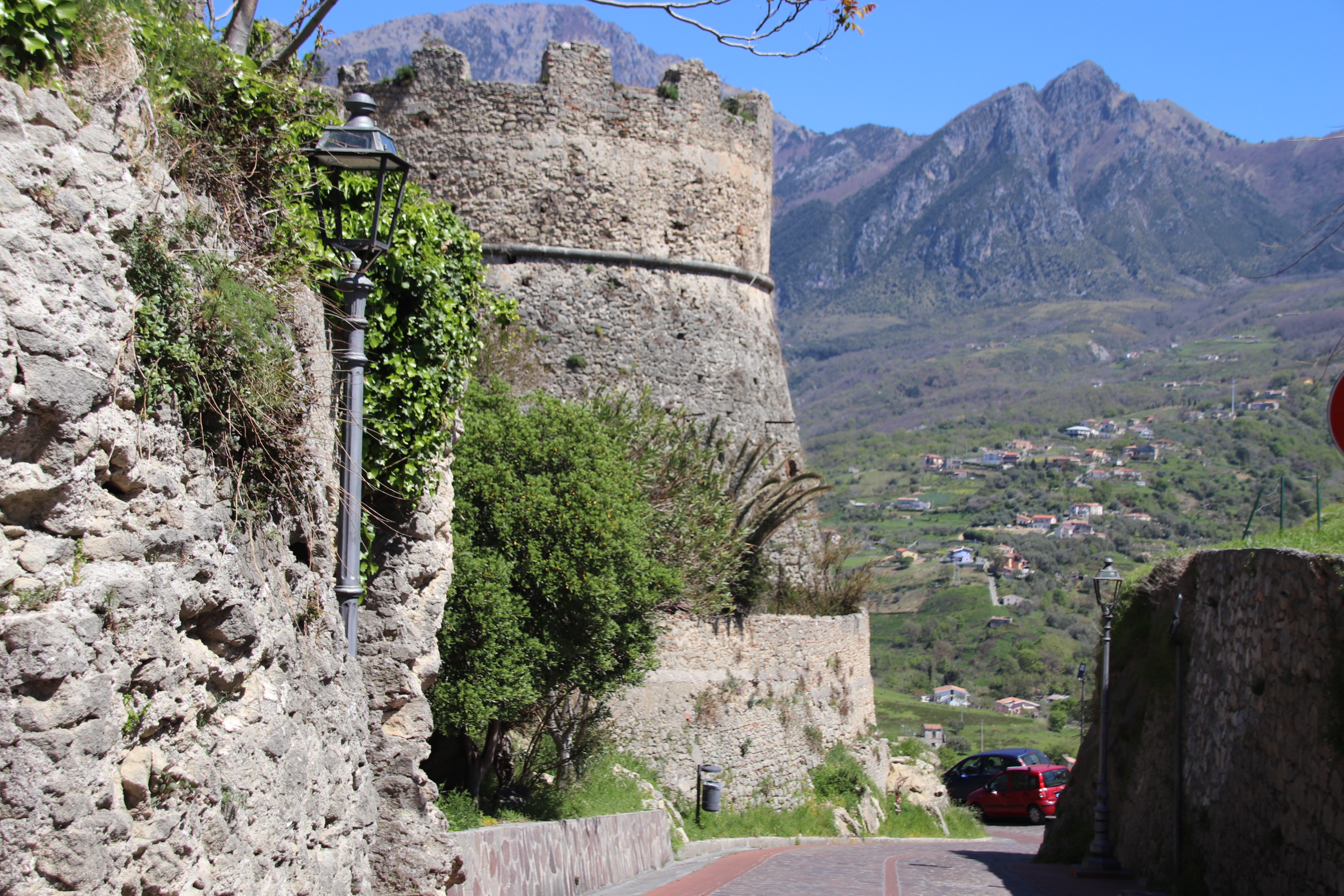
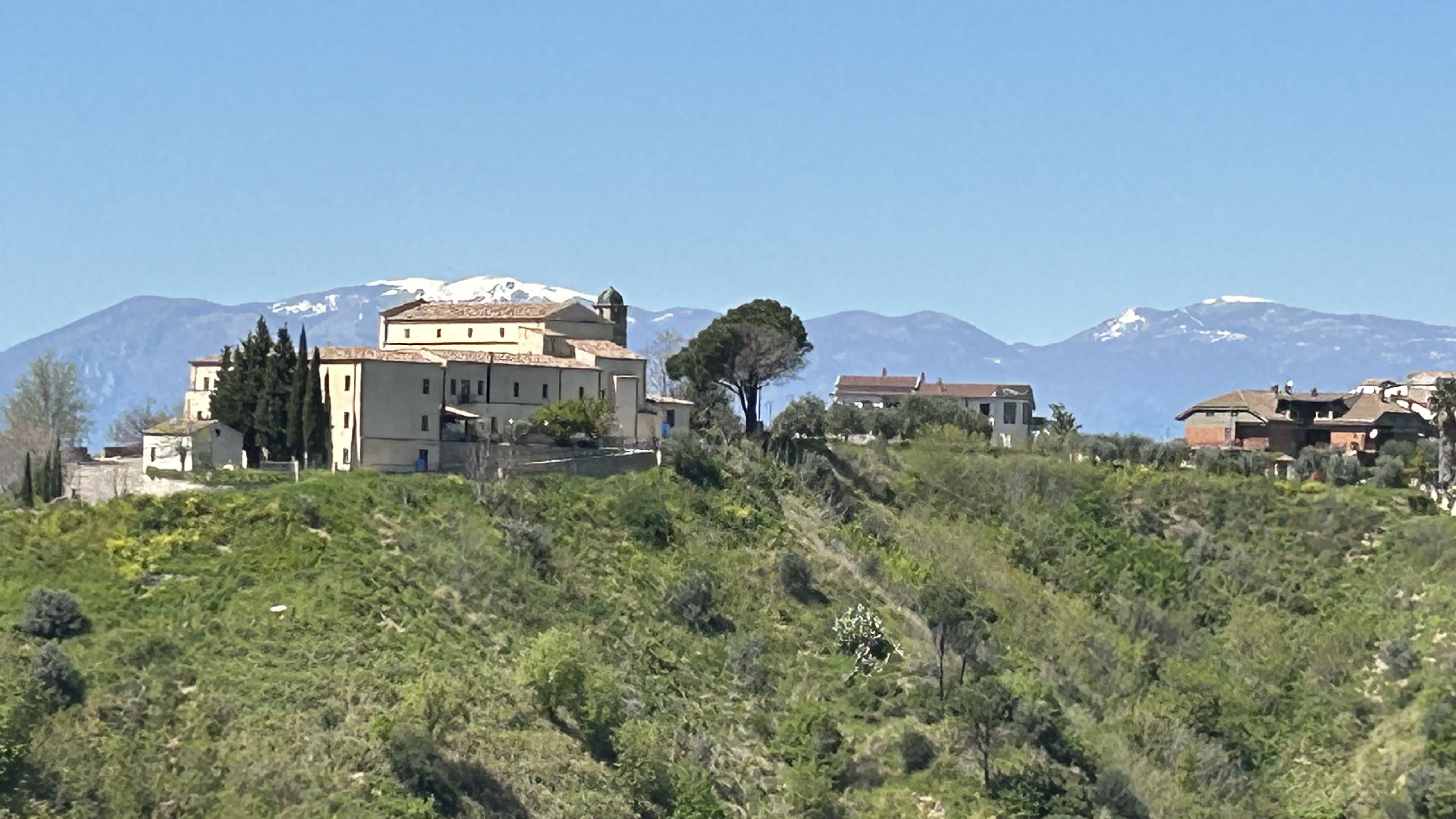
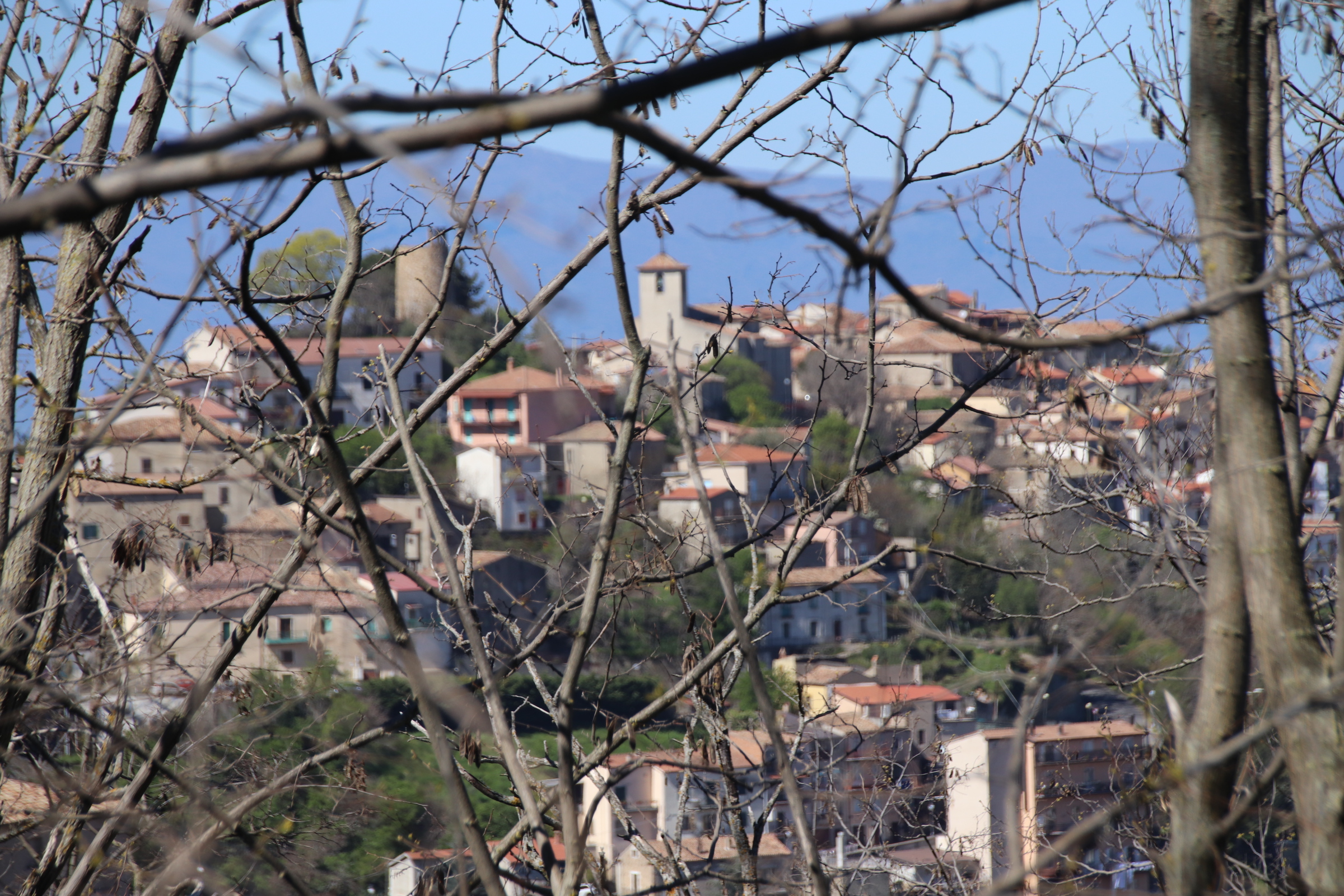
A tumbling watchtower & the church of Serricella di Acri overlook the modern town below. A few locals still in this ancient hamlet but most of the small houses have now been taken over as holiday homes.

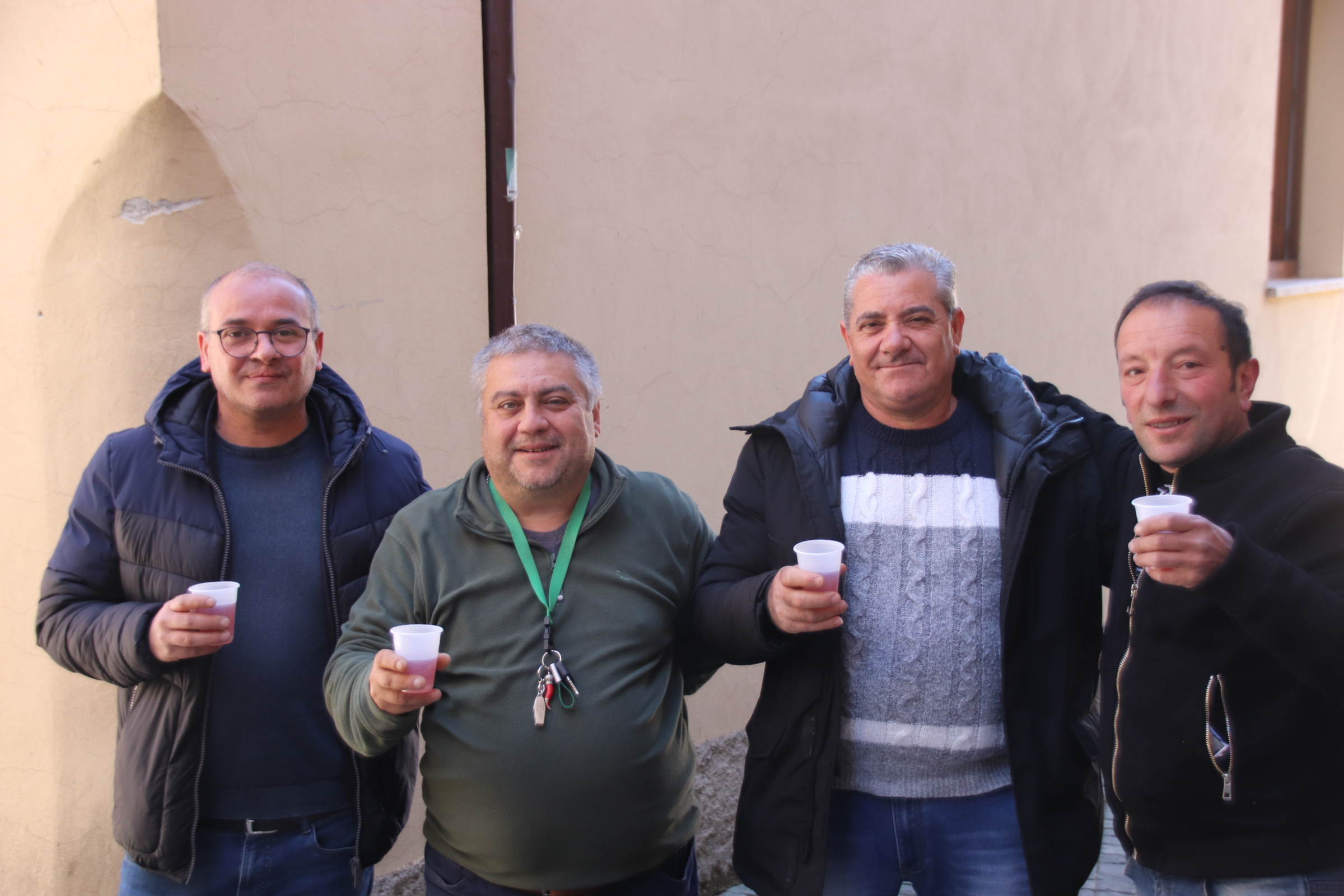
I made friends with these guys. We shared plastic cups of local rose & stories of pensions & childhood in the area.
The coast road north from Lamezia

Today, it’s north up the coast road to Paola. Leaving Lamezia is dead easy. Once through the residential suburbs (we never came across any historic centre) it’s head for the sea & find the super straight coast road that runs as straight as a die, parallel to the water on one side & the railway track on the other, occasionally changing their relative positions with each other in a figure of 8 manoeuvre
The road out of Lamezia is lined for several km with empty or derelict, mostly shuttered & overgrown, hotels, apartment blocks or holiday complexes. It is difficult to see whether they are in winter mothballs awaiting resuscitation in the spring of the new season, or whether they have seen better days & are waiting for a developer to breathe new life into the area.

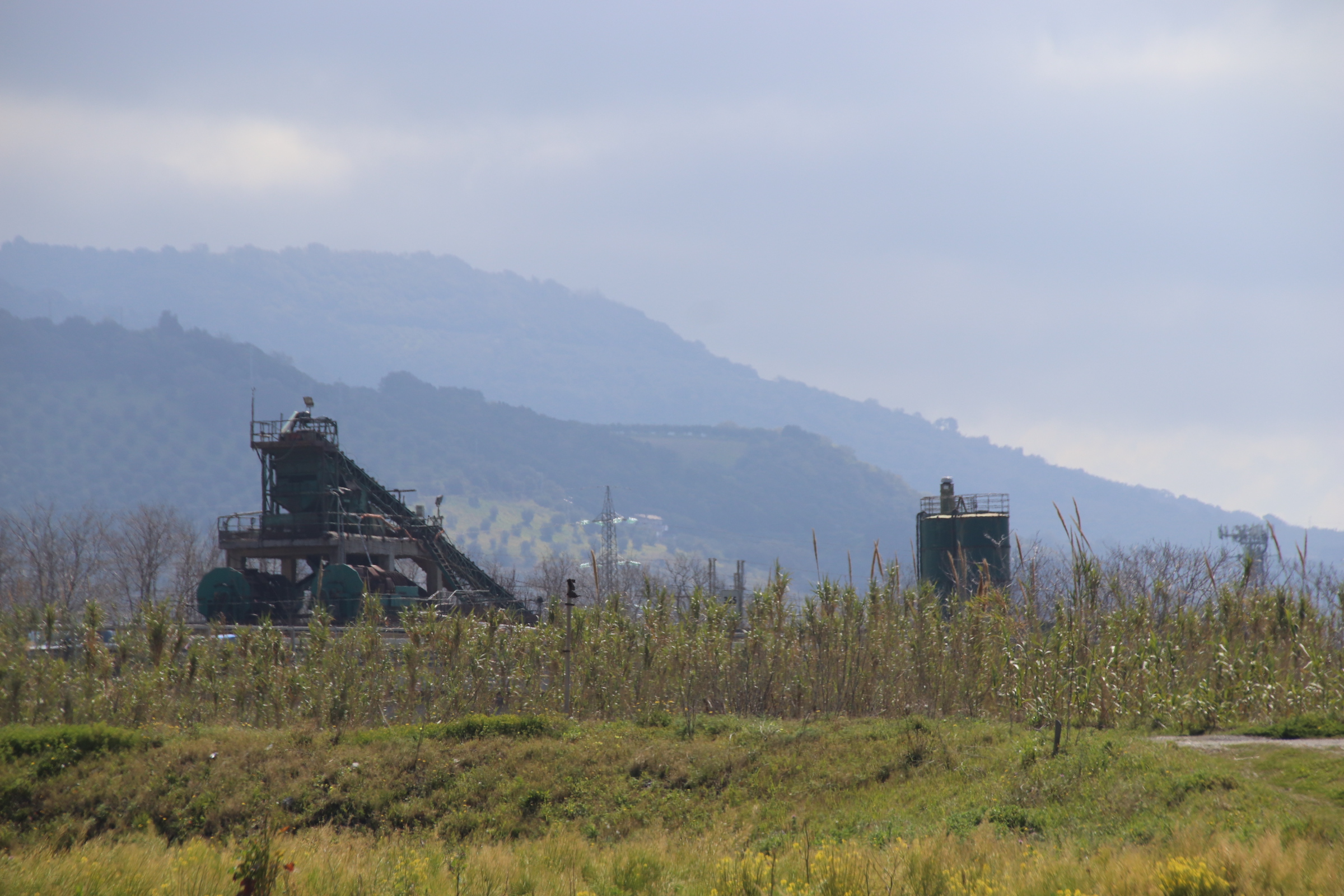
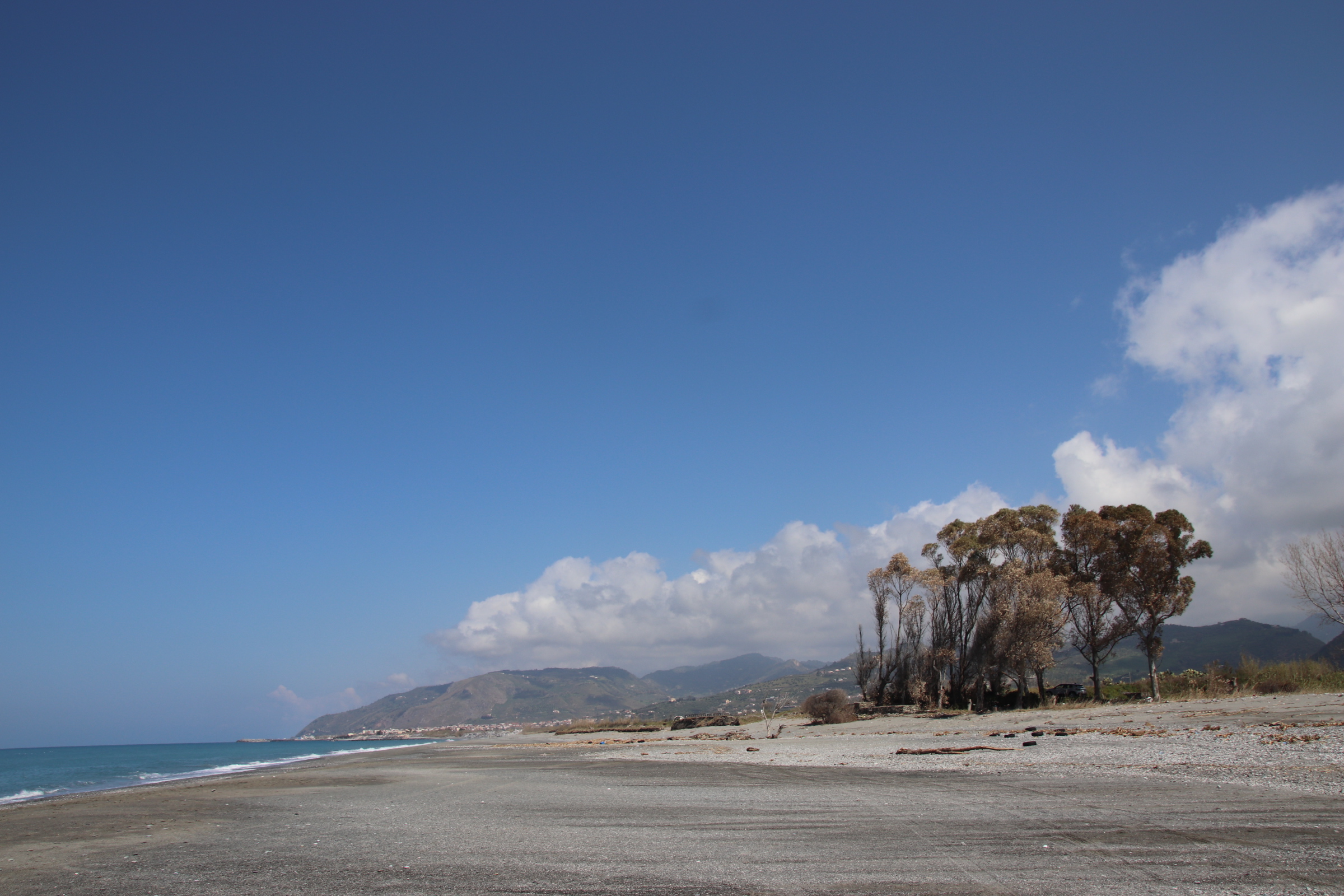
Eventually, these holiday centres & some rusting industrial works give way to a km strip of littered, soft grey, volcanic-sanded beach on one side & the brooding, cloud-covered mountains of the Calabrian spine on the other. A brooding, dense greyness press down onto this range of mountains, a menacing heaviness of threat & doom, leaving the clear blue heavens for the beach.

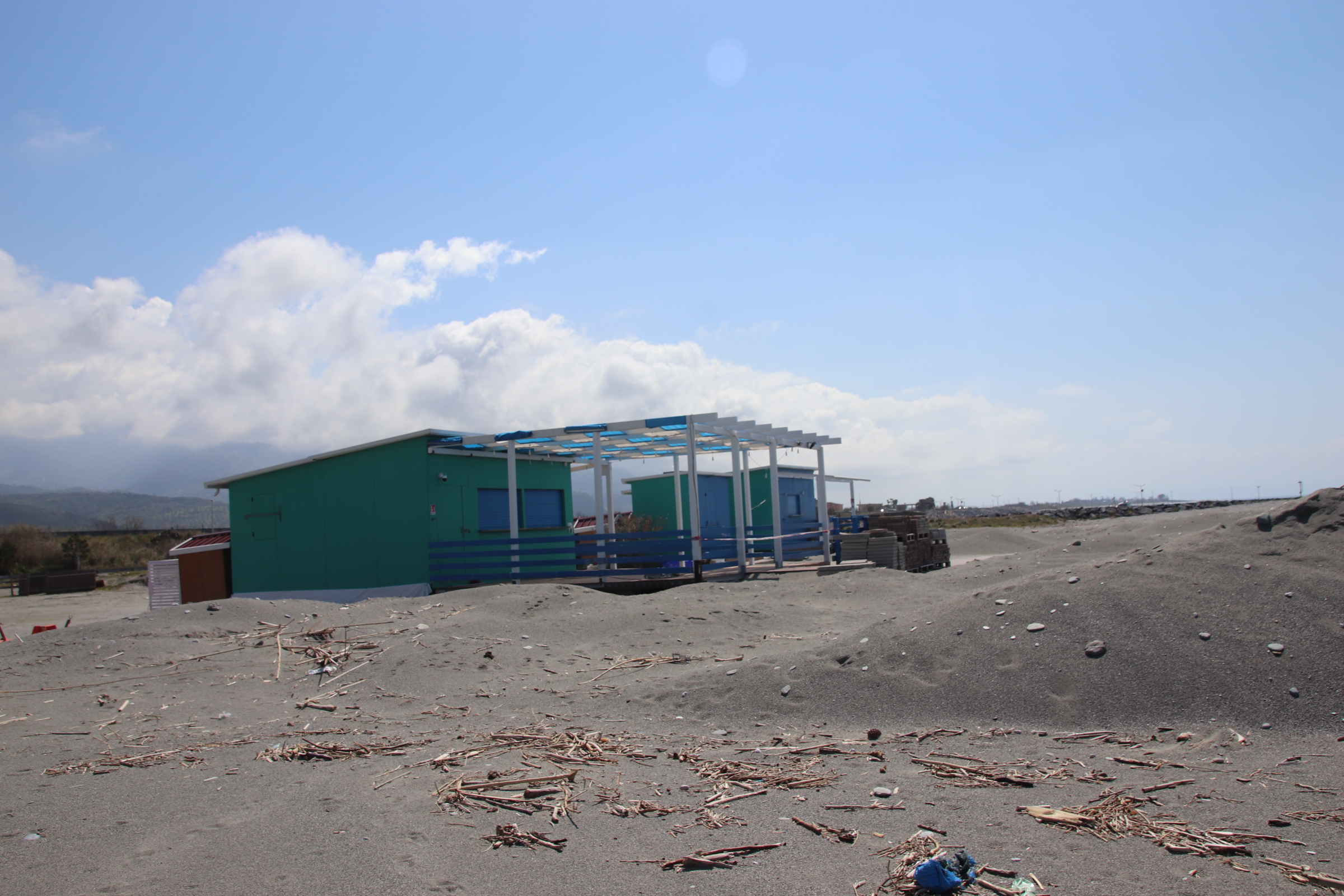
The beach is waiting for its winter storm damage to be cleared, littered as it is with drift wood, bamboo, old tyres & squashed plastic.

Every few km the mountains recede slightly. Over the centuries humanity has developed settlements on these small pieces of land.

At Coreca, the coast does a little wiggle inland & a narrow arm disappears into some houses & under the railway line. As is my way, I follow this lane & come out to a lovely small beach.

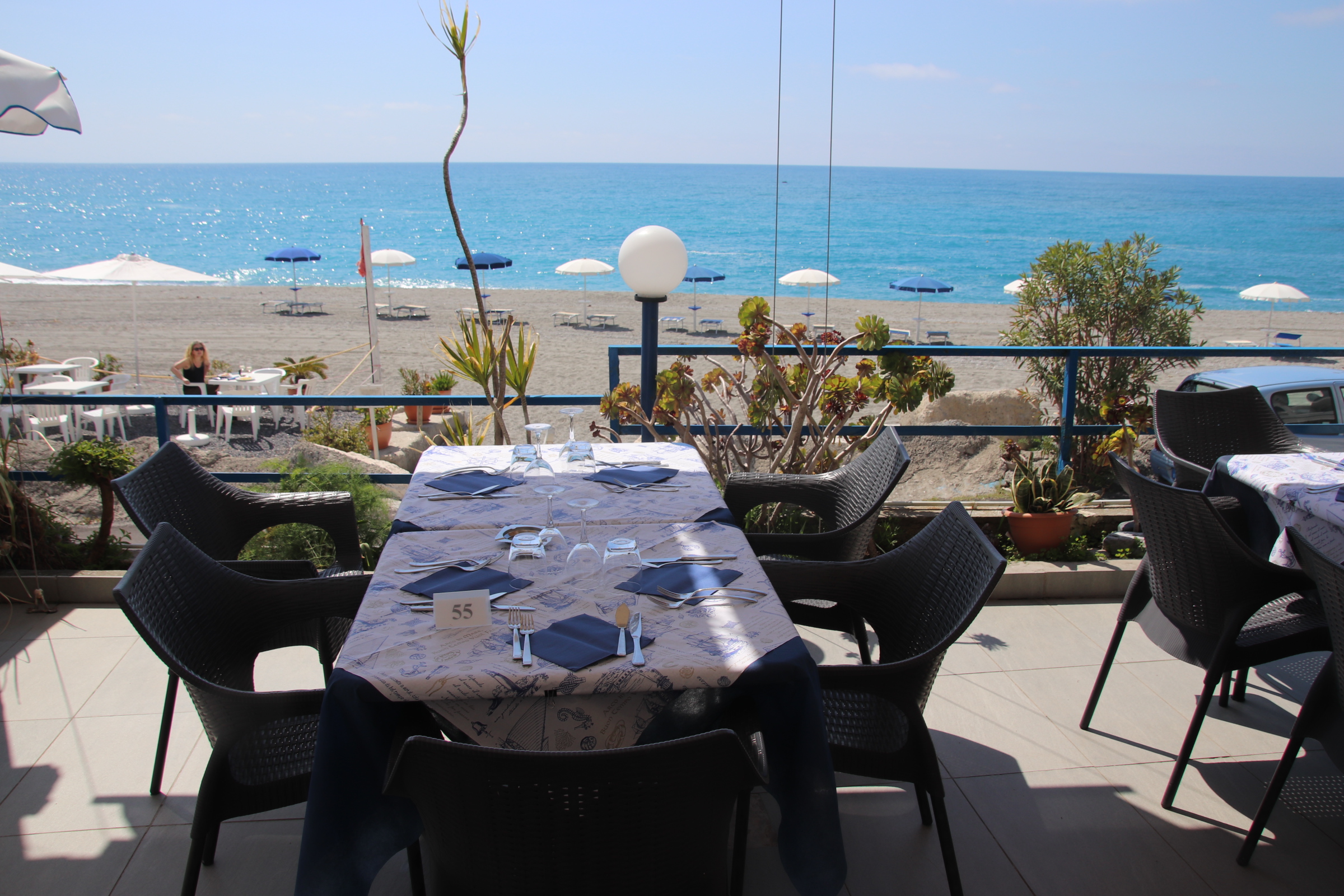
Oh yes….a bar & restaurant, the Mare Blu open & serving; initially, two glasses of cold vino blanco; the sun is shining, the ambiance idyllic; a light lunch & wine is ordered & consumed; a nap just happens. Perfecto. How else to start an Italian adventure.

First Night in Calabria

Calabria – that bit of Italy that forms the toe of the well-heeled boot that ends the single leg of the peninsula persona that is Italy. Full of stories of poverty & mafia & mountains & beaches, it awaits, full of expectation & anticipation.

At the end of a long day we fly into Lamezia Terme around tea time, pick up the car (scary – an upgrade; never want an upgrade in Italy; always means larger, newer, more gadgets, more bleeps & blurps & harder to negotiate narrow streets, parked cars & various street furniture, not to mention parking in impossibly tight spaces; this one is a Jeep with 5km on the clock!!). We make our Tom Tom way to the hotel for our first night in Calabria.

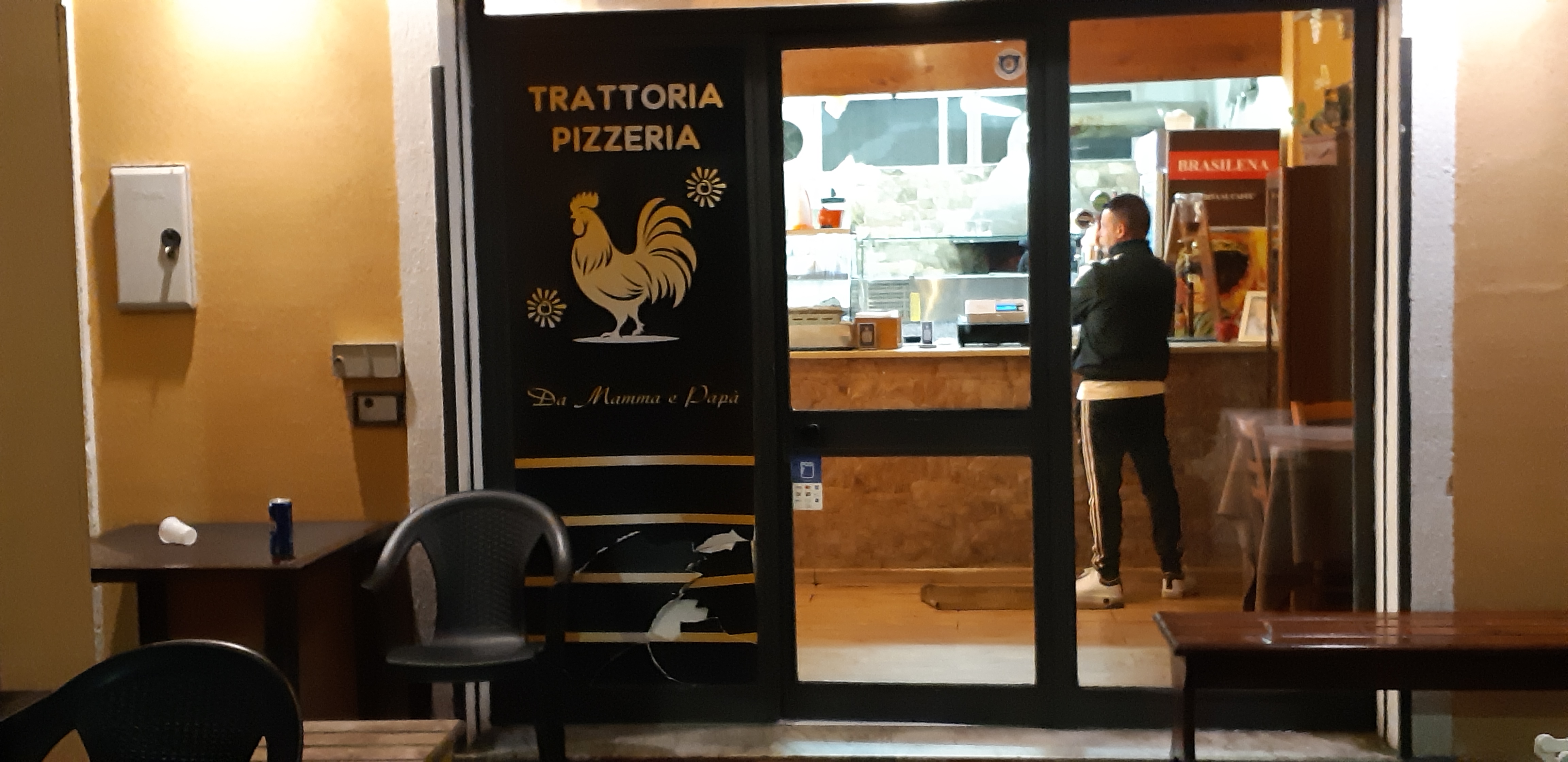
Once settled, it’s a quick consult of Google to find a place to eat. Mamma & Papa’s pizzeria sounds good (rated 4.6). We are several km outside any historic centre, in the suburbs, opposite the central railway station. The area does little to excite. It’s an extensive network of ordinary streets lined by low apartment blocks & residential housing with cars heavily squeezed against every kerb. The occasional collection of a few shops interrupts to service the locality.

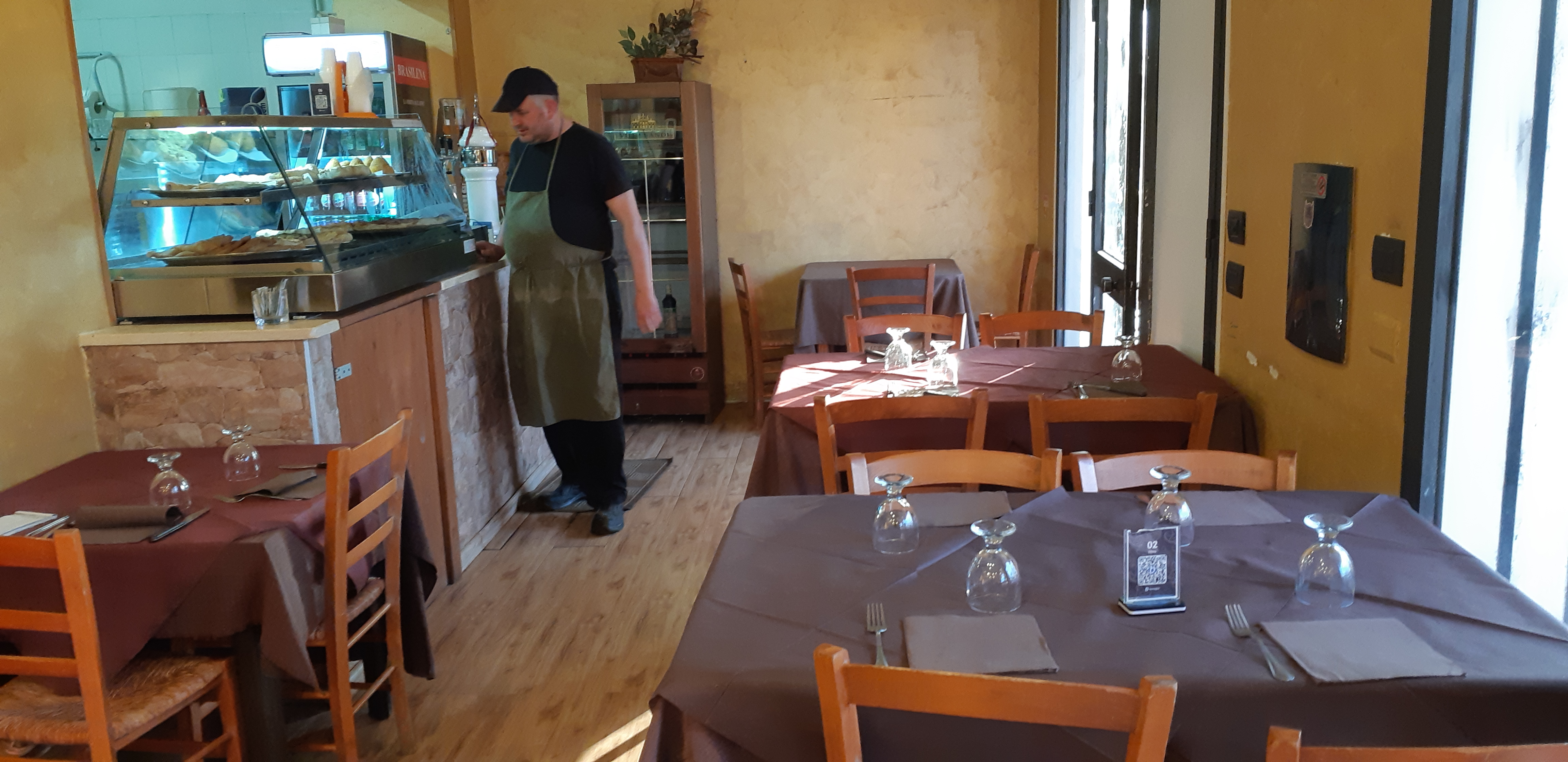
We arrive after 20 minutes walk. Hmmm. A small, rather tatty exterior has a couple of plastic tables under a cross-timbered covered veranda next door to a row of a dozen or so wheelie bins. A guy plays with a young lad running a plastic gun welcome. Slight hesitation but, ‘hey, we gotta eat’. The place is very basic, very tight, & very empty. The guy from outside follows us in & points to a table.

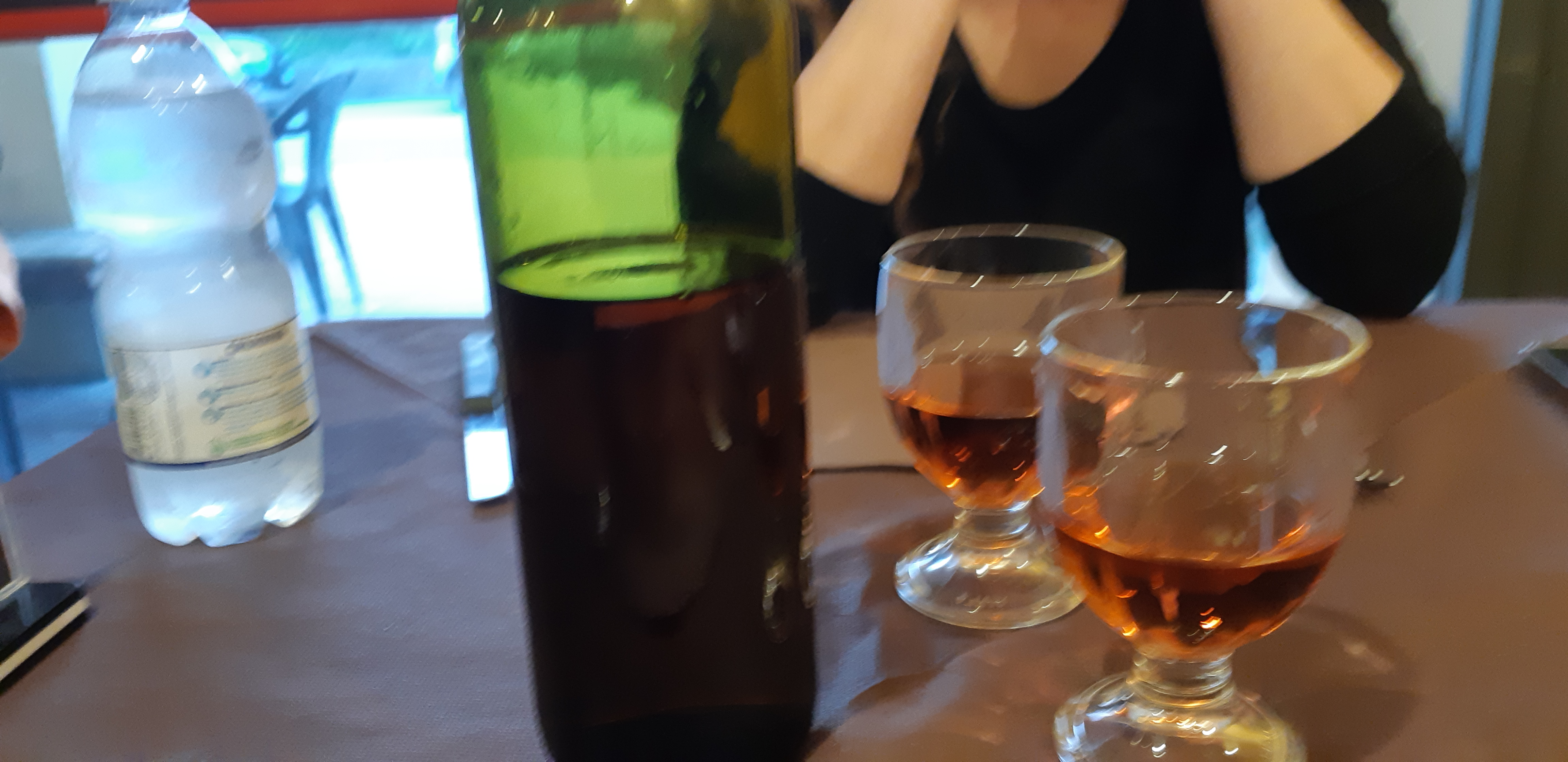
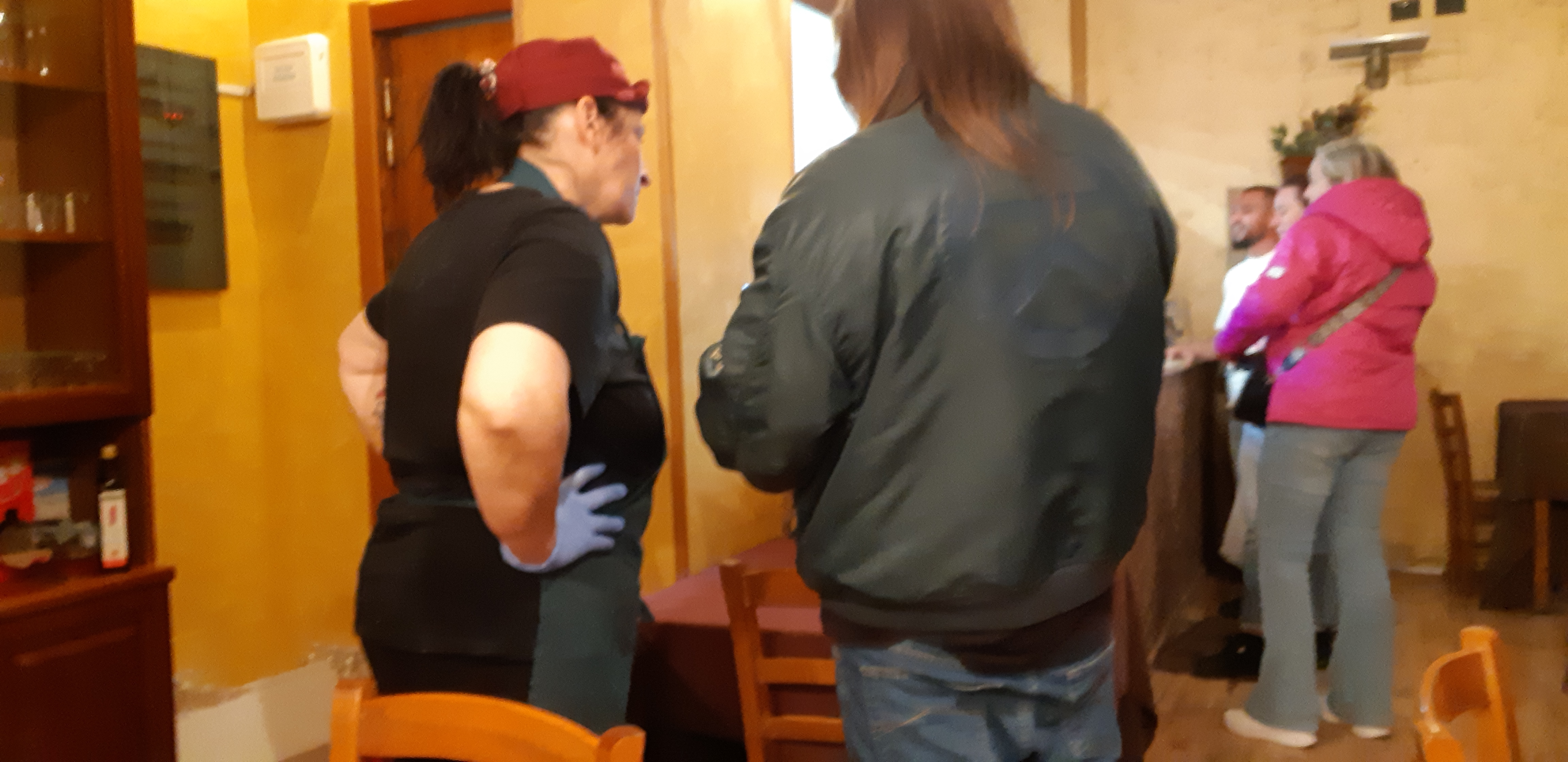
It’s all up hill from that point. Using the QCR code we make our choices. A large, smiling man appears from the back & we start a friendly banter with no Italian & little English. ‘DrinK? Red wine or red wine?’. ‘Oh, rosso’. I think he saw us naive Brits coming – ‘large or v large?’ We gesture the size of a bottle & he points to bottom shelf of the fridge, a single bottle looking forlorn, ‘local wine; red & white wine’) We agreed. At 10 euros a pop it seems a bargain…. & it is local! The unlabelled bottle arrives at the table. The first suspicion that this is not a vintage bottle comes as he pours – the colour is that of petrol & the initial taste is reminiscent of diluted cough medication. That really never leaves as we empty the bottle as quickly as possible, showering false compliments as we go. Still, its alcohol & it breaks the ice.

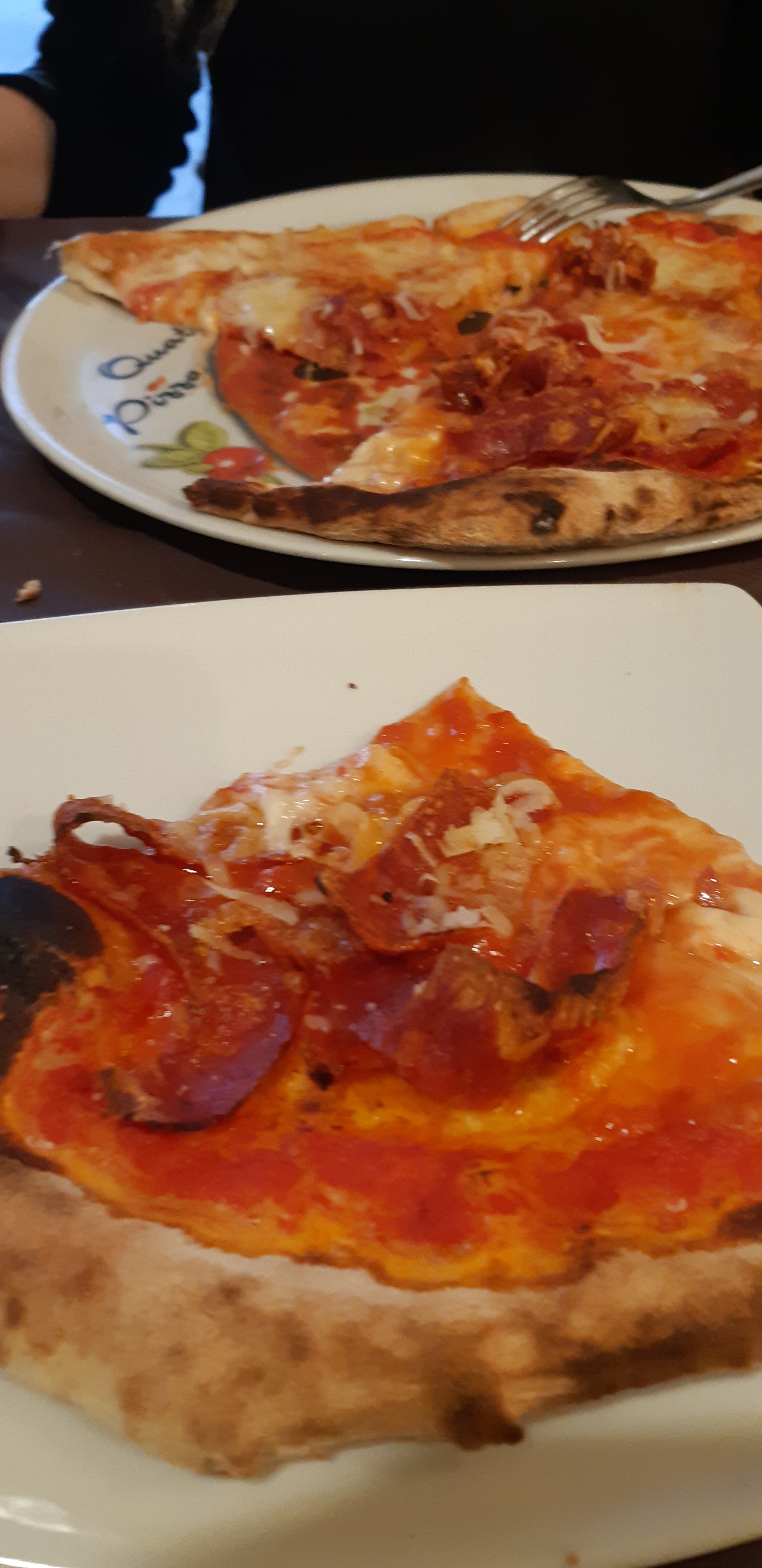
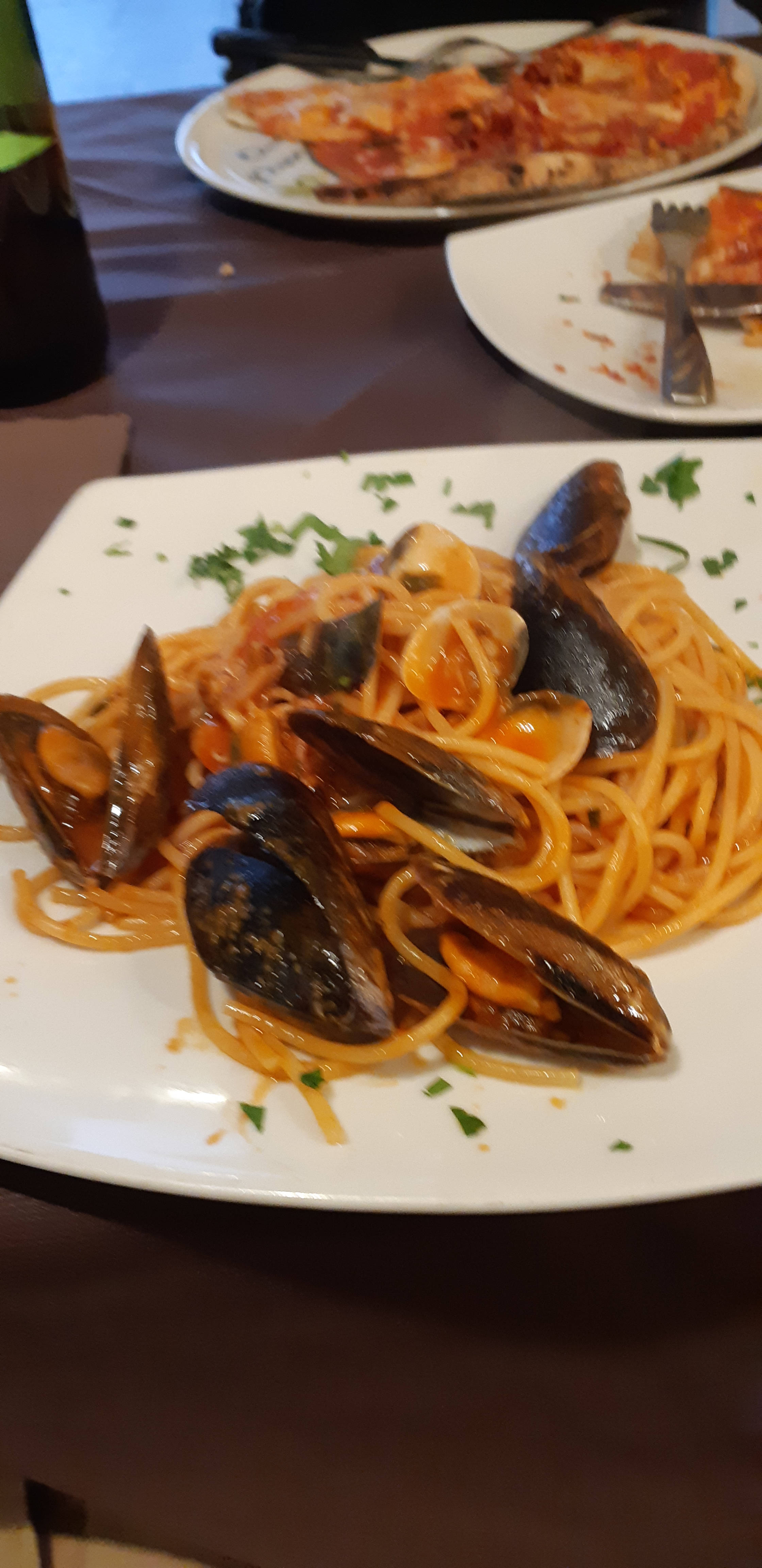
The best pizza Diavola then arrives along with a delicious seafood spaghetti – both tasty, fresh, juicy. Like the best the Pizza Cafe can offer with a bit extra – sorry Bruno.

The staff are loud & friendly & Italian. The place quickly fills up & tables start to hum with different languages. A regular flow of locals pop in to collect their takeaways accompanied by laughter & chat at the counter. It is a great first taste of Calabria.

The moral of this story – never judge a book by its cover!!