Soaking up la Marche

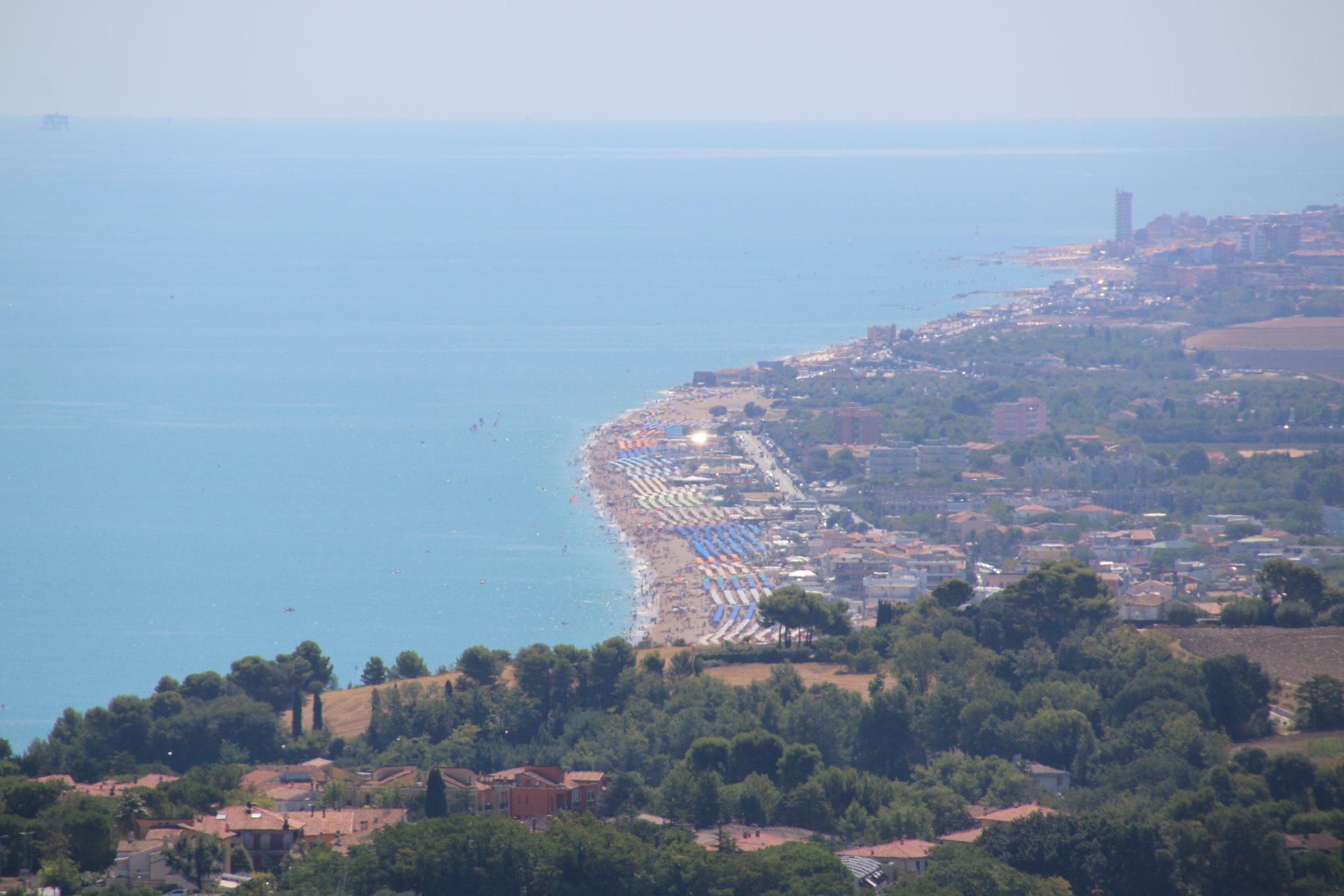
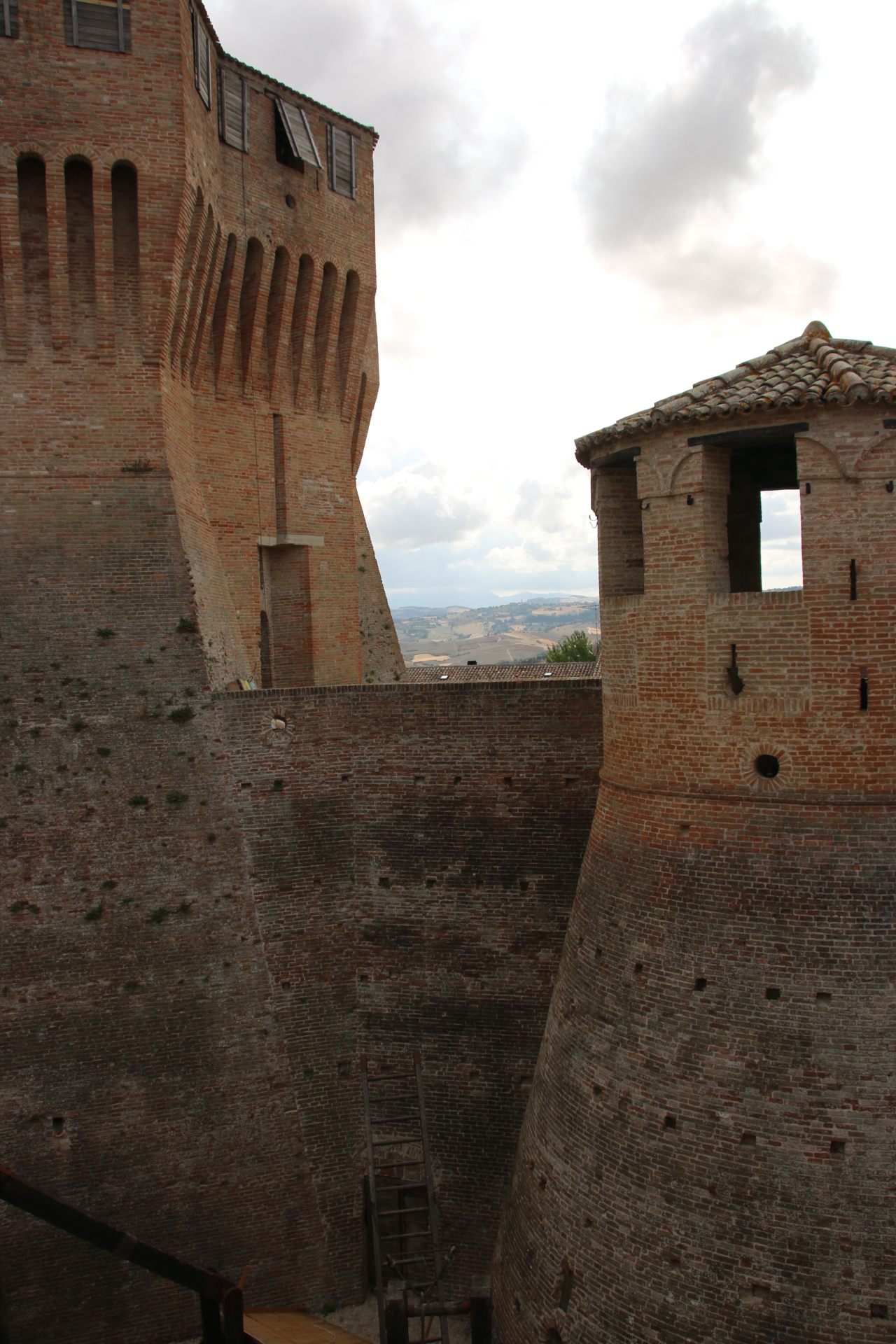
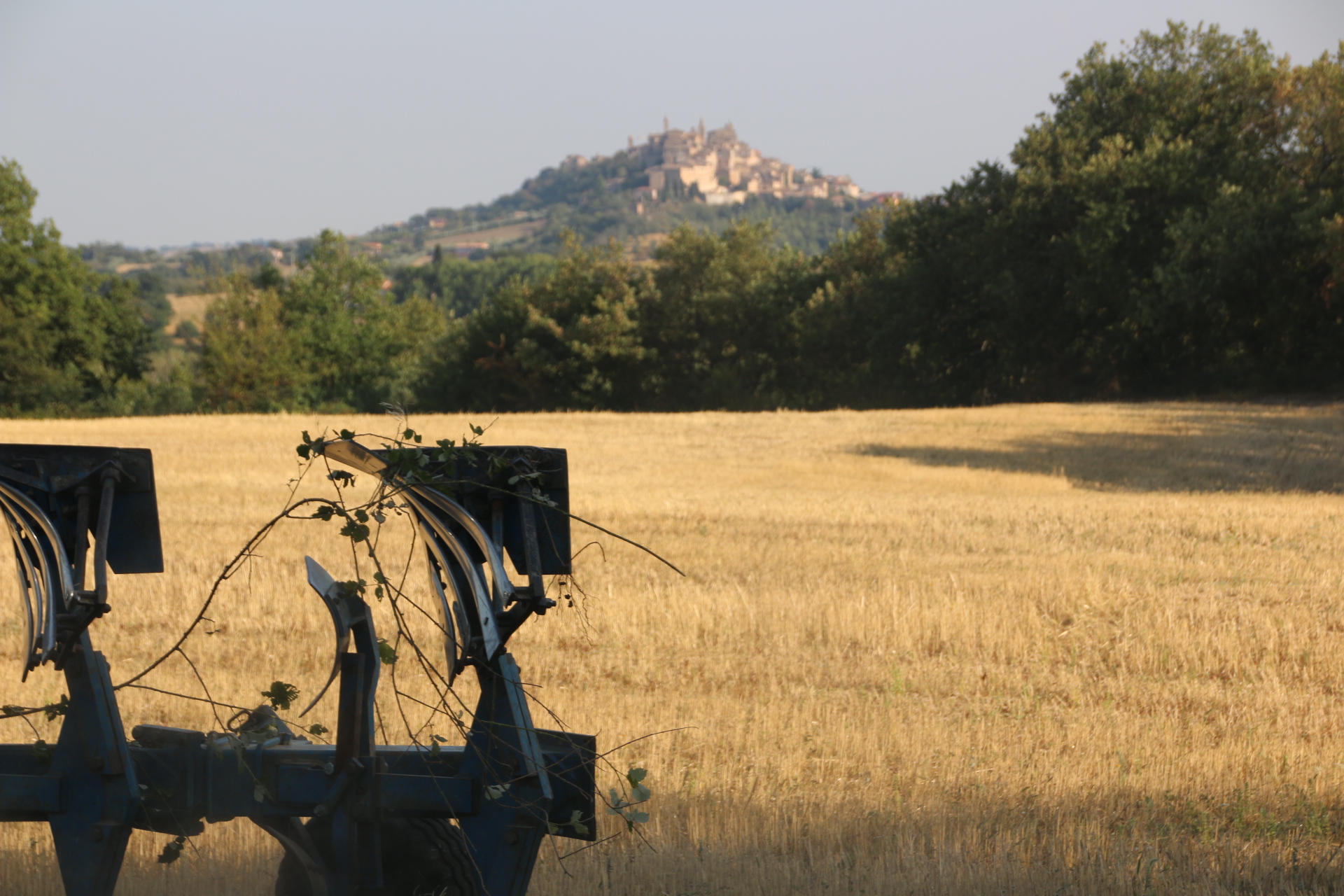
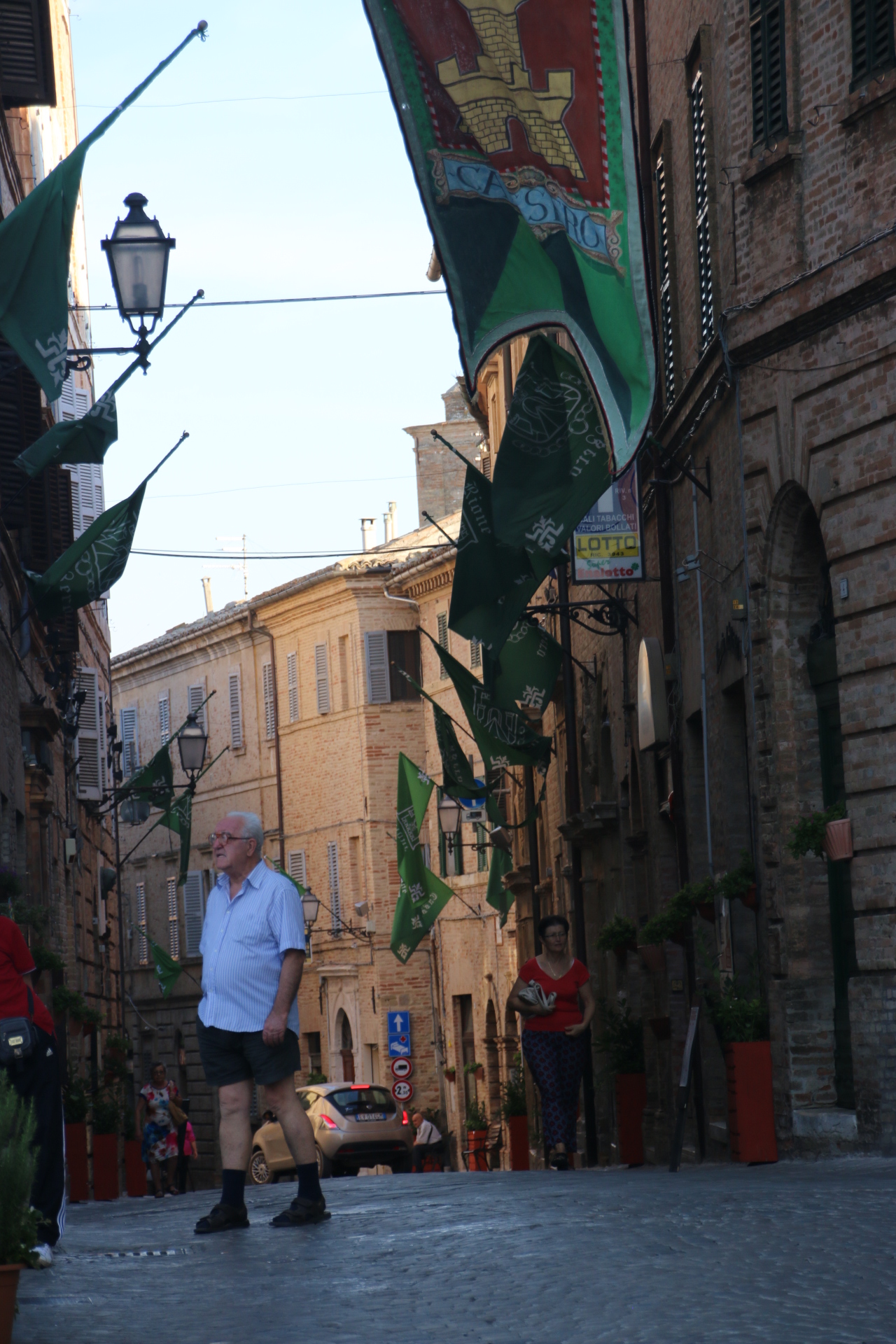
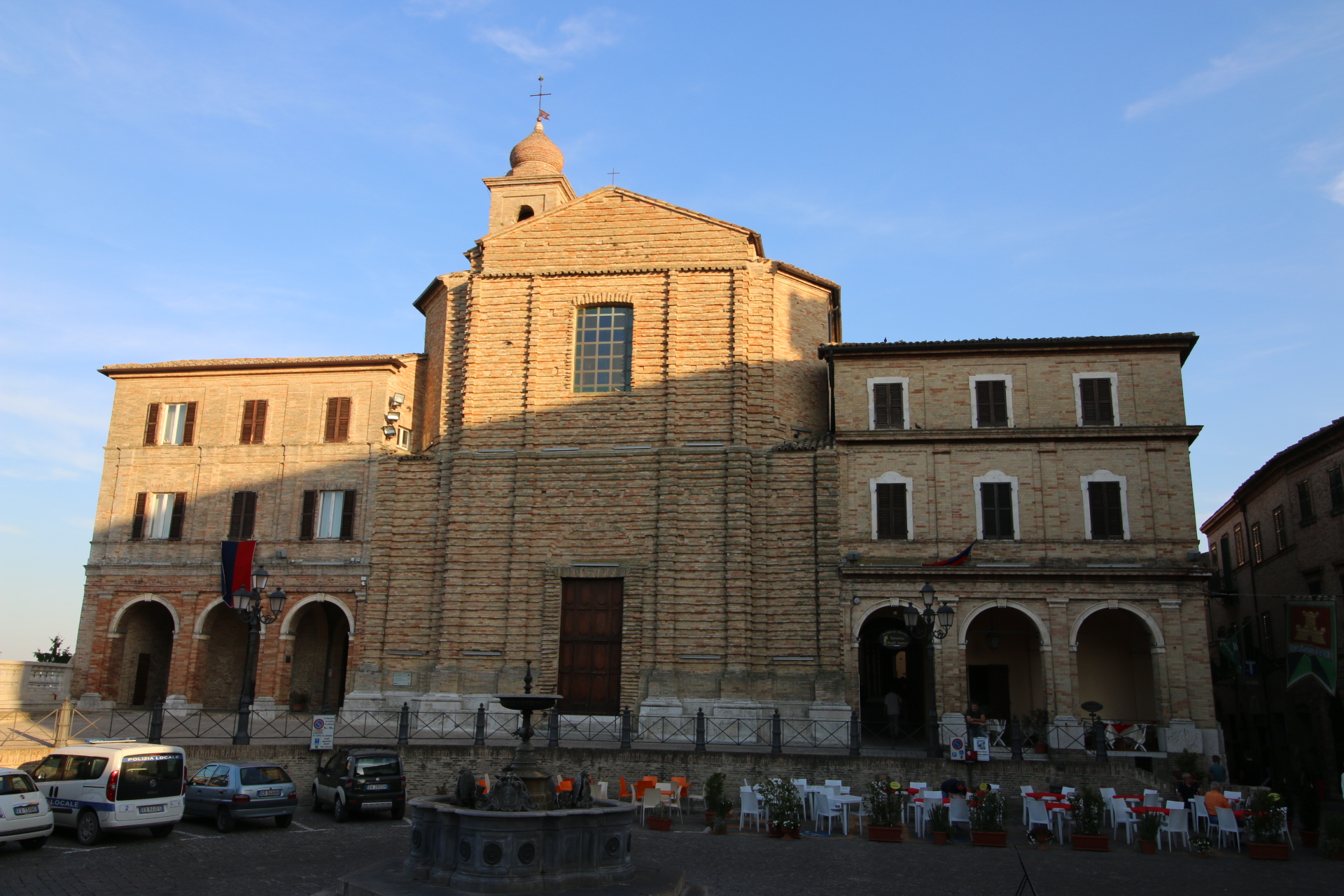
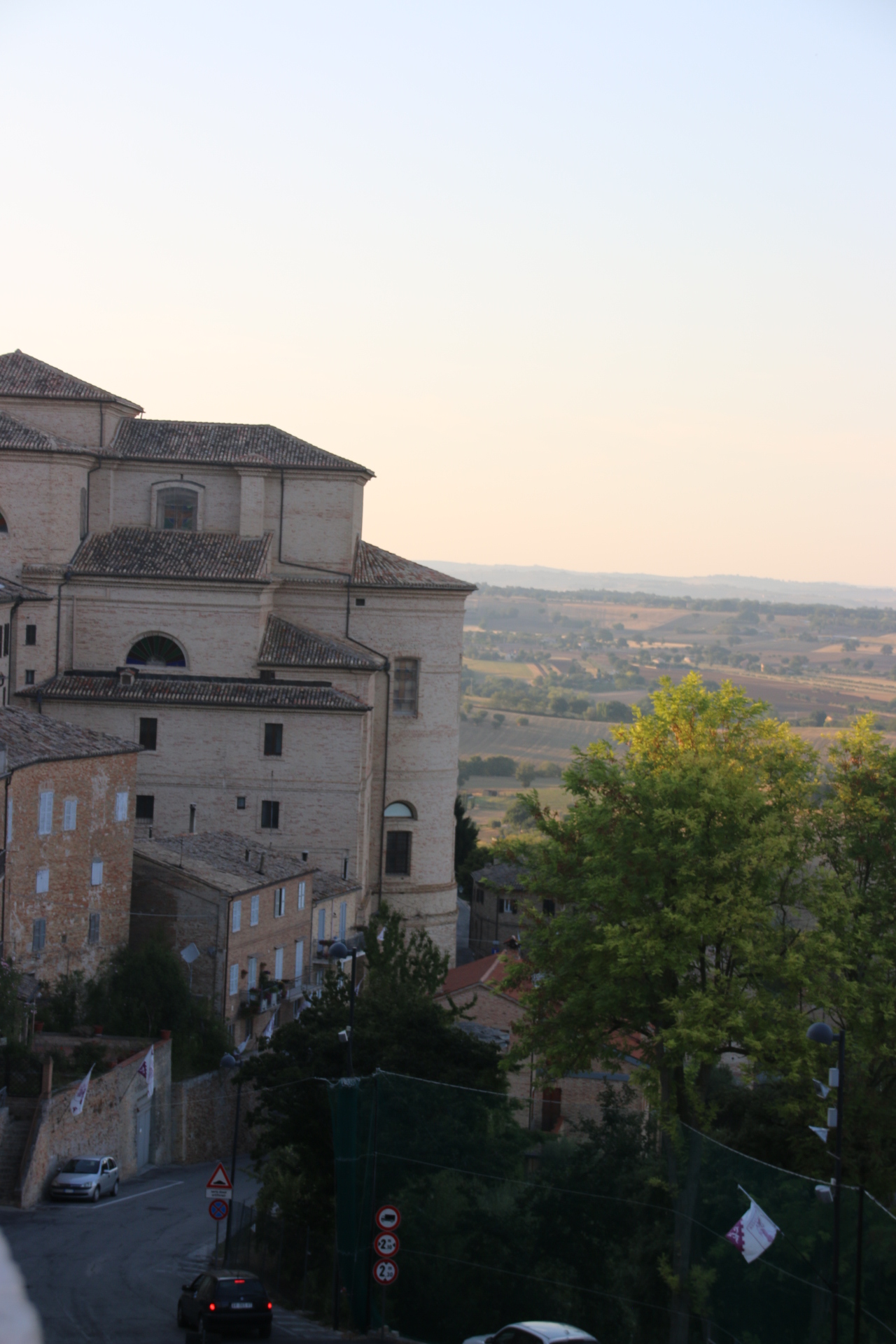
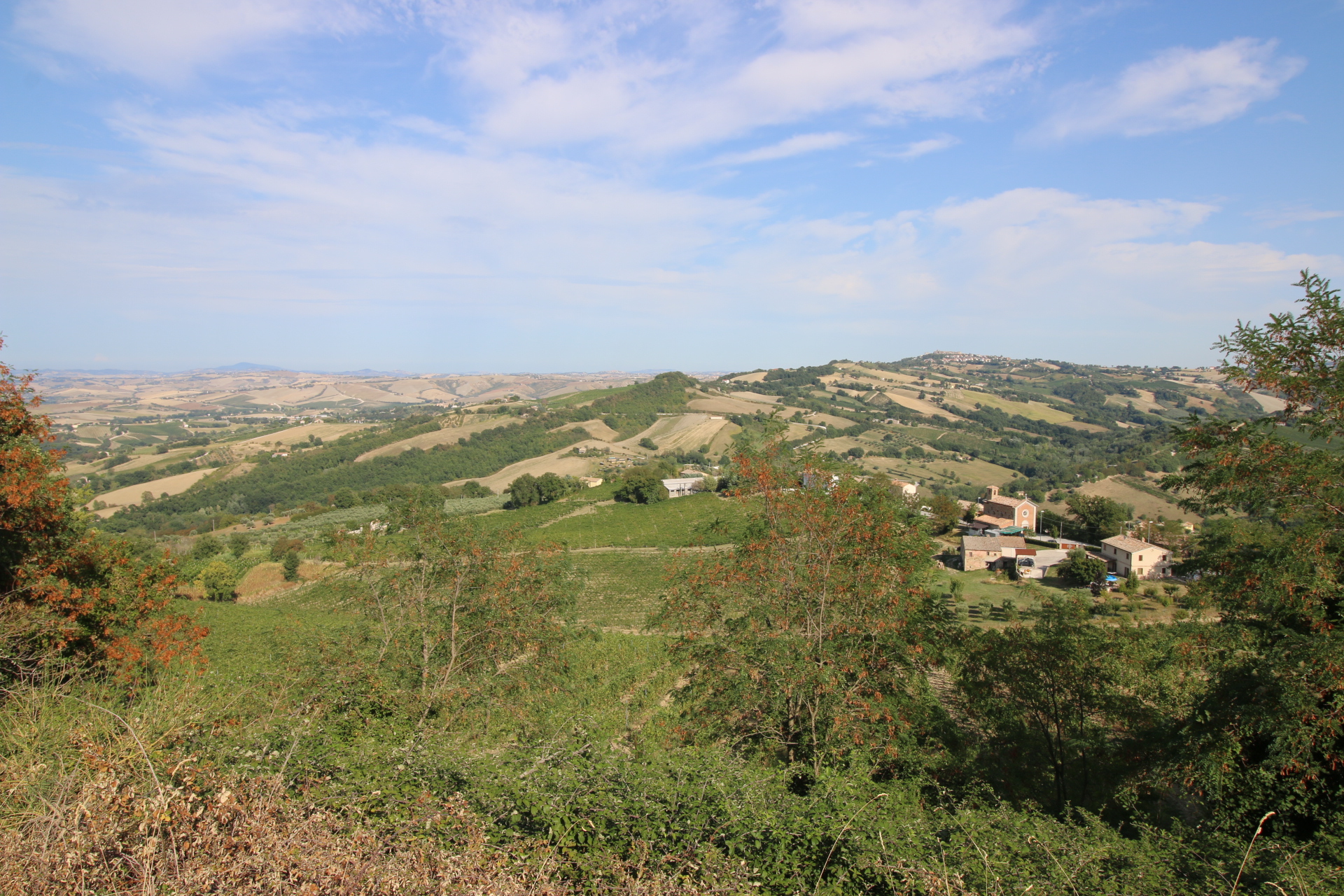
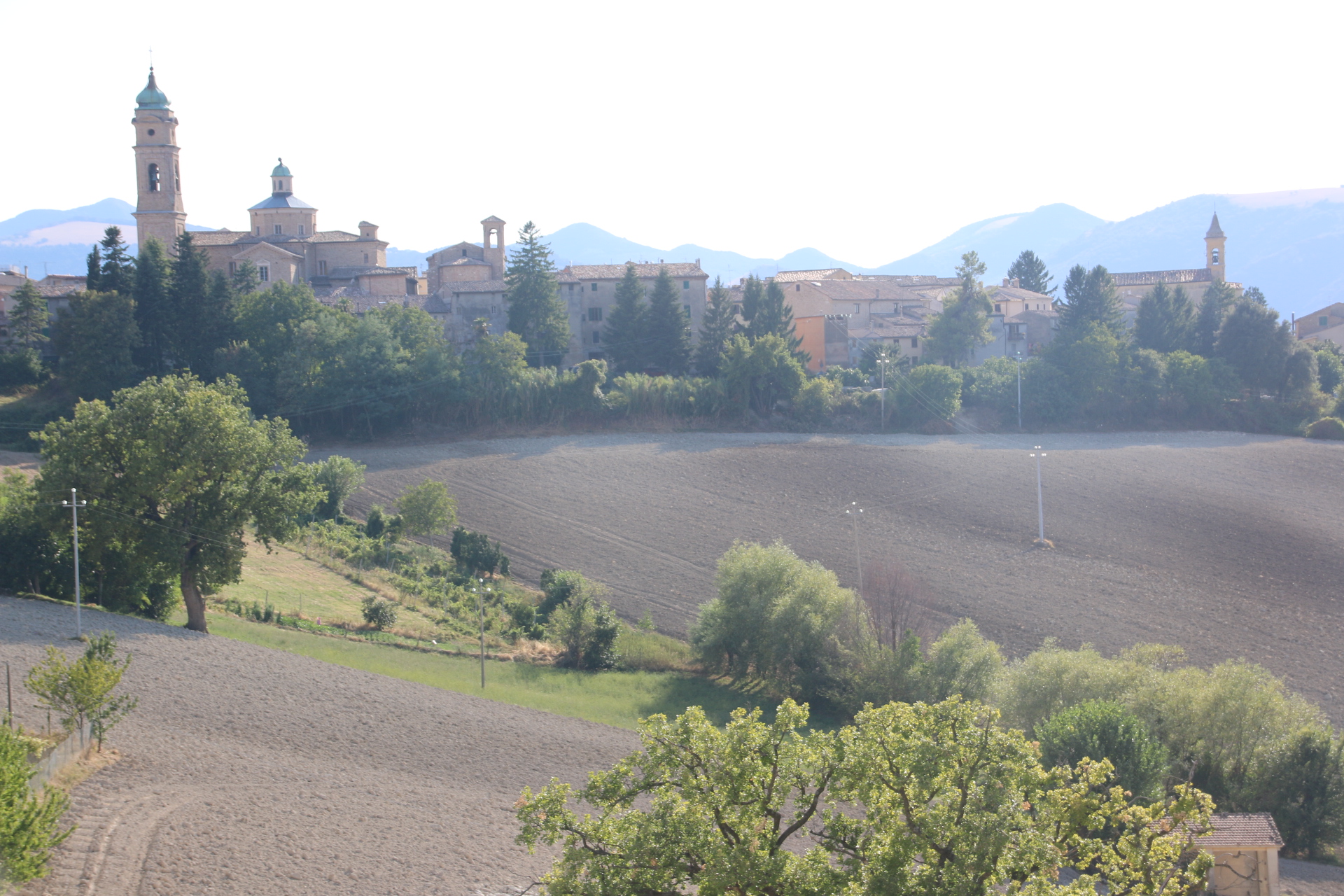
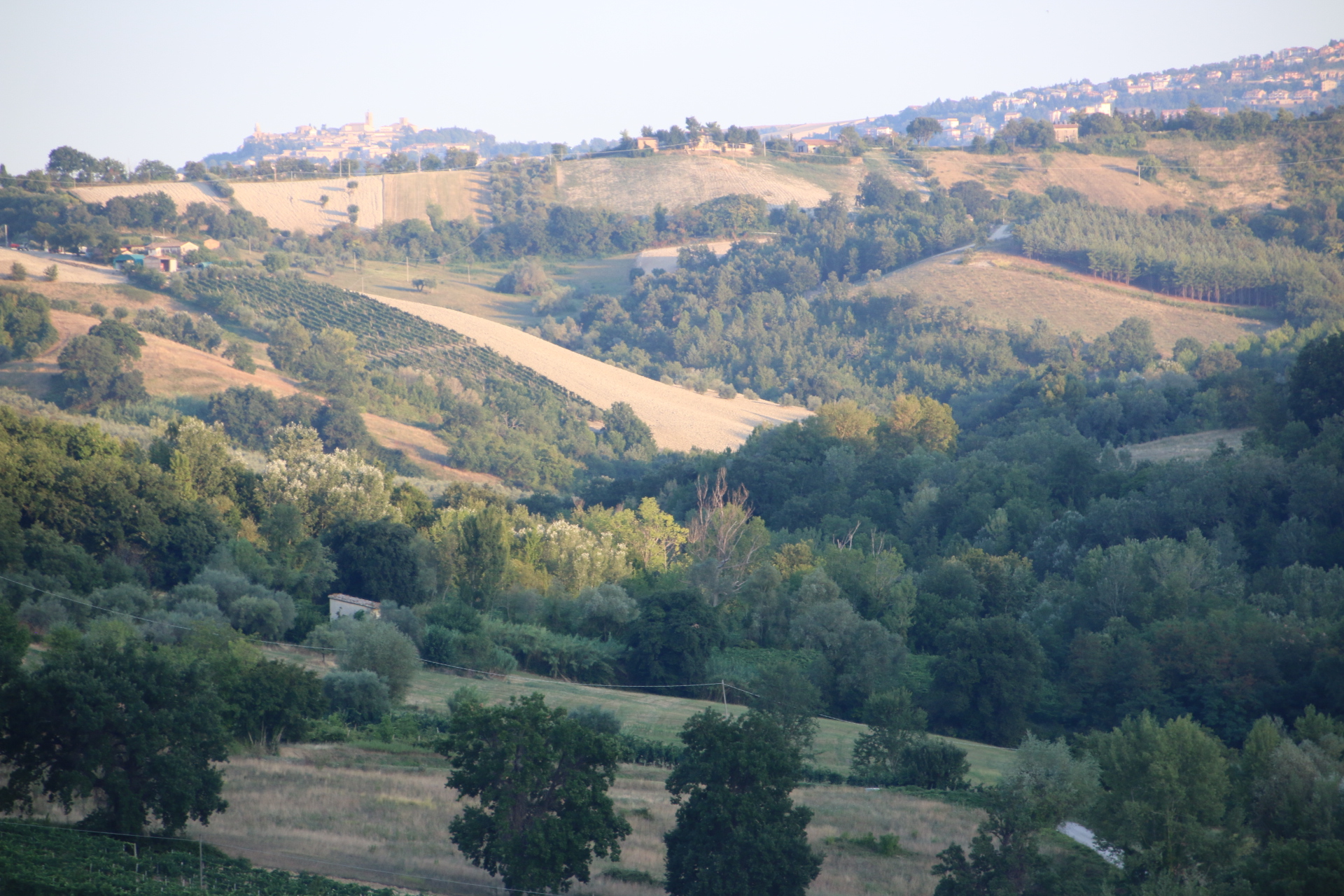
You may have wondered where I’d got to. There again, maybe not. Any way, I’ve spent a few days settling into my Italian home for the next two weeks. I have come 100 or so miles south, just inland from Anconna. This country side stretches away from the tops of rolling hills in every direction. Gentle valleys contour around slopes and folds of land like the swirls created by a gymnast ‘s ribbon. Fields of browns & tans and earthy hues jigsaw together with the green bubbles of deciduous trees and woods. Farms and barns are scattered over the land, in between the steeples and spires and walls of hilltop villages which draw the visitor like a magnet. In the distance the panorama is framed by the turqoise waters of the Adriatic around a rim of truncated volcanoes that explain why this area is subject to earthquakes.

This is the view from our terrace:

My home is set down a ‘white road’, rather a pitted track which one can get up if driven in first at 20km an hour. I am surrounded by the patchwork fields of La Marche. My silence is only disturbed by the call of circling buzzards and in the distance the metallic squeaking of harvesting tractors that quietly roar their wayup and down the gradients and then chugger to each other as they summon up the strength for another run. Within a few hours the crop is harvested & taken off, the remnants bailed and left littering the field in haphazard cuboids and deep silence descend around me again.

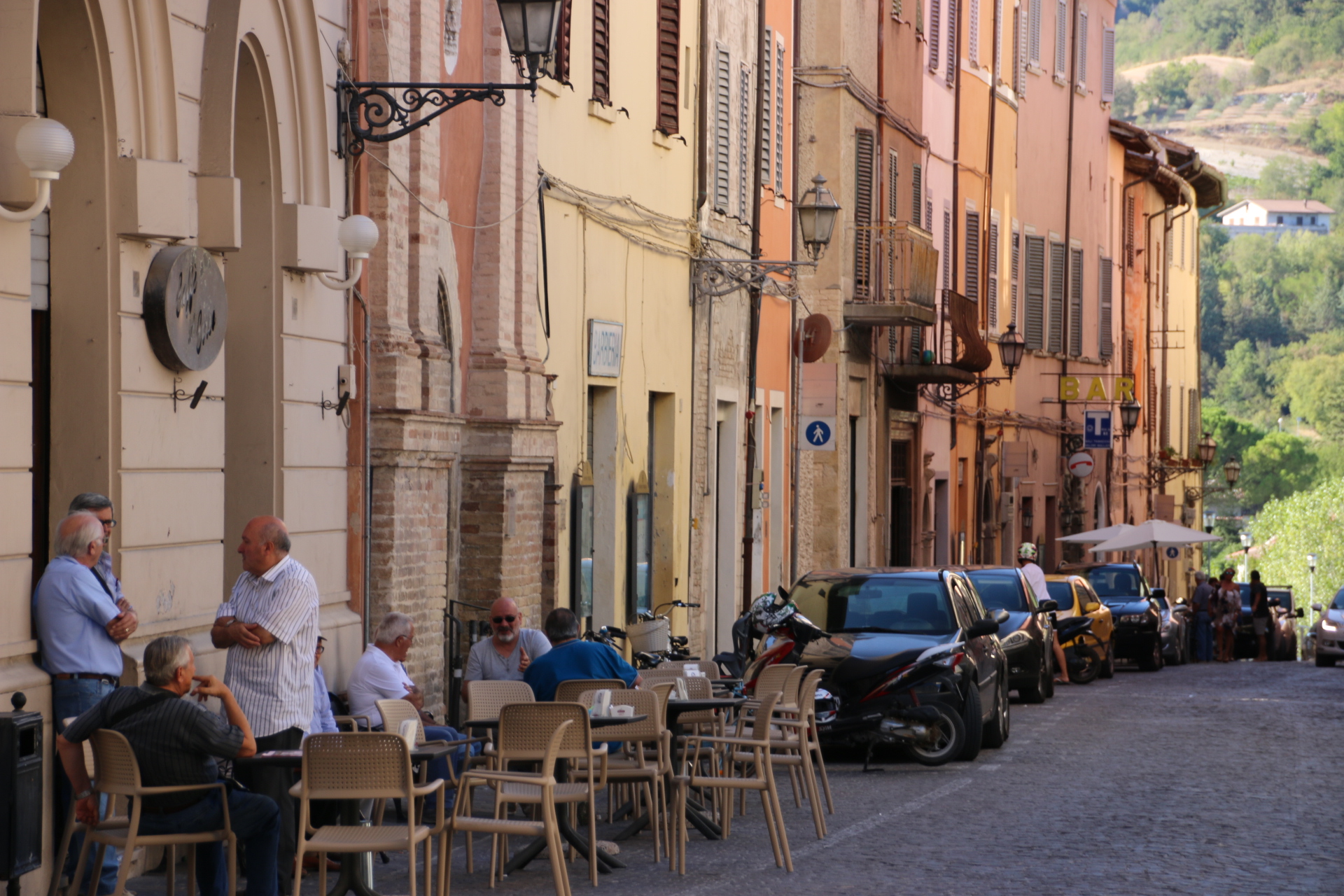
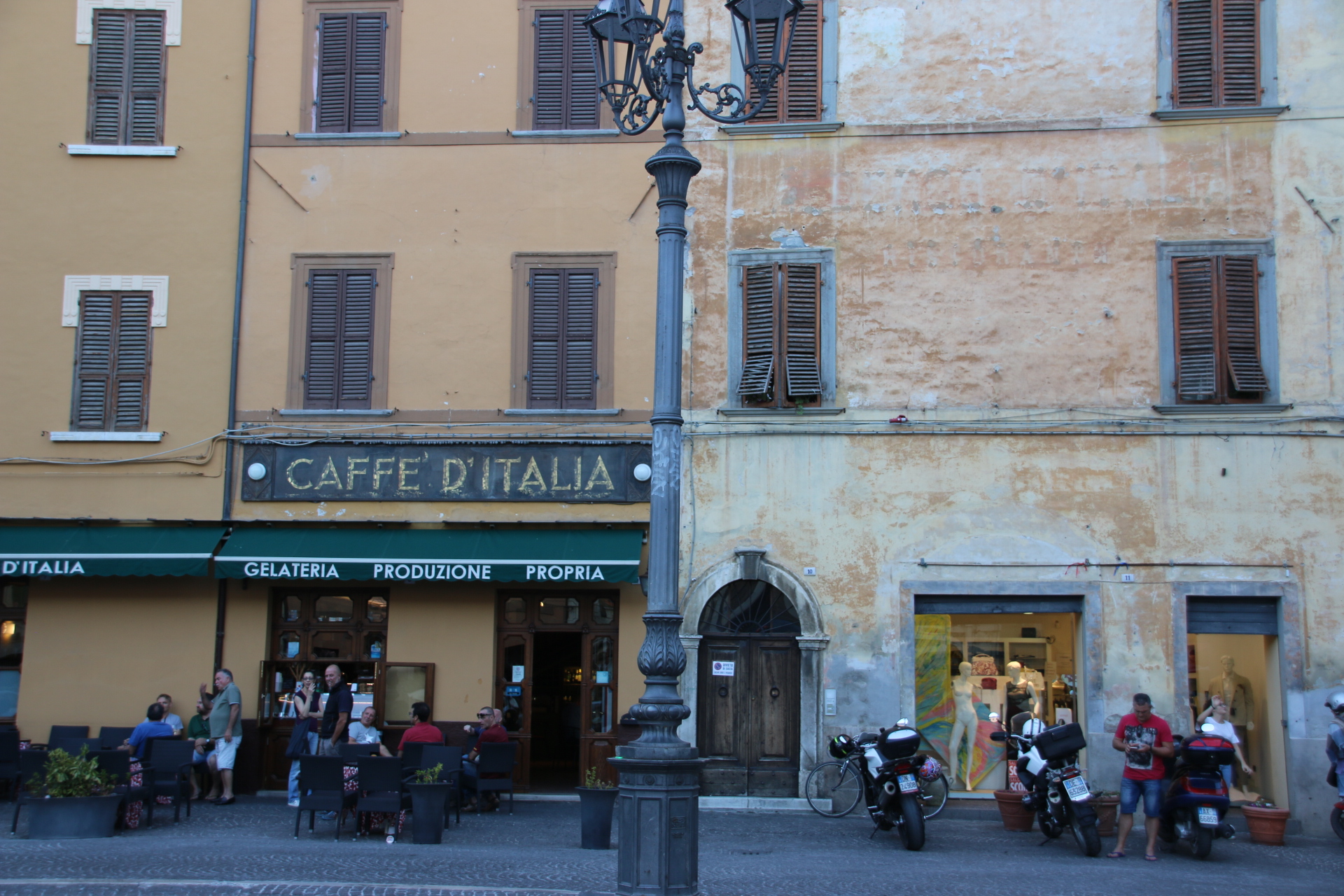
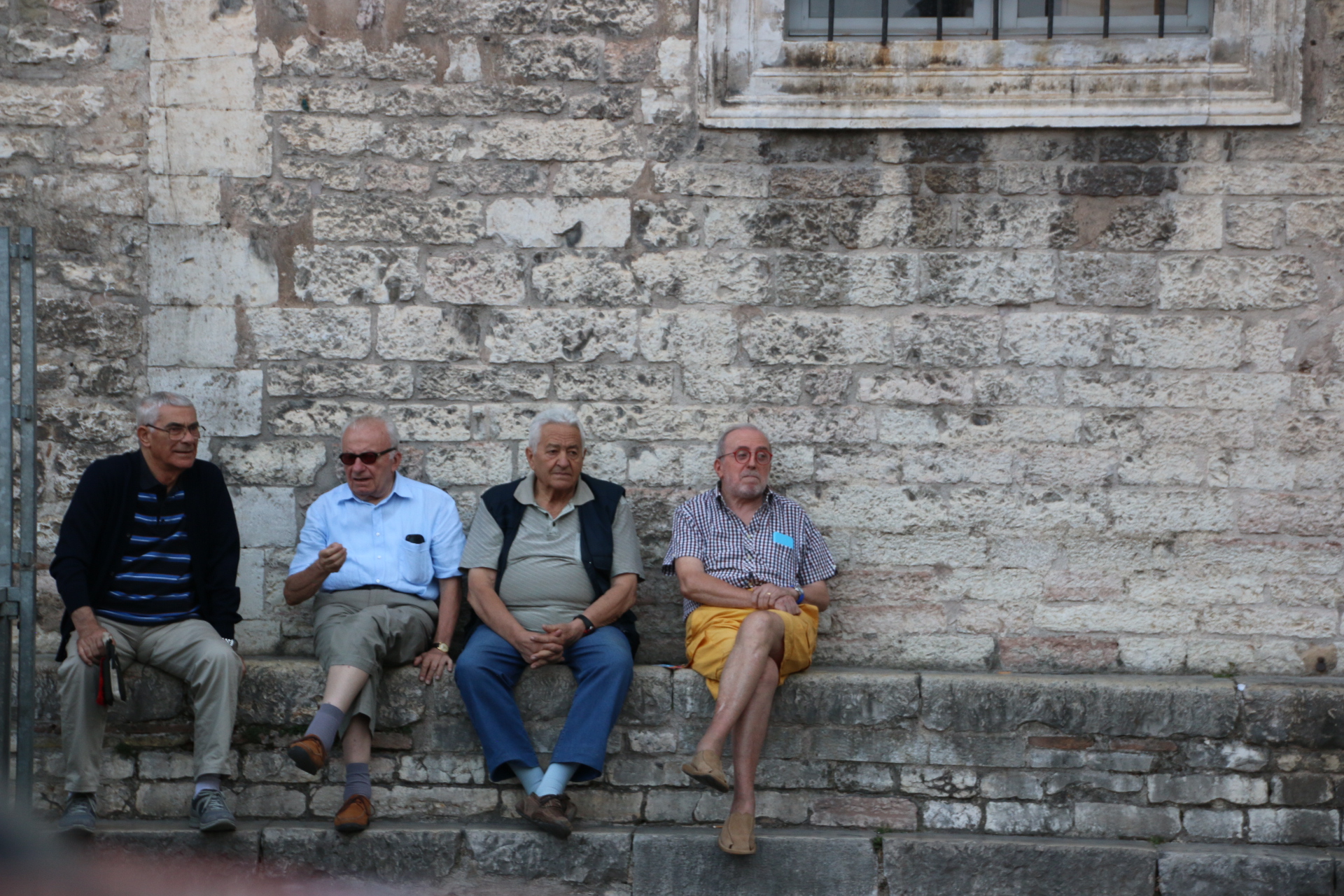
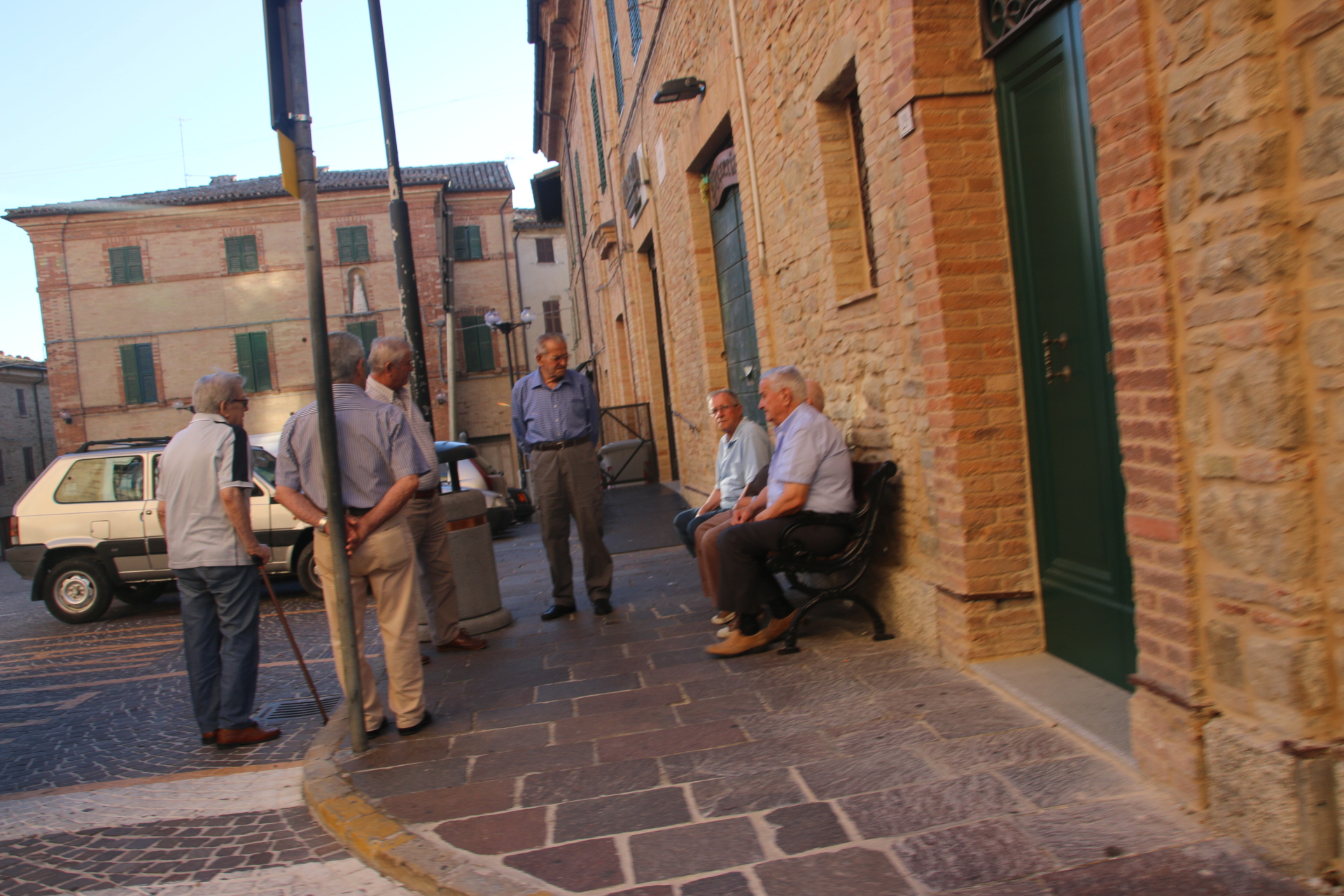
Cupramontana is the closest settlement of any size, just up the road. Not a lot goes on here. As the day comes to an end and the buildings give up their heat, the locals grab a chair or find a seat in the shade and ponder over events and share anecdotes and gently wind down with friends and neighbours before disappearing inside as darkness falls. Everyone seems comfortable in their groups which tend to be gender and age specific with little mixing it up.

Can life really be that simple?


Unlocking the mosaics of Ravenna

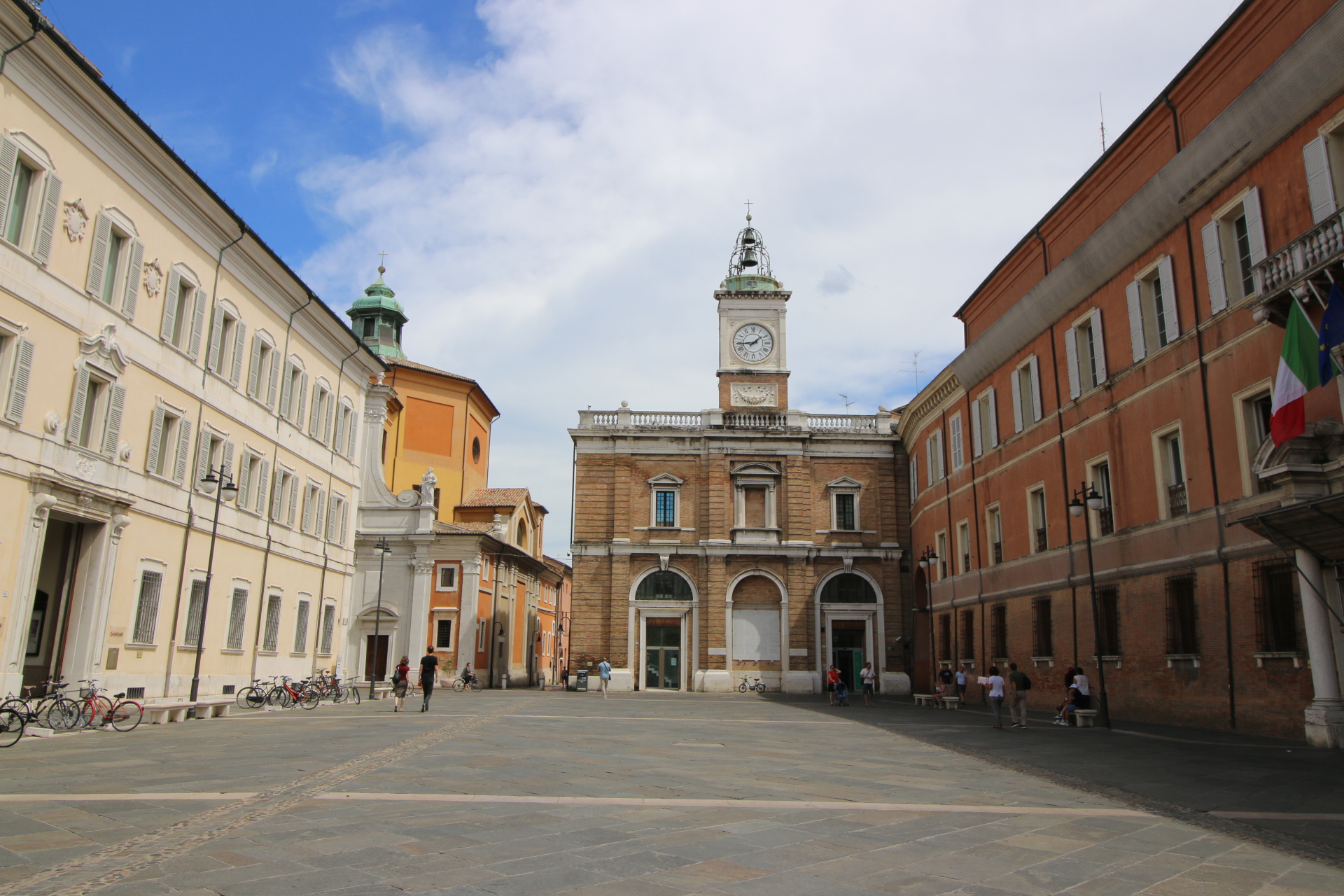
All memories of yesterday’s storm are forgotten when drawn curtains reveal solid blue sky. Today Ravenna’s secrets are to be unlocked. This is why I love Italy. To walk around narrow streets and piazzas, shaded by ancient buildings and chapels and churches and statues on pillars and surrounded by history and culture and food and coffee. Cafes with tables line the cobbled streets with men drinking their espresso behind their spread newspapers as I seek that restaurant for dinner where the locals will be eating. A gentle trickle of folk pass – mamas with shopping bags half full, classy ladies struggling to keep up with their scuttling dachshunds, tattooed youth on their way somewhere or other. In these car-free streets a constant stream of cyclists gently avoid the pedestrians with a tinkle of a bell – sexy girls with long tanned legs in short shorts, elegant moustached gentlemen and the whole gambit of Italian society on their way to work, to shop, to play.


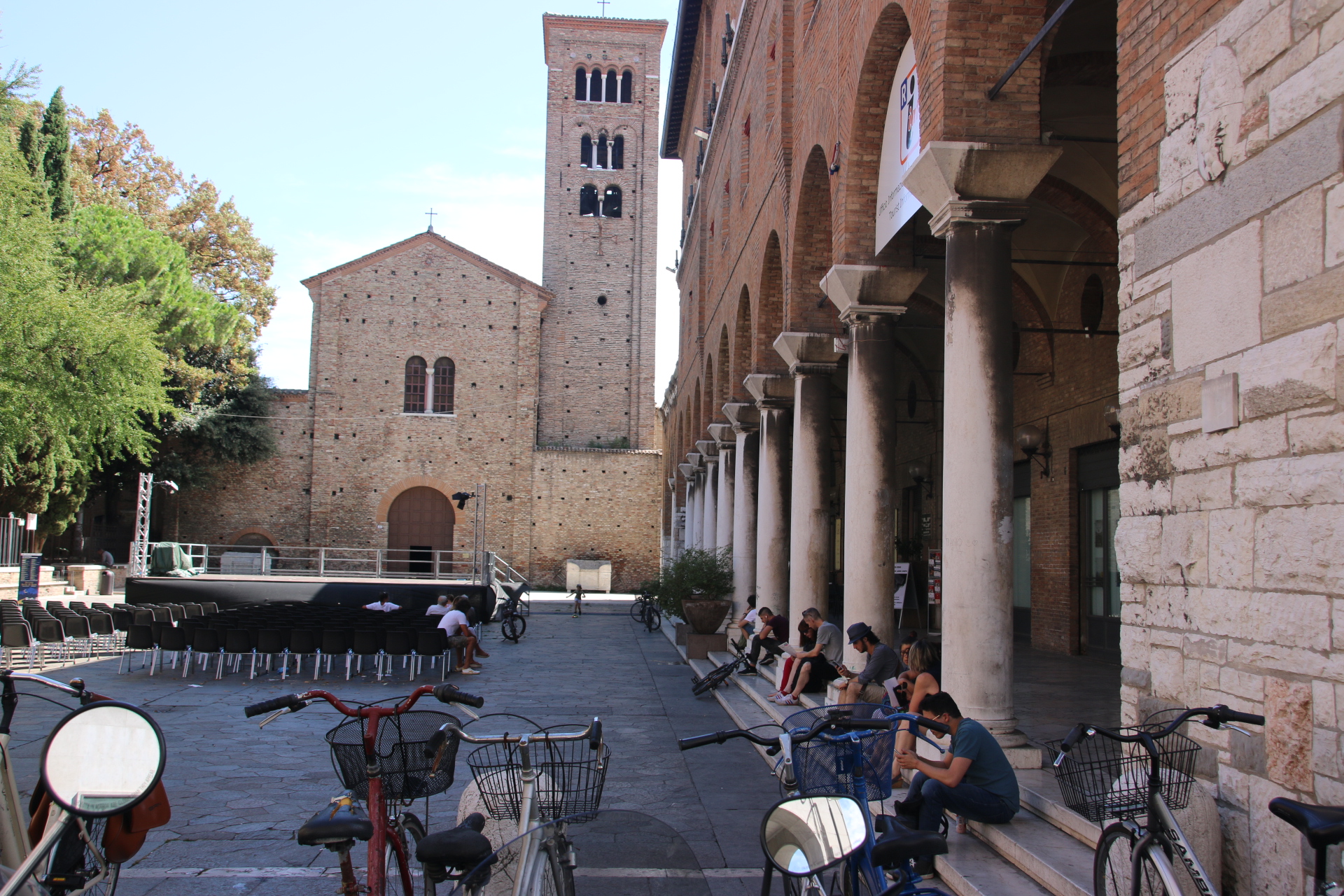
Nothing out of the ordinary you might think. It sounds like a typical Italian town. But Ravenna is like a geologist’s display cabinet. It has been the capital city of three different civilisations in its time and so is quite an important place. From 400 AD the early Christians have impacted on its society and its buildings. Religious buildings cover the old centre, mostly red-bricked. Crack their dull, dusty shell open and be aghast. As each reveals their glistening, sparkling, crystalled inside,yourr breath will be dragged from your body in awe. Mosaics have used as an art form for centuries to decorate and commemorate the inside of churches and mausoleums. Here are a few.

I am going to start with the old library which is upstairs in the new library. Whilst not a mosaic in sight it feels to me like the Bodleian in Oxford and I wanted to share.


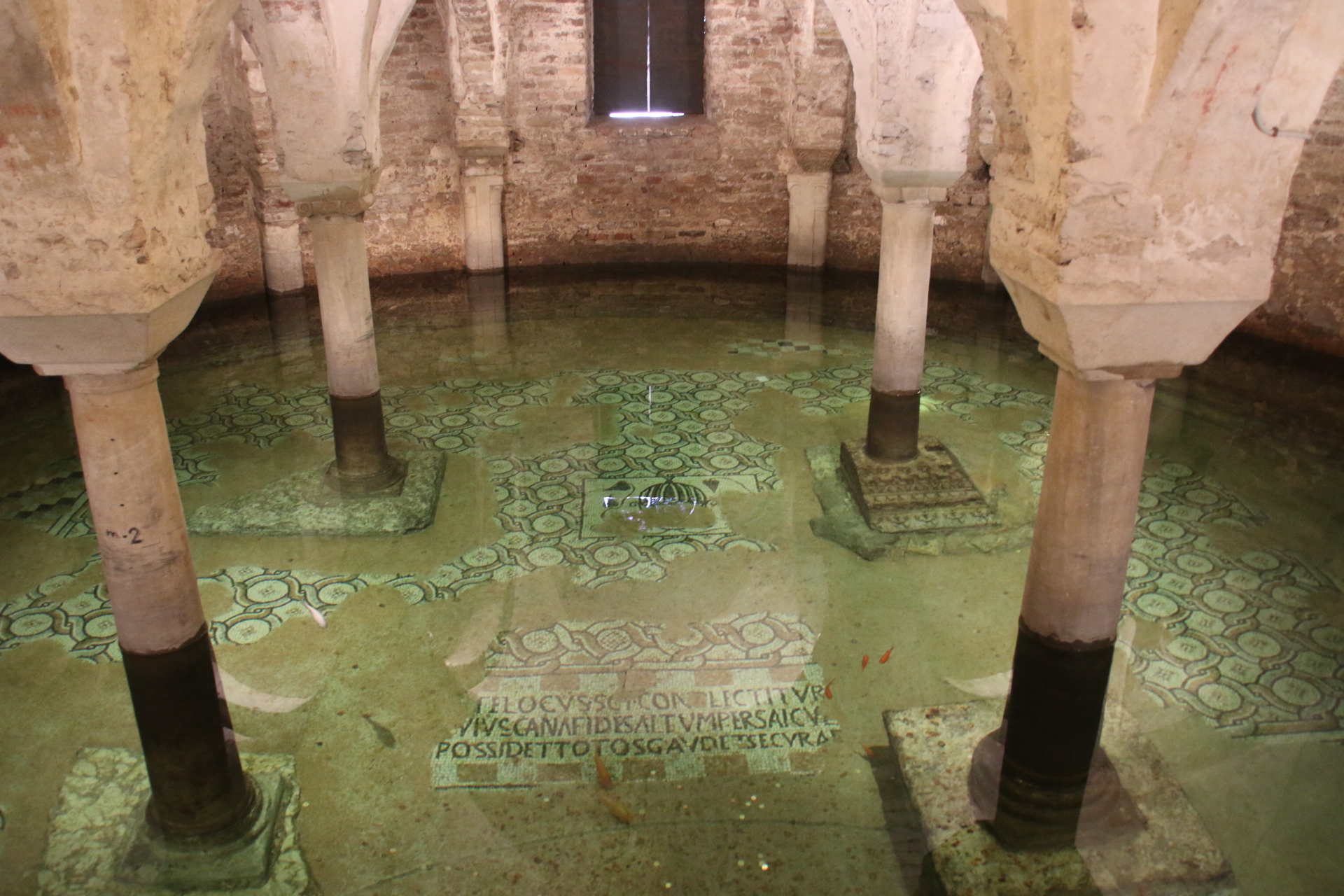
The crypt of the church of San Francesco its mosaics underwater. You may be able to spot the carp.


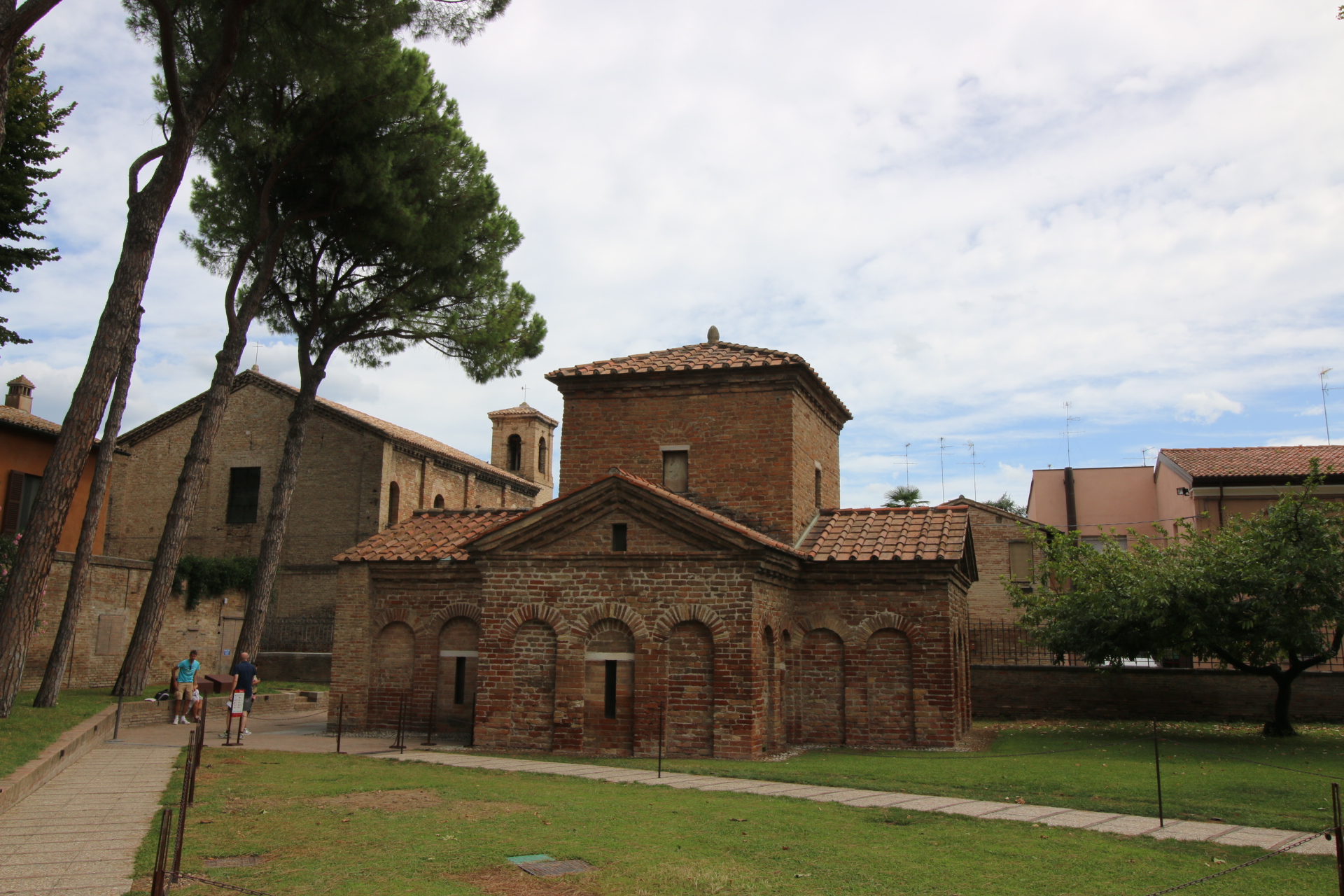
The Mausoleum di Galla Placidia, an important lady of the 13th century, is small and intimate and glorious. Mosaics, remember. Little bits of tile.

Basilico di San Vitale has these positioning around its dome but the whole alter is surrounded by a gargantuan spread of mosaic saints.


Battistero degli Ariani, Basilica di Apollinare Nuono and the Neonian Baptistry are three more temples to the mosaic.


Pootling and paddling around Bolgna

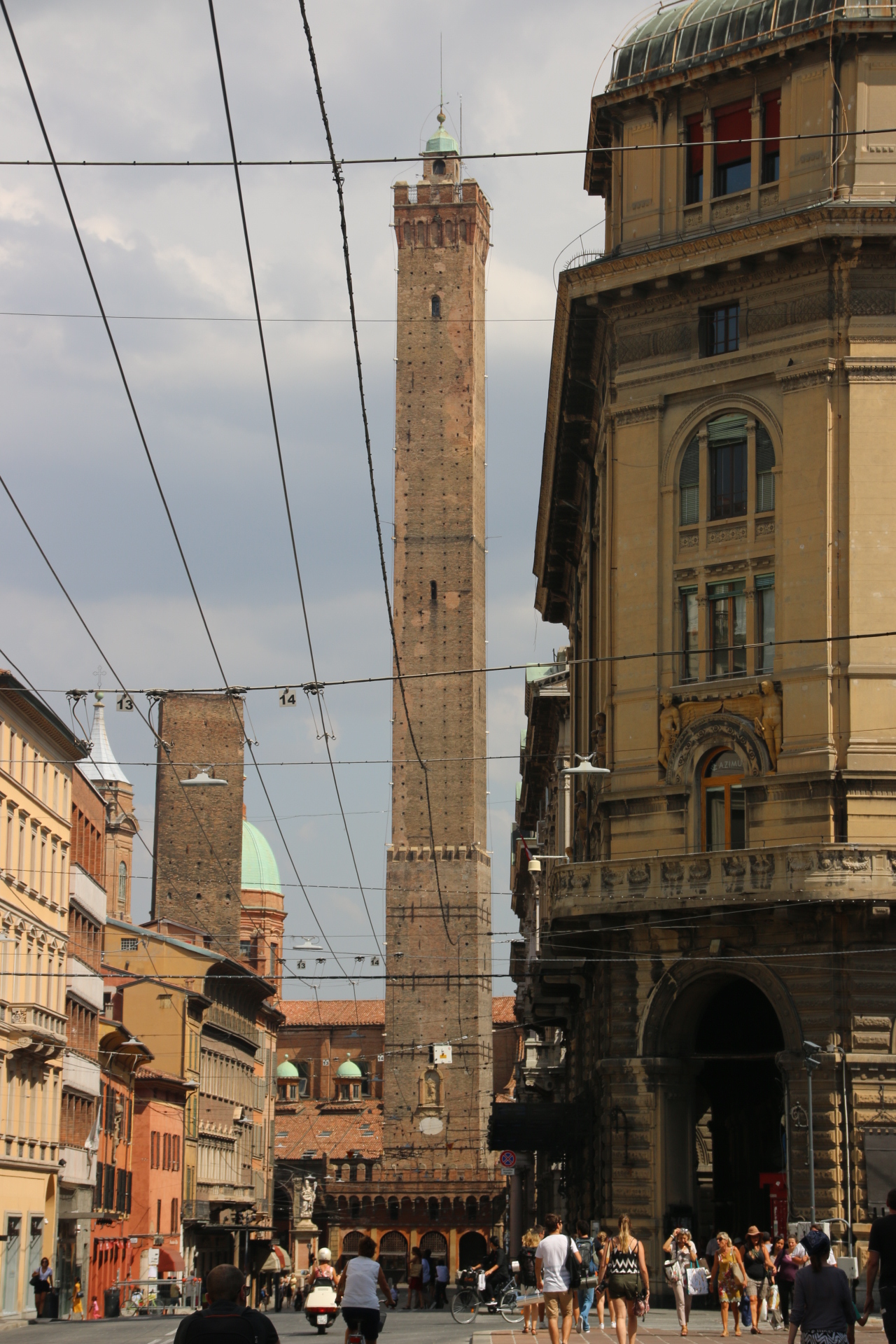
Well here we are again. Like a cosy pair of slippers, I am in Italy once more. Starting off in Bologna to get everything together. Well, you have to plan a trip properly. So, fly in, pick up a car, check in to hotel for one night, a beer in the back streets of this impressive city …..


…..pick up Hazel, sleep and hit the road.

I choose the straightest of straight Roman roads that runs from Bologna to Rimini for at least 60 miles, without a bend or diversion. Straight as a die (what does that mean?). There are three towns on the line. The first is Imola.

Under a blue, blue sky, I wander the almost empty streets, disturbed by the odd cyclist, the small clutter of pedestrians and the building work that goes on ahead of me (that’s a picture of a clock, by the way, printed with the windows on a screen to cover the manky scaffolding). Coffee is good. Almost afraid to admit a visit to the duomo, a worshipper peers out and hobbles off before anyone sees him.

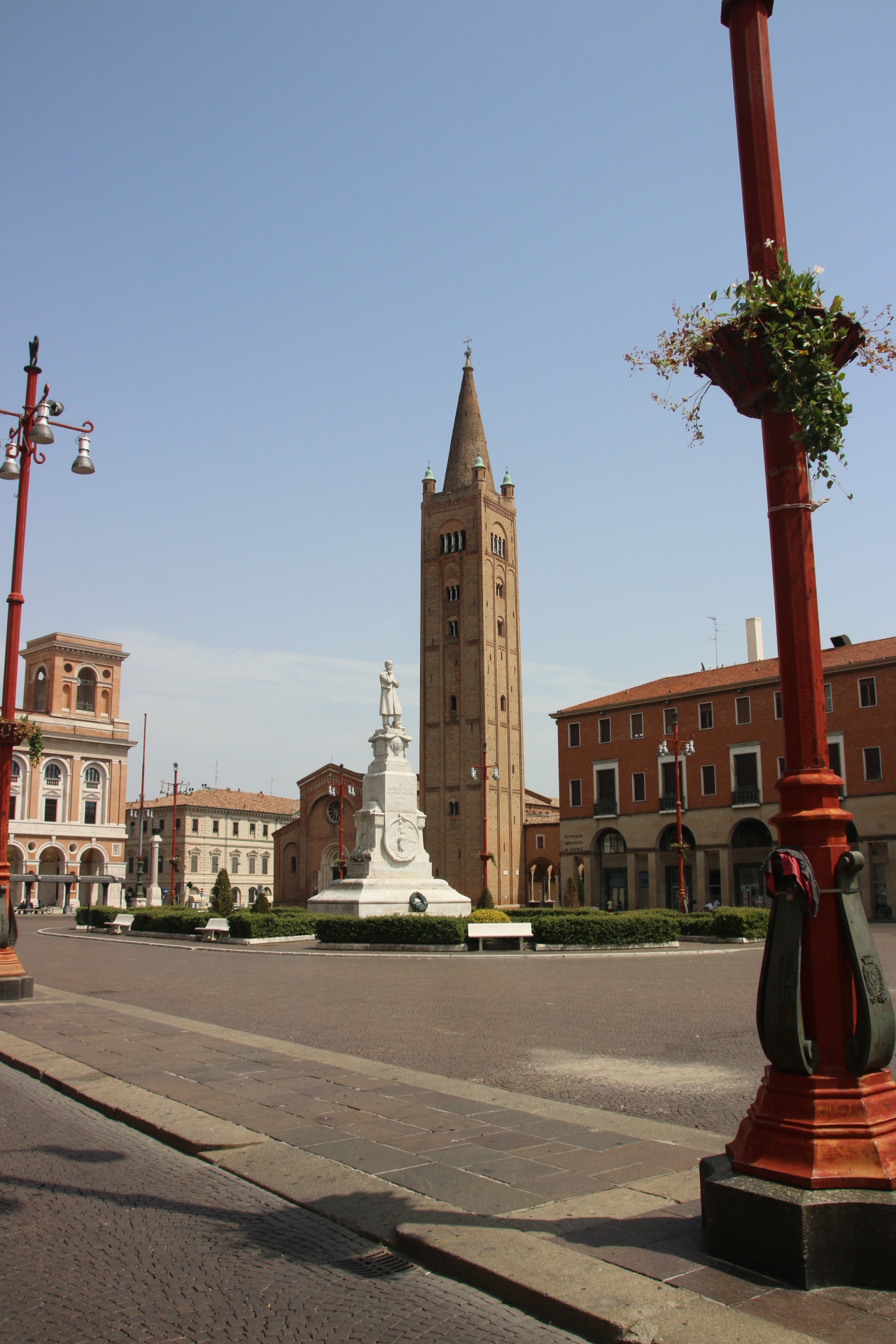
The third town in this straight line to the Adriatic is Forli. A wander to the large, open space of the central square is worth it. On all 4 sides elegant buildings compete with each other for the accolade for the grandest frontage.

However, it is the Palazzio del Poste e dei Telegrafi that wins the prize hands down – a glorious edifice to the time when to be a postie was an essential role in any country that has aspirations on the world stage. Look & admire.

Now you might get a clue from this picture about the impending doom that is about to descend on Forli in the next 10 minutes. The skies darken and darken with every quickening pace back to the car. The timing is perfect – doors thunk as huge spots of rain thwack on the window and a whirl of winds rush and pound and glower and push all around the piazza. In the centre of town the buildings protect cycles & cars from the squally outbursts of torrential sprays from the mouth of the storm, accompanied by thundering claps and explosive lightning.

The real war zone lies on the plane tree-lined avenues leading out of town. Huge cannon balls of weather have blasted their wet, destructive force through the branches and trunks leaving them broken and maimed on the streets and parked cars below. A few of us try to slalom our way around the carnage, lights flashing as we avoid the dangers we can see but very aware that above, the wind still shakes the trees searching for weaknesses to drop down on our convoy.

Peering through the deluge of curtained rain and wooded obstacles, I follow the sat nav through the gloom. The wreckage becomes lighter, the sound of the storm becomes calmer and the rain patters then pitters and the world returns to normal. Having survived 30 minutes of wet, stormy hell and successfully found a way out of town, the road to Ravenna beckons. An hour later the clouds break, the sky resumes its heated blue and reason returns.


Beach huts and more beach huts…..oh, and a pier.

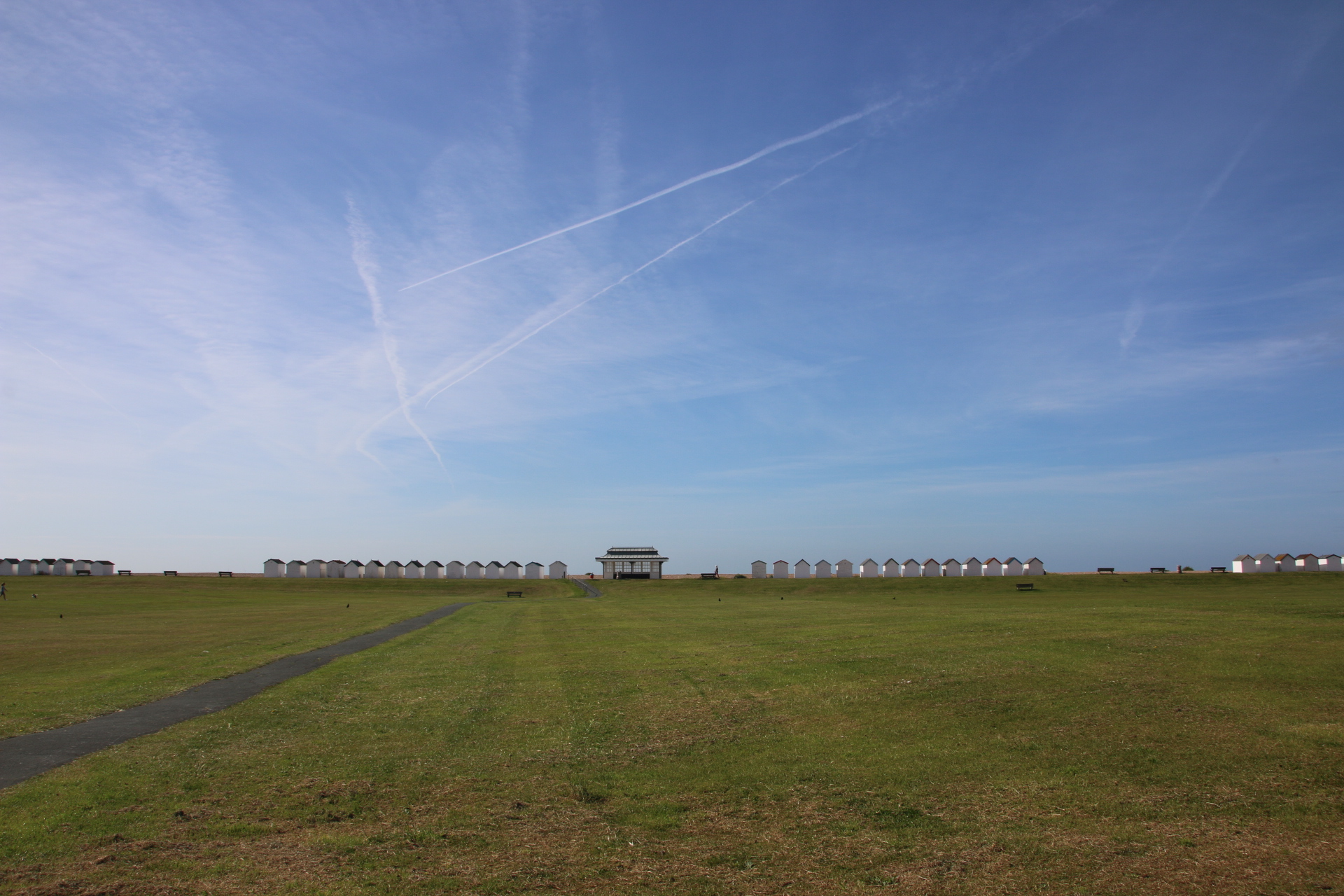
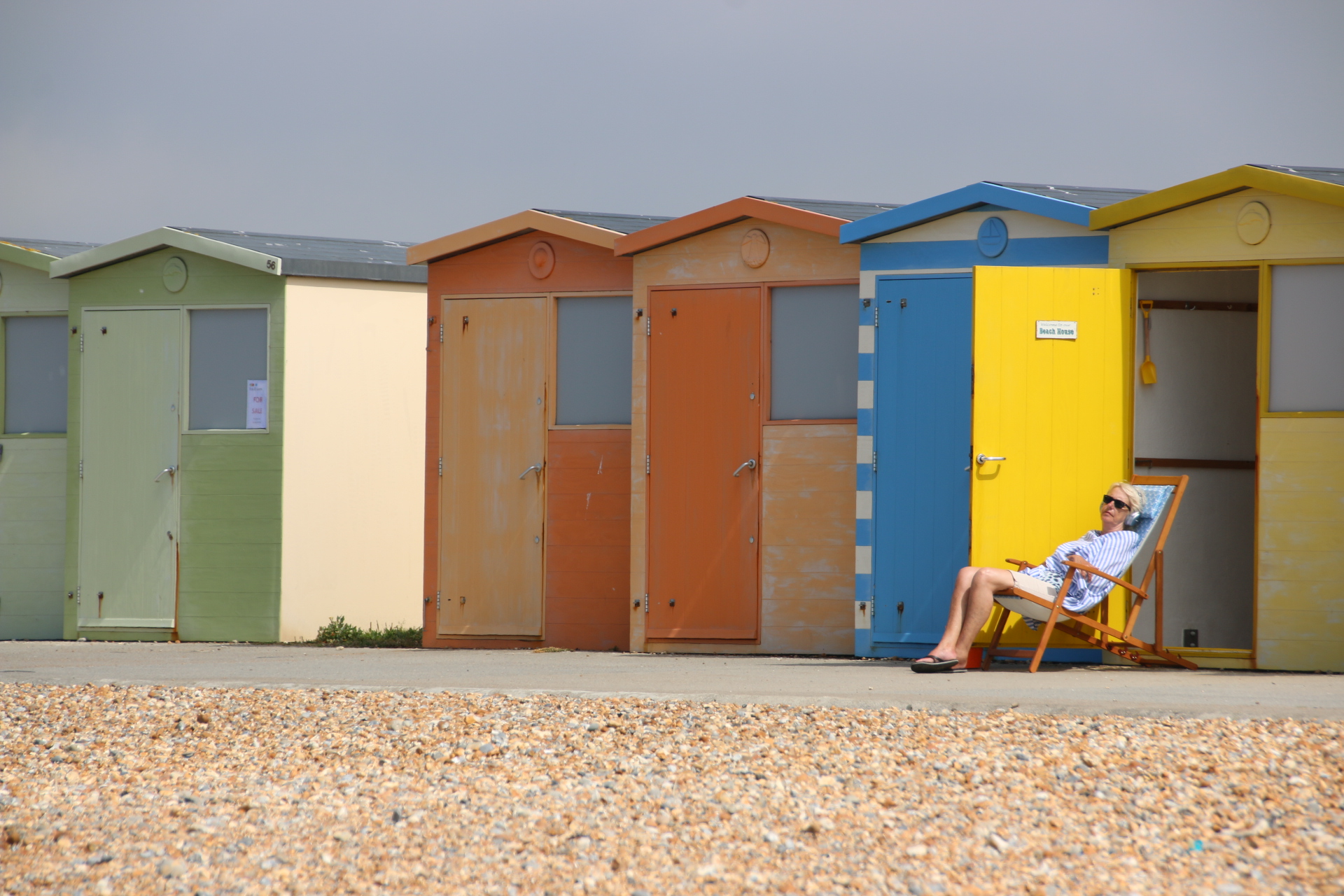
Just a short leg this morning, in glorious sunshine before seeking out the A34 and a return home. Beach huts is the theme for the day. Now these are everywhere lining the beach in their idiosyncratic way. However classy or run-down a coastal settlement is there will always be a row, or two or three, of beach huts which reflect the character of the area. Look at these and see what I mean. In all cases the pebbly beach is long and wide and straight. The beach huts top the slight landward rise and give way to a promenade or cycle path which then drops away to the residential areas and the avenues and cull-de-sacs that stretch inland

Moving along the coast from Brighton, Hove has clusters of huts along the long seafront.

Before the working port of Shoreham Harbour (no beach huts here, only timber yards and docks) there is Portslade-by-Sea where the beach’s huts have all seen better days, as has the beach.

South Lancing starts to up the quality; from a distance anyway.

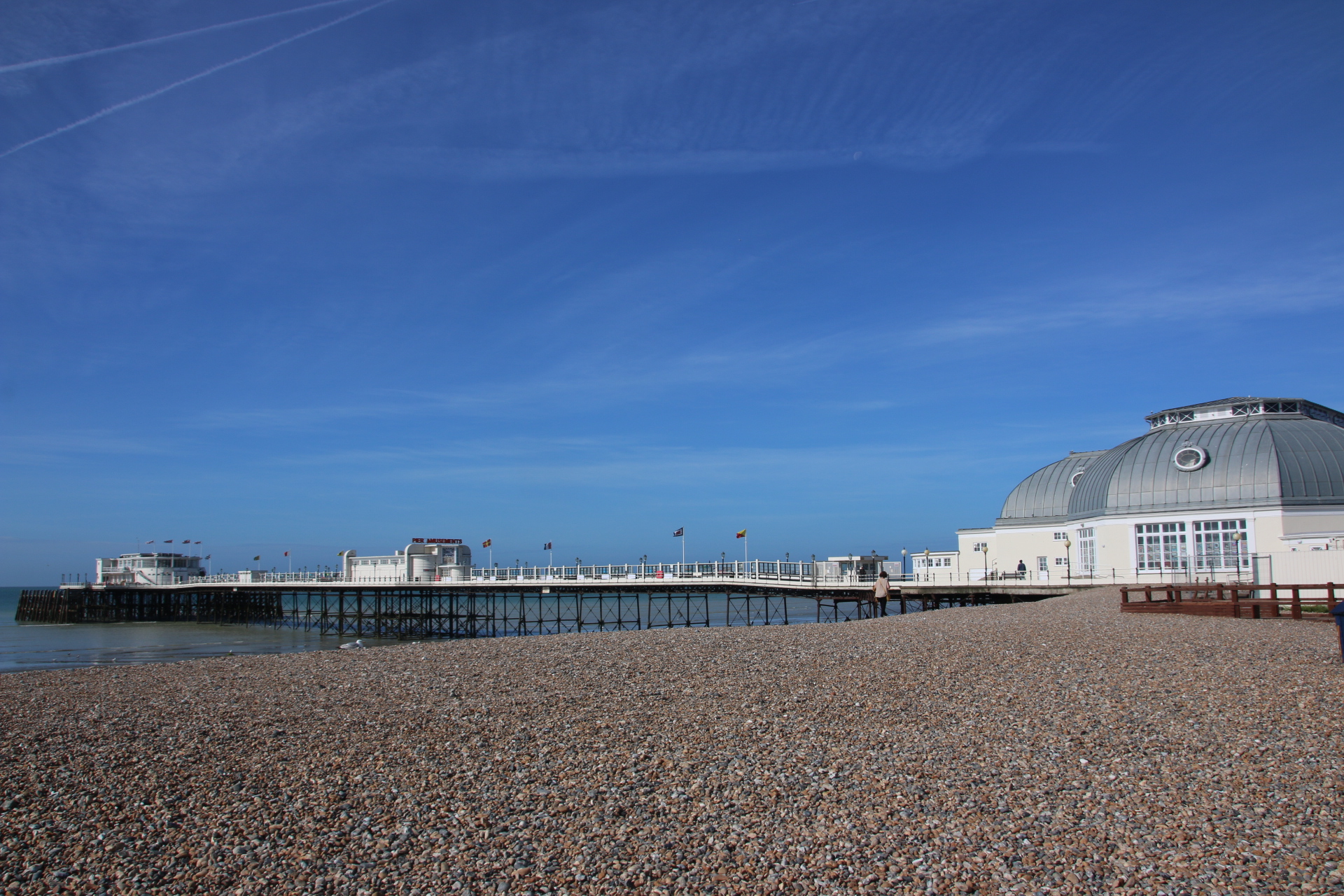
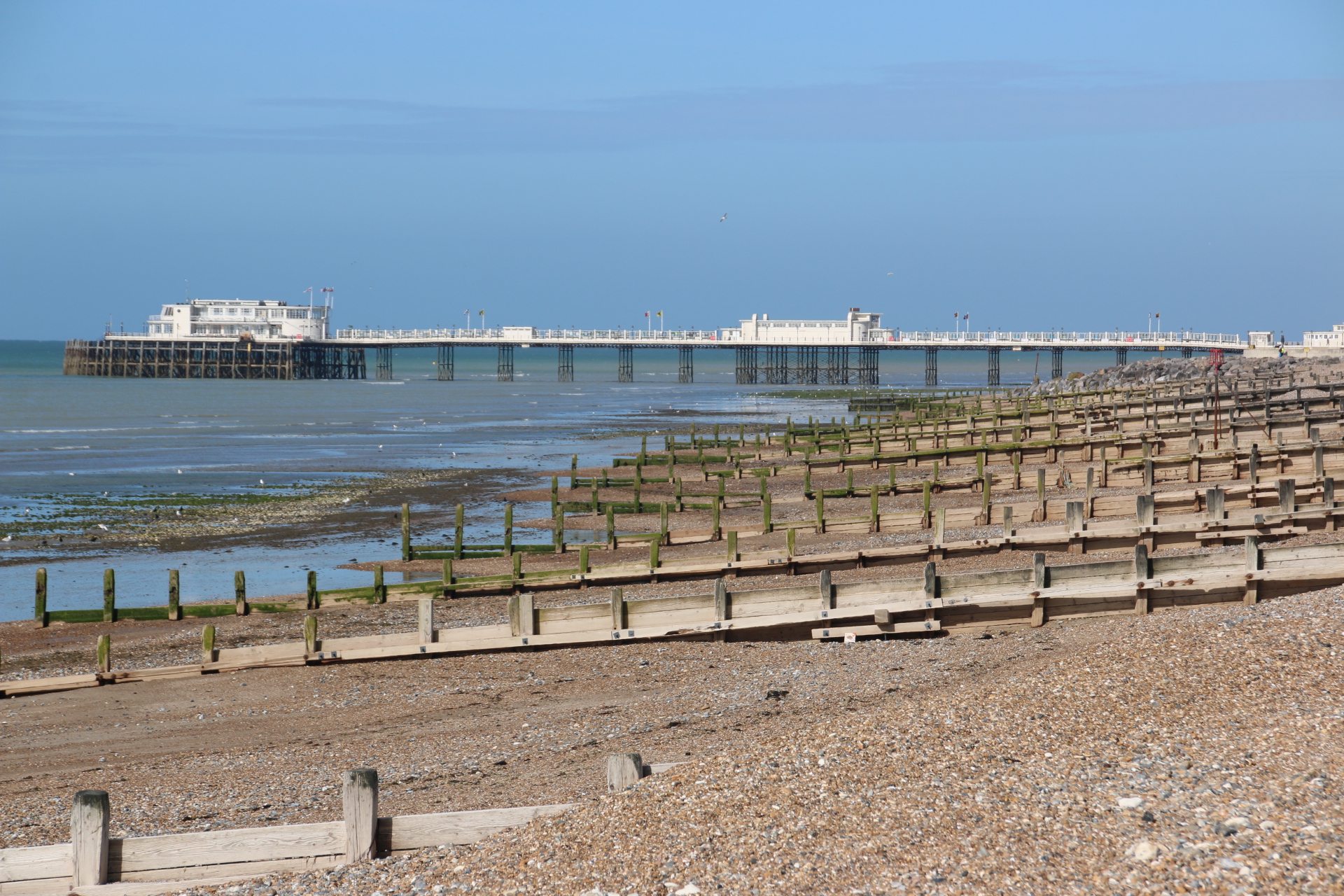
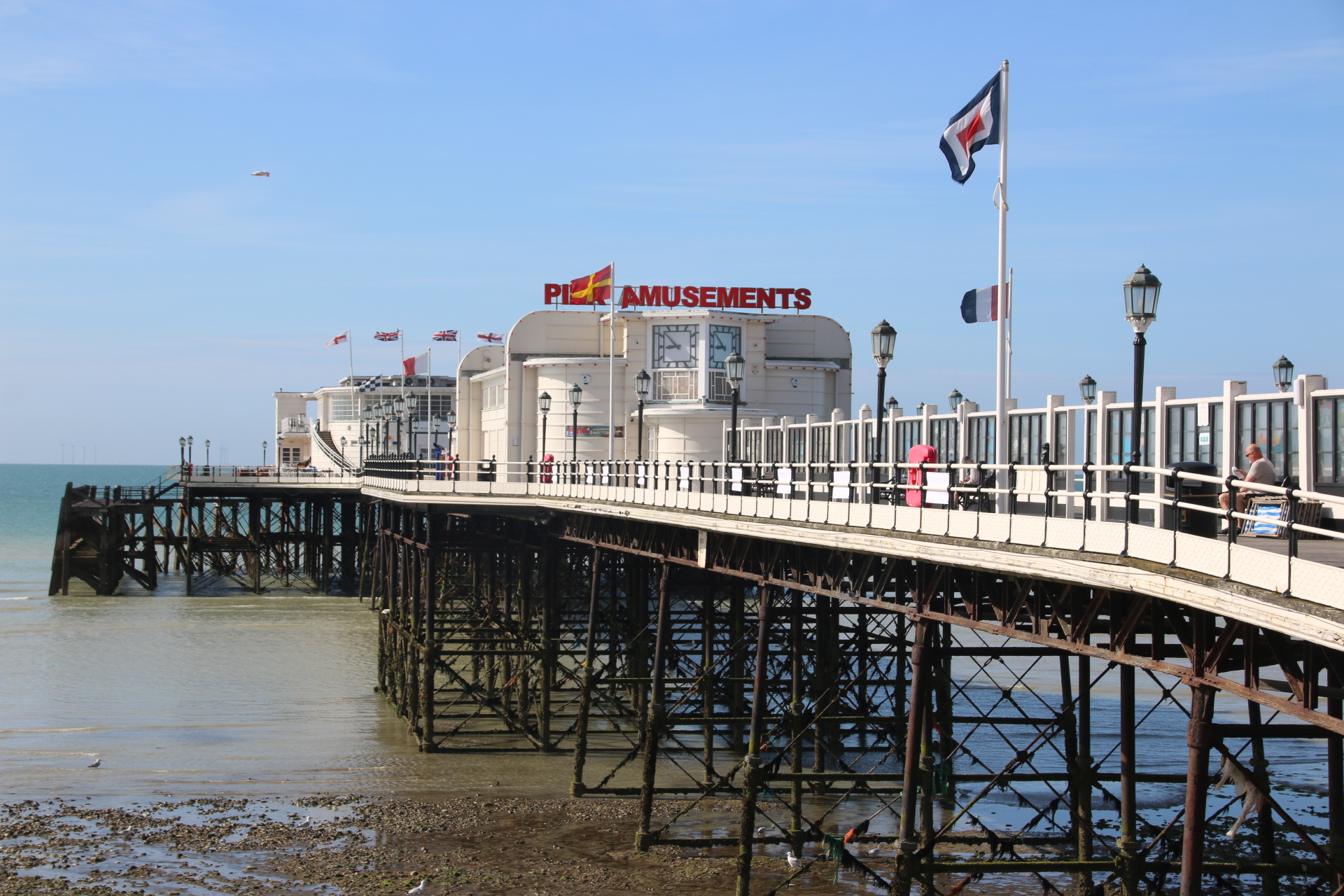
Lovely, elegant retro/Victorian party town of Worthing adds a touch of real class to these proceedings; well the pier does anyway.

The East Worthing to Goring-on-Sea guard is particularly impressive as the rising sun hits the angles and the beach hut equivelent of Colonel Mannering inspects his lines from his even more grand Victorian Seafront Shelfer.

I always imagined Littlehampton to be rather grander than it is. These huts line the approach to the town. Hmmmmm.

A final cup of tea on Littlehampton beach before the traffic-manic rush back to the concrete and clay of the city. Or something more seasidey if you fancy. Are these beach huts? Well they do line the beach and they are huts.

Sea you all soon.

Four piers for the price of three

A day that started and ended with two magnificent piers and an ultra special one with golden orbs in the middle. Do not go there. I said orbs and not balls. Oh…. and see if you can spot me- a kind of Where’s Wally but me and without a striped T-shirt. So I suppose nothing like it really.

Dawn was glorious. So up I bounced and down I went to the front. The sun shone so innocently on Hastings pier, lighting up its colours in fresh-faced shades of happy, summer colours.

My first port of call was Bexhill-on-Sea. A rather grand, Victorian, rather pompous sort of place which I quite liked.

From here a huge crescent of wide, pebbly bay stretches westward, lined by the beach gardens of well-to-do detached housing. Half way along is Pevency from where this expanse of beach and sea can best be seen stretching away in either direction. The only people to be seen are dog walkers with their dogs and their tight little bags of poo dangling from limp hands; the humans that is, not the dogs.

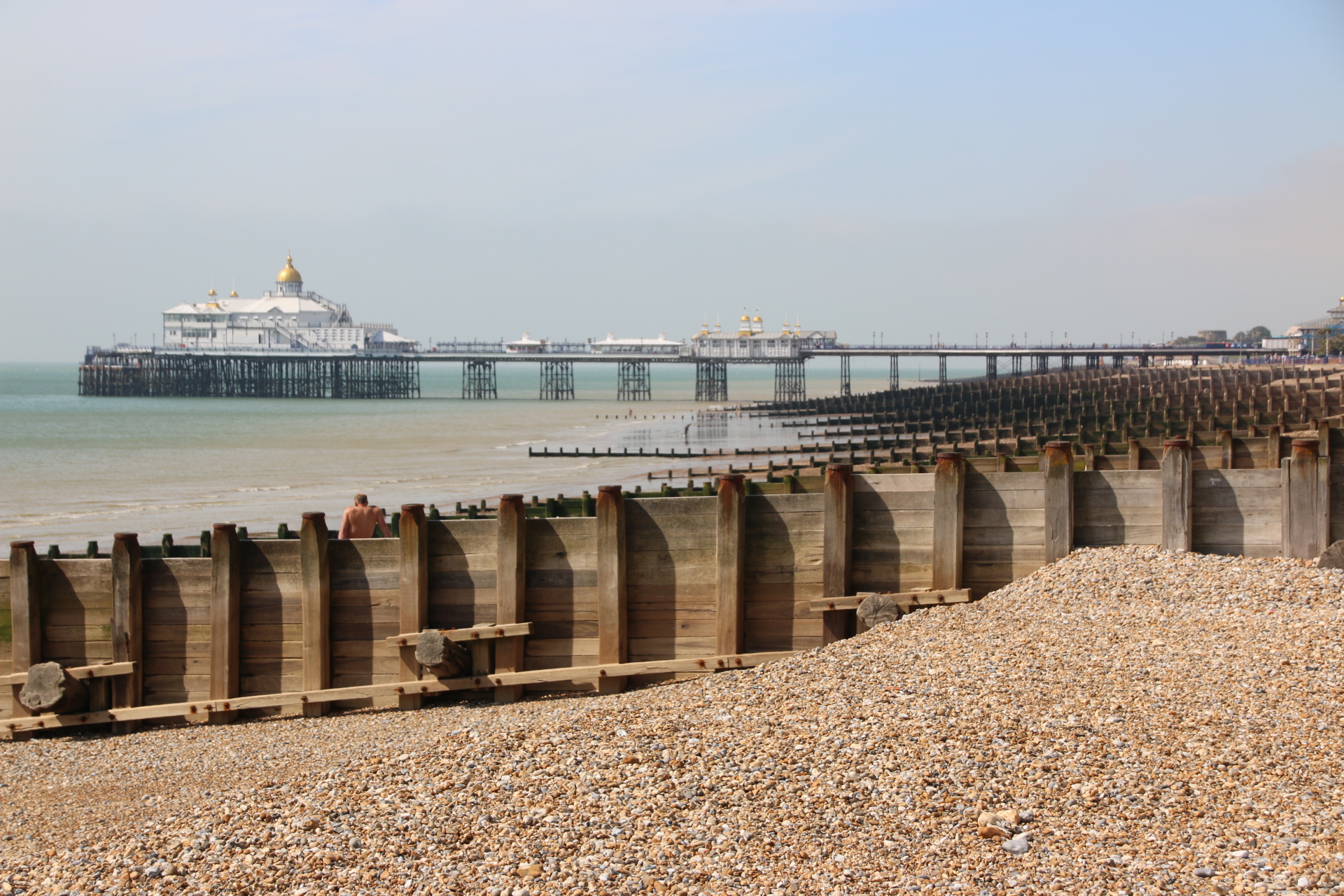
The first sight of the front at elegant, white, grand Eastbourne really does take the breath way. A long terrace of hotels and guest houses overlooks the road, the promenade and the wide contours of multi-browned pebbles, dissected by lines of groynes to keep them all in their rightful place. Behind this, the glory of Eastbourne pier stands out to sea, proud and strong, its golden domes blazing the sun’s reflection back into the town. Gold and white do go rather well together.

A short drive over the cliffs brings me firstly down to the calm that is Seaford.

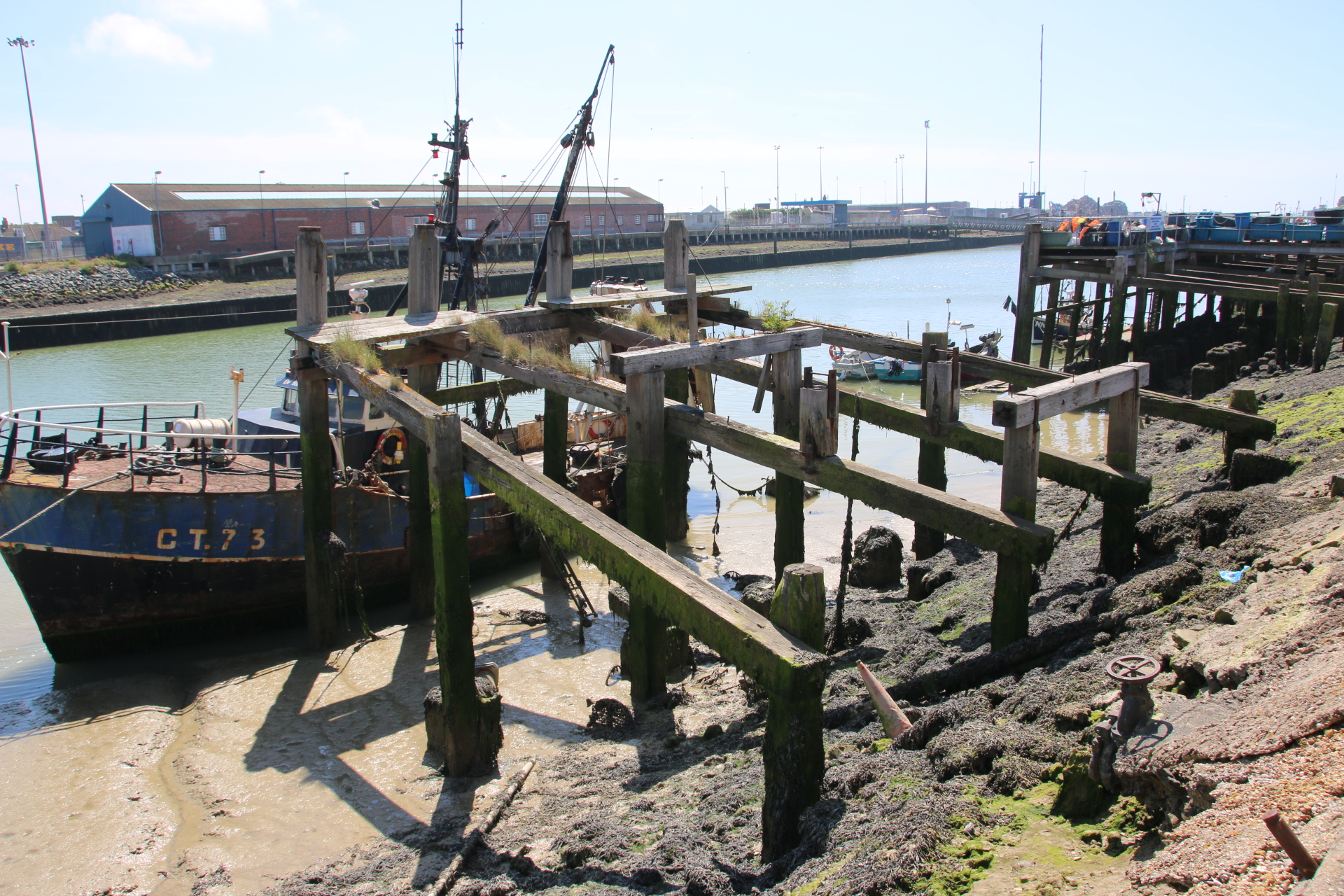
Then, just to remind us that some people have to earn a living, rather than just holiday, it is another drive along the cliffs before dropping down into the working port of Newhaven.

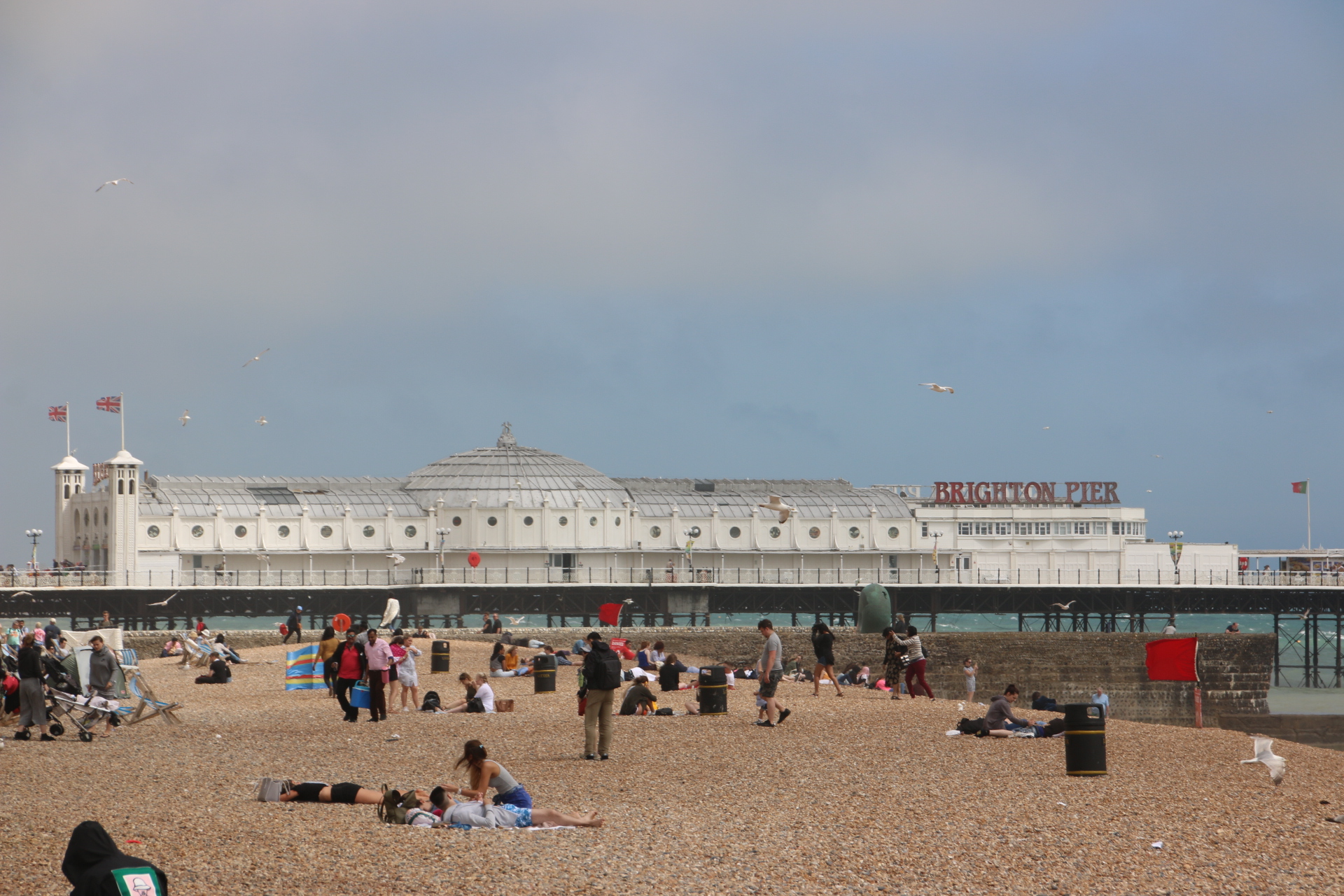
Then back over the cliffs, through Peacehaven (for some reason I really like that name) to arrive in Brighton. Now, I could show you this image of the beach of Brighton which I am sure you are familiar with and you might say ‘a magnificent pier to end the day with’.

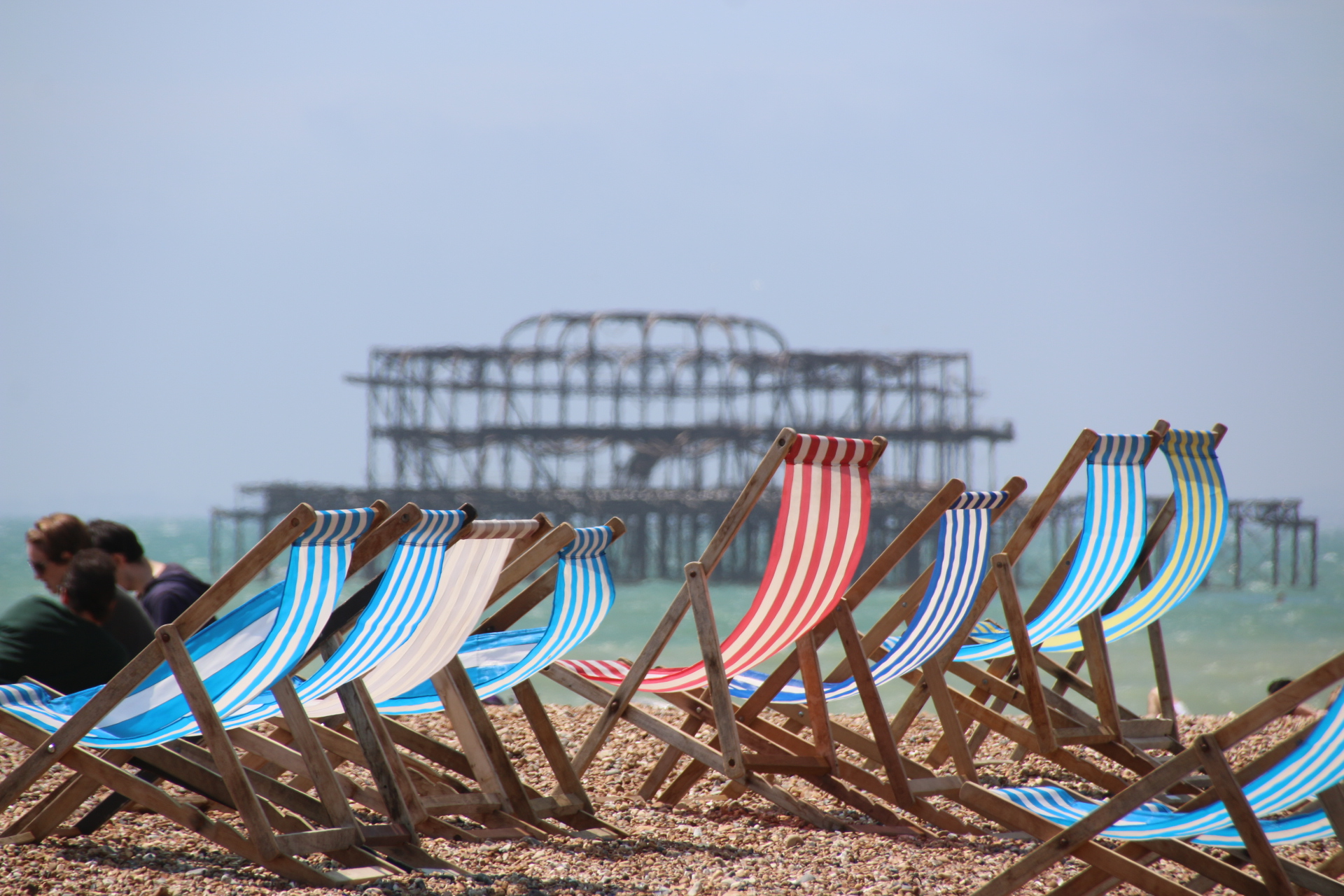
But I wanted to share with you some different images of the beach at Brighton and of a very different, but, I think, equally magnificent pier.

West Pier opened in 1866, closed in 1975 when it fell into disrepair which was then doubly compounded by two fires in 2003. Only a skeleton of rusting iron remains as the town’s most photographed feature. This contrasts with the nearby, state of the art viewing platform sponsored by BA which opened in 2016.


On my way to the battle of Hastings under blue skies

Well, my loyal followers. The sun decided to shine for a few days so I decided to come away for a few days and complete another leg of my coastal tour. So I head for Deal, in Kent. The plan is to come down around Dungeness and spend a night in Hastings which is why I’m sat at the window of a small Italian Italian in the old town.

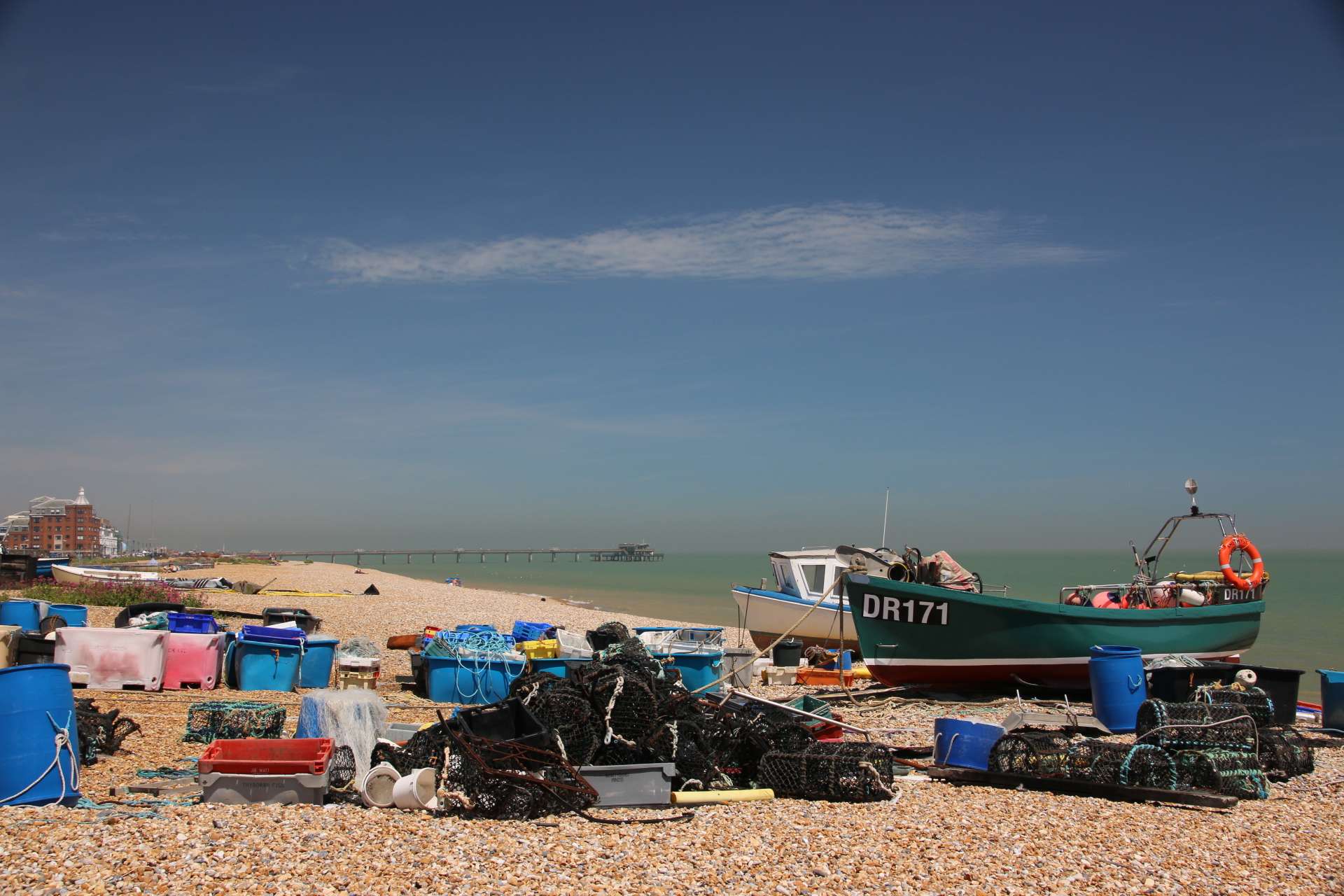
I am gonna let the images tell their story of each place I visited. Some I really enjoyed, some I could easily never visit again. I liked Deal. It was small and cosey and had small English seaside town atmosphere.

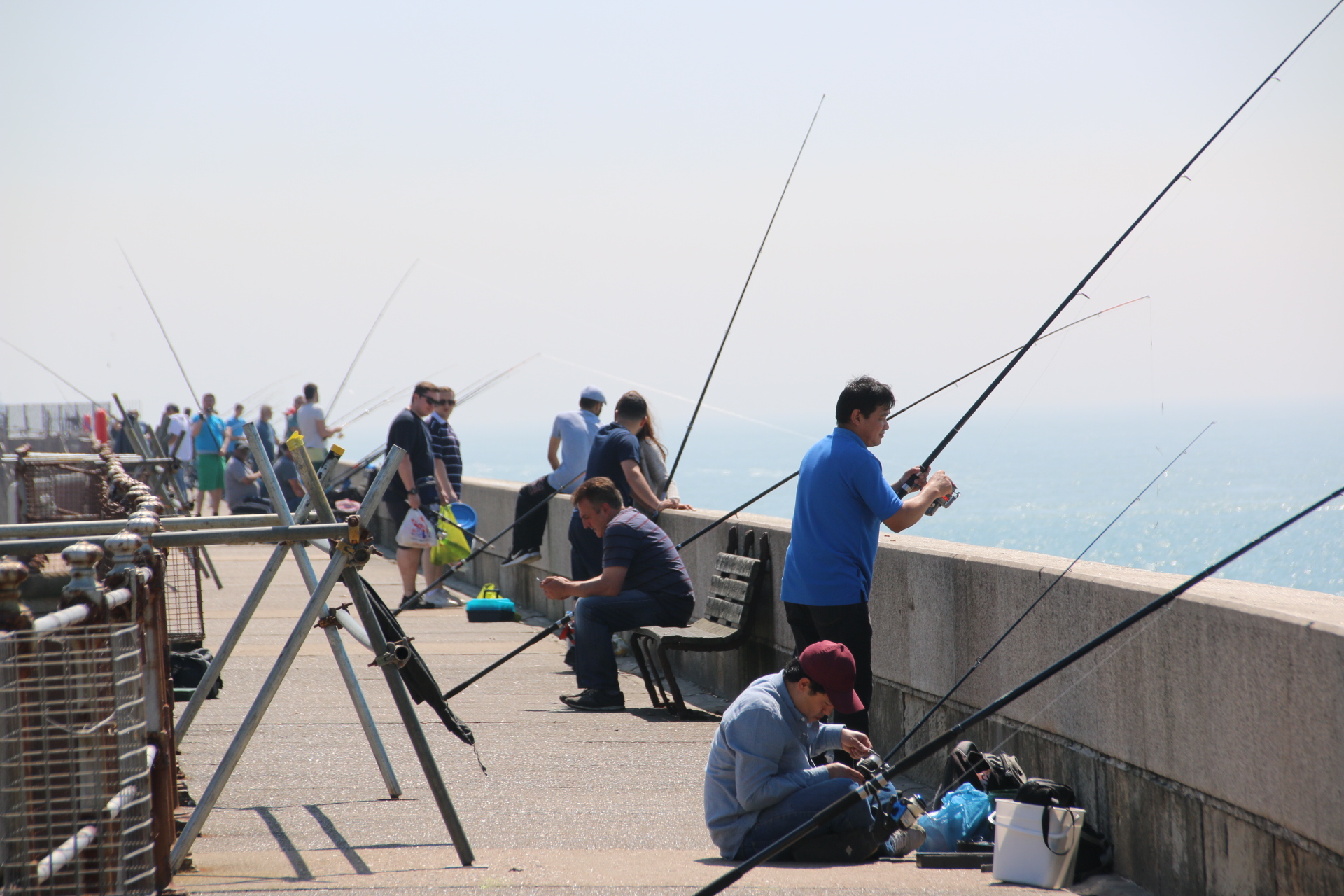
Dover; hmmmmm. I followed some fisherman and found a side of town that I never expected to see. The western side of the highlight is protected by a huge pier and from that pier, which you access through the old cruise liner buildings, are so many groups of eastern European men, dozing in the sun, sleeping stretched out or teasing angry nibbling fish with some very expensive looking kit. Could be anywhere in the world on any pier; but hey, it’s Dover.

Folkestone has not got a lot to offer except the remains of the old train ferry track and viaduct which they are in the process of renovating.

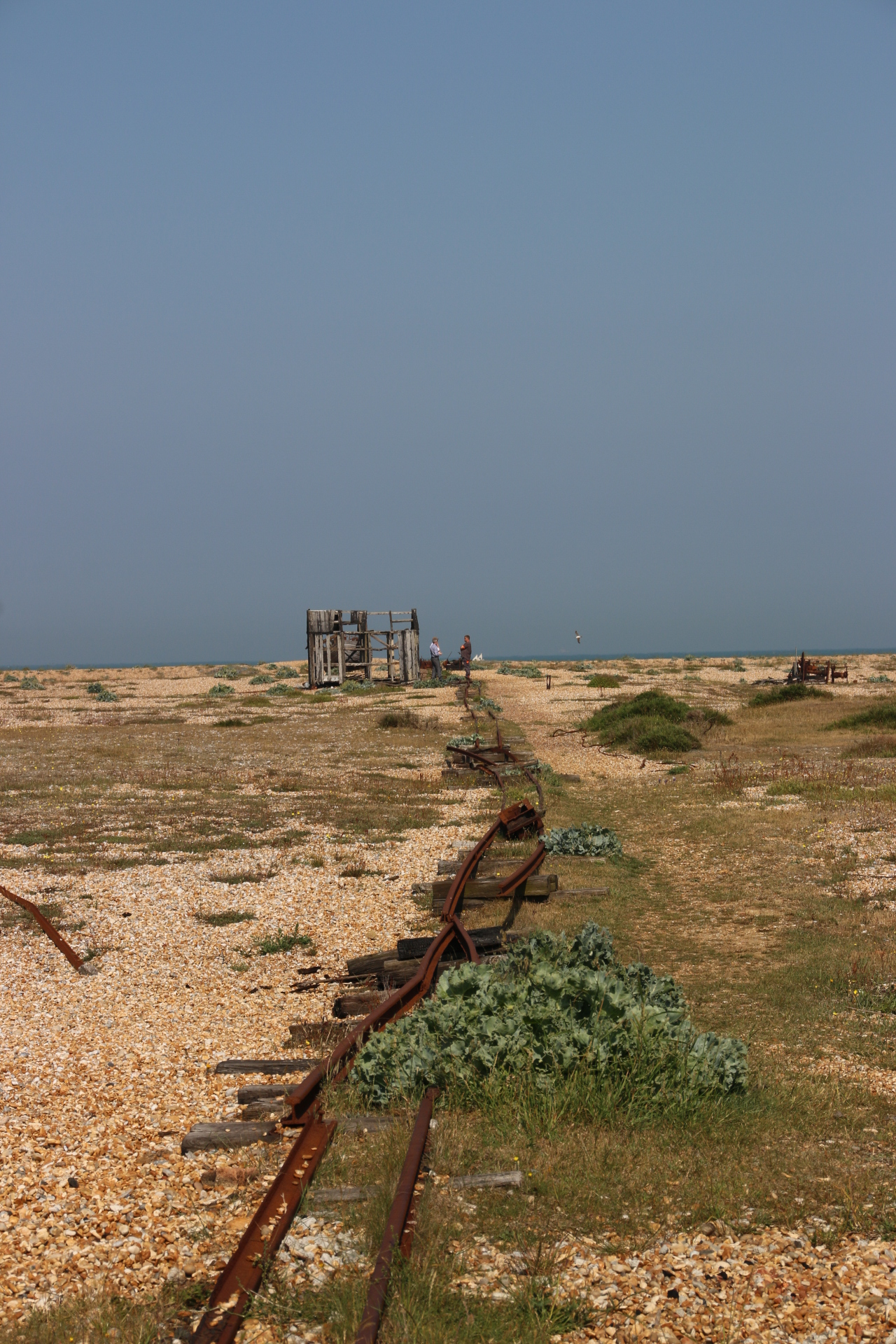
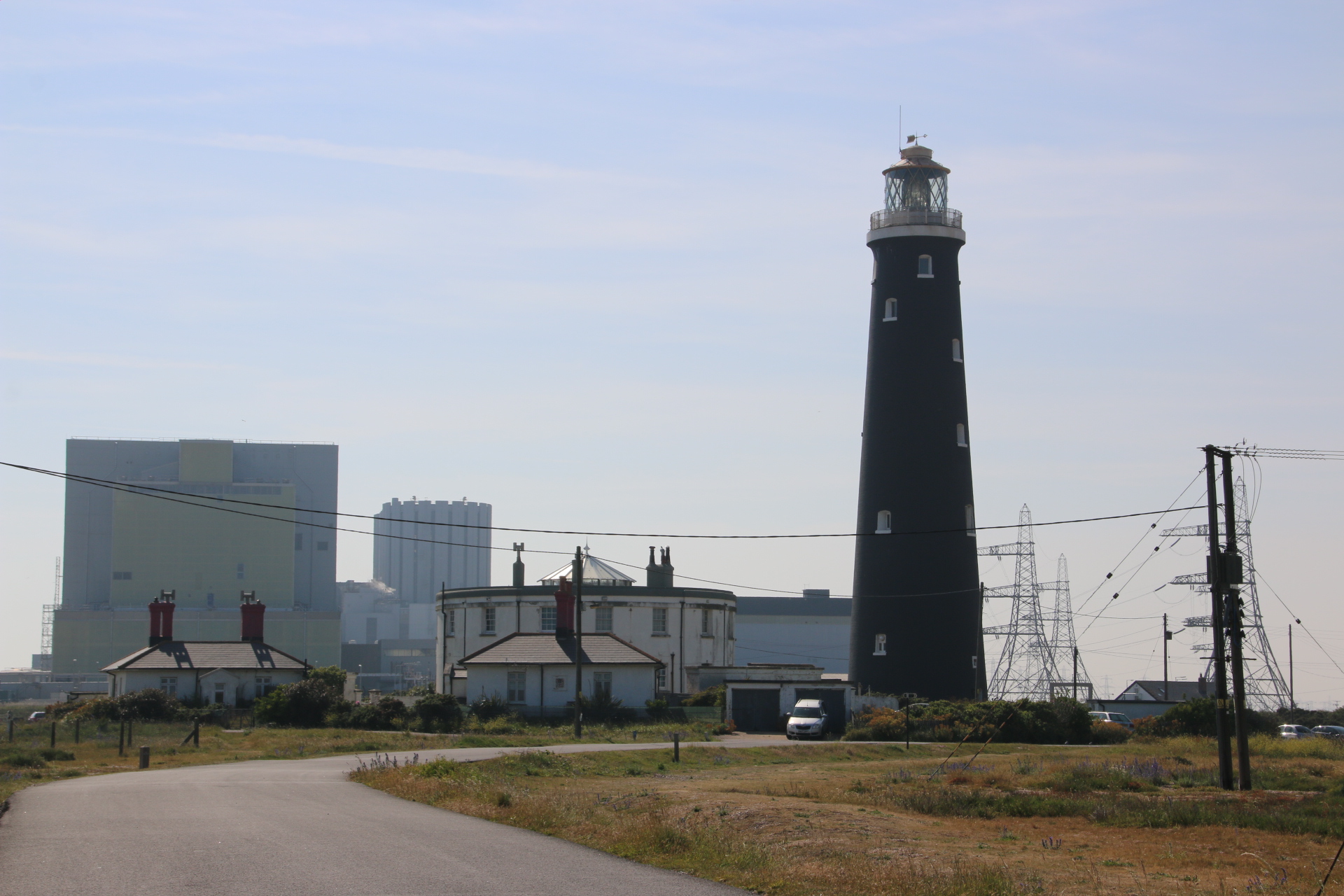
Dungeness was intriguing – a mixture of 21st century wind farms and nuclear power stations shaken up with 60’s holiday bungalows (of do they live there permanently?), a few snassy Grand Design buildings, rusty abandoned tracks leading down to derelict fishing enterprises mixed with fibre glass silhouettes of catamarans in the far distance on the beach.

There then follows a number of villages which huddle along the road protected from the storms by the tall sea wall.. The only bright spot on this section is Rye Harbour with its clapper-boarded or rendered facades to protect the structures from the storms.

And finally Hastings with the Pier of the Year 2017. Why???? Maybe it’s Hastings’ turn.


Capri in retrospect

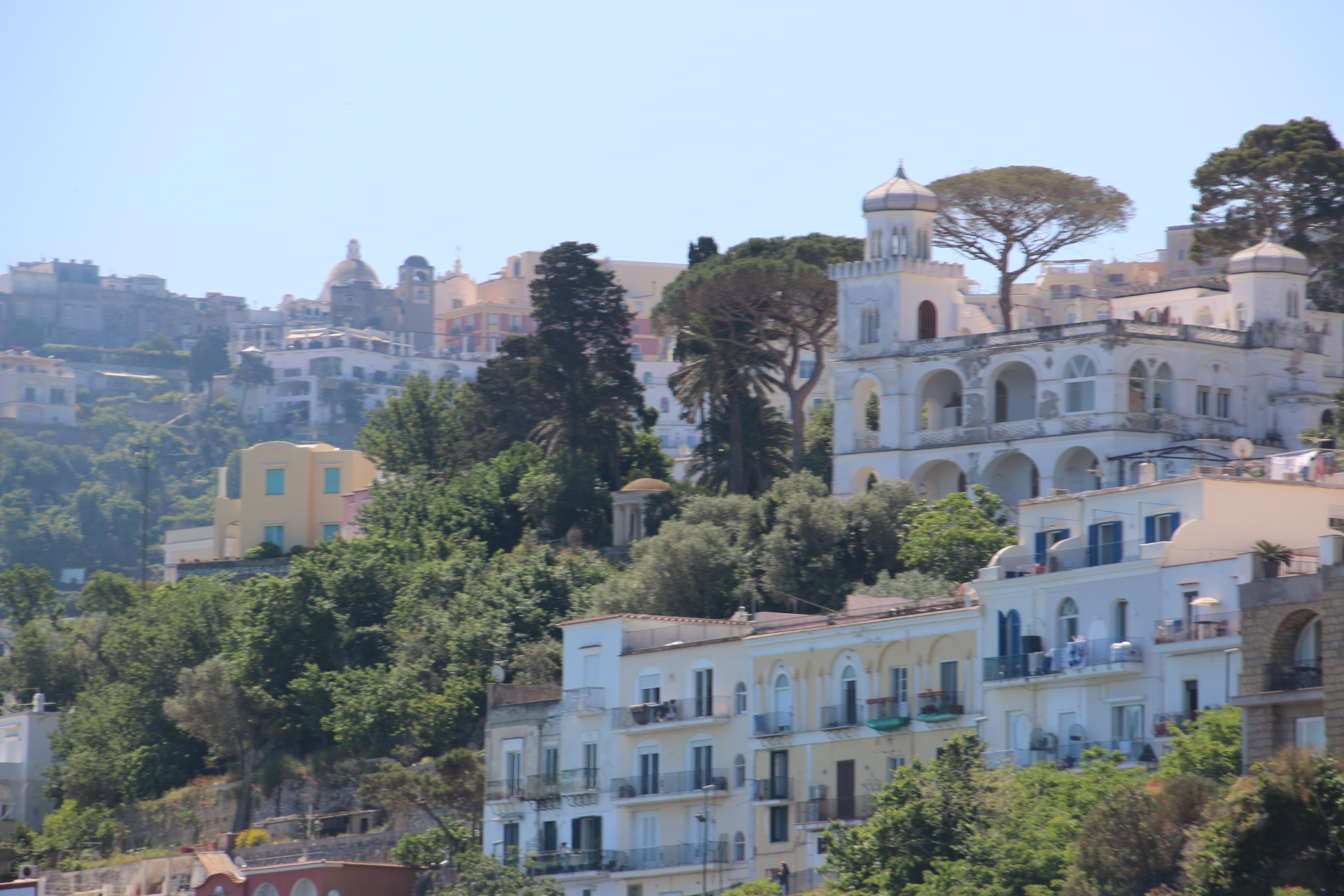
So does the sun always shine on Capri? Well I don’t know the answer to that but it certainly did on the 6 days I was there; and, boy, was it glorious. It really is a lovely place to visit on a short trip. Yes, it is expensive as everything has to come by sea, and, yes, during the day the ferries discharge day trippers galore to clog up the narrow streets and lanes in the two main centres of Capri town and Anacapri. Other than these two factors it is a great place to explore.

Capri town has a classy feel about it but as long as you keep to window-shopping and people-watching over your one coffee it is a busy but intriguing experience. It does help that the last ferry off the island is at 6pm so in the evenings everything calms down, the shops shut and some gentle nightlife can take over in bars and restaurants.

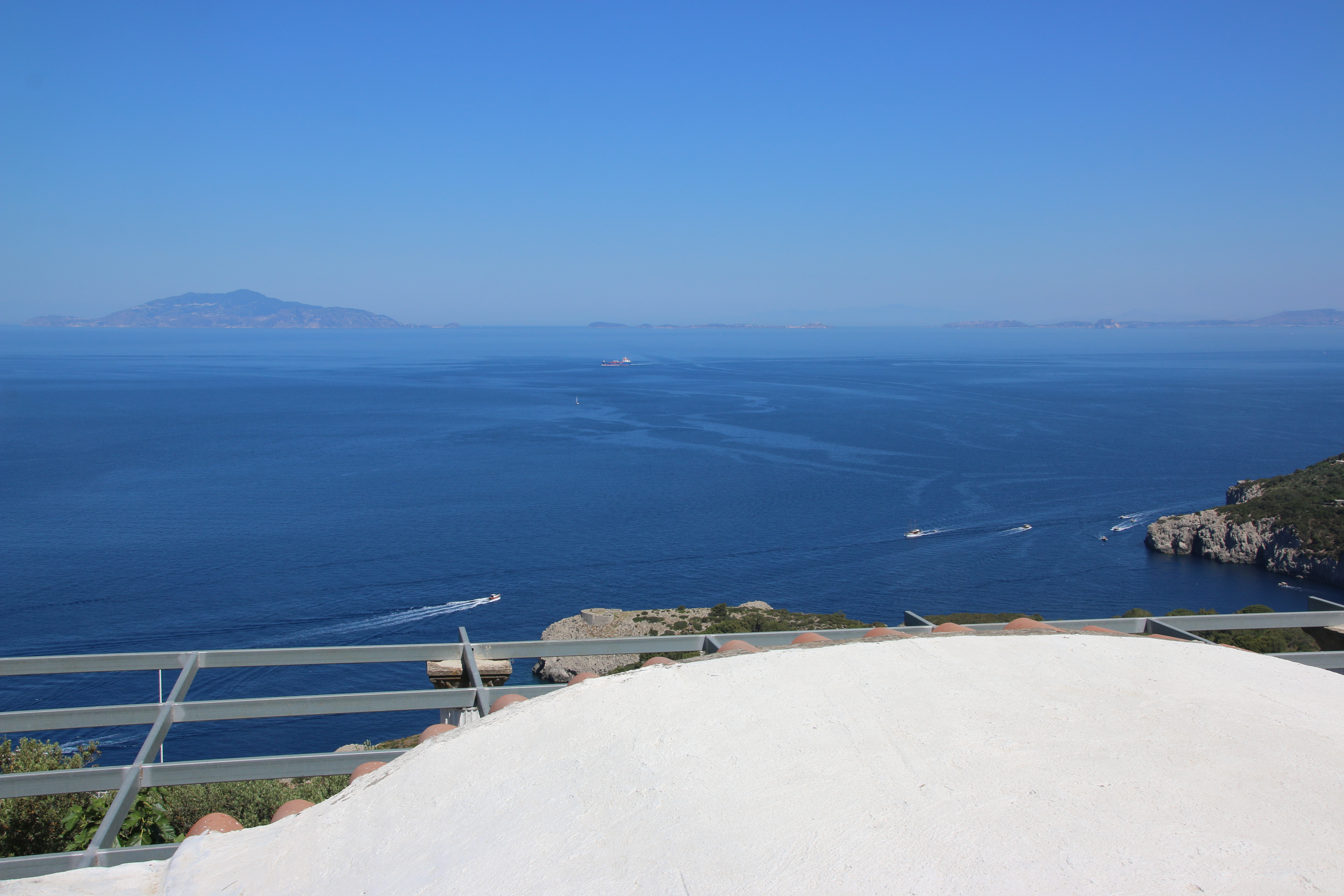
Anacapri is smaller and much more Italian with fewer columns of visitors. The one reason to visit the town is to get the chair lift up to the top of the highest peak. It is a peaceful 10 minute swing each way and is well worth the effort as the whole island and nearby mainland spreads out in below you in a landscape of rock and canopies, scattered white villas around hotels, and tracks of vessels sniffing around in the coastal waters.

I stayed even further west at a small B&B, il Paradiso di Capri, run by Guiliano and his family. The breakfast terrace and my balcony overlooked the sea and Ischia to the west, hence the sunsets.

Nothing was to much trouble for Guiliano. He made reservations for dinner, dashed up and down the hillside to collect and deposit visitors at the port, always had a smile and a happy greeting. A lovely man.

We ate at places he recommended. Restaurants on the island run this truly great service. Each one will collect their punters from their accommodation and take then back when they have eaten. Now that is cool. We took to Le Arcate in Anacapri and ate there three times. No view, no sunsets but the friendliest of welcomes, amazing service and great food. Papa opened it 36 years ago when he arrived from Naples with his family. Nico, the head waiter, looked after us- a lovely man with a dry sense of humour and a twinkle in his eye and always up to mischief whilst looking after his clients so well. On the last night he had our table waiting and set, with our favourite bottle of Chianti standing guard. The homemade lemoncello was to die for.

So thank you Capri. If any of you want to get away from it all for a while, I thoroughly recommend it.


Round and round the island in a tiny boat

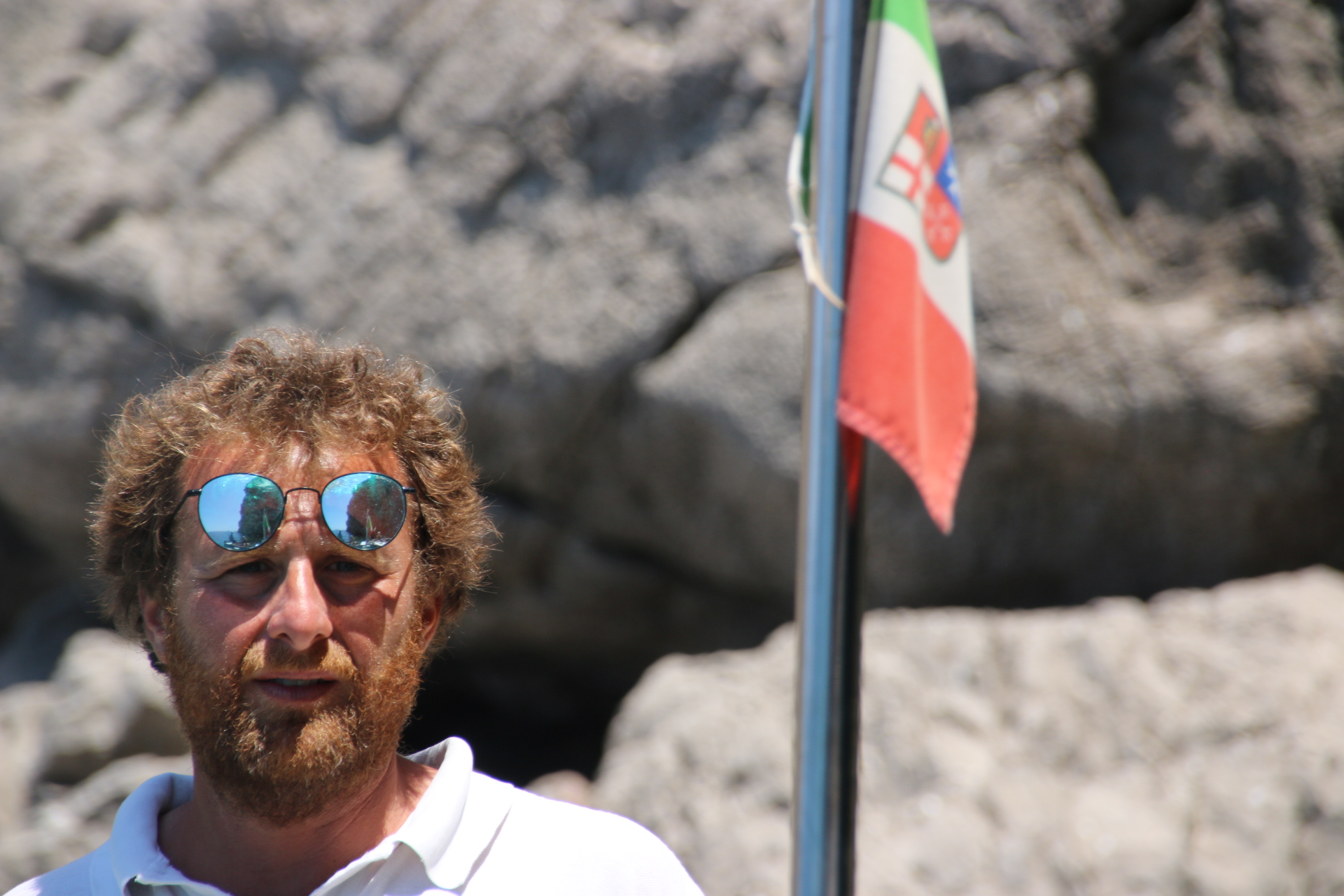
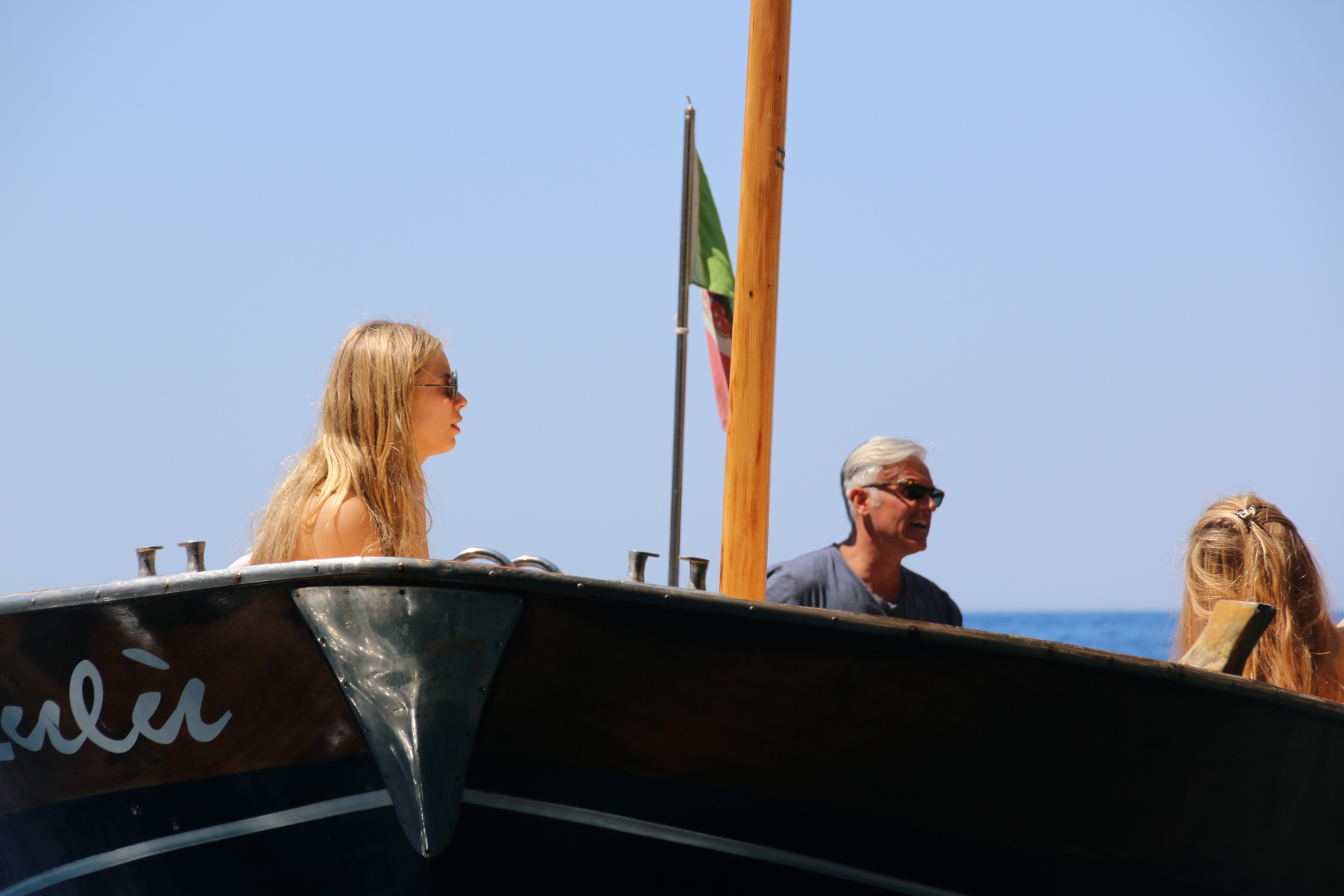
So here we go, around the small island of Capri. This is Nico. He has a small, traditional boat painted blue. He meets his guests in the harbour, gives us a steadying hand to board,  settles us down and casts off. Leaving Capri behind us we set out into the open sea.

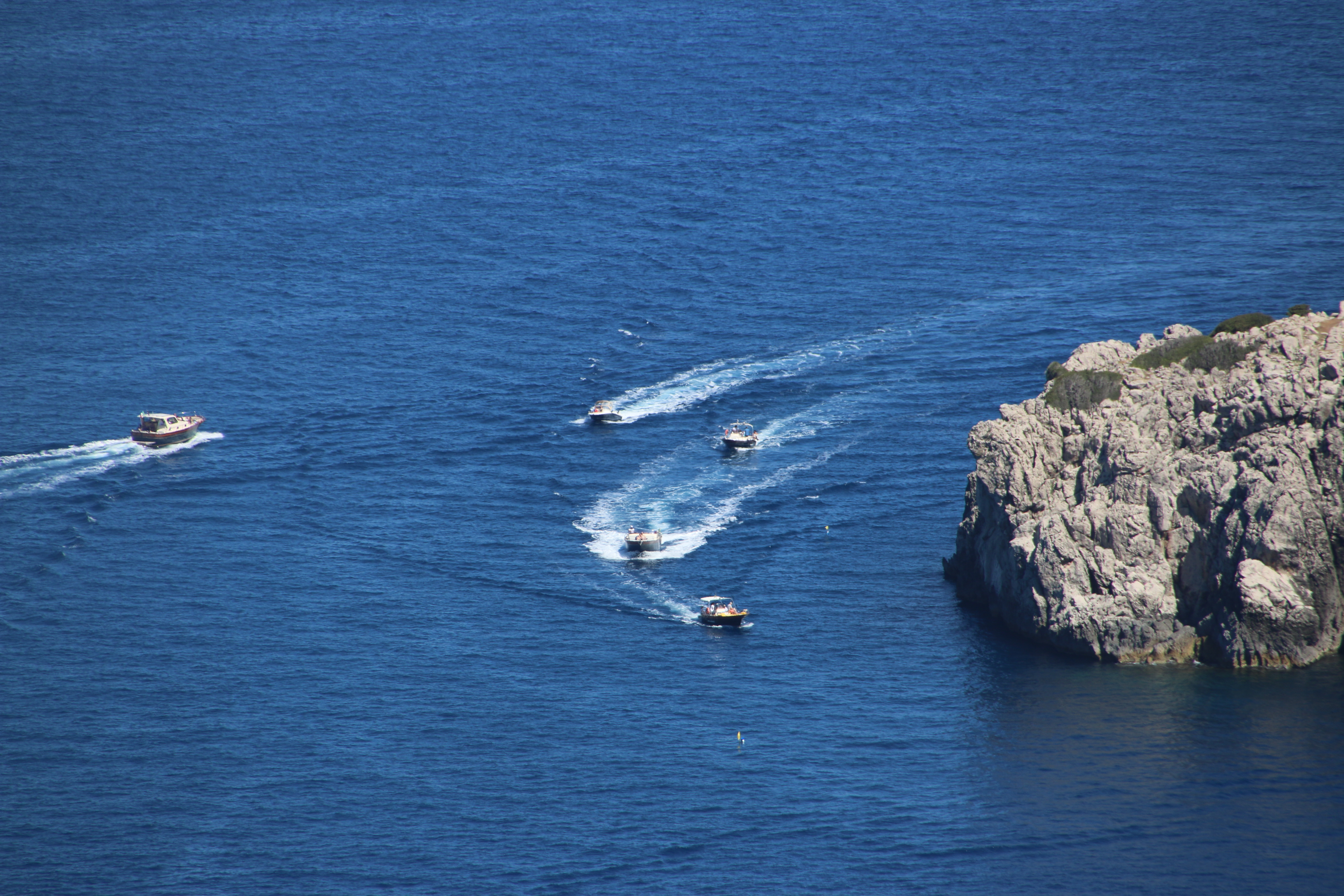
We sail, rather motor, anticlockwise around the island. It is a crowded procession of boats, all showing off their beautifully painted and varnished hulls and masts with bright chrome gleaming proudly in the sun. Most carry a handful of passengers but occasionally one of the harbour big boys tries to bully everyone else out the way with a hundred or so passengers pointing their iphones at the craft below.

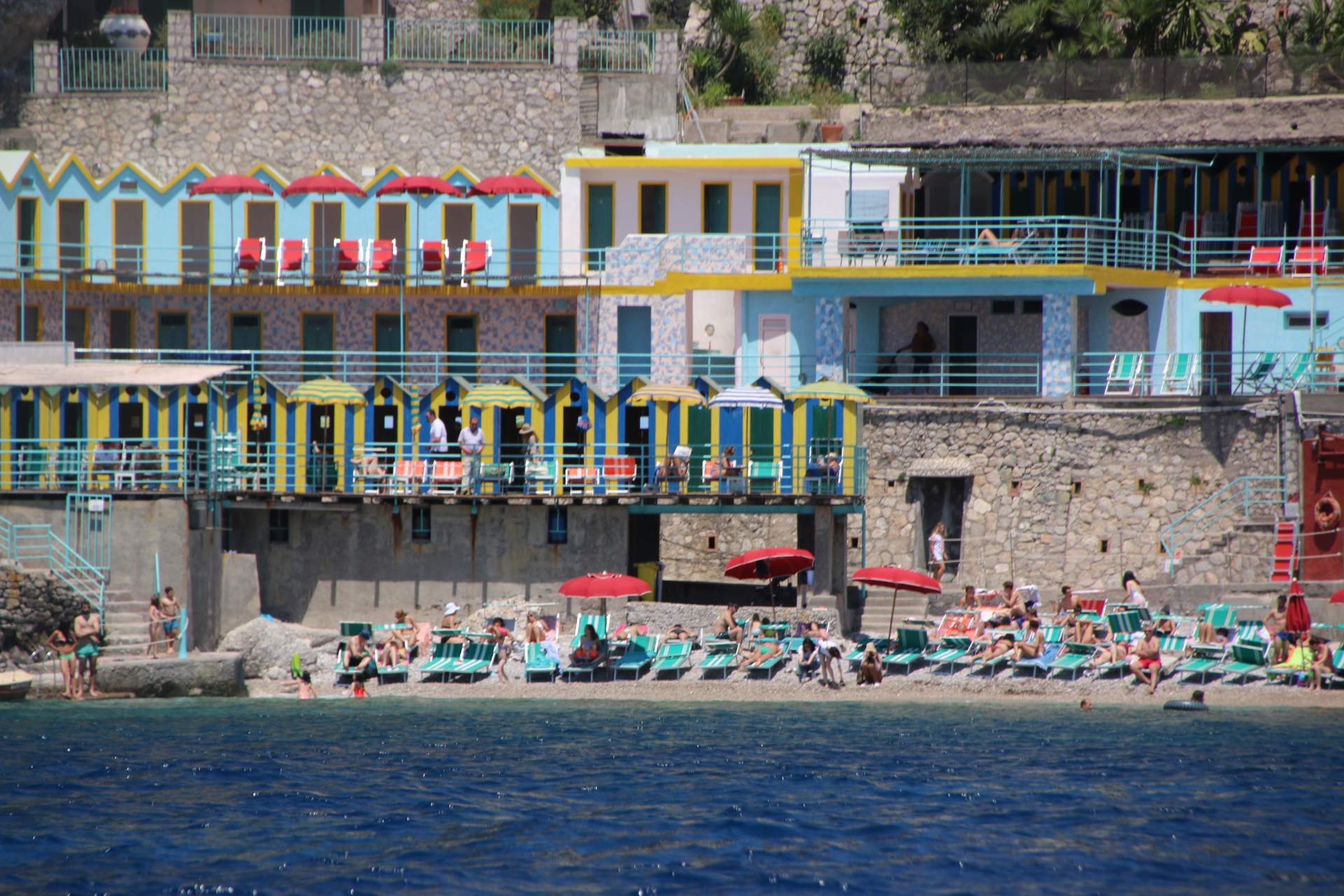
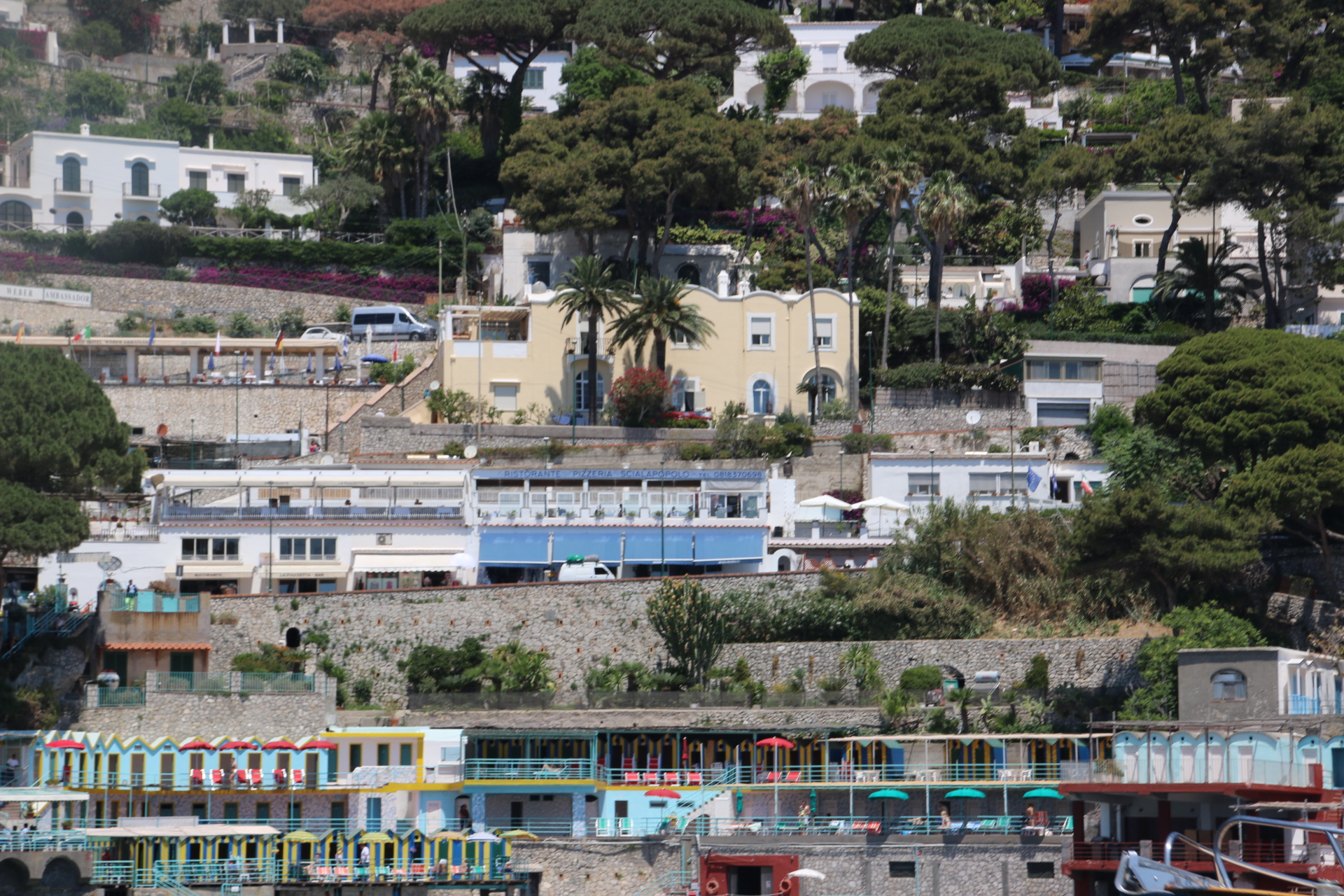
Under blue skies and on turquoise waters, with gentle breezes cooling us down, we gasp in wonder at the ruins of castles and Roman villas perched high up at the tops of sheer cliffs. Down at sea level rocky ledges & platforms, laughingly called beaches, provide safe bathing areas for locals & tourists or acess to a private villa or an upmarket restaurant. In places ingenious designers have created formal bathing areas with bathing hits and rows of sunbeds.

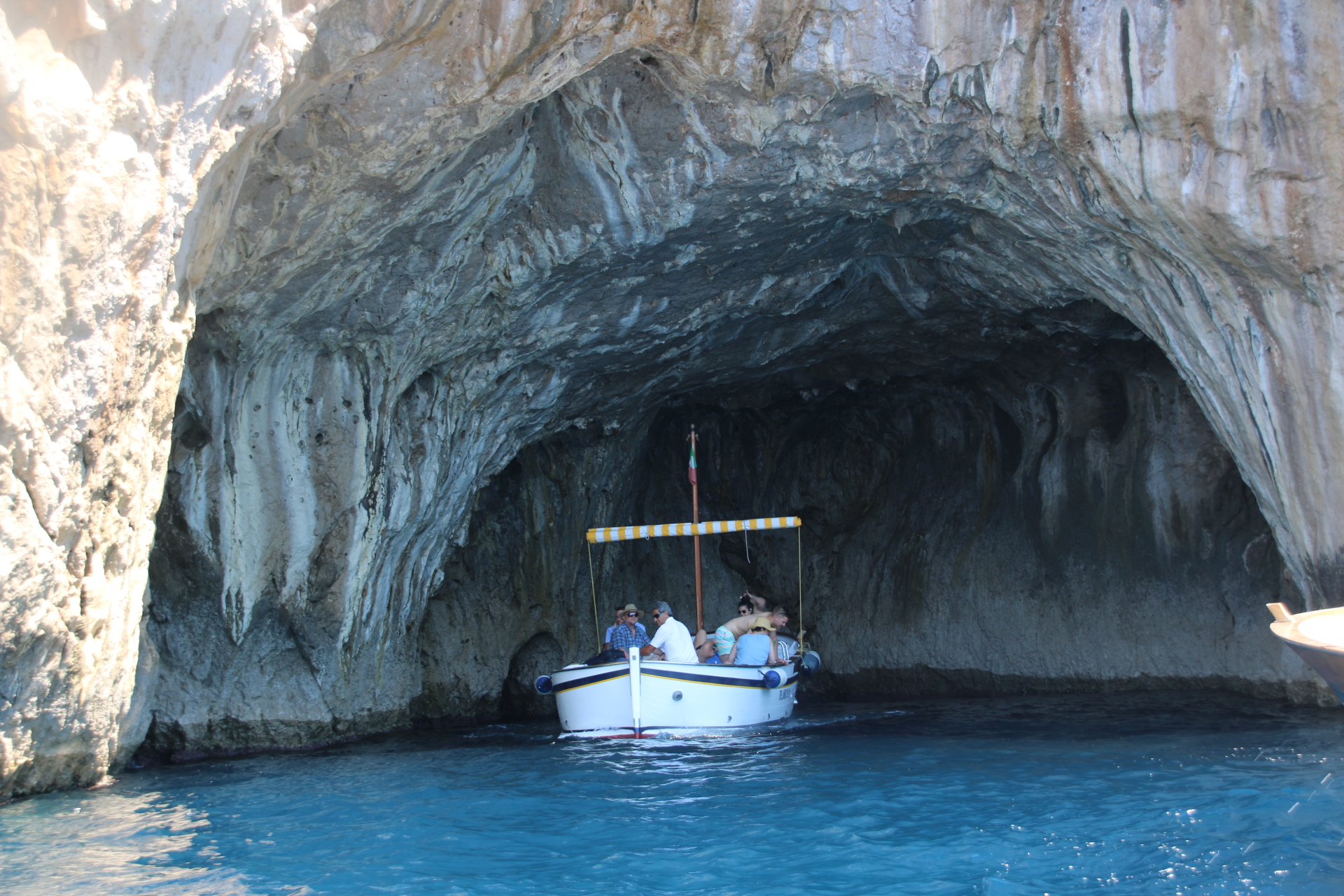
The flotilla of boats hug the coastline sniffing out caves & grottos. Once one is found the skippers very politely allow each other in turn to enter the shady darkness of these arched cathedrals shaped by the sea. There is no queue barging here.

Around strong headlands arched villas or cloistered hotels appear. Natural rock formations address given human names like ‘the heart’.

Very high end, luxury craft, are moored off the coast, yatchts and sail, acting as bathing and sunning platforms for rich families and gorgeous gals & guys. A nice life if you can get it.


Amongst the rich and famous

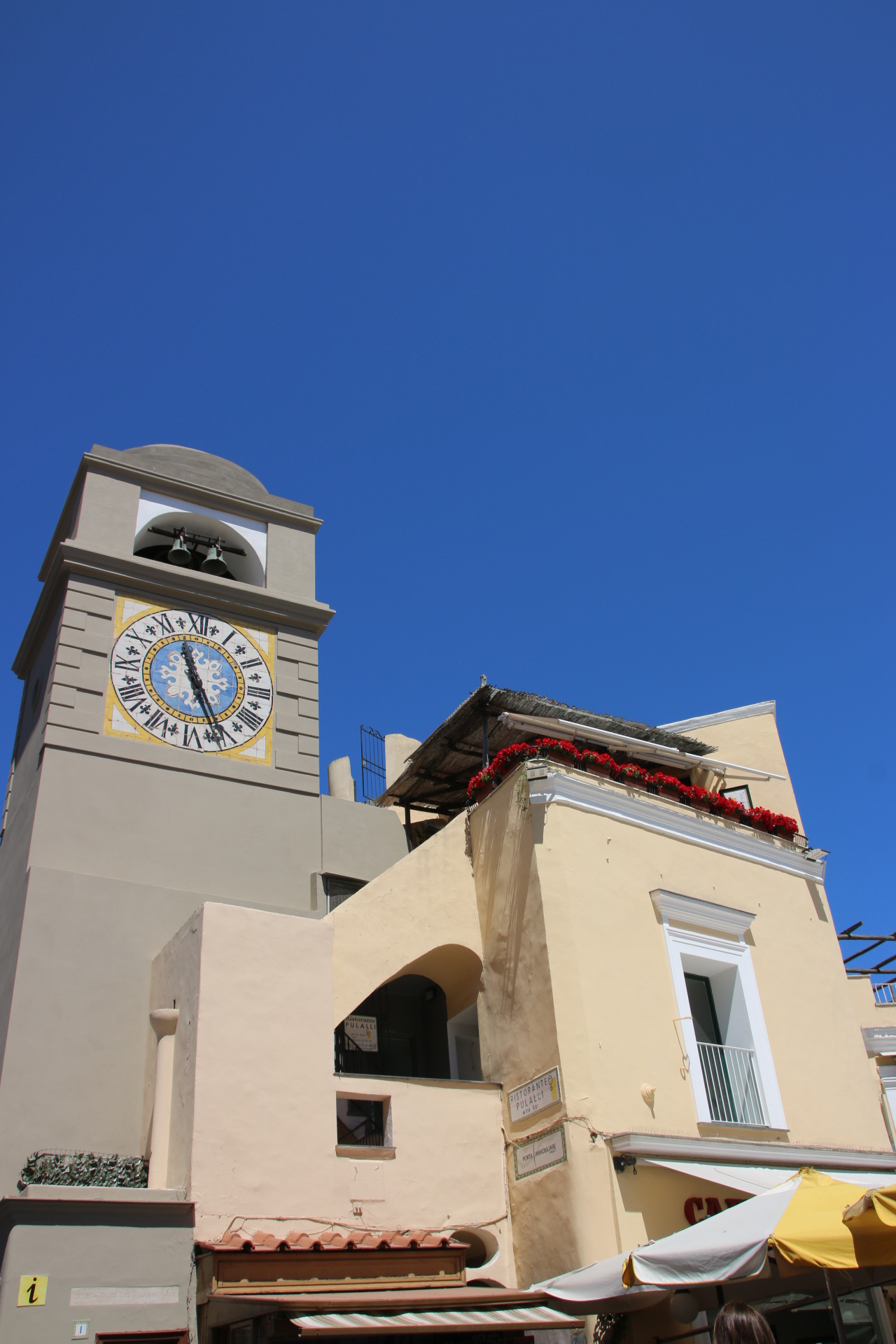
The town of Capri is very different to Anacapri. The tourists arrive at the harbour and get a bus or the vernacular railway up the hill short distance to the small central piazza beside the church.

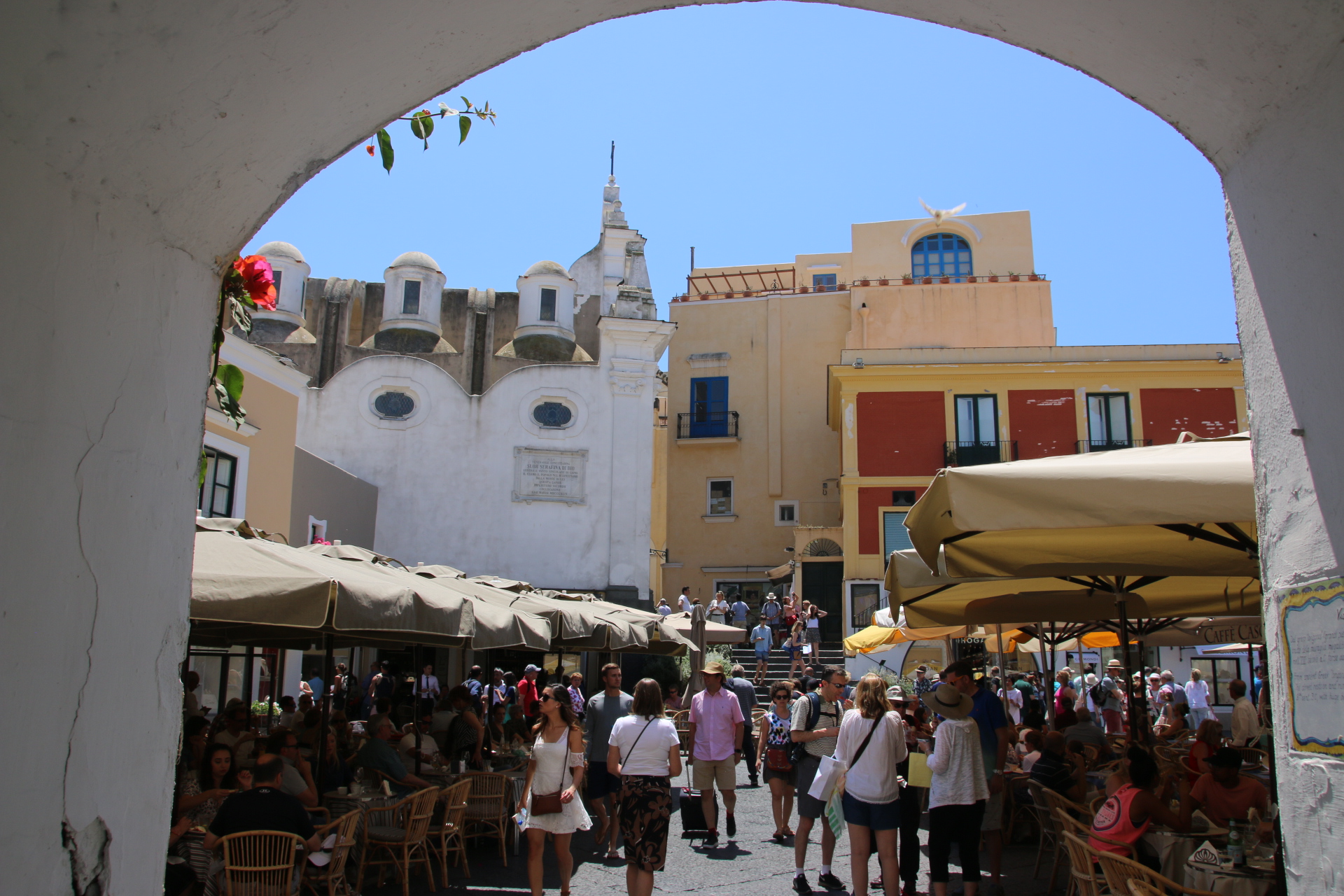
In this space four cafes have packed their tables and umbrellas leaving three narrow pathways to the archways and the town’s riches. Elegant & suave locals drink their coffee surveying the lines of  tourists come to disturb their peace.

They view the lines of chattering pale-skinned Chinese and the drawling large American from their wicker chairs, faintly amused by the endless stream of overheated, sunhatted visitors in columns of minipeded legs lead by the raised furled umbrella – a beacon to all tourists seeking that one image or piece of tat to impress their pals back home.

Taking one of the narrow alleys the town reveals itself.

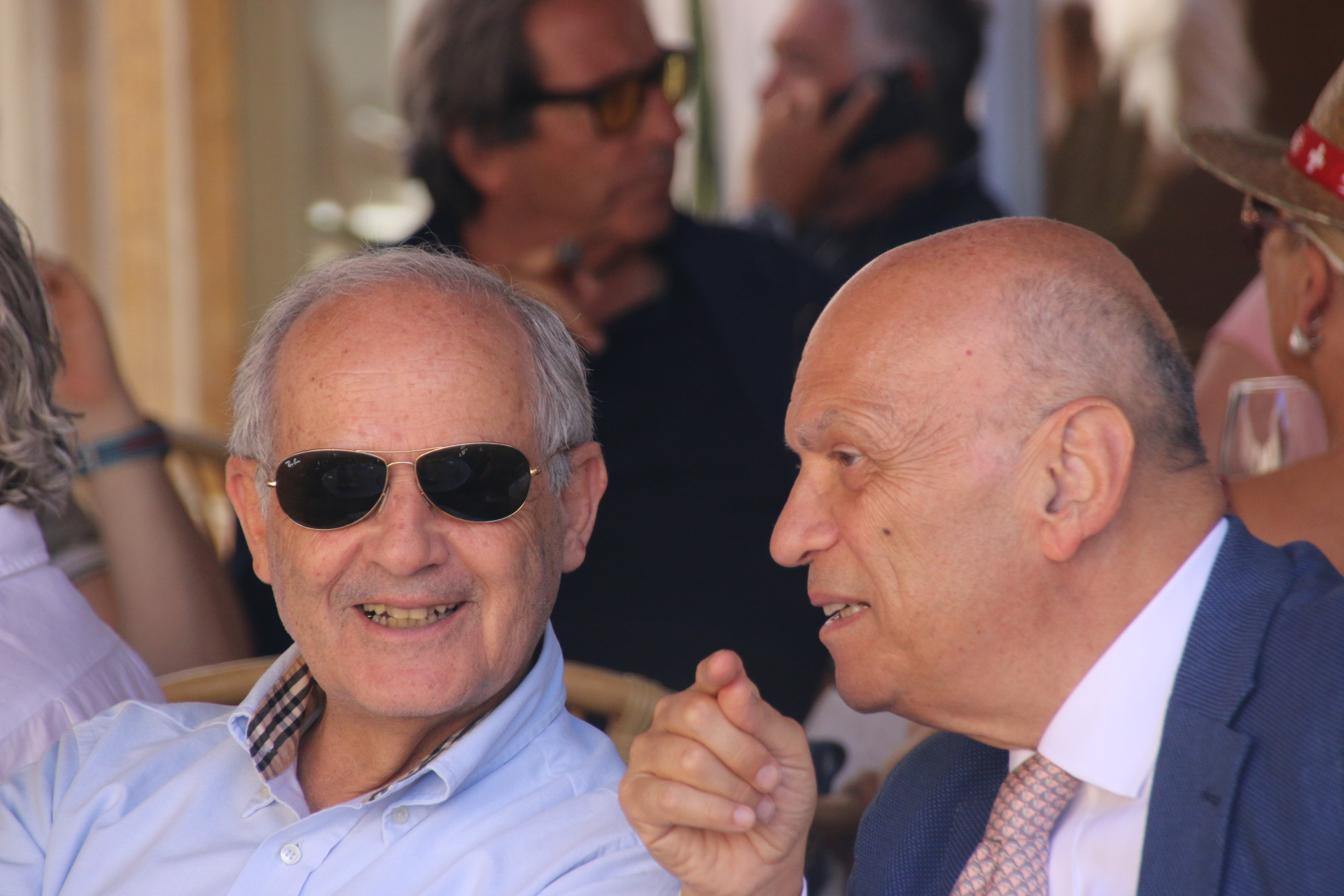
Elegant hotels welcome high end visitors to relax in cool gardens after visiting those really upmarket designer stores that the rest of us pass by laughing in envy. Well, I love the style of the mature Italian gentleman but is this really my look: the total outfit costs £5,00 euros from the Dolce & Gabbana shop.

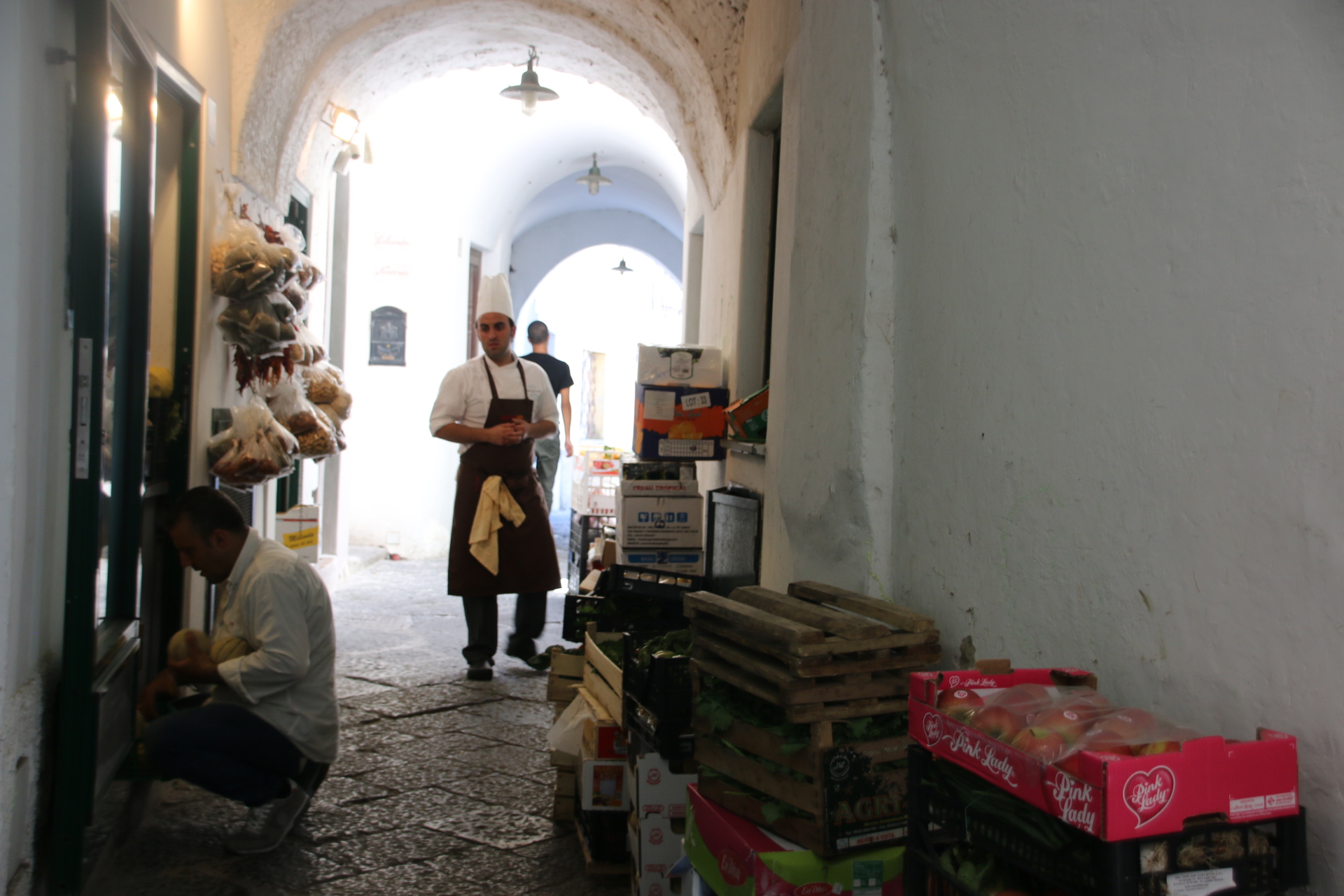
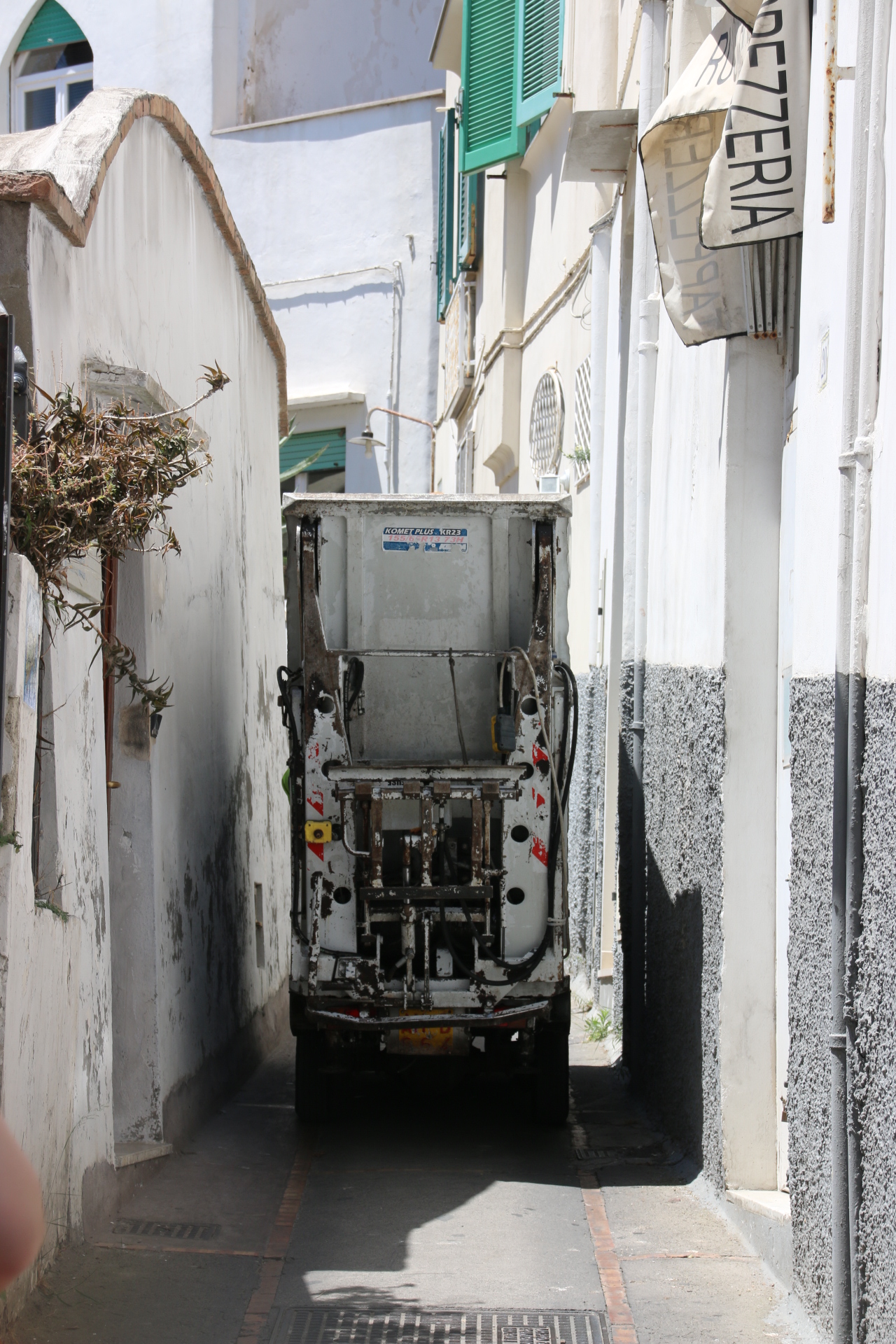
Tourist watering holes and rich oases need servicing. Special porters’ carts, delivery vehicles and even dustbin trucks squeeze through Capri’s arteries.

Evidence of the playground of many Caesars is dotted around the edges of the cliffs. These are the gardens of Caesar Augustus.

Most visitors head for Capri for the day. They crawl around the town, grab a piece of cold pizza and board a bus and head out to Anacapri. The little mini-mope buses scurry up & down the hill between Capri & Anacapri, the orange local buses and the smart blue private company ones, competing with each other to deliver their human cargo as quickly as possible. Out they tumble, “Ooooh, arhhh”; pizza or mozzarella & tomatoes for a tenner and back to the ferry; “ We’ve done Capri” shout American & Chinese voices “and we bought the bag”.

The rest of us can enjoy the peace of shady evenings in warm stoned streets once they have returned to the mainland.

Up in the hills around Anacapri

So how does this large rock called Capri work? The island lies from east to west. It consists of hard, rocky cliffs and hillsides covered in scrubby pines and cyprus trees. It doesn’t take long to drive from one end of the island to the other. There are two main settlements. There is the town of Capri which spirals around the cliffs above the harbour and there is the town of Anacapri which is situated high up amongst the crags & boulders of the dry hills. Each is very different to the other. My B&B is great over on the west coast near Faro, which means lighthouse and, yes, there is a lighthouse down at the bottom of a whole load of steps.

Capri and Anacapri and Faro are linked by narrow, and I mean narrow, roads that run between high, hard walls. These are wide enough to fit in three scooters side by side. So this is the ultimate game of chicken and the home of the the small car. Small buses, carrying locals & tourists alike, run around like sardine cans on wheels. 8 people can sit and up to 24 can stand as they jerk their way around and down the helter-skelter of alleys and aisles, competing with scooters and those little pop-pop three wheeled, wobbly trucks.

Occasionally big brother taxis push their way to the front. These are rather grand. They are cut off Nissan & Fiats. Instead of a roof they have a canvas canopy, beneath which punters laze and view passers-by.

Anacapri has all the elements of a small Italian town. Old streets undulate around the church.

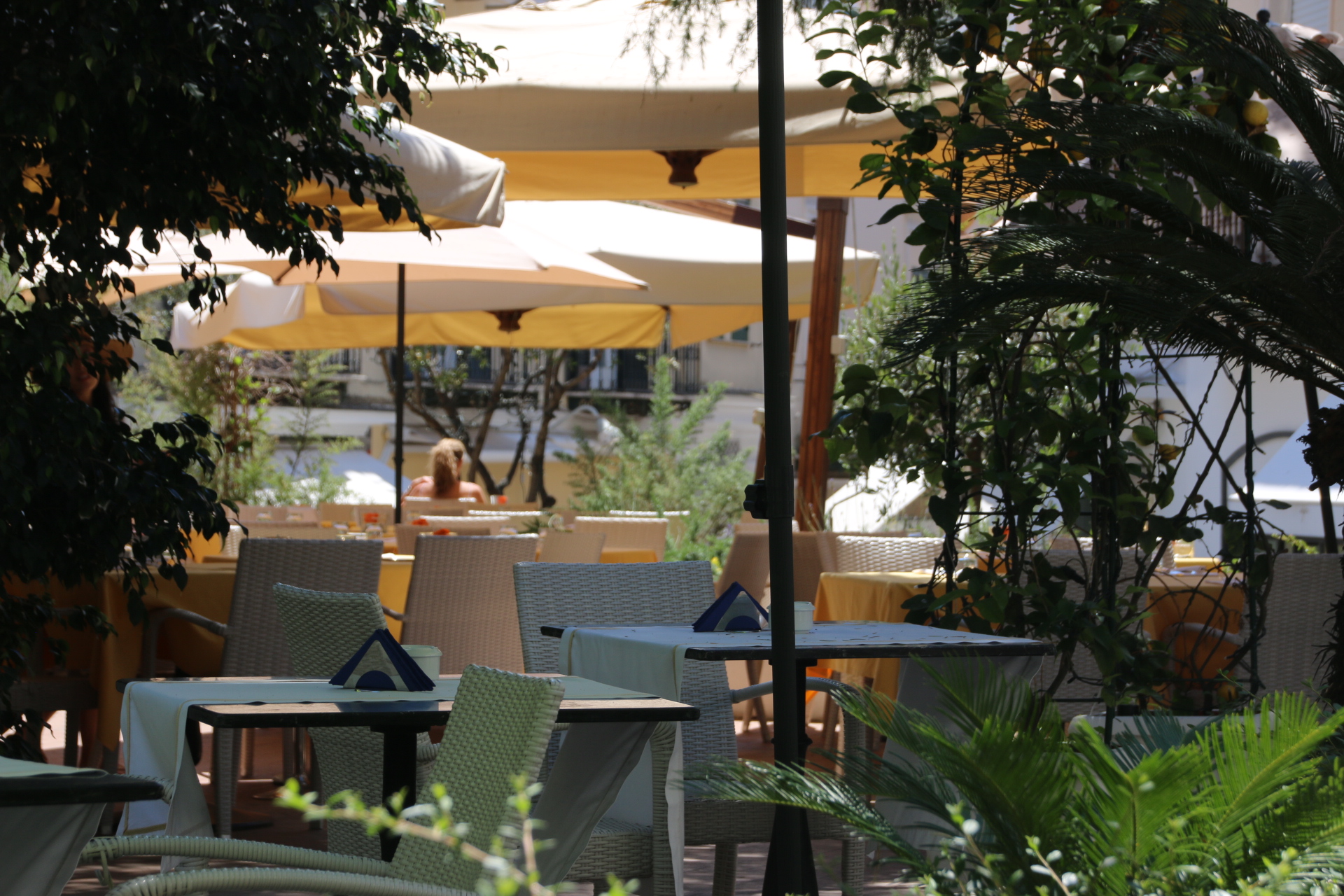
Cafes and restaurants create their piece of umbrellared shade and mix it with smart clothes shops selling linen and kashmere. Above a small square a promenade provides a wonderful view of the harbour and Capri town down below.

It has a chair lift that takes punters up to the highest peak. Small streets provide homes for these classy tourist outlets whilst locals live, work and play and get on with their everyday lives.

As night falls the tourists ebb away leaving a dusky, eerie peace within shuttered streets.


On the Italian island of Capri with the rich & famous

Well, my loyal readers, I am back in my beloved Italy. I do love this country – the climate, the people, the way of life, the lyrical, lilting rhythmns of the language between gesturing locals, the elegant dress of the guys looking so cool whatever the weather, the wine, the linguini del mare, the blueness of the sky, the turquoise of the sea, the history, the cyprus trees, the peeling plasterwork and the bleached colours of medieval churches and temples and statues. I love it.


I am on the island of Capri with the rich around famous. It’s a short journey across Naples from the airport to the port through the tall tenement blocks of uniform windows above graffitied shuttered fronts and squiggled walls through horned traffic and yelling mopeds. No laws about using mobiles when driving through these streets. One hand on front bars of scooters, balancing the phone while swerving through cars & buses, the other dances over the key pad to text or to call then it is tucked into the crash helmet to enable a proper conversation whilst using two hands to negotiate the next junction. A skill all of its own.

So, I buy a ticket, have the espresso whilst I wait to take my place in the queue. I use the word lightly. It starts off nice & ordered until the boat comes in and then we are squeezed through the gate and along the quay, onto the ferry and deposited in a hard plastic seat somewhere on board.

But it is exciting as the turbos wind up and we leave the harbour, leaving the unmistakable shape of Vesuvious on the port side (or is it the starboard?). It takes about 45 minutes to cross. The sleepy harbour greets the ferry.

Guiliano is there to drive to his B&B. “Oh, Mark. Put you elbow in from the window as sometimes I have to scrape the walls”. A hairy 30 minute drive up & down narrow, stone-walled aisles/streets brings me to my accommodation on the cliffs of the far west coast of the island.

An afternoon on the balcony snoozing with a beer in the sun, occasionally opening one eye to check that the view is still there – the island of Iscia across the water, the trail of tourist boats popping in and out of grottos and caves like lines of earwigs exploring cracks beneath our skirting boards, sweeping, soaring gulls hang & glide like hang-gliders on a vortex of currents crying & crawing for company.

Yep, eating mama’s ravioli on the terrace as the sun sets confirms the view is still there.

Bring on tomorrow.


Here comes the weather

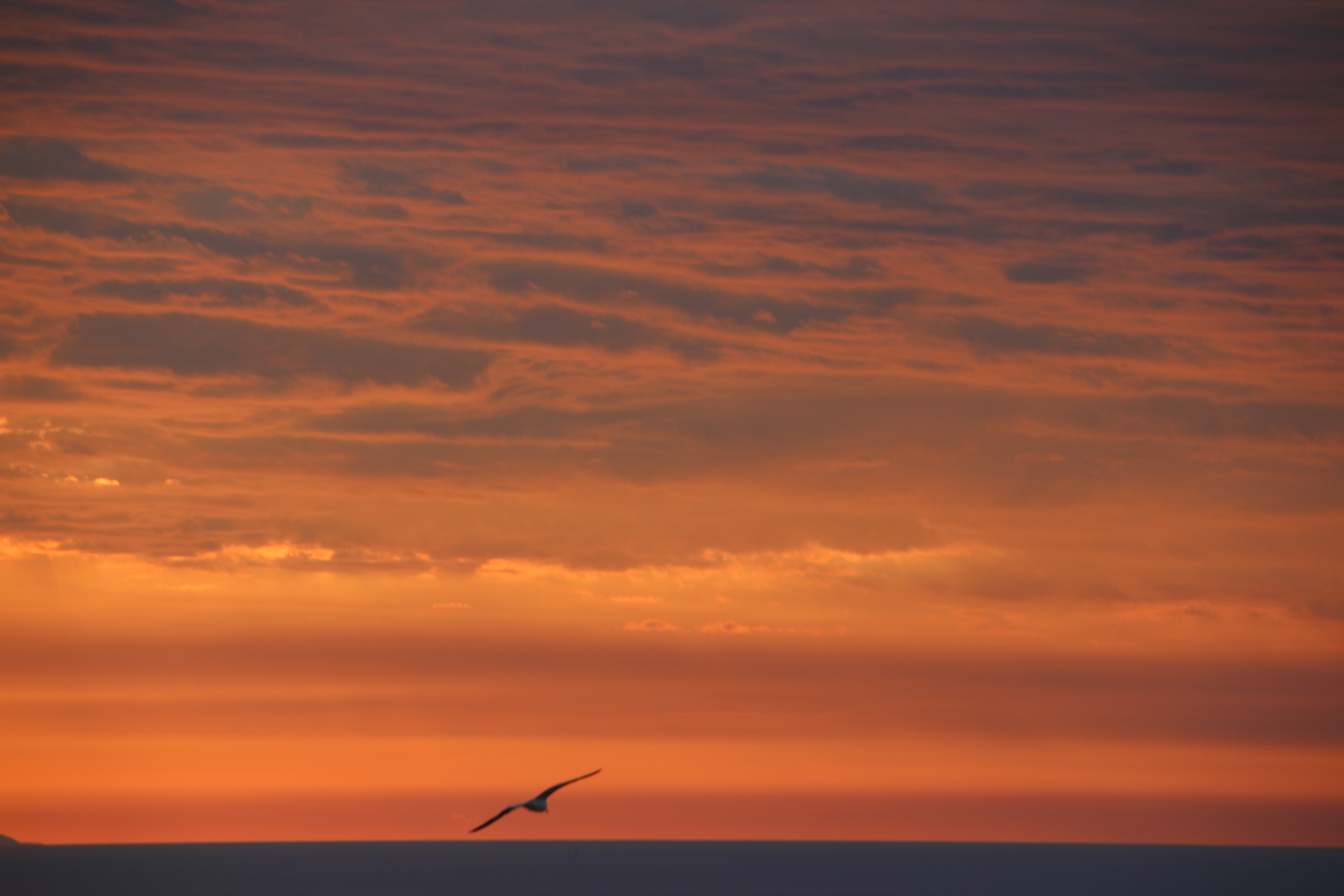
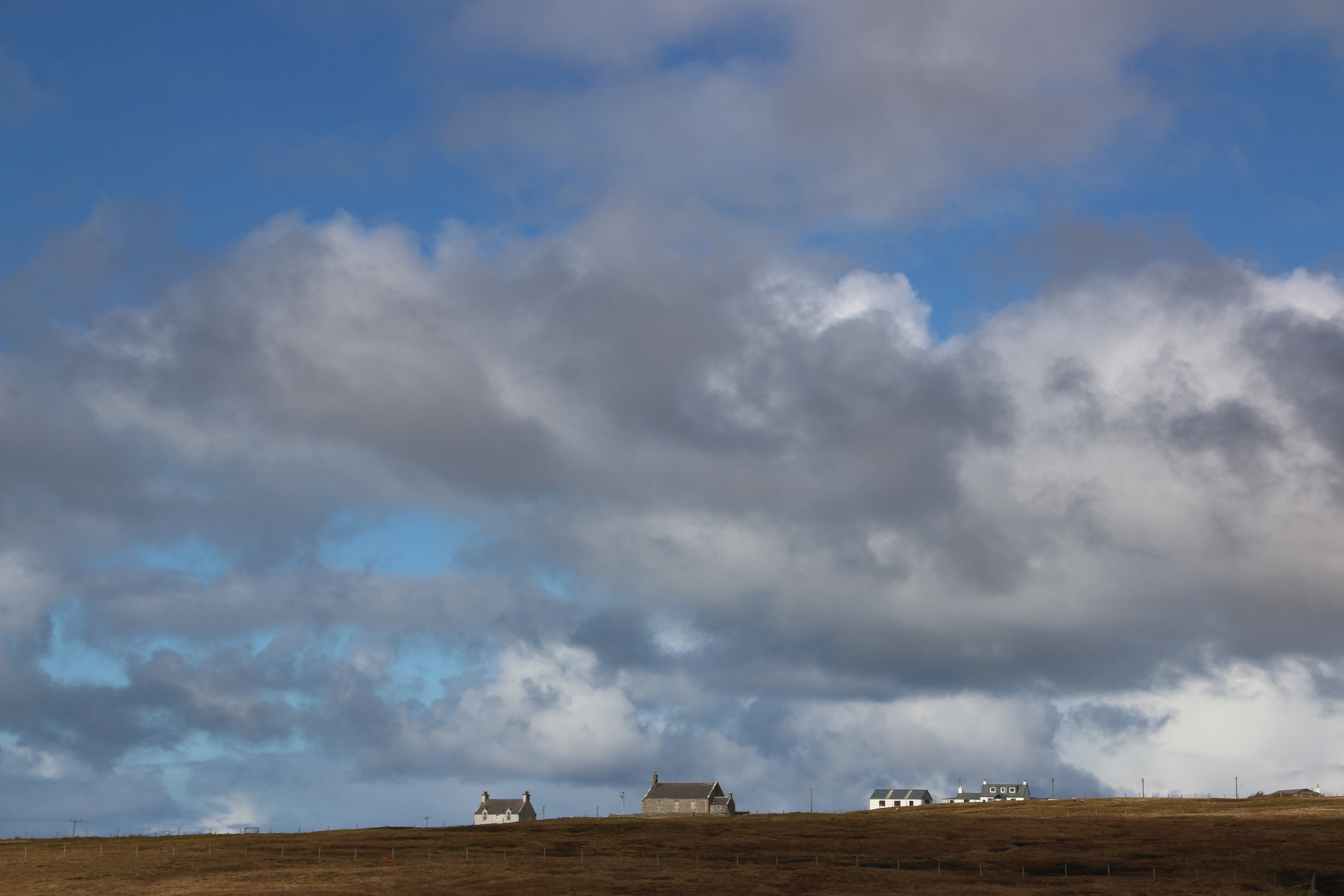
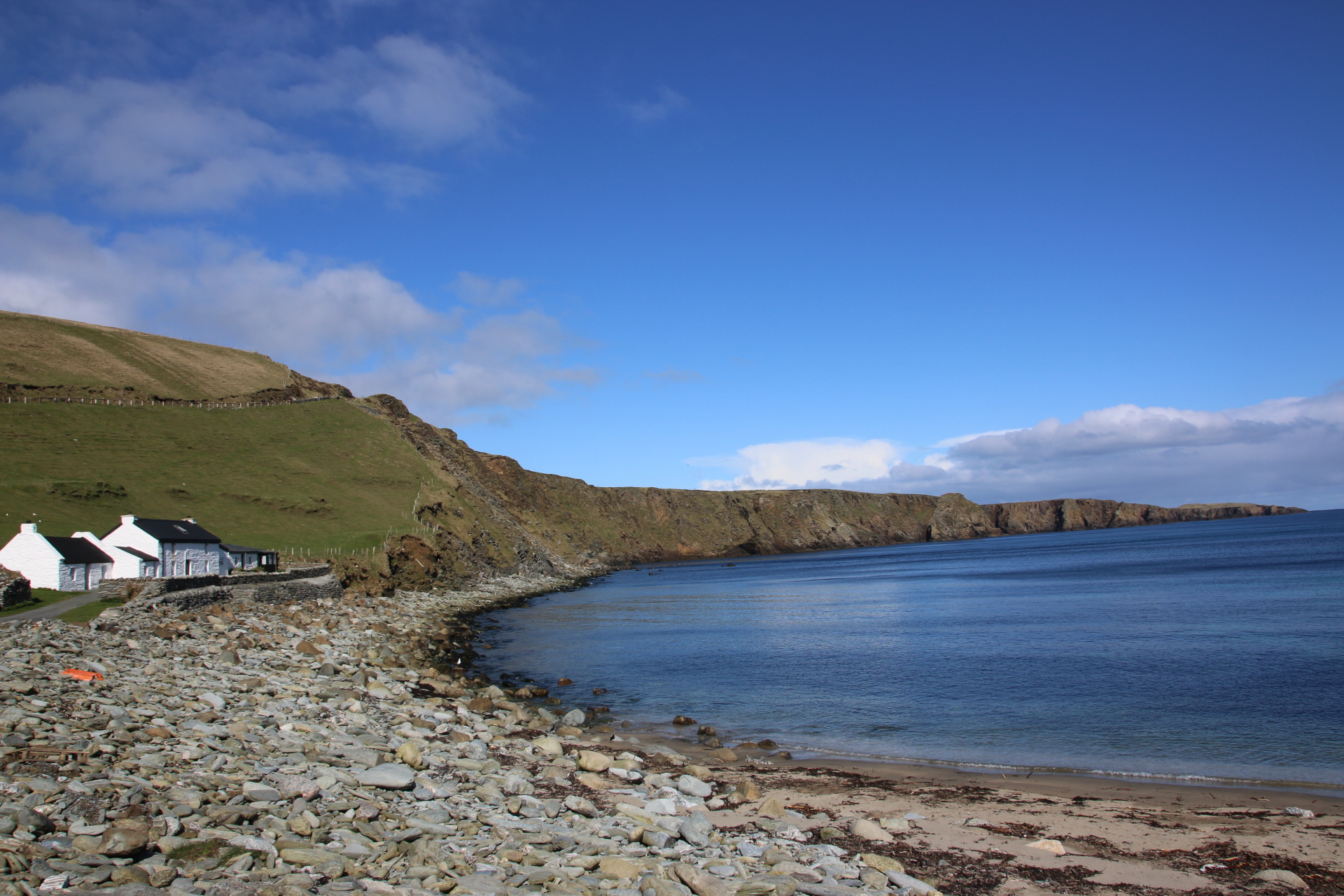
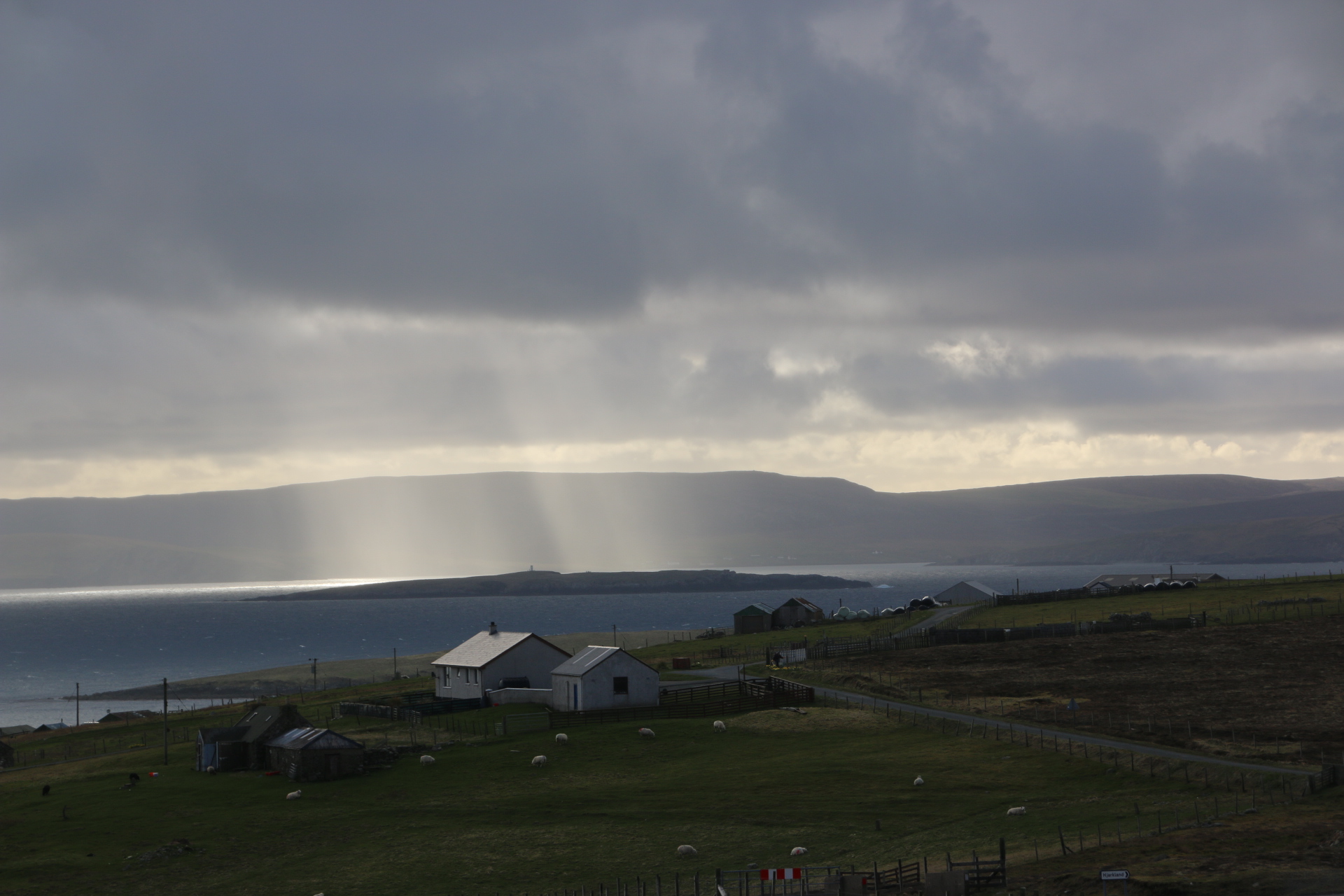
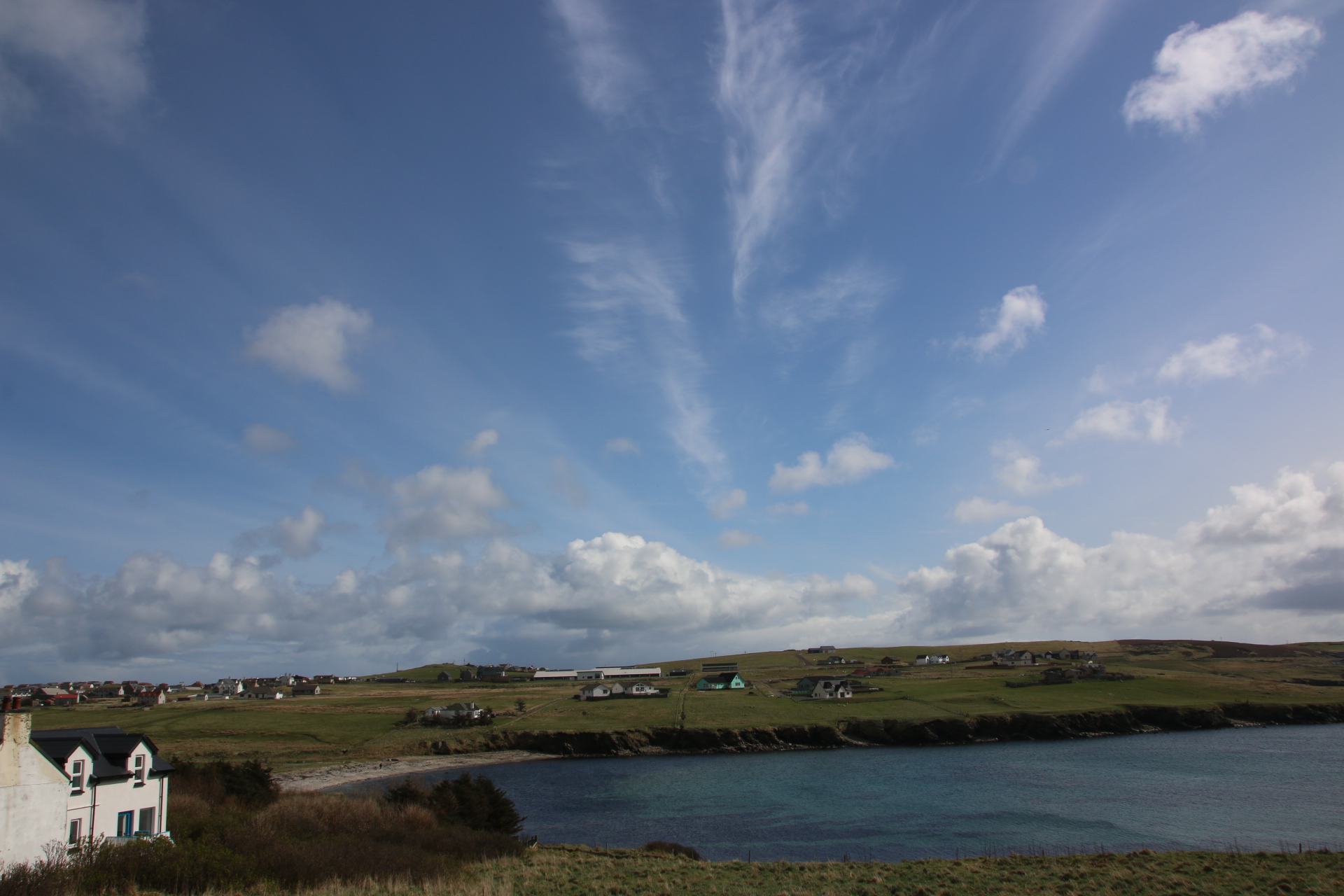
Having filled your lives with wonderful images of Shetland with blue skies and piercing rays of sunlight through streaks and spreads of high clouds and intensifying greys of weather, I can now share with you the fact that this picture is not typical even though the temperatures outside are pretty minimal, hovering around zero in a cutting breeze.

I woke up this morning to grey skies. Within minutes there were flurries of snow in a bitter north westerly wind. 10 minutes later it was proper snow settling on the immediate landscape and hiding the village and the hills with a thick curtain of white gauze. A further 15 minutes down the line and the band of weather passes revealing a huge expanse of brilliant blue sky and we are back to the weather of yesterday, waiting for more bands to send folk scurrying indoors.

I want to show a different side to Shetland, now. This is where the oil and gas are pumped ashore, stored and await the arrival of huge vessels to carry it away to some refinery somewhere in the UK or northern Europe. At the same time the workers on the rigs have pumped money into the island economy and generated considerable wealth for the local councils & businesses.

Most drinking is done within the privacy of one’s own home. However there are a few pubs on the main islands. Here is the one at Voe.

Inside, the place is heaving with one guy behind the bar and one guy on his stool, nursing a point of local brew. Half a dozen wooden tables, slightly sticky with years of slops, are waiting for an influx of locals who never come. Maybe the weekend will transform this place. Let’s hope so.


Sun, sea and sand on Yell and Unst

Today is the road trip up the spine of the islands. Shetland consists of 100+ islands. Most are small mounds & humps of rock around the largest island calked Mainland, where most of the 22,000 population live. This is stretched out northwards in a thin line equidistant between Norway and the UK.. It takes about an hour to drive up the island from one end to the other through the brown & grey moors, dropping down to a settlement on the east coast before rising up and over the claggy peat landscape to descend to another on the western side. The North Sea breaks on the east coast and on the west is the Atlantic Ocean, both as wild as the other. Ruined walls of toppling stones and unroofed outlines of past homes and farms are evidence of the travesty that was the clearances when humanity was forcibly moved to make room for sheep.

Around every rolling, peat-covered mound or low hill  water appears. This is either one of the numerous puddles, lochans or larger lochs of fresh water which dot the landscape or one of the straggling fingers of sea, called voes, which poke and point their way into the interior of the main island and almost touch the ocean on the far side before they are halted by a low rock barrier.

Lines of buoys are arranged along the voes. If they are arranged in rows then it is a mussel farm with the molluscs clinging onto dangling chains until they are ready for harvesting. Whereas the salmon swim around and grow in circular or rectangular cages.

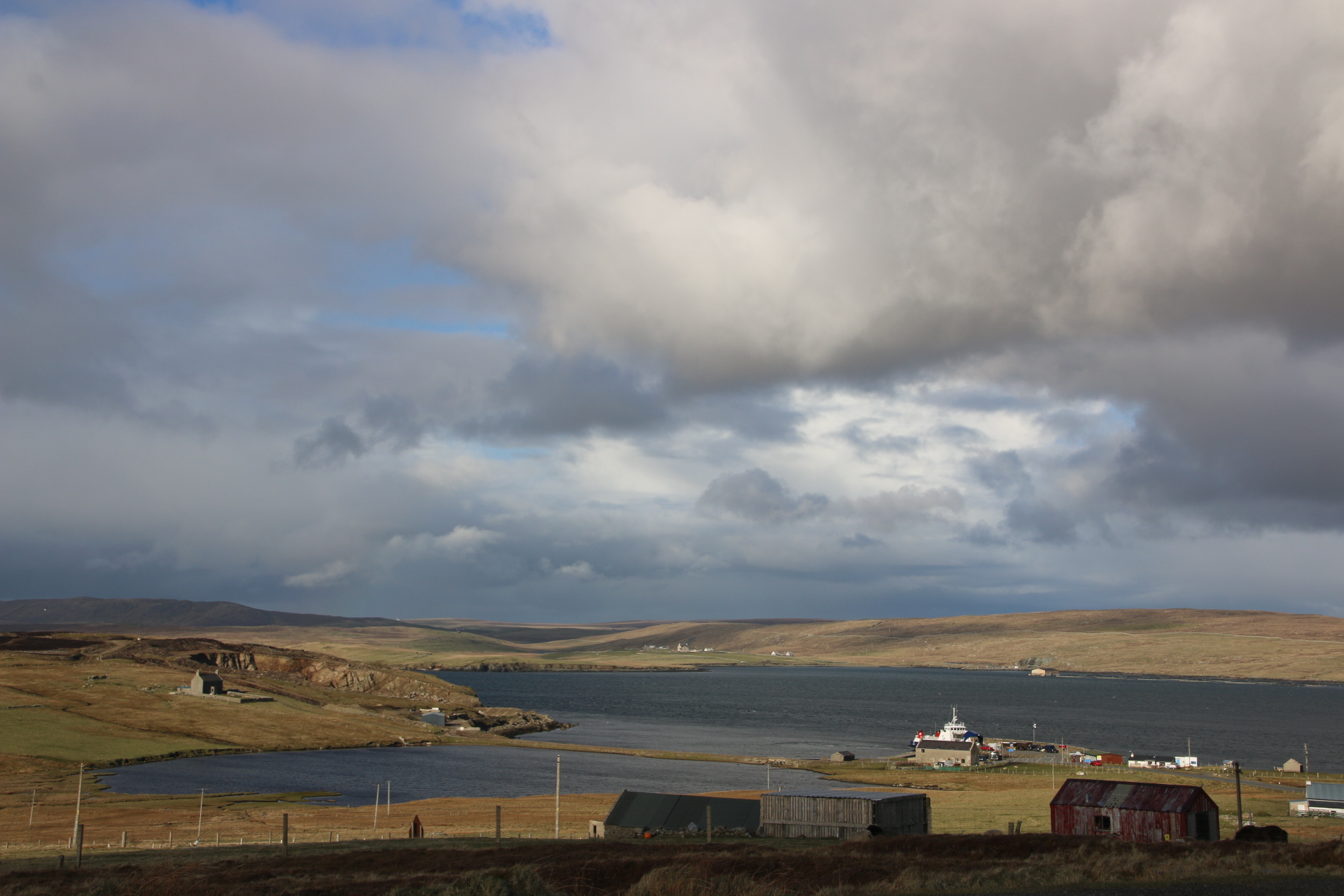
The ferry terminal at Toft is my first destination.

This takes me across to the island of Yell. Yell is another boggy, undulating island full of gobsmacking views & vistas of sweeping, browny-grey heathered covered moorland, cloud-skidding skies and wide spreading seas, all highlighted by an artist’s palette of golden glows and rays and piercings.

The first stop is Global Yell where Andy welcomes us to his textile and music education centre. Glorious textiles hang from the walls and peep out off drawers as he knots up his state of the art loom. This place must be visited. There is also a craft gallery within the complex.

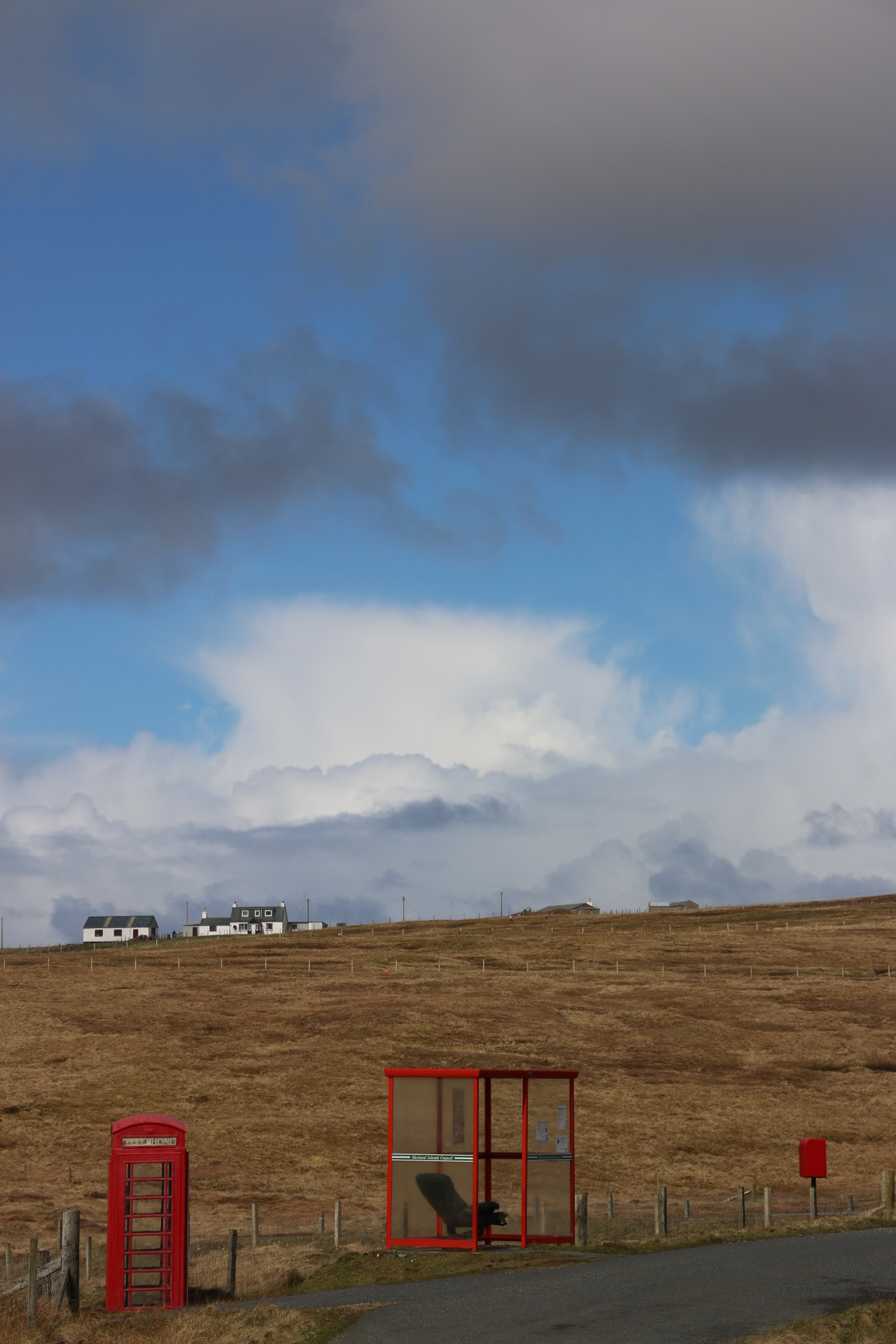
The clouds and sun play chasing games over the surrounding landscape to produce different moors and colours to inspire weavers and artist’s alike. I rather like the office chair in the bus shelter to allow the locals to rest their bums as the next bus might be a while.

Then it is a quick dash to Gutcher to take us over to the island of Unst and the glories of Victoria’s Vintage Tea Rooms.

This bus shelter really takes the prize. The locals give it a theme each month and then decorate it accordingly. Well what else does one do during those long winter nights? From here it is a short drive up to Burrahfirth and the most northern beach in the British Isles.

The sun starts to drop down to meet the horizon and the clouds thicken making for a dramatic return journey to Mainland. Mrs Seal acknowledges my passing as we drop down to the local store which stocks everything from bicycle oil to cornflakes where I make my own self-serviced tea before boarding the 5.15 ferry.

Wow. What a day, full of sky and sun and and coast and sweeping blankets of moorland.


Continue reading

Pete and Heather combine to cover Shetland

Well peat and heather, together, cover every contour of the rolling landscape of these windswept islands. Human settlements huddle together dotted across the moorland or along estuaries or clinging to the sides of headlands, trying to shelter from the constant winds.

This is the village of Hoswick. It boasts a visitors’ centre with a cafe, two small knitwear outlets that cater, in particular, for coaches of tourists from the cruise ships that visit Lerwick, a general store and its own Carnegie Hall – their community hall.

Here is Lerwick.

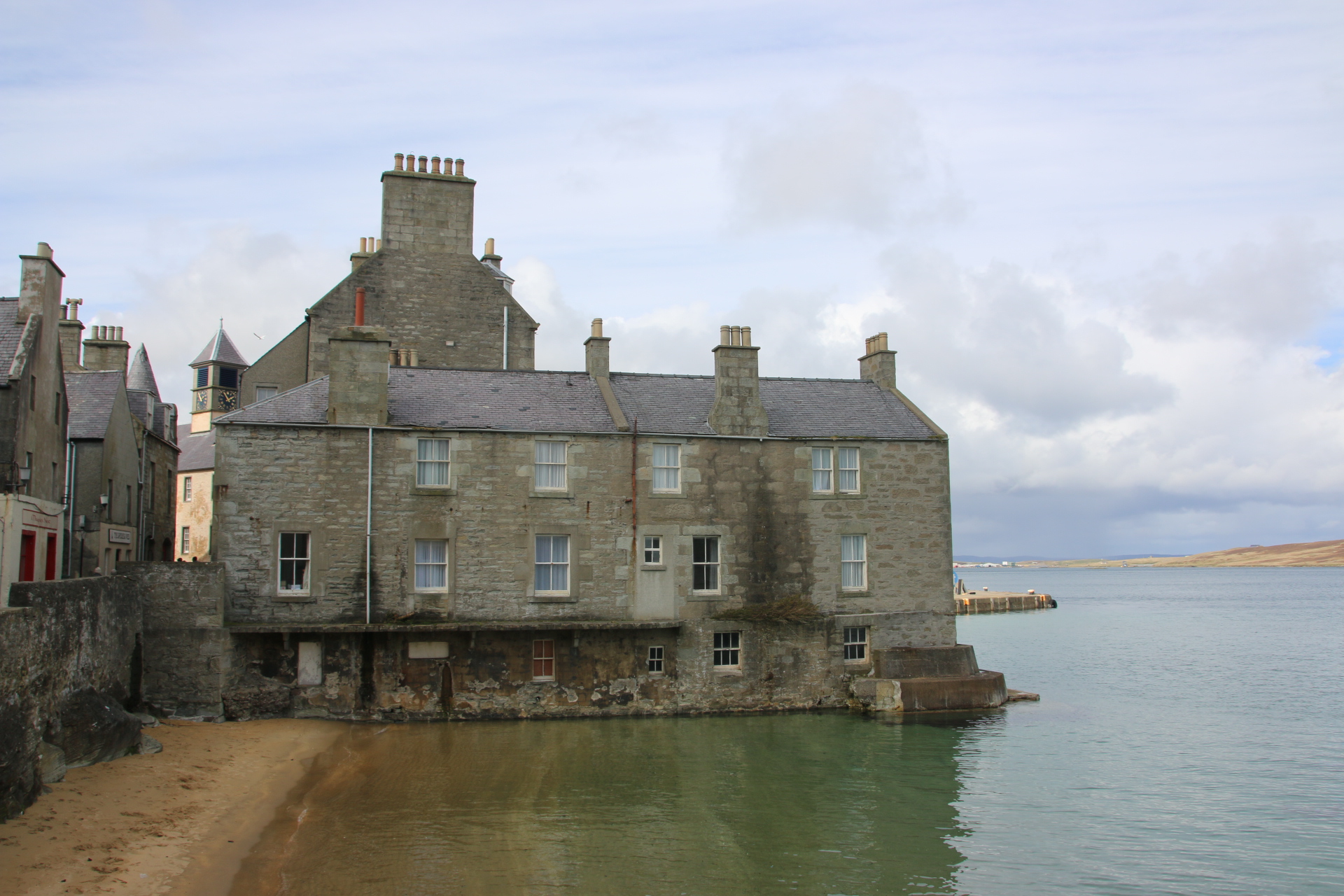
Lerwick is the capital of Shetland. 9,000 people live here around the moorland cliffs that line either side of the peninsula on which it is built. The historic centre faces the island of Bressay across the bay connected to the capital by a regular, plodding ferry. Around the old harbour the rather austere, grey, granite buildings stand tall against the weather with their strong facades immovably protective to the shops & businesses & cafes & fish and chip fryers that are housed within the safety of their walls. Narrow stepped streets fan out and away from the main shopping drag to the buildings that stand in lines in their uniform of grey pebble-dash.

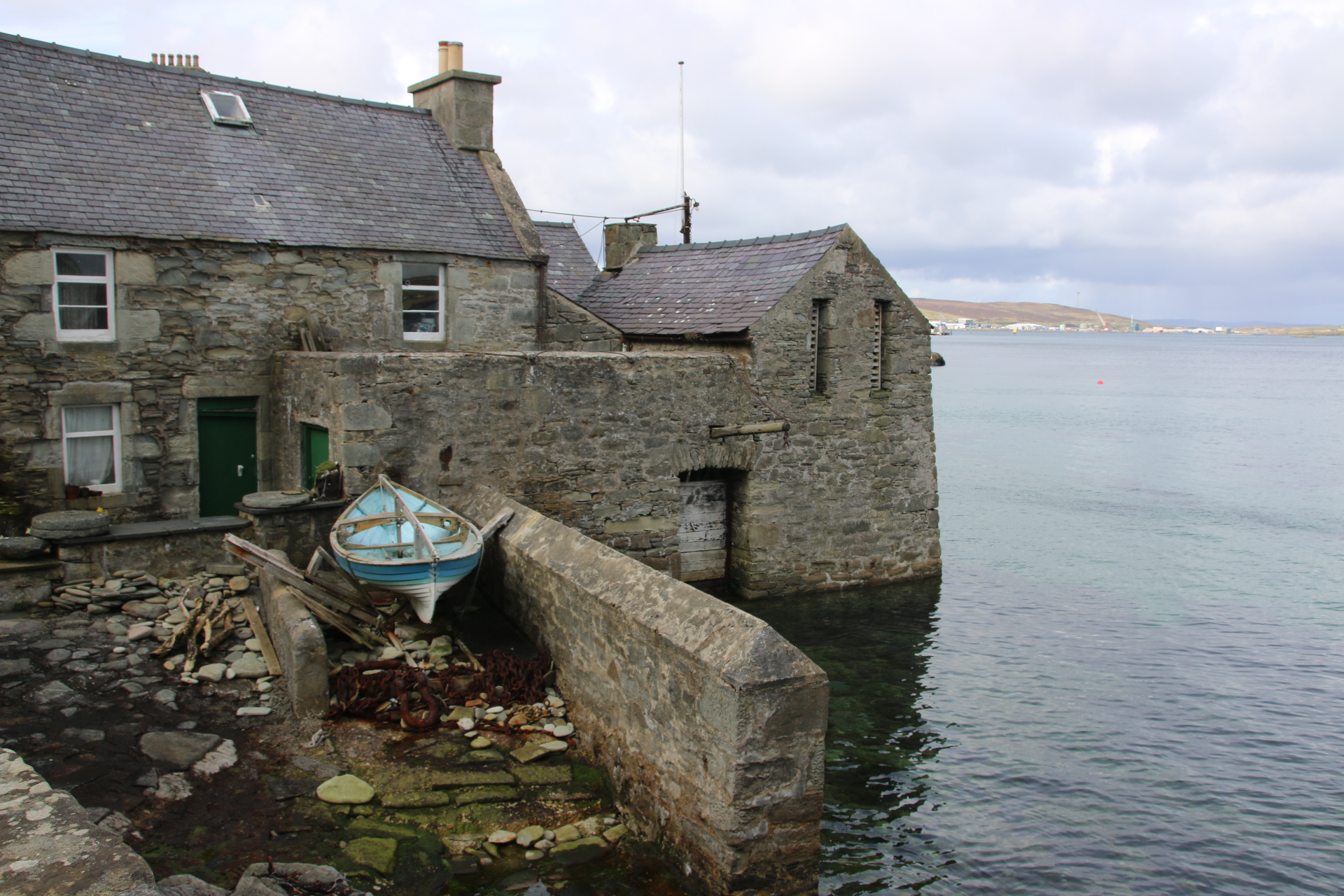
Down from the centre the old fishing houses line the bay. It is here that the Dutch herring fleets would unload their catch straight into the buildings. The locals would give woven goods in payment.

In the other direction the wharves have been modernised to provide warehouses, ferry terminals, anchorages for huge fishing vessels and tie up spots for cruise ships who unload their cargo of multilingual tourists on the local shops and neighbouring countryside.

Here the excellent Lerwick Museum is open most days between 10 & 4. The Mareel building, faced with sheets of metal, provides a venue for a cinema, music, drama & exhibitions as well as a very pleasant cafe. After a cream tea it is back home.

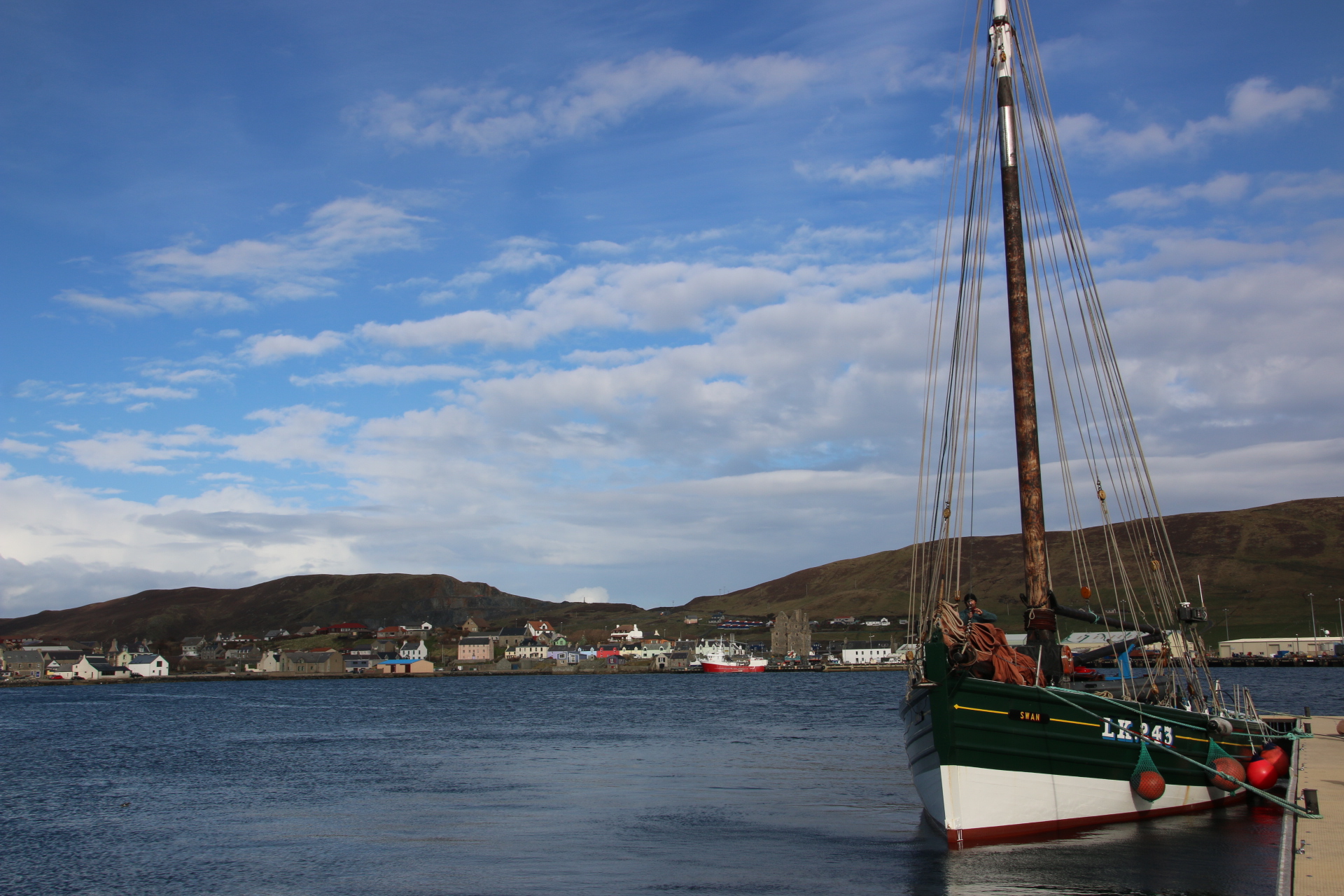
On the way back I drop down into Scalloway. This is the ancient capital of Shetland and was first settled by the Picts. Hiding behind an old herring drift trawler, built in 1900 in Grimsby, the remains of the old castle is all that remains of the original settlement. Now lines of brightly painted fisherman’s cottages & holiday lets, fishing boats & marina yachts surround the deserted building. The blades of wind turbines peer over the tops of turfed hills to provide a modern backdrop to this ancient scene.


Shetland dazzles through the skudding clouds

A short flight in a short plane takes me from the mainland to Sumburgh on Shetland. I mean a short plane with room for just 12 rows of seats. It is the layout inside that must be a challenge for any pilot. On one side of the aircraft pairs of seats face the hunched figure of the sole stewardess who gives her safety briefing hunched in the narrow space between the single row of overhead lockers. The other side has rows of single seats. So one side has double the weight of the other side. Surely, this makes it hard to fly in a straight line.

Well, in a straight line it goes. The first sight of Shetland is through holes in the cloud cover. Smooth, felt-covered hills slope away from the coast where nautical mice have nibbled away at the land to leave teeth-marked cliffs standing tall, facing the rolling sea. The sun shines through to give this land a bright, openess as it catches the highlight of isolated farms and huddled villages painted in contrasts of white & maroon & grey.

To the west lies Canada and to the north lies Iceland and to the east, Norway. This place is equidistant between the UK mainland and Norway, 200 miles in each direction. 22,000 people live on the 16 inhabited islands out 100 that make up this Scottish district.

Driving along the single track roads from the airport, small sandy bays & crescents of smooth sands can be seen peeping around headland and every corner. Not a tree in sight; just a flat, green landscape with grazing sheep the only disturbance around low settlements that scream to hug the  tugged coastline. The two-storey house is the exception amongst the scattered villages of traditional, low bungalows and barns of these wind-swept islands. No place on the island is further than 3 miles from the sea and this is so obvious as one travels about. The sea is always there. Why are the dwellings in these remote locations, clamped to a bay or holding on to a wedge of sand? Weaving or whaling or fishing maybe.

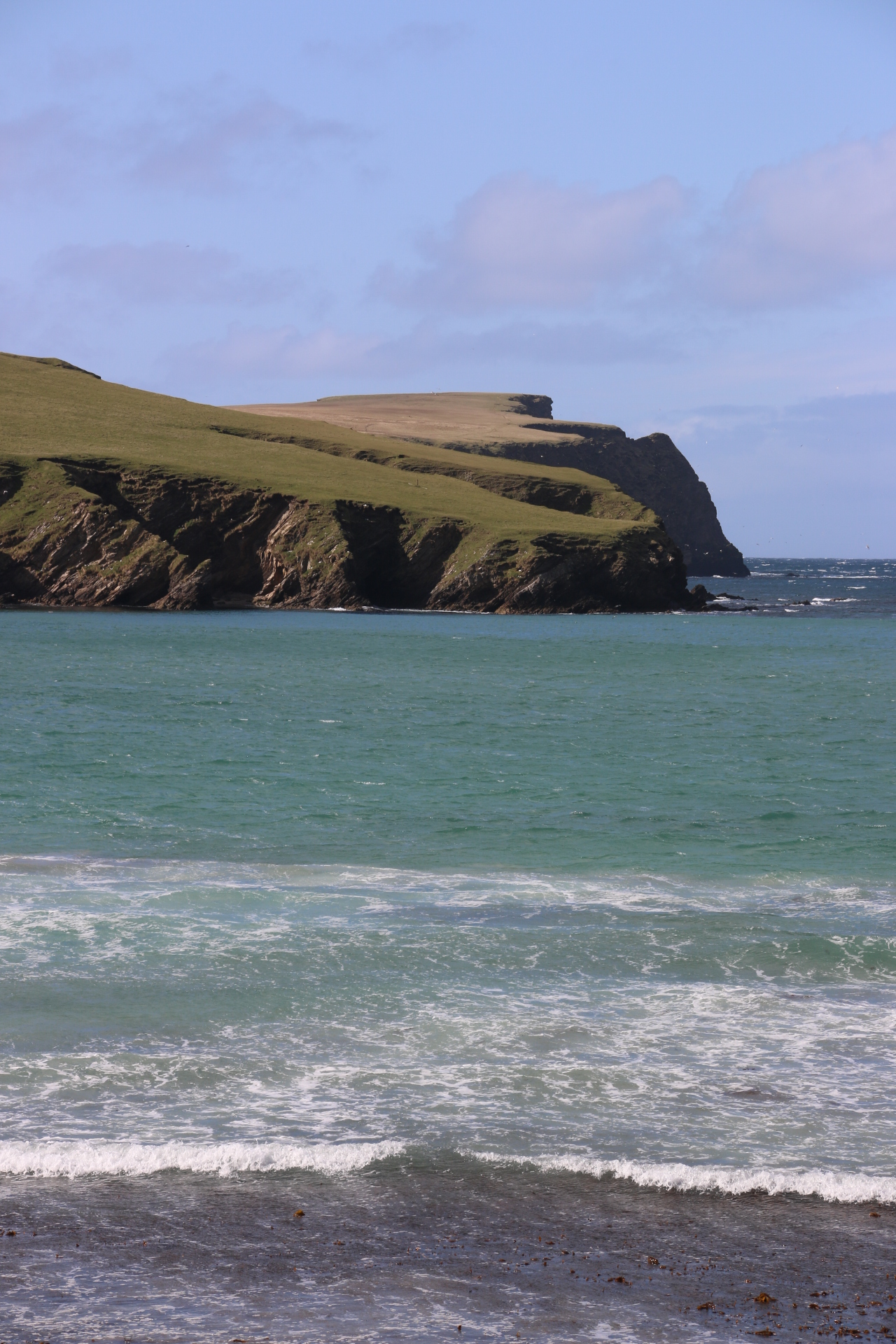
On one beach surfers surf; on another beach walkers walk; on a third beach seals laze in the sun. The one constant is the aquamarine ocean that crashes in rows and lines of waves and ripples on the waiting shore.


Goodbye China – a land of contrasts

So, my time in Yunnan province in China is coming to an end. I leave today. I have so many lasting impressions and rectified so many misconceptions about this huge country:

o friendly, welcoming, people with many open mouths gazing at us, strange westerners

o excellent road and rail infra structure although all seem almost empty of traffic and most seem to anticipate future need

o bustly cities with a feel of affluence and a commonality with the west –  modern/western cars, shops, IPhones, fashion

o litter-free streets; here is always someone sweeping the streets & pavements in town and country

o rural areas are farmed by older peasant labour; terraces at this time of year grow rape seed, tobacco, wheat & broad beans

o spicy, tasty food although the locals in the countryside eat noodles as a staple food leaving the rice to sell as an income generator

o freedom & fostering of religious beliefs

o pride in traditions & customs amongst the old but not so much the young who claim their street cred in Nike trainers and Timberland boots

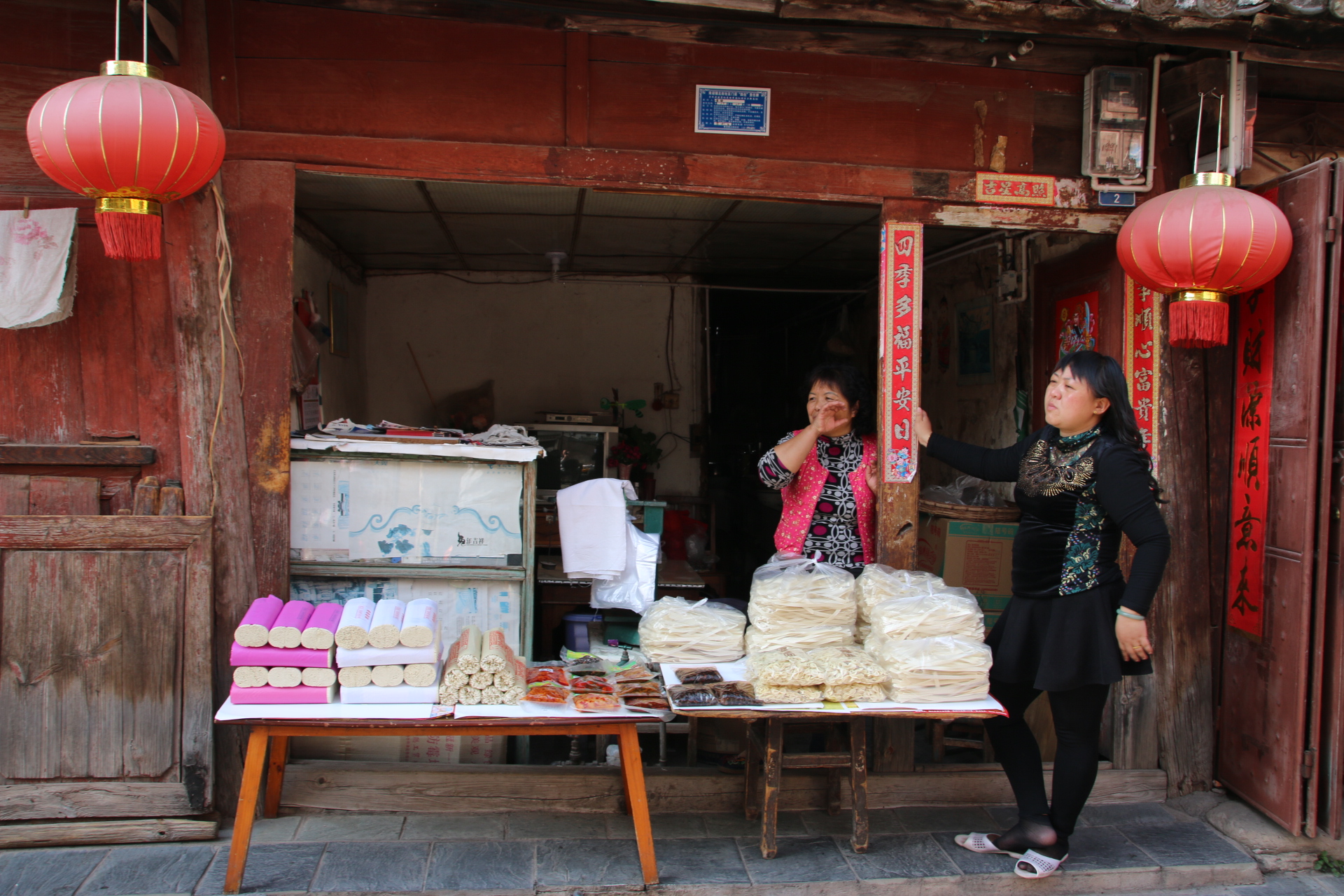
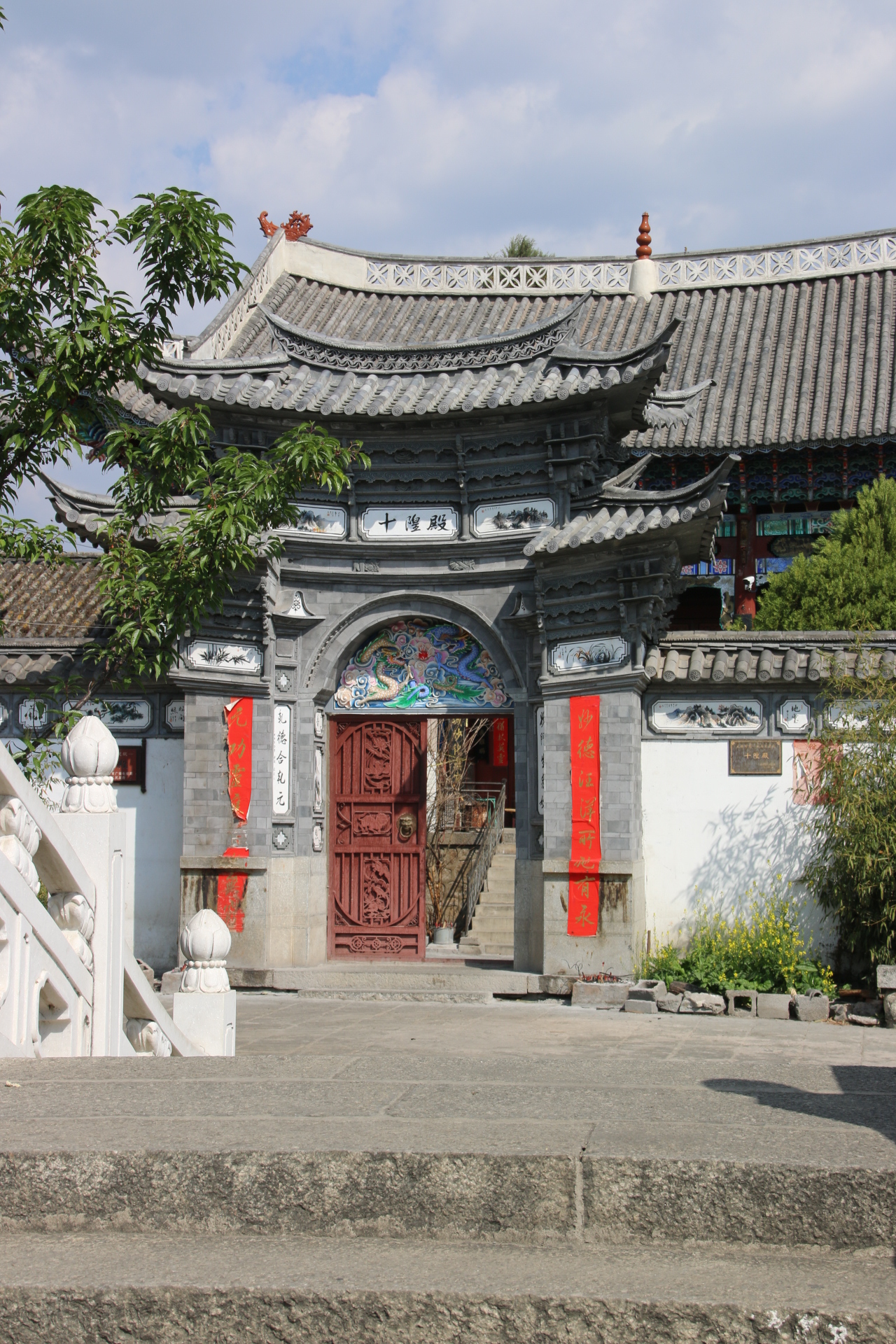
Some images which reflect the contrast that is this part of China:


The Jiejingu Festival of the Bai people

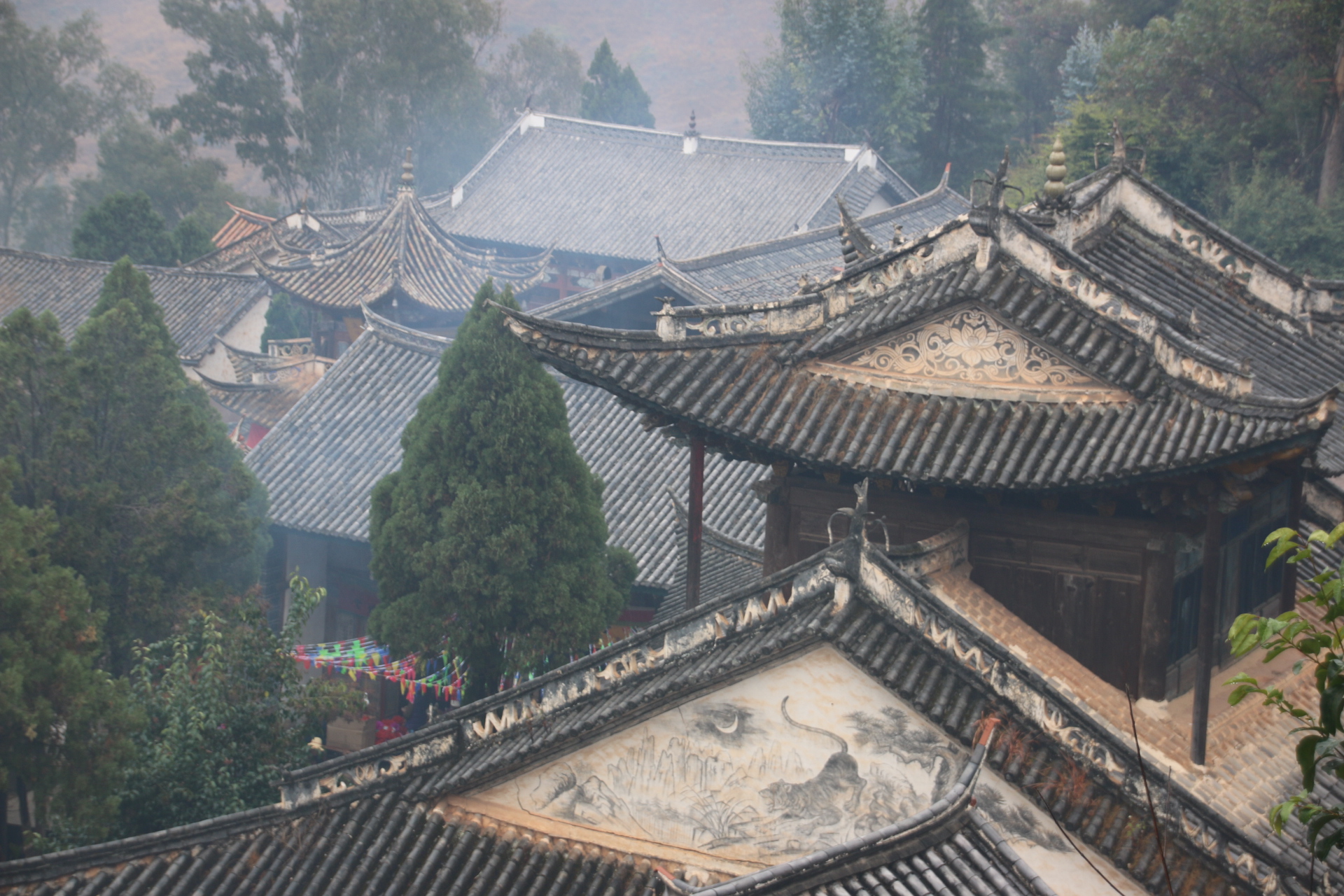
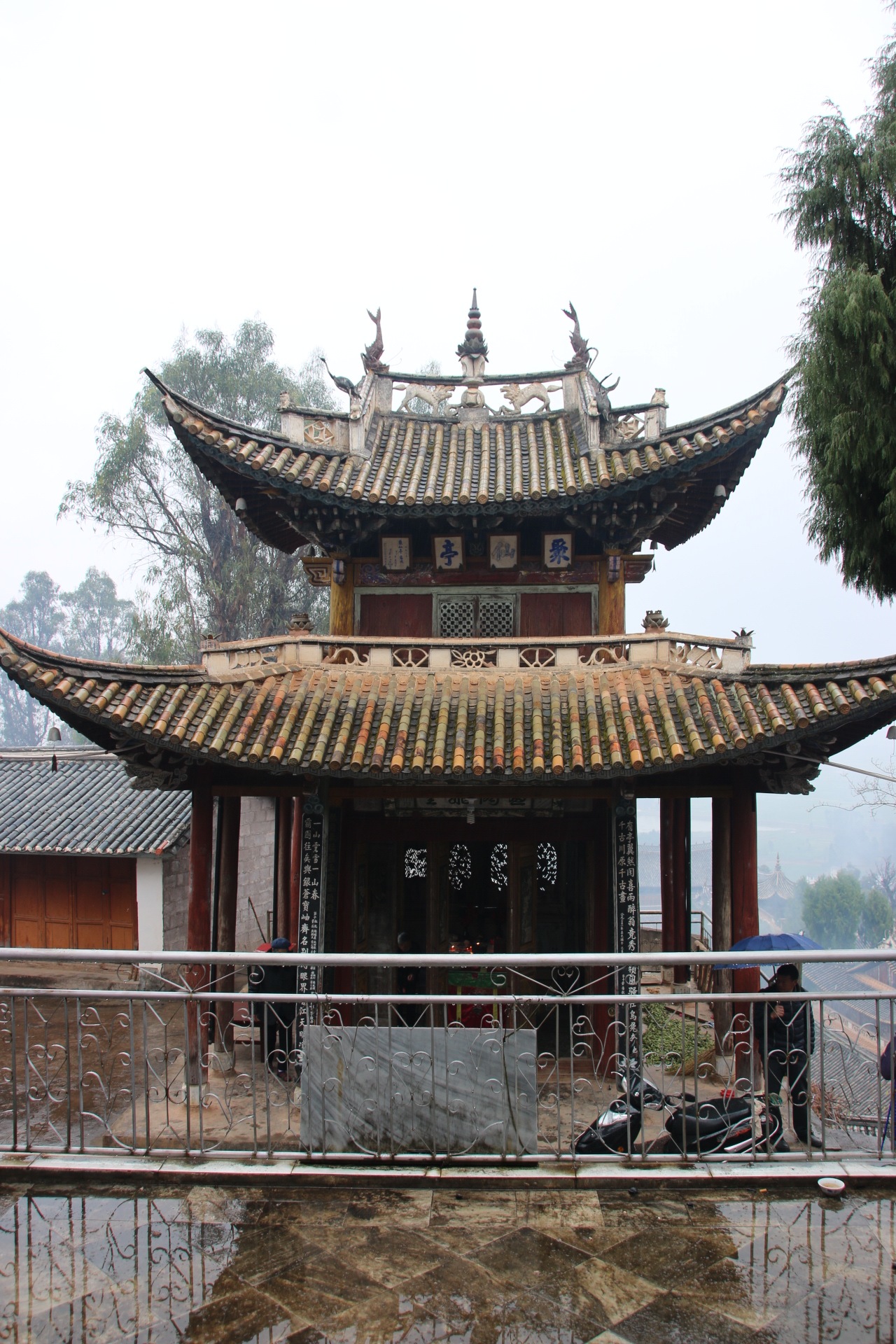
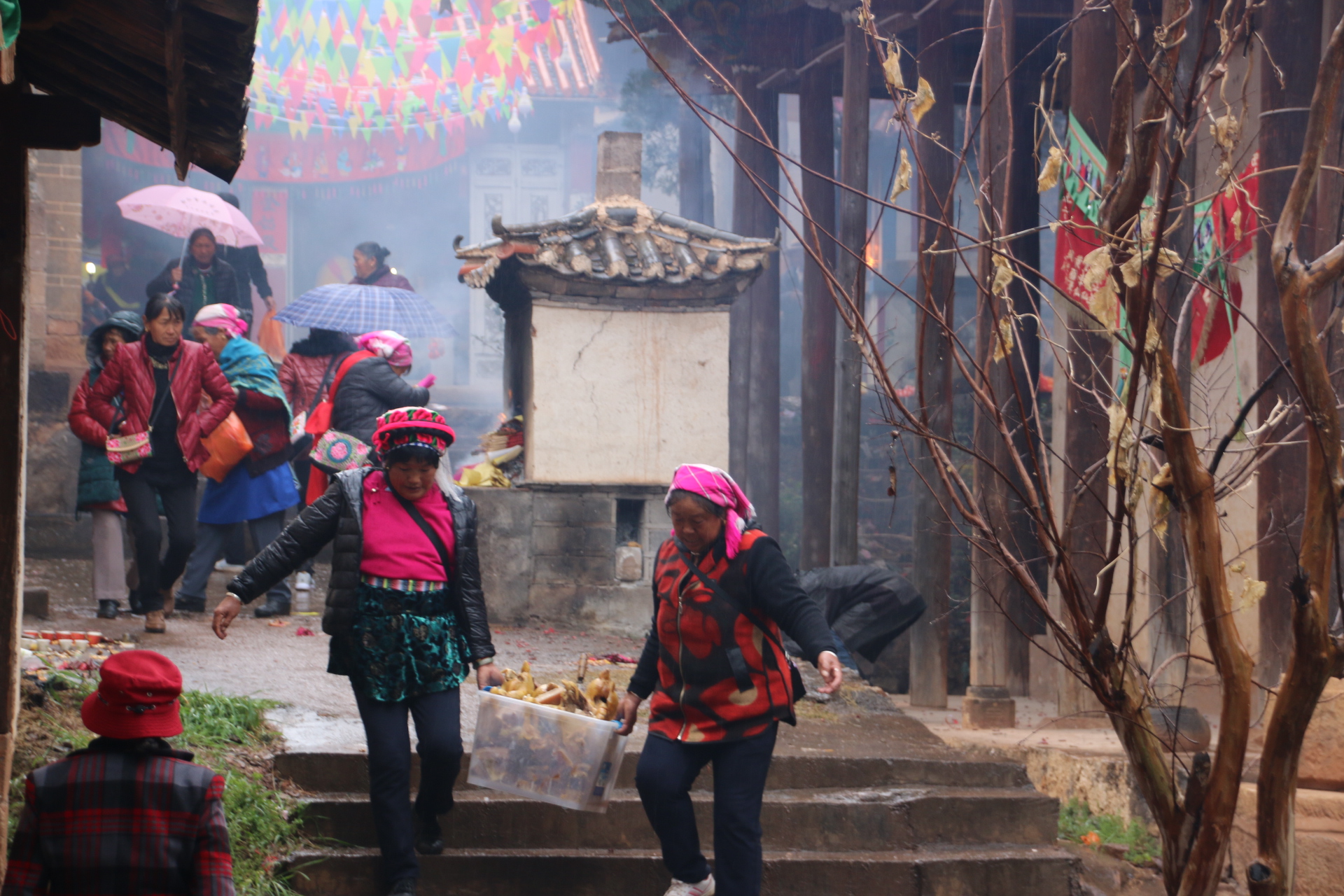
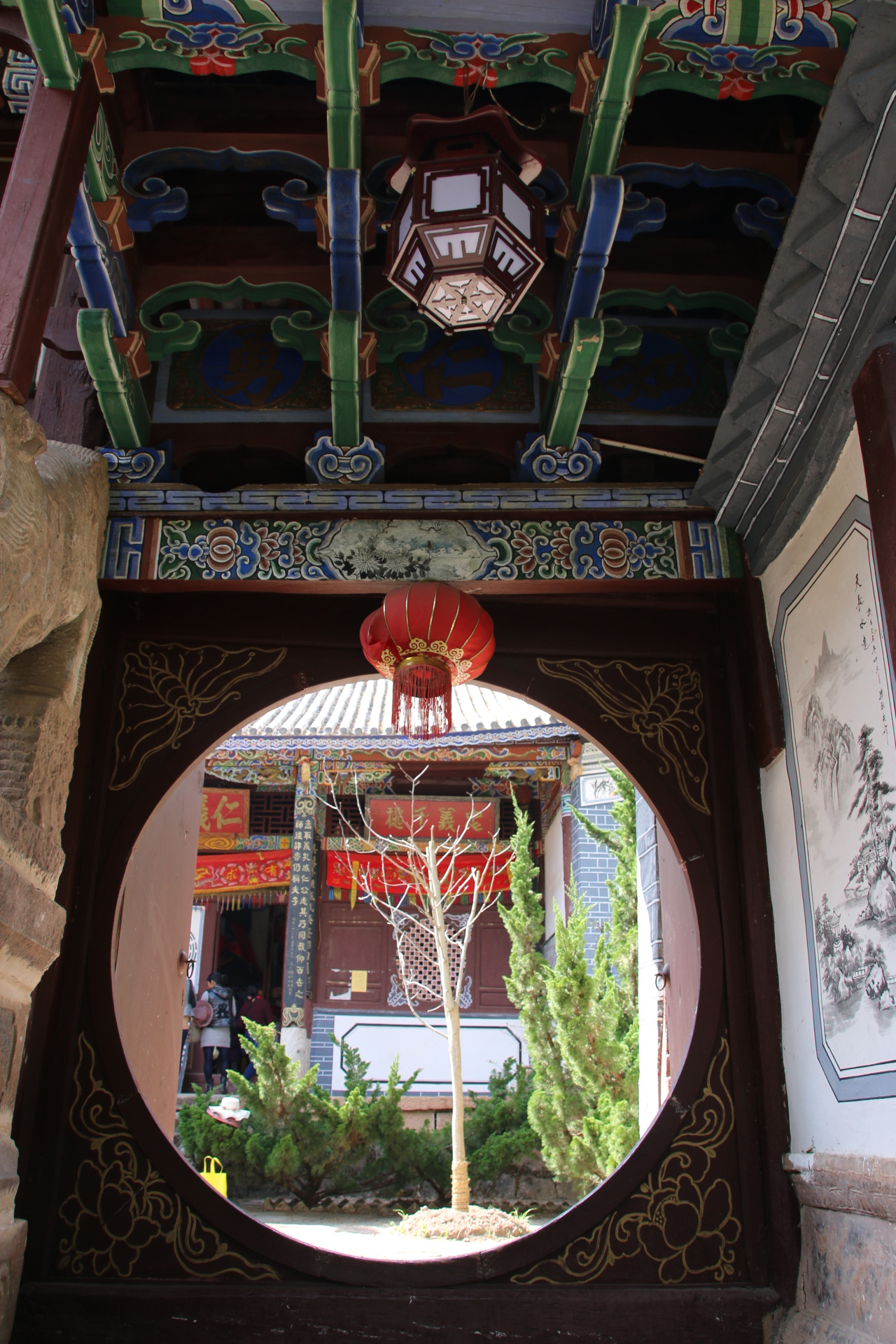
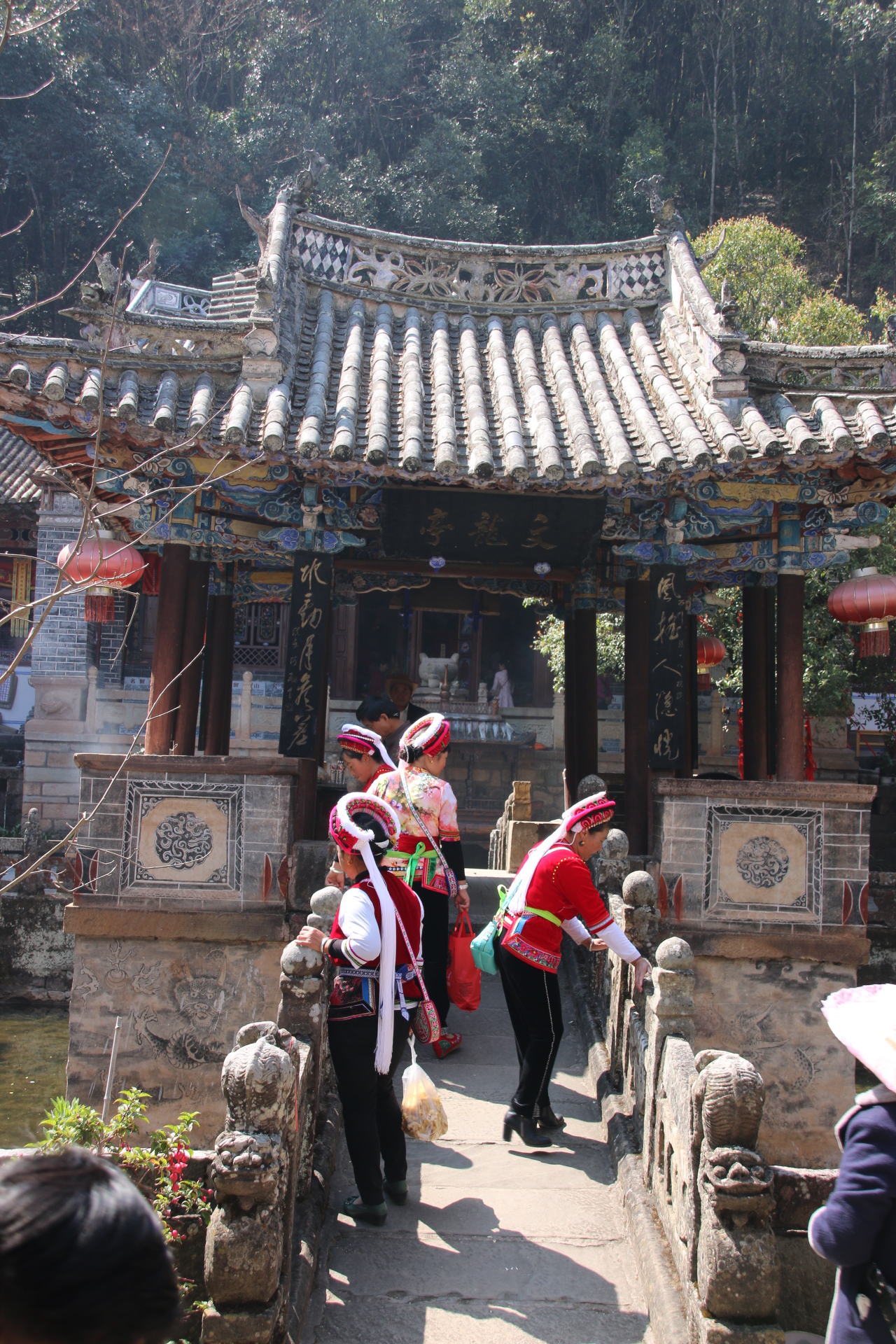
The Jiejingu Festival takes place just outside Weishan each year. The Bai people of Dali and Wieshan believe their gods & ancestors have a home in each town depending on the time of year. In March residents of Dali travel to Wieshan to invite the gods back to their town. They travel to West Big Temples where there are 24 temples scattered around a village on a piece of hillside outside Wieshan. Each temple is maintained by individual villages and houses their representatives for the duration of the 3/4 day festival and are dedicated to Buddism, Taoism, Confucianism, Ancestor-worship and the Nature God.

The day starts with rain. The bus slides its way up the mountain on a dirt track and parks outside the village. The temples are small and rather dilapidated with faded decorations and colours but rather mysterious in the dampness and swirling cloud.

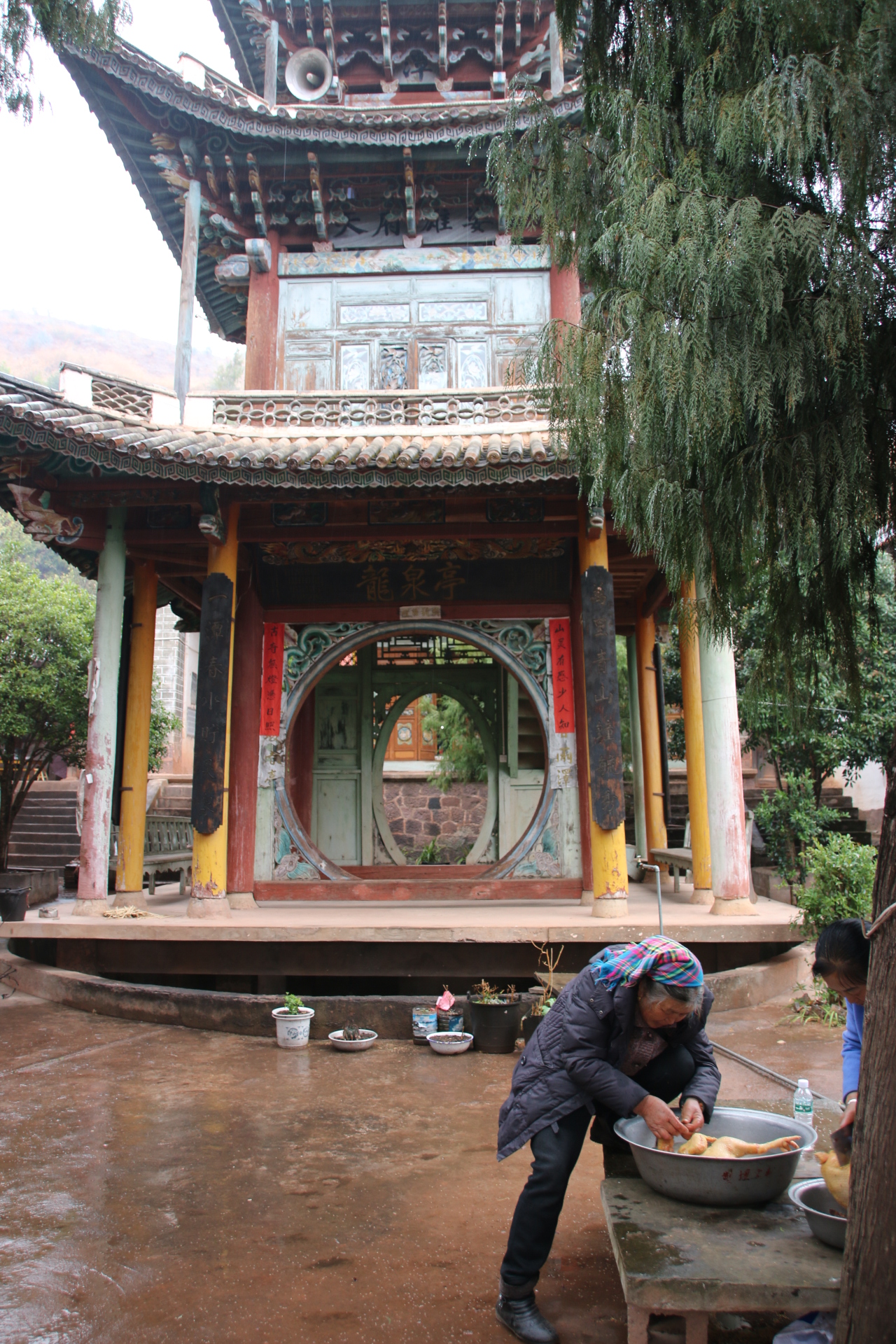
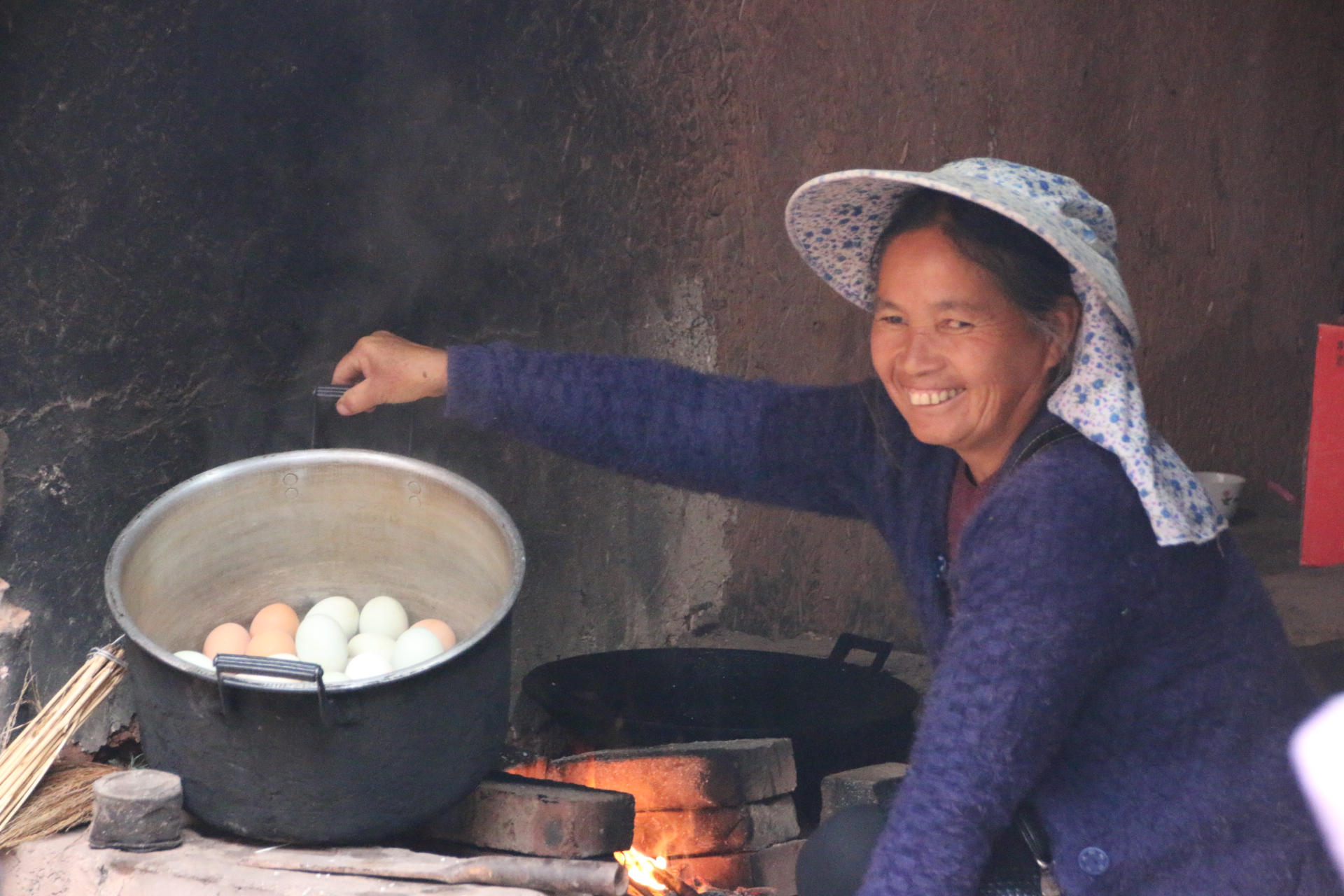
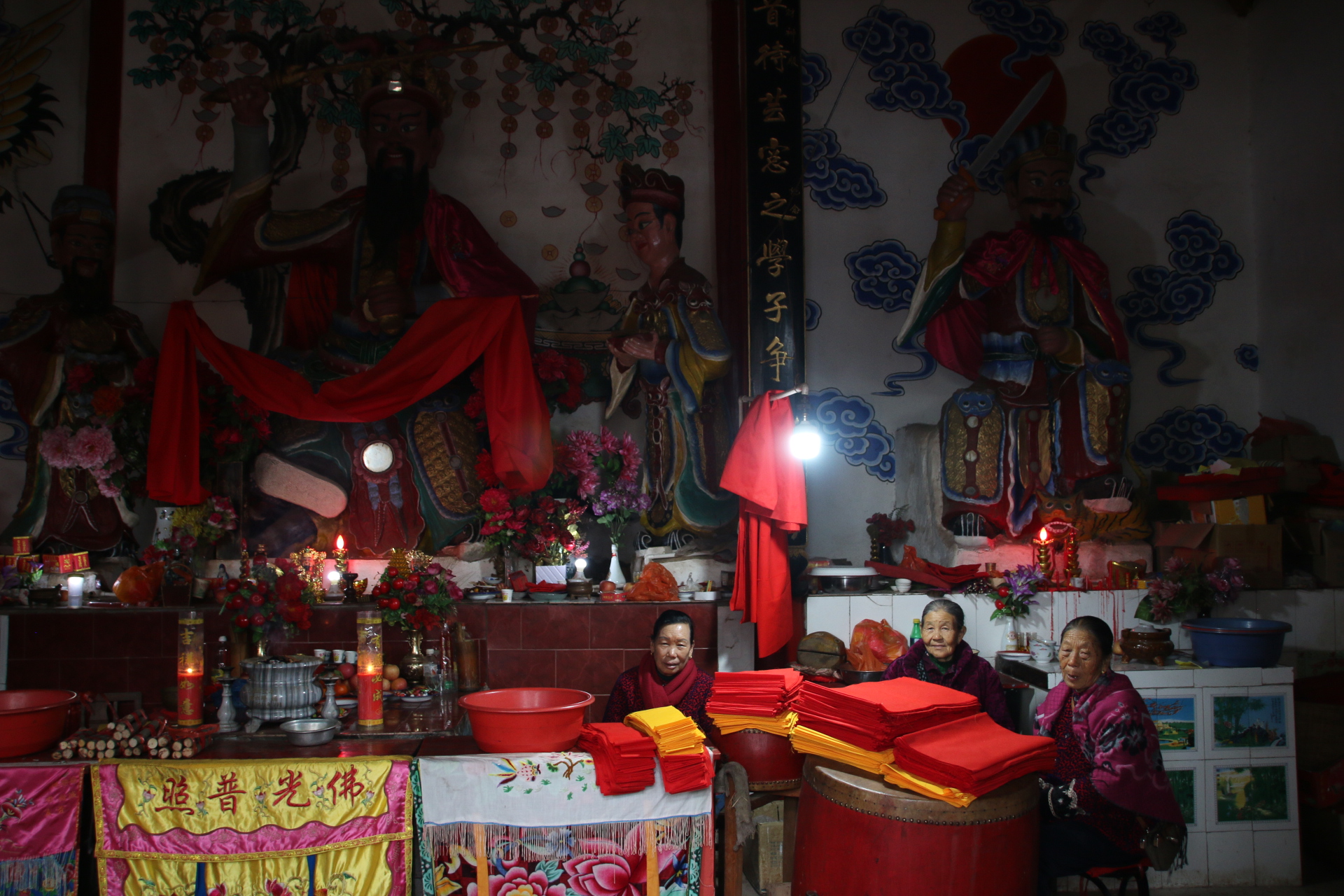
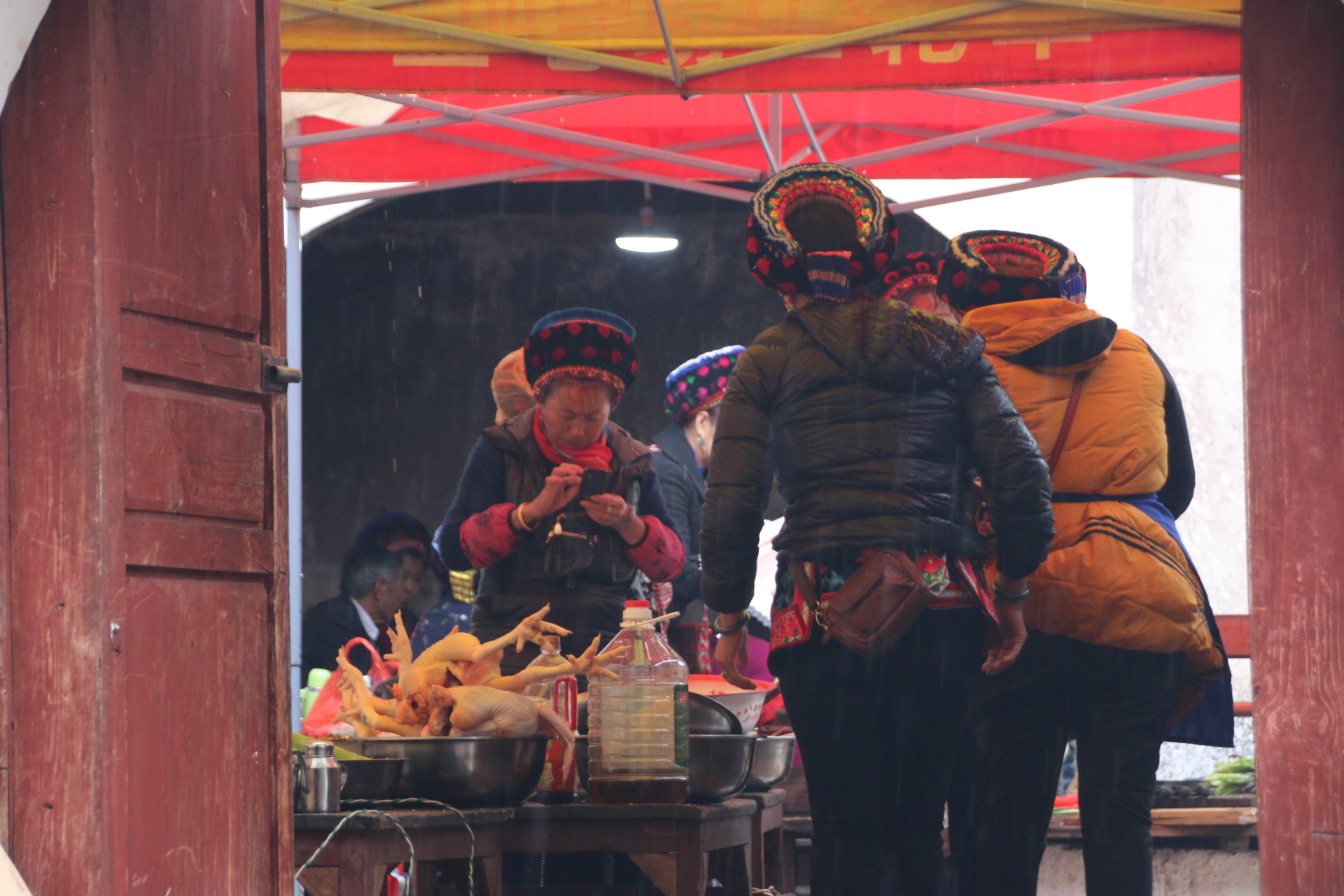
Each one houses a small group of villagers, mostly grandmothers, from different districts who have been camping overnight for the last few days. Inside the confines of the temples offerings for the gods are prepared. These consist of large pans of dead chickens, simmering vats of braising pigs, saucepans full of hard-boiled eggs and incense sticks.

As the morning progresses these are paraded around the village to the different temples and shrines, accompanied by the smoke and explosions of rounds of fire crackers and the cries and calls of friends & family. Surely, after all this effort, gods & ancestors alike must feel welcome at this annual shindig.

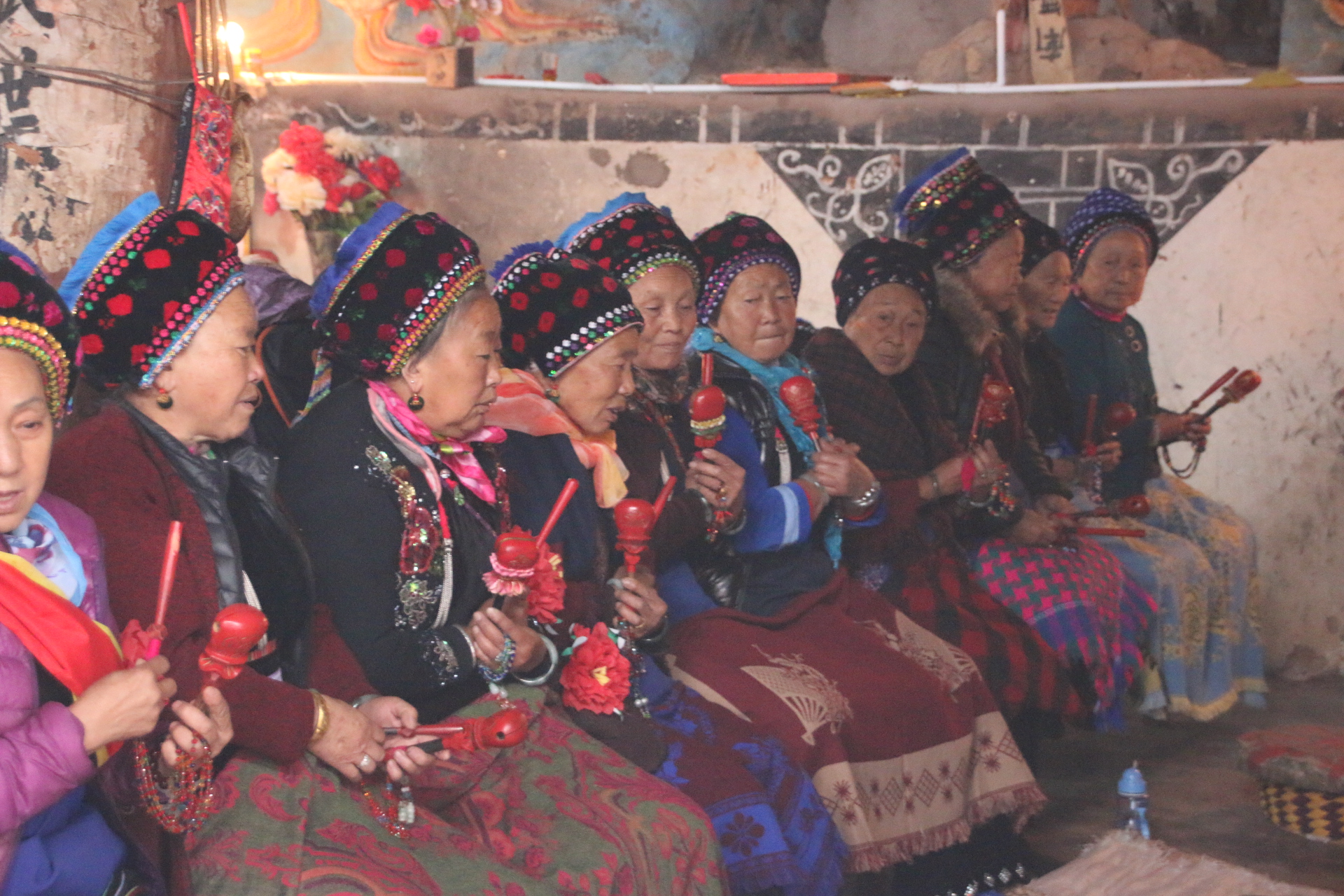
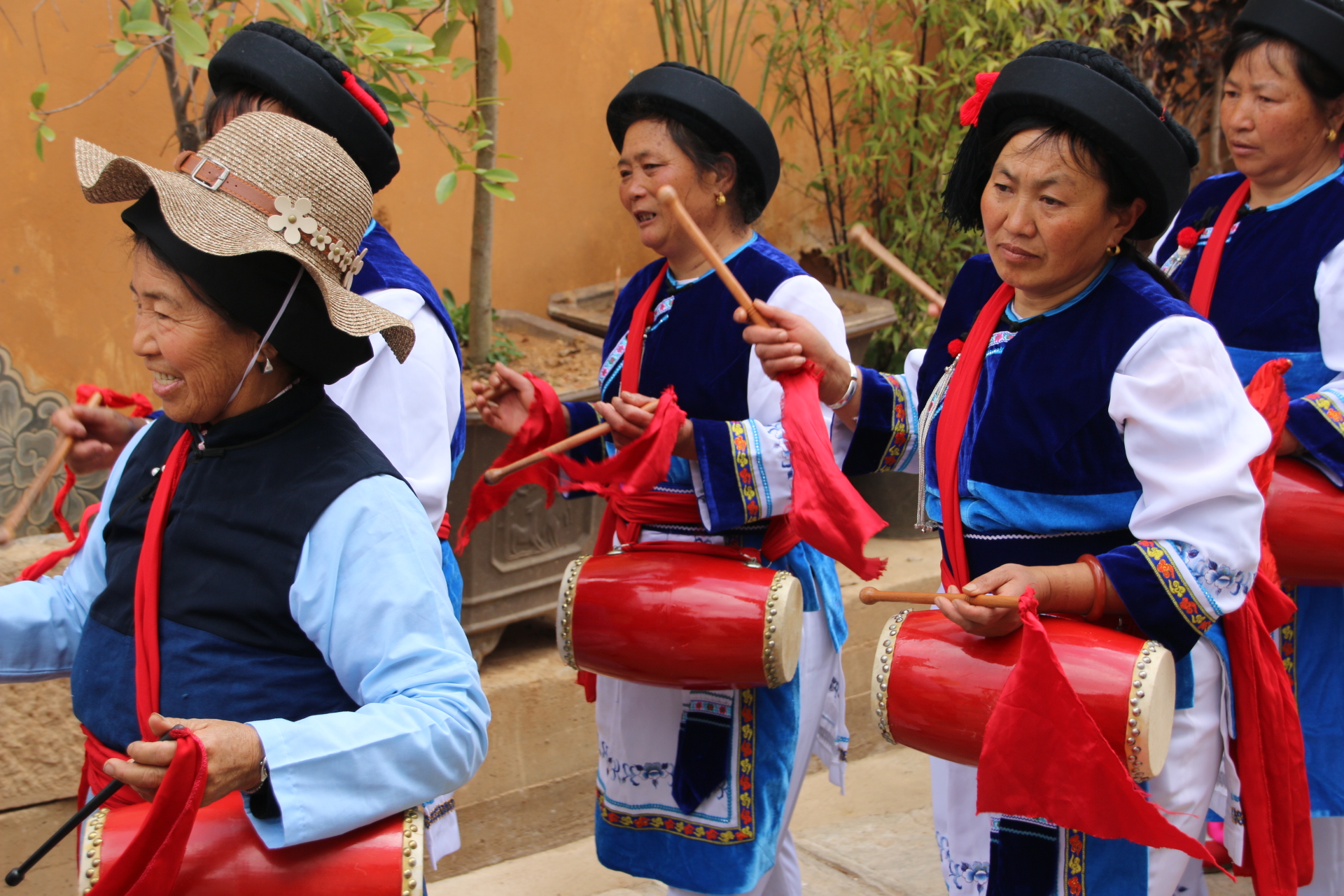
At the same time a wonderful melodious chanting marathon begins where lines of women take up the rhythmic baton from each other while playing simple percussion instruments.

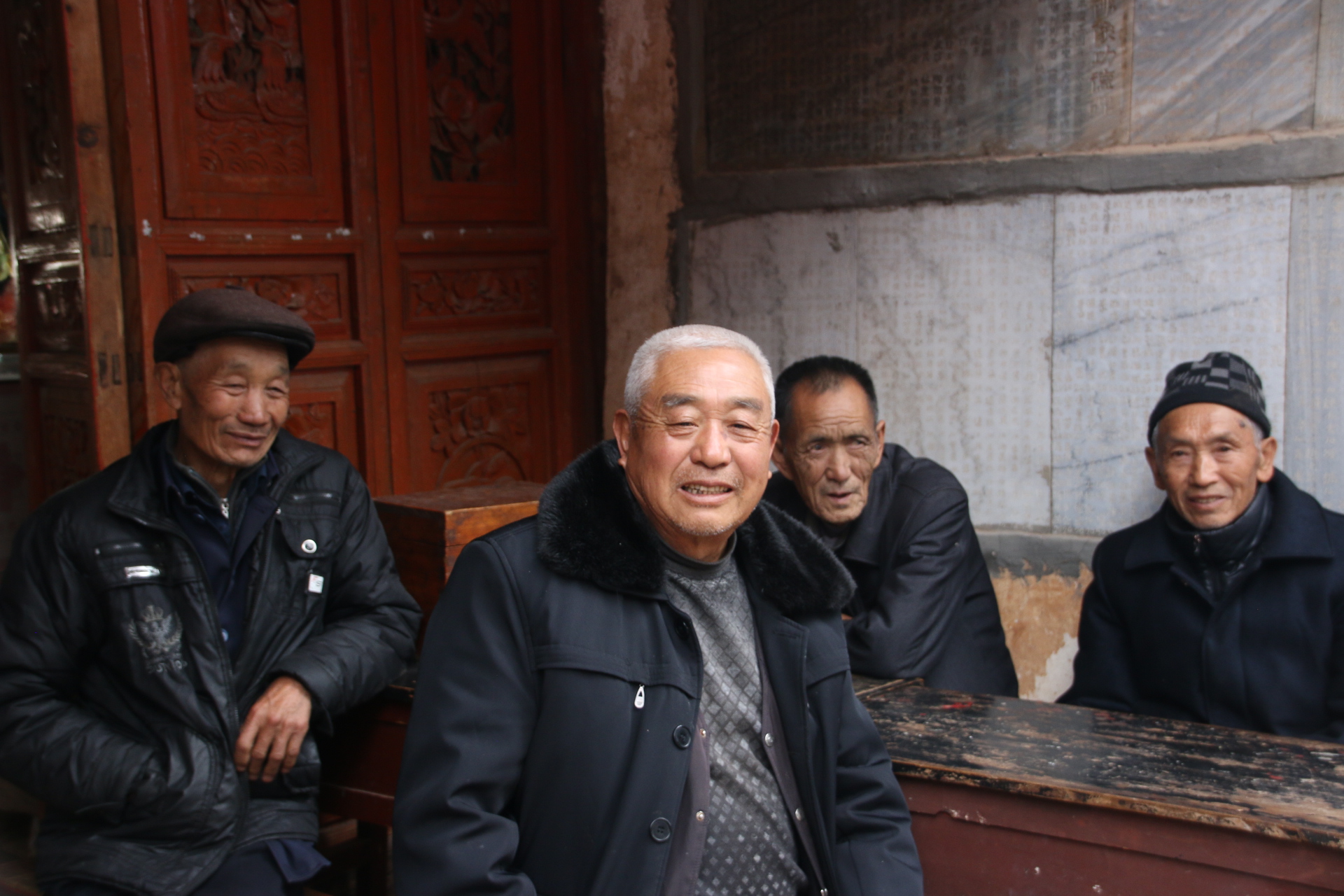
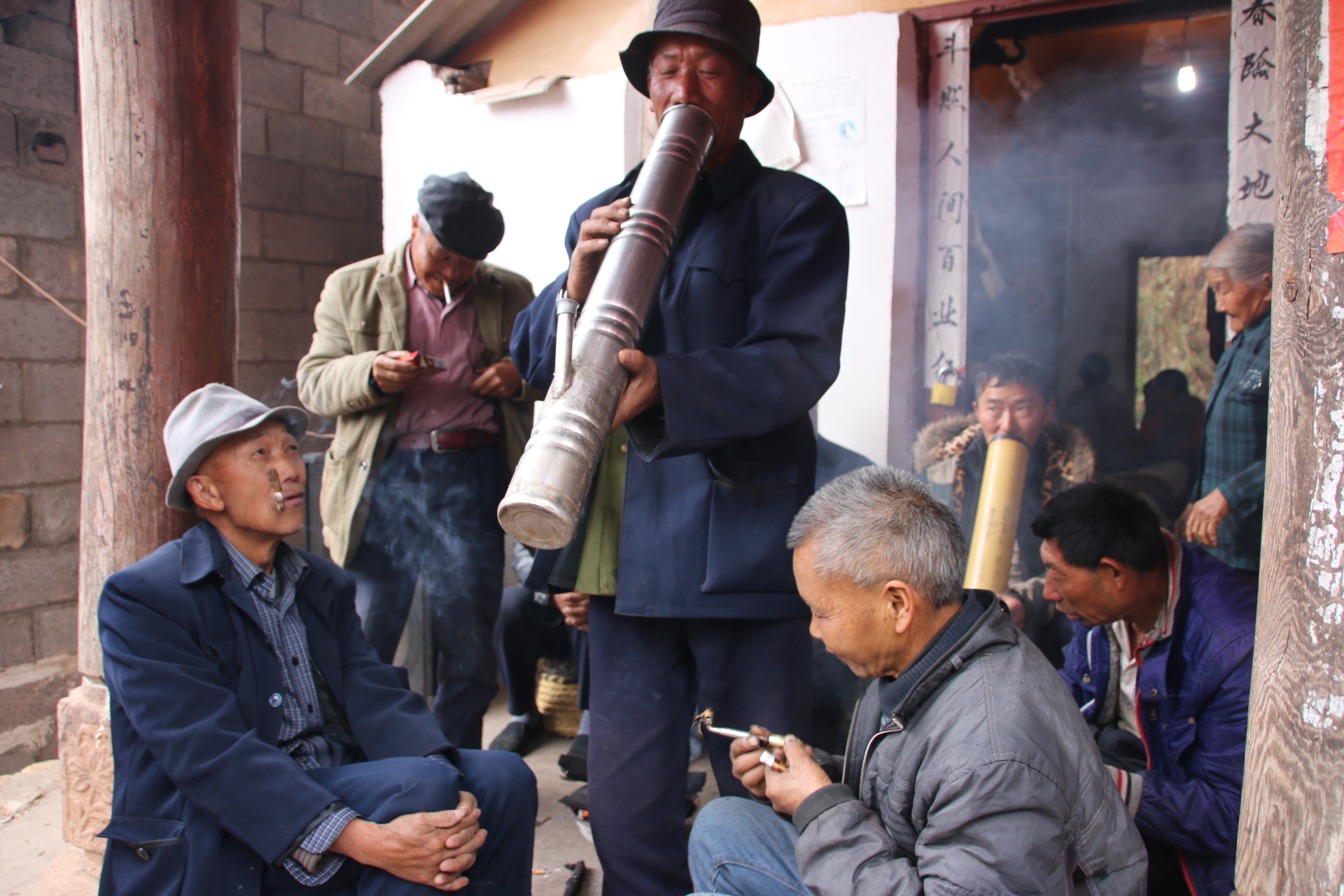
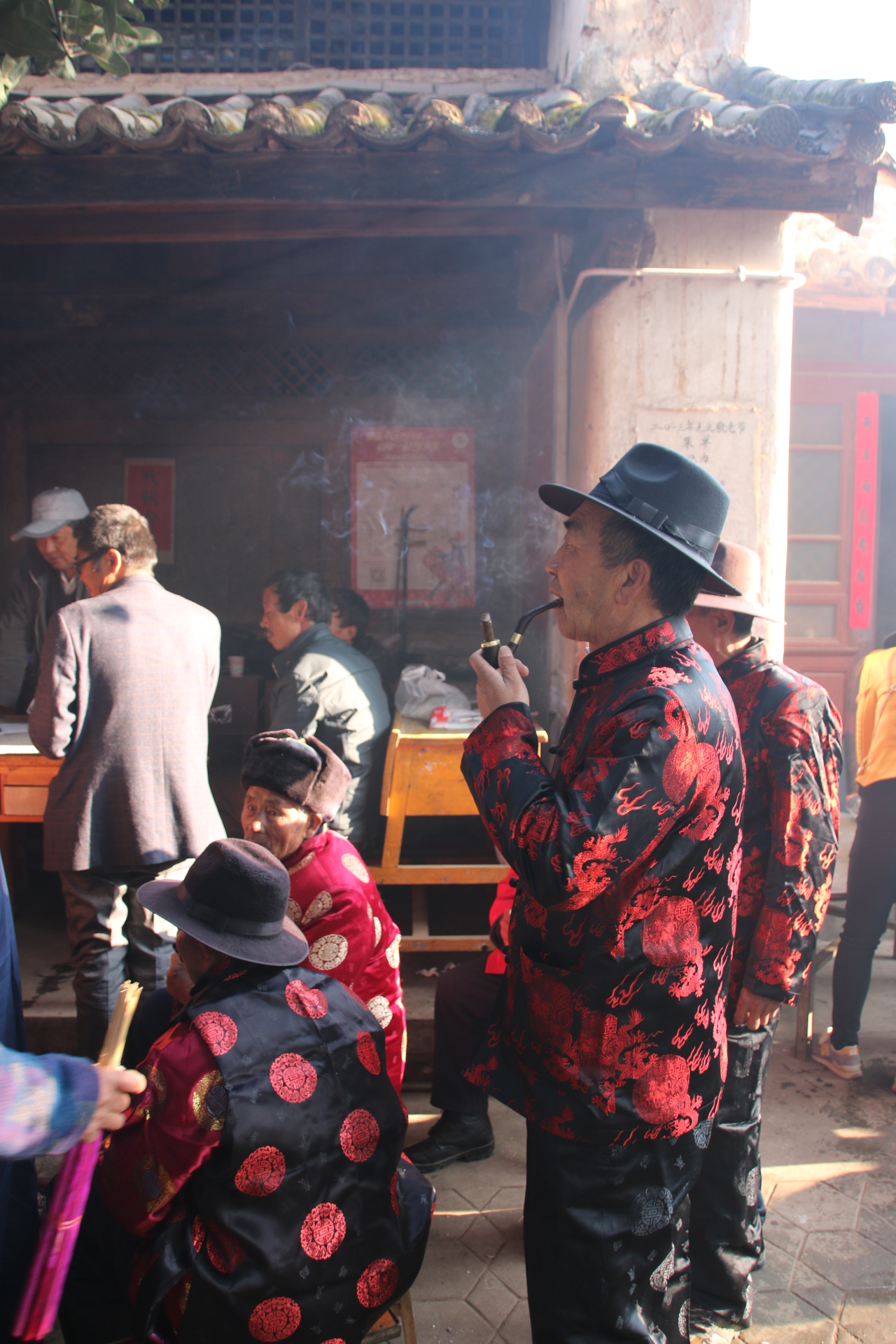
The men gather in groups watching the proceedings and do what men do best – sitting around looking important and smoking and playing cards.

The Dali brigade have made lunch for the few westerners there. Bowls of rice, sliced potatoes, spicy shredded carroty stuff, cheesy wafers and pork with chilies are laid before us with apologies for its simplicity due to the fact that they are far from home. Was fine by me.

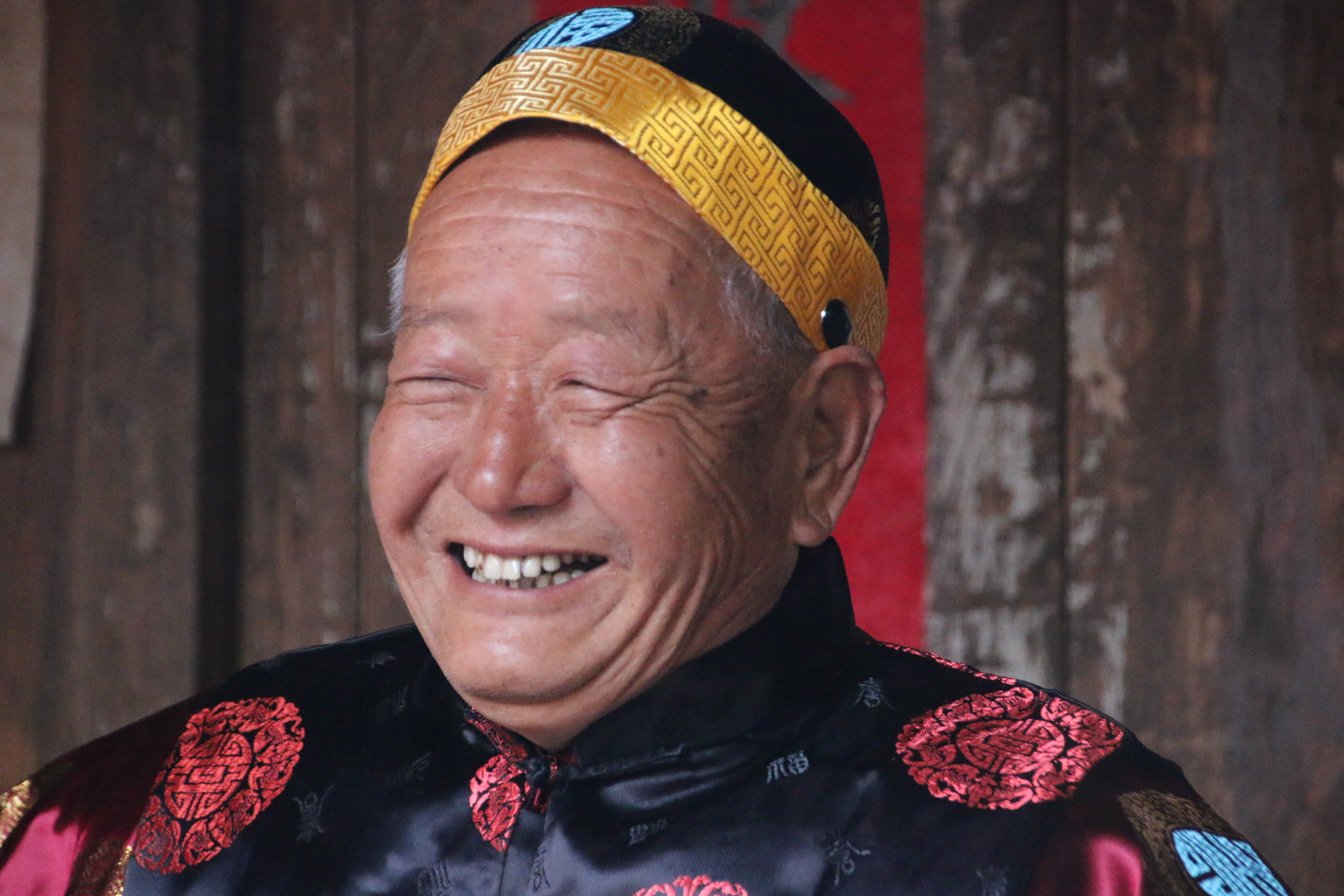
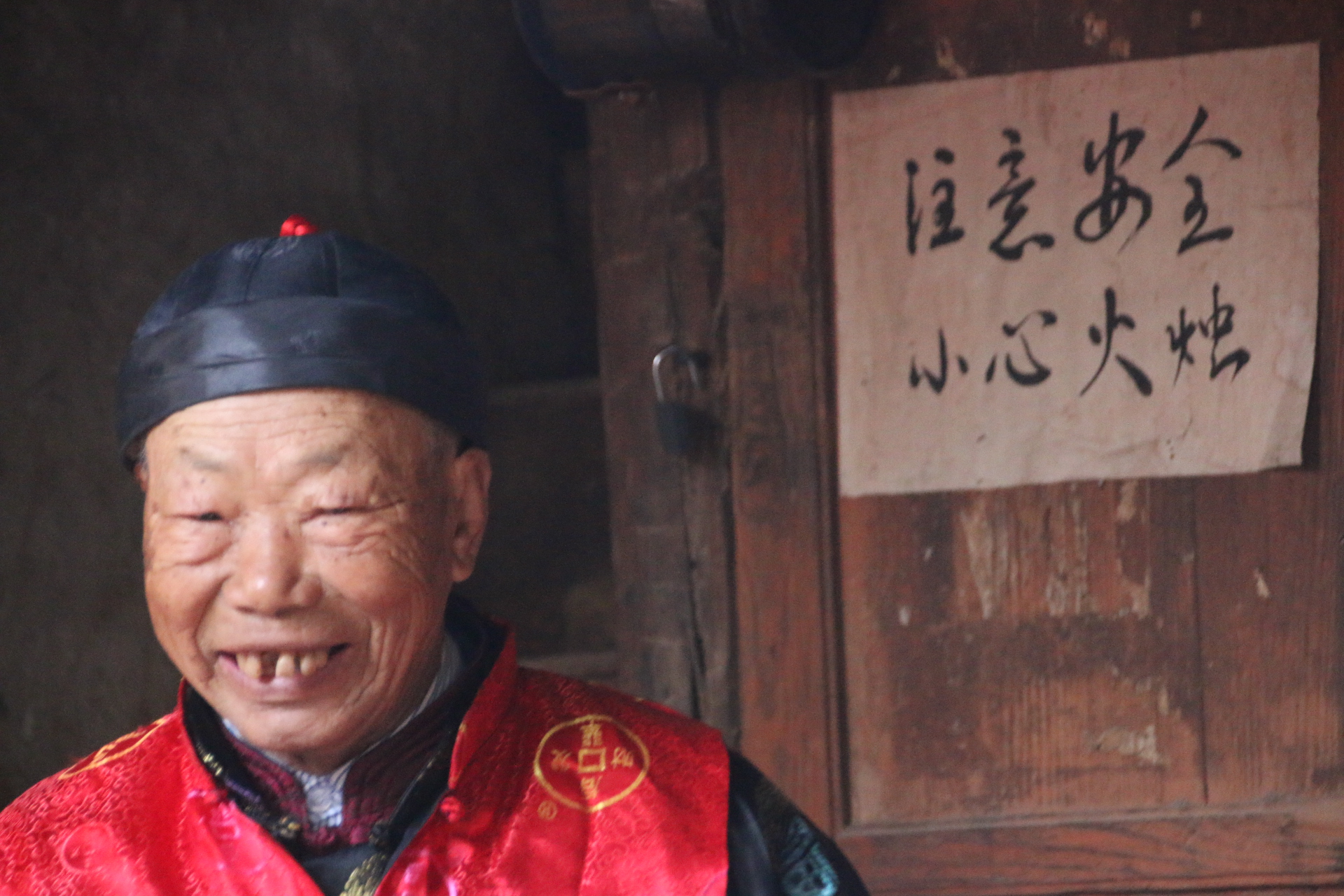
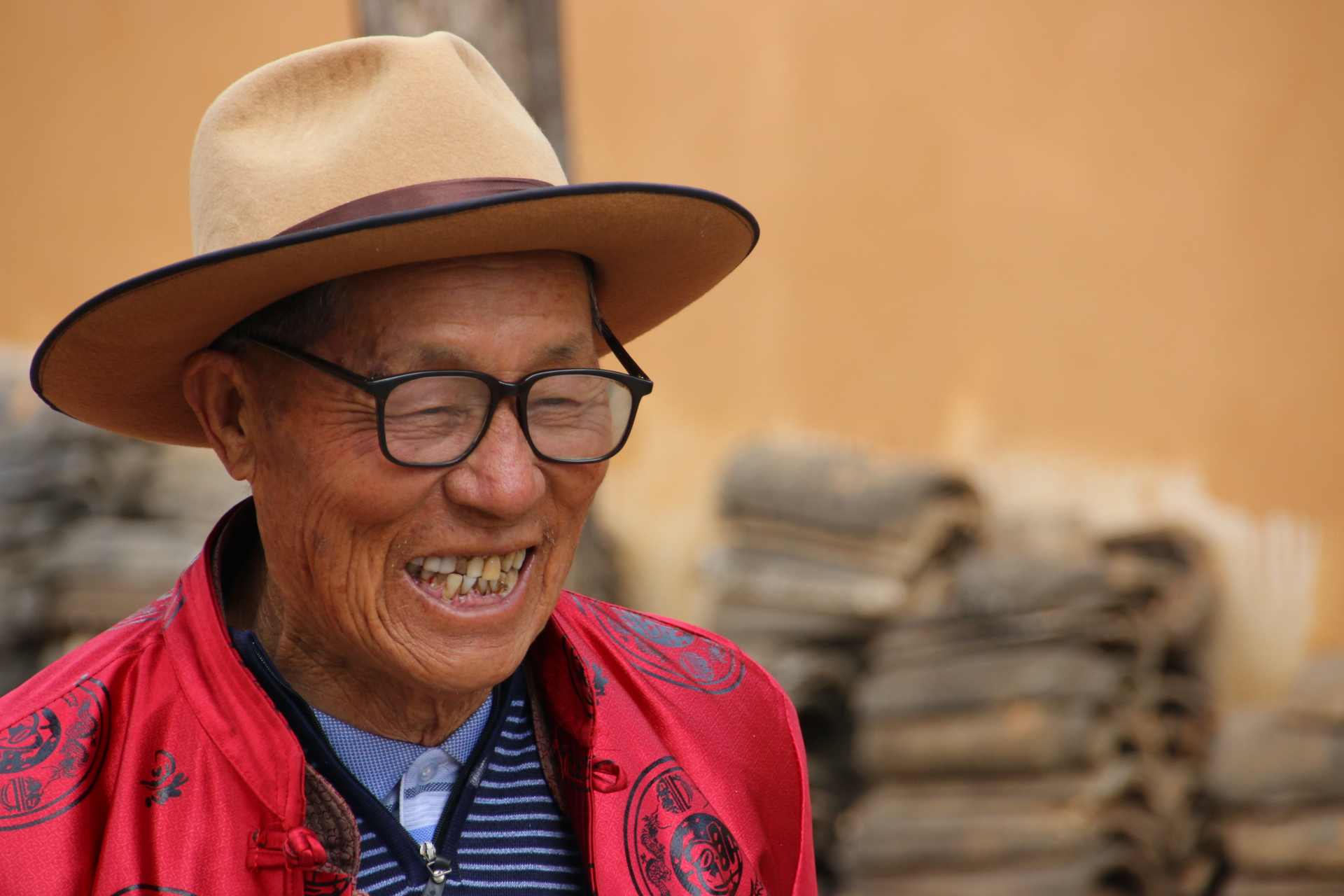
The atmosphere was gloriously friendly with the locals almost applauding us for being there. Most wanted their photos taken and smiled with glee when describing the results, especially the group of smoking men, one of whom rushed indoors to find his big pipe so he could pose with it.

Later on in the day groups move off and dancing takes place in each of the temples before participants sink, exhausted, to the cobbled stones and blankets around sleep until dawn.

Tomorrow they will return to Dali with artefacts & memorabilia, feeling content.


Women’s Day in Weishan

Weishan old town is another grid patterned settlement at the centre of a modern metropolis with its canned music and bright shops. Today is Women’s Day. Two things happen around Weishan today. The first is that families, together, climb Weibaoshan Mountain just outside town. This has a collection of Taoist Temples dotted throughout the wooded climb to the top.

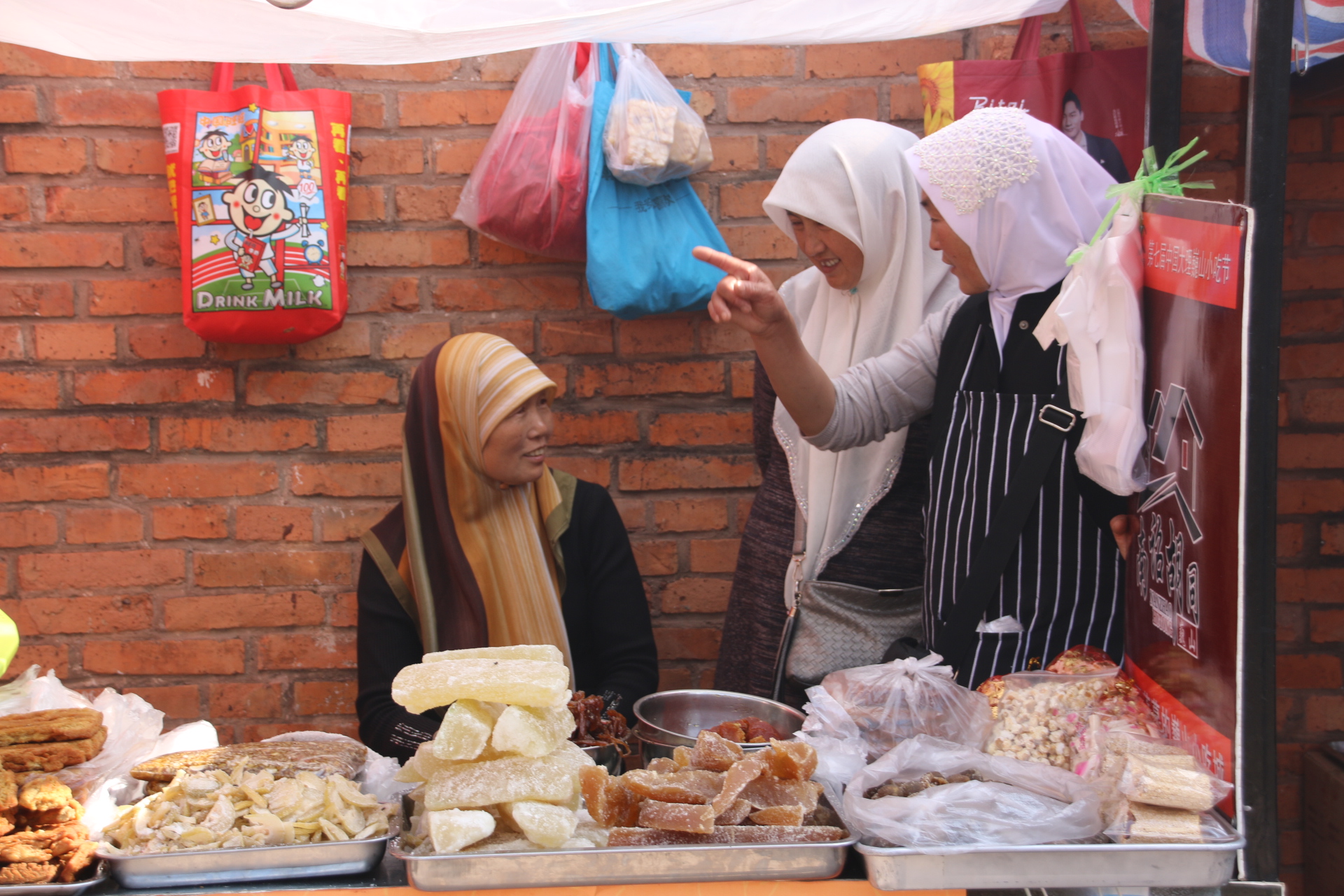
The other event is a food festival in Weishan’s old town. Once through North Gate it kicks off good and proper. The shops open out onto the street and stalls line the two main dragss that stretch from the four gates at each point of the compass. The smell and smoke from cooking fires, grilling and boiling anything from pigs to locusts to chicken feet, cover the streets with a sweet smelling haze which sets the hunger pangs off on a rollercoaster. Pancakes and sweets and dried fruits tantalize the taste buds. Enjoy the images and imagine the crowds  and the bustle and the smells.

Tomorrow a third event is held just outside town but more about that later.


Dali on Lake Ear – not the Salvador type

The town of Dali is situated between the mountains and Ear Lake where the locals can only fish between March & October due to its pollution levels. It’s called Ear Lake because it is in the shape of, you guessed it, an ear.

The town, and the neighbouring village of Xizhou, gently wake up with the dawn. People start to go about their business, collecting together in the parks and stirring around the market stalls.

Traditional houses, run by the government, are open to the public to remind locals and visitors what the past was like.

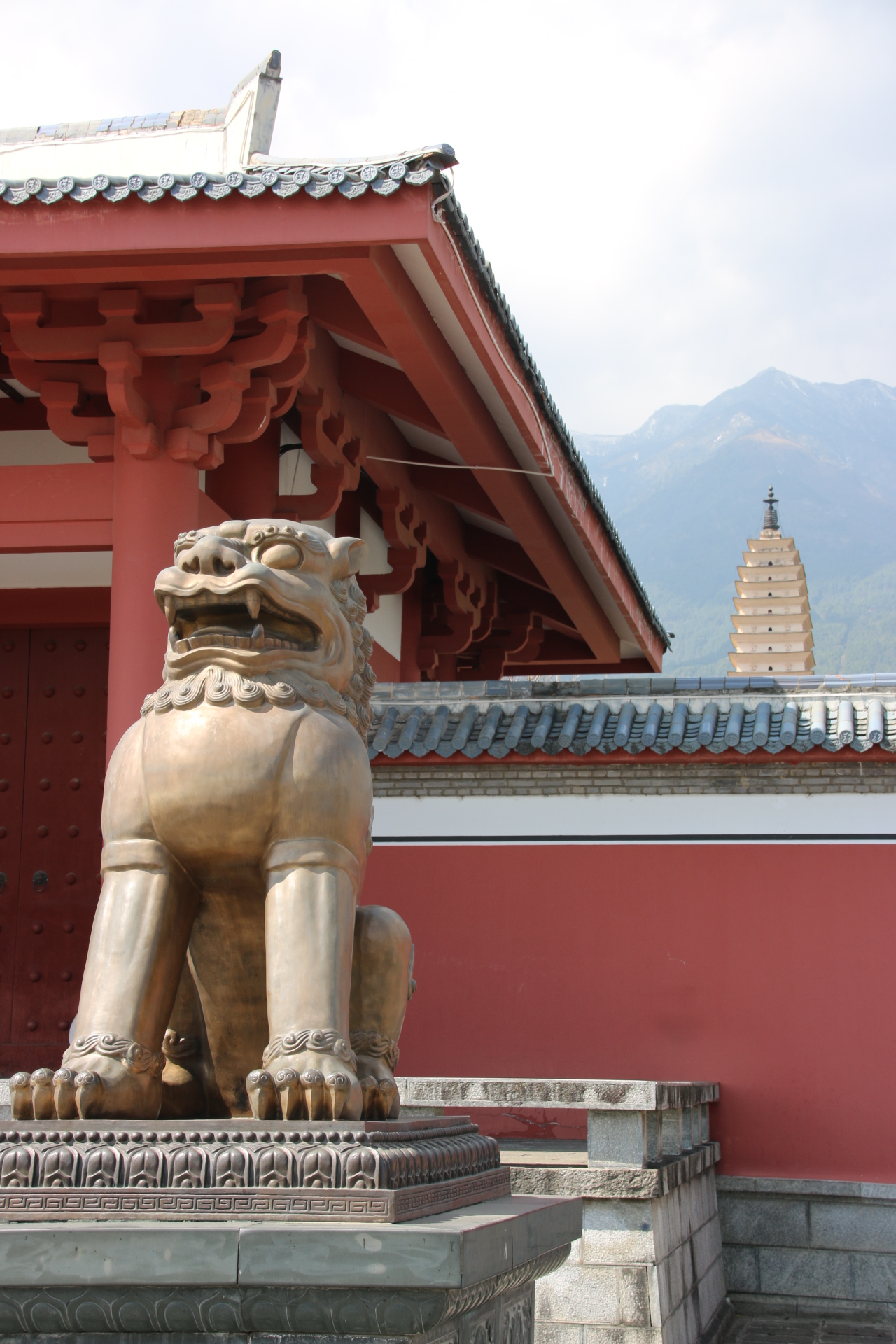
Chong Seng Temple is over 1,000 years old. It is the home to the Three Pagodas and countless other smaller structures. Yes, the outside pagodas lean as you see them. With the mountains as a backdrop the temple grounds provide space for relaxation and reflection.

Dali’s walls and gates were first built in 768. Today 60,000 people live within its boundary and service the touristy trap and high quality tat shops on its pedestrianised, cobbled streets. It seems highly unlikely but up to 40 million tourists are said to visit this place every year. I’ll be pleased to take my leave and get somewhere a bit more sincere and authentic.


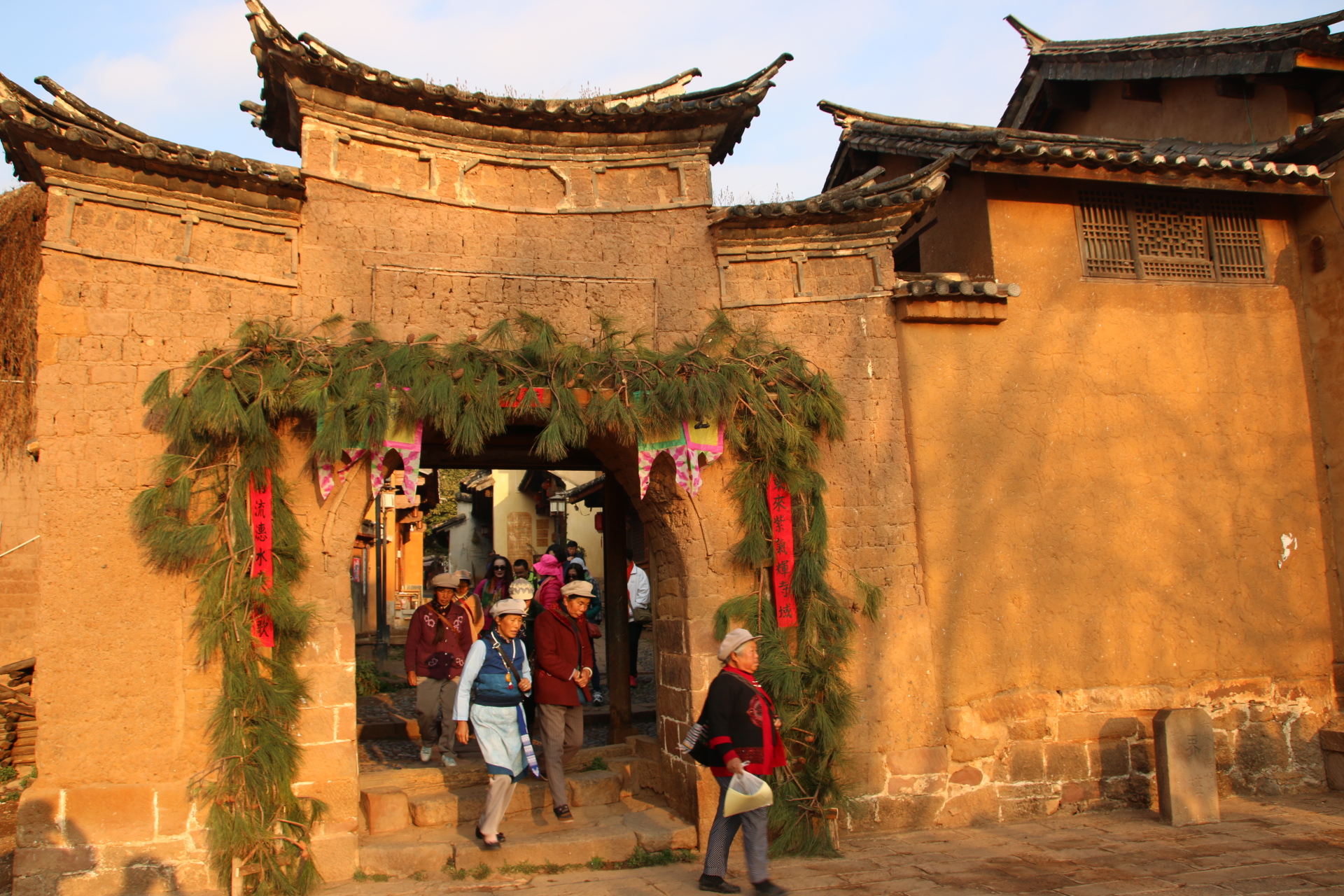
The Shaxi Road Carnival

Every year the Bai people of Shaxi hold their Taizhi Festival. Taizhi is the local name for the Buddha Sakyamuni. The festival recreates the time when he, born as a prince into a royal family in northern India, leaves home on his journey to enlightenment.

20170305003938_img_5675

The four gates to the village are decorated .

The performers start to assemble in the courtyard of the small temple outside the walls. A meal is prepared for them and the older members of the community. Groups sit around smoking and chatting, adjusting costumes, cracking jokes and reliving past parades. The percussion band of bells and cymbals and tams celebrate within the temple and then come outside to kneel as they play and chant. Incense sticks and smouldering pine branches and cigarettes lick across the courtyard in swathes of blue smoke, combining with the smell of steaming soup and noodles to create a swirling current of smells and sounds.

20170305005453_img_5728

20170305010615_img_5781

20170305012030_img_5821

20170305012757_img_5852

20170305010834_img_5787

As the morning progresses the final adjustments are made. The members of the parade mix freely with their older friends. Cackling women laugh and giggle and playfully nudge each other. Men share cigarettes and tea and crack jokes at their pals in the parade. Spectators, mostly locals, start to gather around the square and to line the streets, iPhones & big lenses at the ready.

20170305021730_img_5926

20170305024342_img_5959

20170305013619_img_5867

20170305024447_img_5962

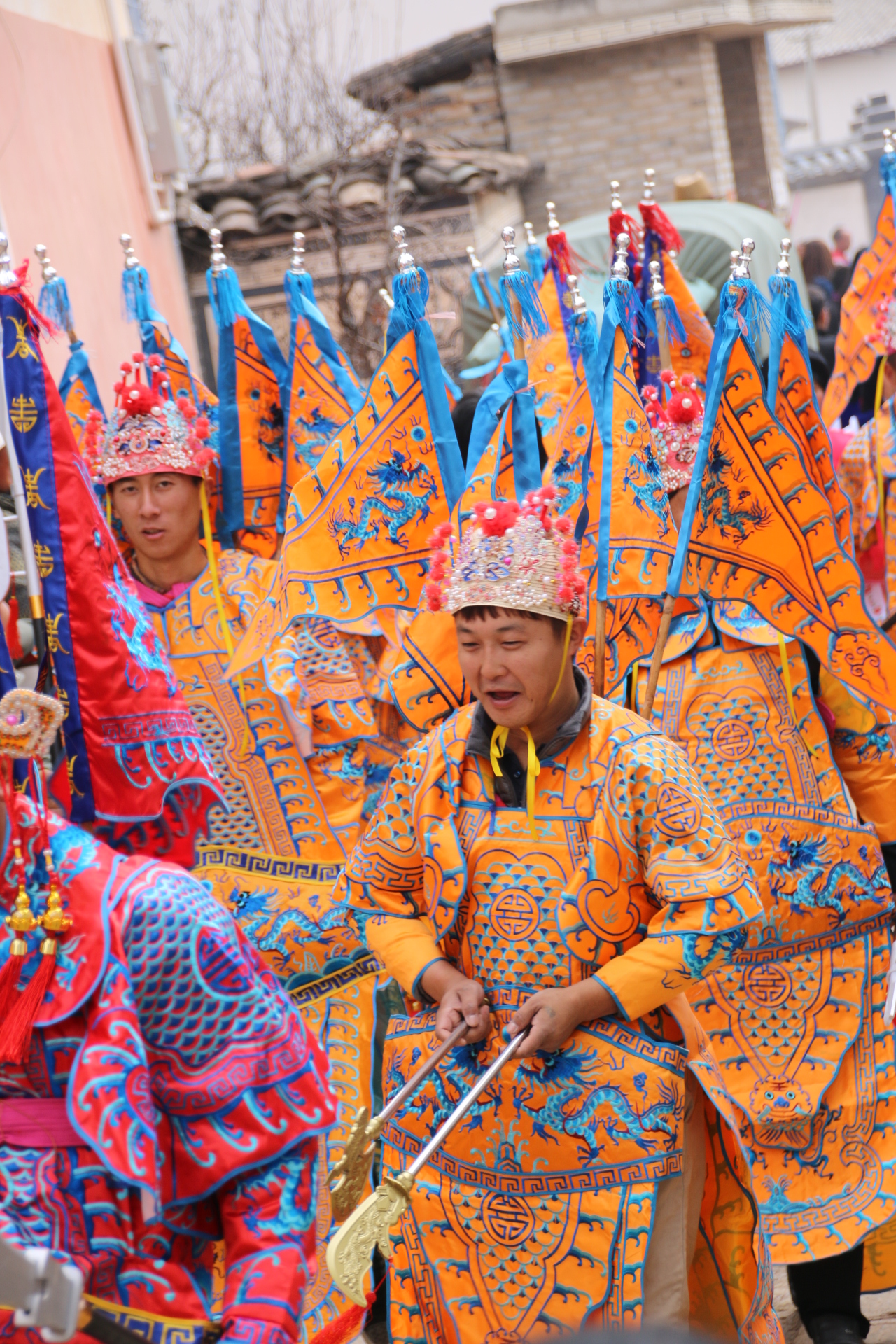
An explosion of fire crackers signals the start of the parade and throughout the procession gives advance earning as it progresses around the village and through each of the four gates, led by the Shaxi version of the Horns of Plenty. Where all these people come from I do not know but it’s a wonderful occasion full of colour and noise and community.

20170305033943_img_6006


20170305034827_img_6025

20170305034356_img_6019

20170305034942_img_6036

20170305032256_img_5989

20170305034408_img_6020

Why is it that folk in the poorest areas of the world really know how to party? Yunnan is the poorest and most ethnically diverse area of China. The vast majority of people here earn less than $150 a year. Yet smiles and laughter and pride are the order of the day.


Dusk in Shaxi

The small village of Shaxi is on the Tea and Horse Trail. I am here for the annual Taizhi Festival held by the local Bai people. I arrive in the late afternoon as the locals are closing up shop and returning from the fields. The village settles down for the evening and awaits the festivities in the morning.

20170304090610_img_5606

20170304092537_img_5633

20170304093735_img_5658

20170304094127_img_5662

20170304092216_img_5625


Yangtse Doodle Dandy

Lijiang slowly stirs as the sun comes up over the mountains surrounding the lake that feeds the canals that flow alongside the streets. The air is crisp, the light is clear, colours are bright, the place has a mellow feel as the town gently awakes.

20170303010944_img_5190

20170303011037_img_5192

20170303023907_img_5316

20170303020544_img_5223

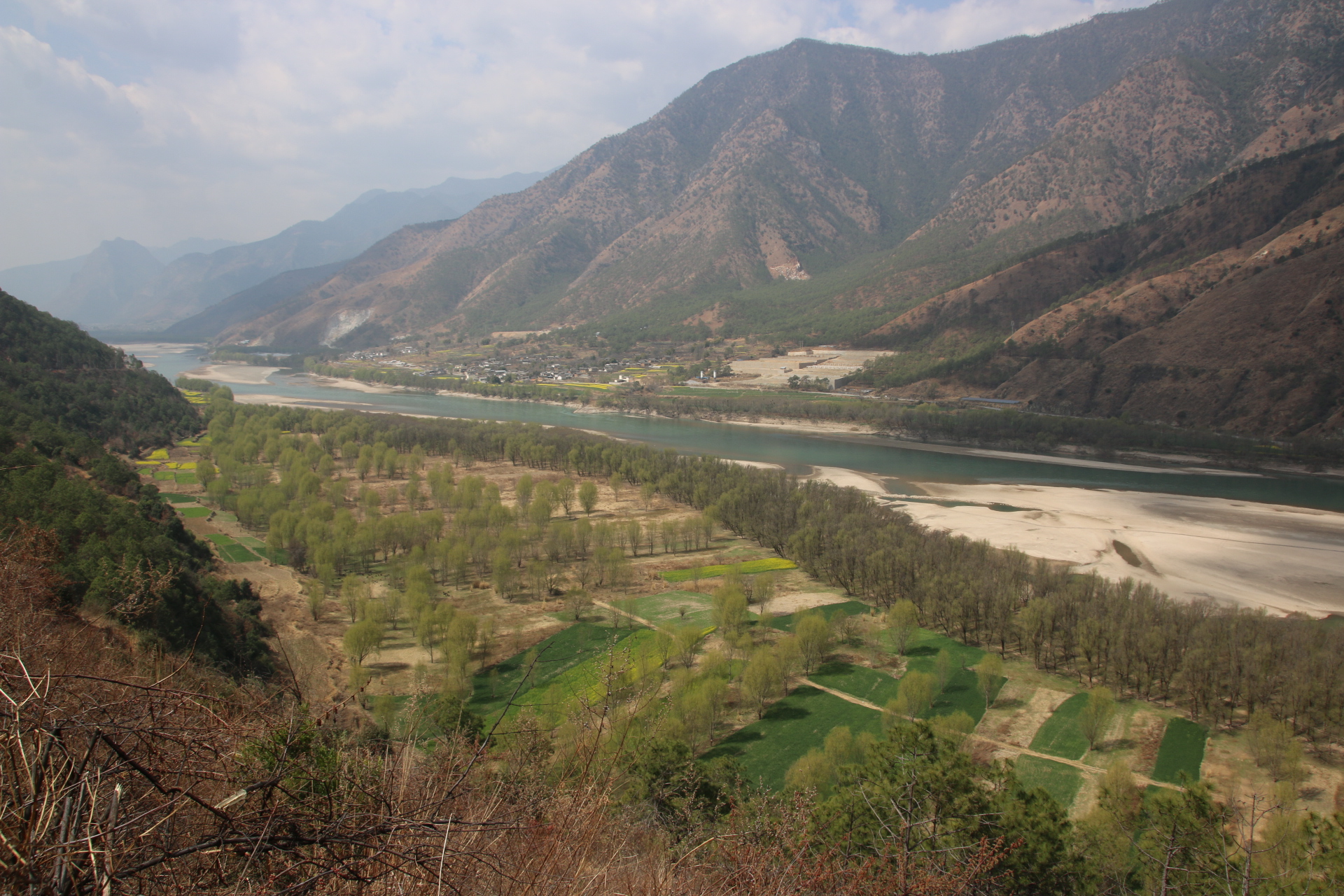
Then a short bus journey to the magnificent Yangtse, the third longest river in the world. At this time of year it is a bit deceptive as the monsoon rains have yet to arrive so the slow moving waters make their way through fertile, terraced banks and sand bars.

My first sight of the river is in its middle stage. Coming through the mountains on the new motorway – another amazing piece of construction across high peaks and deep valleys. The river appears through the bare trees as a wide ribbon of turquoise and brown glass.

20170303044435_img_5338

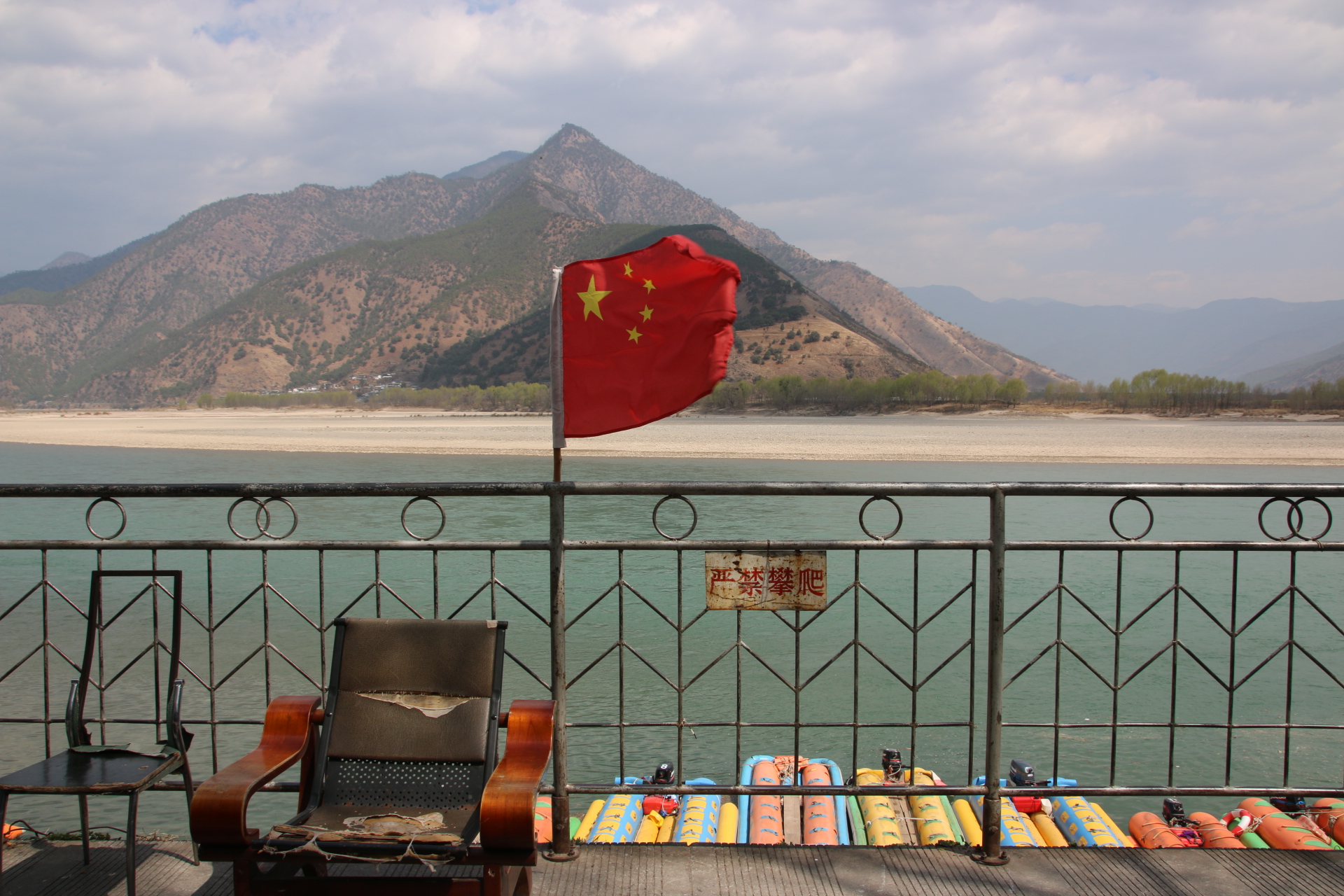
Moving upstream I take lunch at the First Bend of the Yangtse River where the local geology forces the south bound river into an almost 180° turn.

20170303051752_img_5363

20170303052844_img_5368

20170303063838_img_5376

20170303064336_img_5385

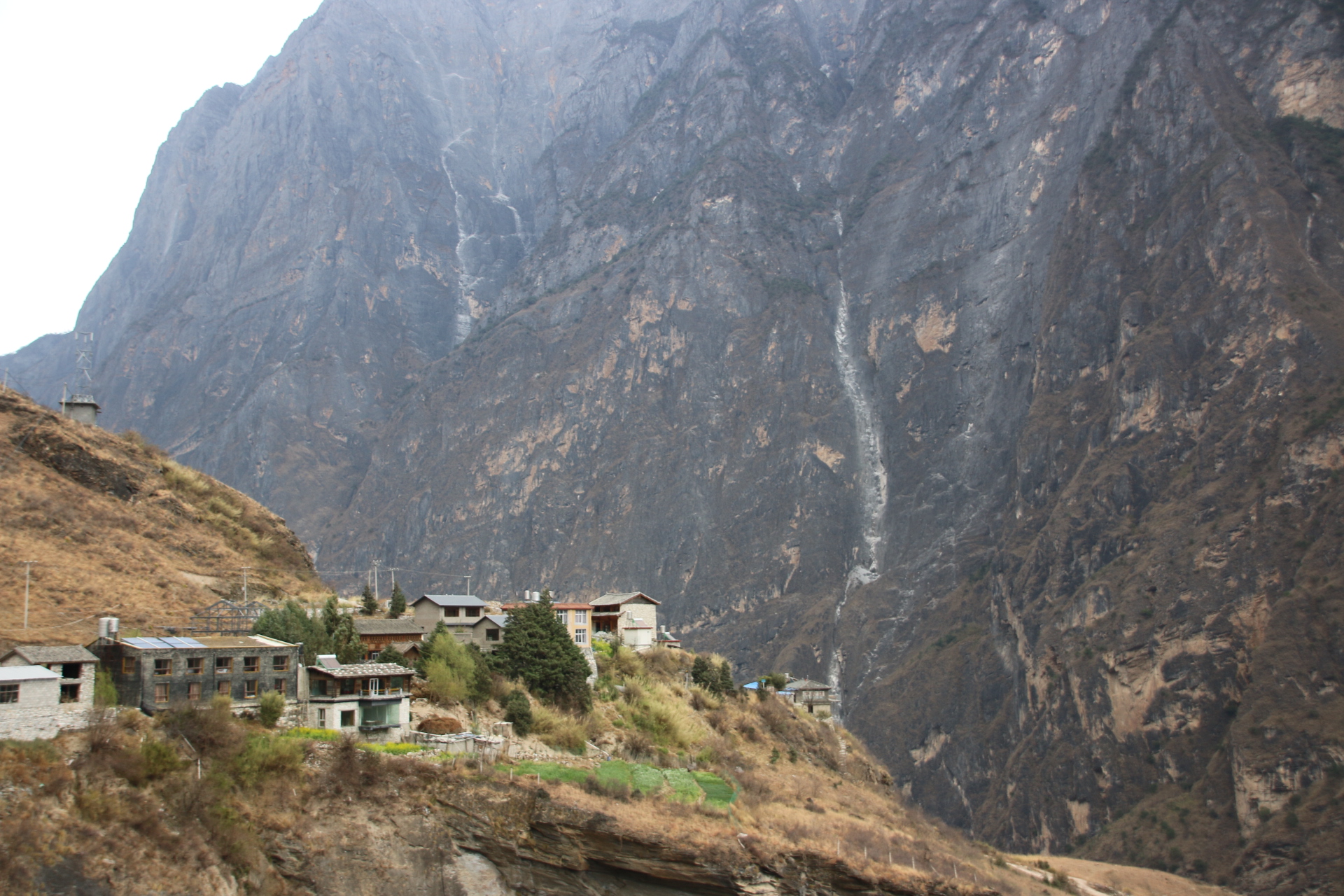
From here it’s further upstream to Tiger Leaping Gorge where the river is forced into a fault line some 4,000 metres below the highest peaks. In places it is only 30 metres wide and the waters are a roaring, swirling, gushing torrent for several kilometres. Locals named it as the place where tigers could jump across the narrow gap.

20170303090253_img_5413

The road winds high up on the mountain side following the line of the river several hundred metres below with nothing between the wheels and the miniscule, watery line way, way below. Those of weak heart – avoid.

Tina’s Guest House is on the road, high up on the mountain side, half way through the gorge. Huge teeth of mountain dwarf the few outposts of humanity who try to stare out their huge Himalayan neighbours of stone and ice and power and age. The wind howls through the gorge and around the guest house creating a concerto of notes and movements. Inside is warm and nesty with hot water, comfy beds (with electric blankets!), beer, filter coffee, hearty food & good Wi-Fi. Bliss. The view from my room door:

20170303095642_img_5418


Flying high to Lijiang’s Glitterball

China is such a surprise. The people are so friendly. The place is clean with little or no litter. The infrastructure is excellent with wide roads and huge airports. Buildings and stores are the same as back home with the streets full of people of all ages wearing similar clothes and labels and designs as those in the streets of Oxford or London.

Now I have returned to Kunming, by way of the Jinping Mountain’s huge Smiling Buddha.

20170301011449_img_4813

It is a short flight to Lijiang, up in the mountains at 2500 metres. Firstly I travel out of town to visit Puji village and its 300+ year monastery.

20170302021130_img_4944

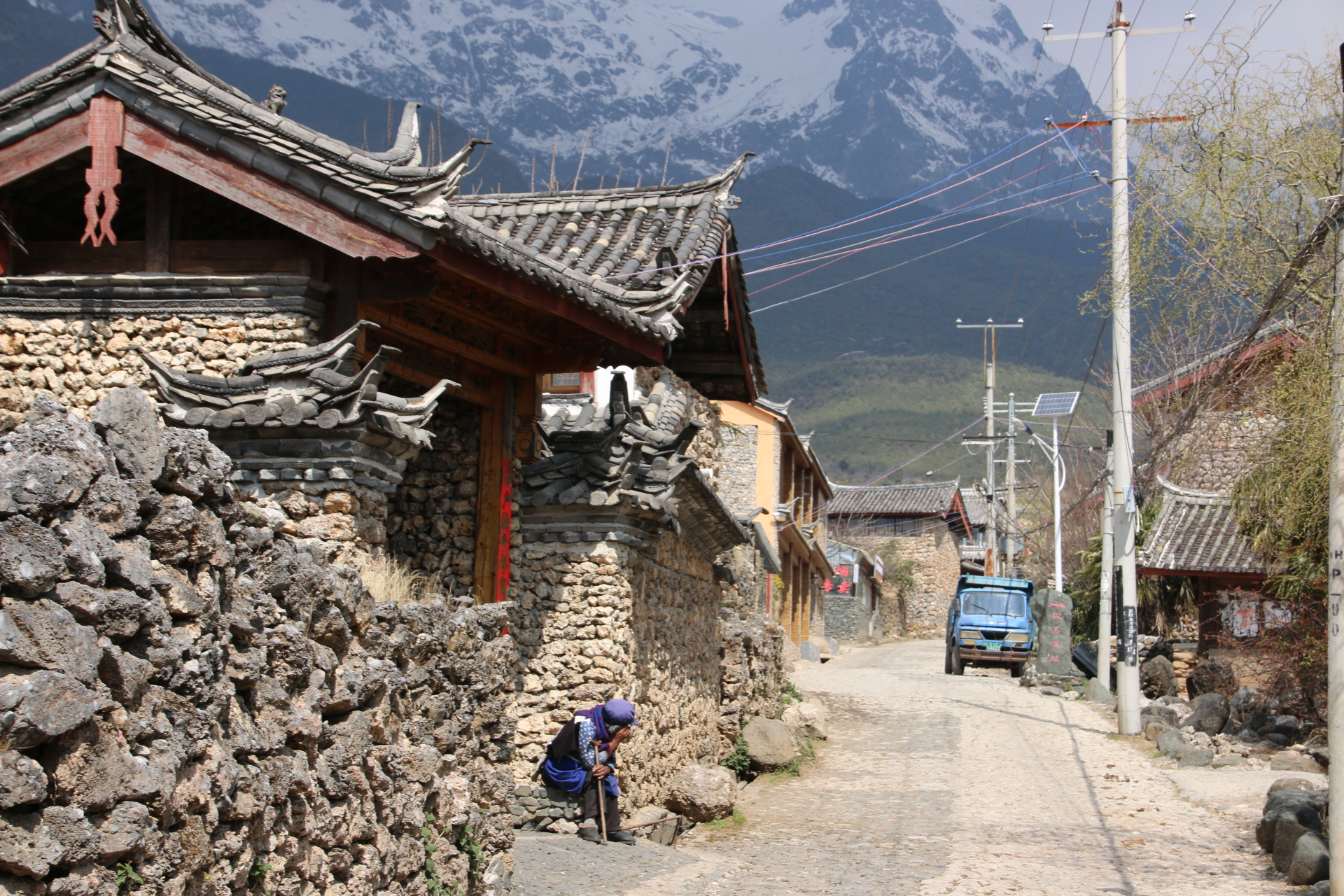
I move on to Yuhu village, set at the foot of Dragon Snow Mountain, where I have lunch in a small village eatery.

20170302041914_img_4993

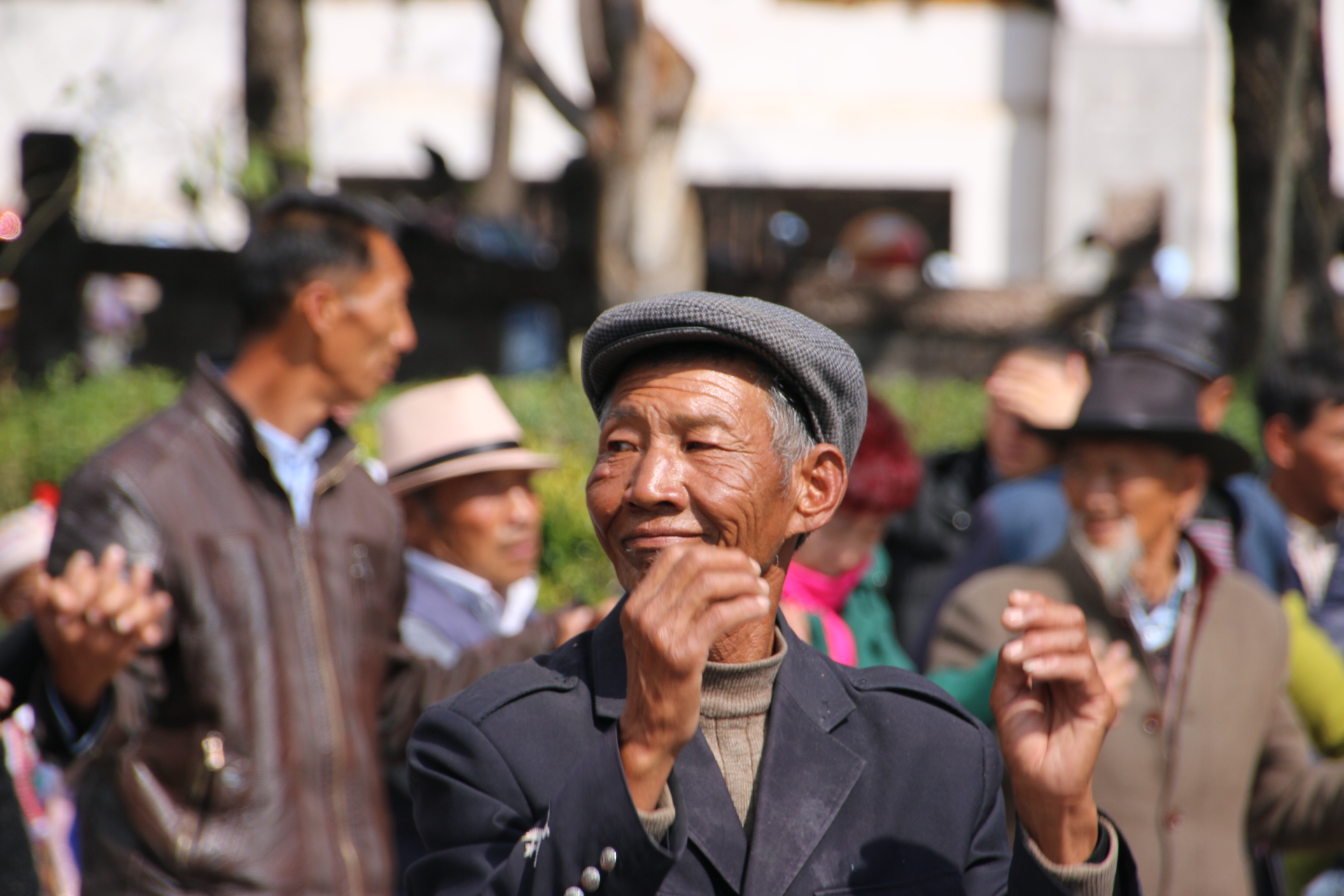
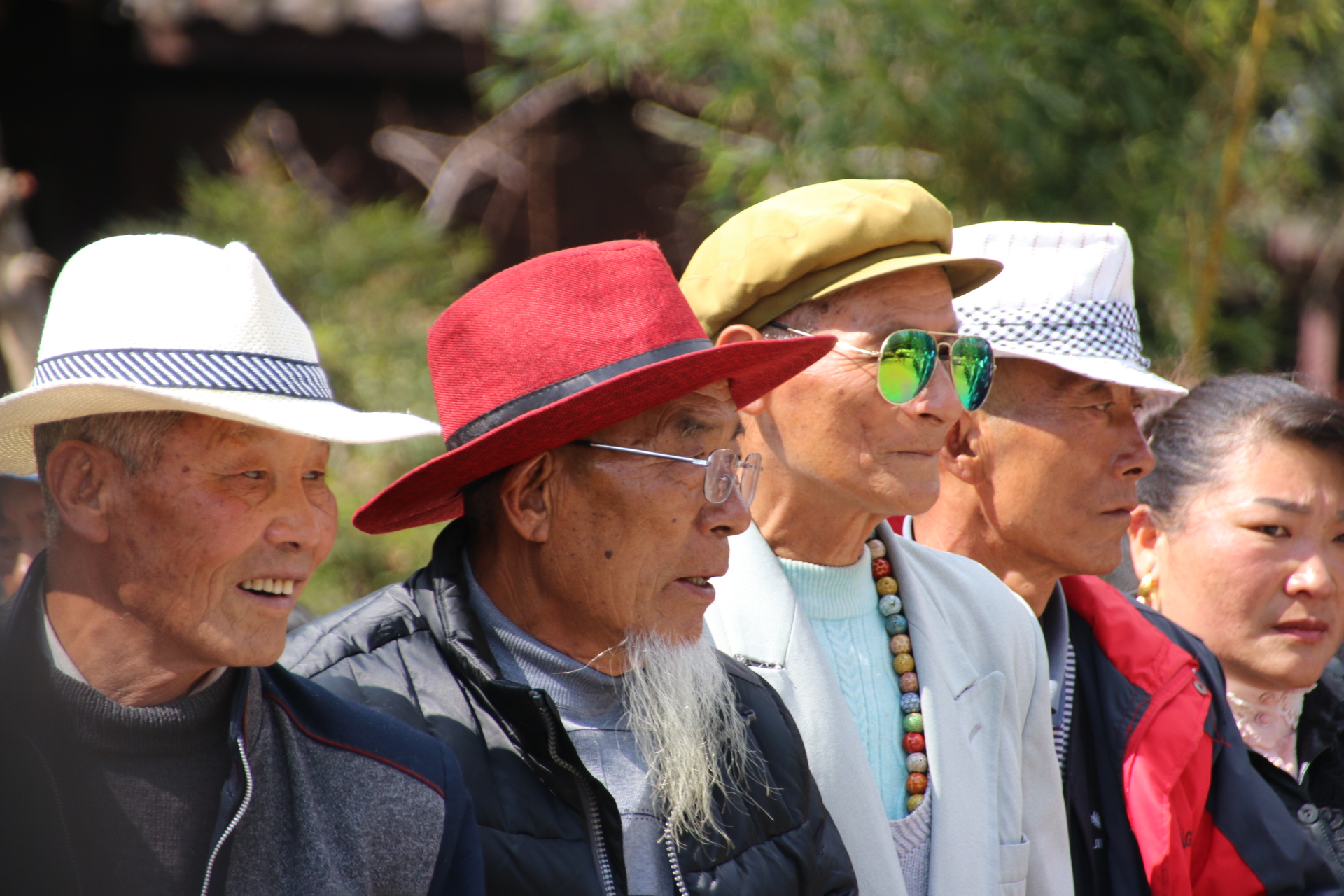
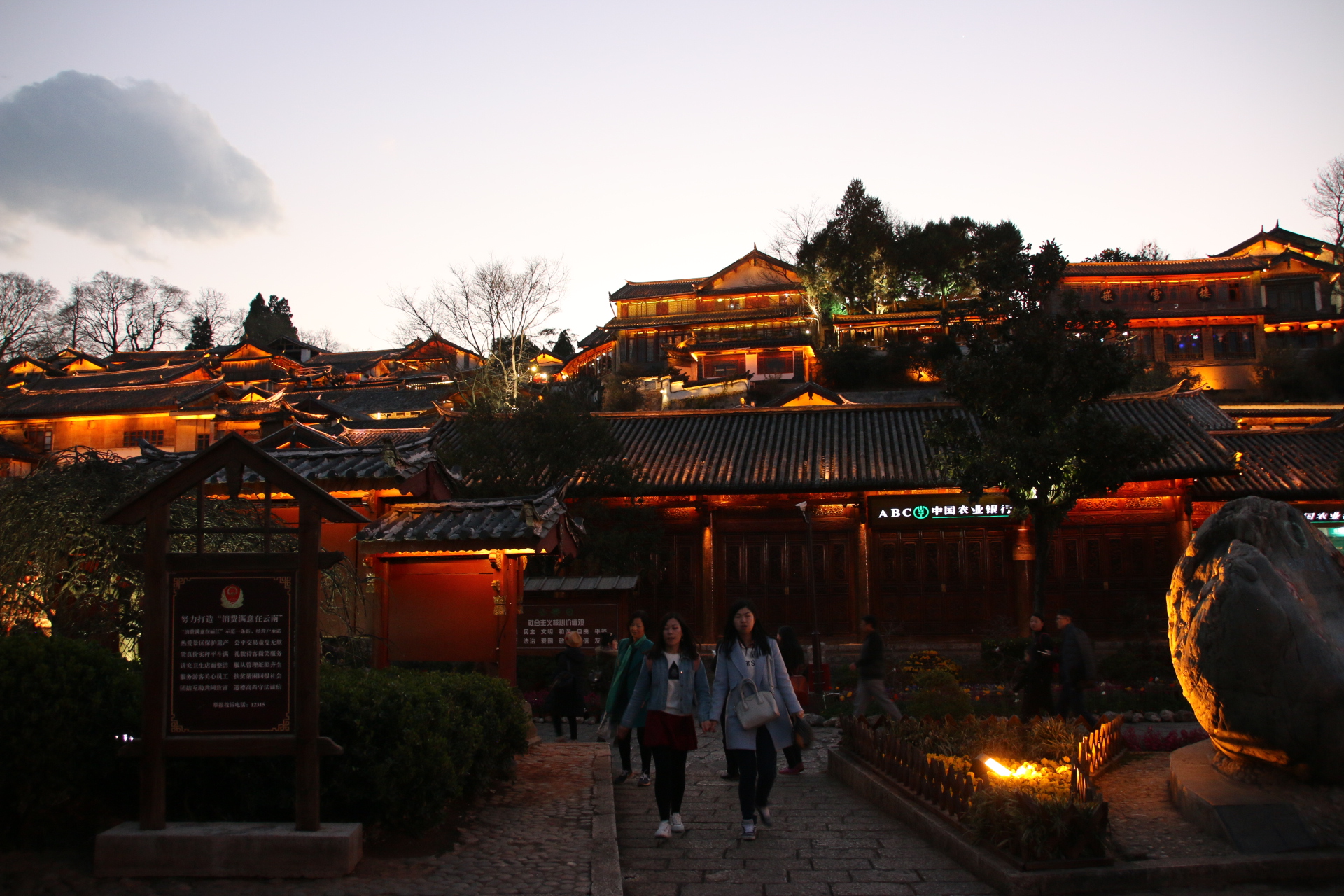
Then it is back to enjoy the lights and glitter of Lijiang. The old town is wonderfully charming with narrow cobbled streets bridging canals, streams and gullies which flow in all directions. In the squares the locals, young & old, gather throughout the day, every day, to dance together; a cross between line dancing and slow, Greek wedding moves. A brilliant sight to see so much fun and togetherness and smiling faces.

20170302073037_img_5077

20170302072635_img_5062

20170302073624_img_5091

At night the glitter is even more sparkly making the old town feel quite magical.

20170302113959_img_5160

You’ll never guess what these lovely ladies are selling from their small counter – raw fish on sticks to eat as a snack as you walk through the evening crowds with your arm around your girl’s shoulder. The raw fish slightly spoils the moment.

20170302090559_img_5140


Double dose from the fire festival

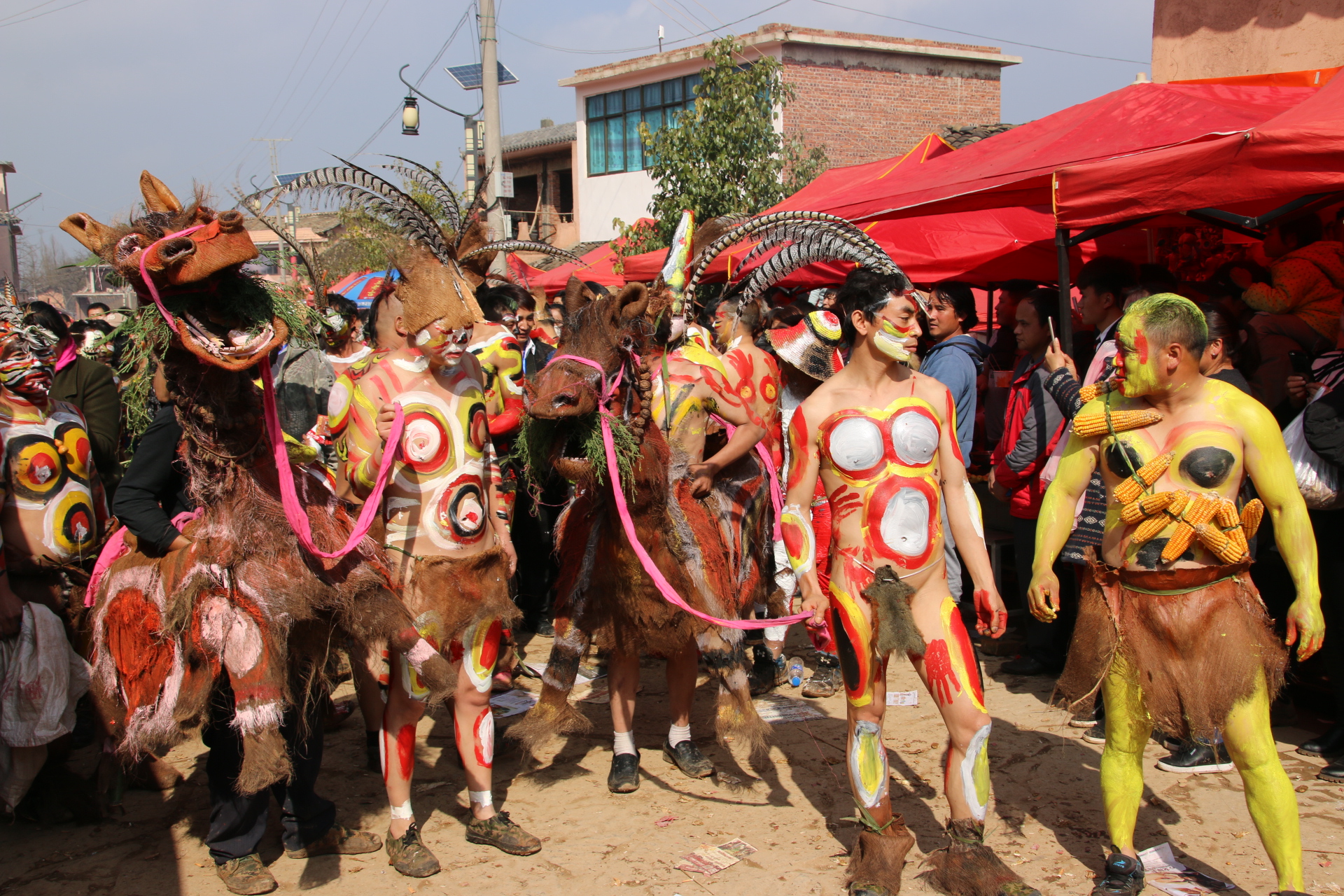
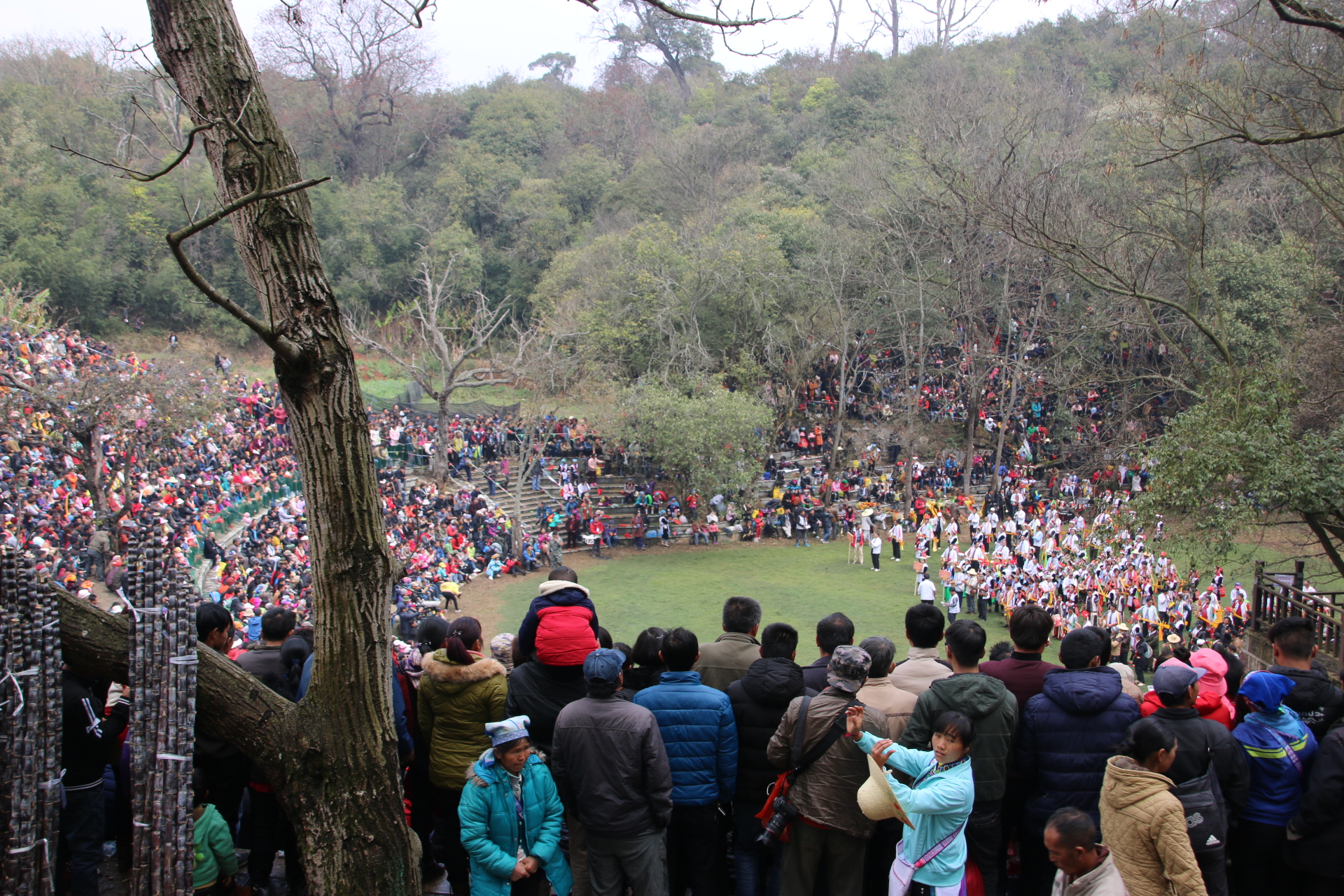
After the welcoming ceremony the crowds squeeze their way up the narrow main street to have the communal lunch and then gather around the village square. Boy, do these Chinese have some kit – huge lenses, I phones, selfie sticks all focused on the, now hammered, painted lads who do a circuit, light a fire, sacrifice a chicken ( yes, truly) and proceed to the main hillside where the thousands gather to watch the dancing and enjoy all the fun of the fair

20170228051703_img_4587

20170228051707_img_4590

20170228074812_img_4735

20170228055106_img_4616

20170228063117_img_4687

20170228070223_img_4719


The Fire Sacrifice Festival in Hongwa Village of the Yi People

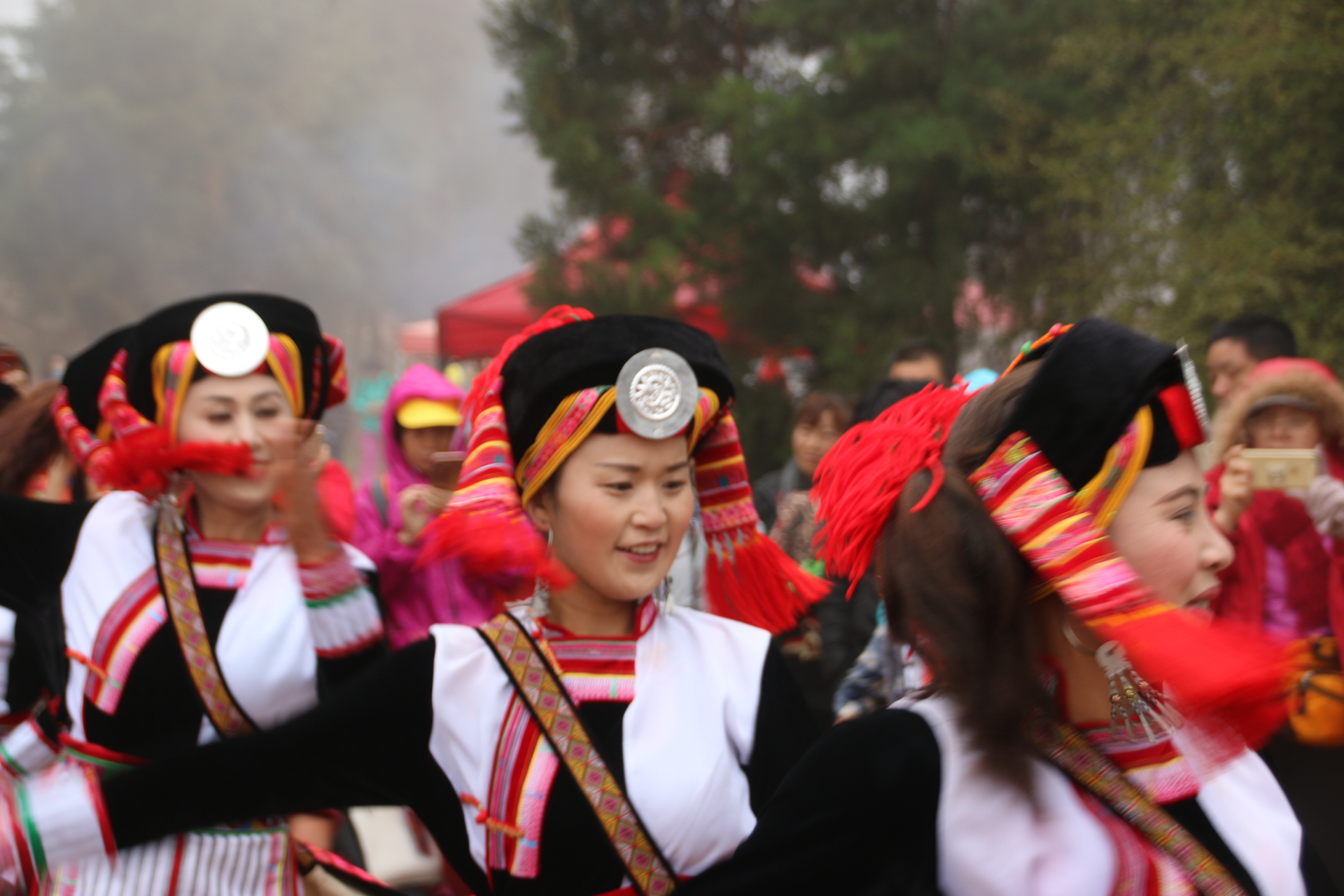
This annual festival celebrates the first making of fire on which the tribes existence depends – for warmth, for cooking around for protection against wild animals. Up tho 30,000 people descend on this small village. After a welcoming ceremony there is a communal lunch, followed by a reenactment of the discovery of the fire when the local lads get painted up, and pretty tanked up, and parade semi naked through the village. The afternoon is spent watching a dancing competition between the girls and grannies representing neighbouring villages to win the covered’best in show’ prize.

I’ll let my images tell the story of the day, starting with breakfast in the early hours in the town of Mile.

20170227230633_img_4139

20170228014308_img_4293

20170228021303_img_4362

20170228012754_img_4246

20170228012805_img_4248

20170228034046_img_4471

More to come soon.


The start of my China adventures

This is my first trip for a while and my first visit to China. I am really excited. I have lots of preconceptions about China, mostly formed in my youth, so I am really intrigued to see what it is like. I have come to Yunnan province in the south of China next to the border with Vietnam. 27 different ethnic groups live around here and many celebrate festivals at different times of year for one reason or another.

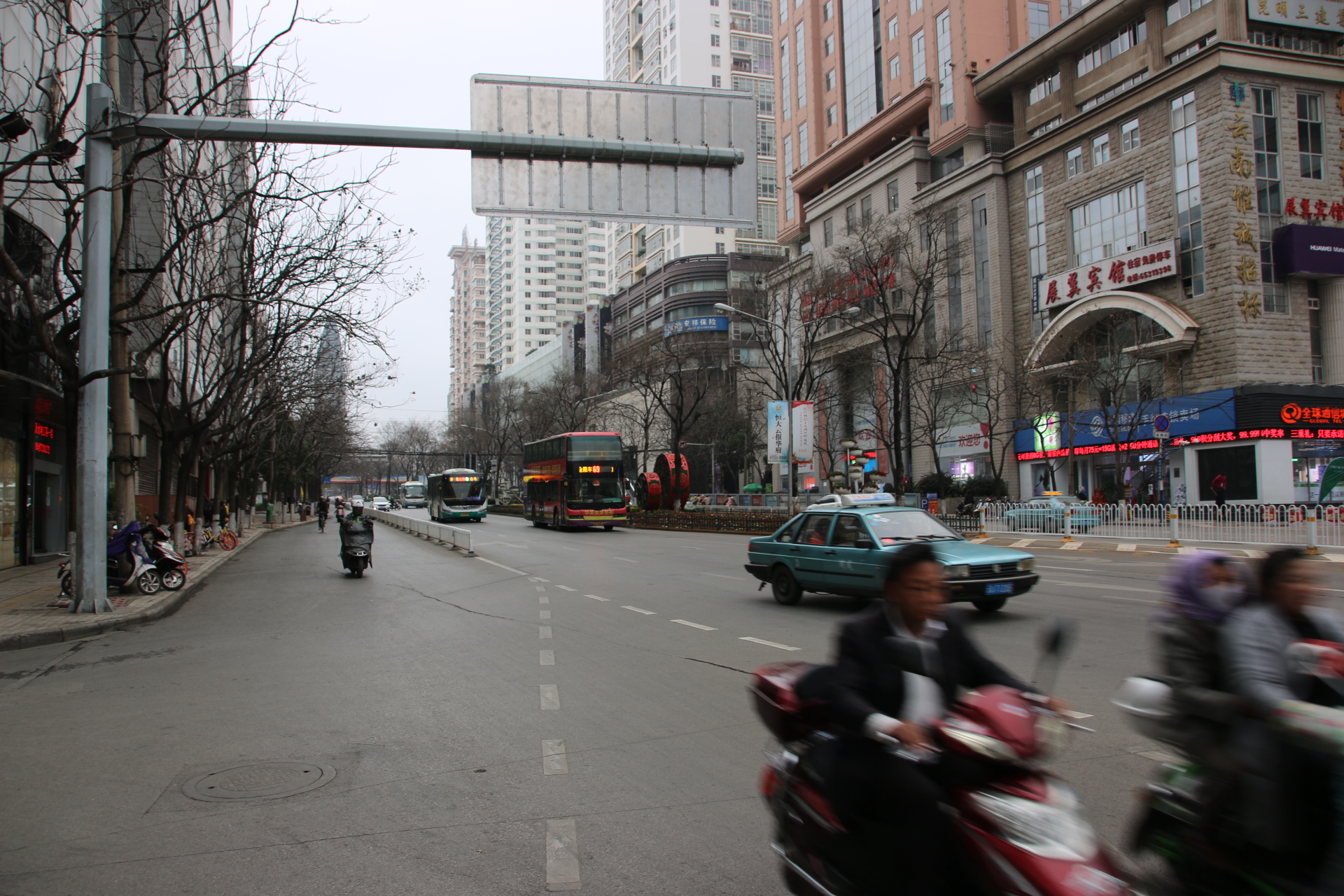
I fly into Kunming, the largest city in Yunnan. 6 million people live here. It is similar to many in China and South East Asia. Concrete slabs of tall, imposing, multi-storey buildings house shops, apartments, shopping centres, department stores & businesses. No surprise there then.

20170227012328_img_4001

The main surprise is the traffic on the streets. It is so quiet. The hundreds of scooters are electric and creep up on you quietly; most of the buses are electric so no noise there; and most of the cars are electric too, and so no sound from them. It all makes for busy streets that are silent – surreal and no exhaust fumes. Oh, the white sections of pedestrian crossings are purely ornamental. Traffic ignore any group of pedestrians trying to cross, who like owls turn heads 360° in an attempt to spot the speedy approach of packs of silent predators.

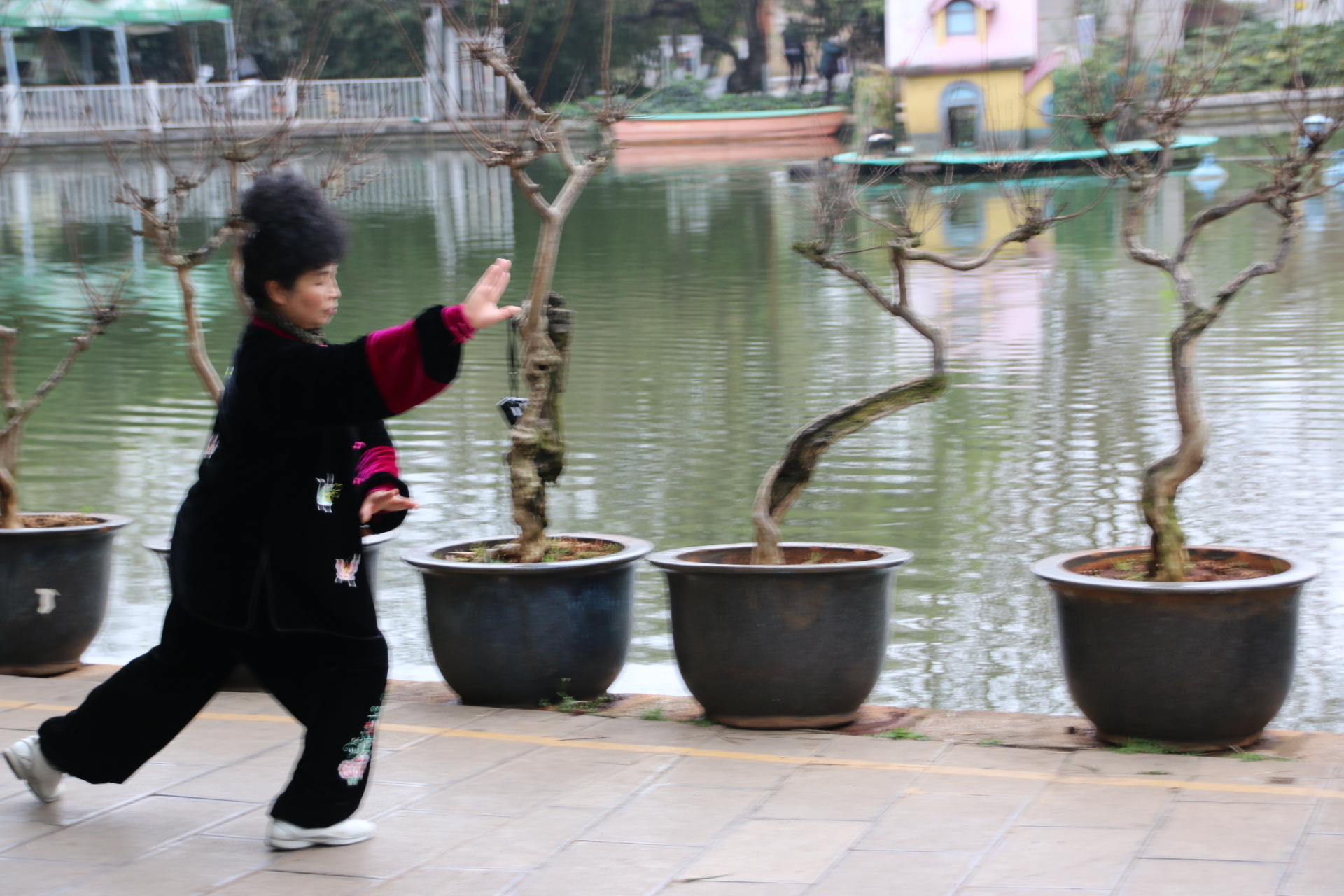
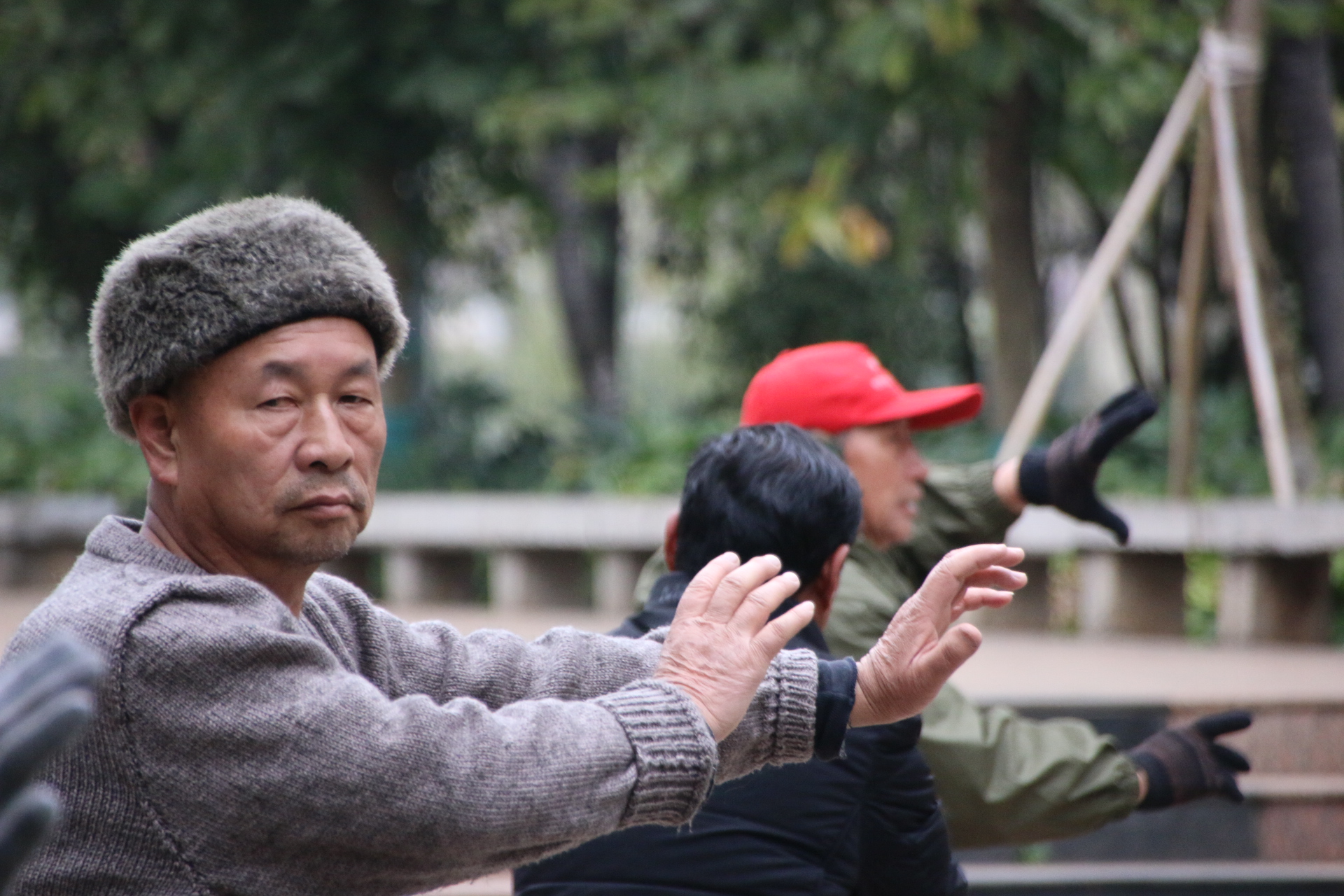
These living concrete blocks hide the heart of the city. It all feels very western with wide tree-lined, KFC next to McDonalds, Audi’s & Range Rovers alongside double decker buses, locals in jeans & smart coats. Open spaces provide room for morning exercise and recreation.

20170227020438_img_4050

20170227022237_img_4069

20170227015247_img_4028

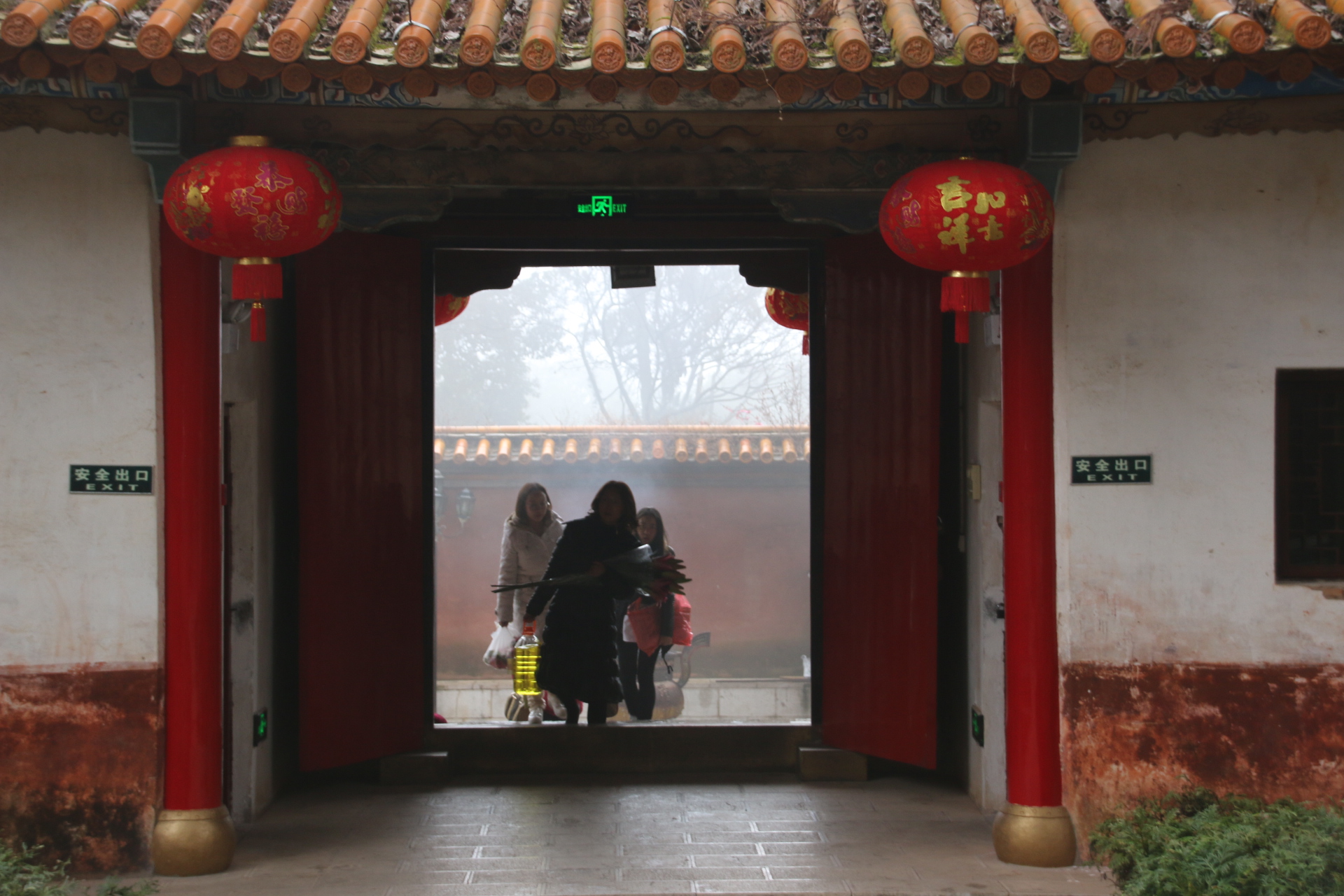
The Bamboo Temple nestles in the damp mist amongst the woods and mountains that overlook the city giving the land and the people a spiritual & cultural framework. It really is ancient & modern living side by side, each giving reason for the others’ existence & identity.

20170227035359_img_4082

20170227041503_img_4120

20170227041333_img_4113


South to Fishguard: guarding fish?

20161231124549_img_3752

South of Llangrannog lie several settlements. First is the small village of Tresaith. Just a few houses huddle around a steep descent to the beach. One tea room serves the few families who are exploring the sands. The ubiquitous mobile homes gaze down from the surrounding cliffs.

Next, just before the estuary town of Cardigan (Aberteifi), comes Aberforth.

20161231130216_img_3762

After the glorious view of the two beaches from the cliffs on the approach to the town, my lasting impression of Aberporth is the smell of old oil that oozes into the atmosphere from the chippy and rests in nostrils, hair and clothes. Shame really as the beach is great.

Gwbert lies on the headland overlooking Poppit Sands on the estuary of the River Teifi. Yep, a good location for a holiday home park.

20161229145554_img_3709

Newport (Pems) is a lovely small village with tea rooms, quaint nik-nakky shops and a classy oasis for visitors and locals alike. Down through its heart one comes out over Parrog and its beach and harbour. From its flat, muddy banks can be seen the silt of Newport Beach in one direction and the casual meanders to the Irish Sea in the other.

20161231141025_img_3776 20161231141310_img_3780

Finally Fishguard plonks itself on the coast.

20170103125229_img_3874

The small old harbour is lovely, lined by brightly coloured homes and a wonderful Victorian factory of some kind. It is overlooked by the fort with its cannon peeking over the battlements, keeping an eye on the far quays & sea defences where the huge Stena Line ferry waits for its cargo of cars and lorries to cross to Ireland. The road climbs up and over the headland and there is the town , the working, seaside port spread below, helping to provide income and jobs to the area.

I’ll let you know when I go back to complete more of the coastal settlements of the UK.


Two up from Llangrannog and out comes the sun

20170102120008_img_3803

New Quay is the next village up the coast. Signs advertise boat trips for dolphin watching. At this time of year car parks are half empty and a handful of holiday makers shuffle about eating the compulsory fish & chips out of plastic trays and drinking steaming cups of weak tea. Oh the joys of holidaying in the UK. The carpet of holiday homes on the headland to the side gives an indication of what high season might bring to the village.

20170102122124_img_3819

The next place up the coast is Aberaeron – a delight. The town car park is filled with resting yachts propped up, up on blocks with their empty rigging playing concertos in the breeze.20170102133840_img_3839

A walk up the estuary of, presumably the river Aeron, beside the empty harbour to the bridge takes the visitor over to the slight bustle of a sizable village/town. Touristy eateries share streets with ordinary shops so tourists and locals are both catered for.

20170102135816_img_3860


Travel west, young man

Well, I am back in the saddle. I journey to some amazing places around the world and I realised some while back that there are some equally amazing places around the UK that I have never visited. It was then that I started a long term project to visit every settlement on the coast of England, Wales and, maybe, because it’s just so long & wiggly, Scotland. I am going to start to share these adventures with you so you can appreciate, with me, some of the wonderful places that lie on our doorstep.

I bought the new year in by kick starting my travels, after a 4 month lay off, with a visit to west Wales. I left a damp, grey misty, nay foggy Oxfordshire and drove west through the gloom, avoiding traffic and more traffic. The further west I travelled saw fewer and fewer vehicles on increasingly windy and smaller and smaller roads, more and more hills and rivers and valleys and trees and fields, and less and less cloud and gloom, replaced by clear blue sky.

I was heading to Llangrannog, a small village on the coast, north of Cardigan. A final narrow lane, ground down by centurIes of wheels from carts and tractors and wagons and lorries add trucks and cars threads its way towards the promise of ocean and sea ahead. Stone-lined banks, disguised as tall grass walls , and hedges tower above the metal track. Like a horse wearing blinkers there is only one way to go. Glimpses of the natural wonders ahead are caught through the bare trees and the occasional farm gates to the side.

20161230123201_img_3725

Then the panorama is spread before me like a patchwork feast of farmland with sharp line at the furthest edges where a Stanley knife has precisely cut through the block of countryside butter to create the razor – sharp boundary between land and sea. Is the Iron Man with the glowing red eyes going to appear above the line of running fields. To the side, through a gate, lies one of those moments. The coastline meanders away like a huge mouse has gouged its way into a slab of Cheddar. Small, intricate lines of trees and hedgerows, with their fine detail of spreading branches, are silhouetted on the skyline. Behind, the sky with its setting sun merges its lines of blues and clarets and oranges with the purples and browns and greys of the land until the hues on the artist’s palette simply take one’s breathe away. I have arrived.

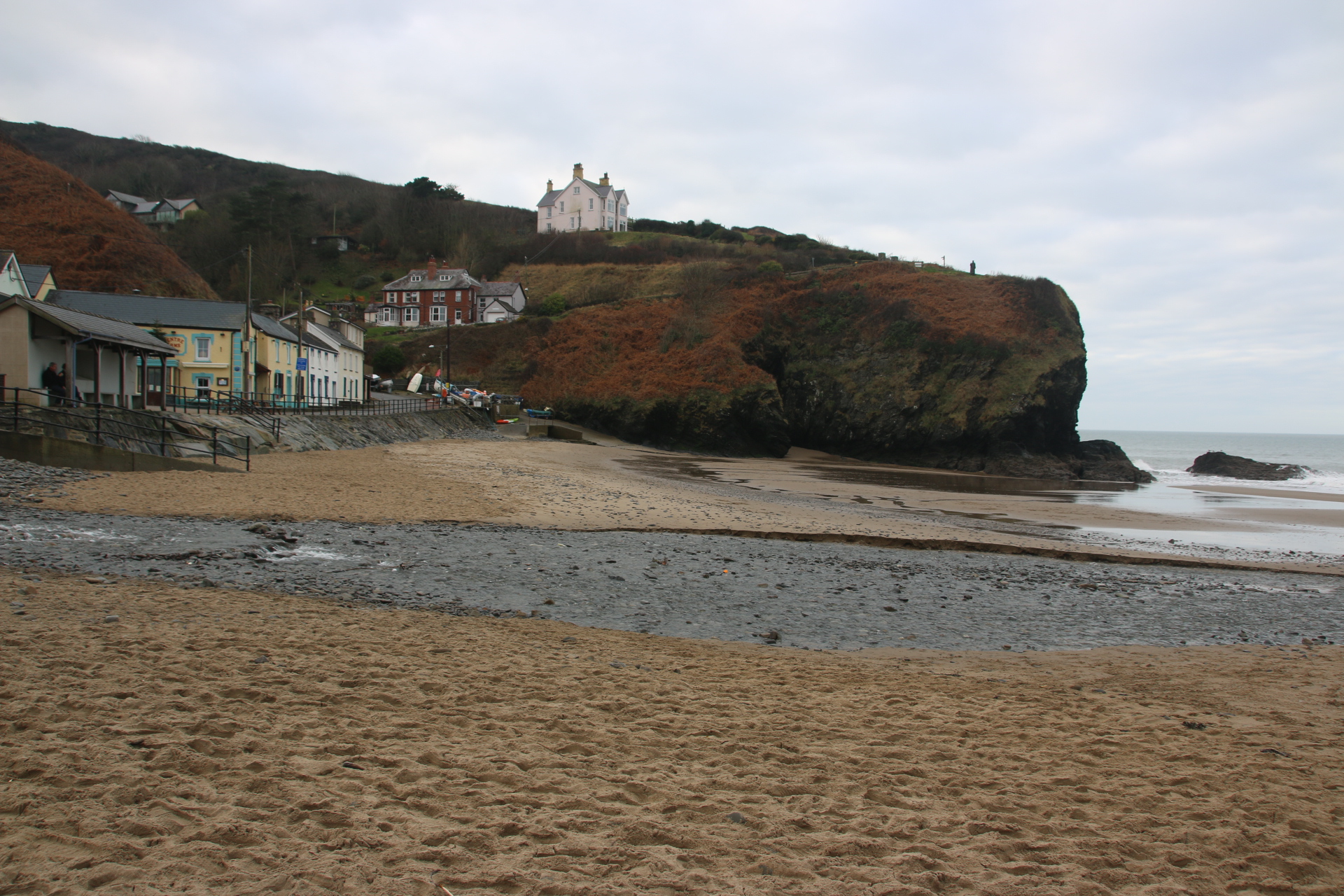
Llangrannog is a small village of a hundred or so houses. In the past ships, yes ships not just boats, were built here. Now it has a few houses for locals, a lot of quaint rental properties, a coffee shop, two pubs serving food and a small store. The beach is backed by high cliffs with a huge slab of slate dividing it in two at low tide.

20161230123628_img_3733


Thames Crossings

Many of you have so enjoyed my blog over the past few years that you suggested that I write a book. Well, I heard you and I have done just that. I chose a journey that started close to home in Oxford. Over weeks and months last summer, I travelled along the towpath of the River Thames from its source in fields around Kemble in the Gloucestershire Cotswolds to its estuary into the North Sea. As I journeyed I photographed every crossing over and under the river. These take the form of bridges, tunnels, fords and ferries and even include a cable car. I have carried out research on every crossing and written some blurb about what is there now and what was there in the past..

12-old-mans-bridge-5895 16-newbridge-5655

53-gatehampton-railway-bridge-0194 113-tower-bridge-9555


Well, my dear friends and followers, you can now buy this book – £14.95 plus postage and packing. I have set up a website called Clay Kettle Books through which you can order as many copies as you wish (an ideal Christmas present for friends and family). Even if you don’t wish to purchase a copy have a look at the website. There is a gallery of images from my travels and you can also access my blog from there. Put it in your favourites – it will be the platform through which future publications will be available.

To order all you have to do is log onto www.claykettlebooks.com and contact me there or email me at claykettlebooks@gmail.com. Once I hear from you I will respond with payment details and time scale. Thanks for reading.

I’ll be back in the blogging saddle in 2017 with a trip to Yunnan’s Fire Sacrifice Festival in Southern China. See you all then.

Lost in France

You may have been wondering why things had gone quiet From your favourite blogger since Mongolia. Has he finally settled down beside the waters of Lake Victoria? Is he being held for ransom somewhere and no-one is prepared to pay the £100 for his release? Maybe he bought that Harley and it’s now motoring through South America through the dust of the Pan American Highway. Hey, he could have been put into a home by his family and friends so we don’t have to suffer any more of  his rambling accounts of his latest trip.

Well, my friends, I was cut off from all techno contact when all my techno gear was nicked, stolen, burgled in France. I say ‘all’. They didn’t take my camera (thank you Spirit in the Sky) nor my car. So I was cut off from you, my friends, and everyone else I should add. I am getting my stuff back gradually, thanks to insurance, and am now able to ‘share’ again. ‘Oh goodie’ I hear you all cry. Do let me tell you what happened.

Having spent a few days in Provence enjoying the company of friends, the wine, the food, the sun, the heat, the smells, I moved over to the foothills of the Cevenne to a small village outside Uzes. I had rented an old family stone built house for two weeks. Set on two floors, the bedrooms were on the lower floor with an outside door and the living area was on the upper floor, accessed by two sliding French Windows, we were in France after all.

It was the second night. It was 3 o’clock. It was dark and still. I was sleeping in my new bed. Dreaming. In my dream I could hear footsteps walking above me. I opened my eyes to discover that there were footsteps walking about in the living space above my head. ‘Hello’ I cry out in my innocent daze. ‘Oh, it must be the owner popping in to say hello’. Derrrrh. I get out of bed. I put on my M&S pants (the white ones) and I go out into the downstairs reception area. There is a cool breeze from the back door which is wide open. Up the stairs a light goes on. I call out again and do what no sensible person should do. In my white underwear, I climb the stairs calling out some nonsense as I go.

Obviously, whoever it was caught sight of my manly physique, heard the authority in my voice and not wanting to be attacked with the bare hands of a bald headed, semi naked, retired English gent decided, like any cornered rats would do, to run out of the top doors with all the loot in their swag bags. By the time I got to the door and rather nervously looked out, all that could be seen was the disappearing headlights of a 🚗.

I took stock….. The story does go on – being locked in the gendarme compound, of scene of crime taking swabs to find DNA, of the retrieval by a local farmer of my passport & Nector card & bus pass (thank goodness for the latter items, Ay?). But hey, you don’t want to hear all that. You will just be pleased that I survived this experience and that I am now back in the blogging seat again.

Oh, Please text me with your numbers as they took my phone so I have lost all my contacts.

A few images of the following weeks of my journey through Provence, the Camargue and Languedoc-Roussillon. I know you’ll be upset if you have no pretty piccies to look at.

20160829110813_img_3381 20160829104014_img_3375 20160828103847_img_3318 20160828154602_img_3326 20160828154649_img_3328 20160824132057_img_3299 20160824124131_img_3288 20160824123304_img_3269 20160824095639_img_3237 20160823190857_img_3220 20160813100833_img_3078


Farewell to Mongolia

wp-1468392979009.jpg

So it’s farewell to this unique country and it’s wide, open spaces and calm, colourful people. Immediately I crossed the border from Russia it was noticeable how different this country is. People smile more. They wear colourful Western and traditional dress. Their cars are new white and grey Japanese numbers. In the capital there is new building of office and apartment blocks on a colossal scale. Hundreds of cranes fill the sky line. This is all down to the discovery of new copper and gold deposits in the south of the country.

Hate are a few interesting facts to leave you with:

50% of the 3 million population live in Ulaanbaatar

The first dinosaur egg was discovered in the Gobi Desert

At the age of 18 the government gives every citizen a plot of land of 500 square metres. They immediately put a wooden fence around the perimeter and erect their ger inside.

There are still 300,000 nomadic herders on the steppes

There’s are still shamans who follow their ancient ceremonies

Mongolians are so very proud of Genghis and there are images of him everywhere although he died over 900 years ago.

These images reflect the many different feature of this magnificent country. I will miss the huge, flat vastness of the desert and the steppes and the peace and calmness that that brings. I will so miss the quiet and the opportunities for reflection.

Till next time and my next adventure.


A day at the races

Horses are the stars in Mongolia. Star horses have monuments, songs, paintings, lyrics, music and dances named after them. For every person in this country, there is an equal number of horses, making over three million in total.  They really do follow the horses. The final event of the Naadam is the horse racing which is held on flat, open ground about 30km out of the capital. Over 250,000 descend on the rolling course.

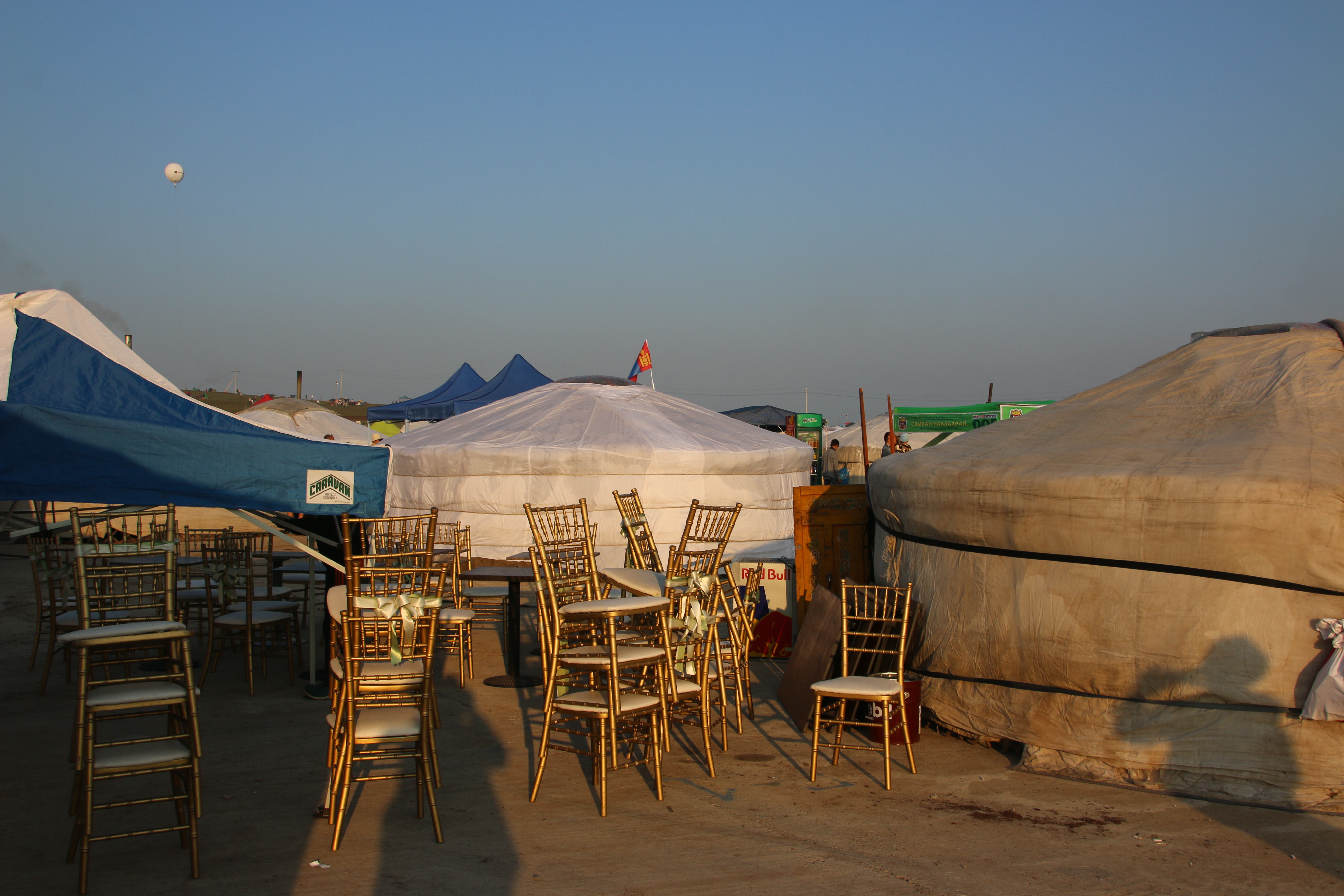
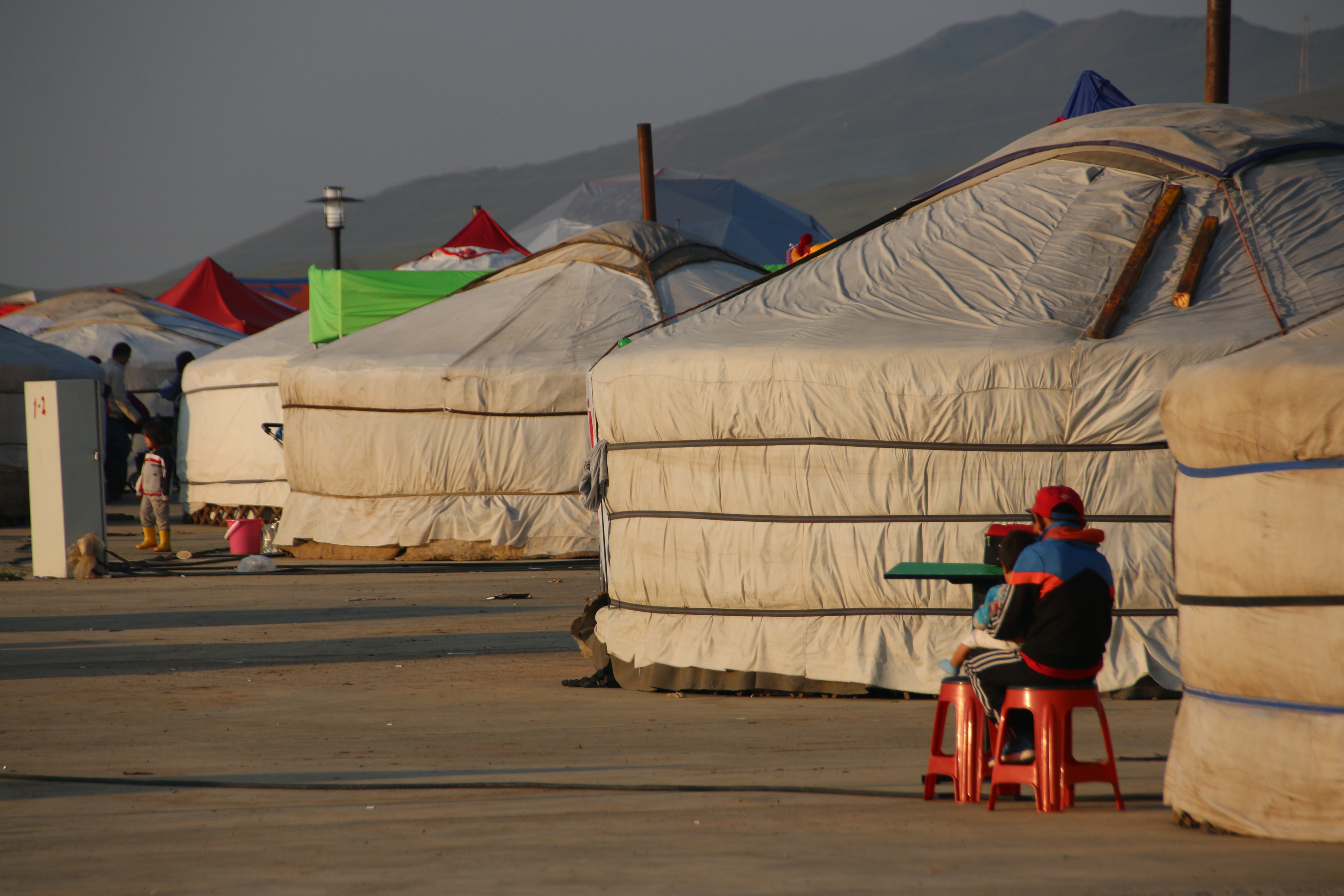
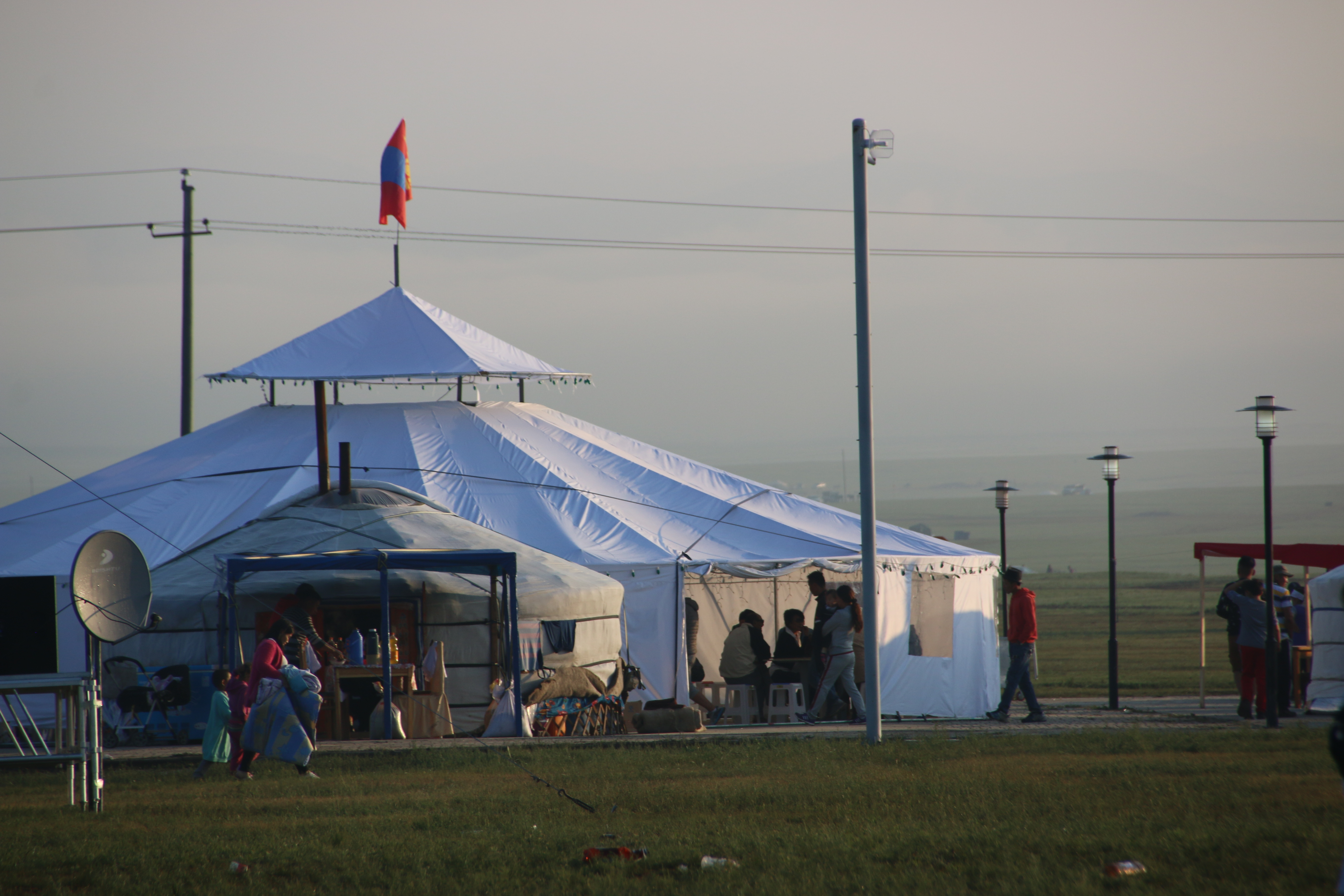
We arrive early to beat the traffic. A golden dawn lights up hundreds off refreshment gers who are just opening up for a busy day.

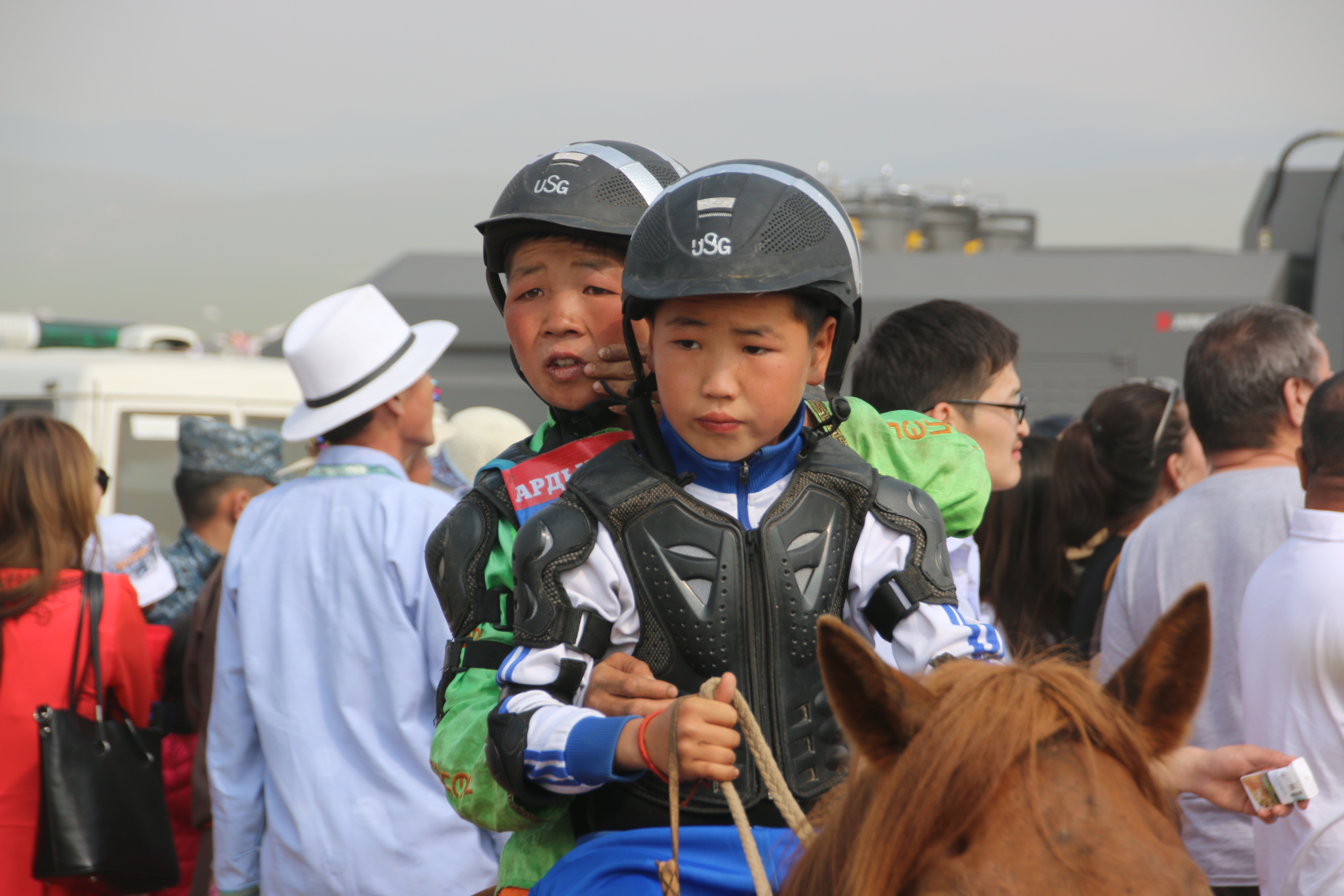
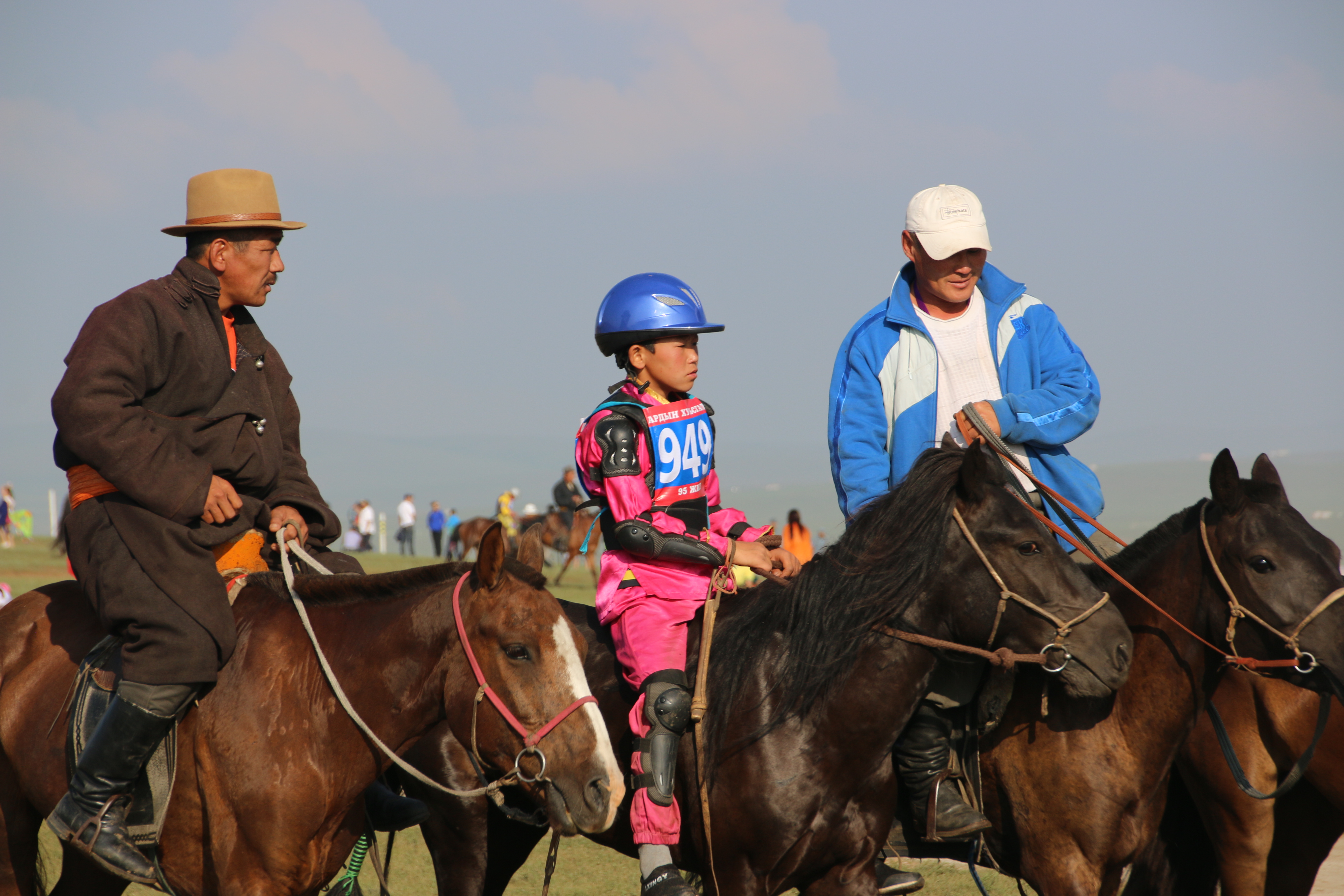
A number of races are on the card, dependent on the age of the horse. We are going to watch the Soyolon, a race for 5-year olds, over 22-24 kilometres. There are two things you need to know about Mongolian horse racing. The first is that all the horses are ridden by child jockeys aged between 7 and 13, although many look younger than that., and the second is that many ride bare-backed.

The races are ridden over a straight course over the steppe. Hours before their start time the young jockeys walk their mounts from the finish up to the start, over the hills and far away. They then turn around and race for home. It takes about half an hour to race back and the crowd crowds into ramshackle, stepped platforms to watch the final stages. The first sign of the approaching field is a gathering storm of dust in the far distance. Up to 100 horses can take part in these races. Tension mounts and the locals rise with a roar as the leading horses take form, accompanied by a small flotilla of outrider cars. The locals scream and shout and applause and whistle and yell encouragement as the winner leads the rest of the field in. Every finisher is greeted and it may go on for 30 minutes or so as many of the horses are exhausted having raced that far. Only one comes in riderless. I hope he didn’t come off too far out.

The rest of the day is spent with family and friends, on foot and on horseback.


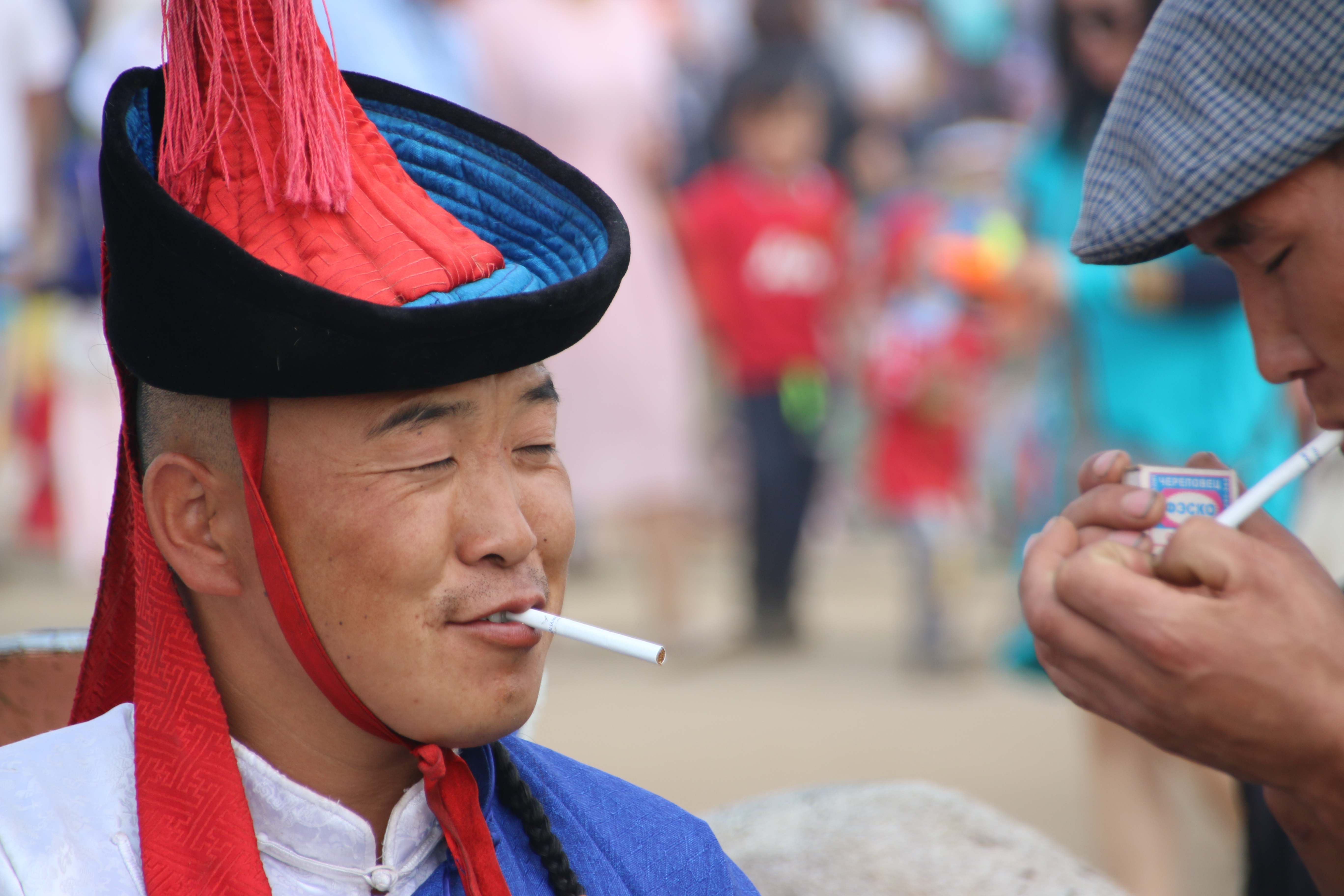
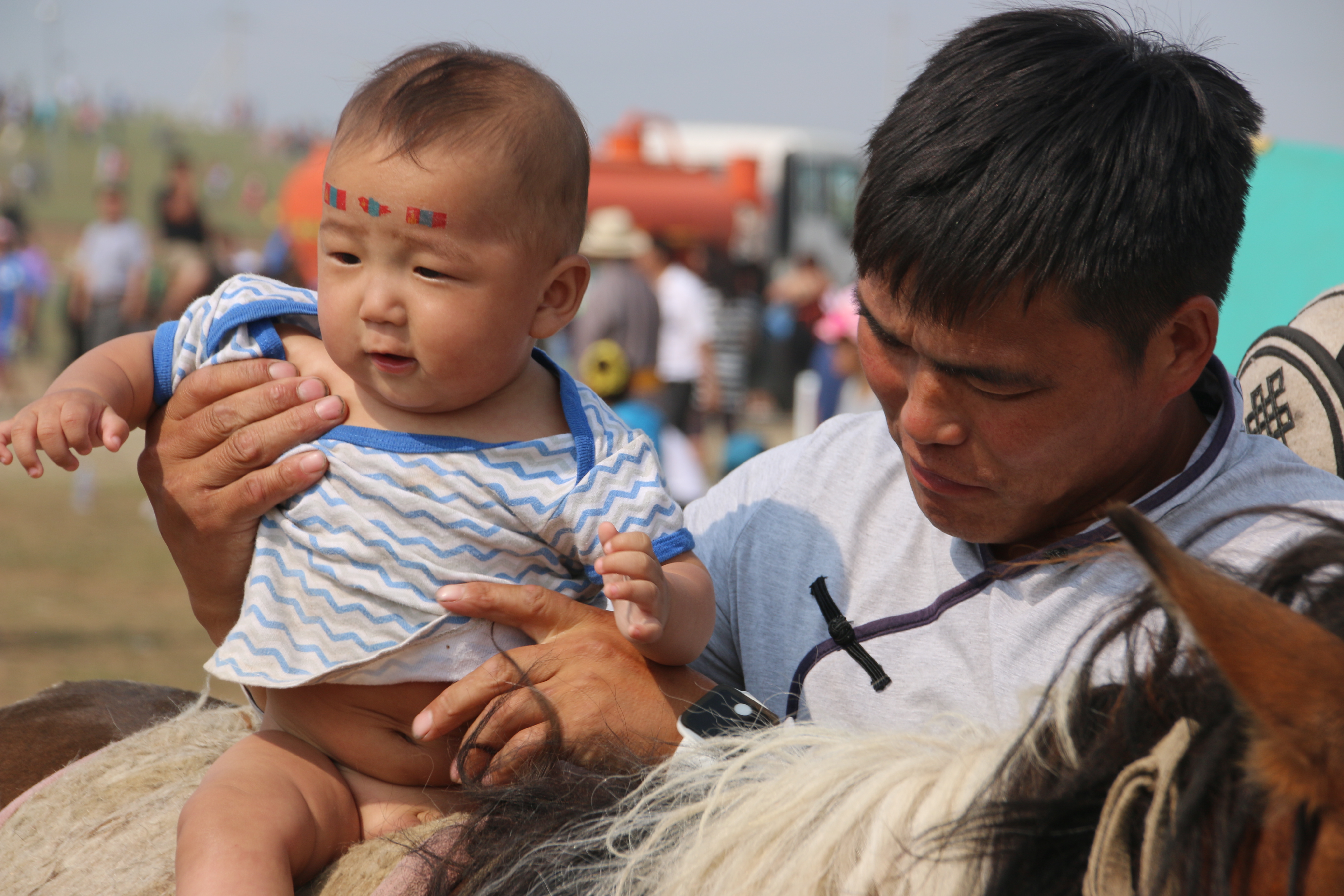
The race over and it’s back to the struggles of the huge crowd, and, boy, is it huge and unrecognizable from earlier. Masses of spectators and family groups kick up a dusty haze as they move around the open hillside enjoying all the fun of the fair. There are some official looking rides and inflatables but most seem to be simple, traditional fairground activities set up by anyone with a bit of initiative. I saw one guy who was making ak killing with some half empty water bottles, some notes attached to each with an elastic band and some plastic hoops. He has a crowd off 50 strong, yelling encouragement and no lack of people wanting to pay to have a go. He has a huge wad of bills in his hand and his home-made hoopla stall is obviously a huge success. Other stalls include a host of Throwing Darts at a Rack of Balloons, Water Bottle Skittles, Paper Balls at Cans. All seems to require little brain and a lot of braun, judging by the prowess of the guys showing off to the pack.

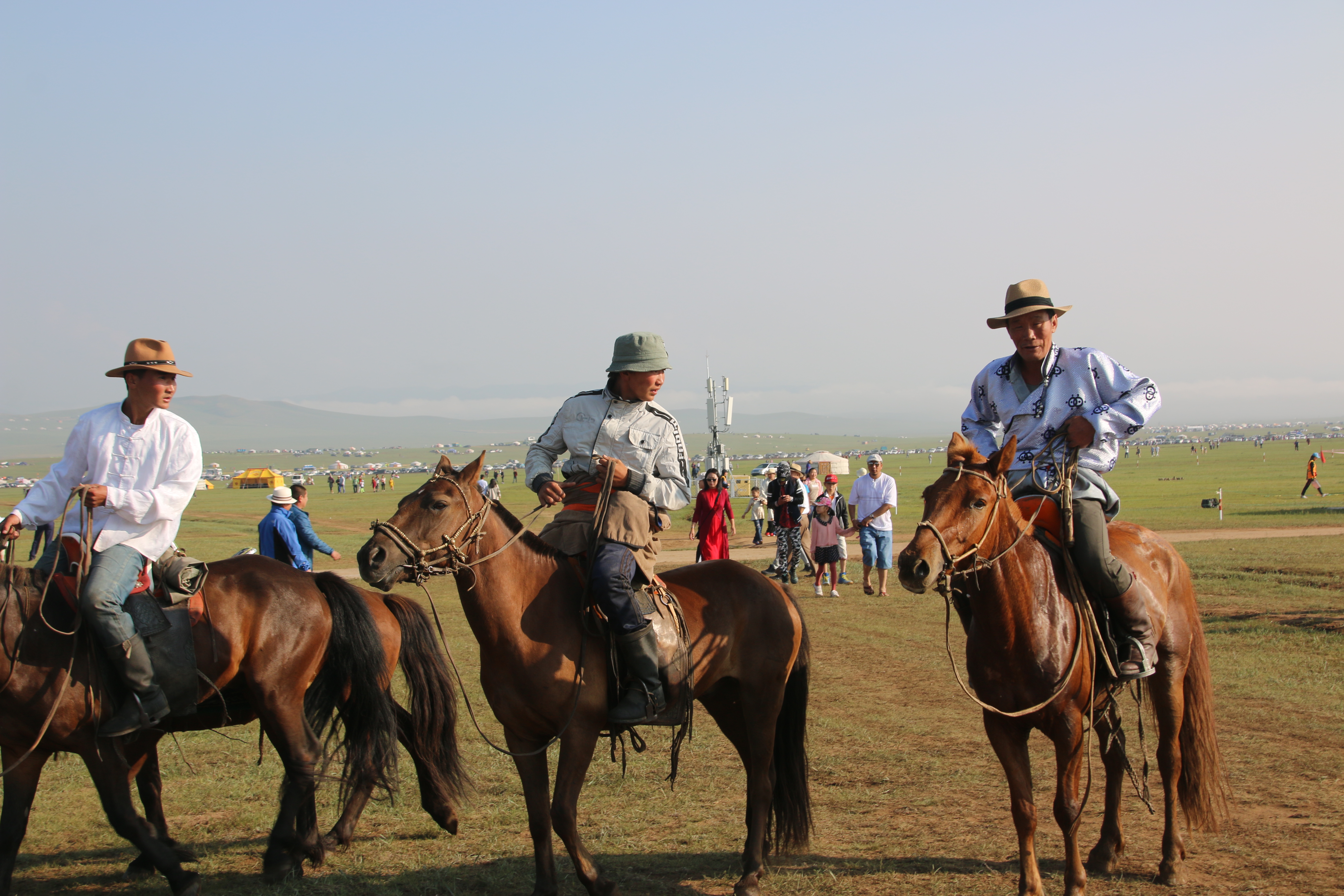
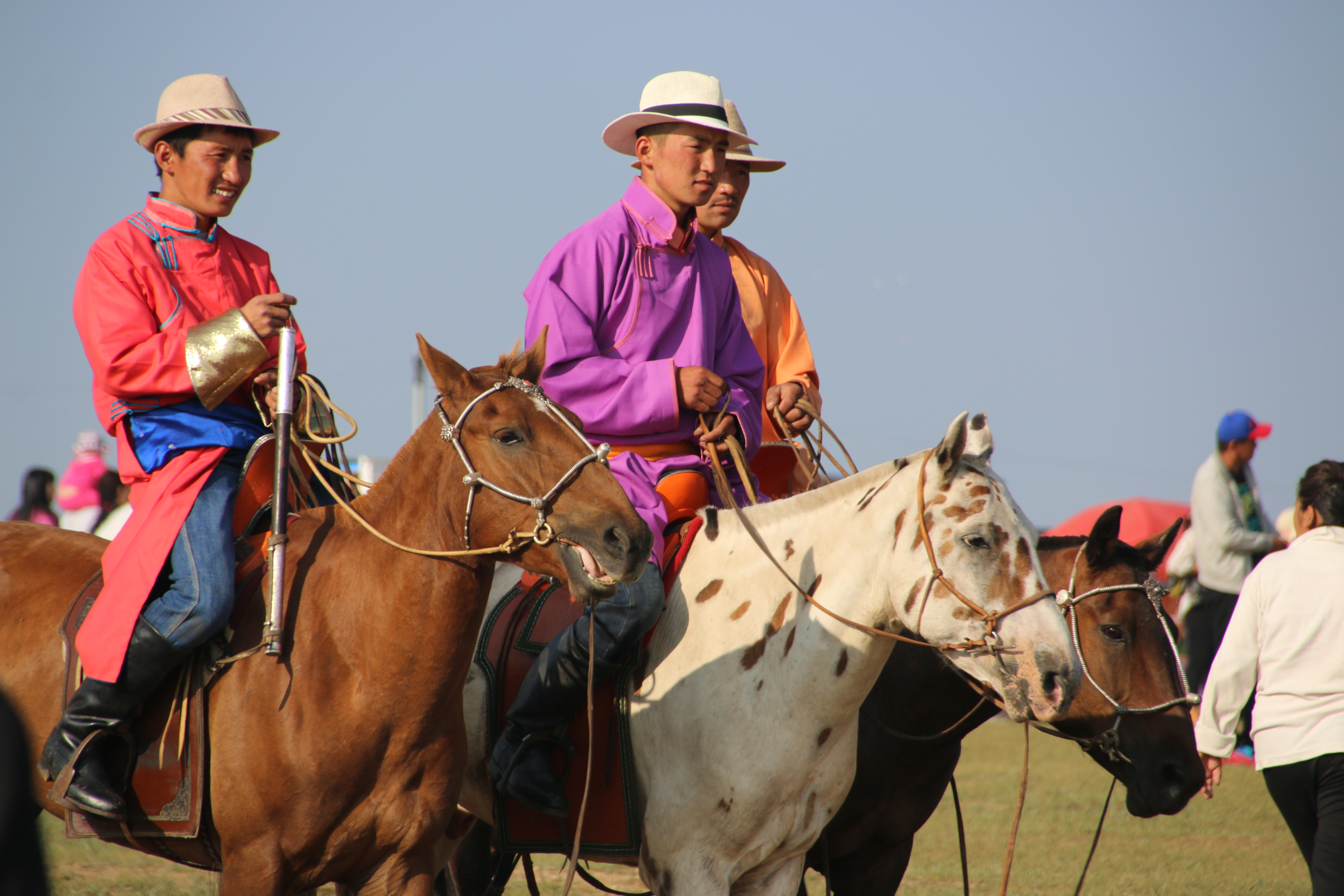
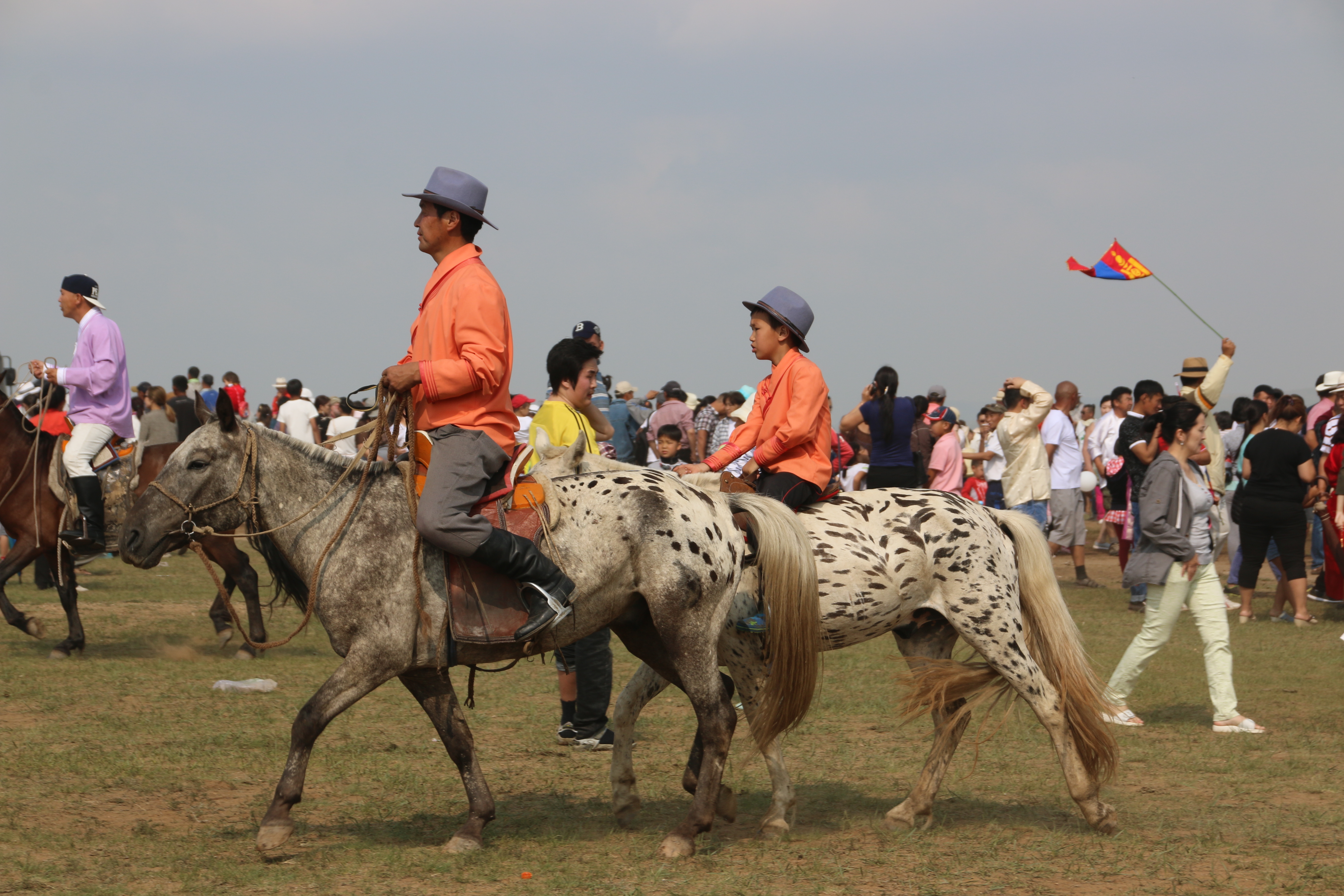
Mixed in with the thousands on foot, are those on horse-back. You have to watch it as they come up behind you, unheard. The family groups proudly show off in their steed and matching livery. The more mature men go around in their Sunday best, standing straight and aloof. The problem is the young tearaways who at the earliest opportunity gallop at full speed into any open ground like lads doing spin turns in Blackbird Leys.

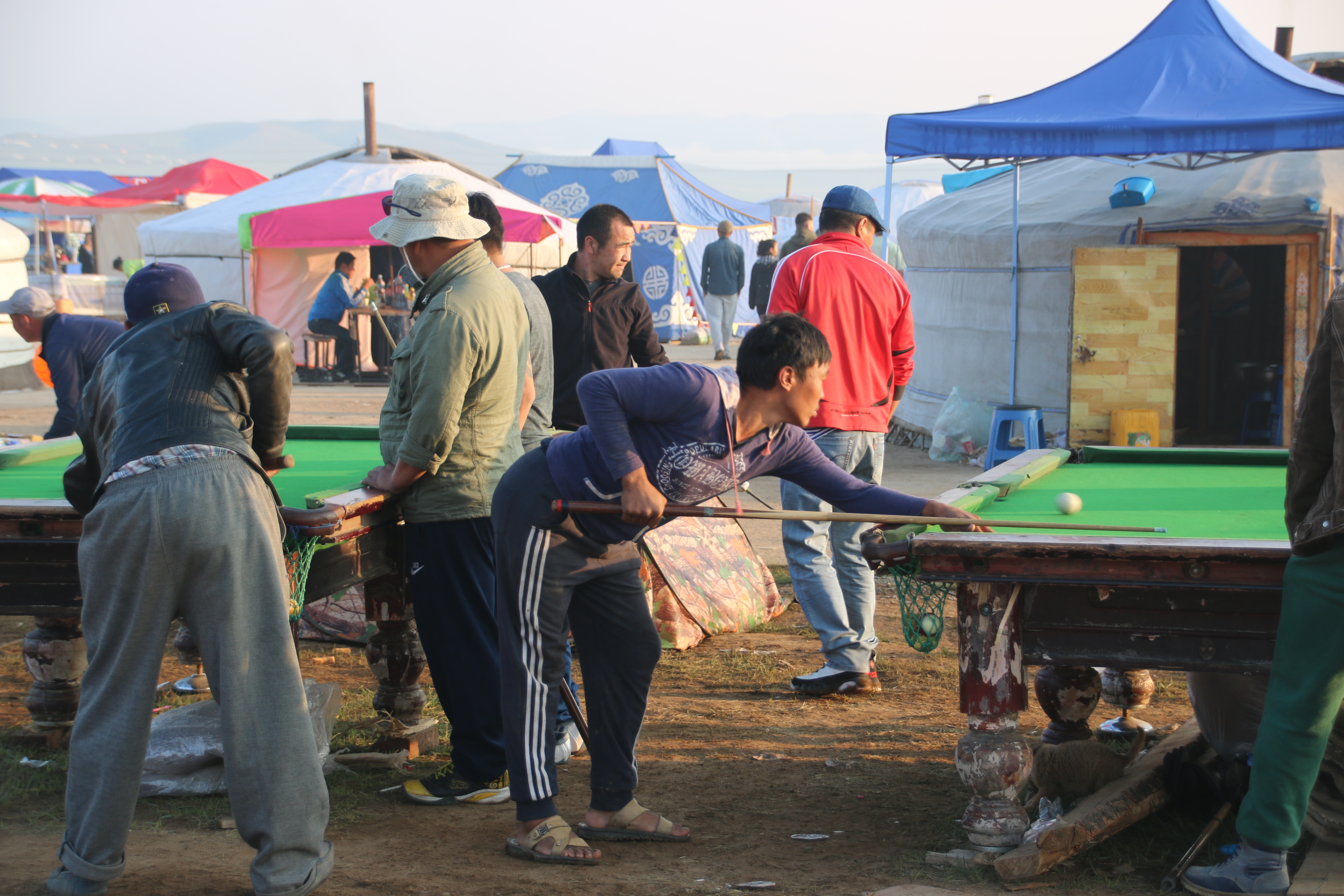
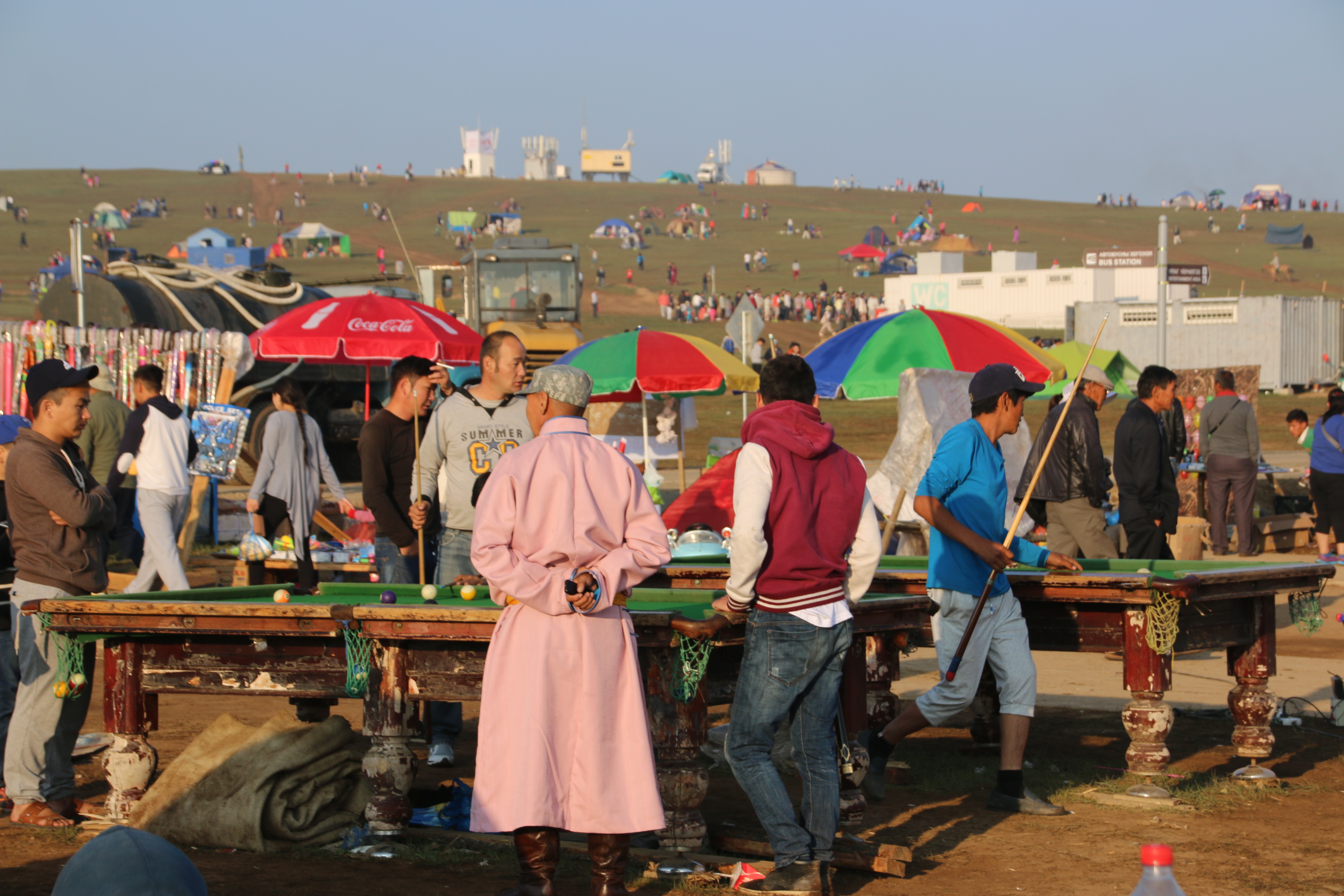
In fact initiative is the word. Every other van is crammed full with large plastic bottles of coke or lemonade or the bright colours of plastic toys or dolls or kites or home goods. They’d called in at the cash & carry on the way, set up on the grass and were flogging any tat to the passing crowd. There are several outdoor pool tables, pony rides, have your kiddies photo taken in front of this poster. The ladies has set up little stoves and are frying up meat dumplings to sell. Great for the cholesterol. The noise, the sounds, the colour, the smells, the press, the emotion of so many folk pushing about together is absolutely brilliant. Oh, I should add that there is no betting in Mongolia and limited prize money. It is all done for the pride of participation and winning is acknowledged with awards and certificates. Sounds like my kind of school.

Robin Hood or William Tell?
Archery is what it says on the can. Literally in the case of Mongolian archery. Rather than shooting at a target, archers shoot at rows of red or brown baked bean cans, made of leather, called hasaa and standing two or three high. If any part of the row is hit the judges start chanting and throw their hands in the air like the flying geese in the wrestling, to indicate success. If the arrow misses they indicate with their hand the height it passed over the top.

Men and women take part, the women over 60 metres and the men 75 metres. It is not just a question of hitting the row of hasaas. A score is only recorded if any one hasaa moves at least 8cm. Not a easy as it looks.

Each competitor is given 40 shots. 20 are used to hit a row of 20 hasaas stacked three high. The next 20 chances are given to hitting 30 hasaas lined in two rows.


Them bones, them bones, them ankle bones

This is played in a large shed in the stadium complex. The Ankle-bone Shooting competition involves the champion team from each province. Teams are made up of six to eight players of mixed ages, some old guys, some young, even some children.

Ankle-bone Shooting is a bit like a cross between bowls, Aunt Sally and Tiddley Winks. Two teams line up on low seats opposite each other. One or two shooters from each team face the far end of the carpet where there is a small wooden structure. Stood within it will be a number of ankle bones from a small animal. The further into the game you get, the fewer target bones there are. The winning team is the one that has knocked down the most bones, which is shown by the number stacked up on their side of the carpet.

Each shooter has their own style. A small, rectangular, piece of deer’s horn is used as the bullet. It is flicked from a polished ruler with a low edge along one side. The shooter will use his knee to steady the ruler and aim. He will use his middle finger to flick the bullet to knock target bones off the line. Each team will collect these on their own sides of the target box.

Ankle-bone Shooting is a noisy affair. Team members line up to take their shot. As each concentrates, his own team sounds out a mellow melody whilst the opponent’s team will try to distract the shooter with loud, sharp sounds and voices. Large cheers will go up when a bone its dislodged. With a many as twenty games going on at the same time you can imagine how loud it is.

“The games social role is to reach the younger generation to compete politely, to work together as a team and to have a calm team spirit.” Maybe the Premiership could learn a thing or two.


The Good, the Bad and the very Ugly Wrestlers

Immediately after the opening ceremony the wrestling starts in the stadium. Each province’s top wrestlers take part, 512 in total. They wear similar outfits which, so the story goes, is open chested so everyone can see they are male. In the past, when they were clothed, a woman took part and beat some of the guys until she was recognised by a family friend. Each bout has a judge allocated. The judges are the ones decked out in the dark blue and red. There are a whole loads of bouts going on at the same time with a tangle of wrestlers hard at it, judges observing, victors jogging about celebrating and four static soldiers whose job it is to guard the Nine Banners, representing the 9 horsetails of Genghis’ 9 Mongol tribes.

Some things you need to know about Mongolian wrestling. Firstly, and most importantly, there are no weight categories. So the lightest guy may have to fight the heaviest, and some of them are heavy. So, in the early rounds there are complete mismatches and if there is a chance that a thin guy can get one over a heavy one, the spectators give him all their support.

In the later rounds only the heavy, thick guys are left. The last 8.

Two of the last 4.

Secondly, ‘knee-dirtied’ is the Mongolian term for defeat. In other words, if you can get any part of your opponent’s body to touch the ground, you are the winner. Here are a few moves.

Once you have put your opponent down, you flap your arms in the air like a goose trying to take off, you rock around 360° stiff legged before jogging off to give thanks to the Nine Feathers. You return to your defeated opponent and run clockwise under his outstretched arm to mask respect for his participation. You then collect a token from the judge and progress to the next round.

Thirdly, there is no time limit so the bout can go on for 3 seconds or 30 minutes of even longer. Because of this the closing ceremony is always a movable feast. They start ’em young in Mongolia.


The Opening of the Naadam Festival

The annual Naadam Festival has been held over centuries. Originally it was a gathering of the Mongol tribes where the champions of each one would compete in three ‘manly’ events to establish who was the overall champion in each. These were wrestling, horse riding and archery. Ten years ago a fourth event was added, ankle bones (more on this later). Now it is a competition between the nine provinces that make up Mongolia today.

The Naadam Festival proper kicks off in the morning with a lavish opening ceremony involving 2,000 or so participants. This traces the history of Mongolia from early times, concentrating in particular on the uniting of all the tribes and the vast empire established by Genghis Khan which, at one point, stretched from Europe through to China and Vietnam. His grandson Khublai founded the Yung dynasty in China and moved the capital to Bejing. The period following communist control, independence and the subsequent growth of pride in traditional values is celebrated. In 1990 the population was 2 million. Now it has reached 3 million. The finale involves hundreds of youngsters, demonstrating their promise and potential for the future of this ancient yet young country.

Enjoy the scenes. Olympics, eat yer heart out.

Mongolia’s Day of National Costumes

Now it’s back to UB for the Naadam festival (see how I use the local vernacular for Ulaanbaatar). The only problem is that having survived 40+° heat and 7 days on the Cheesegrater the weather forecast is for rain. The Mongolian forecast is as reliable as the BBCs.

The whole thing kicks off with Mongolia’s Day of National Costumes when everyone, young and old, gets togged up in traditional dress for the day. This culminates in a cultural show on a large stage in the main square. 50 or so acts,aged from 8 to 80 go up and perform, dressed in some wonderful and amazingly colourful gear. They strut, sing, dance, parade, throat sing, and do things that Mongolian have been doing for 100s of years. These guys set up the largest land empire in history and they are so proud of their traditions and customs. Enjoy the audience and the performers.


24 hours with a nomadic herder

Just outside a stopover is the summer location of a small herder’s ger surrounded by the typical tall, wooden fence. The stove pipe protrudes over the top. On one side is his old, Russian built van. On the other are two standing motorbikes and a small, family saloon. A suitable distance from the stockade is his private Big Drop toilet, grandly painted a sunrise yellow. On the other is a wellhouse, a large concrete cube with a rusty metal door on one side and a pipe sticking out from the bottom leading into a long open trough.

I thought it might interest you to record the activity around this ger at different times of day.

Dawn is around 6. A herd of cattle are chewing the cud in the fresh, morning sun. A bit further away a large group of camels are penned into a small circle.

 The metal door on the left opens. Dad comes out, lifts the bonnet of the saloon, inspects the inside, closes the hood and goes back inside. A little lad in a red T shirt comes out, doesn’t make it to the Big Drop and piddles by the motorbikes.

A bit later two female figures, gran, daughter or wife, walk over to the cows and disturb their slumber as they reluctantly get to their feet. They milk them and return to the ger with a silver pale in each hand.

Around 9am, dad appears, gets on one of the motorbikes and drives off.

In 30 minutes he returns. Gone to check on one of his herds maybe. He wanders over to the standing cattle and moves them away into the desert leaving a small group of calves on their own. These wander off on their own eventually. Sometime or other the camels have been released from their pen and wandered off.

All goes quiet. Around lunchtime, a large herd of goats wander in from a different direction and hang around the wellhouse in a long line. The ger door opens and dad goes over. He claps them away from the rusty door and raises some water into the gulley. By throwing stones and shouting, he manoeuvres them to the water in groups and then dismisses the whole lot back the way they came, before going indoors.

Then the camels plod in from the west. They stand guard over the wellhouse and the gulley. Indignantly they spy the calves who are trying to sneak in to grab some refreshment. A couple of camel outsiders see them off and then the whole herd of snoitytoity bullies move off to the east having occupied the wellhead for a couple of hours.

At tea time the herd of cattle reappears, herded by dad on his motorbike. Having spent a bit of time drinking at the gulley they settle down for the night in their allocated spot.

As dusk falls, the camels appear, herded by a figure I have not seen before, riding a horse. They are corralled over by the yellow toilet. By dawn they will be gone on their travels. I don’t know where the goats spend the night.