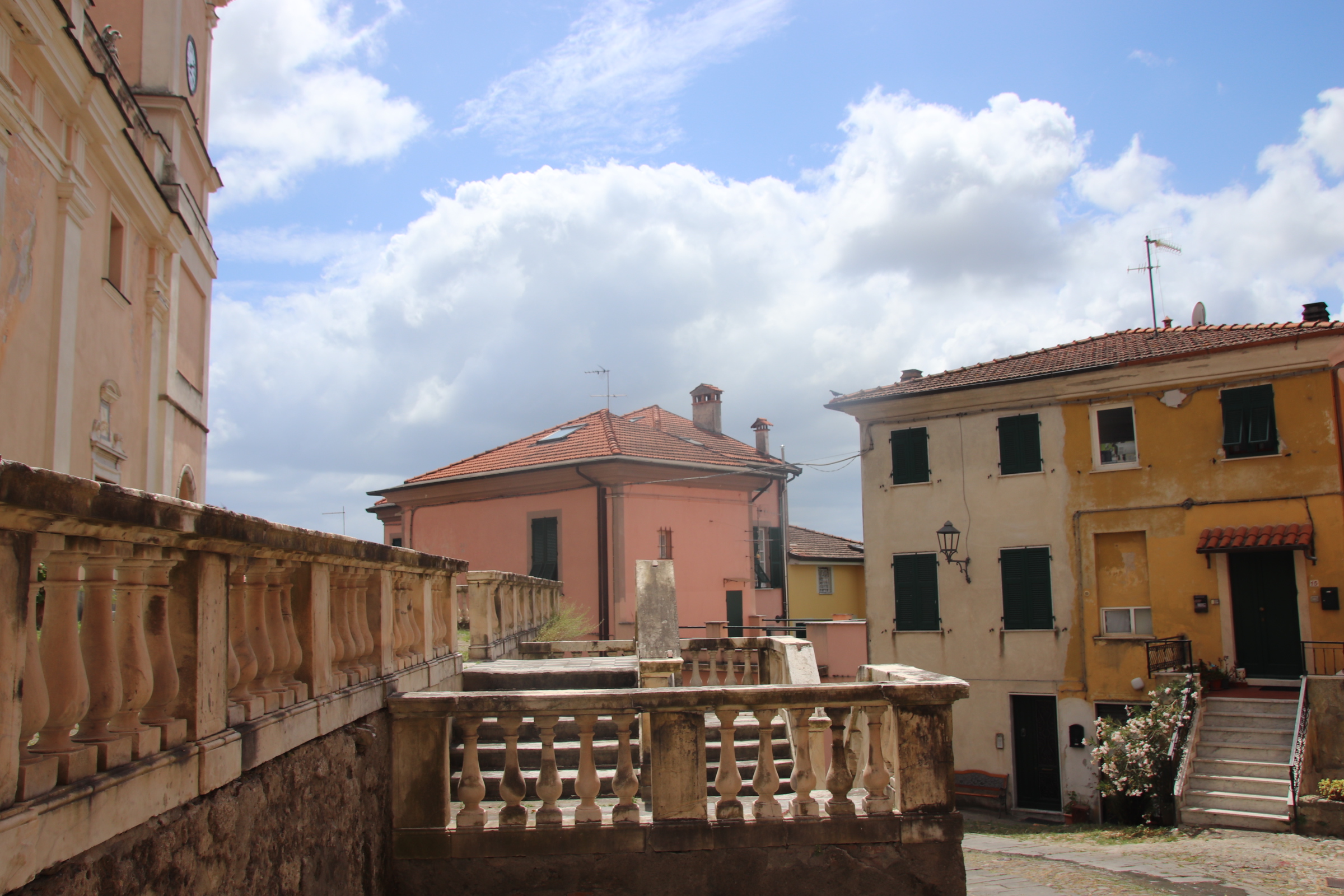
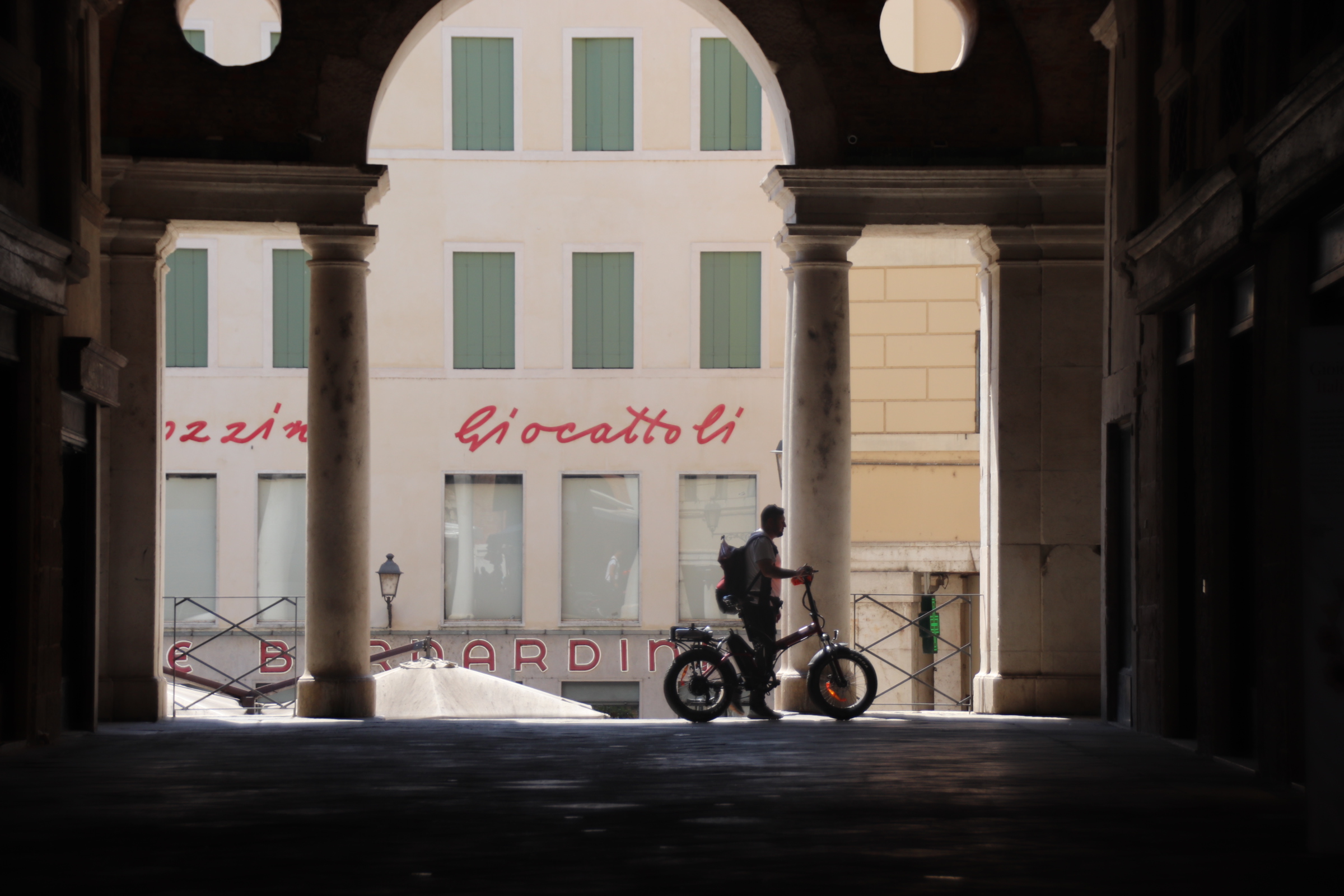
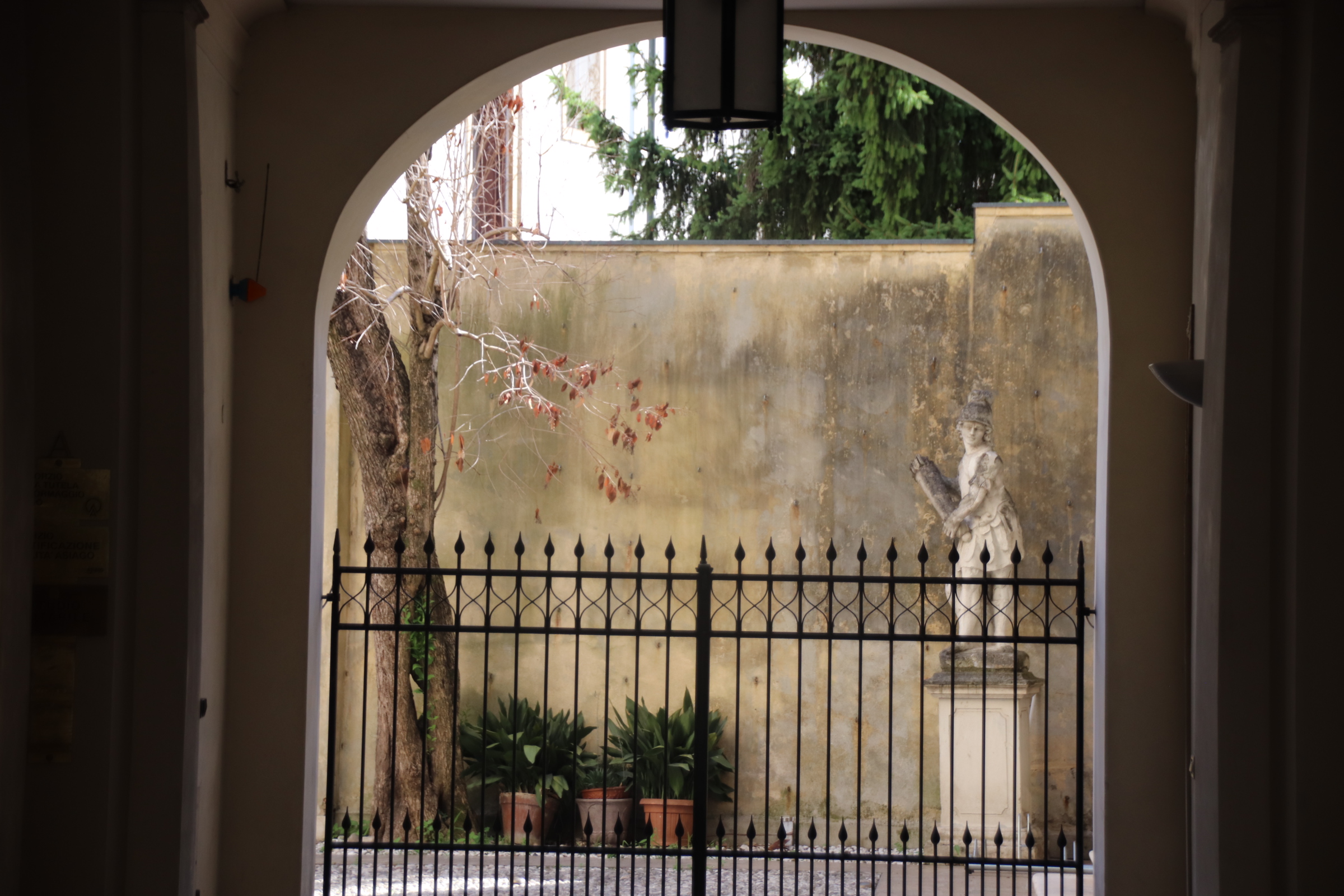
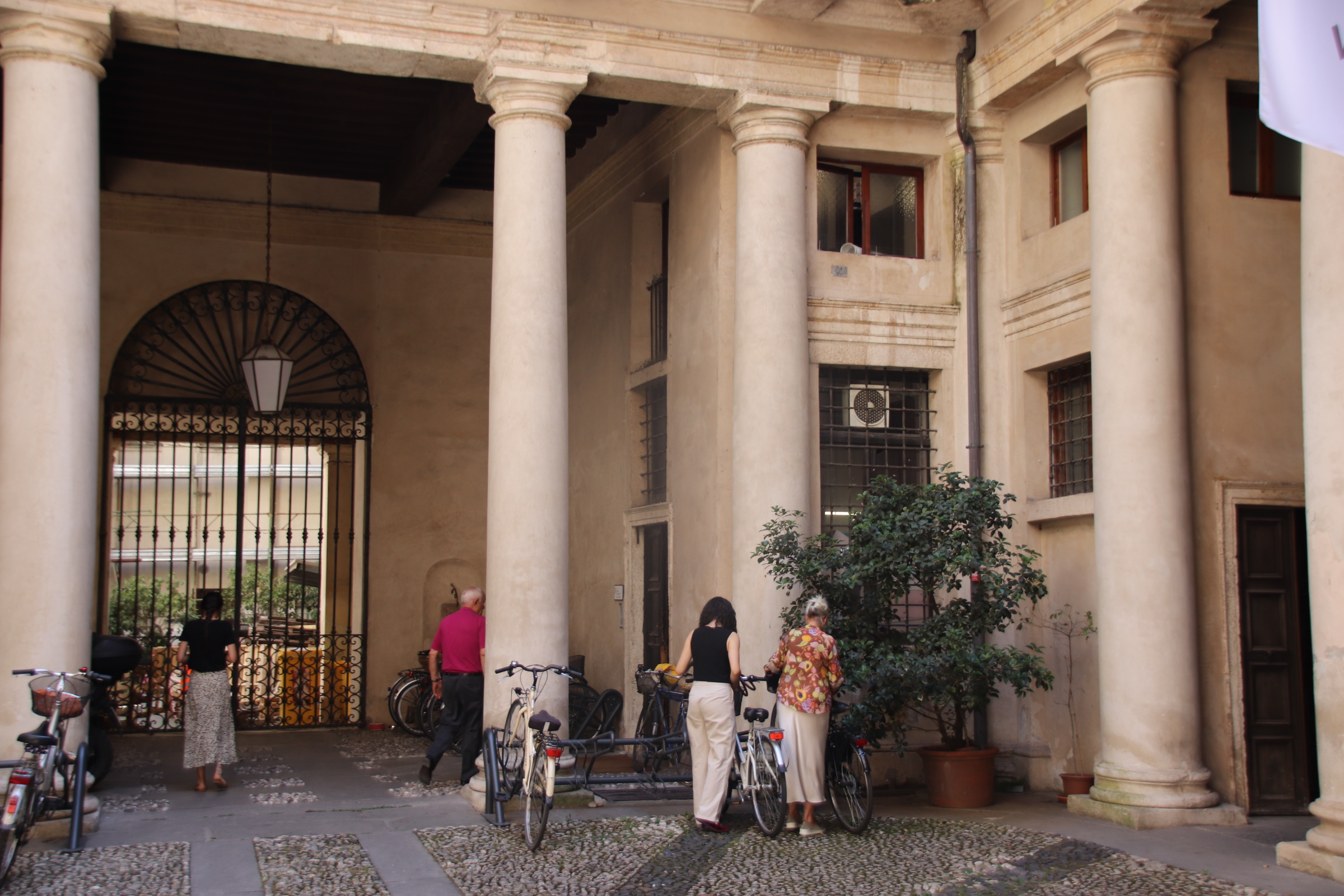
A raid into Liguria

It’s a bit like olden times – a raiding party snaking past ancient hilltop castles & towers to take control of that narrow coastal strip of Liguria, nowadays called the Italian Riviera.

It’s wonderful to see the Mediterranean from the ribbon of road that hugs the coastline. The days of lounging on the beach, picking random pieces of clinker from feet and rear whilst roasting in the sun like leathered lizards on a Sunday spit, are long over.

I prefer the tourist wander, appreciating history, art & architecture and partaking in wine & food, however much they might take me for an expensive ride.

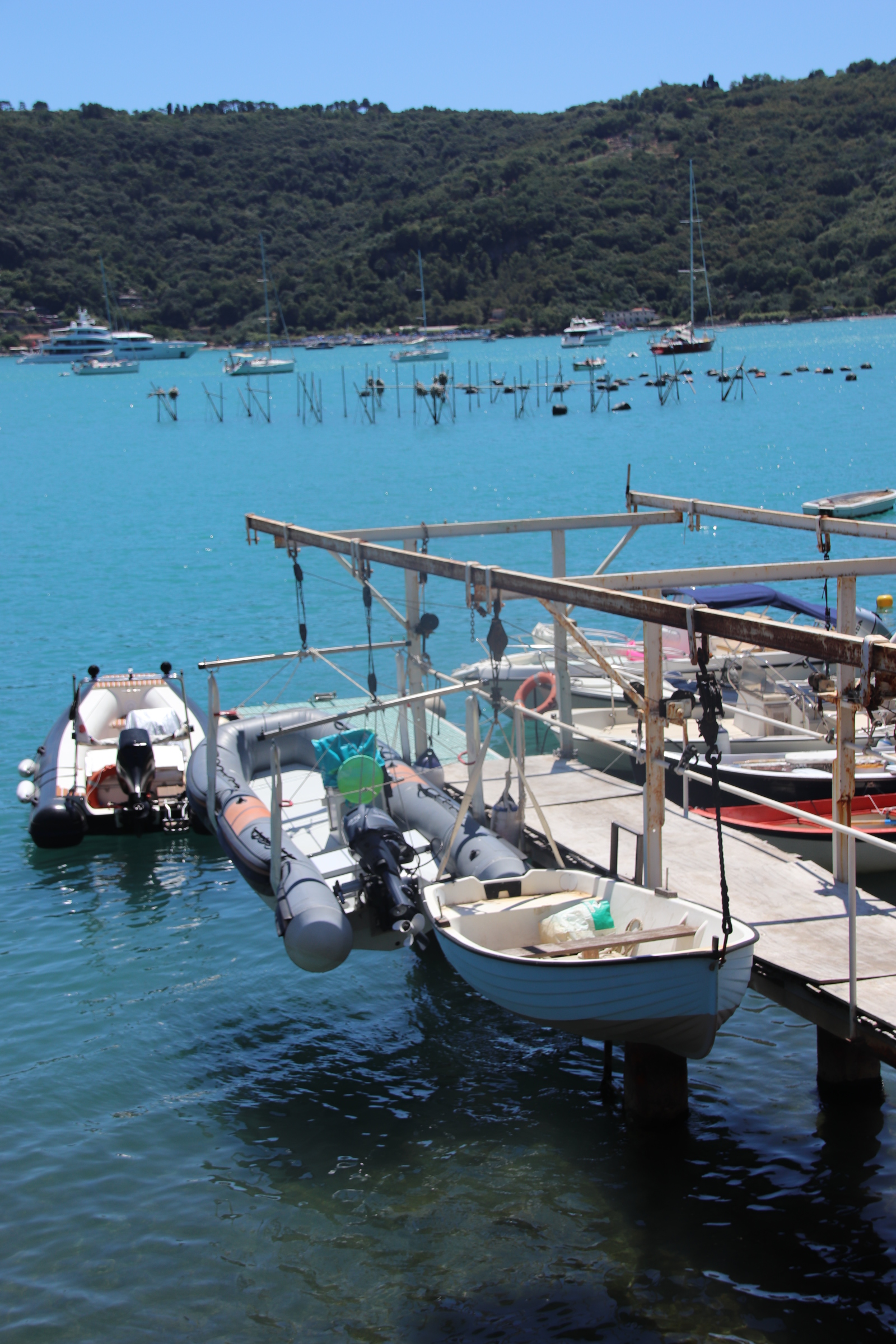
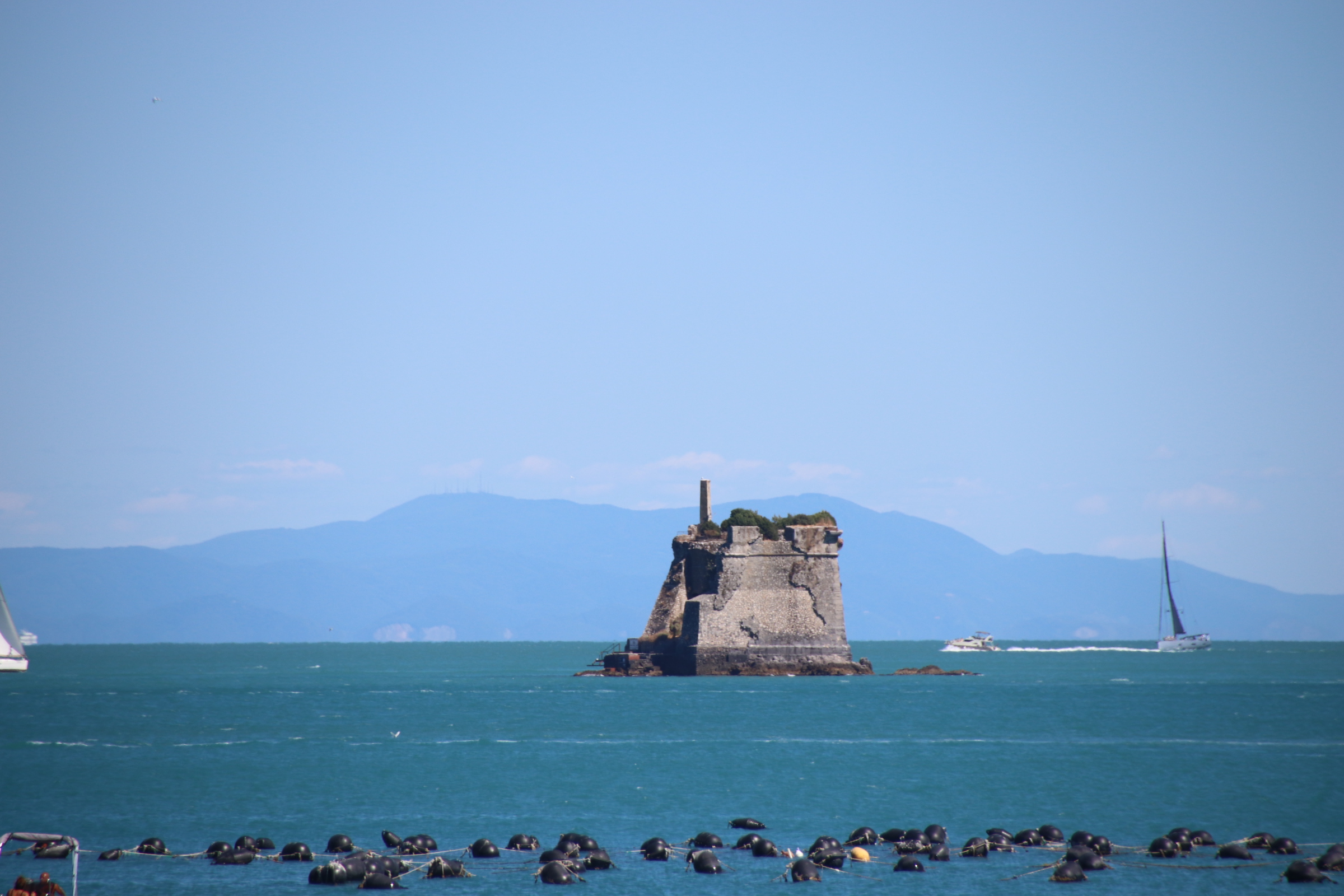
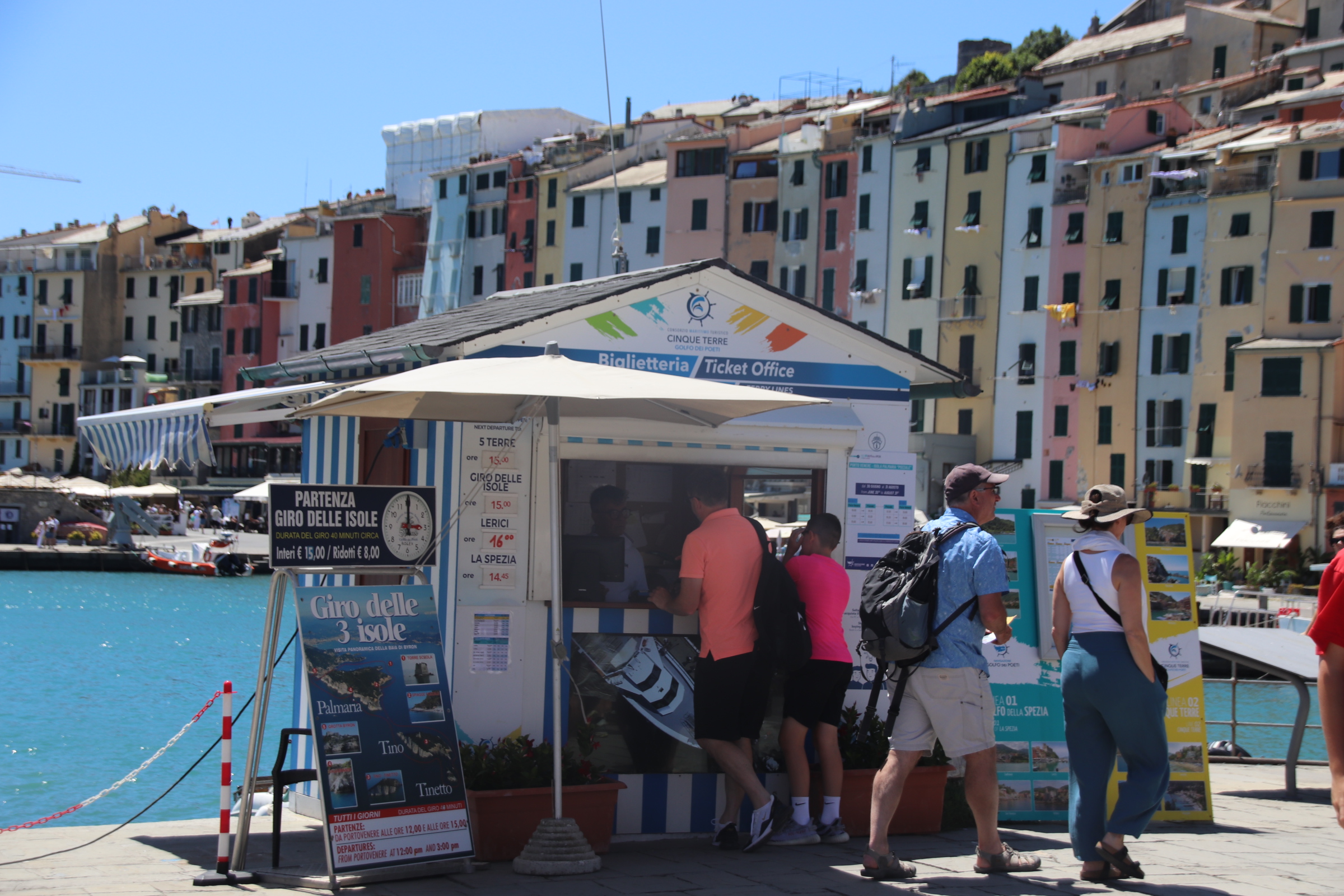
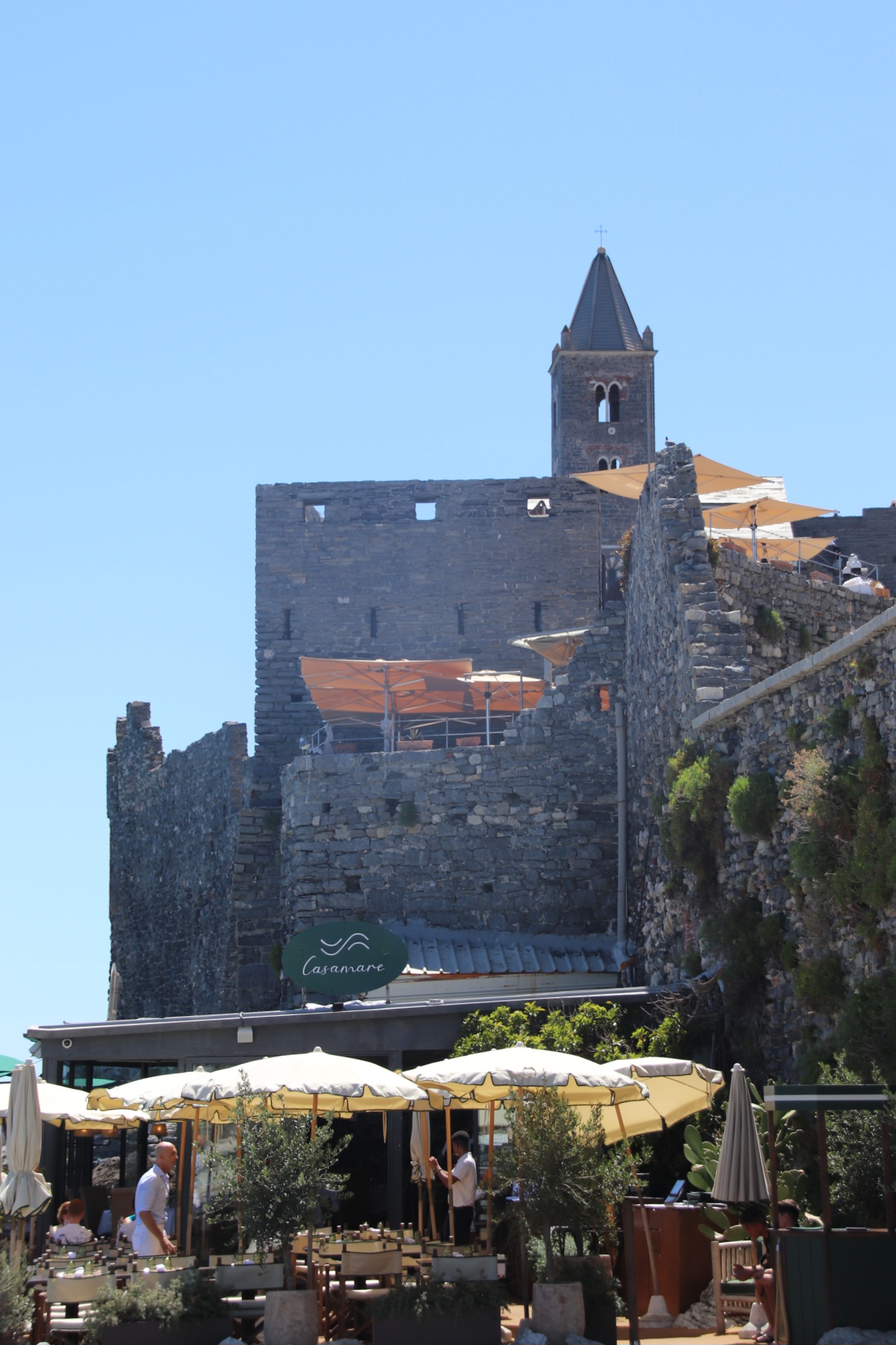
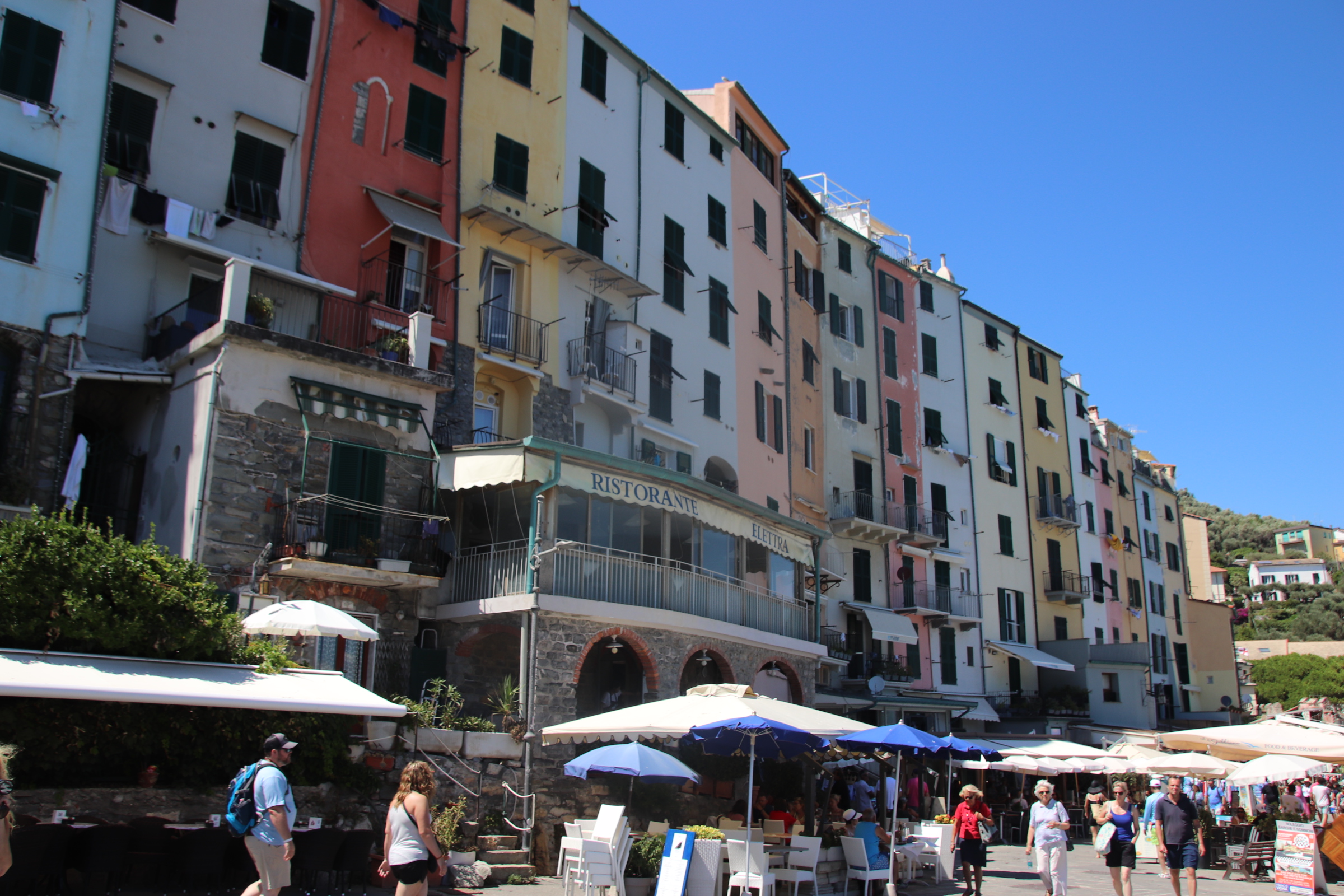
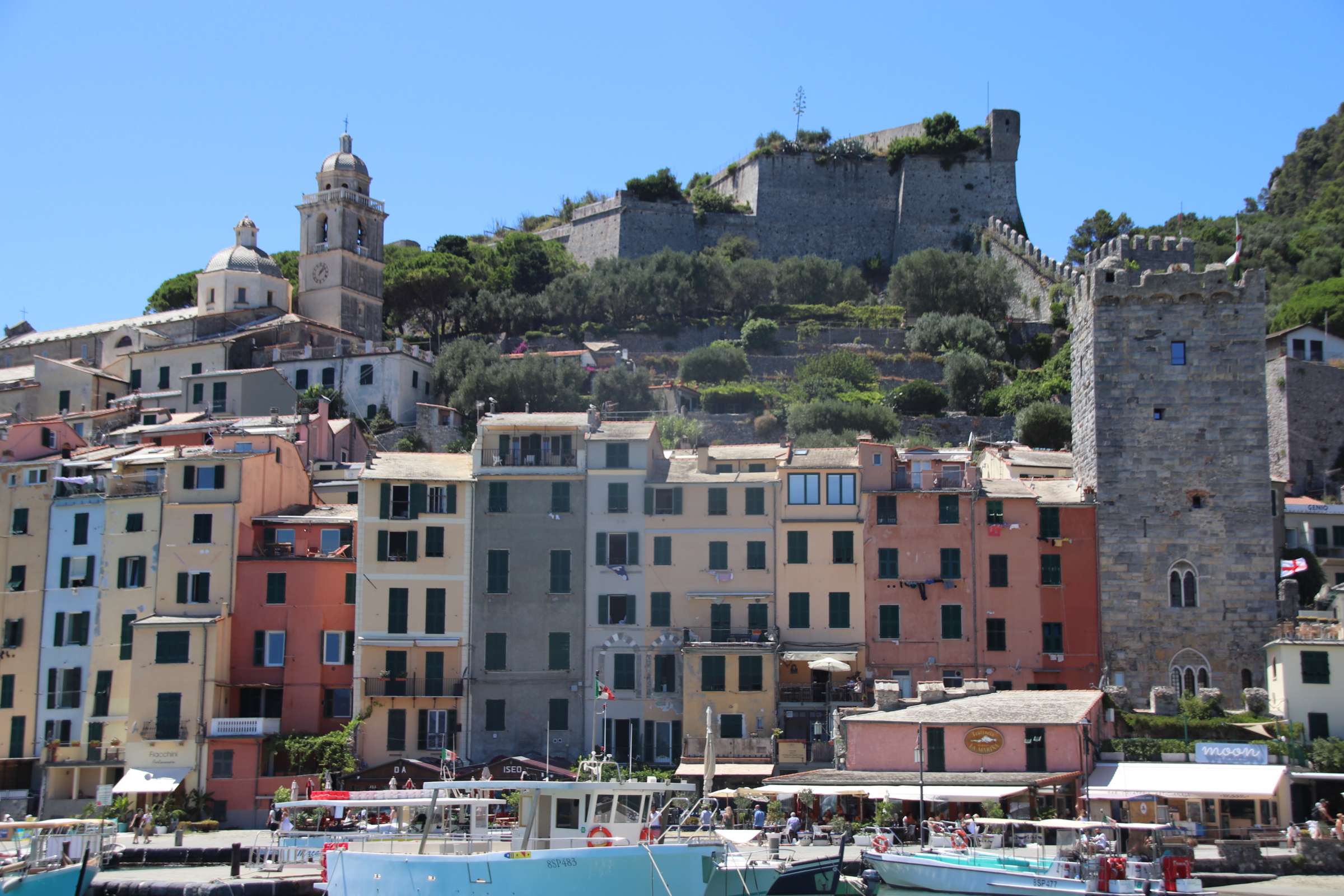
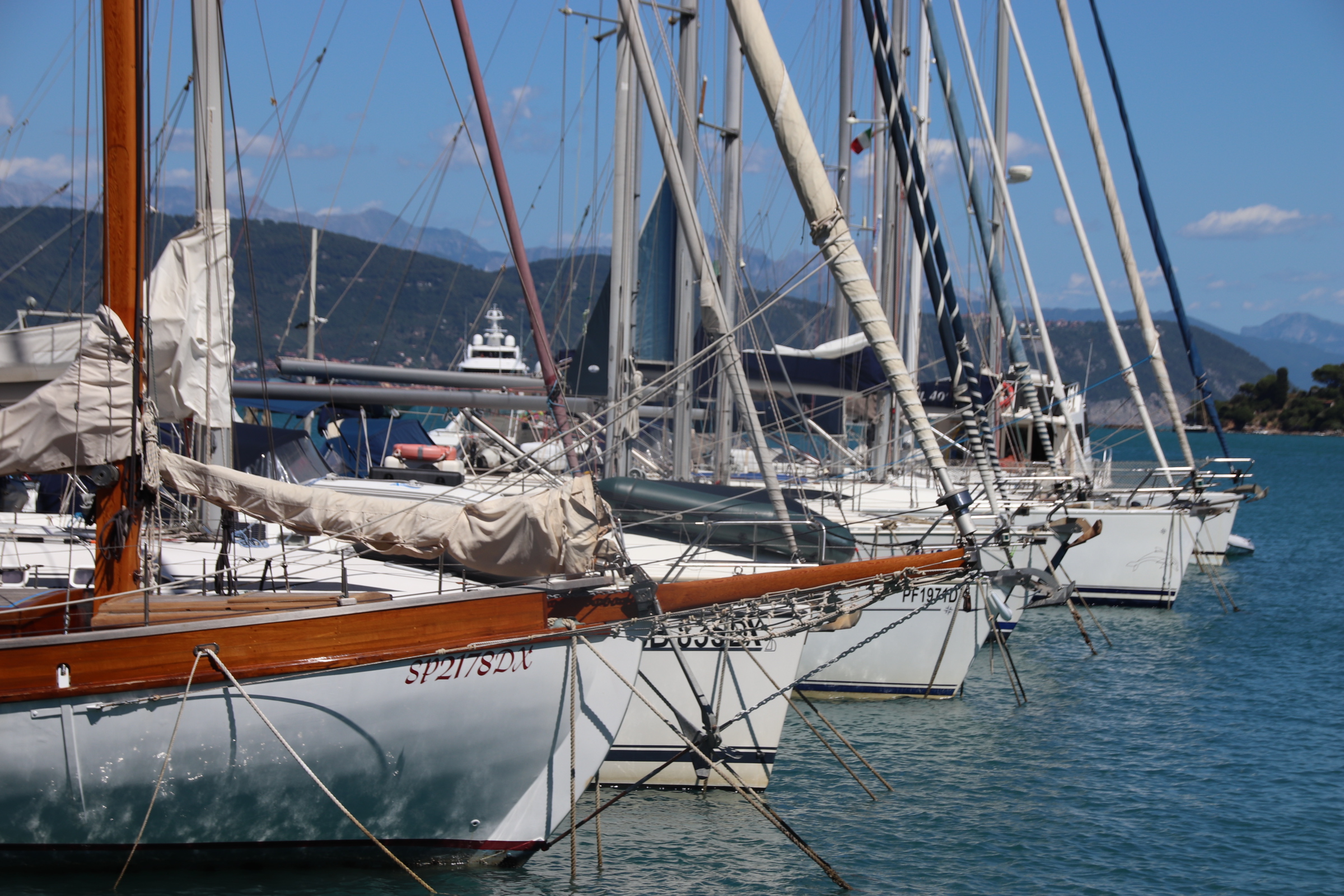
Portovenere is just south of the Cinque Terre. It has the essential elements of Lunigiana – a coastal fort & town walls, churches powering it over local troops & citizens, narrow streets & tall, pastel-coloured, tenement type buildings, once home to fishermen & merchants & now to restaurants & bars & tourist shops.

Rather than a shipping industry built to trade up & down the coast & further afield, the modern way is to shuttle tourists about on day trips, snapping photos of caves & blow-holes & picturesque fishing villages.

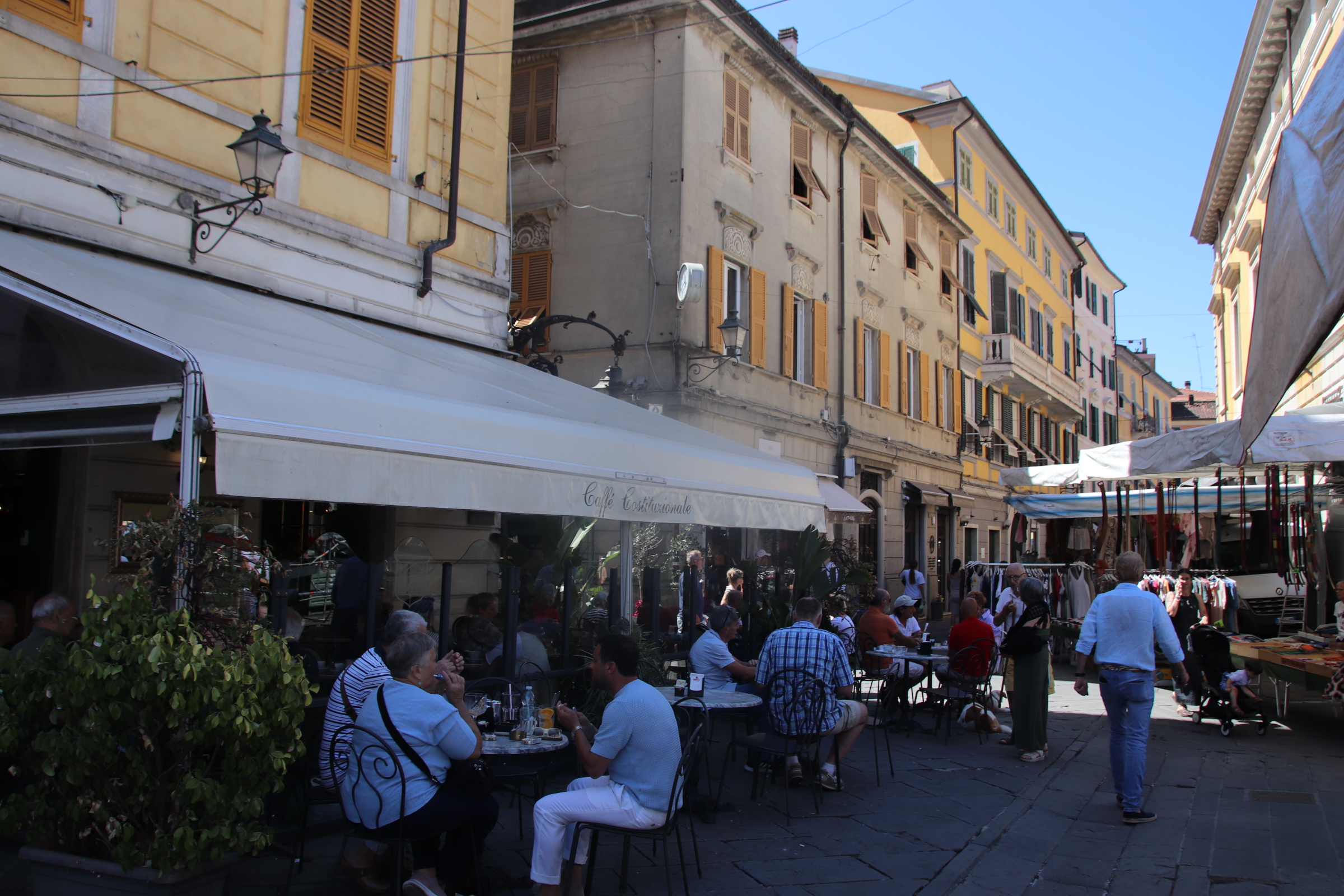
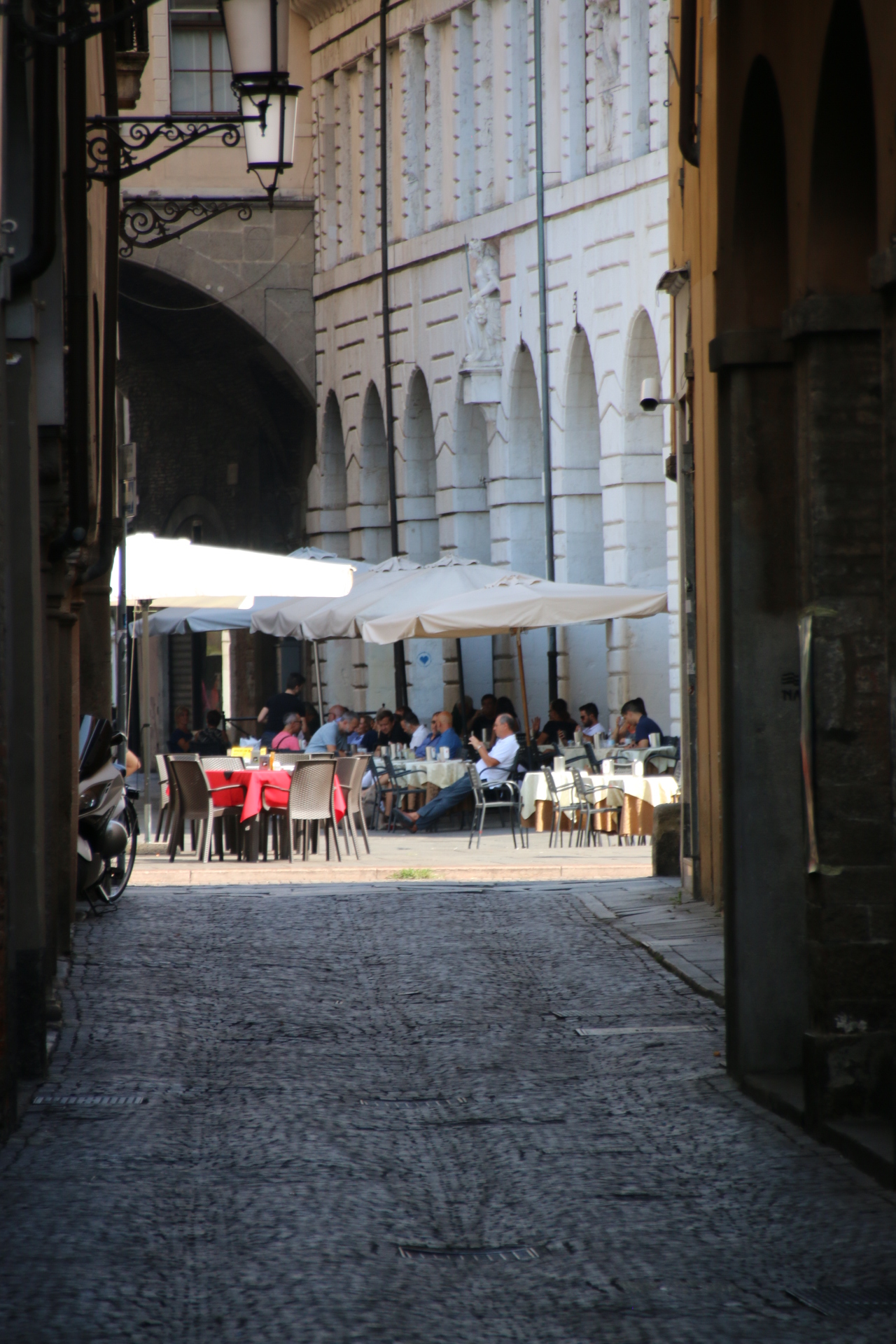
Sarzana is a few miles inland. It’s Thursday. Market vans conceal the axes of cobbled streets with their huge hanging umbrellas & their haphazard positioning.

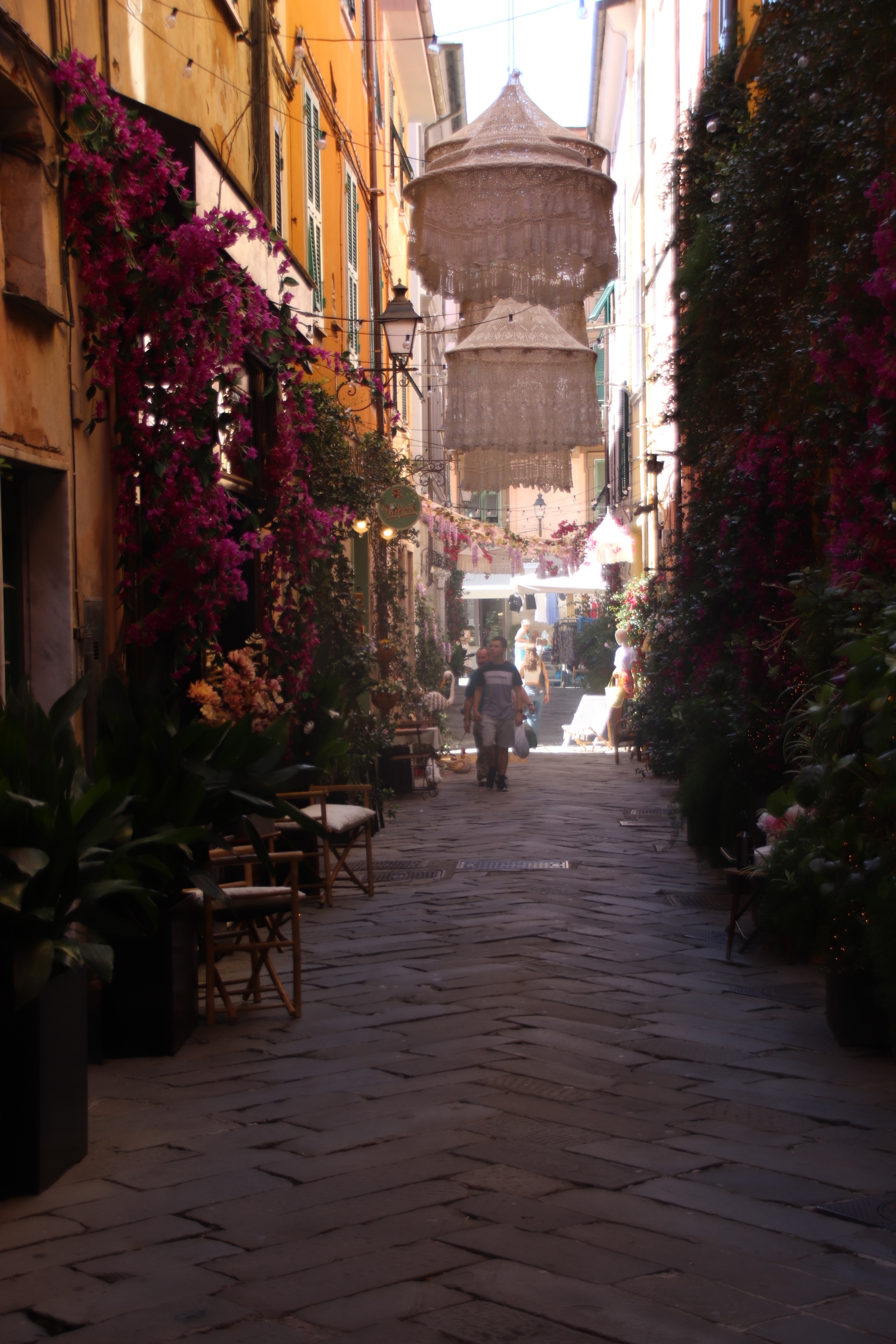
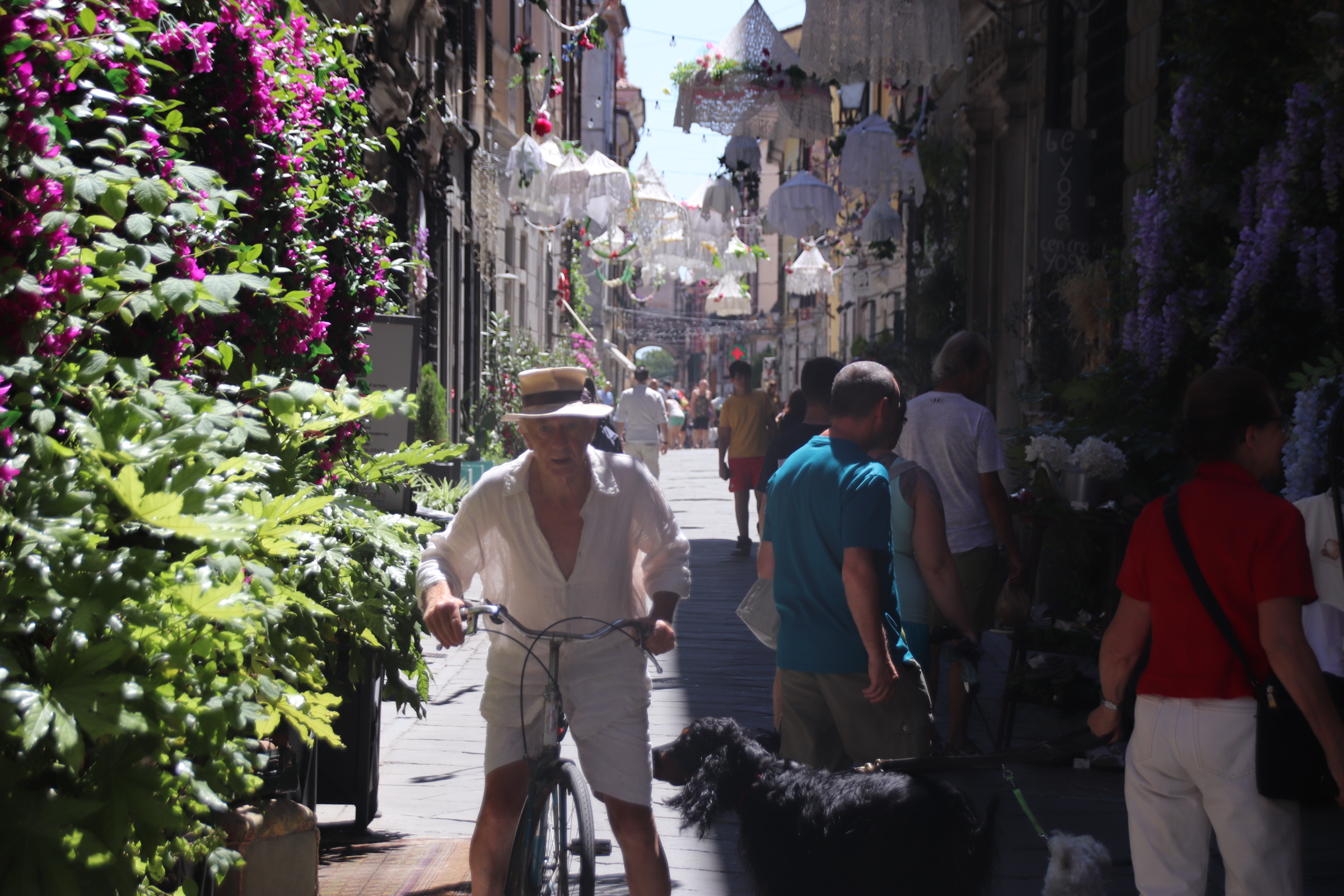
Once the chattering locals have been pierced, coffee consumed, cobbles negotiated, spokes of pretty streets are revealed, decorated with whispy hanging silks & purple bougainvillea.

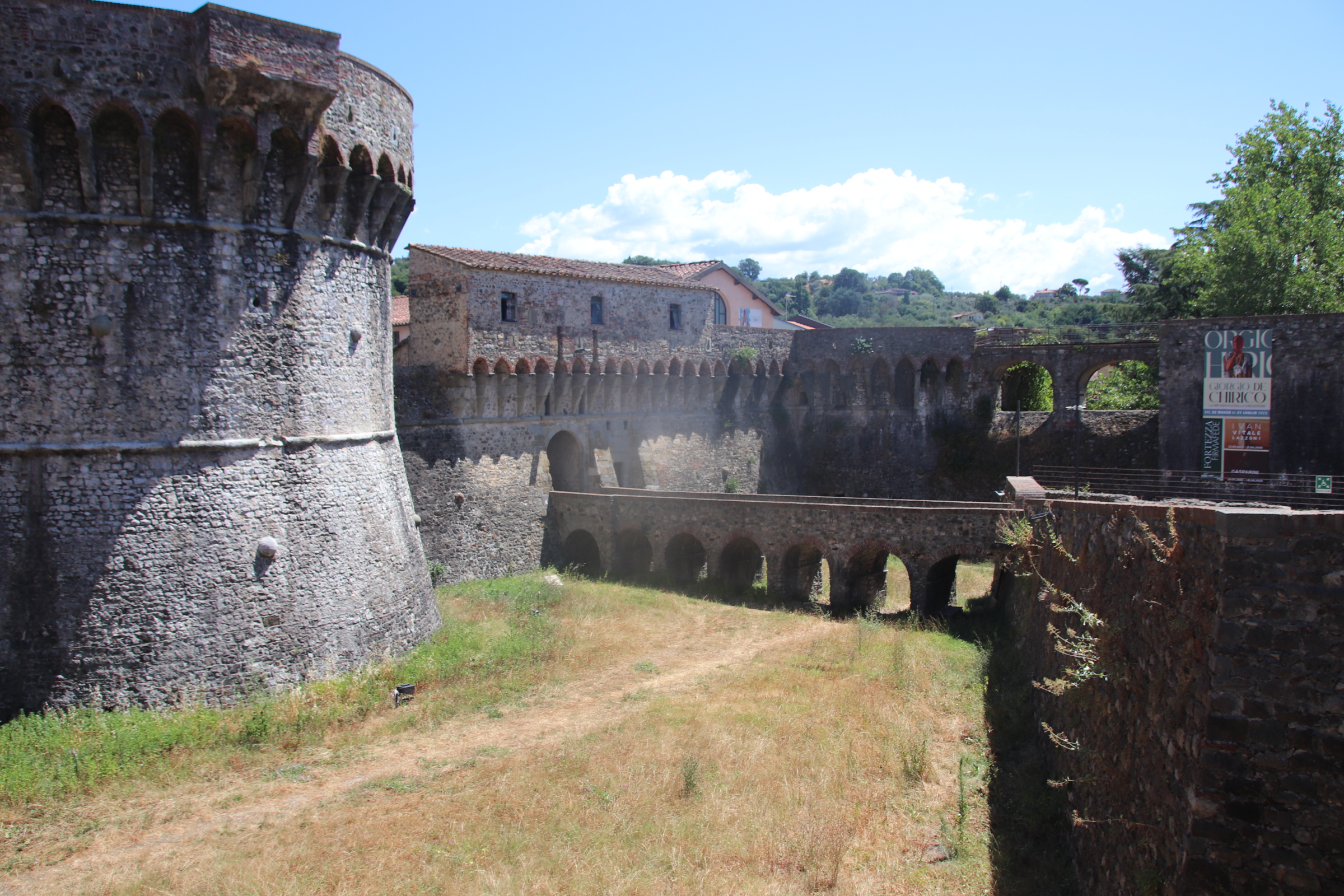
The town’s walls & gates added an extra defensive loop to the castle & fortifications.

Lunigiana -a region where time stands still

So now its a drive into northern Tuscany. Once off the autoroute and away from the flatlands south of Milan, the land starts to rise and wooded ridges appear in the distance, backed by dim, grey shark-teethed peaks. This is Lunigiana, a mountainous region that runs from the Apennine Mountains to the Mediterranean Sea, most of which falls in Tuscany but some in coastal Liguria and we are smack in the middle.

This area has long been strategically important. The Romans constructed the Via Aurelia through Lunigiana to get their armies up to Gaul & Spain. In medieval times there were 160 castles here, but only 30 have survived in a good state. They stem from the time when the Lombards of Milan, dominated here and sought an outlet to the Mediterranean through various mountain passes. All the local city/states have at some time or other battled for control – Luccans v Pisans v Genoese, Milanese v Modense v Florentines. Tuscany eventually took full control of the region in the 15th century.

As we arrive the weather gods offer a relief from the heat of the past two weeks. We offer up our thanks as the Storm Goths thunder their welcome and lighten up our senses with flashes of awesome power. Yes, refreshingly, it can rain on Italy’s parade.

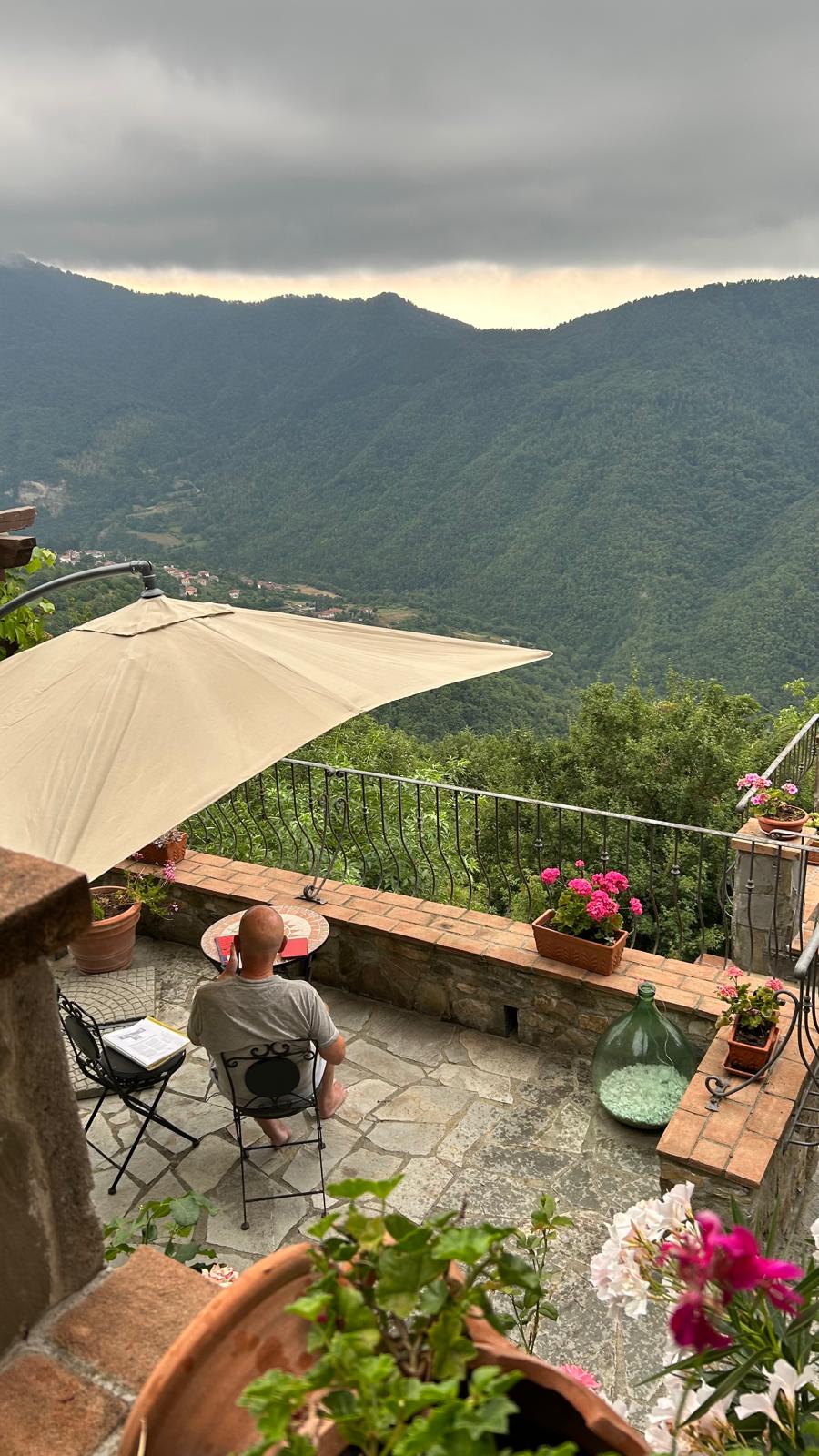
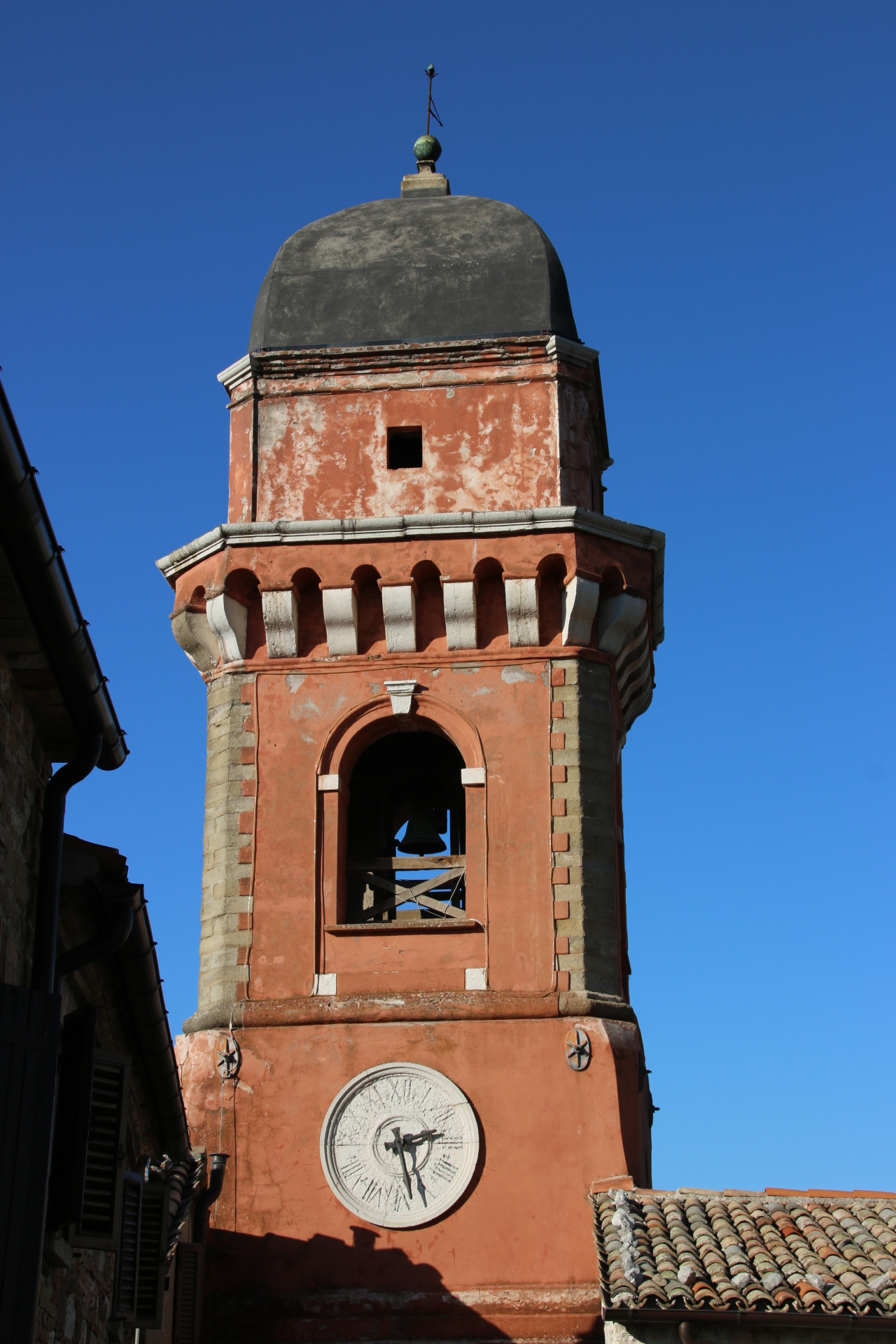
From our outpost high on a ridge, we can spot the approaching storms, take their anger and watch them retreat into the distance. The church bells in village way down below ring more in celebration of the storms’ passing than in summoning the faithful to mass. Once the storms pass the true glory of our position is revealed.

Exploring this region takes a fair bit of stamina. Roads are demanding to say the least. It’s a bit like following the region’s intestines – in & around, up & hairpin, squeeze to the side to allow oncoming & hold one’s breath. Surely, it’s not up there…. oh yes. TOM TOM say “fastest route!” Up the twists & turns of scabbed, crustacean tarmac between lush walnut & sweet chestnut woods and overgrown edges of brambles & bracken.

Scattered along streamed valley bottoms, in clearings on the shaded slopes of wooded ridges or atop strategic hilltops are a confetti of dusty, ancient villages & homesteads. Time seems to have stopped in many. A centuries-old church or the remains of a medieval tower or castle centre these ancient settlements, linked through the hills by ancient mule tracks. In many there is little life on display. Only the clink of plates & muffled voices from open windows indicate the presence of anything human.

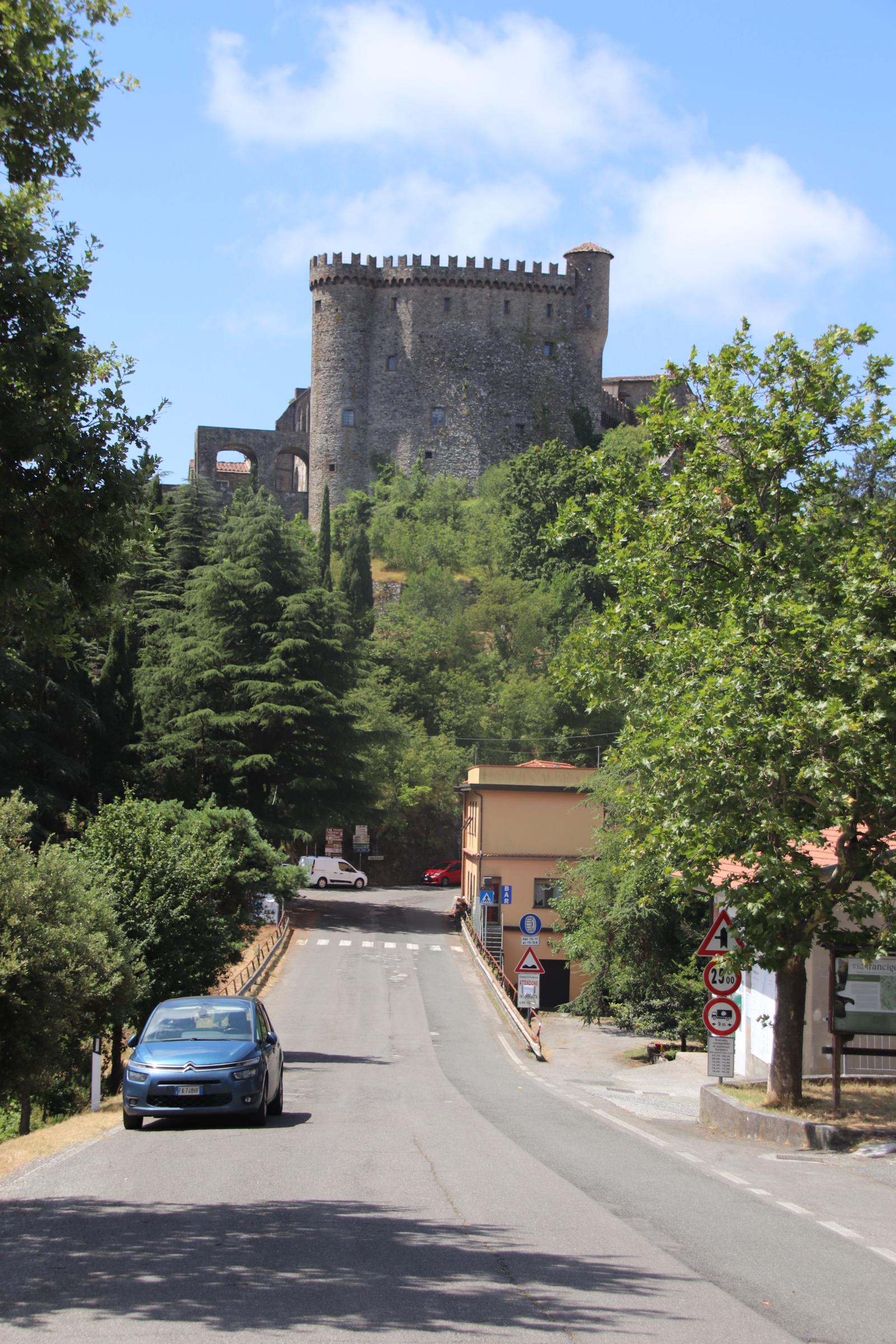
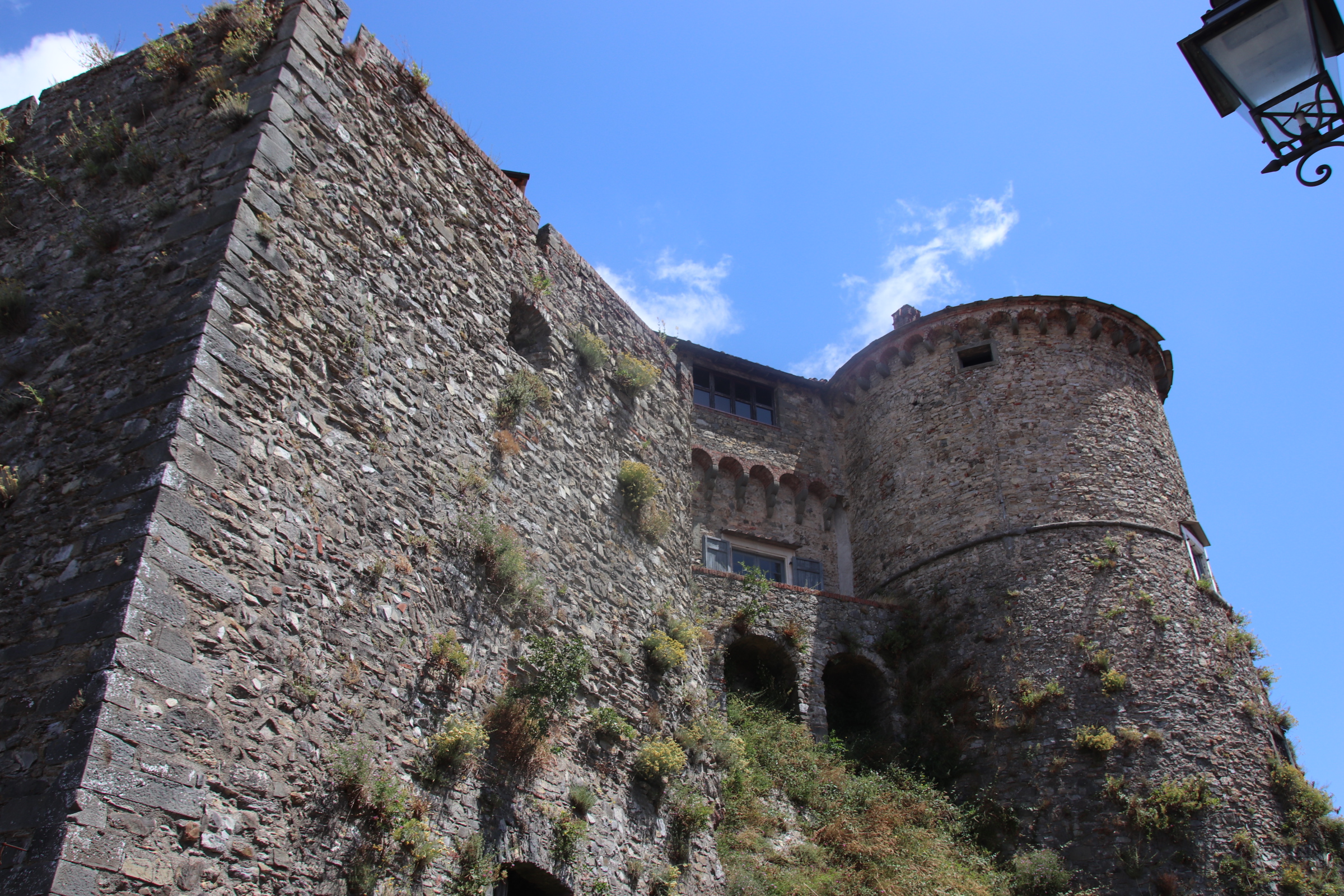
Fosdinovo is protected by a medieval castle part of which is open for the public to explore & part of which is inhabited by private owners.

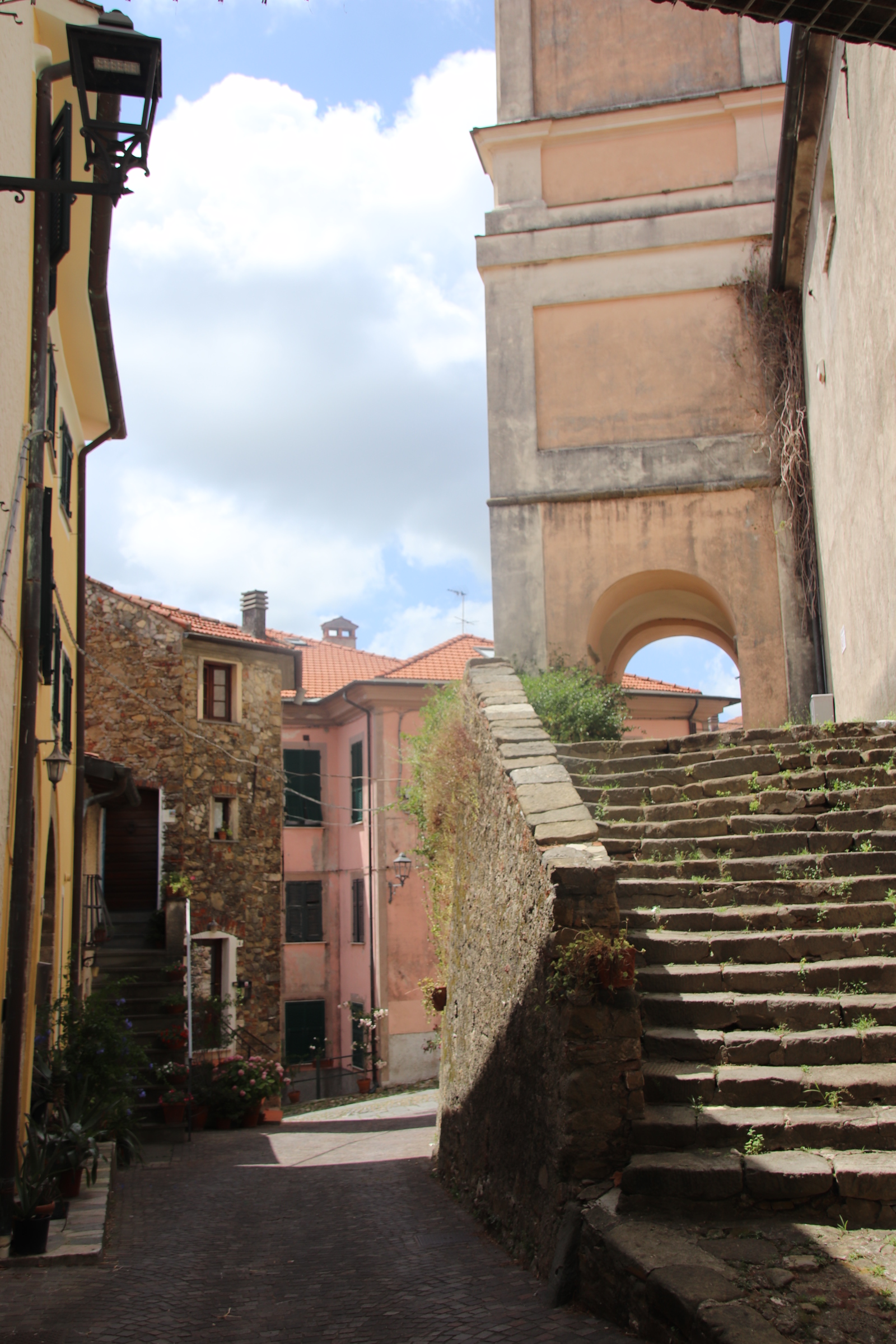
Castelnuovo Magro’s narrow streets lead down to the church from the open-air cinema in the castle ruins. The lines of cottages provide shaded pathways for the handful of locals on display.

Vicenza stands out on its own

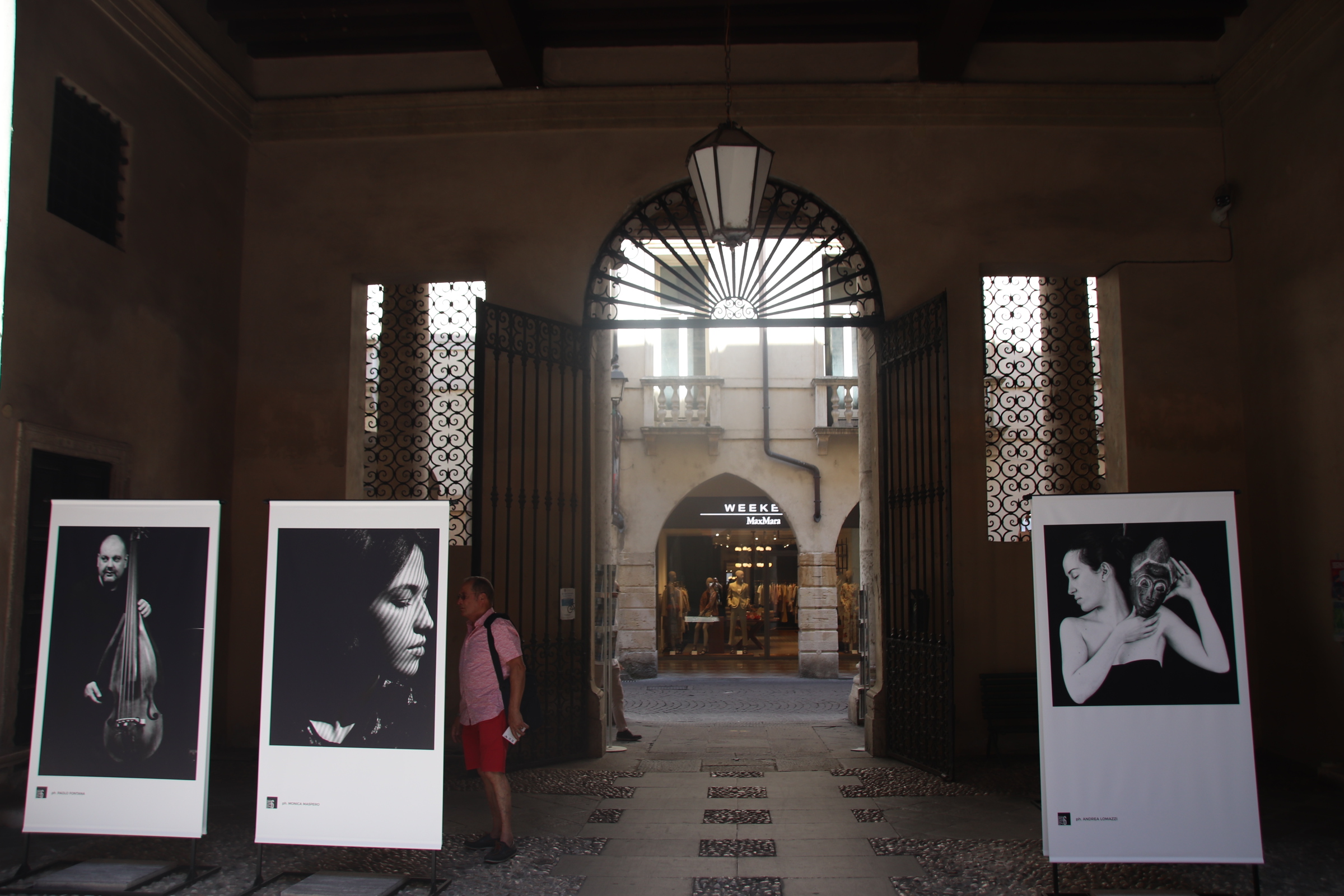
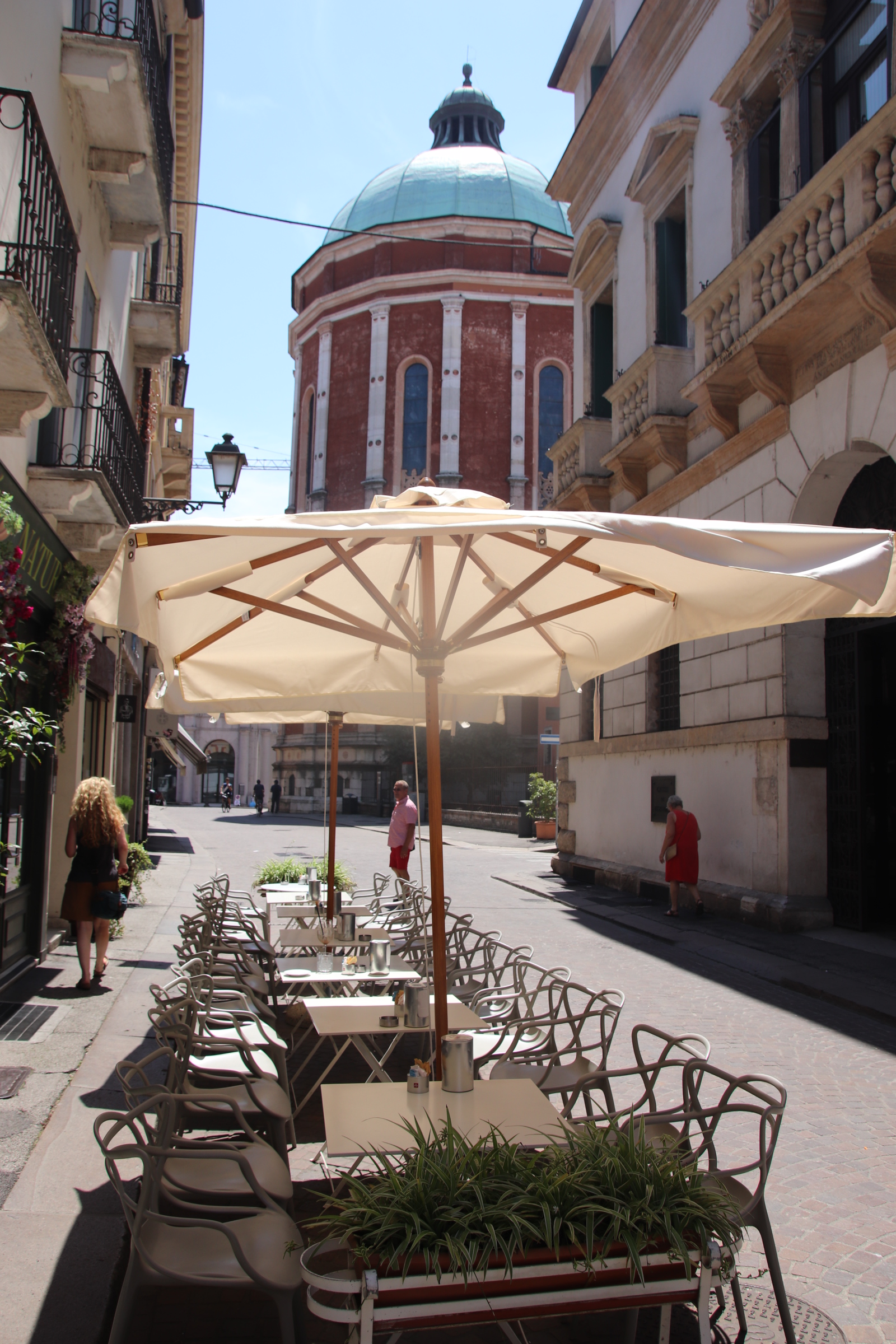
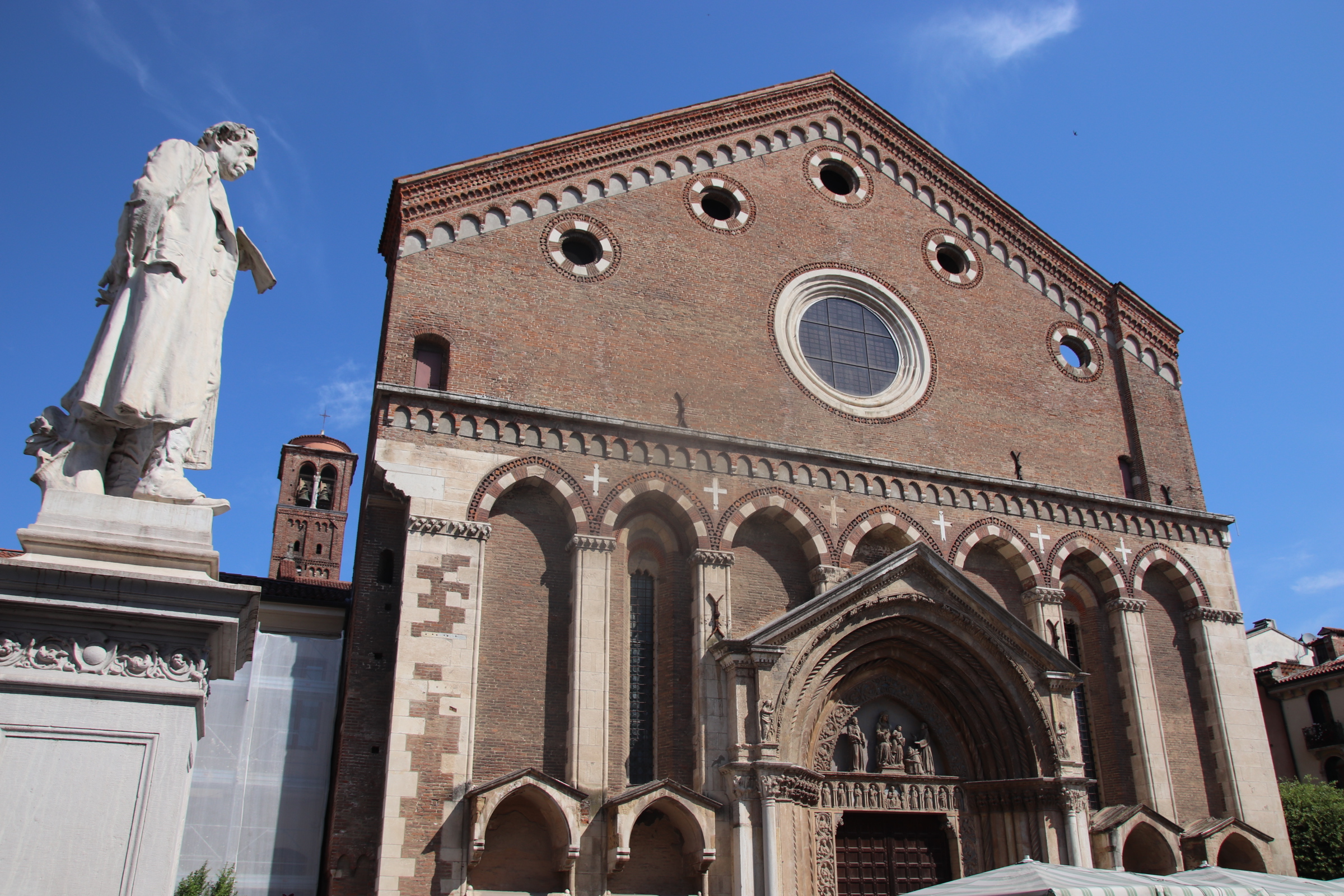
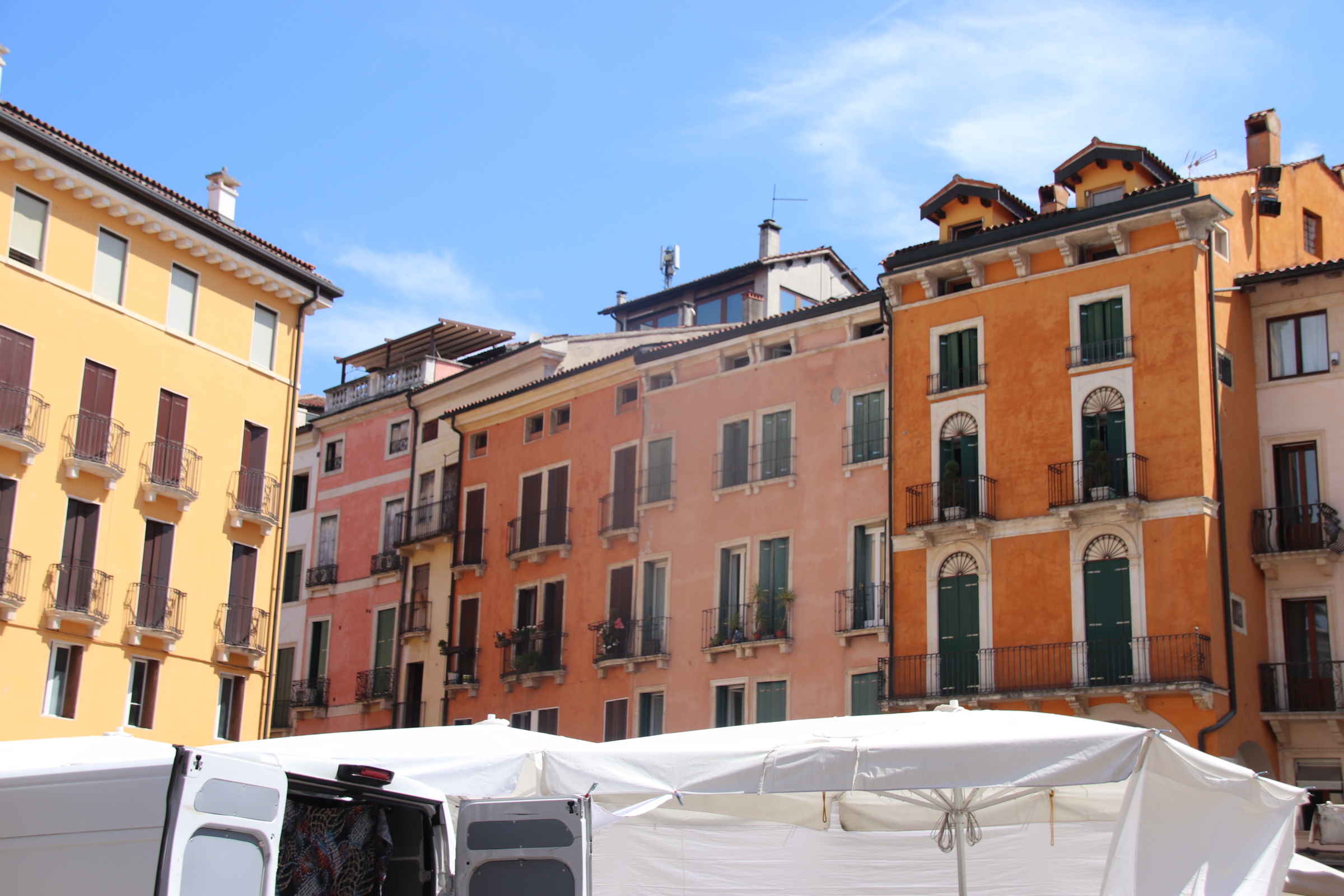
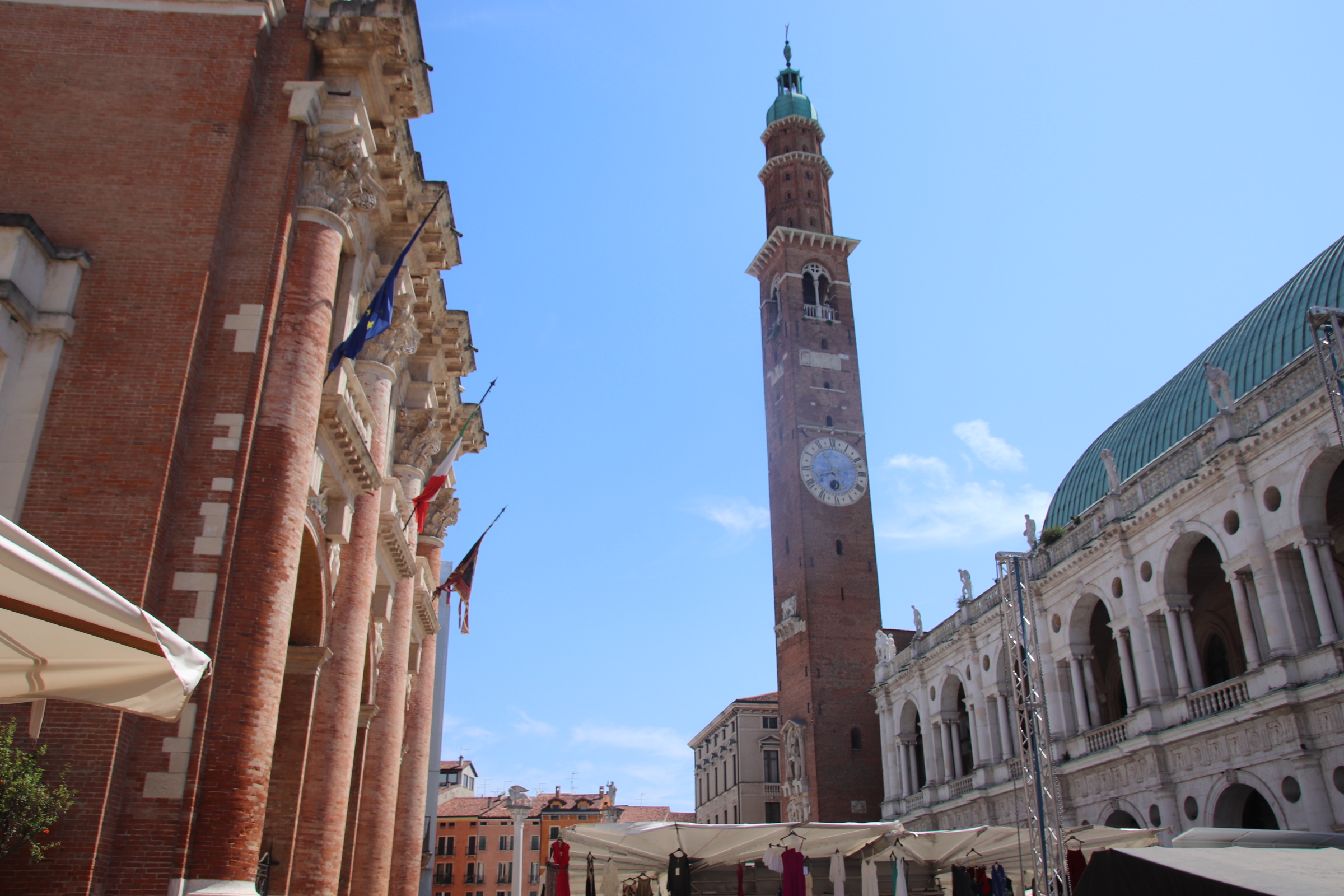
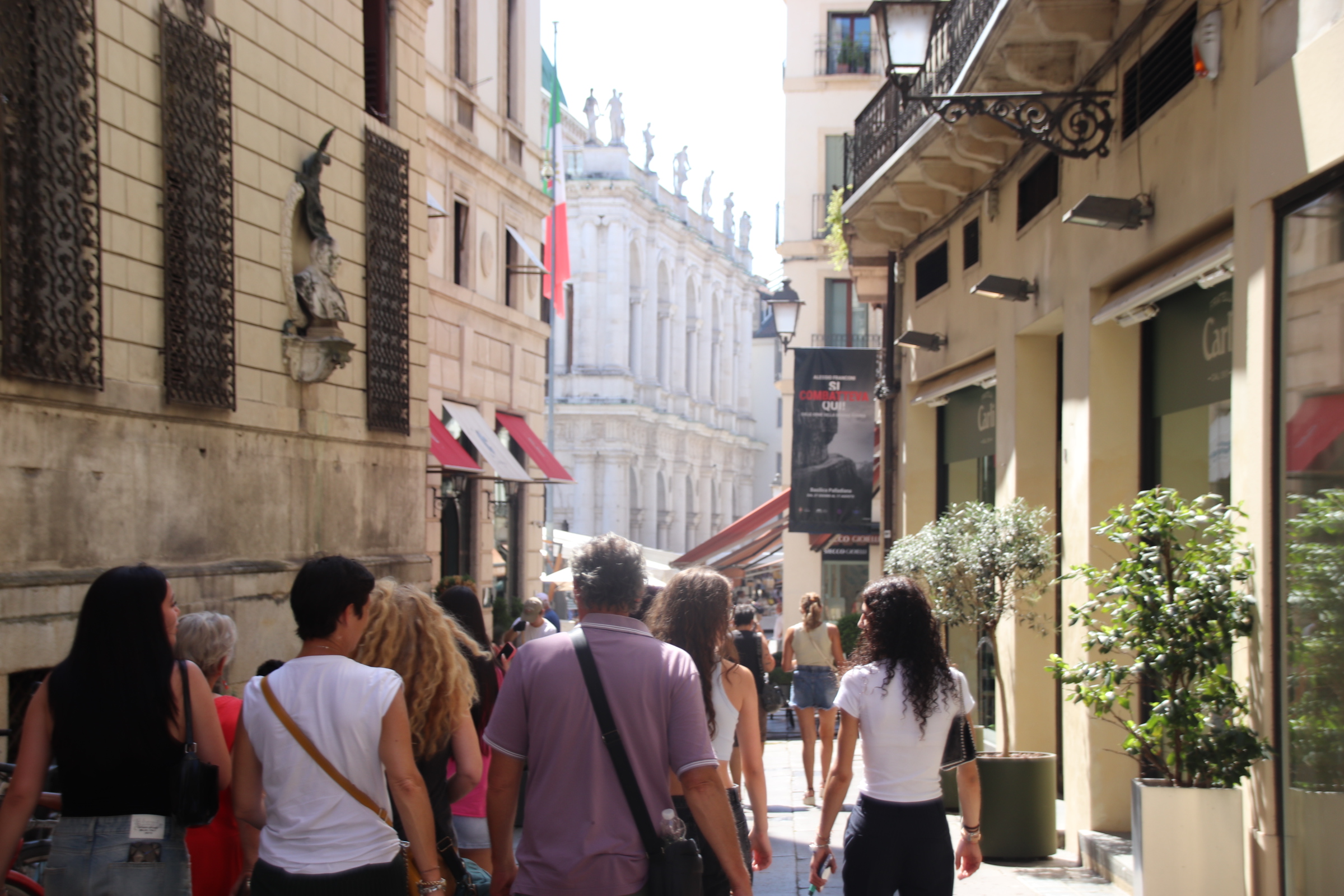
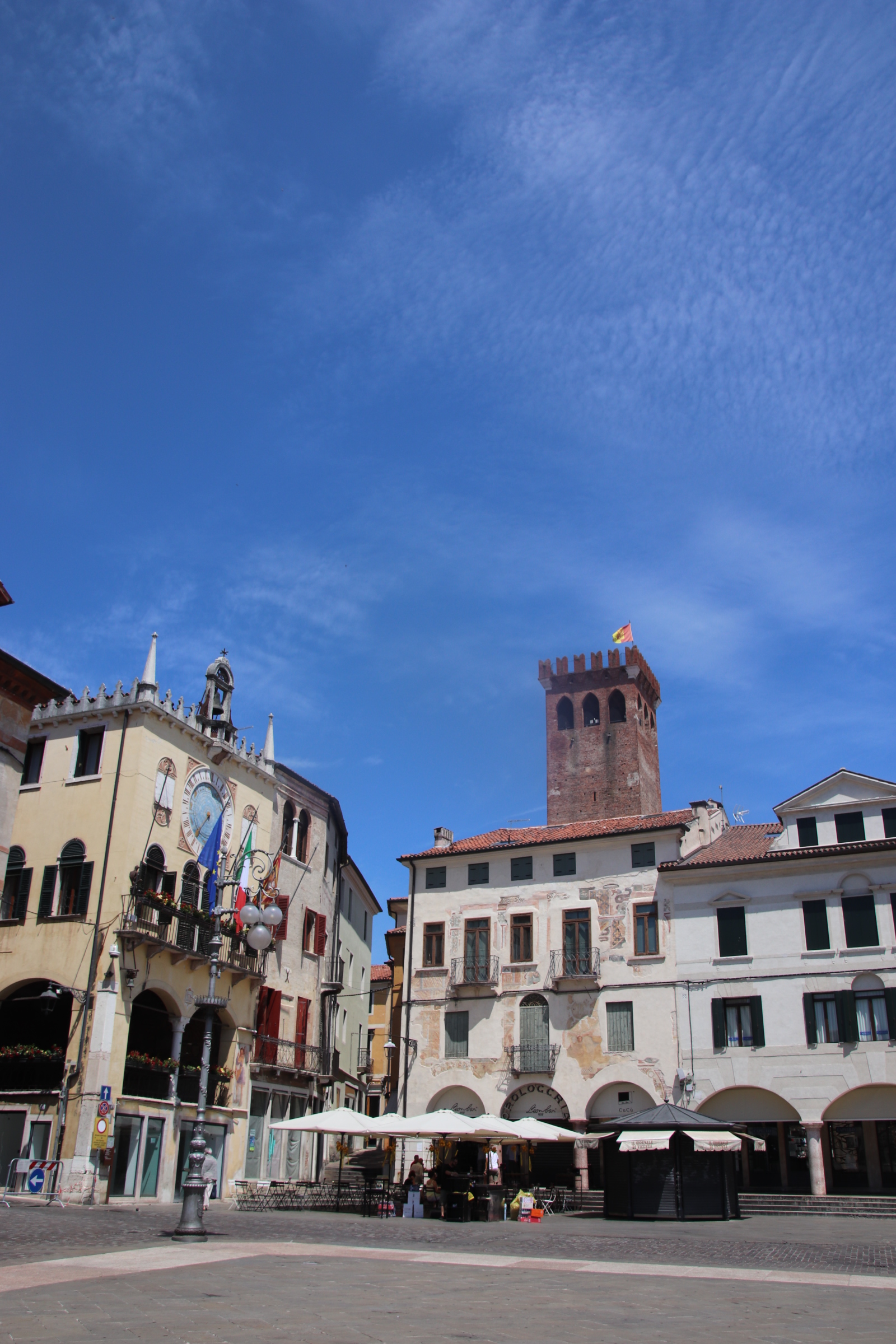
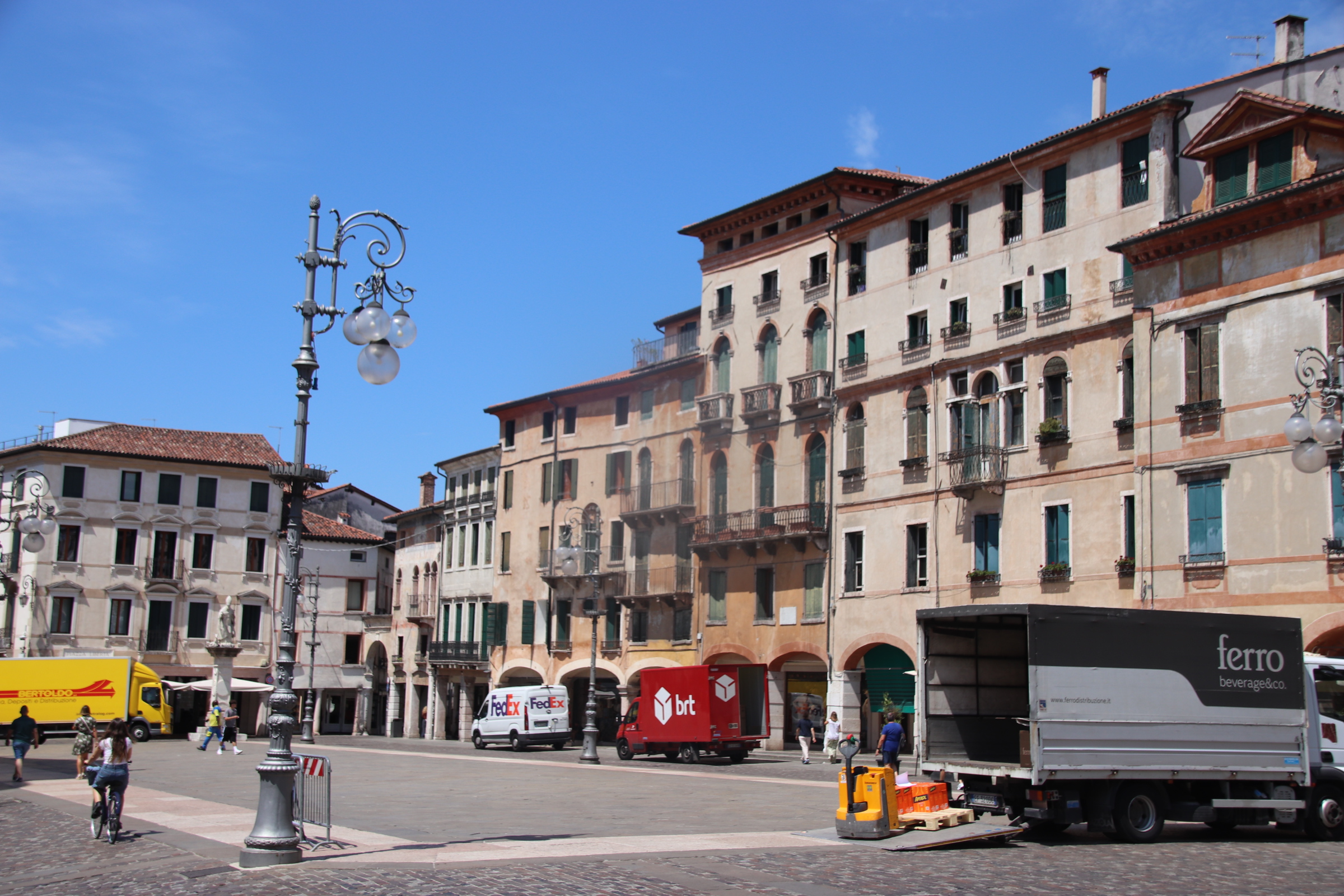
Some places are worth a mention on their own, and Vicenza is one. It is difficult to use words to describe its glory, so I’ll let my images do the talking.

At first sight it is the super-elegant, grand buildings & wide piazzas that grab the eye.

The city is known as the showpiece of the 16th century architect Andea Palladio & his successor Vincenzo Scamozzi – elegant, cultured , artistic.

Today, their legacy is offset by the weekly market, bringing bustle & colour, diversity & humanity to its classic lines.

A smogasburg of age, ethnicity, class, appearance, dress, background mix in the streets & piazzas. They live & walk & work together.

Three towns of Veneto

This part of Veneto between Vicenza & Venice and bordered to the north by the craggy peaks & ridges of the Dolomites Mountains and to the south by the Adriatic Sea, is not considered to be a tourist area. Maybe because of this it has a very genuine character. Italian families go about their normal daily business, the shops close in the afternoon & everyone seems to dessert the streets to siesta. Life has a calm pace. The roads are quiet, farmers harvest hay & wheat and vines cover hillsides. Shaded hills bubble deciduous woodlands that remind of the Dordogne countryside in France.

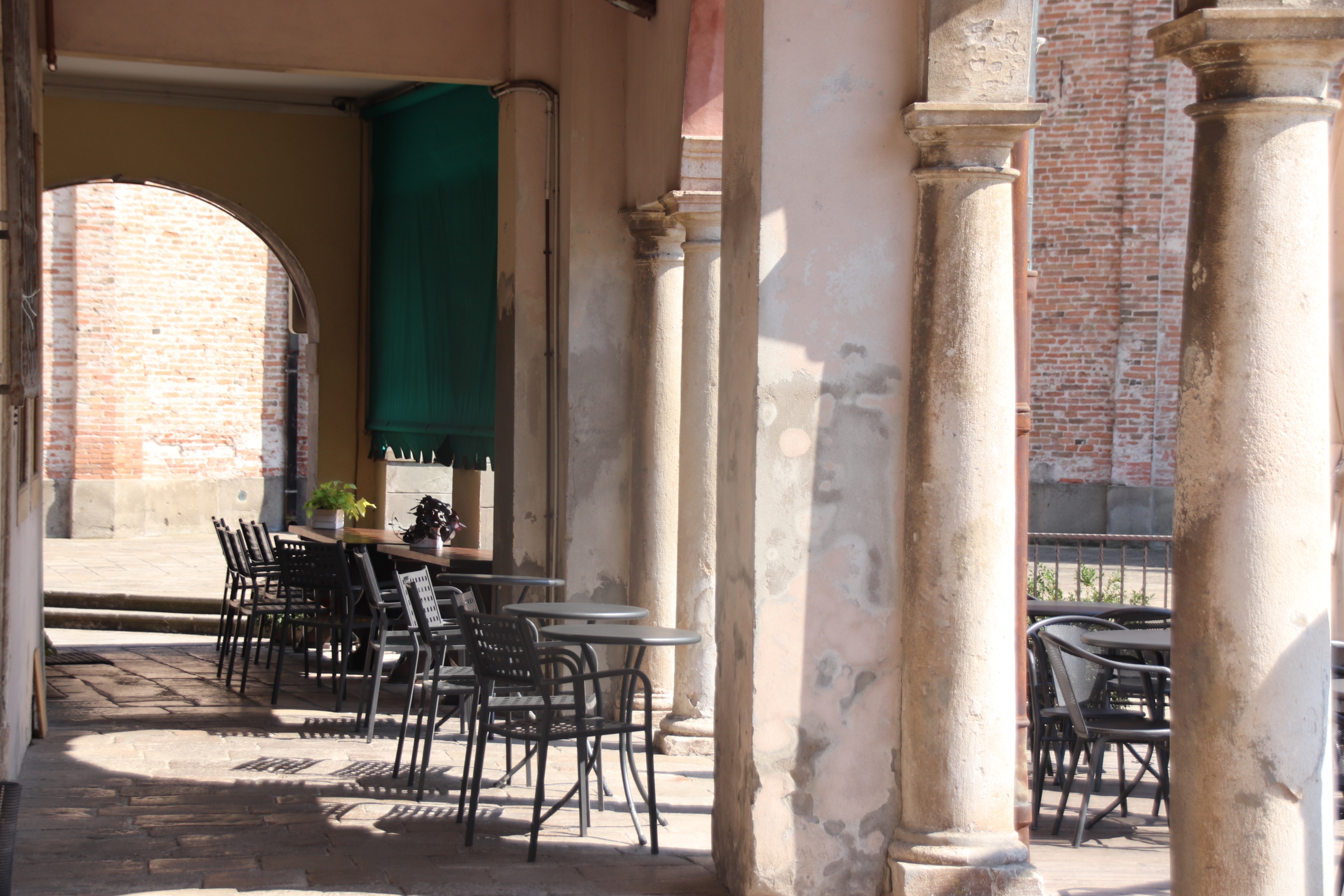
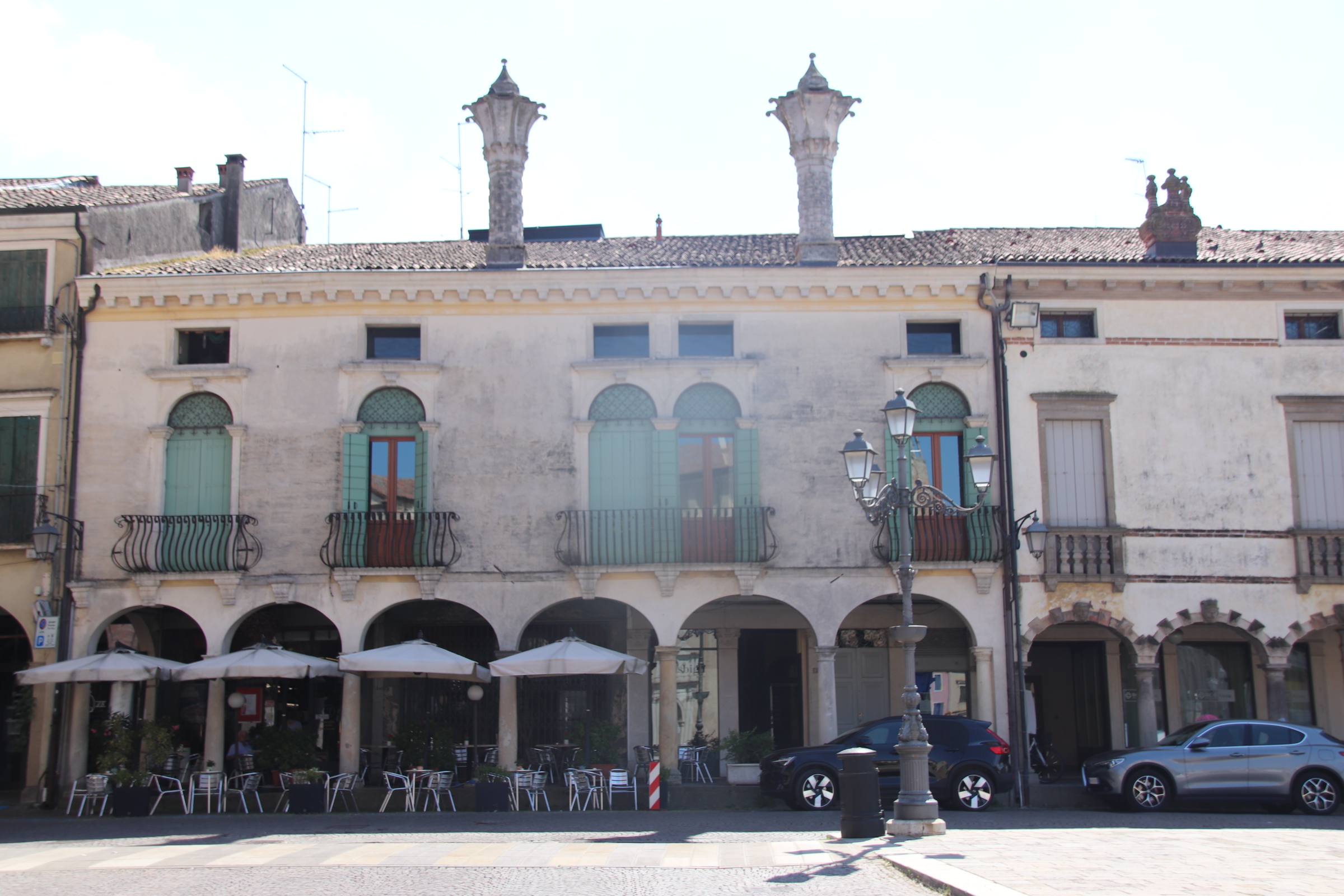
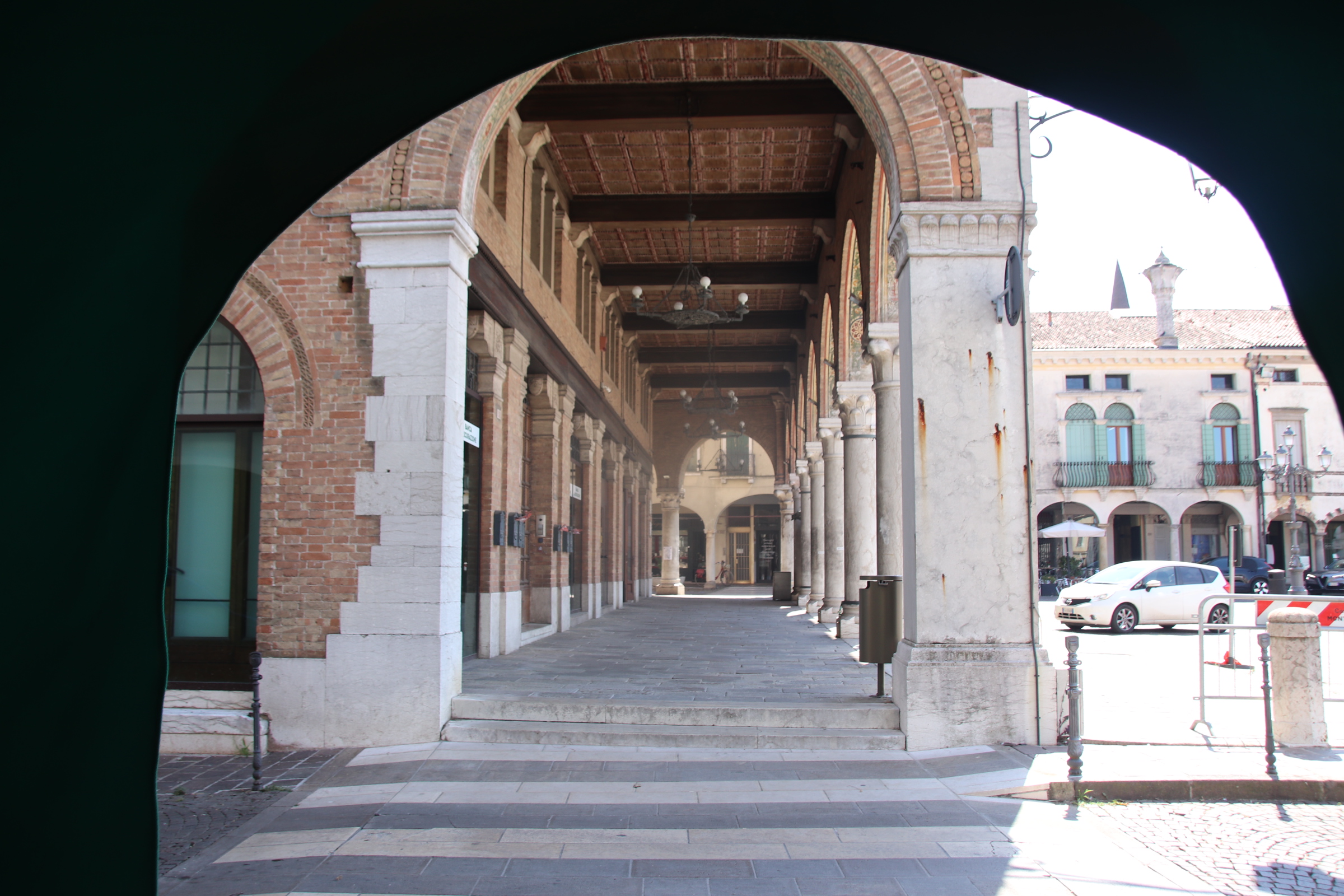
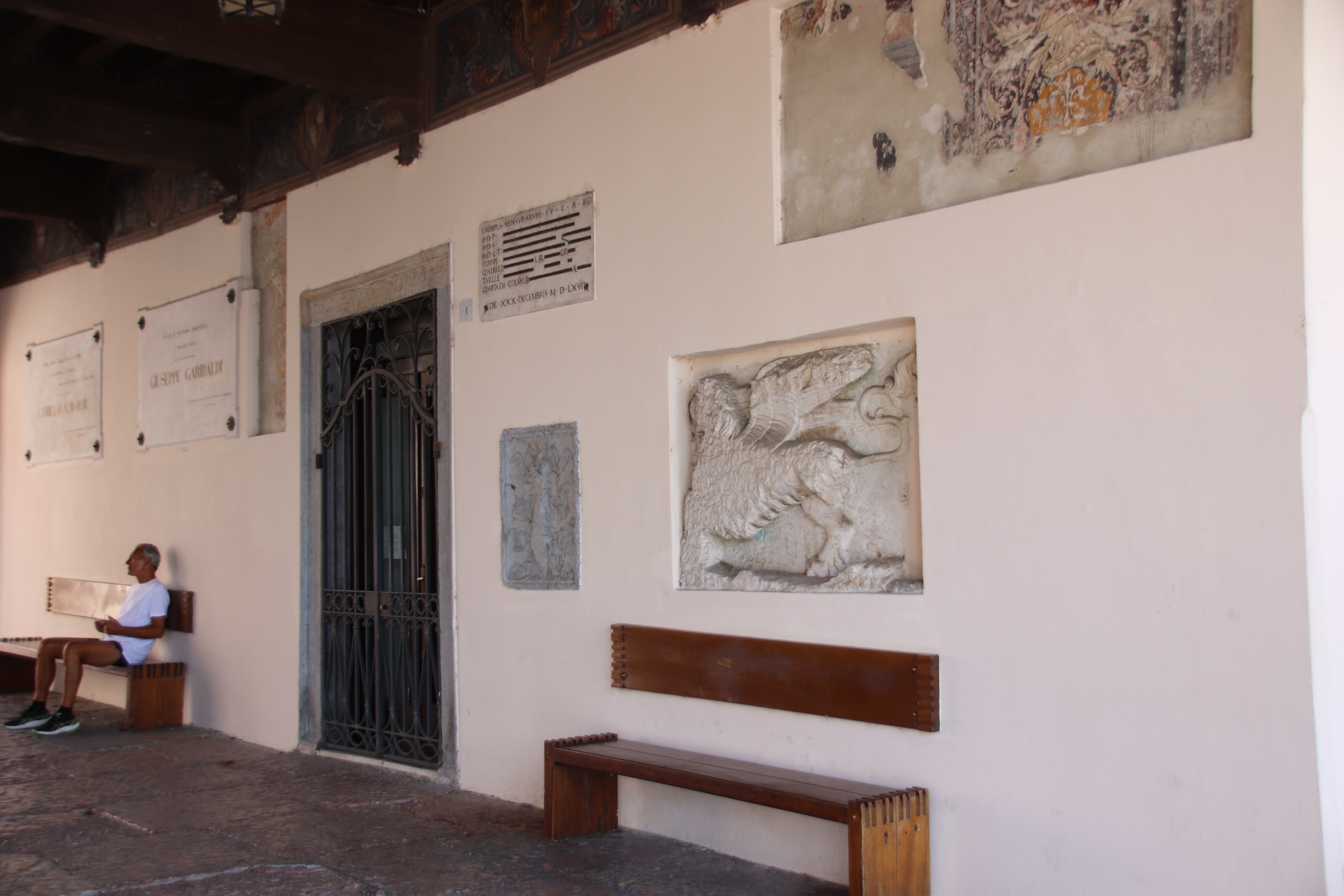
The towns are intriguing places and have many features in common – castellated walls and tall defensive towers enclose a large open piazza, cloistered edges provide shade from the blasting midday heat and powerful Gothic churches impose their presence on those below.

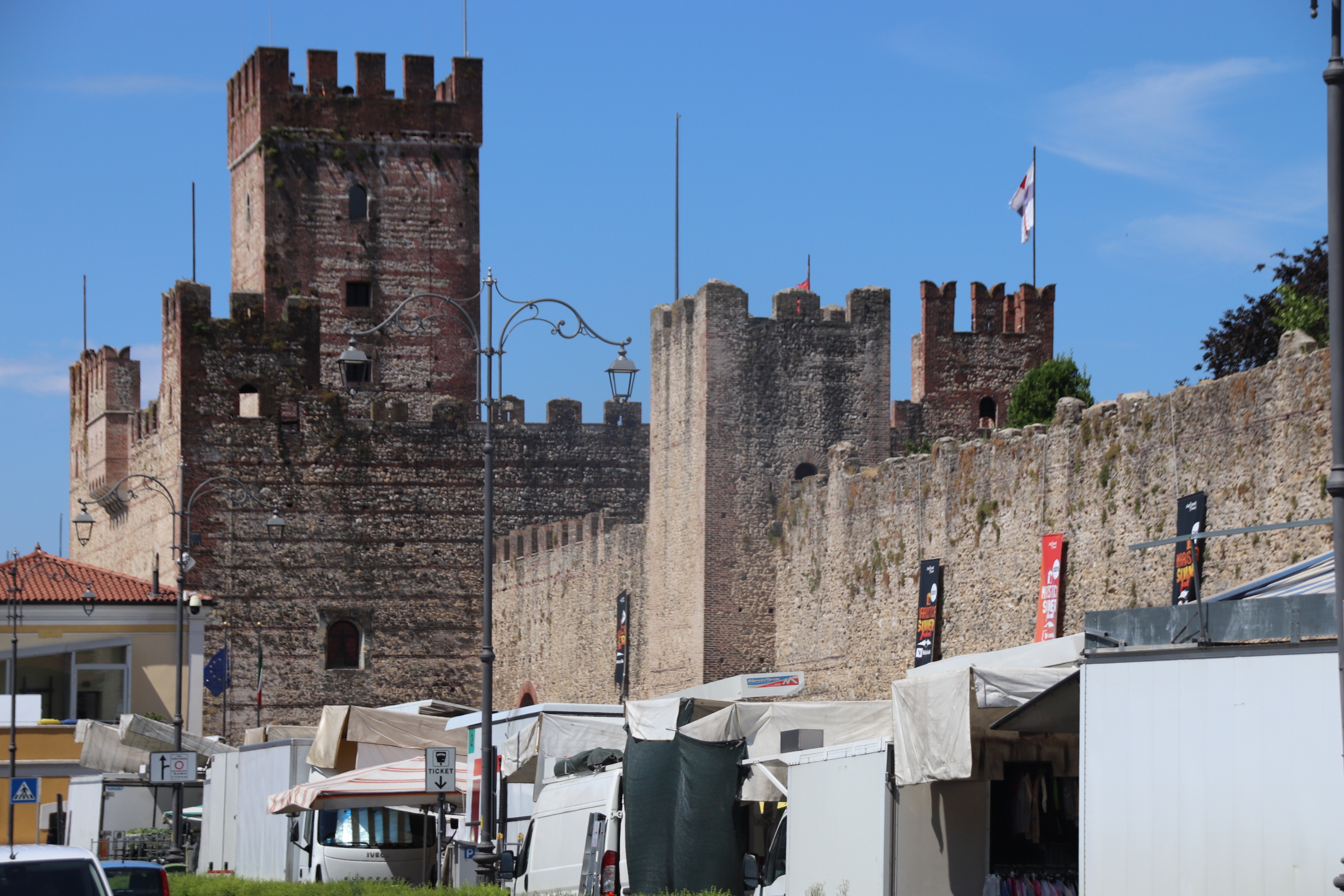
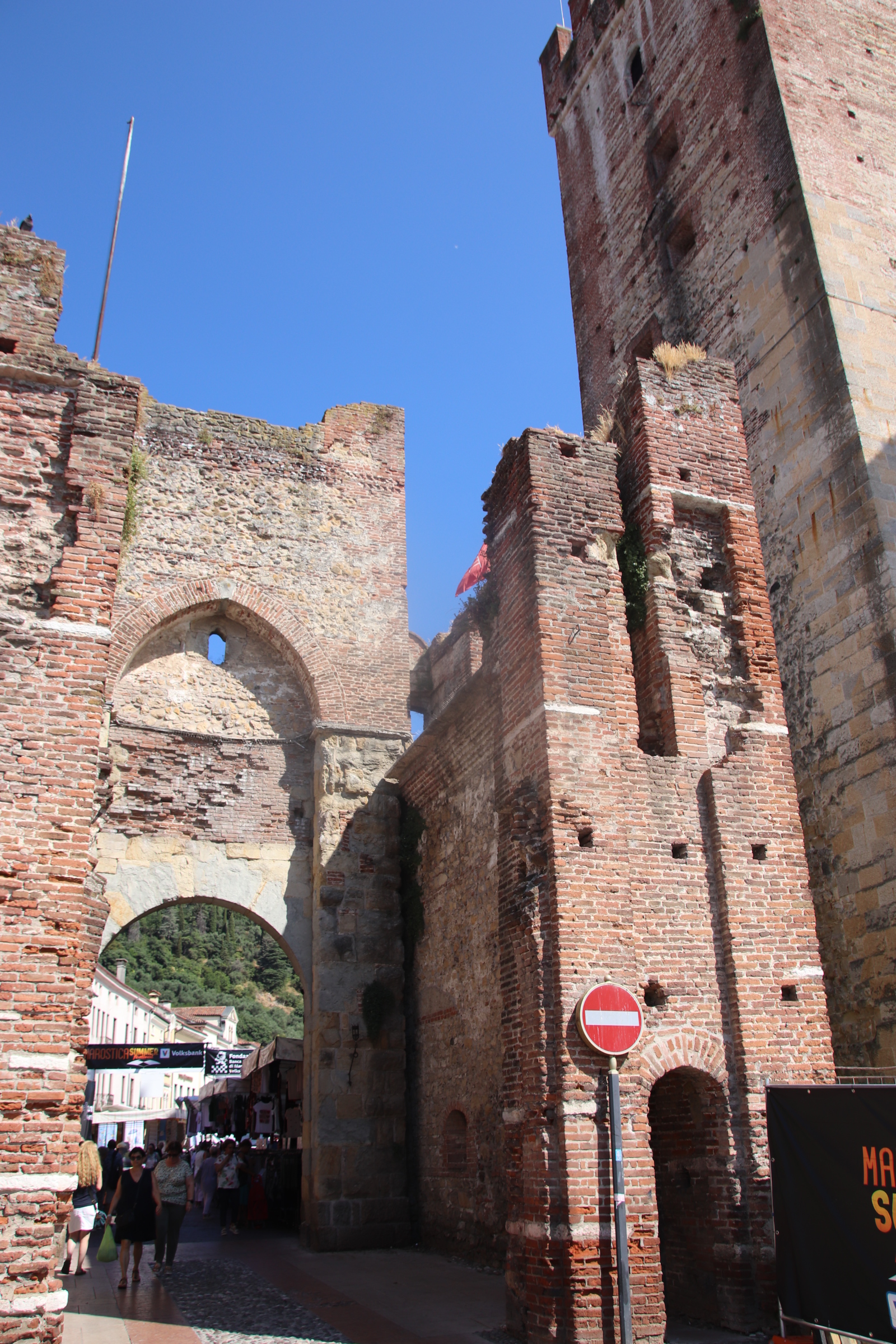
Marostica had a flourishing history in medieval times. During the 19th century it became relatively poor until it’s wealth grew again from the 1950s. The impressive walls & ramparts enclose the town completelÿ with a couple of imposing gateways limiting the progress of vehicles in & out of the piazza.

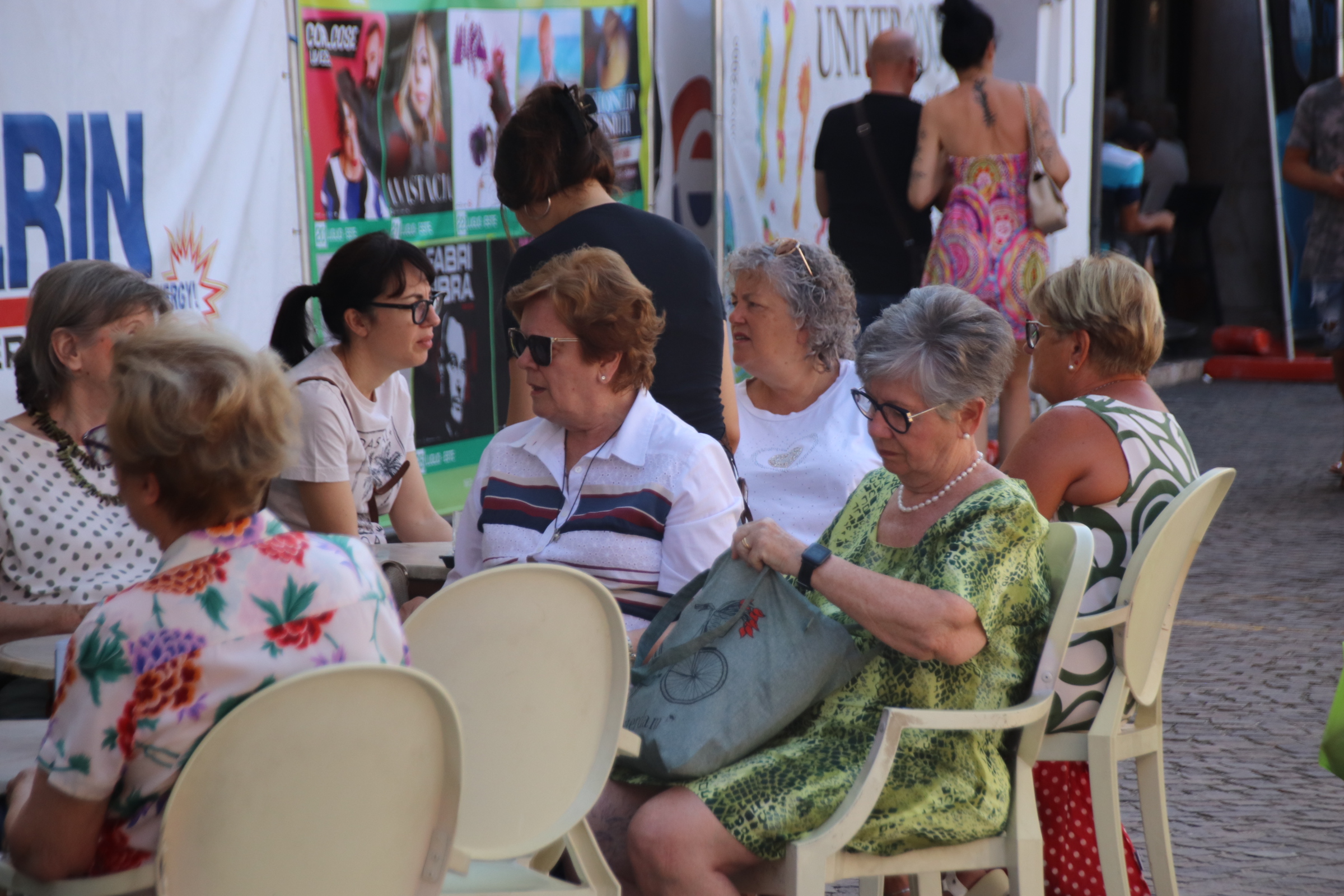
The weekly market gave the whole place a medieval aura with the cloistered edges providing shade for chattering families & friends chatting over their cappuccino & cake.

Umbrellered, ‘white-market-van-man’ acted as a second square of defence around the four sides selling all the wares of a large town market.

Overlooking the whole scene, high up on the hill, a line of medieval, stone fortifications steps to the top to see off any invading army that might have dropped through the time warp.

The town is best known for a chess event which takes place with costumed people playing the part of chess pieces and playing out a game. A large, 64 square chess board is a permanent feature of the market square. Legend has it that this live event has taken place every two year since 1454. Although the original moves have been lost, the festival was recreated after WWII and a modern game played out with costumed locals re-enacting a classic modern game. To give it a bit more class, the whole thing is accompanied with an opera as shown on the poster.

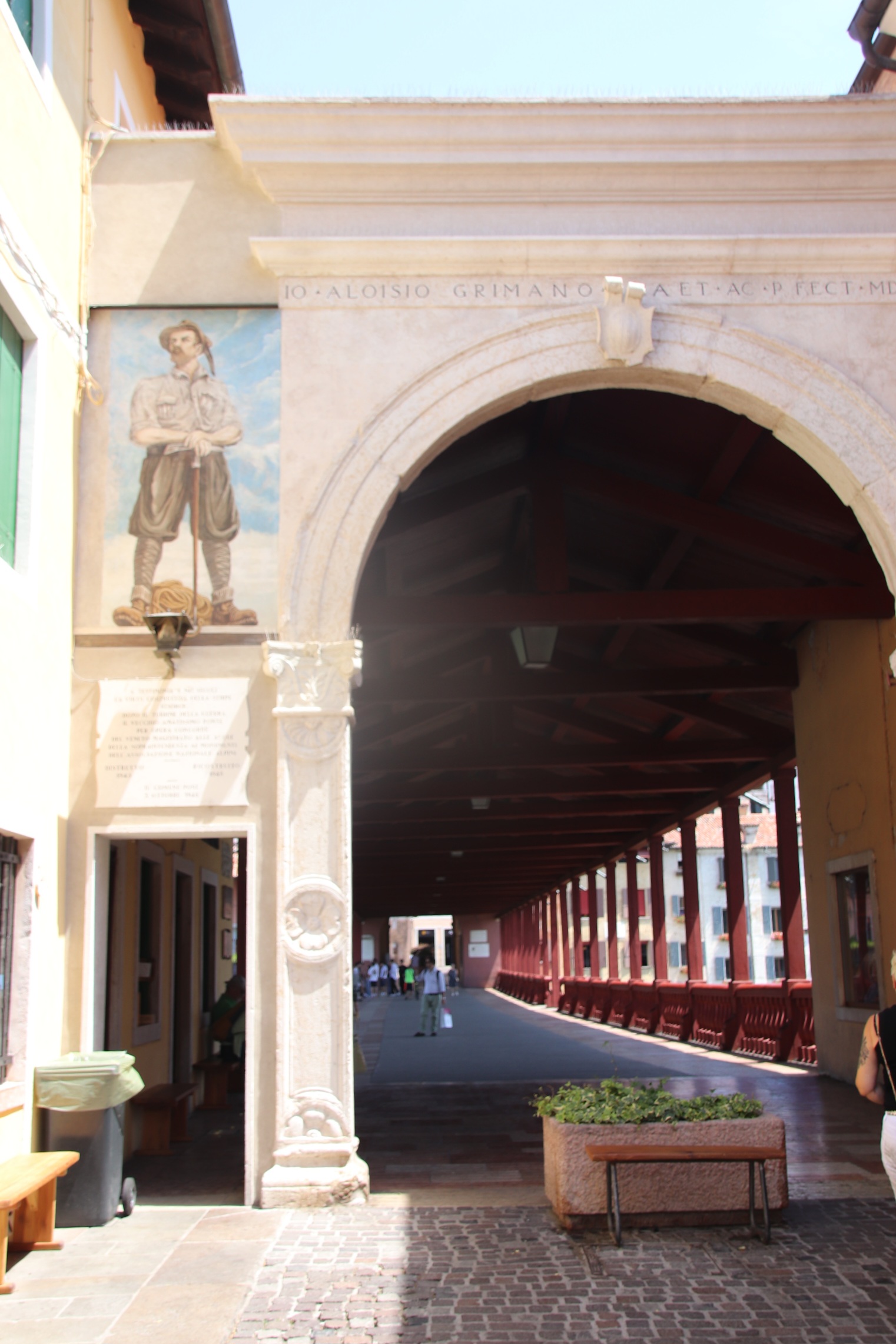
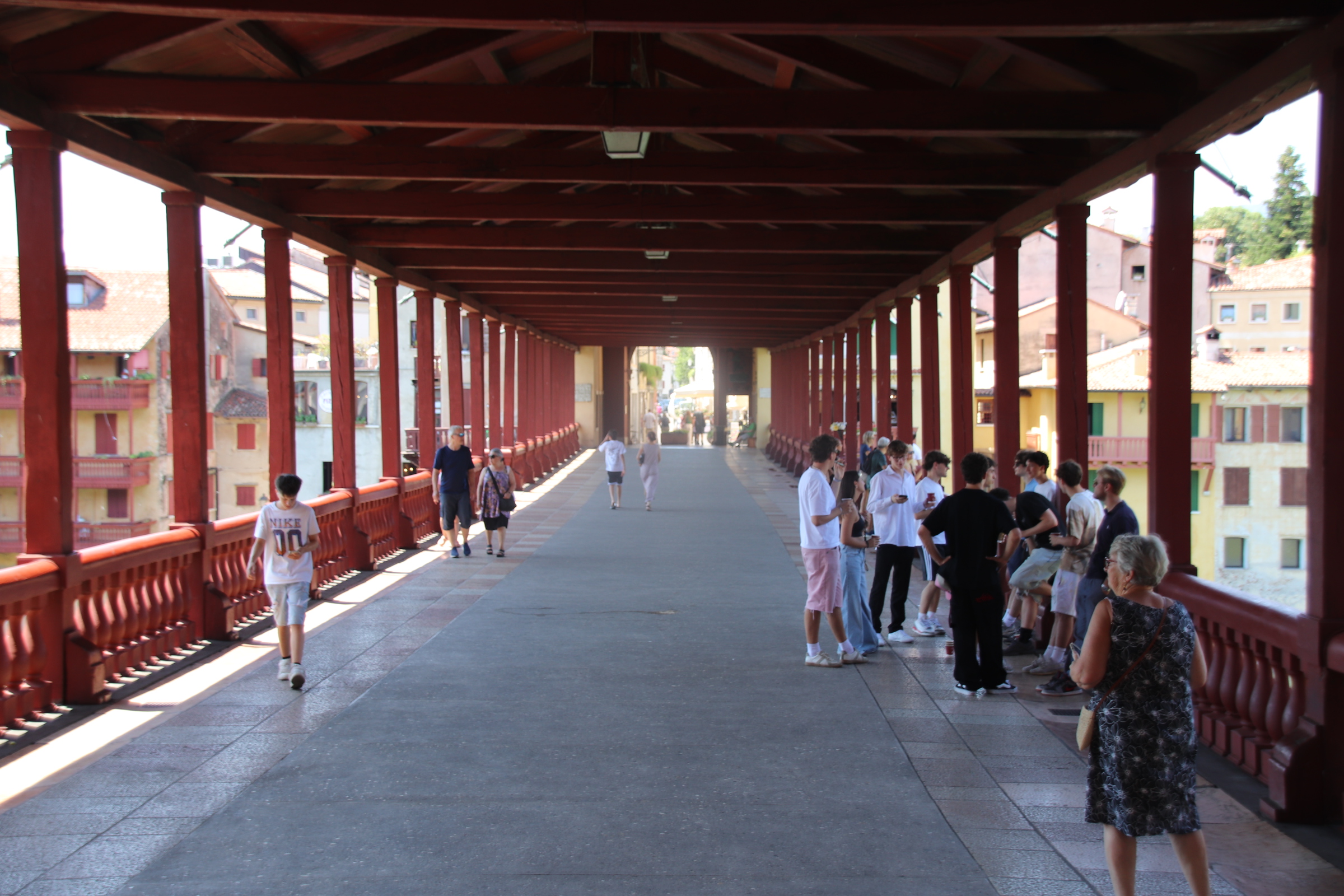
Bassano del Grappa held an important strategic position as a crossing point over the River Brenta. Once through the town walls, a series of piazzas link up to lead down to the bridge.

The wooden bridge has undergone numerous reconstruction’s since it was first documented in 1209.

It was here 1779 that the Nardini Family opened Italy’s, now oldest, distillery thus giving the town its name.

Montagnone

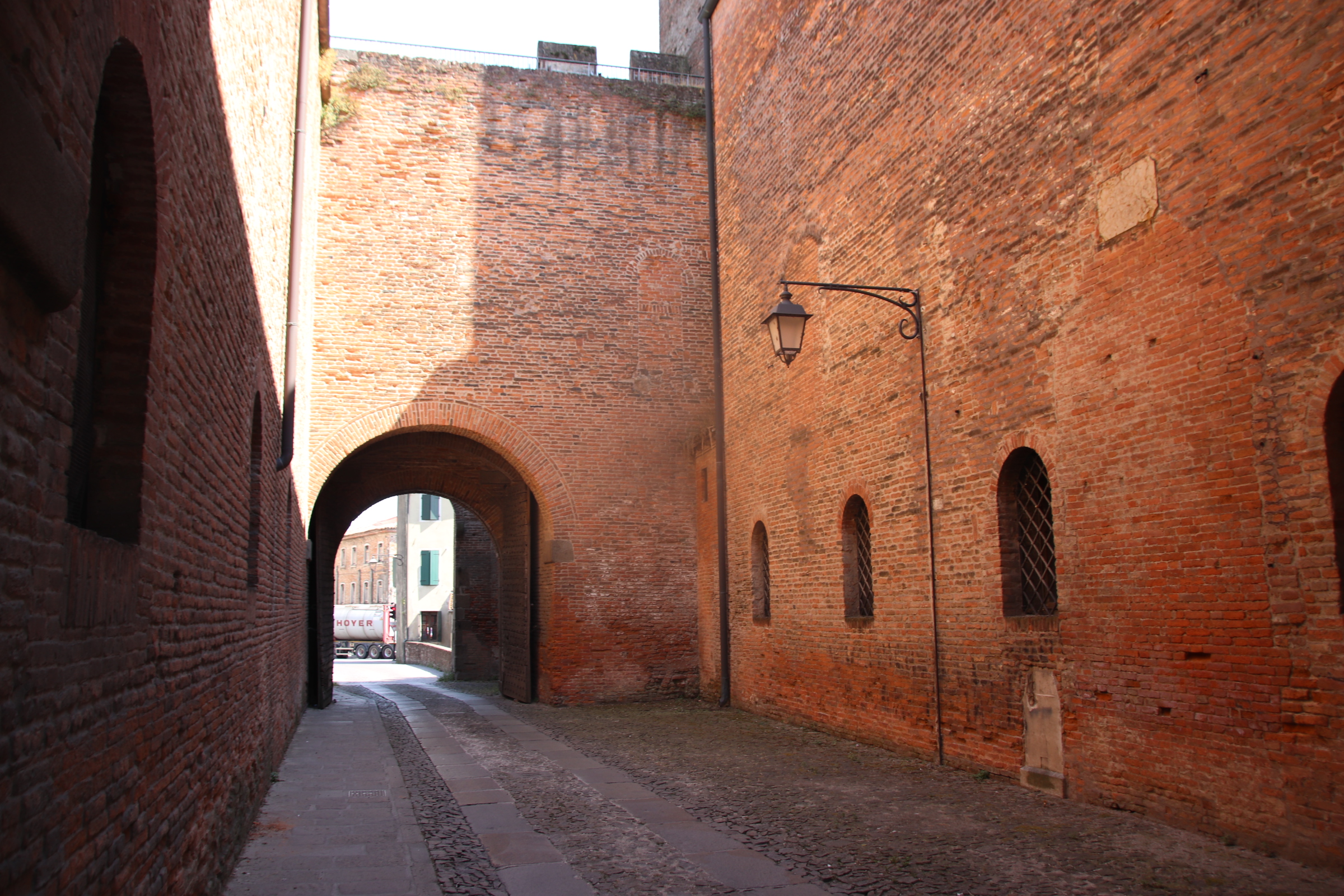
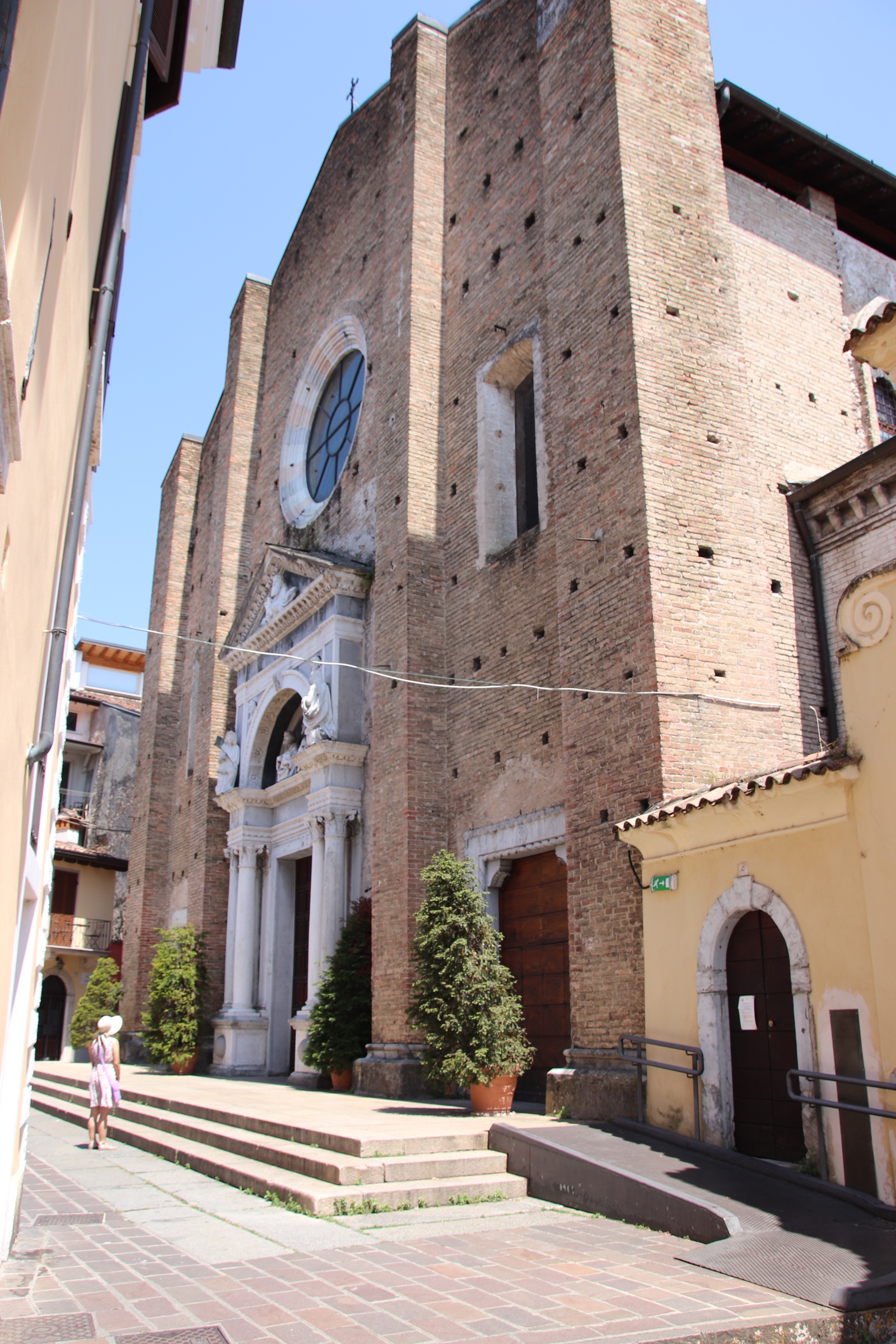
Montagnona has the best preserved, medieval walls in Europe. They form the defensive structure of the Castle of San Zeno. The square tower is deemed to have been built in 1242 on the site of a castle built in 996.

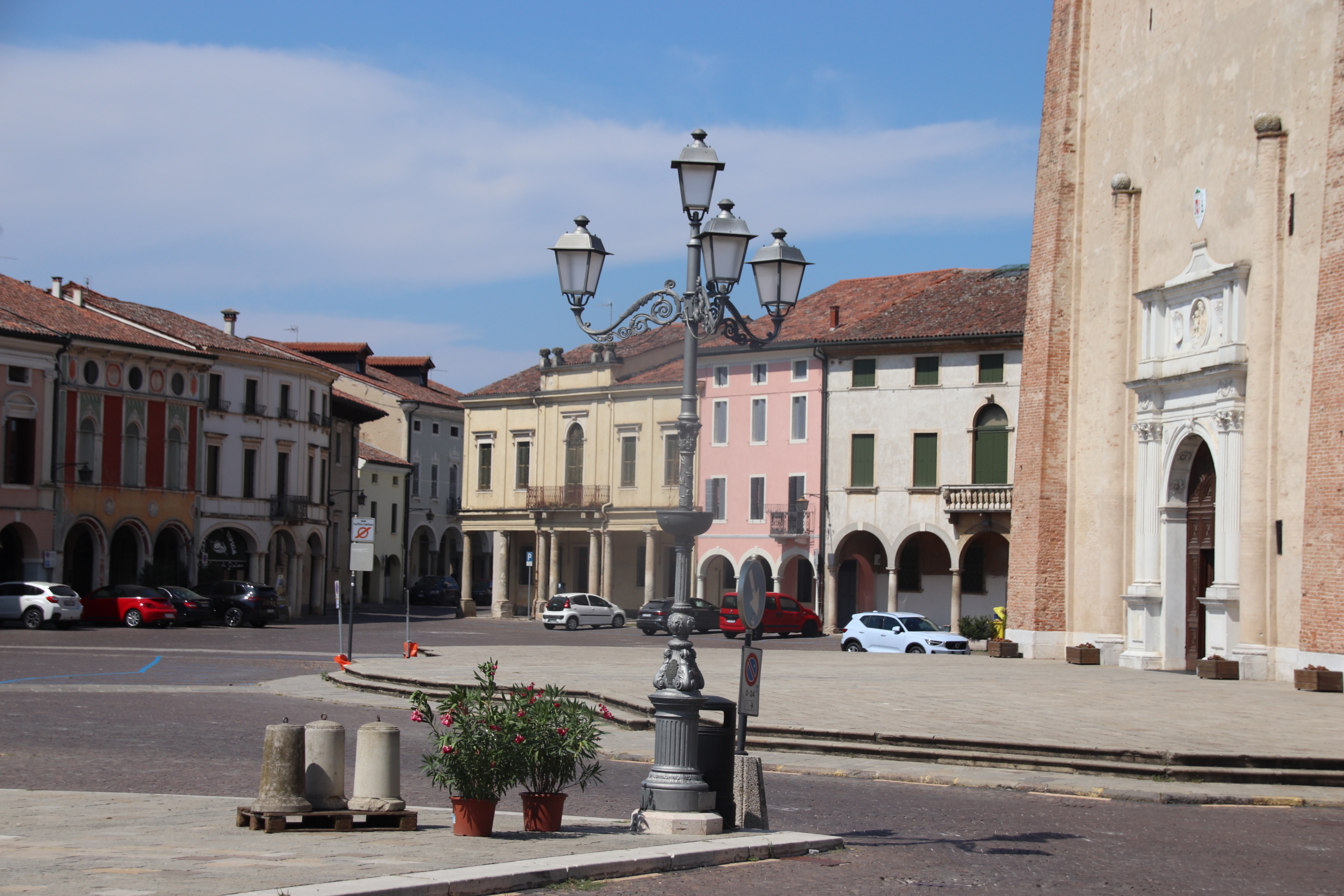
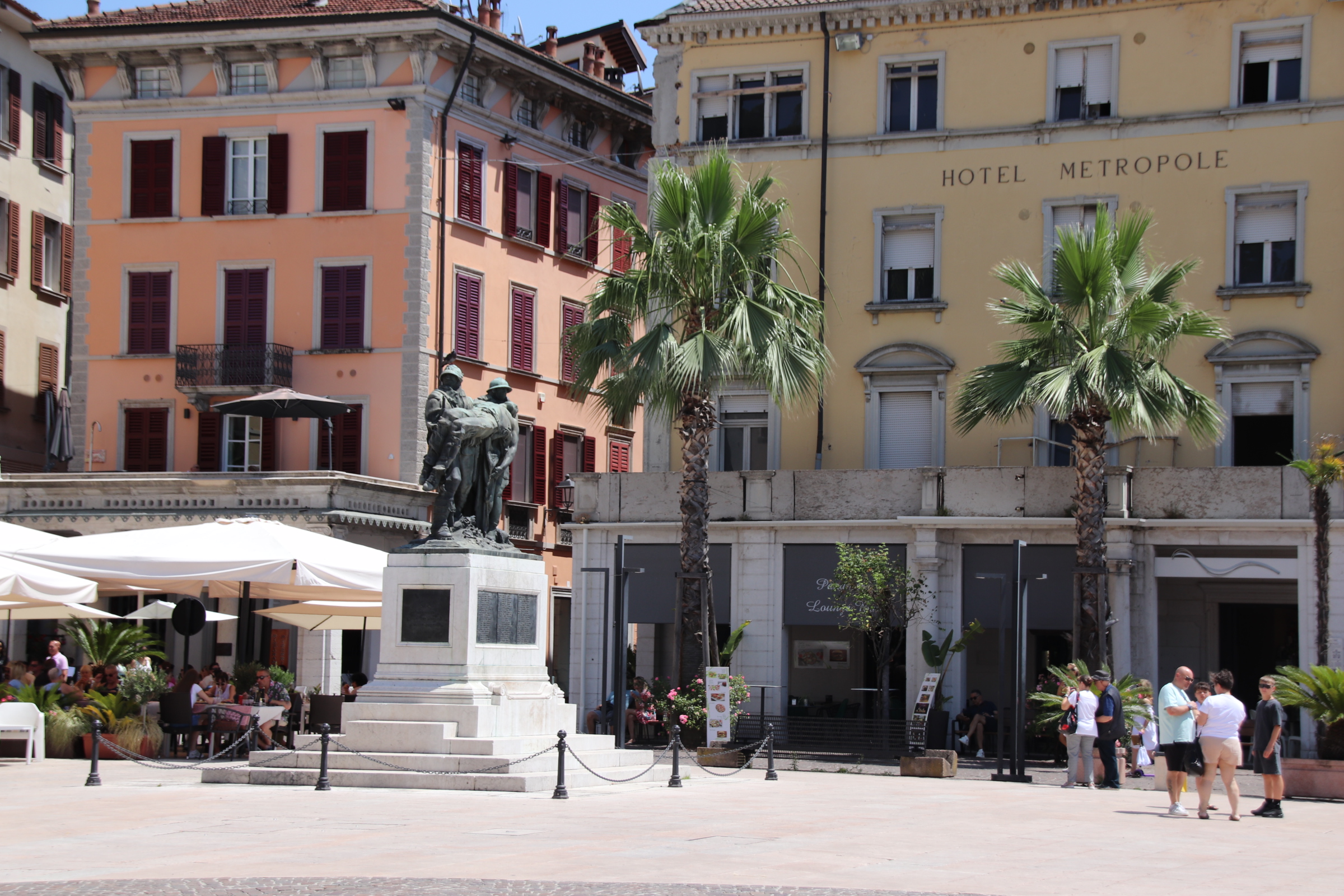
On the north & south walls, traffic lights control vehicular access to the enormous piazza that heatedly bakes in the mid-afternoon sun.

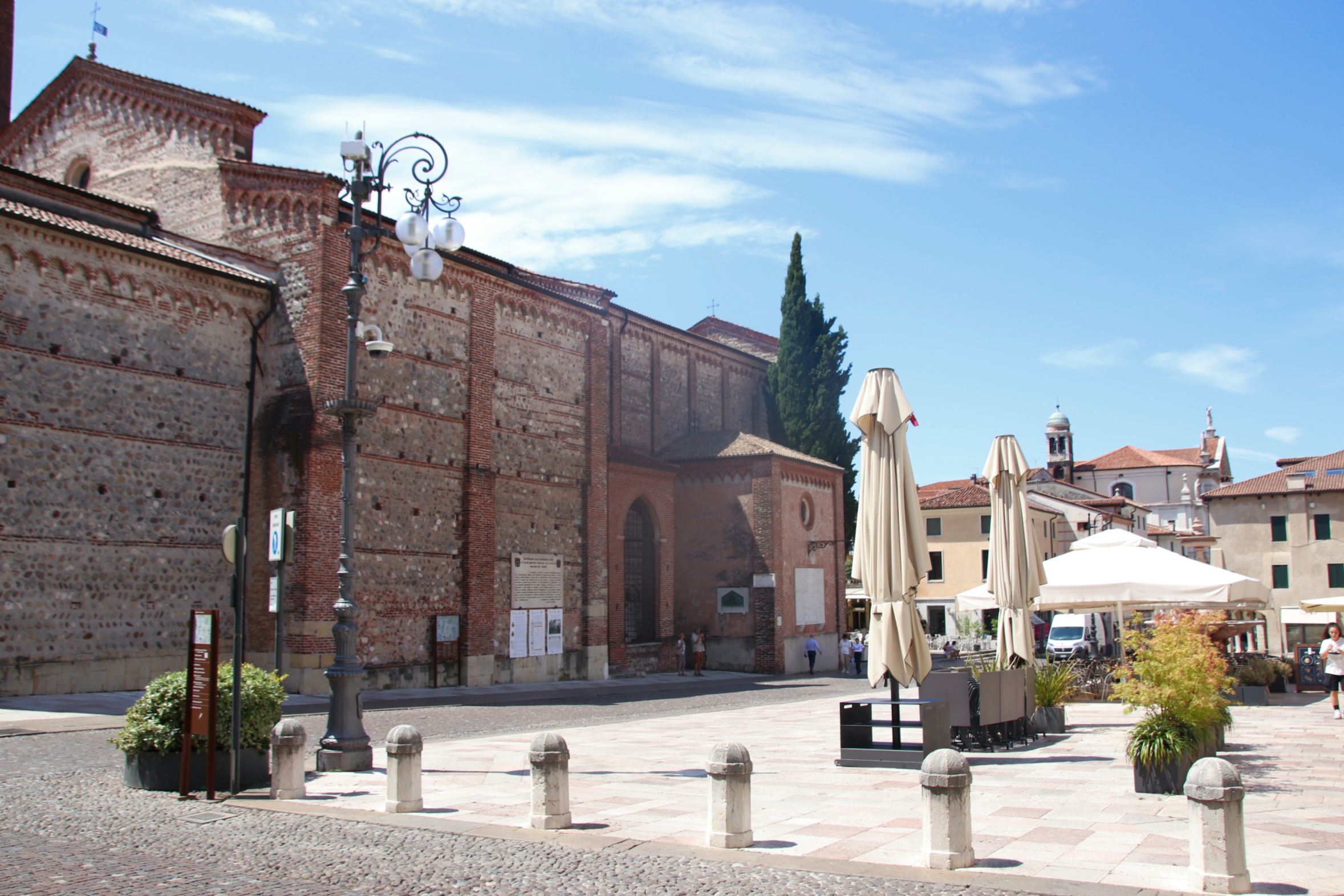
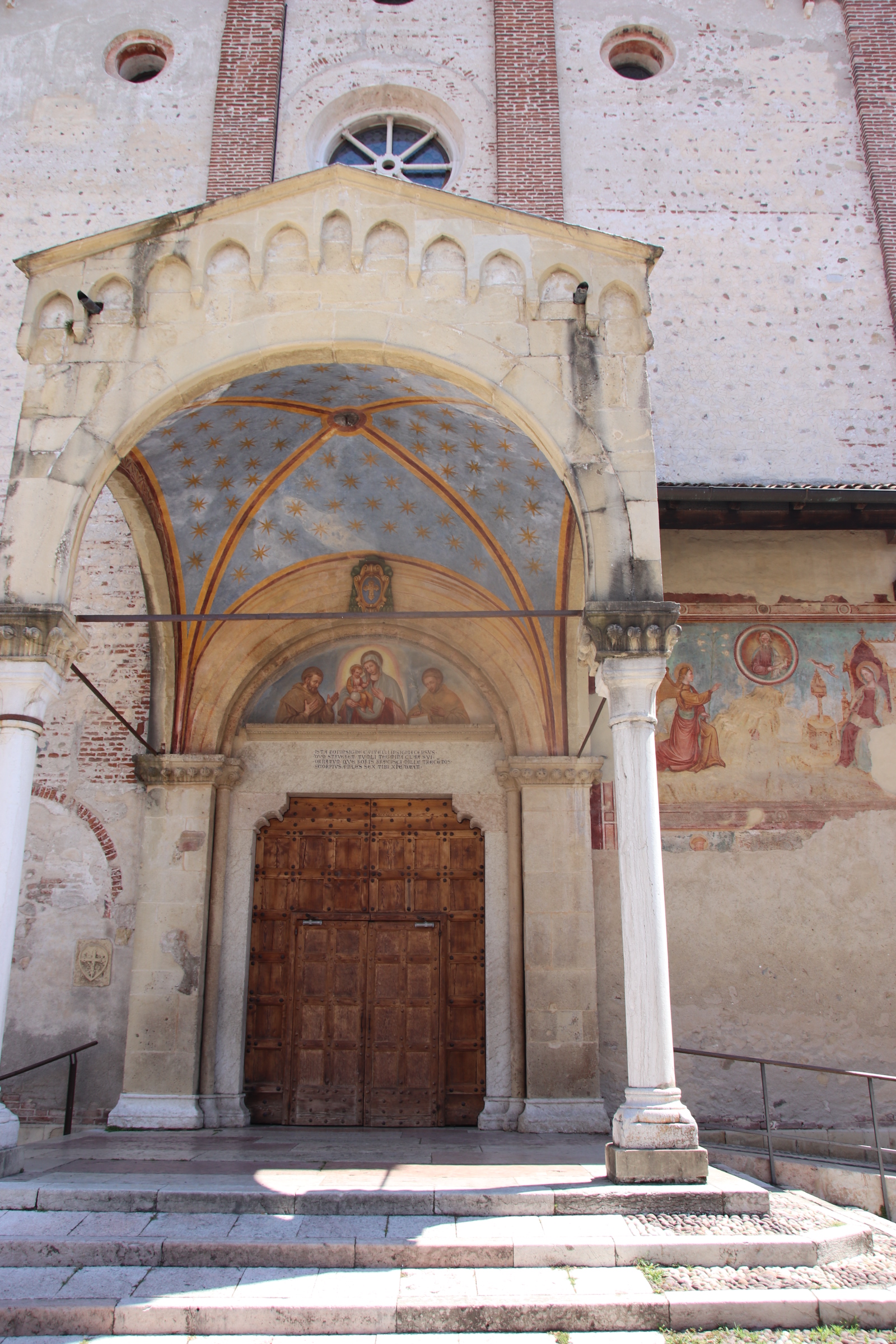
Holding prime spot in the piazza is Santa Maria Assunta. This Gothic Cathedral was built between 1431 & 1502.

The town hall was completed in 1532.

It’s not the arriving, it’s the journey that really counts

Our next port of call is in the Veneto countryside just south of Vicenza. Although only an hour & a half away by the shortest route, this would require joining the main east/west artery of Northern Italy, the A4 autostrade, and I did not fancy the hassle of that. I’m on holiday!! So I decided to head in the opposite direction.

I thought to cross the lake on the car ferry from Maderno to Torri del Benaco, head up the east bank to Rovereto. From there, to snake south through the mountains to Schio and on to Vicenza -a trip of around 4 hours. Boy, it was worth it….always take the long road and remember – it’s the journey that counts!

19€ is the cost of the roll-on/off ferry across the lake.

The journey takes 30 minutes on a vessel that would not be out of place in the Calmac fleet operating between the Scottish islands. It clanked & shuddered us across with the ramped front creating a hissing surf & the open car deck allowing the bursting sun to shine down on the righteous.

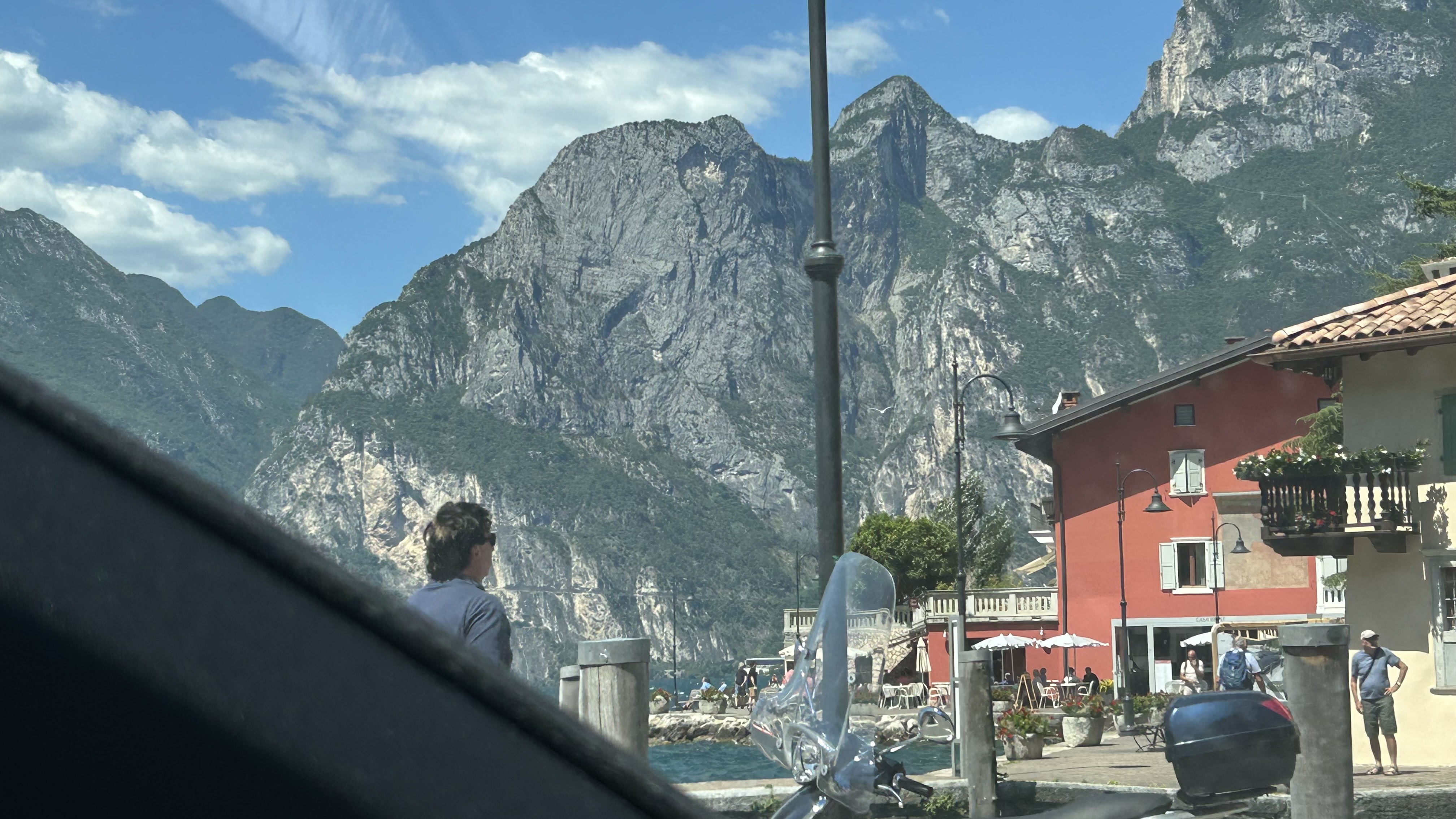
Once across, the route runs up right beside the lake with only a narrow strip of sharp stones & rough rocks separating it and the road. No grand mansions, extensive gardens or private estates hiding the lake from the hoi polloi, here. On this stretch, hotels & villas squeeze into any spare space on the land side and vehicles fit snugly into any verges against the lakeside cliffs.

From both, folk struggle over with their beach equipment like a games of Beach Crackerjack. The only way to survive the challenge of the lake ‘beach’ is to sit/lie on your own sun lounger to raise you above the surface of the shrapnel below.

The dedicated beach creature unloads said sun loungers, deck chairs, lilos, hampers, flippers, snorkels, towels, umbrellas which, somehow, they are able to erect in the rocky terrain. Wind-surfers soar above in the mountain air.

As the top of Lake Garda narrows, the peaks & crags tighten their grip on the landscape and squeezes it until it oozes out into wide meadowed valleys. The route then enters the ridged spine of the mountains, snaking up cavernous passes and down crag-strides in sharp-sided canyons & around pointed, ghoul-friendly peaks finding isolated , ancient, settlements or the occasional field of harvested grass.

After several hours of invigorating driving, hard but rewarding, we emerge in the soft hills of Veneto.

    Eating out around the bottom of Lake Garda

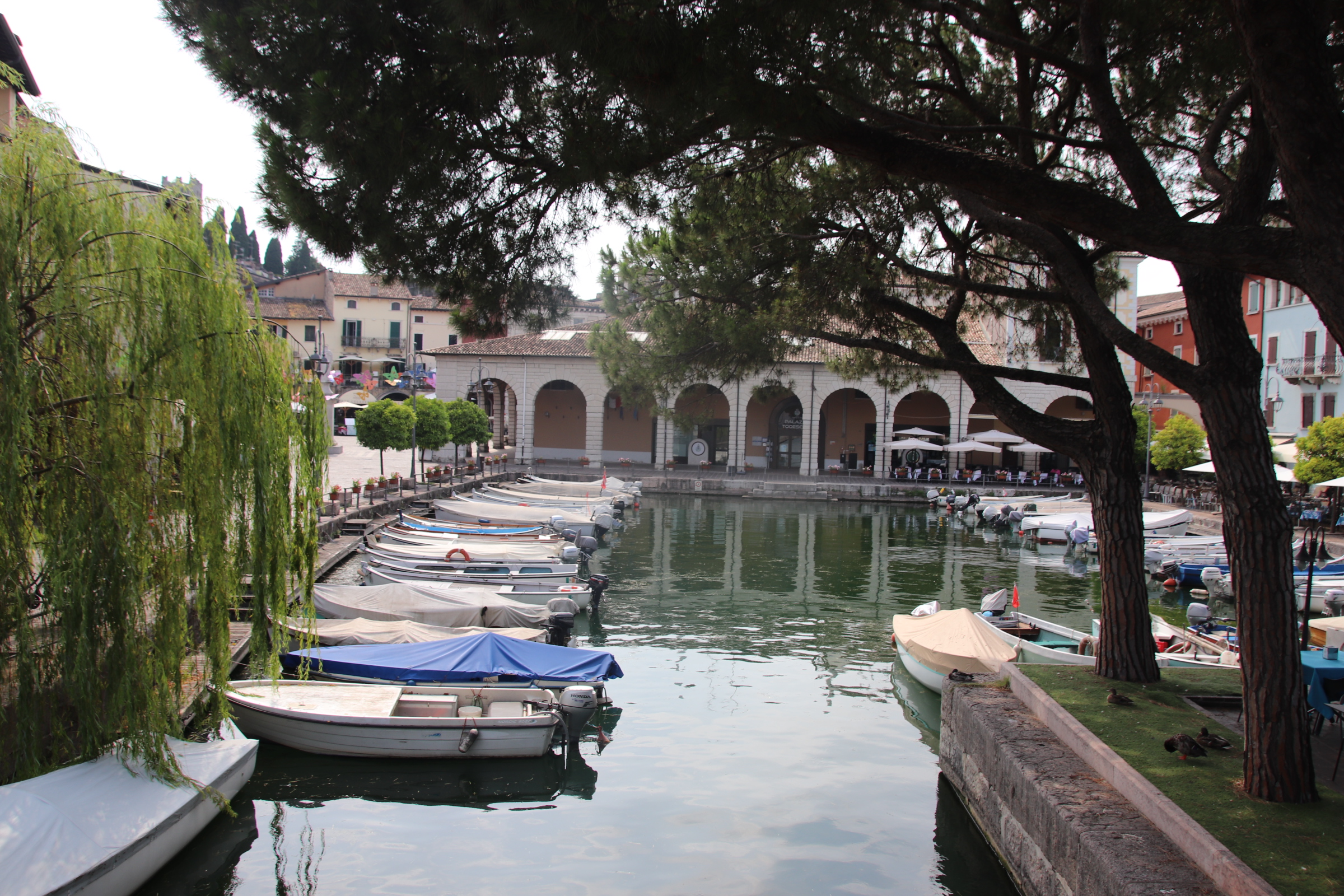
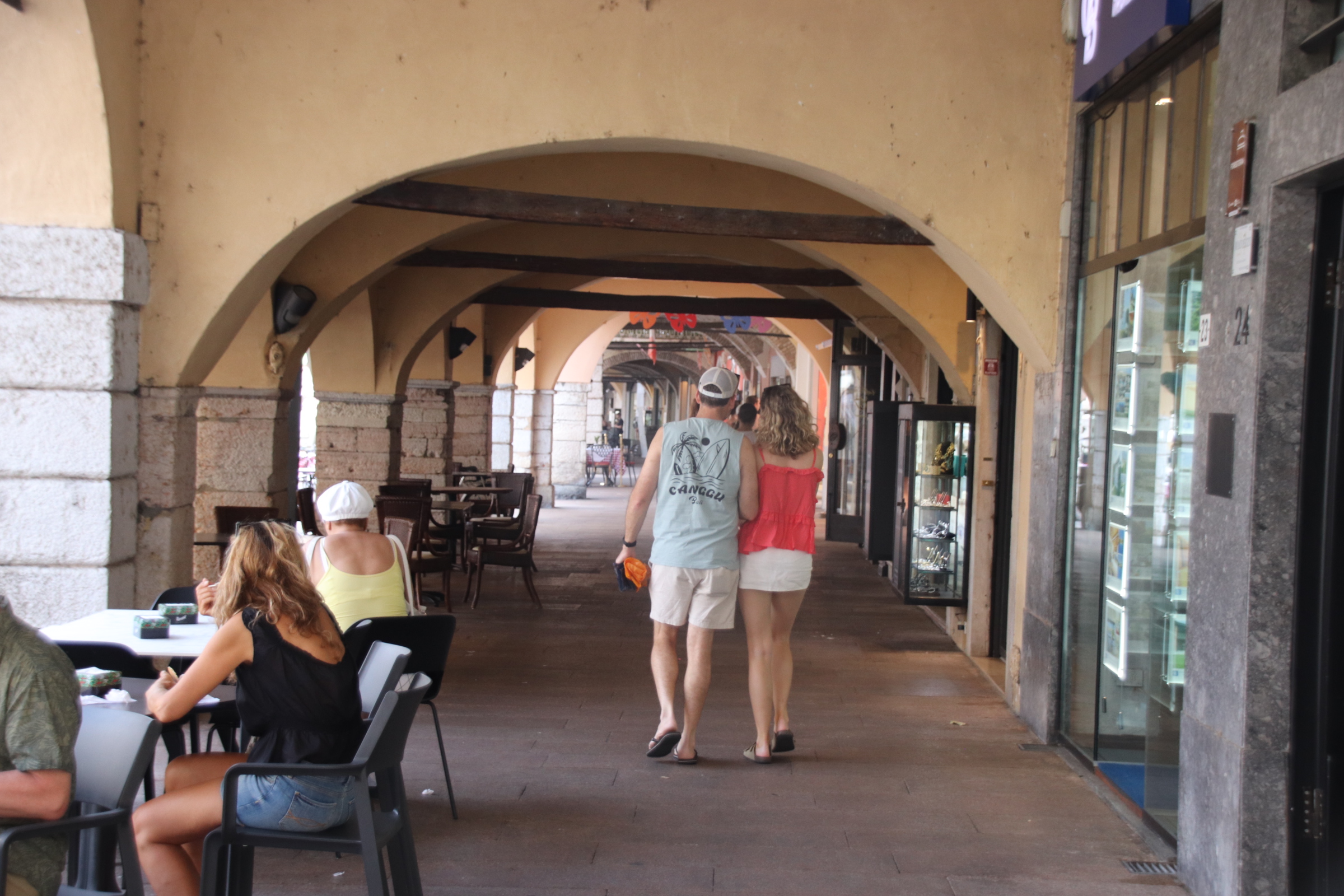
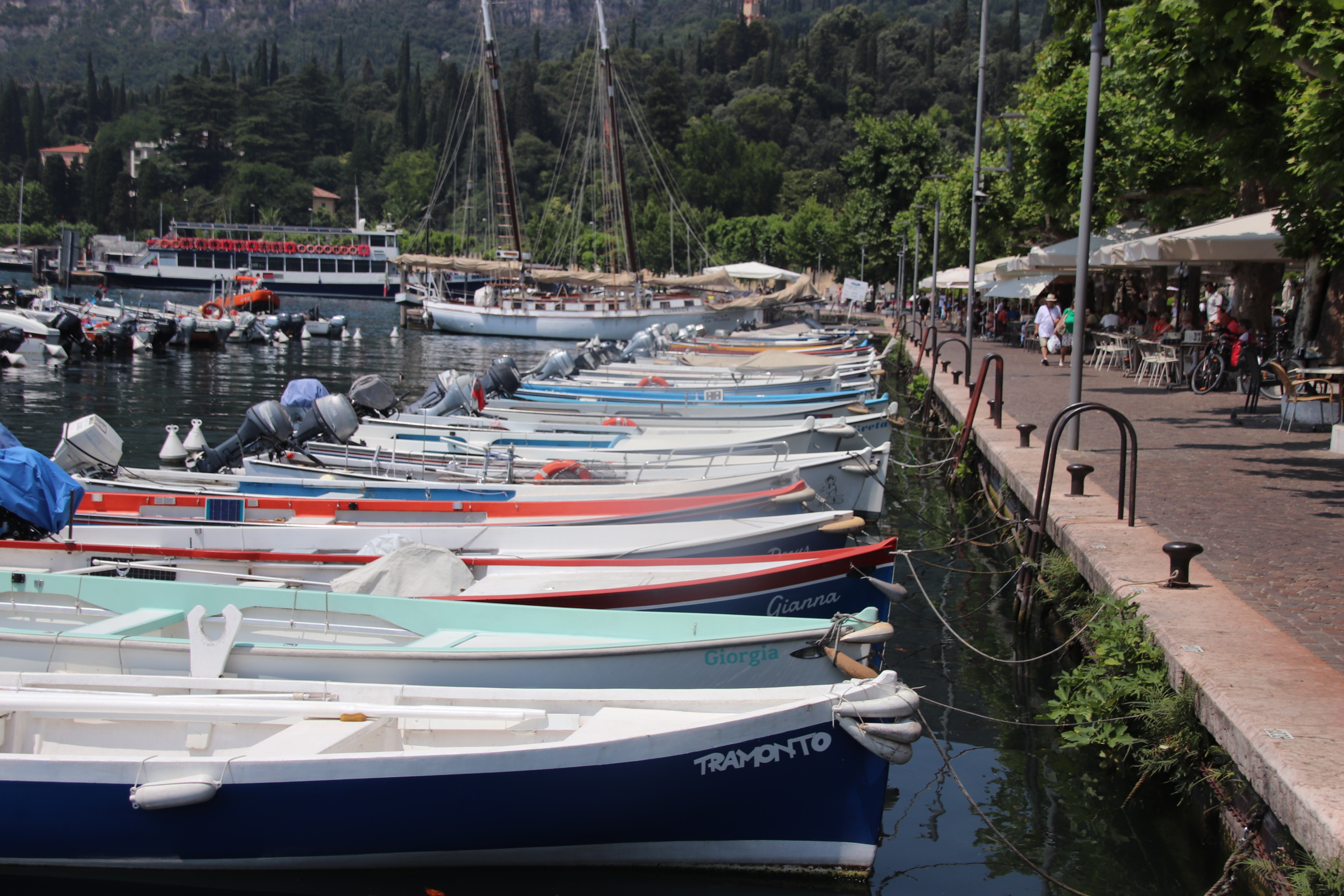
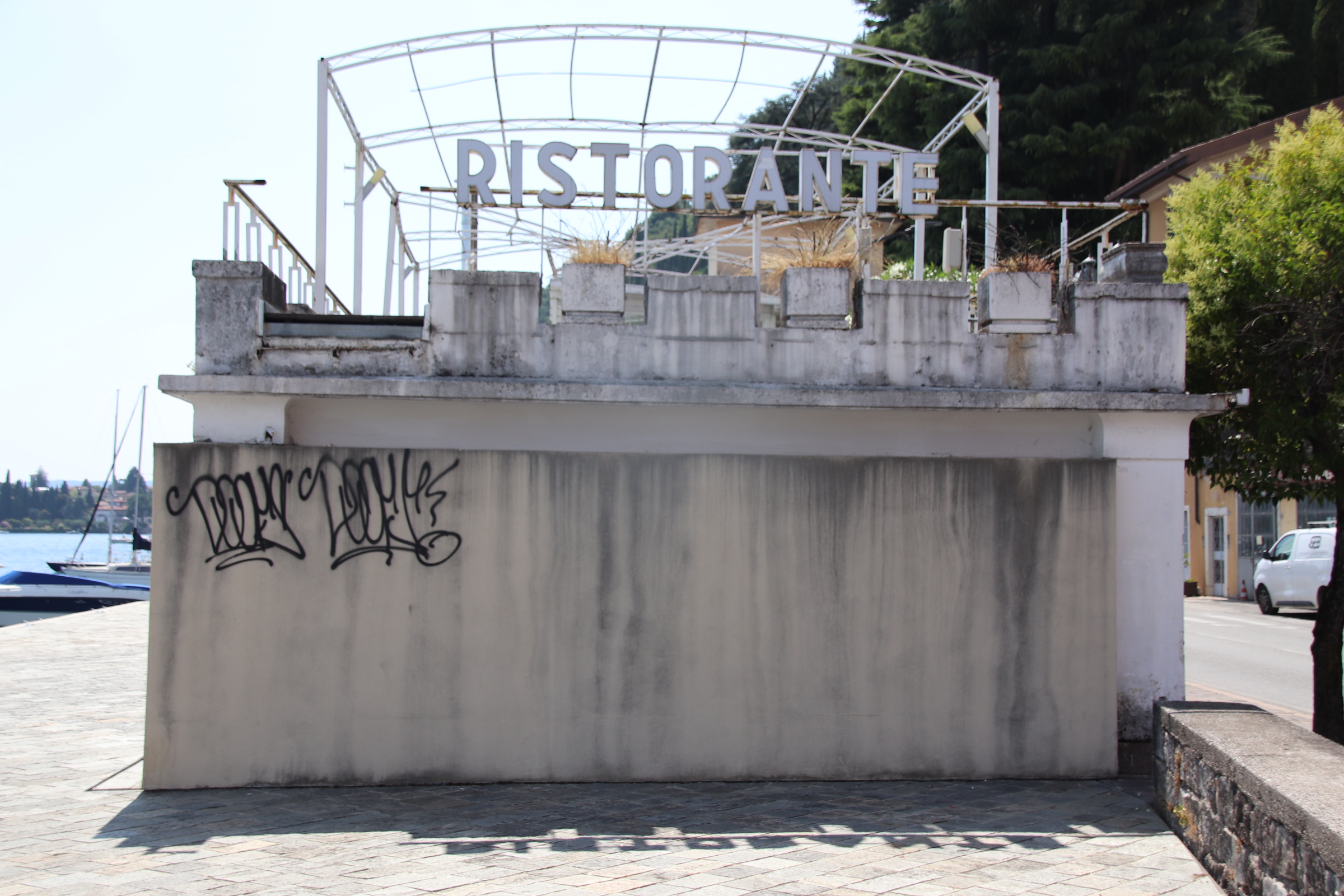
    Desenzano del Garda was the last place to visit on the southern shore of Lake Garda and, like all the rest except Sirmione, it was quiet, peaceful, almost empty of life. The scorching heat had cremated any living body and scattered their ashes over sun-blasted streets & furniture.

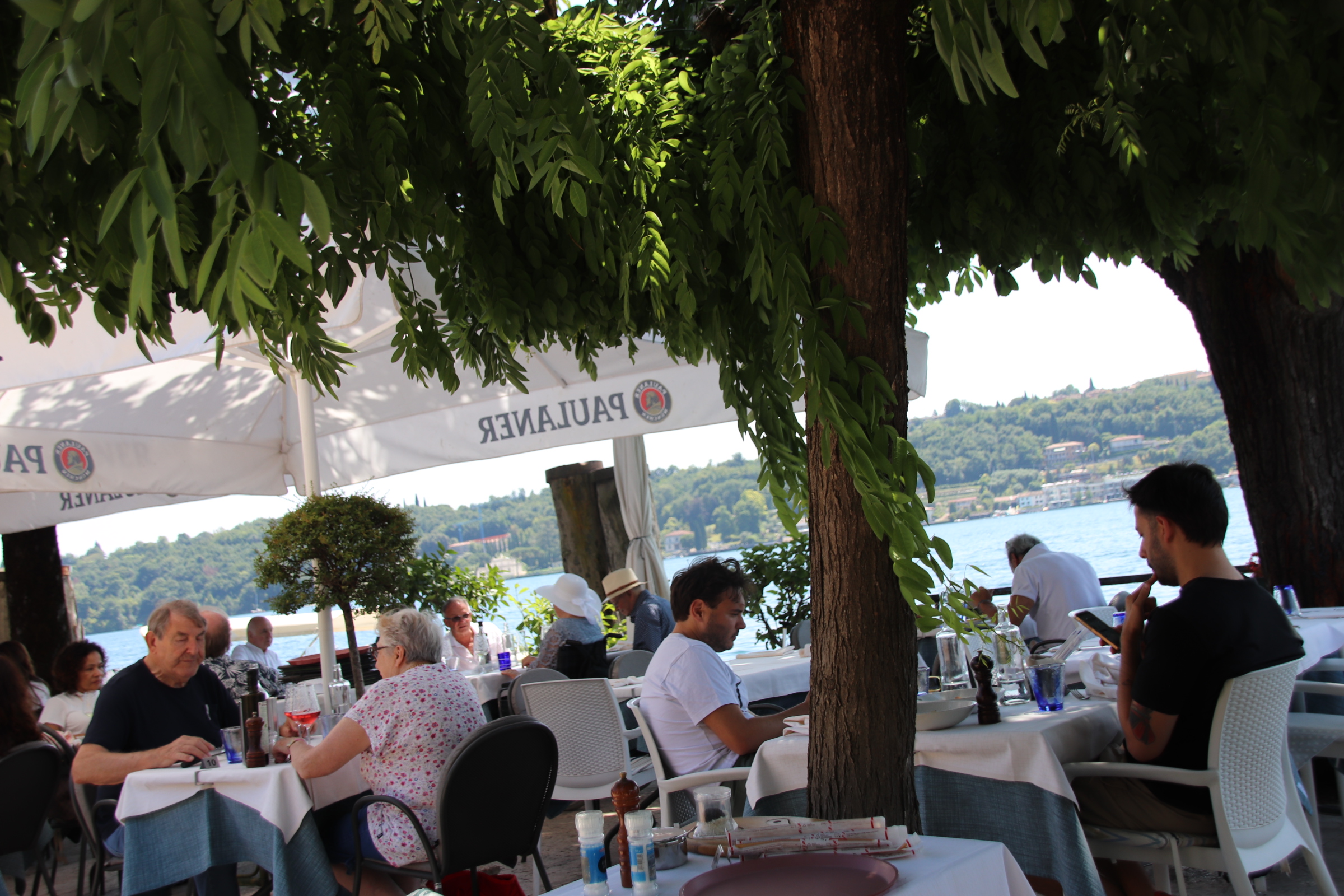
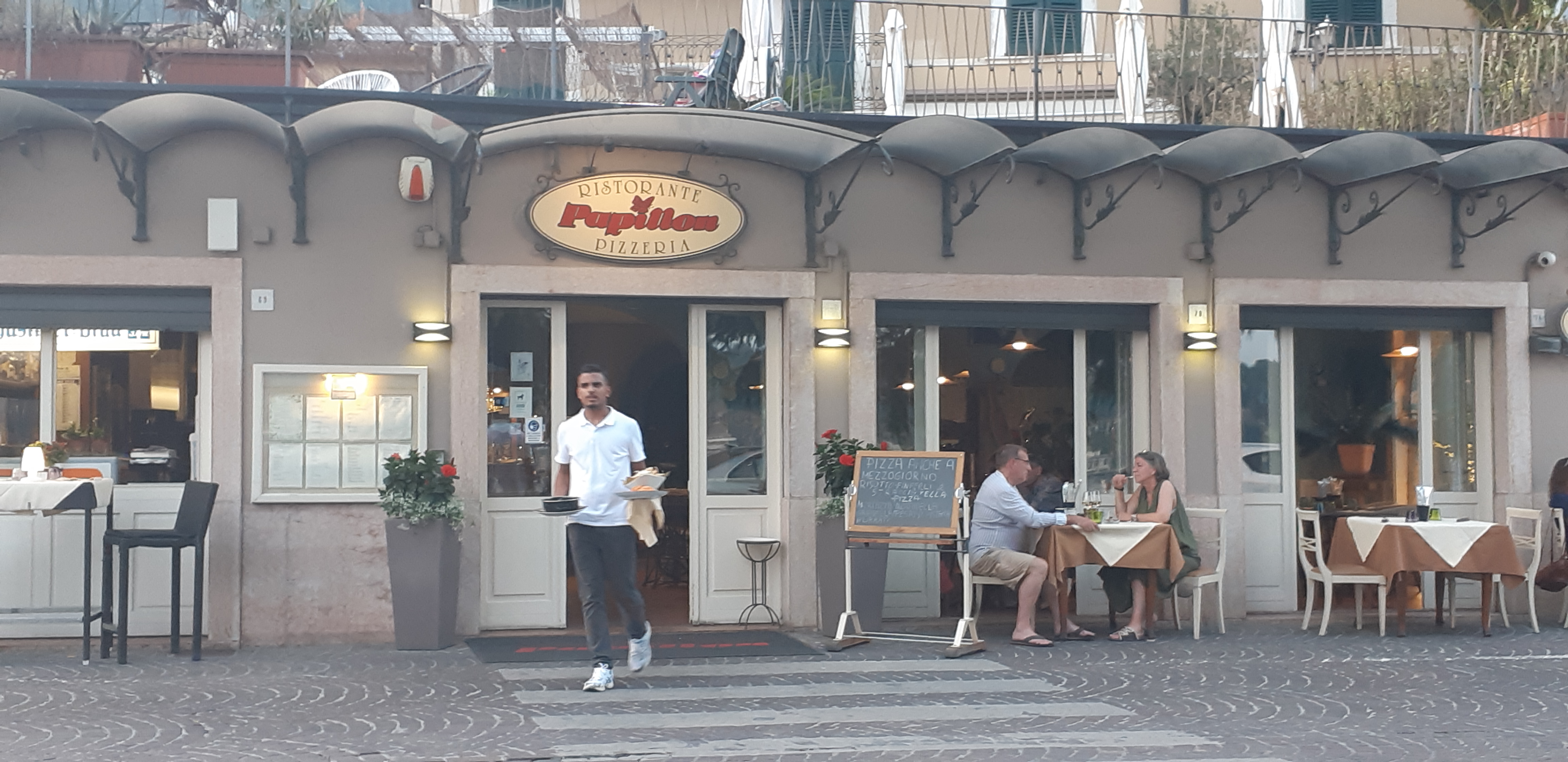
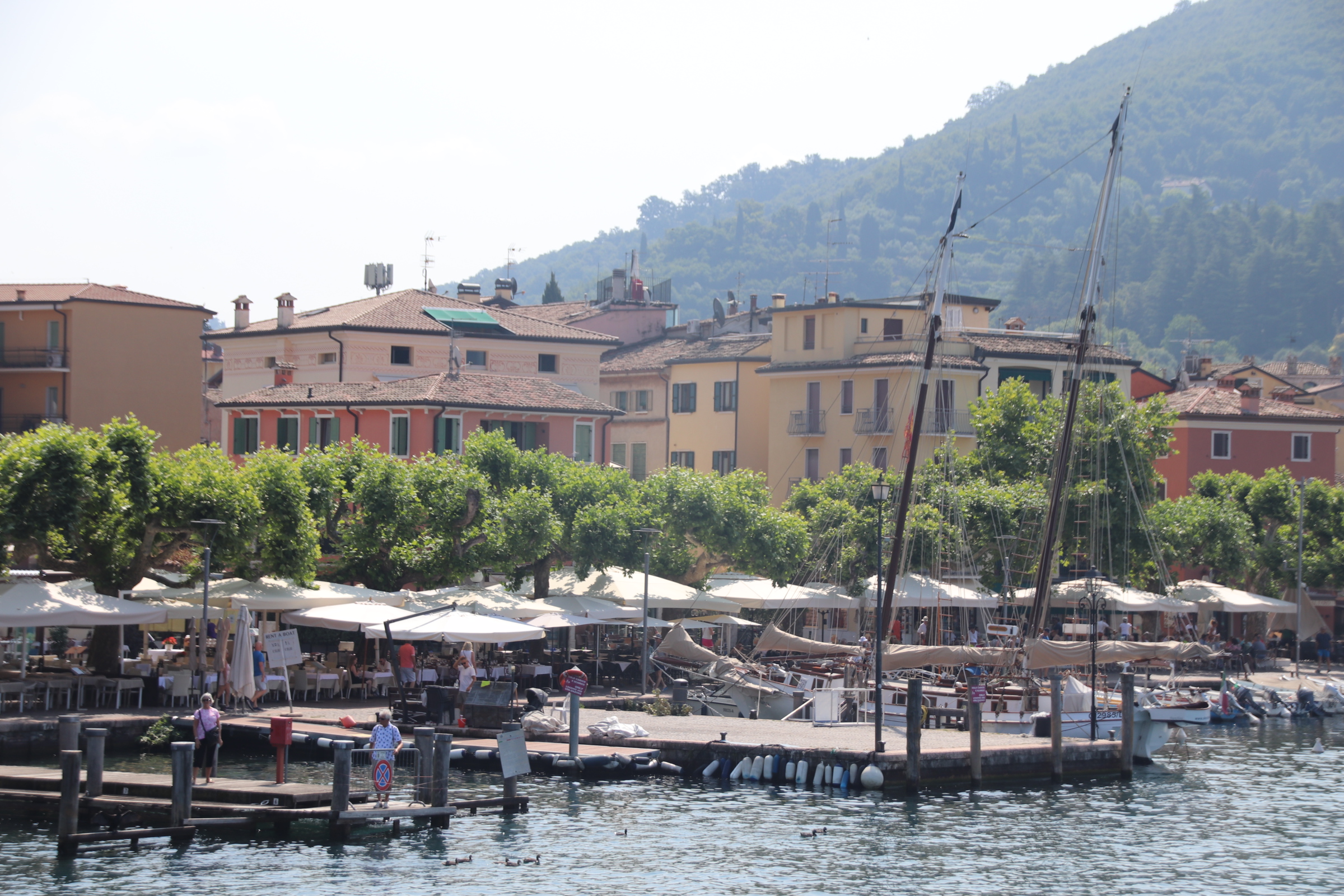
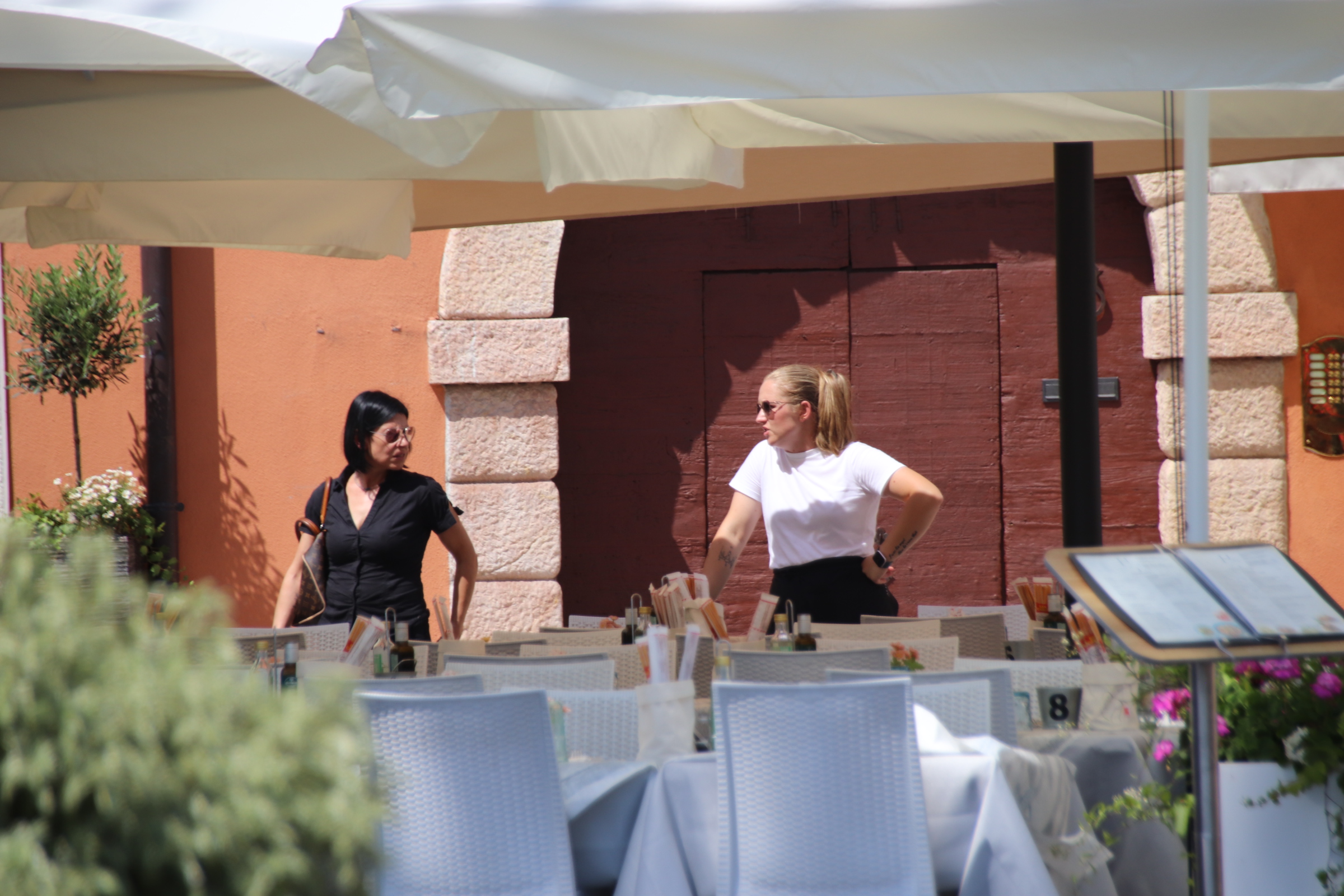
    A memorable part of the stay were the many places we found to eat. There were two along the modern front in Salo.

    The first menu balanced lake fish & meat – in the end I declined the donkey casserole (bit heavy for a hot, sultry evening).

    The second was a handsome pizzeria.

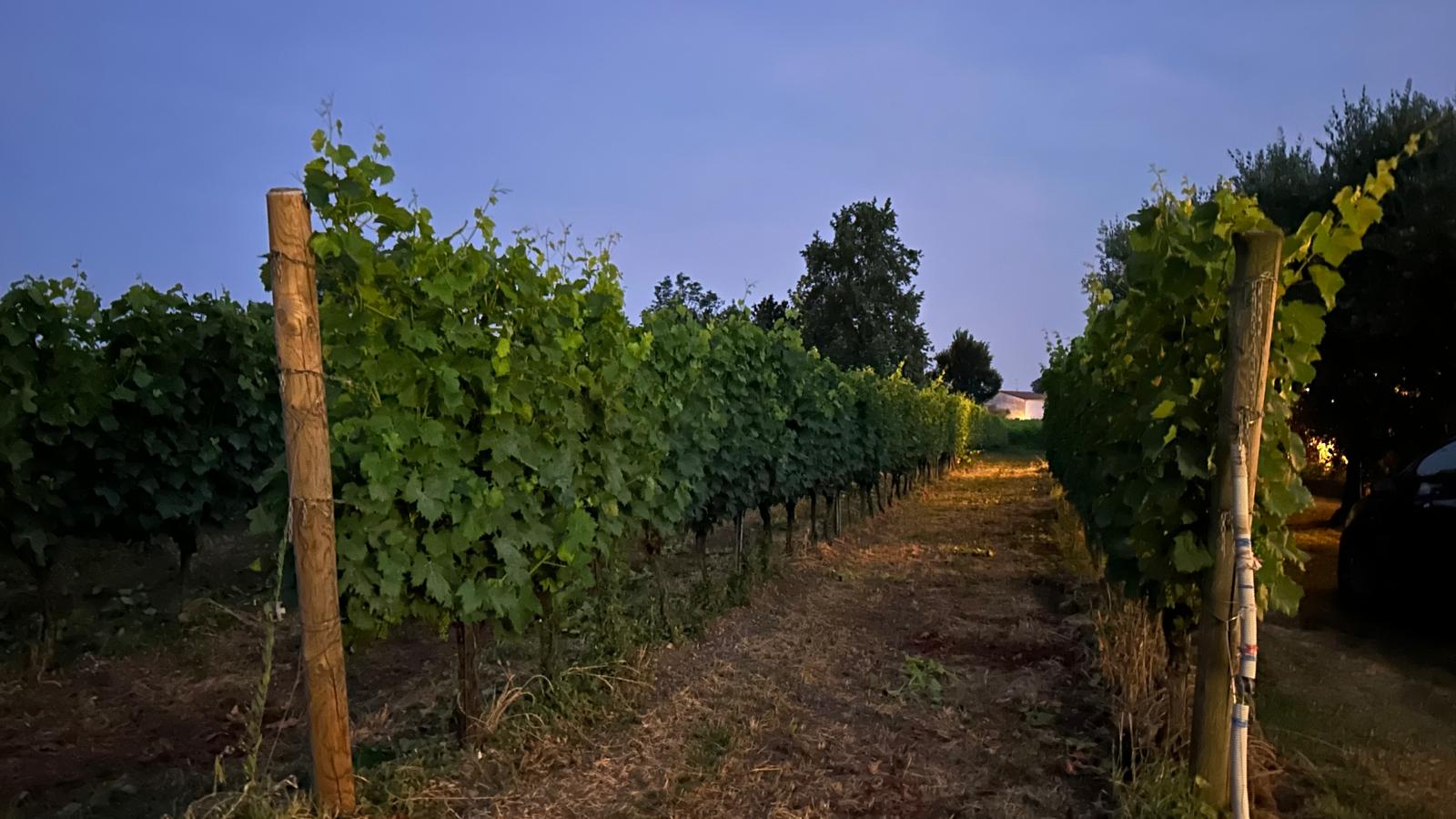
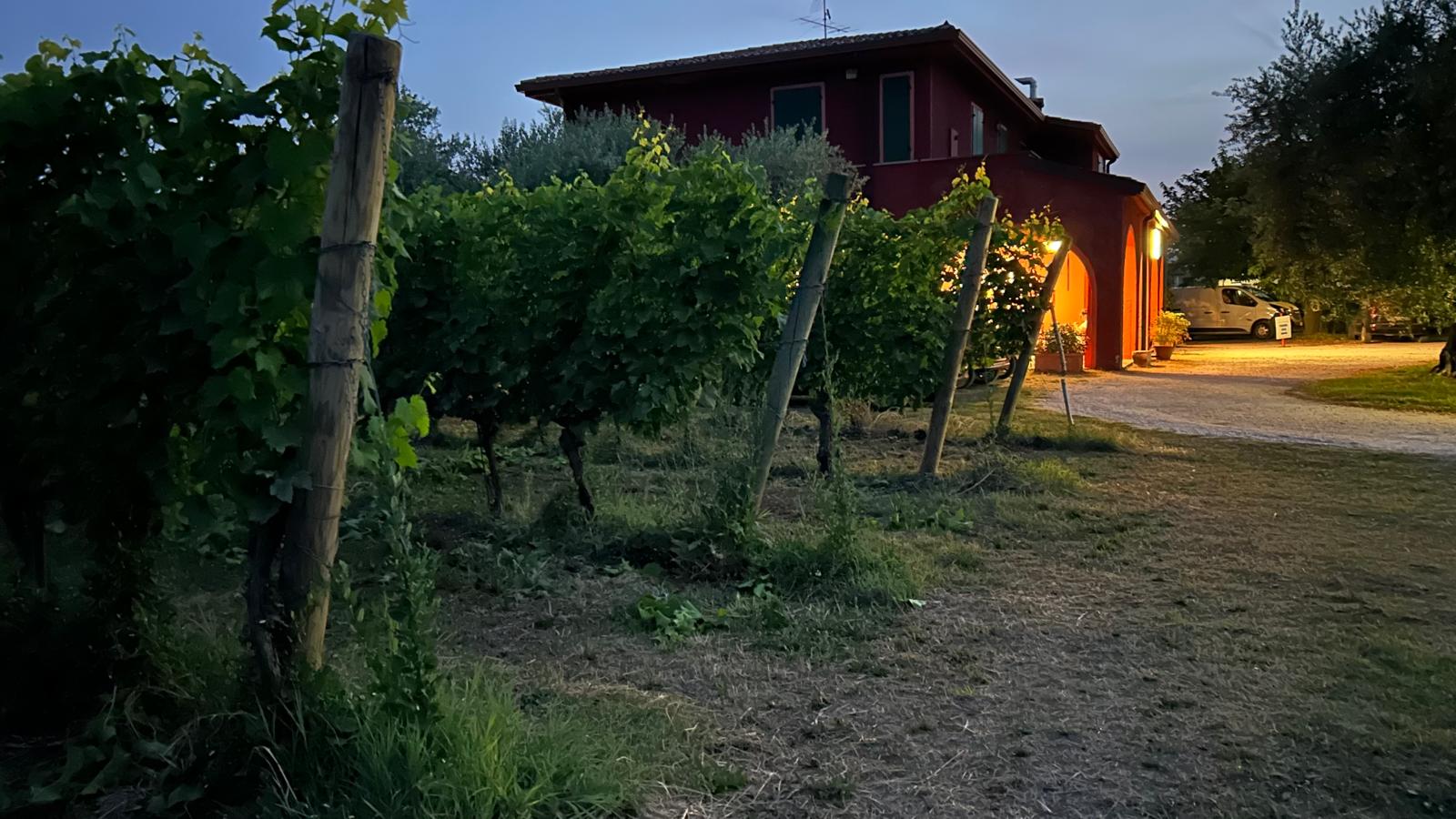
    One evening we ate in amongst the vines.

    A ‘carne’ restaurant that served no fish was a godsend to those with a seafood allergy.

    We shared our last meal with a coach load of German tourists next to asmall funfair; the saving grace was a bottle of excellent red and an exceptionally tasty apple turnover.

    Escaping Sirmione

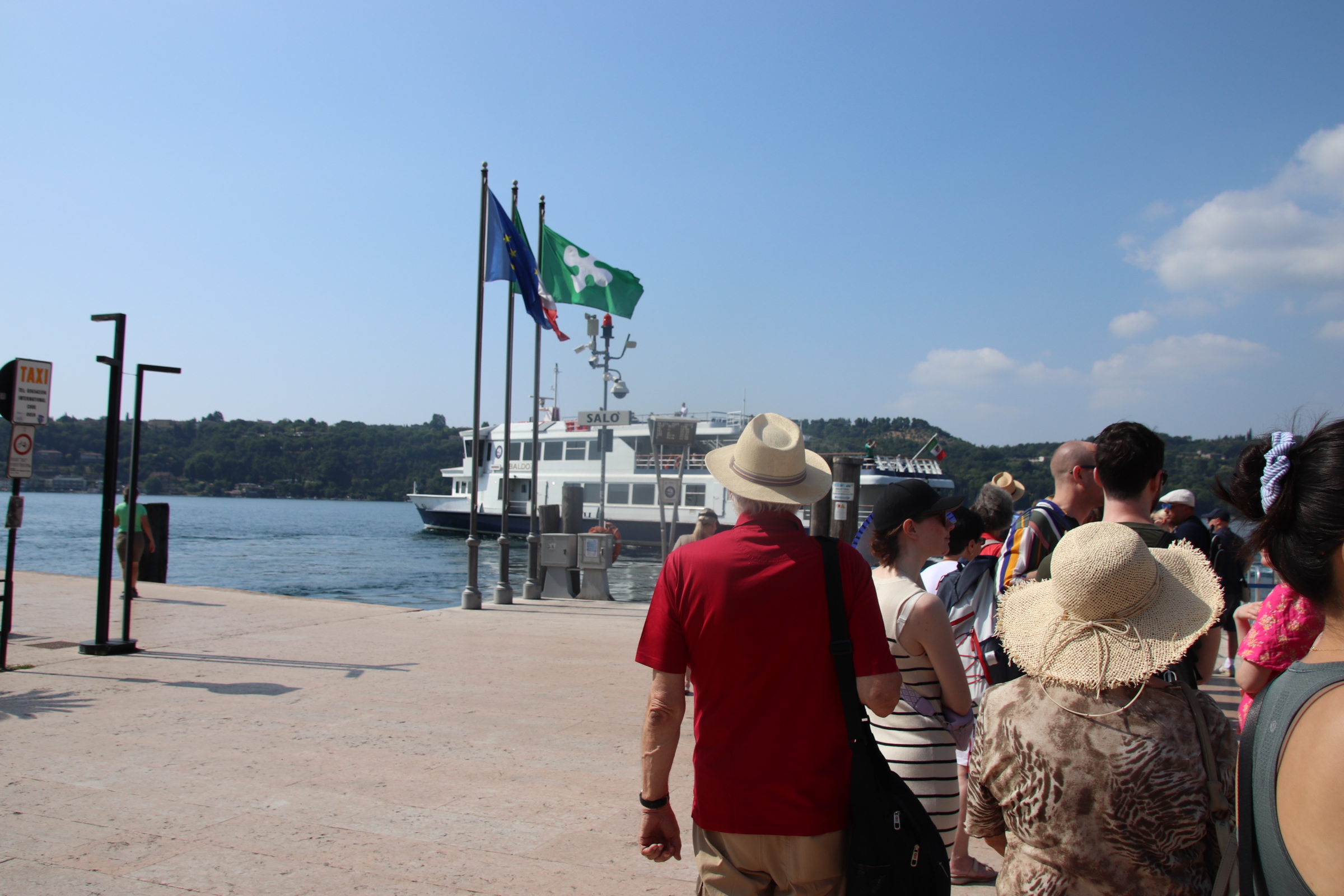
    It is the day to come to terms with the Lake Garda ferry timetable.

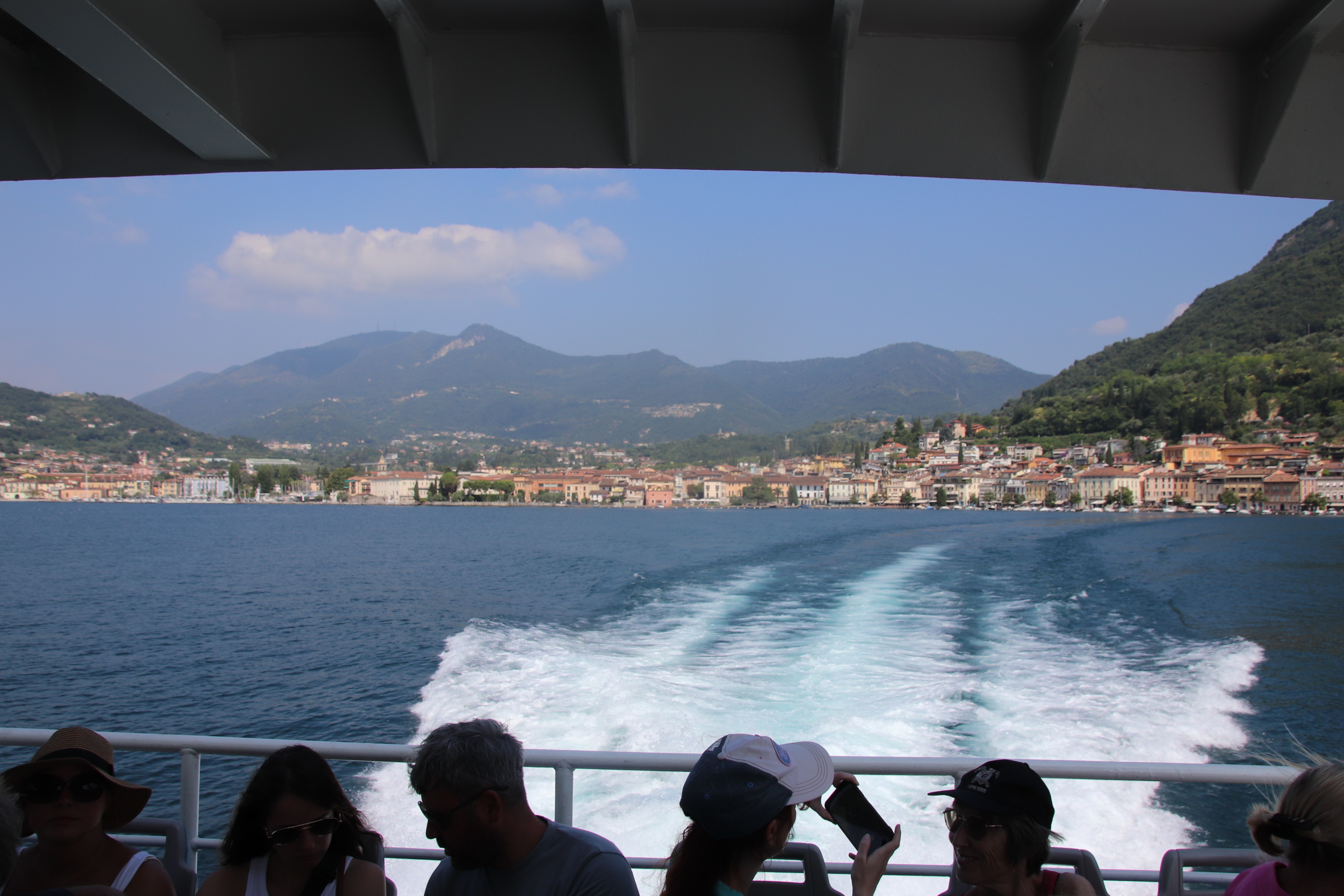
    Easy you may say. Yes, but only after careful study. It details all routes from all towns in no particular order other than north to south on one side and visa/versa on tother. An occasional ‘fast’ ferry confuses it more by missing out certain stops and reducing journey times. The danger is that by timing your arrival at one place you then have limited options to get back and if that boat is full, you are stuck for several hours. Luckily this never happened and our journeying was great fun & really cool (in more ways than one – lake breeze ruffling my hair and wonderful views of private islands, elegant gardens, castles & turrets & spires).

    The first journey was down to Sirmione, an hour away on the first, fast boat; a bit of a shudder but glorious sights of lake craft – chugging ferries, elegant yachts, sleek playboy motorboats leaving crisscrossing wakes of leaping horses to mark their routes.

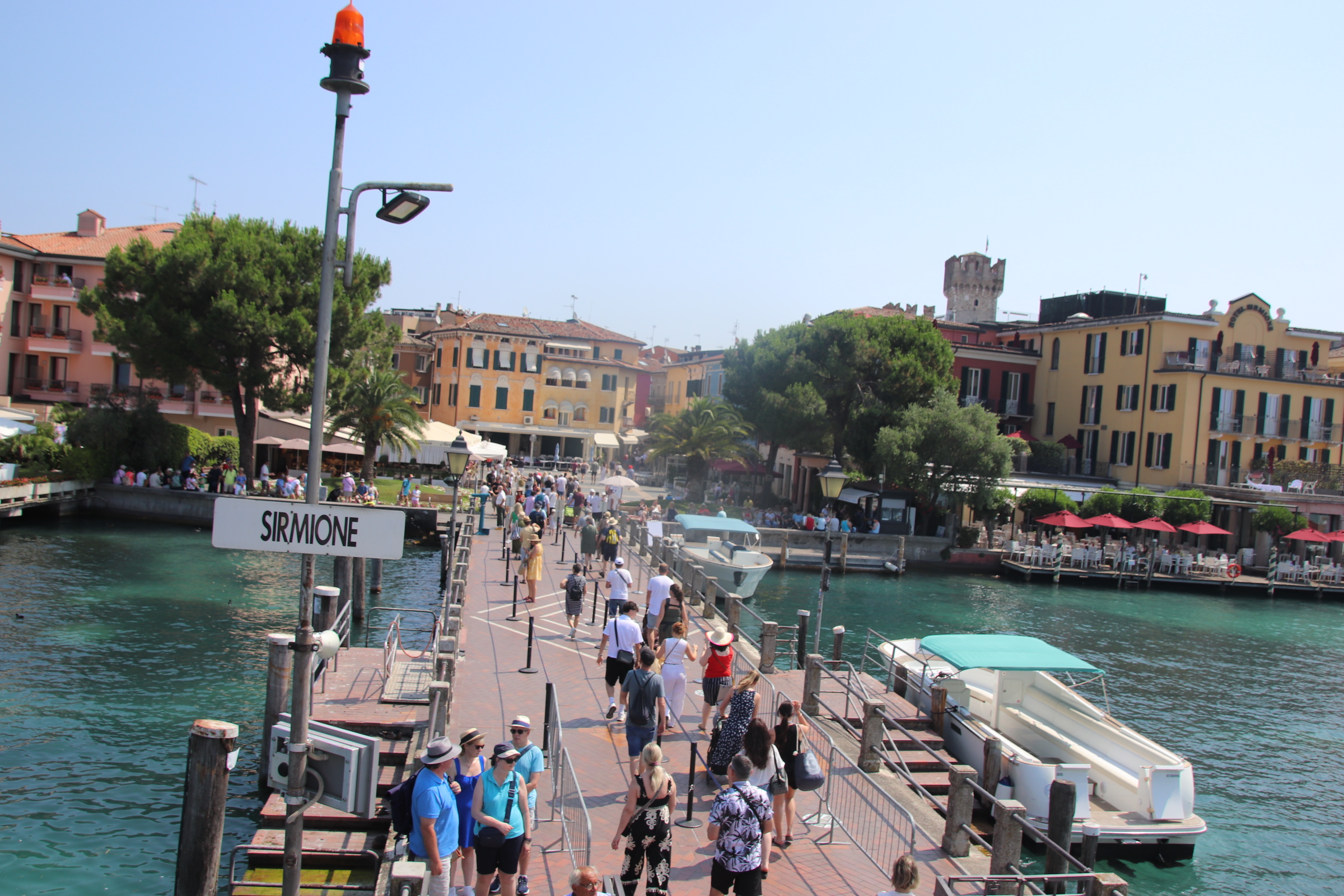
    From our crow’s nest on land we can see Sirmione down on the lake in the haze. It lies on the head of a long, thin peninsula that stretches out from the south shore. In Roman times a villa stood here amongst Cyprus trees, olive groves & shaded gardens with thermal baths as company.

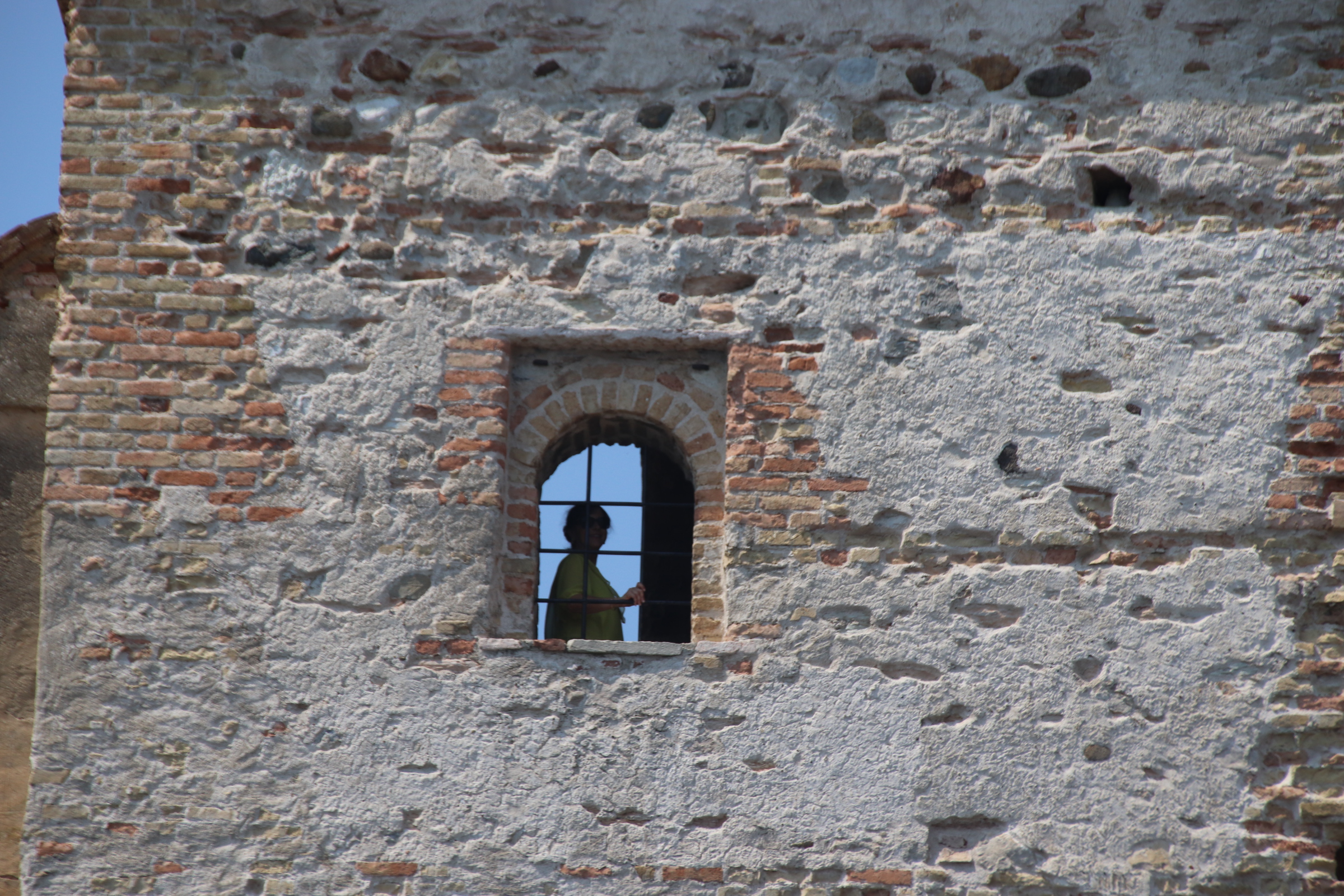
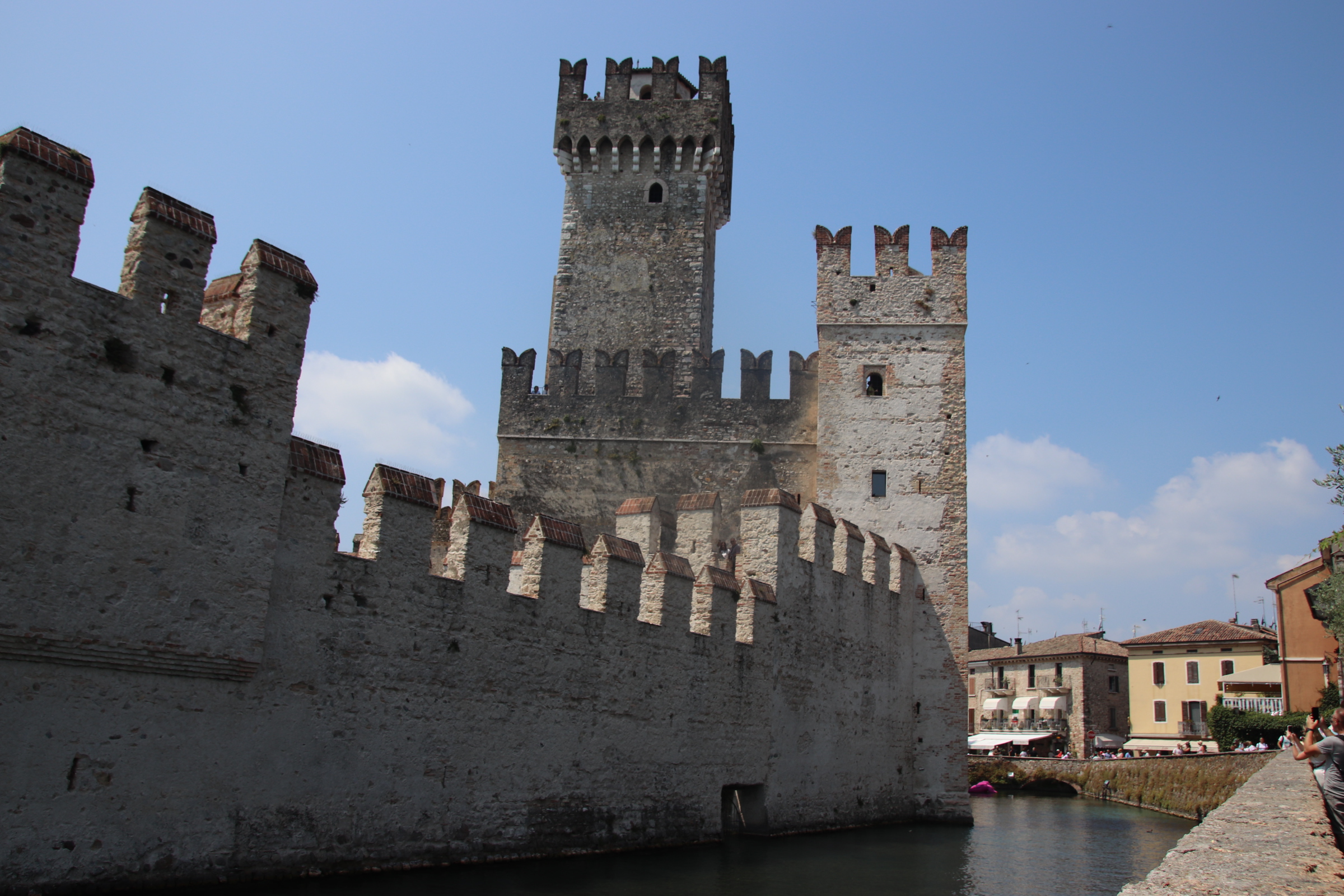
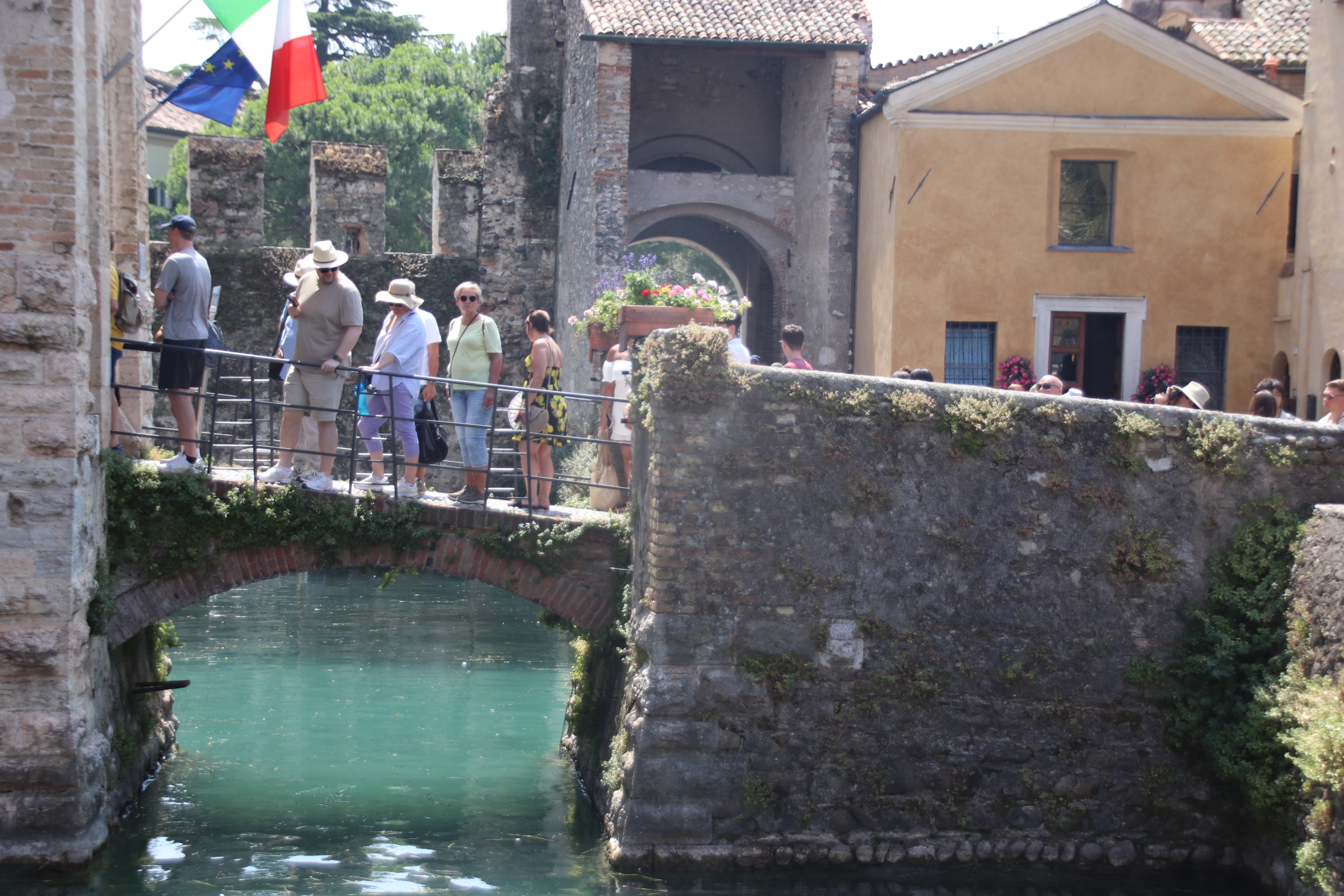
    Its unique position was not lost in medieval times when the impressive Rocca Scaligera castle was built with typical castle features – drawbridge, castellated walls, a Rapunzel tower, moat …. oh and a large, bright pink, plastic crocodile.

    However, Sirmione is on the radar of every tour operator from Frankfurt to LA and suffers with tourist groups crammed into dusty, hot, cobbled streets. The outside car/coach parks are full & ferries offload their full capacity to contribute to this bad tempered melee.

    “Quick, consult the timetable. There’s a boat in 30 minutes to Gardone. We can get off there, and wait for the 3.05pm to Salo….maybe grab a light lunch & a glass of wine…….much more civilised”.

    Bliss!

    The Gardone Riviera & Maderno on Lake Garda

    From our perch up here amongst the ripples of breeze that rustle the olives, vines & cypress dotting the hills above the southern part of Lake Garda, one can plan sorties out to take advantage of any cooling effect from lake or wind.

    The first bit of exploring took us a few miles up the west side of the lake Late June seems a good time to holiday here. Flowering shrubs are abundant and in full display. Roads are not that busy, parking is easy and the places we came to are very slow & sleepy.

    Gardone is a chalk & cheese kind of place. I presume the cheese is the tasty place & the chalk is nothing to write home about. Well, the ‘chalk’ follows the lakeside with very grand, impressive century+-old mansions beside the water on a stretch called the Gardone Riviera. Hmmm; it does not really smack of Nice or le Tropez; all a bit grey & concrete & baked promenade. A solitary tree provides some natural shade half way along the front where refreshments can be found.

    Gardone’s ‘cheese’ can be found above on the high lakeside above the line of multi-floored hotels & mansions. Up a picturesque, winding road, past formal gardens and through extensive lawns & strong, overbranching conifers to arrive at a small settlement at the top. The mayor’s office overlooks the lake.

    Pass up further through the tidy, narrow streets to the far side of the village where a tiny piazza is enclosed by several small restaurants and the church.

    Beyond this is an elaborately sculptured entrance to an open-air venue which hosts a range of modern-day artists and an idiosyncratic motor museum with some interesting figures standing guard!

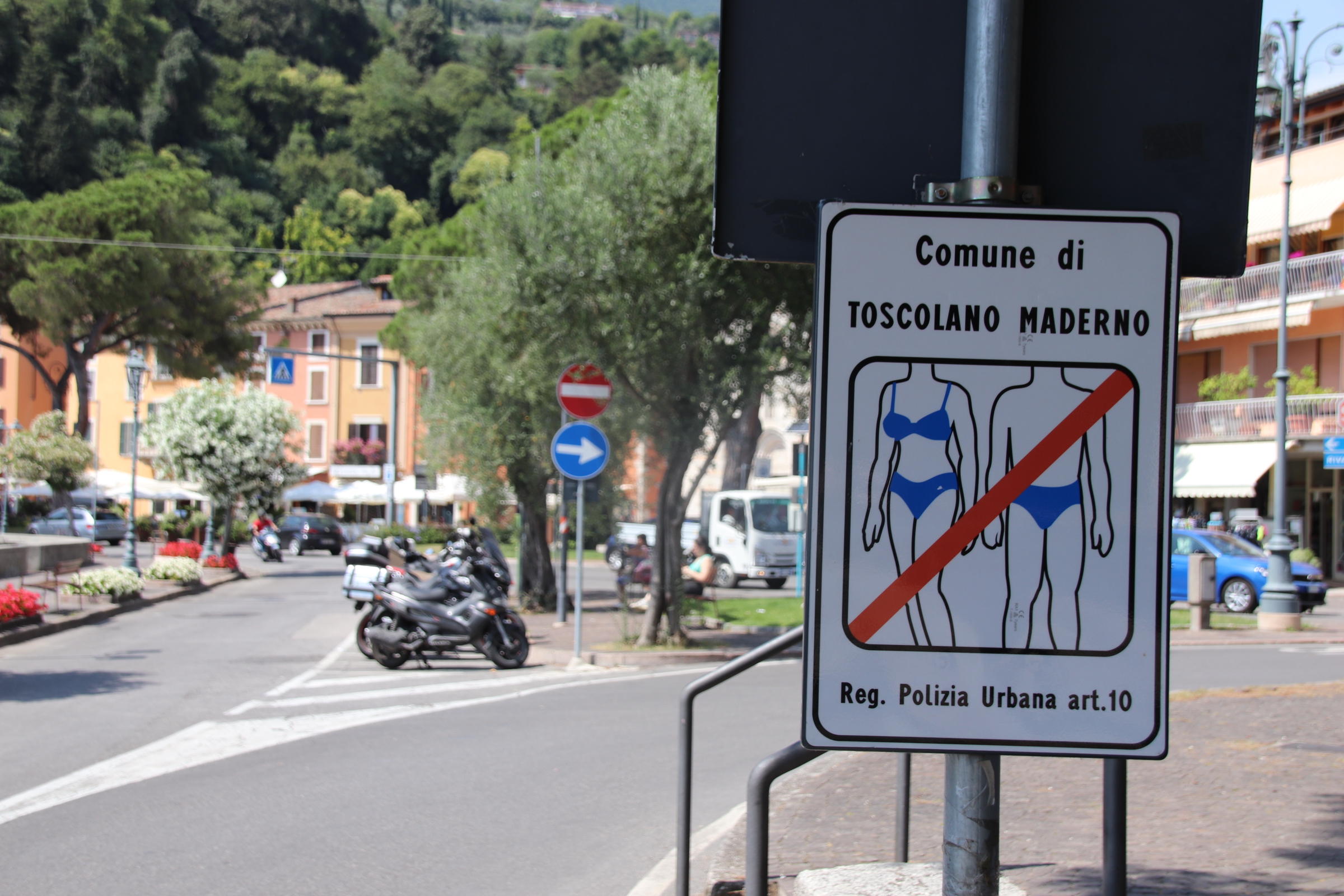
    Mardone is the next village up the lake. Fast asleep in the midday sun, it is far too lazy to lift itself out of any heat-imposed slumber. I had to visit to find details of the vehicle ferry across to the east side of the lake and thus avoid the motorway to the south when moving on.

    Salo on Lake Garda epitomises the Italian spirit

    So it’s a return to my beloved Italy and, for the first week, chilling it in the hills overlooking Lake Garda itself. Up here, a gentle breeze whispers across the skin, reminding you where you are and to let the eyes & ears do all the work.

    Salo is a small lakeside town that epitomises the classic Italian Lakes tour. June is the time of year to indulge yourself & come away to the lakeshore where coniferred hill ranges contour down to a sharp edged line around the clear waters. There are few crowds, eating & drinking is easy with no need to book & Garda’s ferries provide easy access around the ancient towns & villages that dip their quayside toes into the clear, fish-strewn waters.

    Main problem has been to find dinner this evening. Having looked at menus up and down the front, this is it:

    Now to decide between braised donkey (!!!) or lake sardines. I’ll let you know.

    I’ll let Salo show off its character, accompanied by the few visitors that have slipped the cordon and arrived on foot, bicycle, car or boat.

    Olbia – shops & restaurants to fit every budget

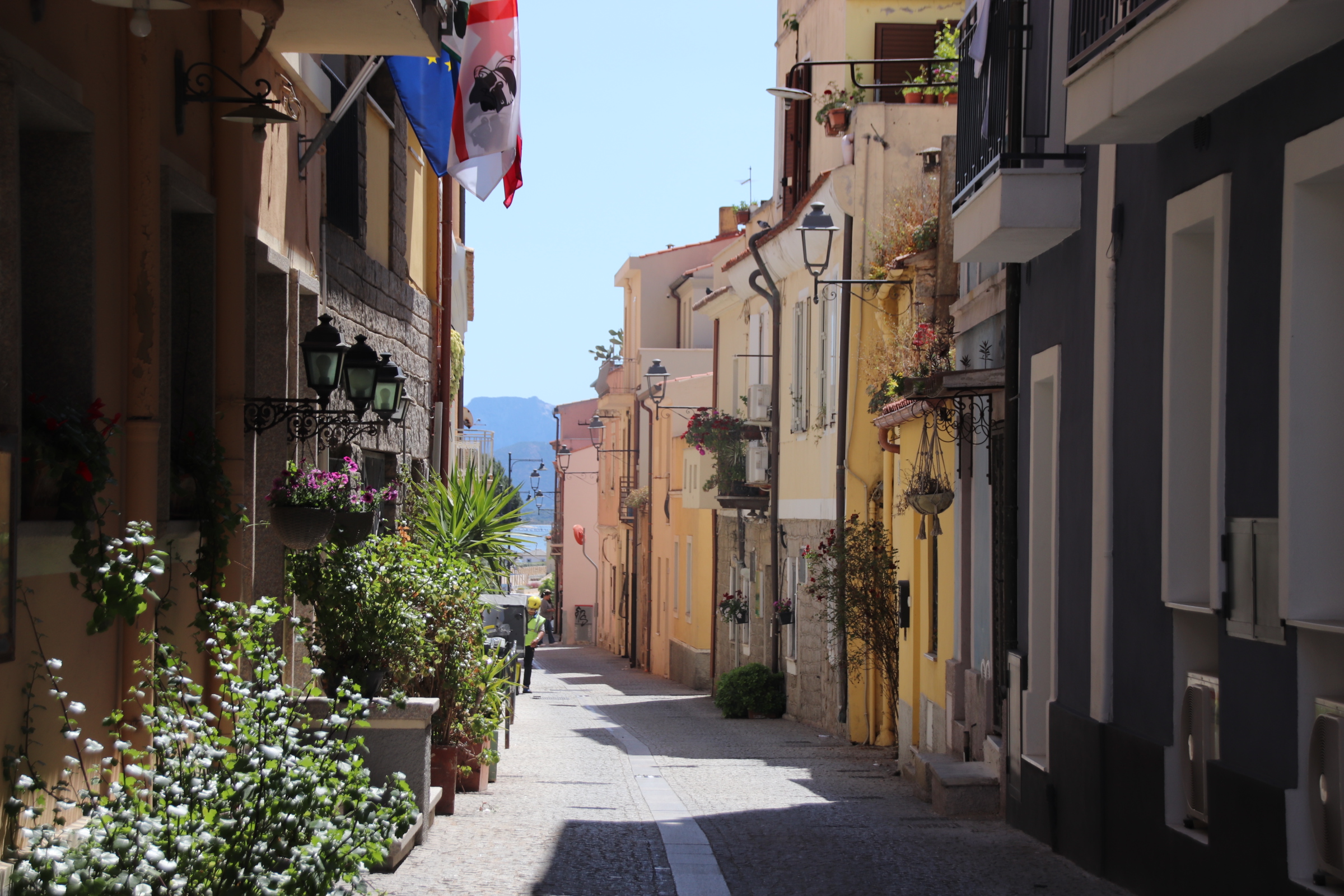
    Flying home from Sardinia provides a further day to explore the historic city of Olbia. Originating in Greek times as a coastal port, it was developed further by the Romans and later in medieval times. The layout of the old city is quite simple. Corso Umberto is the main drag, up over the low hill and down to the marina, full of luxury yachts & quayside parking.

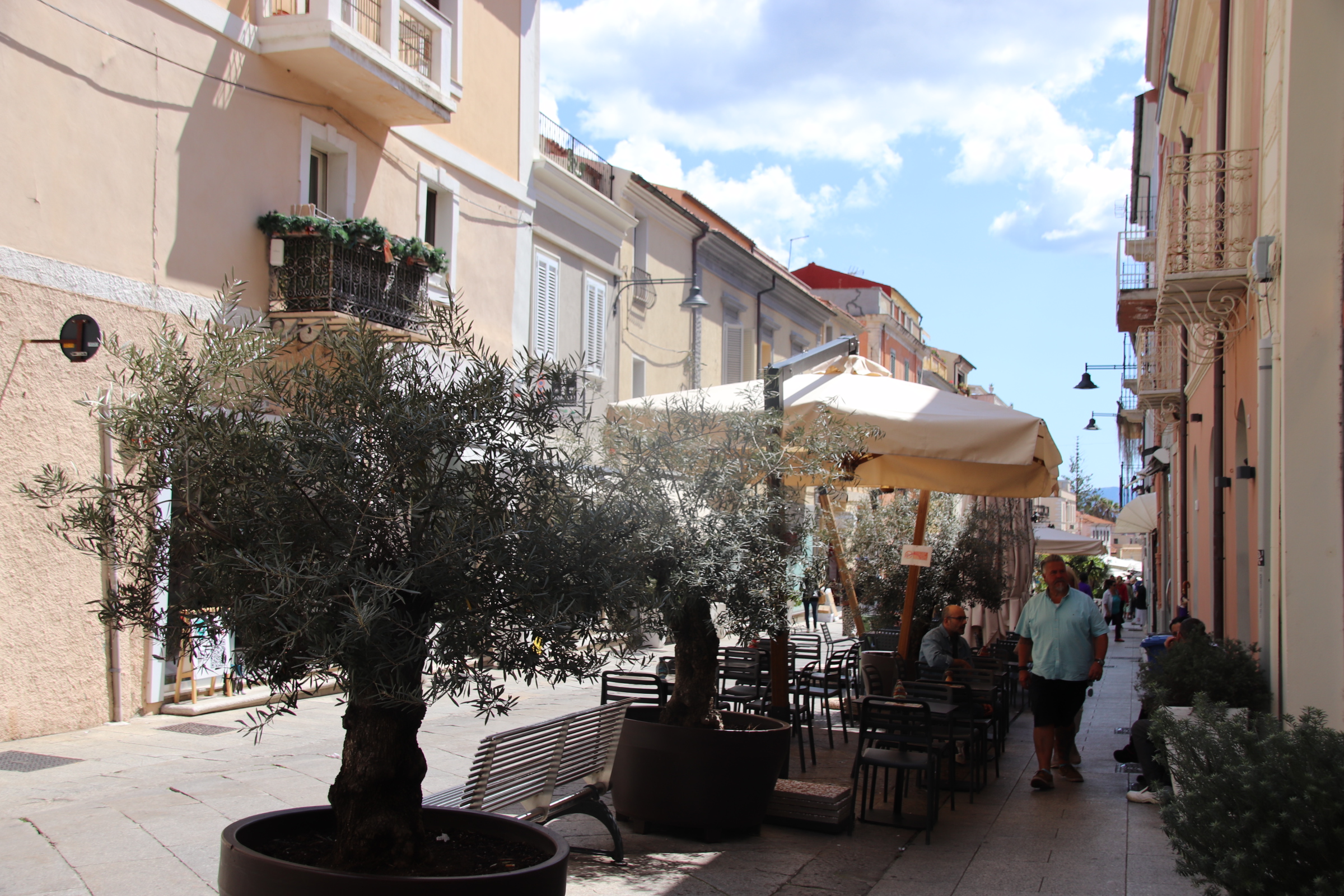
    On either side elegant buildings line the 750 metre route. Cafes, bars & eateries have spread out onto the stones in an attempt to catch passers-by in their net of QCR codes, menus & images of dishes, meals & drinks.

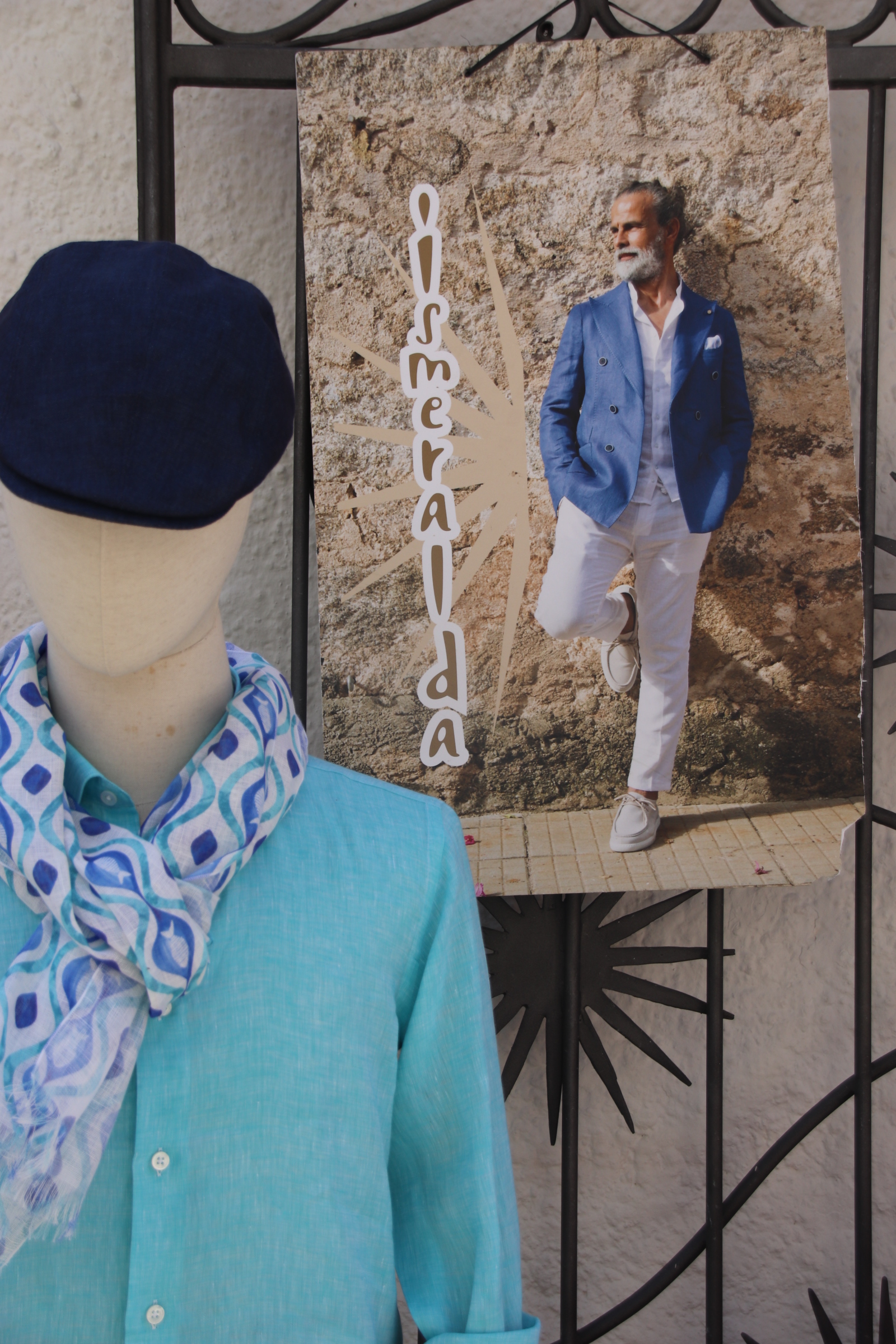
    Expensive summer clothing for men & women gases out of small, intimate shops, sucking in customers with displays of what you might look like if you paid their exorbitant prices for pastel linen & flowing, light cotton.

    The Basilica of San Simplicito dates back to the 12th Century.

    On each side of the of the main promenade, narrow stoned alleys & lanes lead into a maze of old buildings where unique bistros & restaurants squeeze a presence out onto the small narrow streets and expensive clothiers sell their luxury wares.

    Sampling Sardinia’s beautiful beaches

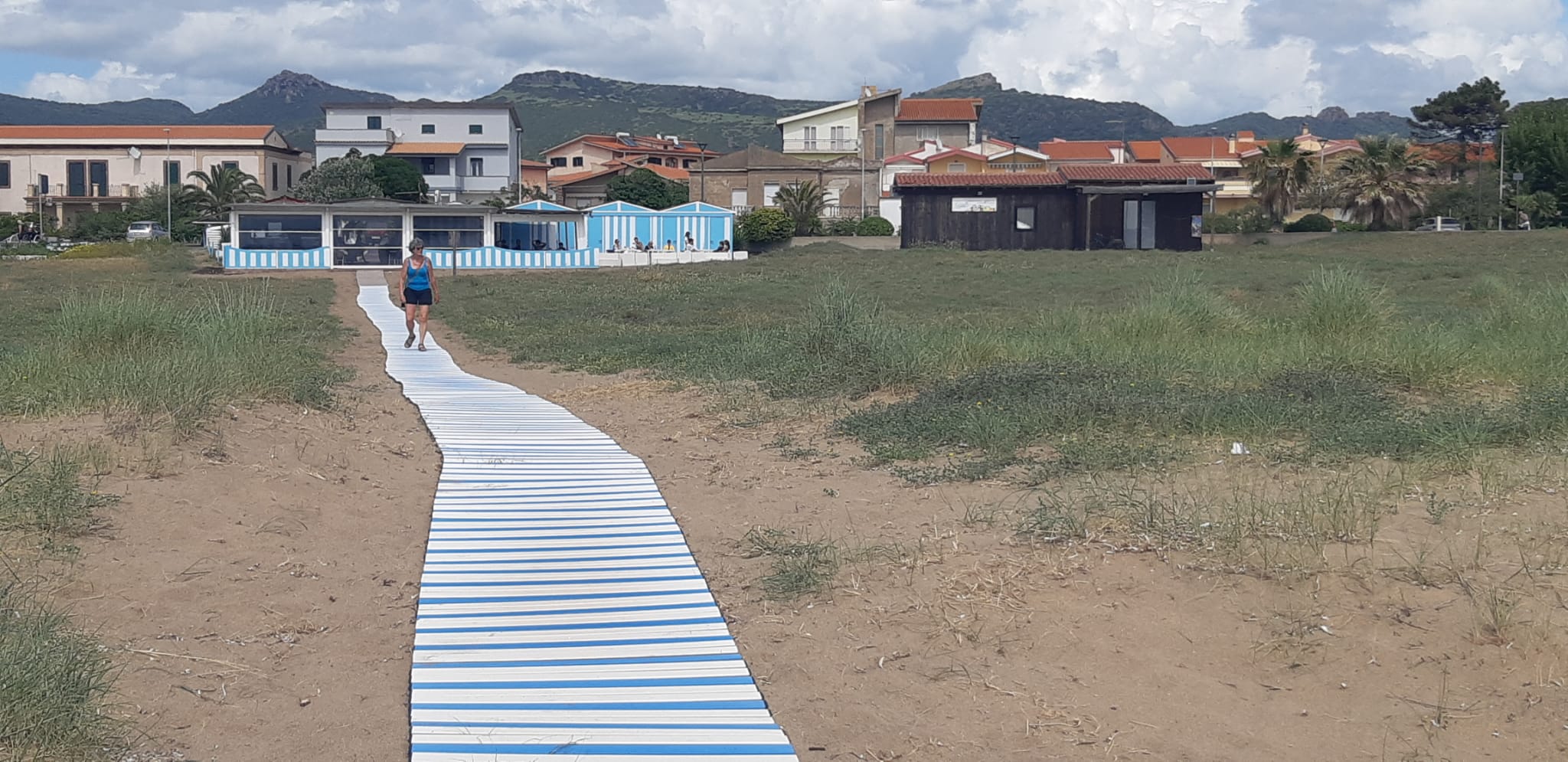
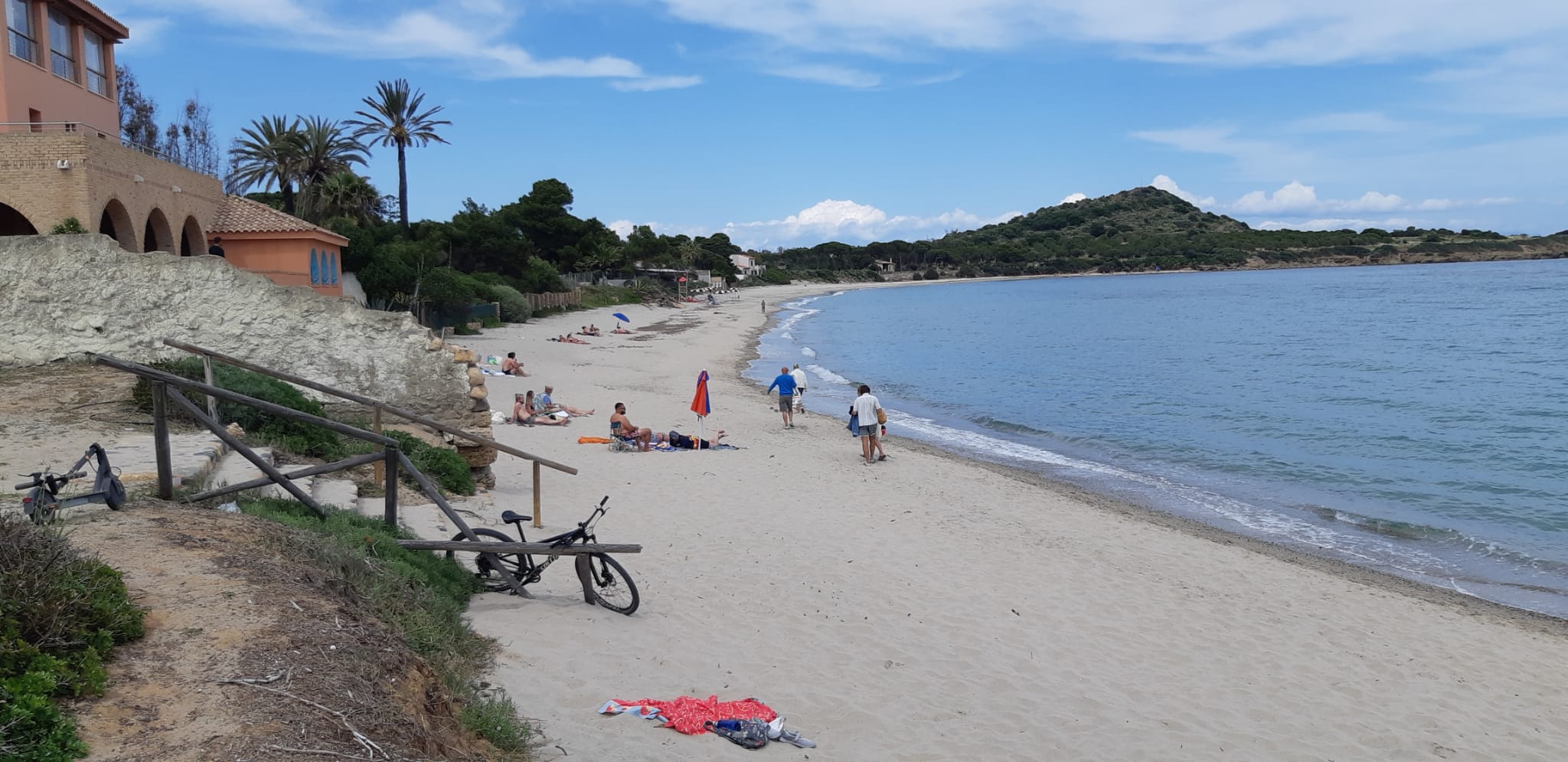
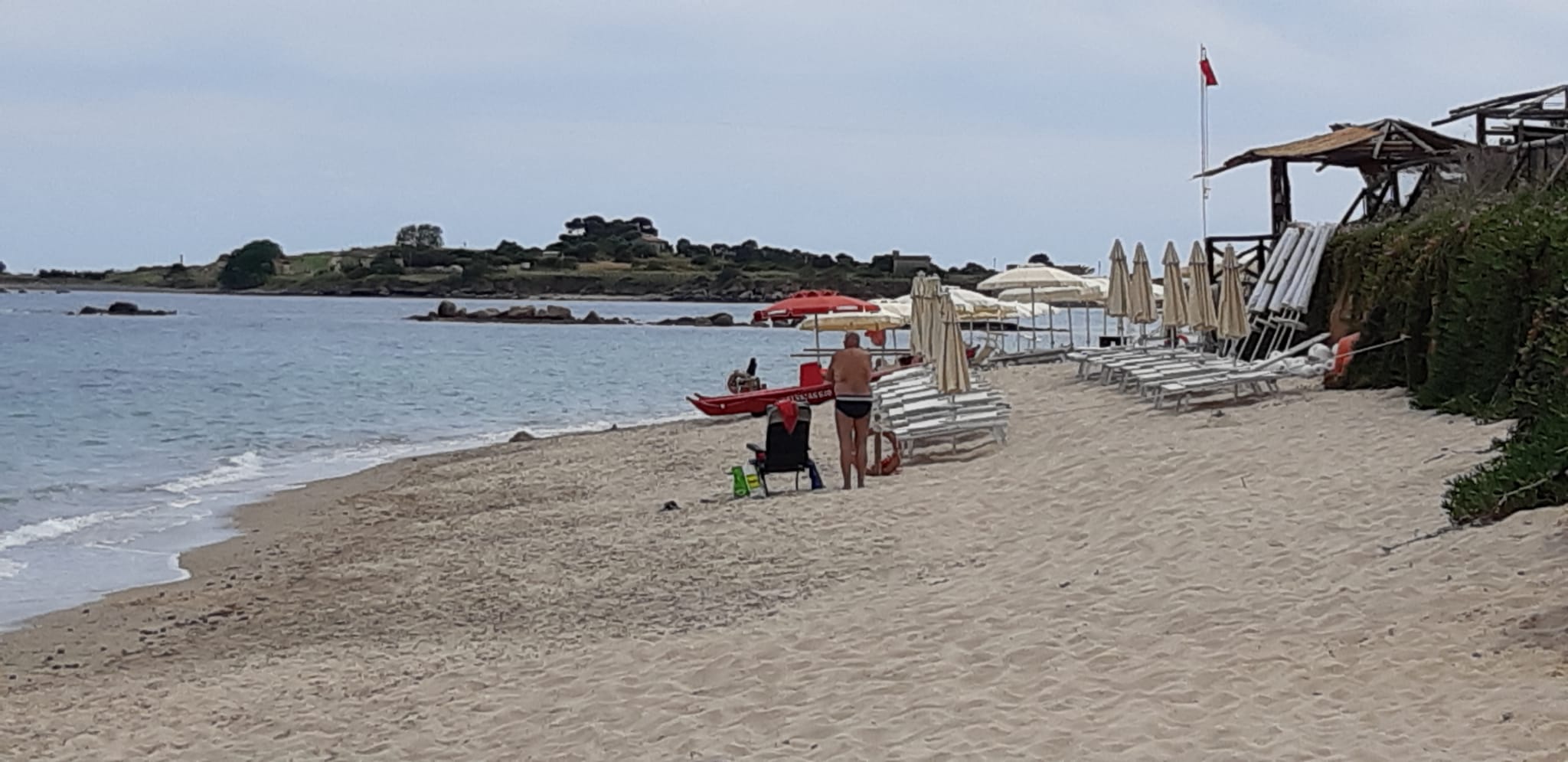
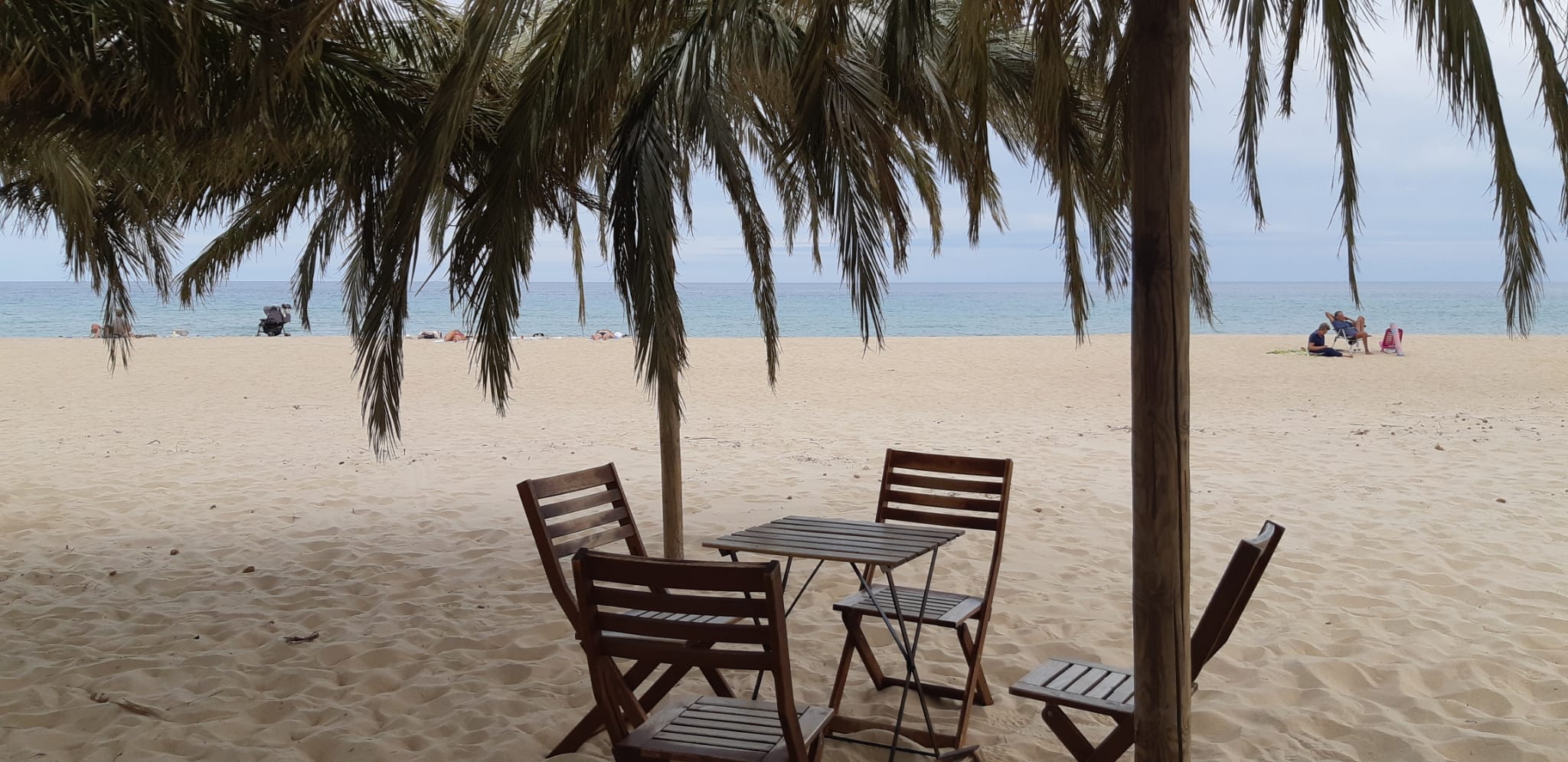
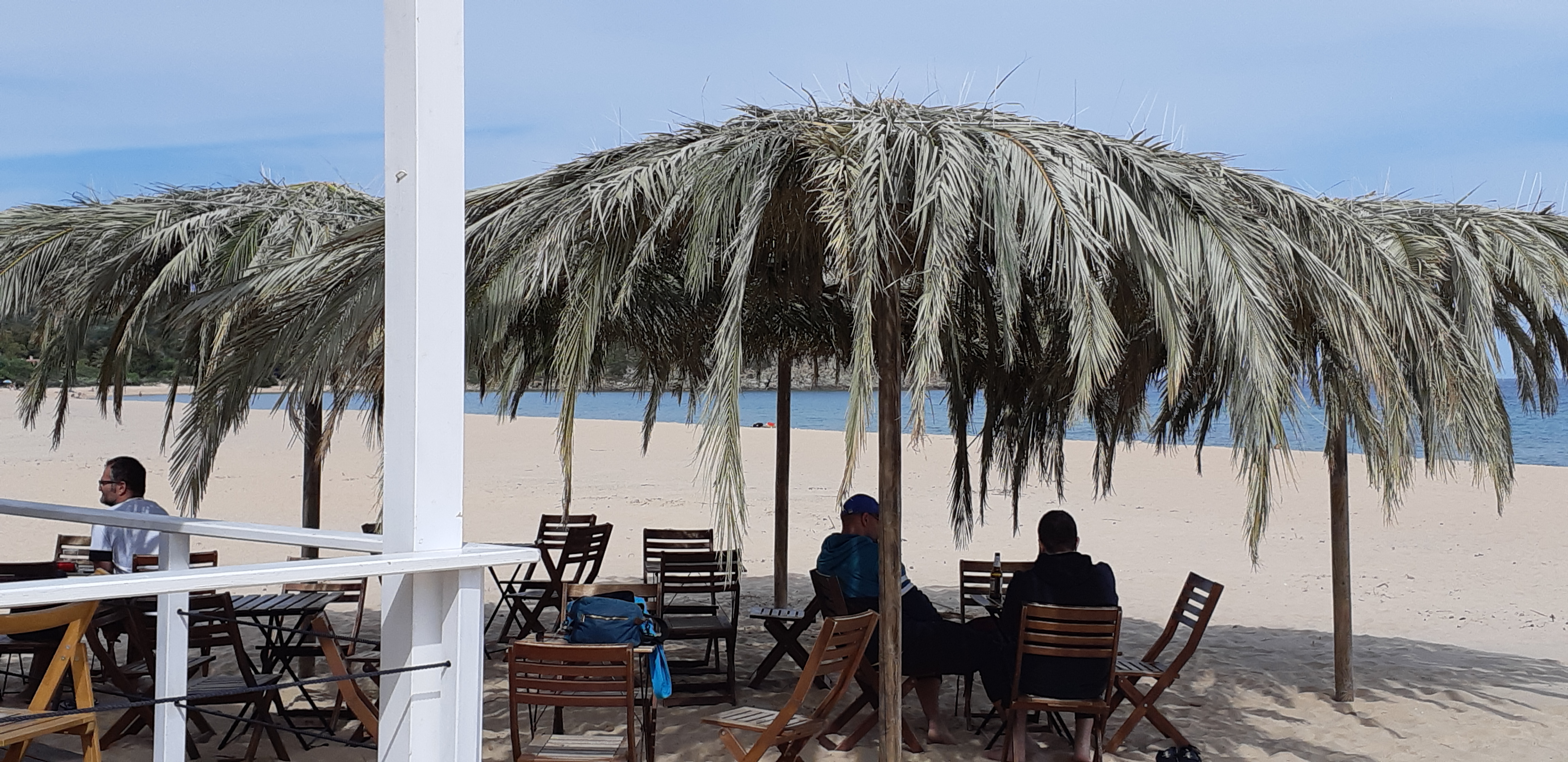
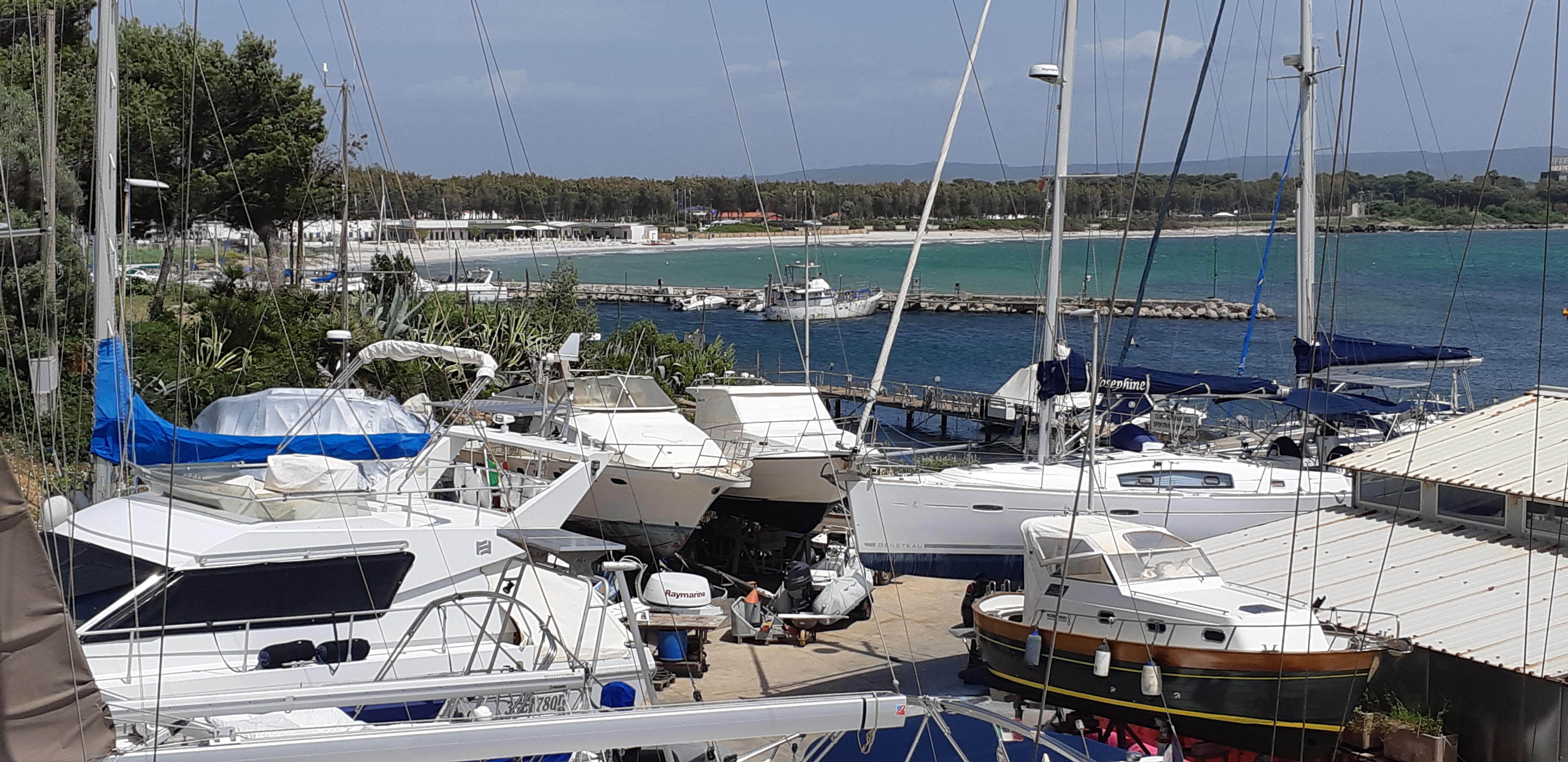
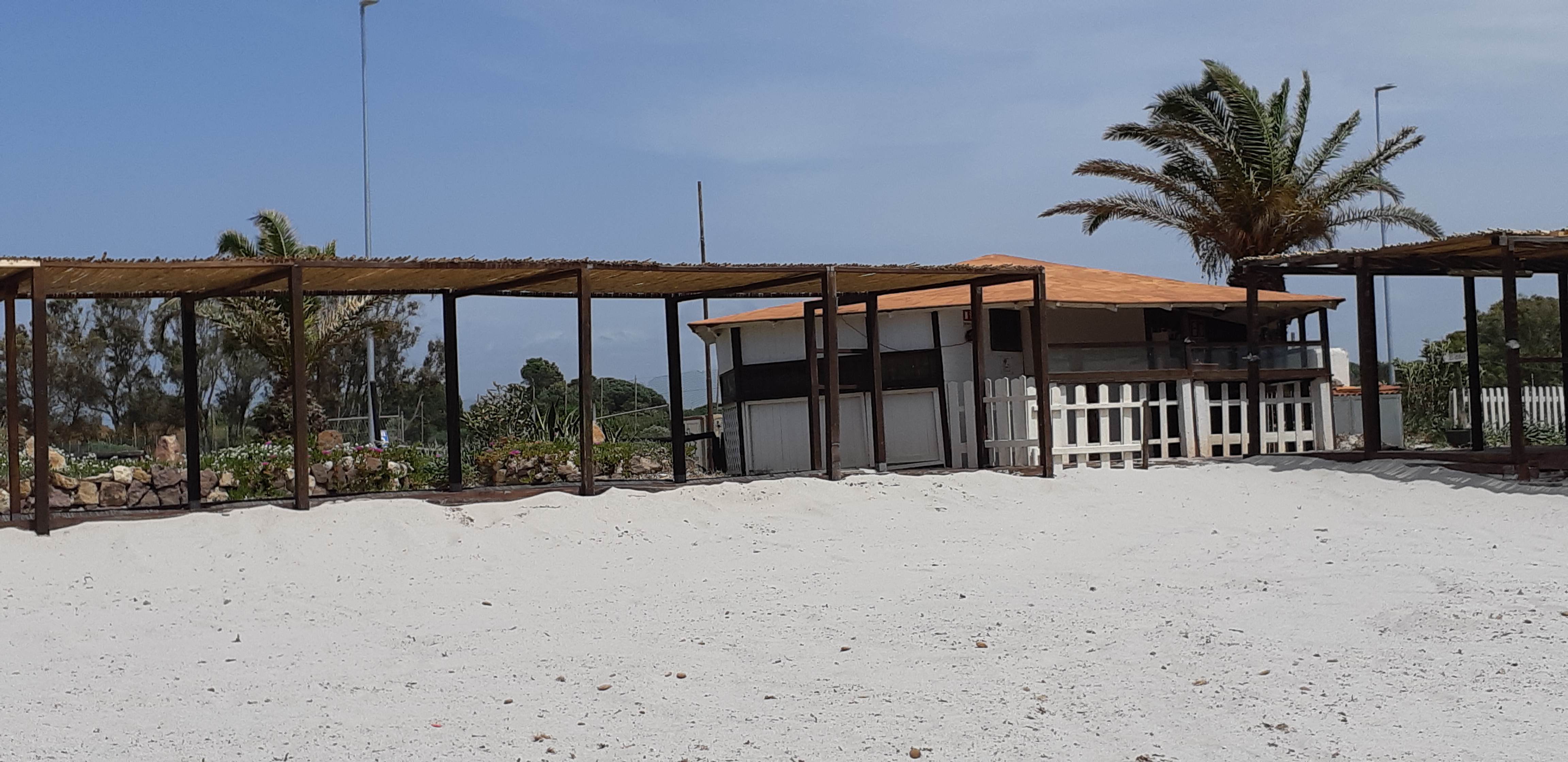
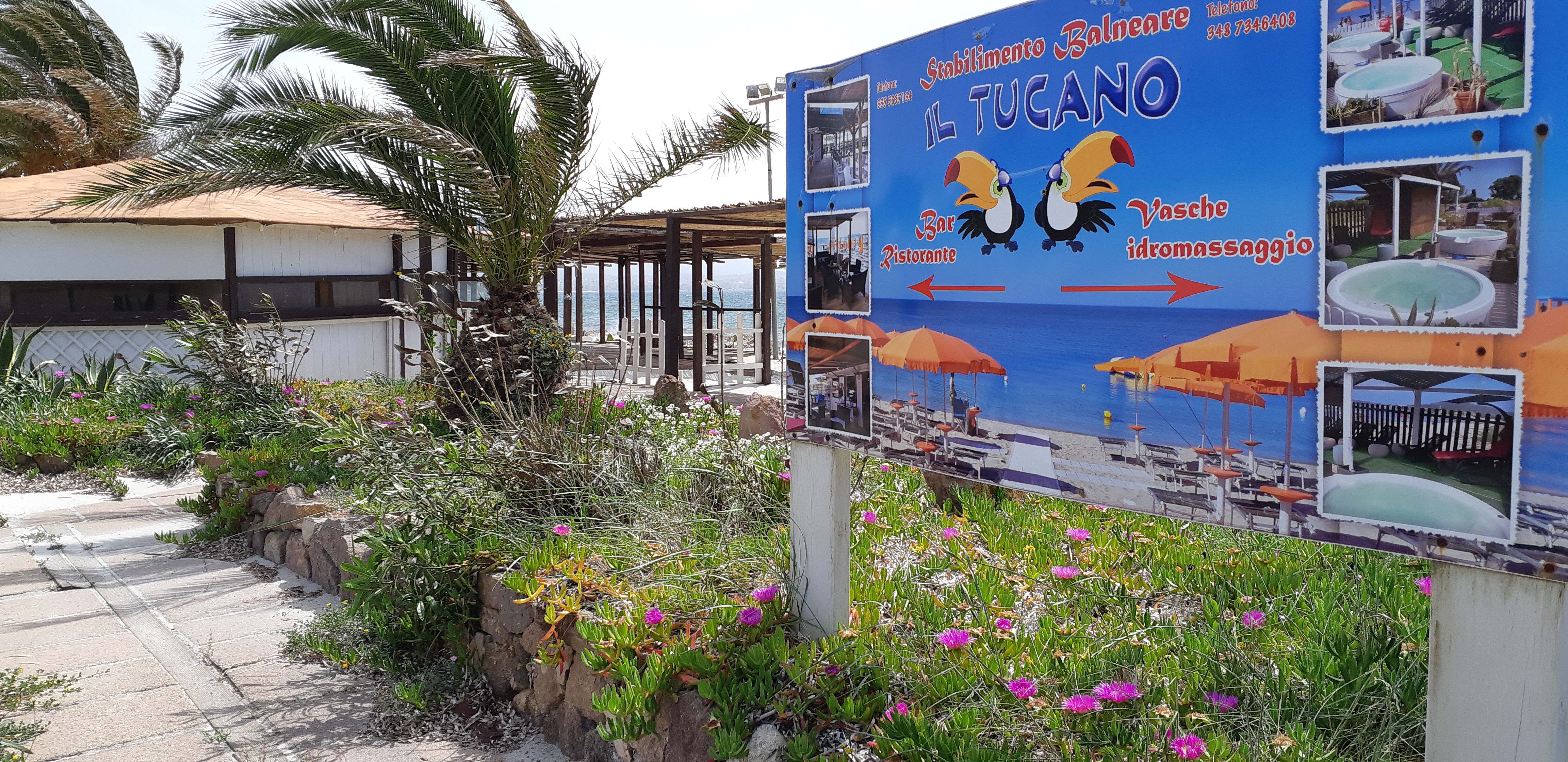
    The last few days have been spent sampling Sardinia’s coastline and the beaches in particular and exploring the south of the island.The beach at Bosa typifies most: wide silver-soft curves around turquoise/blue waters; usually a single shack/beach bar controls the beach; it may have a handful of sunbeds to share (although you can drop your towel almost anywhere on all of them).

    Pula is our base further down the south west side of the island. An ordinary town with a mixture of businesses and holiday homes. What it has going for it is a number of reasonable restaurants 8n the square and around the church. The latter is home to Fedrica’s where we ate most often.

    Visiting in May makes everything so easy. It is pre-season – no need to book tables in restaurants, easy to park, beaches are empty, as are the roads. Everything is very peaceful, calm & relaxed.

    Pula’s town beach is on the way to the tower at Nora situated on a promontory at the far end.

    The beach at Chia was the best. Gob-smackingly beautiful it could have been the Caribbean or a south sea island.

    Spiaggia Di Tuerredda was similar.

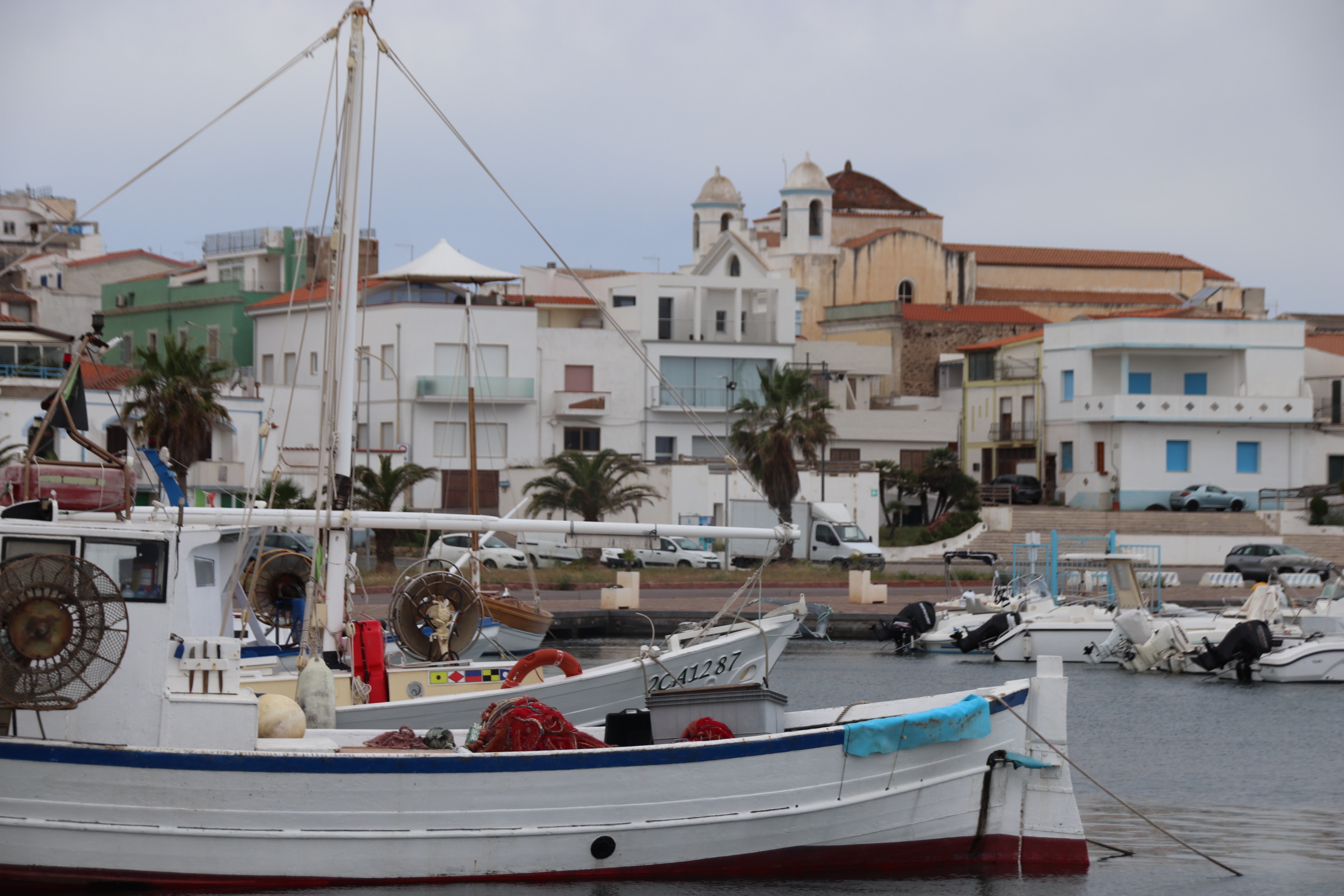
    The island of Sant’Antioco is linked to the main island by a spit of land and a low bridge. At its far end, Calasetta has the feel of a north African fishing village with palms & weather beaten facades and dominated by the large cathedral.

    Traditional fishing boats are moored alongside modern sailing boats & luxury yachts.

    Blazing the coastal trail to Bosa

    My biggest surprise in driving the coast road south to Bosa is just how green & flowered the island is.

    A patchwork of hay grass, some lying flat awaiting raking, mixes it up with meadow flowers of white & sunshine yellow. Lines of mixed deciduous woodland trees mushroom up alongside stretching olives & the occasional patch of pine. Lightbulbs of flowering gorse blaze in clumps, illuminating the course of a track, the side of the road or highlighting a crag of rocks or a tamed wild rockery. The colour palette is so varied, blues, lavenders, pastel purples, even lilacs thrown in there along with a brief flash of rather garish crimson poppy and all against a background of greens on one side & the turquoises of ocean & sky on the other.

    The route attracts bikers & enthusiastic cyclists. For the most part the road is wide, the surface smooth – a joy to drive/ride. There is no room for cafes or bars or tourist tat here; Just the occasional view point where riders can share anecdotes & appreciate the serenity & beauty of the open road & the clear blue sky.

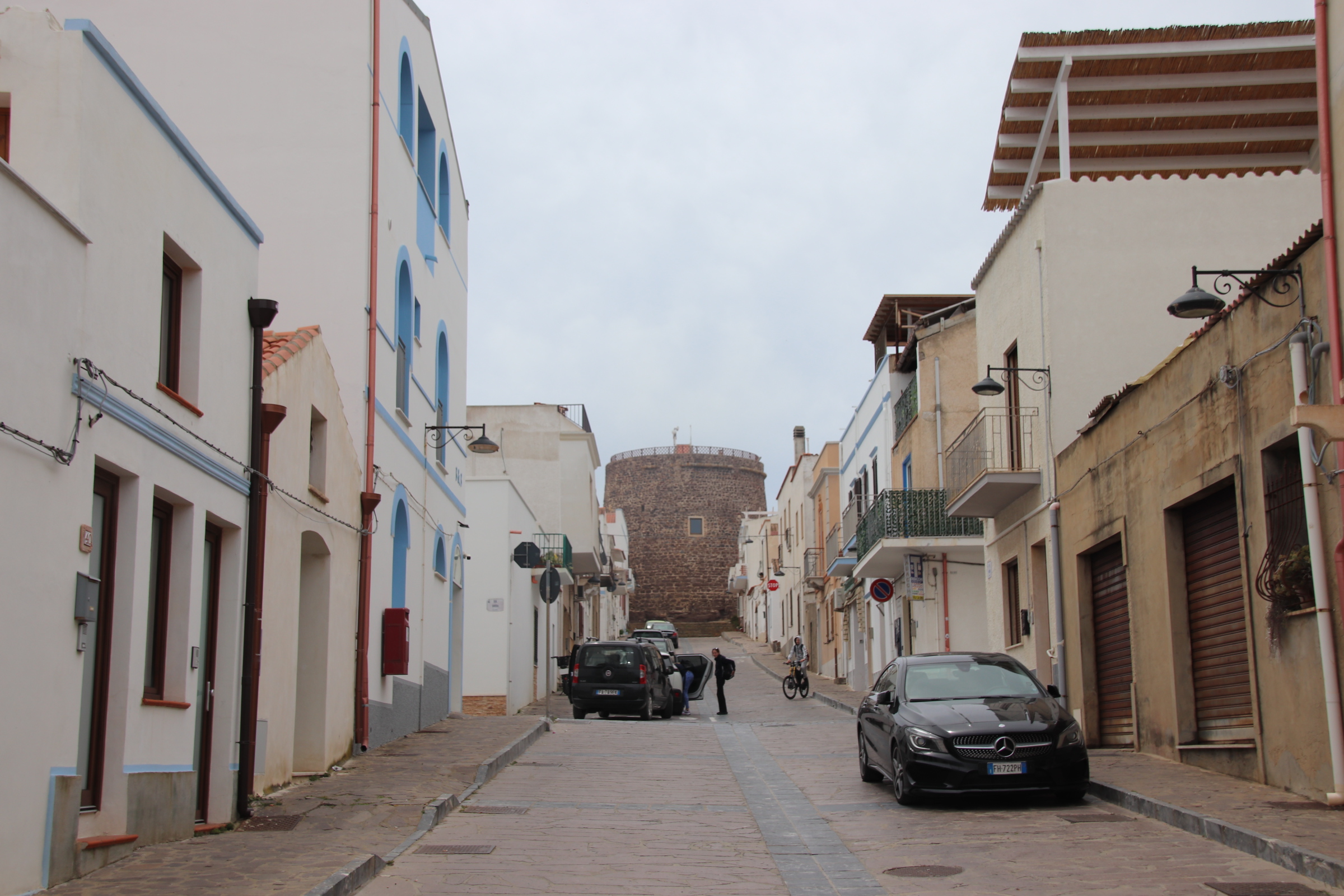
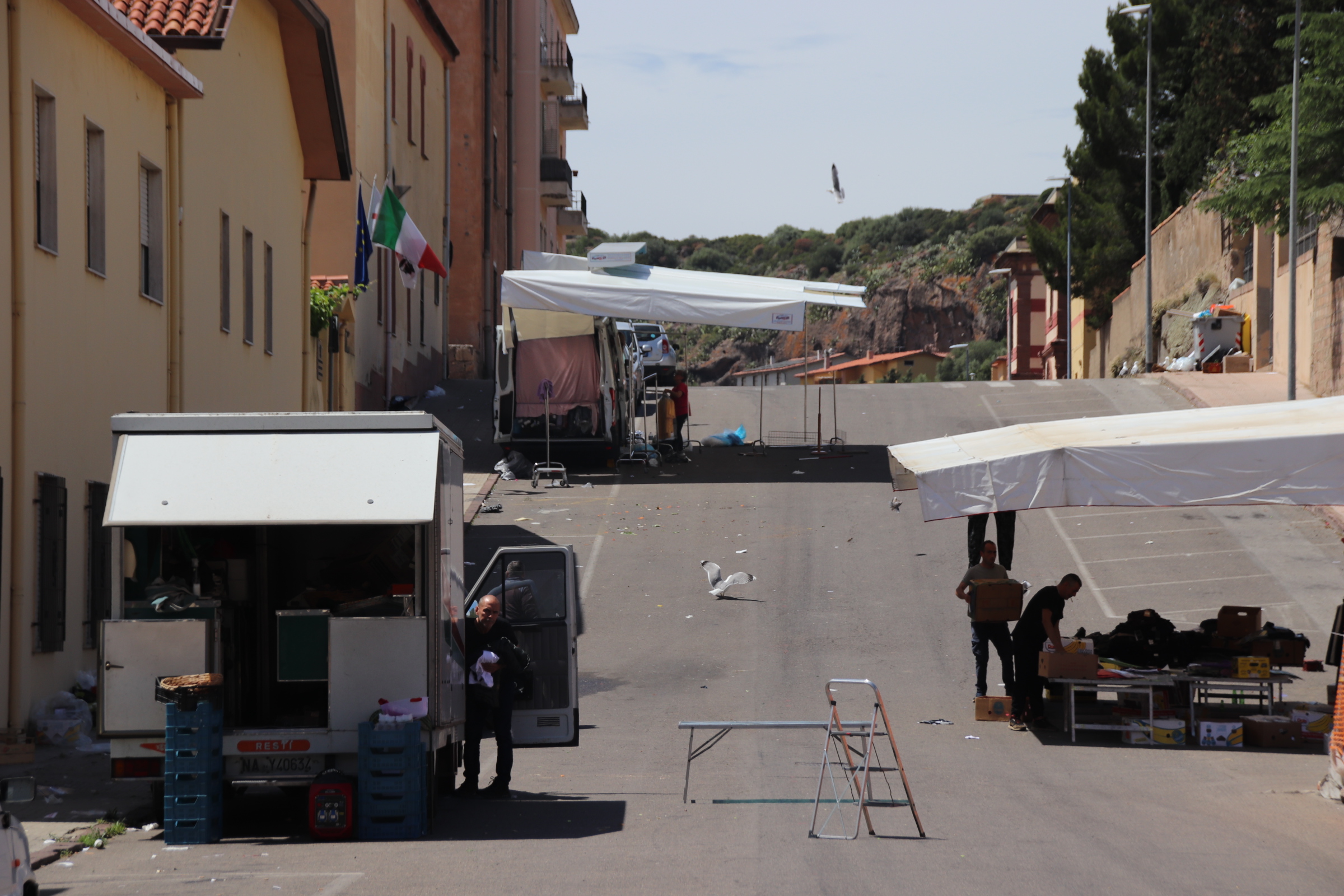
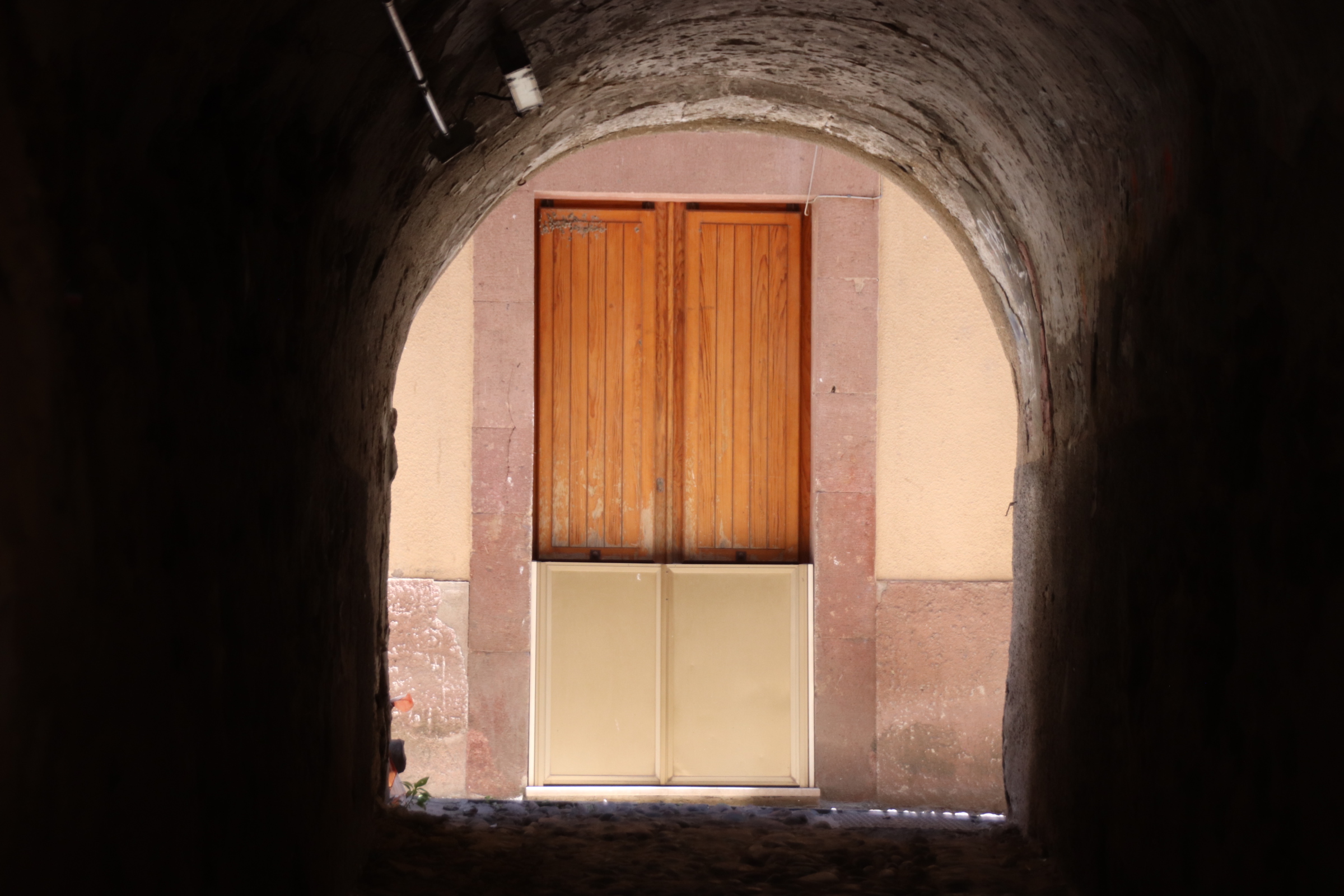
    Don’t be fooled by the functional feel of the modern buildings you first meet as you enter Bosa; nor by the very ordinary street market, which by 1pm consists of a few lonely stalls, unloved & seemingly unwanted by their traders.This is one of the most beautiful villages in Italy.

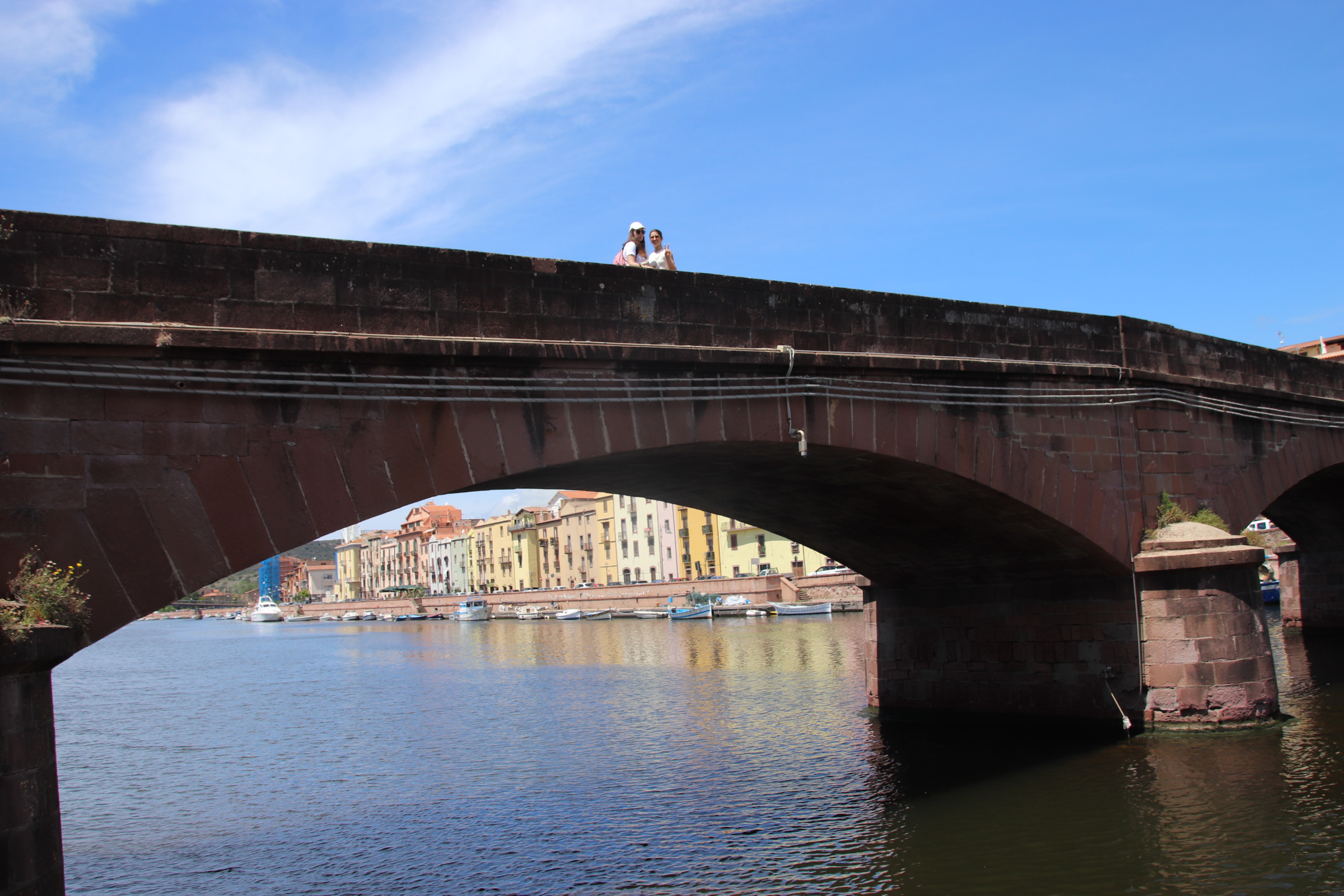
    The old town lies at the bridgehead over the Temo River. This meant that it prospered – agriculture was king on the plateaus inland with the water transporting grain & products to & from the coast, whilst the river also provided access to the sea, and fishing and trade created wealth from the surrounding ocean.

    Ignoring the gate keepers at the small restaurant gurding the entrance, head into the maze of narrow cobbled streets/alleys of the old town.

    Here, the multi-storeyed terraces stretch so high above that the shadows reign supreme and the sun has no hope of surviving down at street level.

    The river is lined on both sides with buildings dating from past times – on the far side mostly warehouses stretch in an unbroken line from the bridge towards the sea. Opposite, warehouses share the riverside with merchant’s houses.

    Domes, steeples flaking facades peer over each other and jostle for position alongside the bank providing a textured backdrop of colour, texture & position.Above the village, the 14th century Malaspina Castle stands guard, protecting the village from ancient enemies & invaders.

    Alghero mixes it up with cobbles & squares on the island of Sardinia

    Having landed in Olbia on the north-east of the Italian island of Sardinia late on Saturday night, we negotiated the intricacies of a hybrid hire car with only 1,500km on the clock, the small digital display of Google maps on a phone & light RAIN through dark streets to reach our first night’s accommodation. Our mood was not lightened when we were unable to remove the key from the door once I had pushed it open & the lovely night porter could find no other rooms to offer us. Chairs were used to prop the door closed overnight.

    The following day required a couple of hours drive the town of Alghero on the west coast. I expected inland Sardinia to be like Corsica so it was a pleasant surprise to drive long straight dual carriageways through wooded flatlands of flower carpets & fresh leaved trees. In the distance ridges & peaks of the inland mountains kept us company.

    Approaching Alghero from the north gave us our first taste of Sardinia’s glorious beaches. Well, it has to be said that it was a bit of a before & after. The road runs right beside the water. At beach number 1 the winter winds had dumped copious amounts of seaweed on the sands to dry in huge clumps.

    We were assured about the coming summer by this poster behind the beach:

    Beach number 2 had no such obstacle preventing access to the water and we spent a couple of hours taking in the sun & watching the antics of the high-flying kite surfers.

    Old Alghero is surrounded by typically functional, modernish buildings for commerce & housing. The city was founded in the early twelfth century. The Aragon crown first expanded the port. The Hapsburgs then colonised the Island, and Alghero in particular. The ancient curtain wall with its strong battlements connects impervious towers and piers to circle around to face the sea.

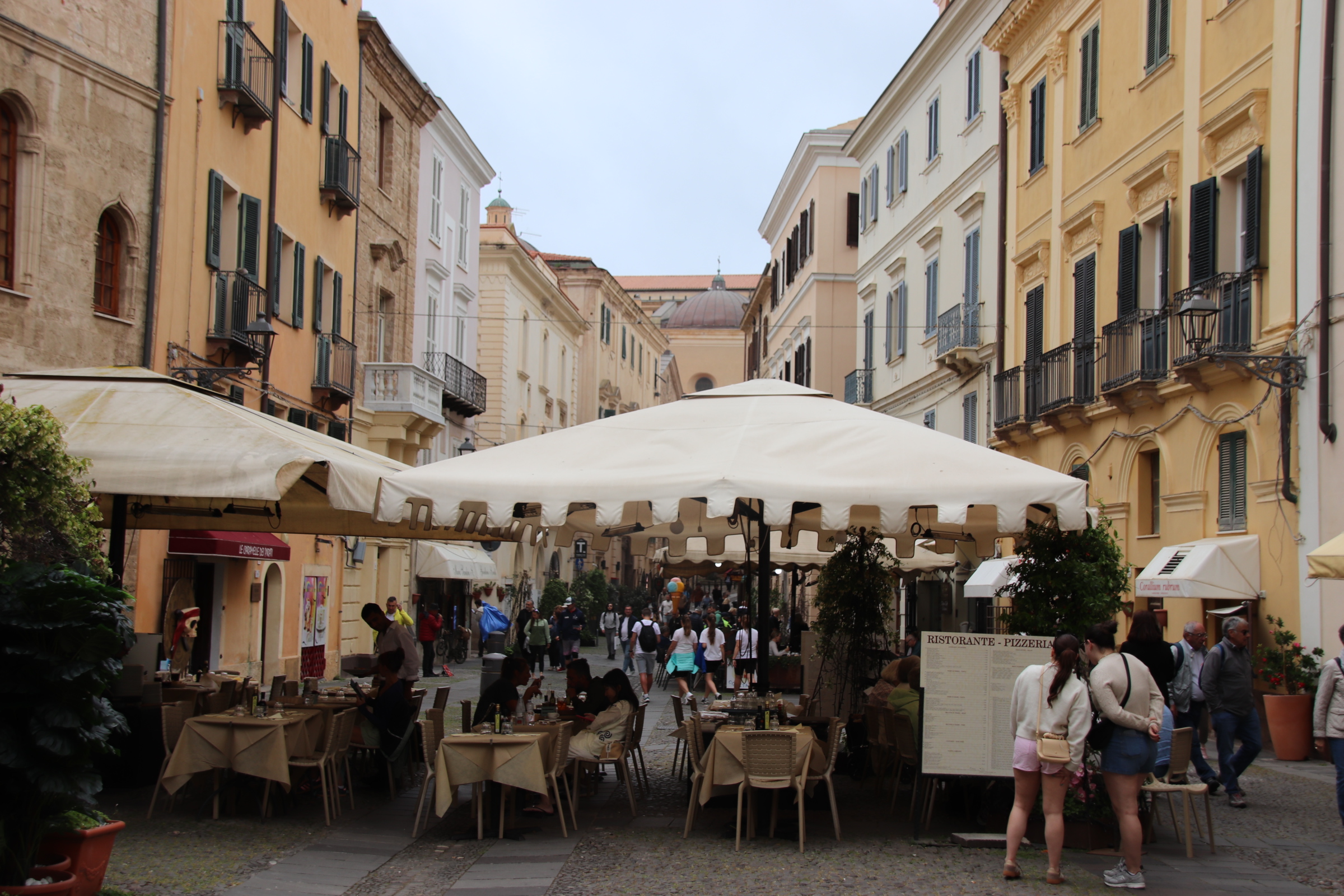
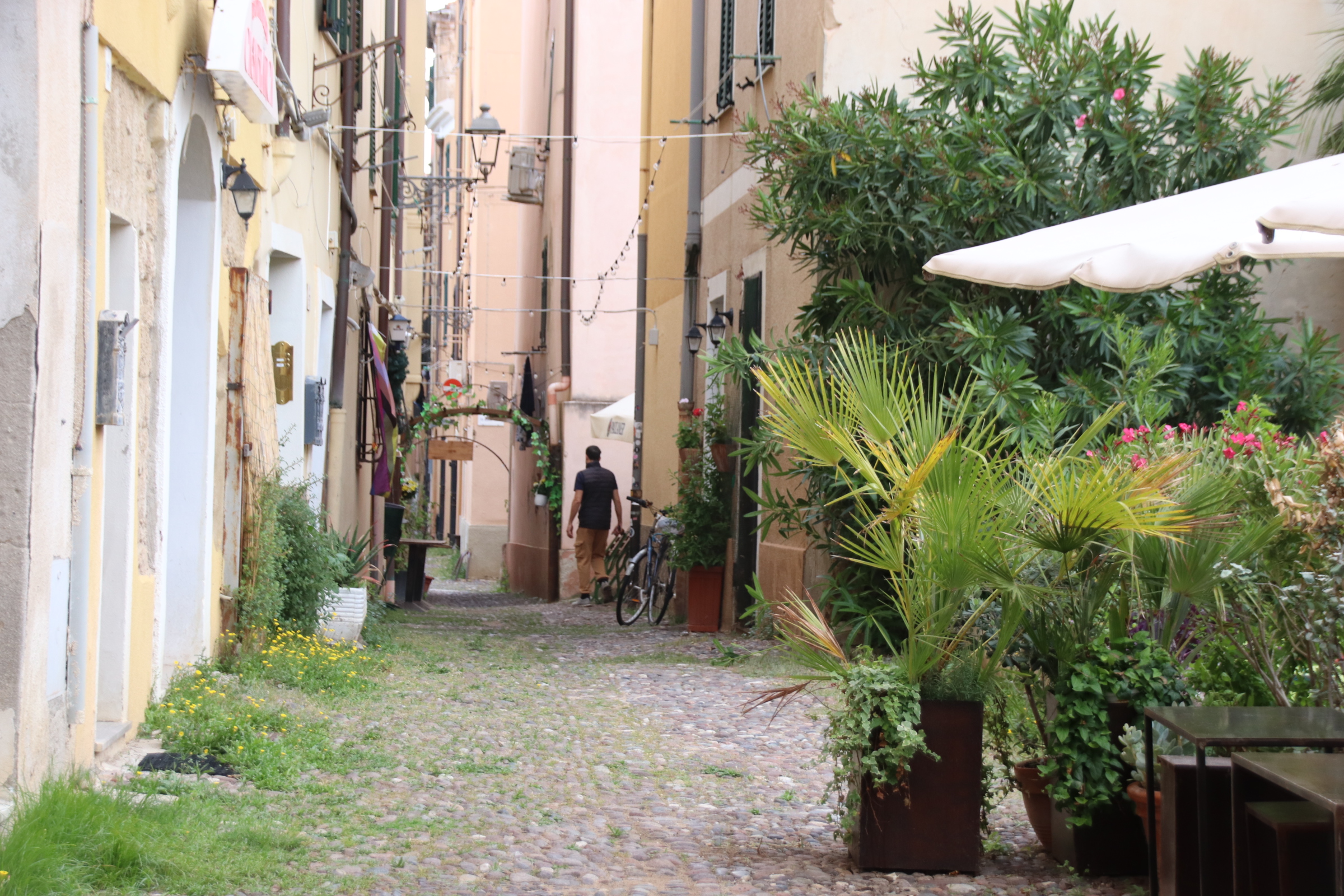
    Within it, a maze of cobbled streets are lined by dusty, medieval buildings with low doors & tight windows. History & tourist tat ( the most apparent being copious amounts of red coral artefacts) combine to to pull in large numbers of visitors. The sun finds it really hard to penetrate these historic streets, only succeeding where attractive squares open up to umbrellas, cafe/restaurant tables, gelatine stalls, imposing churches & chapels.

    Eating out in Ortigia

    To view images full size tap above: Read in blog

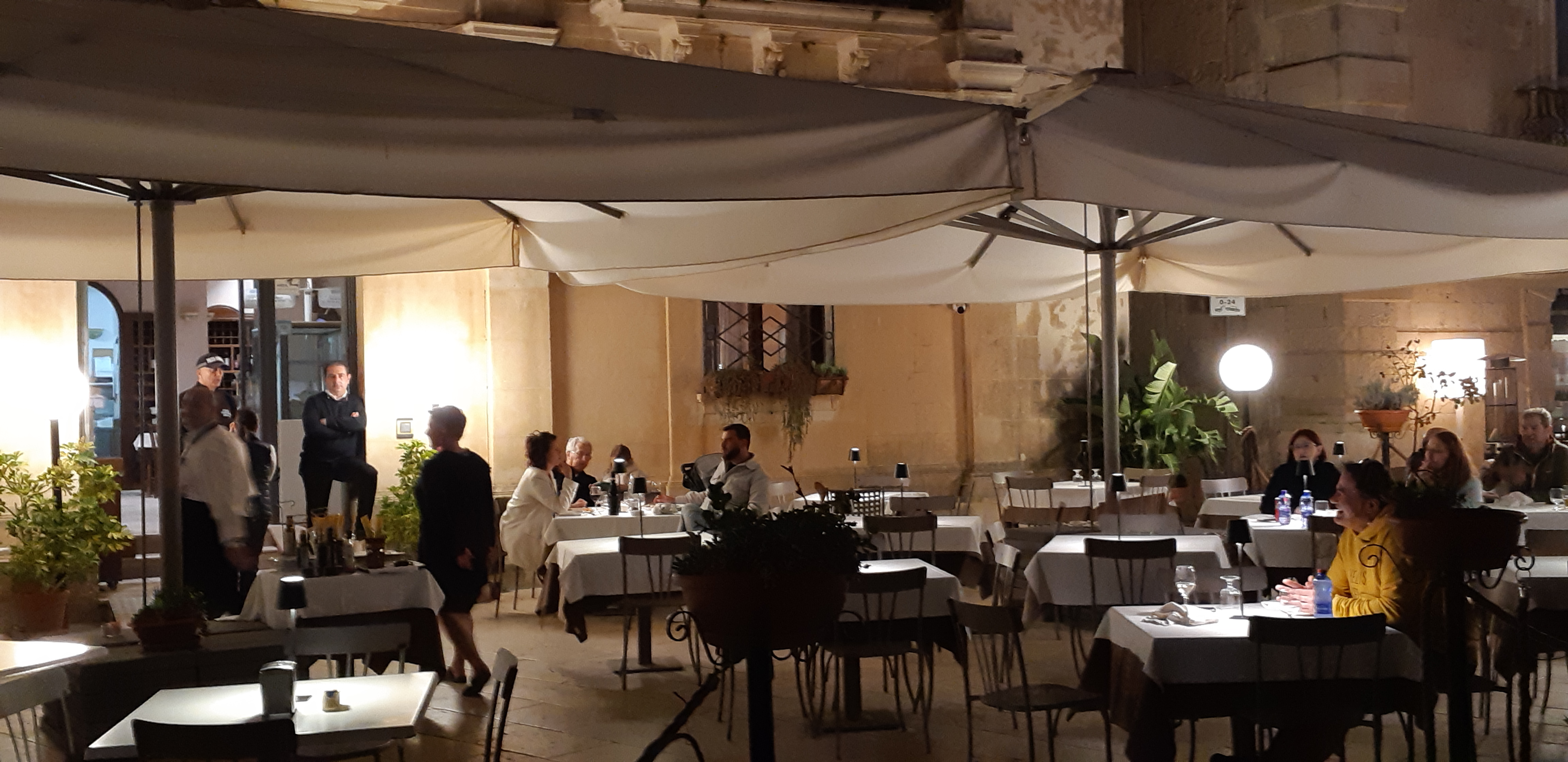
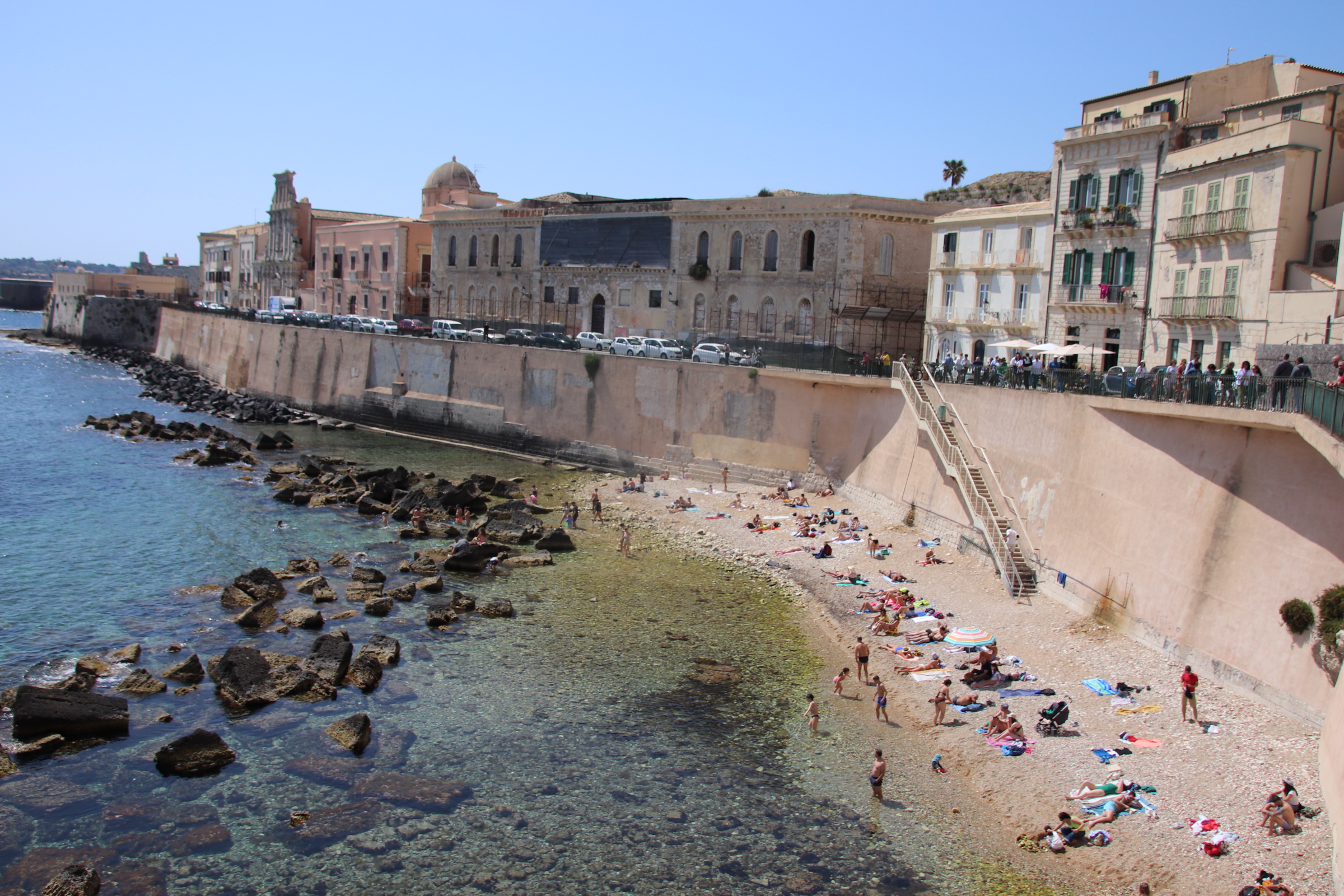
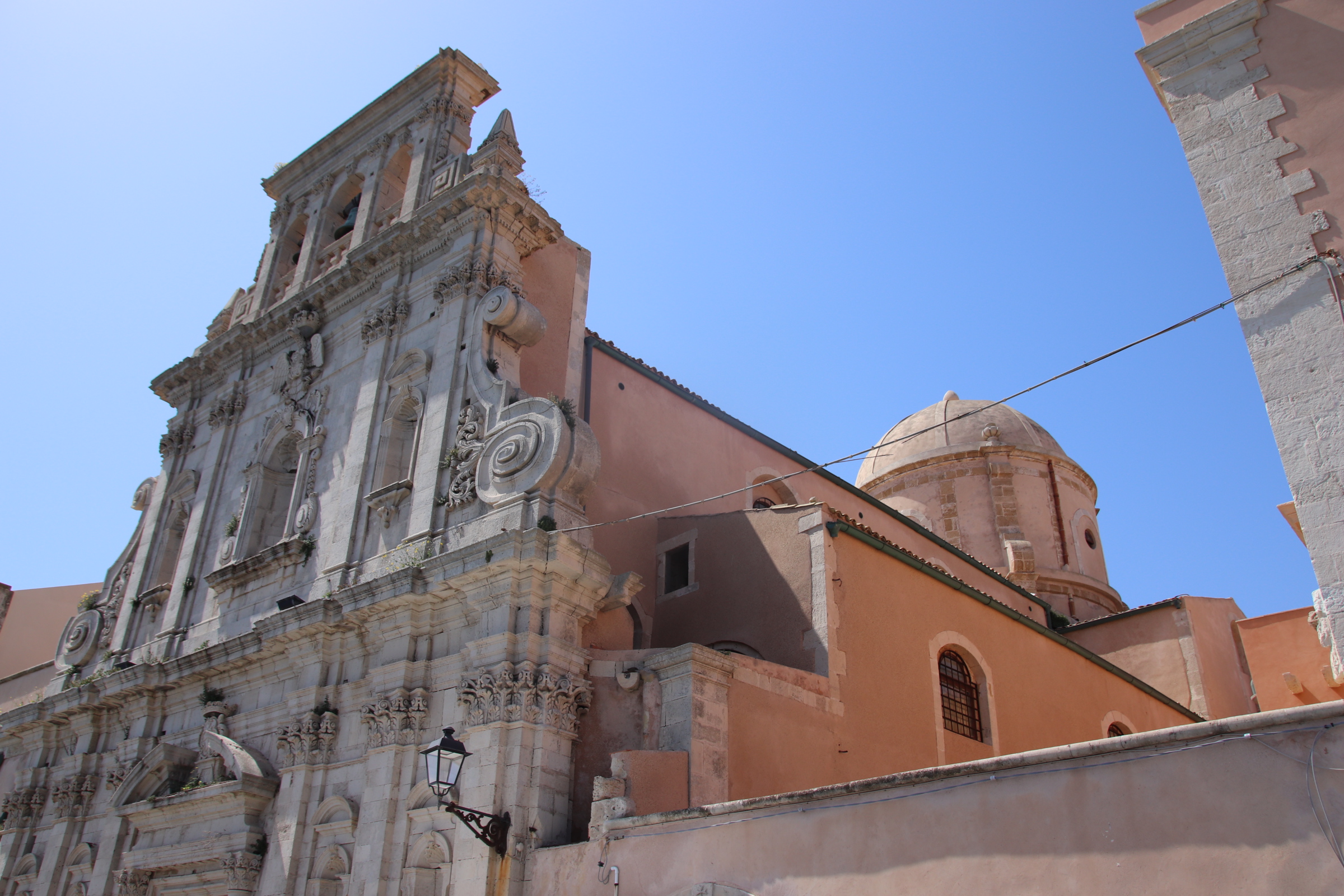
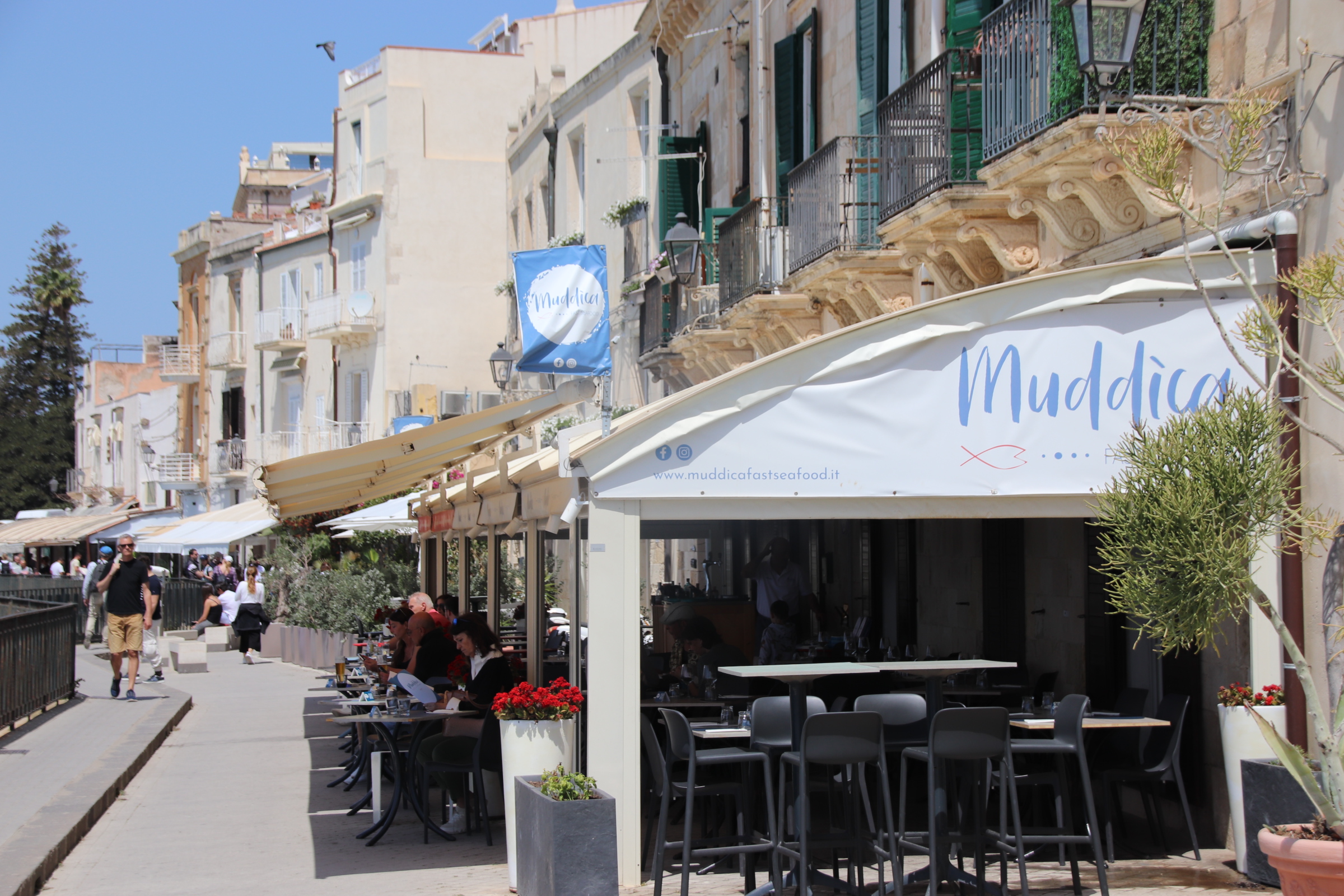
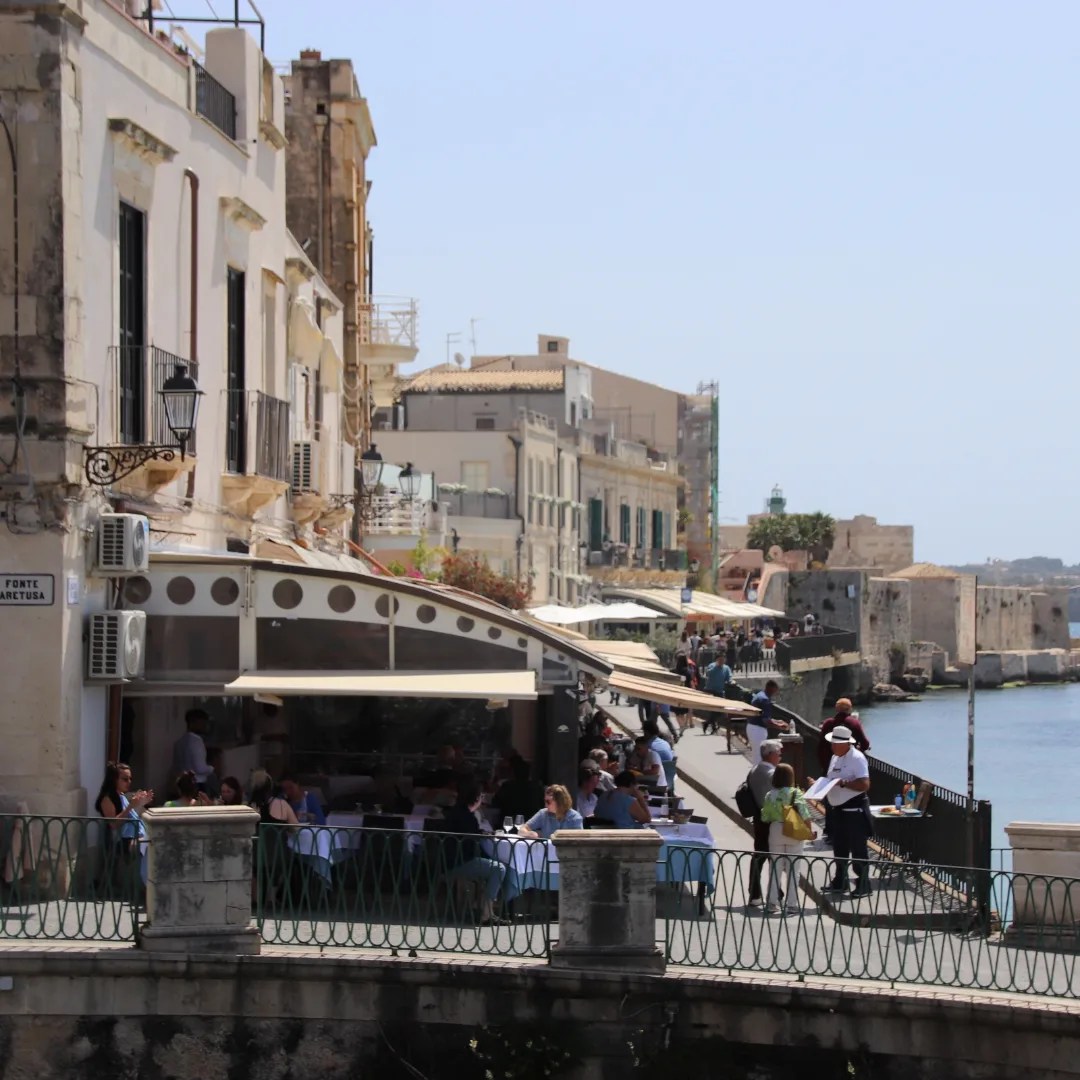
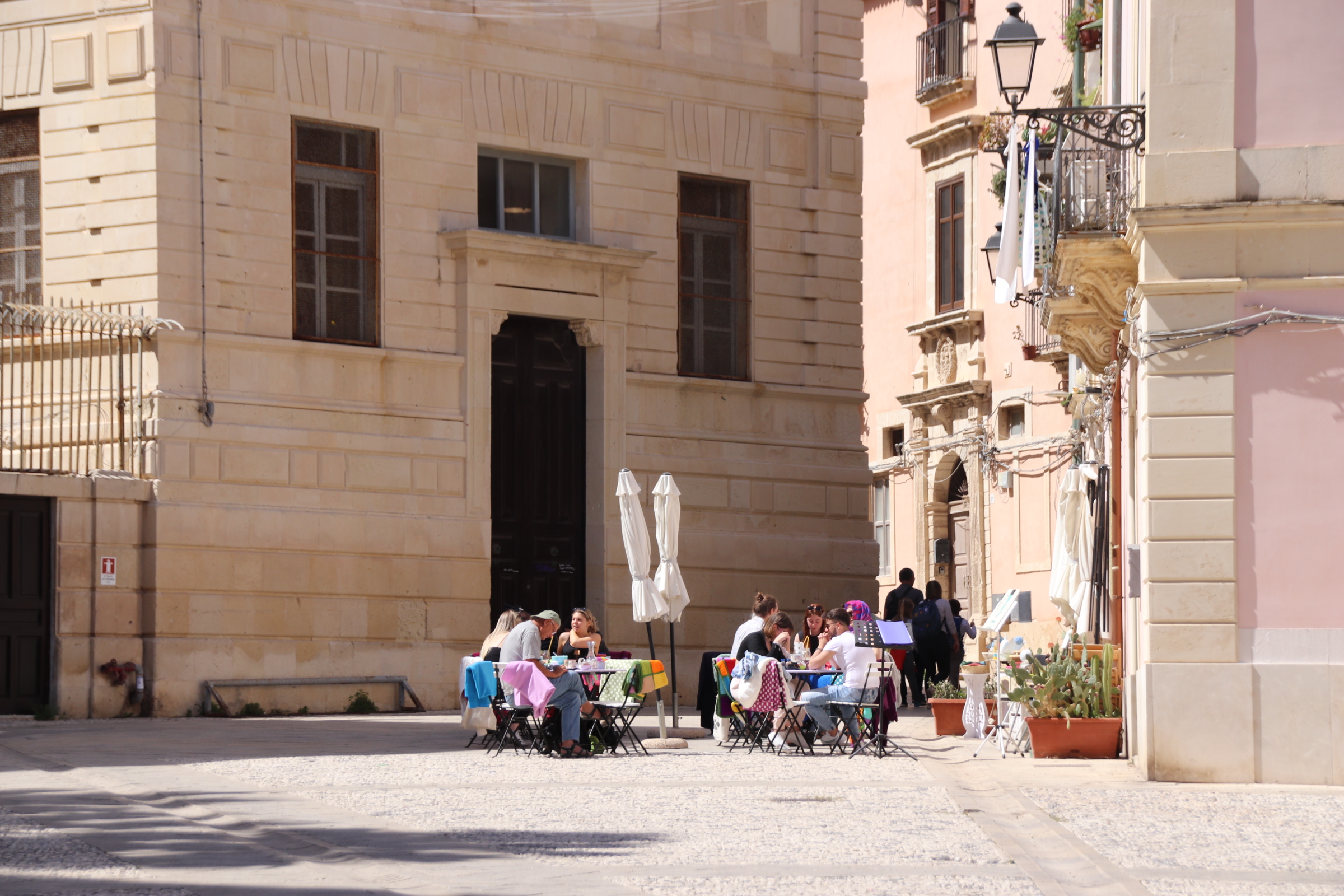
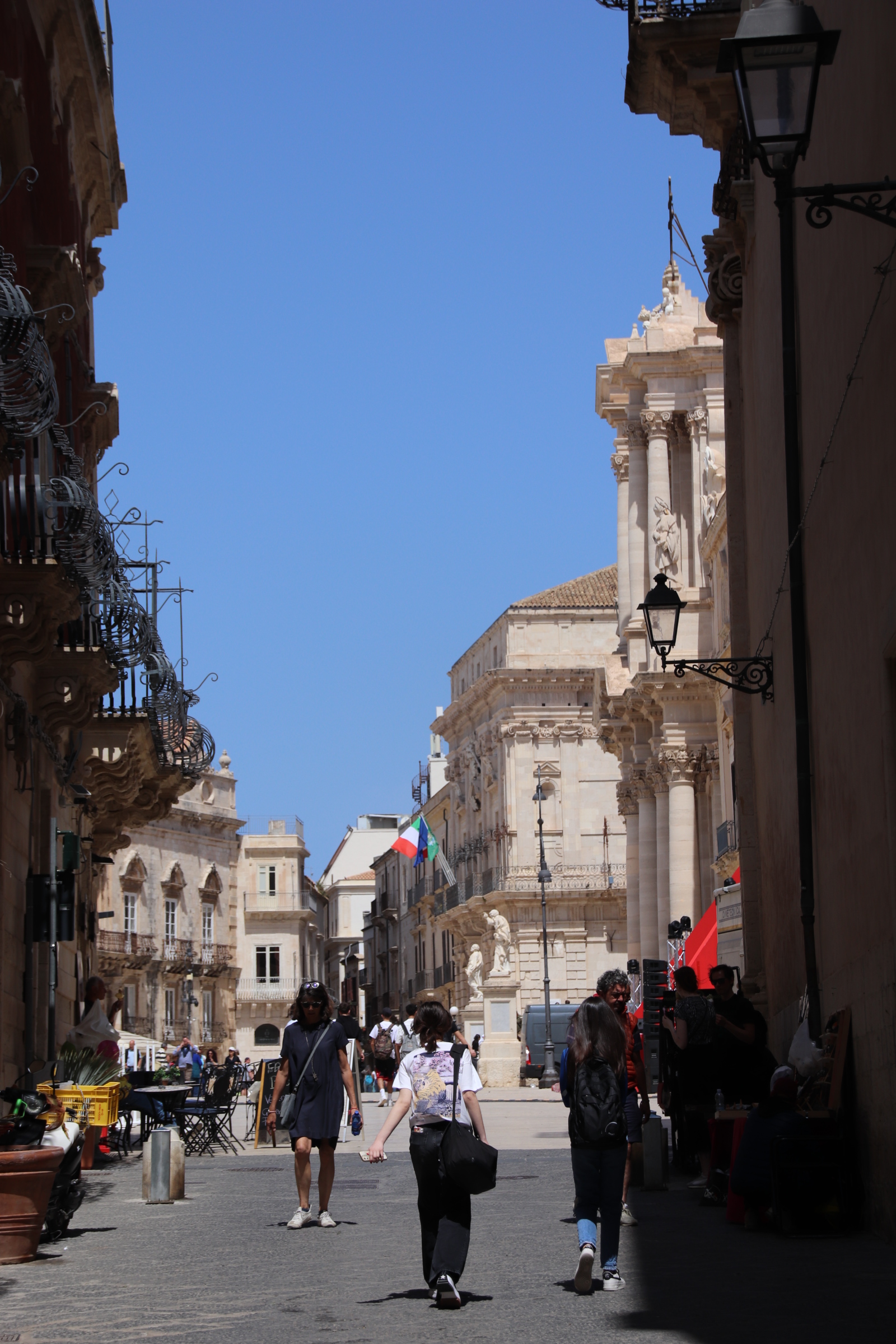
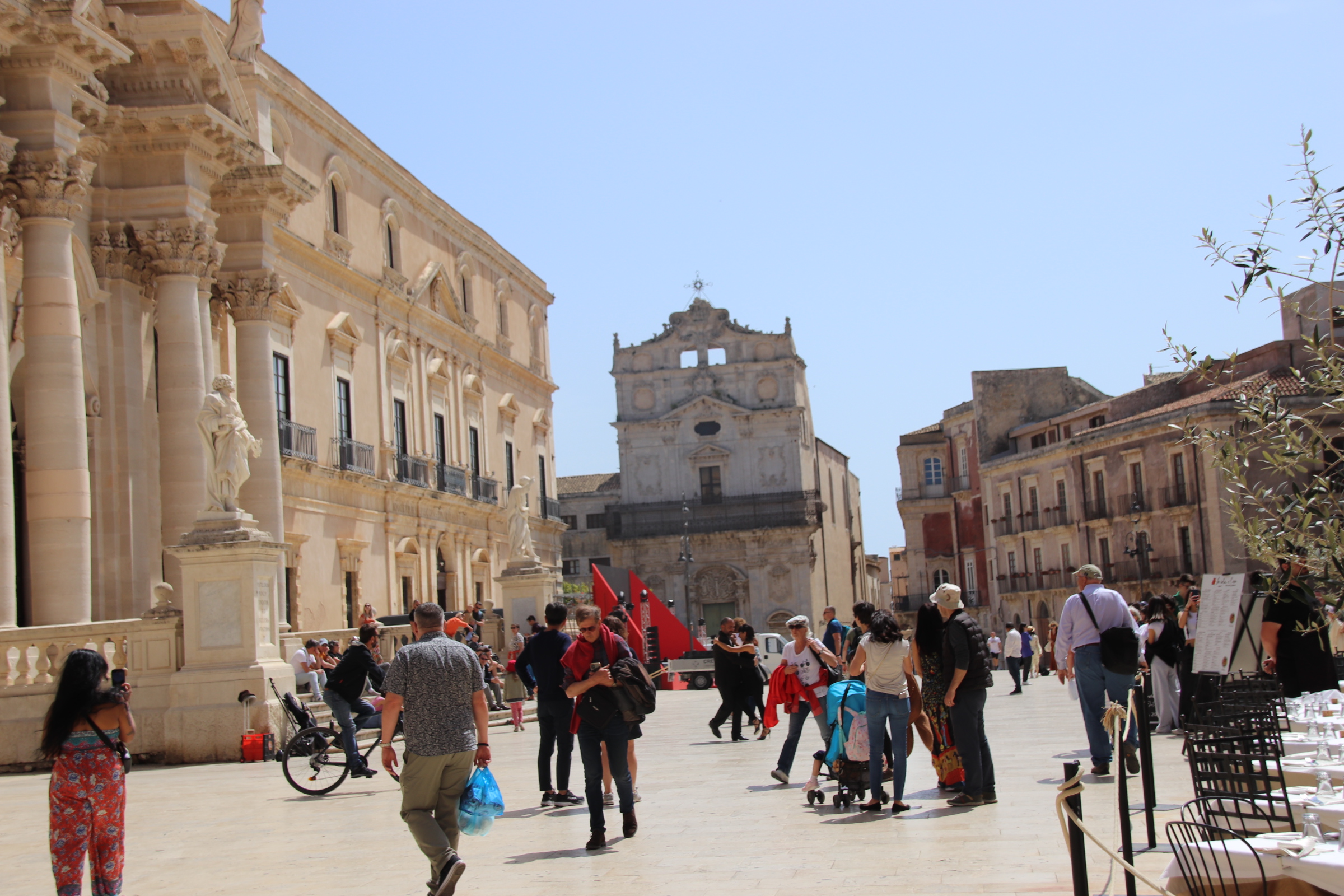
    So now I can wax lyrical about Syracuse & the Island of Ortigia. The streets are scruffily magical (or magically scruffy!), full of history & atmosphere. Within its deep ravines of shadowed narrow streets a huge variety of high-end restaurants, local family venues, quirky eateries, bars, cafes, bistros, street vendors cater to all visitors & all pockets.

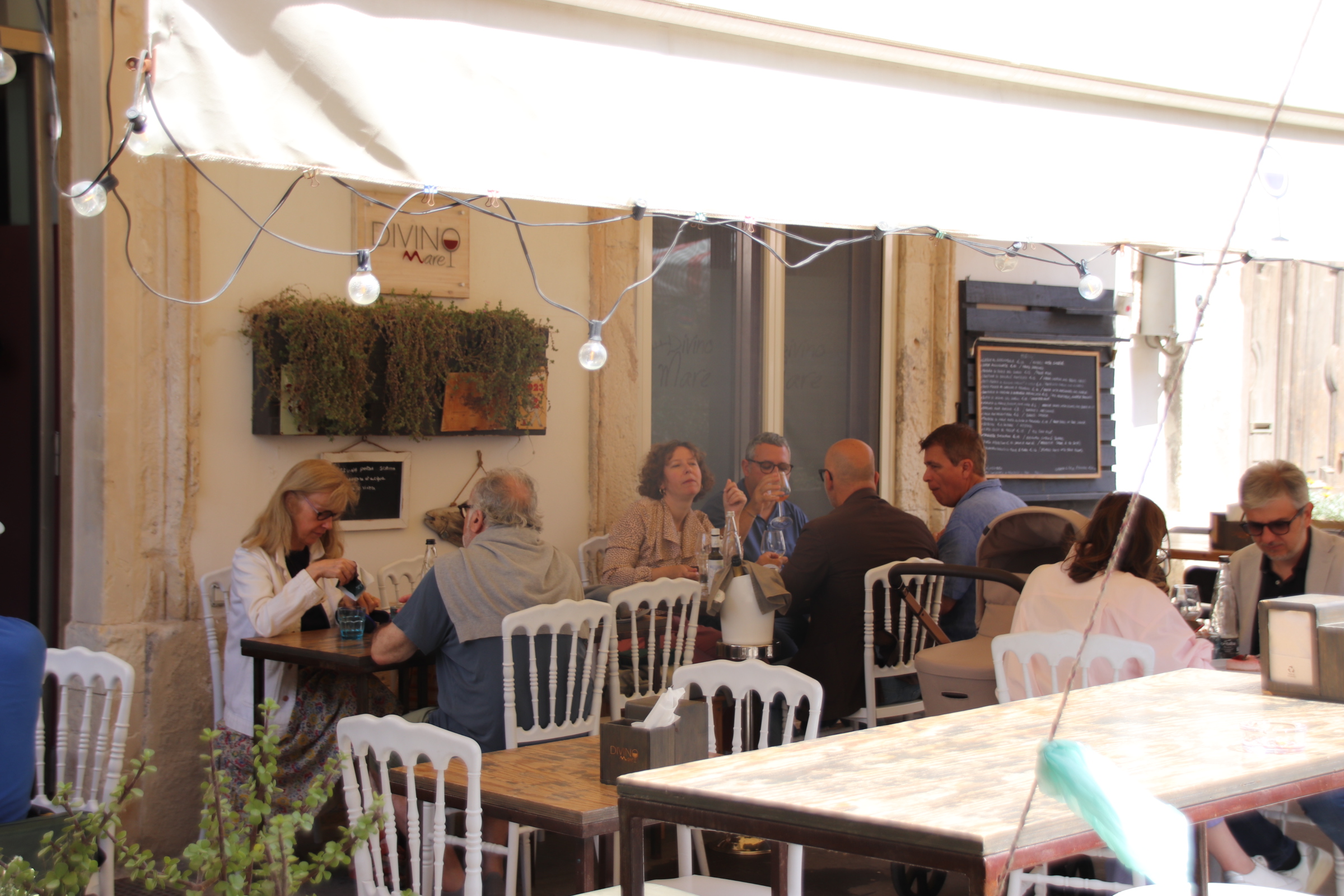
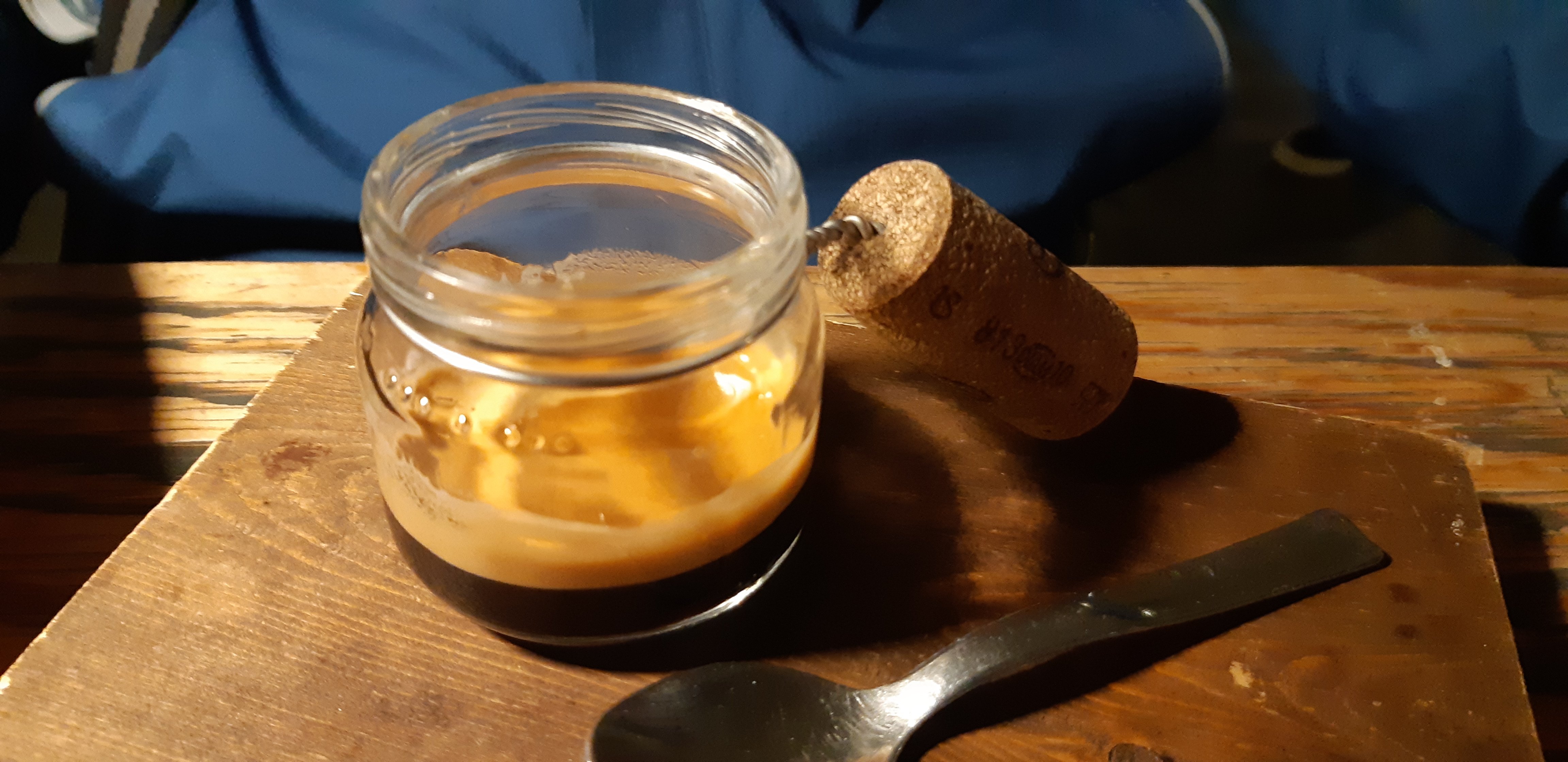
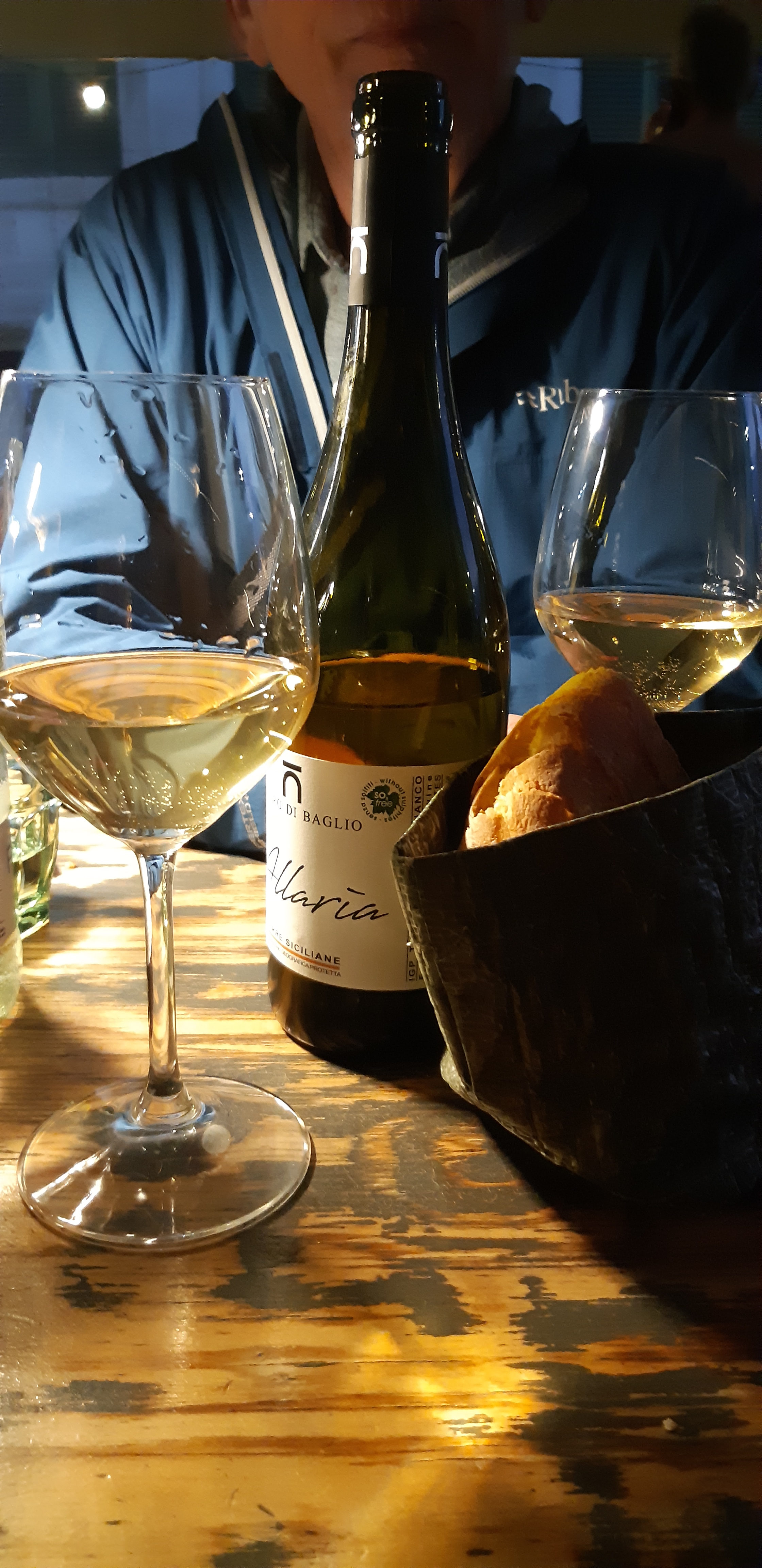
    There are so many different styles of food and all reflect the city’s island location with most offering only a single non-fish option be it pizza or the typical multi-course Italian menu. We explored the many crannies and found a different one every evening and dined in style at each one. The cost and quality were excellent with the obligatory bottle of Nero d’Avola being the most expensive item at around 25 euros

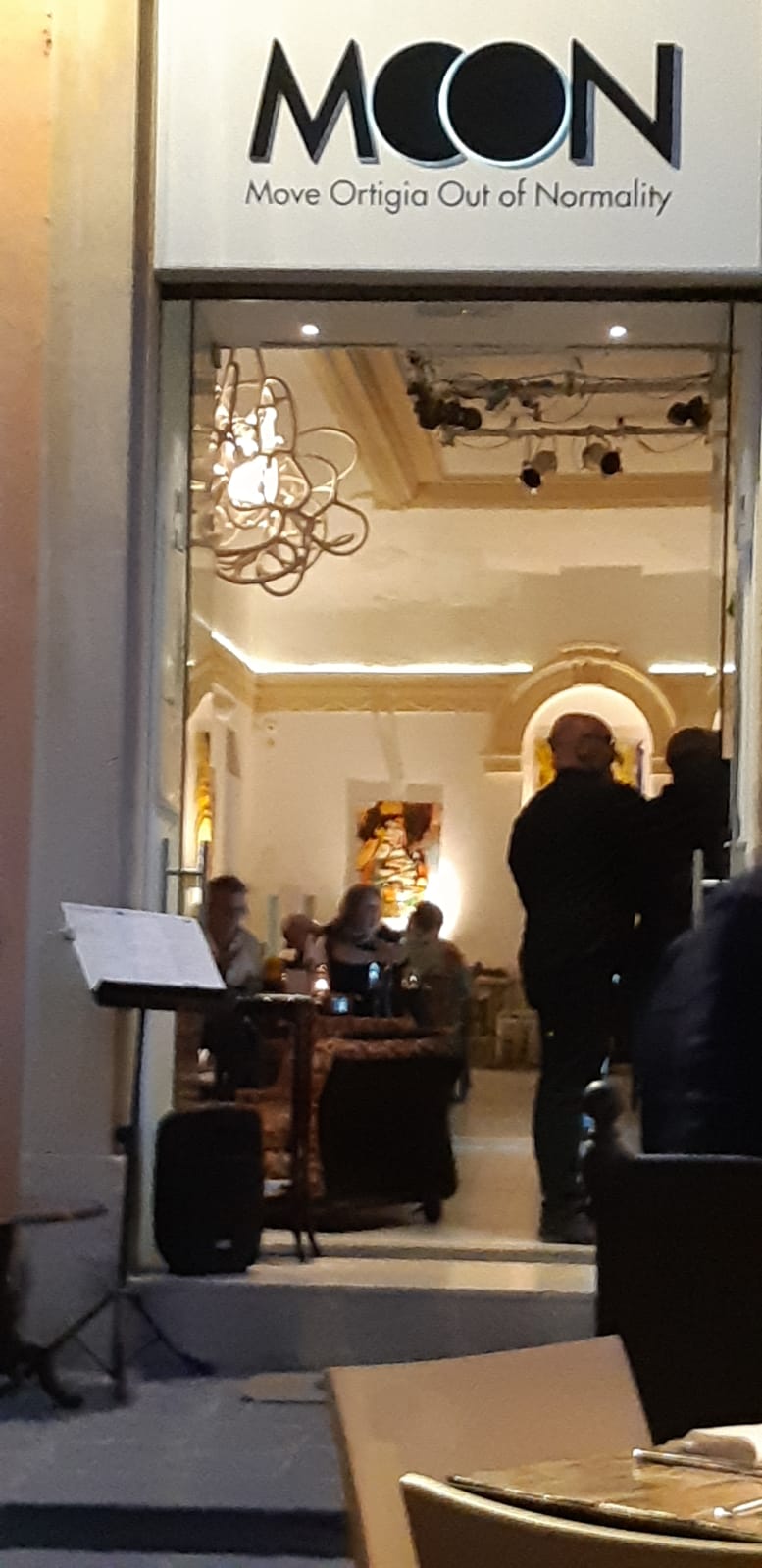
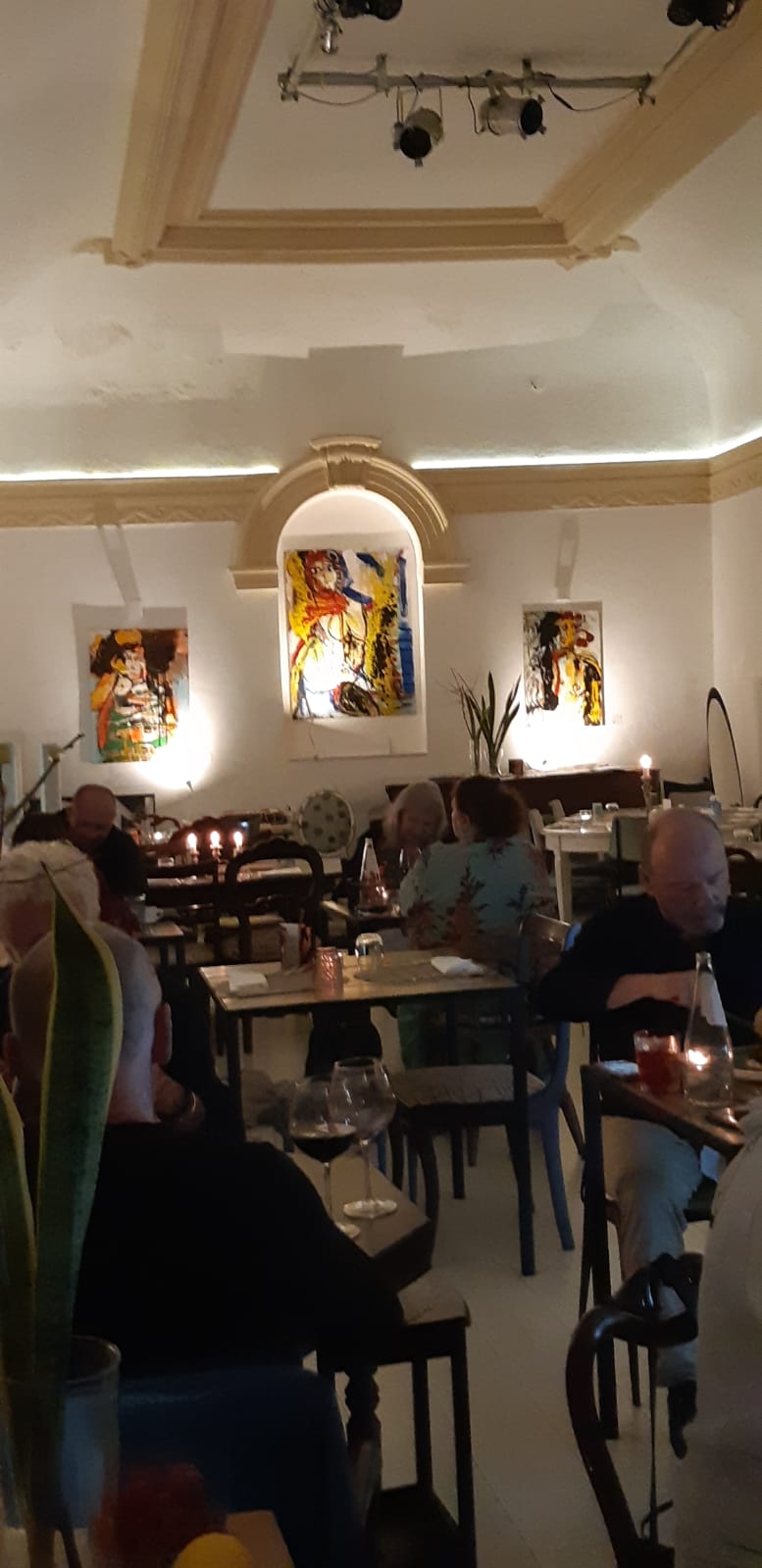
    A vegan meal at Moon in startling environs & intriguing flavours:

    In Taormina it was spaghetti & clams and Margarita pizza. Then pine-crusted leg of rabbit.

    Syracusa started well and carried on at a high level – Sicilian meat balls in tomato sauce and battered red mullet, charcuterie board with meats & cheeses, strips of beef with rocket & parmesan, swordfish pasta.

    Every experience was so good and of the highest quality served by friendly, knowledgeable staff and priced very reasonably.

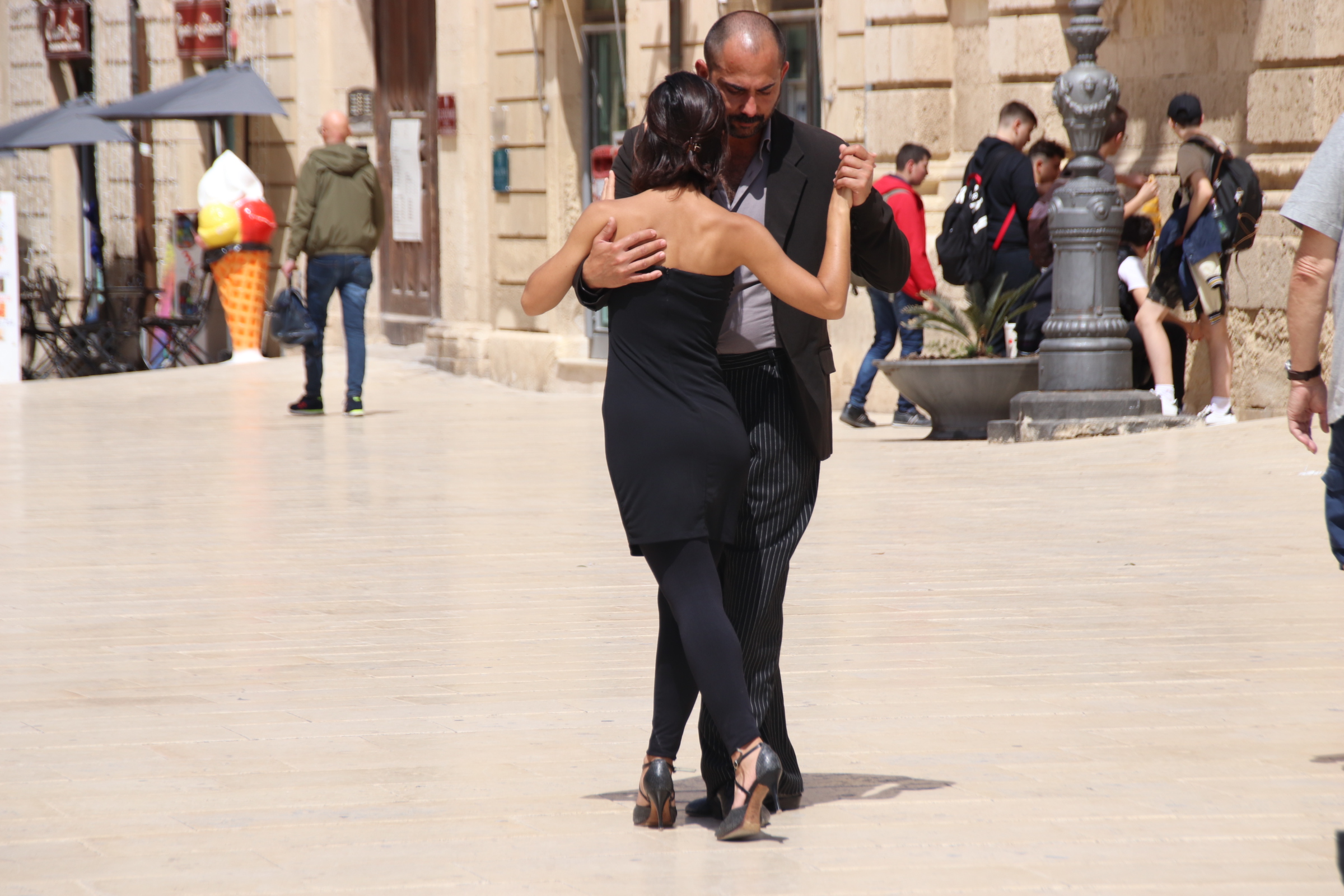
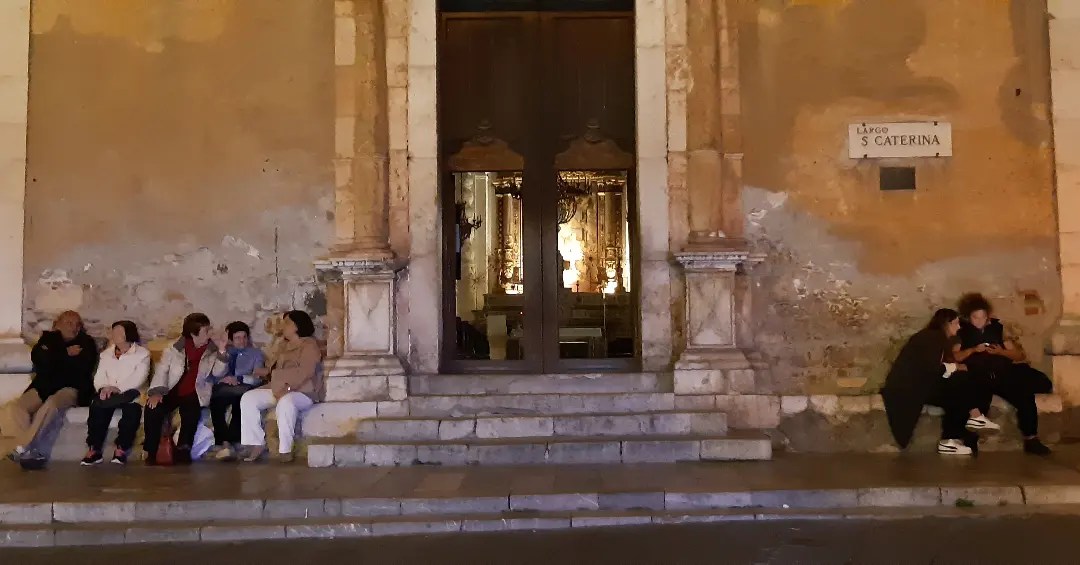
    Afterwards, feeling very content, it is a slow walk through magical streets to the room, pausing in Duomo Square to take in the last few frames of some black & white classic of Italian cinema beinb shown on a outdoor silver screen.

    Ortigia’s face off with the ancient world

    To view full-sized images tap above: ‘Read on blog’

    Having explored the main tourist route with its incredible line of imposing buildings, fountains & springs, squares, palaces, galleries, museums, and adventured into the mazed grid that makes up the Arab/Spanish & Jewish Quarters, it is time to explore around the edge of this historic island – a route of about 3km.

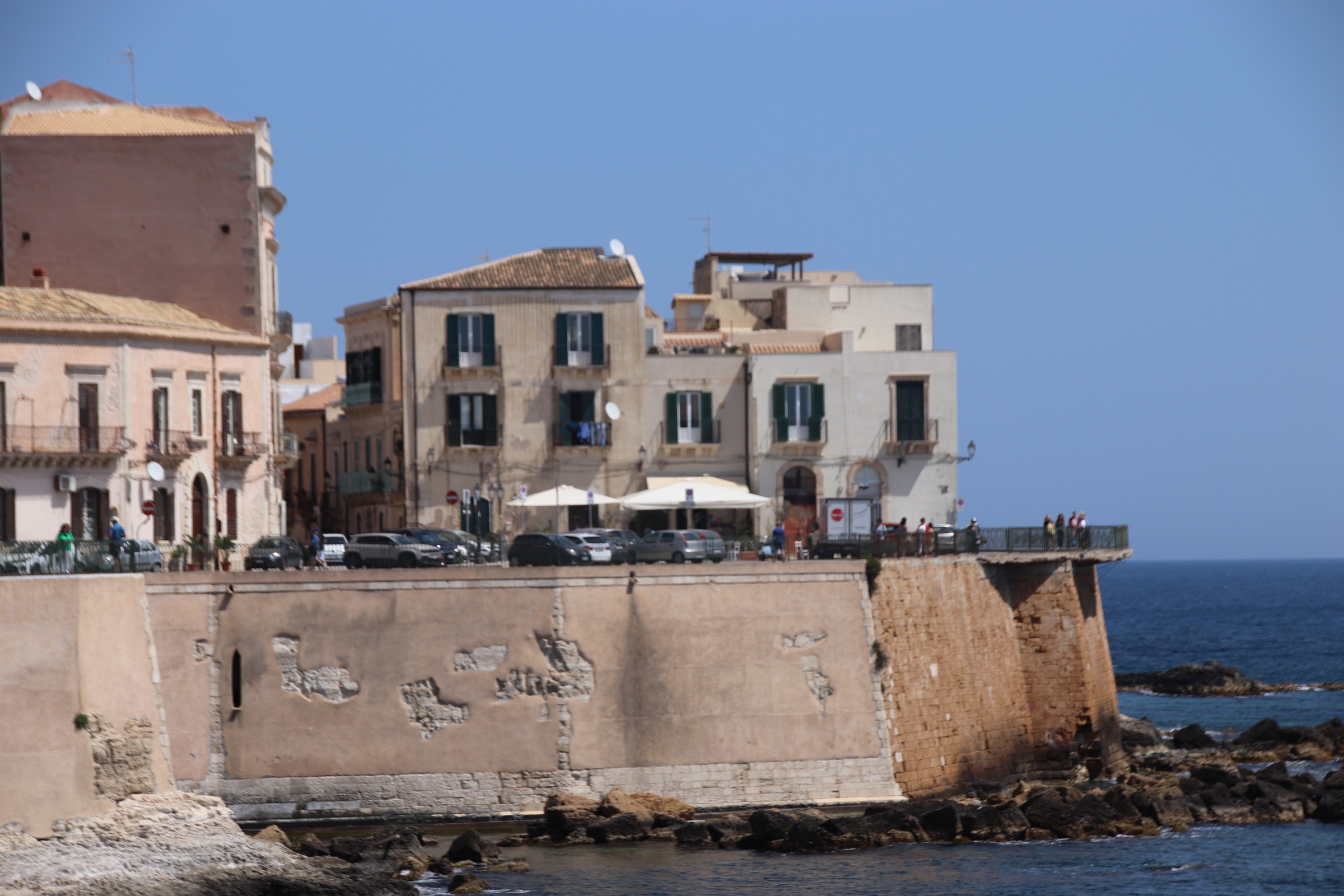
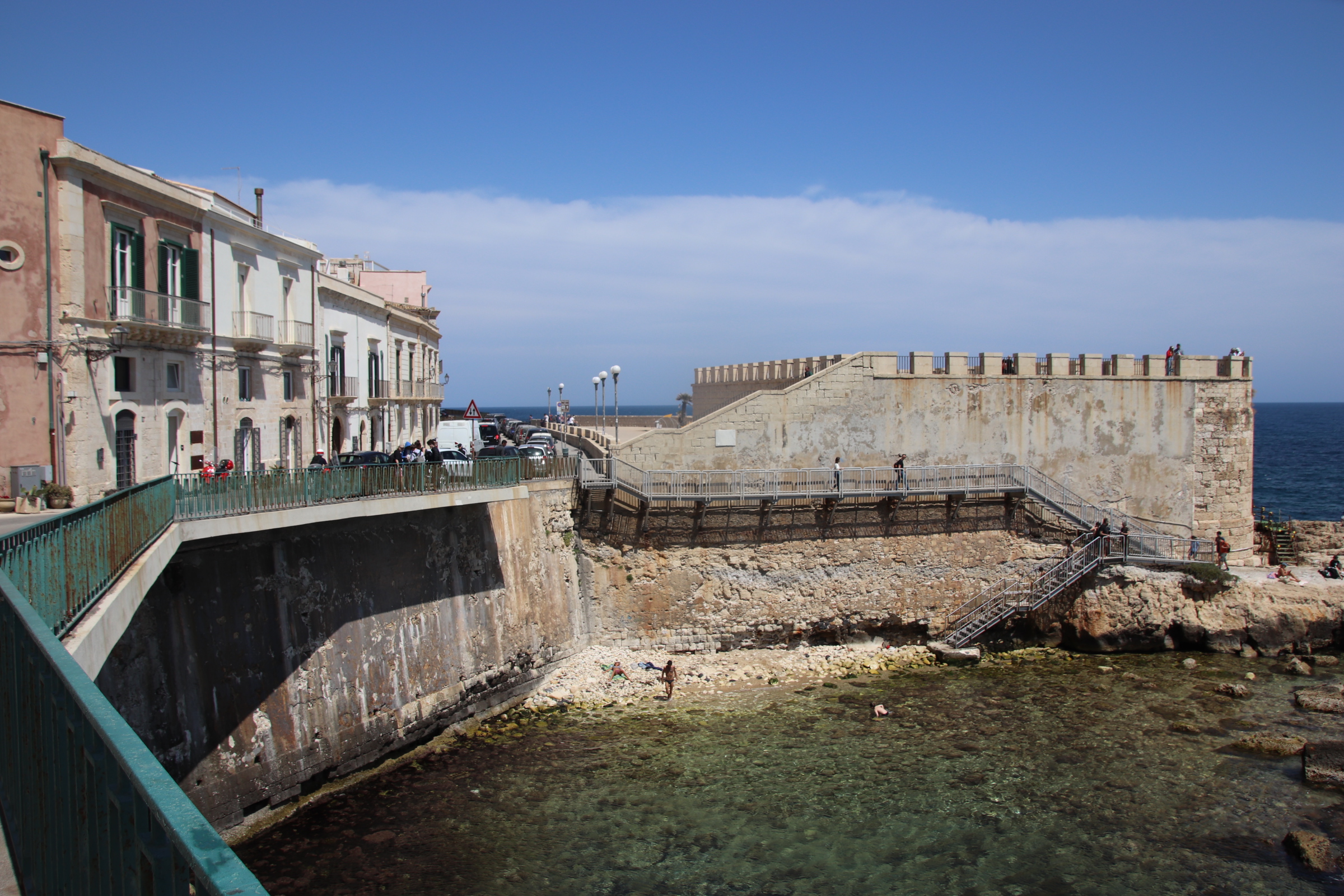
    Progressing clockwise, the turquoise waters of the ocean are always to the left, the high-rising temperatures deceptively cooled by off-water breezes. On the right, weathered facades blankly face the centuries of storms & battling ships, reflecting the character of the neighbourhoods that shelter behind these protective shells.

    Castello Mariace is at the southern-most tip of the island. Here the route turns for home along the bars & cafes on the raised promenade.

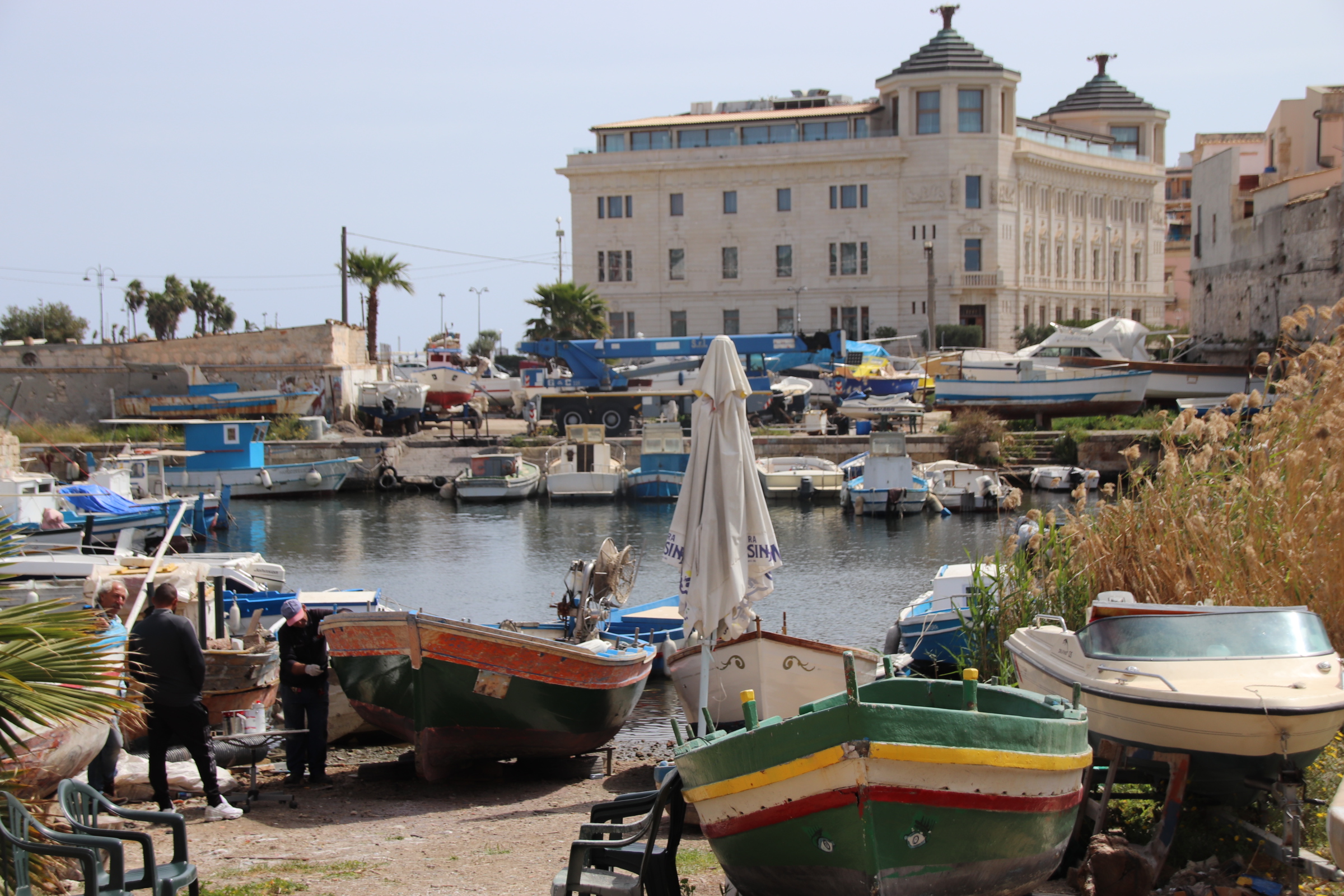
    At the Spring of Aretusa, the Grand Hotel stands imperial above the new construction work taking place down on the water. This leads in a wide walkway along moorings designed for yachts, small liners & supercritical until more normal folk sort out their nets, bookings for their island cruises and boat hires.

    Ortigia’s two Quarters

    To view full-sized images ‘read on blog’ (tap top right)

    The island of Ortigia runs in an inverted teardrop shape from north to south. Whilst the main tourist drag of palaces, piazzas, grand buildings & the duomo takes the visitor slightly to the left of the central axis, the maze of narrow streets in the bulging land to the right is there to be explored. These dense areas of alleys, tenements & courtyards are shared by the Arab & Spanish Quarter to the north and the Jewish Quarter to the south.

    The contrast between east & west is very apparent. Streets are even tighter. Housing tends to be in terraces of smaller properties, punctuated by small-fronted shops & cafes.

    A few squares & piazzas are present but they tend to be much reduced in number & size and lack the grand accompaniment of statues & crests that boast power & influence over to the east.

    These streets were inhabited by a lower strata of Sicilian society -shopkeepers, craftsmen, sailors, fishermen, money lenders. Certainly, they are not such a draw for the tourist as the cobbles are empty of raised iphones & gaggles of clucking visitors. It is all rather calm & peaceful in here. It’s on a much smaller scale than elsewhere; an area where one can appreciate a different feeling to the city.

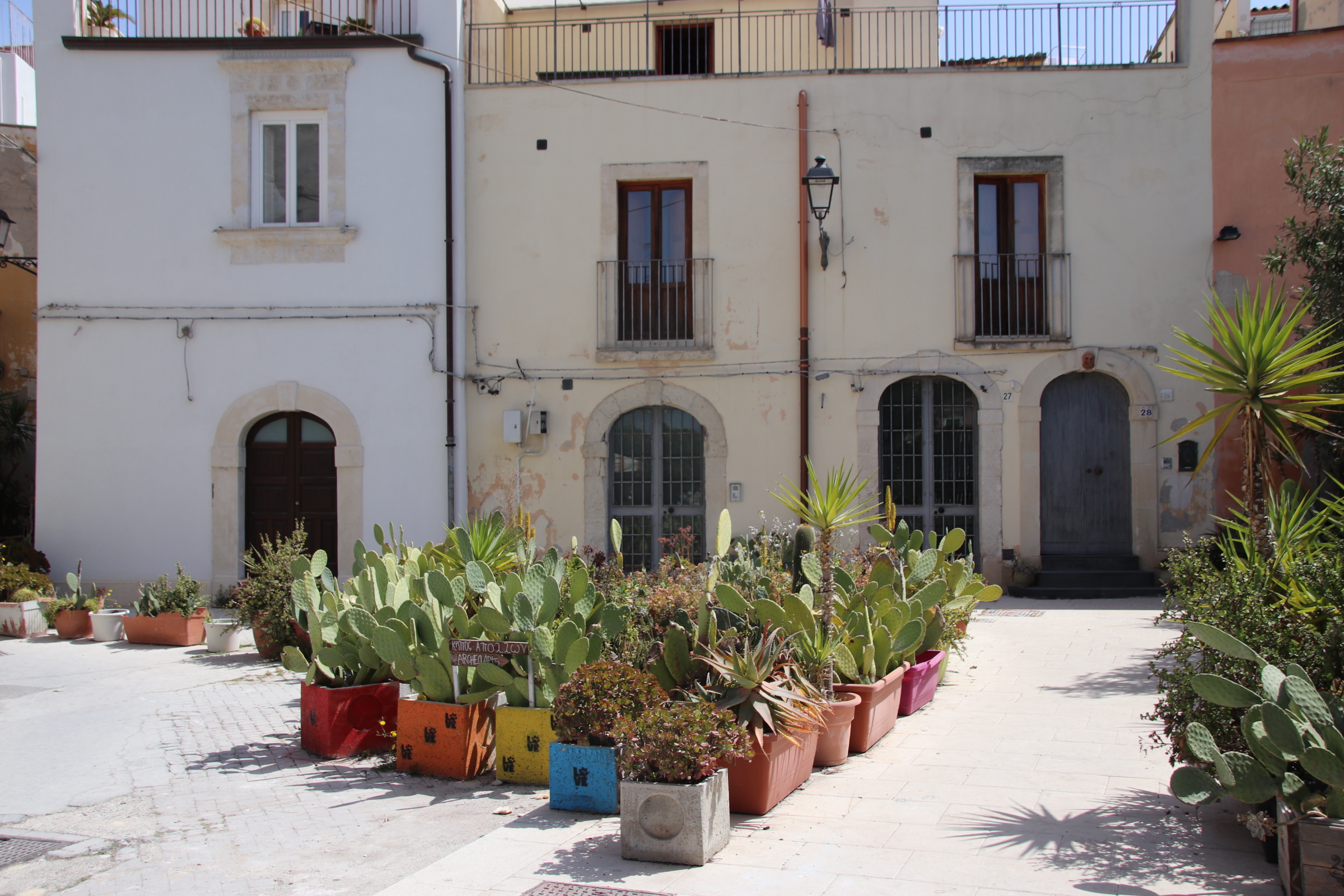
    There is little to differentiate the two quarters. Maybe there is more of a Spanish/Moorish feel in one, with balconies of intricate metal & colourful mosaics more in evidence. Occasionally, street gates are left open to display cactus strewn courtyards and open quadrants.

    The main way to know you have entered the Jewish Quarter is the sign on the alley, along with obvious features of life like the Jewish baths.

    Working a way through this labyrinth where palaces sidle up to small tenements and plain-fronted churches, makes no difference to where you emerge – somewhere on the coastal defences to the west of the island.

    Ortigia, the ancient, island centre of Syracuse

    The centre of the ancient city of Syracuse is firmly rooted on the Island of Ortigia, connected to the mainland by a couple of short bridges. It is famous for its Greek & Roman civilisations and has been of strategic importance for world powers since medieval times – Arabs, Crusading Christians, Holy Roman Emporers, Spanish & French & Italian dictators and Mafia gangs. All have come and left their mark.

    Ponte Umbertino is the main artery into this ancient place. A Roman grid suck the visitor away from the bright sun into a maze of deep, darkly shadowed streets that have cut deep through the storeys of centuries of imposing, fading buildings.

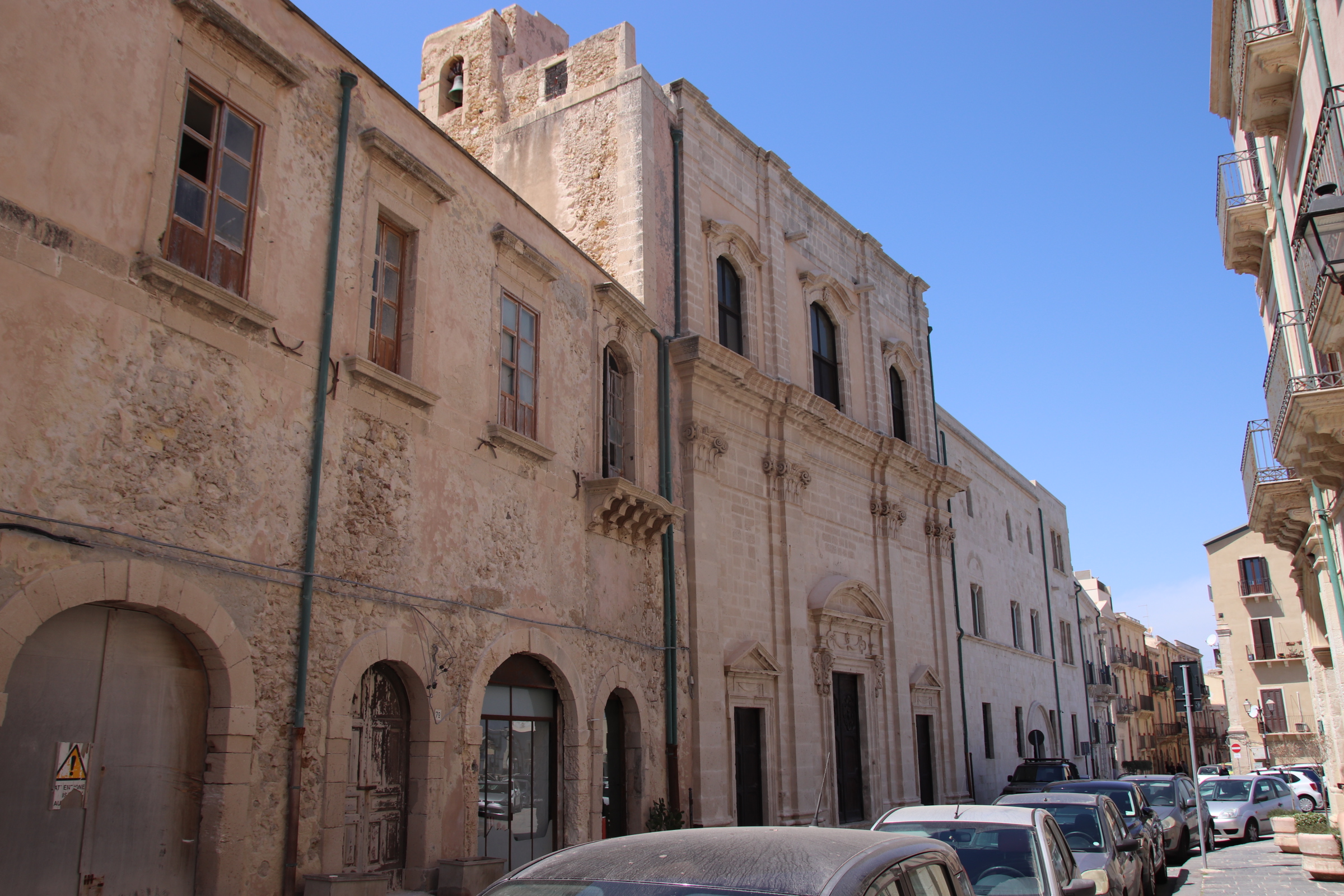
    Palaces, churches, villas now home to countless museums & galleries, create the shadows -a grid of age-weathered necklaces. Other grand dwellings of merchants & soldiers & city grandees gaze down on those below from high lofted crests & statues.

    The adventure starts by crossing the narrow stretch of water and girding the loins with coffee at the small huddle of cafes that nestle at the root of the entrance to this history before entering the cave of ancient delights.

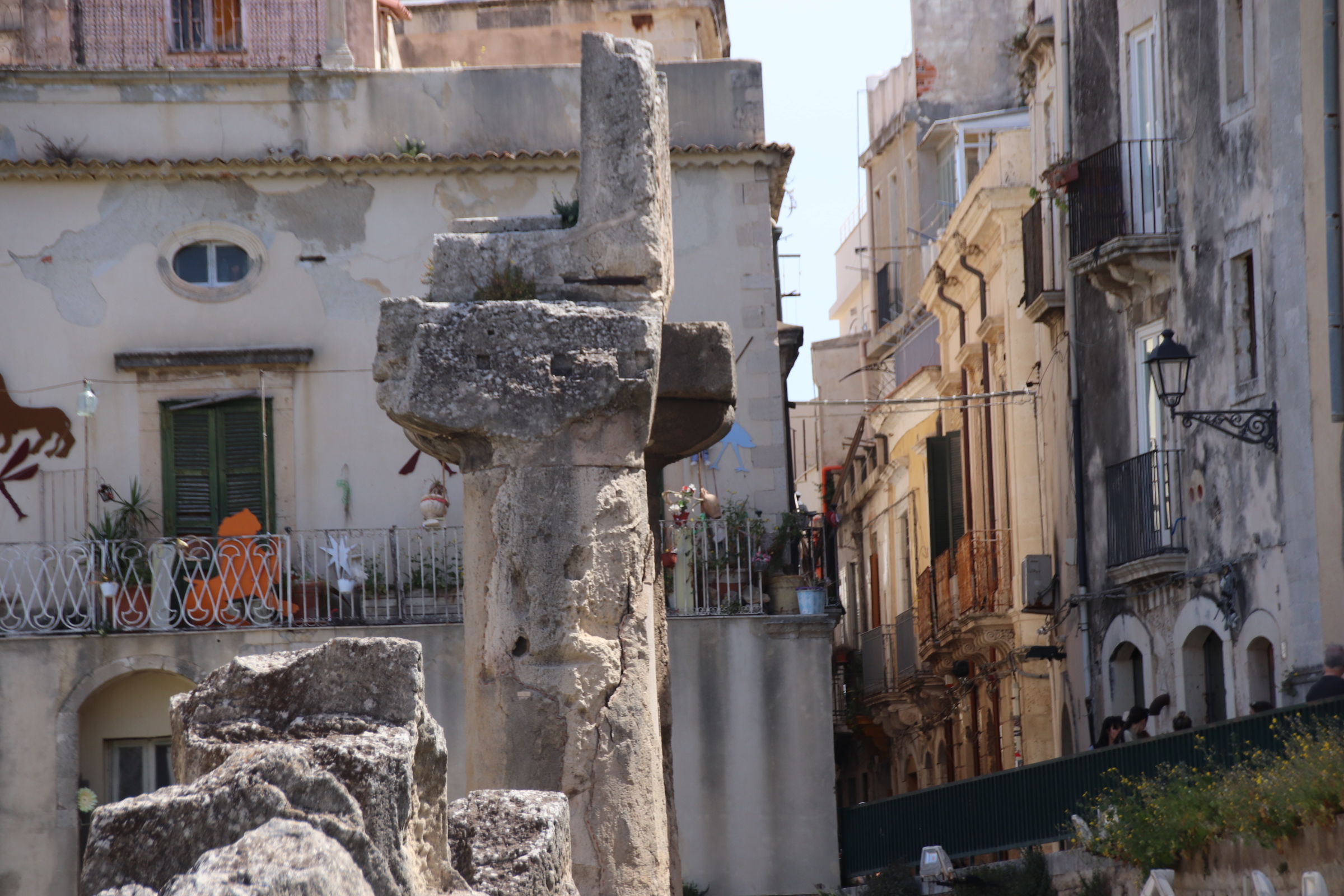
    The Temple of Apollo, considered to be the oldest Doric temple in the world, is the gate keeper to this ancient world.

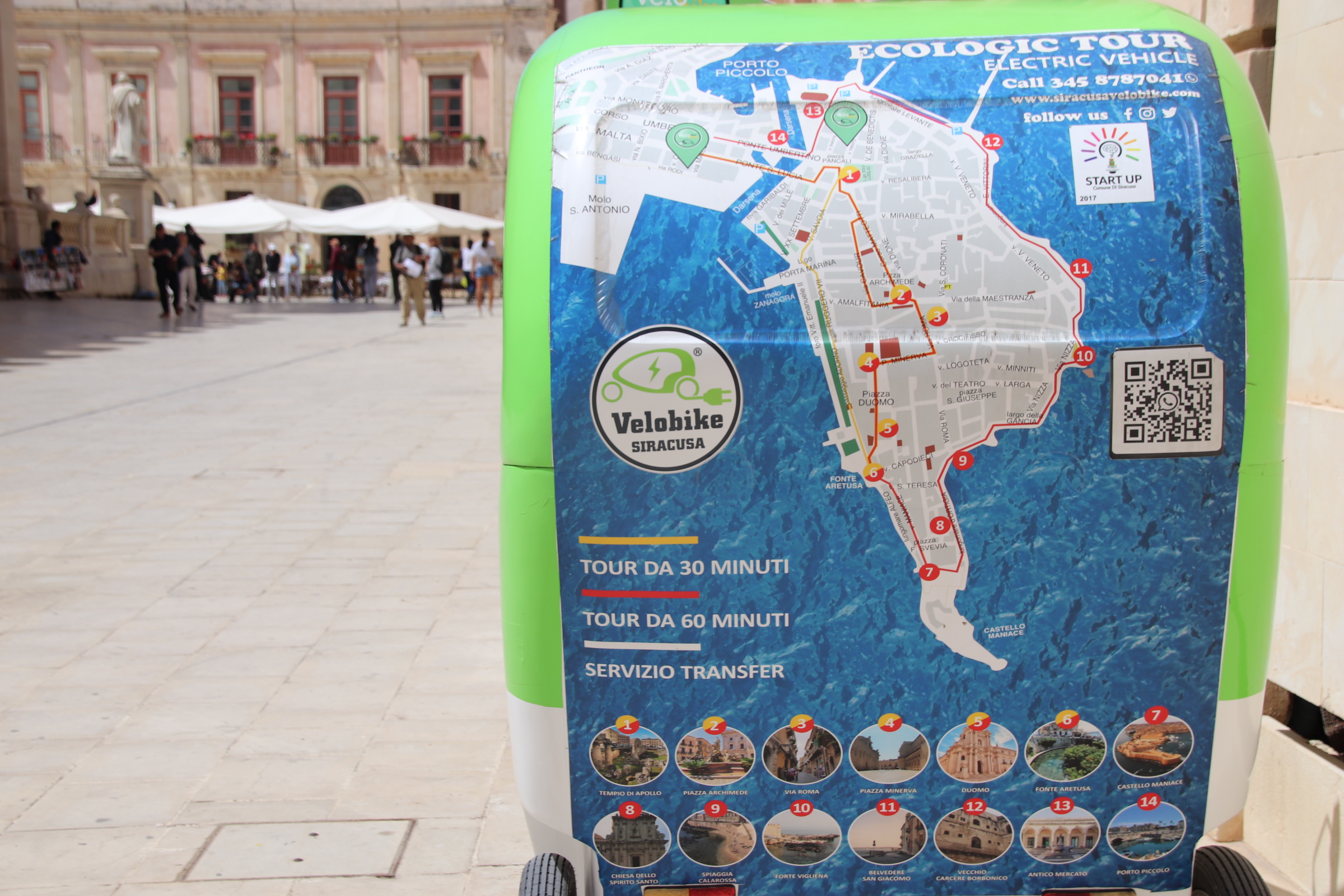
    The Via Dione draws us along the shadowed canyons & ravines that link the best- prized elements of this aged city. This is the main tourist drag and leads to the ocean on the south side of the island.

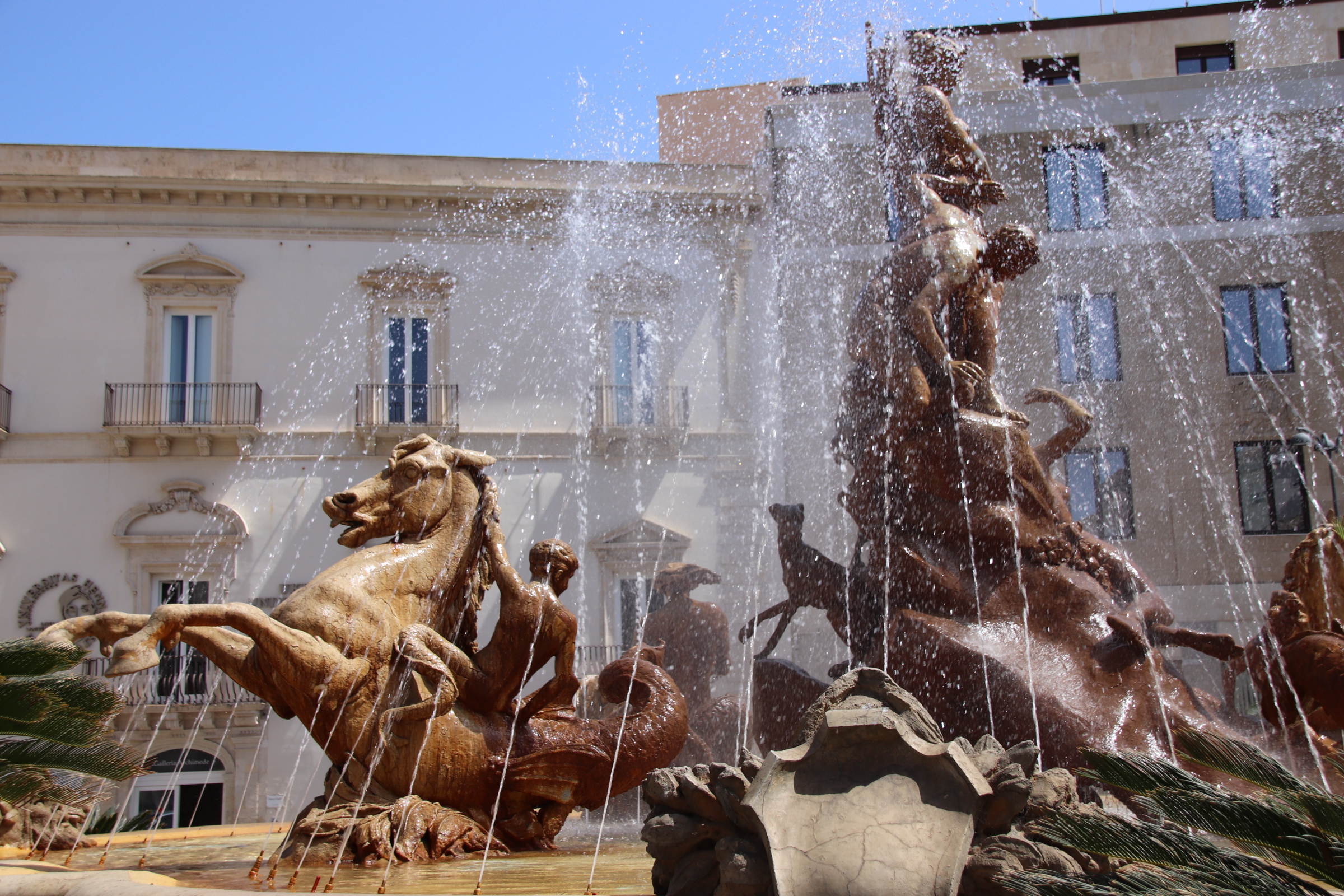
    Archimede Square (yes, the famous man was born in the city) is the location for the Fountain of Diana. Four palaces, dating from 14th to the 19th centuries form the four sides of the Square. Each has now been converted for use by numerous institutions. In the centre the Fountain, created in 1906 symbolises the history of Syracuse from medieval times to the present day.

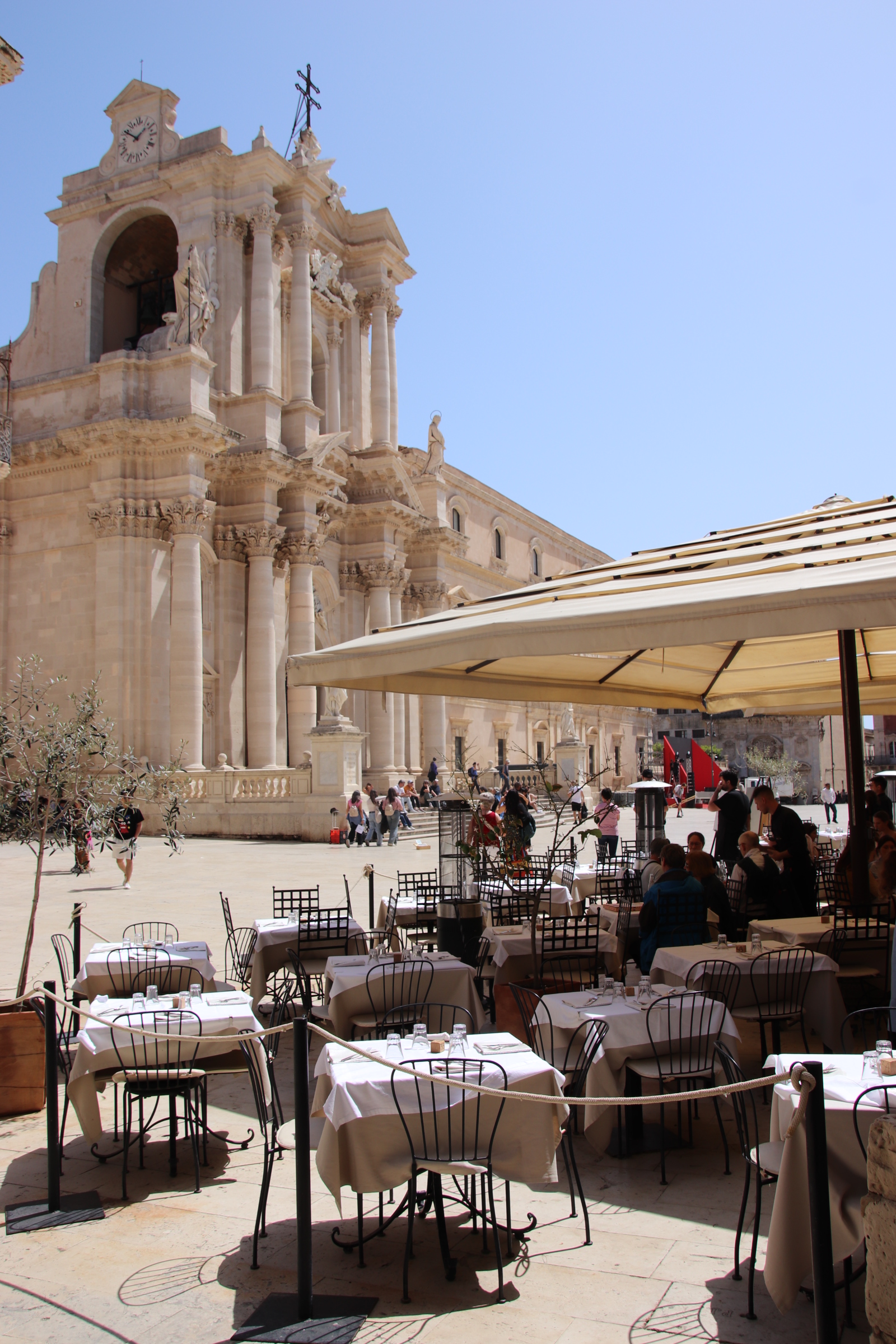
    The Duomo & Duomo Square – so impressive; the spiritual heart of every Italian city!

    The Spring of Aretusa is considered to be the historical centre of Syracuse. From here there’s a great view along to the Castle of Maniace at the tip of the island.

    That’s enough for one day – more soon.

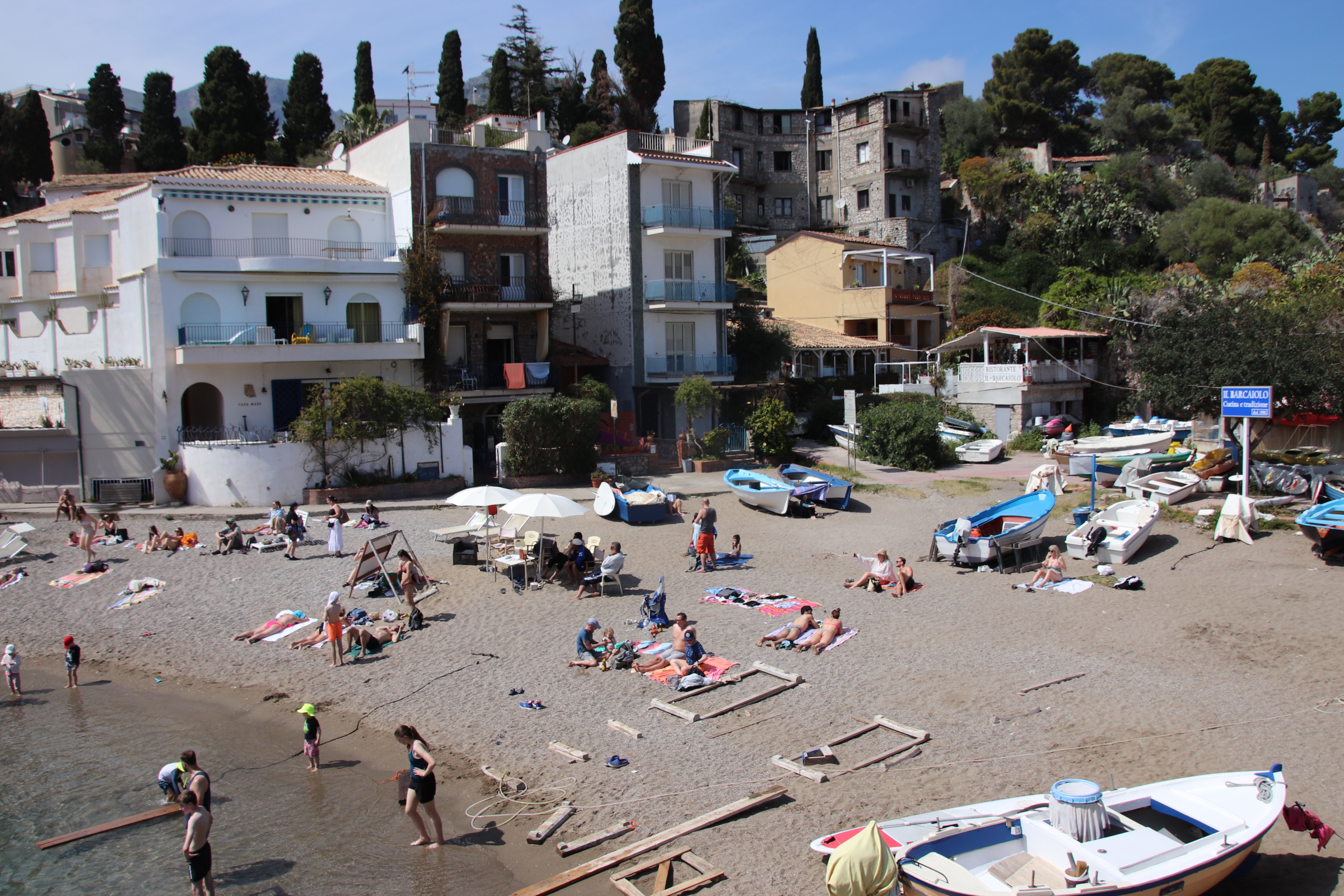
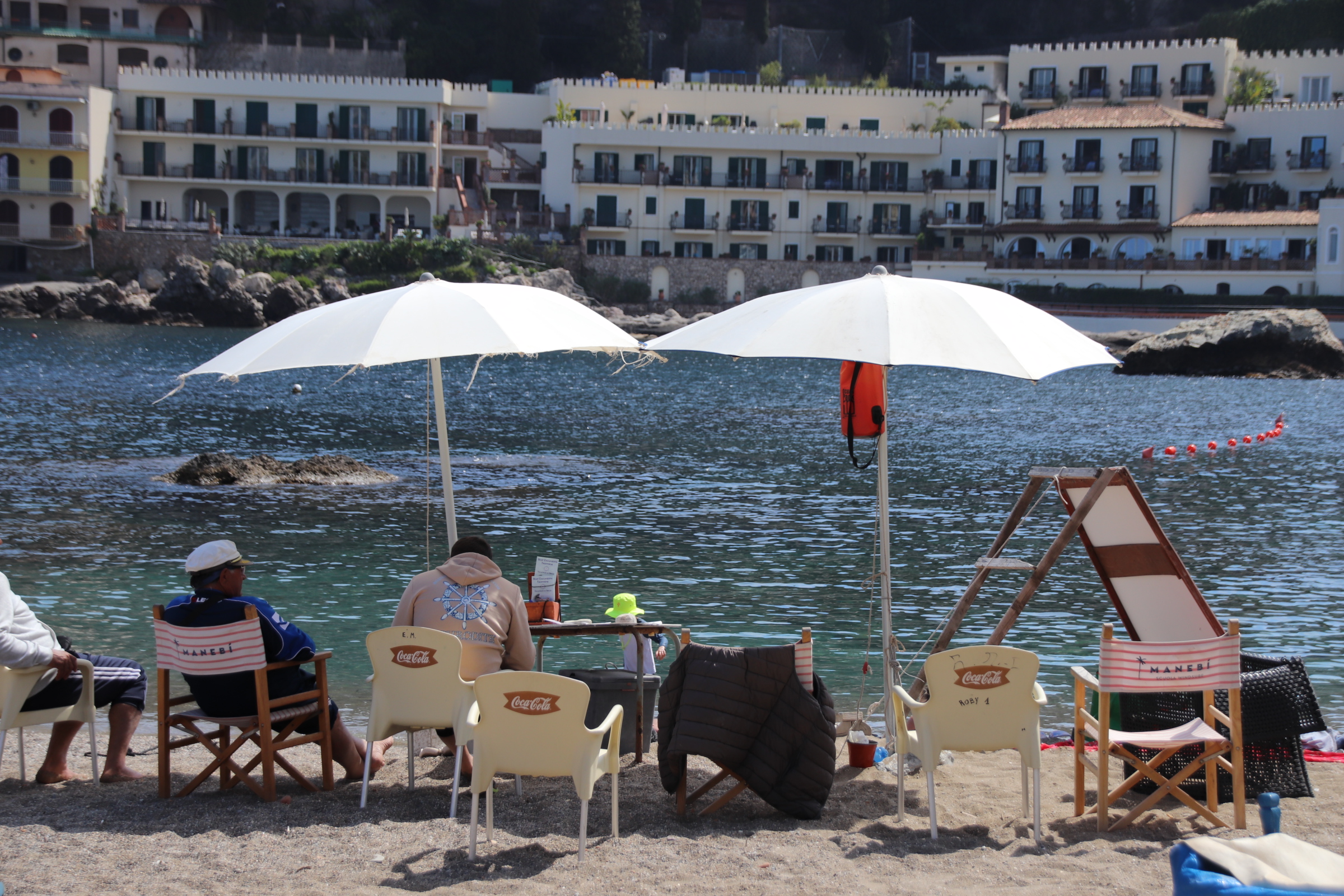
    Taormina in the south of Sicily

    I am back in my beloved Sicily. This time exploring the south of this wonderful island – full of history, culinary delights, fantulous wines, cliff-clustered, white-faded villages, turquoise waters, dusty, characterful facades mixed in with grand fresco-blinding hotels & villas; and always against the backdrop of smoking Mt Etna, and the rippling waters of the Mediterranean ocean.

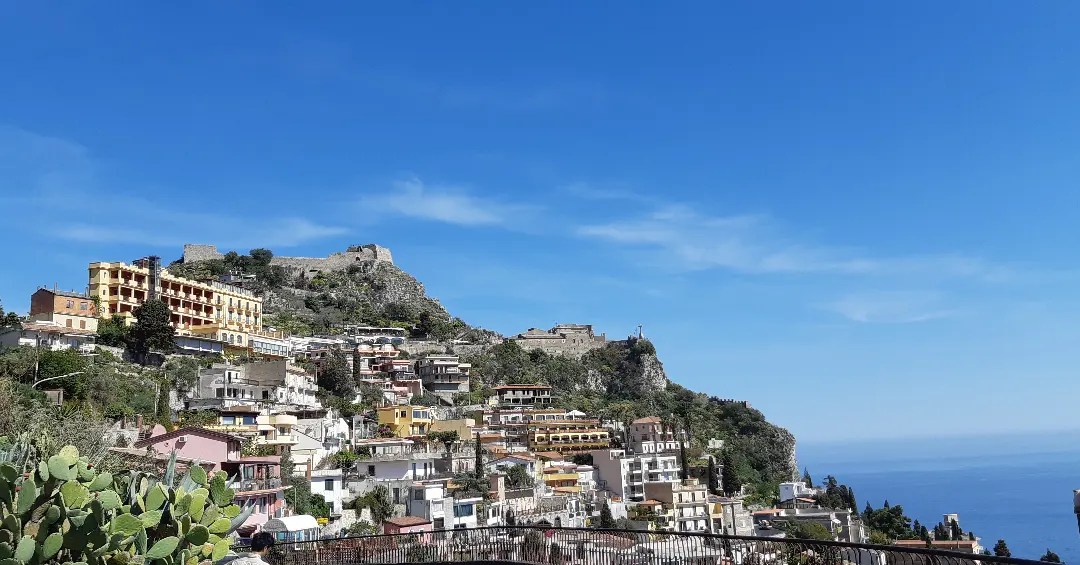
    Taormona is a jewel in the Sicilian, née Italian, crown. Developed over centuries, it has a feel of wealth & opulence. The town on three levels, dates back to ancient Greece. It can be summed up in three words – steps, ancient steps, and more ancient steps! The one sop to modern living is a cable car that transports visitors to and from the beach resort to the old town at the top of the first cliff.

    Tucked up high on a large pillar outcrop is the protective castle and the village of Castelmola.

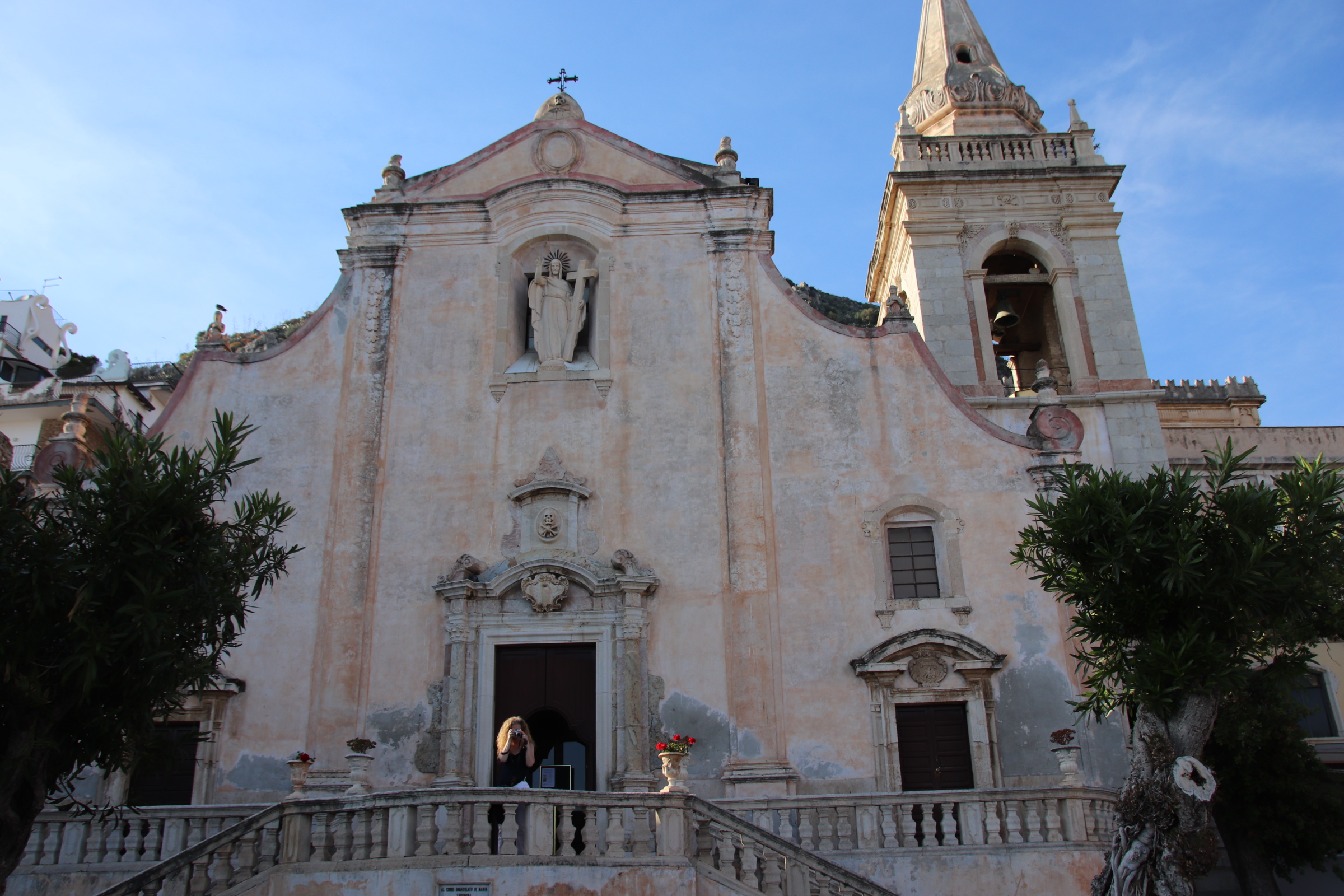
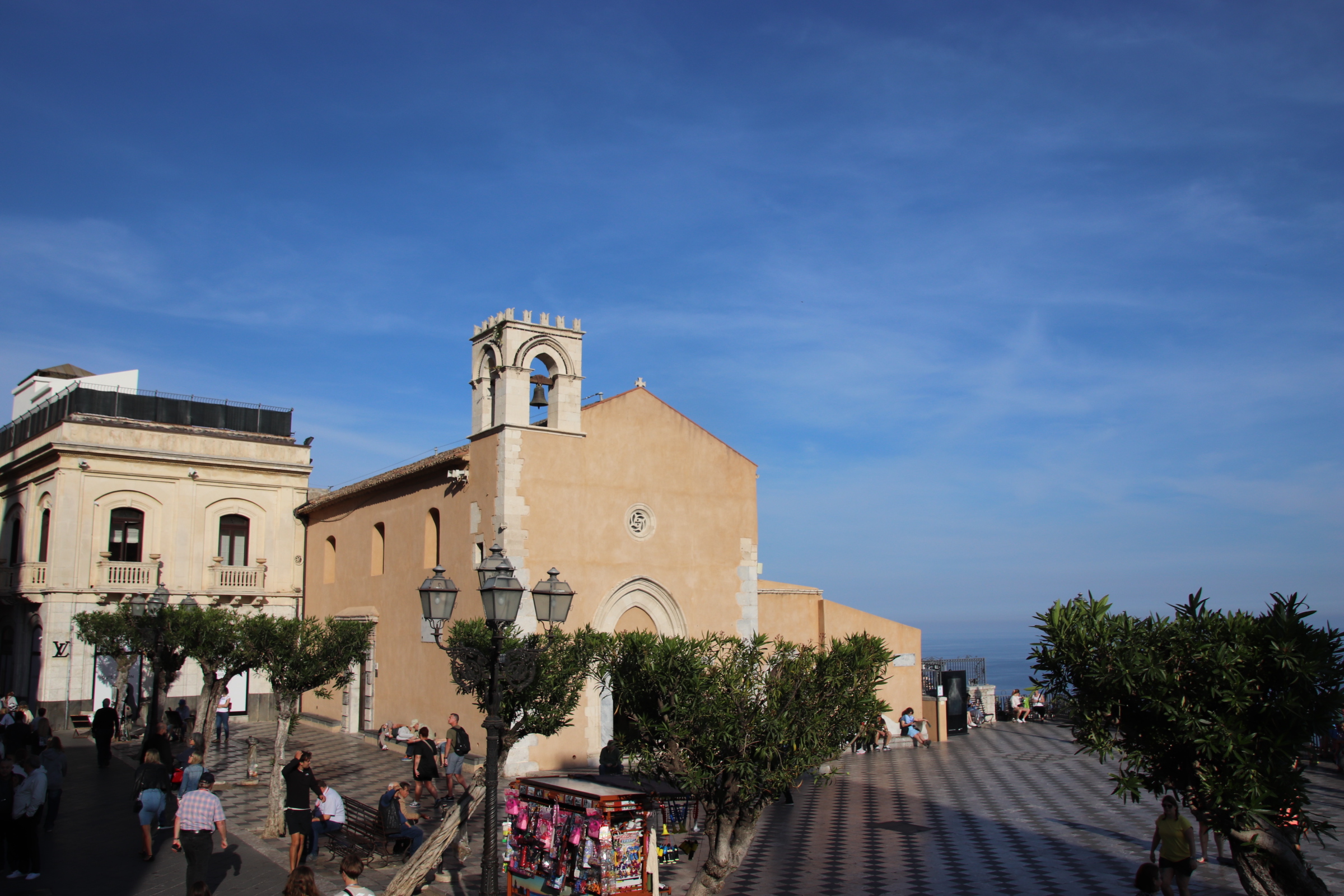
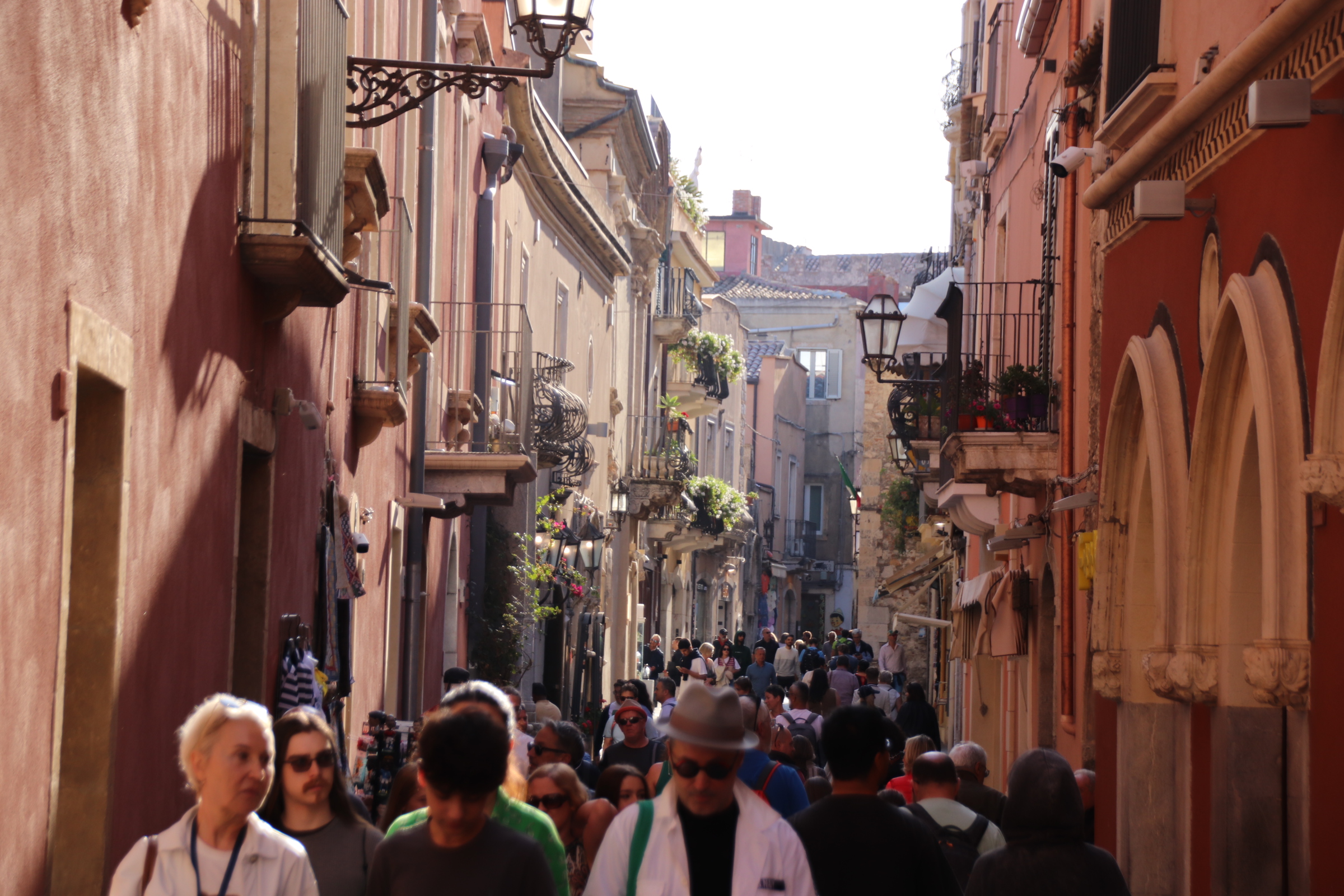
    Taormona itself is basically a single cobbled street running between 3 ancient gates with narrow stepped alleyways diving up & down to either side. Ancient churches, piazzas & palaces dating back to medieval times rub shoulders with high end fashion shops, eateries & posh souvenir establishments.

    During the day dragon’s of young visitors clog the main street.

    At the bottom of the cable car, or a stepped descent of what feels like 3km from the old town, lies the beach area where White Lotus hotels rub up against public beaches. The latter look much more fun!

    I should remind everyone that however easy it is to go down, there is always the going back up to take into account and, boy, those steps are steep.

    Baroque Lecce

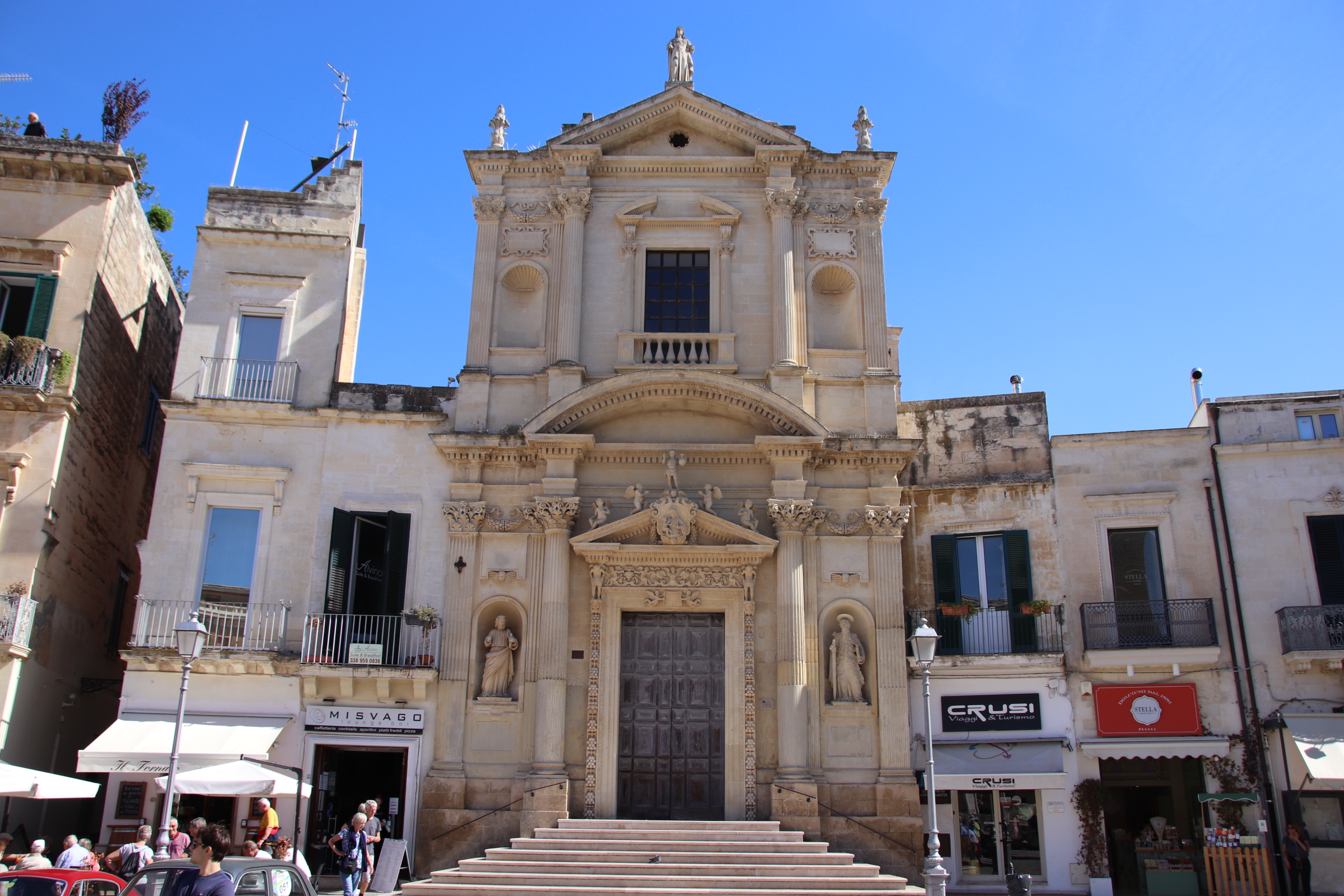
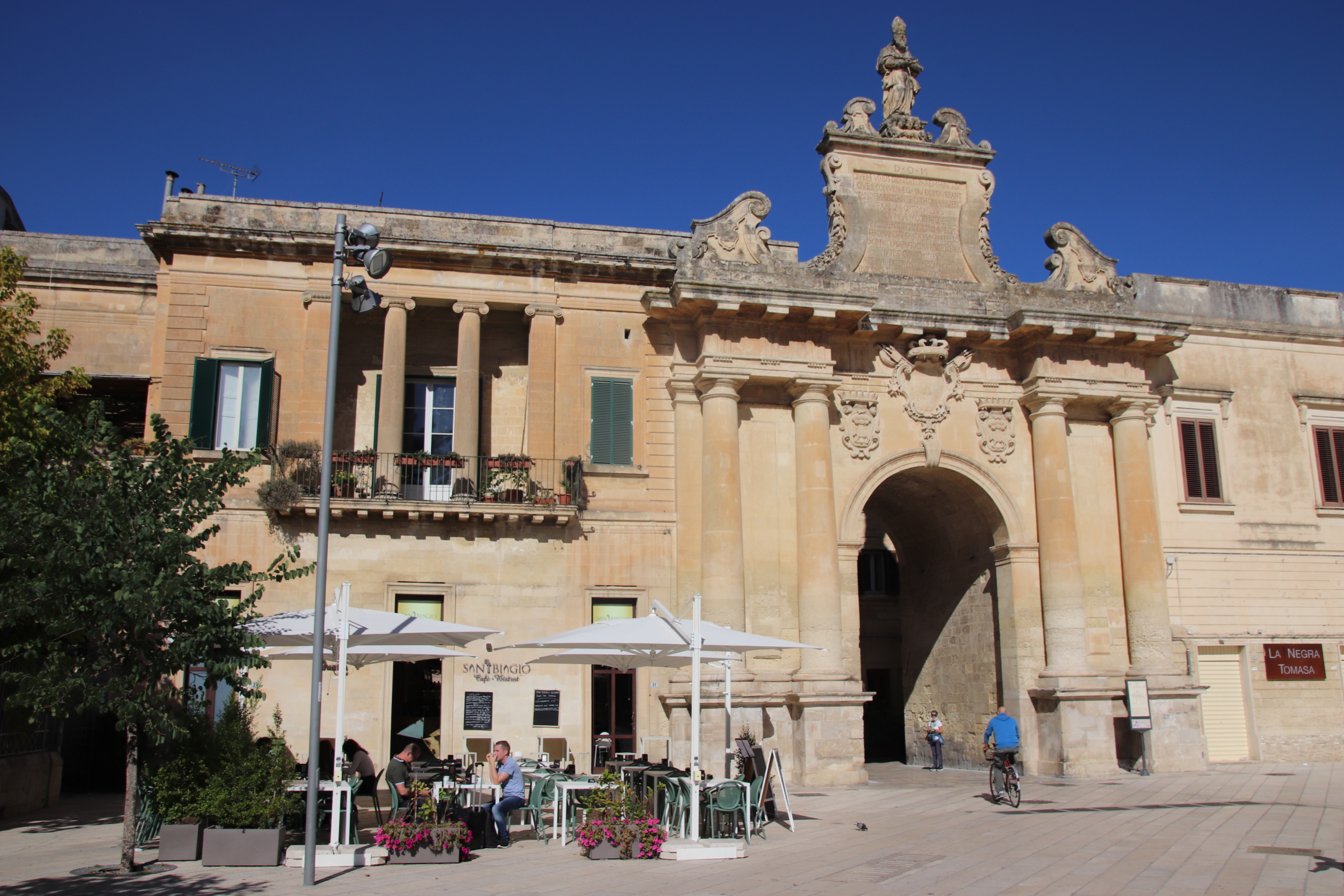
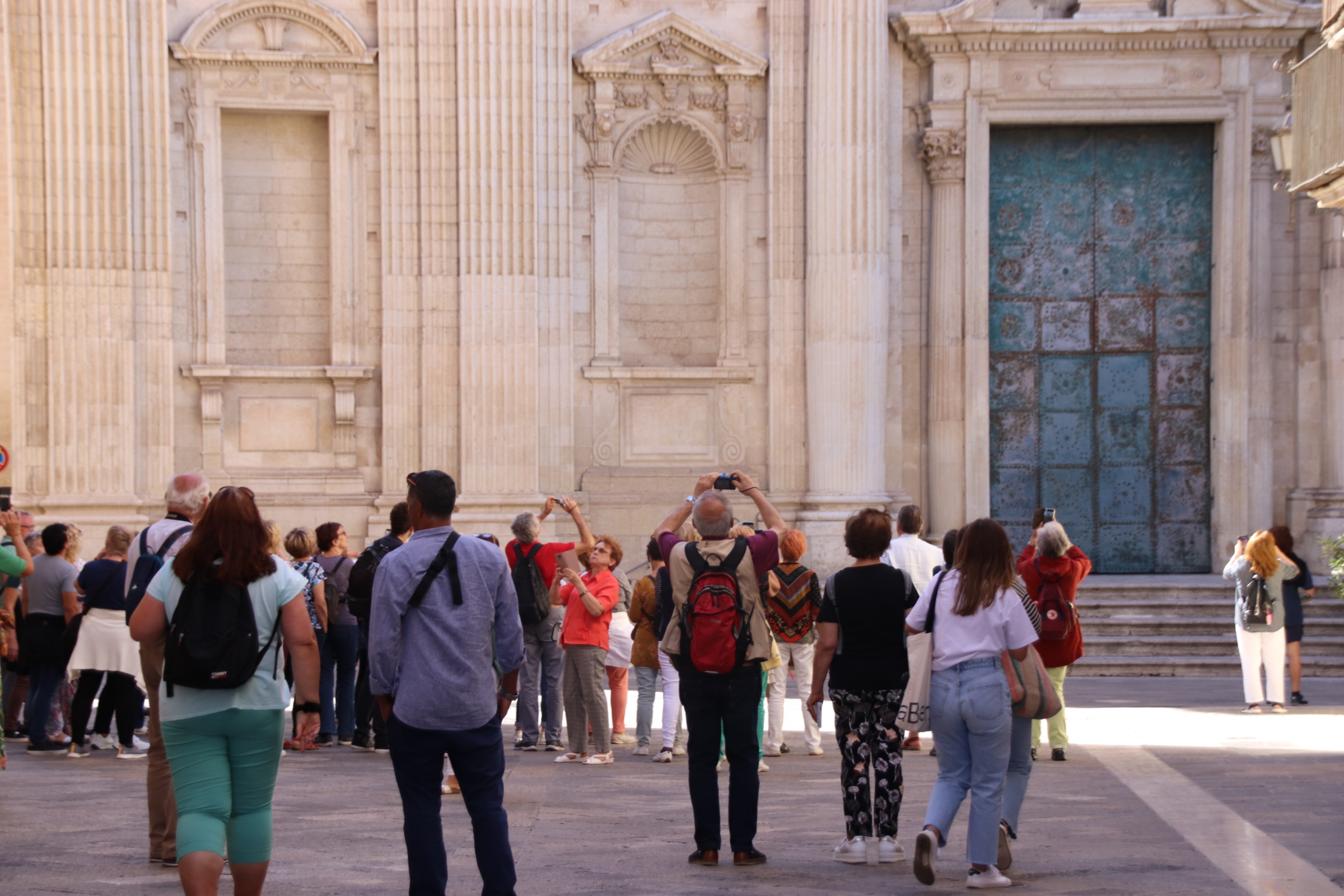
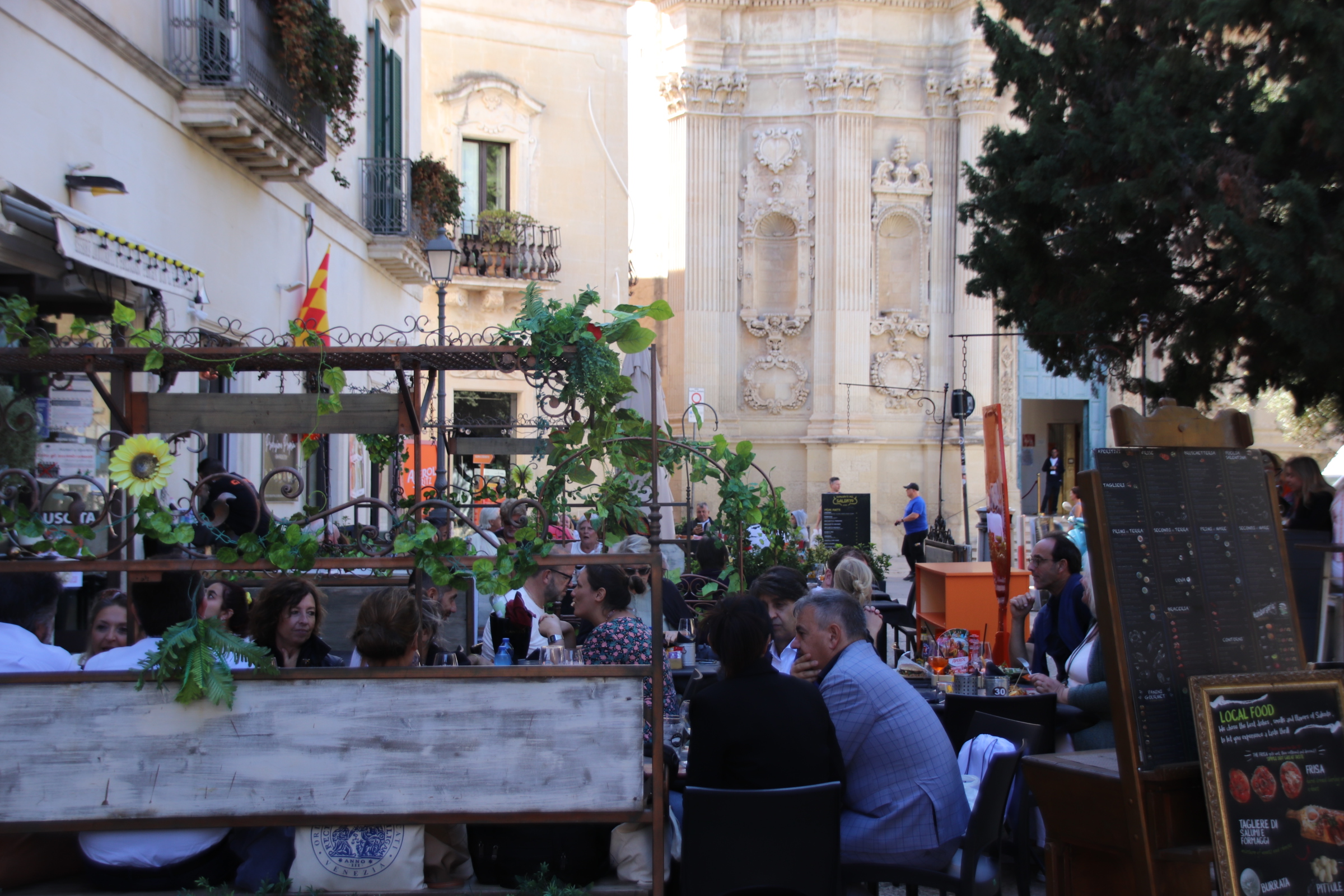
    Lecce is completely different to the other towns and cities of Puglia. If churches and Baroque architecture are your thing then Lecce is absolutely top of your ‘must visit ‘ list. Established over 2,500 years ago, the city became an important Roman settlement and the theatre and the arena are well preserved today.


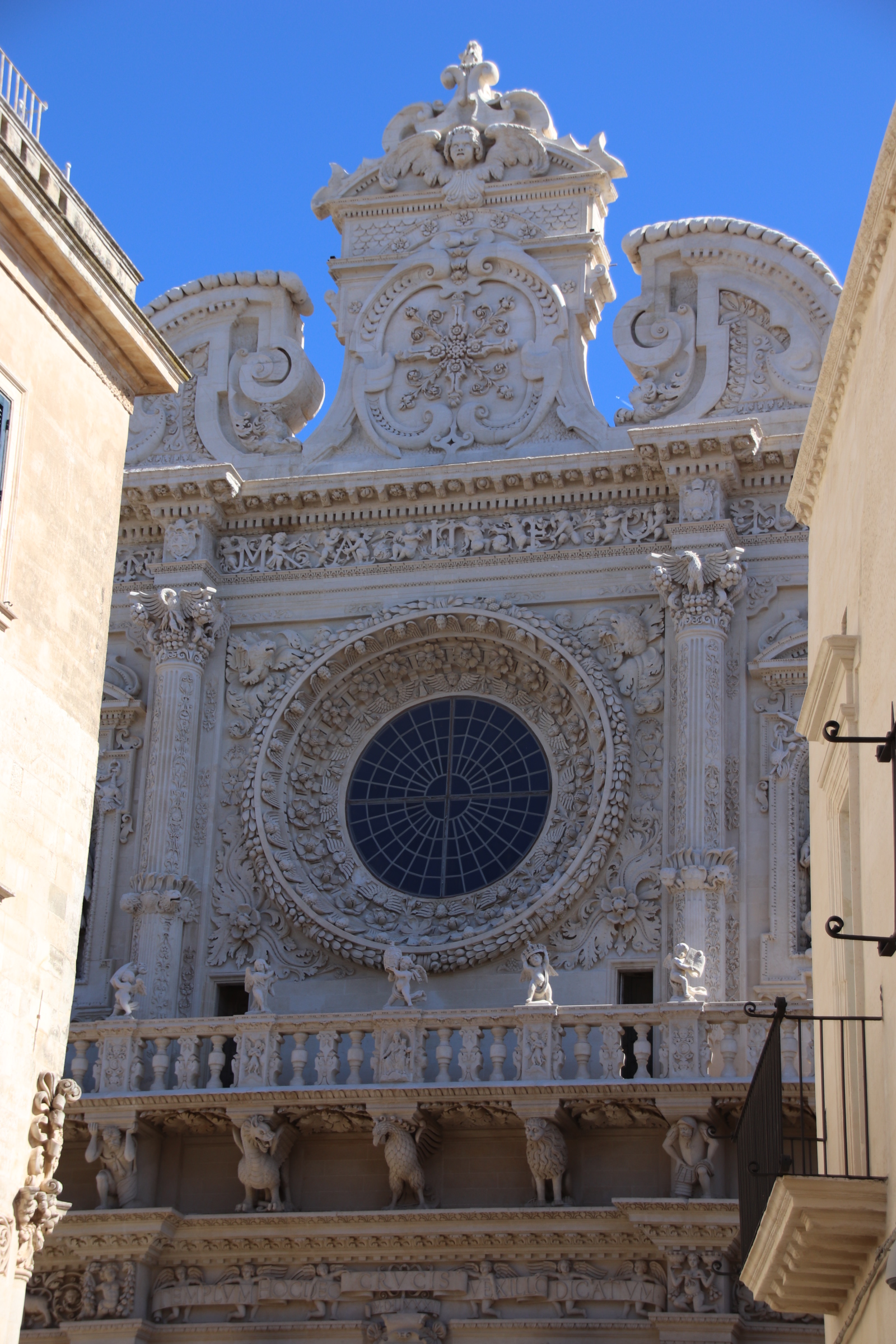
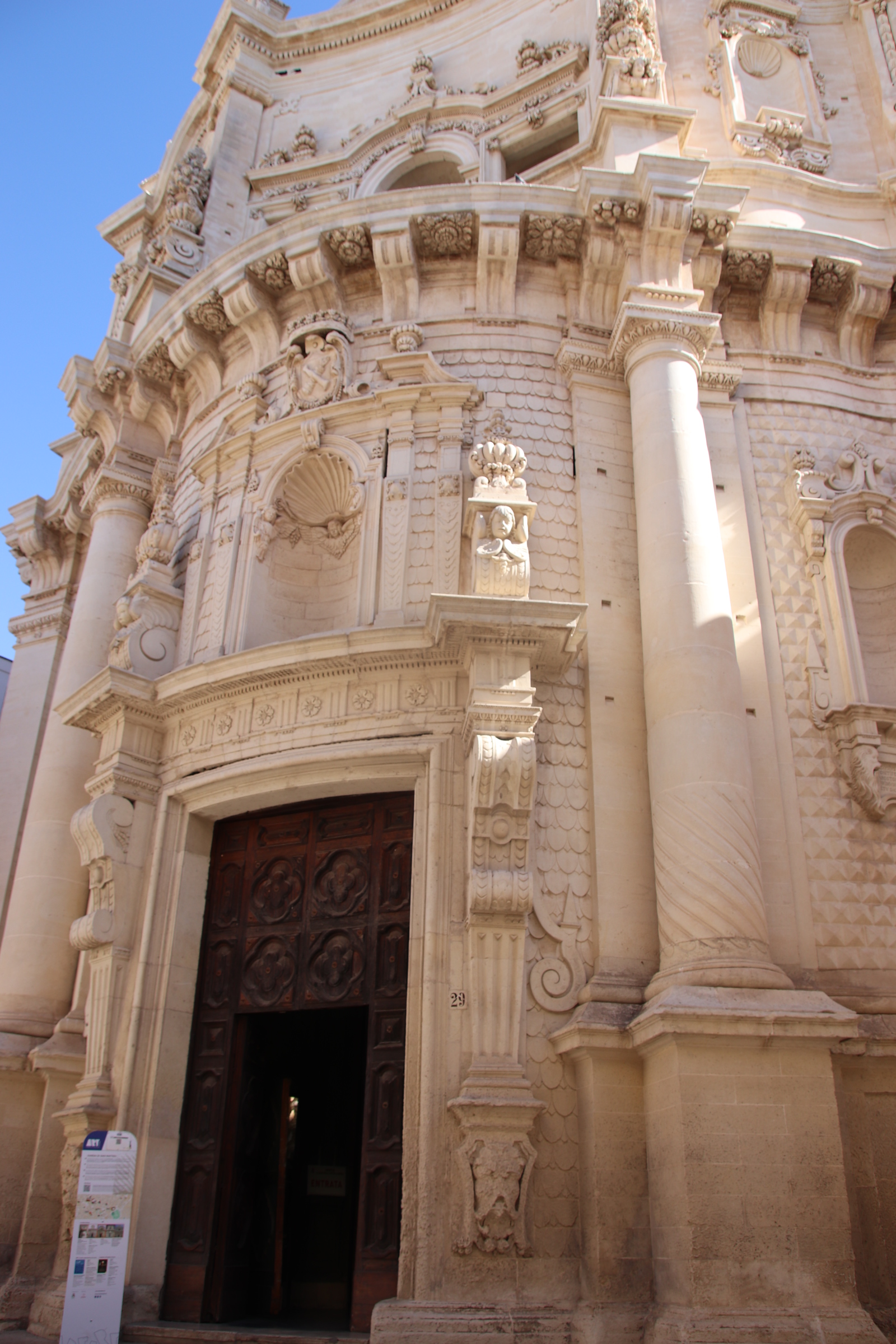
    The main building surge occurred in the Baroque period of the early 17th century. Lecce had fallen into disrepair and wealthy land owners wanted to be part of the rejuvenation process. Not only did they set their grand, imposing homes here, they also funded the building of super impressive Houses of God. Existing churches got a makeover and new ones were built by ambitious young architects whose imaginations knew no bounds. There are too many to list and show, so I include only a few of them here.

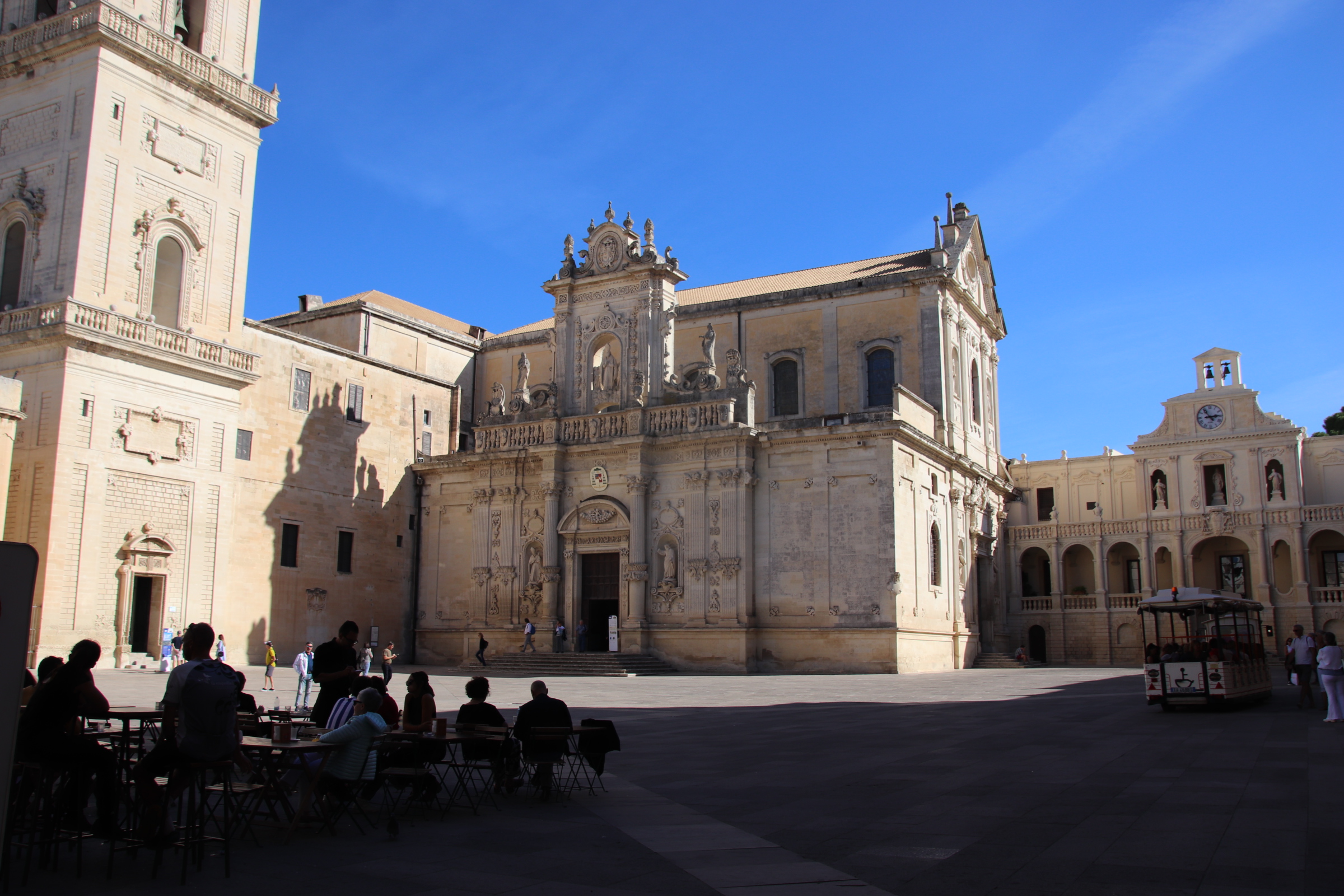
    Lecce is a masterpiece of Baroque constructions.

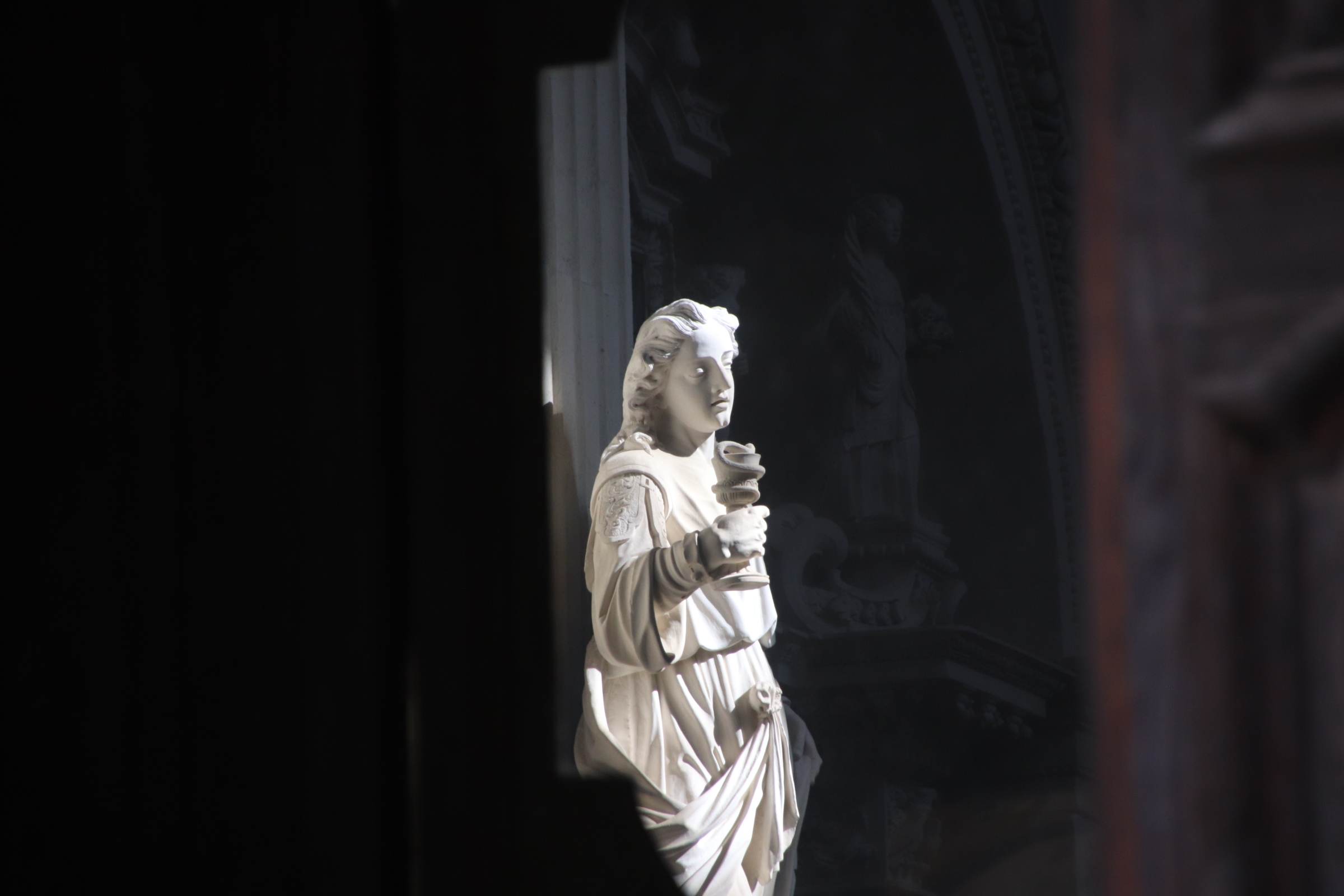
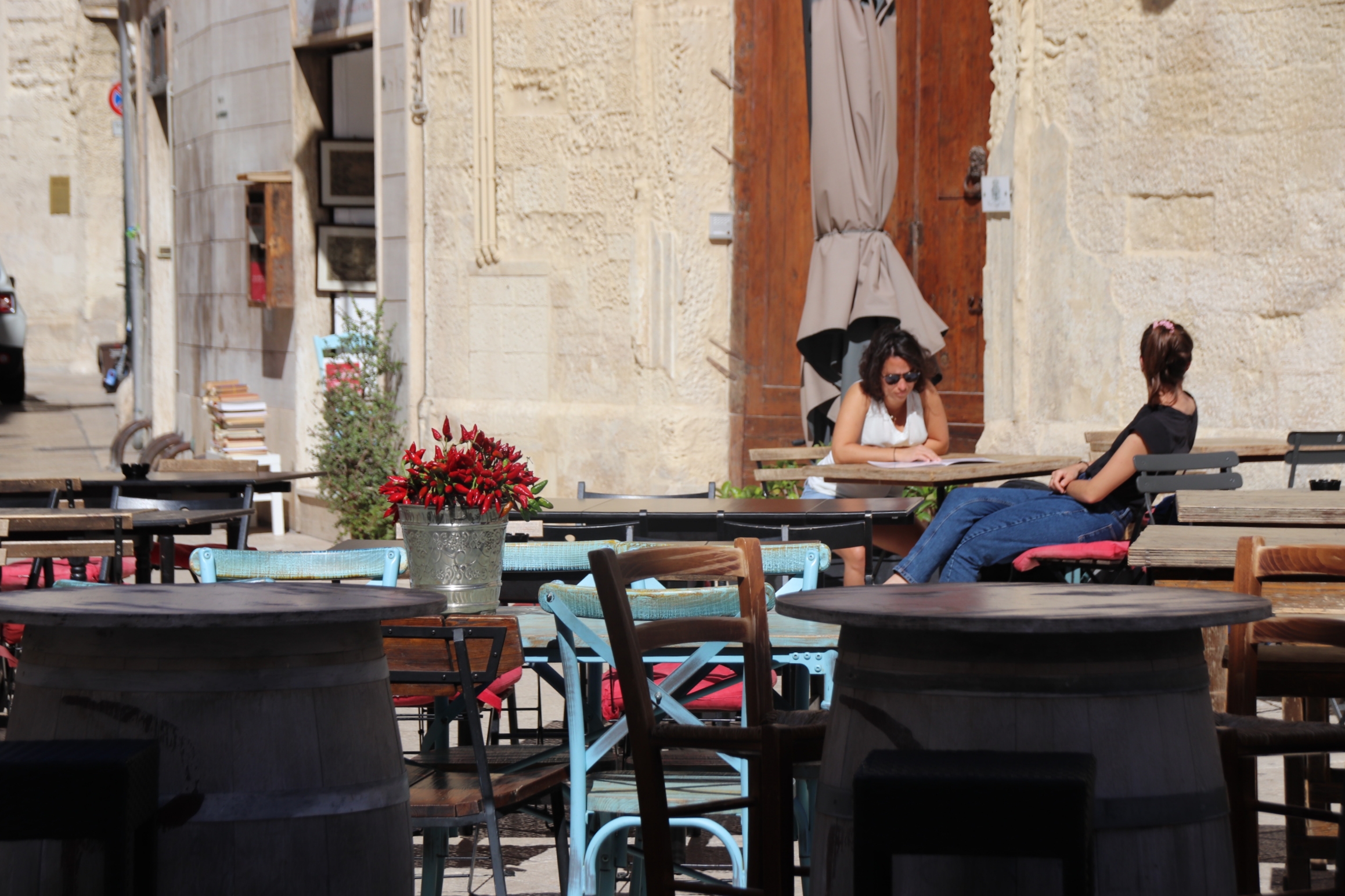
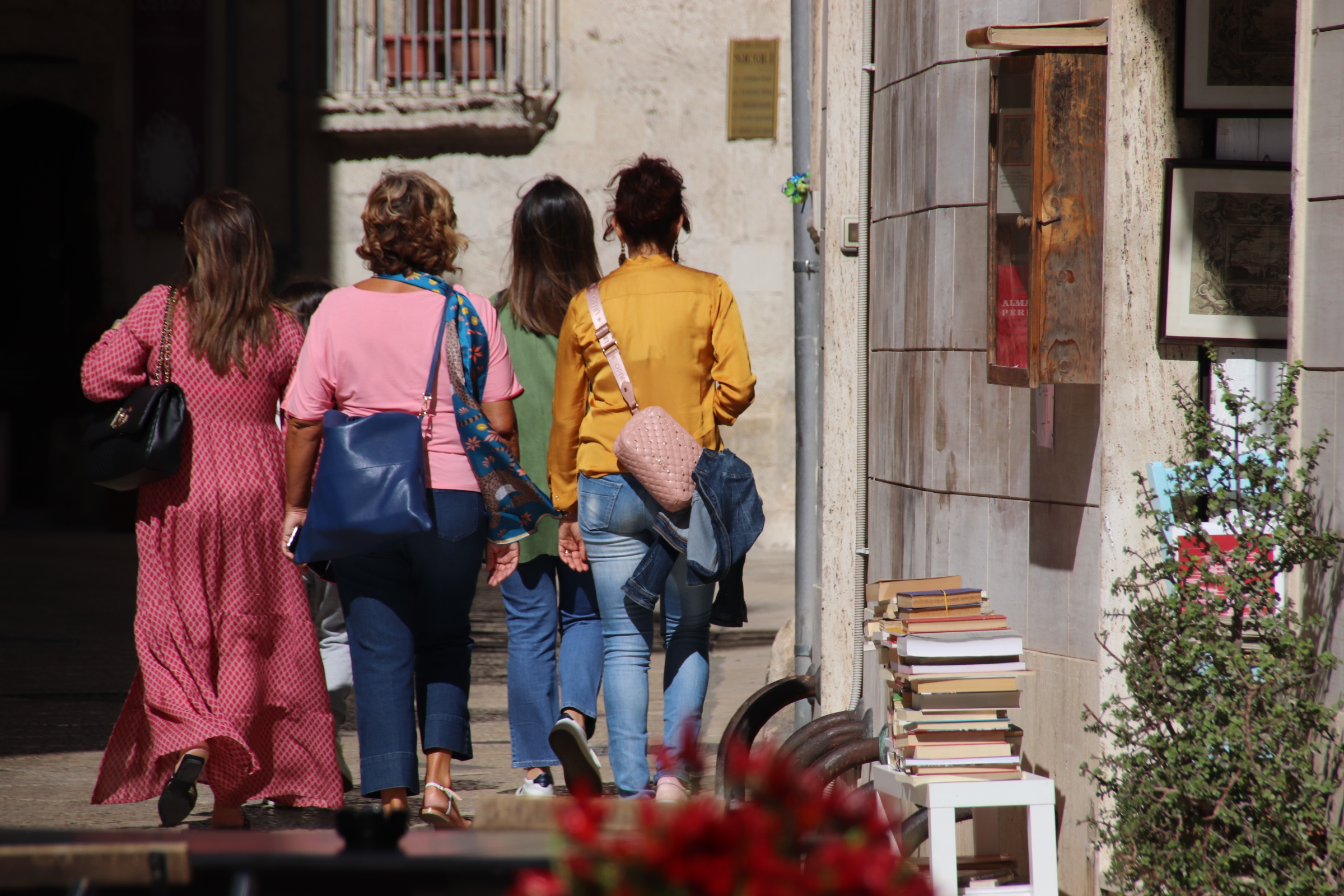
    Built in the local soft creamy limestone it dazzles and inspires with a surprise around every corner. Its spider web of streets offer a kaleidoscopic mix of long-range vistas, glimpses of cherubs or bishops or saints or angels, the sight of carved animal heads or plants high up on a steeple or on the facade of a grand building or ornate gateway.

    The old part of the city, entered by one of three arched gateways which mark the end of normality and the beginning of Byzantine flair and authority, is a core of stone crystals where wealthy landowners and bishops have tried to outdo each other in the buildings they have created.

    Lecce Cathedral is one such attempt to grab all the attention that continues to this day – recently a lift was opened within the Bell Tower that whisks visitors to the top at a cost if 12 euros. The only way down is to use the same lift – no stairs!

    As such the city is a magnet to large numbers of visitors and its arteries of narrow streets quickly get clogged up with flag-led groups of holidaymakers’ cholesterol.

    Having taken photos one set of Baroque churches, which, I have to say, all begin to look very similar, I decide it is more fun looking at the people who make up these groups. So to end my tour of Puglia in general, and Lecce in particular here is a selection:

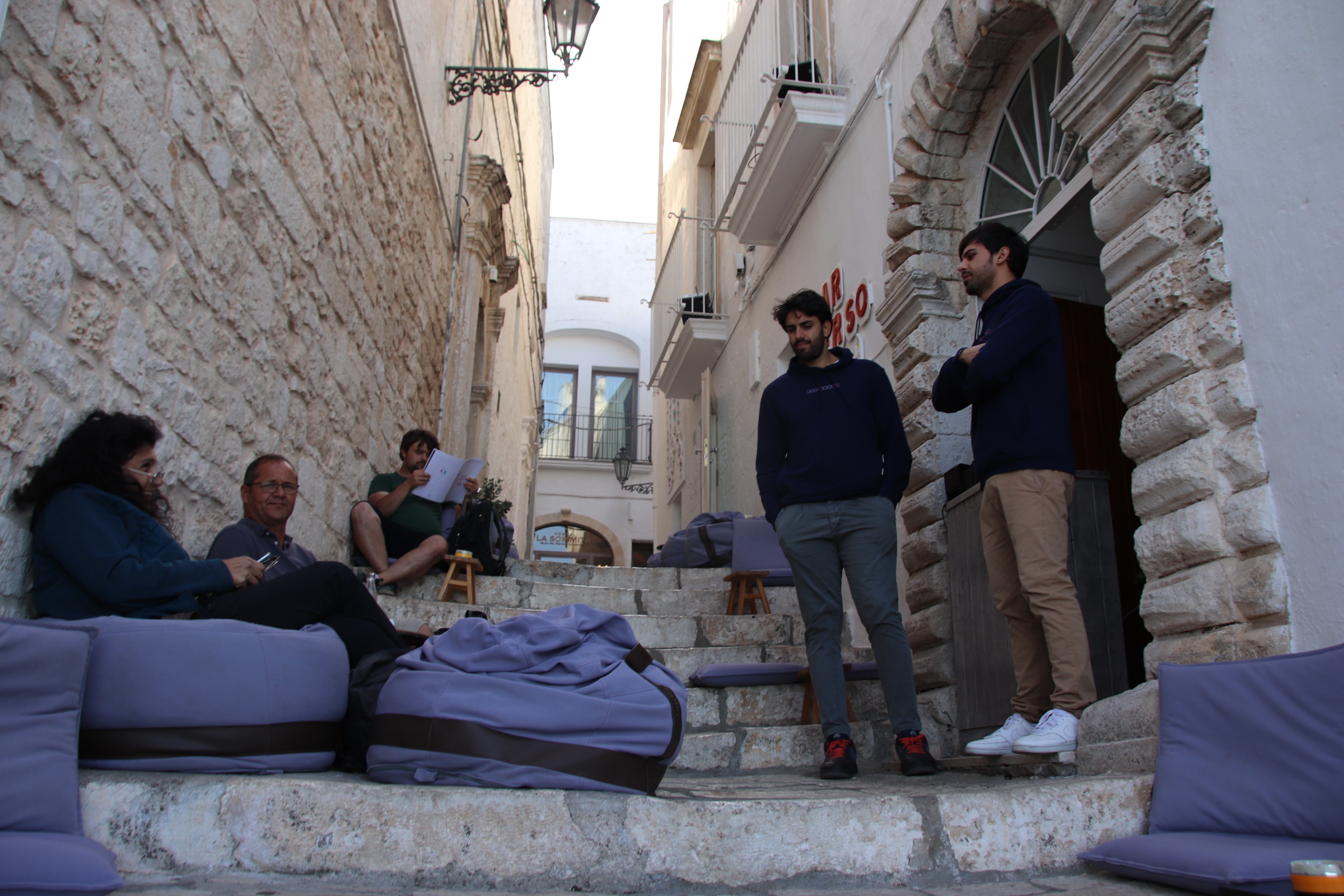
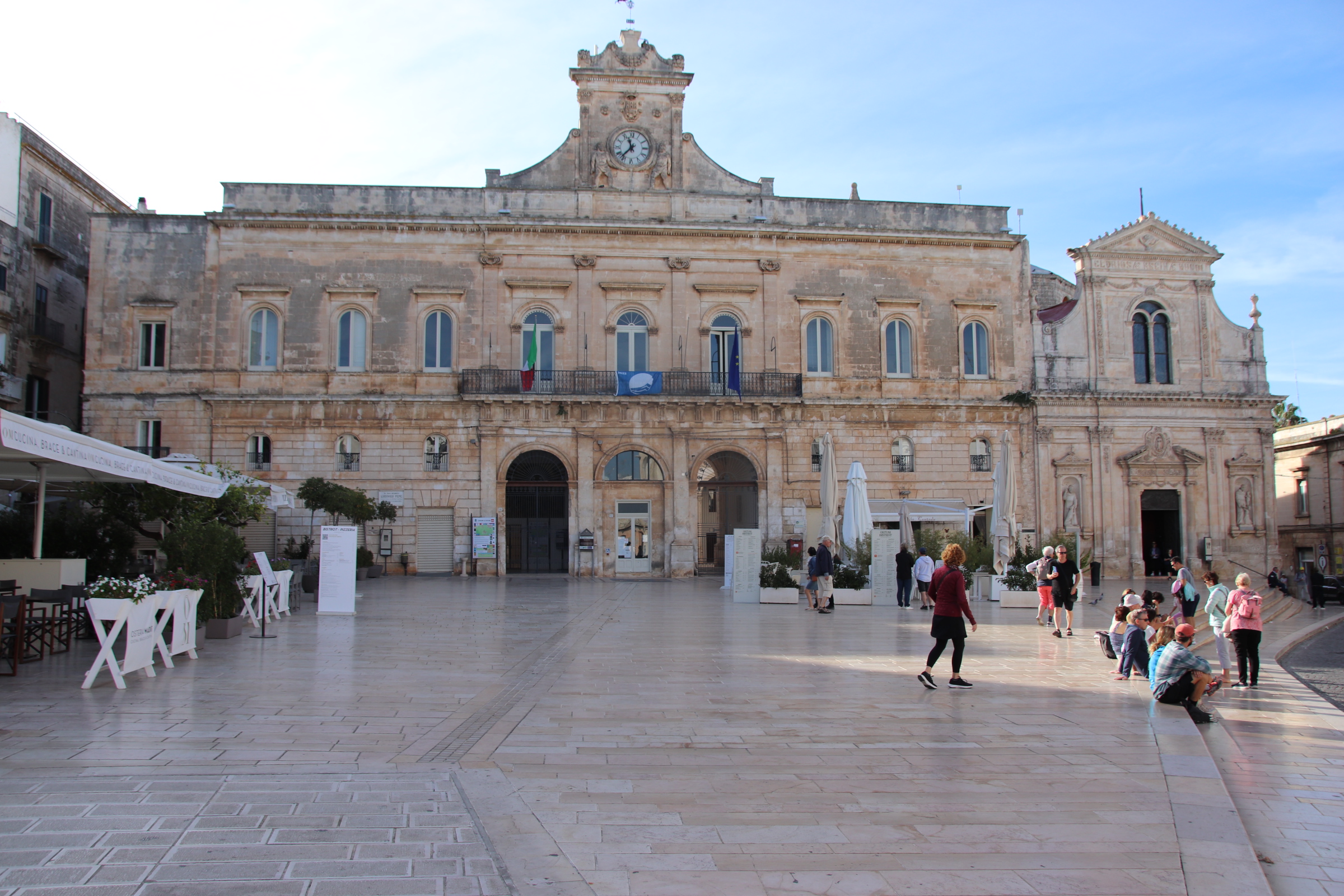
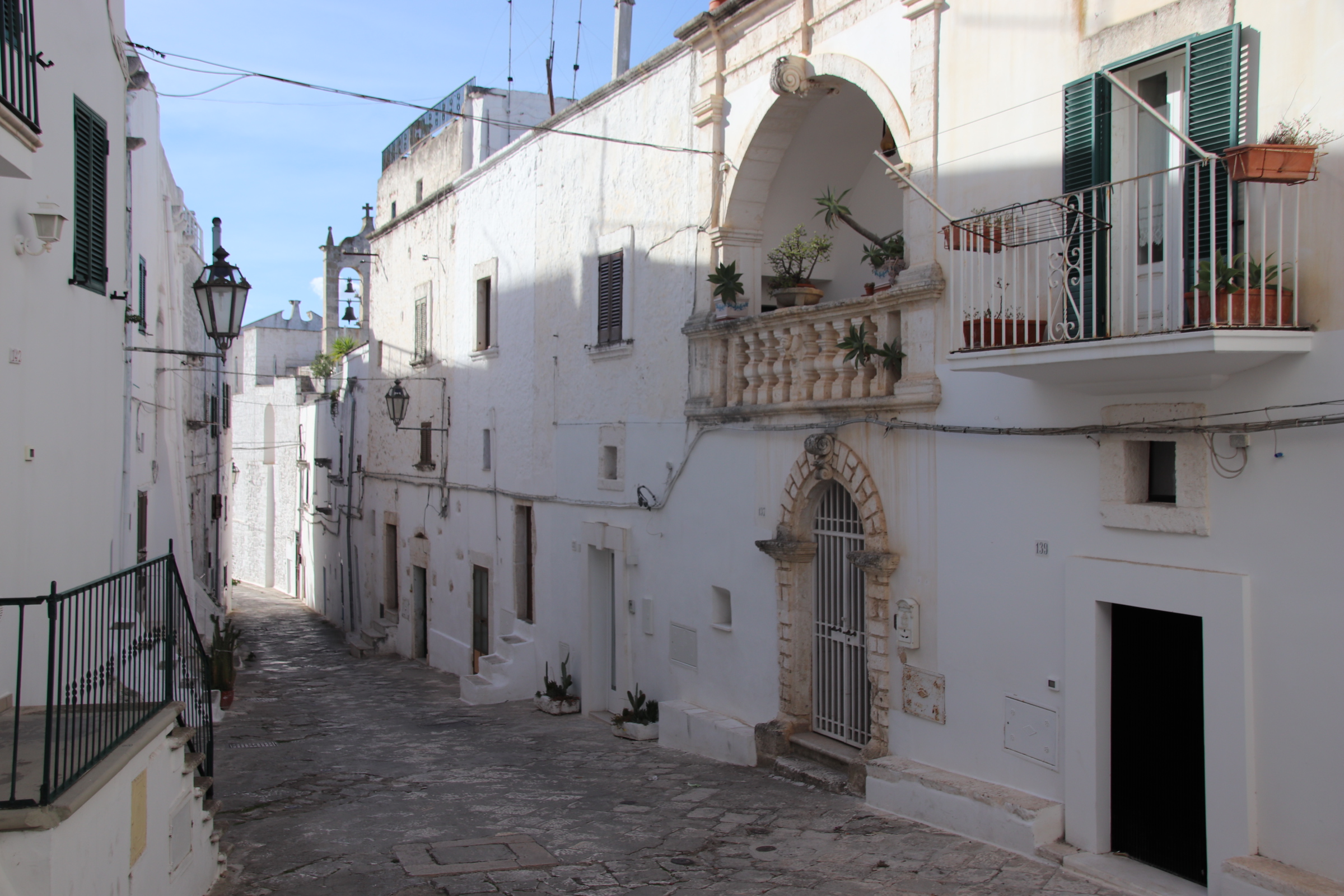
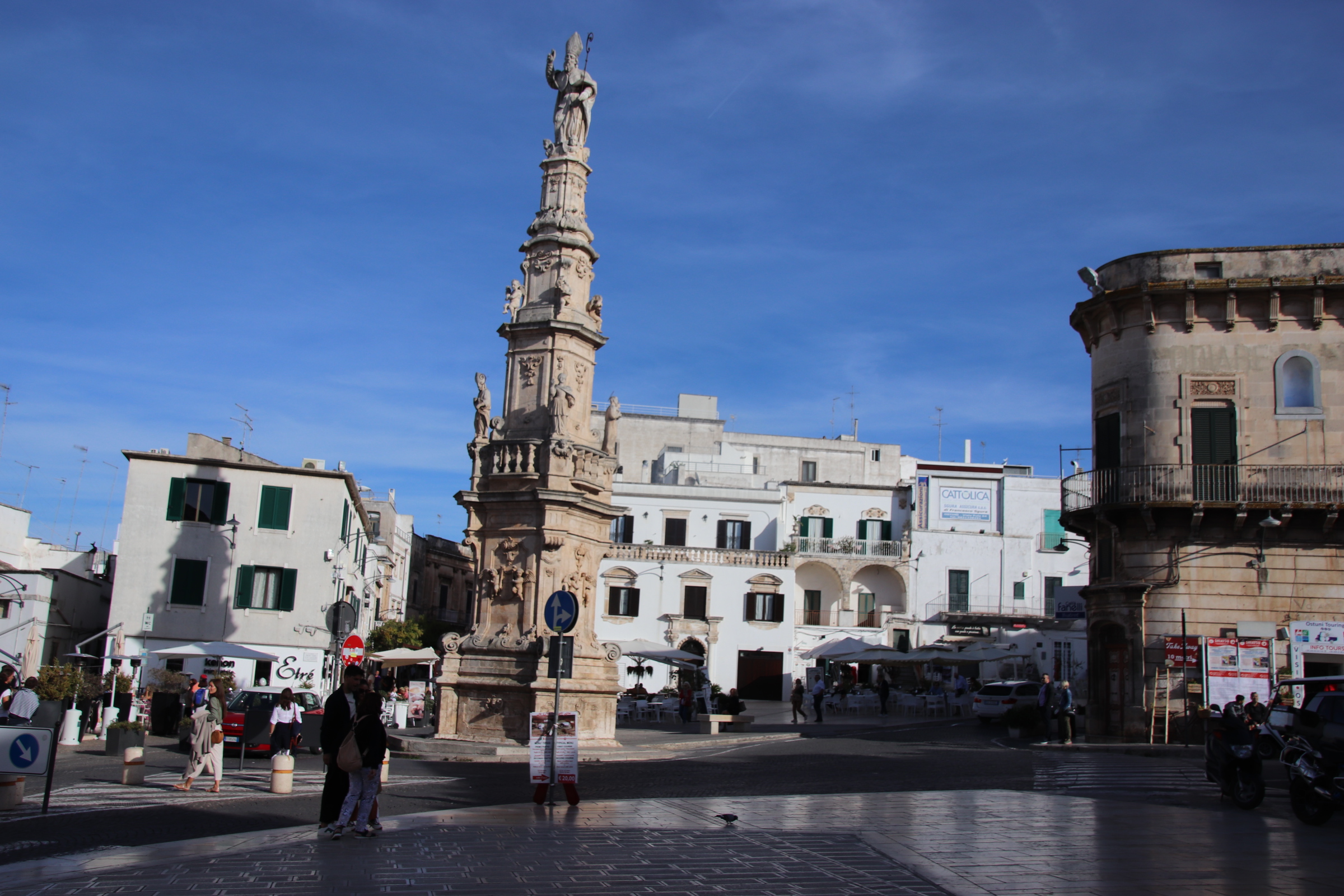
    Ostuni, the white city

    From a distance, the hilltop town of Ostuni looks like the decorators have done only half a job. Called in to whitewash the walls, maybe they only brought the short ladders with them. While the lower levels gleam in the Adriatic sun, the upper storey, typified by the top spot of the duomo, remains in need of some touching up and paint work. Yet it works. Together they dominate the olive-studded plain below.

    There is probably a local byelaw – you can paint your homes and walls whatever colour you like …. as long as it’s white.

    Stepped and arched alleys nibble up and down and around, connecting curly, mule-wide passageways. Small bars and eateries hide around corners in alcoves and small, odd shaped courtyards. Tables/chairs balance precariously on uneven, cobbled pathways and staff step up with bottles & plates & platters, dishing up delicious food from tantalising menus.

    Where does everyone go? Pre dinner the place is buzzing. Street bars fill the air with jazz and cocktails, lovers lounge on low cushions, tourist groups chat through their day.

    As the evening progresses the bars empty and the restaurants in the backstreets fill. The burnished stones of the main streets are now exposed with no crowds to cover them up.

    Ostuni is a great place with character and atmosphere. Meals and shopping may cost a bit more but it feels like a fun place to be with quirky bars and cafes, new eating experiences and some good places to while away some time before browsing the wide range of good quality shops.

    Stulli and ancient olive trees

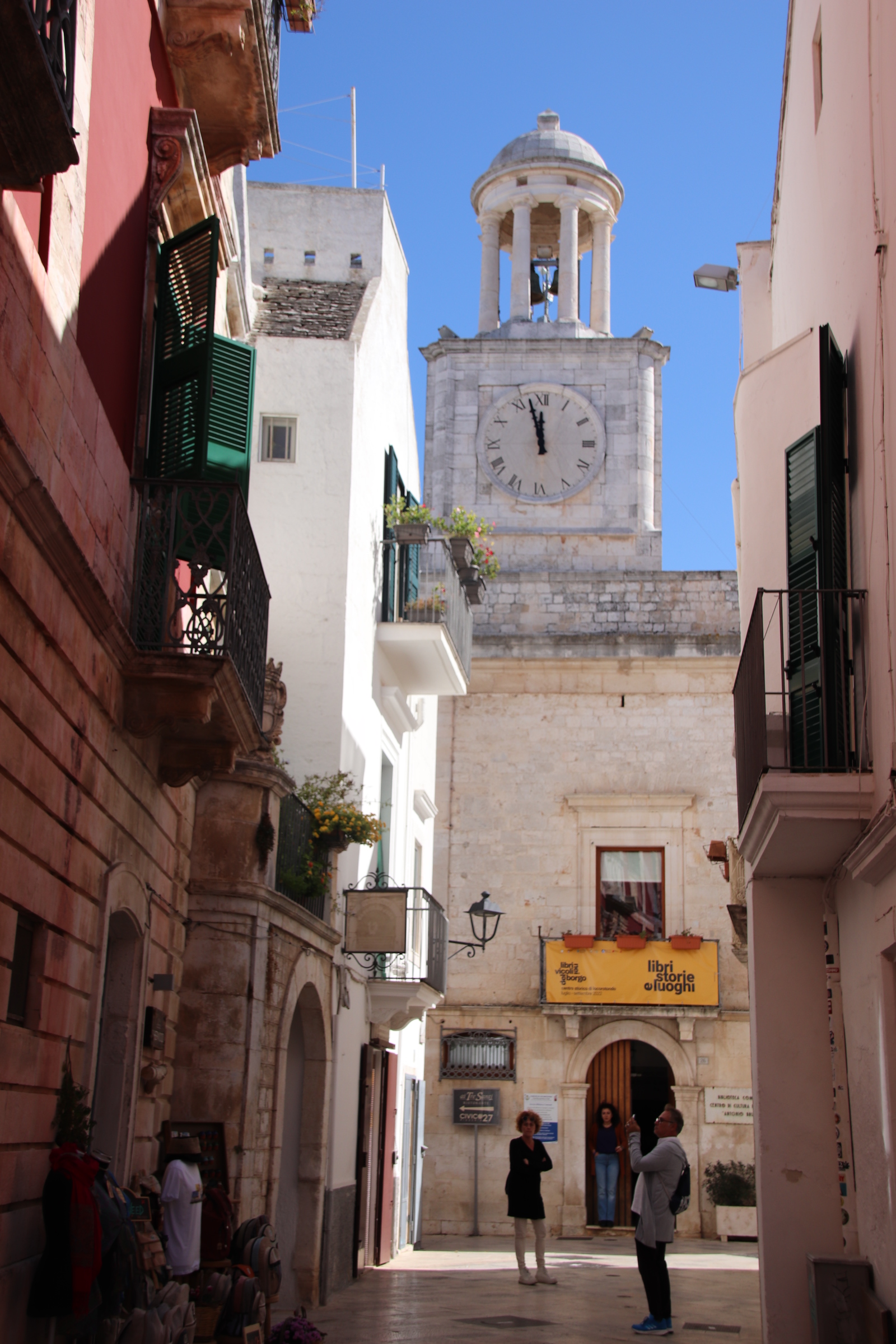
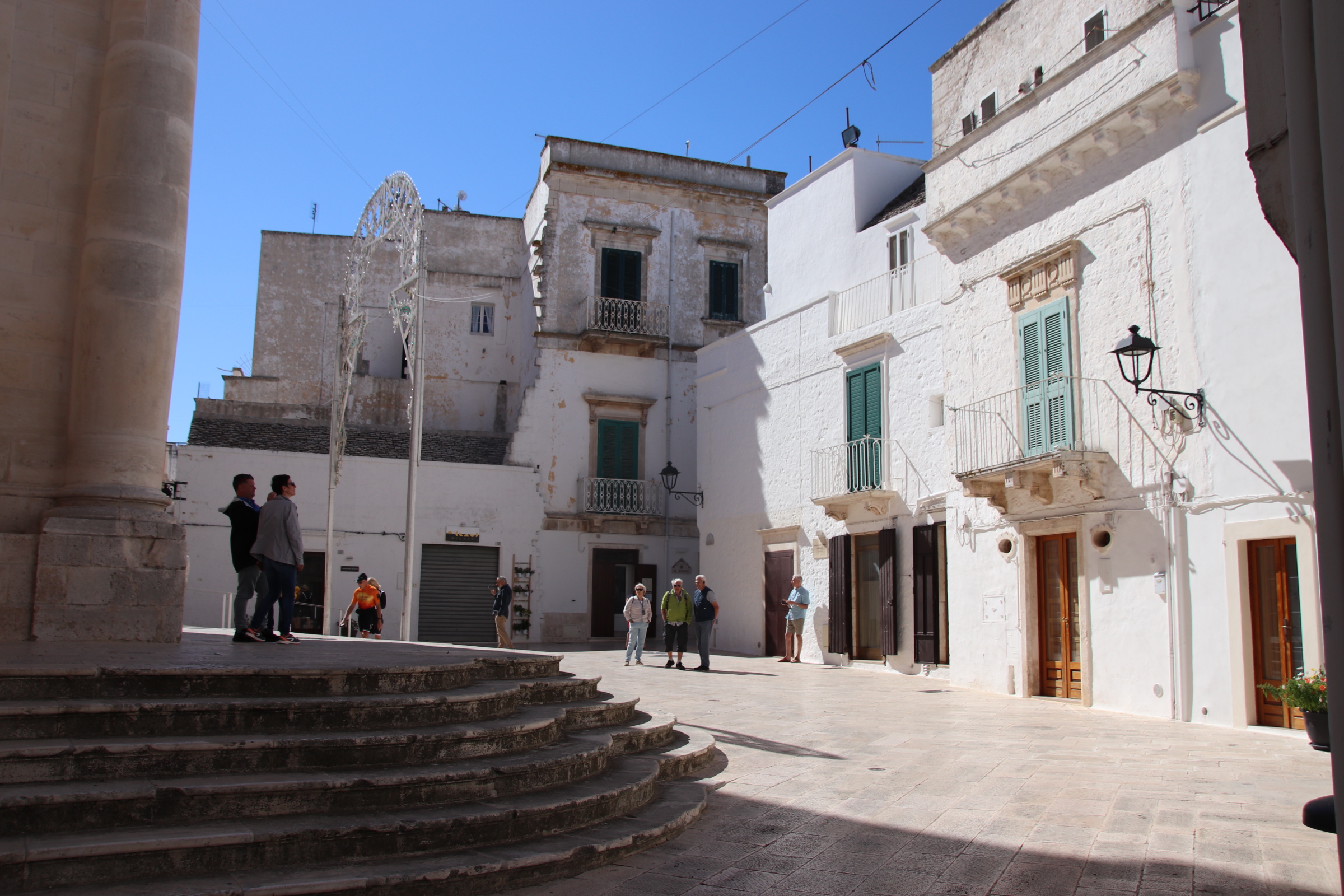
    Locorotondo is a £1 train ride out of Alberobello through rich-earthed, countryside where olive trees are king and the wealthy have taken trulli architecture to create homes of affluence and style. No poverty here.

    It is a 10 minute walk from the station to the shade of the gateway of this picturesque hilltop village.

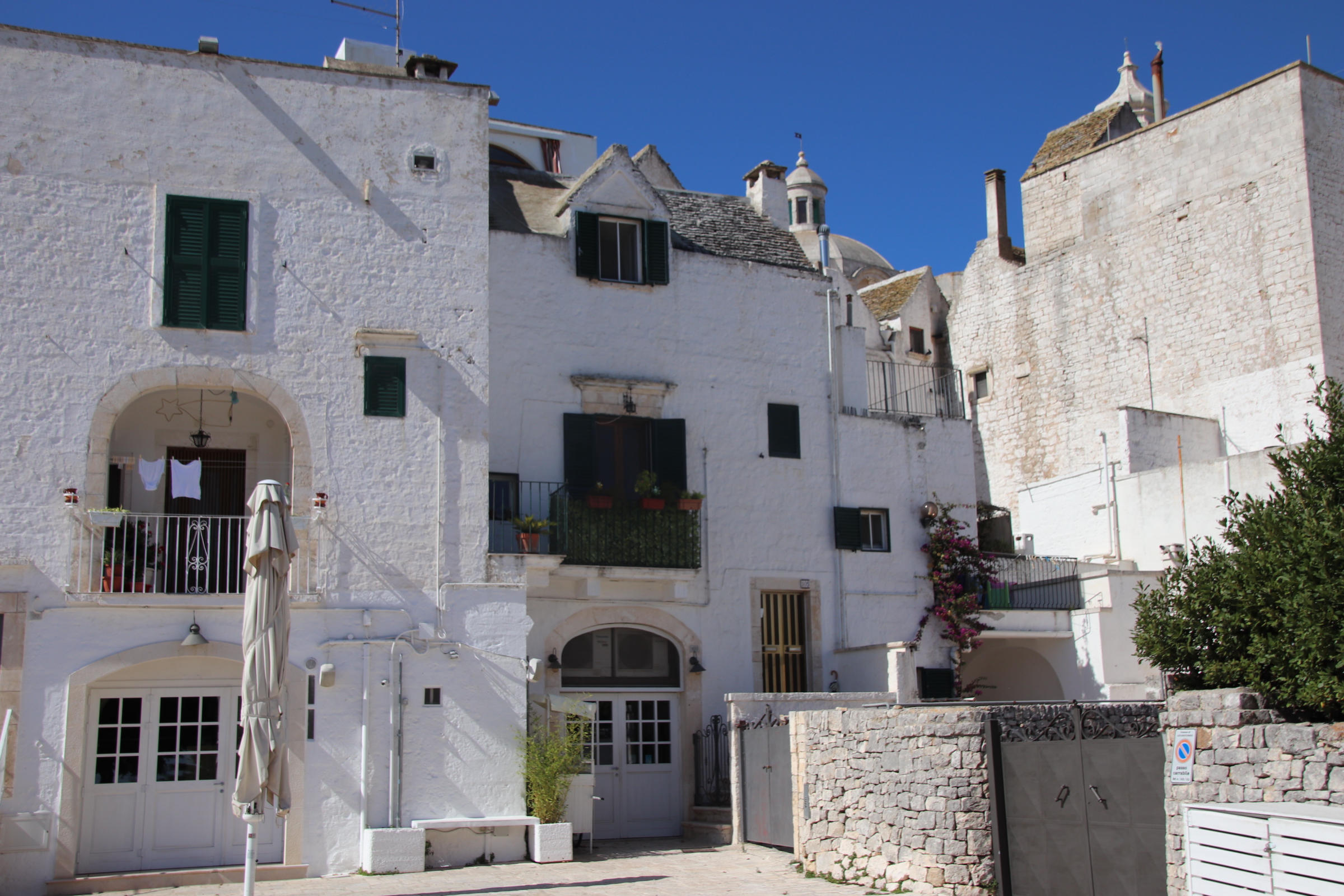
    Narrow streets, whitewashed houses and churches dominate the hilltop.

    Outside the ramparts bars & eateries are set out to allow punters to gaze out over the vines & trulli-inspired farms and villas.

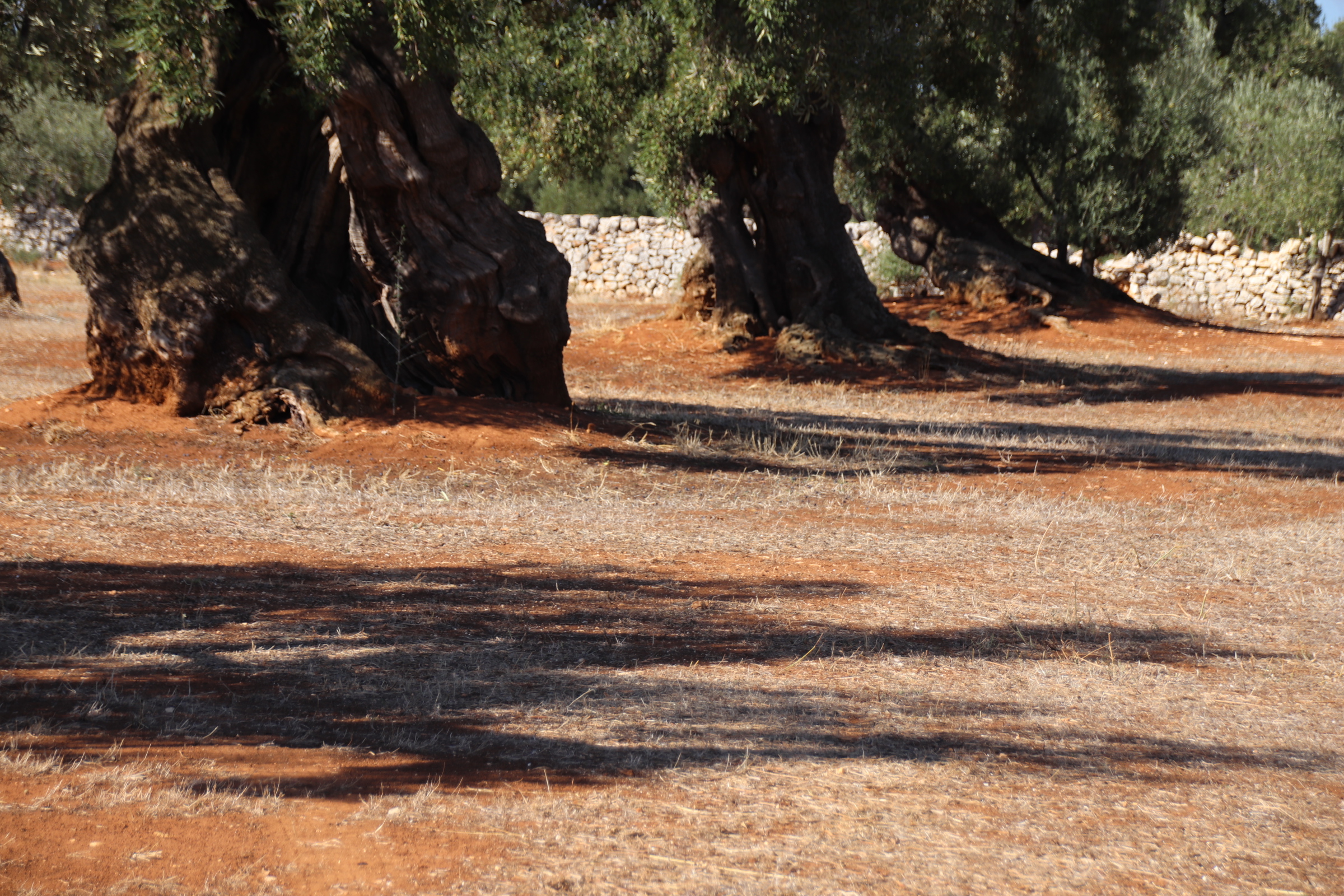
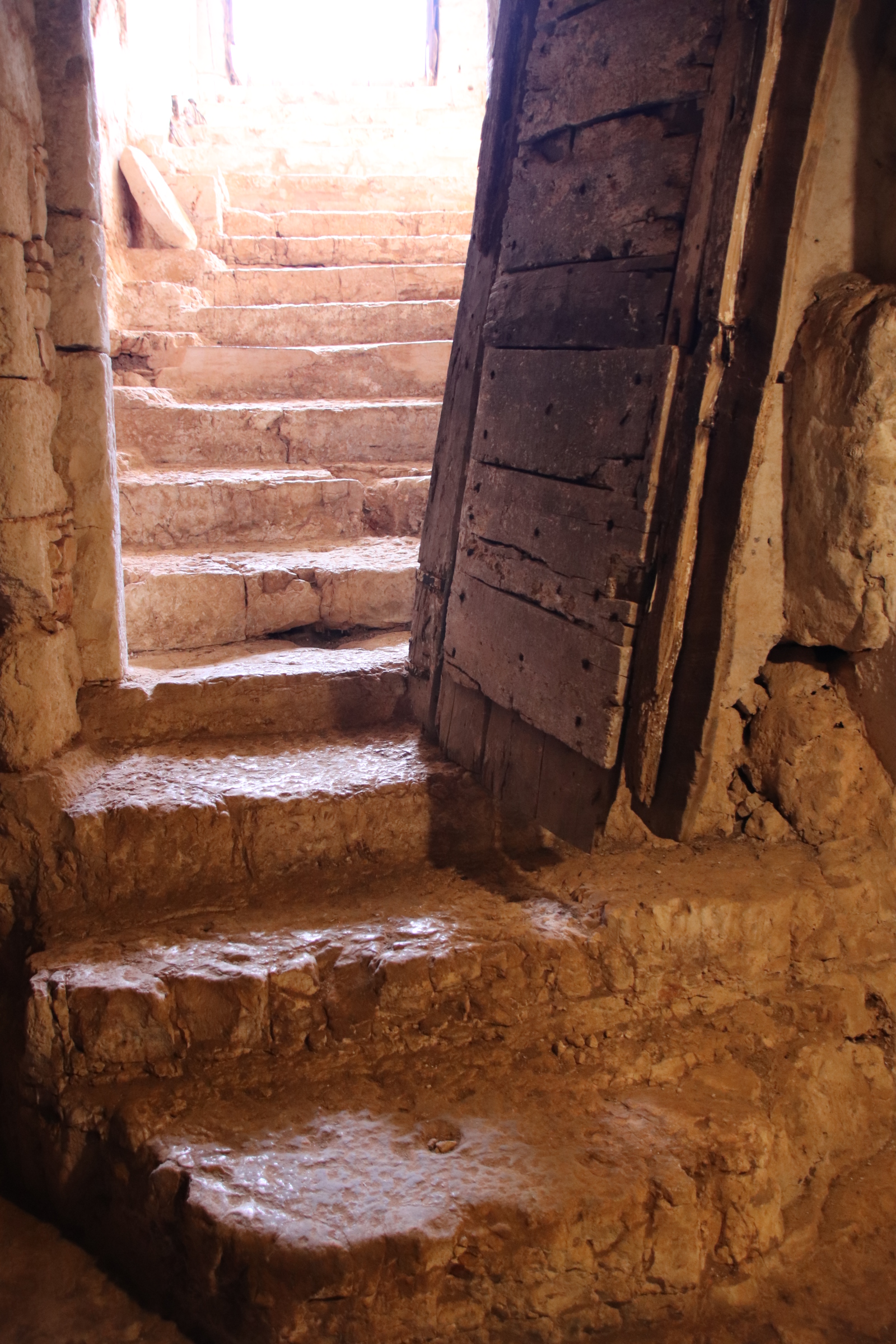
    An hour south of the trulli capital there is an opportunity to understand a bit about why Puglians are so proud and obsessed by their olive trees. There are around 60 million Italians. In Puglia alone there are a similar number of olive trees and this traditional farm has been producing olive oil for centuries.

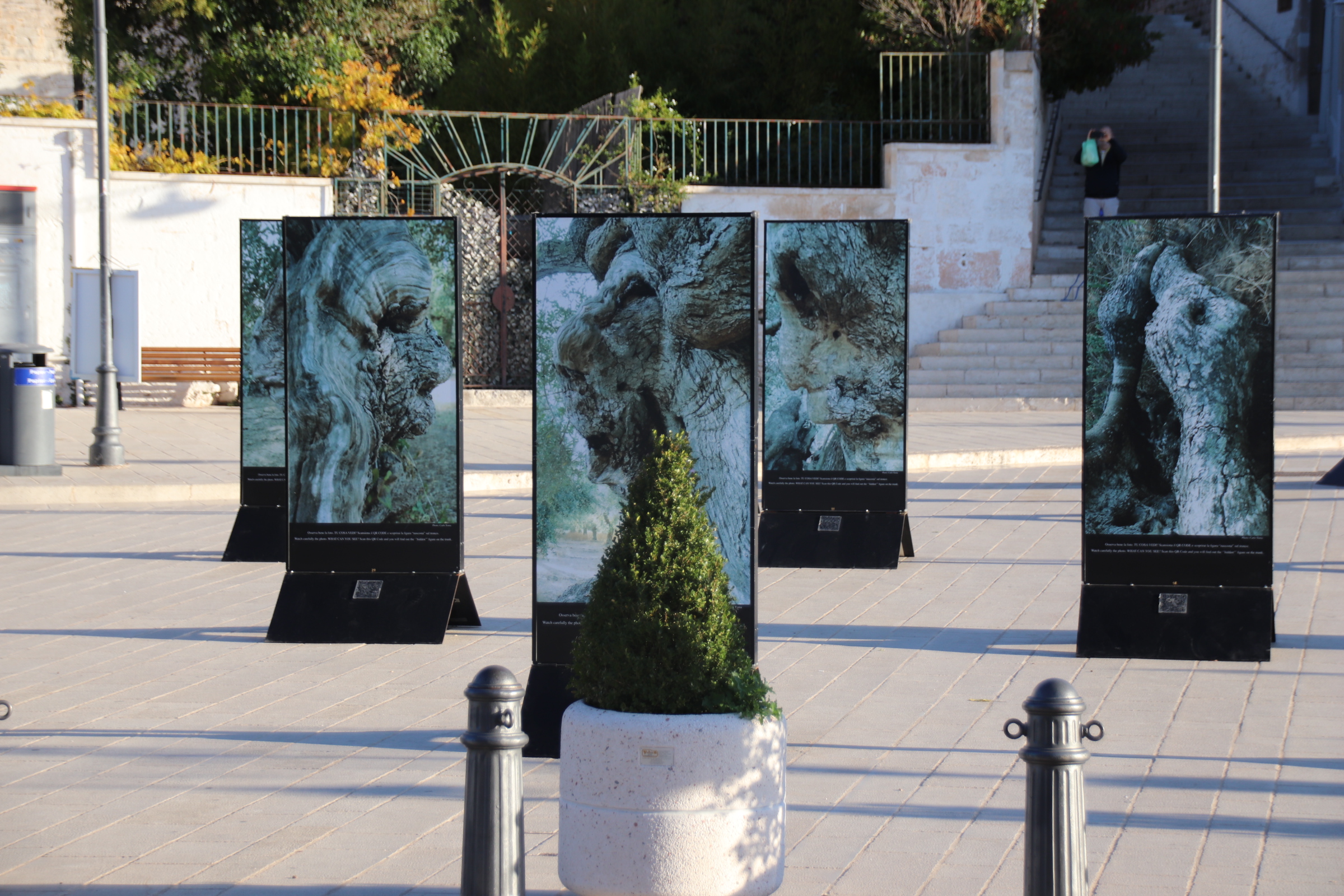
    Many trees are over 2,000 years old

    and this fella has been dated from around 3,000 years ago.

    Local artists play a special game. They capture on film animal figures within the trunks of these ancient trees. Have a go.

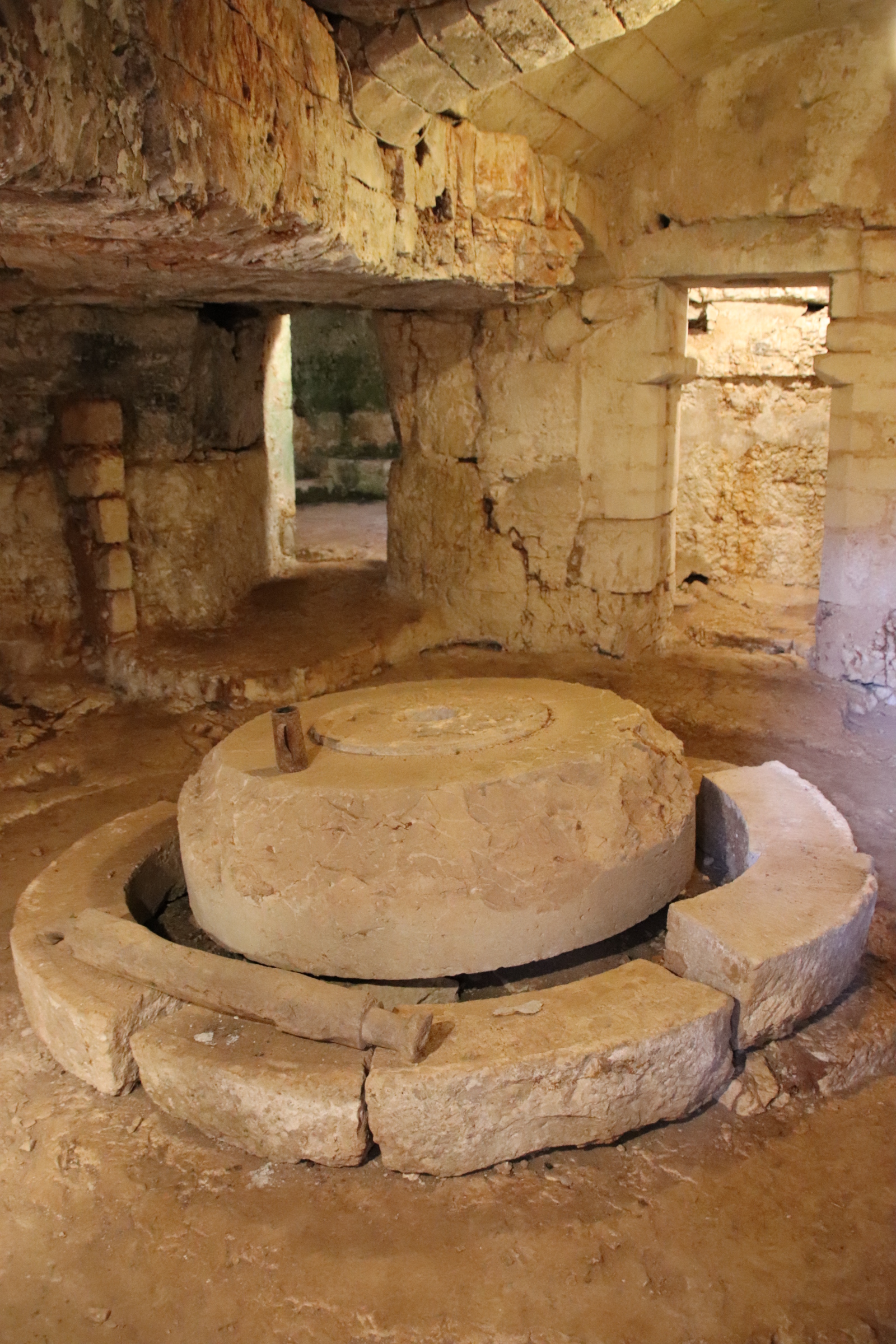
    The old wine press dates from this time.

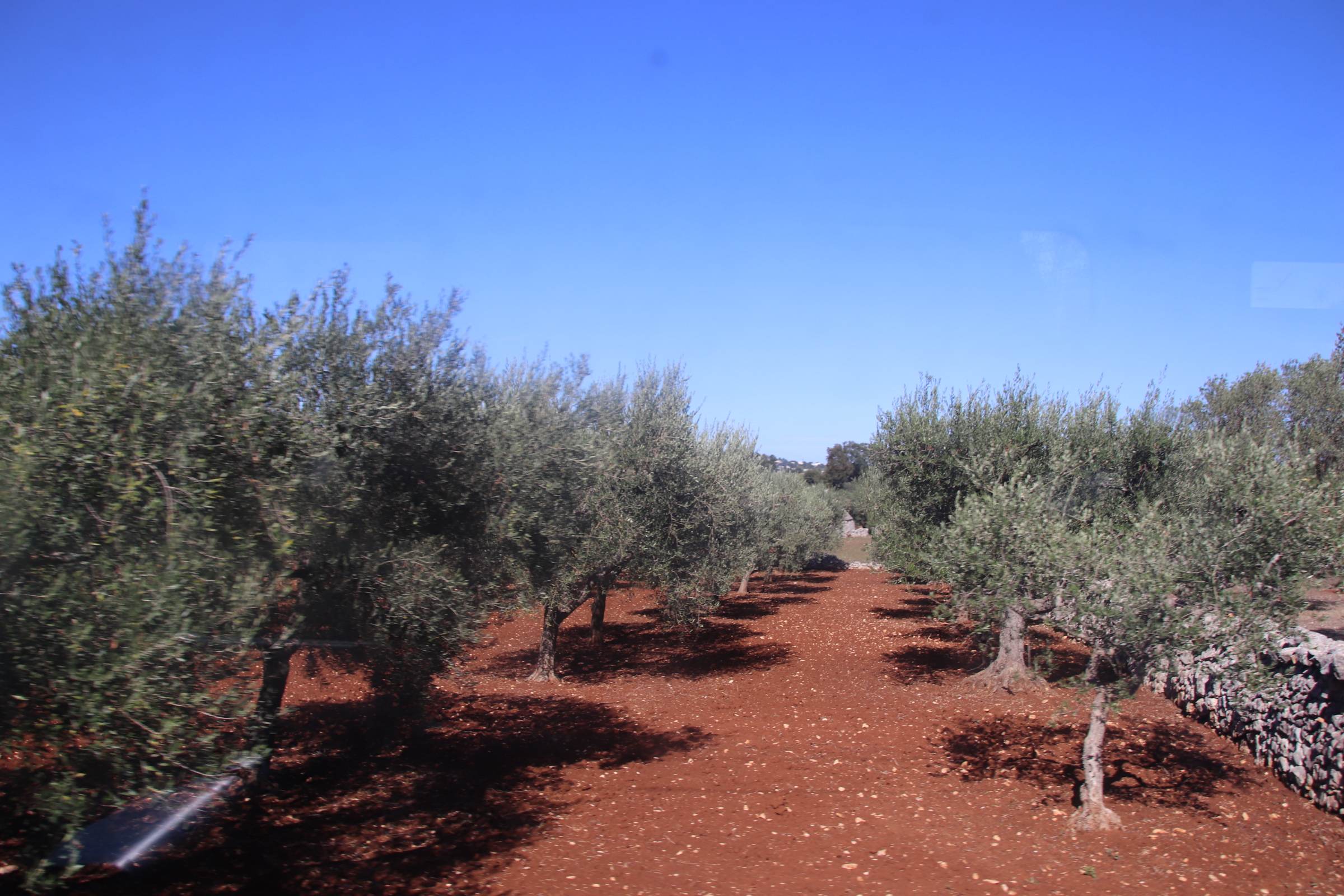
    The trees are spaced out with ample room between them to allow the root system of each to develop unhindered by the trees around them.

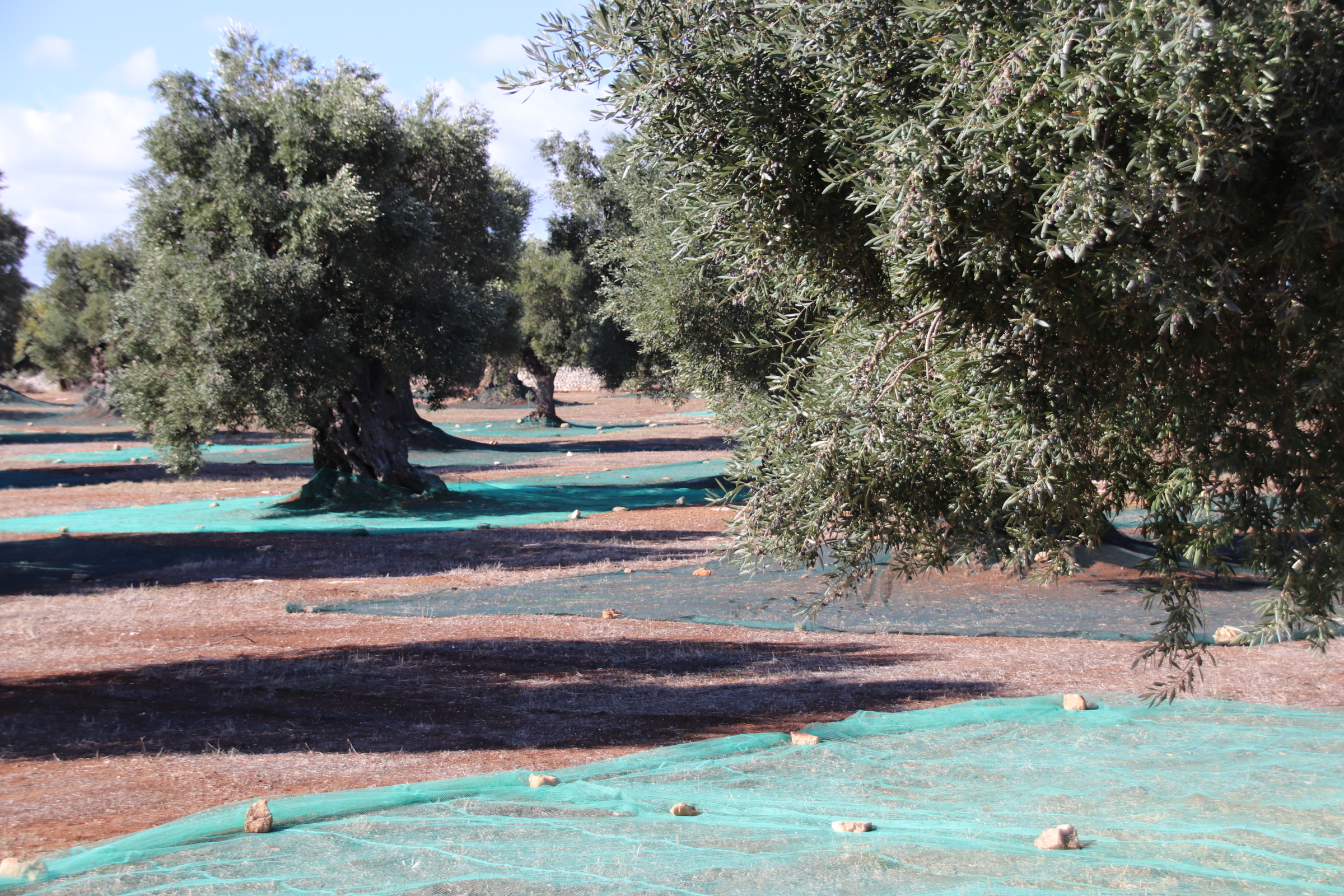
    Nets have been laid under the trees as the last of the harvesting takes place. Soon workers will comb through the branches with rakes and the olives will be collected and pressed on the same day to prevent oxygenation taking place.

    When all you’ve ever truely wanted was to spend a night in a trullo

    Leaving Matera by bus, my route takes me eastwards to the Adriatic and into Puglia proper. Grape and olive production have shaped this landscape. The modern road cuts in a straight line through acres & alternating acres of hanging vineyards, ripening under ugly sheets of plastic, and centuries-old olive trees, voluptuous with heavy, spreading branches of foliage & fruit, their trunks prepared for harvest with a circular carpet of sack cloth ready to collect the results of this year’s Shake n Vac.

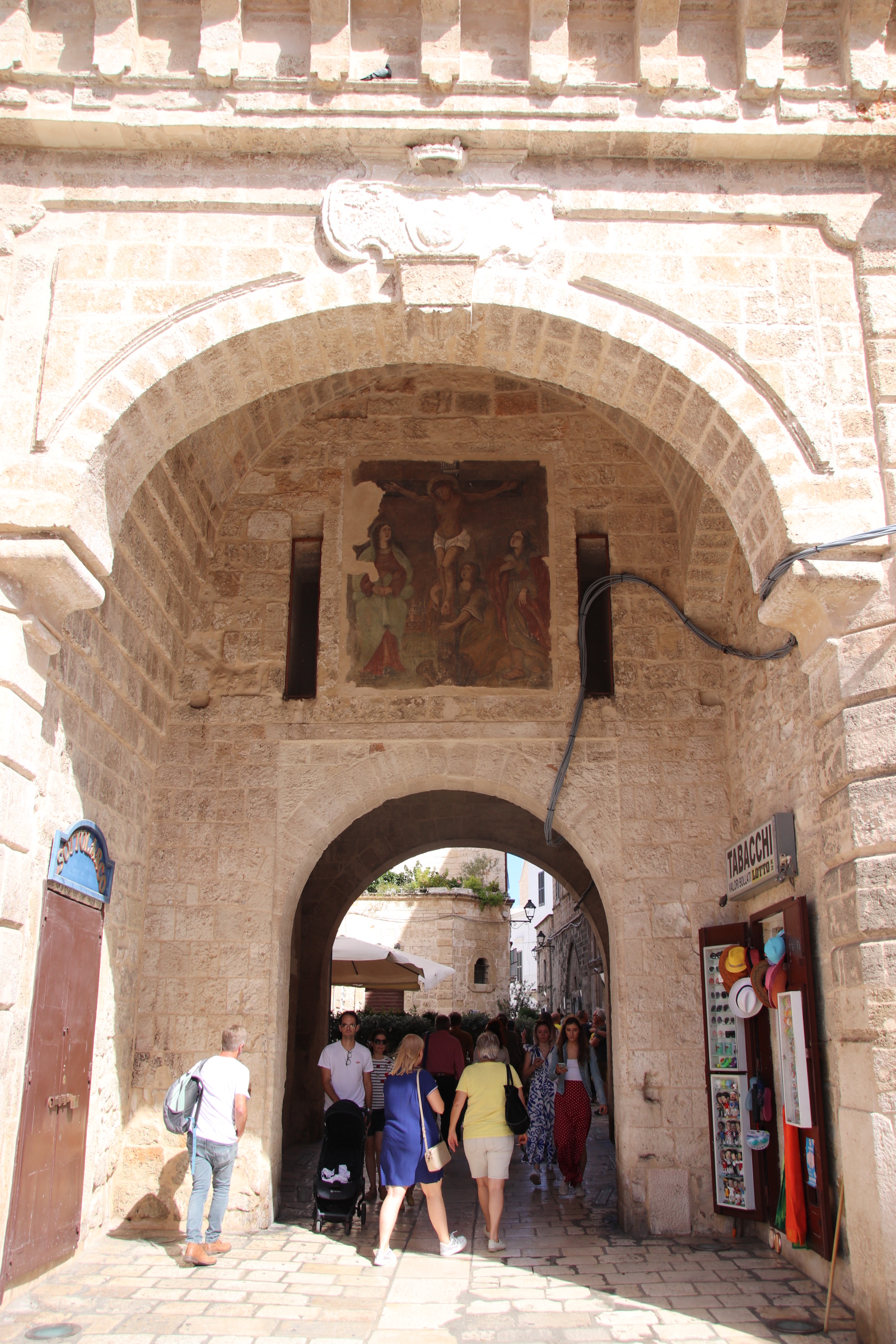
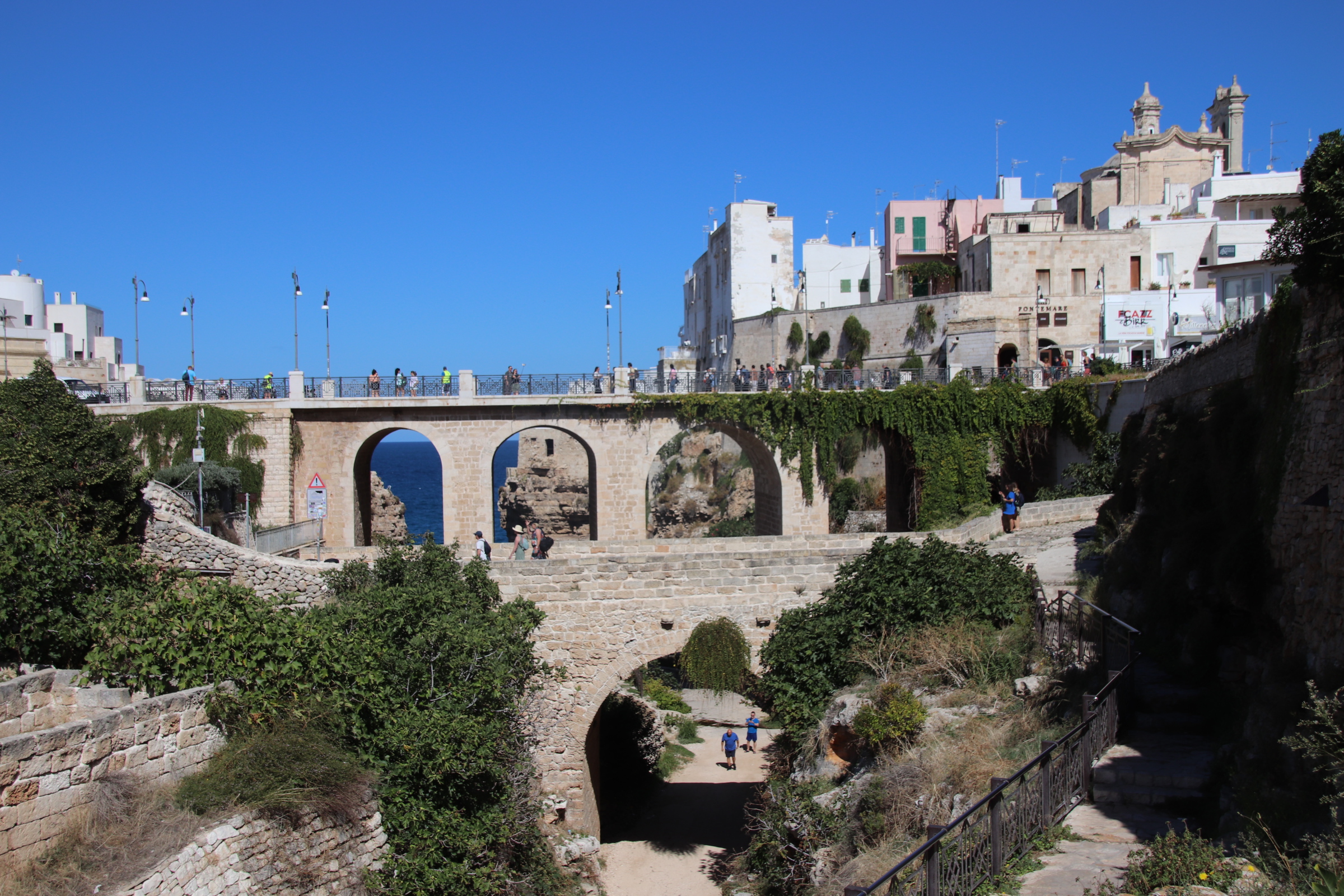
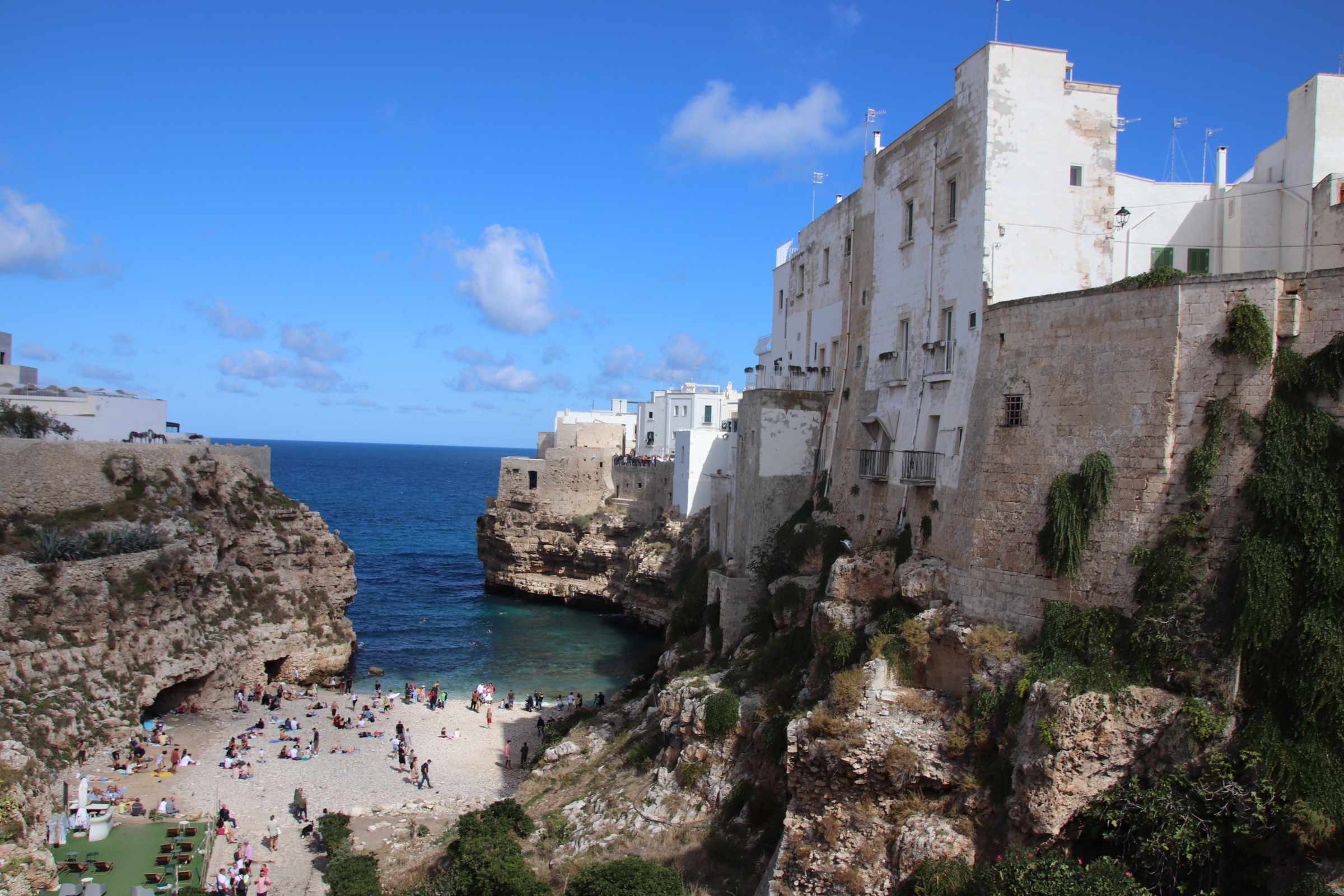
    Polignano a Mare is a pretty fishing village clustered around a ravine, created where a small stream has cut into the land to meet the sea with a small beach of smooth stones & rocks. An attractive historic centre of narrow tangled streets and picturesque houses is in danger of being smothered by vast modern builds of holiday apartments, balconied flats and shoreline promenades that have been constructed around the edges, threatening to engulf it with 21st century holidaymaking.

    Alberobello is back inland, back through the dark earthed fields of grapes and olives.

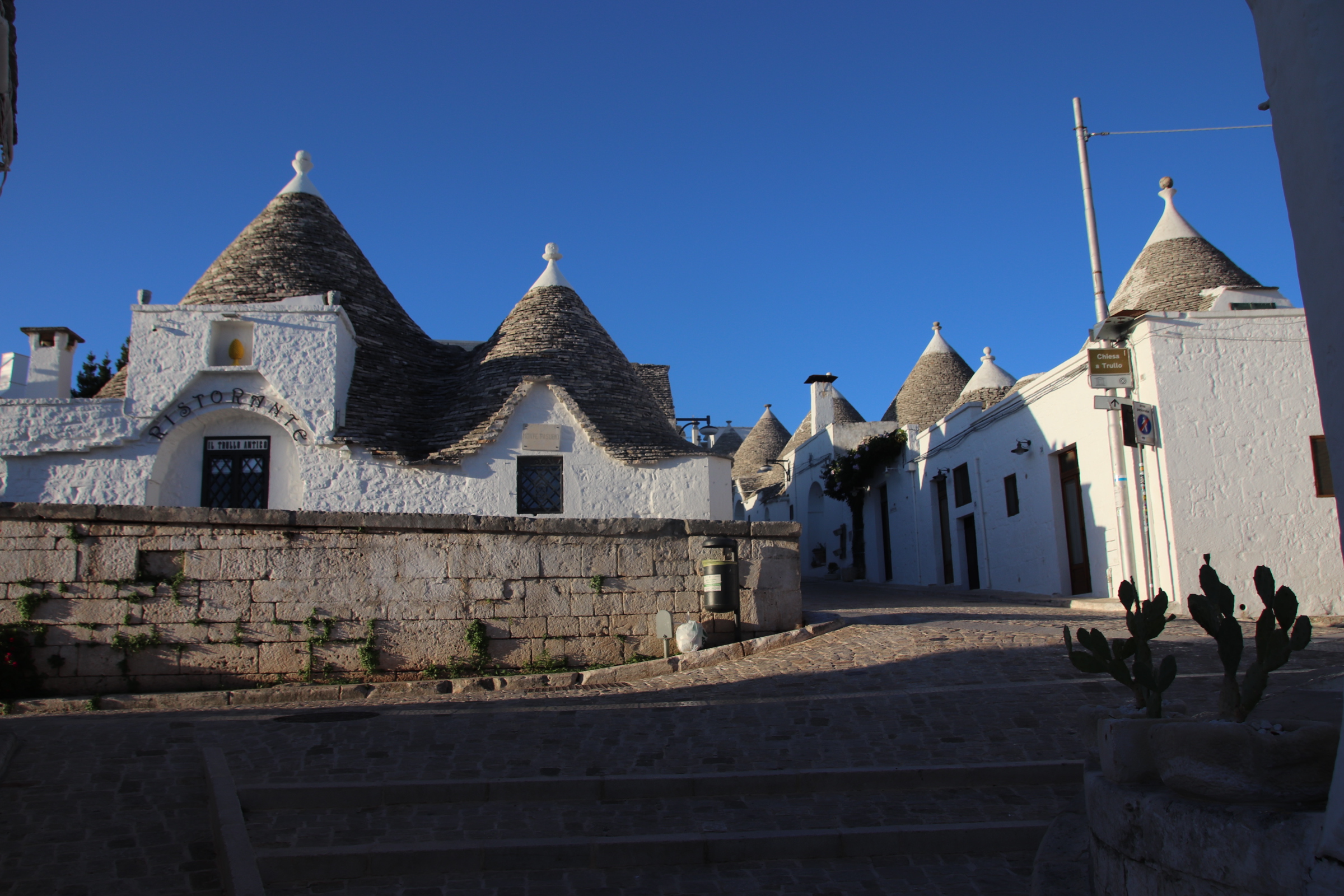
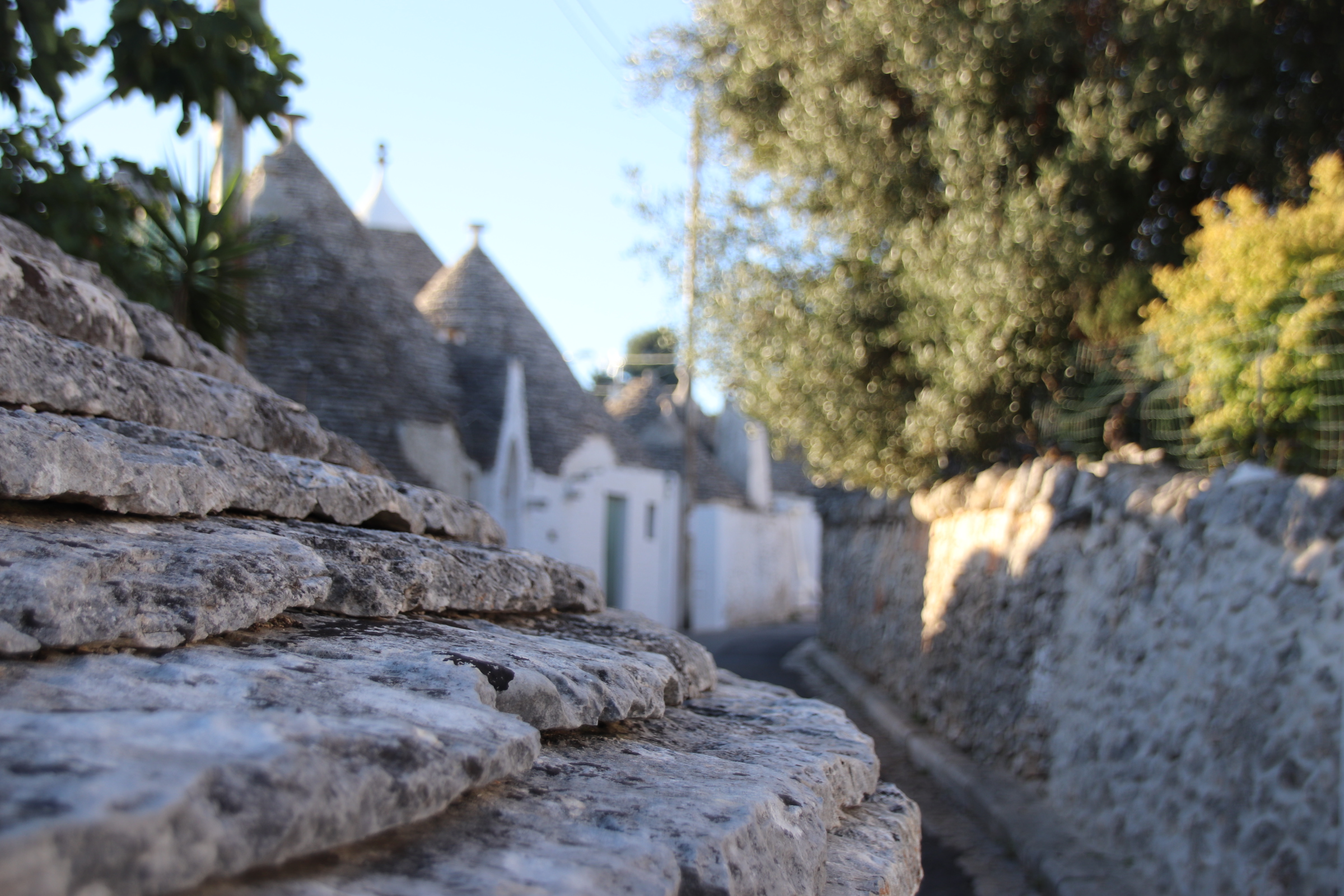
    Dotted amongst the endless rows of waving vines and stump-solid trees are clues to the main act of the area – isolated stulli, small, stone huts, built in the fields without mortar to hold a farmer’s tools.

    The town itself is unique, made up of stacks of tullis blocks of different shapes and sizes like a card tower spreading along a valley floor and the slopes that rise from it.

    Trullis are dry-stoned dwellings designed to house an extended family, their belongings, crops and animals. The walls are whitewashed in an attempt to keep the trullo cool during the heat of the summer. It is said that in the 16th century property taxes were collected. When the locals heard of an upcoming visit by government collectors their homes, because they were constructed without mortar could be easily demolished thus reducing the amount that had to be paid. Once the tax collectors had departed the homes would be rebuilt and life would return to normal.

    Wandering the narrow streets is a rather weird feeling particularly in the soft light of dawn before the gaggle of tourists arrive to clog the narrow lanes and ruin the atmosphere. It feels like Noddy & Big Ears are going to appear a door and friendly goblins will wander past waving greetings and welcomes. Sadly no – just crowds of visitors & holidaymakers buying the normal tourist tat from small trulli shops.

    The place is fascinating and worth a visit. A goblinesque centre within a normal, everyday kind of town.

    The majesty of Matera

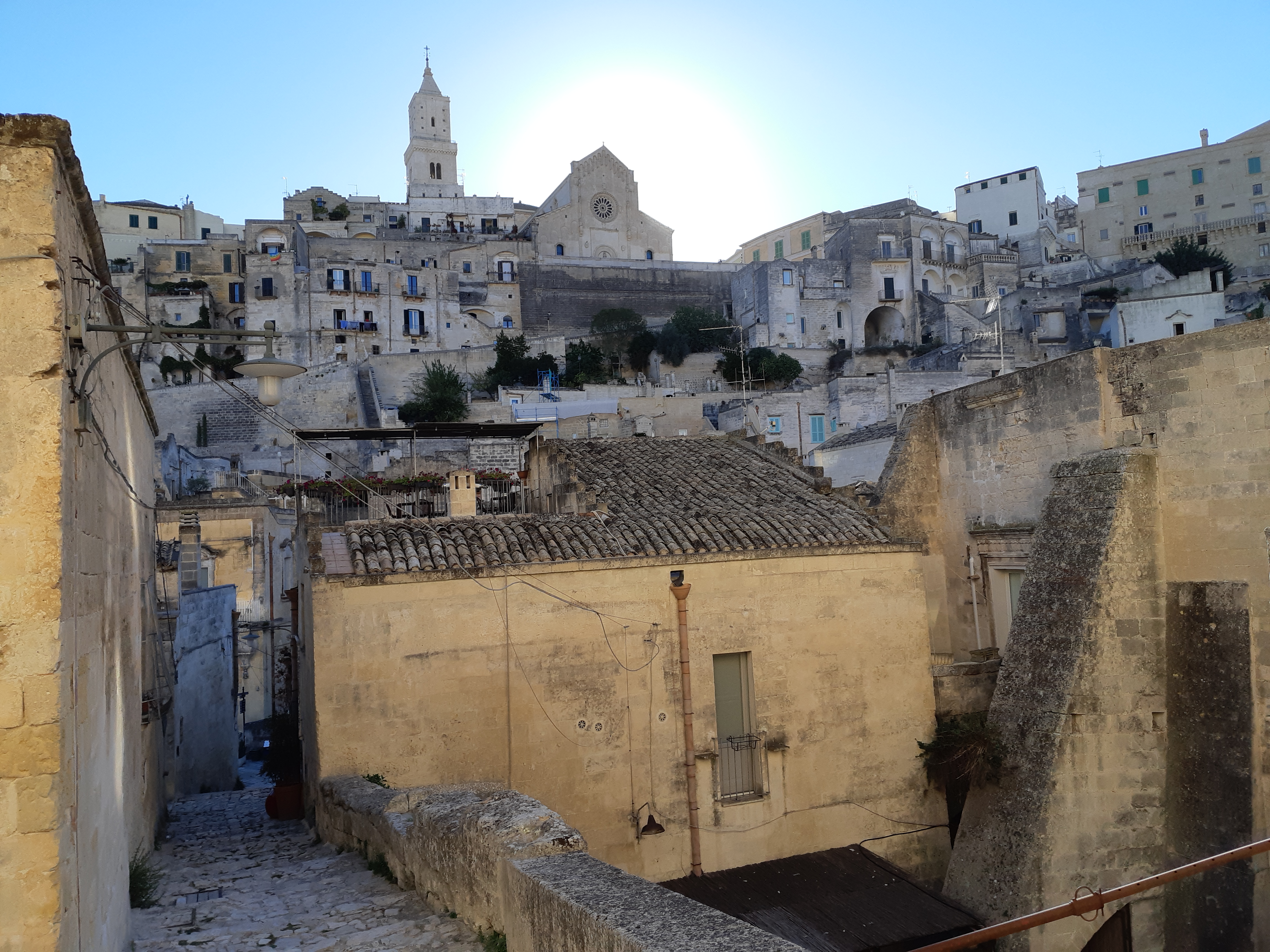
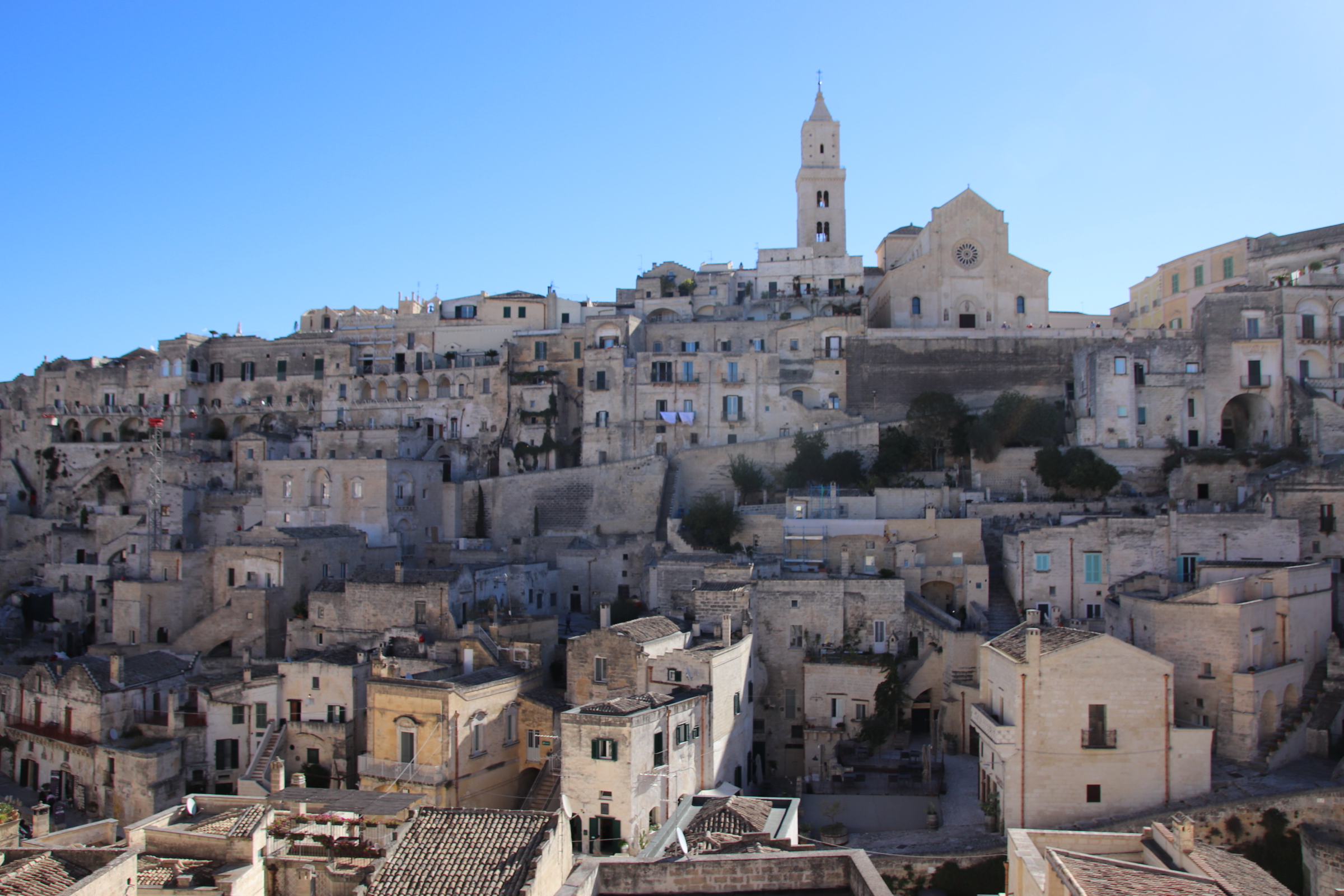
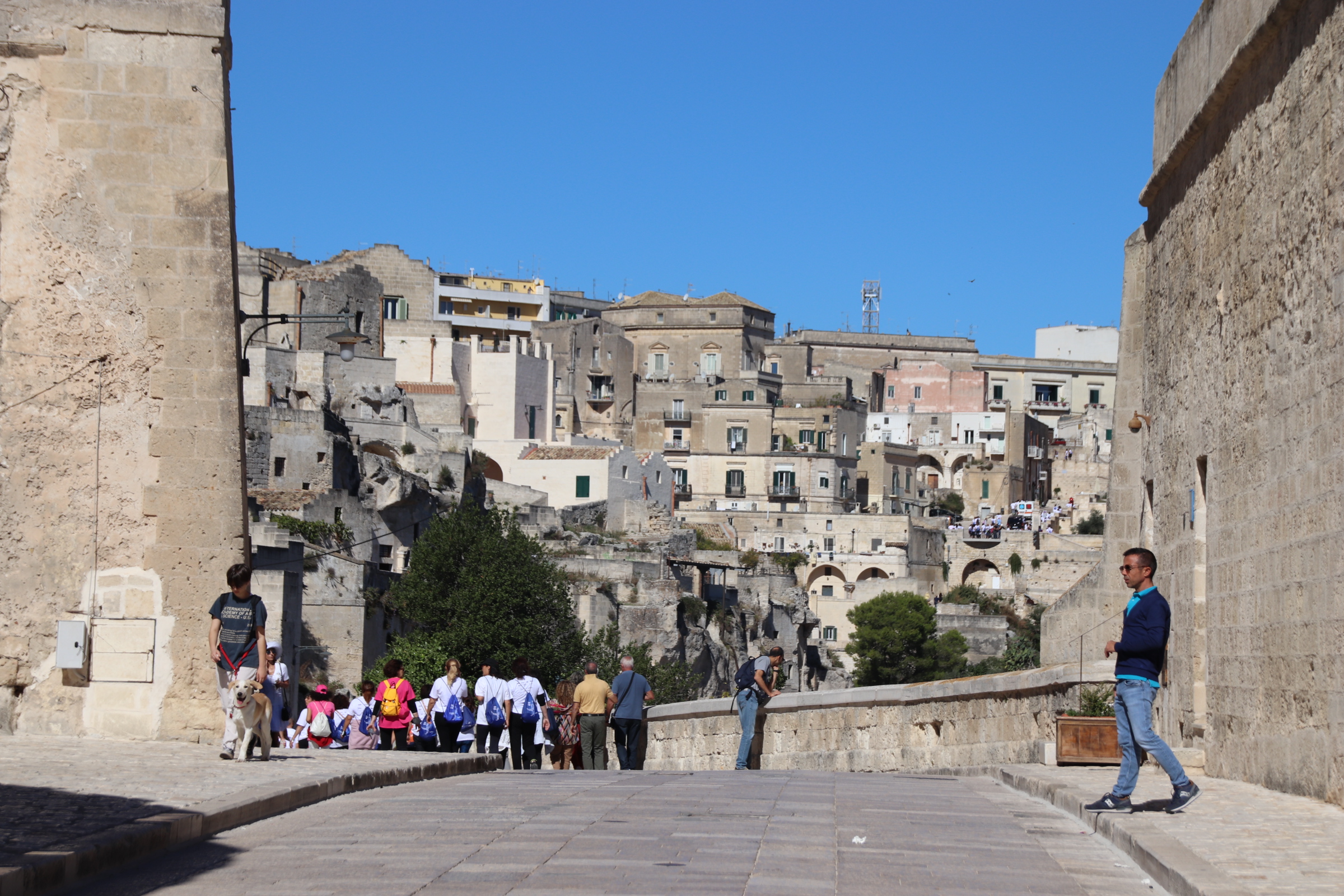
    Another Italian city, another jumble of dusty stone buildings, another tangle of burnished steps & cobbled alleys leading down to an ancient core but Madera is something so really special it takes your breath away. Like a dimmer switch dawn gently illuminates the soft hues of a staggered Jenga of rectangular blocks of houses, towers, steeples & churches. As the sun rises the glory of the place surrounds you.


    It is like a giant scoop has been dipped in the landscape leaving a jewel-lined indentation to climb about and explore.

    Rome is old, 3,000 years give or take a century or two, and Madera, in the south of Italy, predates Rome as an urban settlement by five millennia. Initially established by nomadic sheep herders who inhabited the water-formed caves that lined a deep ravine lying on their route through this flat, dry landscape prehistoric man developed elementary building skills that enabled them to expand their cave city across to the other side of the rocky gash.
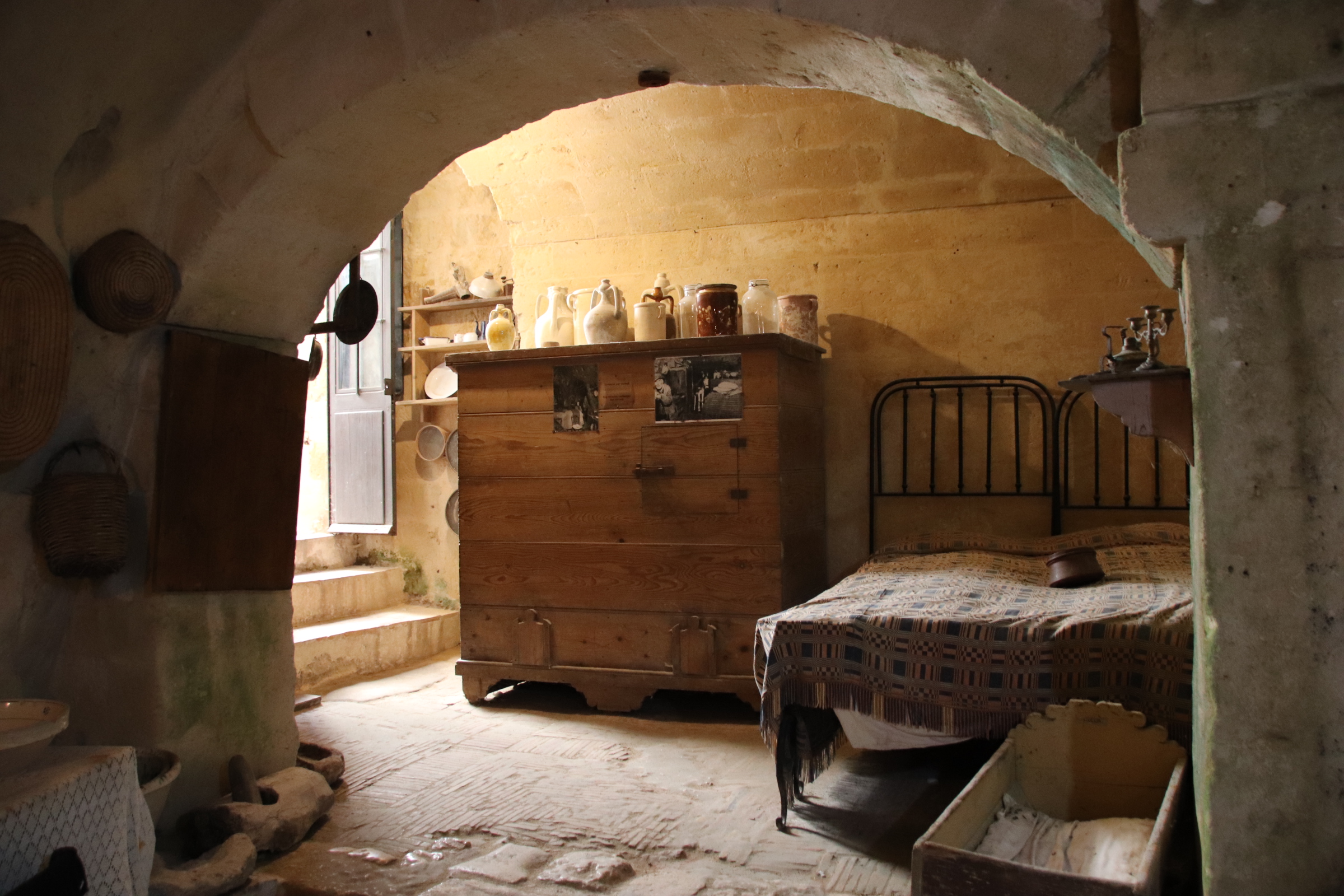
    For centuries homes were scraped out of the rock, inhabited by entire families and their livestock.

    Byzantine monks created Rock Churches. These dated from the 12th century and at one point some 160 existed as places of worship and living accommodation. The ceilings were created from the rock and in some graves were dug into the rock of the roofs.

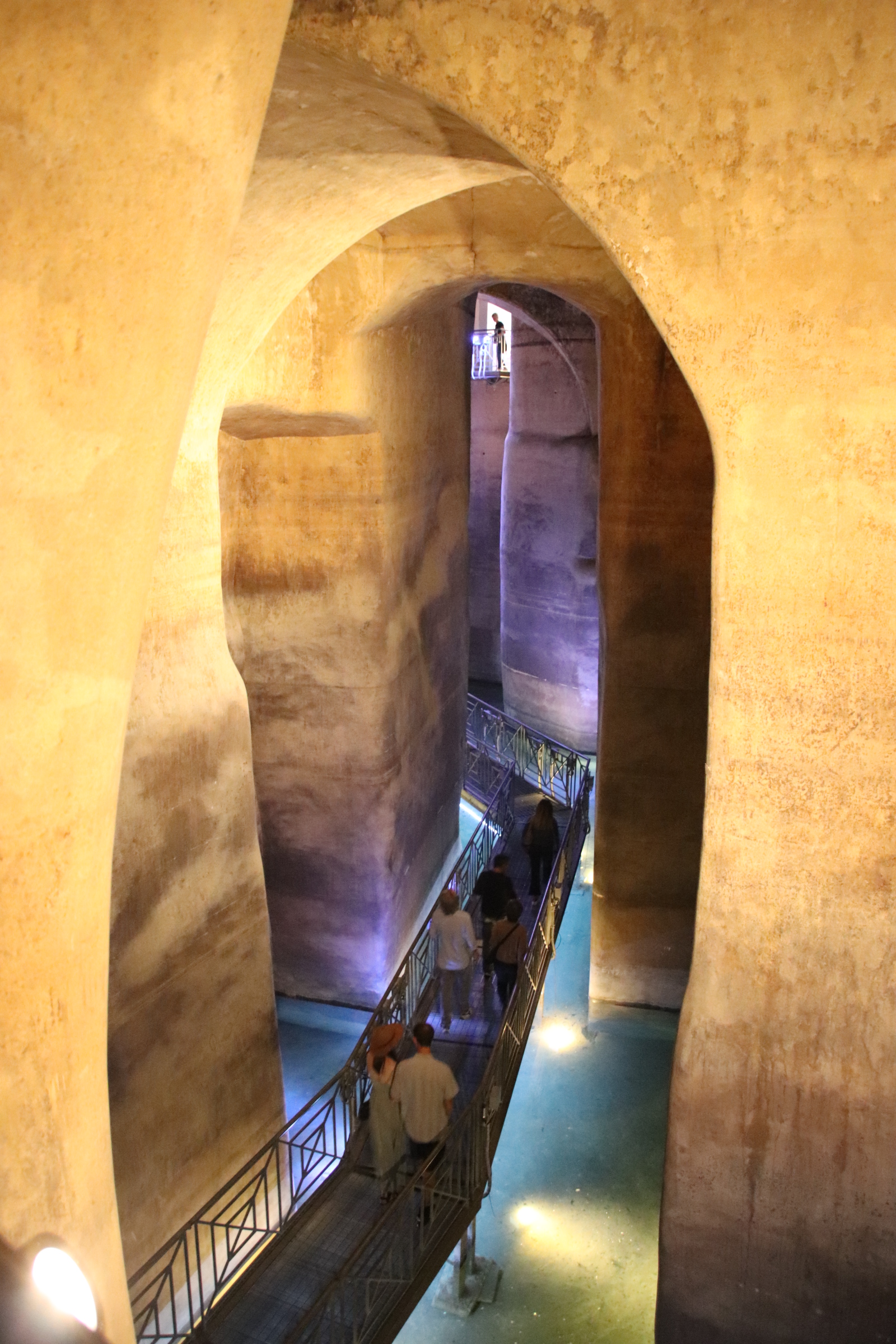
    Water was always an issue. In the 16th century five huge underground cisterns were created to collect and store rainwater to feed the fountains during the dry summer months. This obe held 5 million litres of water.


    This was an area of extreme poverty and disadvantage. It was only after WWII did the national government provide incentives for locals to buy and renovate properties in the old town. Today this higgledy piggledy stack of buildings and alleyways is absolutely stunning.

    Two wheels around Mandello del Lario

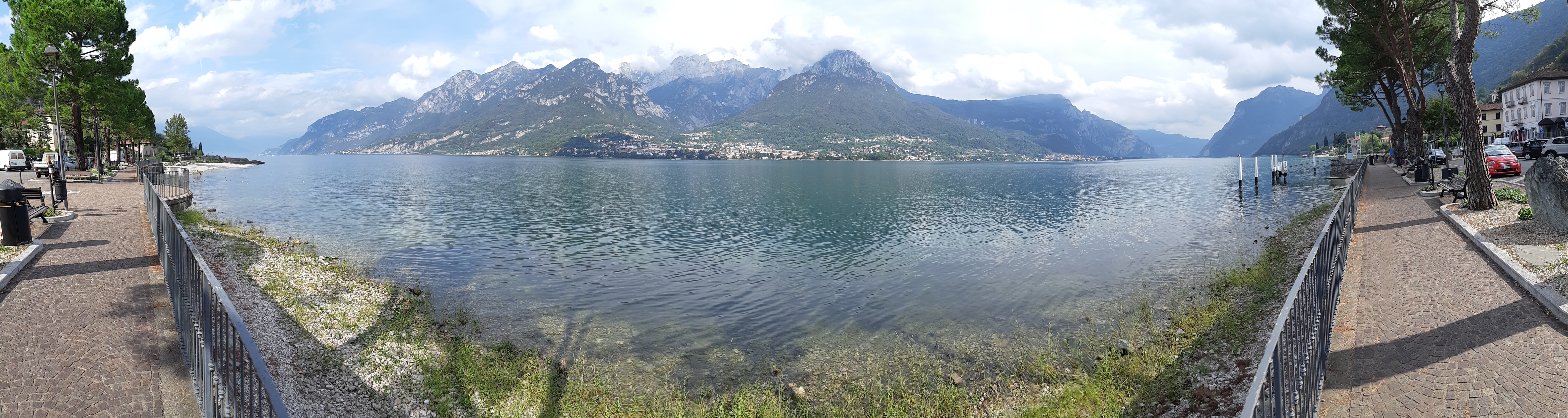
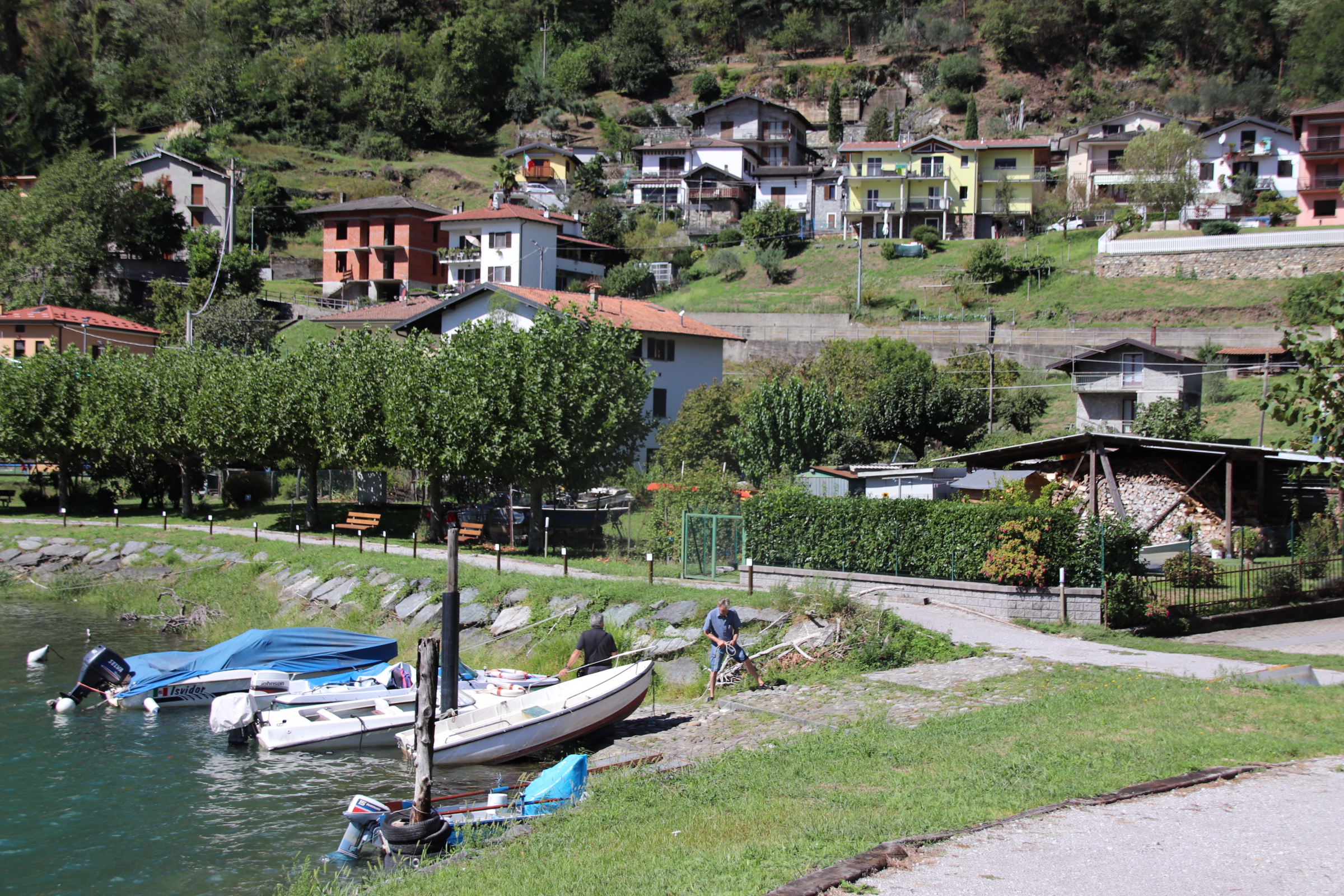
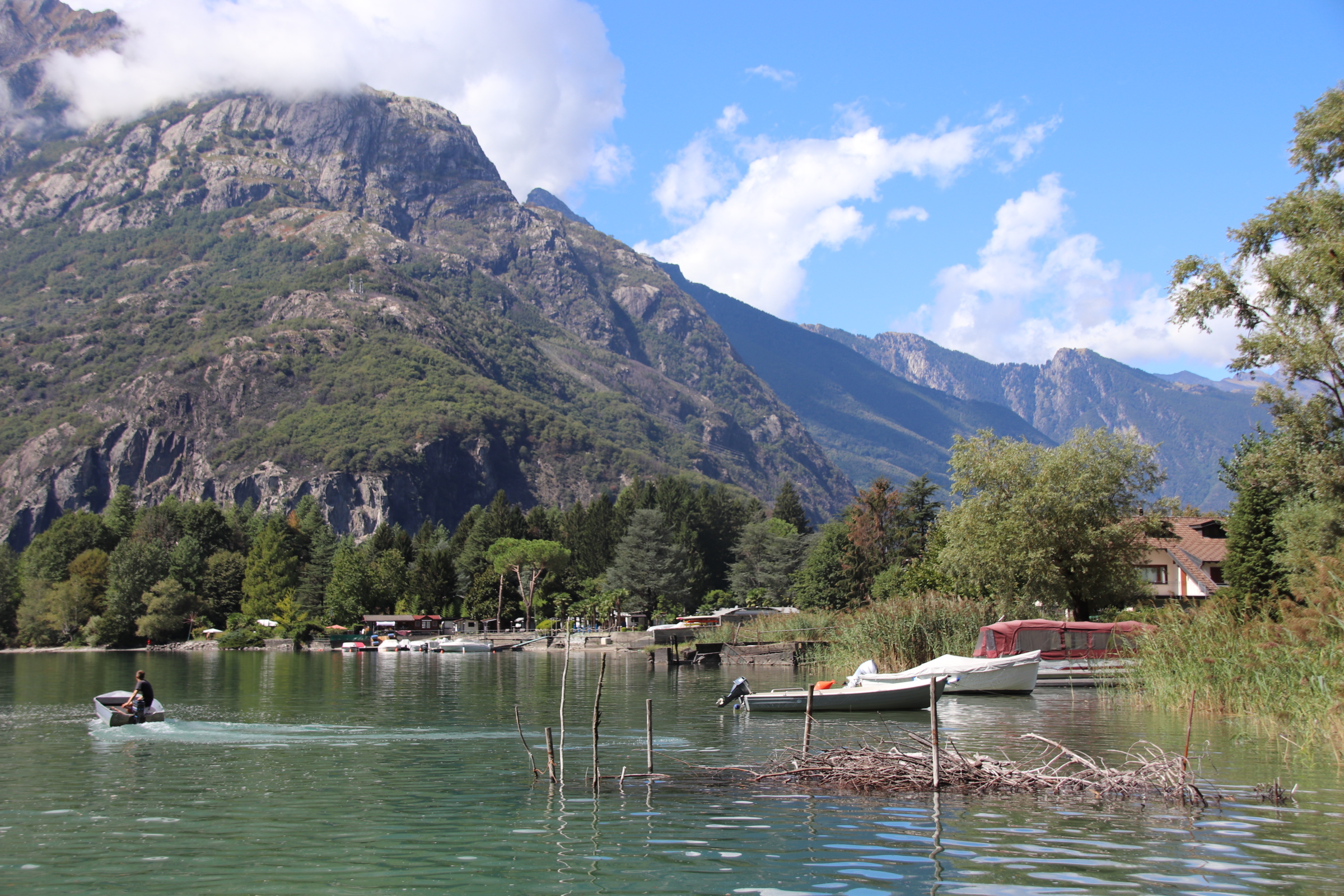
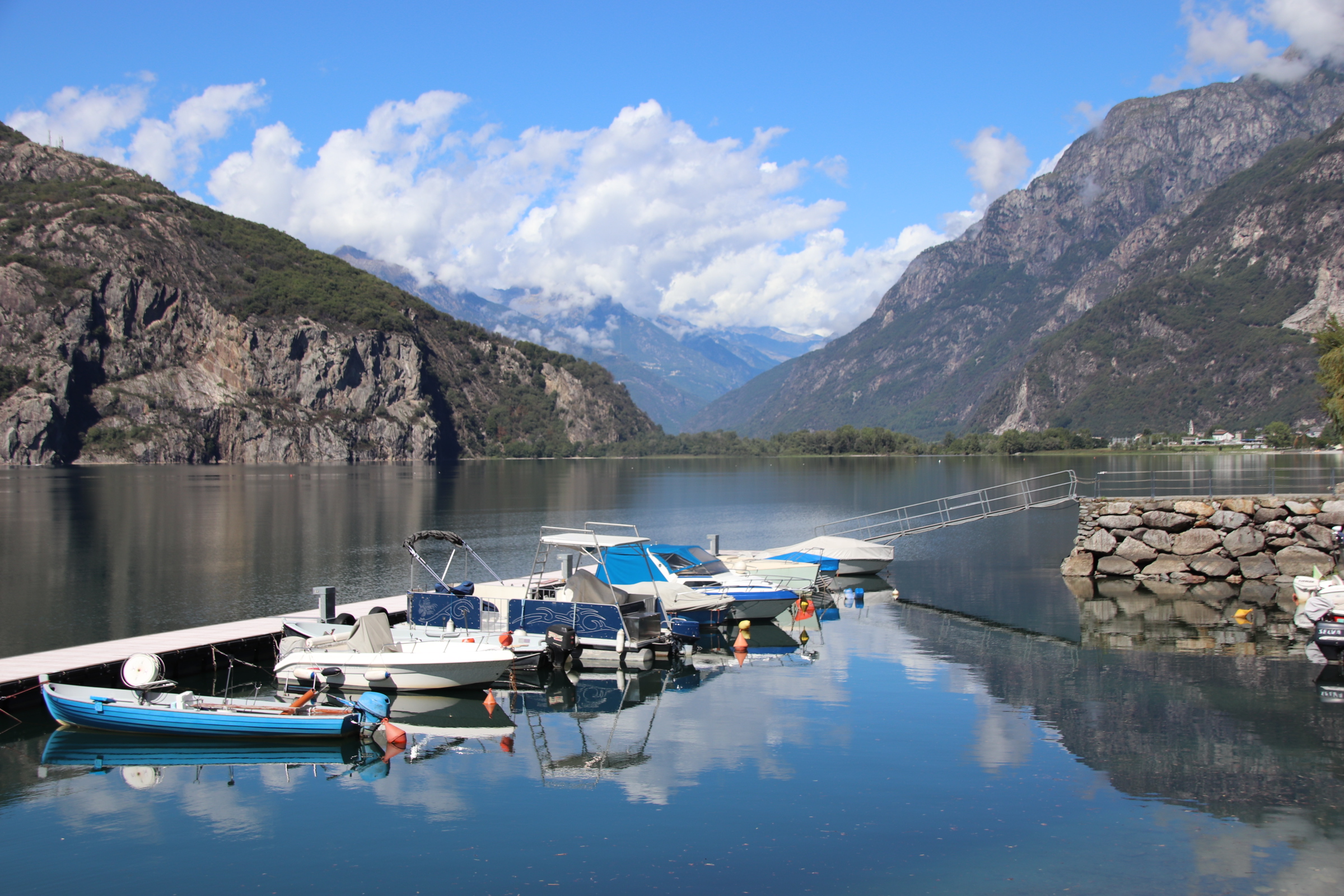
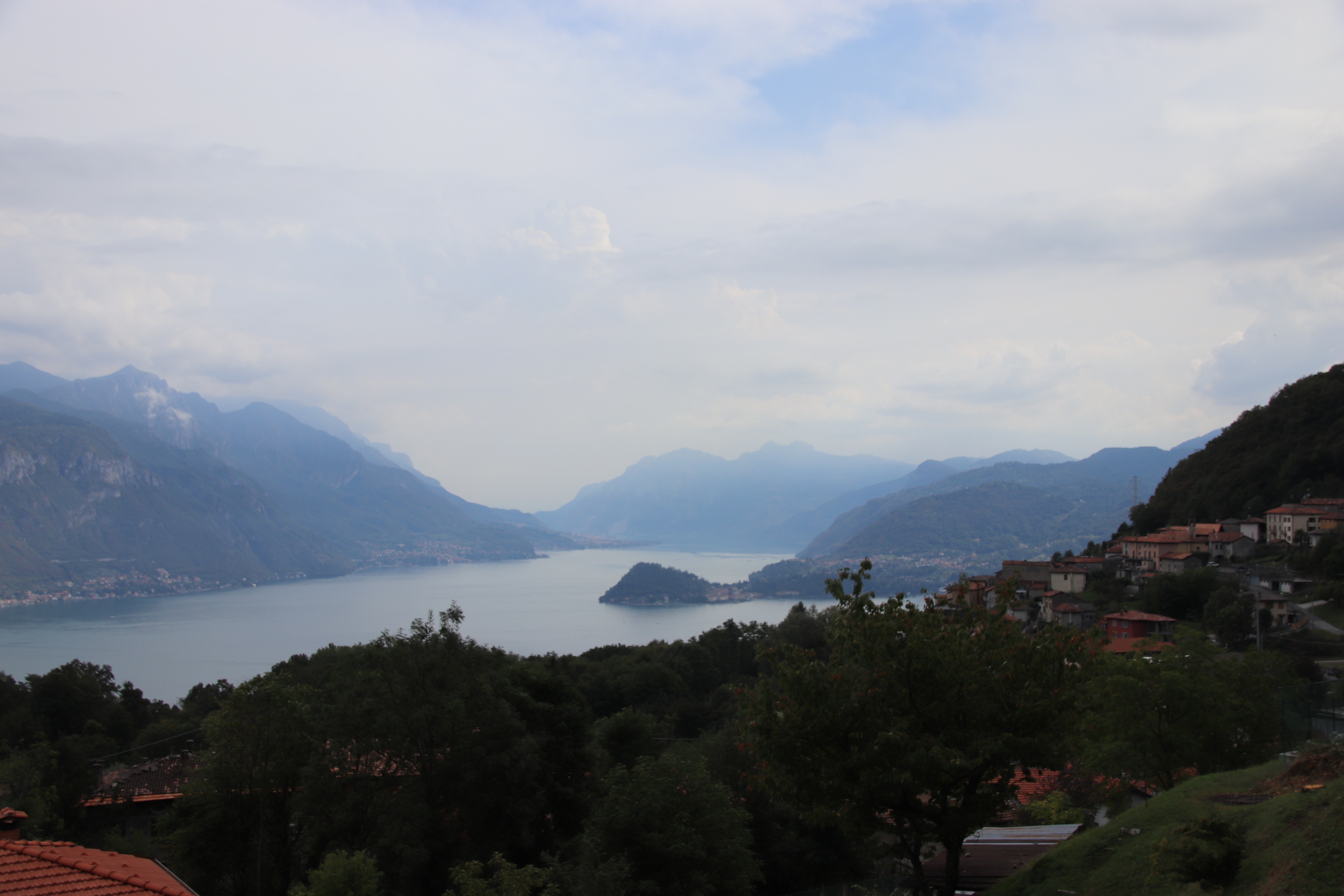
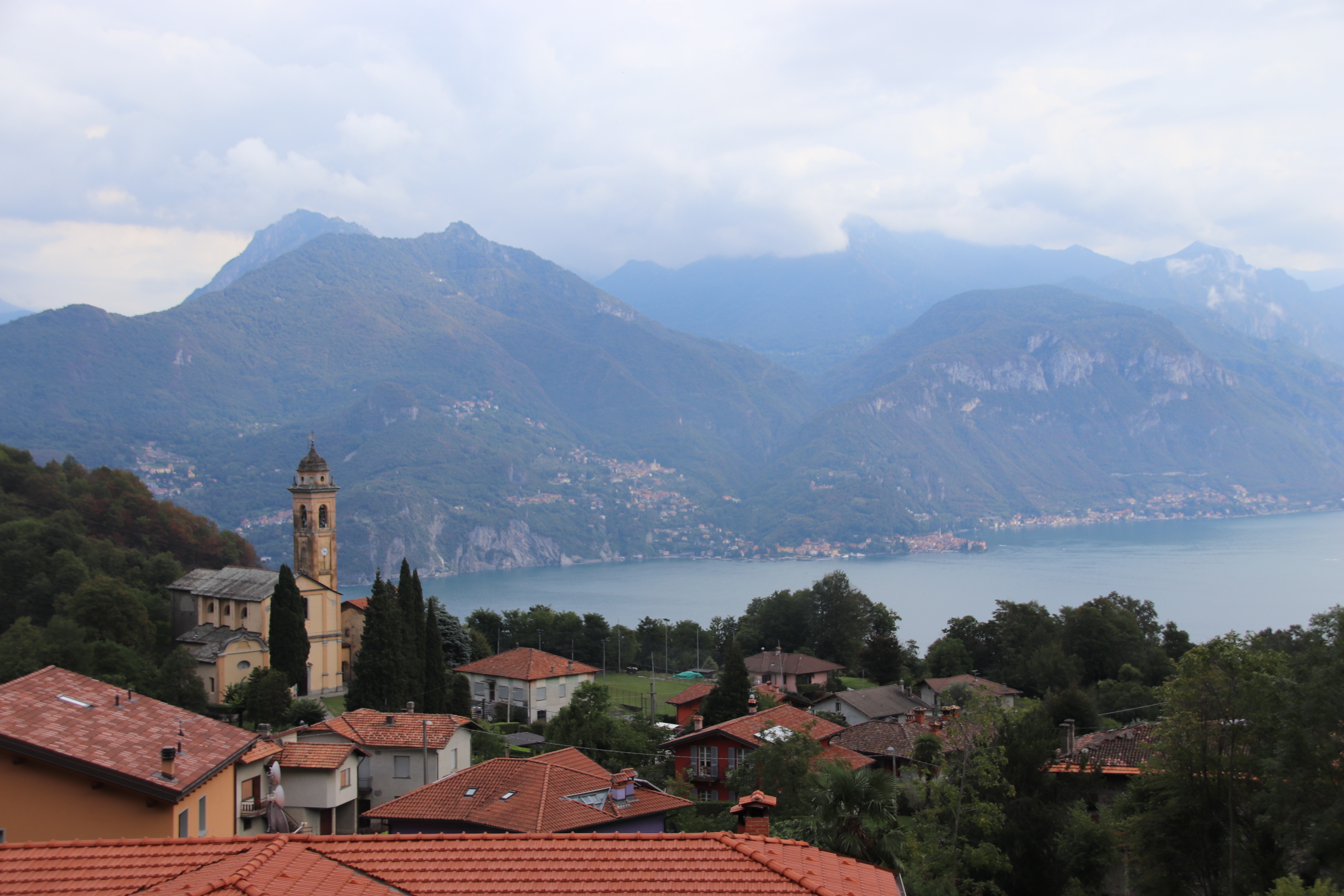
    Found it at last – that magic spot, that feeling of contentment and fulfilment, that place which ticks all the boxes and makes all that effort and expense of travelling really worthwhile. There were times when the sheer popularity of Lake Como as a tourist destination was going to swamp any holiday dreams or blissful summer expectations. That was until the right inner thigh of the laked athlete figure (I now think Lake Como is like an athlete with raised hands above the head) and a final base at Mandello del Lario.

    Yes, arrival day was a surprise with 60,000 bikers celebrating a motor bike convention but as the week went, it became apparent that this contributes to the character and charm of the place. Nothing too precious here.

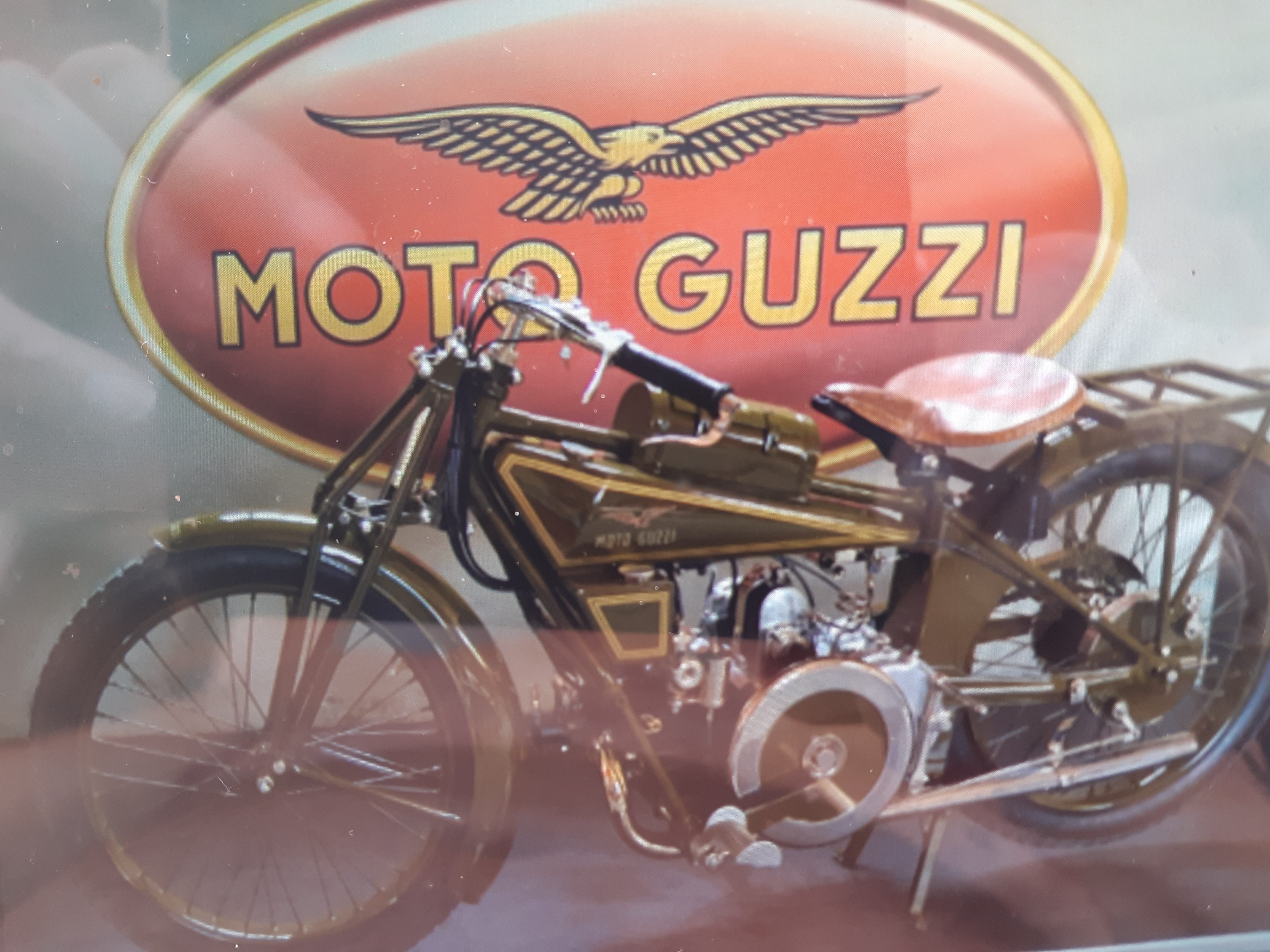
    Sitting out on the balcony, wine in hand, looking out across the lake, the silence, once the bikers had left admittedly, is enhanced with a very faint hum of motorbikes leaving the distant tunnel, two donkeys braying at each other across the town, the lunch siren of the factory and the church bells giving out their respective information, a few isolated doggy barks….and that’s it. Mandello is the home of the Moto Guzzi factory where for over 100 years iconic motor bikes have been produced for racing.

    So the town is a manufacturing centre and accordingly a pretty ordinary kind of place with a railway line to Milan and inhabited by normal folk – commuters, factory workers, designers, service personnel & even Amazon drivers. So refreshing.


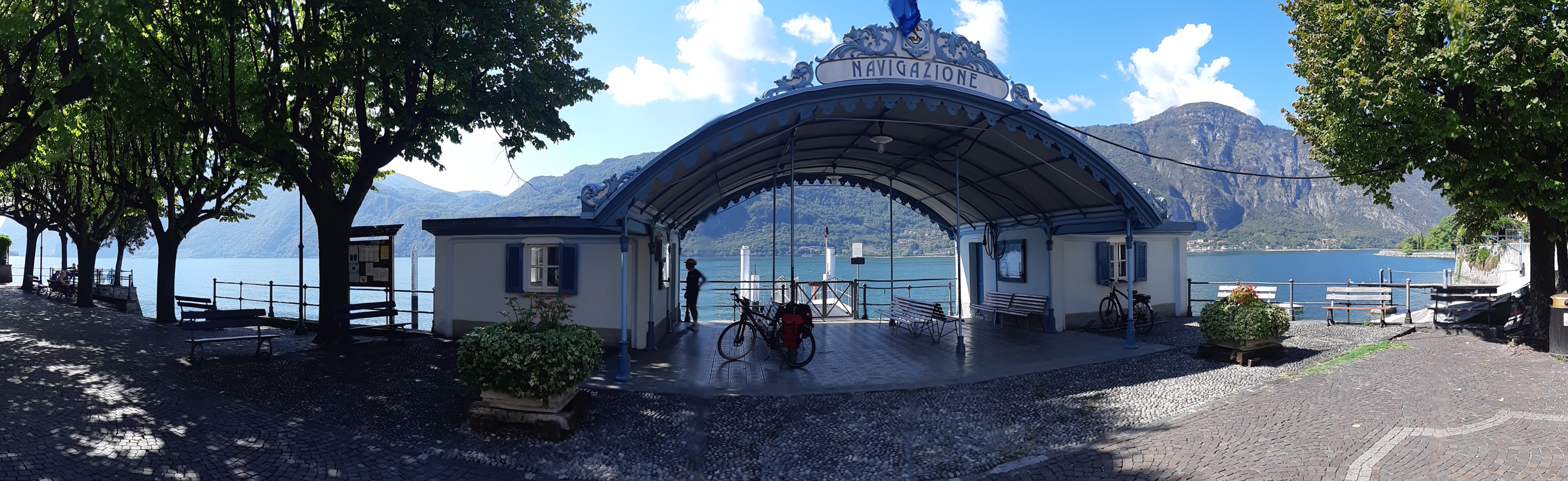
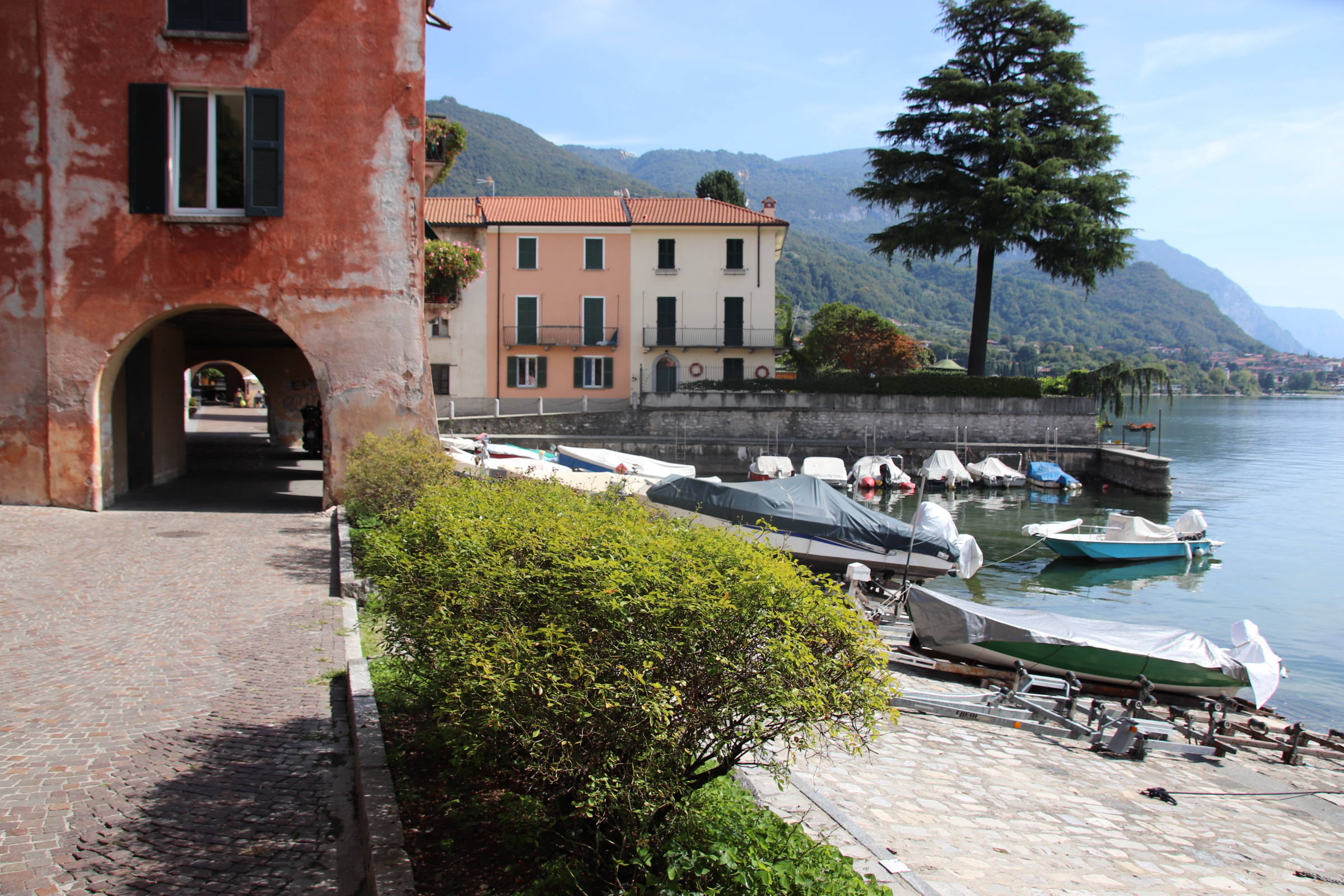
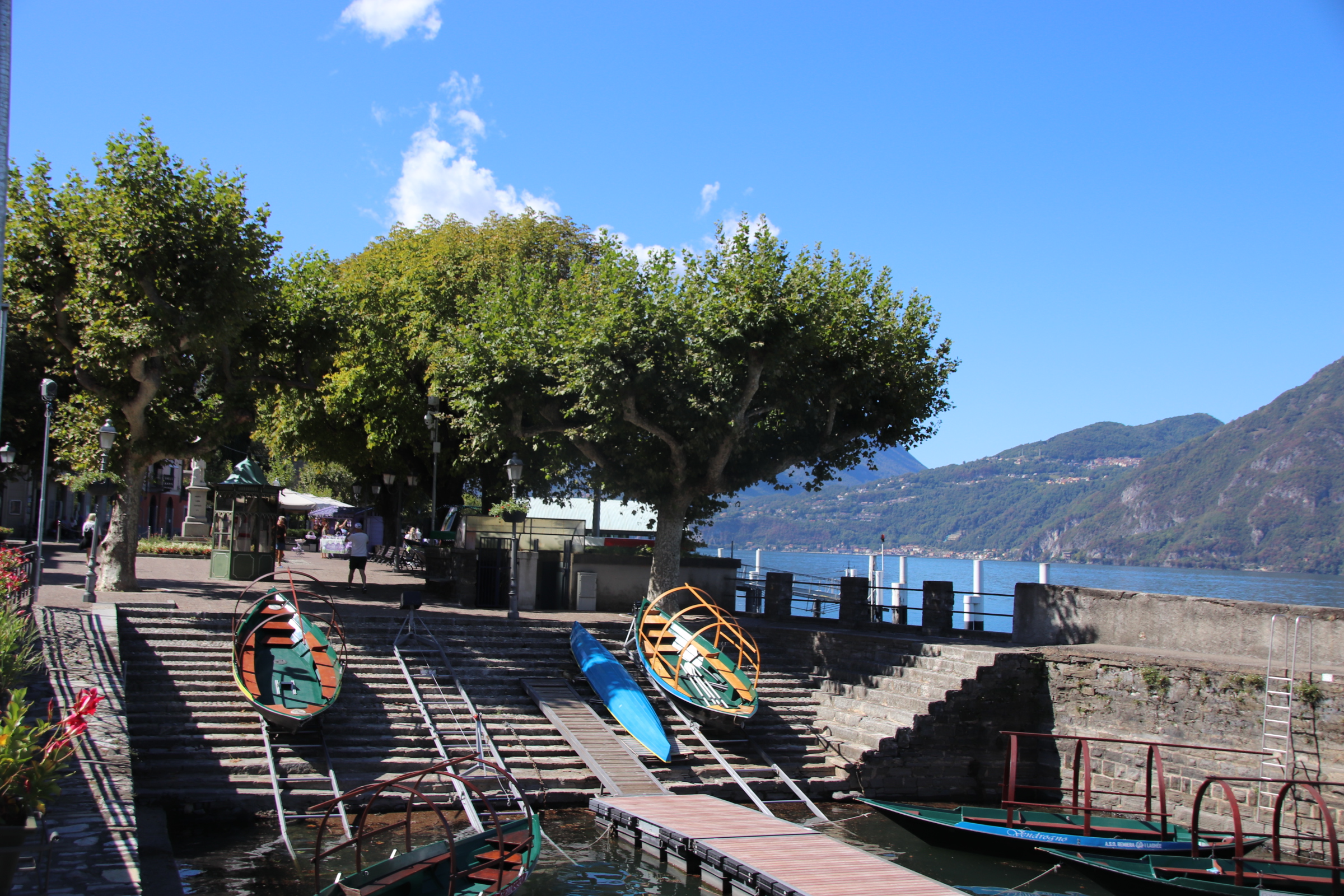
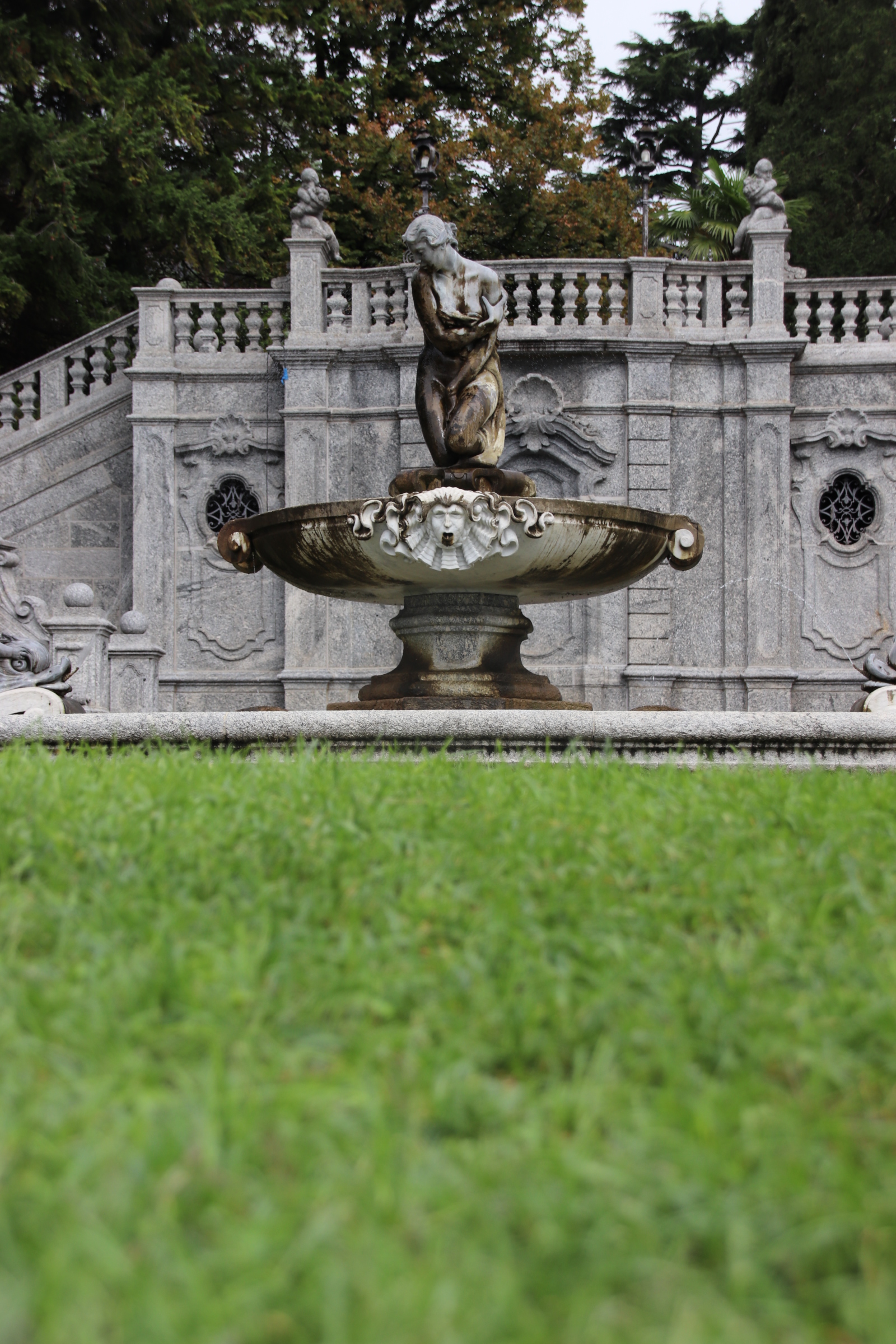
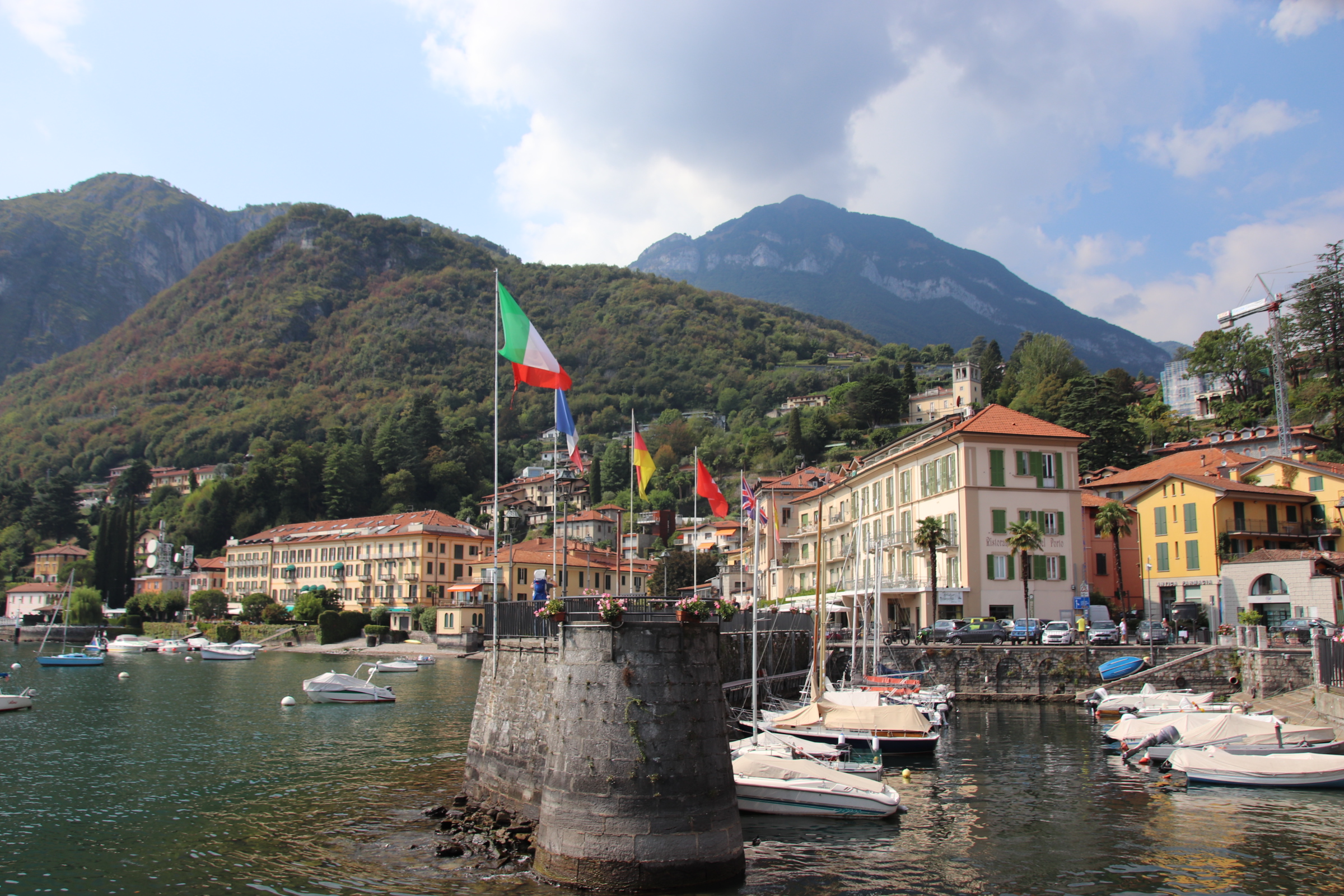
    On the other side of the railway tracks, clustered on the lakeside, lies the old town. Narrow lanes lined with elegant villas and ornate, railinged gardens and gates head down to the water where converted fishing homes clutter around small beaches where a couple of covered boats are drawn up for the winter.

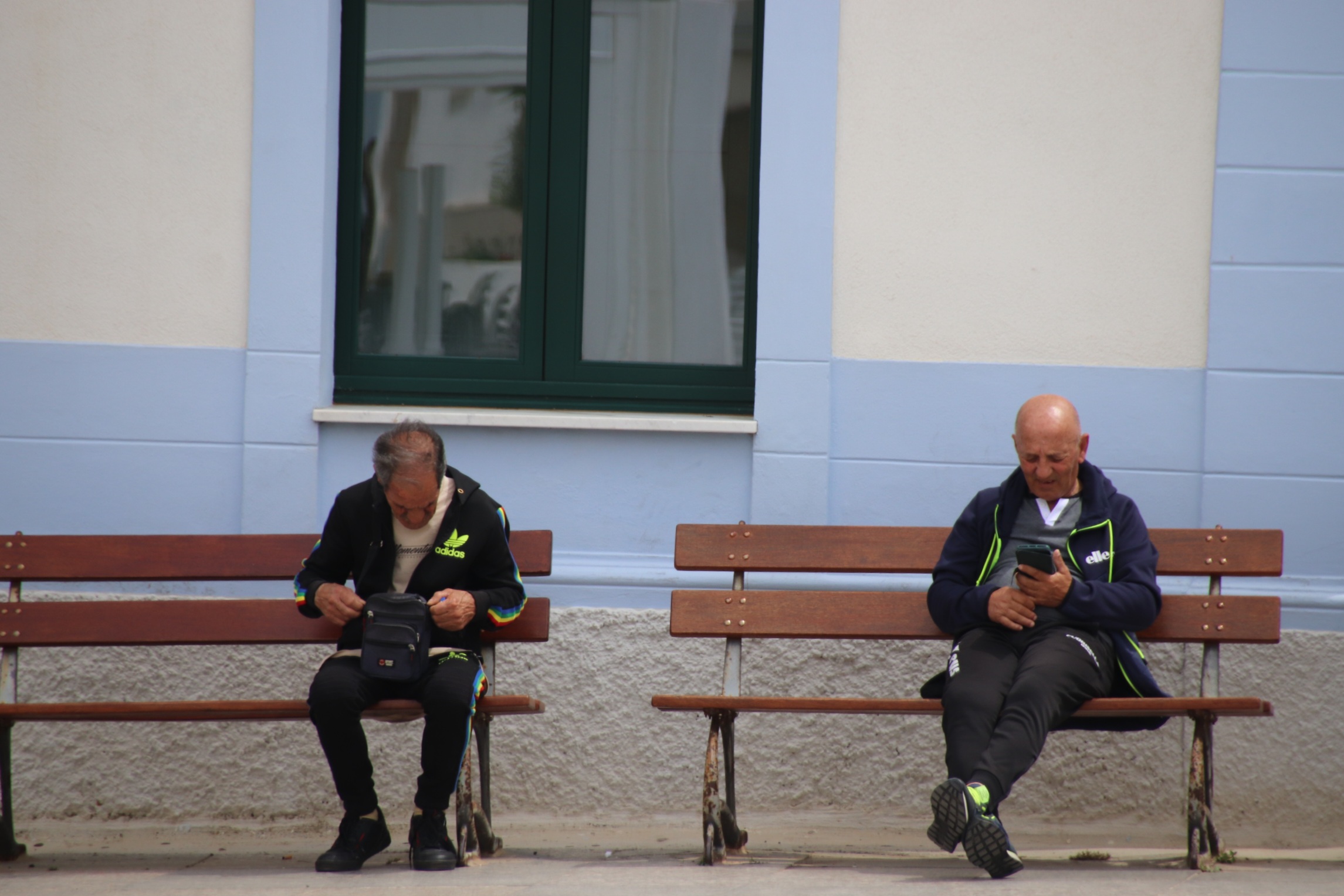
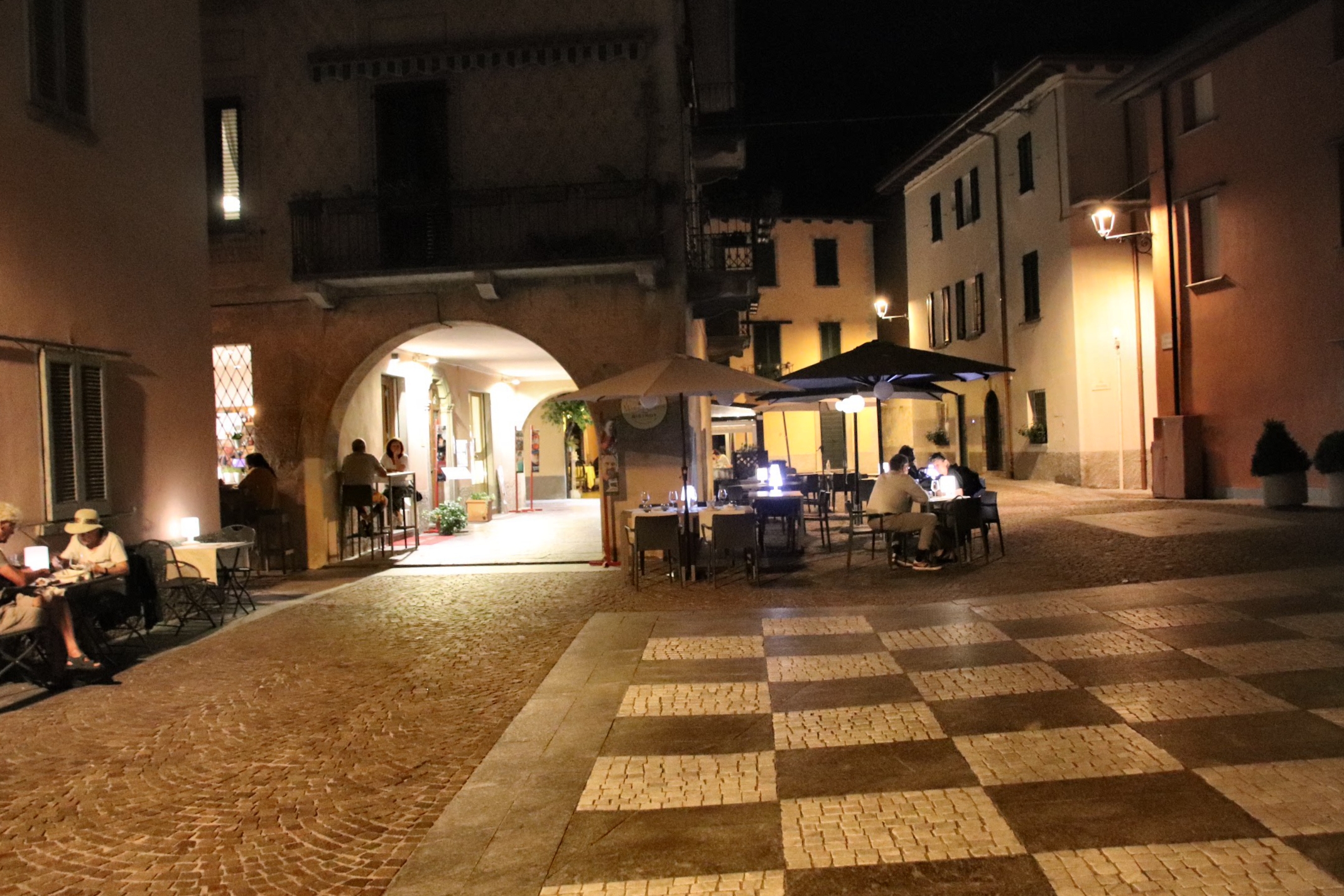
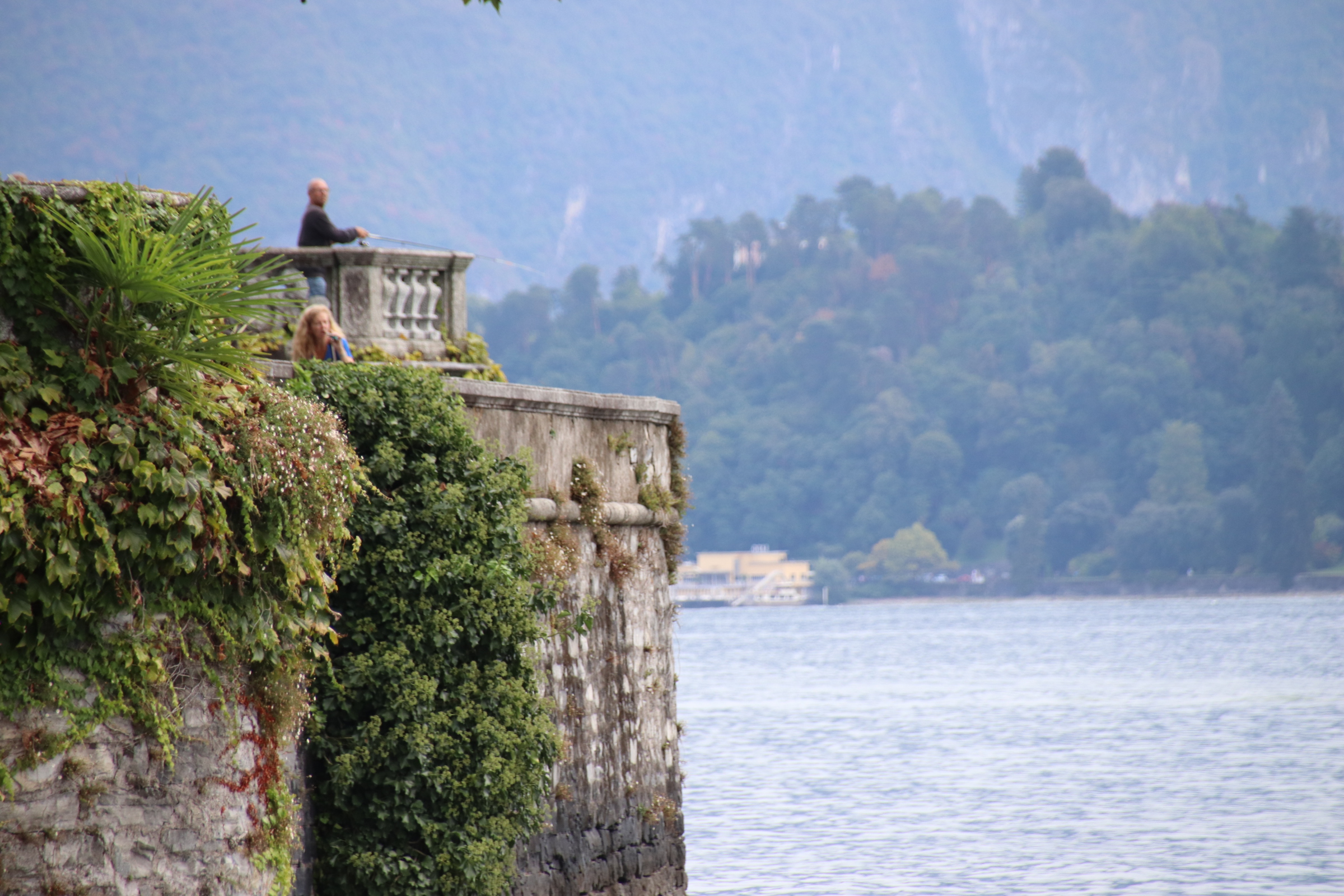
    Wandering around its calm, lakeside streets in the fresh morning air or in the cool of the evening, is a pure joy. A few locals gossip easily on benches or over a glass of vino at a cafe. Wide arches and covered promenades lead from squares and through passageways between tall, multi-storied buildings, the still waters of the lake always providing a blue-skied, glass-covered backdrop. Tables are laid out in one square or another, one always available for food. Mama Ciccia has a few tables, a simple but interesting menu and carafes of excellent house wine. A clear favourite.

    Although happy to while away time here, we did leave Mandello. I won’t go into the aborted trip to Bergamo. It looked magnificent from below and a fortress from a distance. However, exploring the rocky spine of the inner thighed peninsula of the lake was fascinating – wood-contained pastures, narrow winding roads, more pretty lakeside (and mountain) villages.

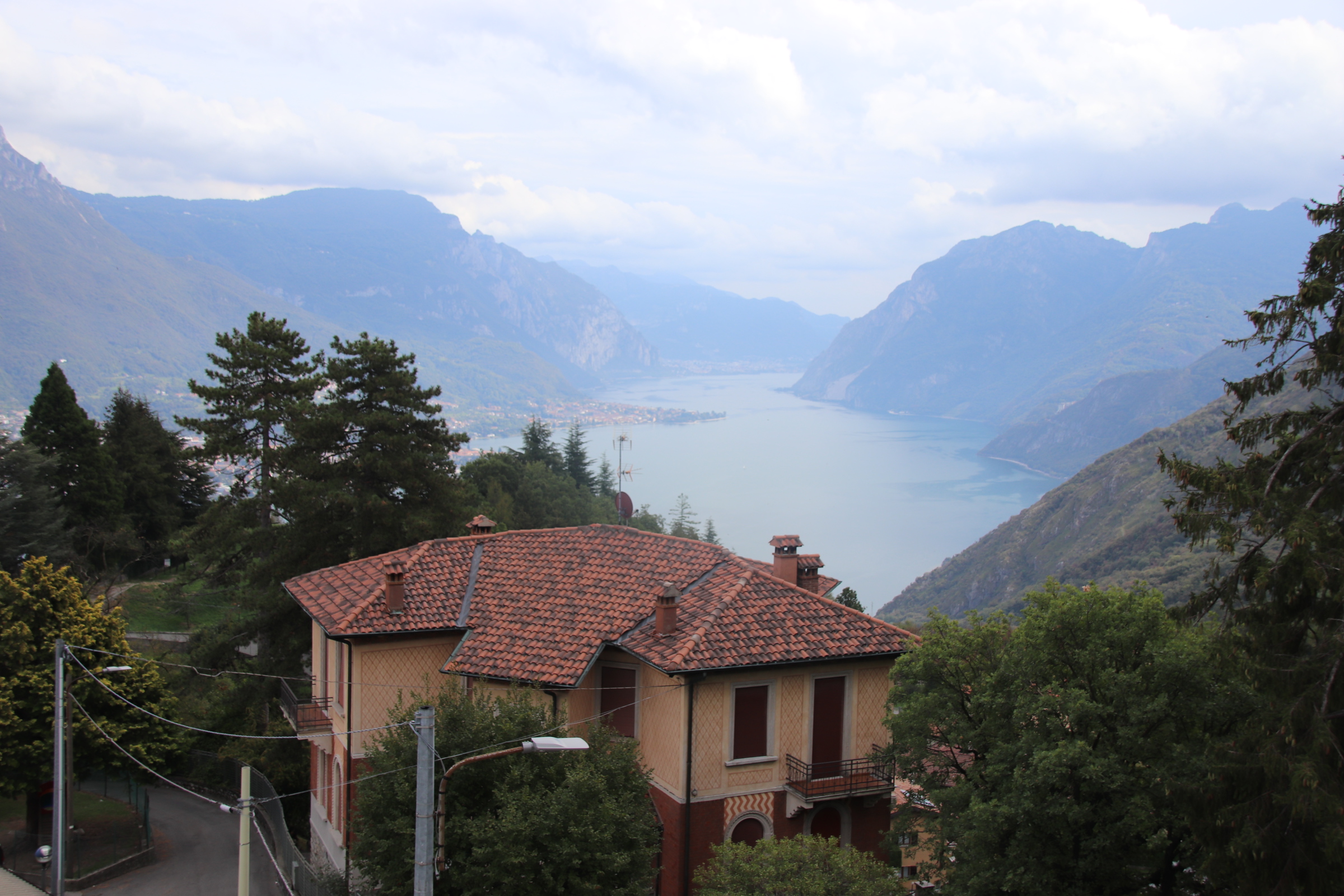
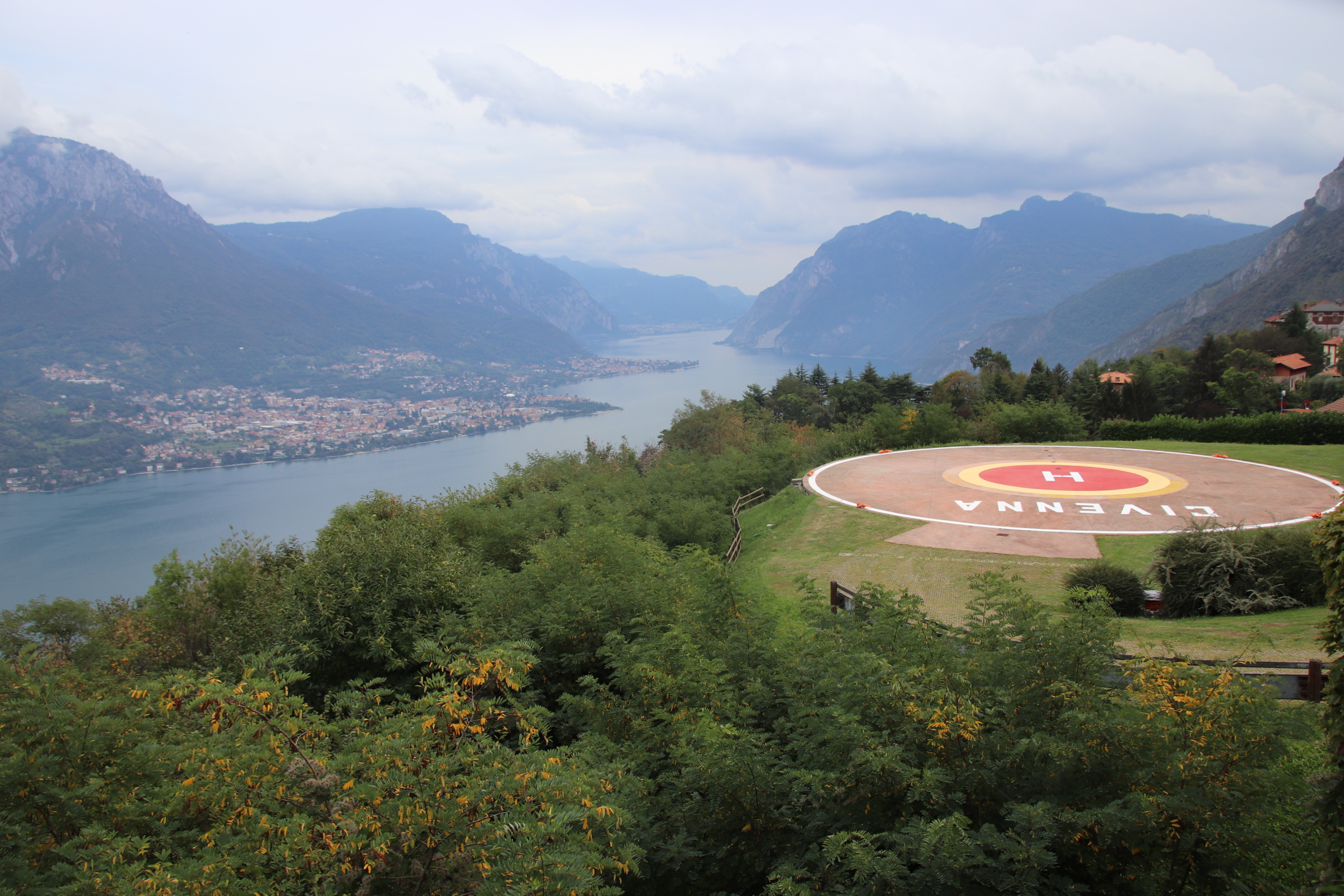
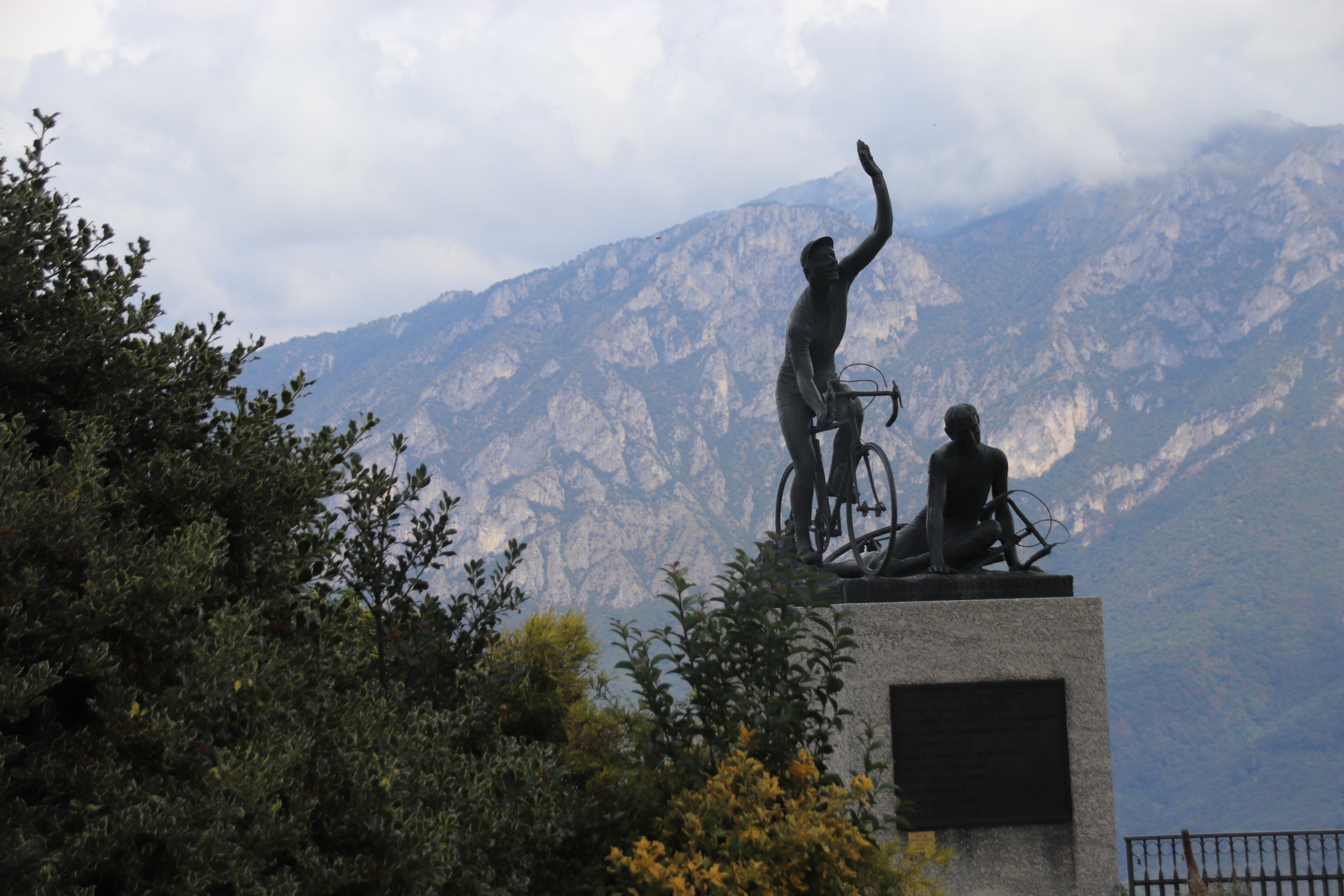
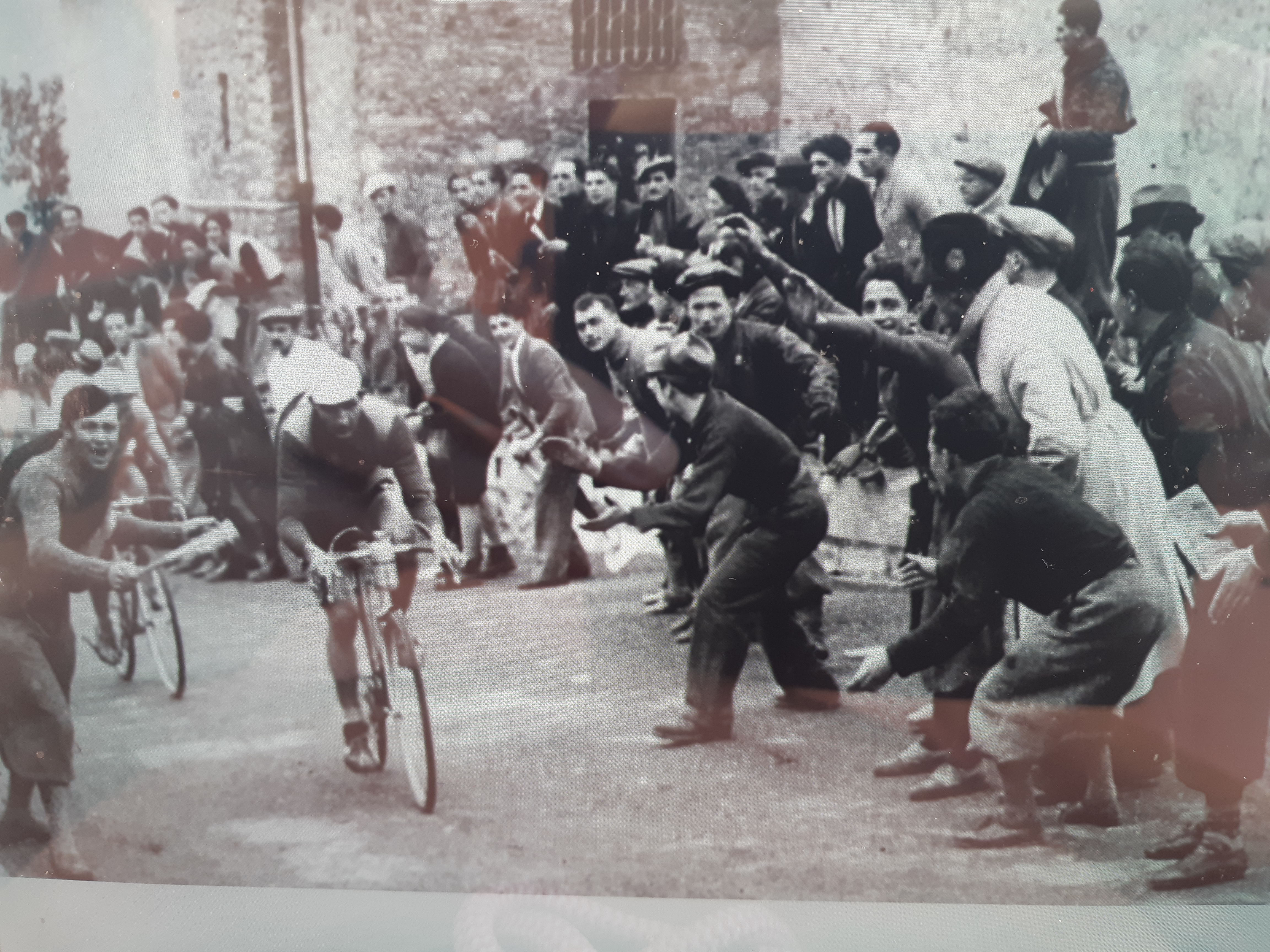
    The gem on the route was the hill of Madonna del Ghisallo with its dramatic views over the lake which has long been an iconic location for cyclists of all ages and abilities. A museum at the top captures the Italians’ passion for such extreme racing.

    Not only has the awesomely steep 10 km climb formed a stage in some of Italy’s most famous road races but generations of amateur cyclists ride up it for fun!!! An amazing feat. Not for me, thank you. I’ll appreciate it from the museum and 17th century chapel at the top.


    I’ll pack the cool, pastel-lined streets of Mandello del Lario and images of Lake Como into my bag, take them home and appreciate them over cooler winter months.

    Bye for now 🙂

    A break from it all on Lake Como

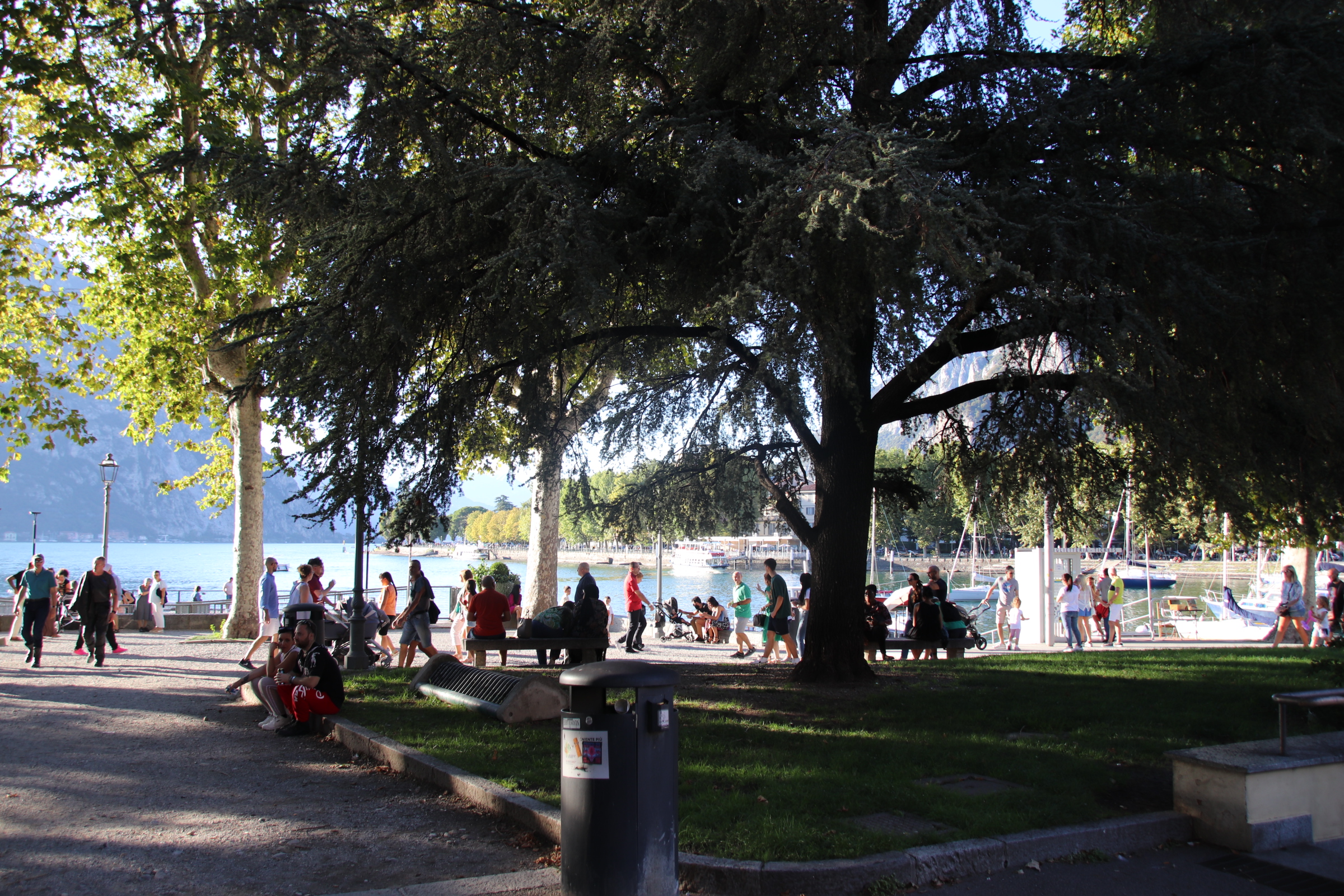
    The east side of Lake Como and the right bank down to Lecco, provides a calm relief from the bustling crowds, the palaces and villas of the rich and famous and the loud, brash American tour parties of the western side/leg. Surely, this will be the real Italy. The first indication that this is a different place can be found on the route south. There are two roads. Signage seems to always lead to the main, dual carriageway that runs alongside the railway line through, in many cases literally, the mountains and roughly following the shoreline. When it comes to some obstacle, a headland or a hard fold of rock, it simply drills down through in a dark, dimly lit, exhaust-hazed tunnel, the home of some ghoulish, worming creature that takes away any beauty the area has to offer. The longest distance you are cut off from the world is over 5 km.

    However, be resourceful, use your instinct and you will be rewarded. Just outside Colico a narrow lane cuts through a scruffy site of caravans and old chalets and hits the lakeside. From here it runs quietly south to Lecco at the bottom, right beside the water, passing through delightful old fishing villages, some vaguely attractive holiday sprawl and runs of bars & restaurants. Traffic on this road is sensible, gently pacing itself around 40kph. Driving is a pleasure and stopping has it rewards.

    The first temptation is a sign off to Abbazia di Piona, a cobbled lane leads for several bumpy kilometres down to the lakeside. The abbey is gloriously set in peaceful, isolated splendour on the water’s edge amongst tall mountain peaks. To go inside, appropriate clothing is requested.

    Bellano on the ferry route from Como. Despite this it is able to maintain a calm atmosphere and is an attractive place to spend a few days.

    Varenna is also on the ferry route. Being that much closer to Bellagio is takes on some of the characteristics of this tourist hotspot.

    However the crowds are smaller and visitors are quick to return further south.

    Mandello del Lario is our base for this leg. Imagine the horror when we discover that our arrival coincided with the penultimate day of a motorbike convention – faint echoes of literally thousands of bikes floated up from the village below, along with the bikers’ distant appreciation of an AC/DC cover band sounding a bit like Suzie Quatro. Venturing in, we spied columns of parked bikes and straggles of greyed, worker ants overcoming the roads & pavements. We left to observe from afar. When they were gone we discovered this wonderful, peaceful place – the real Lake Como!

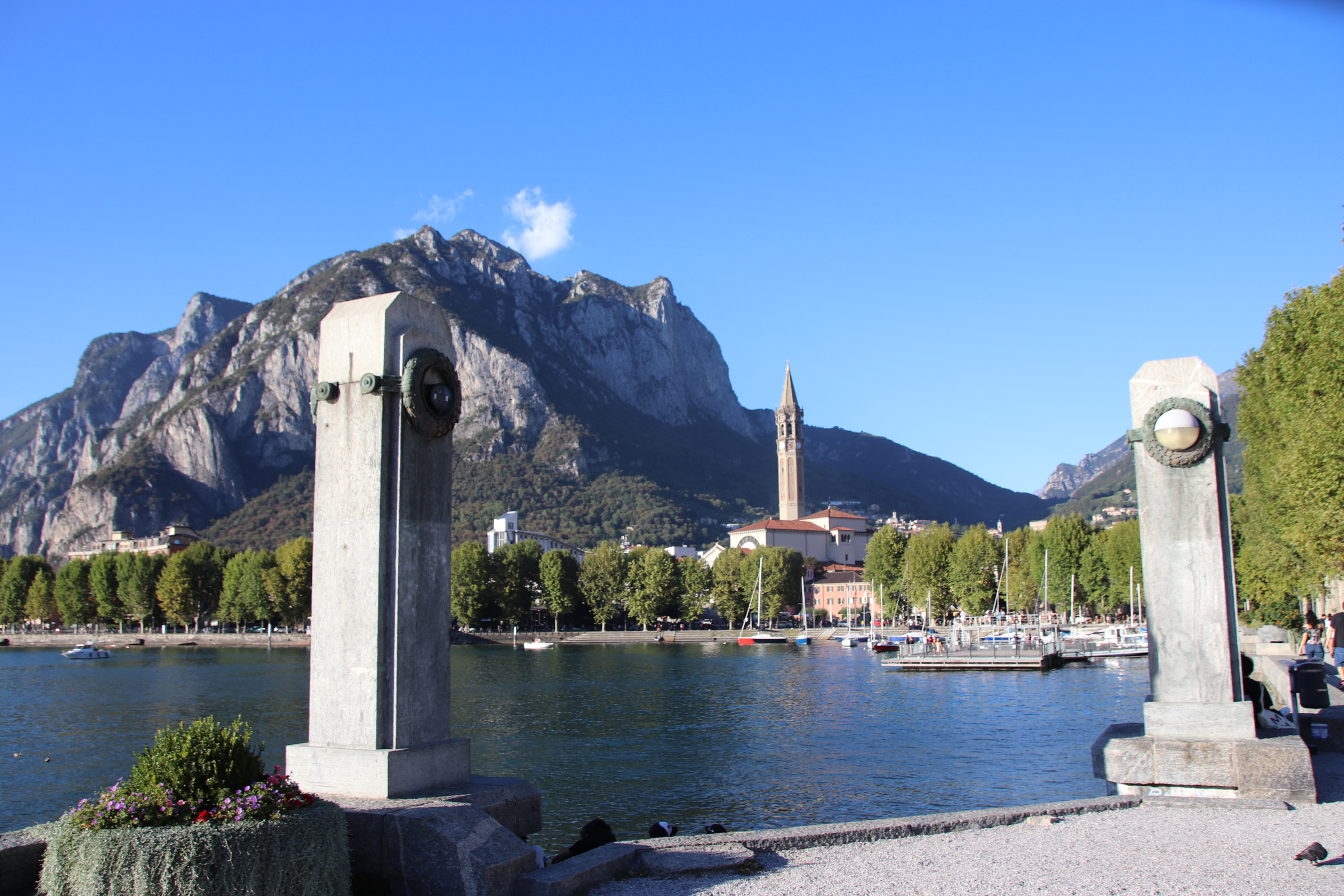
    Lecco is an ordinary, commercial town at the foot of the lake with an attractive promenade by the water’s edge. In an attempt to get away from our biker friends we took the road to Lecco, only to find many of them on their way home and parked up there. We left quickly, to enjoy the now empty streets of Mandello.

    The other side to Lake Como

    Bellagio, at the groin area of the lake, and Lago di Mezzalo, which forms the neck & head of our striding figure, sum up contrasting aspects of Lake Como. The former is one place amongst many, the latter is uniquely special in this rich man’s, & woman’s, playground. They are like the rough & the smooth, the rich & the poor (though which is which you’ll have to decide at the end), the fact and the fiction.


    The journey to each is a contrasting challenge in itself. Hitting the high speed ferry, Bellagio is one hour south of Domaso (as opposed to the slow one which takes an hour longer to complete more zigzags down the lake).


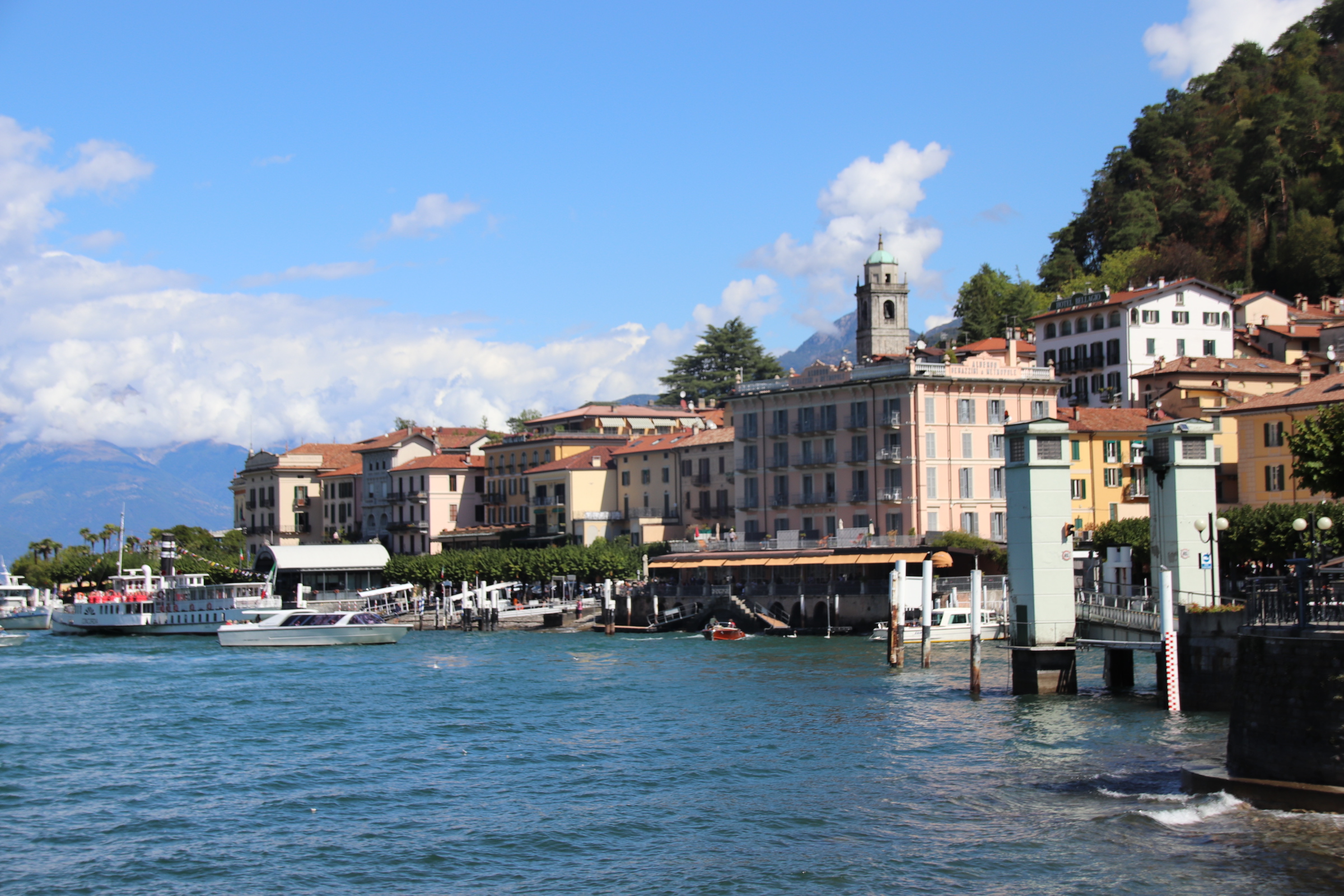
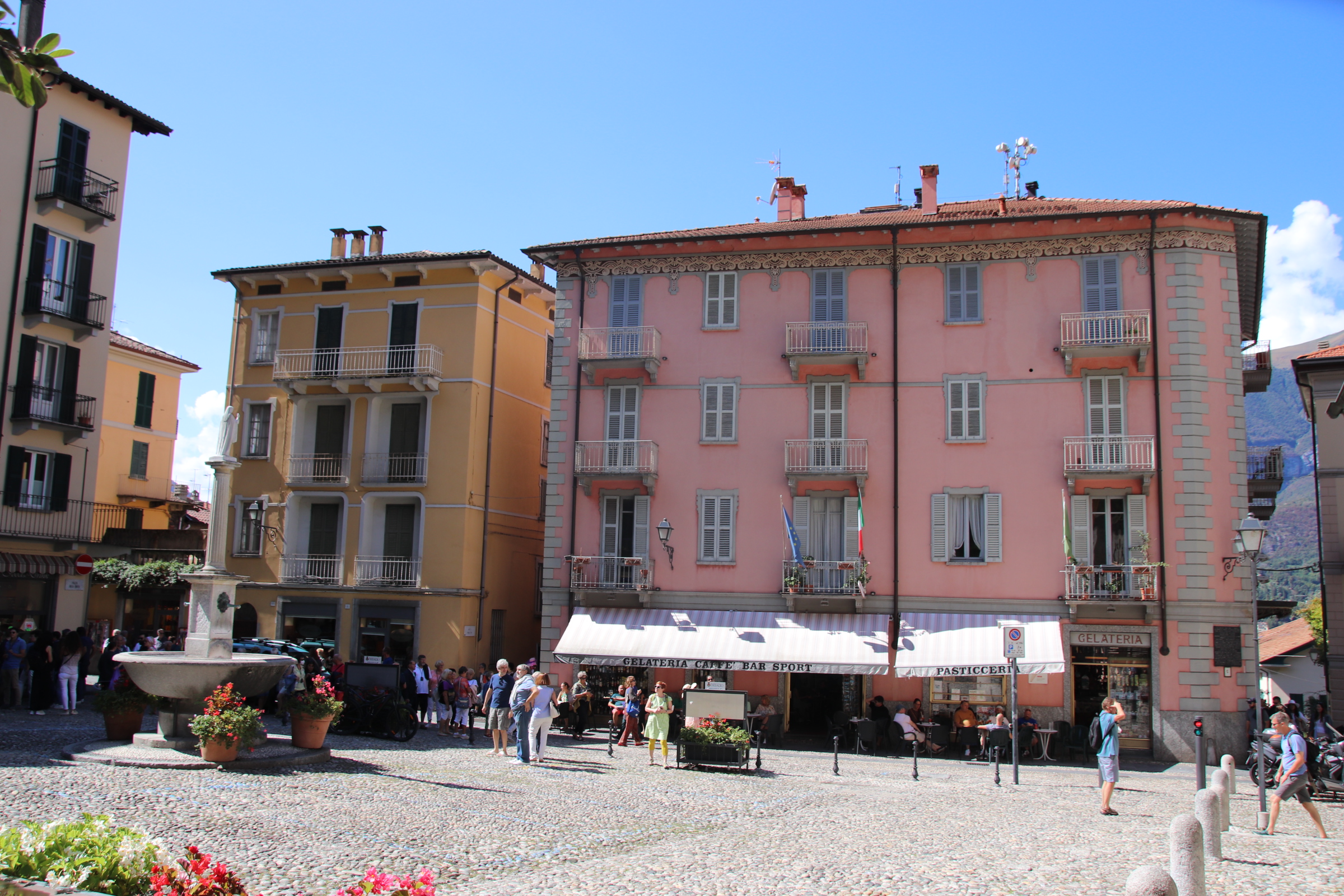
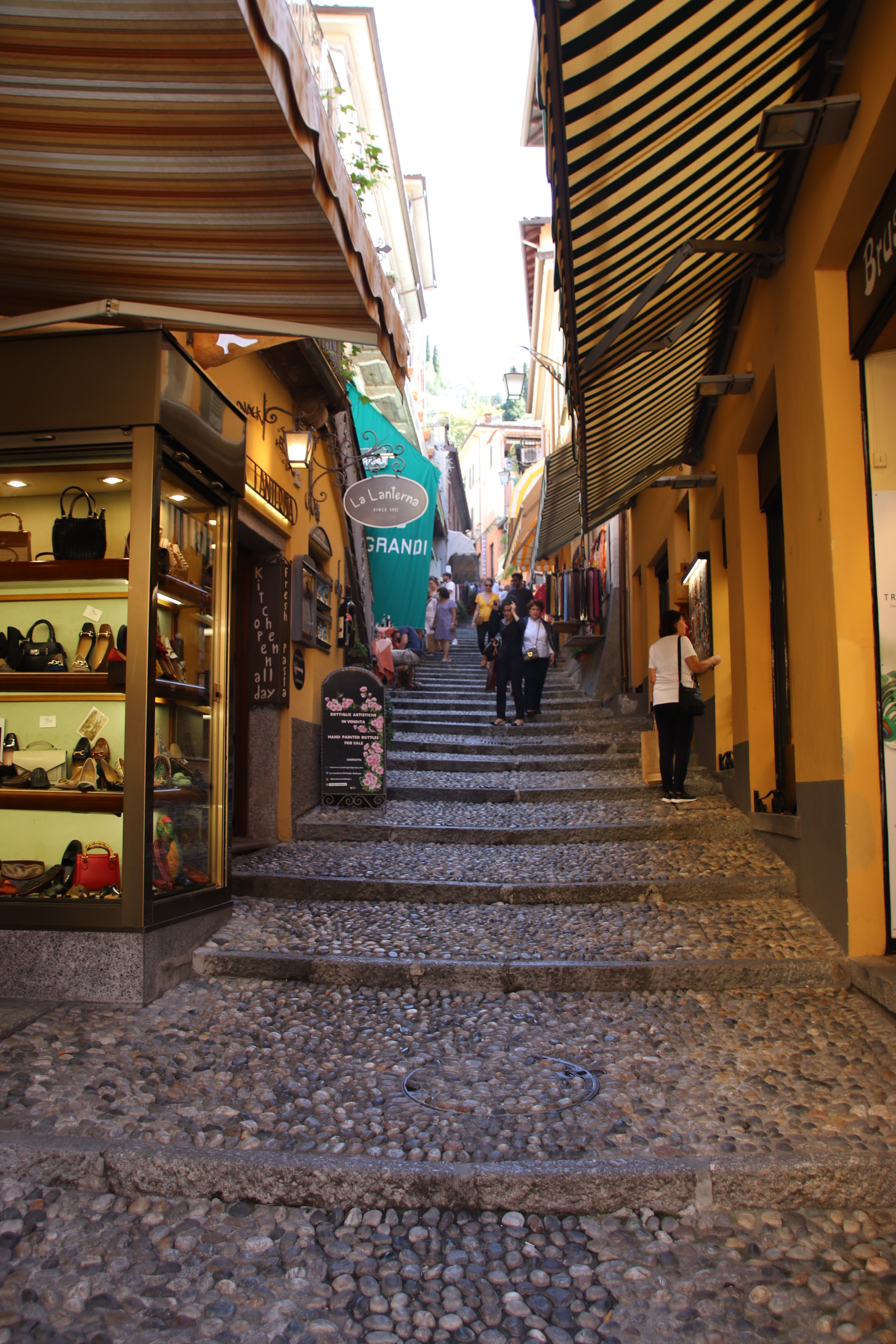
    Bellagio is stunningly beautiful with high end cafes, high end hotels, high end eateries, high end villas & gardens & begonia-forested planters & cobbled steps.

    Everyone seems to be wearing high end labels, dressed to kill and impress with high heels and swinging carrier bags, elegant suits & slits showing off beautifully tanned & toned flesh. Visitors compete in short, shorter shorts, flimsy lacey numbers, slippy T shirts & floppy flips and fail at every level. Boatloads of loud, large (in number and, mostly, in size), presumably affluent, Americans troop onto jetties and are led off to be fed prosciutto & melon, pasta and an Italian dessert and to purchase some expensive local tat. Other visitors wander the streets, savouring wine or lunch or cake, or all of them, before joining a melee of a queue at the stazione to somewhere else on the lake.


    The place is hugely picturesque and photogenic, especially looking out across the lake under a blue, blue sky, taking in the varnished launches, the crossing ferries, a steam boat, the water taxis and small car ferries to appreciate the grand buildings and villages backed by mountain peaks and jutting headlands on the other side.

    Lago di Mezzola is a wetland area at the top of the lake, best reached by car. One side can be accessed before the bridge crossing a narrow channel of mountain water and the other by using the bridge and taking the road to Switzerland.

    There is a settlement on each bank composed of old fishing dwellings and holiday accommodation – chalets, caravans, apartments.

    There is nothing grand or imposing, except maybe the proximity of the mountains ahead – just peace, calm, contentment.


    This is hiking territory plus off road tracks for cycling. No-one is in a hurry. Indeed the campsite opened up its cafe specially to serve drinks. The water side is serenely peaceful, taking breath away with a hush of leaves, its sleepy solitude, balancing trout and softly-gliding waterbirds.


    Bellagio or Lago di Mezzola?
    Groin or head? These days, the head always wins for me!

    Messing about on Lake Como

    Lake Como is shaped like a tall armless runner, striding out across the foothills of the Alps. The ordinary village of Domeso lies on the west bank near the top of the body of the lake. To reach it requires a drive up the west bank of the left leg.

    The differences with Lake Maggiore are quite striking. Como is narrower. The cotton wool clumps of bulging woods still close down along the water in the same way, but they reach up way higher giving way to proper, rocked mountains behind, like the teeth of lines of saws backed with layers upon layers of rising peaks and ridges.

    Settlements do not really spread up into the foothills so much but wedge themselves against the lake, presenting the broad face of a triangle to the water and running away up narrowing, high valleys between folding layers of land.


    Driving alongside the lake is just beautiful, looking across calm waters dotted with the wakes of criss crossing ferries or private launches to distanced villages clinging tightly onto the edge. The road narrows to a single shaded passage between high rendered facades as it passes through old villages which open to reveal a centre of restaurants and bars around a simple harbour before entering yet another spread of uninspiring suburban landscape. The original road follows every promontory and bay between villages but progress has come to the aid of the weary traveller by cutting through the sticky-out-bits in dark, badly lit tunnels filled with the trapped fumes of exhausting traffic. It takes time off the journey but adds nothing to the quality of the journey.

    The more opulent resorts with their majestic hotels, grand palaces & galleries, with their mahogany launches & fine-dining restaurants and their uniformed staff and status Ferrari’s, tend to be situated at the southern end of the lake within easy access of the Milanese wealthy.


    Tremezzo is a strip of classy real estate near the groin area of our figure.

    D


    Menaggio is a bustling resort a few villages up. Bustling but still calm, genteel & sophisticated.

    Where is George Clooney’s place?
    Exploring the lakeside, whether it’s the classy spots or the more mundane, suburban sprawl around the old fishing settlements, is best done on the ferries or by bus – the C10 route. The advantage with a car is you can stop in any village or roadside hotel/bar/restaurant you want, the disadvantage is the gamble you take with finding a parking space.

    Taking the 200 ferry up Lake Maggiore to Locarno

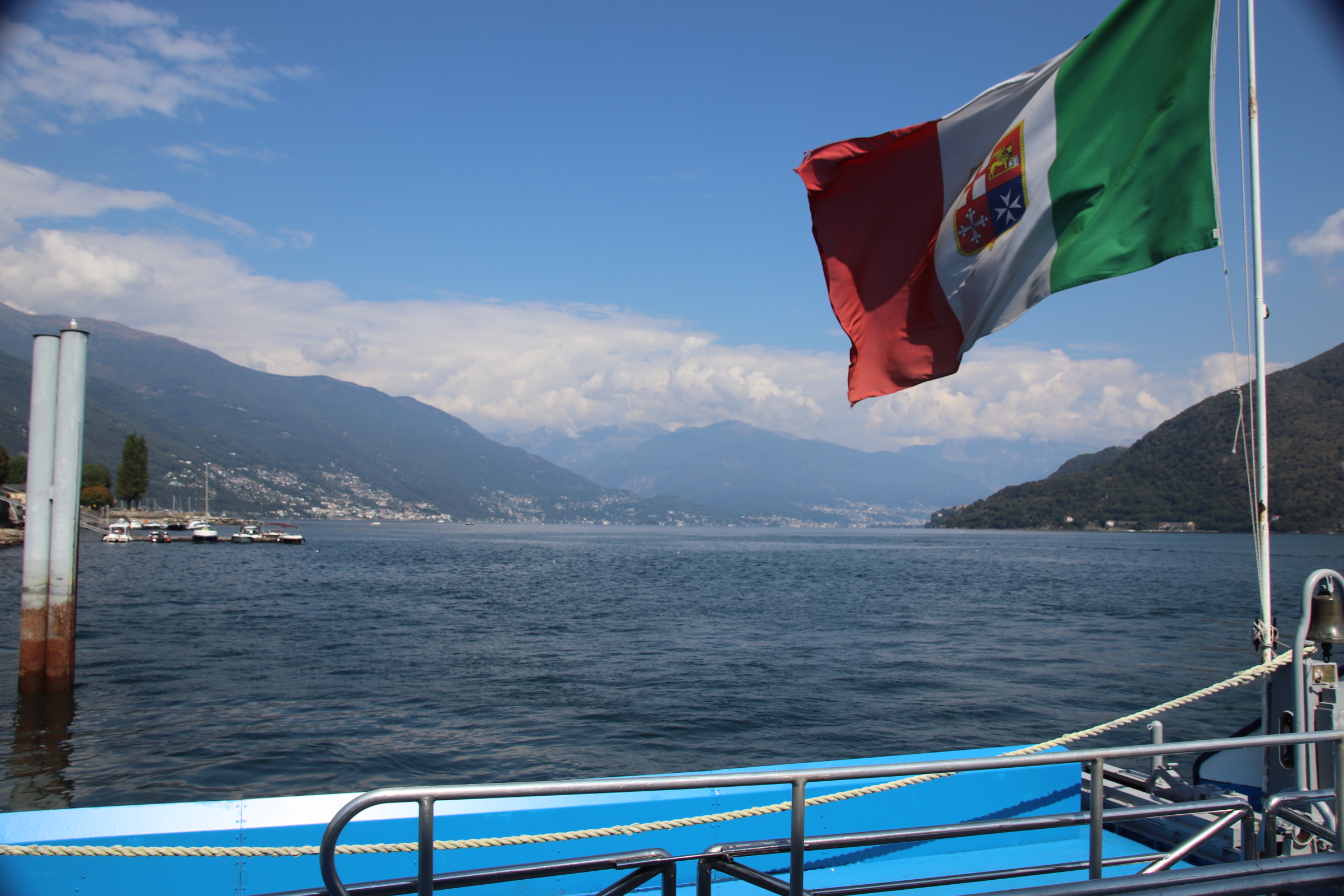
    This is a real time blog. The engines of the 208 steamer service from Stresa to Locarno, at the top of Lake Maggiore in Switzerland, are throbbing beneath my red plastic chair on the low back deck where I can capture a few rays. Time 5.30pm. This is the return leg. Came up this morning having captured a position on the top deck for a great view of the lakeside and the backdrop of rising Alpine peaks and cloud formations that take the imagination on a journey of dreams through a suggestion of gorges and hazy ravines, overwhelmed by cotton wool ghosts & ghouls.


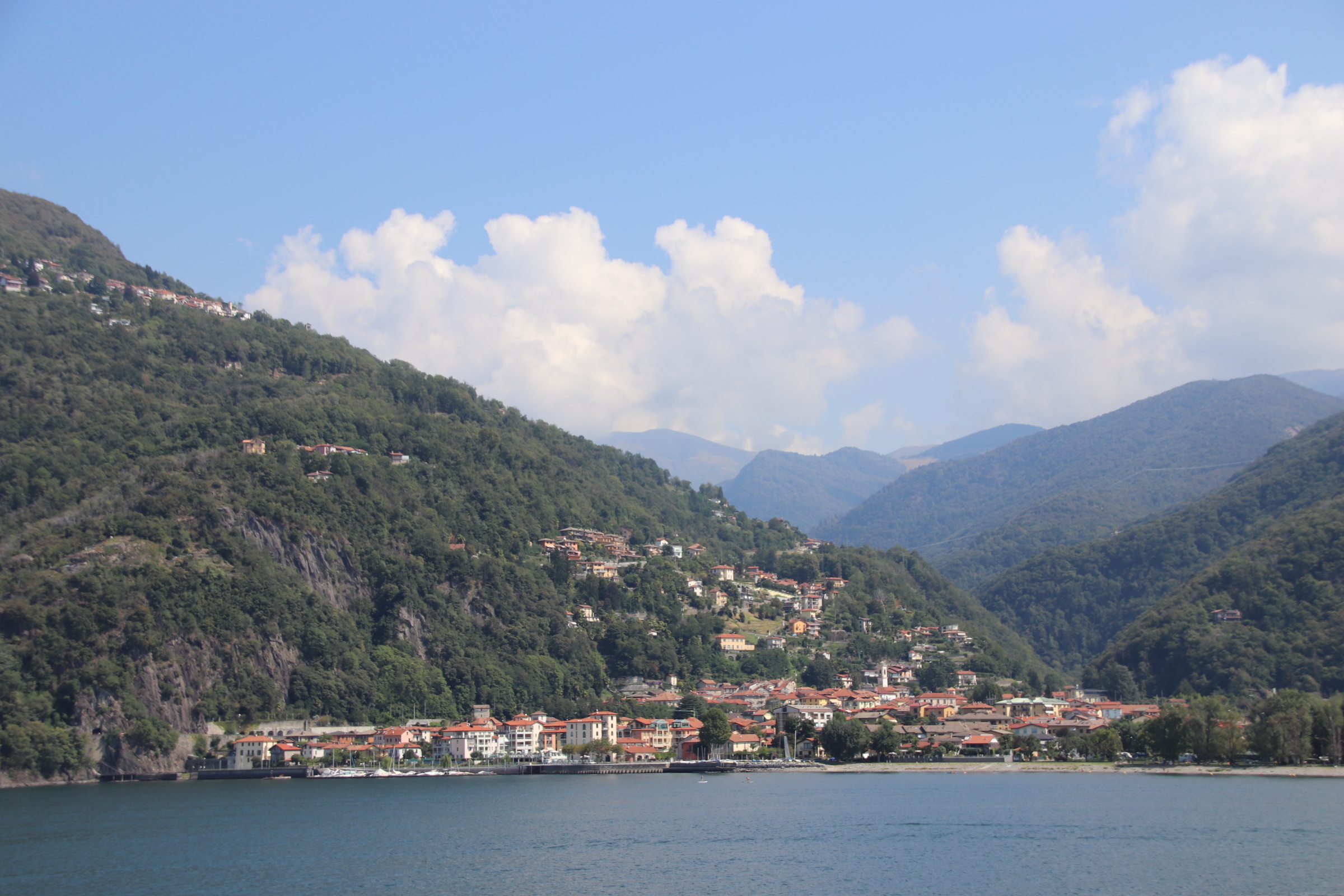
    Looking over to the starboard bank (I think), the green-wooded bubbles of foliage and forest cover the hills and soft peaks that lead away to distant mountains. Dwellings, individually or in clusters large & small, salt & pepper both banks, faithfully following the contours around the hillsides or running in zig-zags diagonally through the green-leaved fluff of the growing slopes or winding in scars like huge helter-skelters.


    Close up, little remains of the original lakeside settlements. A nucleus of cobbled streets around a proud spire of church or chapel is all that remains of past fishing communities. Firstly wealthy folk built their holiday villas at the water’s edge, then hotels & apartments went up from the centre and now modern shapes and lines dominate the hills around every hamlet & village, aiding the spread of mass tourism. In the Italian way, a grand hotel dominates a village beach with furled umbrellas & folded sunbeds for hire, thus preventing any hoipoloi, Tom, Dick or Marco from enjoying the sand.

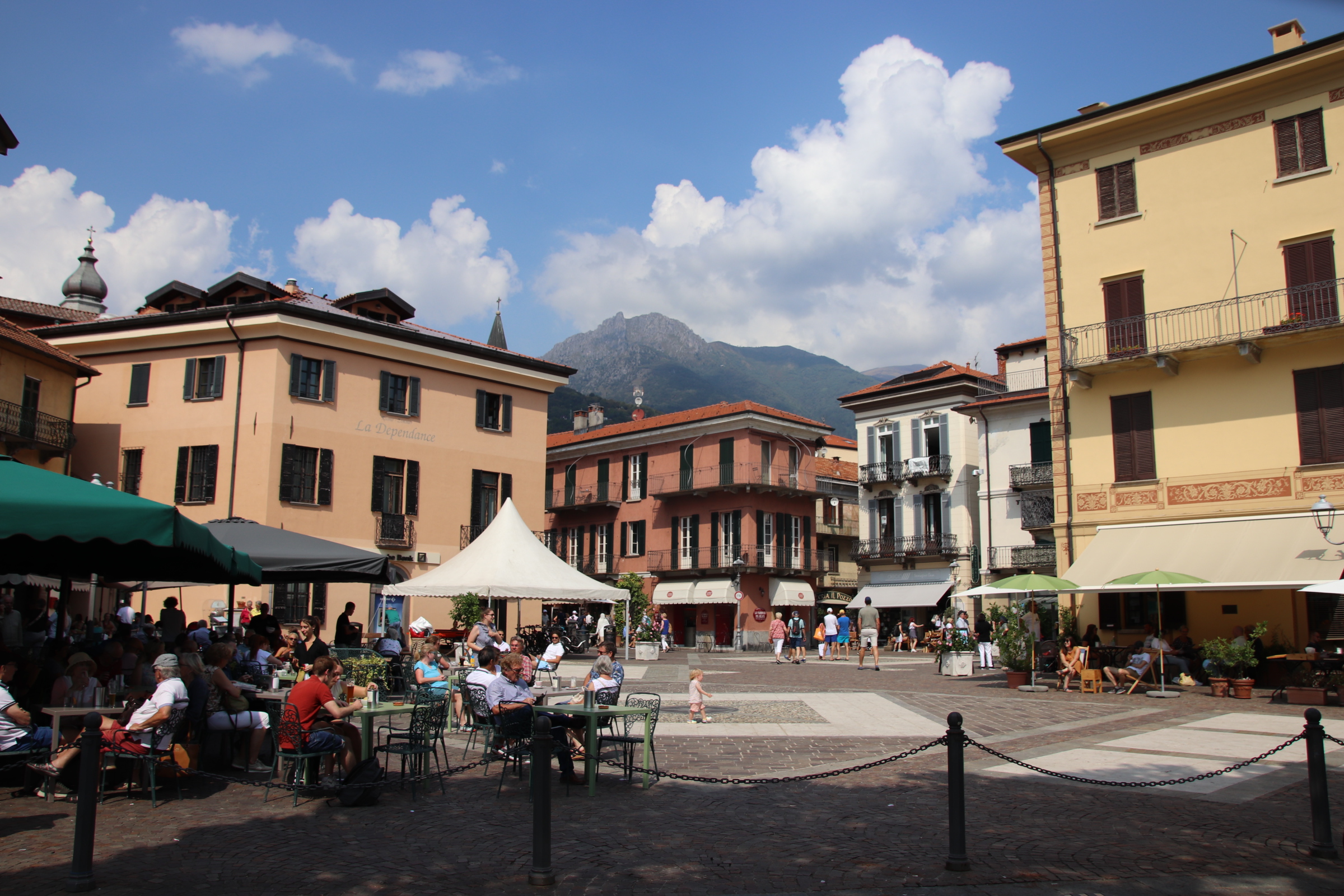
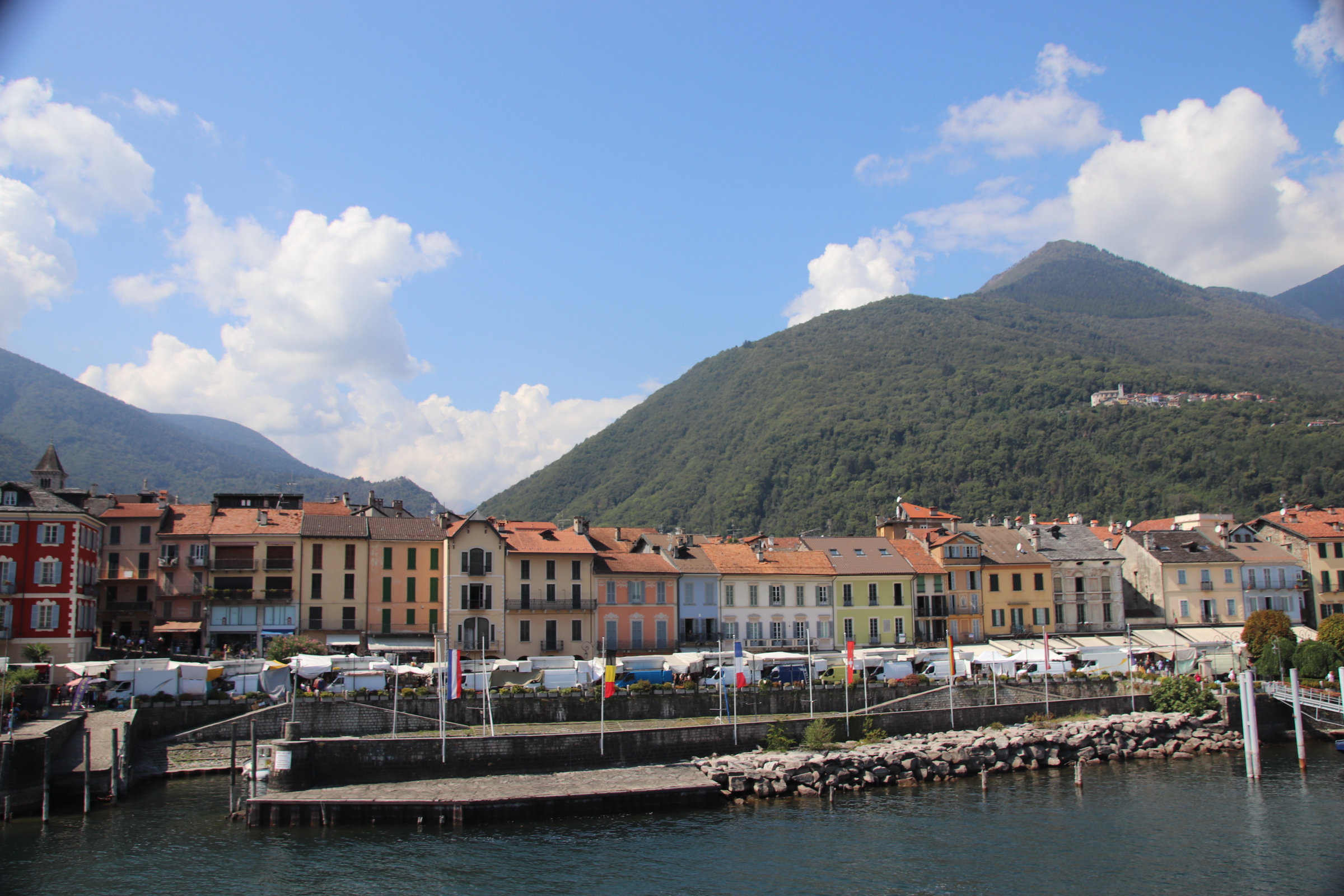
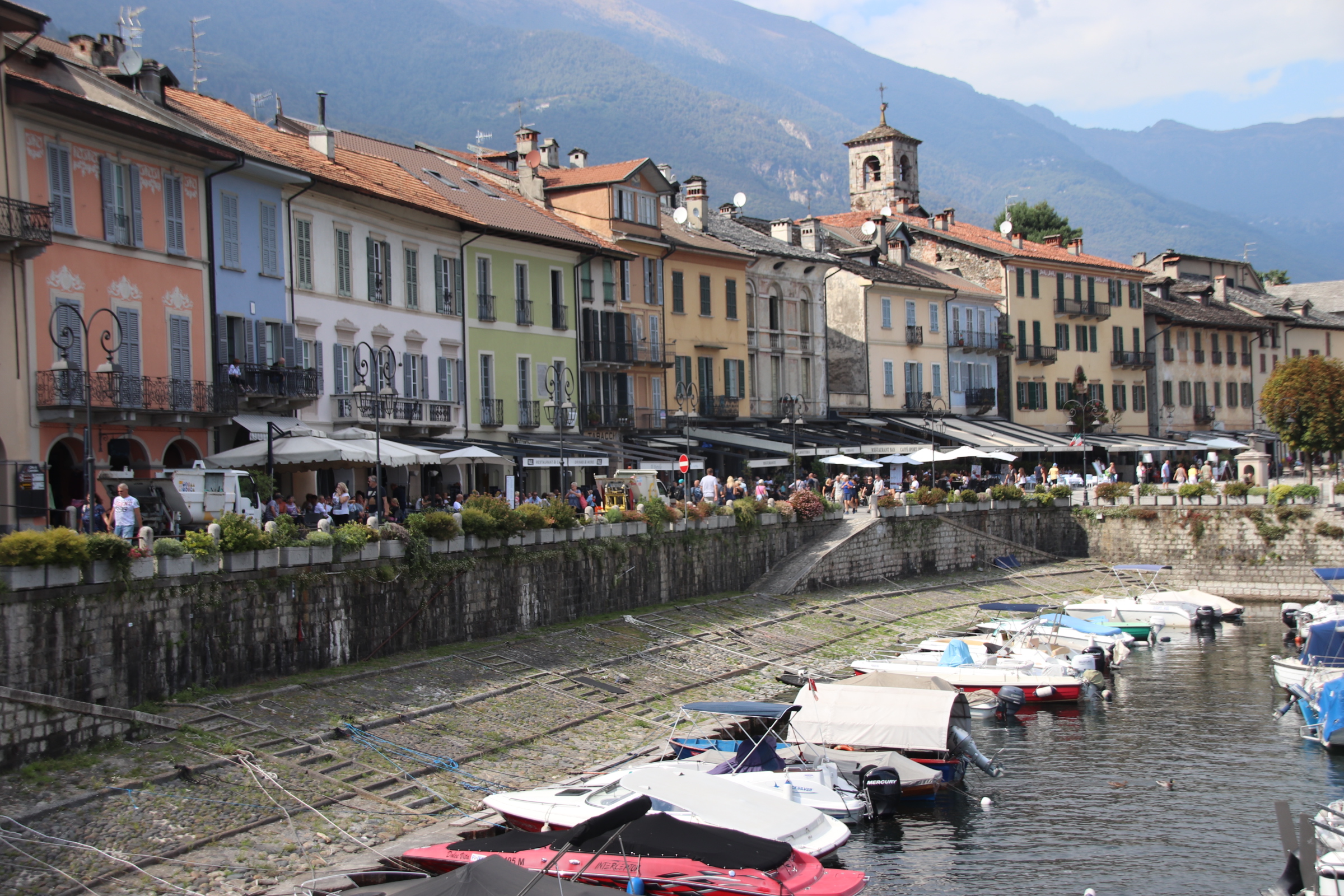
    Cannobio is an exception to all of the above. Almost the last stop before Switzerland, first impressions are not good. It’s market day and a line of white vans line the quayside, hiding magnificent buildings with tarpaulins, rails of hanging cardigans & sweaters (wool & cashmere), crates of winter socks and piles of sheets & bedding. Disembarking from the boat into this hubbub and scrum of calling traders, heated tourists, angst waiters, crying children is a real shock.

    Narrow cobbled gulleys and stepped paths lead away from the water and up into the old village.

    As the market finishes around two, it is a race out of town – to pack away stock, curl away the rain cover, and get onto the lakeside road – White Van Man Convoy. Like robots, two town cleaning vans move their way along the quay and the full glory that is the waterfront of Commodore is revealed. What do you think?

    Exploring the Italian lakes – Stresa & Lake Maggiore

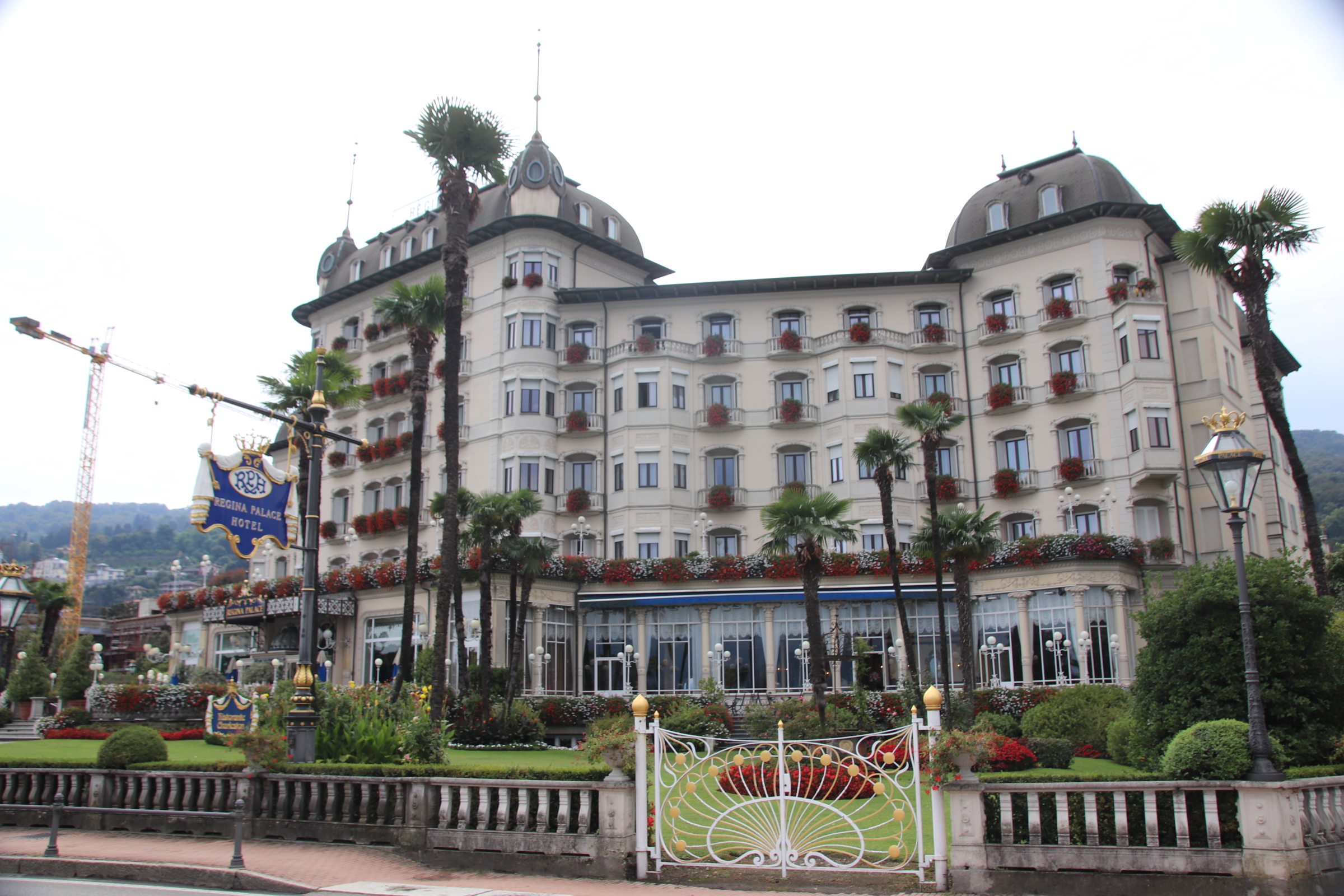
    On the western bank of Lake Maggiore, Stresa started life as a small community of fishermen & peasants. Gradually it became a piece of prime real estate for the Milanese aristocracy who built palaces and gardens on the islands that lie offshore. With the arrival of the railways, Stresa itself became a popular holiday destination for the wealthy of Milan. Today, the imposing, impressive, multi-lit hotels along the front mix it up with fading apartment blocks behind, a jumble of cobbled streets containing bars, restaurants and the usual tourist tat, all that remains of the original fishing village.


    In the winter the places closes up. In season, the hotels are filled with coachloads of slow-moving Americans, Brits & Germans, mostly grey-haired and rather loud. There is still room in the streets and the eateries for those of a younger disposition who are searching for a more local Italian experience.


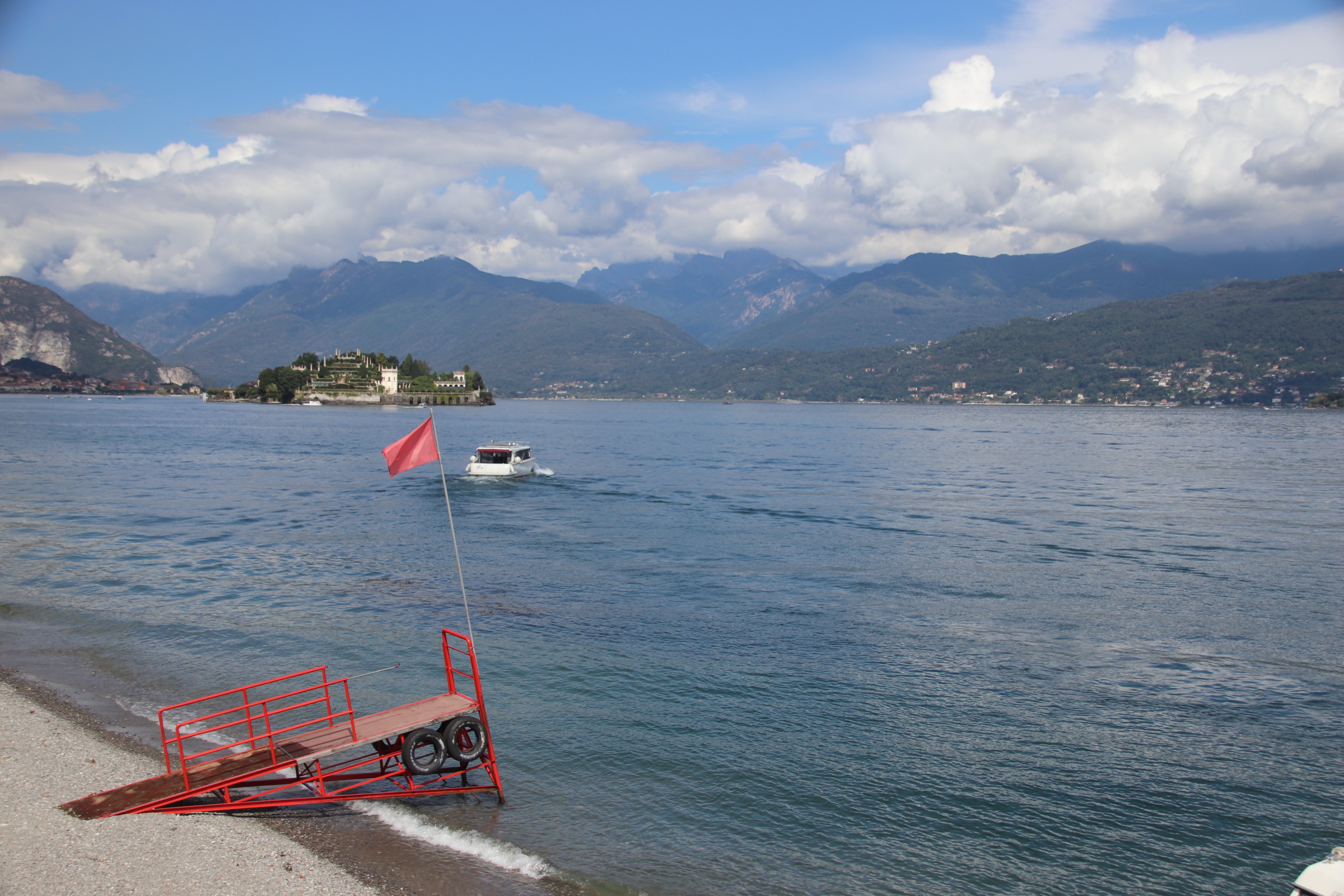
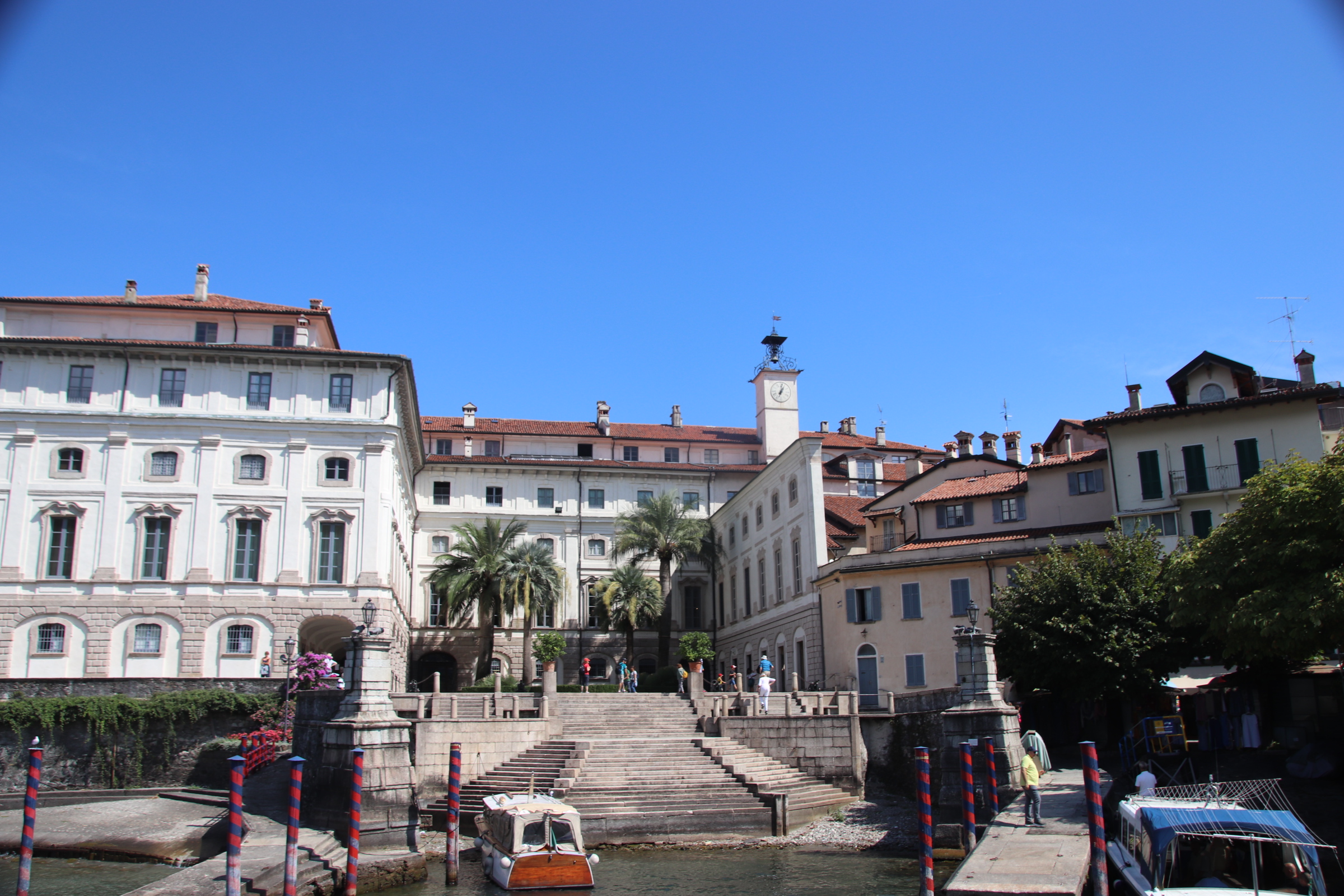
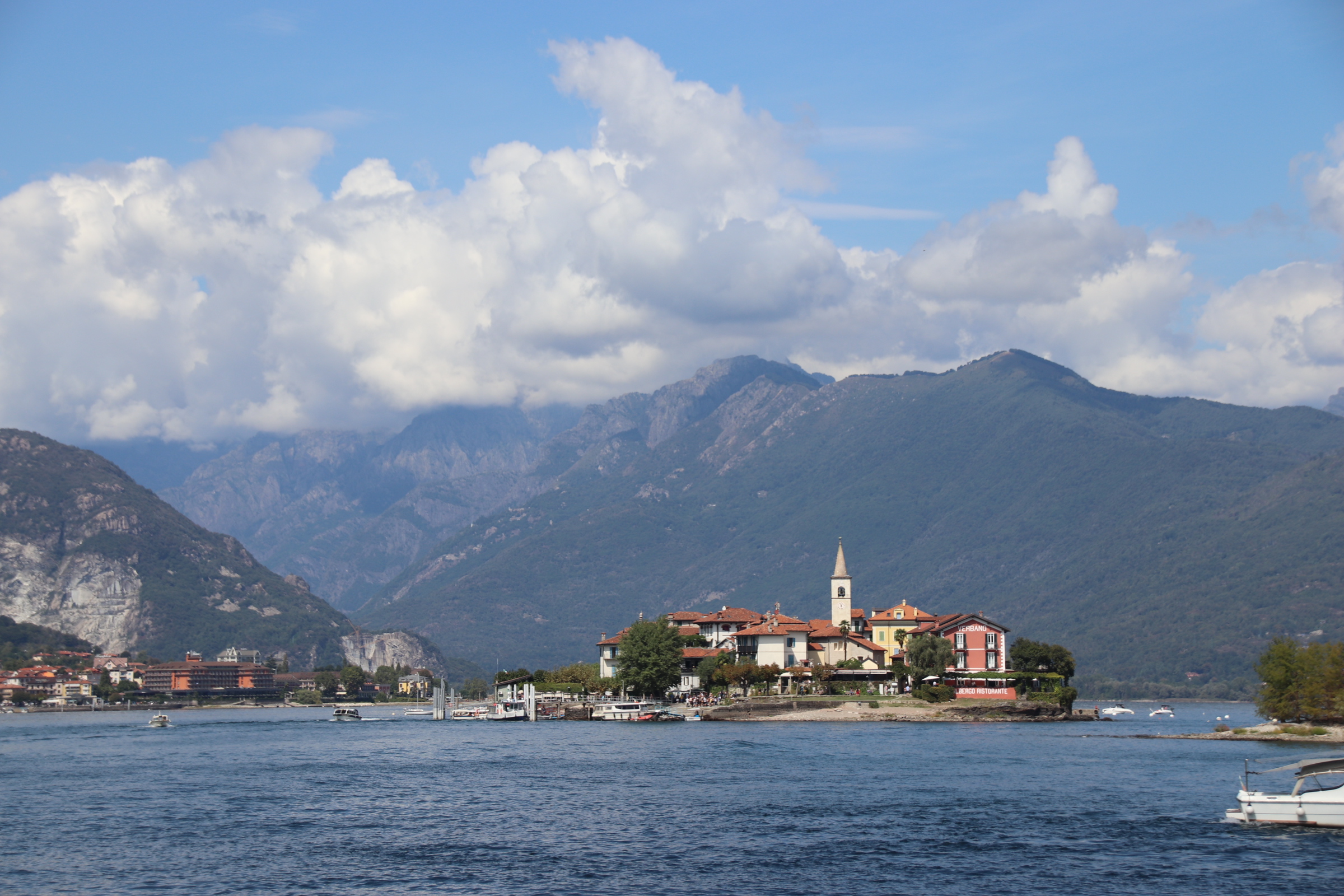
    At this end of Lake Maggiore everyone has to take a tour of the islands. In the 16th century the Borromeos, members of Milan’s aristocracy, bought land here and built palaces on the islands of Bella and Madre. Private tours to visit the grand buildings and impressive gardens are available at quite a cost. Or one can take the public ferry from the centre of town for a few euros and visit them all, plus a few mainland villages, from the water.

    Isola Bella

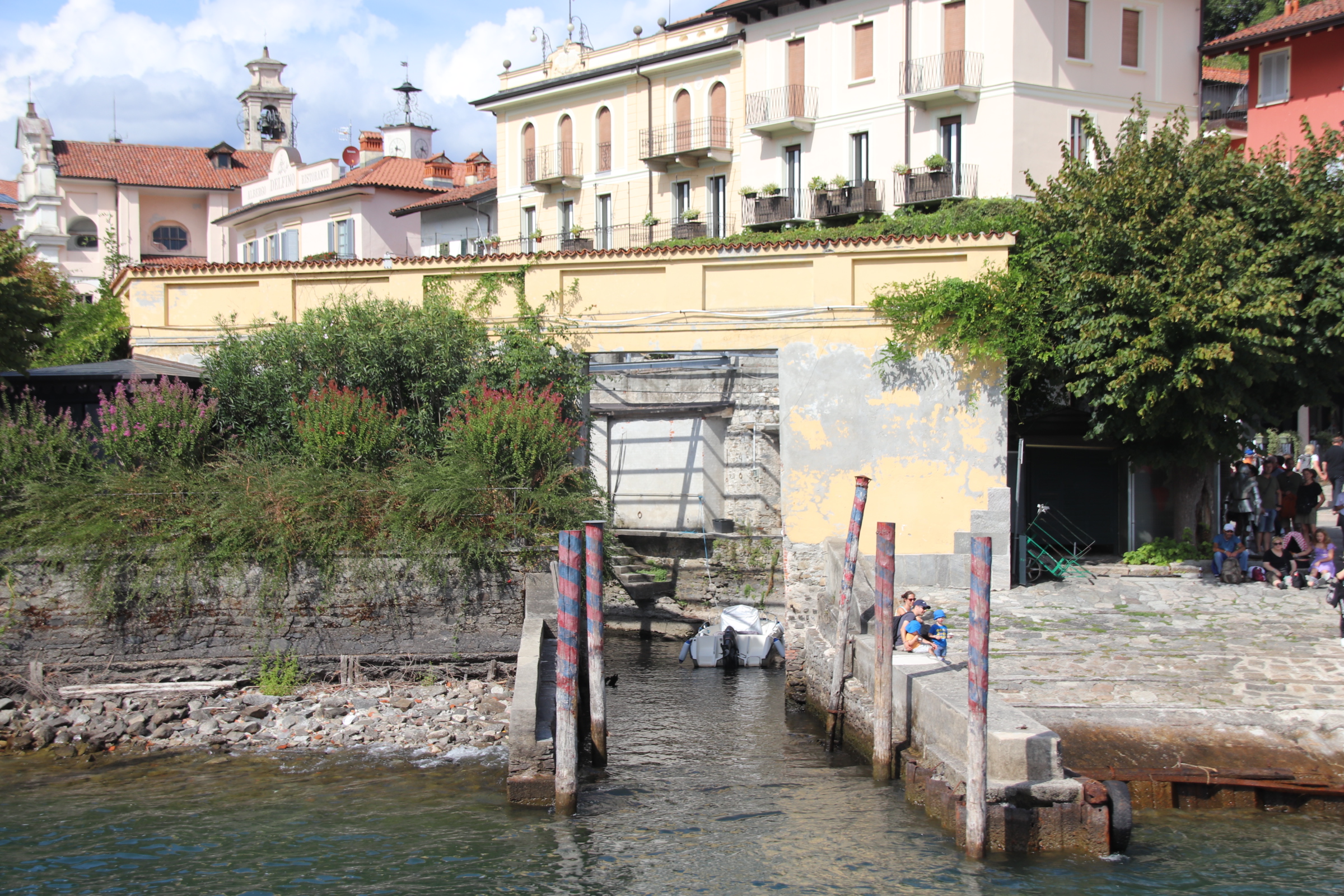
    Isola Pescatori

    Isola Madre

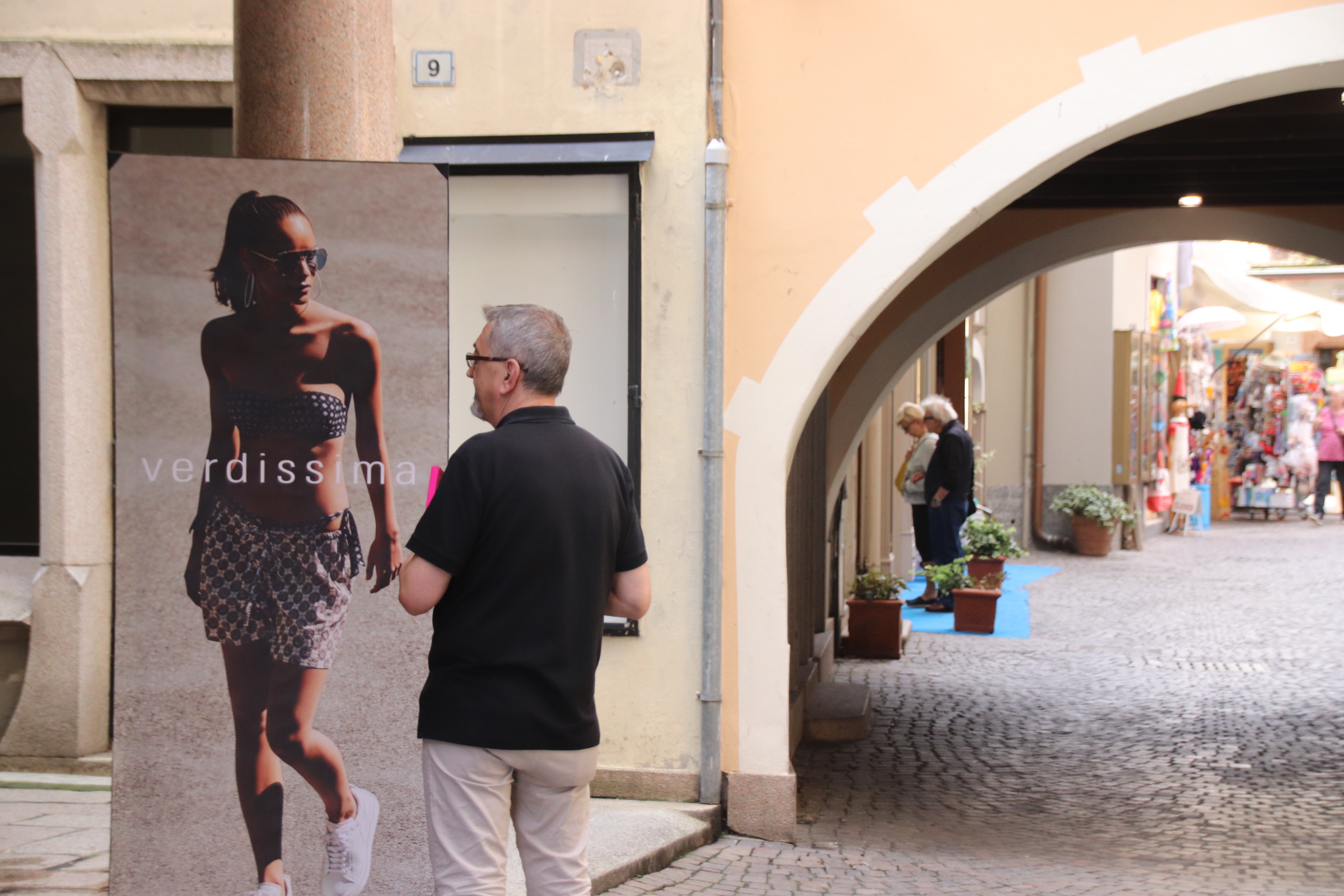
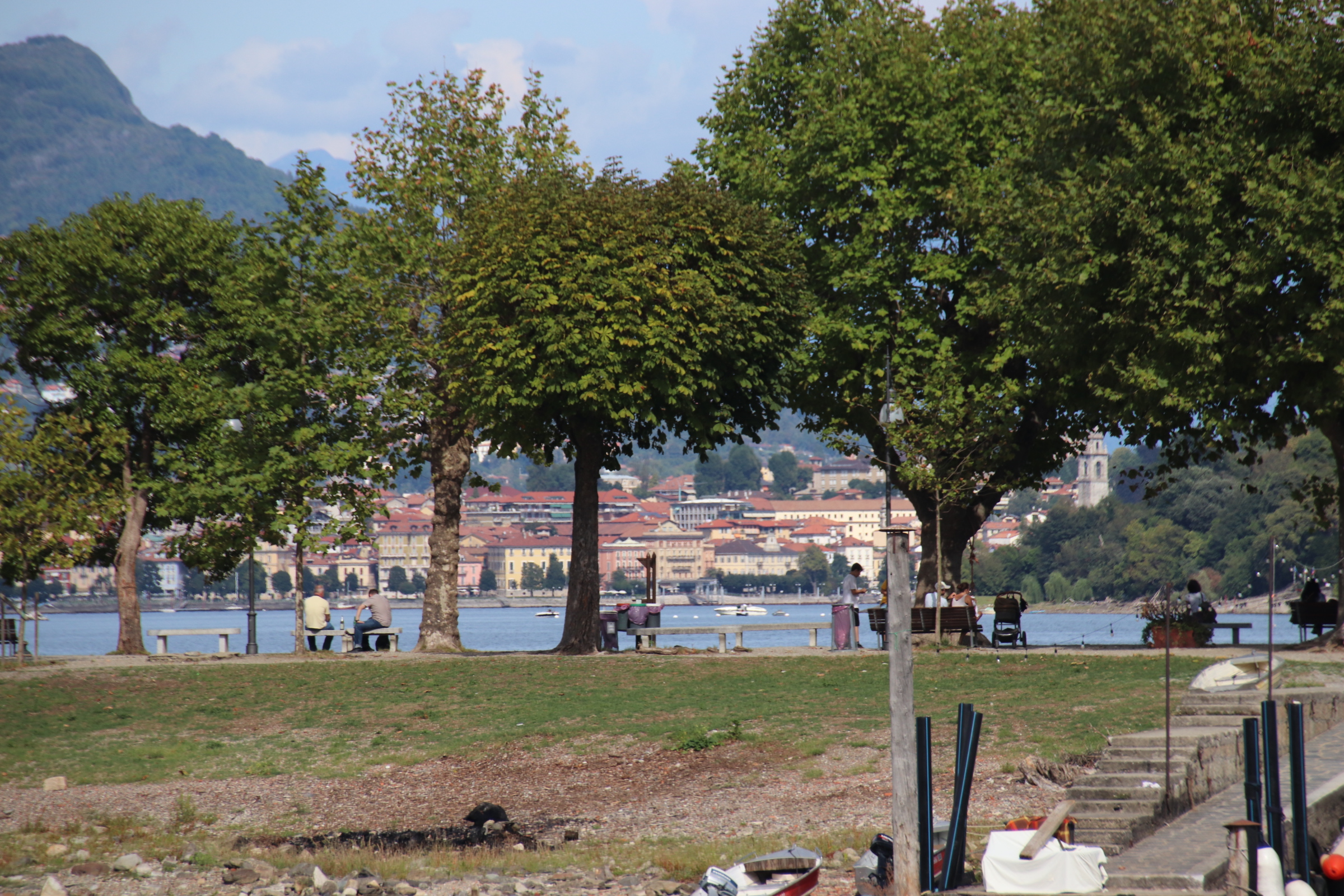
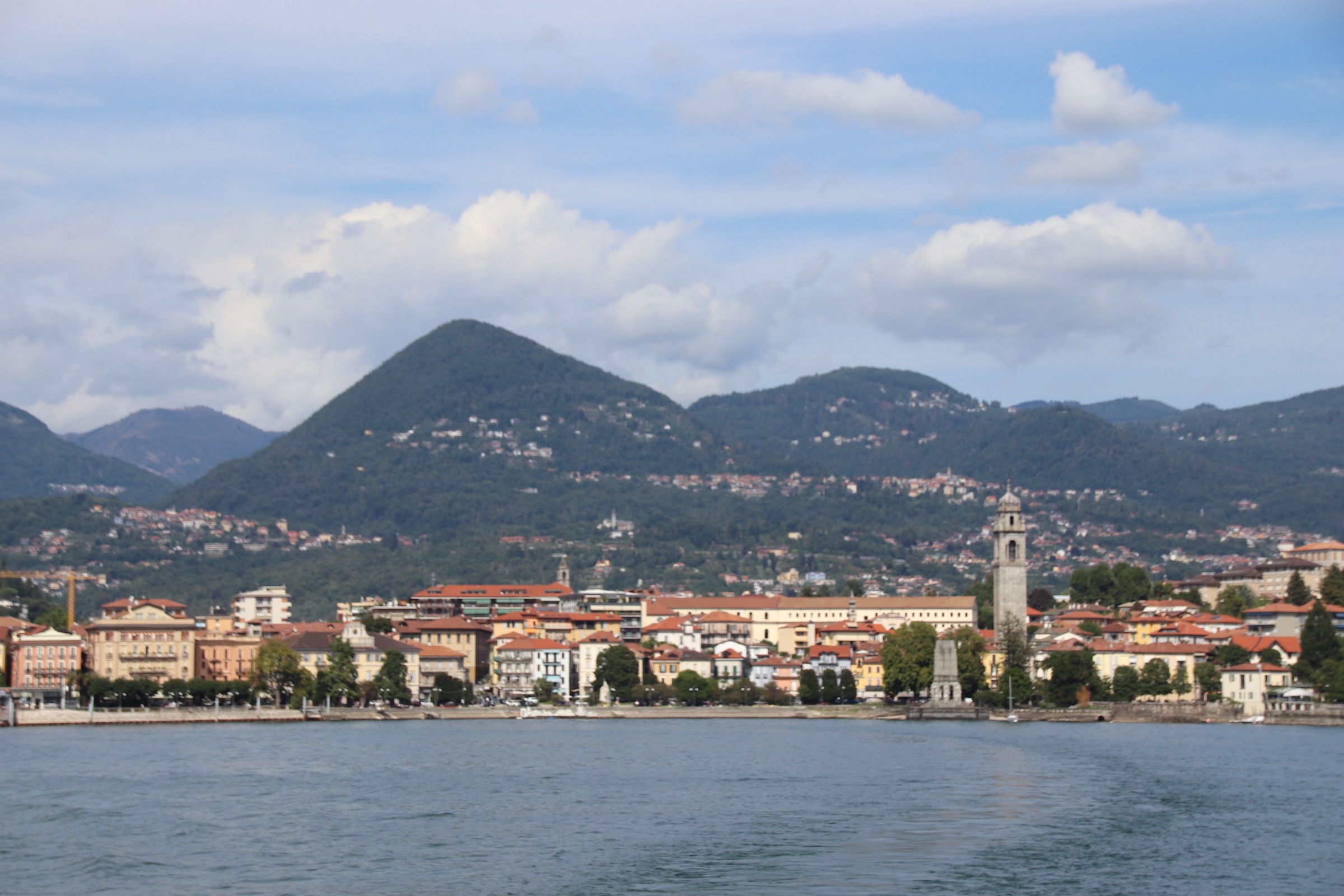
    Verbania/Pallanza

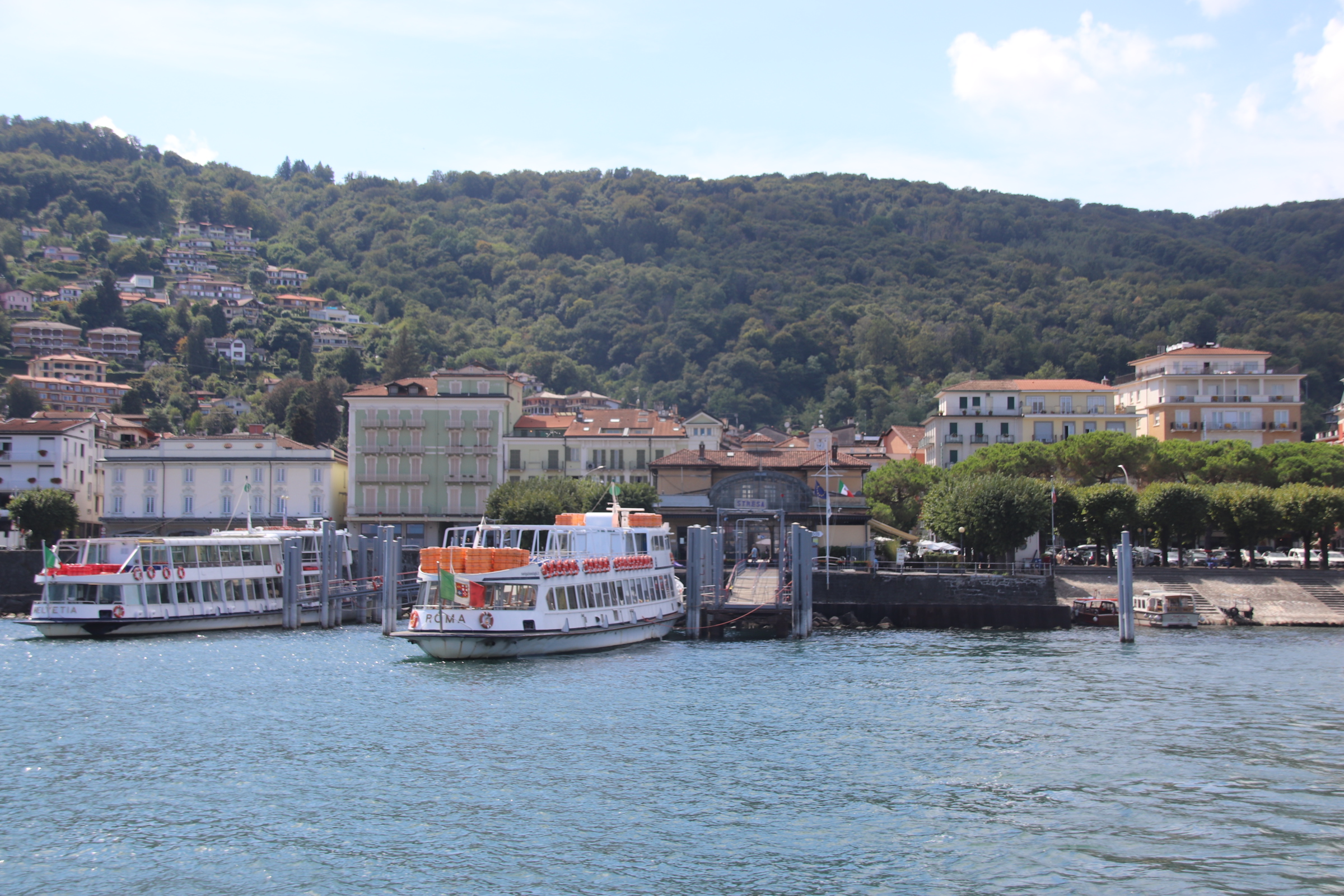
    And the ferry back to Stresa

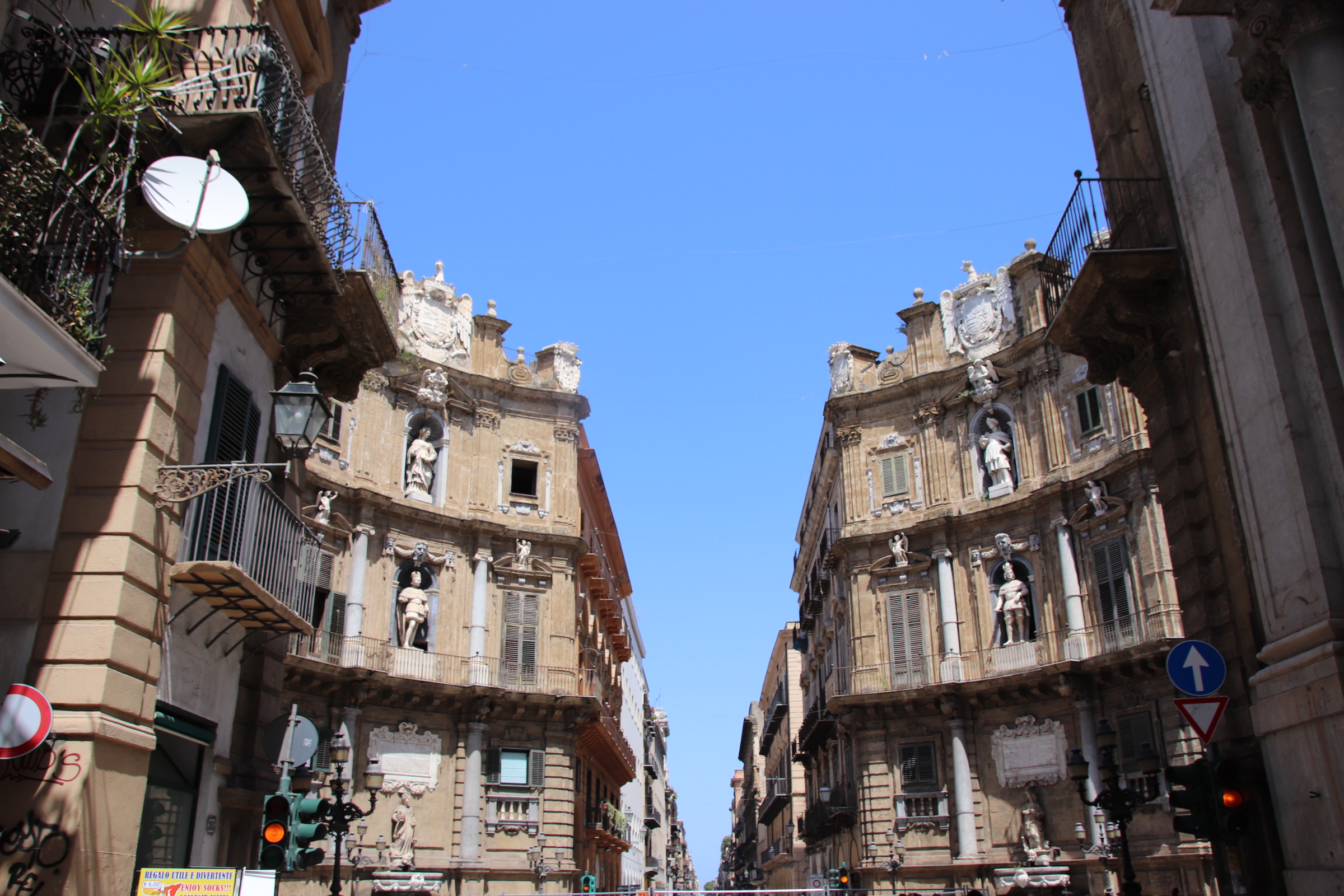
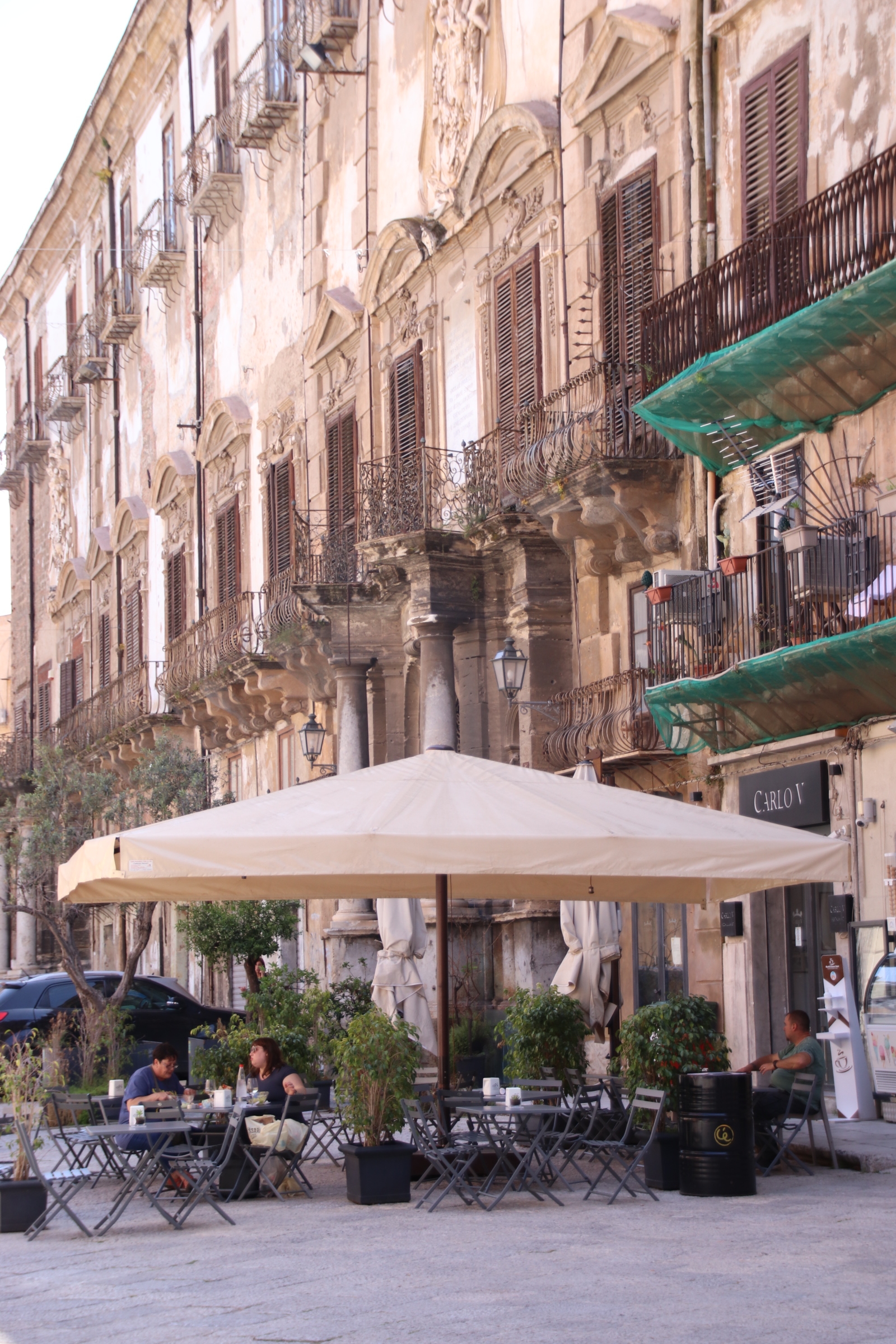
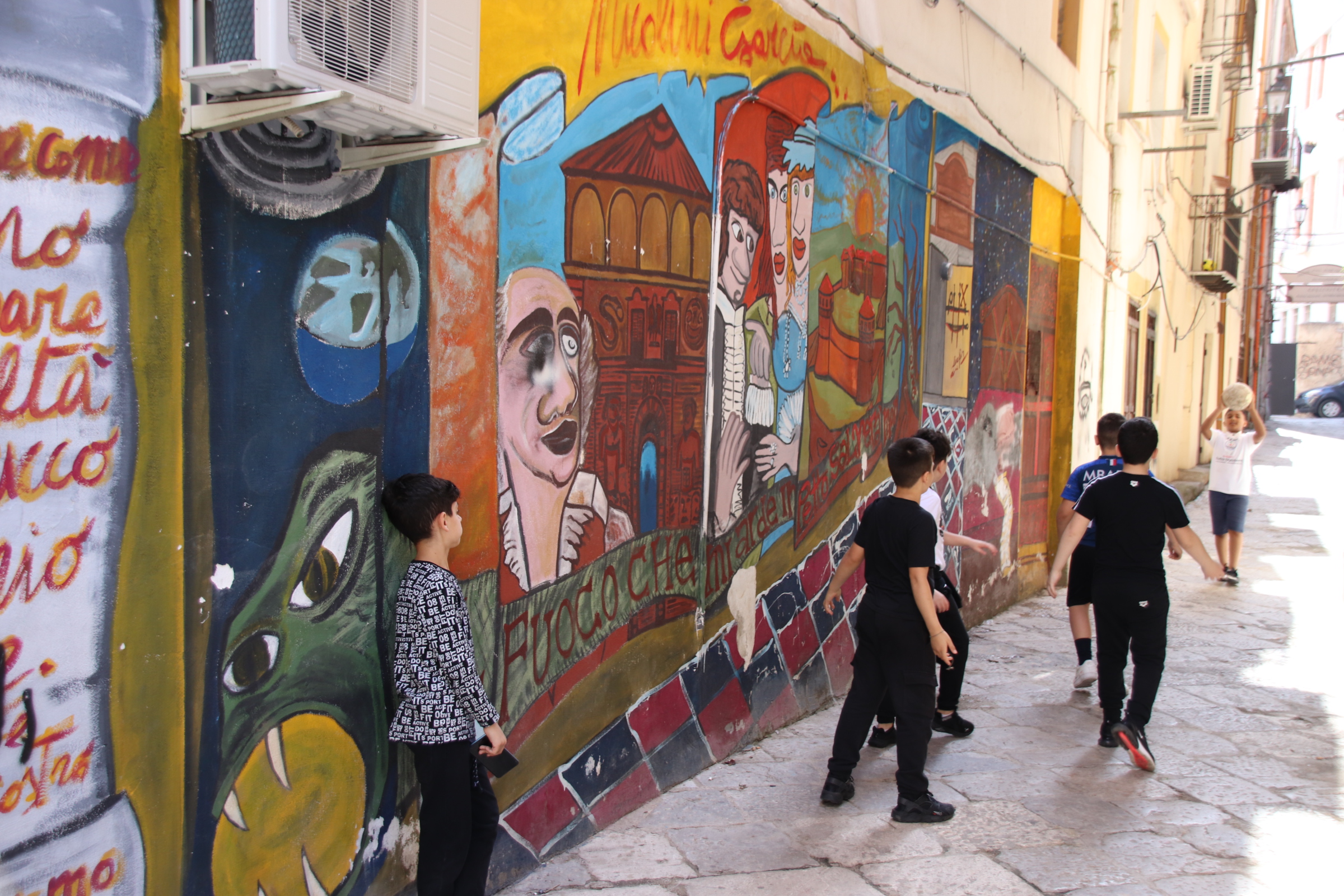
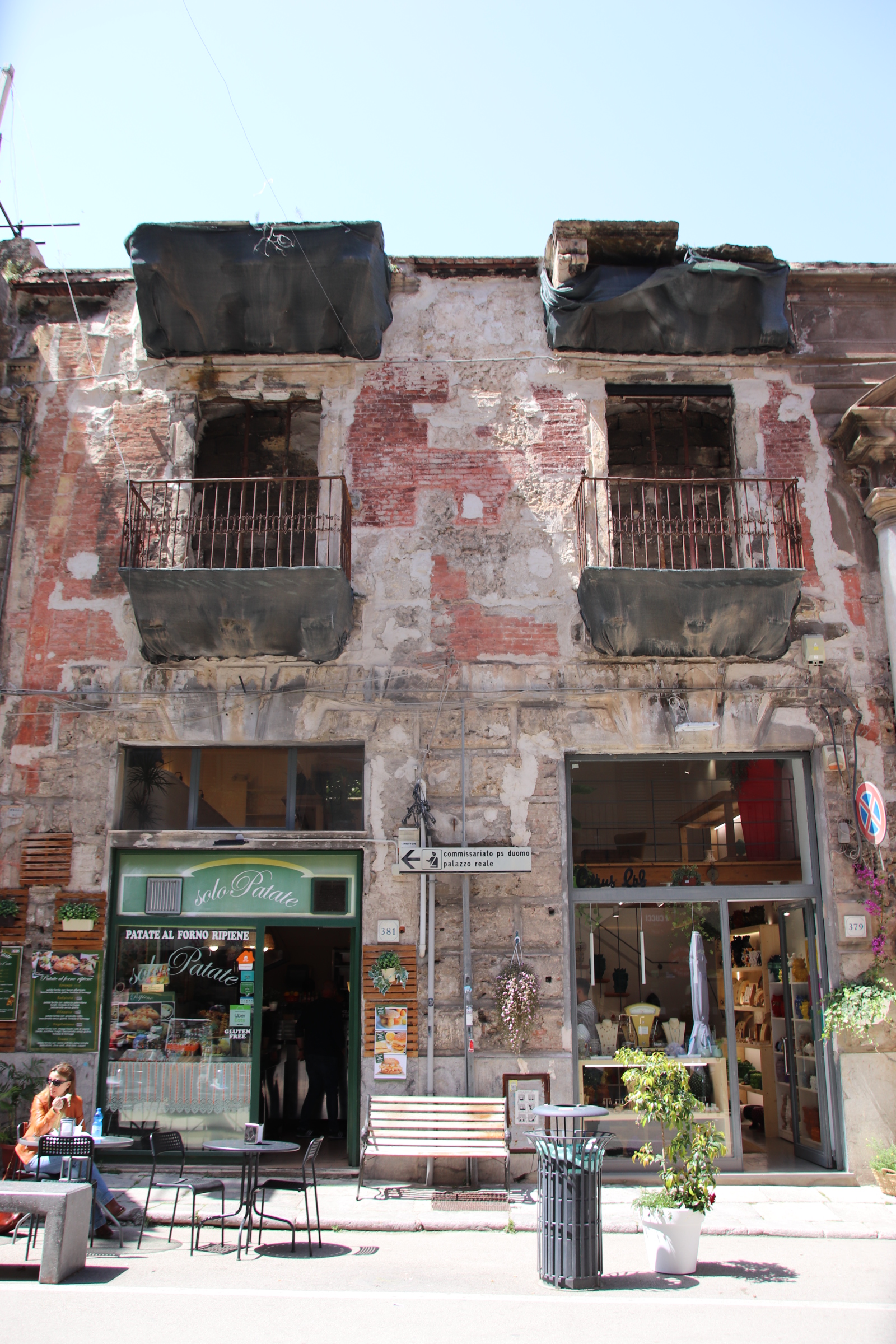
    The streets of Palermo

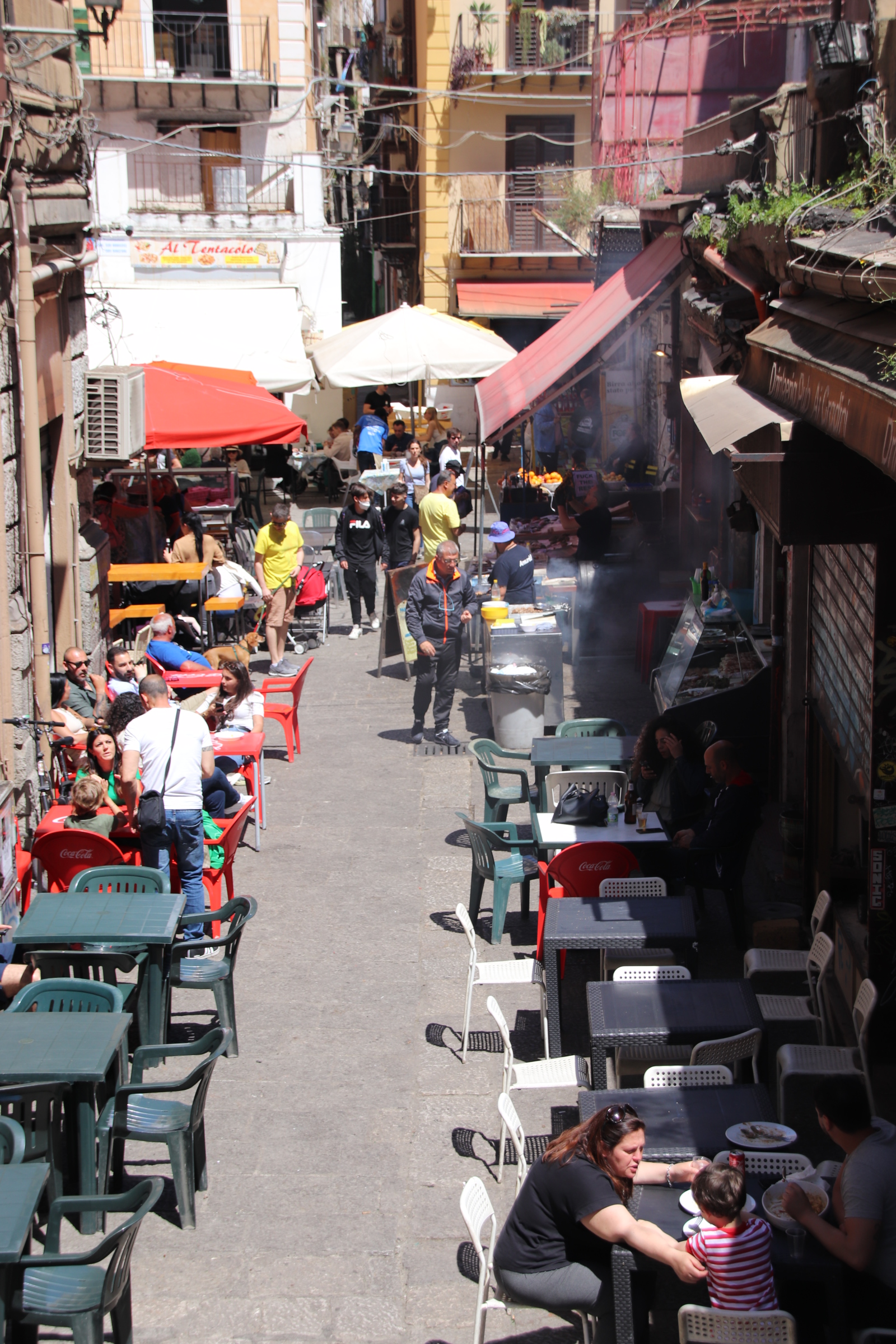
    Palermo has a different feel during the day when the sun bakes the city and the priority is to get the punters to spend money on the sights, on food and on drink and souvenirs. The main streets and piazzas are crowded with lines of hot, red-faced tourists following their leaders in slow, overheated processions moving from church to palace to chapel. Domes and steeples reach to the heavens drawing them in to their cool stone-lined interiors.

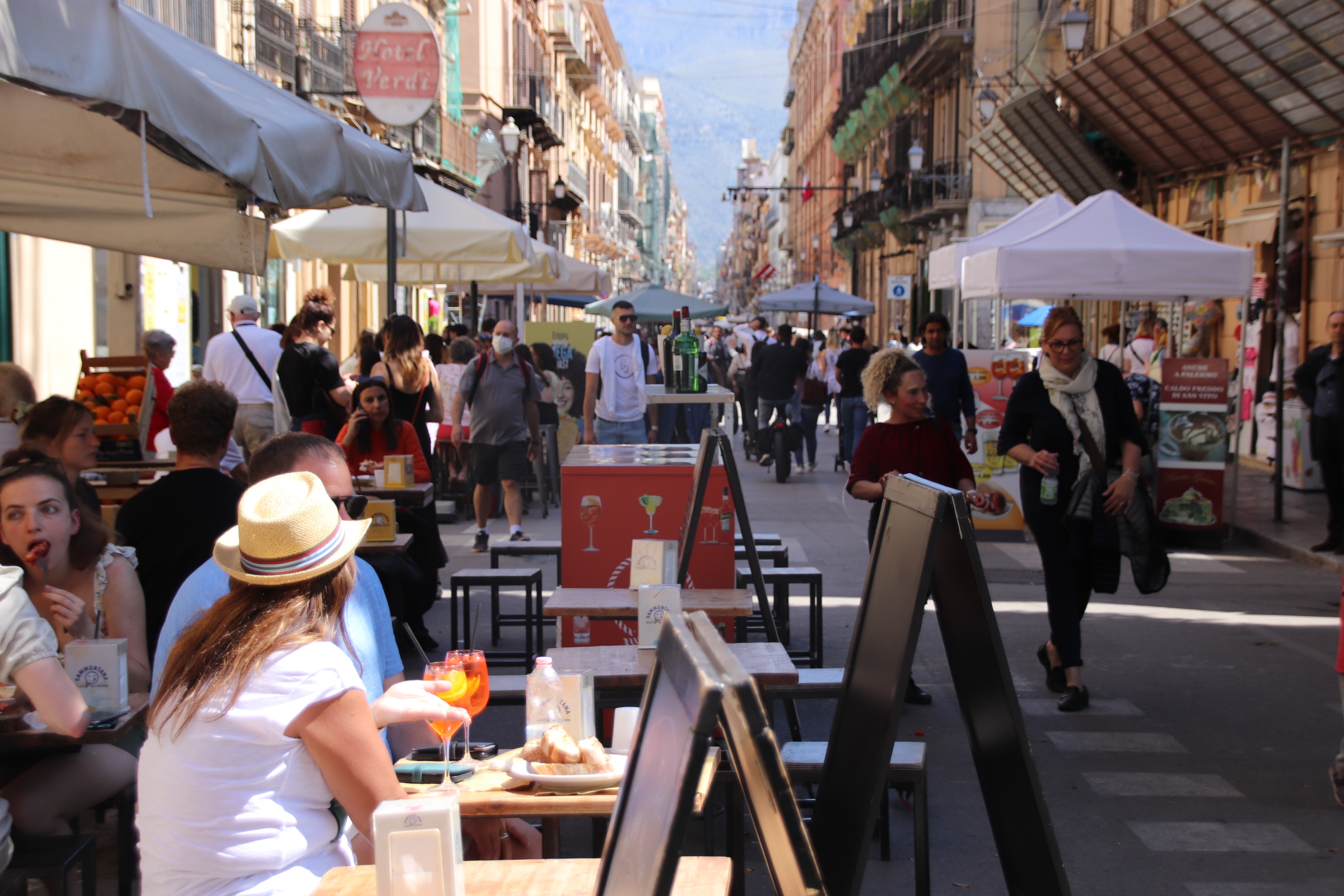
    The main thoroughfares have been pedestrianised but are still are a real tussle to negotiate. Restaurants, bars, food outlets, have placed lines of small tables which have a constant turnover of clientele. The multitude of electric scooters skimming their way through the crowds just adds to the chaos.

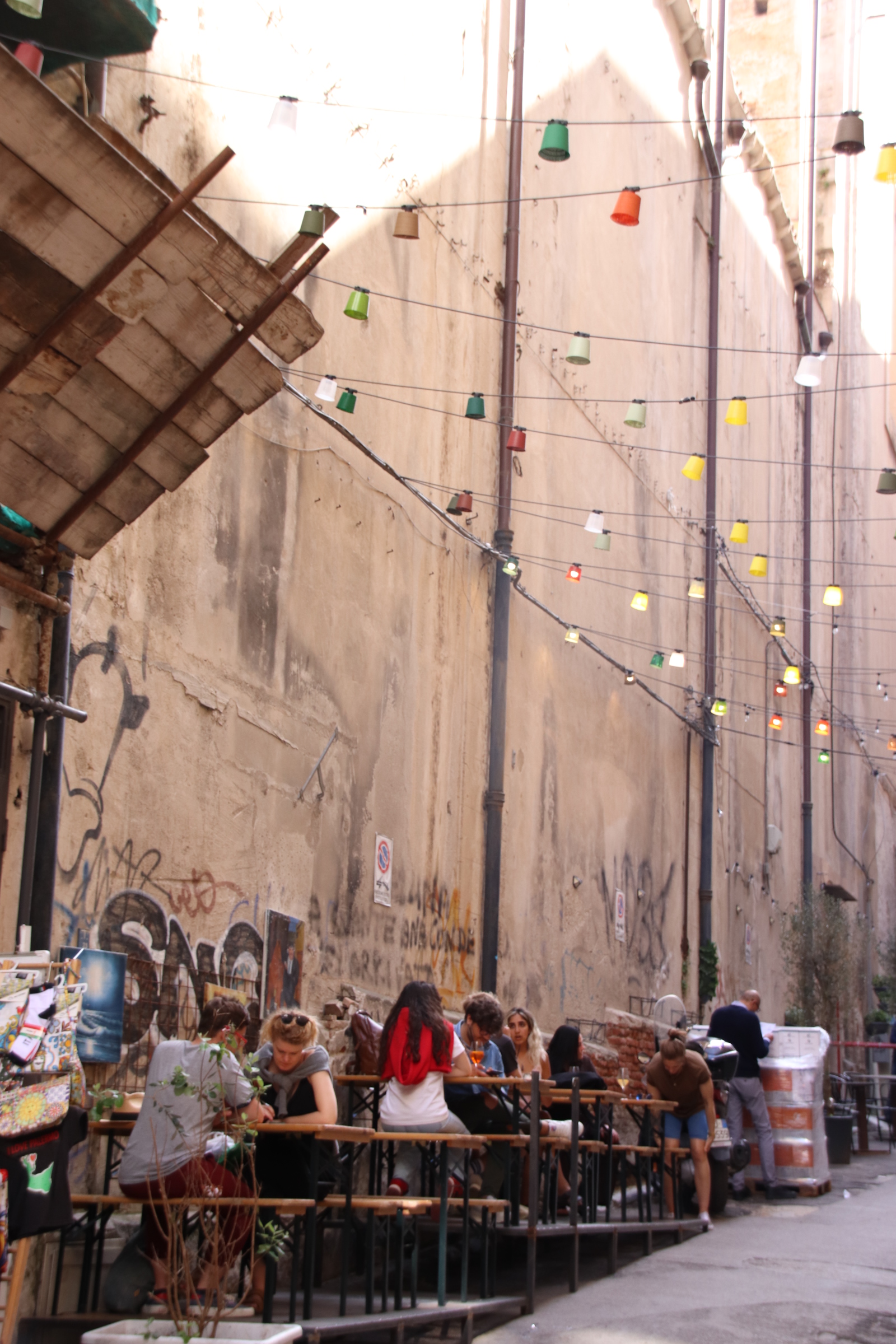
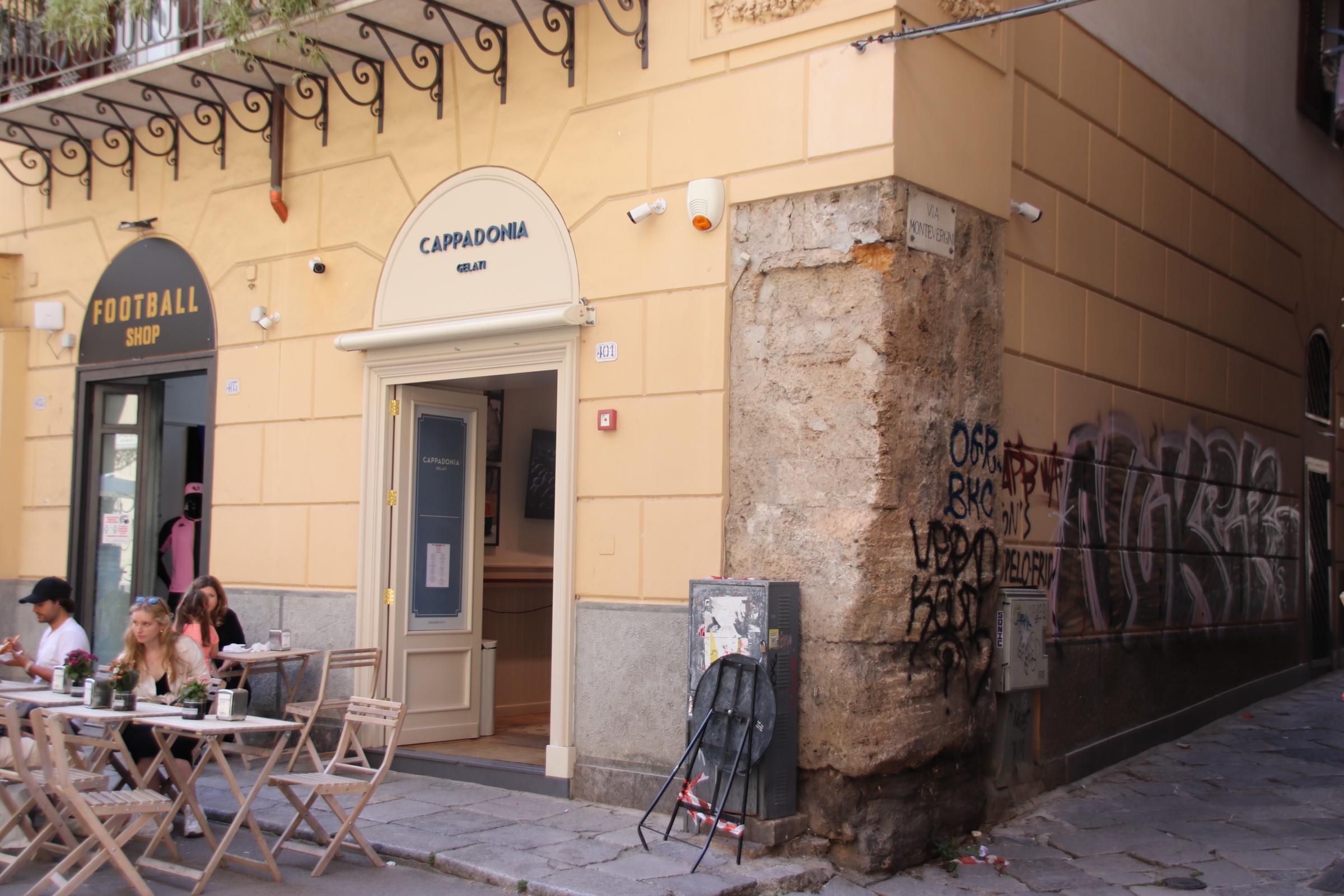
    Local life caries on up the side streets – the restaurants preparing for evening service, ‘the best gelato in Sicily’, the tourist tat shops, street markets with their grills and soups, tables balanced precariously to take account of the gradients. Umbrellas of all shapes and sizes provide shade to customers and passers-by.

    As night falls it all quietens down a bit and the world starts to relax and gets less frantic.

    As night falls the side streets and their communities come to life.

    Emptied by the heat of the day, as the air cools the shutters are raised, the tables come out, the workshops and craft houses display their wares and the streets are taken over by a youthful, partisan, diverse community.

    Laughter and love fill the air, views are exchanged, passions expressed. Wine and beer flow, tapas and street food served and the evening grabs you in a warm, comfortable embrace.

    I love it.

    Palermo’s Norman Palace and Palantine Chapel

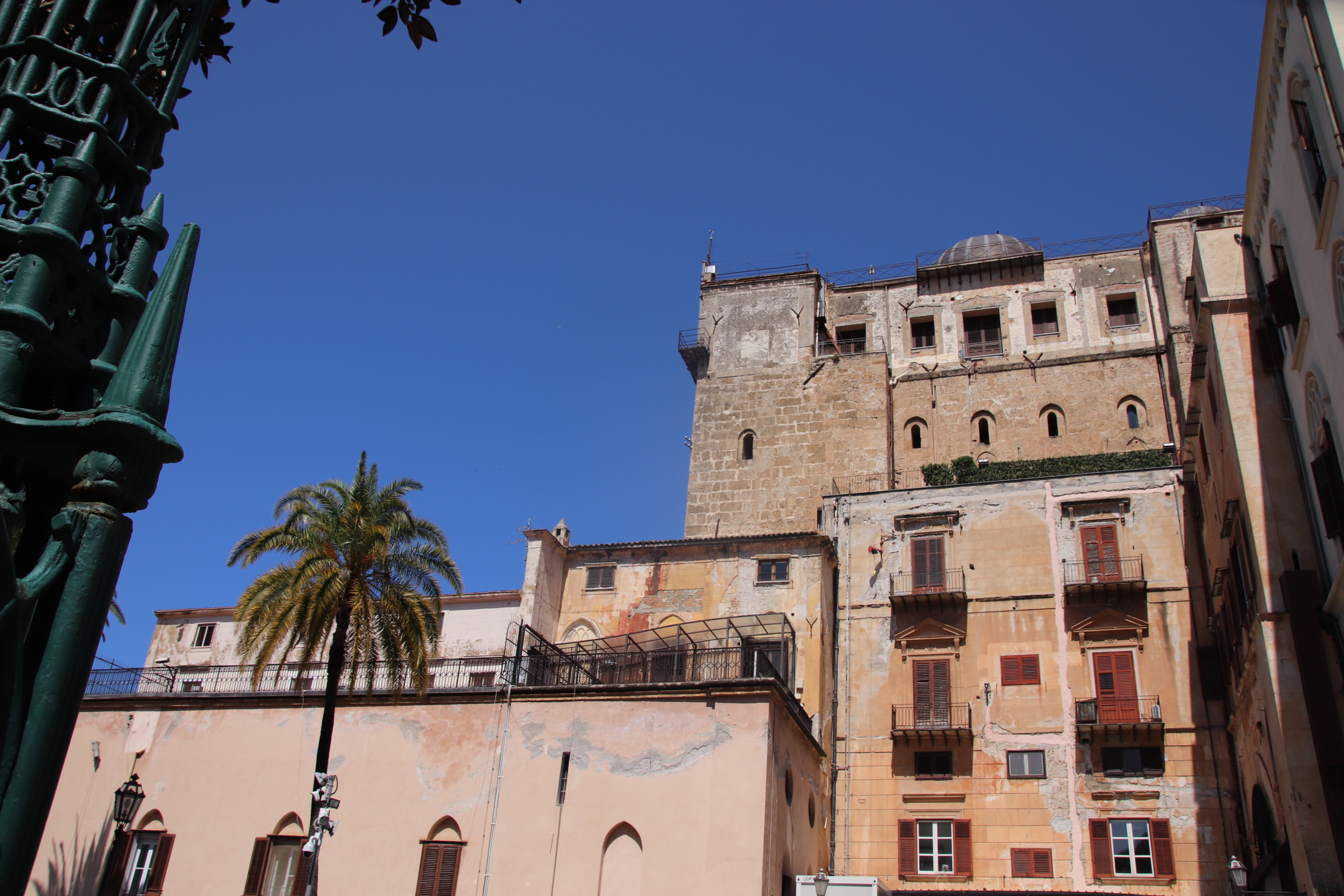
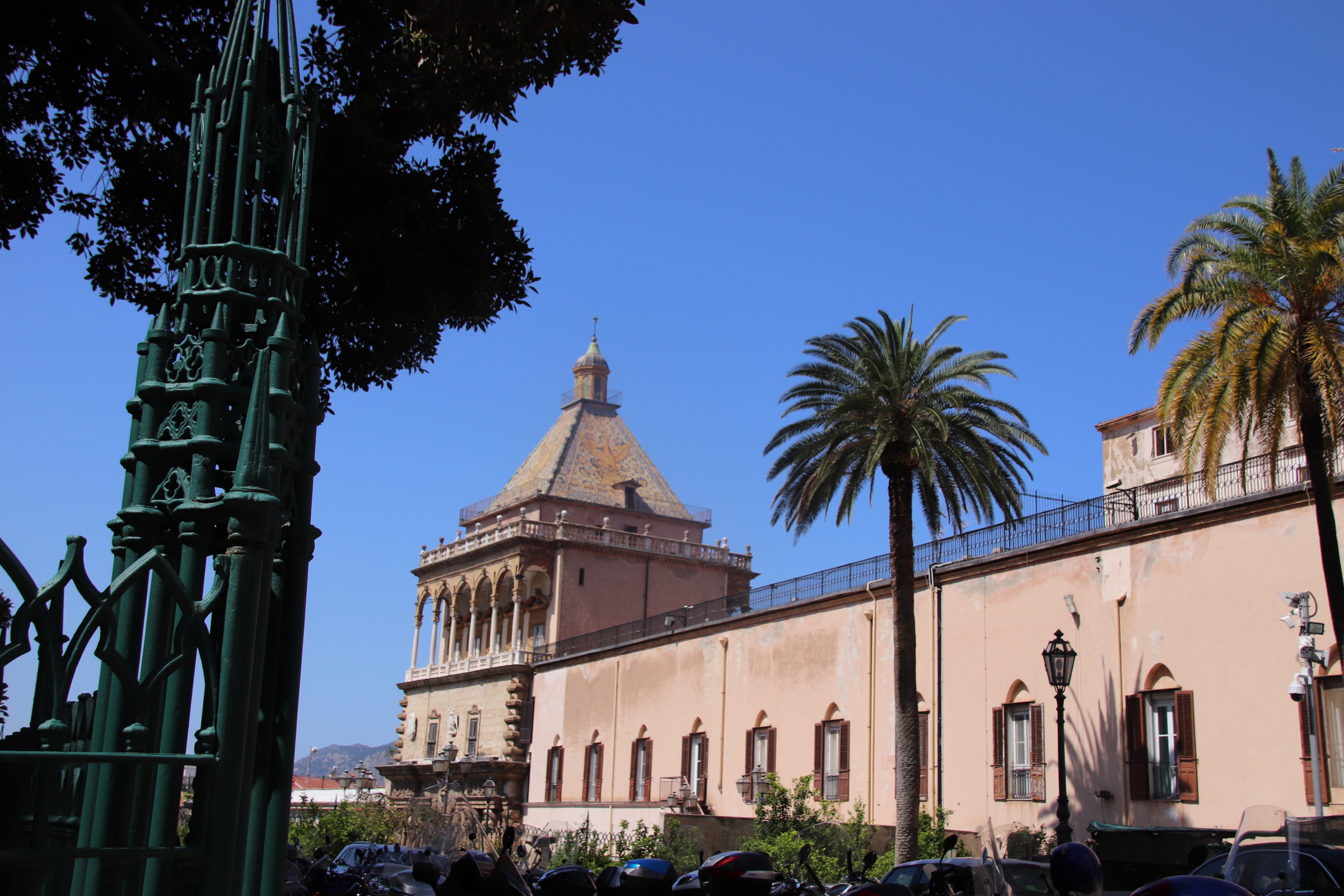
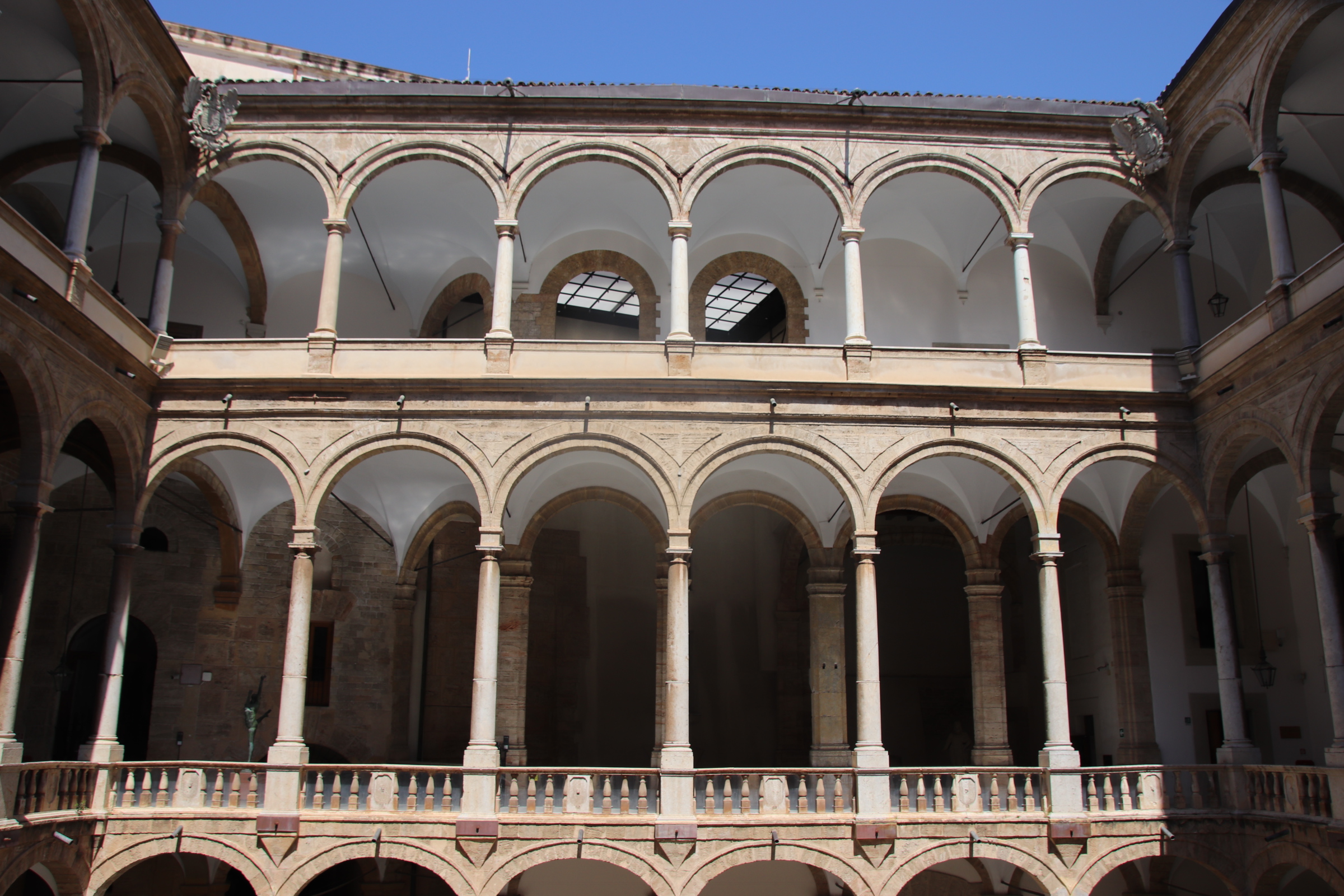
    The Royal Palace, also known as the Norman Palace, was built by the Normans who invaded Sicily in 1072 . These are the descendants of the same Normans that crossed to England with William the Conqueror to defeat Harold at the Battle of Hastings in 1066. The former Islamic palace was chosen as their political centre and transformed into a royal residence and an administrative centre.

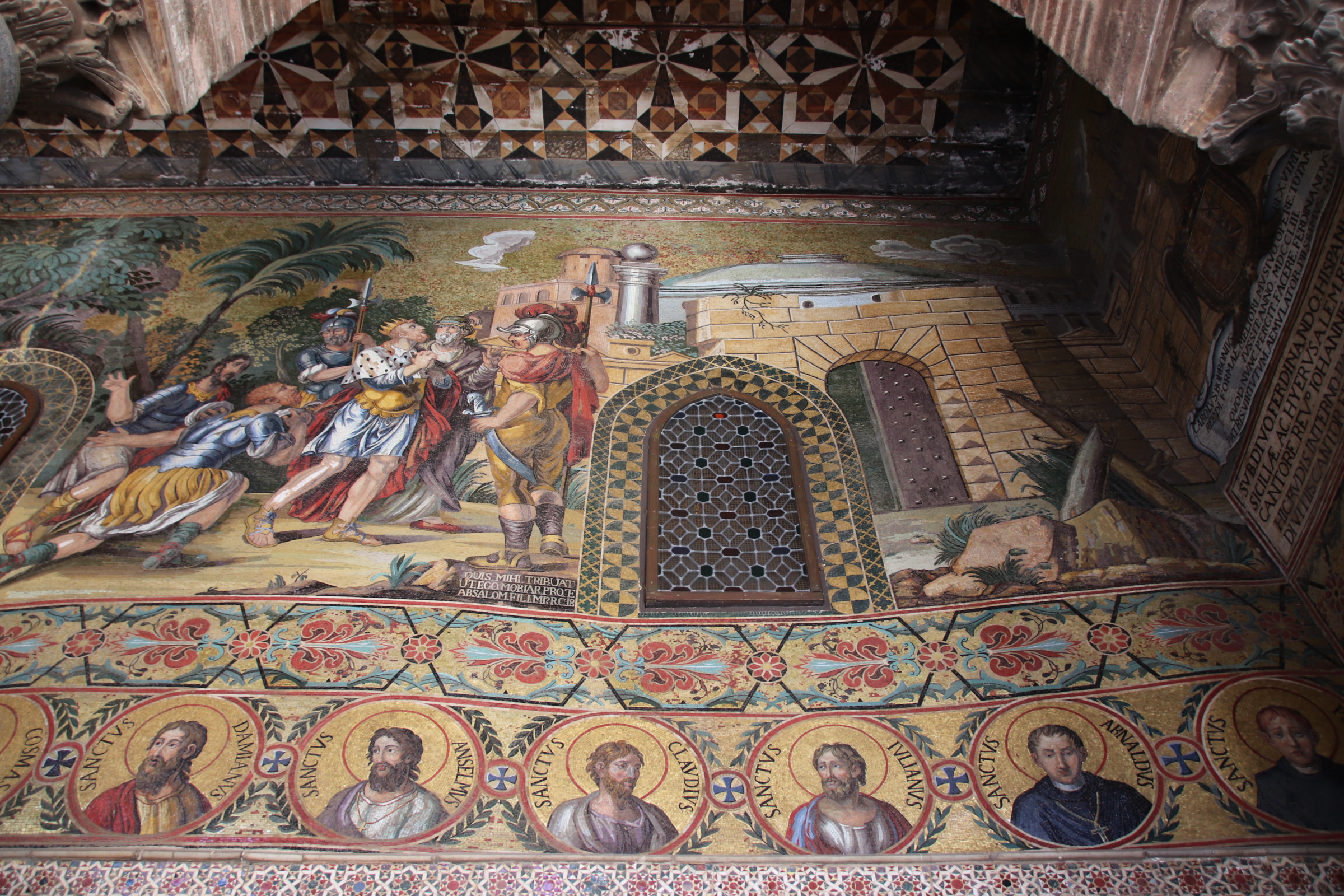
    The Palantine Chapel was added in the 12th century.

    It is a mix of Byzantine, Norman and Islamic architectural styles which reflects the impact of these cultural influences in Sicily at the time. It was commissioned by Roger II in 1132 and built on the site of an older chapel which now forms the crypt.

    It took eight years to build and the mosaics were still unfinished in 1143.

    Palermo’s cathedral, churches and chapels

    Sicily lies at the crossroads of Western civilisation. Over thousands of years a myriad of empires and forces have occupied the island from Greeks & Romans, Byzantines & Arabs, Italians & French and left a permanent impression on its architecture, culture and religion. The island’s strategic position between Africa, the Mediterranean and the Adriatic gave it a crucial task to protect the southern flank of Catholic Italy. This is reflected in Palermo’s skyline where domes & spires & turrets & towers compete to protect the souls of rich and poor alike.

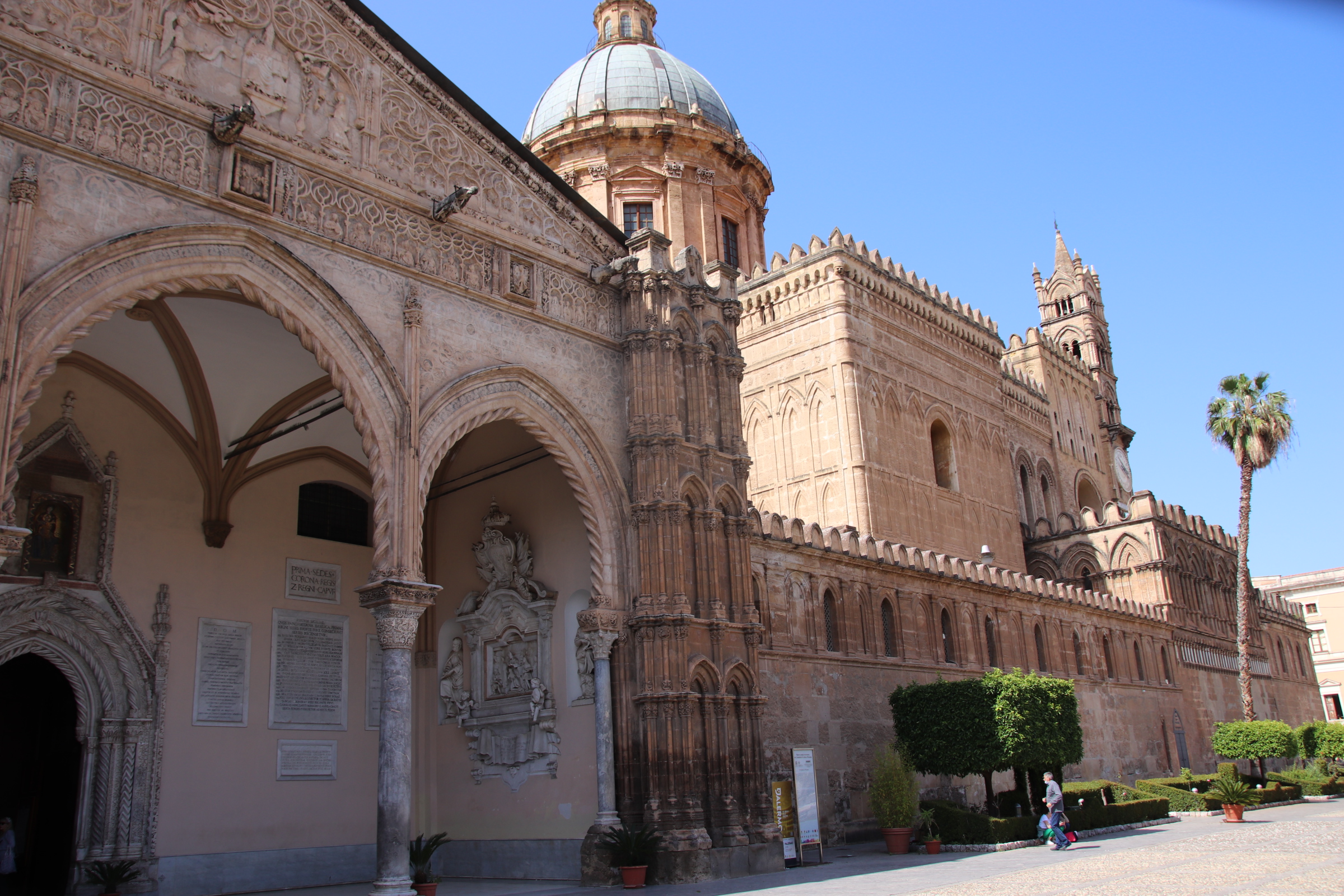
    Palermo’s Duomo is a treasure of Norman architecture, built in 1184 as a reconverted Christian church on the site of a Muslim Mosque, which in turn was built on the site of a Christian basilica. Over the centuries the cathedral has blended numerous influences from the island’s history – Gothic, medieval, Arabic, neoclassical into one impressive place of worship reflecting its prominent position on the world stage.

    The Piazza Bellini contains three churches. The Baroque church & monastery of Santa Caterina d’Alessandria is a prize for the tourist. The church itself is plastered in scenes from the bible.

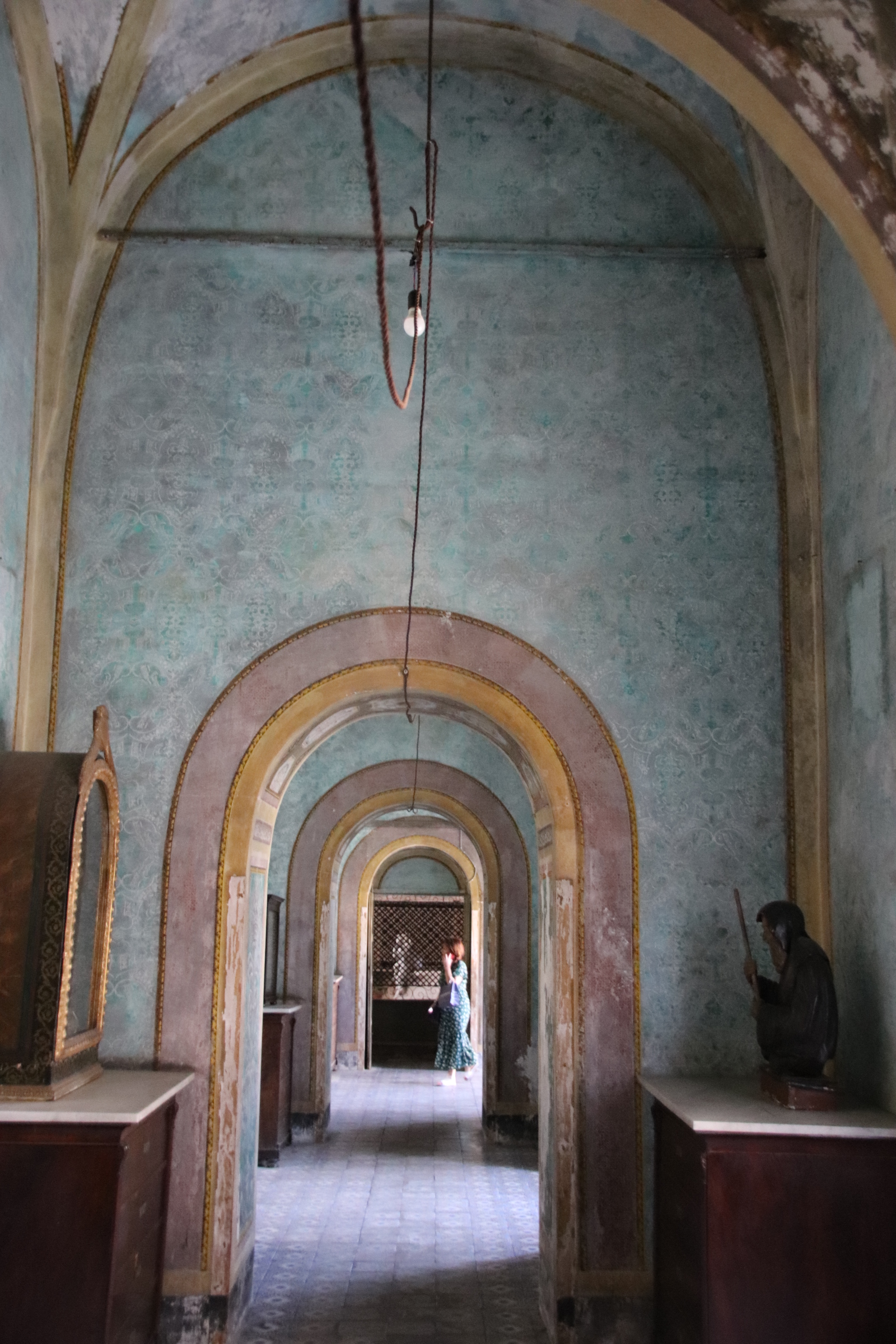
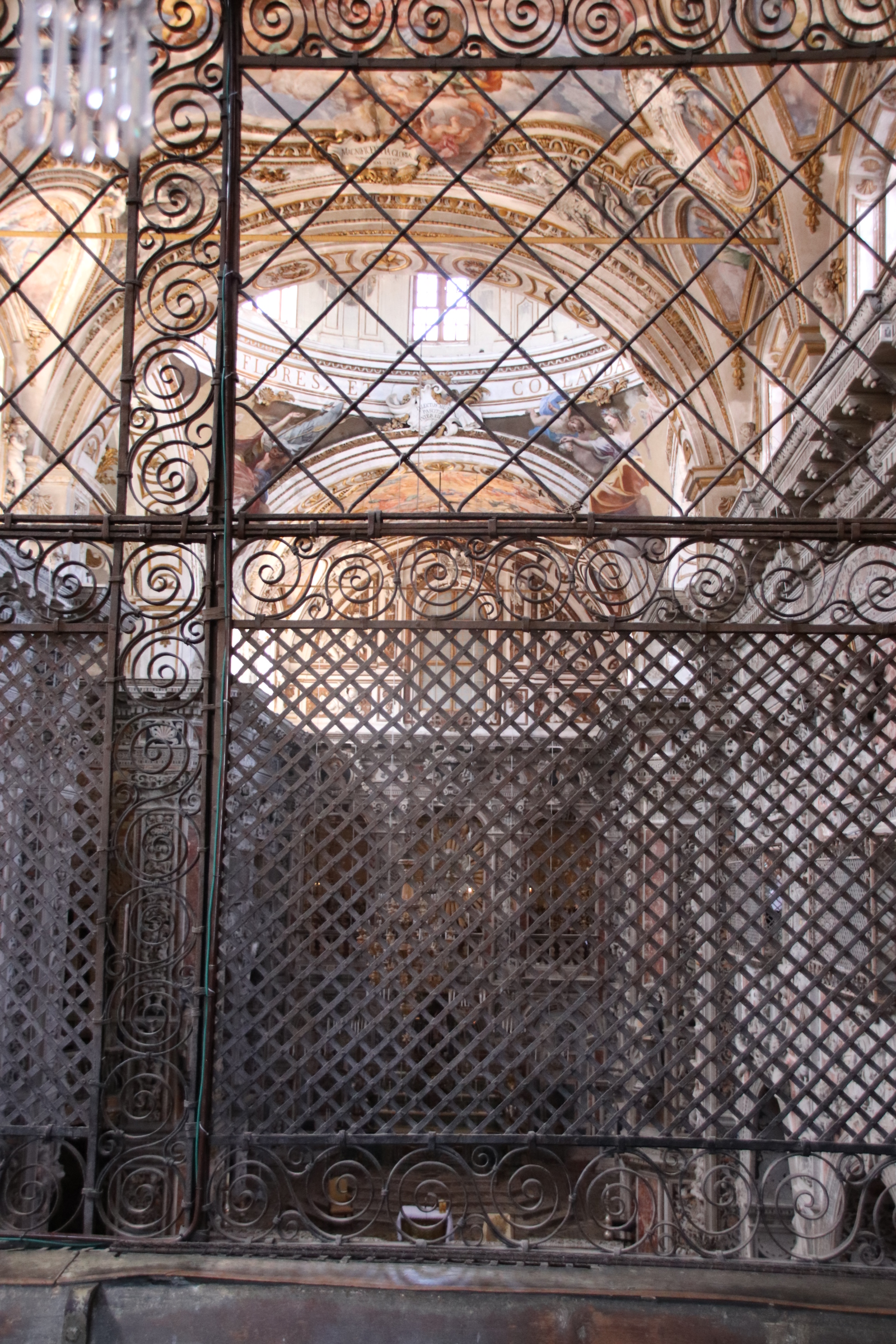
    Its monastery, the tranquillity of its shaded garden and cool corridors, provide a peace where monks could contemplate and oversee the prayers through high latticed walkways.

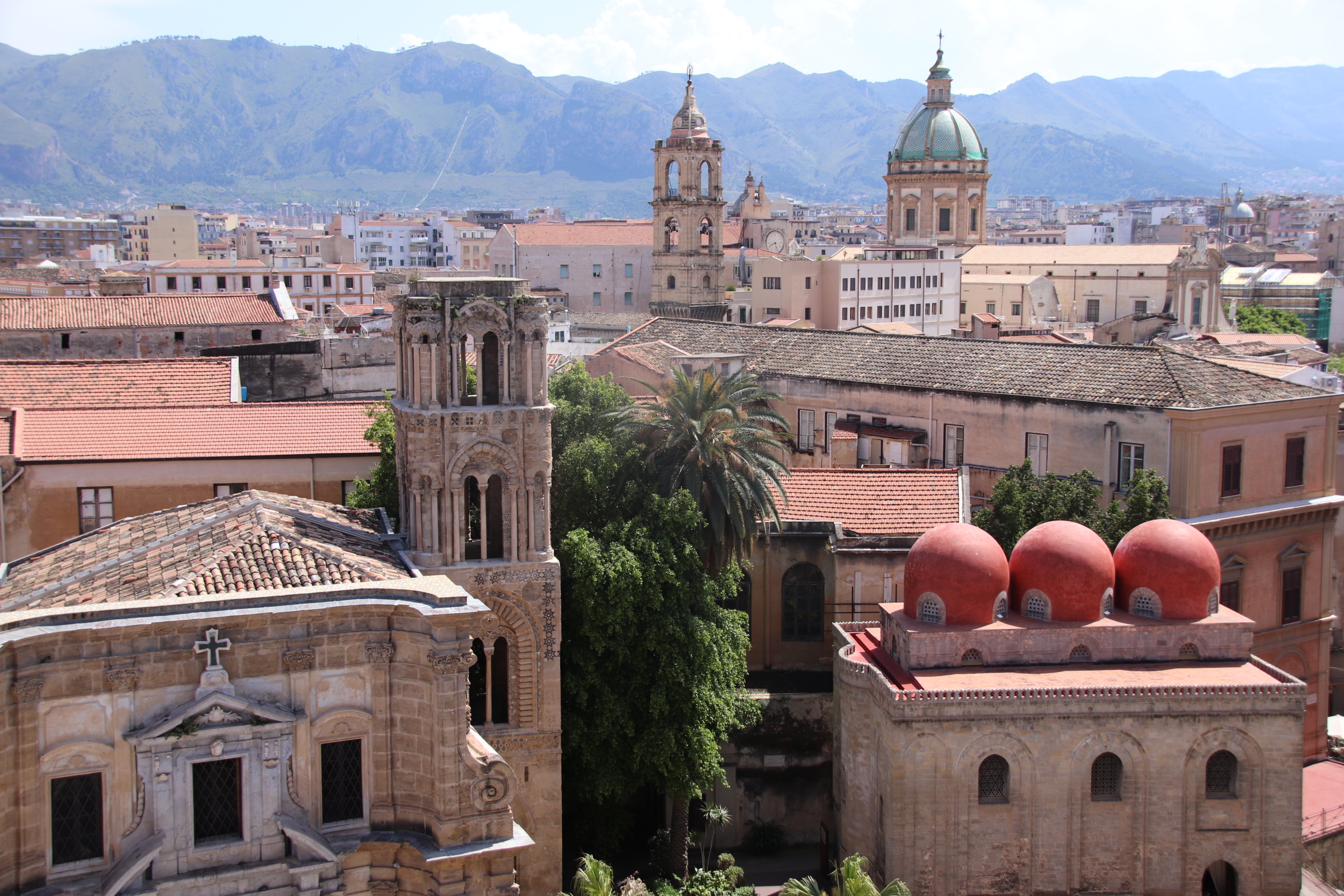
    But the best is reached by narrow stairs past the original roof tiles and mortar, now covered with thick timbers and tiles and out onto narrow balconies providing a great vista of the domes and bell towers of Palermo’s churches, chapels and palaces.

    Piazza Pretorio can be seen below with its dry fountain ready for action.

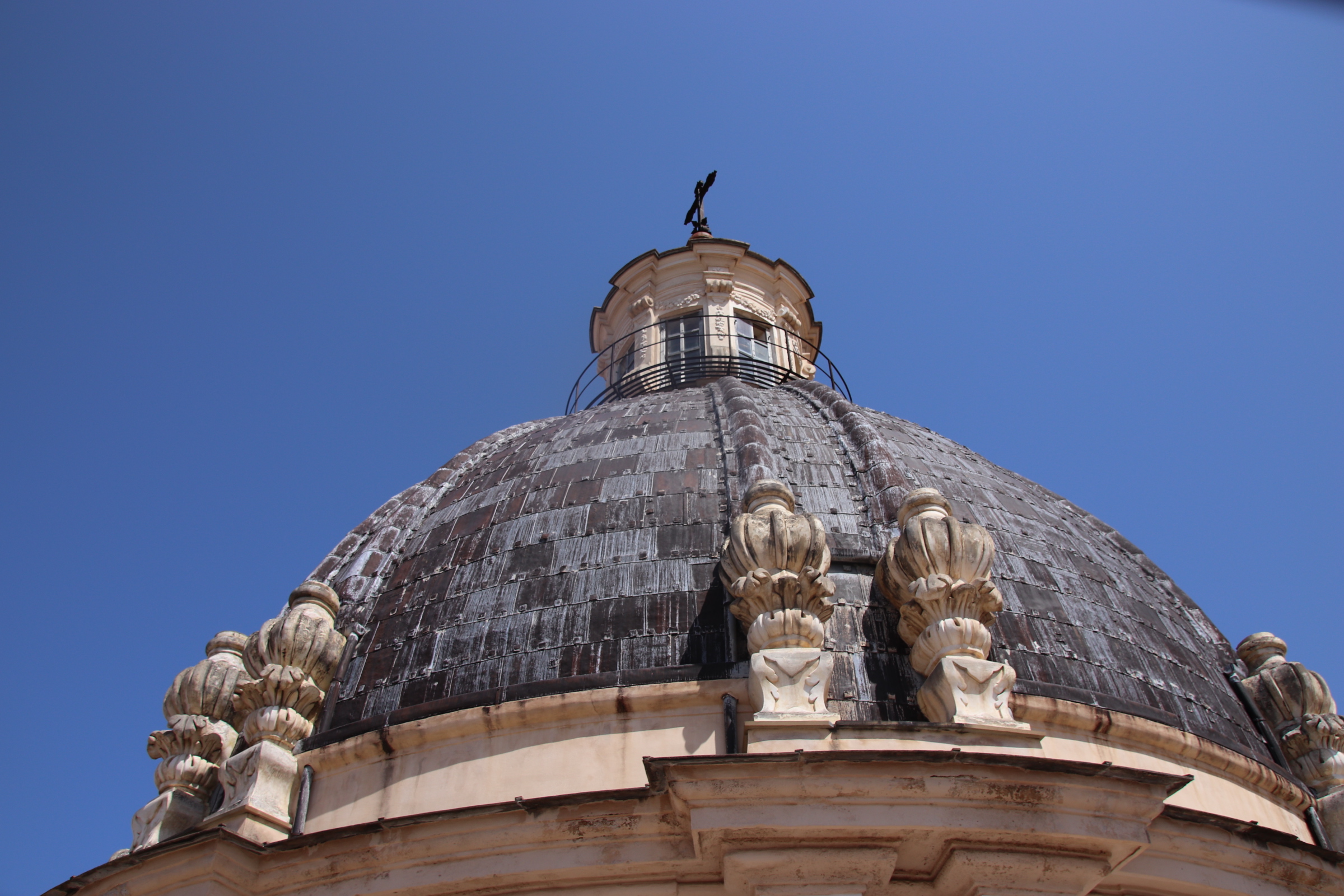
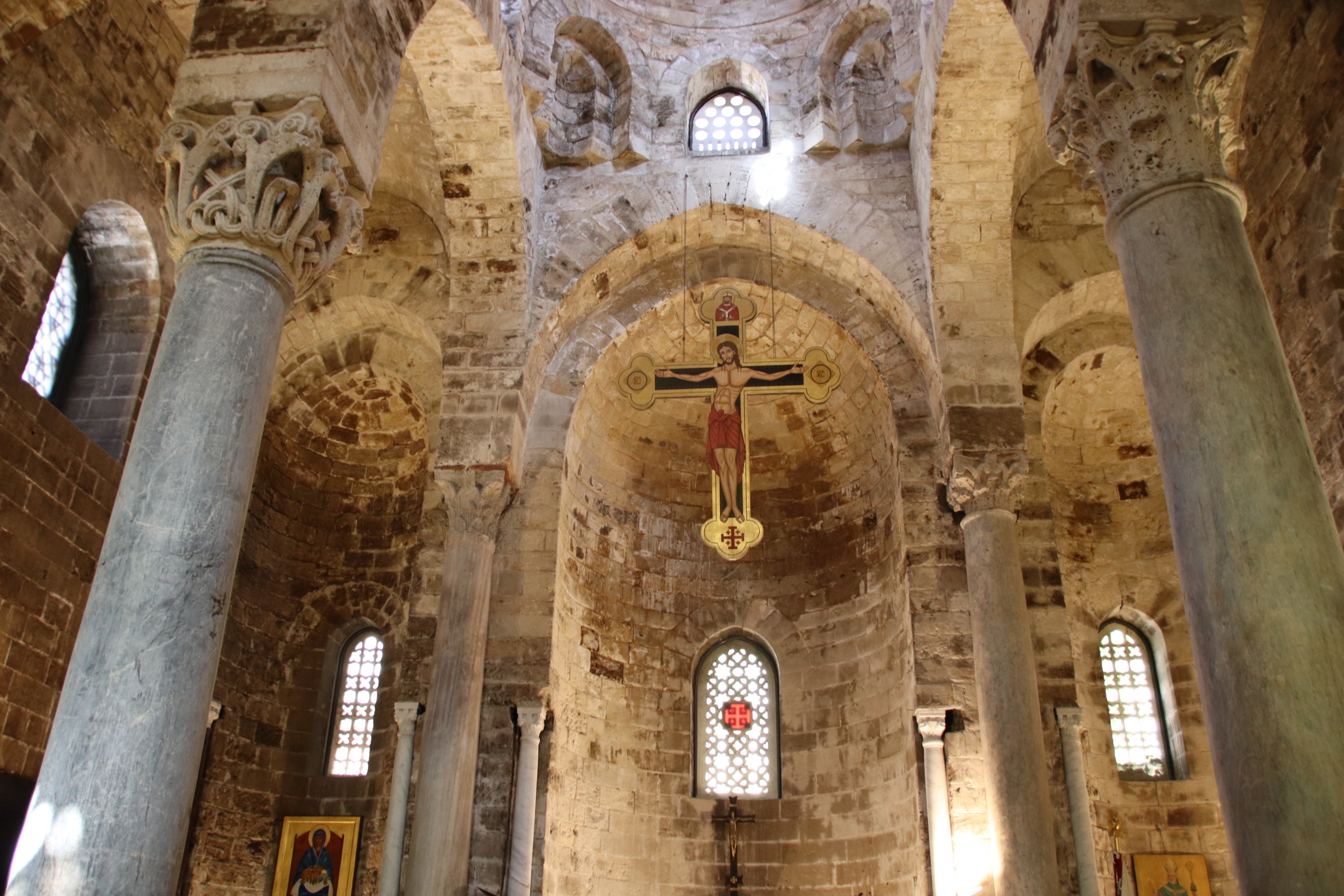
    On the other side of the square are two churches, side by side. The small Church of San Cataldo, with its unusual red domes, was built as a chapel in a larger complex of buildings by Islamic workers in 1154. Santa Maria dell’ Ammiraglio, founded in 1140, was built as a private chapel.

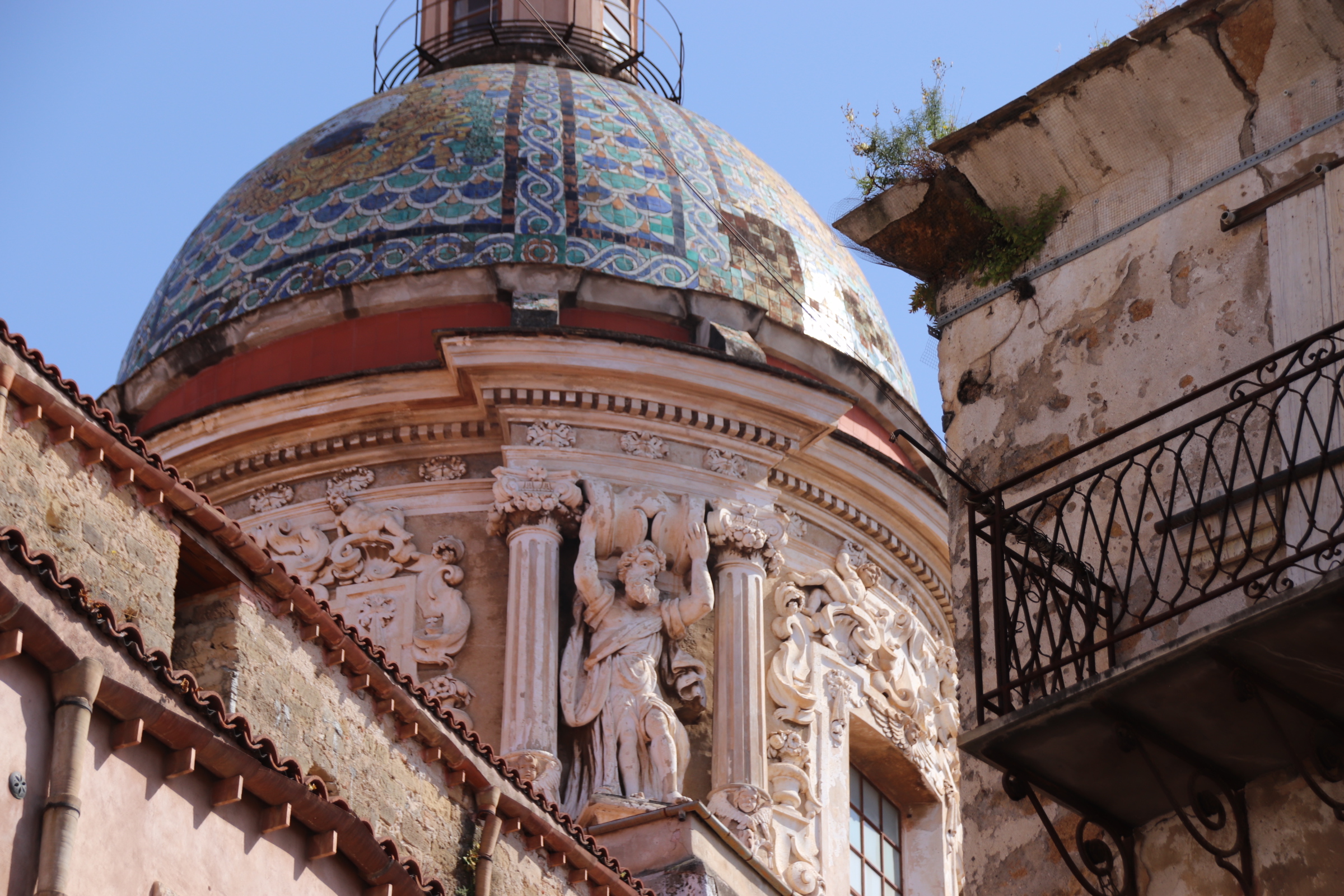
    Palermo’s tangle of dark streets and alleys hides so many churches and chapels, only given away by a shafted angle of sunlight that penetrates the clumps and lines of buildings to highlight a golden bell tower or an ancient pinnacled cross.

    Glorious, magnificent Palermo

    Palermo is a little rough around the edges but its narrow, shadow-ravined streets create an artichoke, each bract peeling away to reveal so many golden hearts. Yes, it is dusty, yes it is noisy and crowded, yes, the sun only reaches through the stone and mortar to bake the ground at midday but this place has character, has splendour, has a huge, strong pulse that sucks you in to appreciate a gallery of fading old masterpieces.

    This Palermo reflects the main events of centuries of European history since biblical times, painted in its own hues and colours and boasting of its importance and influence.

    The size and scale of the place is overwhelming. 4/5/6 storied buildings line every main street that crisscross the city. All are decorated in carvings of plaques or shields or plinthed statues or groping vines, plants, fluer-de-lys and tower above the pedestrianised routes, towering up to lord their power and position over the rest of us mere mortals.

    Filling in between the axis of roads is a tangle of cobbled alleys and streets that have for centuries jumbled up together in a hotch potch of cultural, economic and religious communities. Around sharp corners and through carriage-sized gateways, piazzas, courtyards and squares reveal churches and cathedrals, palaces, mansions, galleries.

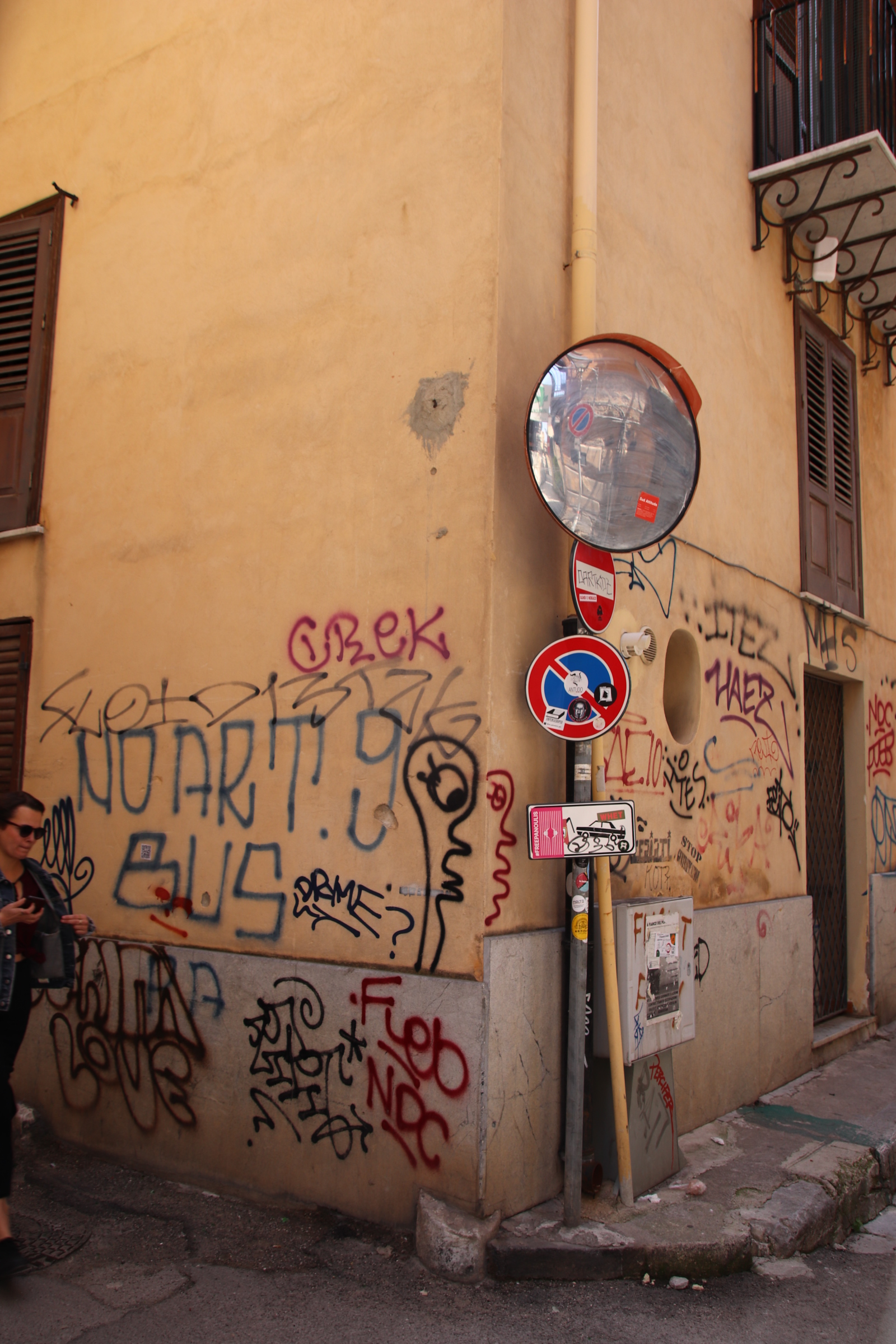
    These contrast with the Old Town where, with outstretched arms, you can almost run your fingers along rough plastered, walls and lurch through the pot-holes and broken surfaces between narrow tenements. The graffiti is charming and informative and adds even more character to everyday life.

    In these communities the piazzas are more like open parks with local bars and pizzerias around the edges where locals spend their time in the cool of the day doing their own thing.

    Breakfast in Cefalu, Sicily

    This quick week away to Sicily is an opportunity to regain the flavour of the Italy that I love – the culture, the history, the wine (oh the wine), the food, the sun, the history, the families, the gelatos, the coffee. Am doing it slightly differently this time – once I arrive all journeys will be by public transport … and feet. I can leave all that driving stress behind and just enjoy the place. Initial journeys from the airport to Palermo and beyond have been booked from home and safely stored on my phone. You can book journeys all over the world at any time, on Trainline.

    Once through and collected bags, it is a 30 second walk to platform 2, where the first of several punctual train awaits. In Palemro Centrale it is a hop to platform 4 and the service to Cefalu.

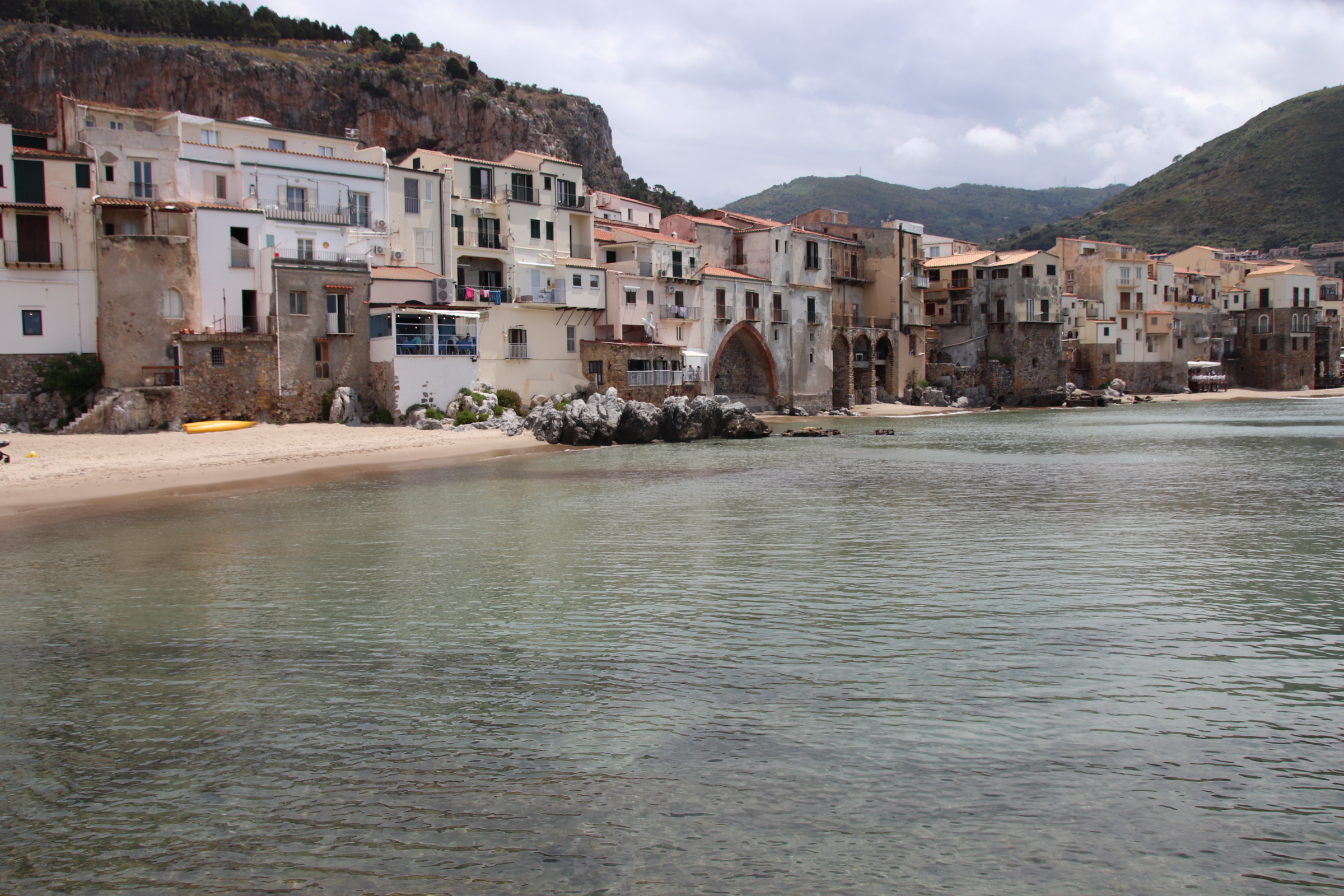
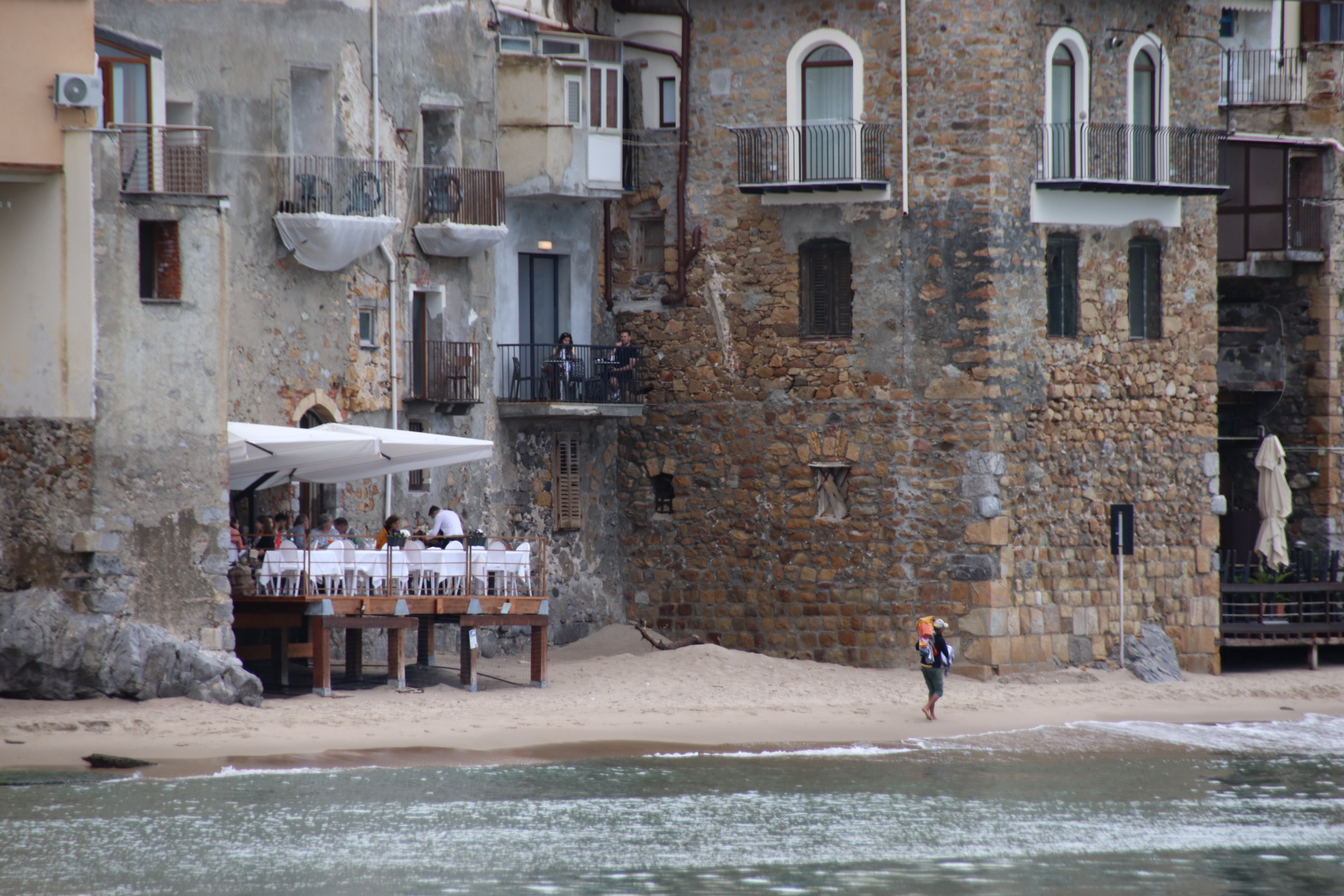
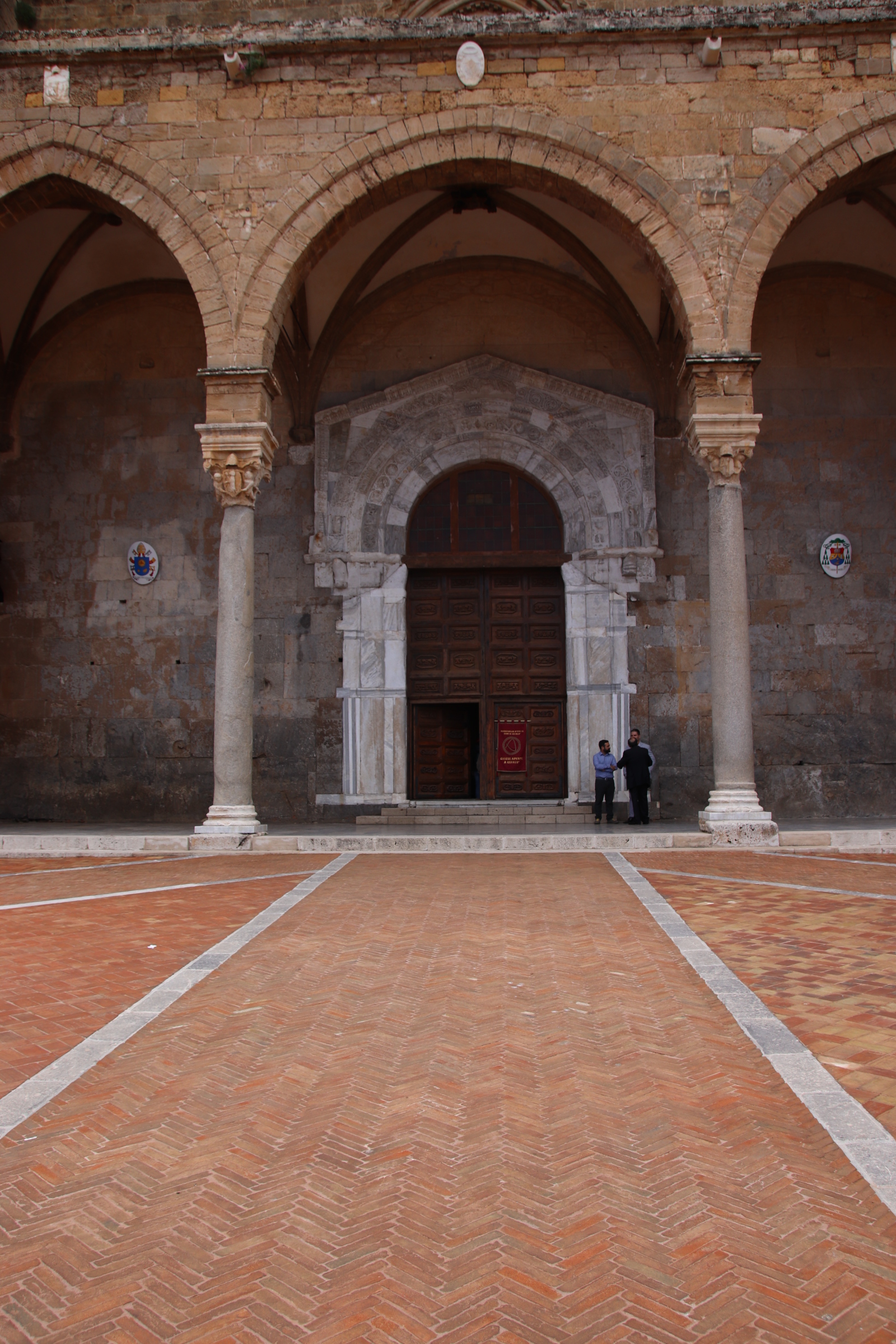
    Cefalu is an ancient fishing port sandwiched between the Mediterranean and a range of large craggy rocks on the north coast of Sicily to the east of Palermo. Fishing may be its roots but today it is a charming tourist resort, fashionable with affluent Italians, day visitors from Palermo and holiday makers seeking the real Sicily. The summer months see large numbers on the beach and in the streets. But now the sunbeds are empty, the restaurants living on hope rather than bookings and cafes & gelaterias serve you immediately you turn up. It means that the true peace and feel of the medieval town can be appreciated. The atmosphere, the history, the flavours ooze from every stone block, from every piece of cracking plaster, from every pigment.

    Breakfast is taken in the Pazza Duomo. Slightly later than planned, a peal of bells signals the start of midday mass and for a moment disrupts the tables of coffee and gateaux. A few take the ancient steps, past the gate-guarding bishops, up and into the cathedral. The rest turn back to their table and watch another group of visitors pass through the narrow, cobbled streets.

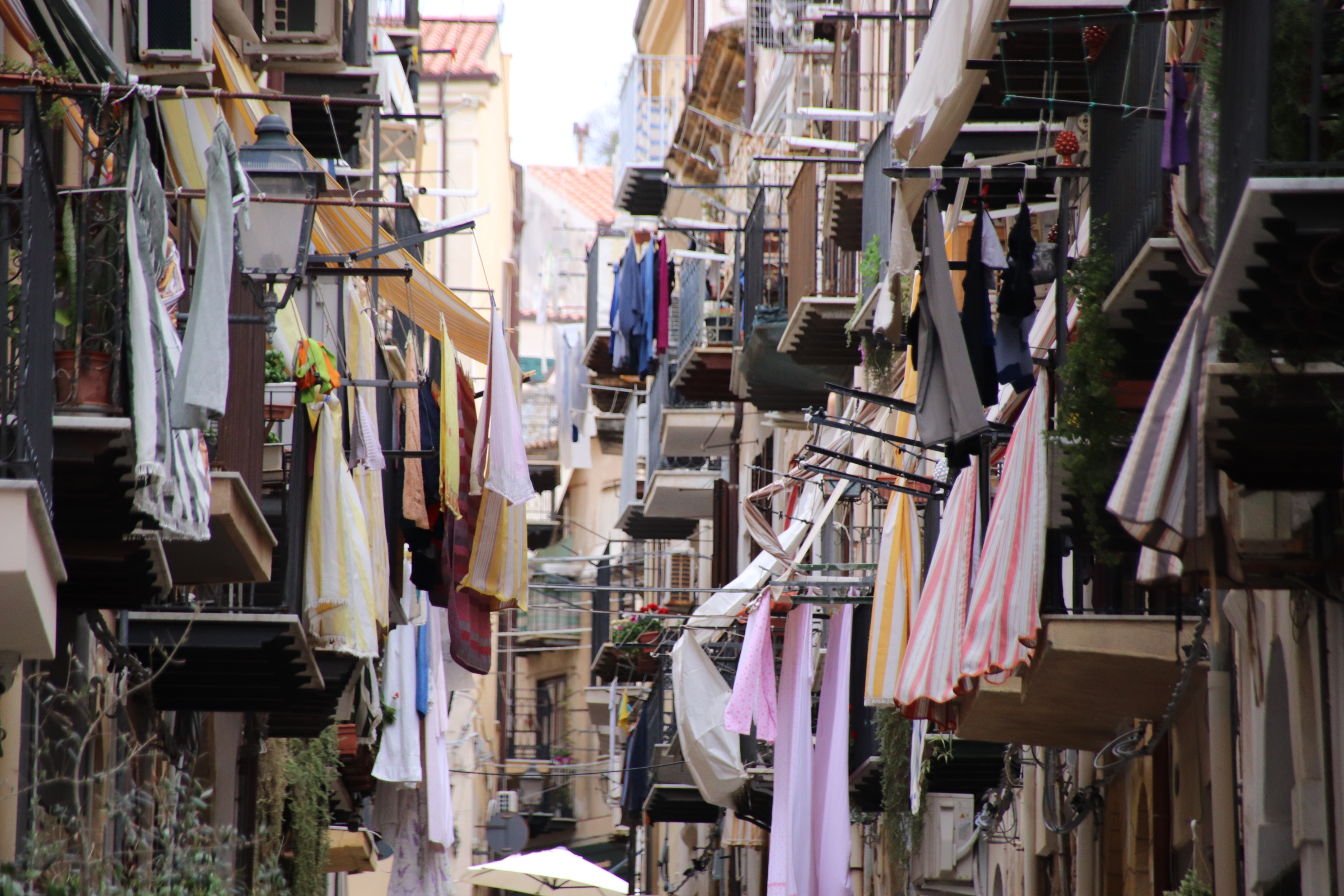
    The old town consists of a grid of tall apartment blocks, centuries old, linked by steep, stoned streets.

    Balconies stretch across to touch their opposite number. Today is obviously a good washing day as lines of sheets and shirts wave to each other, dancing together in a drying partnership.

    Cefalu is a joy to visit.

    Ferrara, where the bicycle rules and not the tourist

    So that is it. Home tomorrow. I leave you with images of Ferrara. There could be a lot worse places to leave you, and no, this is not where they make very flashy sports cars. This place is like a mini, fabulous Florence without a coach party in sight. In fact there are no cars in the centre to disrupt the seemingly endless flow of the bicycle. Many of the riders are particularly pleasing on the eye.

    We hit gold with the hotel, for a start. A little bijou place on a central piazza, opposite the castle. Then the upgrade to a room with a small balcony looking directly onto the ancient Continue reading

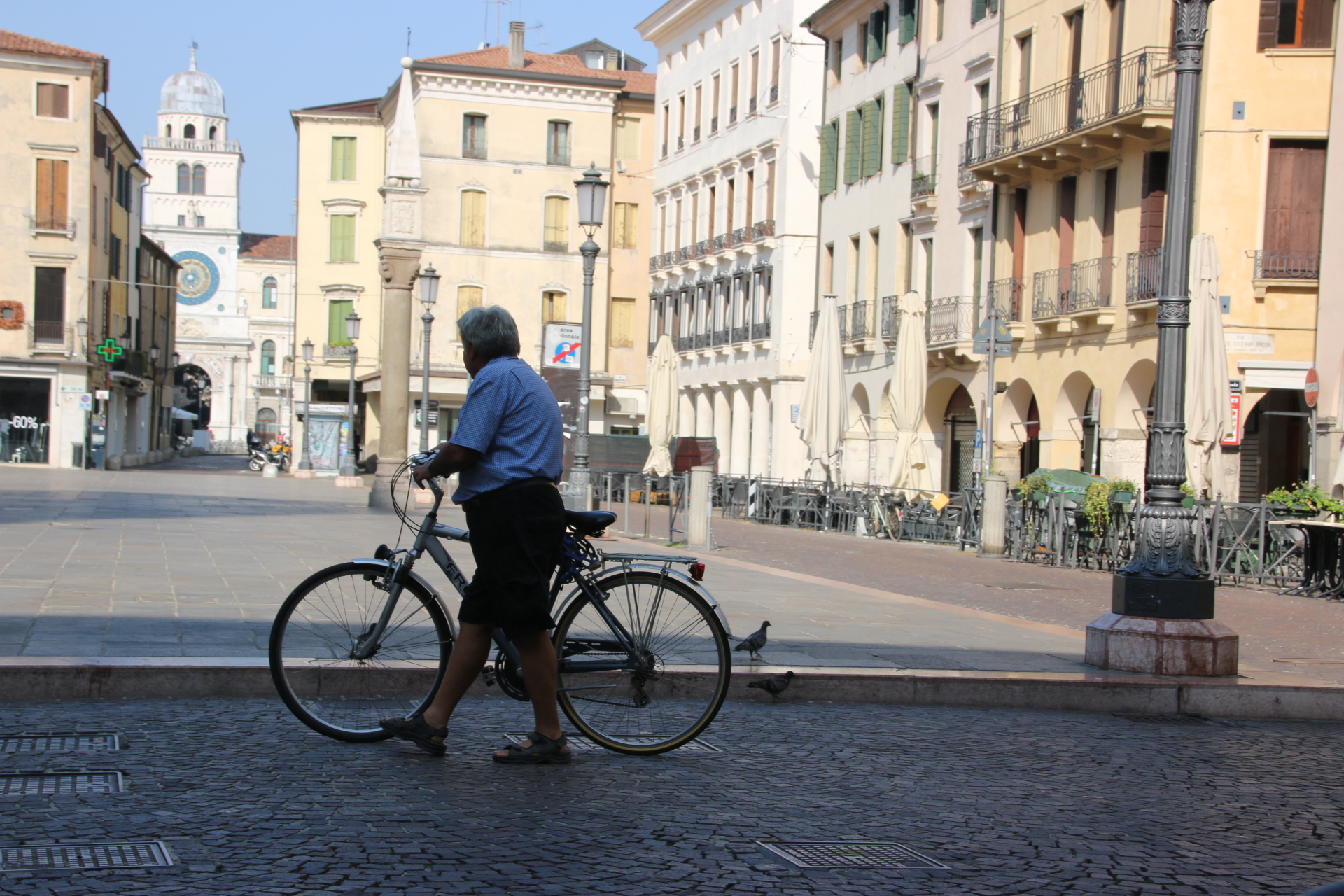
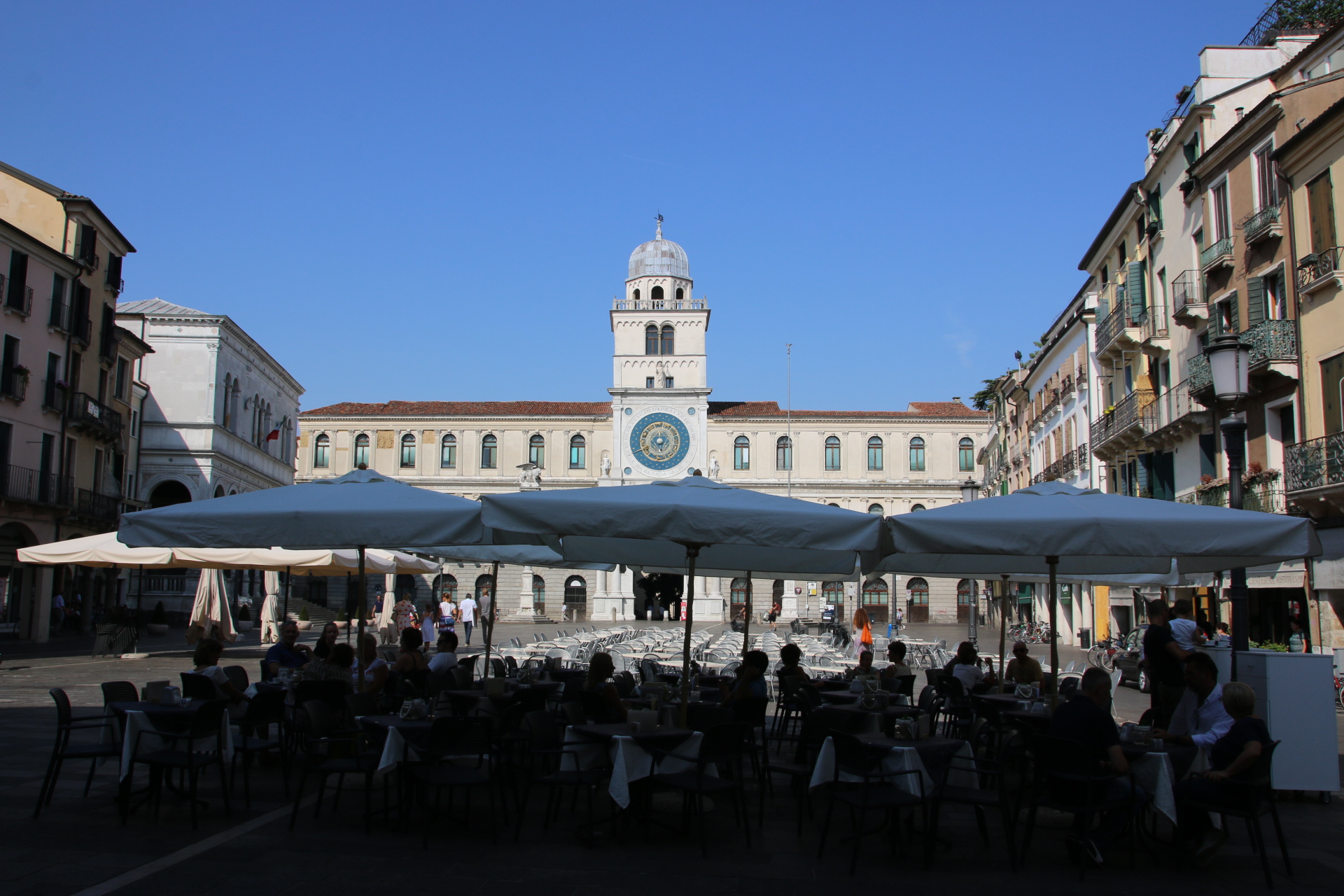
    Padua in the heat

    OMG. What a shock to the senses. The last time I spoke to you I was in the peaceful tranquility of La Marche, alone with the farmland, the soaring buzzards, the pool and mama Anita’s cooking. I have come 250+ km north to Padua, a university city in the same mold as Oxford, established yonks ago but in comparison to the past two weeks so hot and busy and full of people and noise and bikes and trams and shops and gelatos. It is wonderful but such a shock to the system. Welcome back to reality and back-home normality. Oxford in a 34° heatwave. Enjoy the churches, the piazzas, the shade, when you can find it.


    Eating out at Trattoria Anita

    Eating out in Cupramontana gives you Gina’s, a pizza restaurant, Rosina’s a few miles out of town with a glorious terrace overlooking the surrounding hills & Ristorante La Orietta within the medieval, walled core of the town.

    But I must spend some time telling you about the special delights of eating in Trattoria Anita. This can be found down a narrow, dark, cobbled street beside the butchers, under a totally inappropriate sign showing a golywog drinking a cup of coffee.
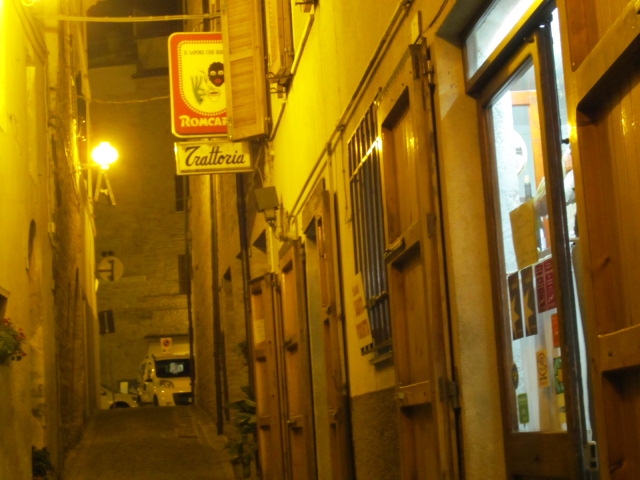
    The first doorway is into the kitchen of open charcoal grills and steaming, aluminium pots & pans where three elderly, hunched mamas pirouette around each other in the space in the middle.


    The second door is the entrance to a time capsule taking you back 70 years when it was OK to have signs like that hanging above your door. Four tables, covered in white tablecloths, covering red gingham, are positioned on each side of the narrow space, a counter, behind which are shelves of ancient, crusty bottles containing different coloured spirits, faces the entrance, a doorway that leads into the kitchen and a fridge unit holding two types of wine-white in loosely corked bottles and red in those old Corona clasped 1litre jobbies, about 20 of each.
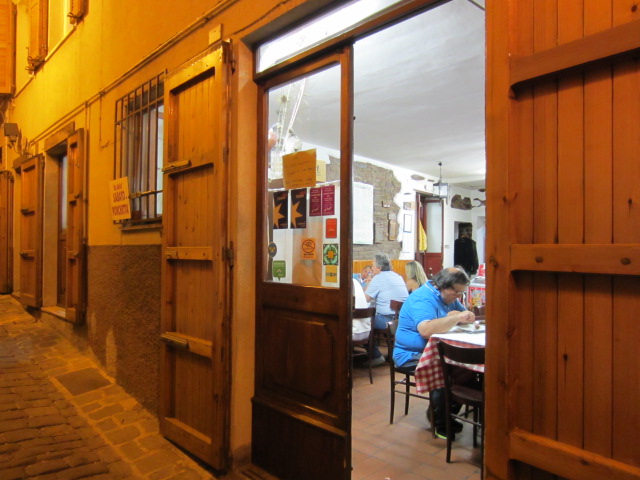

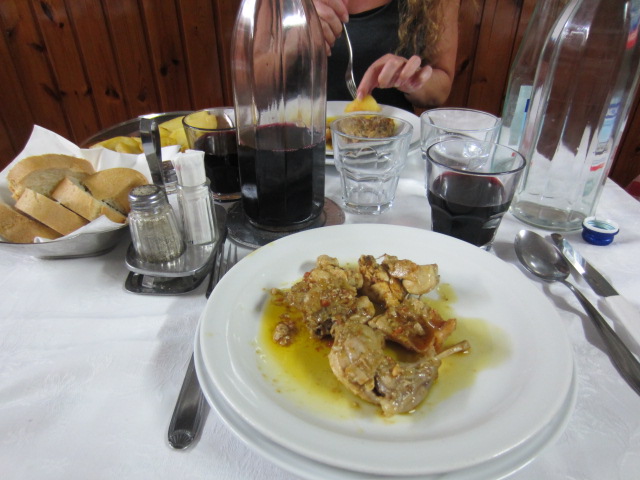
    Yes, we can eat. Papa, aged about 75, appears and shows us to a table. A bottle of gassed water and a bottle of white is dumped on the table. There follows 5 minutes of sign language with papa grumbling away in discontent, where we exchange these for still water(we get a bottle of tap, so we keep the fizzy) and a litre bottle of home-produced red, which is surprisingly good and has gone by the end of the evening.

    No menu is immediately obvious. A 4th, younger lady, by that I mean later 40’s, who also speaks only Italian, appears at the table and gabbles through the premier platas. Recognising tortellini and ravioli we choose the former. Papa comes out of the kitchen with a tray of small curled pasta, covered in cream and parmesan and filled with cheese and bacon pieces, he serves us and retires, mumbling about something or other. The food is absolutely delicious.

    Meanwhile the room is starting to fill up. Local Italian families take the tables in the room and get the same food as us. But hey, they keep coming. Two police officers, with guns, mother and child, pairs, threes, larger groups know their way to the hidden door which leads, via a single pointing finger to ‘upstairs’.

    Papa has a problem. He appears with a piece of cotton wool protruding from a nostril, which doesn’t look good. As he returns from the door and showing some people upstairs, he gestures and the plug falls, to land, much to the surprise of the customers, on the table in front of him. They accept this invasion of their space and carry on eating as papa returns to the kitchen, never to be seen again.

    His serving duties are taken over by mama. Mama is stooped with age yet skips around the joint, involved with everything. She explains, in a high, fluttery voice, the meats that are available for the secondi. Acorn Antiques comes to mind. She is lovely, breaking into a huge smile when ever a dish is complemented.

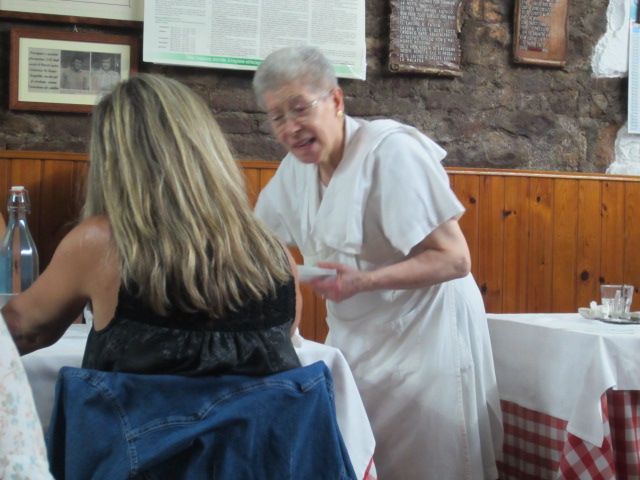
    We spot the only menu, a hand written poster on the inside of the door, which helps us choose the rabbit (and that is what you get, cooked in oil, garlic & tomato-delicious) from the 4 available, all served with pots or tom gratin.

    Dessert is the only slightly disappointing element of this wonderful, home-cooking experience so I’ll gloss over that as I don’t want to leave on a sour note. Coffee was great and the bill ever greater. This was a true family meal, cooked by the family, served by the family and prepared by the family, for locals. If you are ever nearby this is so worth the effort. Thank you mama.


    A day at the Adriatic seaside

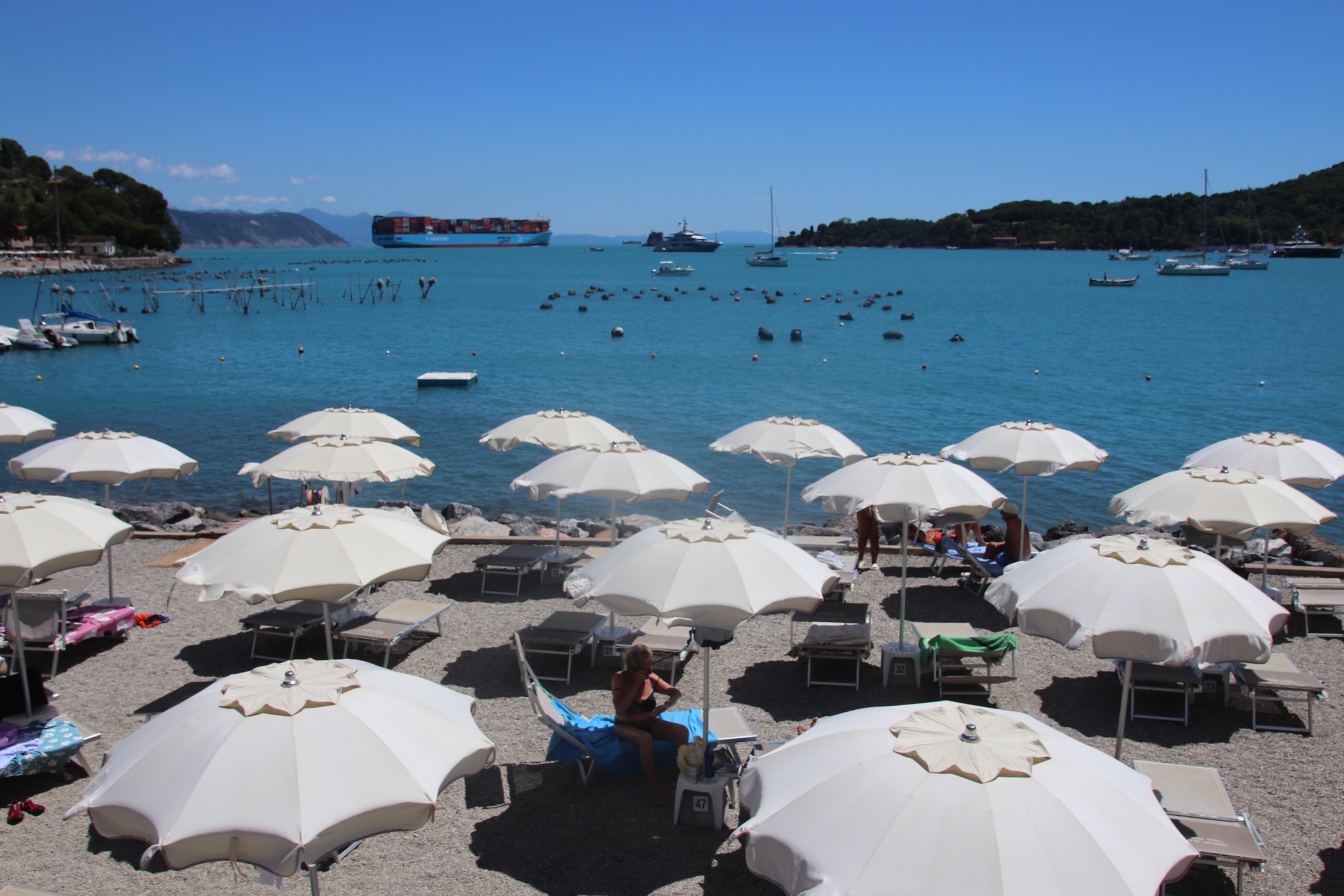
    Having seen, over the past days, the turquoise strip lining the horizon in the far distance, it was time to leave the peace and tranquility of the Marche countryside and have a day at the seaside. On reflection, a mistake.

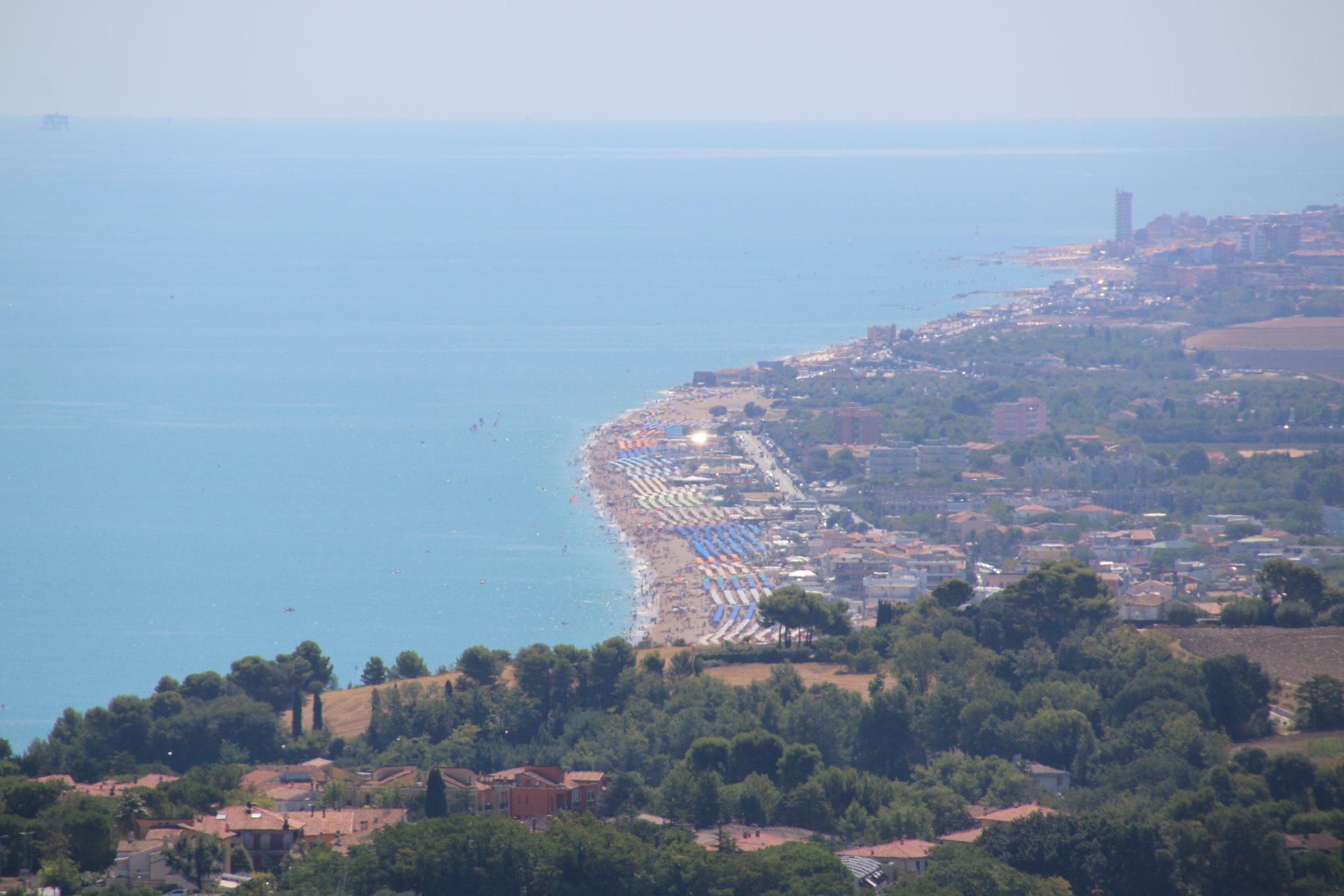
    An hour down the motorway to Ancona and then, a few miles out of town, the map suggested a narrow, picturesque lane down to a bay. Clues to what we would find lay in our approach. Firstly, stopping off on the cliff-top to see, in the distant haze, the waters of the Adriatic and a shimmering beach covered with row after row of different coloured sunbeds lined up like regiments preparing an attack. The battalion stand like small-scale, model soldiers, on station, firm and erect, facing the appealing waters, stretching away as far as the eye can see. Preparing to attack or defend what? The sea? Hmmmm.


    With trepidation we follow the tarmac down. Like an evacuation, cars are parked, nee abandoned, on every spare bit of road, every field. We get down the bottom. Both beach car parks are full. ‘Park your car up on the field a km away with the other thousand motors and get the shuttle bus down’. OMG. What must the beach be like!!

    So we cut our losses and abandon that plan. We take the cliff road to Soroli. A picturesque town high on the cliffs above the coast and, yes, the car parks and rocky beaches way, way below.

    The place is almost empty. I suppose everyone has booked their sunbeds for the day and is roasting down on the rocks. Here we find our one nugget, our small piece of calm and class. In the shade of a fig tree, outside a small boutique hotel we have a simple lunch- canelloni stuffed with assorted seafood, a couple of glasses of the local white and apricot tart to finish up with. Heaven. The high spot of the day.


    Then back in the car, down to Sunbed Strip and Umbrella City and the angled, wooden beds of browning, burning bodies on one side of the road and the parked heat-locked cars parked on the other, before giving up, hot and exasperated, and heading for the the cool breezes of the hills, back to our peaceful base. Why did we go out in the first place?


    Even further along the back roads

    Today is a drive over to Pergola to pick up the trail again. The countryside remains the same but the further west, the higher the land gets and the more alpine the scenery and the architecture becomes.

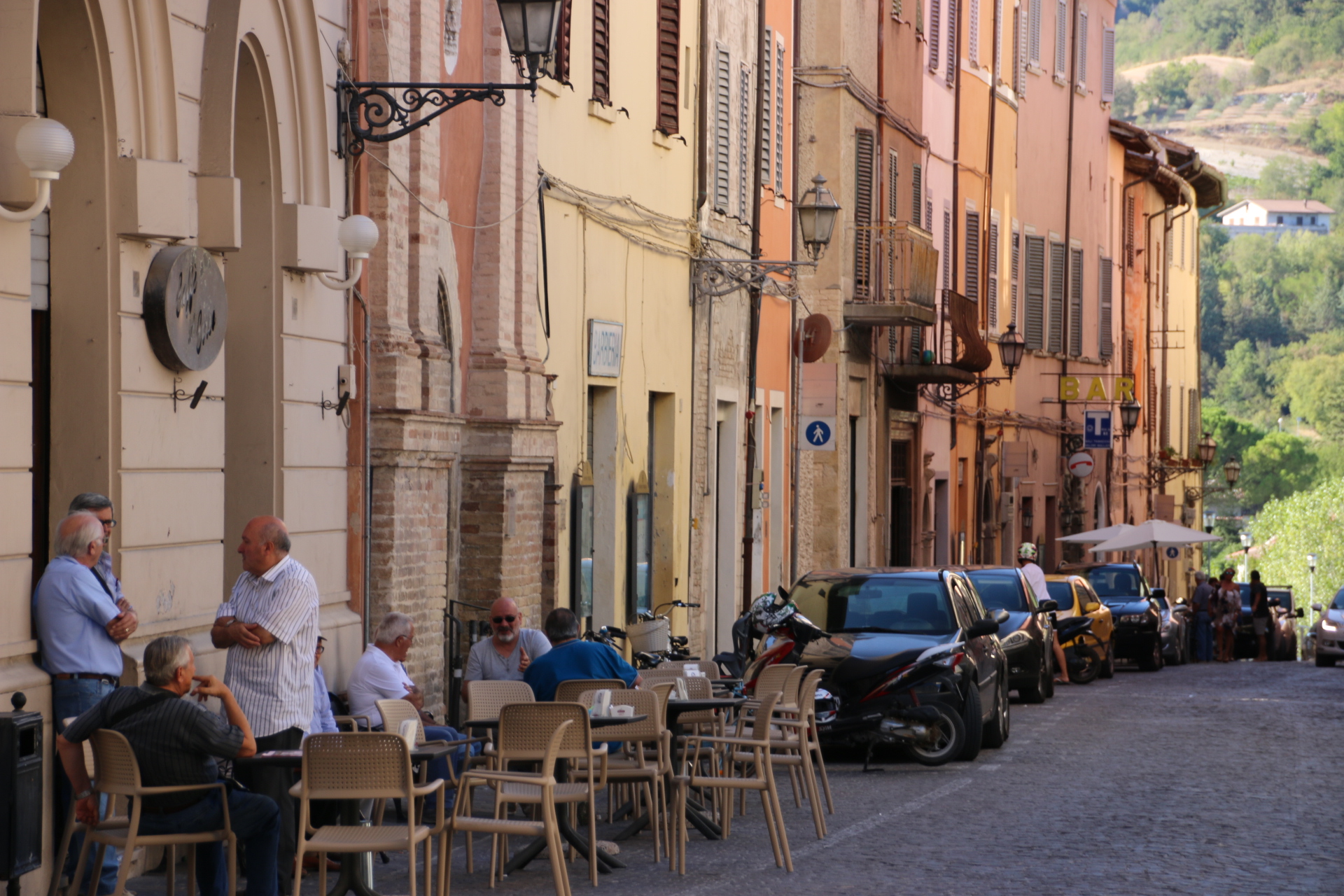
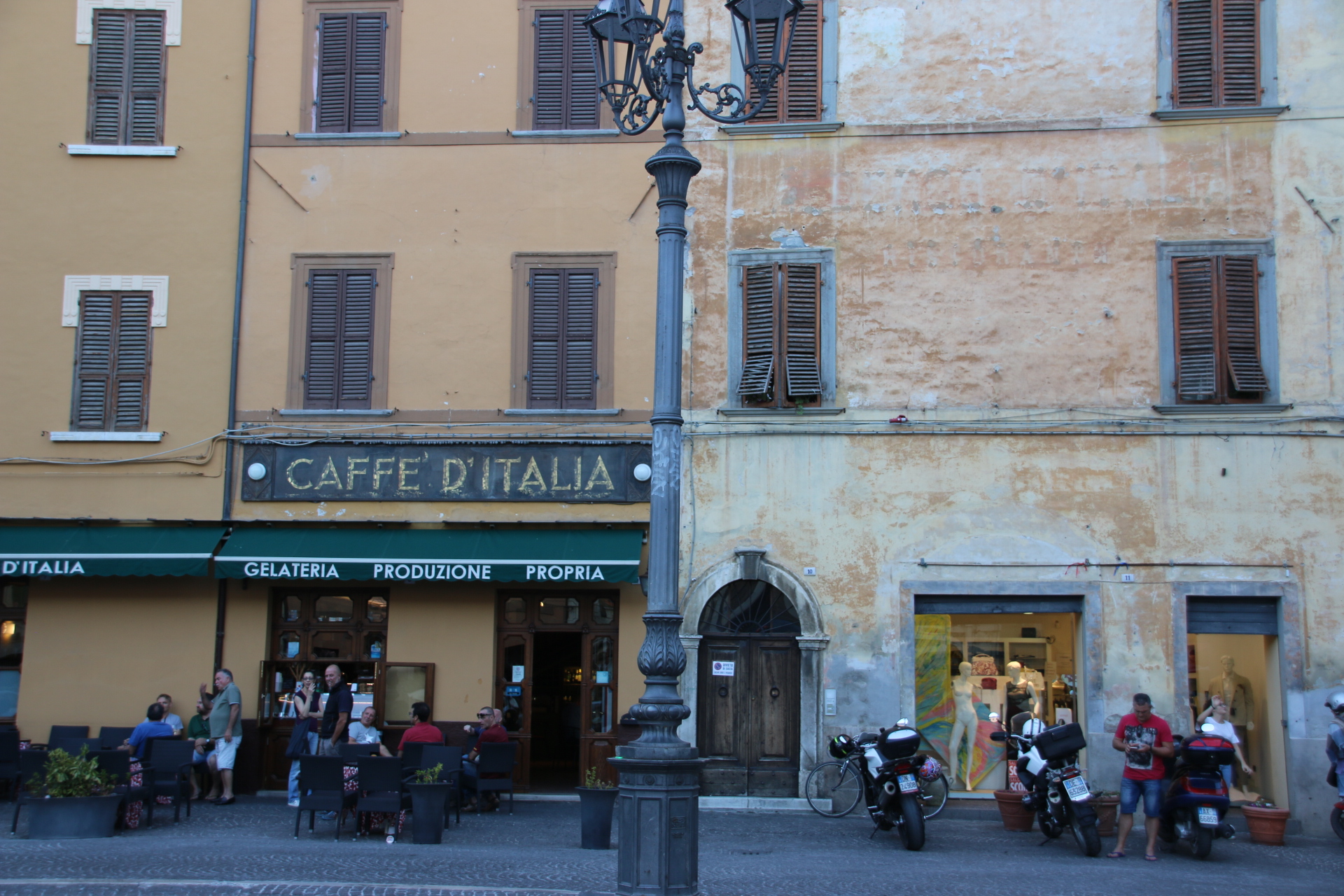
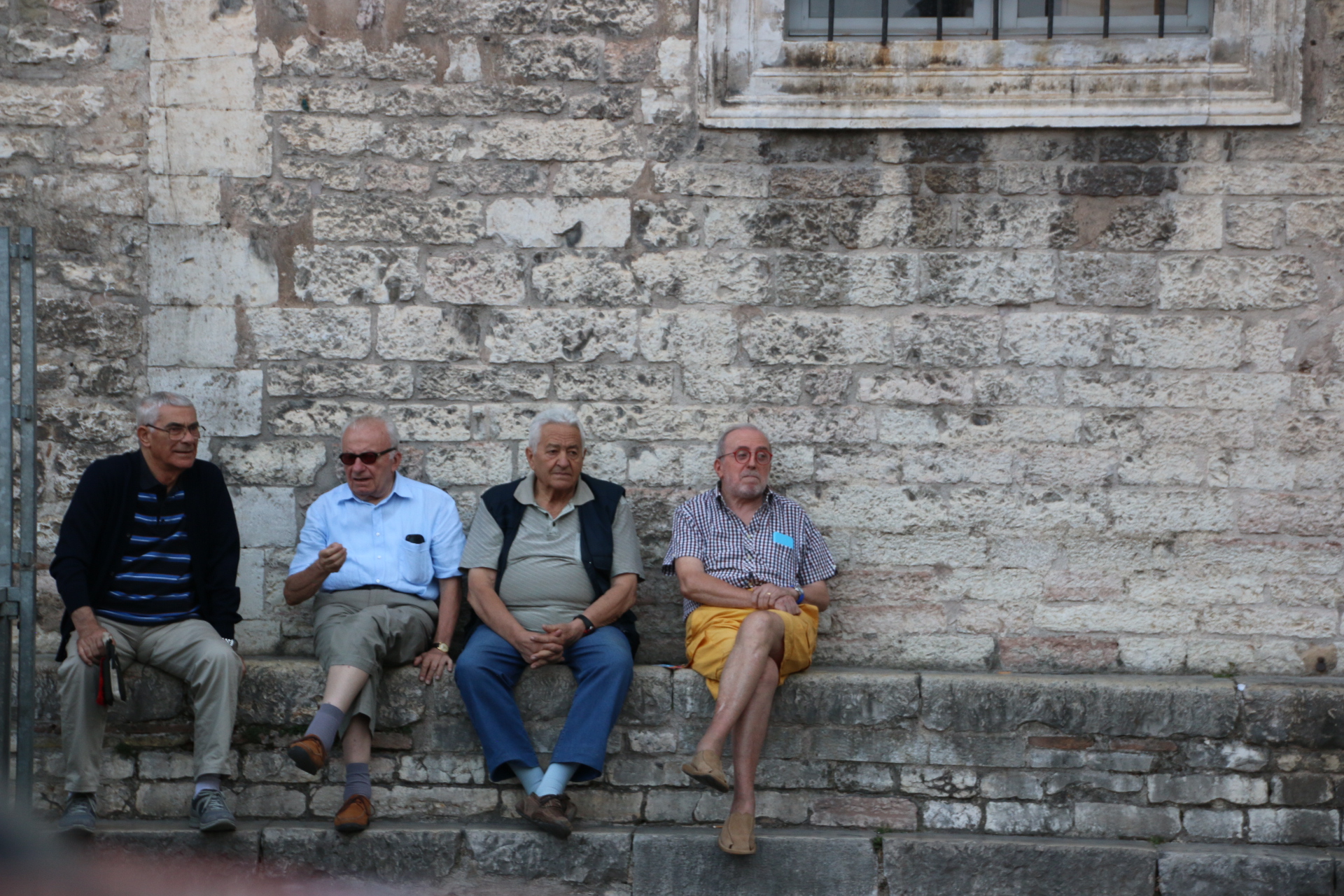
    Pergola is another ordinary but charming, warm place on the route. Narrow streets lead through from one sunny side to another creating shady patches for the locals at play. Animated chatter and card schools seem to be the order of the day.

    The castle at Frontone can be seen from miles away standing erect over the hills and low mountains of its immediate neighbourhood.

    Close up it stretches up high into the sky whilst the rest of this cobbled medieval village shudders in its shadow. The views from the walls show how much the landscape is changing.

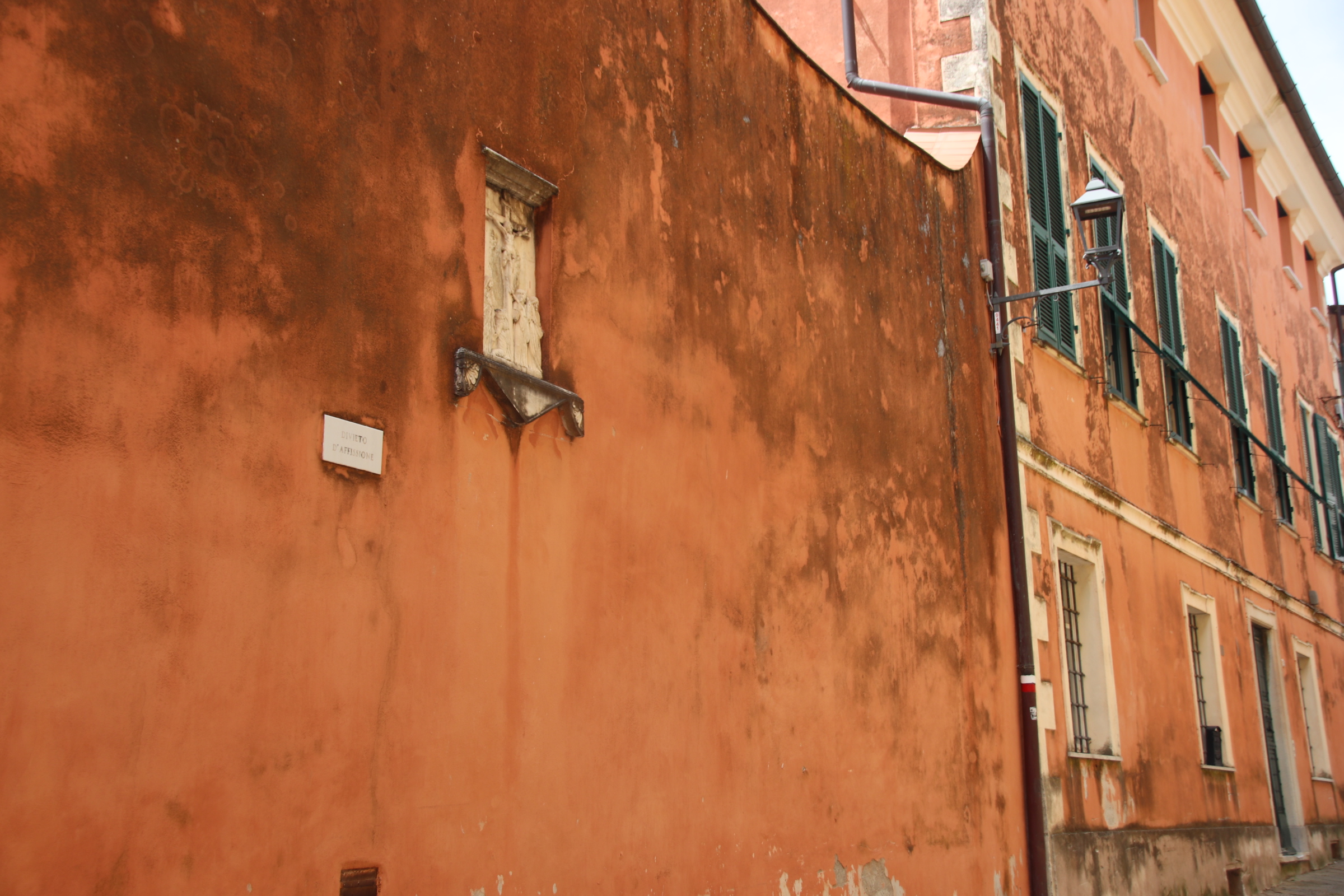
    The last place on this mini tour is Cagli. Again a huge fortress guards the entrance to the town. Once negotiated it is a downhill walk through the streets to the central plaza where wonderful faded buildings create a perimeter of flaky plaster and ancient, muted whitewash. The locals, as everywhere, collect in groups to chatter the evening away.

    So that’s it. You could drive on a few km to see the view from the top of Mt. Catria. Or you could have dinner in Cagli and call it a day. I decided on the latter.
    Along the back roads of La Marche

    Whenever you get a chance to explore a new area, ignore the glittery postcards, the guide books and head for the back roads. Of course a car is essential to get you away from the main tourist sights and onto the those little narrow roads that reveal surprises and amazing sights around every corner. This is a 40 km route in La Marche that is a little gem of a journey that takes in a collection of hidden treasures for the intrepid traveller.

    The route runs along the ridges from west to east, south of Urbino nd ends in the foothills of the high hills and mountainds of Italy’s central spine. Beautiful country spreads out on both sides of the road, rolling away to the distant horizon in folds.

    This is enough, in itself, to take one’s breath away but wait until you stop at some the places along the way. Ostra Vetere is a sign of things to come when it appears in the distance above the farmland with its medieval facade becoming larger and then falling away behind me as I drive past.

    I am heading for Corinaldo to start my little tour. The only sign that this place is about to give up its wedding cake secrets is the large fortified gate in the middle of town. Through the arch round the corner and there is the medieval escalator of stone steps to take punters into the heart of this pretty, peaceful place and, yes, a wedding has taken place and the happy couple pose in front of this romantic backdrop, snapped by cameras and a whirring drone. The only other people here are a scattering of folk finishing their lunch in snug little terrace restaurants.


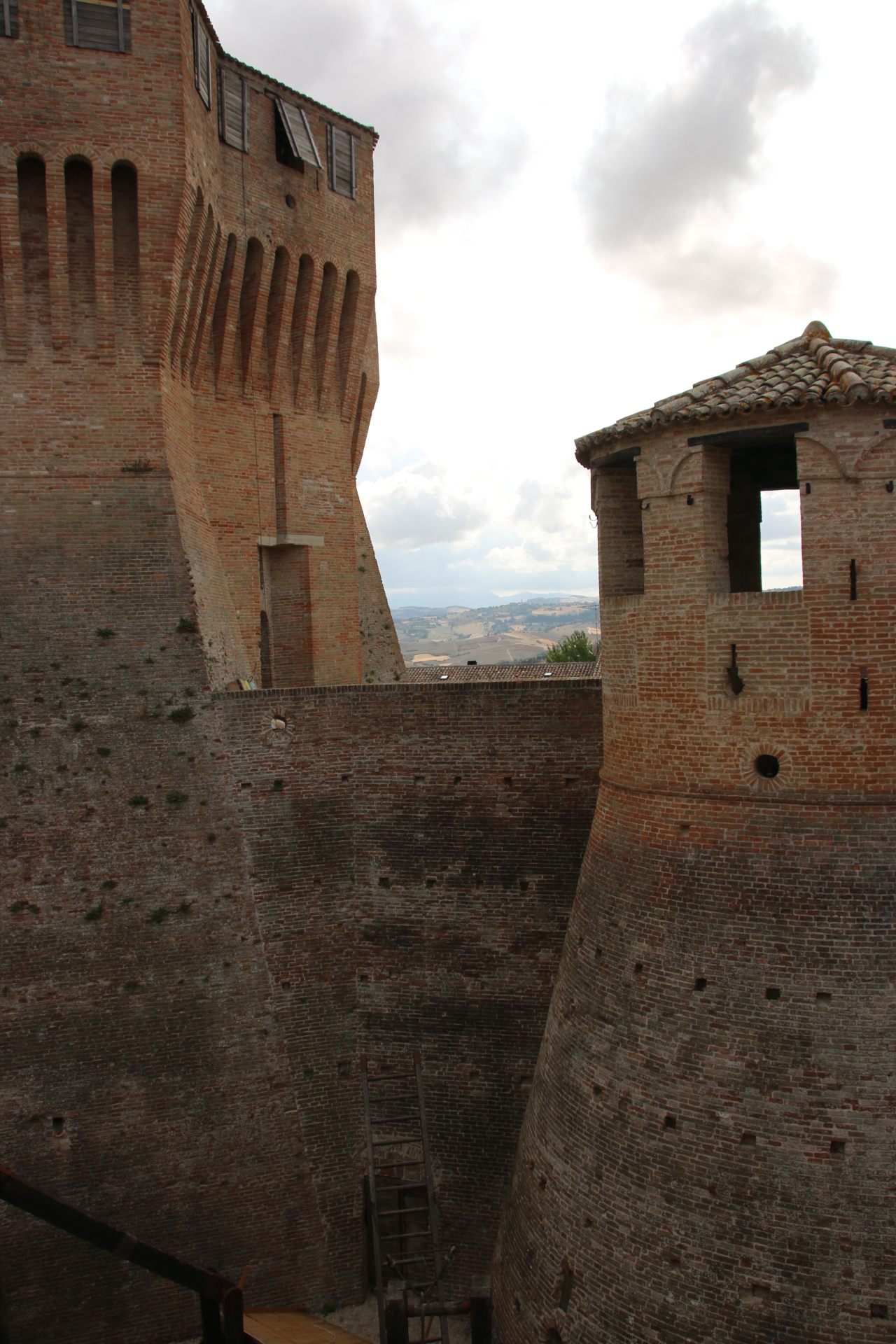
    Mondavio sounds l like the country from a Marx Brothers’ film. It doesn’t look that impressive from a distance. Up close and intimate it becomes a set for Game of Thrones, not that I’ve seen a single episode.

    A cobbled-streeted villages with its 12th century church merges with its main protector with a moated 13th century castle, all made from bricks. They must have needed millions and millions and so clever. The fortifications curve and flow around the town, the lines built to. presumably divert cannon balls along their contoured fronts.

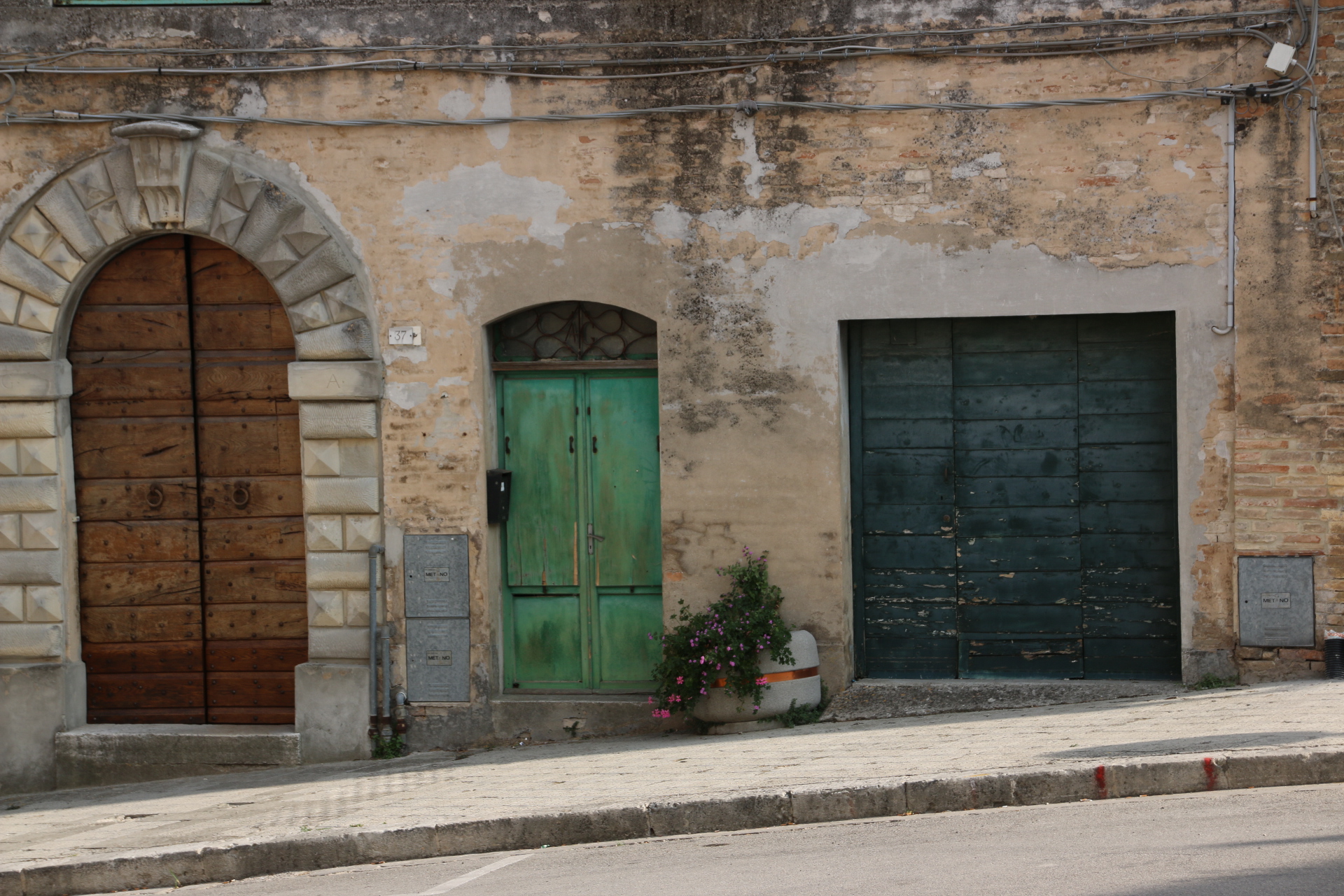
    San Lorenzo in Campo is an small, charming, ordinary town. We hit it later afternoon a the locals chatter in their favourite patches of shade.

    This lot thought it hilarious that their 2-stroke road-friendly, three-wheeled, vans were the focus for us visitors. I asked them to pose with their vans and they agreed with great hilarity all round.

    To be continued.