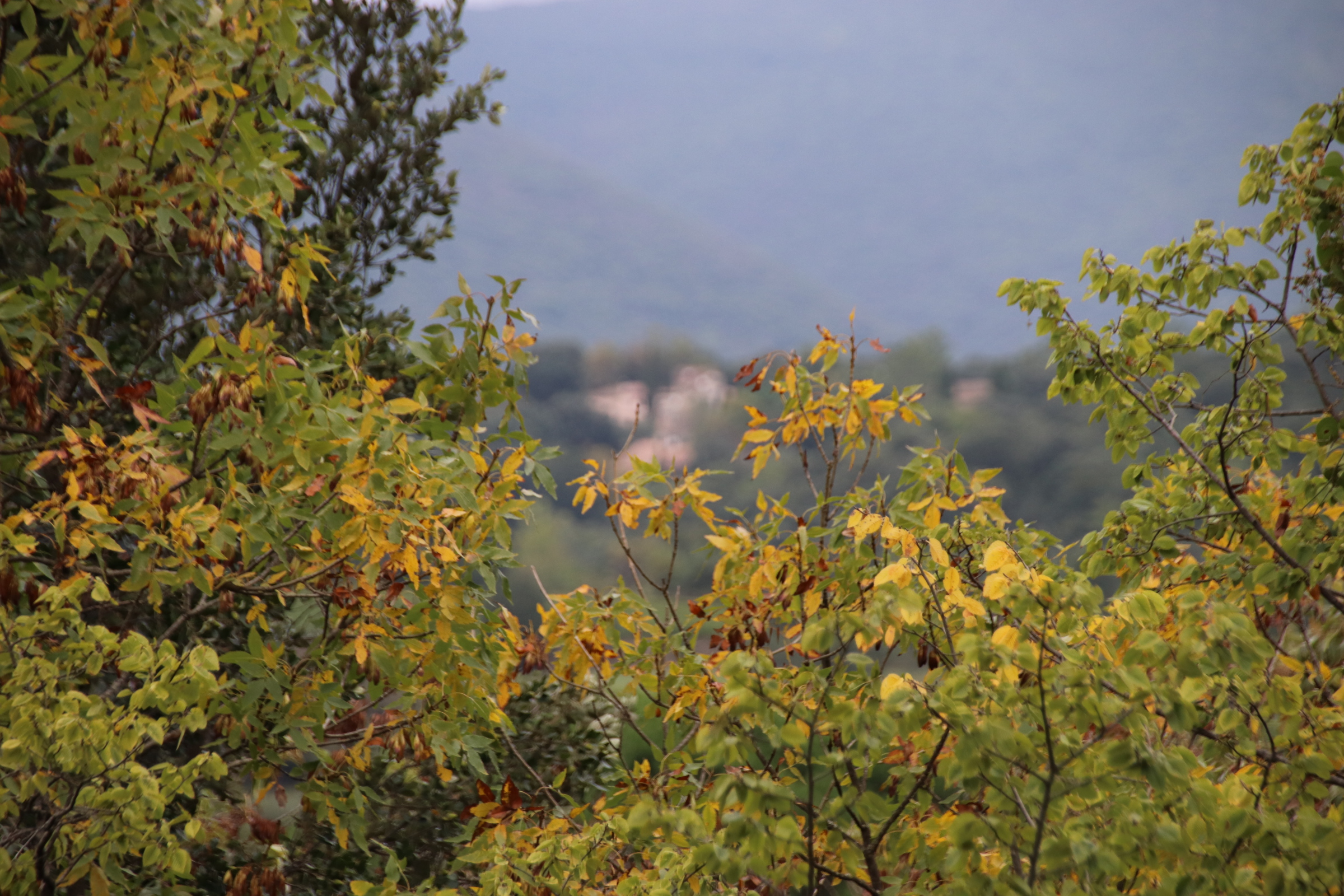
A circular route takes us into the high country. Narrow roads, so well maintained & surfaced clawed across the landscape to the far, faint horizon. Mixed woodland, girding its loins to begin the change from green to brown to bare, covers straight ridge lines and sharp-sided valleys across the spreading landscape in subtle shades and interlace their fingers like a congregation of parishioners about to settle into prayer.

The weather drops a very wet load on this land, particularly in winter when the snow & ice melt. Streams & rivers have cut & hacked away at the land over the years leaving evidence of the power at work in the form of gushing torrents, sharp ridge lines or bottomless ravines. Man does the best to cope with such obstacles, building bridges & settlements at suitable places in an attempt to tame it.


Villages are small and ancient; old lanes & trails, designed for another age when feet and the cart were the main form of transport, hug the valley sides or crawl to the top to peer over to follow the chicanes down to the distant settlement far down at the next crossing over a tumbling water course. In places, the old tracks can be seen cutting a bend or smooth modern tarmac has been layed over the ancient route, providing a wonderful course for speeding motorbikes. Settlements can be too small to even mention – a handful of houses clustered around a small church & maybe a graveyard, but some grew to be essential to folk of the time – around here it was to provide sanctuary and respite to those passing on the Pilgrim’s Trail.
St-Gervais-sur-Mare is a stunning little village that grew up in the 13th-century as a staging post on the route to Spain.
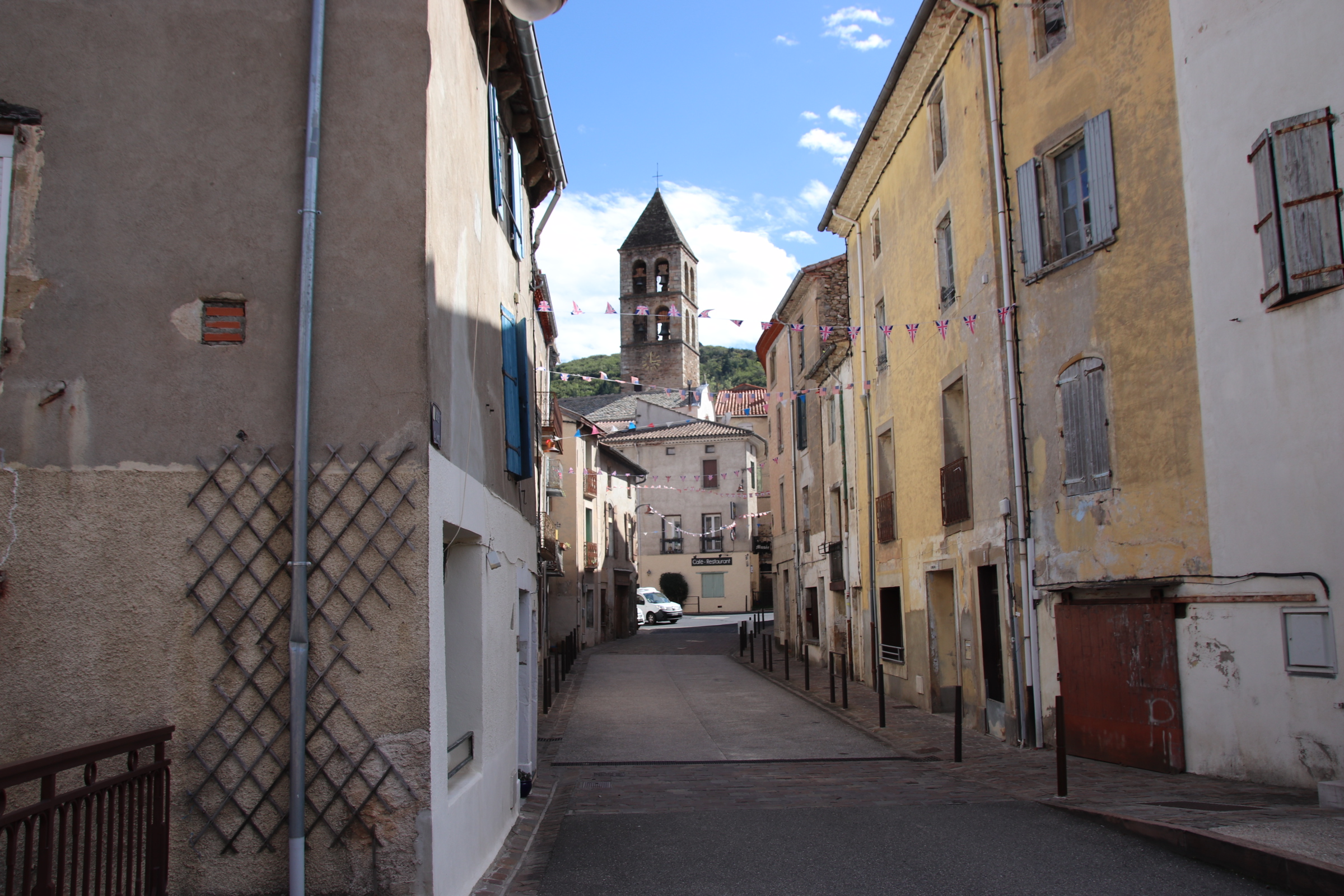
A largish village, it is dominated by the nave of the church of Saint-Gervai-Saint-Protais. Wide, ancient steps lead up past the arched doorway and historic dwellings to the ramparts & the château.


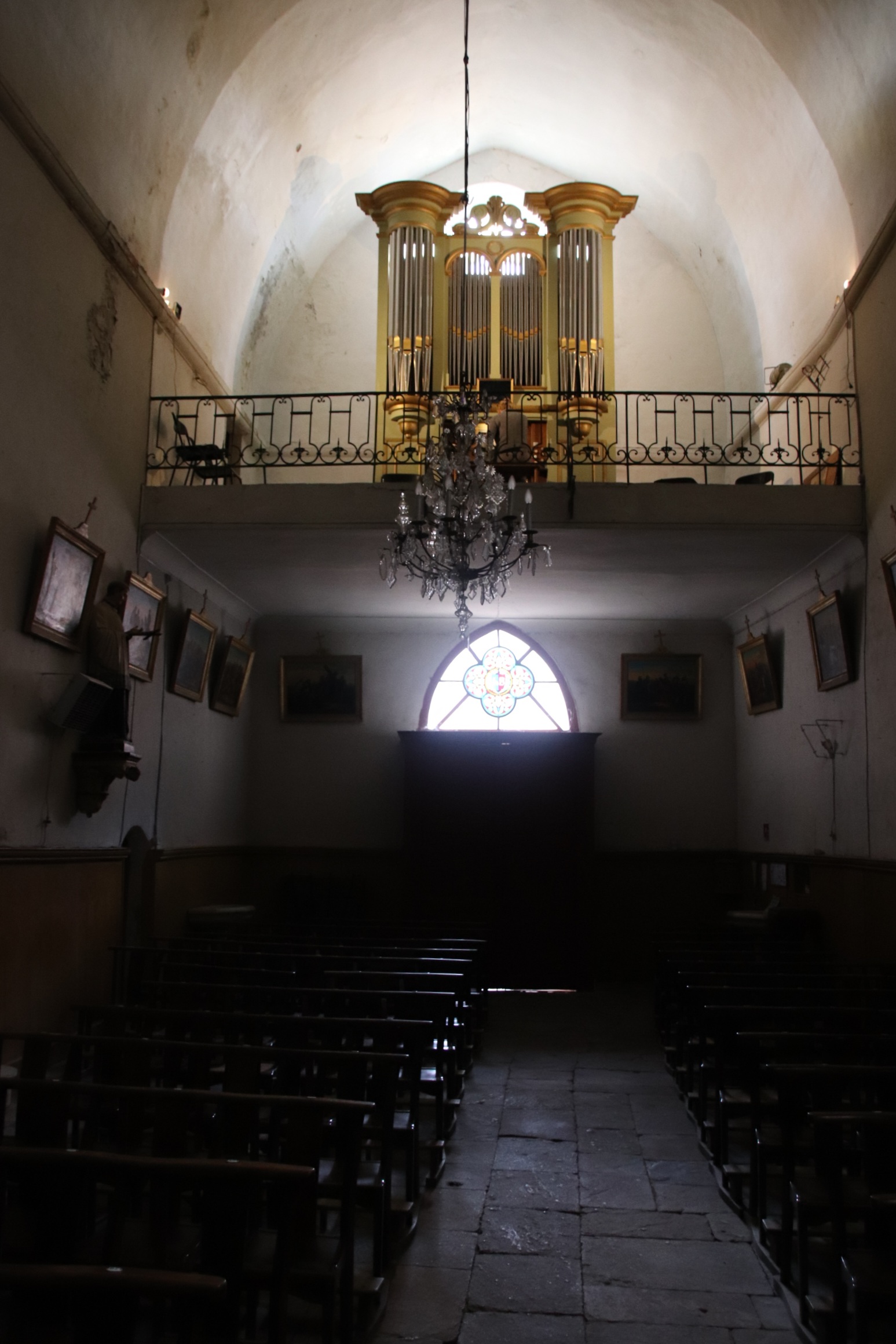
Peeking inside the historic church, an old lady follows us in and points out in local, incomprehensible French a side chapel containing a font made from the same marble as used in Versailles by French kings (I think!). She turns out to be the organist – having left through the front door, she appears up on the organ loft & proceeds to give a private rendition of some wonderfully poignant piece that echoes around this empty space, leaving emotions exposed and senses shredded.
The high spot of this place is the village square. stands on above a small river that runs through the middle of the settlement.

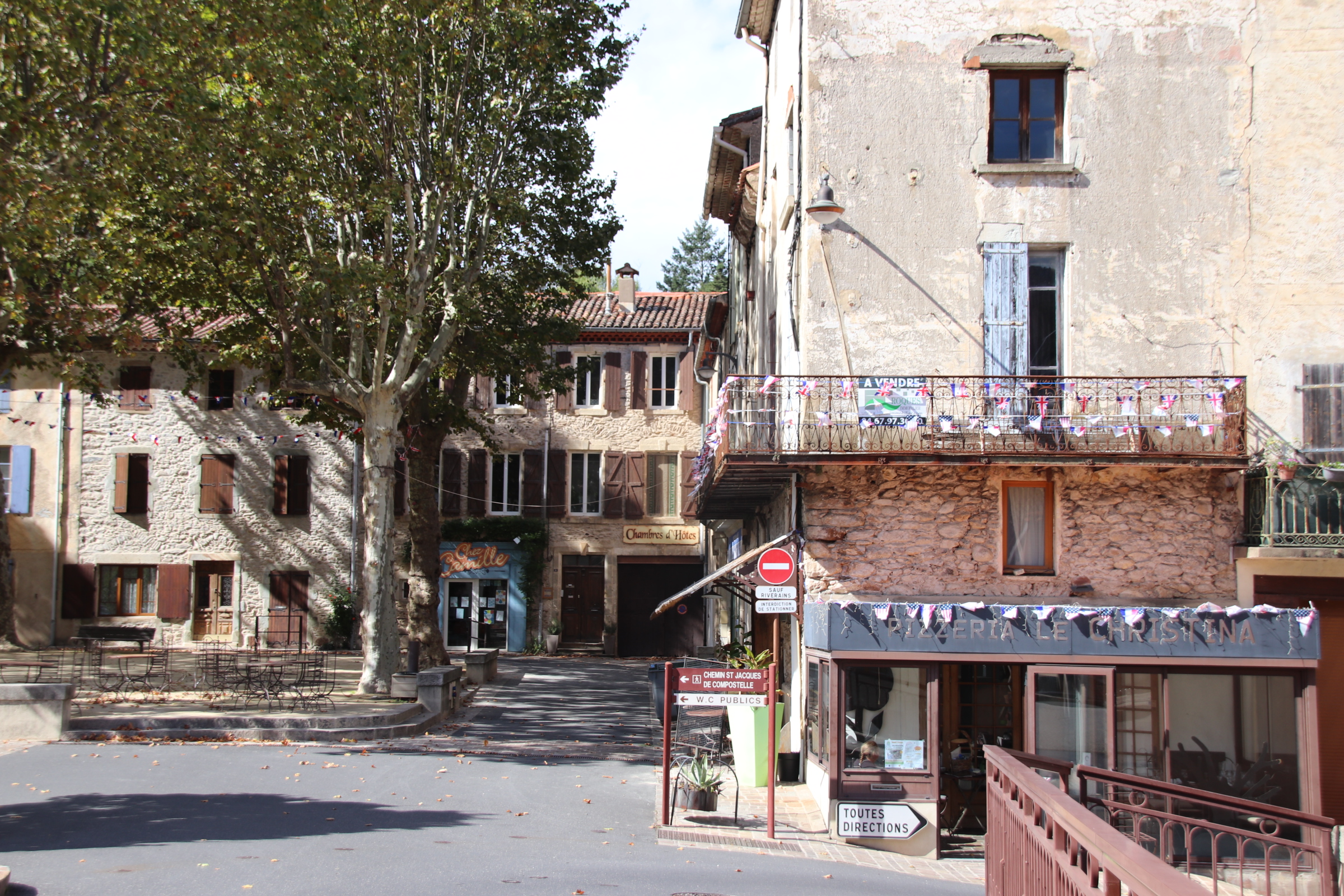

If any place is quintessentially French, it is here.

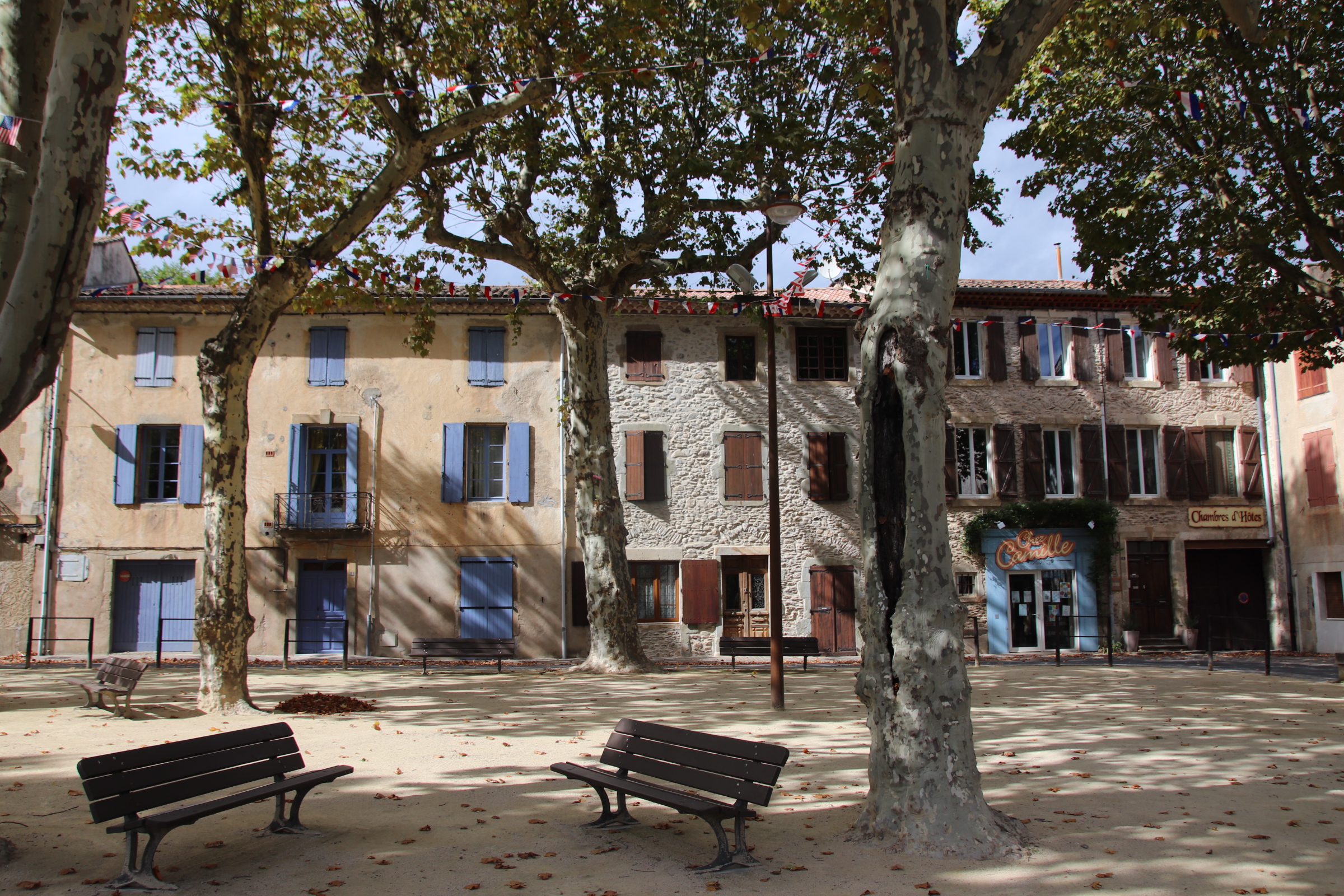
Elegant buildings form 3 sides, with the Post Office, two bars & a hotel tucked into one corner & at the other corner of the same side a second bar;

empty tables with rather ornate chairs, cushions piled up under cover, await ’the rush’ (although, I’m not sure there’s going to be one any time soon)


a war memorial reminds everyone of the nation’s past; shade is provided by staggered plane trees – high & impervious to sunshine & showers.
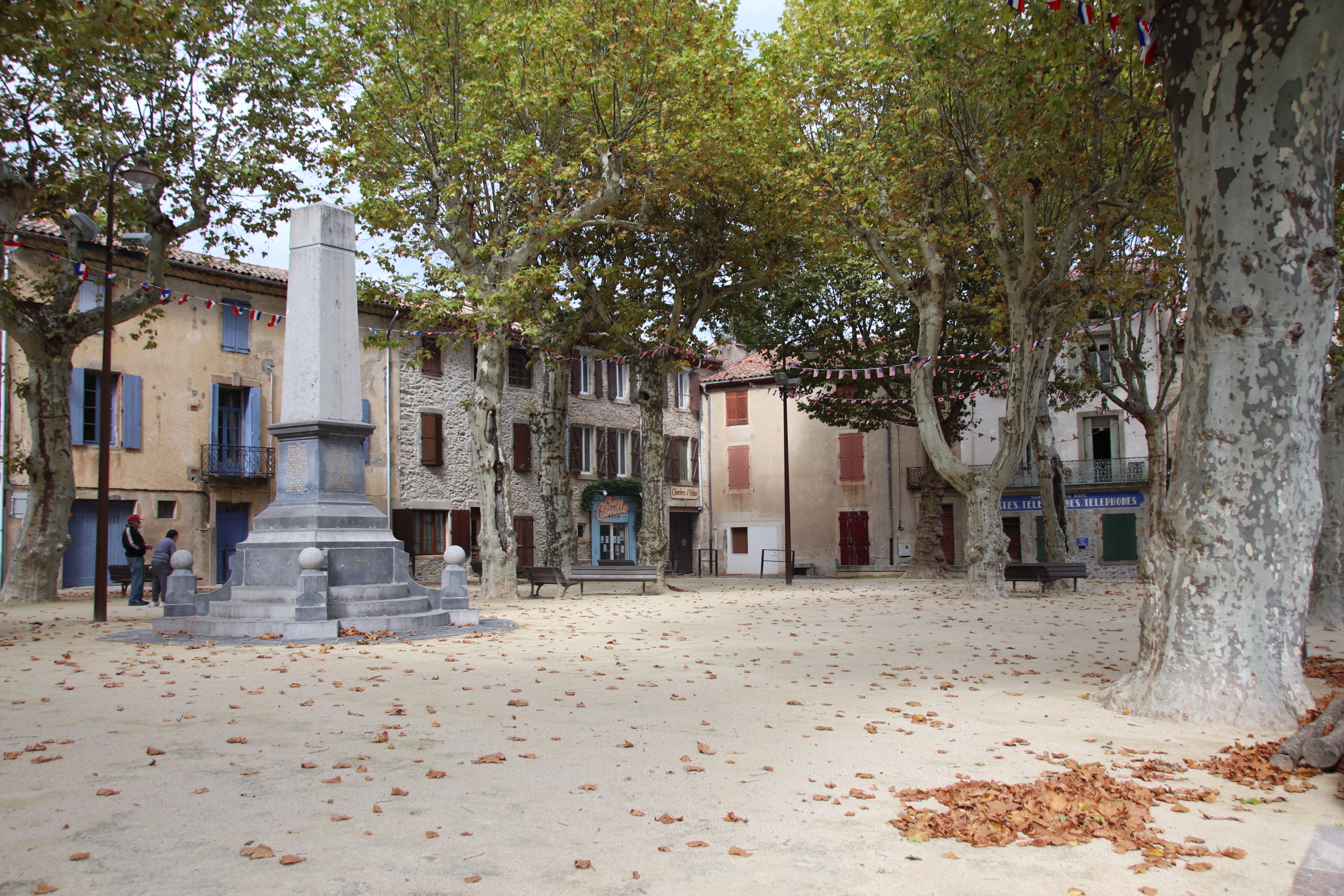

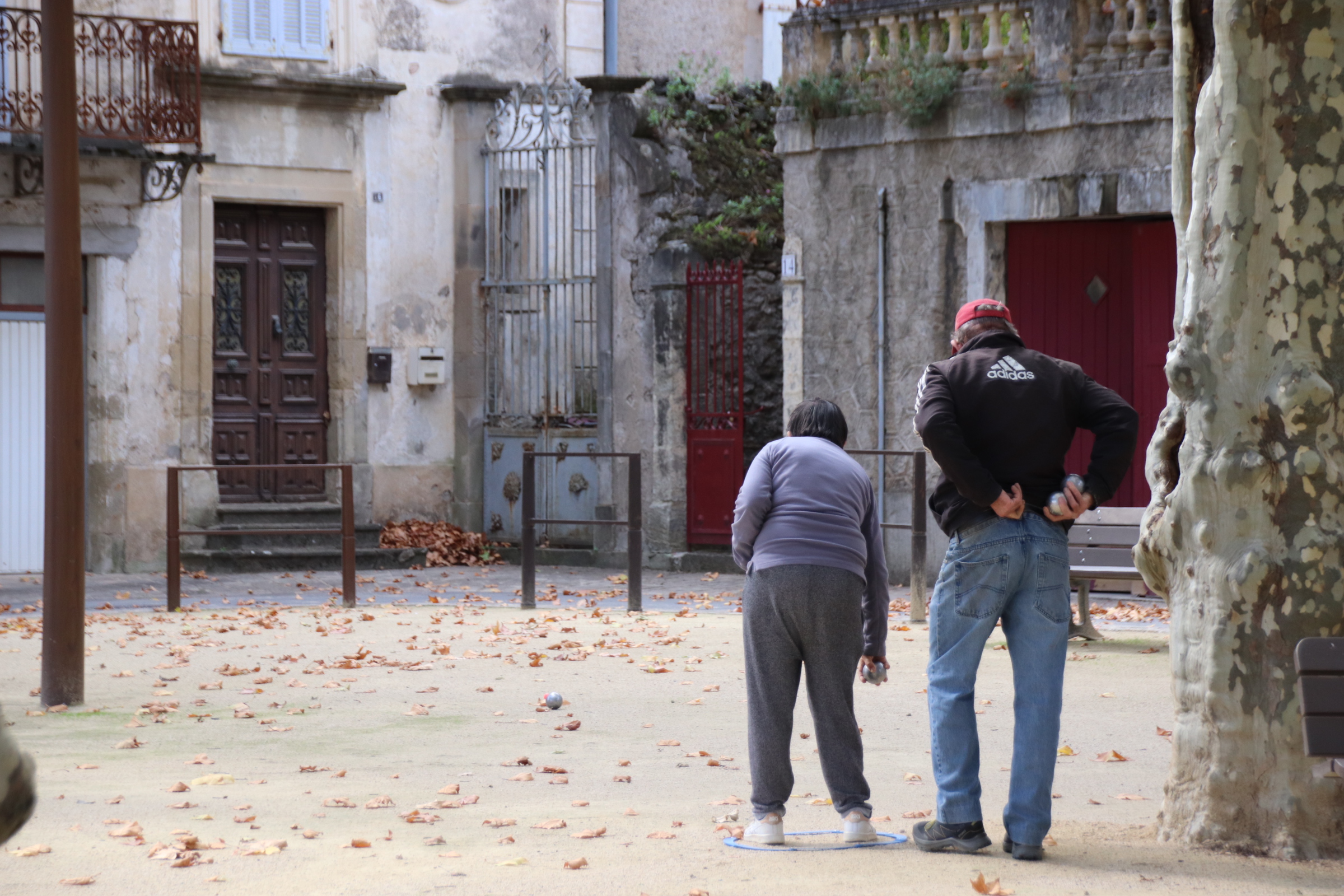
To complete the scene an old couple come out for a game of petanque, chatting away and traversing across the crunching stones between camouflaged trunks, clunking their boules as they go…. all so French!
 My Travel Adventures
You must be logged in to post a comment.