Flying home from Sardinia provides a further day to explore the historic city of Olbia. Originating in Greek times as a coastal port, it was developed further by the Romans and later in medieval times. The layout of the old city is quite simple. Corso Umberto is the main drag, up over the low hill and down to the marina, full of luxury yachts & quayside parking.
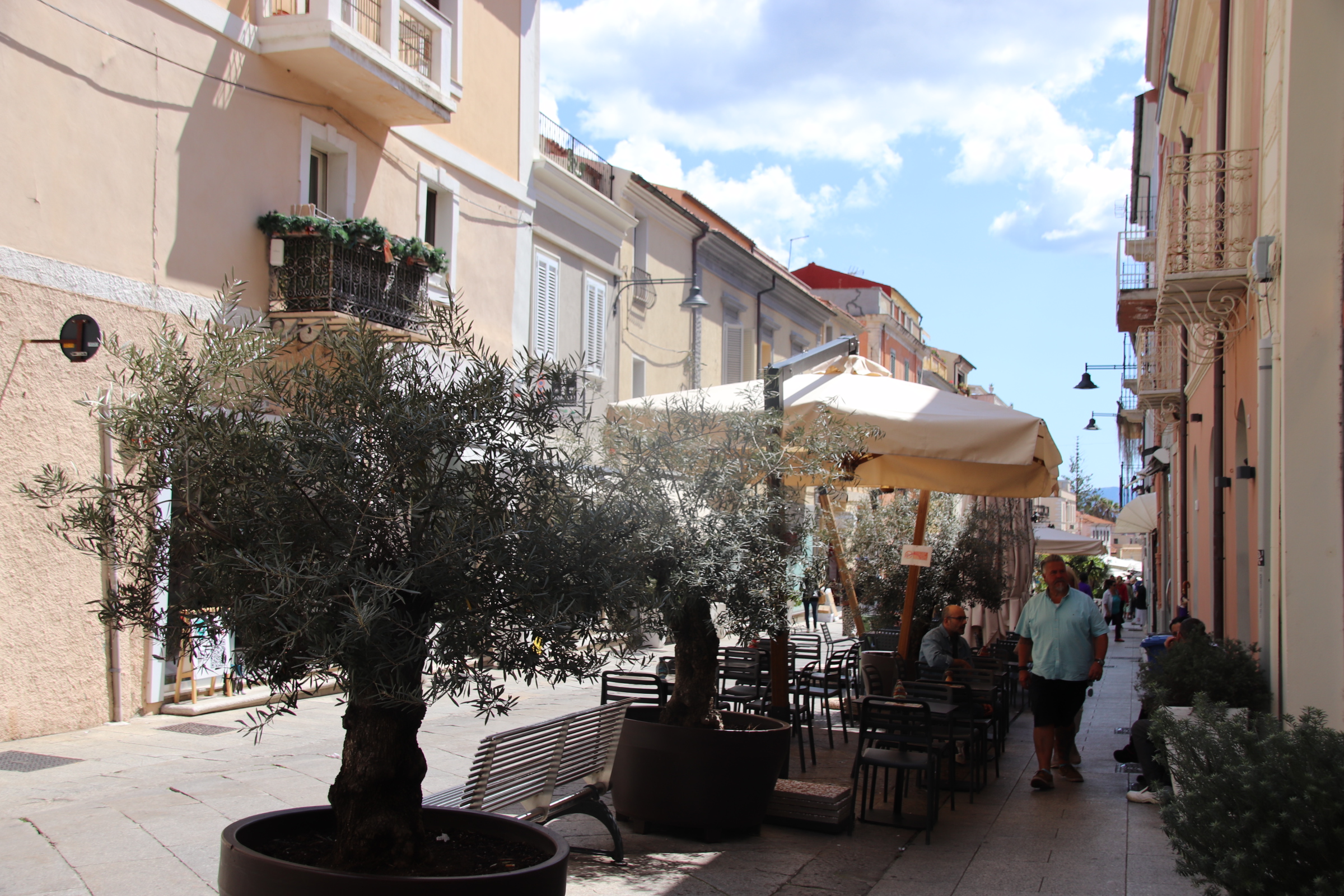
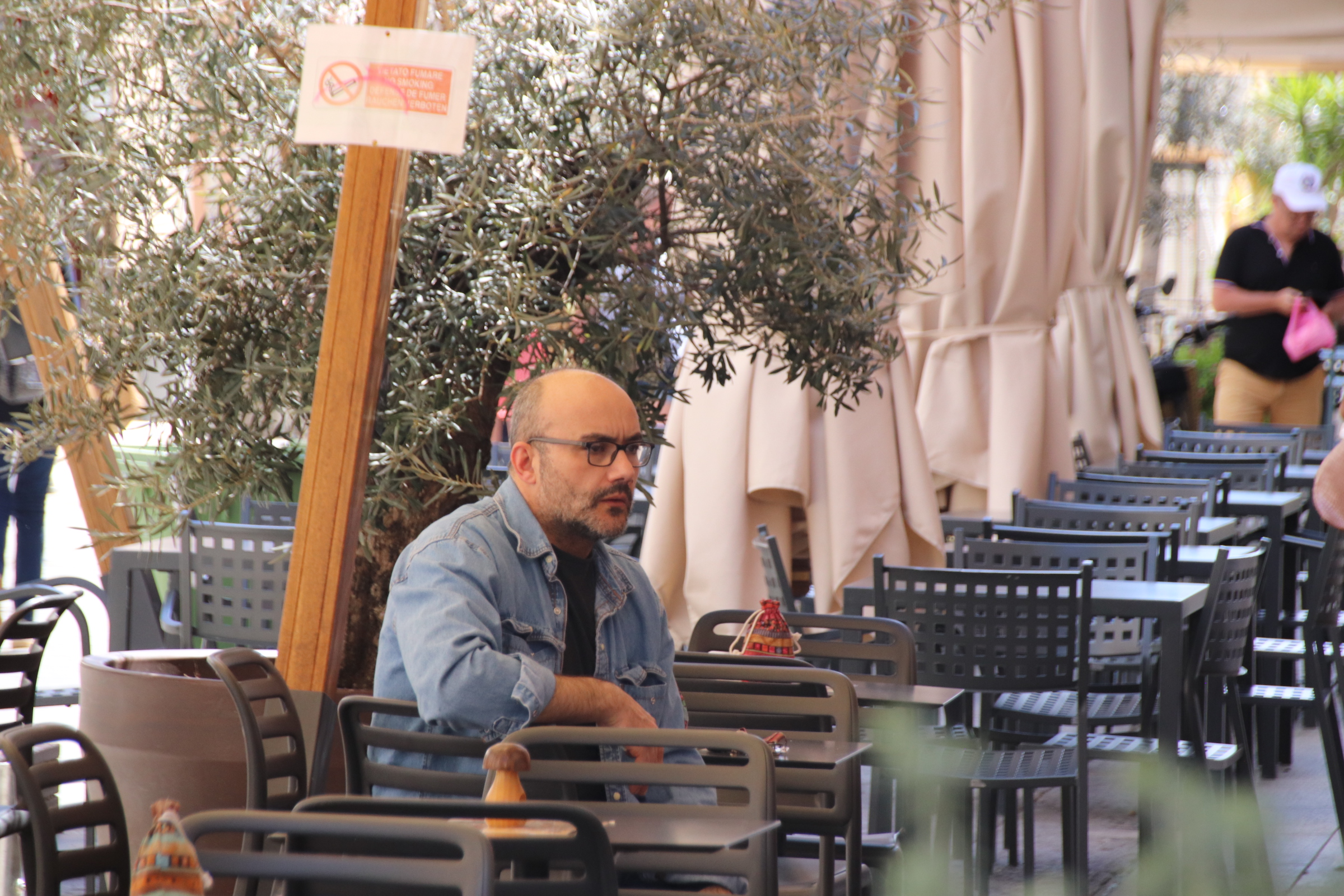
On either side elegant buildings line the 750 metre route. Cafes, bars & eateries have spread out onto the stones in an attempt to catch passers-by in their net of QCR codes, menus & images of dishes, meals & drinks.
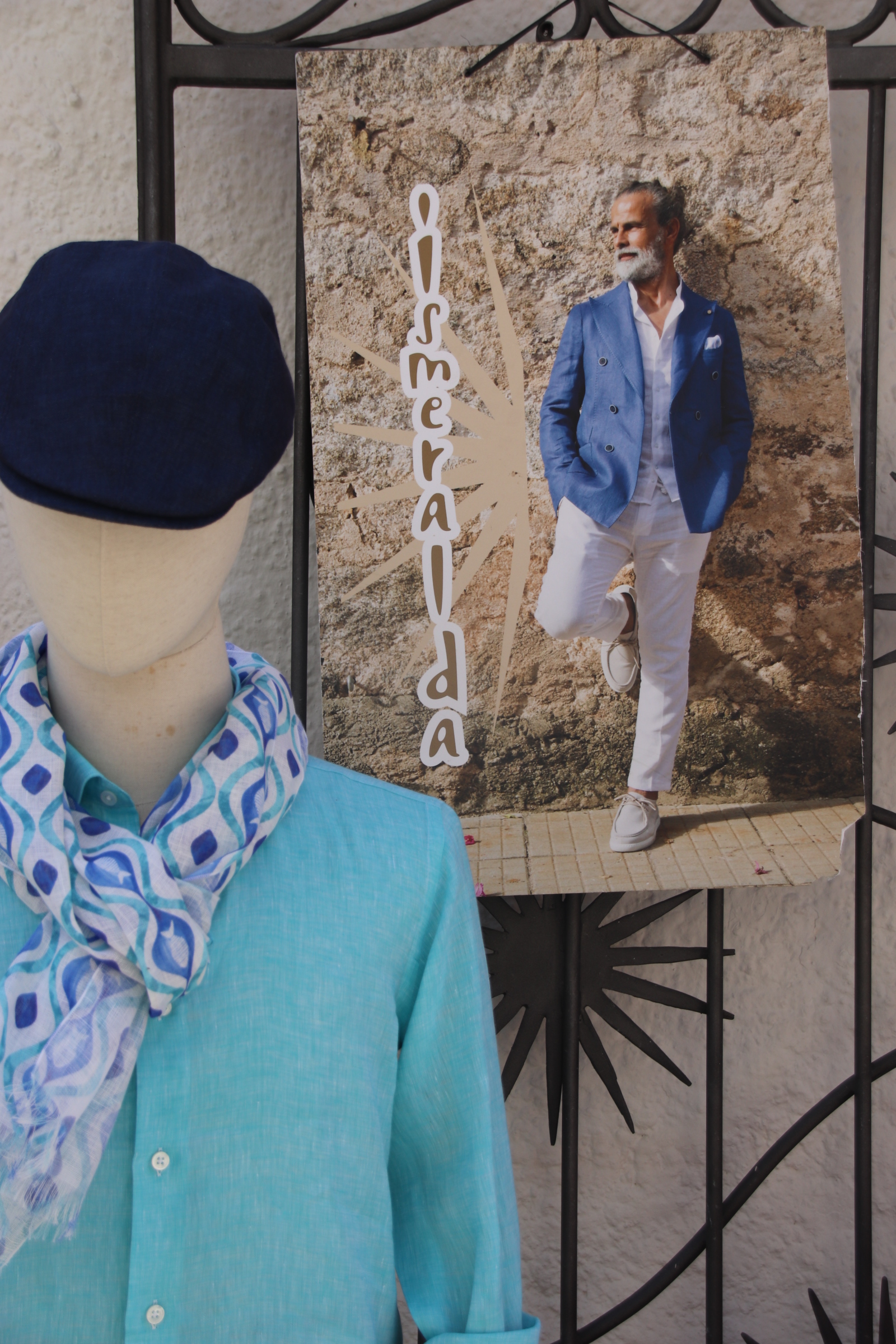
Expensive summer clothing for men & women gases out of small, intimate shops, sucking in customers with displays of what you might look like if you paid their exorbitant prices for pastel linen & flowing, light cotton.
The Basilica of San Simplicito dates back to the 12th Century.
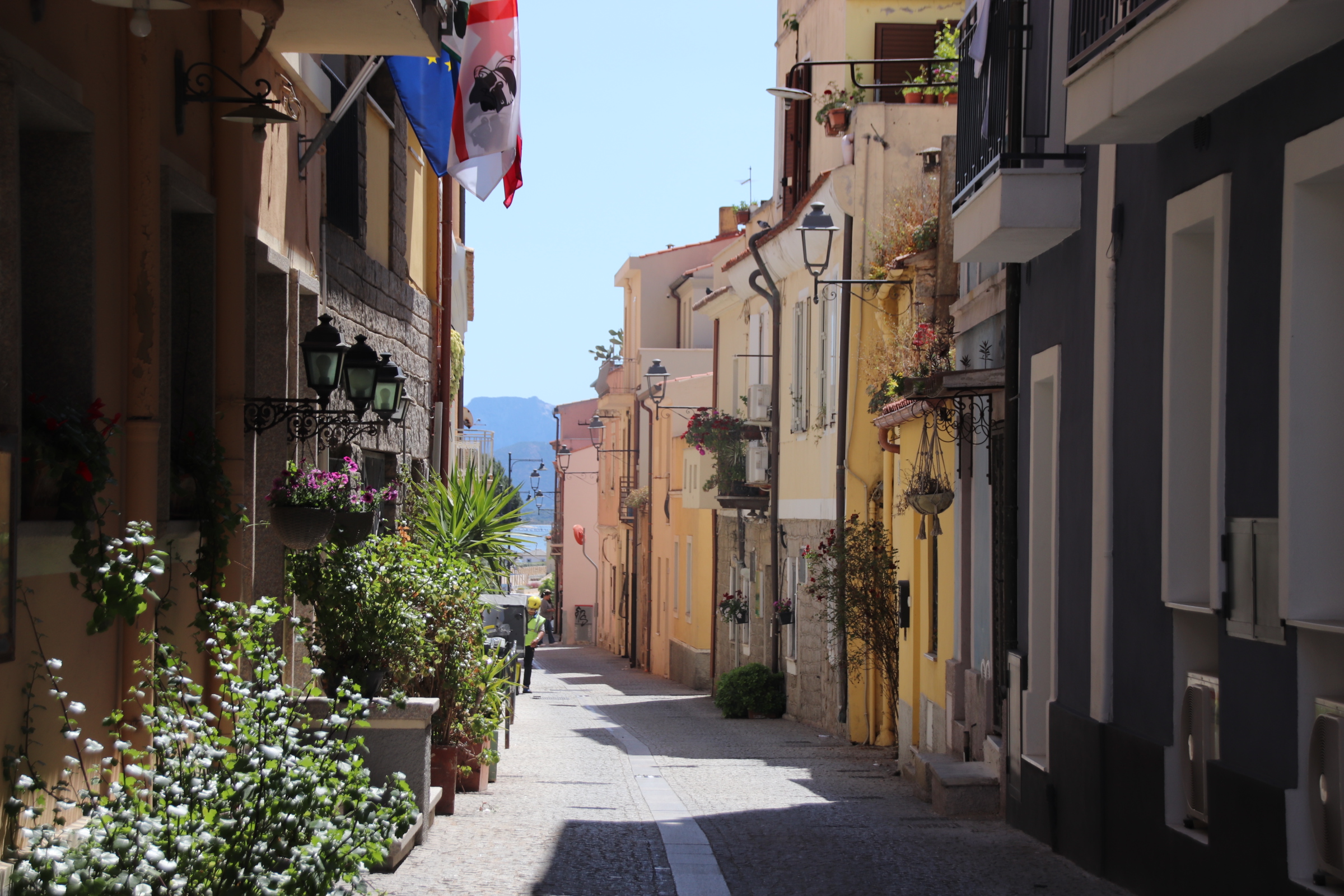
On each side of the of the main promenade, narrow stoned alleys & lanes lead into a maze of old buildings where unique bistros & restaurants squeeze a presence out onto the small narrow streets and expensive clothiers sell their luxury wares.
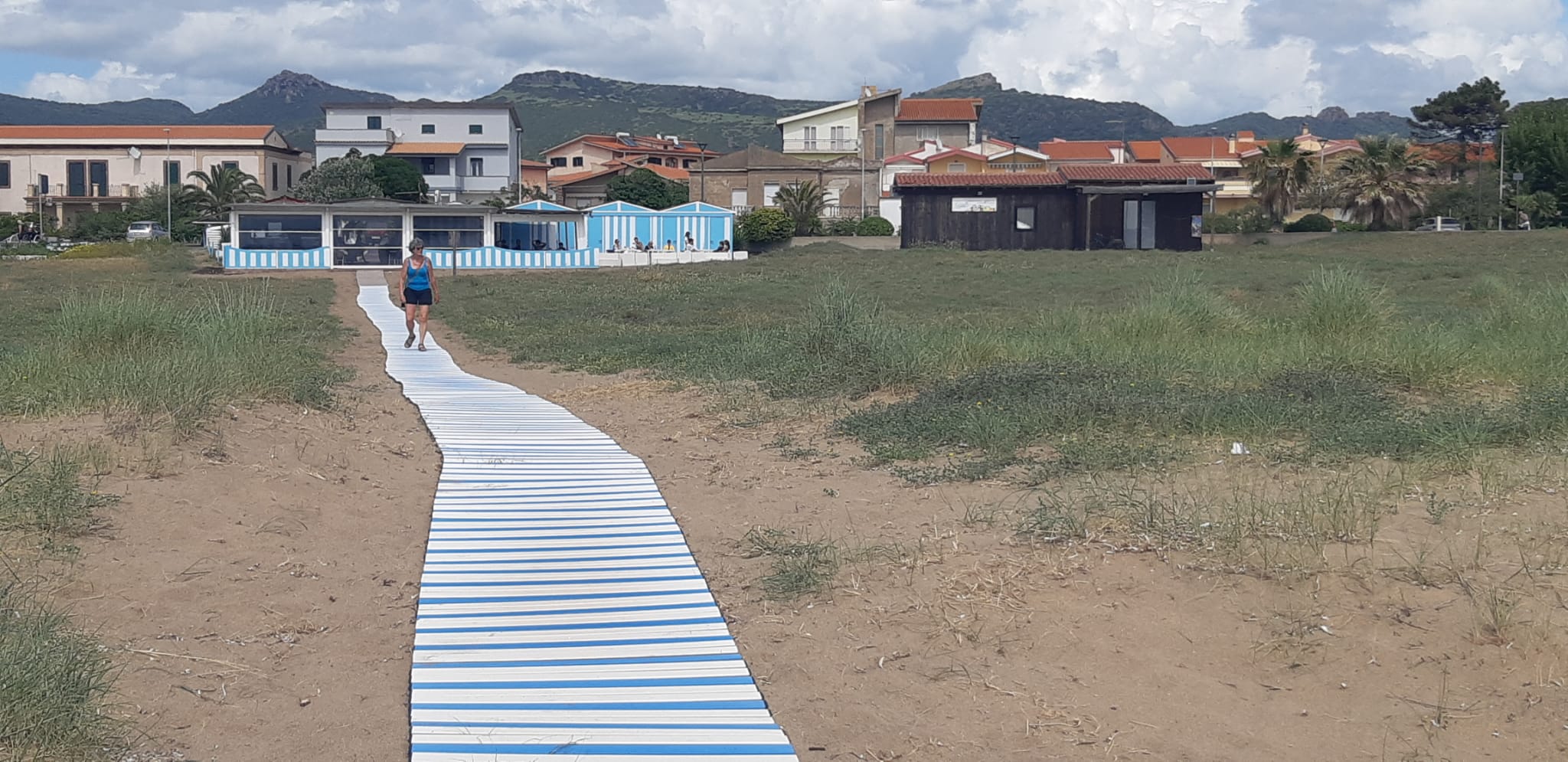
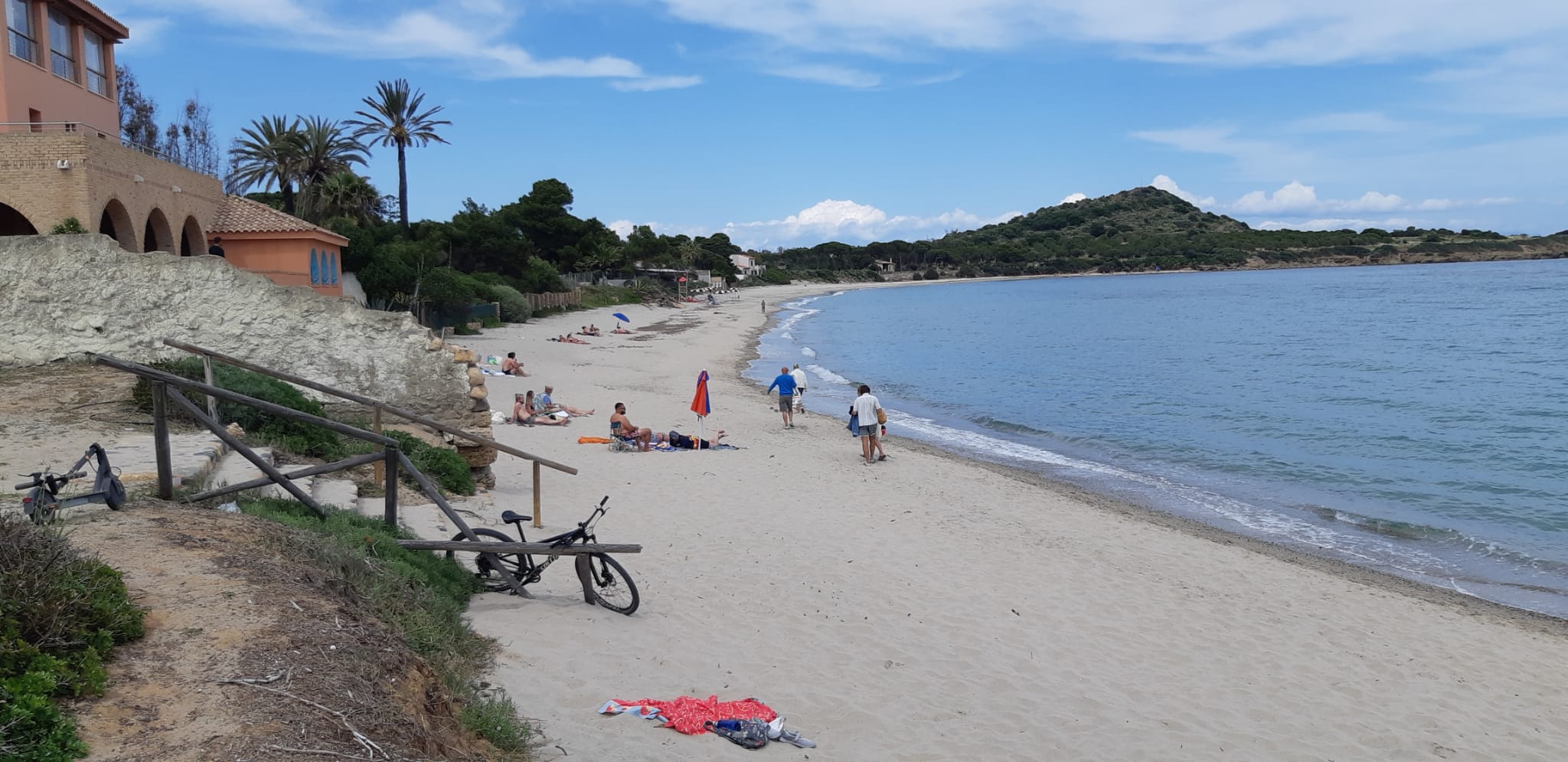
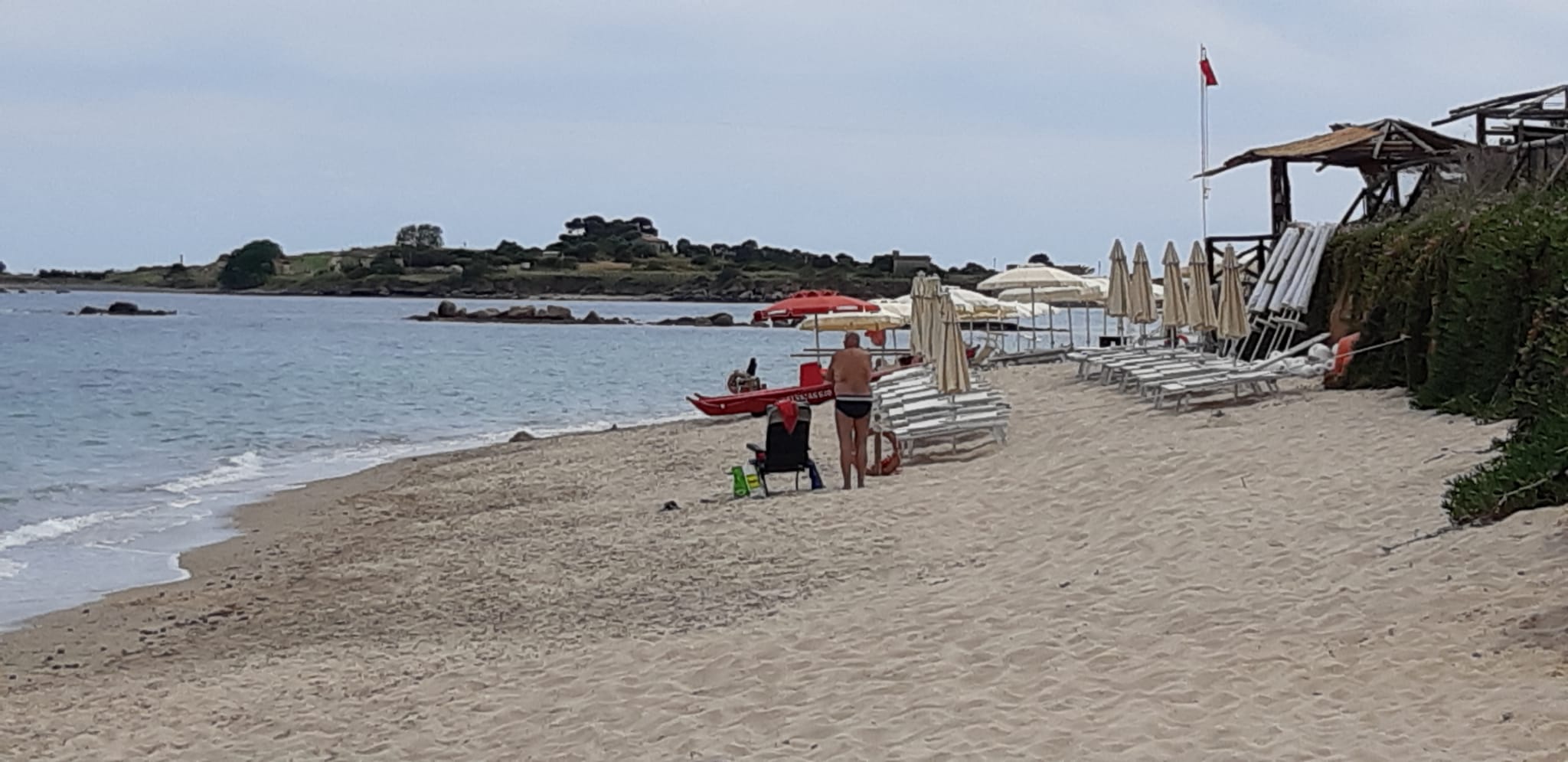
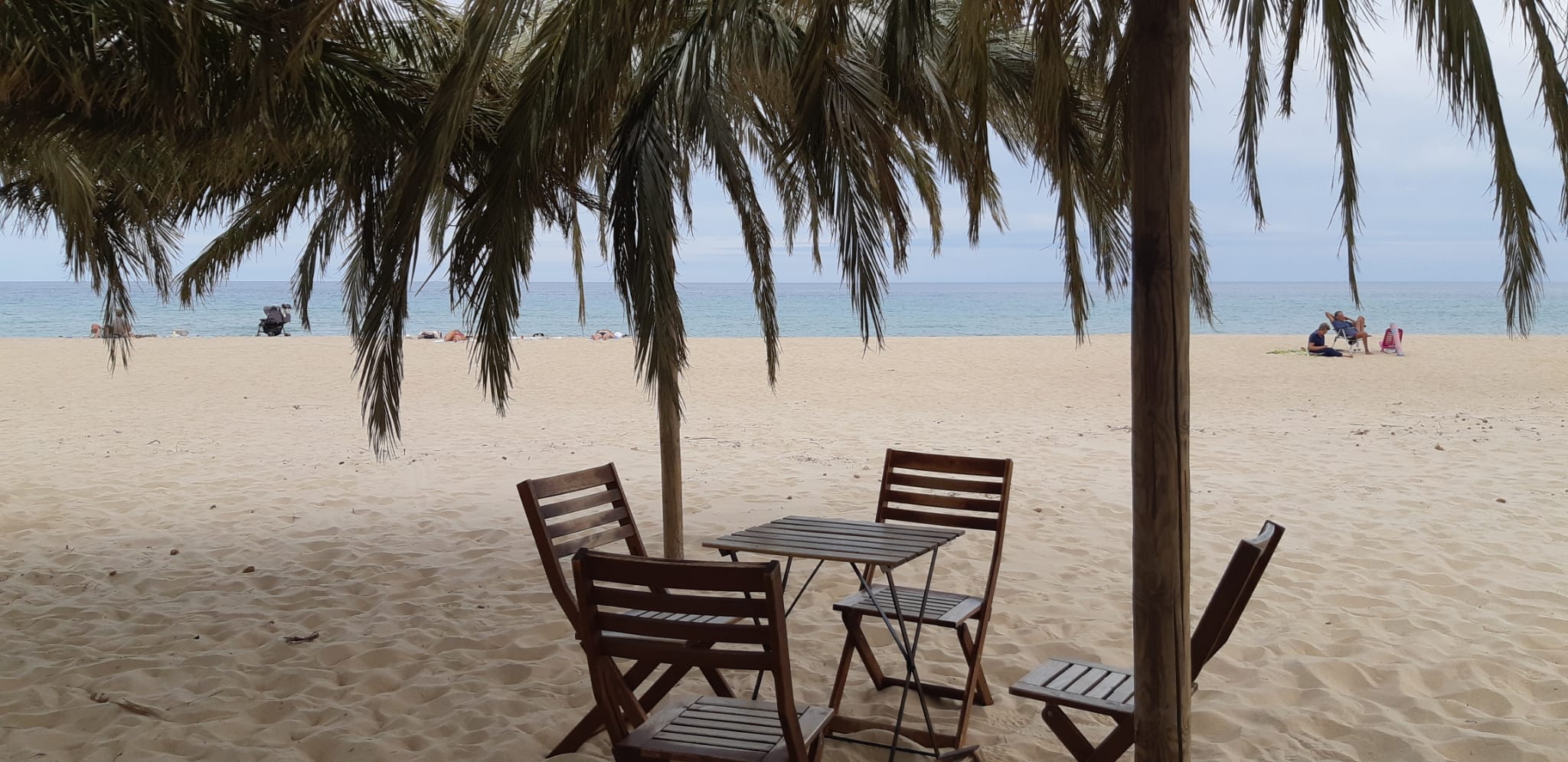
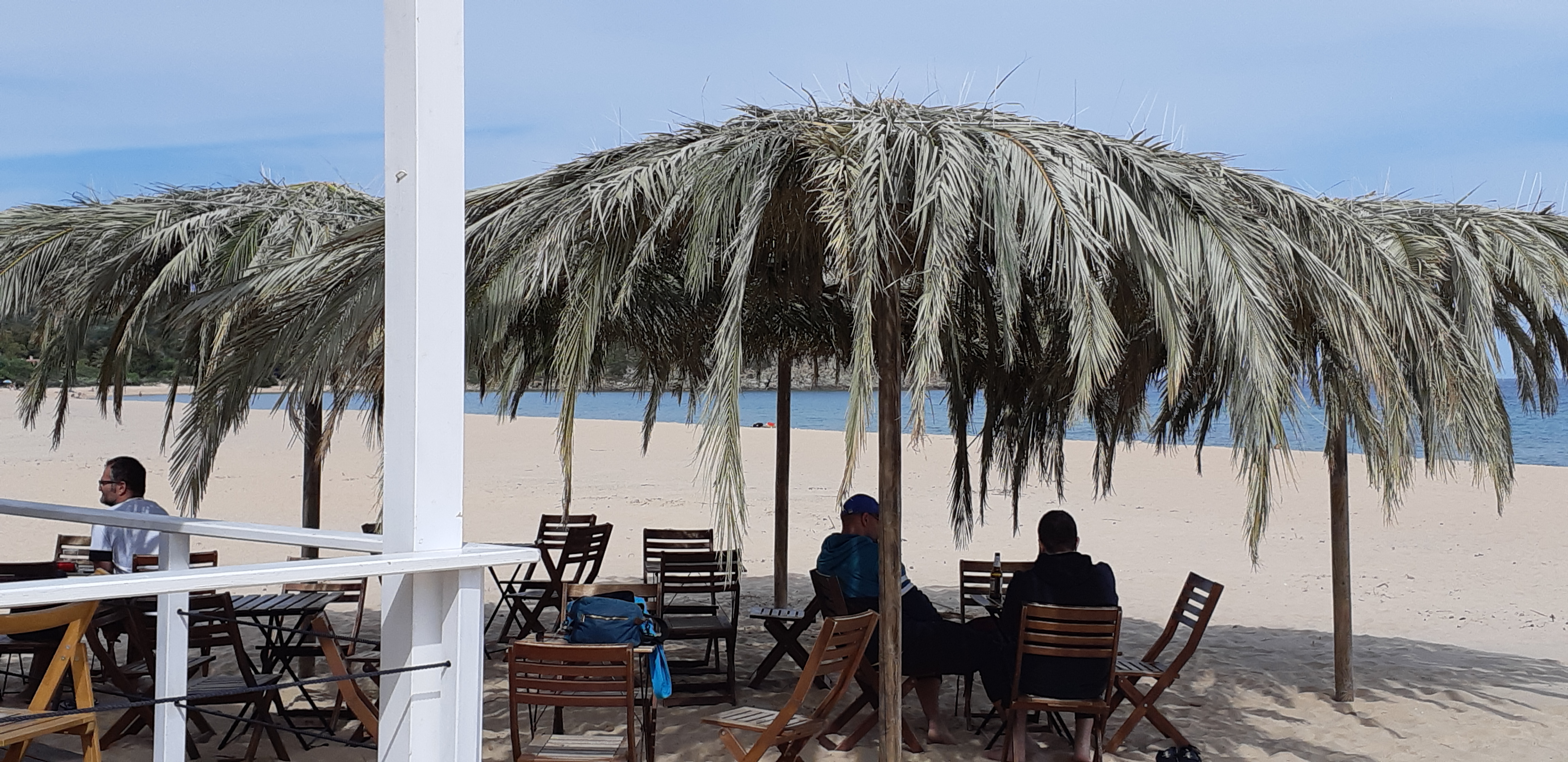
The last few days have been spent sampling Sardinia’s coastline and the beaches in particular and exploring the south of the island.The beach at Bosa typifies most: wide silver-soft curves around turquoise/blue waters; usually a single shack/beach bar controls the beach; it may have a handful of sunbeds to share (although you can drop your towel almost anywhere on all of them).
Pula is our base further down the south west side of the island. An ordinary town with a mixture of businesses and holiday homes. What it has going for it is a number of reasonable restaurants 8n the square and around the church. The latter is home to Fedrica’s where we ate most often.
Visiting in May makes everything so easy. It is pre-season – no need to book tables in restaurants, easy to park, beaches are empty, as are the roads. Everything is very peaceful, calm & relaxed.
Pula’s town beach is on the way to the tower at Nora situated on a promontory at the far end.
The beach at Chia was the best. Gob-smackingly beautiful it could have been the Caribbean or a south sea island.
Spiaggia Di Tuerredda was similar.
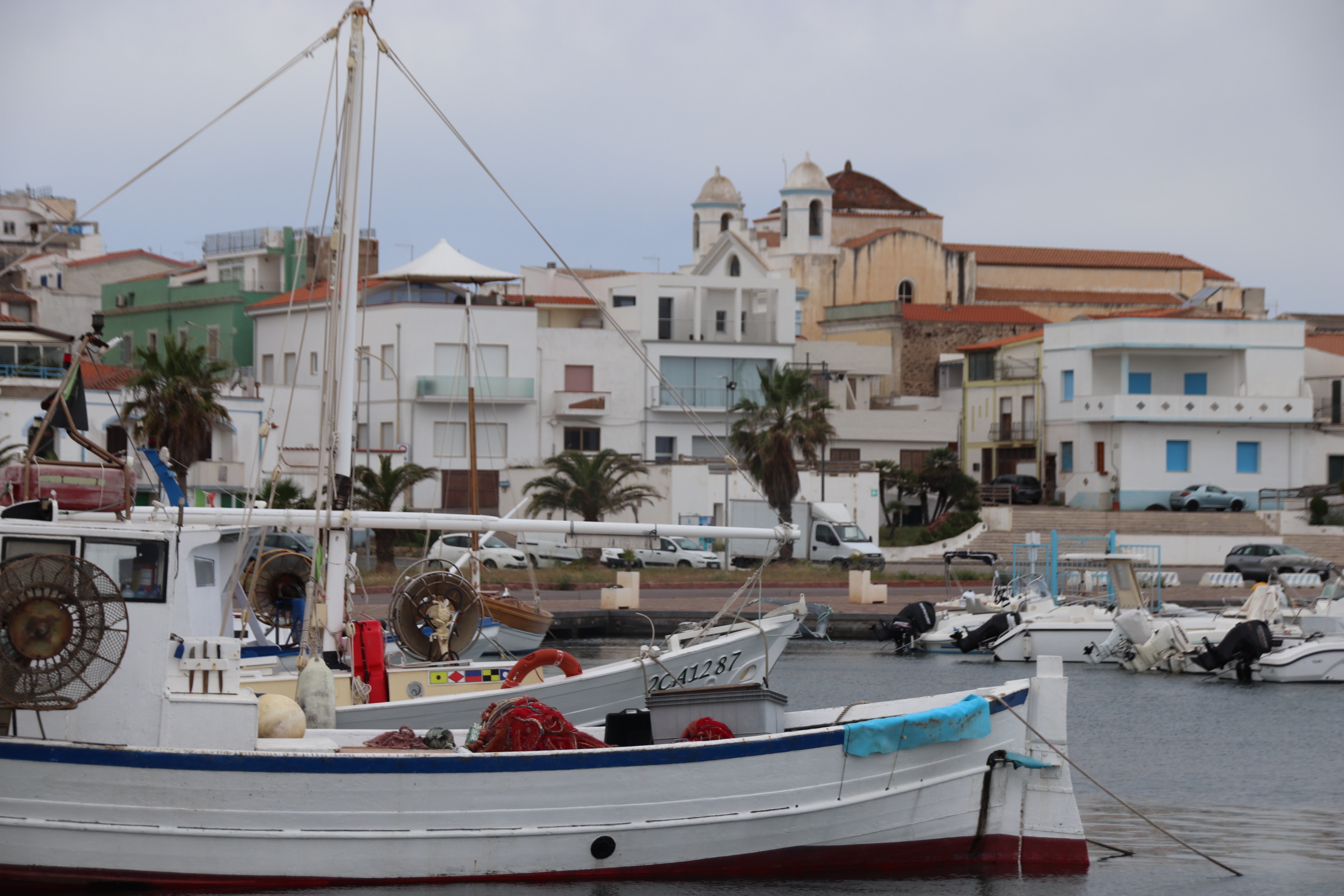
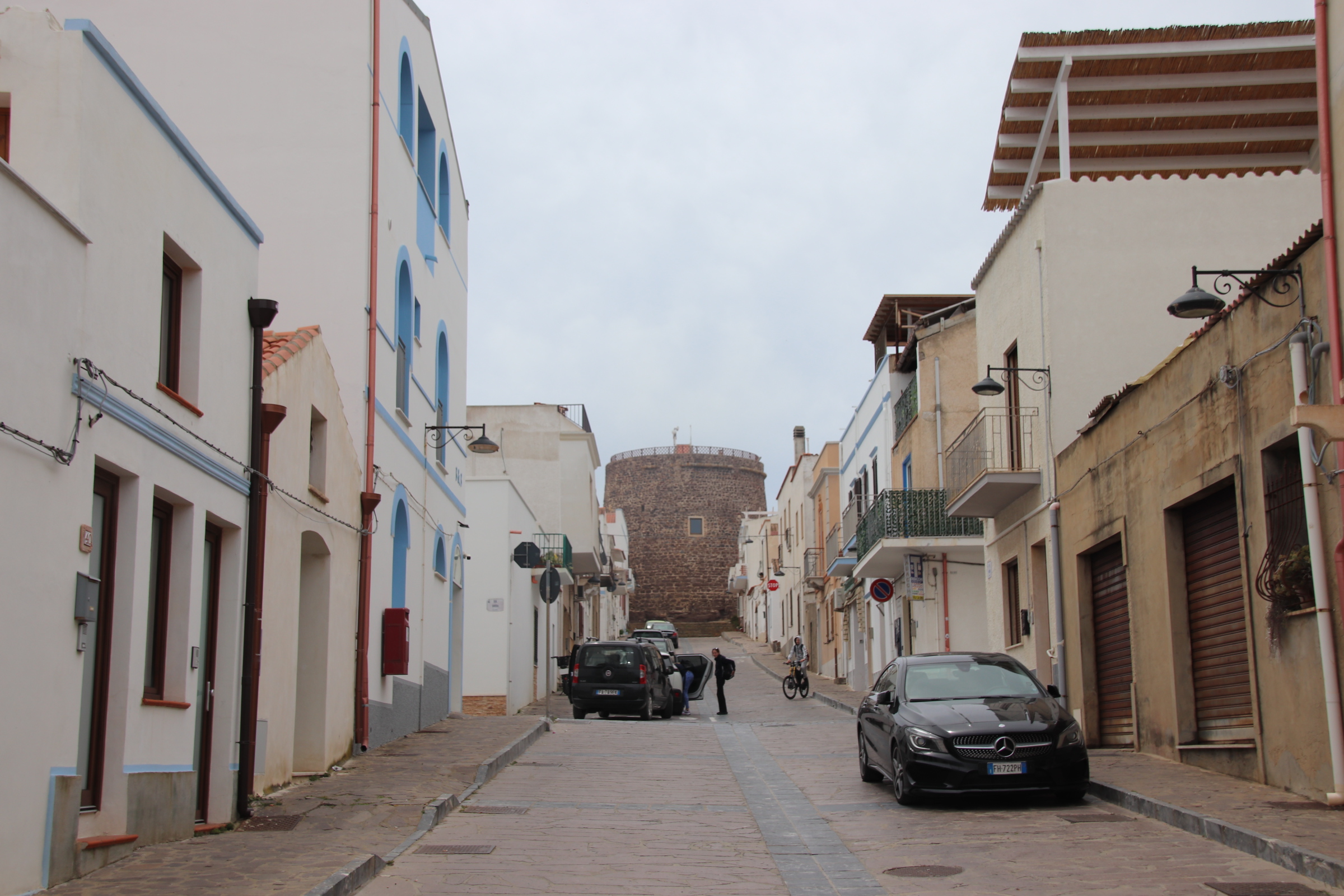
The island of Sant’Antioco is linked to the main island by a spit of land and a low bridge. At its far end, Calasetta has the feel of a north African fishing village with palms & weather beaten facades and dominated by the large cathedral.
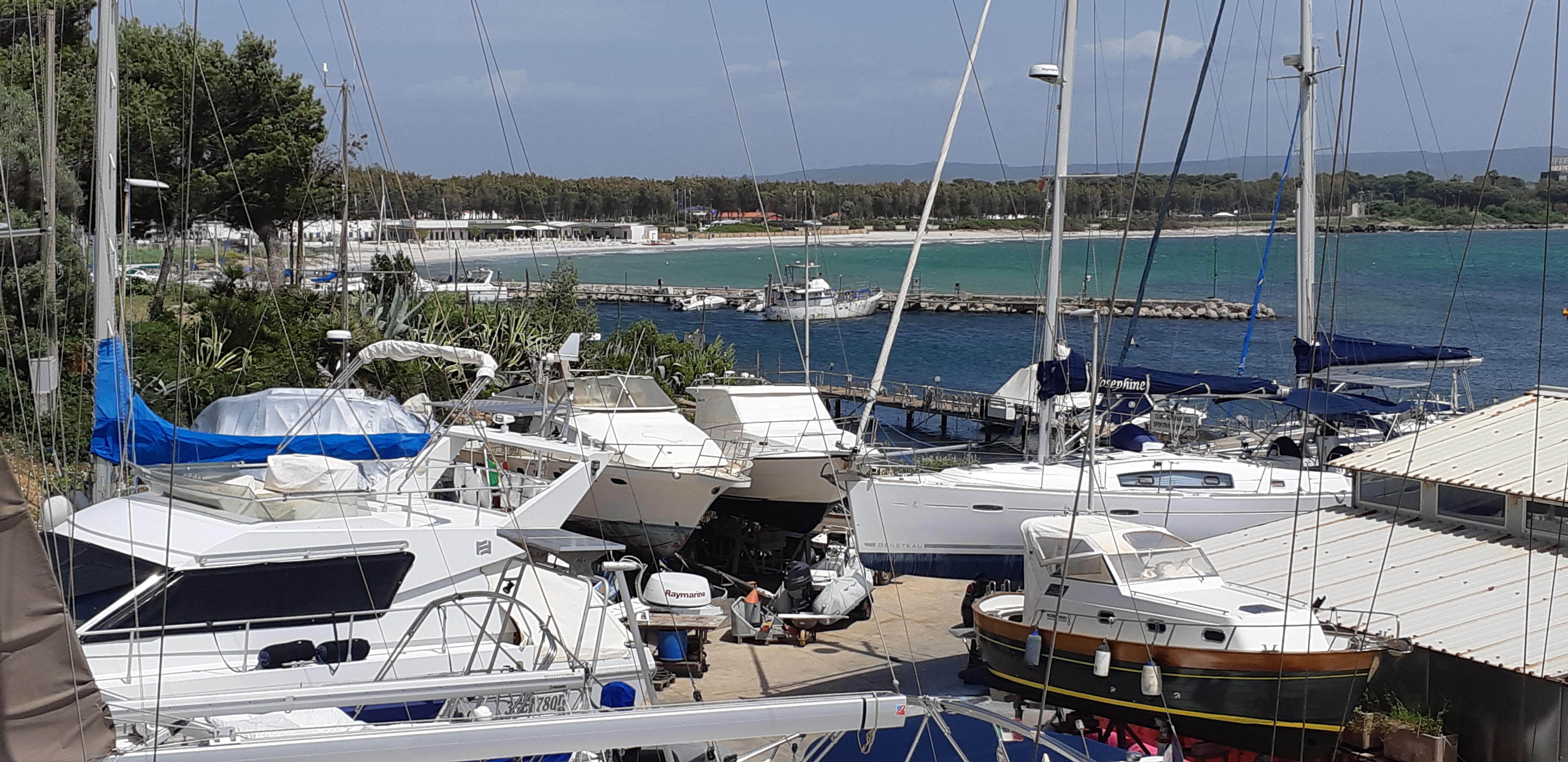
Traditional fishing boats are moored alongside modern sailing boats & luxury yachts.
My biggest surprise in driving the coast road south to Bosa is just how green & flowered the island is.
A patchwork of hay grass, some lying flat awaiting raking, mixes it up with meadow flowers of white & sunshine yellow. Lines of mixed deciduous woodland trees mushroom up alongside stretching olives & the occasional patch of pine. Lightbulbs of flowering gorse blaze in clumps, illuminating the course of a track, the side of the road or highlighting a crag of rocks or a tamed wild rockery. The colour palette is so varied, blues, lavenders, pastel purples, even lilacs thrown in there along with a brief flash of rather garish crimson poppy and all against a background of greens on one side & the turquoises of ocean & sky on the other.
The route attracts bikers & enthusiastic cyclists. For the most part the road is wide, the surface smooth – a joy to drive/ride. There is no room for cafes or bars or tourist tat here; Just the occasional view point where riders can share anecdotes & appreciate the serenity & beauty of the open road & the clear blue sky.
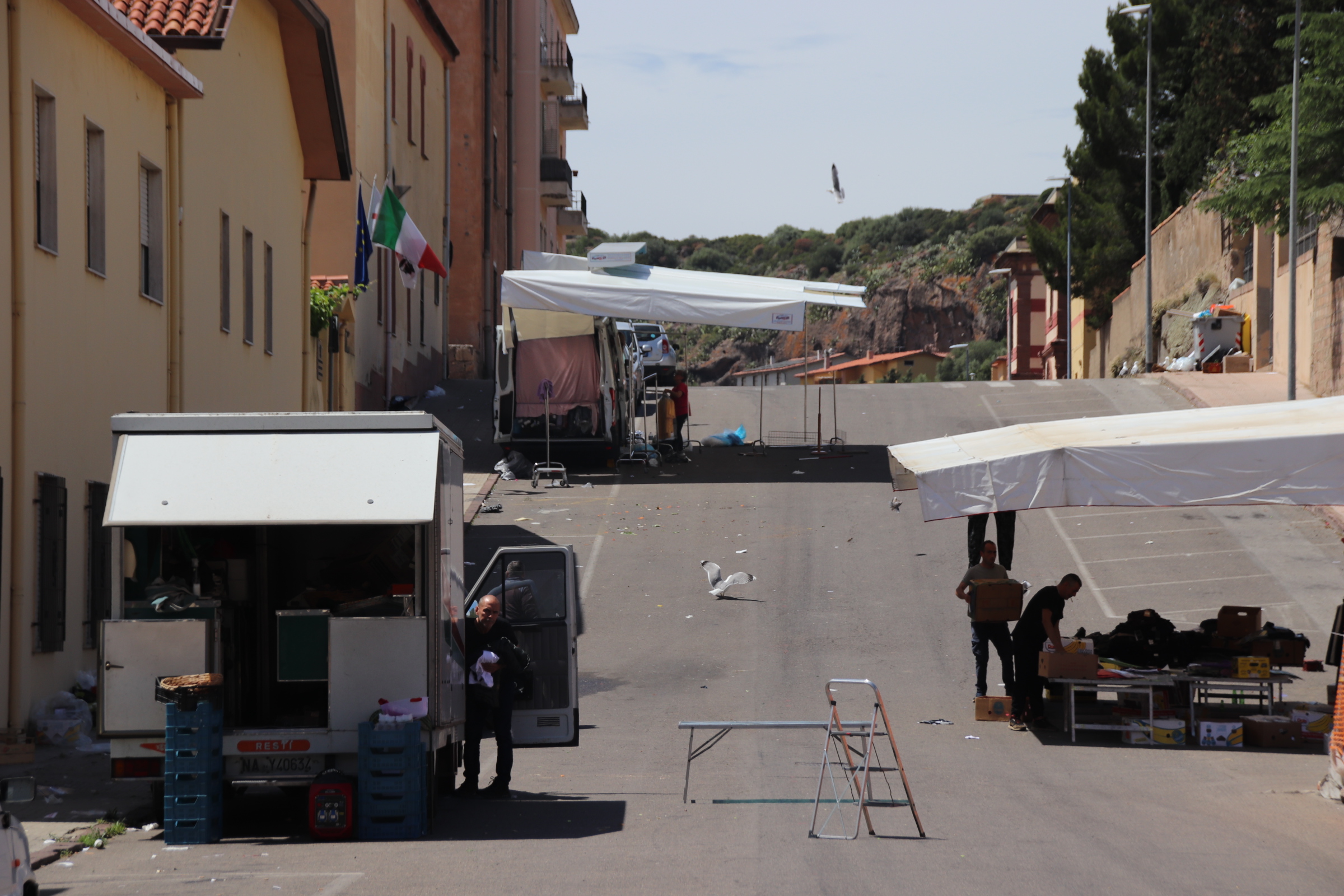
Don’t be fooled by the functional feel of the modern buildings you first meet as you enter Bosa; nor by the very ordinary street market, which by 1pm consists of a few lonely stalls, unloved & seemingly unwanted by their traders.This is one of the most beautiful villages in Italy.
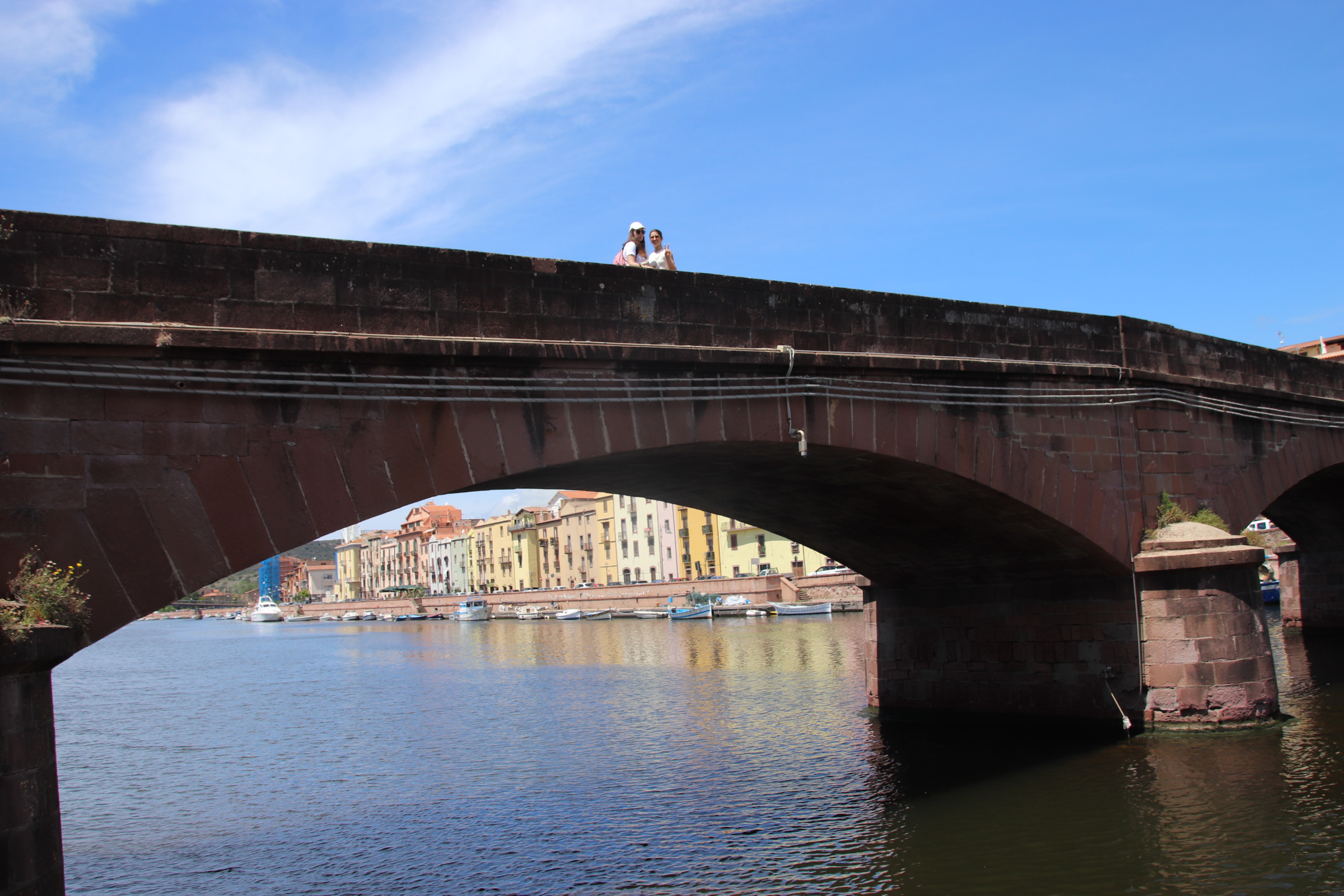
The old town lies at the bridgehead over the Temo River. This meant that it prospered – agriculture was king on the plateaus inland with the water transporting grain & products to & from the coast, whilst the river also provided access to the sea, and fishing and trade created wealth from the surrounding ocean.
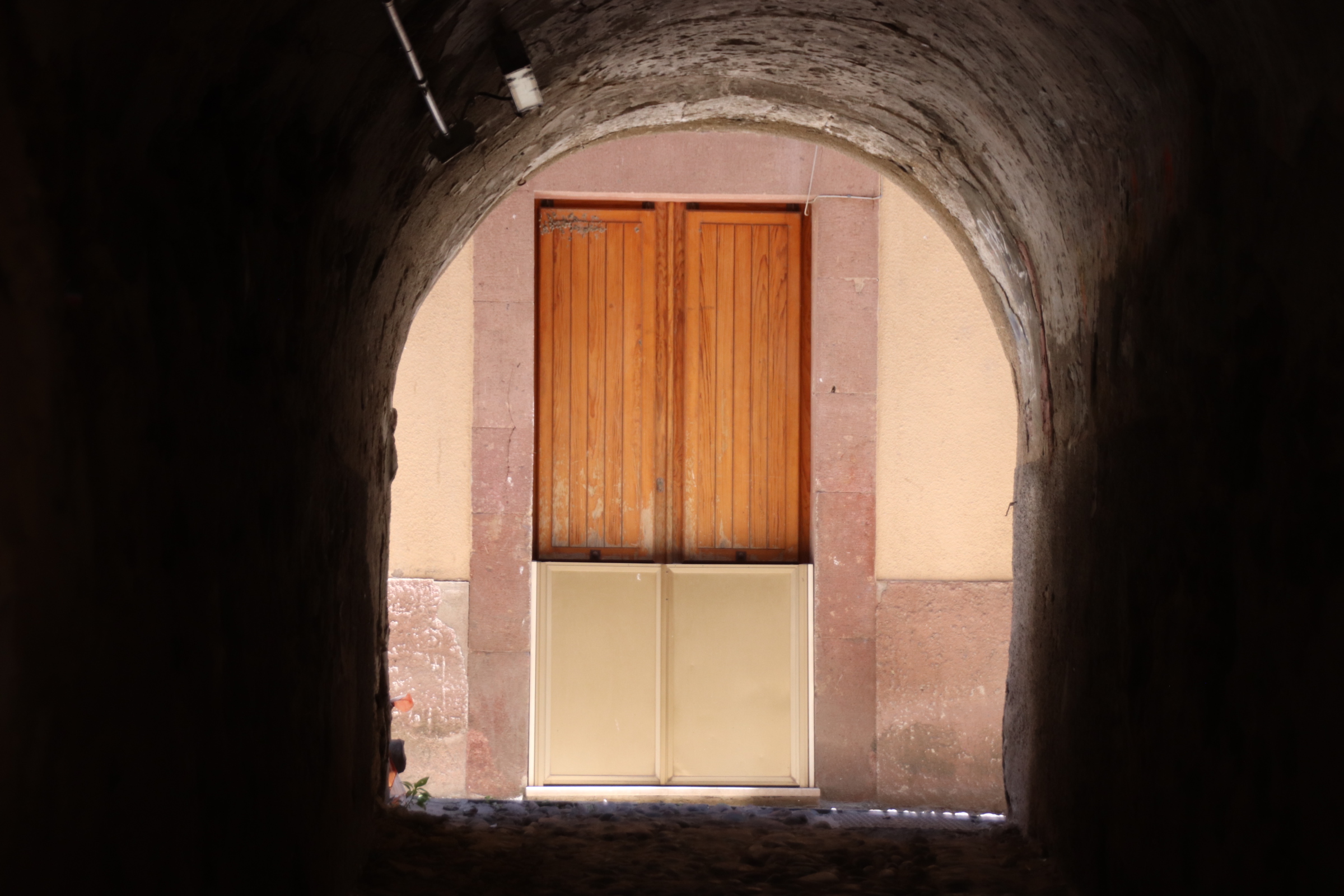
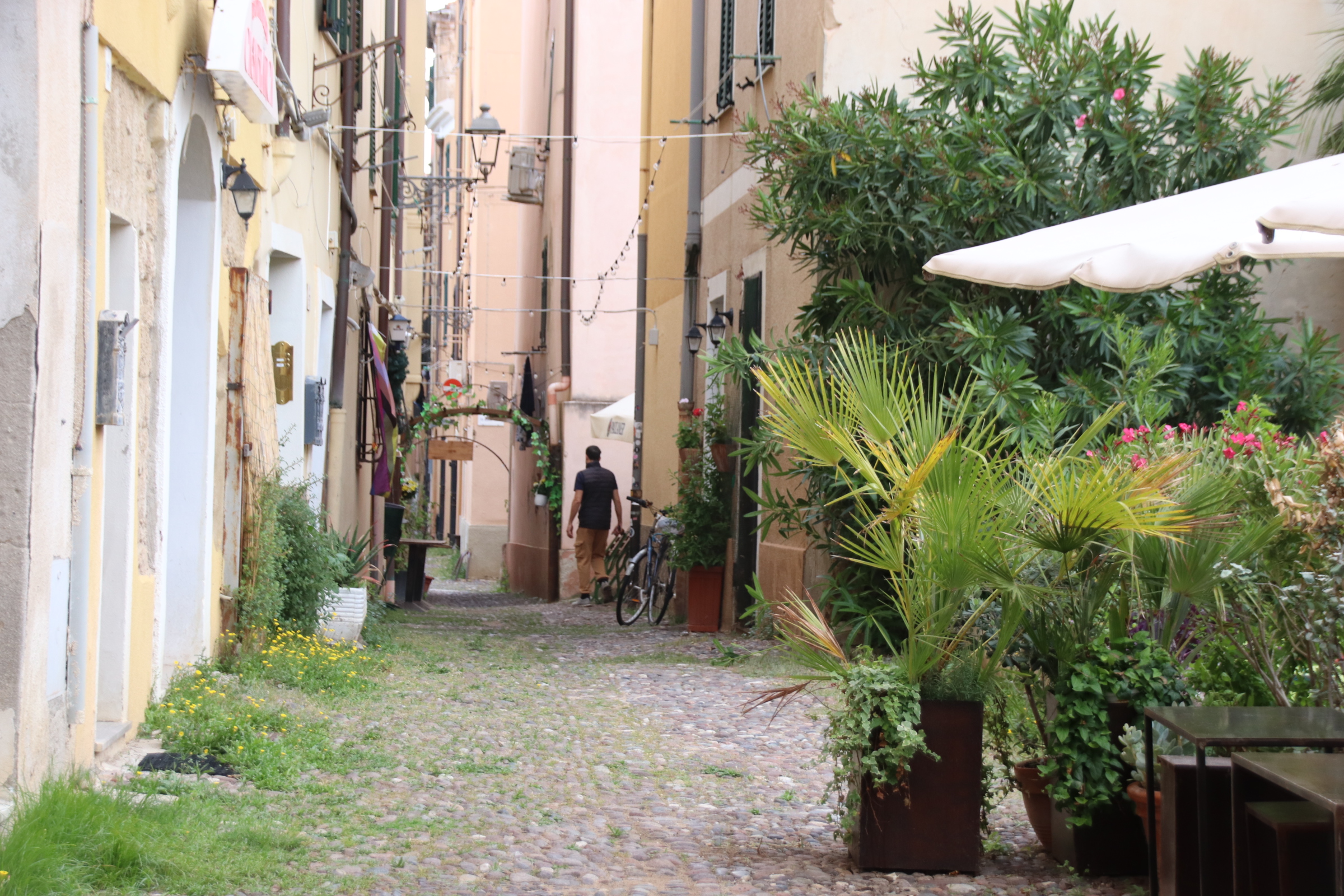
Ignoring the gate keepers at the small restaurant gurding the entrance, head into the maze of narrow cobbled streets/alleys of the old town.
Here, the multi-storeyed terraces stretch so high above that the shadows reign supreme and the sun has no hope of surviving down at street level.
The river is lined on both sides with buildings dating from past times – on the far side mostly warehouses stretch in an unbroken line from the bridge towards the sea. Opposite, warehouses share the riverside with merchant’s houses.
Domes, steeples flaking facades peer over each other and jostle for position alongside the bank providing a textured backdrop of colour, texture & position.Above the village, the 14th century Malaspina Castle stands guard, protecting the village from ancient enemies & invaders.
Having landed in Olbia on the north-east of the Italian island of Sardinia late on Saturday night, we negotiated the intricacies of a hybrid hire car with only 1,500km on the clock, the small digital display of Google maps on a phone & light RAIN through dark streets to reach our first night’s accommodation. Our mood was not lightened when we were unable to remove the key from the door once I had pushed it open & the lovely night porter could find no other rooms to offer us. Chairs were used to prop the door closed overnight.
The following day required a couple of hours drive the town of Alghero on the west coast. I expected inland Sardinia to be like Corsica so it was a pleasant surprise to drive long straight dual carriageways through wooded flatlands of flower carpets & fresh leaved trees. In the distance ridges & peaks of the inland mountains kept us company.
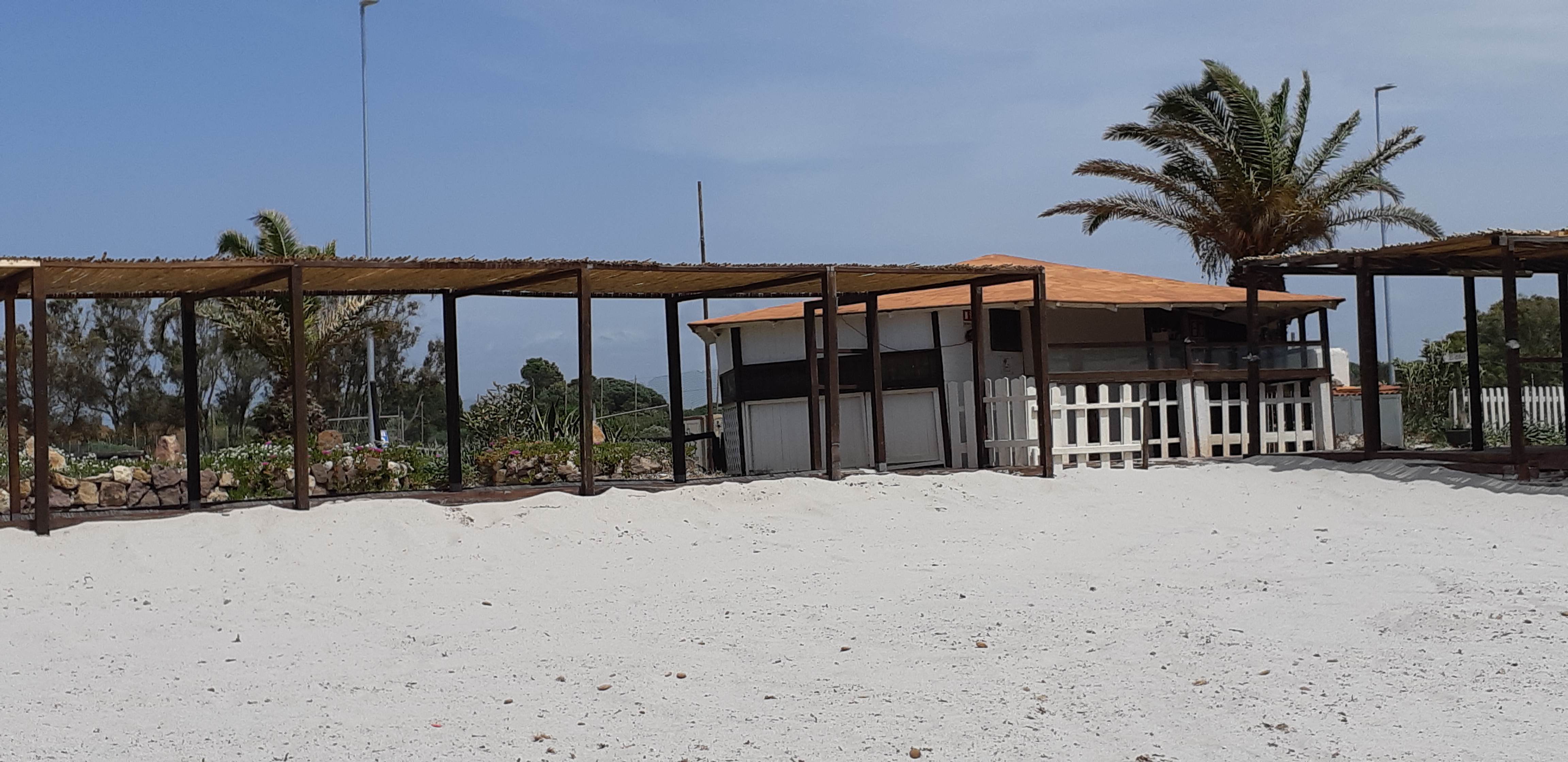
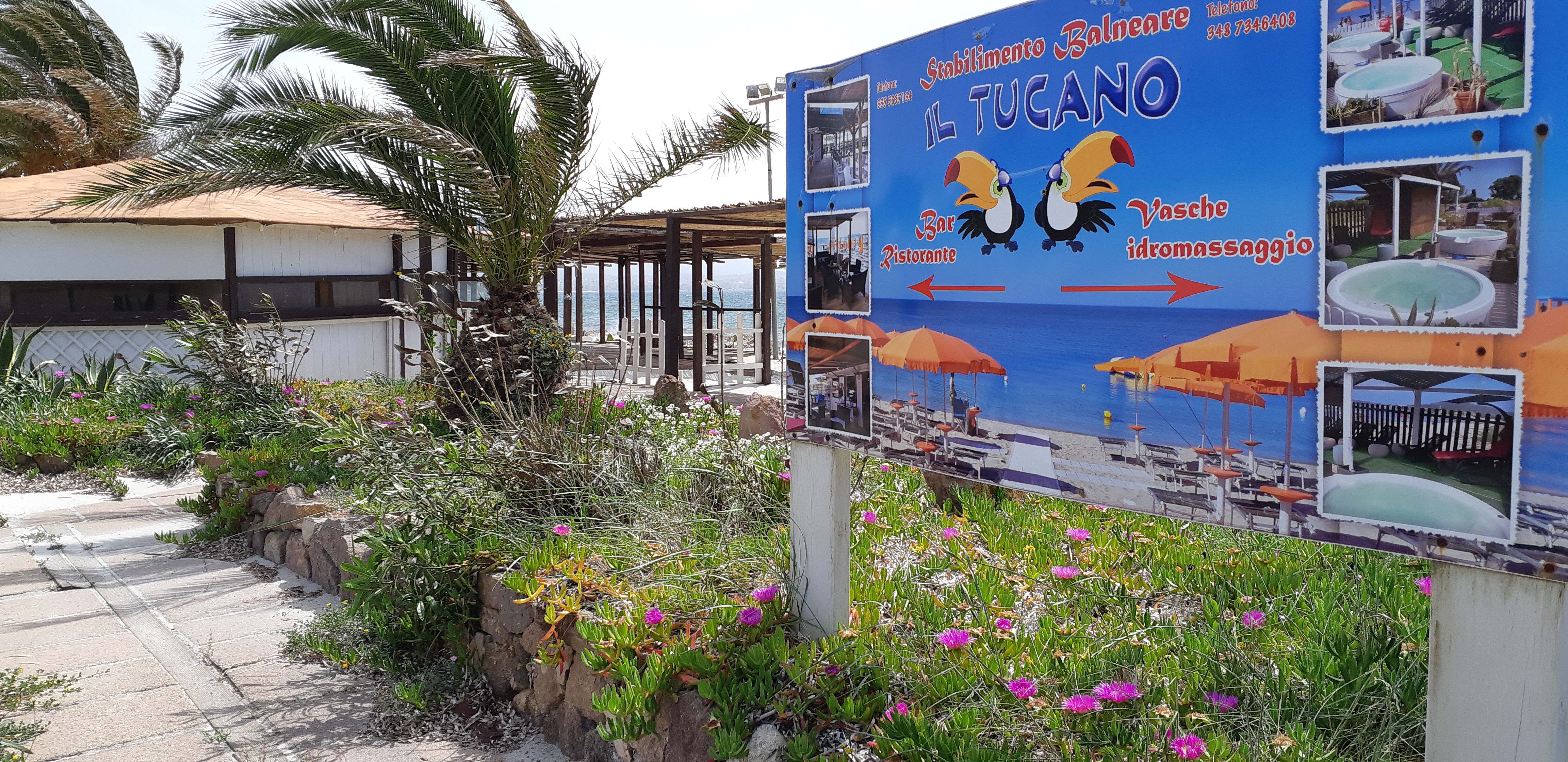
Approaching Alghero from the north gave us our first taste of Sardinia’s glorious beaches. Well, it has to be said that it was a bit of a before & after. The road runs right beside the water. At beach number 1 the winter winds had dumped copious amounts of seaweed on the sands to dry in huge clumps.
We were assured about the coming summer by this poster behind the beach:
Beach number 2 had no such obstacle preventing access to the water and we spent a couple of hours taking in the sun & watching the antics of the high-flying kite surfers.
Old Alghero is surrounded by typically functional, modernish buildings for commerce & housing. The city was founded in the early twelfth century. The Aragon crown first expanded the port. The Hapsburgs then colonised the Island, and Alghero in particular. The ancient curtain wall with its strong battlements connects impervious towers and piers to circle around to face the sea.
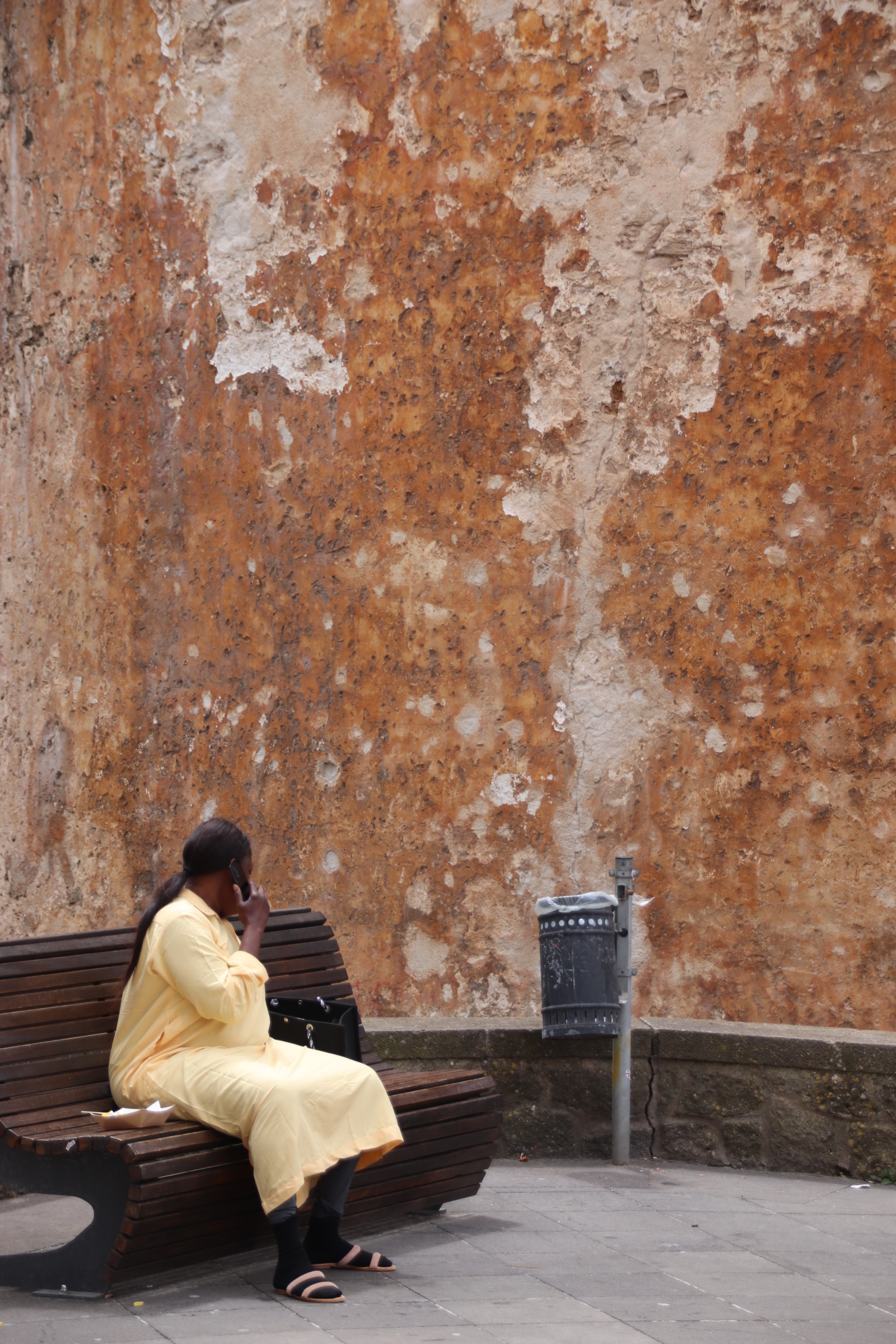
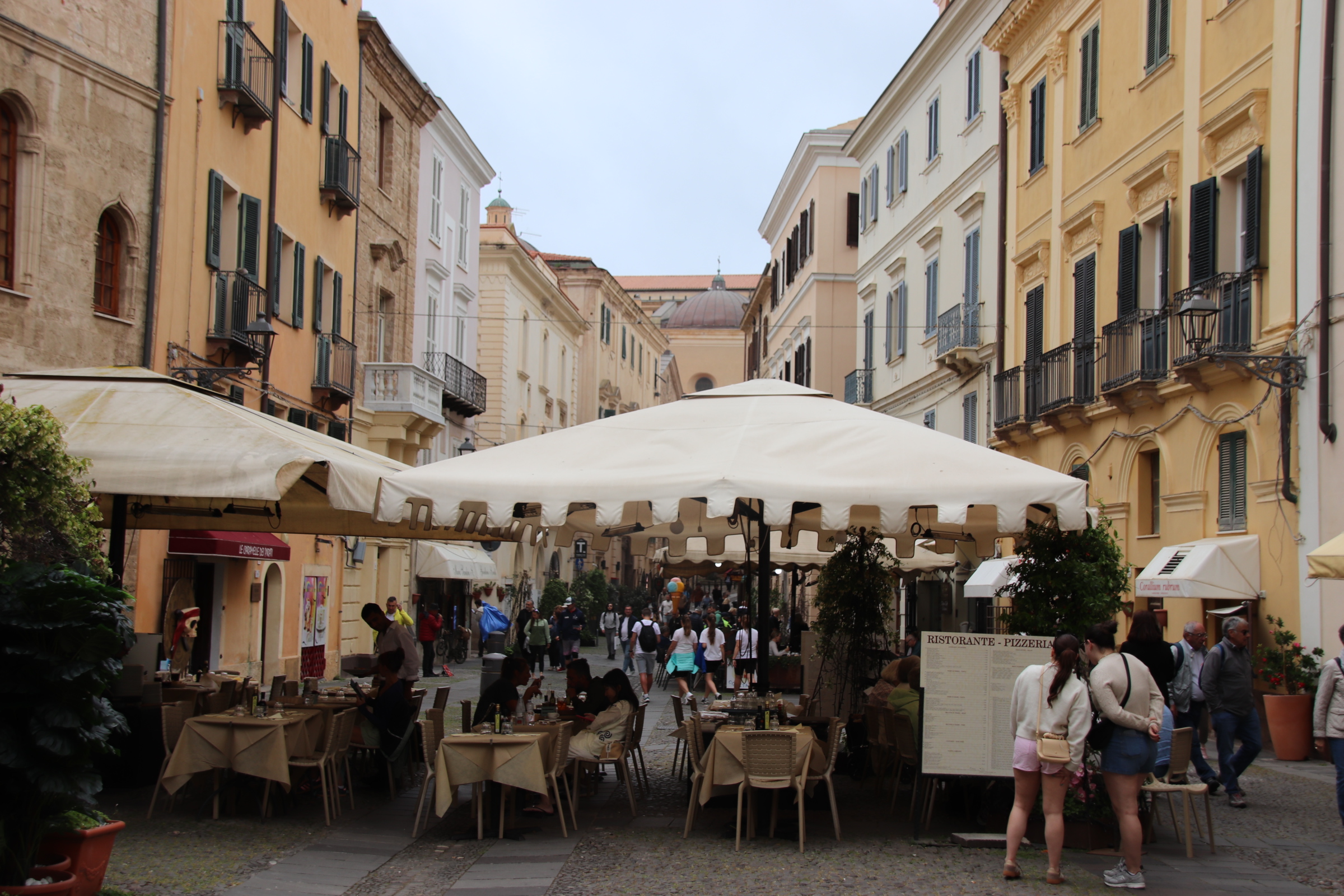
Within it, a maze of cobbled streets are lined by dusty, medieval buildings with low doors & tight windows. History & tourist tat ( the most apparent being copious amounts of red coral artefacts) combine to to pull in large numbers of visitors. The sun finds it really hard to penetrate these historic streets, only succeeding where attractive squares open up to umbrellas, cafe/restaurant tables, gelatine stalls, imposing churches & chapels.




















 My Travel Adventures
You must be logged in to post a comment.