So now its a drive into northern Tuscany. Once off the autoroute and away from the flatlands south of Milan, the land starts to rise and wooded ridges appear in the distance, backed by dim, grey shark-teethed peaks. This is Lunigiana, a mountainous region that runs from the Apennine Mountains to the Mediterranean Sea, most of which falls in Tuscany but some in coastal Liguria and we are smack in the middle.
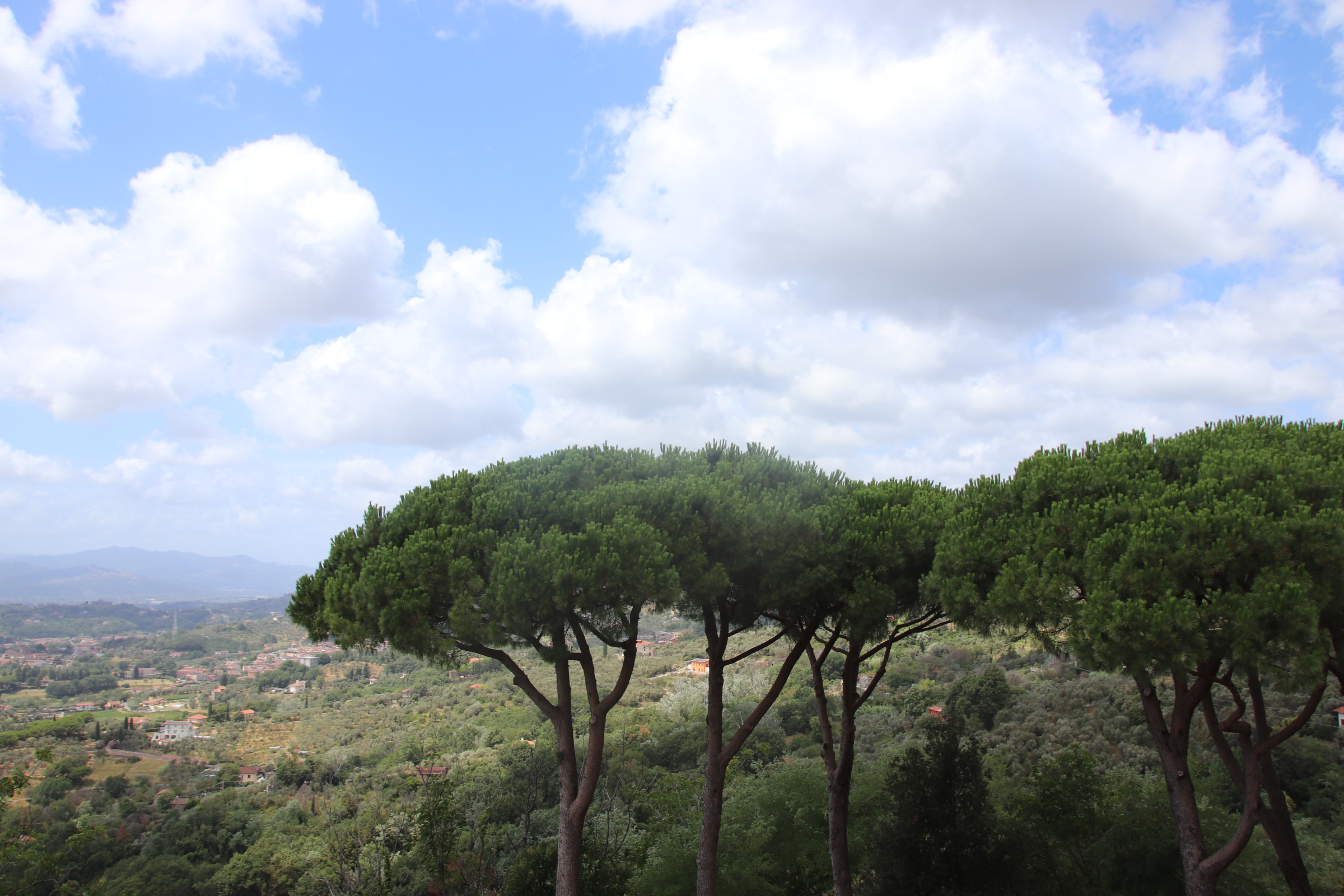
This area has long been strategically important. The Romans constructed the Via Aurelia through Lunigiana to get their armies up to Gaul & Spain. In medieval times there were 160 castles here, but only 30 have survived in a good state. They stem from the time when the Lombards of Milan, dominated here and sought an outlet to the Mediterranean through various mountain passes. All the local city/states have at some time or other battled for control – Luccans v Pisans v Genoese, Milanese v Modense v Florentines. Tuscany eventually took full control of the region in the 15th century.
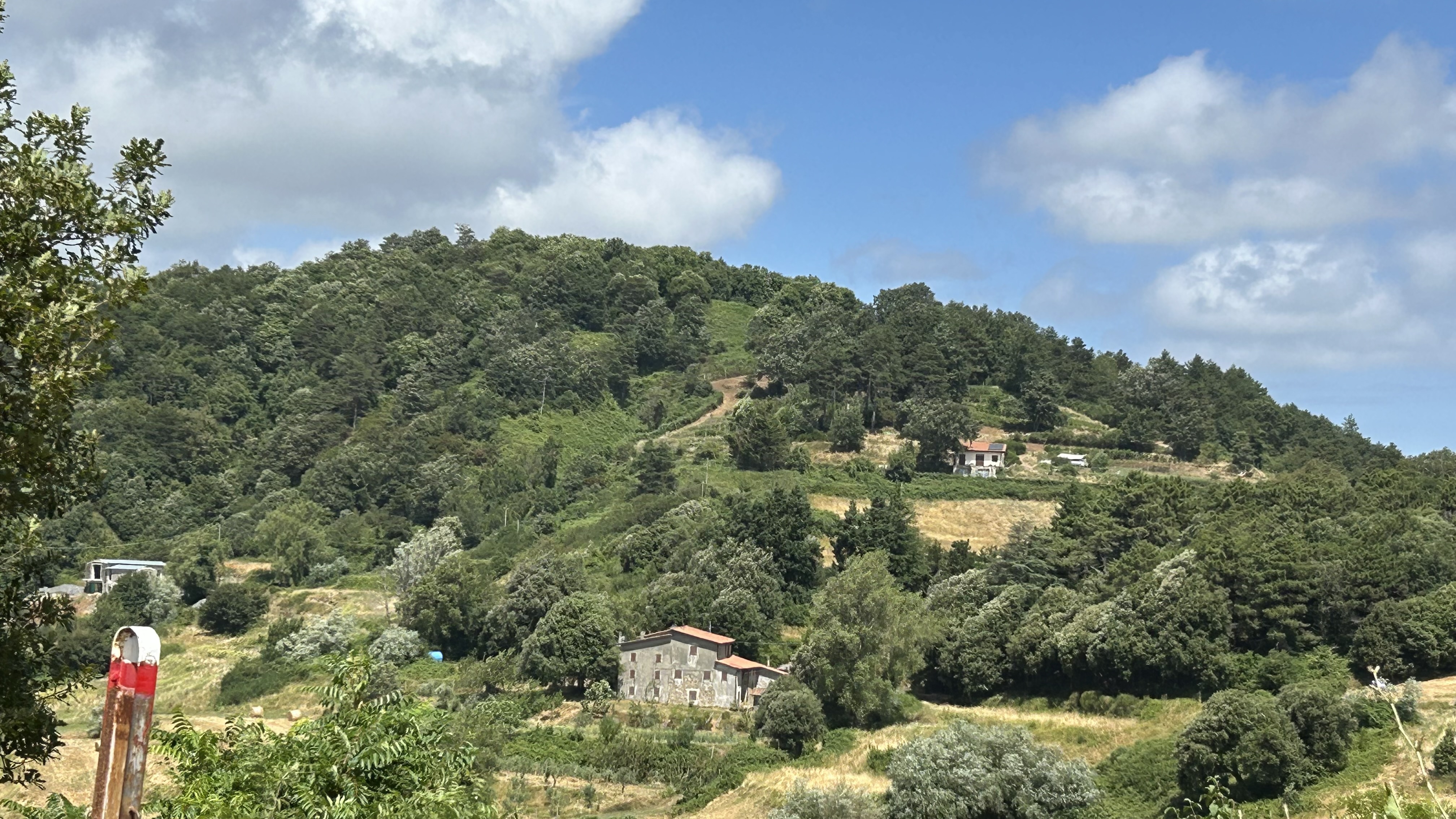
As we arrive the weather gods offer a relief from the heat of the past two weeks. We offer up our thanks as the Storm Goths thunder their welcome and lighten up our senses with flashes of awesome power. Yes, refreshingly, it can rain on Italy’s parade.
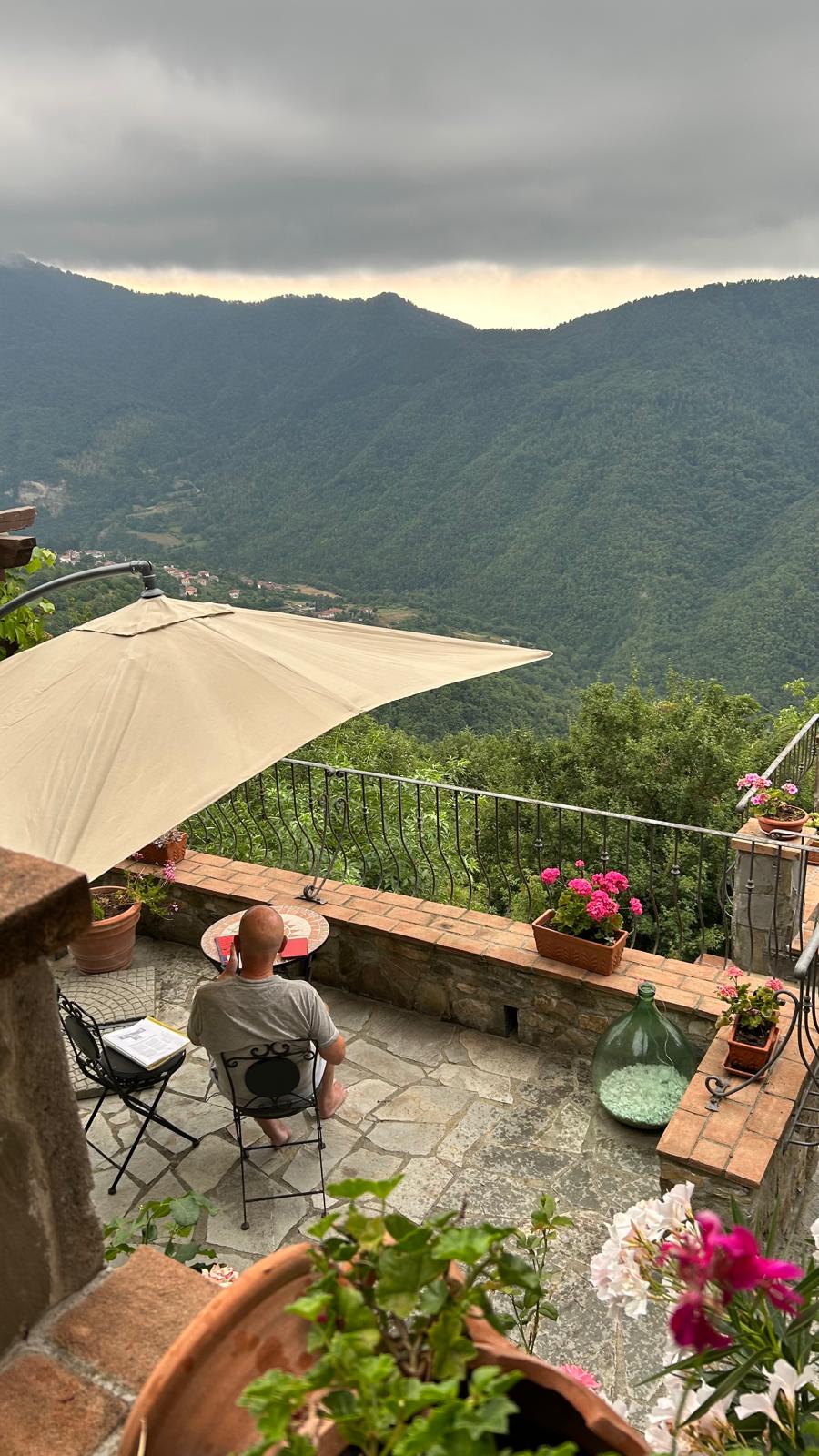
From our outpost high on a ridge, we can spot the approaching storms, take their anger and watch them retreat into the distance. The church bells in village way down below ring more in celebration of the storms’ passing than in summoning the faithful to mass. Once the storms pass the true glory of our position is revealed.

Exploring this region takes a fair bit of stamina. Roads are demanding to say the least. It’s a bit like following the region’s intestines – in & around, up & hairpin, squeeze to the side to allow oncoming & hold one’s breath. Surely, it’s not up there…. oh yes. TOM TOM say “fastest route!” Up the twists & turns of scabbed, crustacean tarmac between lush walnut & sweet chestnut woods and overgrown edges of brambles & bracken.

Scattered along streamed valley bottoms, in clearings on the shaded slopes of wooded ridges or atop strategic hilltops are a confetti of dusty, ancient villages & homesteads. Time seems to have stopped in many. A centuries-old church or the remains of a medieval tower or castle centre these ancient settlements, linked through the hills by ancient mule tracks. In many there is little life on display. Only the clink of plates & muffled voices from open windows indicate the presence of anything human.
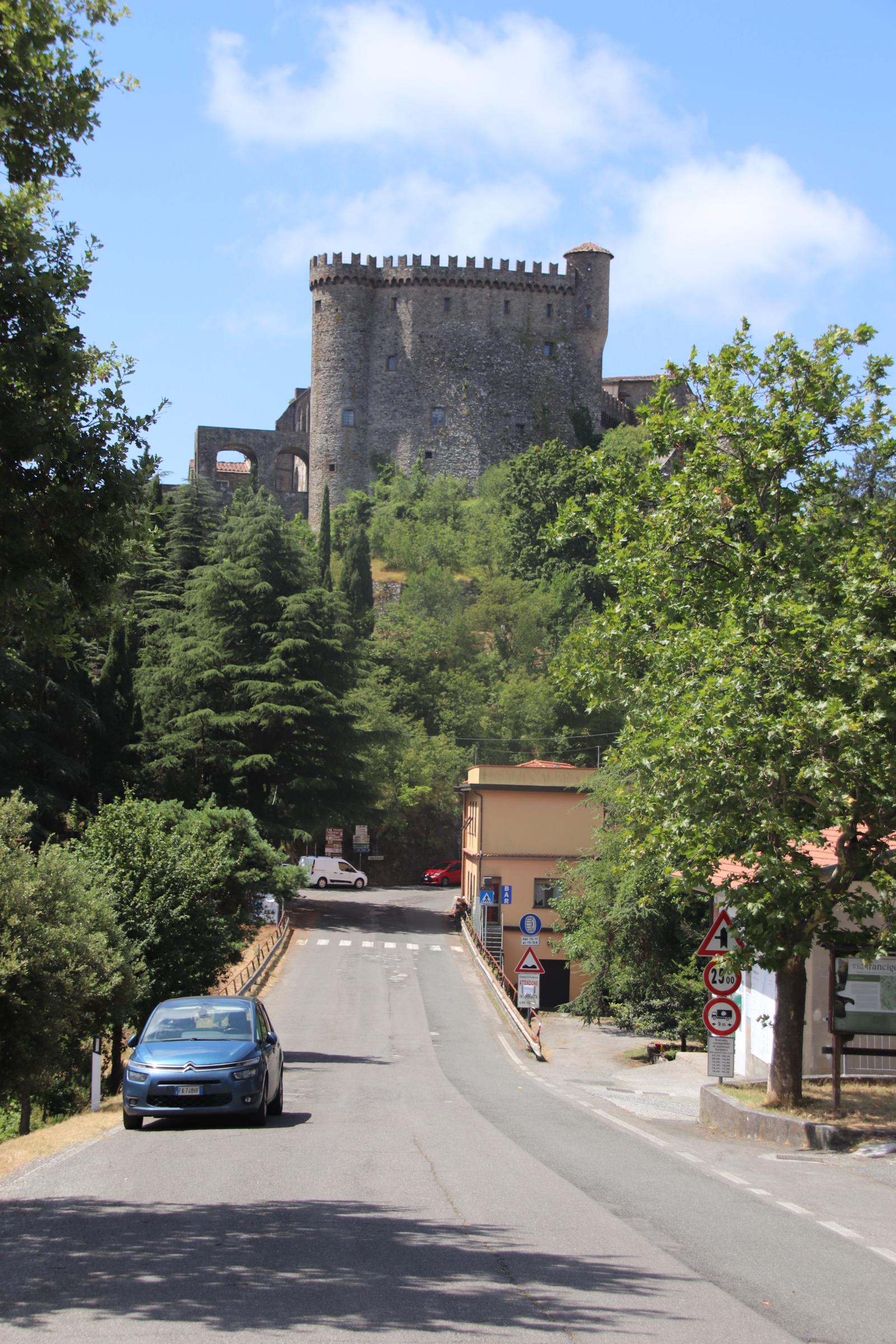
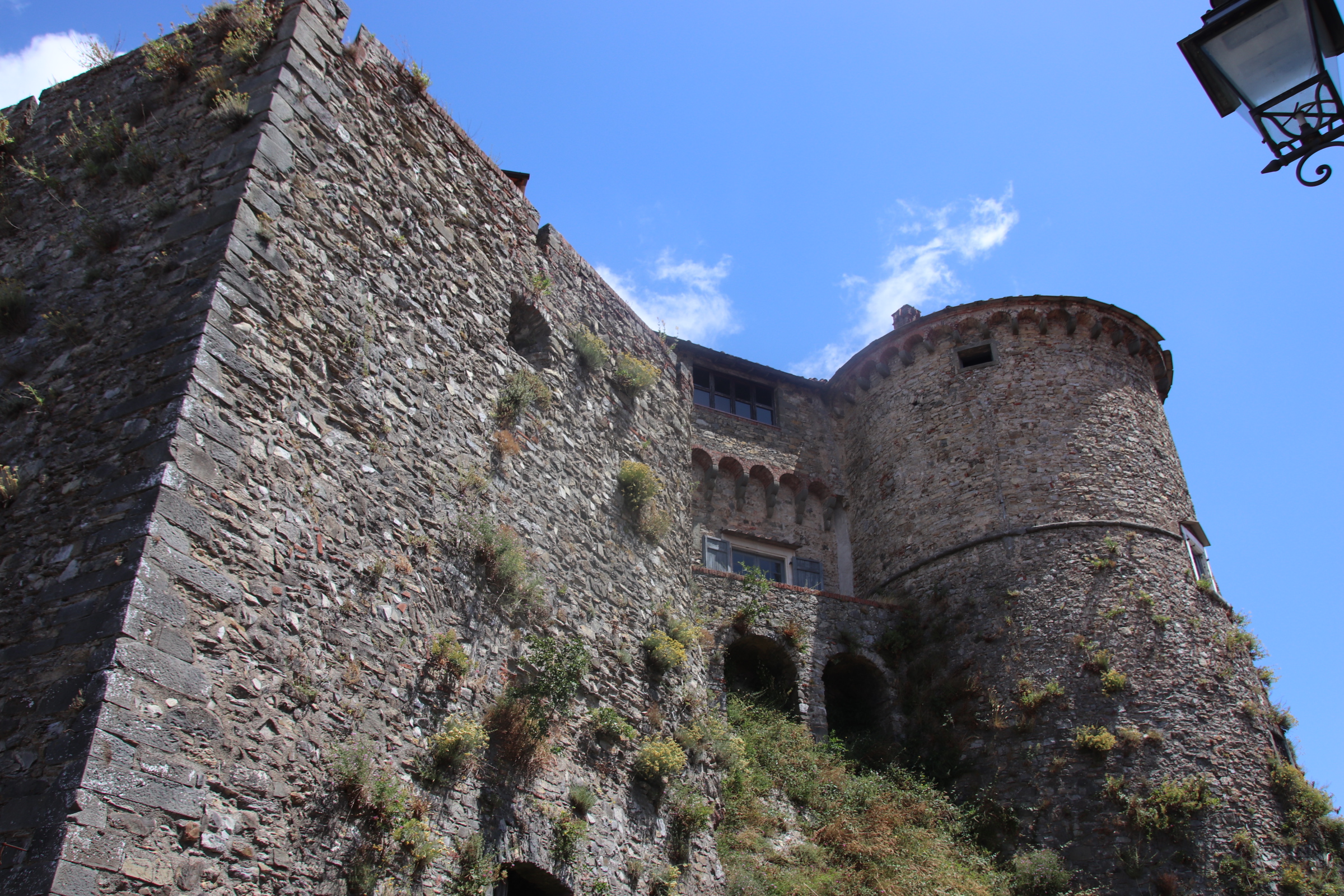
Fosdinovo is protected by a medieval castle part of which is open for the public to explore & part of which is inhabited by private owners.


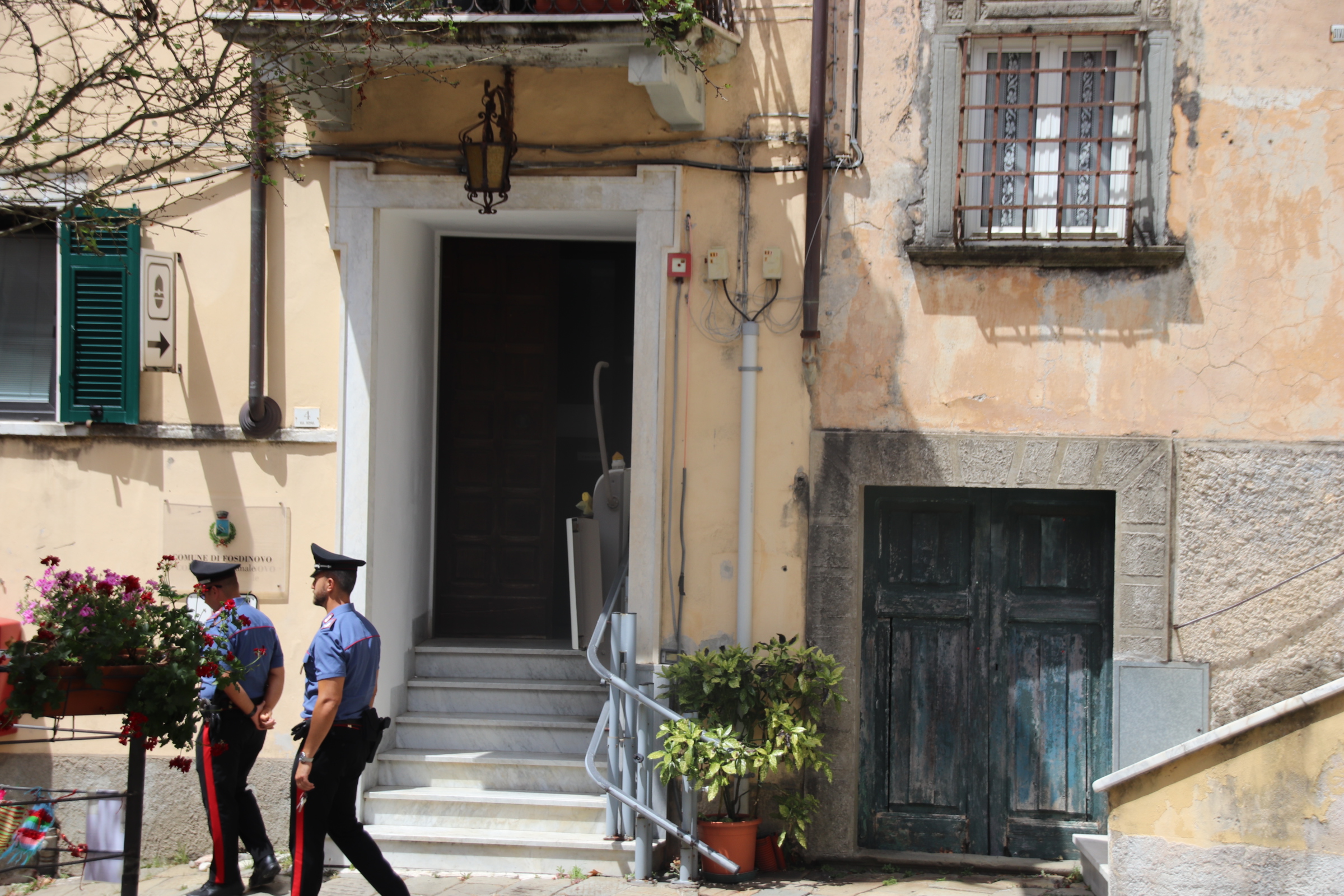
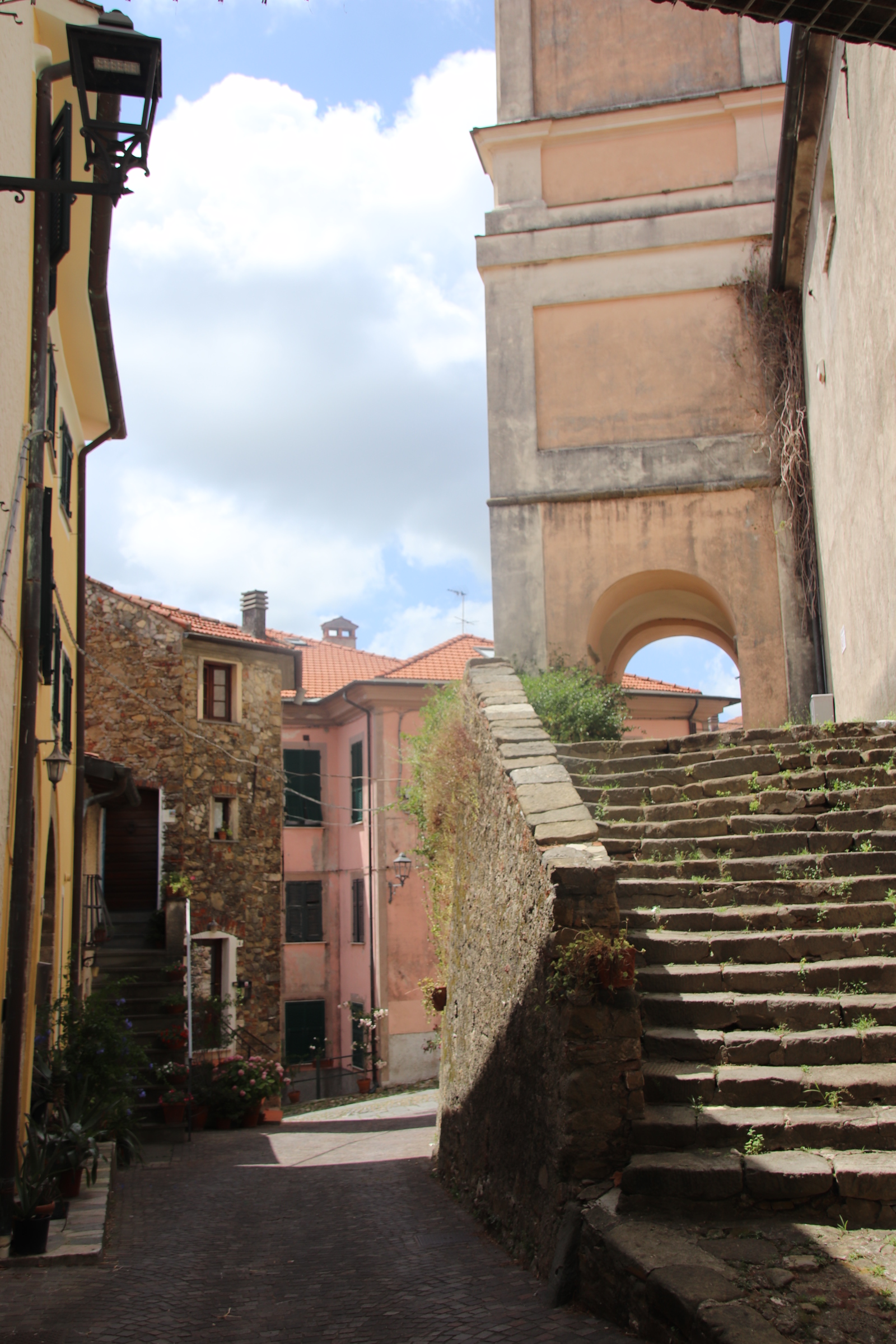
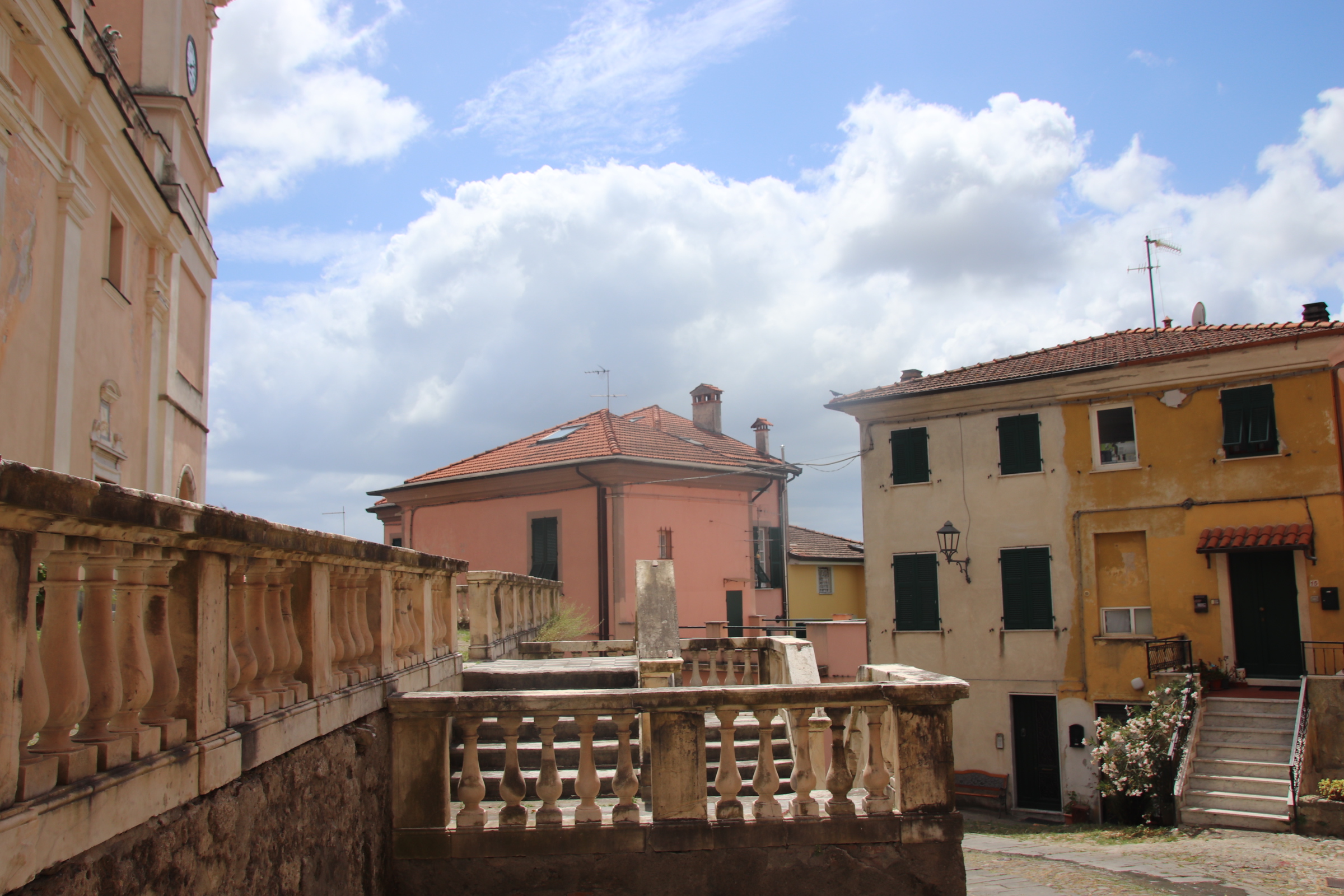
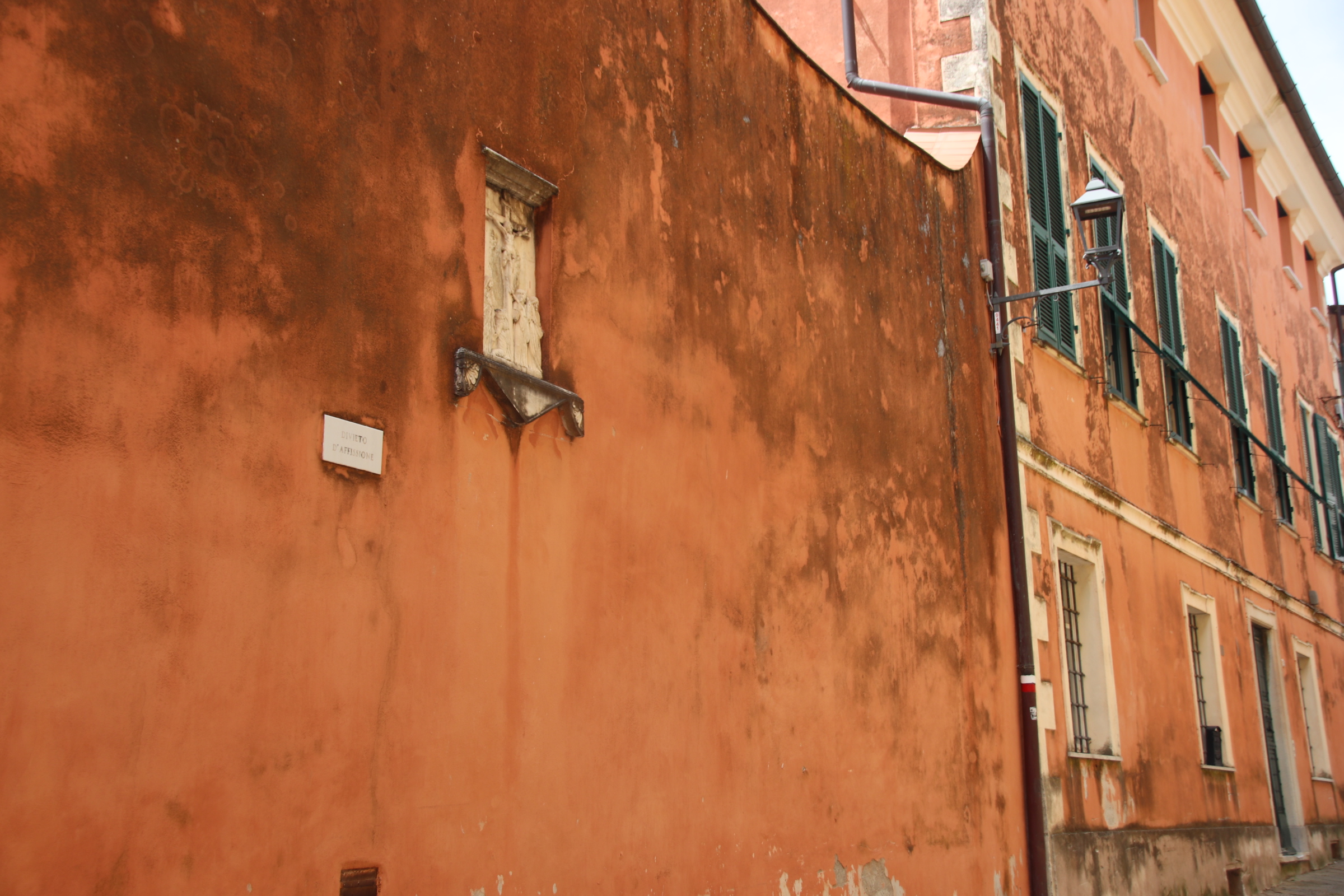
Castelnuovo Magro’s narrow streets lead down to the church from the open-air cinema in the castle ruins. The lines of cottages provide shaded pathways for the handful of locals on display.





 My Travel Adventures
You must be logged in to post a comment.