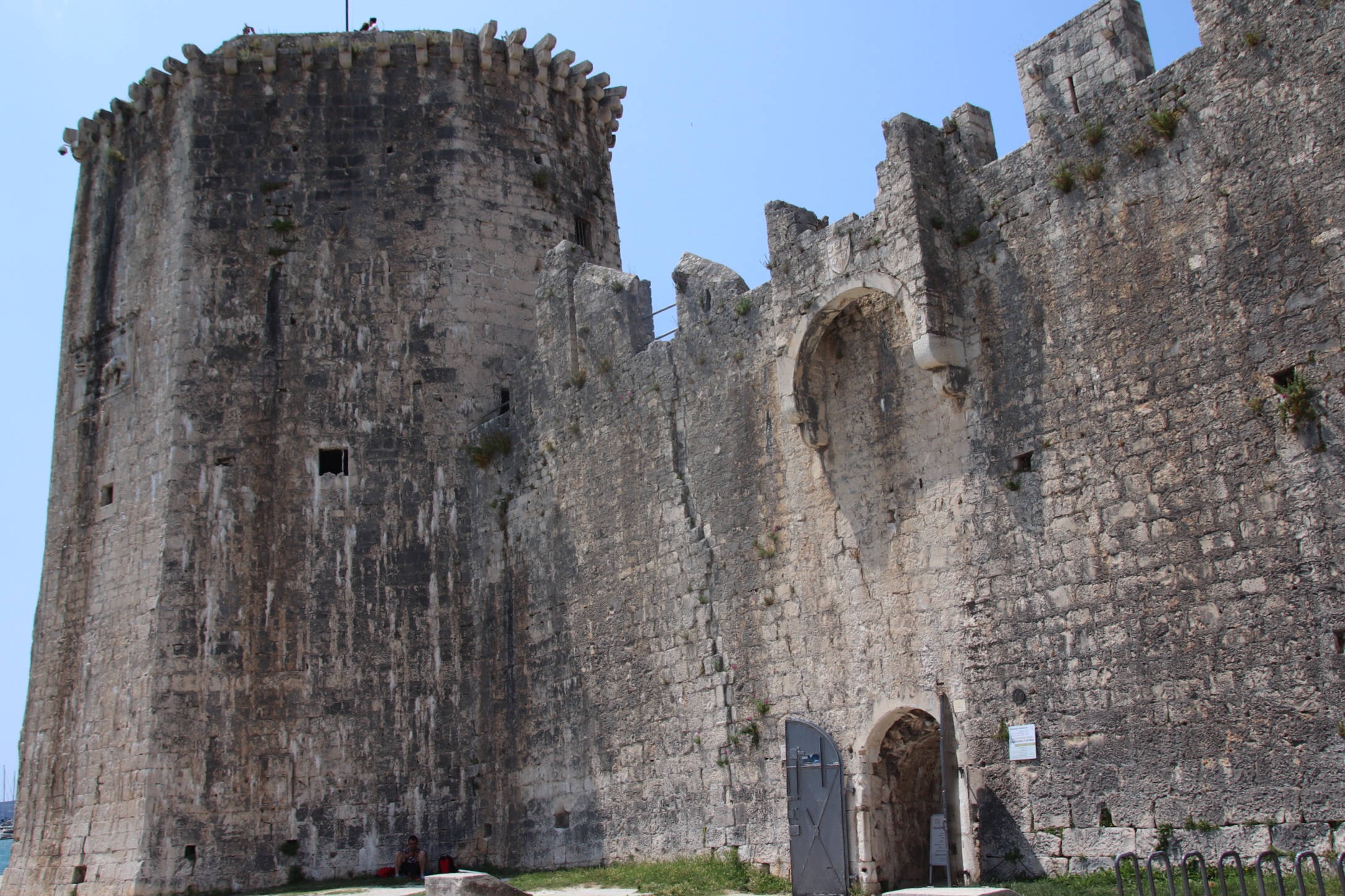
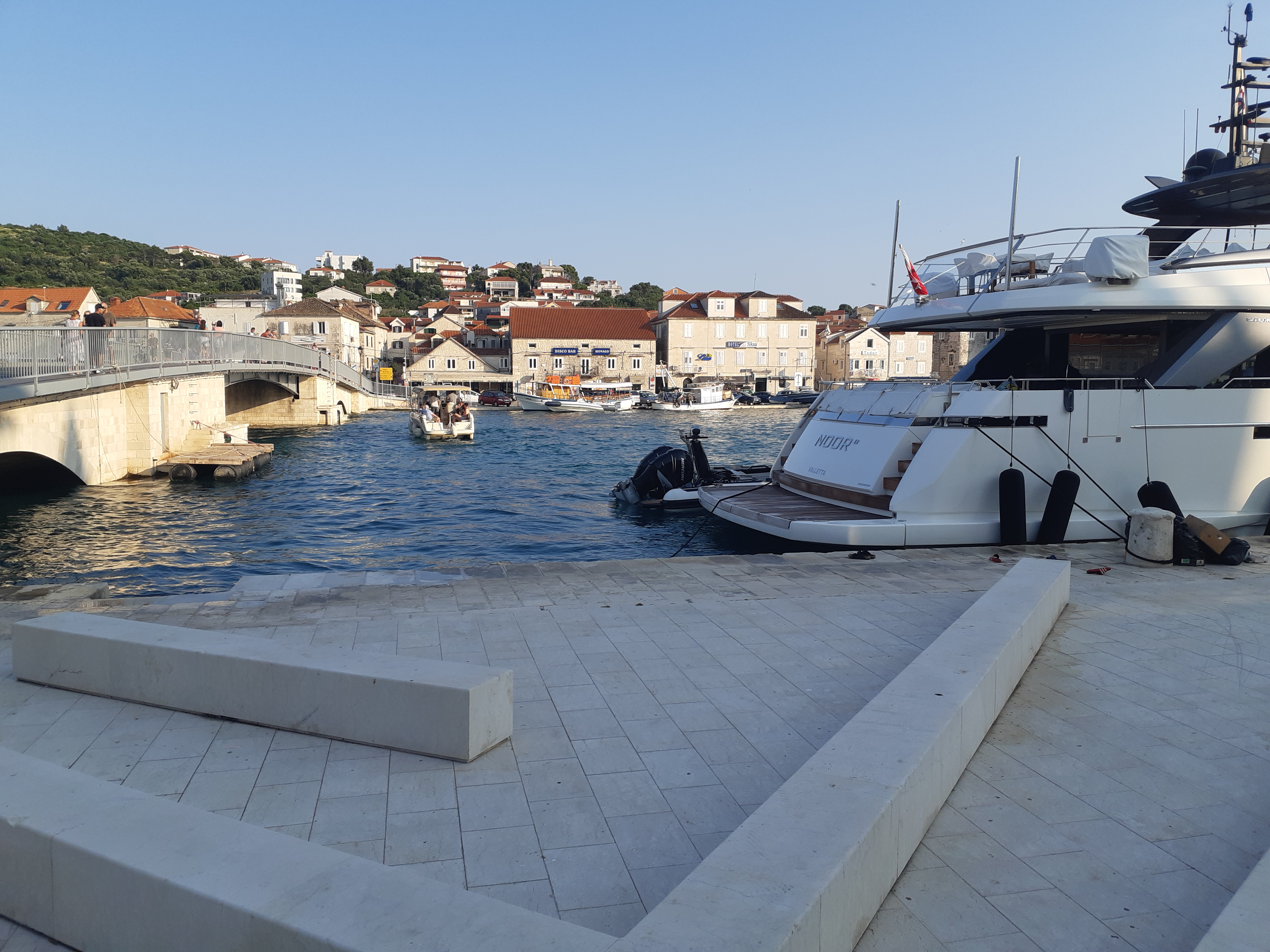
Trogir’s wealth and history is based on its unique island position. Outside the walls, the luxury yachts are moored up along the quay under the protection provided by the giant Fotress Kamerlengo.
From the other end of the quayside another bridge links Trigor’s island with the island of Ciovo. That quay lacks the imposing walls and glitzy yachts of the town, but it is the gateway to other sides of this historic hotspot.

A 20 minute drive along the north coast runs through low apartment buildings across the road from narrow roadside parking above a strip of beach. I say a strip. It’s more concrete constructions mixed with rocky foreshore with the occasional hard place for sitting about on where metal ladders lead down into the water. About a mile further on a slightly more beach-like sections separate the hard, crunchy rocks. Crystal clear water laps up onto white limestone, sharp and very testing for both untamed feet and lying out on unless you’re a contortionist or you have invested in a beach bed/chair or these beauties…..jelly shoes for 10€.

From the row of apartments, families spread out onto the clinker-like beach, nearly all speaking Croatian, Polish, Czech. English is rarely heard.


A few cars make it up here. The road eventually gives way to a dusty track leading to a wonderfully wild area at the top tip of the island.

Turning right over the bridge takes us to another side of Trogir’s attractions for visitors. Okrug Gornji is a resort with a main strip of a kilometre or so. Music blasts out from a line of beach bars that face the sea over what can only be described as a strip of exposed concrete – a sunbed carpark, blazed by the sun, with more short metal rungs or steep clinker slopes providing access to the water. Over the road groups of lads & lasses leave small supermarkets with cases of cannies to consume on their patch of cement. I took no images, here.
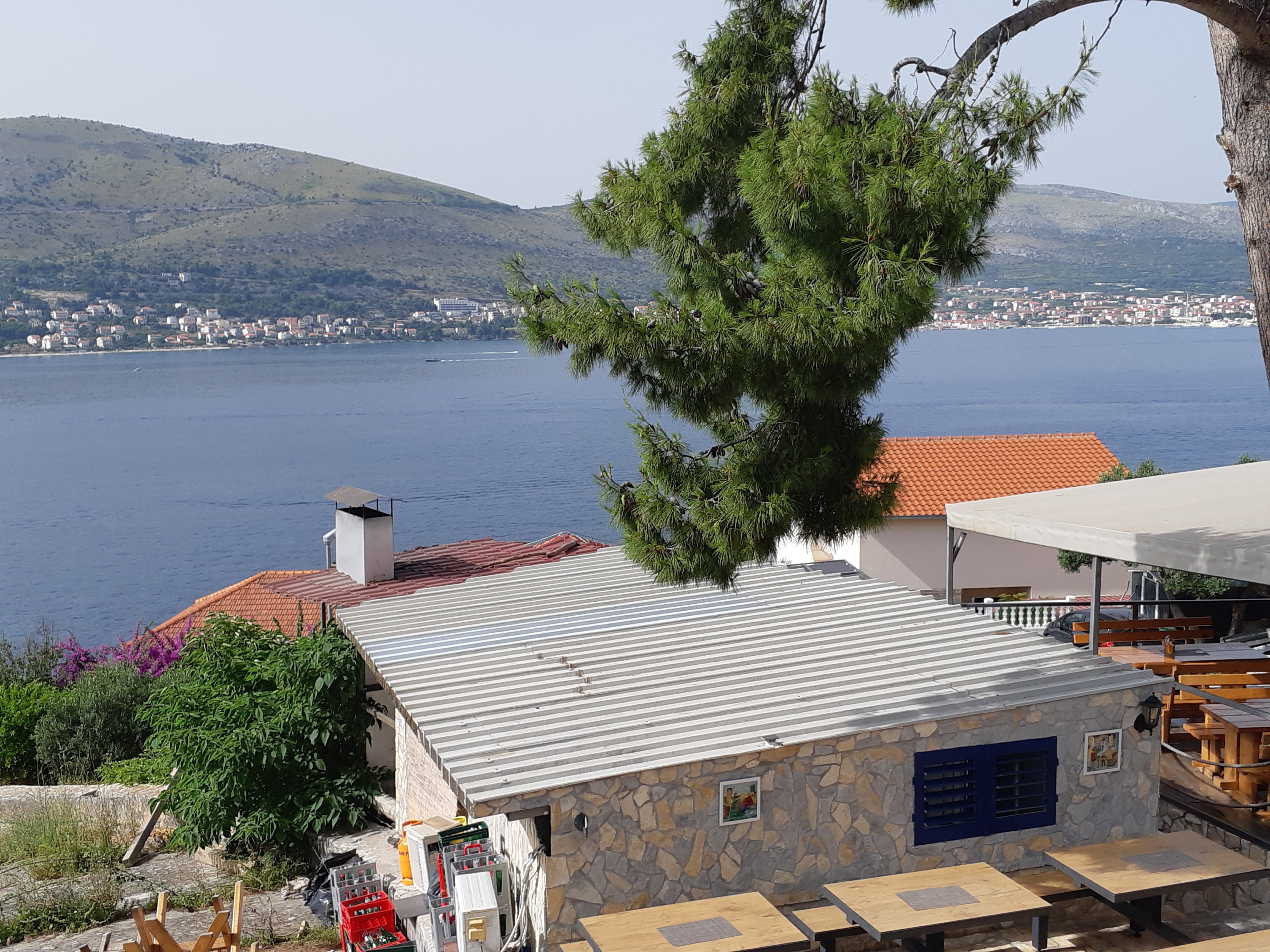
Away from this hot, pink, temple to summer drum & base, cheap apartments and painful sunworshipping, the road runs through attractive hillside shrubs, trees and gorse until the far end where Okrug Donji is growing at the other extreme of the social spectrum. Large homes and villas have been built here on the cliffs looking back to the mainland. These are grand, detached second homes or holiday dwellings and generate a feeling of wealth and class. Homes & a restaurant hide in the shade of the cedars, a respectful distance from the noise and action from down the road.
 My Travel Adventures
You must be logged in to post a comment.