The tourist hubble of Croatia’s Adriatic coast

The last day exploring Croatia’s Adriatic coast above Trogir proved rather disappointing. Trogir itself was lovely during the week – atmospheric, great ambiance, history and tourism coming together in harmony and complementing each other. As the weekend approached this seemed to become swamped. The streets became full, with loud crowds of youthful groups pushing their way through, searching for music, partying and a good time. The mini cruises offloaded their guests and the many sailing flotillas on the other side of the water filled the quay there all the way down, moored 6/7/8 abreast. So, it was time to get out and remind ourselves what the real Croatia felt like. If only …….

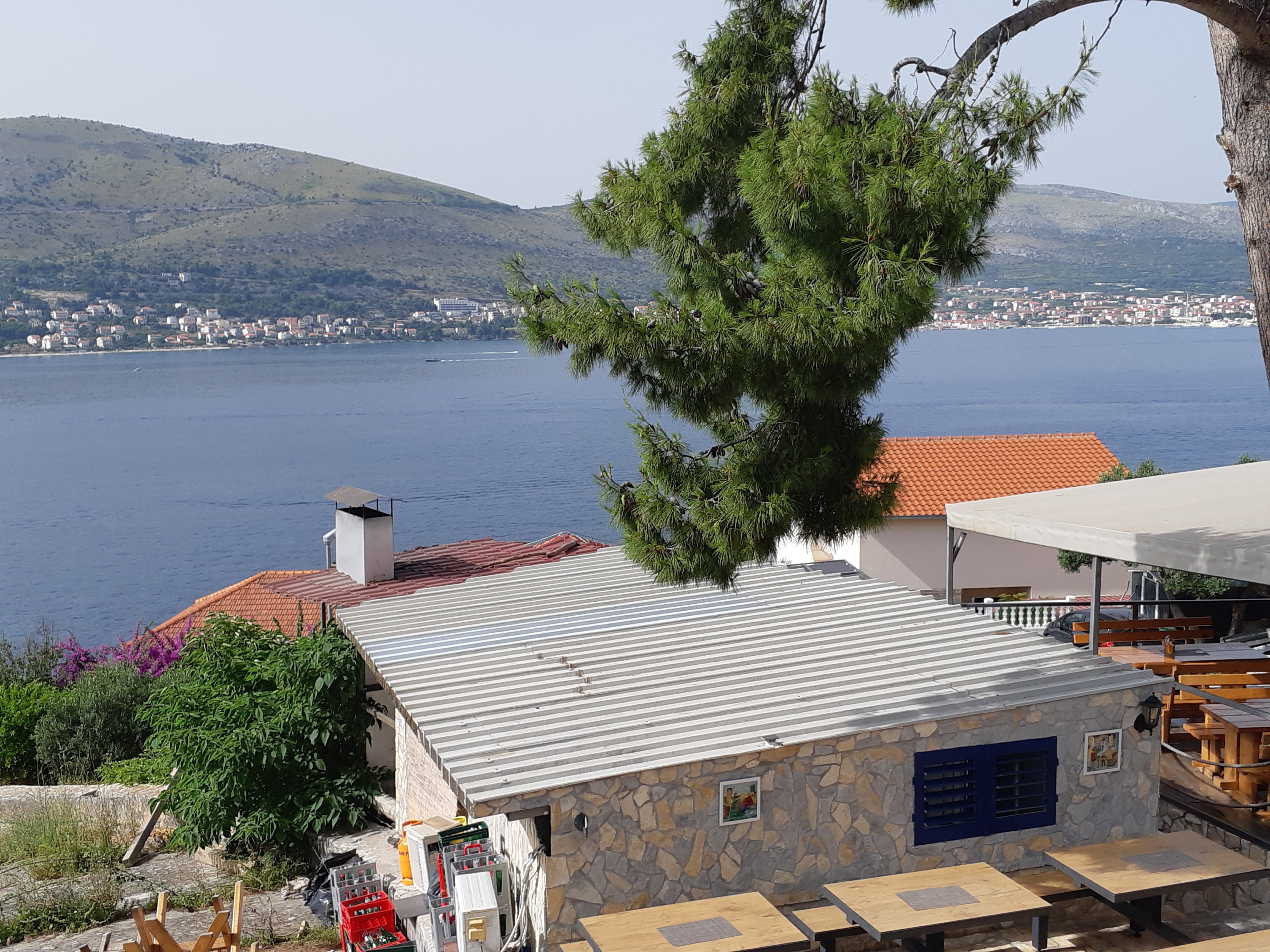
Further up the coast, a number of small fishing villages dot the shore, just off the recently improved coastal road – fresh tarmac and pristine white lines. Rogoznica is one just village which seems to be representative of all the others but at least it still retains a heart in the form of a small fishing fleet and a large yacht marina.
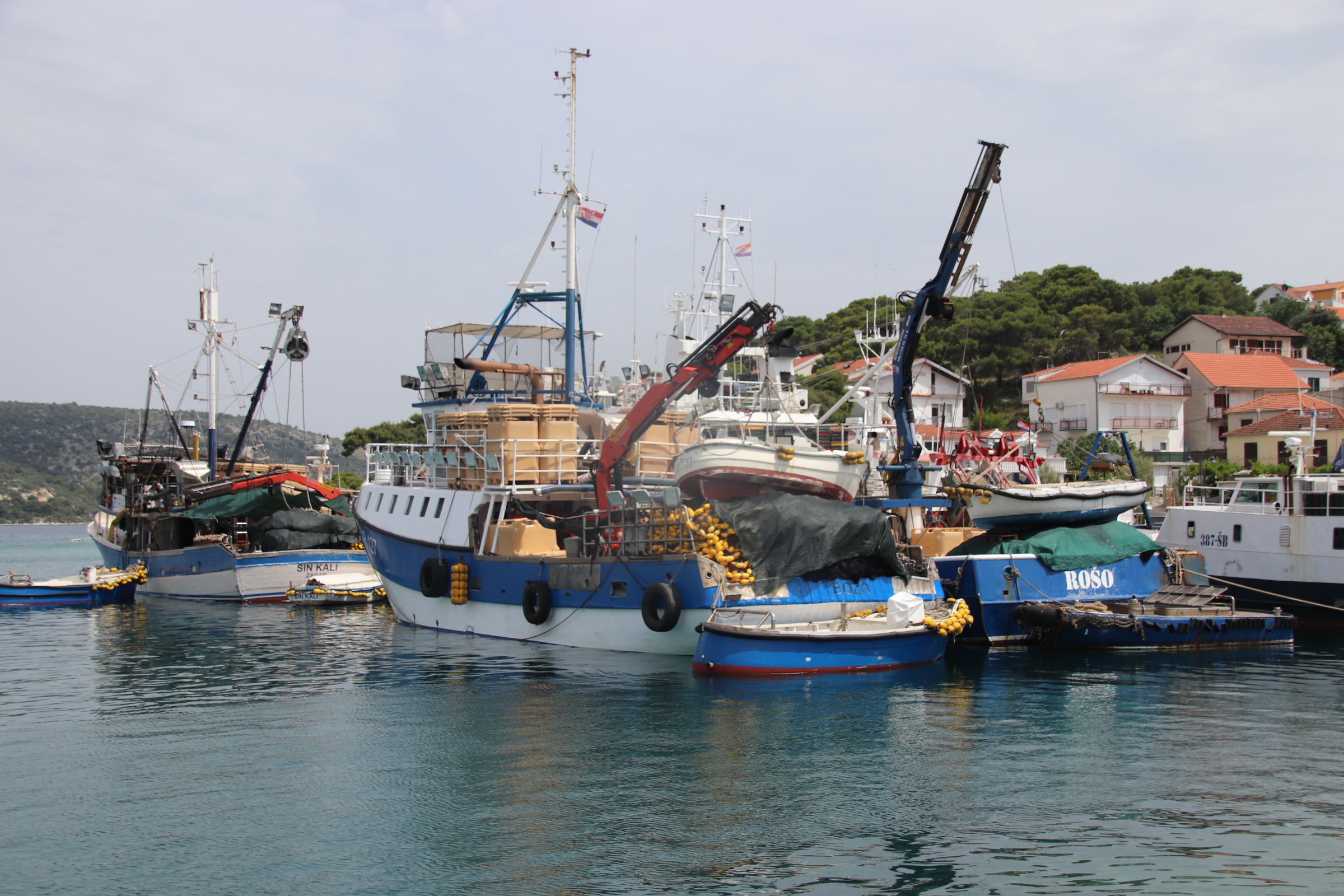
It’s as if developers have identified the original village as an ideal spot for creating a tourist centre. The old cottages have been converted into villas, new holiday apartments have been built within the old centre and the watersde has been given a spanking bright promenade and quay lined by bars and restaurants to bind it all together. The presence of the fishing fleet at least allows the place to retain a small bit of character and an element of charm within the local landscape.

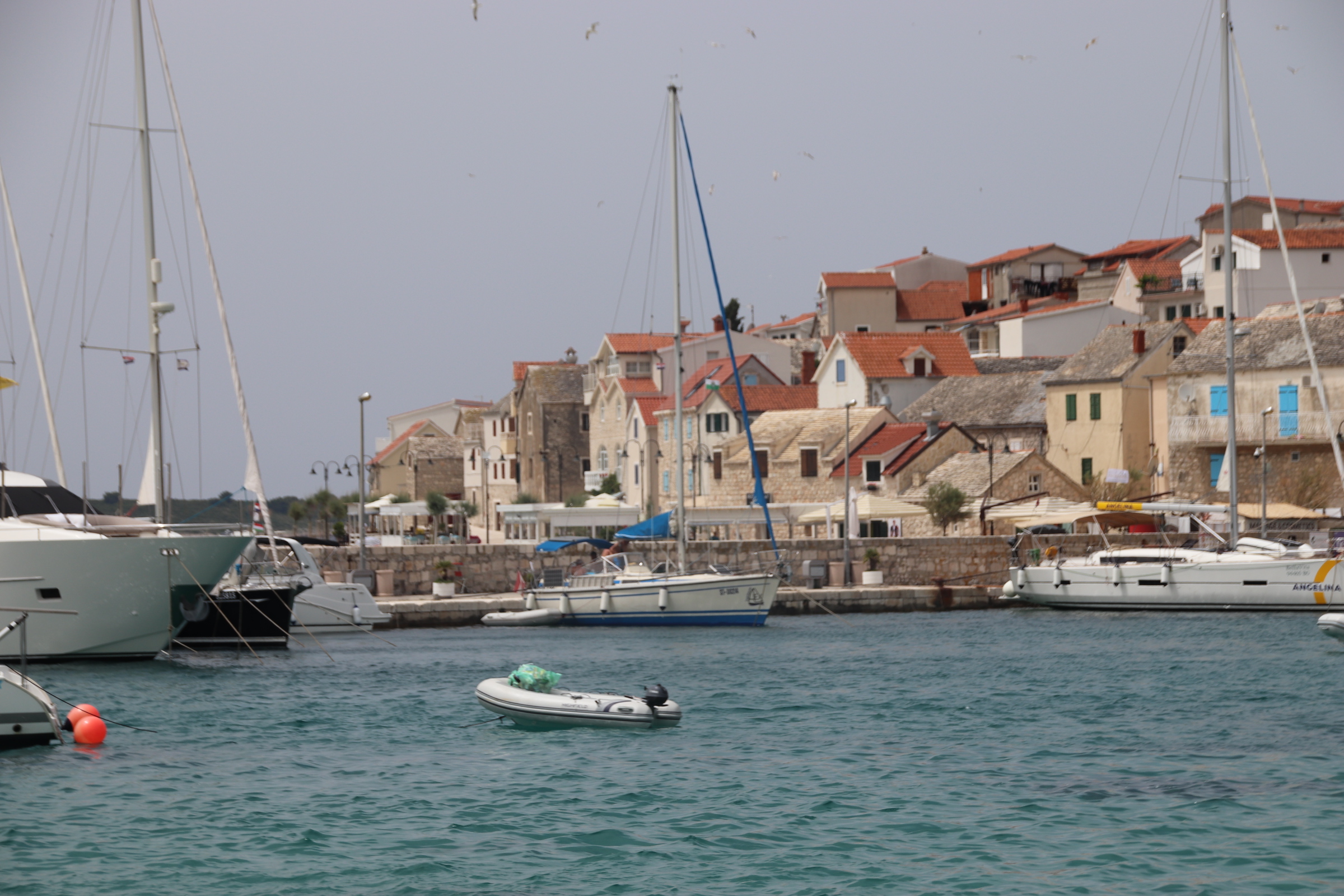
From a distance, Primosten appears to be another wonderful example of an historic fishing village.

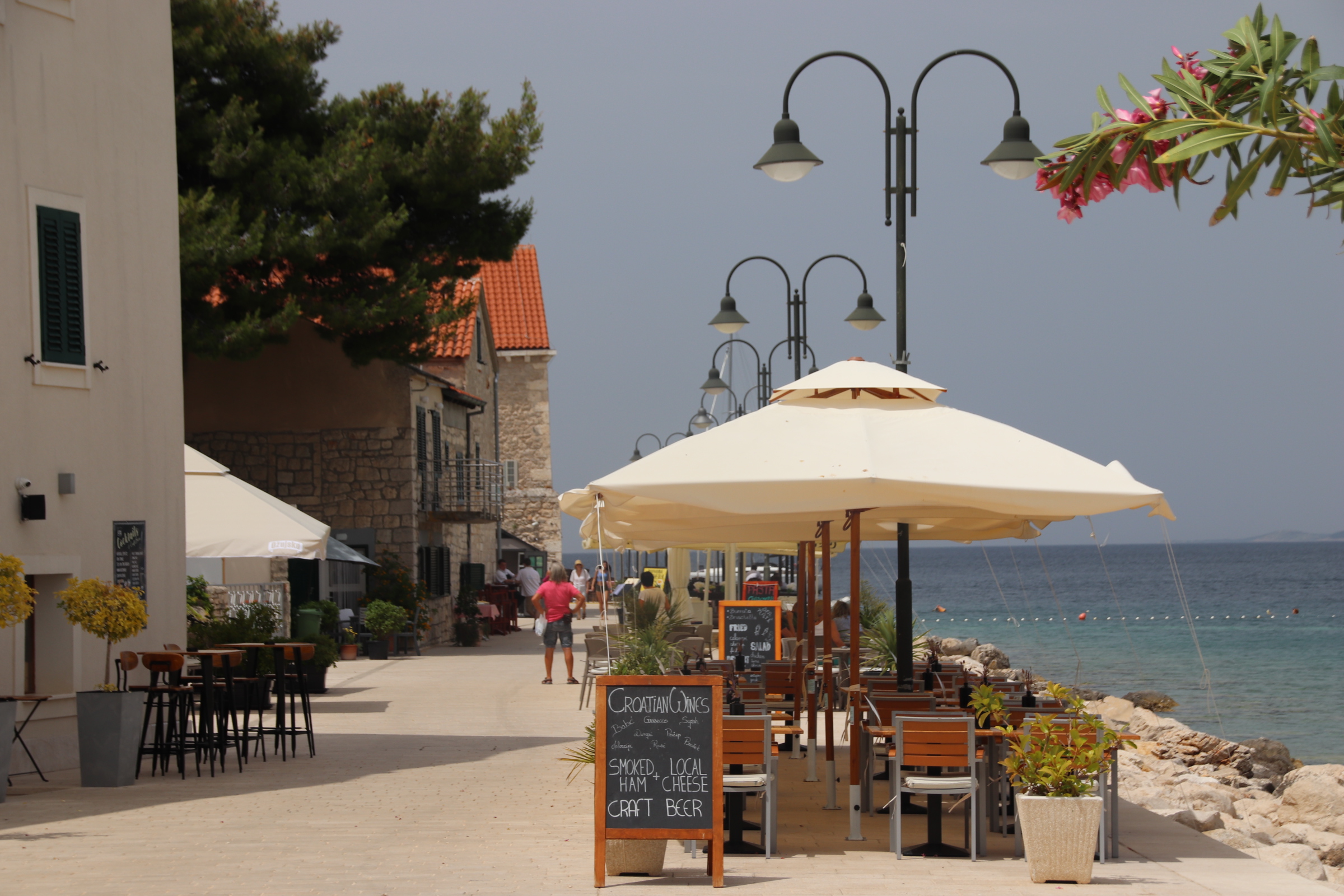
Once onto the clean, modern quayside that lines the narrow limestone klinker beach, one gets the feeling of what this island village will be like.

It feels like the streets will be full of character and fishing cottages. But again, the resort has a freshly whitewashed and mortared feel to it. A few old cottages house a few crafty shops and converted holiday dwellings, while sharp rectangular new builds have been constructed in between for tourist apartments & hotels. These spread around the ragged cliffs, where their occupants perch out on the rocks and outcrops to find a place to lie out or access the water.

The opposite beach is a lined arrangement of sunbeds and umbrellas which would put legions of Roman cohorts to shame!

A wide stone/cement walkway meanders, dipping and diving, around the island along the cliffs. Once out of the resort itself the path becomes a bit wilder. An odd cove appears or a classy restaurant, perched high above the surf below. It’s not far before the path flattens out and eateries fill the available space again.

One can only hope that as time passes, such resorts will weather and begin to harmonise with their historical context so such settlements can fulfil their full potential as successful holiday destinations. This may well be possible, if the holiday companies allow it to happen. Good luck, Croatia.
Sibenik is a crown jewel on the Croation Adriatic

To start with this town seems anything but a special place to visit; on a par with Split & Dubrovnik? Parking down in the port area and looking up behind the few trip boats to the facade of the sea-facing walls, pierced by a few small windows & doorways, it seems nothing special. The dome of the town church pierces the sky line, special enough to be noticed but not enough to be admired. Yet clues to the secrets in these streets can be spied with hints of two of the town’s four large fortresses muddled on high outcrops. Narrow cracks beside seafront cafes tease the visitor and tempt them in.

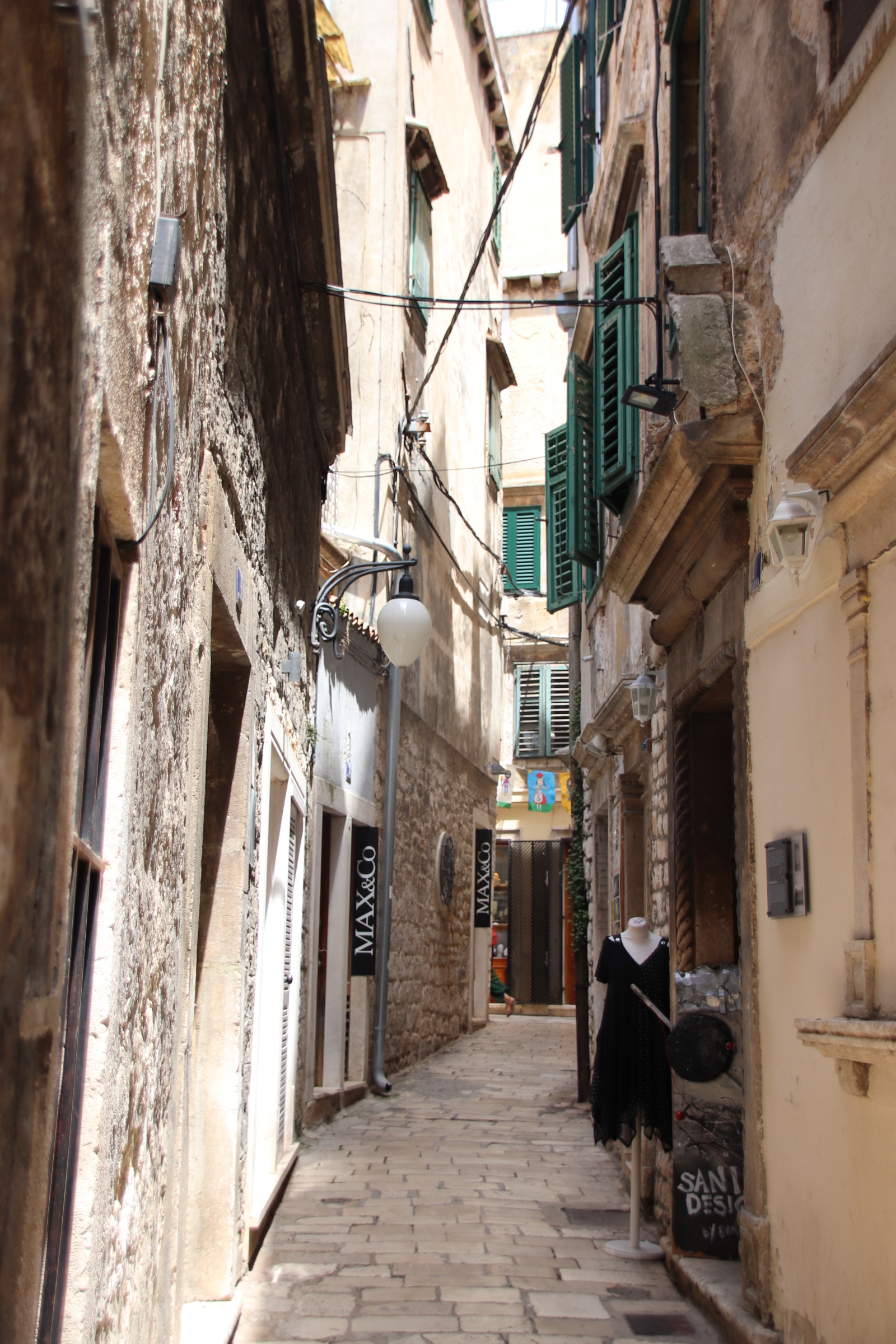
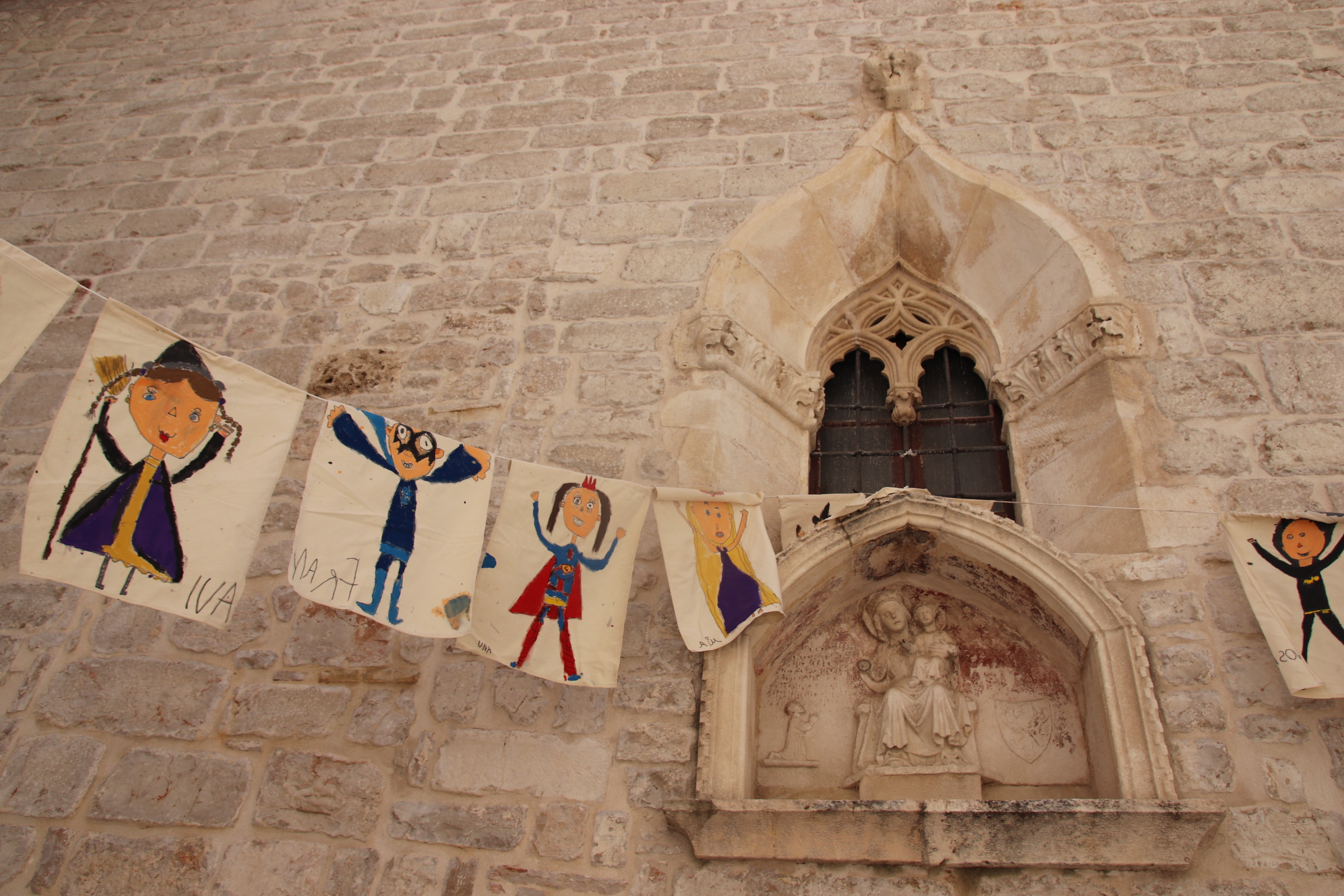
It is only as you take a set of steps into the dark cobbles of the medieval Old Town does Sibenik begin to divulge its treasures and history. A sense of pageantry pervades the labyrinth of the smoothed-cobbled alleys, aided by lines of hanging bunting painted by school children.

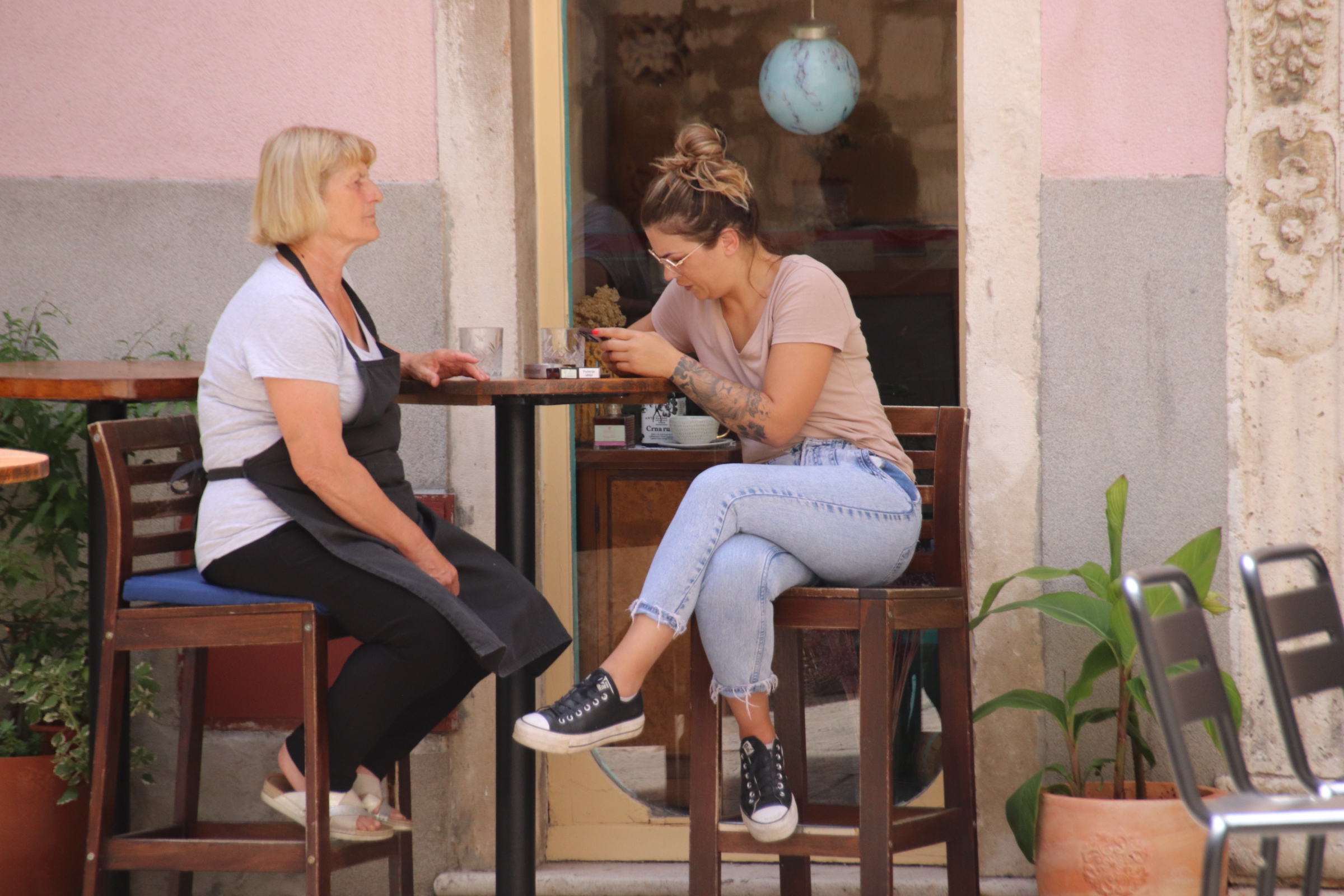
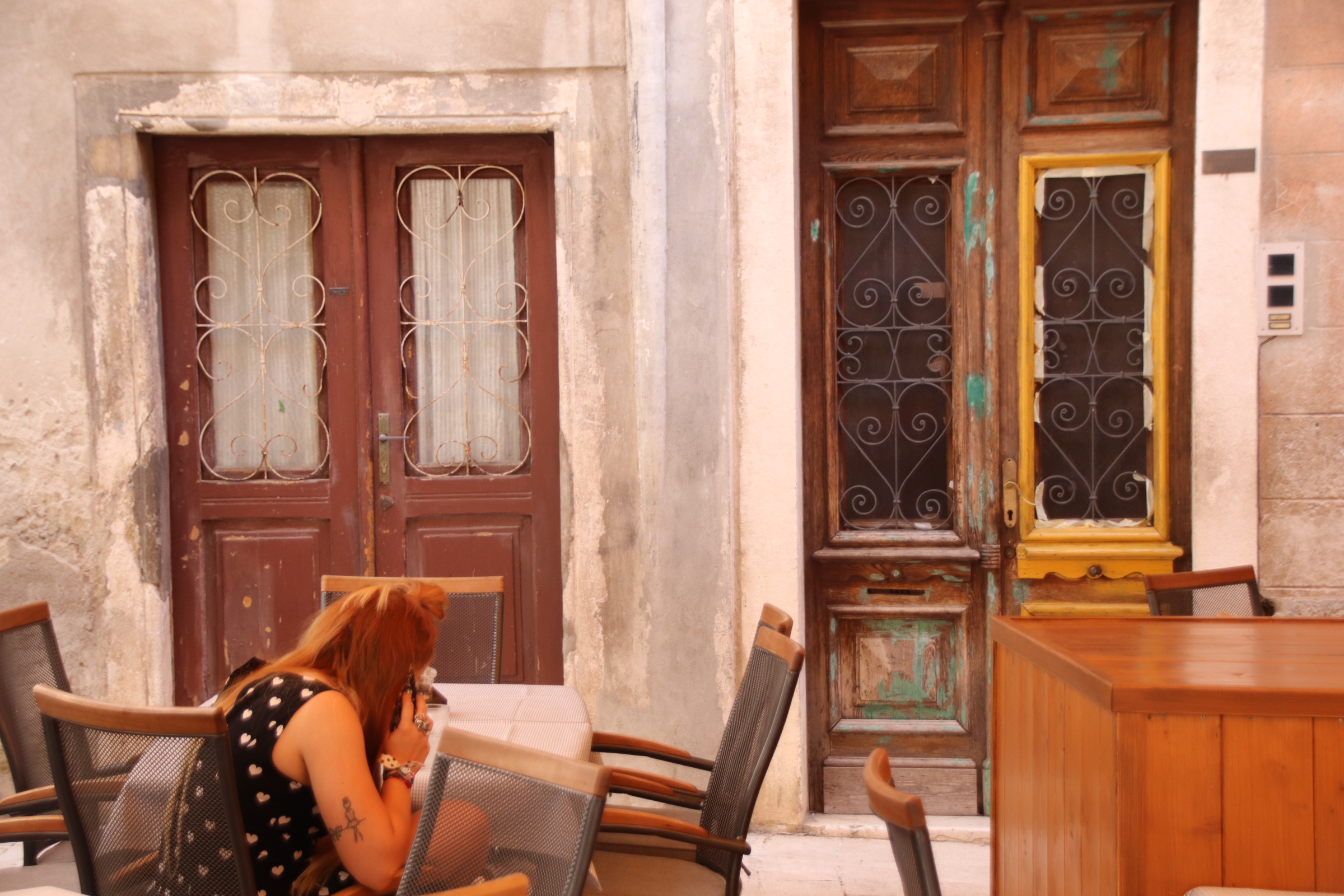
Cool squares & courtyards are squeezed into any tight space and tables arranged as a bar or a restaurant for the few visitors to this shadowed maze.

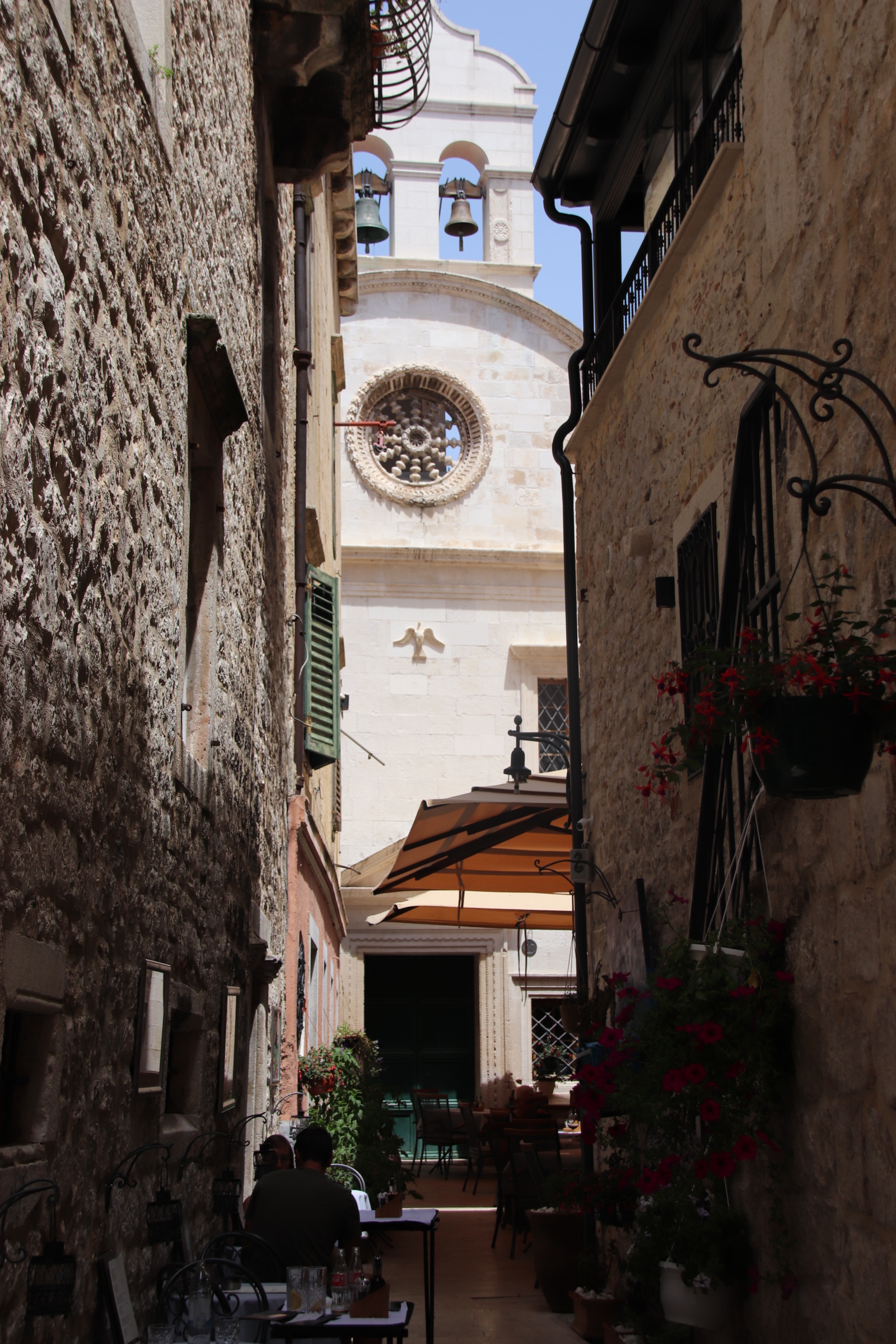
This passage leads through the tables to what appears to be a grand church but is, in fact, a simple chapel the size of a 10 metre cube.

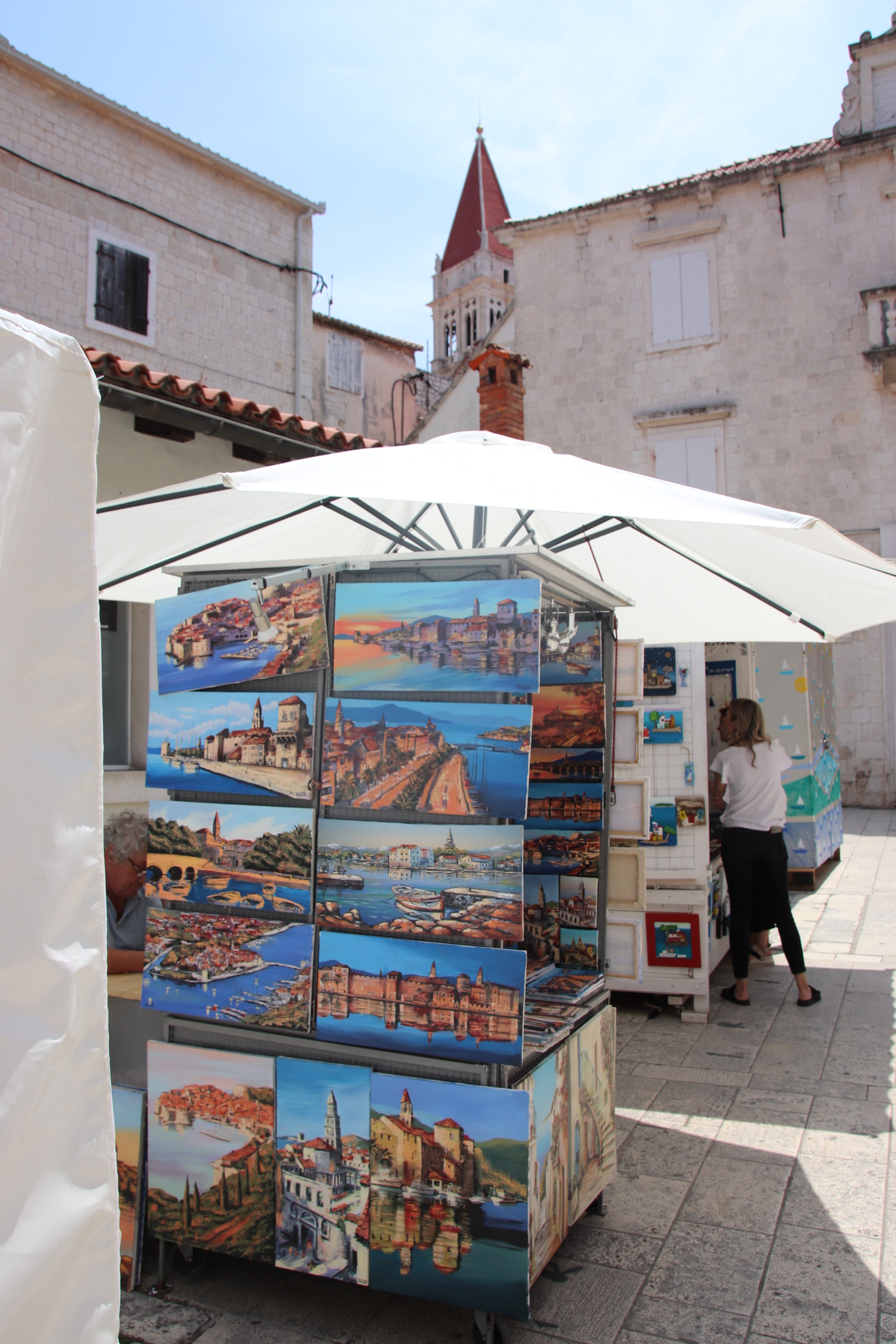
Divining a way through the streets is a challenge if you try to use your mental compass to reach a set point. Much more exciting & satisfying is to give up any previous guidance system (that the duomo will be at the highest spot of the town – here that is not the case as it is down near the water front) and go with the gut to see what is around the next corner or at the top of a range of stone steps; things like the main drag of shopping outlets, unique independent crafty shops and interesting eateries that create a hotspot of culture and arts, a talented busker.

Umbrellered cafes, shaded by canvas or potted trees offer a respite from the tourist path. Deeper into the myriad of passages, the real gems start to appear. The church of Sveti Barbara date’s back to the 15th century.

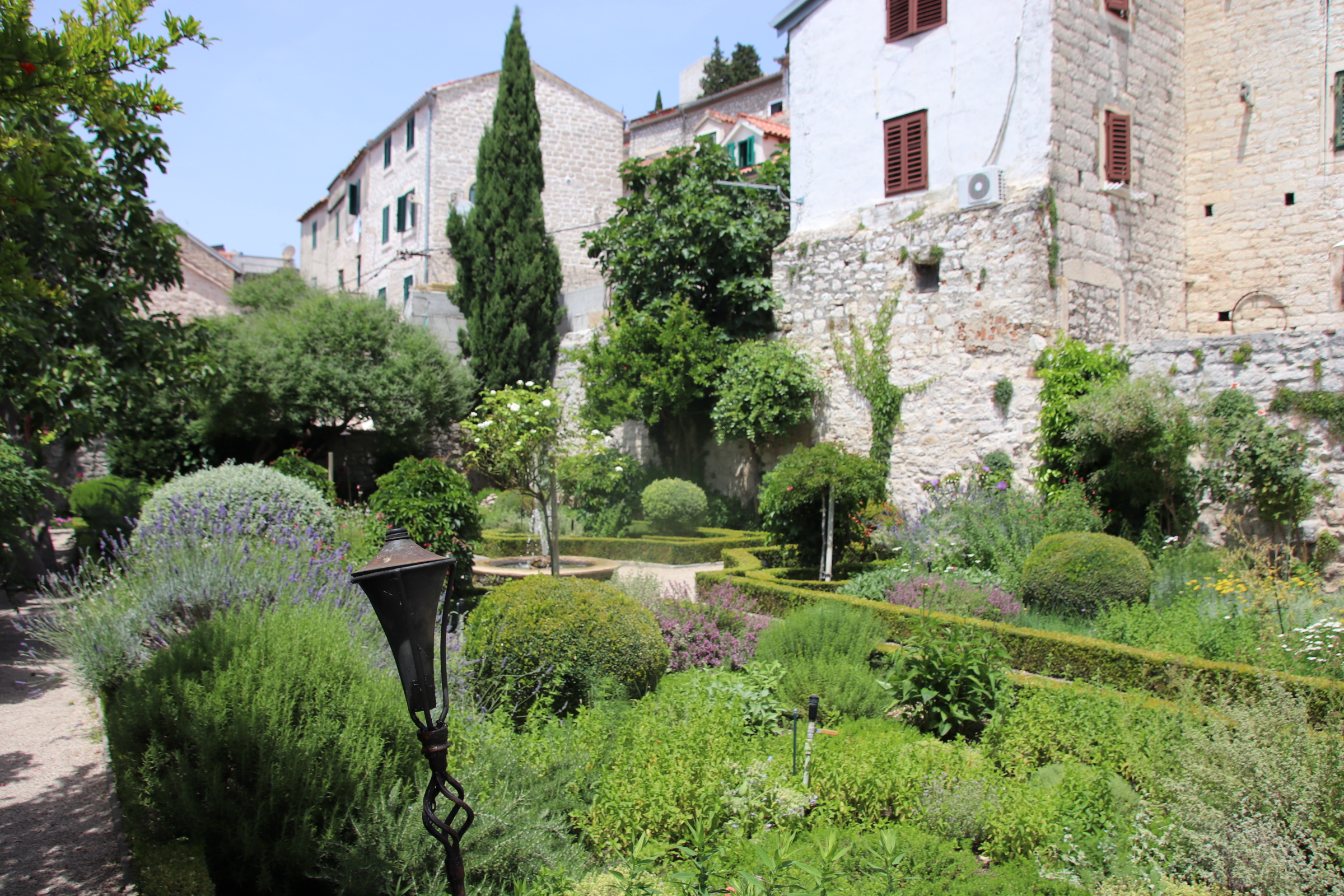
It is no longer used a a church but is being converted to be used as part of the City Museum. Then the heavy stuff comes out – up wide, winding steps is the monastery of St. Lawrence and its small, preciously green garden, a tranquil oasis in a desert of quarried stone. It is free to enter and spend time here. There’s also a small cafe serving healthy drinks & snacks in tune with the ambience; lots of water & no burgers!

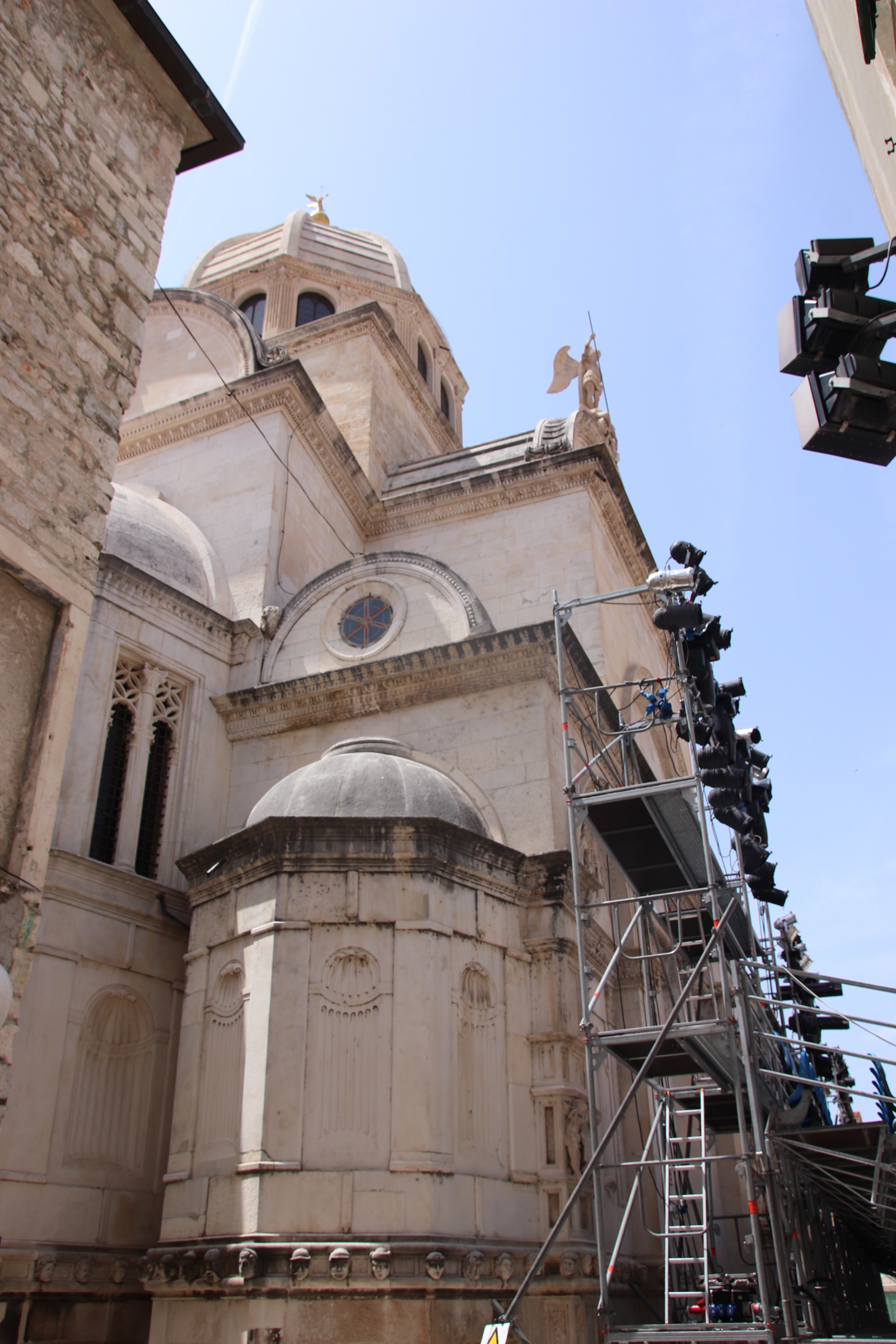
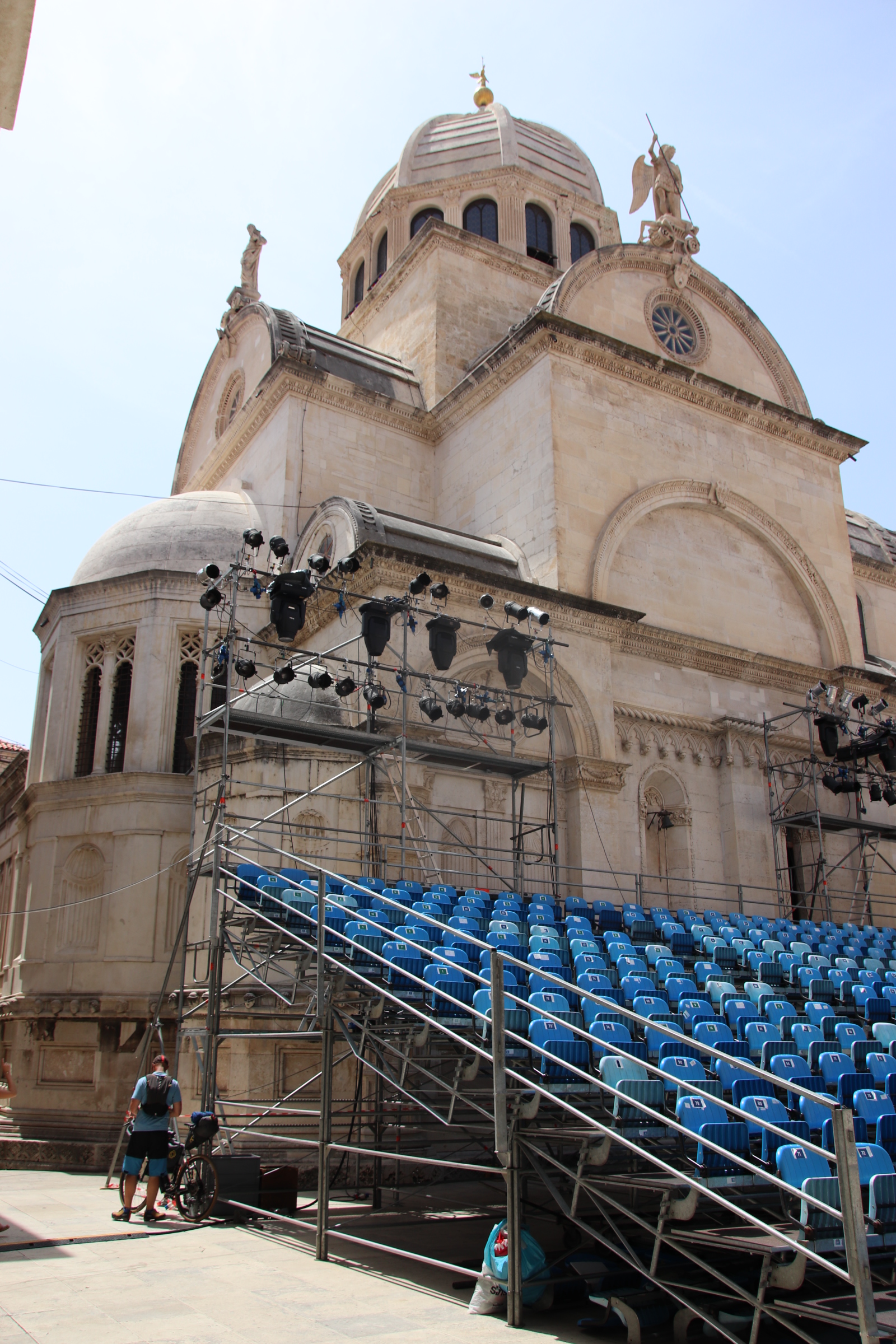
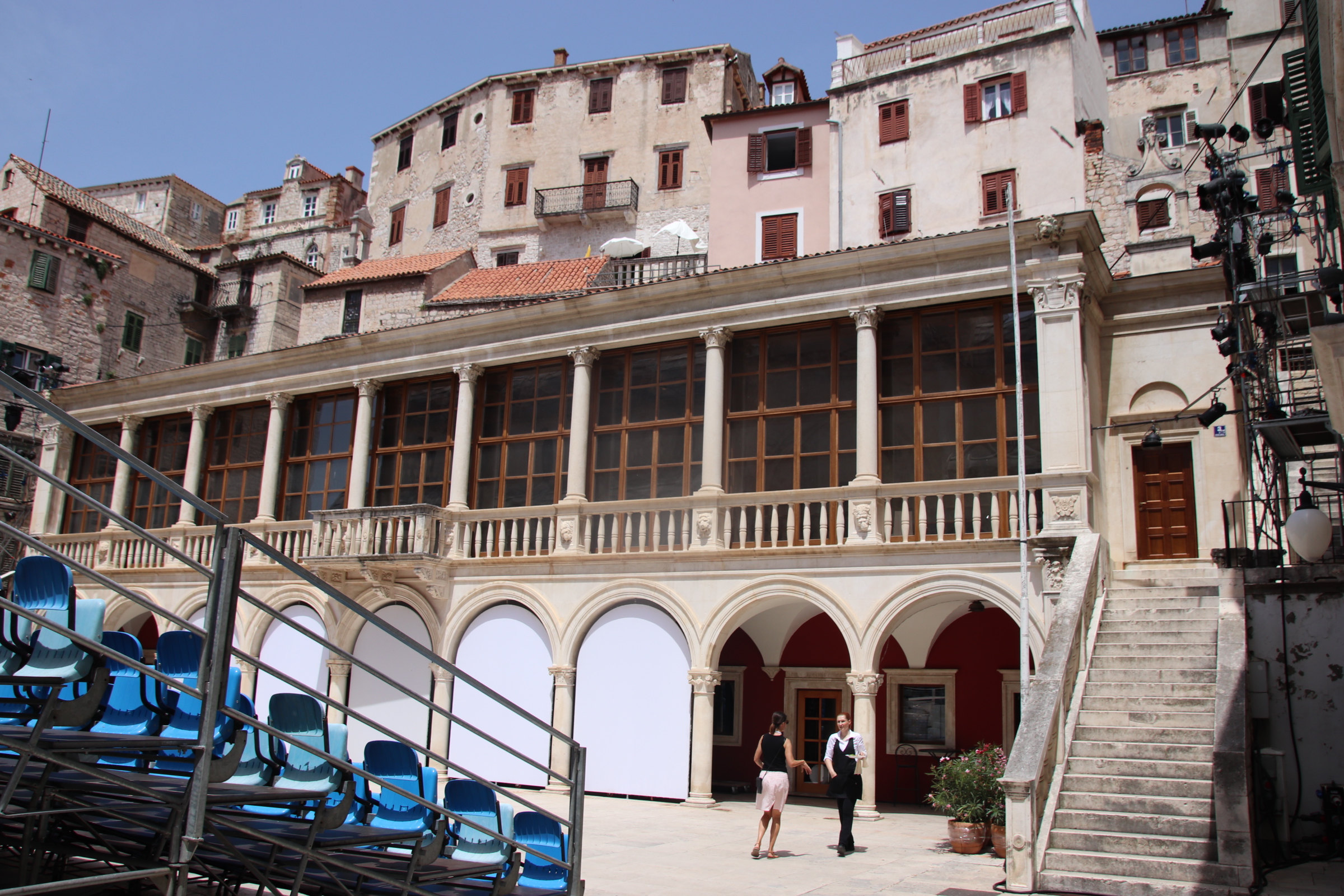
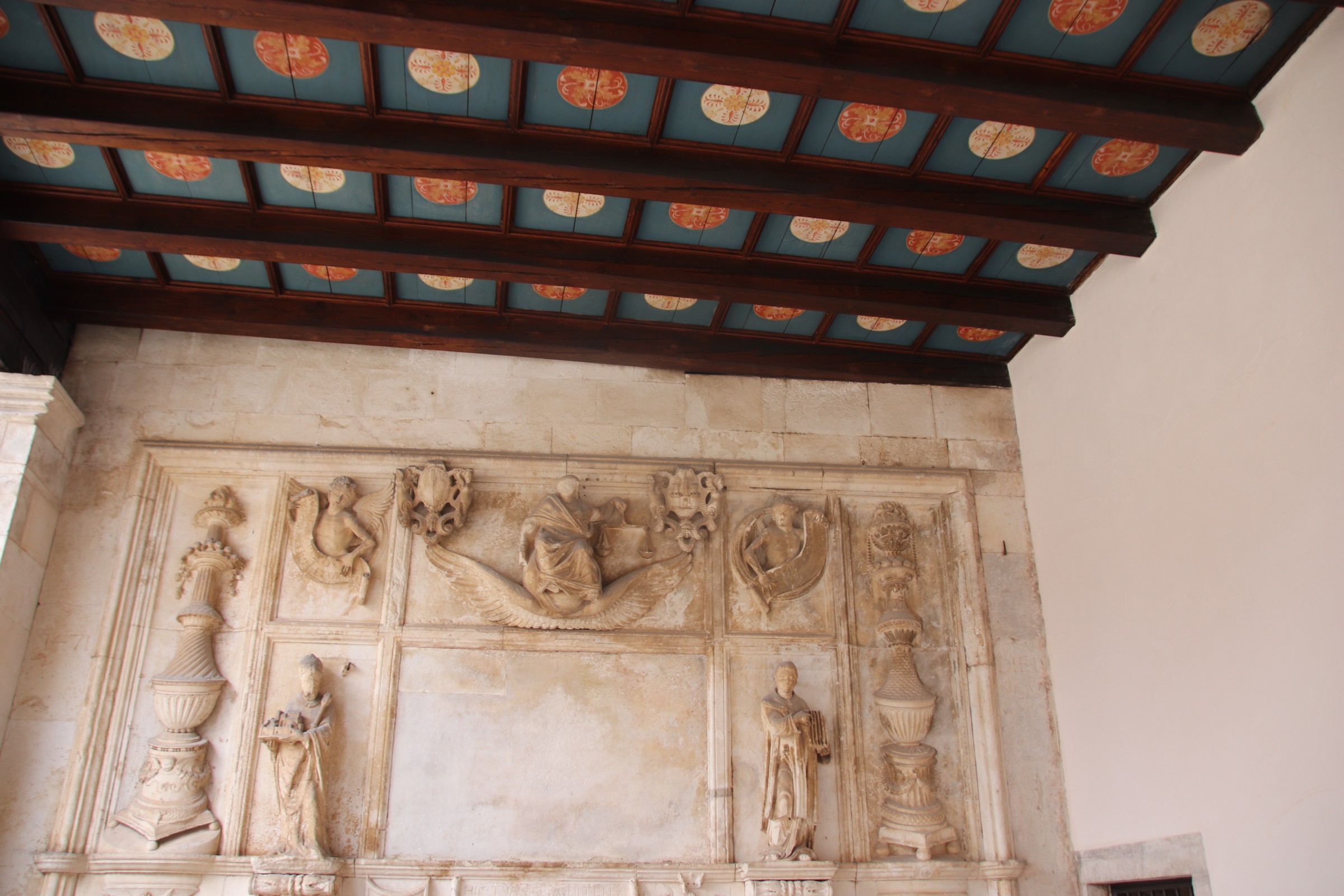
Sibenik Cathedral of St. James is situated in the Republic Square and City Loggia which normally houses a number of small cafes. Today it has been decked out for performances but one can still feel the ambience of the place. The cathedral was built over 100 years between 1431 & 1535.

The Loggia was built over the same period of time but a century later.

The cathedral is equally impressive from many different aspects.

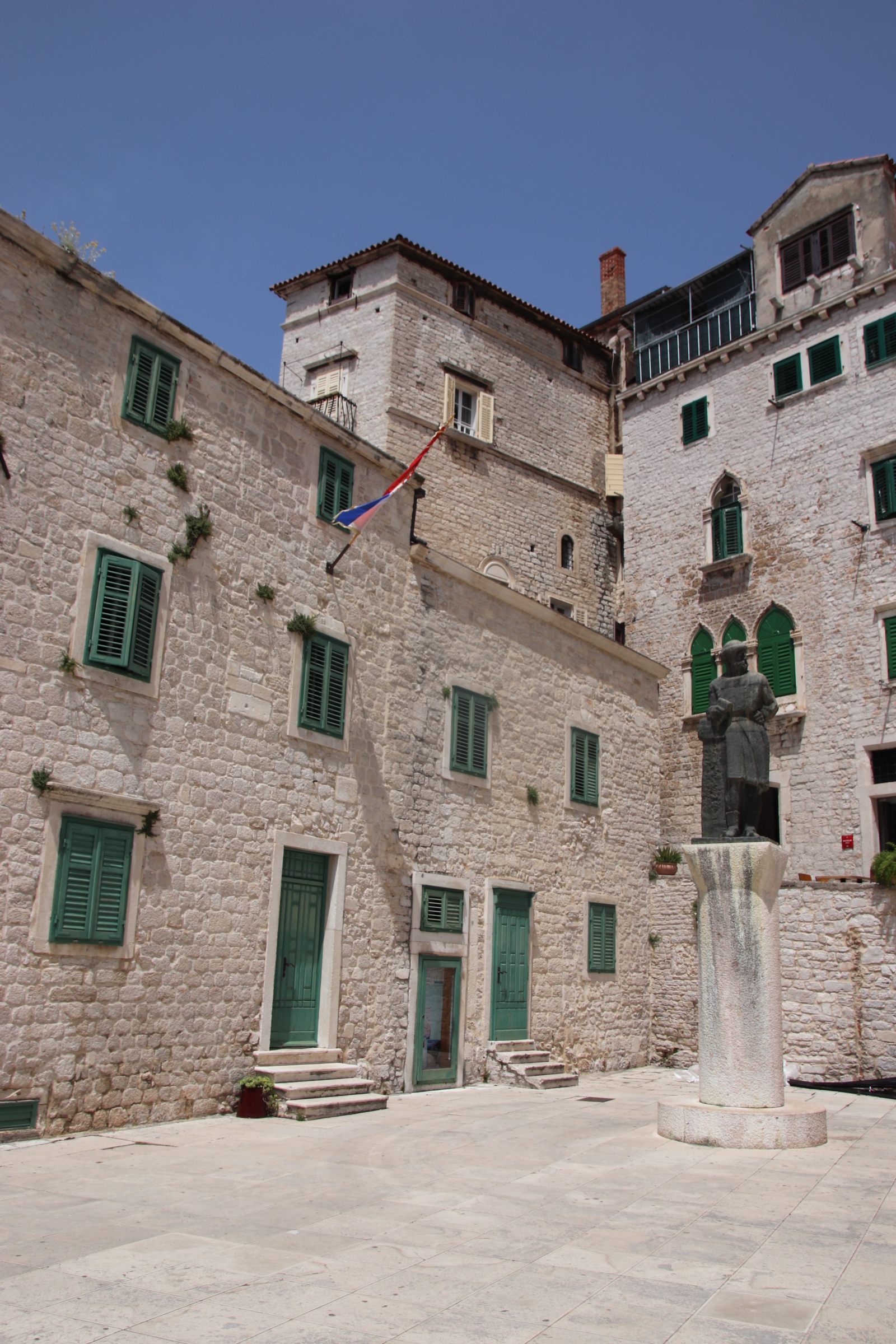
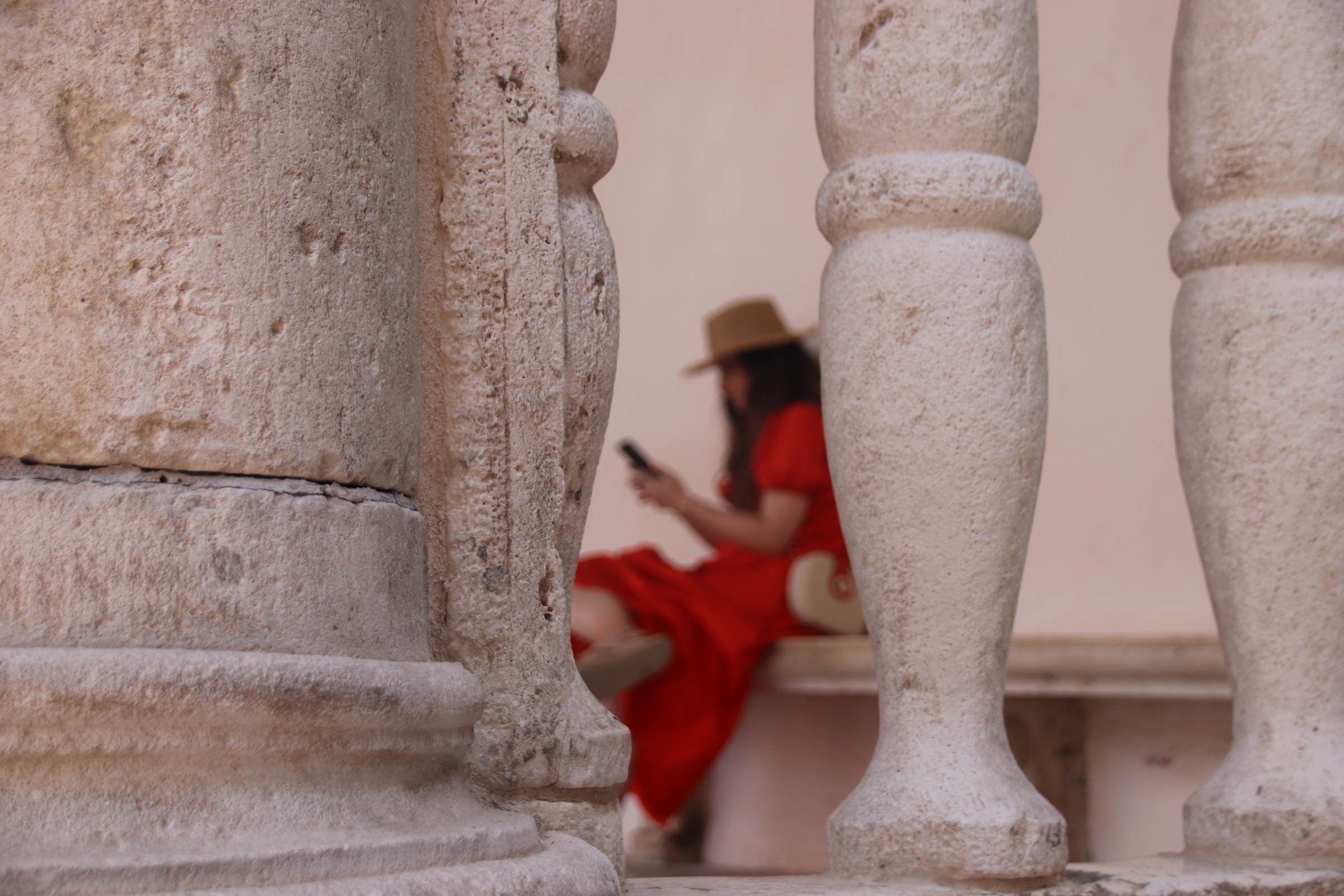
The wide balustrade of steps at the rear lead down through a tidy square & past the pillered man to a wide shaded Promenade where another round of refreshments can be bought from a lovely quirky bar before a gentle stroll along the water back into town.

Finding Trogir’s beaches

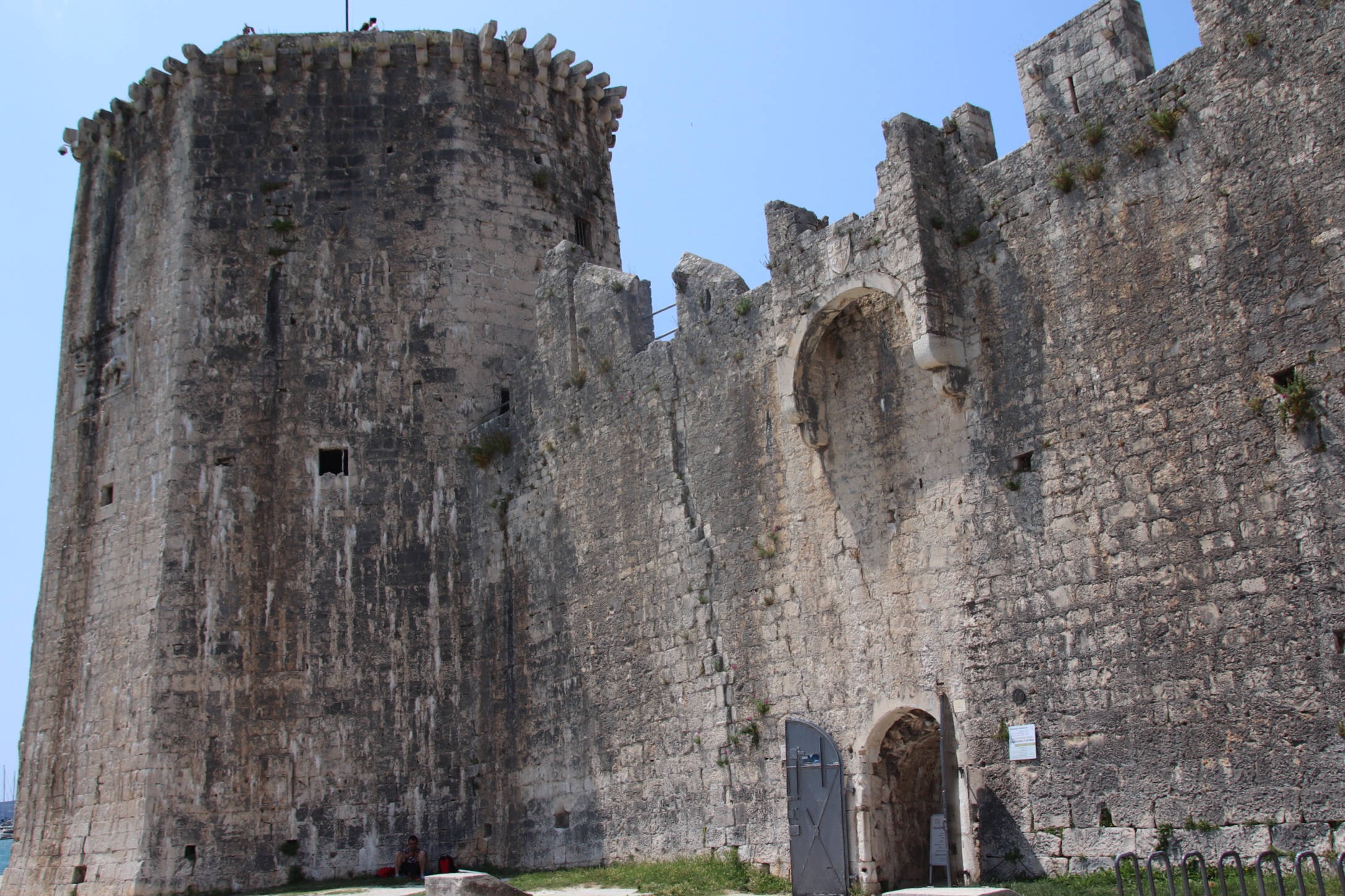
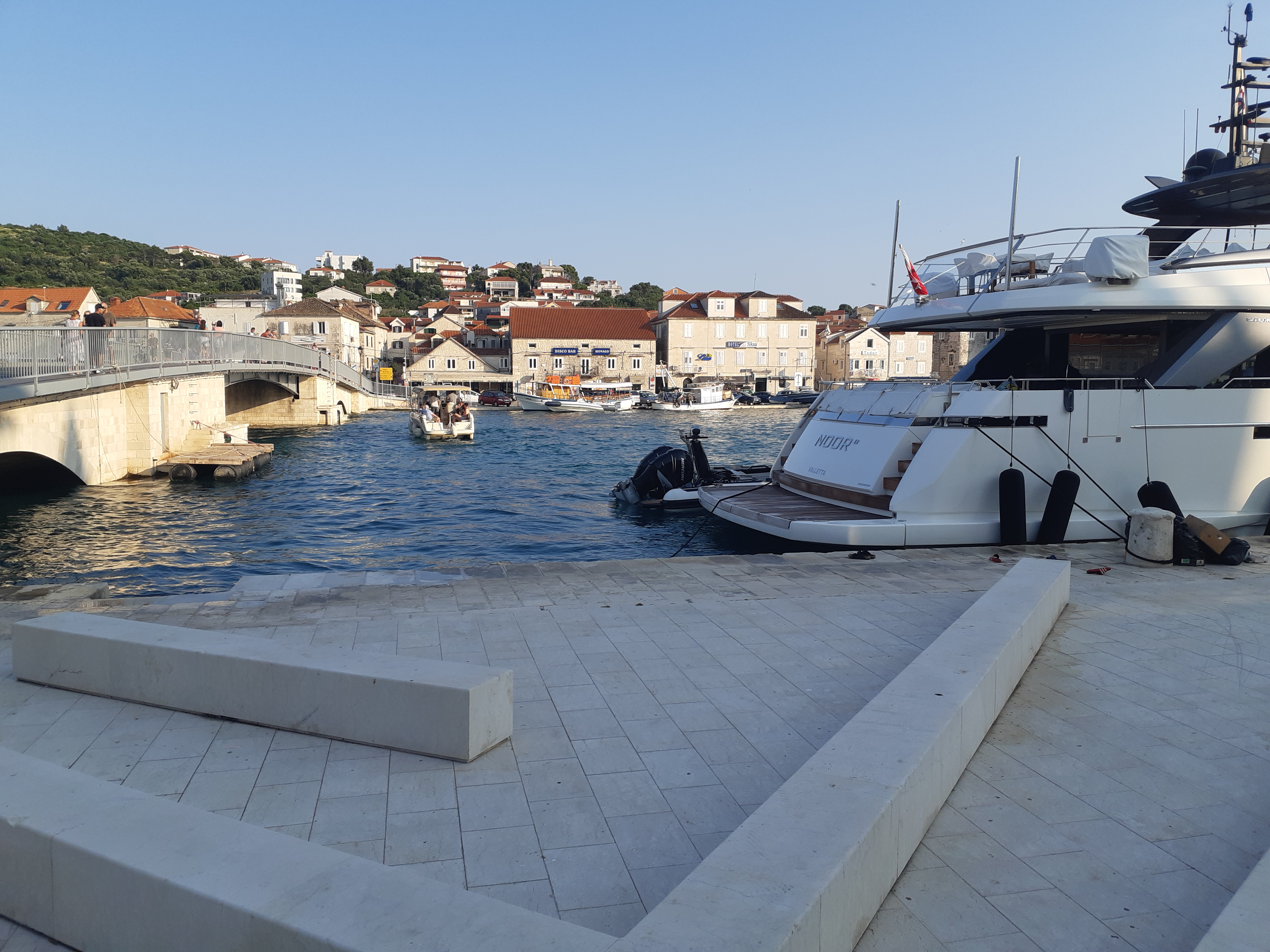
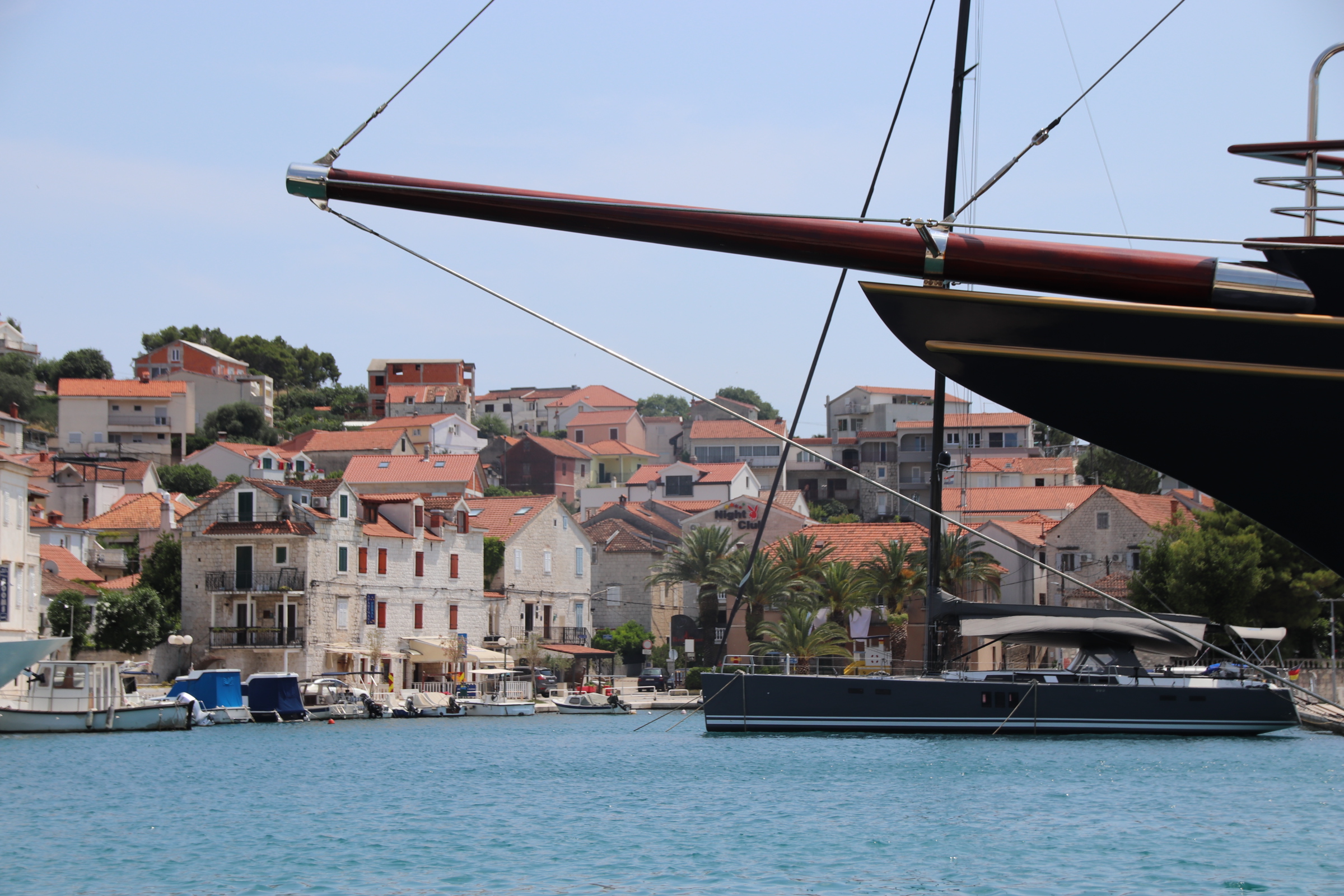
Trogir’s wealth and history is based on its unique island position. Outside the walls, the luxury yachts are moored up along the quay under the protection provided by the giant Fotress Kamerlengo.

From the other end of the quayside another bridge links Trigor’s island with the island of Ciovo. That quay lacks the imposing walls and glitzy yachts of the town, but it is the gateway to other sides of this historic hotspot.

A 20 minute drive along the north coast runs through low apartment buildings across the road from narrow roadside parking above a strip of beach. I say a strip. It’s more concrete constructions mixed with rocky foreshore with the occasional hard place for sitting about on where metal ladders lead down into the water. About a mile further on a slightly more beach-like sections separate the hard, crunchy rocks. Crystal clear water laps up onto white limestone, sharp and very testing for both untamed feet and lying out on unless you’re a contortionist or you have invested in a beach bed/chair or these beauties…..jelly shoes for 10€.

From the row of apartments, families spread out onto the clinker-like beach, nearly all speaking Croatian, Polish, Czech. English is rarely heard.

A few cars make it up here. The road eventually gives way to a dusty track leading to a wonderfully wild area at the top tip of the island.

Turning right over the bridge takes us to another side of Trogir’s attractions for visitors. Okrug Gornji is a resort with a main strip of a kilometre or so. Music blasts out from a line of beach bars that face the sea over what can only be described as a strip of exposed concrete – a sunbed carpark, blazed by the sun, with more short metal rungs or steep clinker slopes providing access to the water. Over the road groups of lads & lasses leave small supermarkets with cases of cannies to consume on their patch of cement. I took no images, here.

Away from this hot, pink, temple to summer drum & base, cheap apartments and painful sunworshipping, the road runs through attractive hillside shrubs, trees and gorse until the far end where Okrug Donji is growing at the other extreme of the social spectrum. Large homes and villas have been built here on the cliffs looking back to the mainland. These are grand, detached second homes or holiday dwellings and generate a feeling of wealth and class. Homes & a restaurant hide in the shade of the cedars, a respectful distance from the noise and action from down the road.

Trogir by day and by night

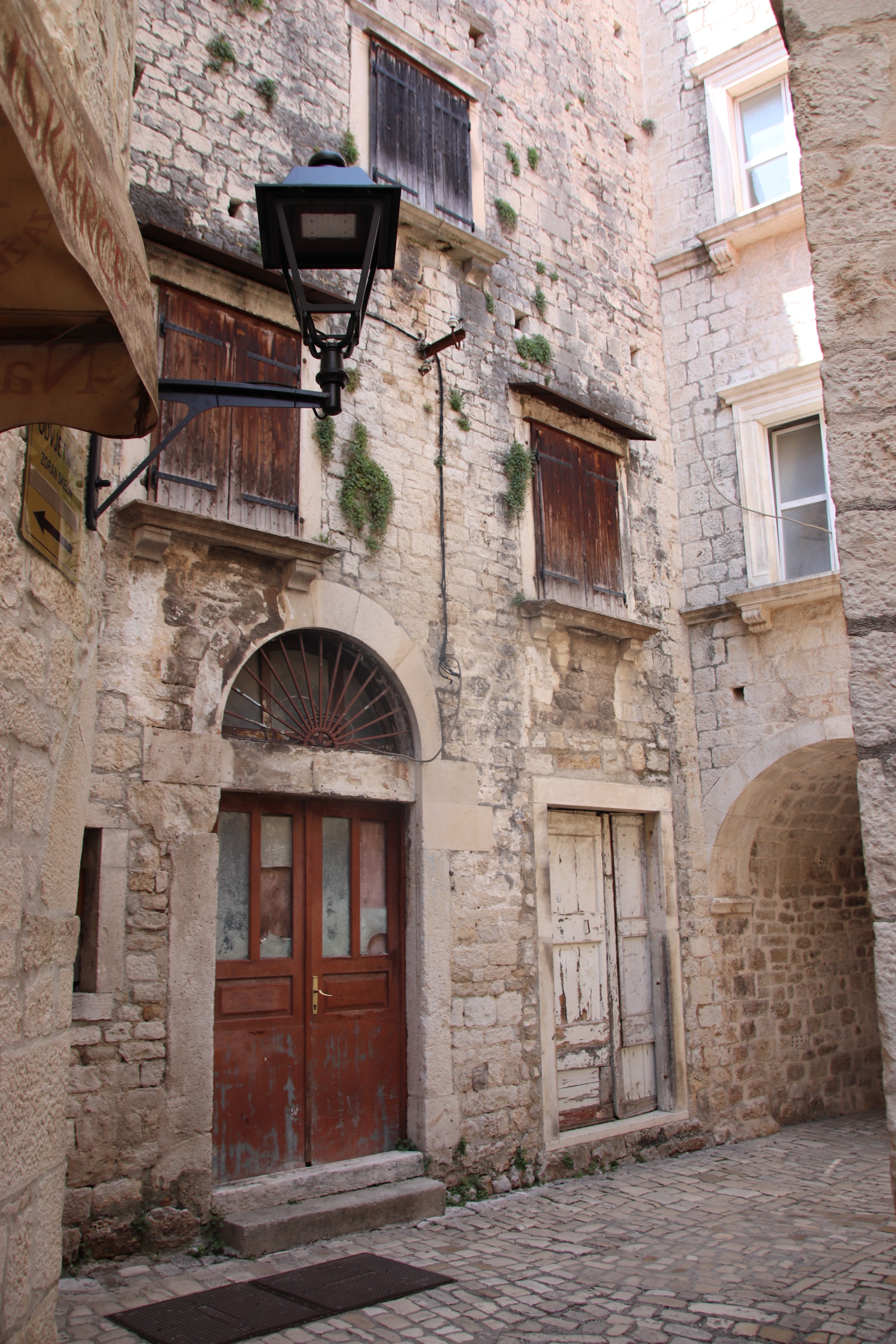
Trogir has always been the perfect spot for a settlement with its naturally protected port and many springs of fresh water and has been inhabited for more than 3,600 years. It pulls the visitor into an enchanted labyrinth of narrow, smoothed stones, where local and foreign masters have raised magnificent buildings and churches and villas to hide behing every wall and around every street corner. Wealthy citizens have stamped their mark on civil projects and town amenities.

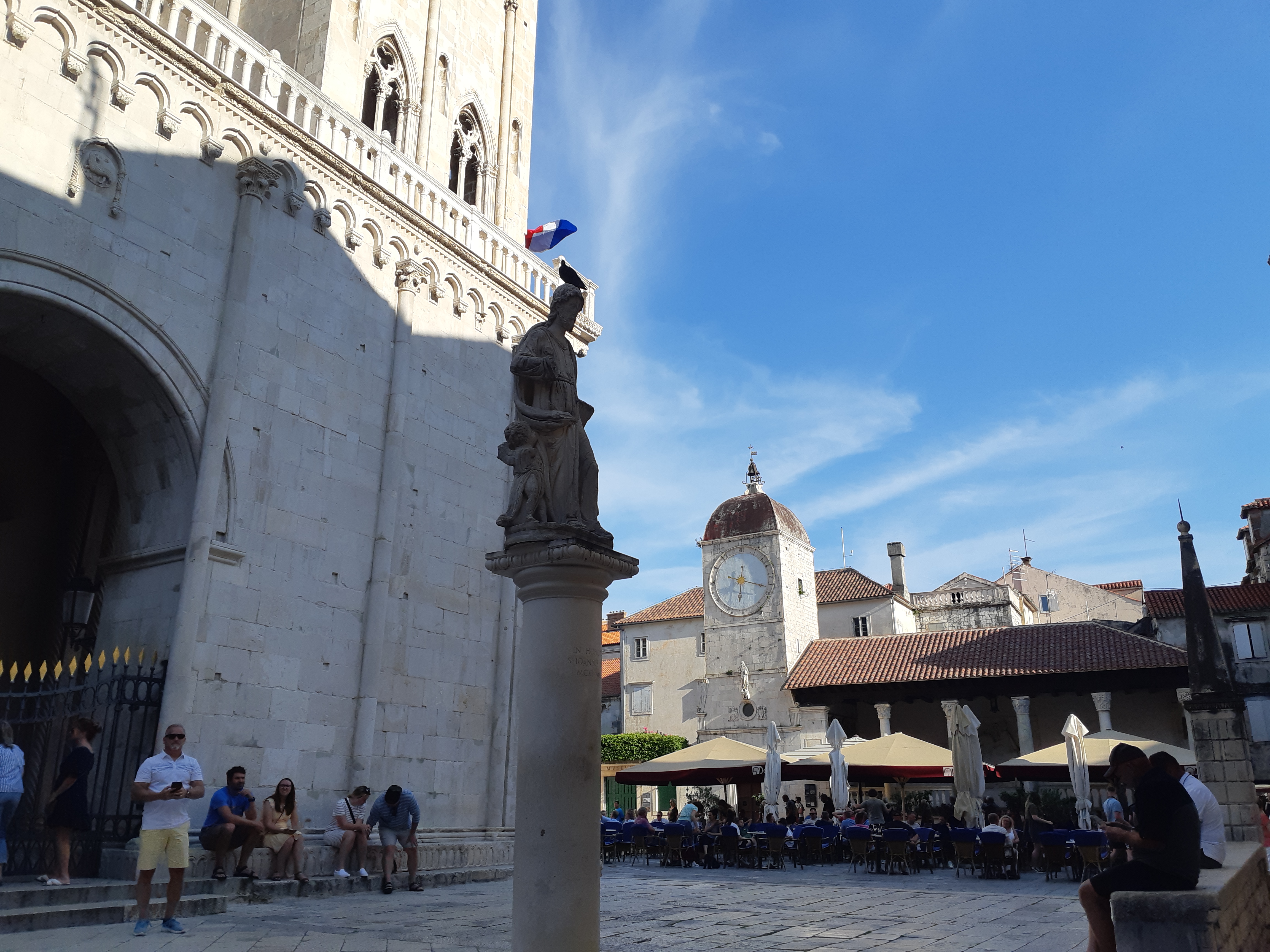
The Cathedral of St Lawrence, with the man himself perched in a piller outside the main entrance, stands (opposite the ancient bell tower of the Church of St Sebastian.

The old town hall of the 15th/16th centuries lies on the north side between the two. Before that, civil business was conducted in the arboured building beside the church.

Over the centuries the local citizens have created a wealthy city where rich & poor have survived the changing times of the past. Today, it is unclear how many people remain living in the city throughout the year. Certainly, the only business in town is tourism and the vast majority working in the many excellent restaurants & bars are from neighbouring countries & districts who move on at the end of the season.

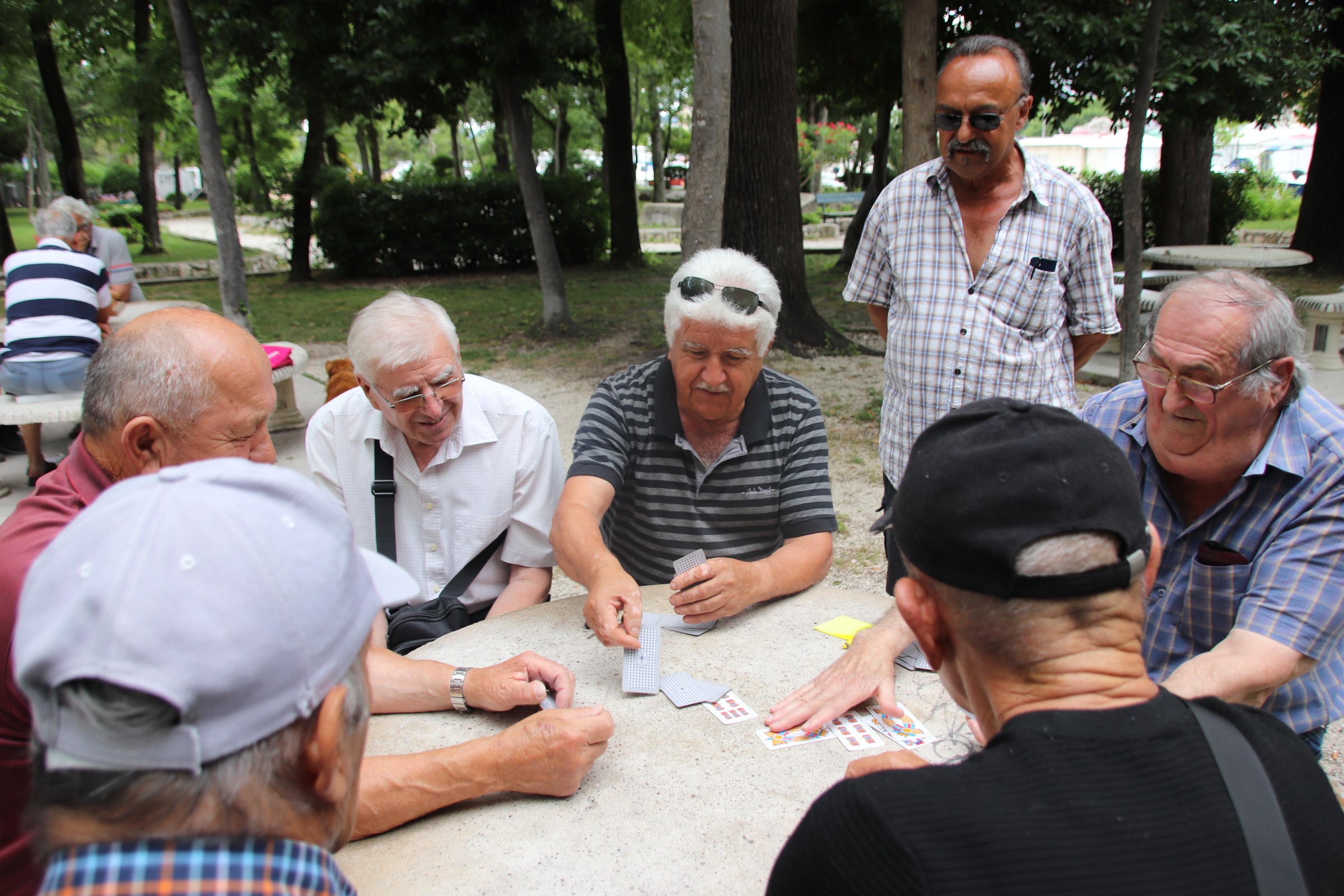
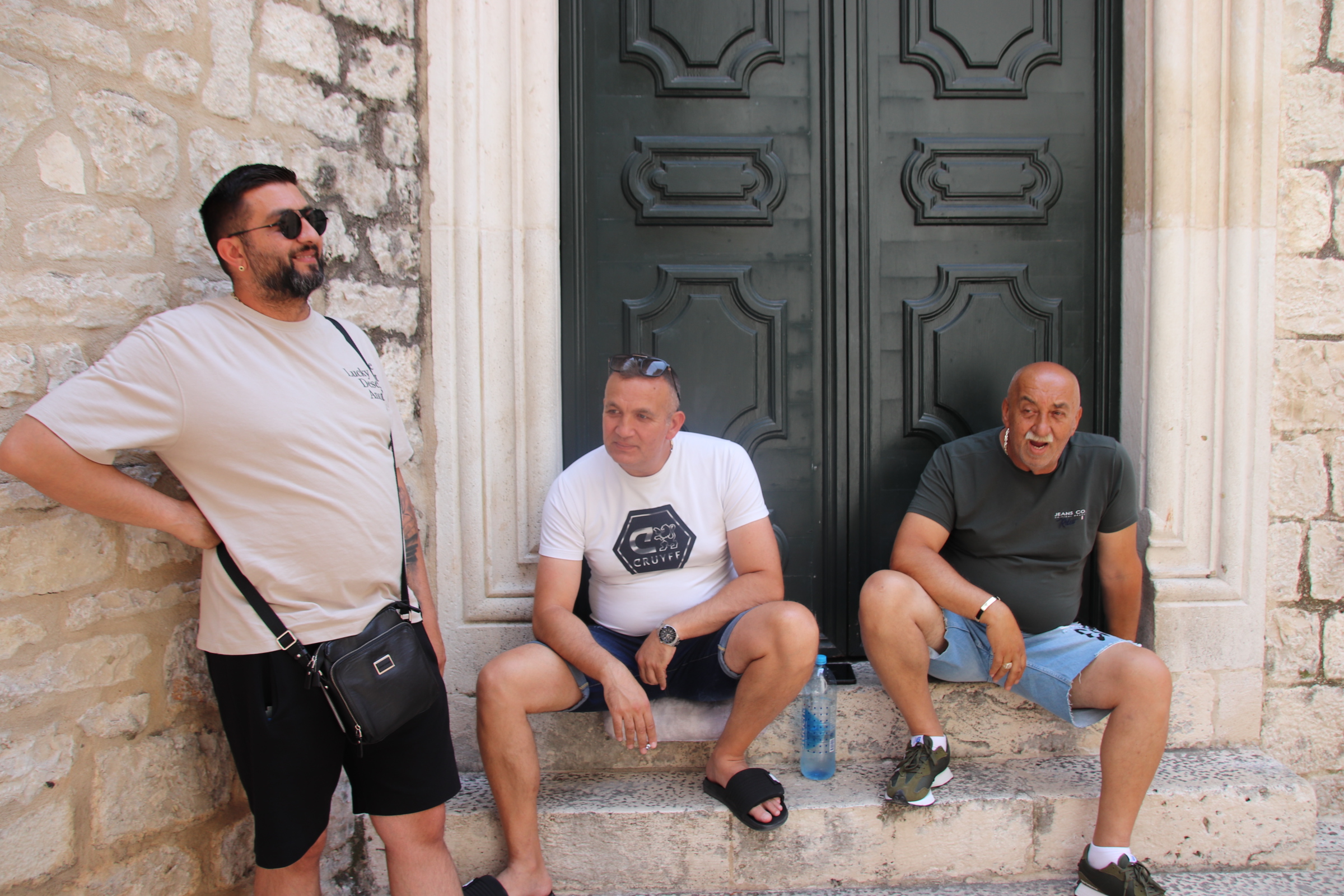
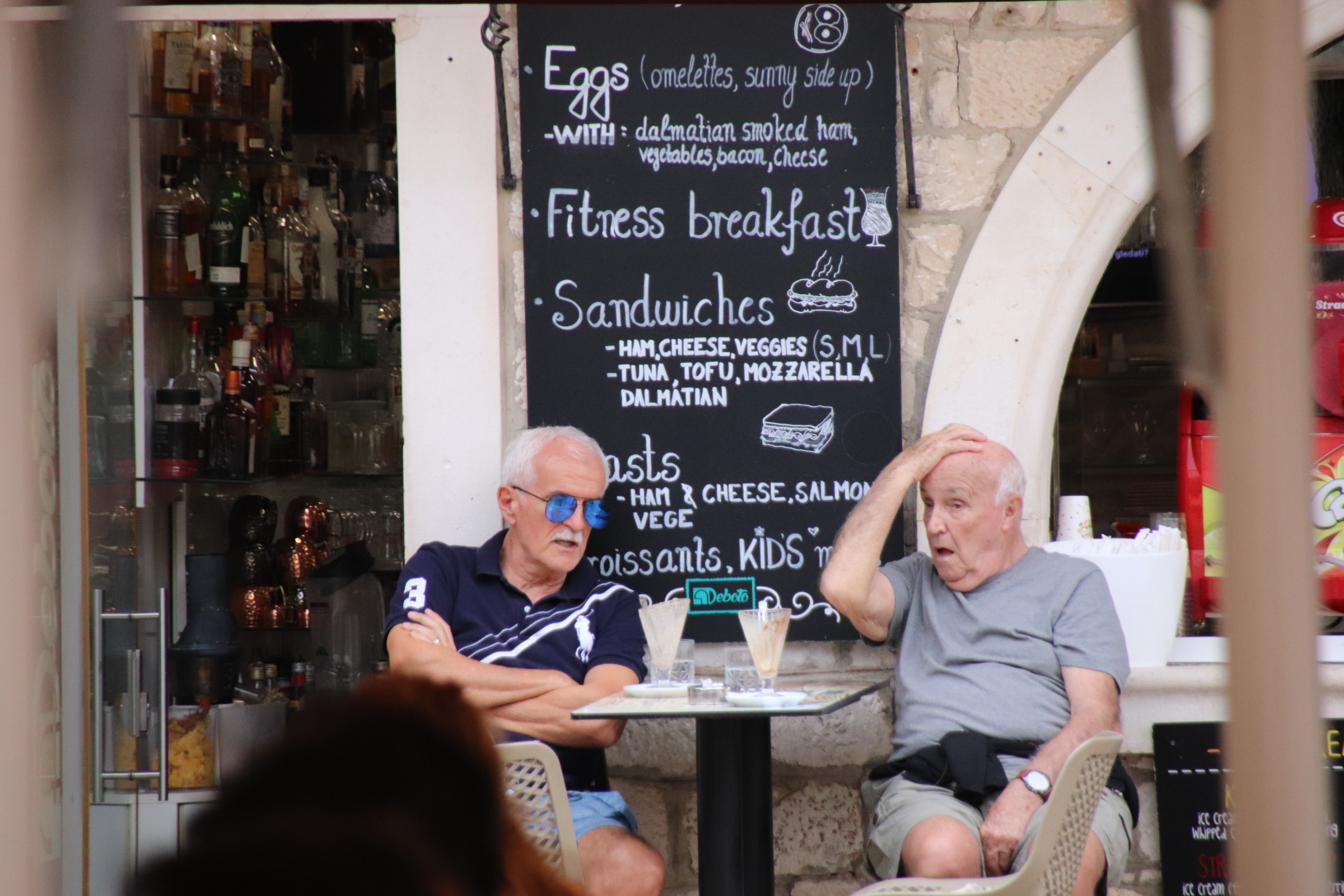
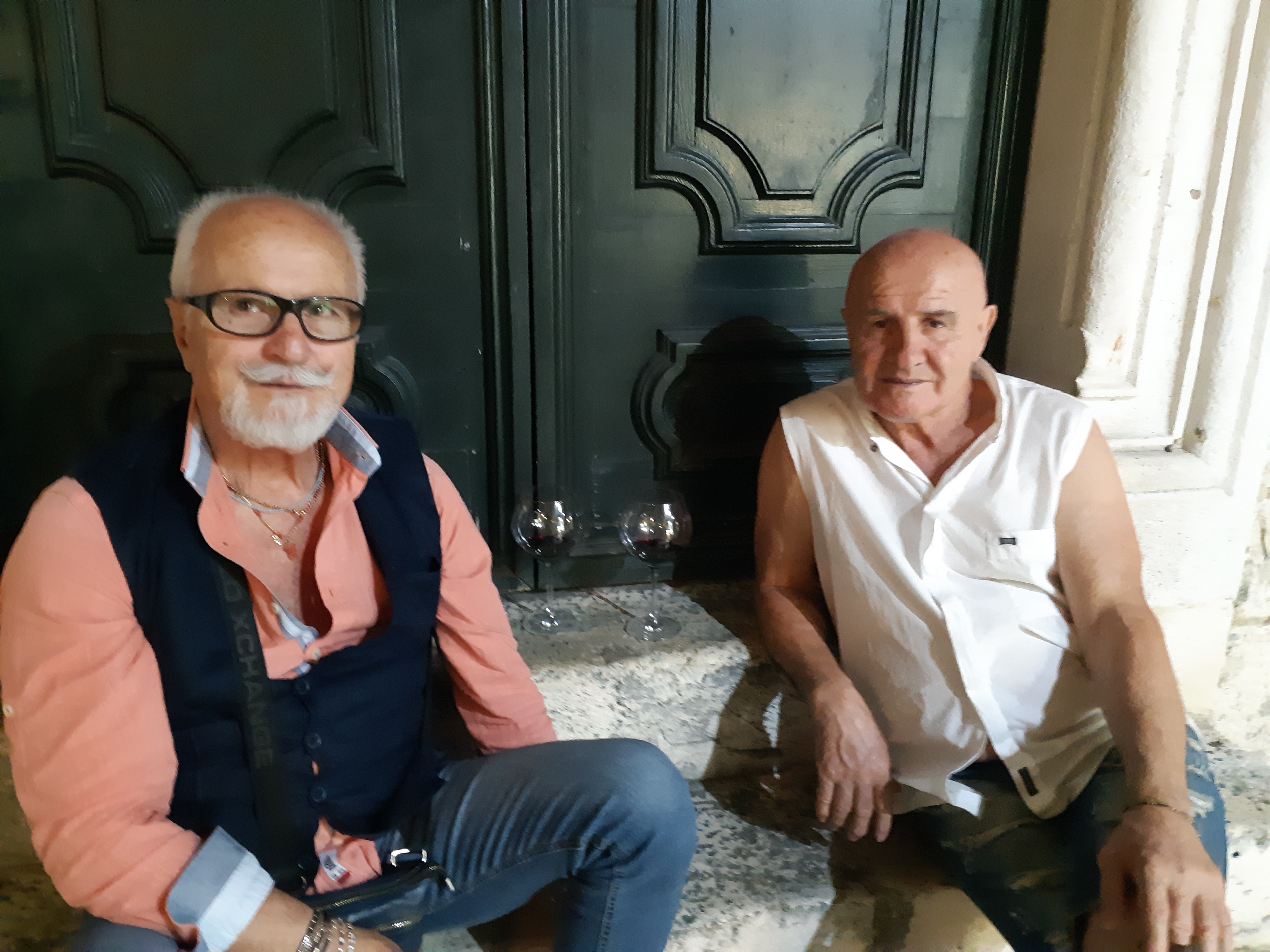
In the cool of the evening, small groups of older men come out to reclaim their city – card games in the park, the cool spot on the steps at the back of the church, their favourite table commanding the square.

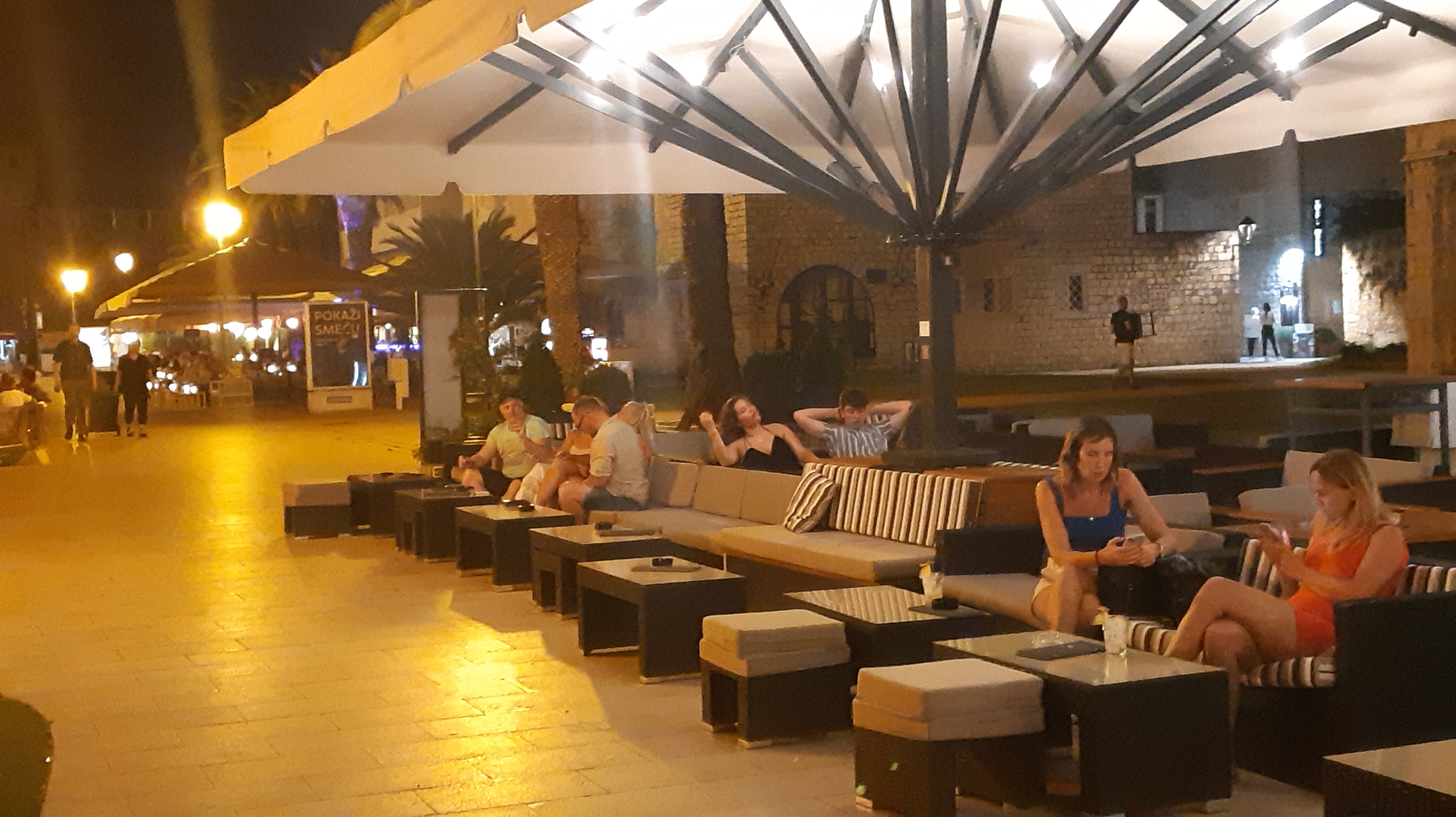
But, it is the horde of visitors that wins outright at every turn and every time of day or night. Be they wealthy passengers from executive yachts, couples and families from the rest of Europe, seeking sun, sea & s**, Croatian groups on a home-turf holiday, hikers & walkers on an overnight stay, they take over the squares and the eateries and the bars creating a cosmopolitan buzz and an infectious atmosphere. Whether it is singing along to the group on the dockside or watching Croatia play football, they all combine in making Trogir a great place to stay & visit.

The island gem of Trogir

Seen from the surrounding peaks Trogir is a compact, clay-tiled nugget of Renaissance, baroque & Romanesque buildings. It occupies a small island between another island and the mainland and linked to both by bridges.

The North Gate is the main portal into this medieval cluster and it’s just a short walk of 400 metres or so through narrow cobble-polished streets to the South Gate where luxury yatchts are moored outside the old town walls. Due to the narrow passageways the town is completely pedestrianised and a few special carts have to be used for deliveries to the many restaurants and the few tourist shops.

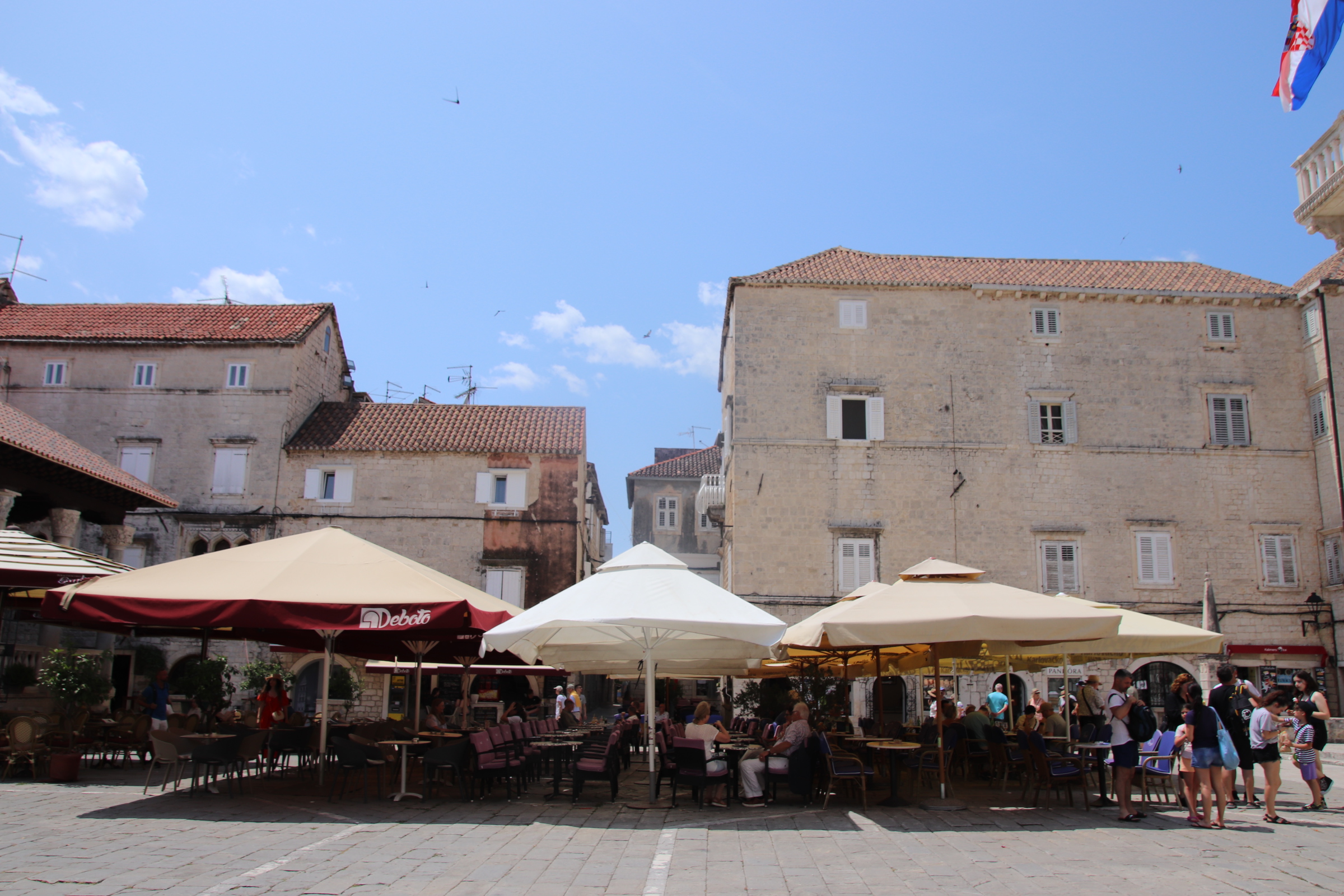
At the centre of the town is the main square filled with cafe tables and Trogir’s most important buildings.

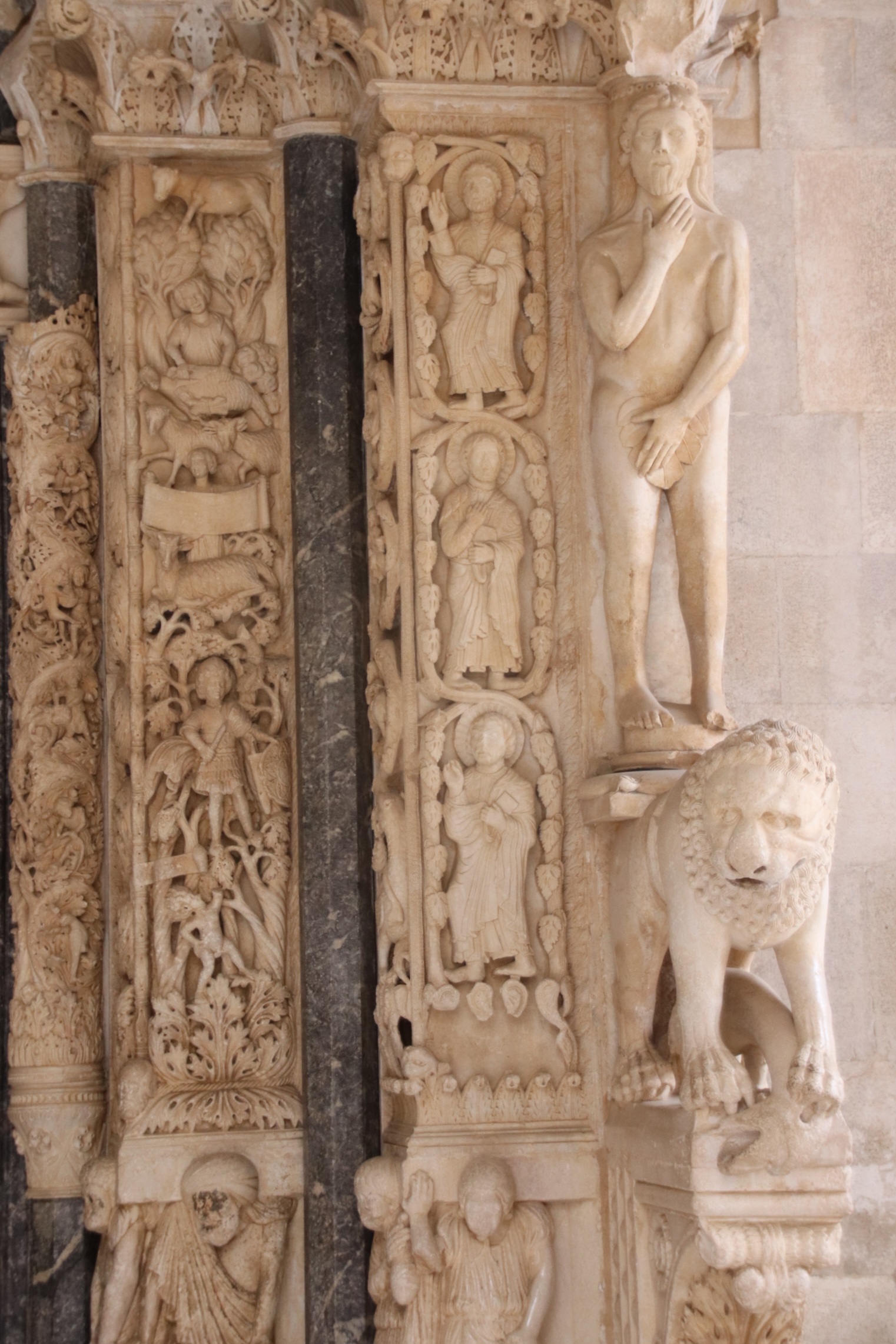
The 13th-century Cathedral of St Lawrence dominates one side. Around its main door are magnificent carvings depicting the bible for the illiterate masses of the time.

Zadar, the ancient capital of Dalmatia

Driving the scenic backroads of rolling farmland and far, limestone peaks we head for the northern Dalmation coast. Croatia has used its EU money on excellent infrastructure projects. The long tunnel through the mountains comes out on a dry, scrubby hinterland with the glistening Adriatic contrasting in the background. A necklace of long thin islands are strung along the coast in both directions, linked to the towns/cities on the mainland by tenuous fronds of ferry routes.

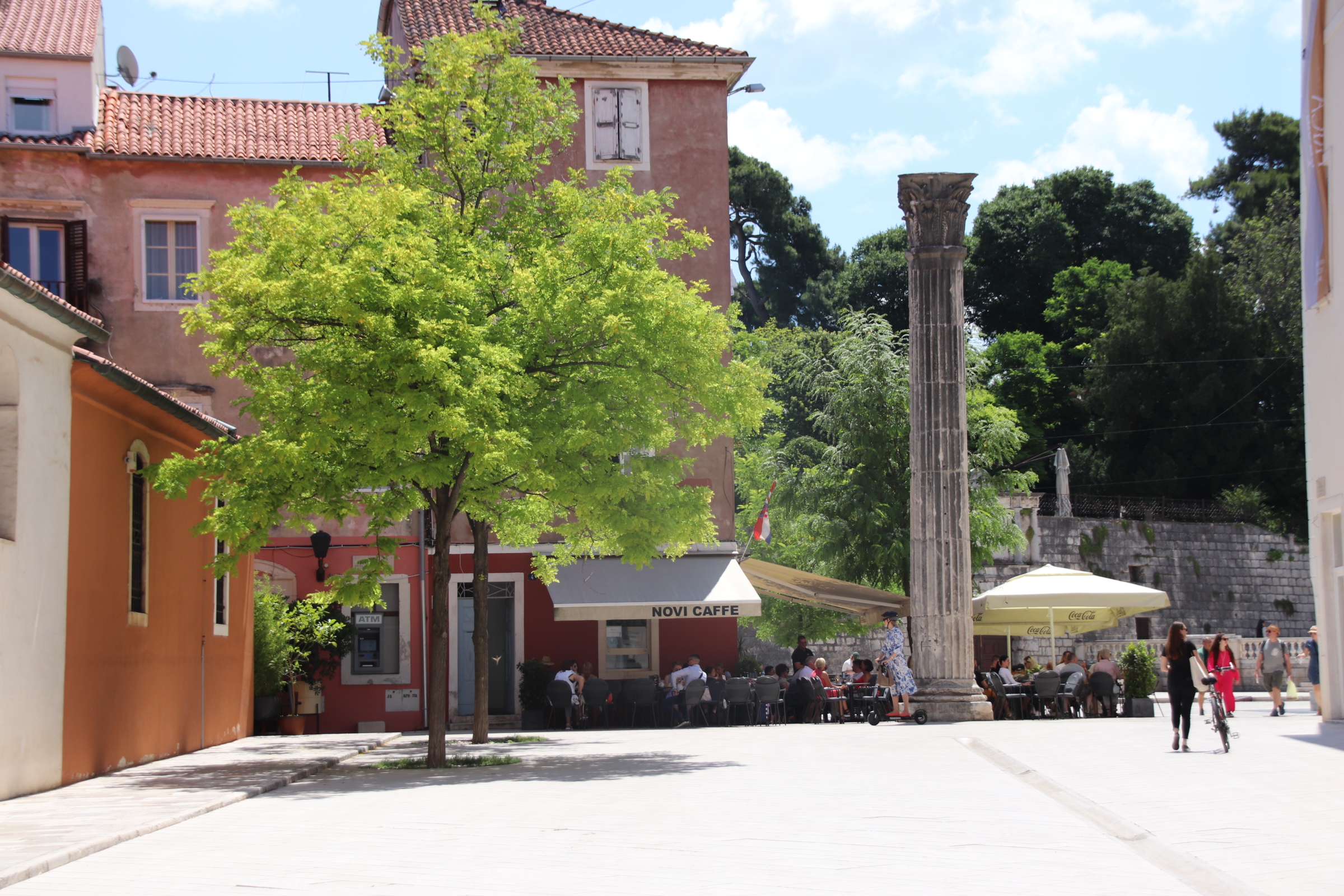
The peninsula town of Zadar is the ancient capital of Dalmatia. It is known for the Romanesque and Venetian ruins of its Old Town. Wide shopping streets lined with supermarkets, sandwich bars, cafes and all the trimmings of functional 70s family shopping, mix it up with ancient churches, truncated columns and dusty piazzas.

First port of call is the port (see what I did there :-)?) Where a Virgin monstrosity of a cruise ship is moored up to offload paddle-led groups of to visit Zadar’s ancient sights. On the seafront is an installation called the Sea Organ, a unique experimental music system driven by wind & waves, and the Sun Salutation, a multi-coloured sun-powered light display.

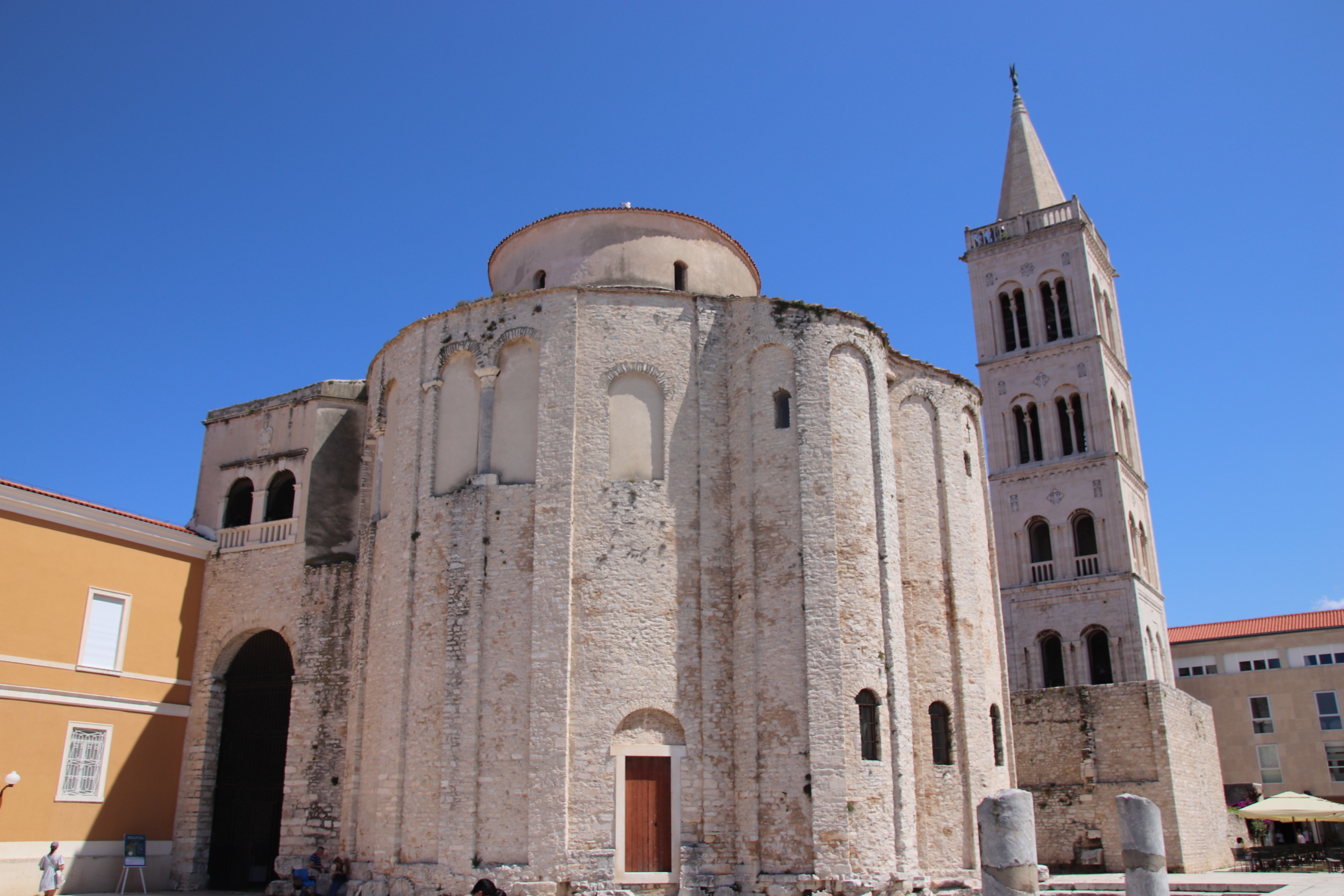
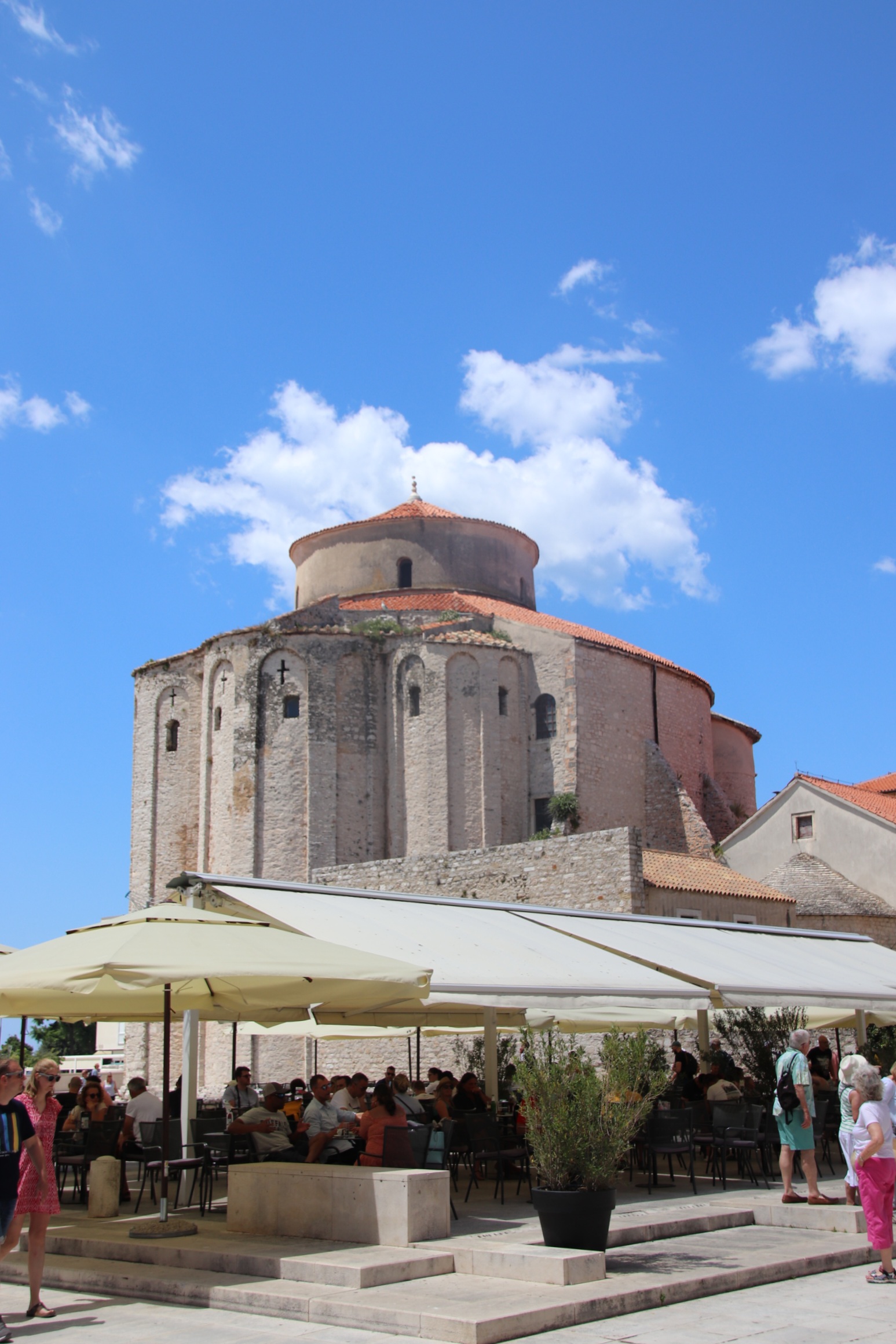
Construction of the round Church of St Donatus began in the 9th century and is the largest Pre-Romanesque building in Croatia.
The old city is laid out on a kind of grid system with ancient blocks dotted around more modern sectors. Strike into the back streets and one will inevitably lead to a church or a shaded square.
Plitvice Lakes National Park

Heading inland via the hugely impressive fortresses of Kliss & Knin, the mountains of the hinterland in general and the Plitvice Lakes National Park in particular provide an uplifting contrast to the heat, dust and heavy bustle of the coast. A day exploring the lakes calms the soul and refreshes the spirit, although at the snakes of similar minded visitors are exasperatingly all too similar.

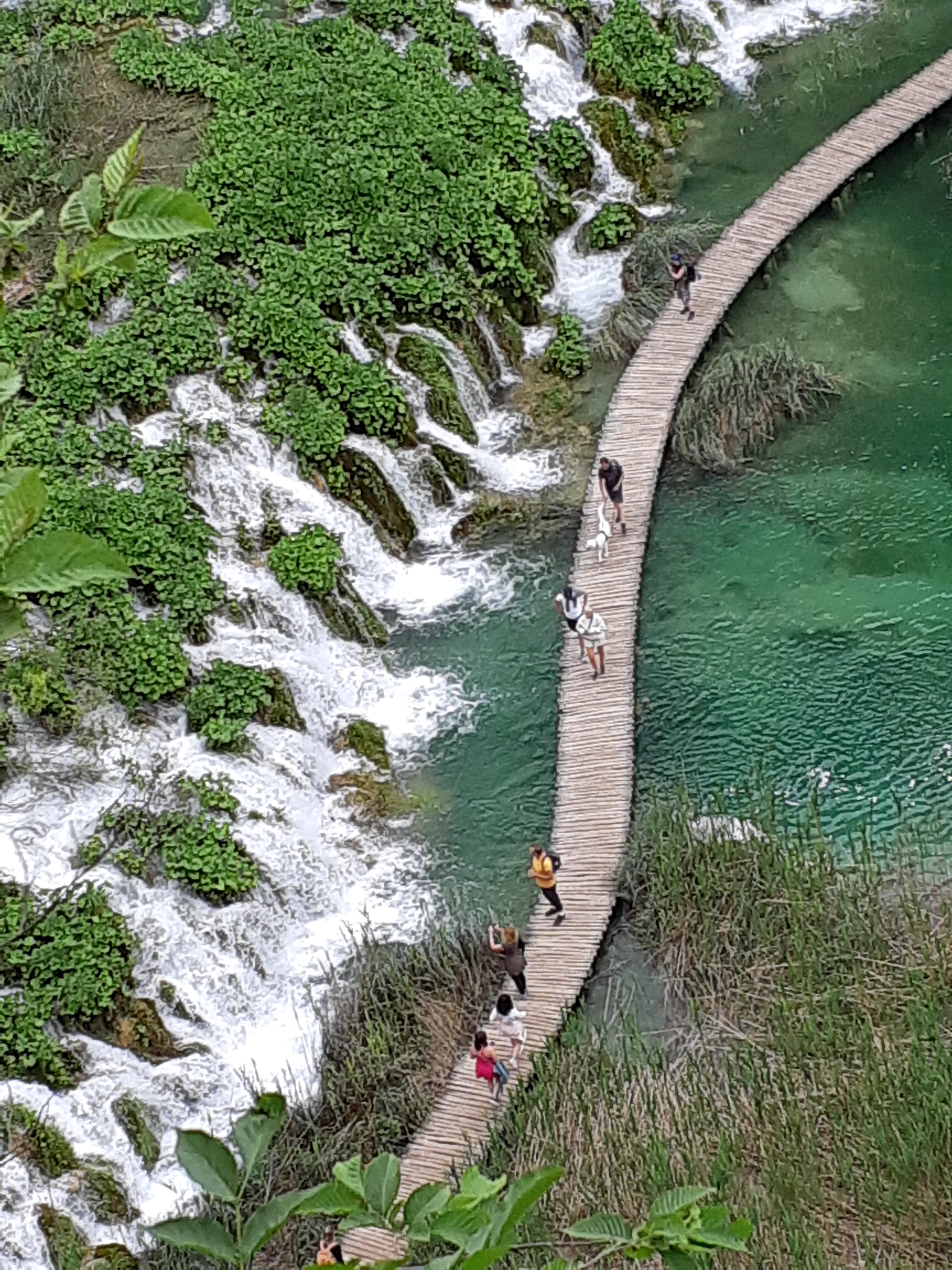
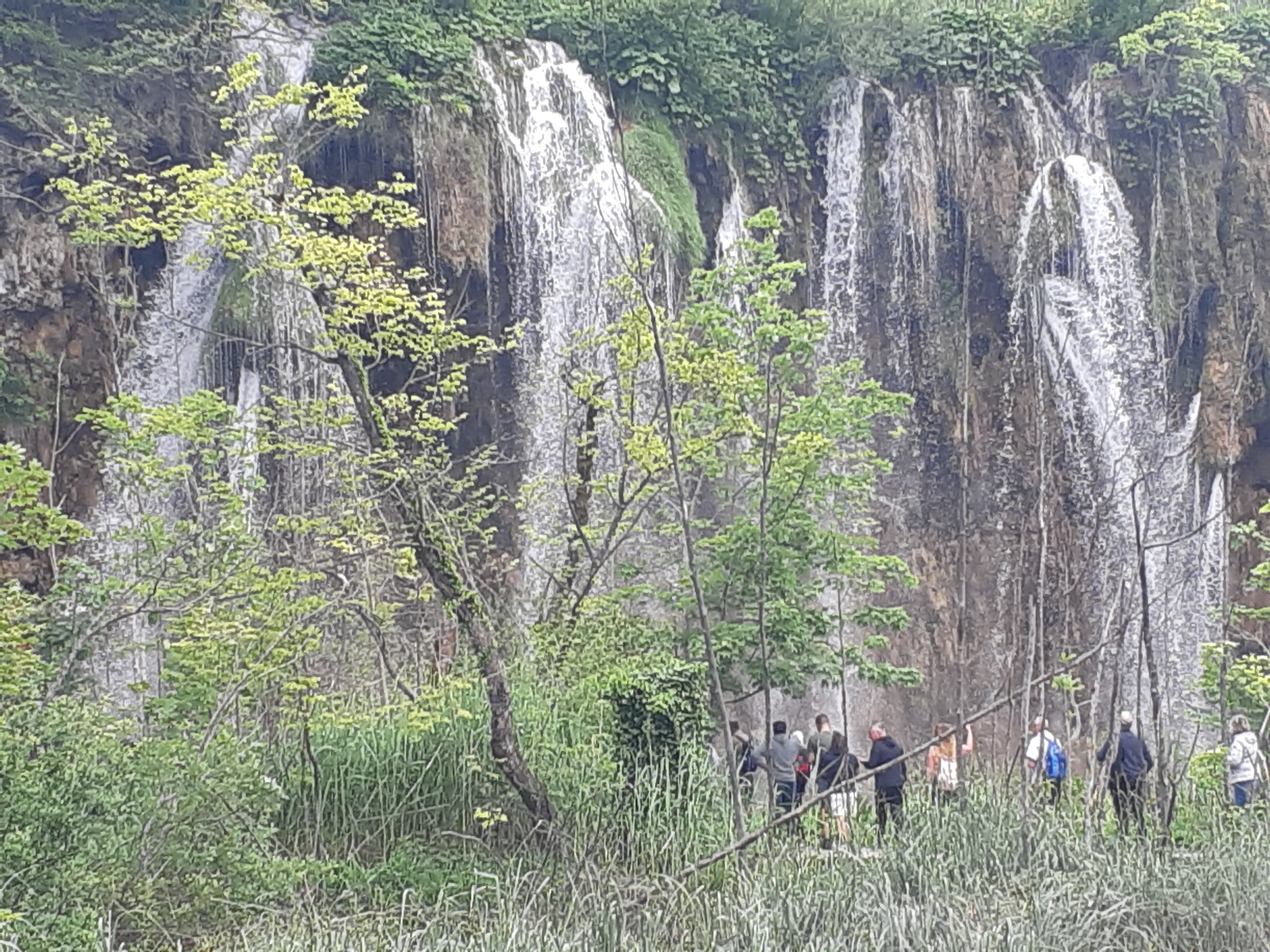
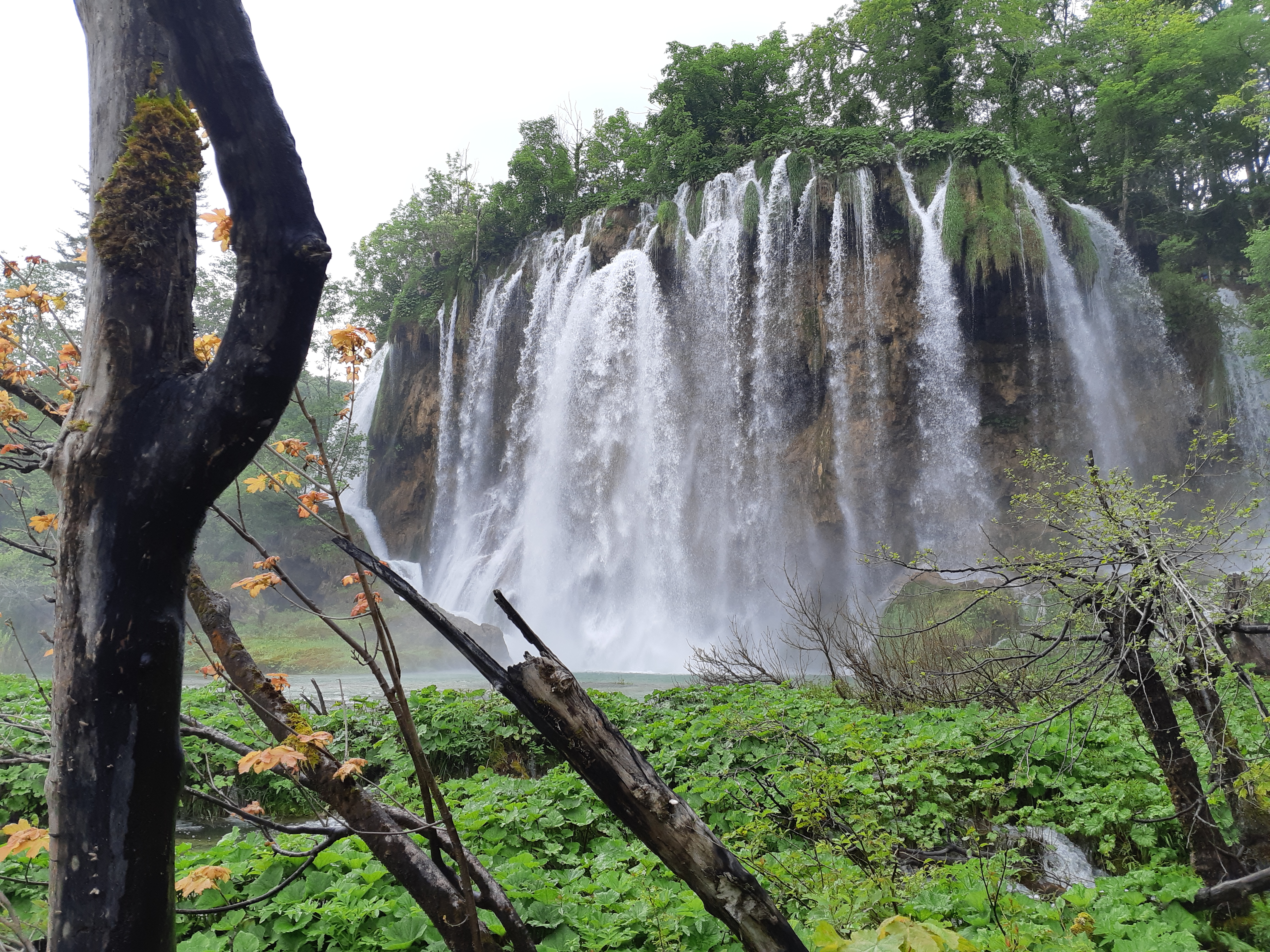
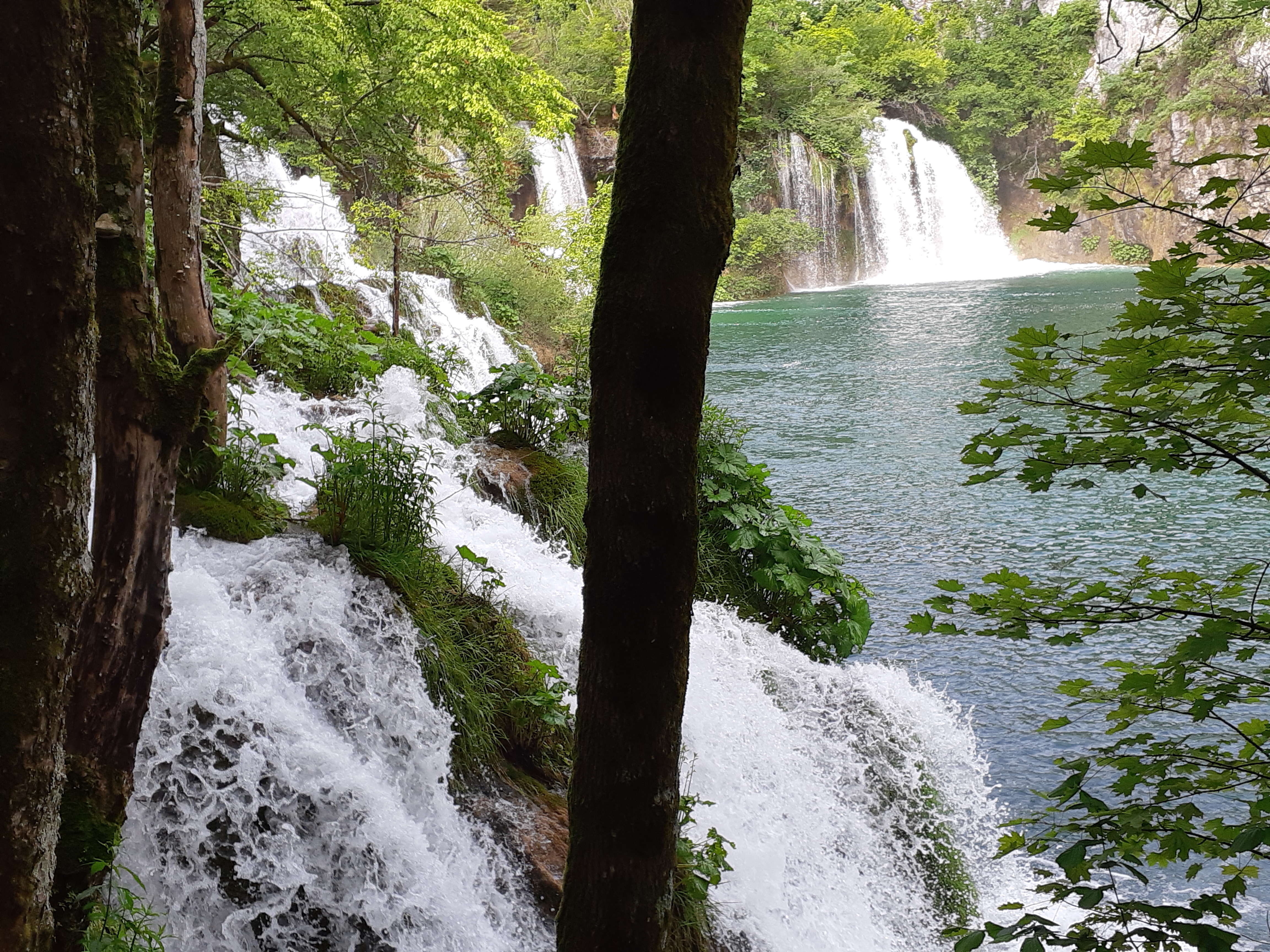
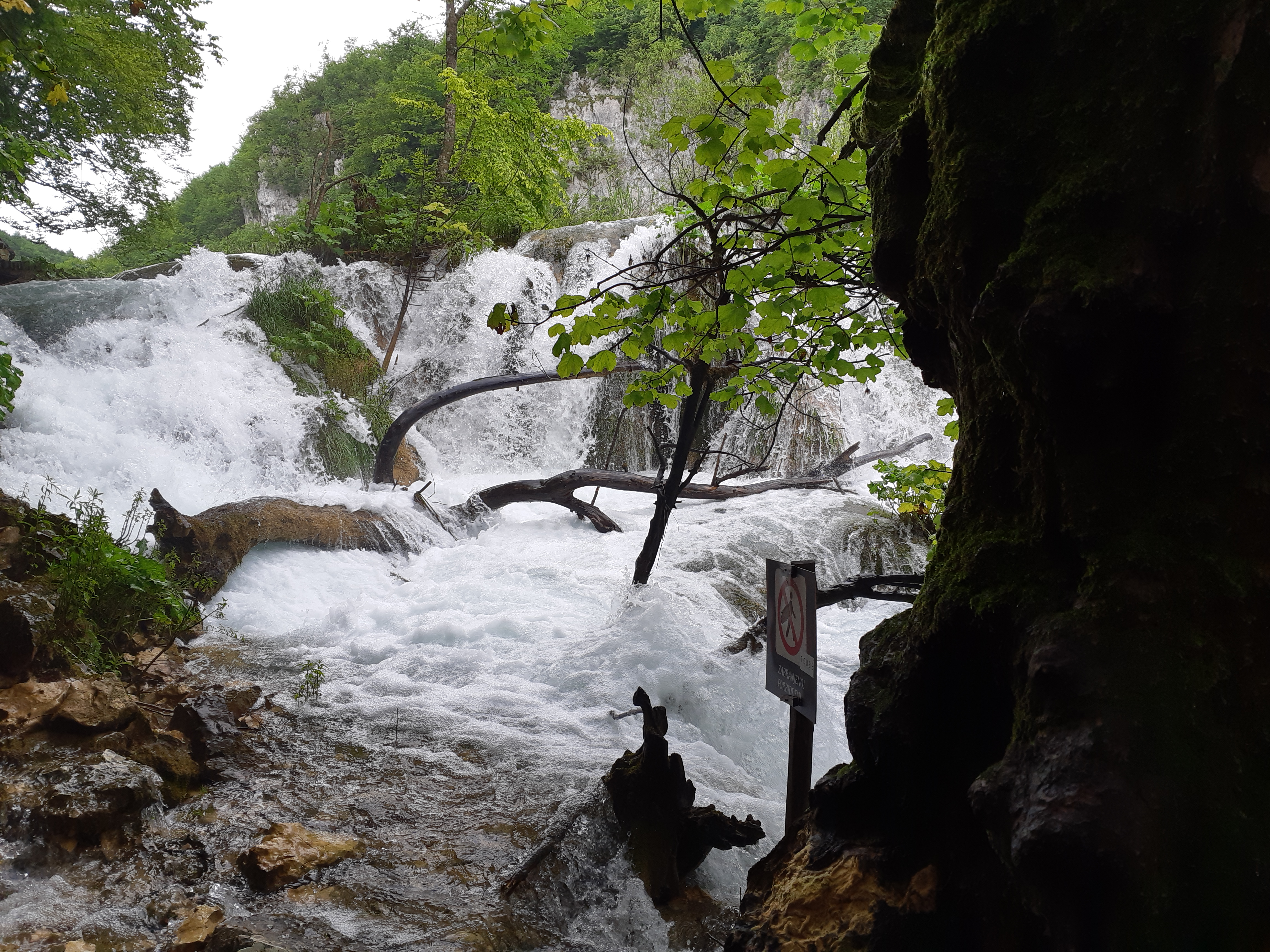
The National Park is a serious of routes along paths and boardwalks which link tall outcrops of rocks and cliffs covered in luscious vegetation and tumbling streams, rivulets & cascading waterfalls. From entrance 1 it is a 10 minute walk to the first and most impressive collection of tumbling water.

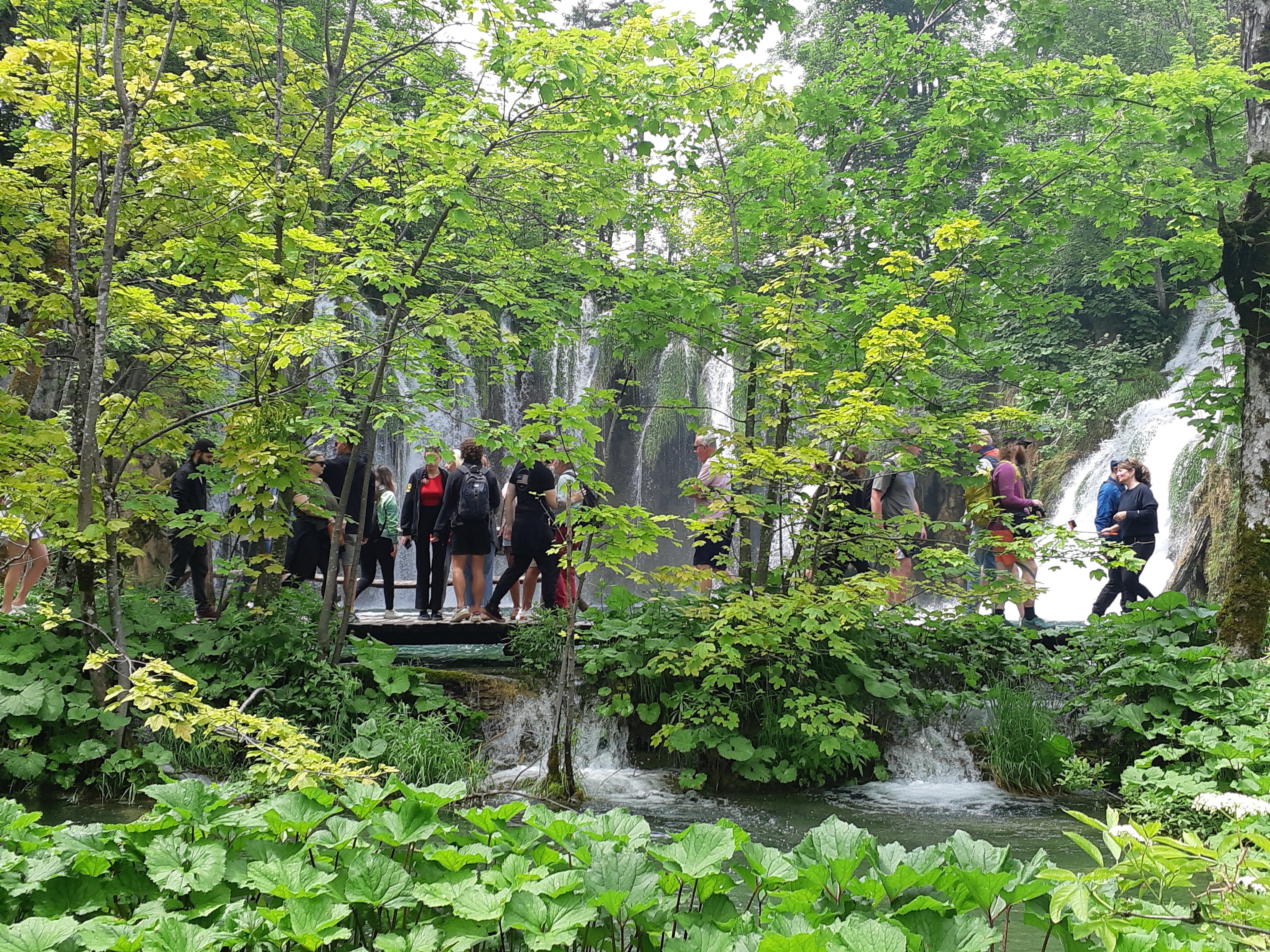
The winding boardwalk takes the omnipresent line of centipedeing tourists right up to the foot through spray & mist.

The trail winds up the 16 lakes along the banks at the water’s edge, through speckling woods & glades, moss covered & frondy wrapped rocks, and open bodies of water, drawing out calmess and peace.

Simple boats take visitors across open water enabling access to all parts of the park.

So, relax fully!!

The precious jewel that is ancient Split

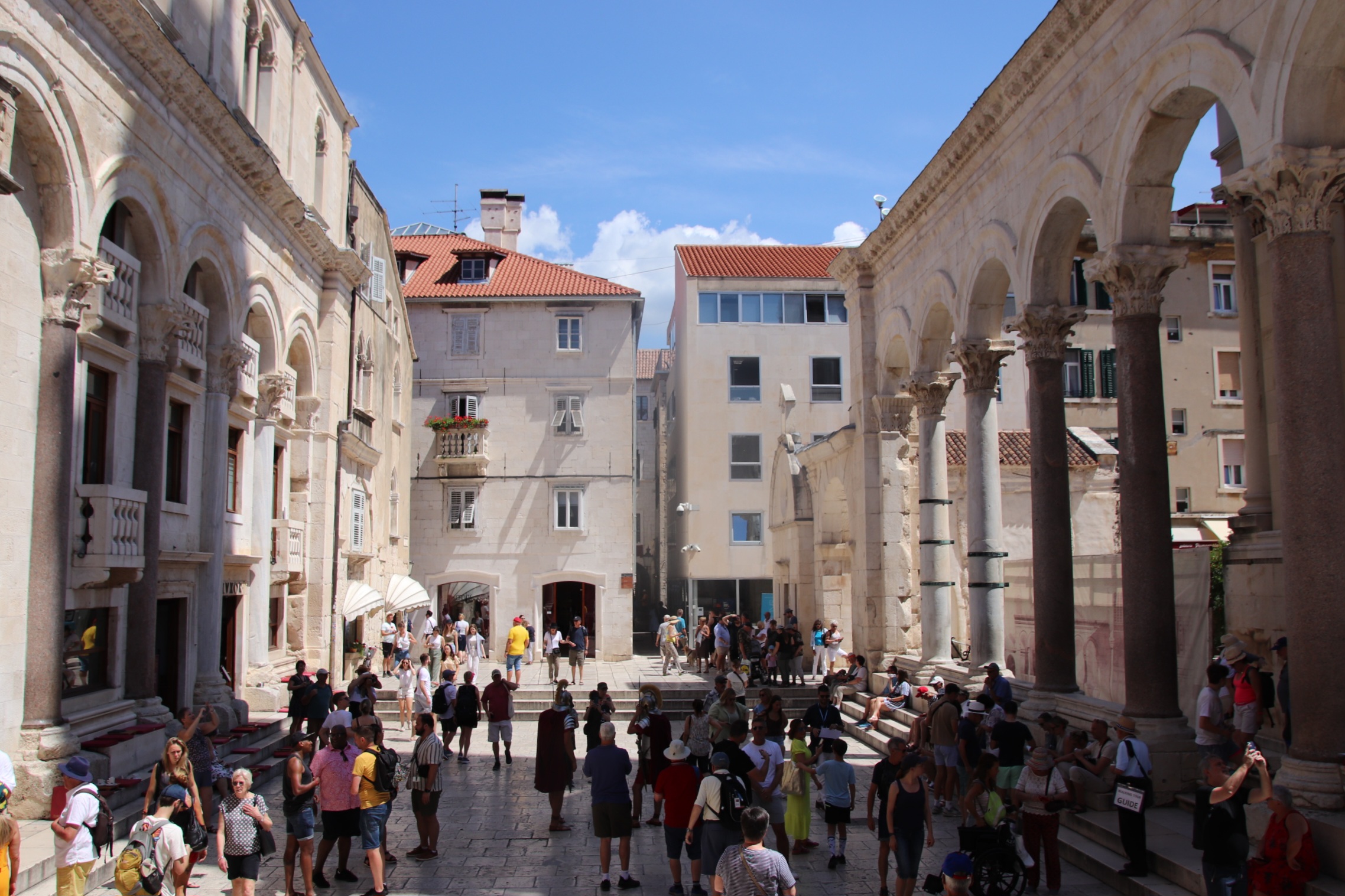
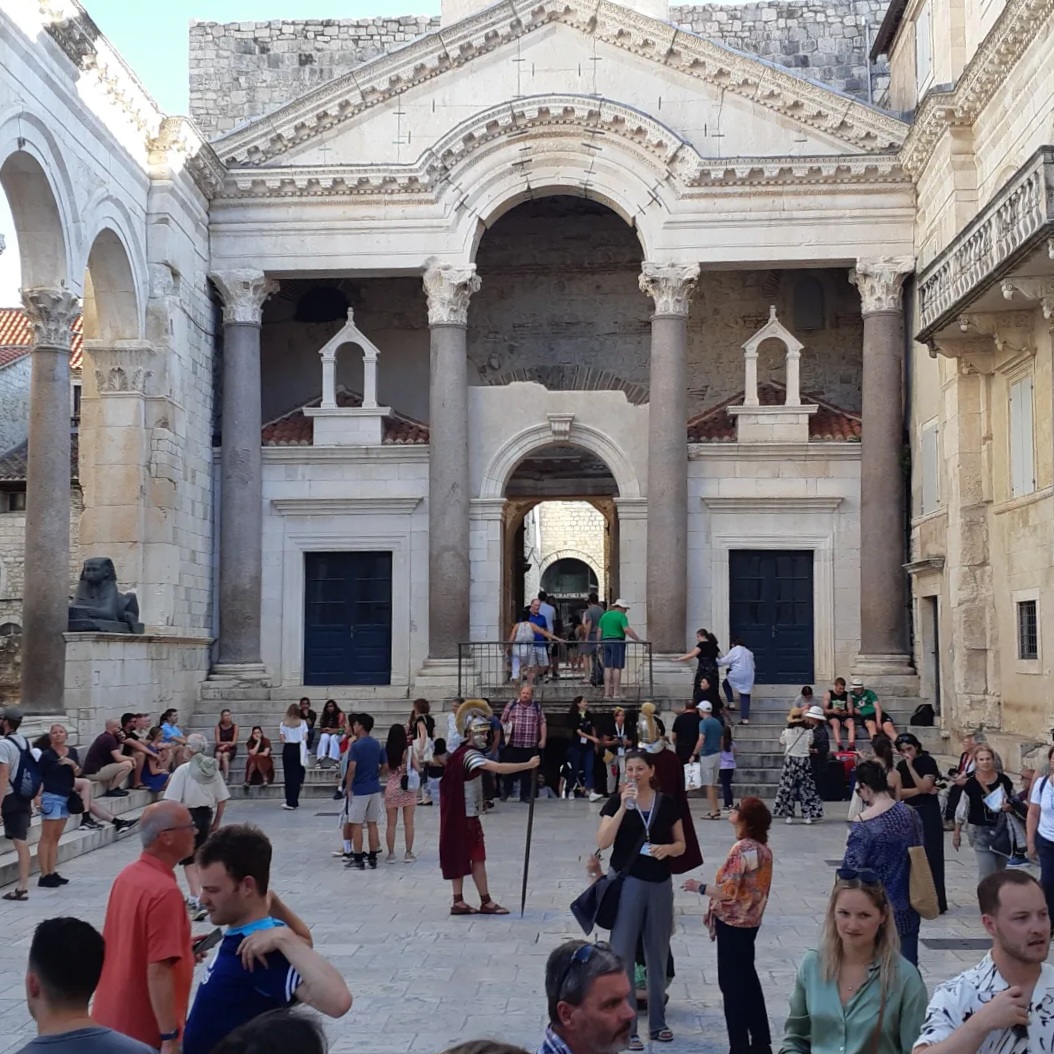
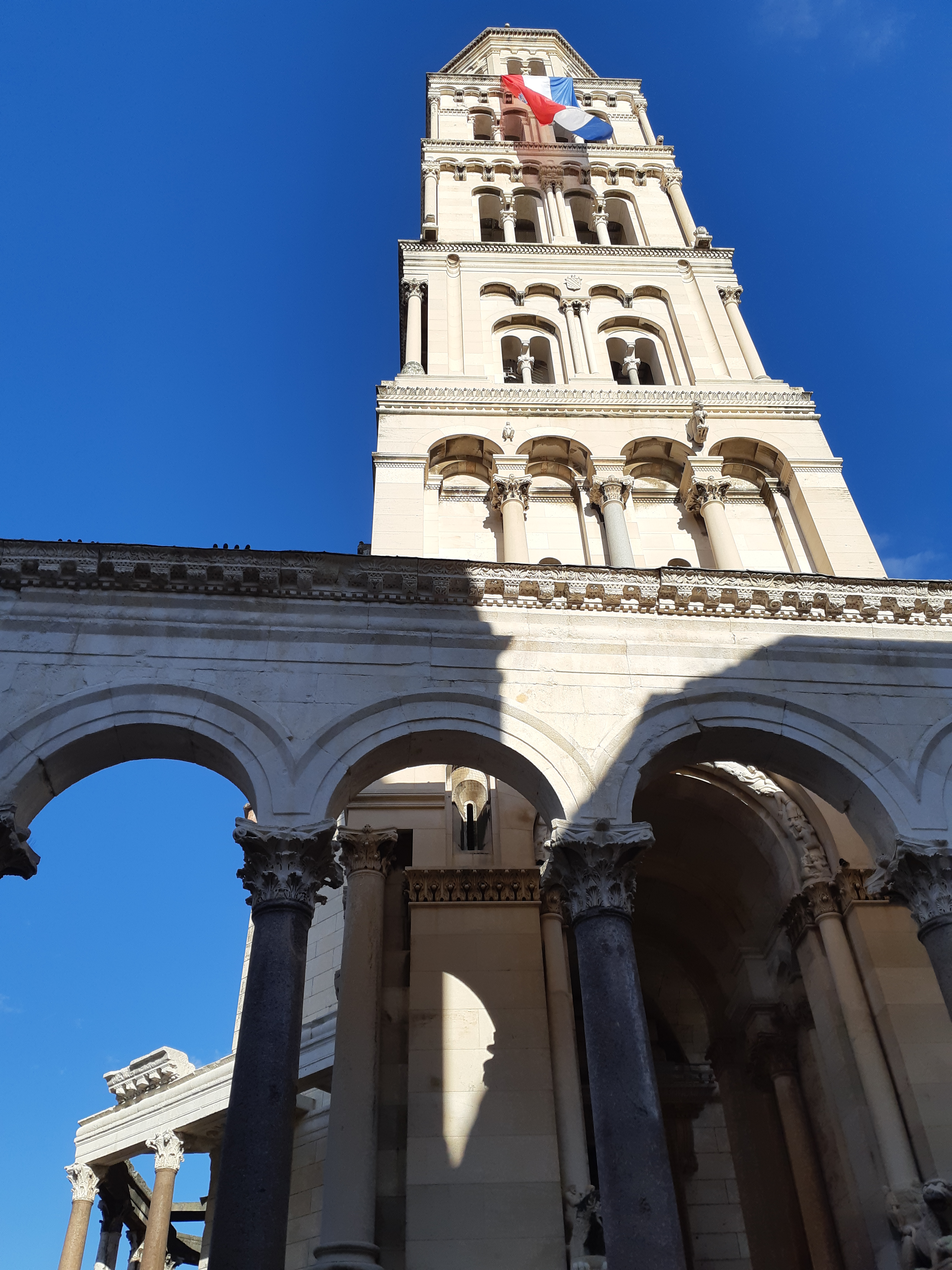
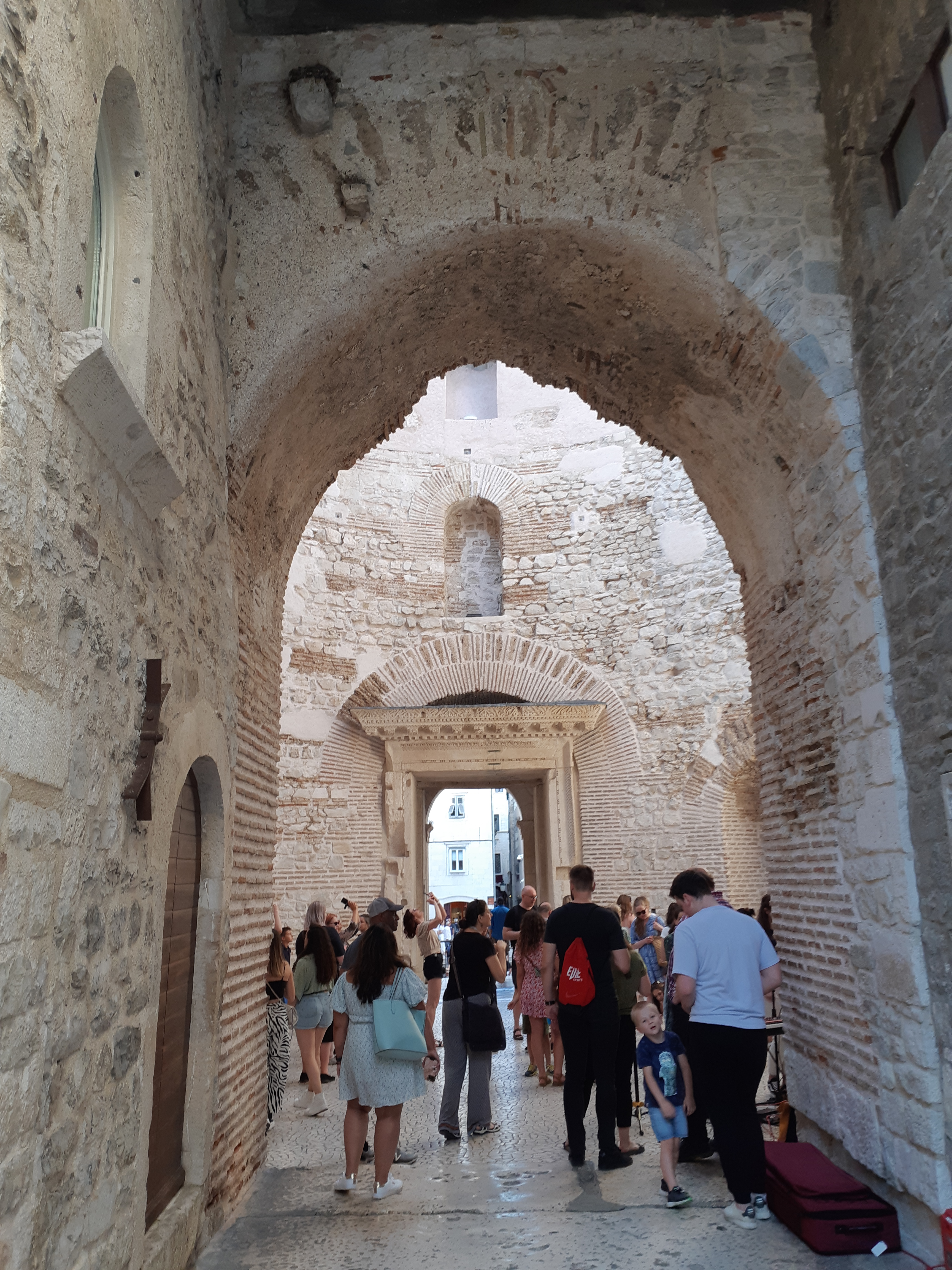
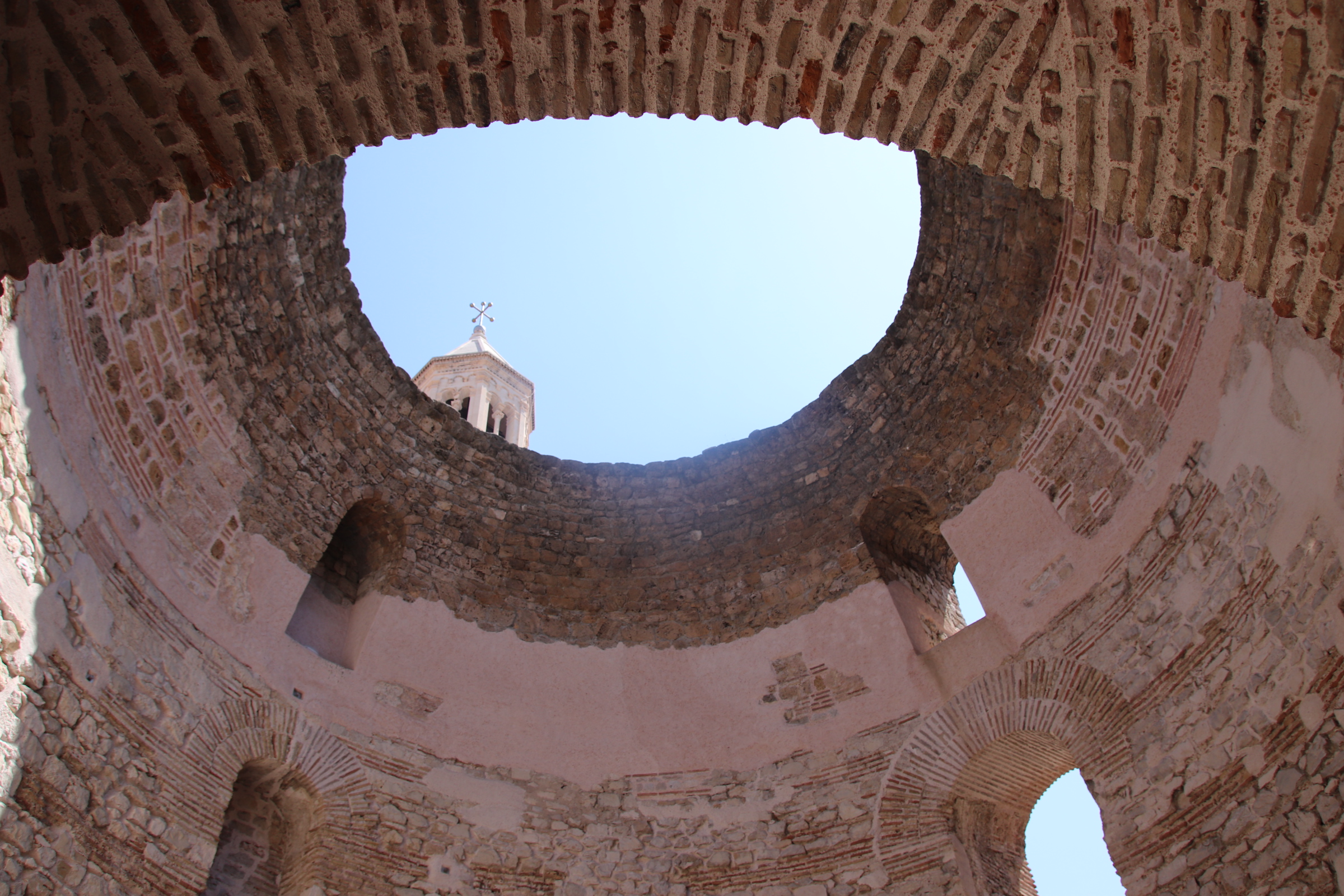
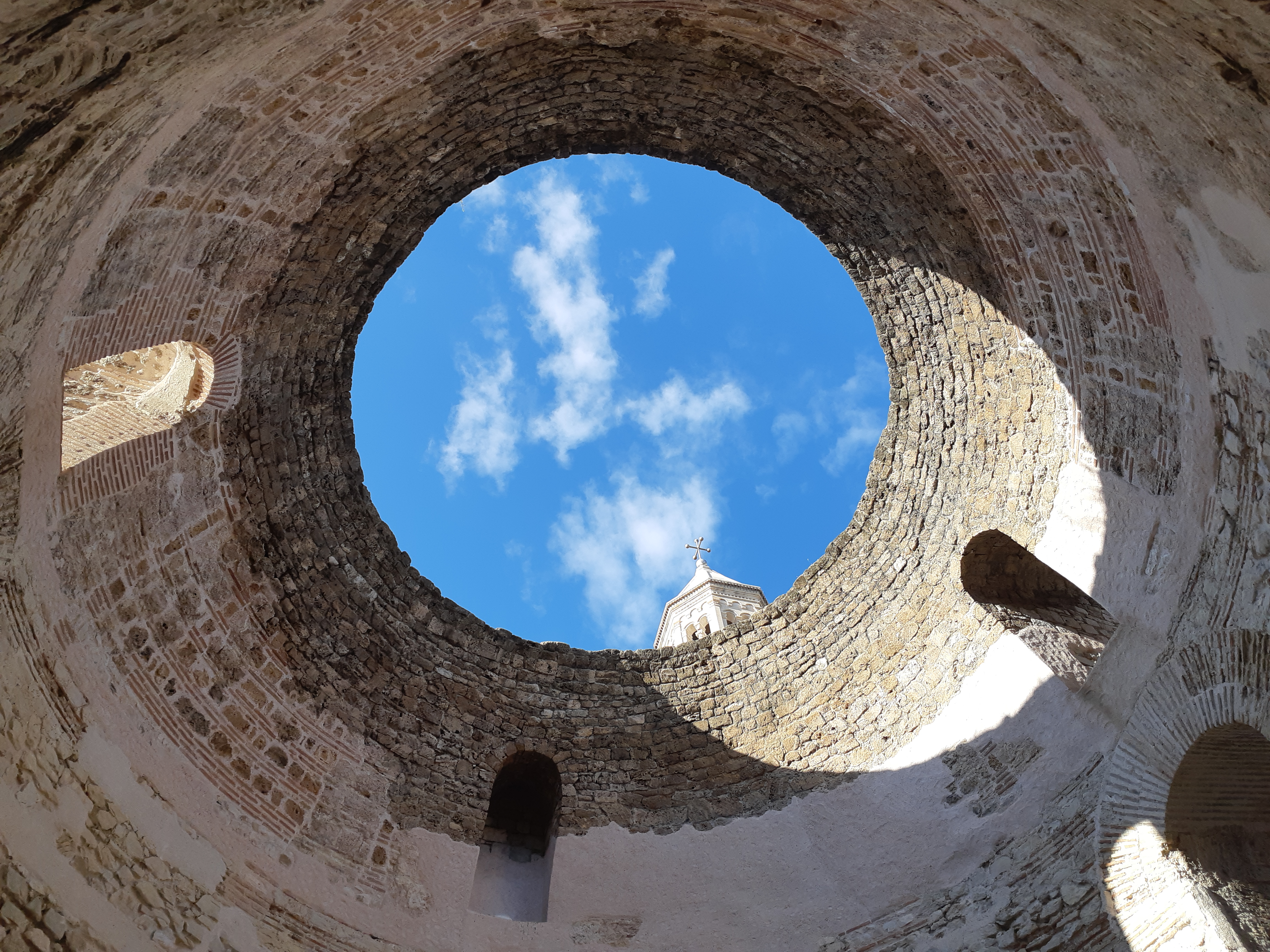
The Emporer’s Palace is one of the best preserved examples of Roman architecture in the world. A combination of luxury villa and military camp, its huge walls protect four separate areas divided by two main streets turning north to south & east to west. Entry is by way of a guarded gateway in each wall, still defended by Roman soldiers disguised as tourist attractions.

Try and forget the crowds and the temperature and take a trip back to ancient times when Jews lived in a ghetto, affluent merchant families built grand houses inside the walls, churches and official buildings competed to out-glorify each other and traders and sailors landed goods from Africa to the Americas, from the China seas to the Russian Federation.

The ancient core still boasts Roman and medieval artefacts and features and archaeologists are working behind scaffolding and cloth to reveal past glories.

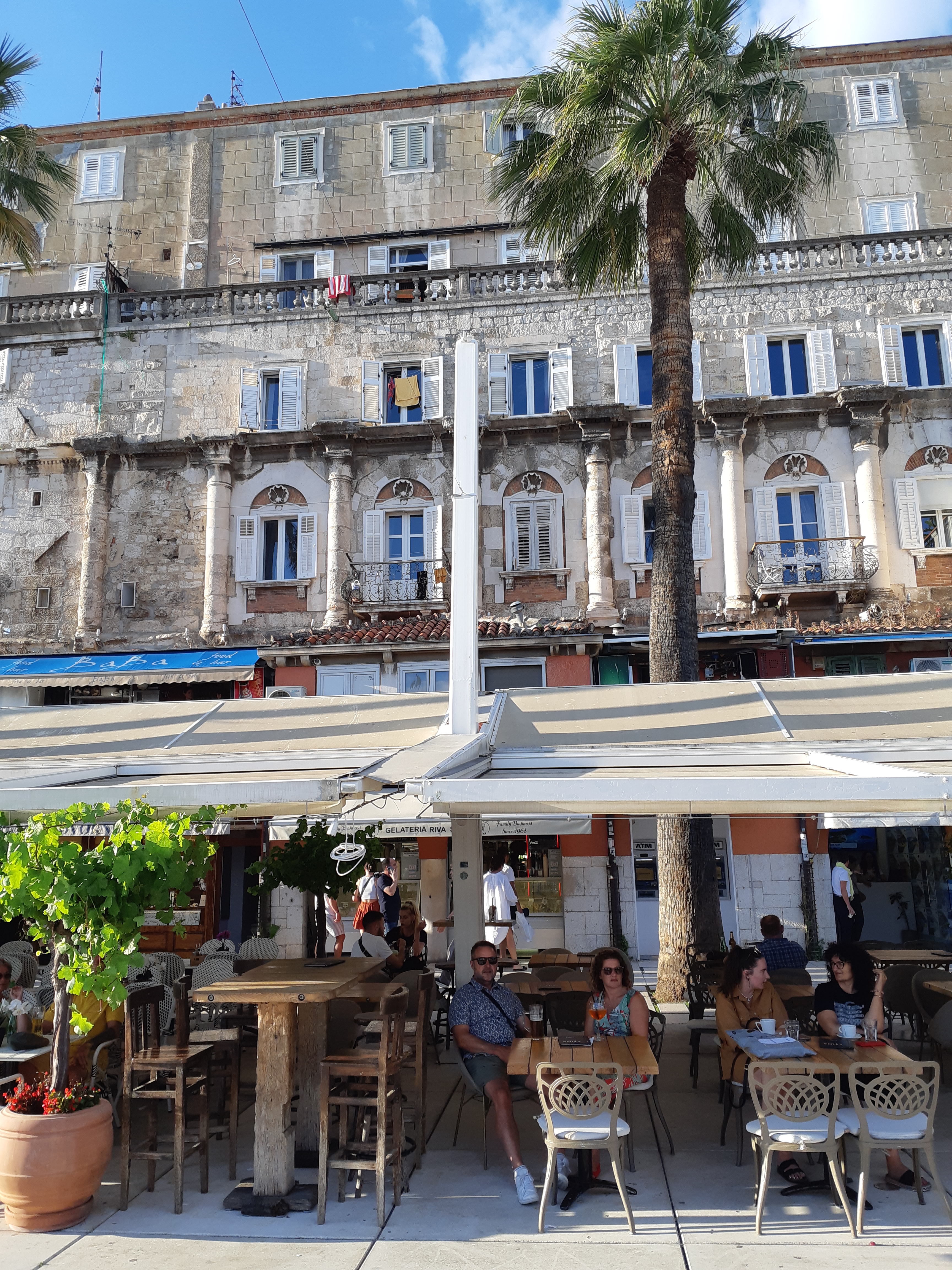
Outside the walls normal life goes on for tourists and locals. Split is very much a young person’s place particularly away from the cruise ships and the long lines of coack parties and tourist groups. The town’s small beach is buzzing with gentling couples, groups of tanning girls and gangs of loud boys larking about in the shallow water. The latter needing to expend a bit of energy before joining up with gals and heading for the afternoon party boat or the bar.

Croatia Calls after arriving in Dubrovnik

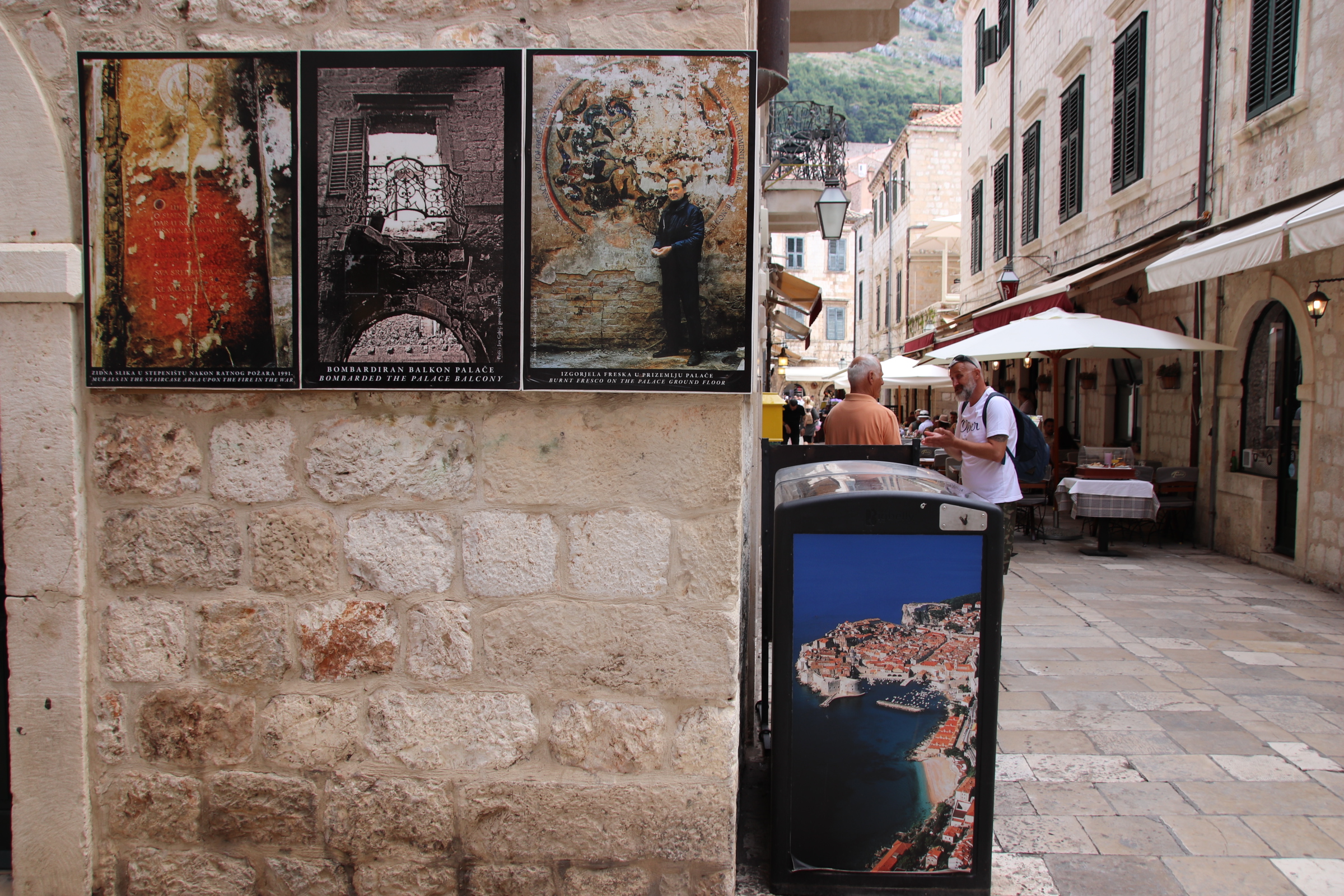
Hi Everyone. Having spent one day in Dubrovnik in the past and having heard so many people wax lyrical about Croatia, I thought it was time to spend longer exploring this long, thin country positioned along the Adriatic coast. The plan is to revisit the medieval fortified city of Dubrovnik, destroyed by shelling in the early 1990s, and restored by UNESCO in the following years. From there, to travel north to Split, the Krka and Plitvice Lakes National Parks, before using the small coastal town of Trogir as a base to explore Dalmatia and Croatia’s islands. Let’s see how it all goes.

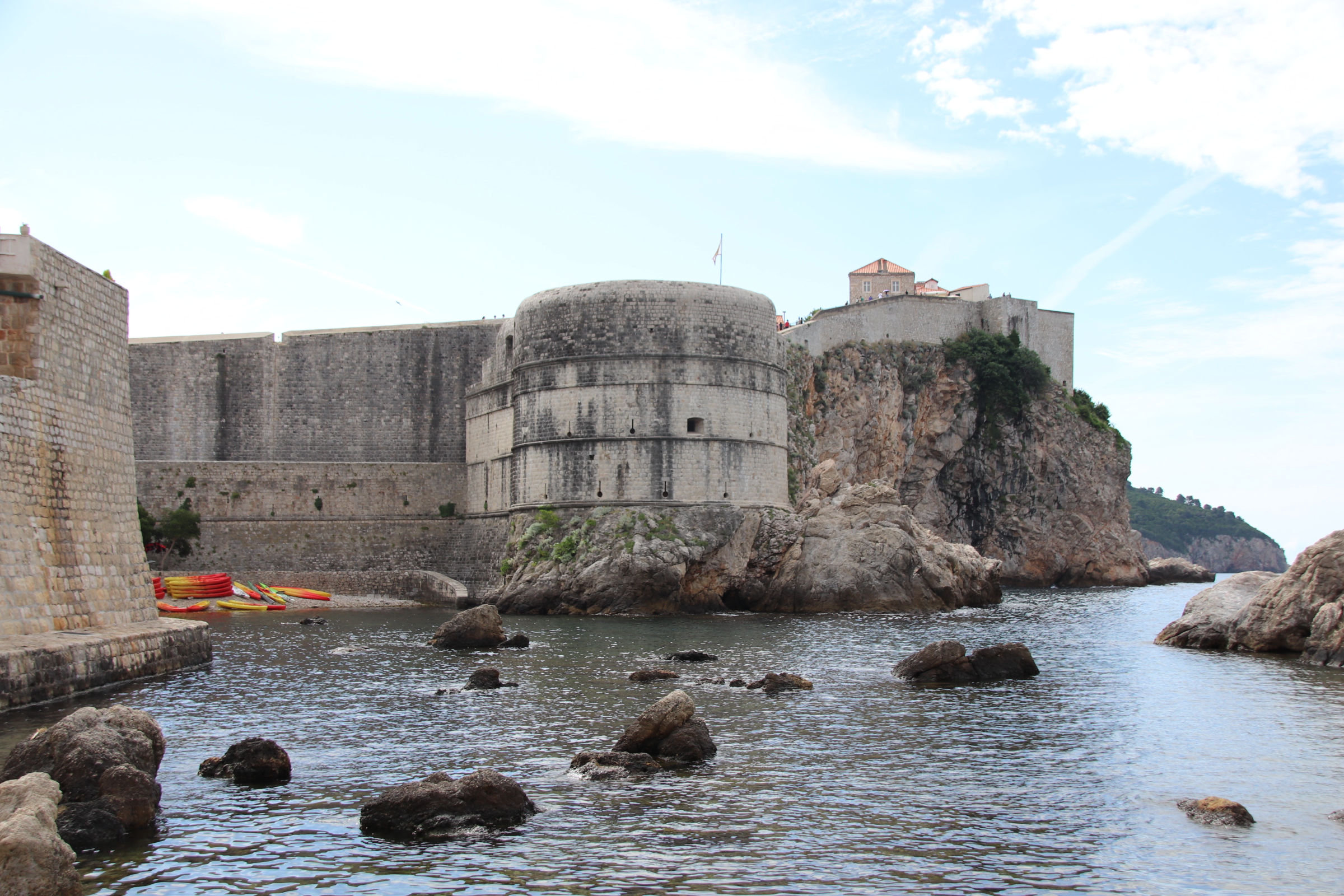
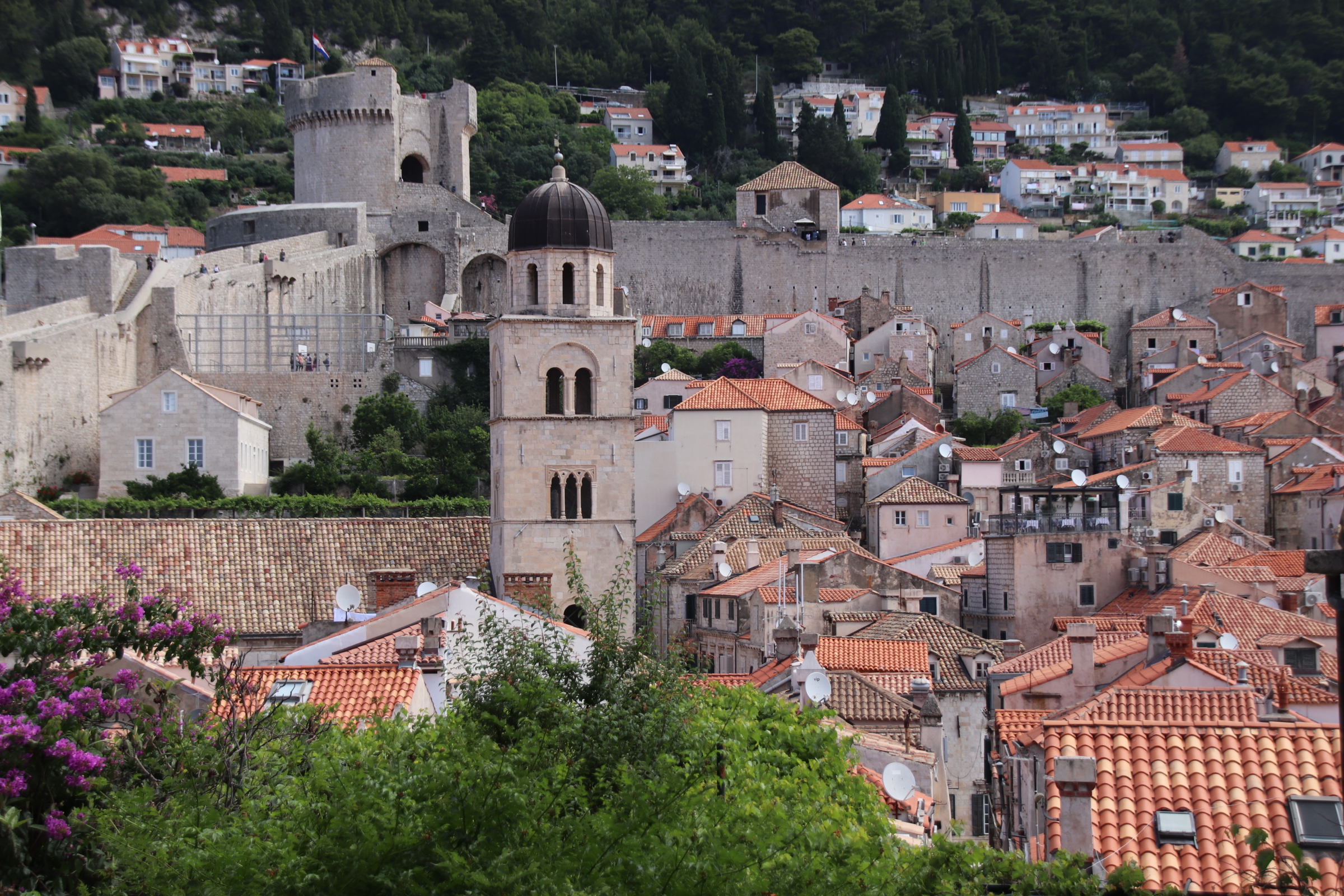
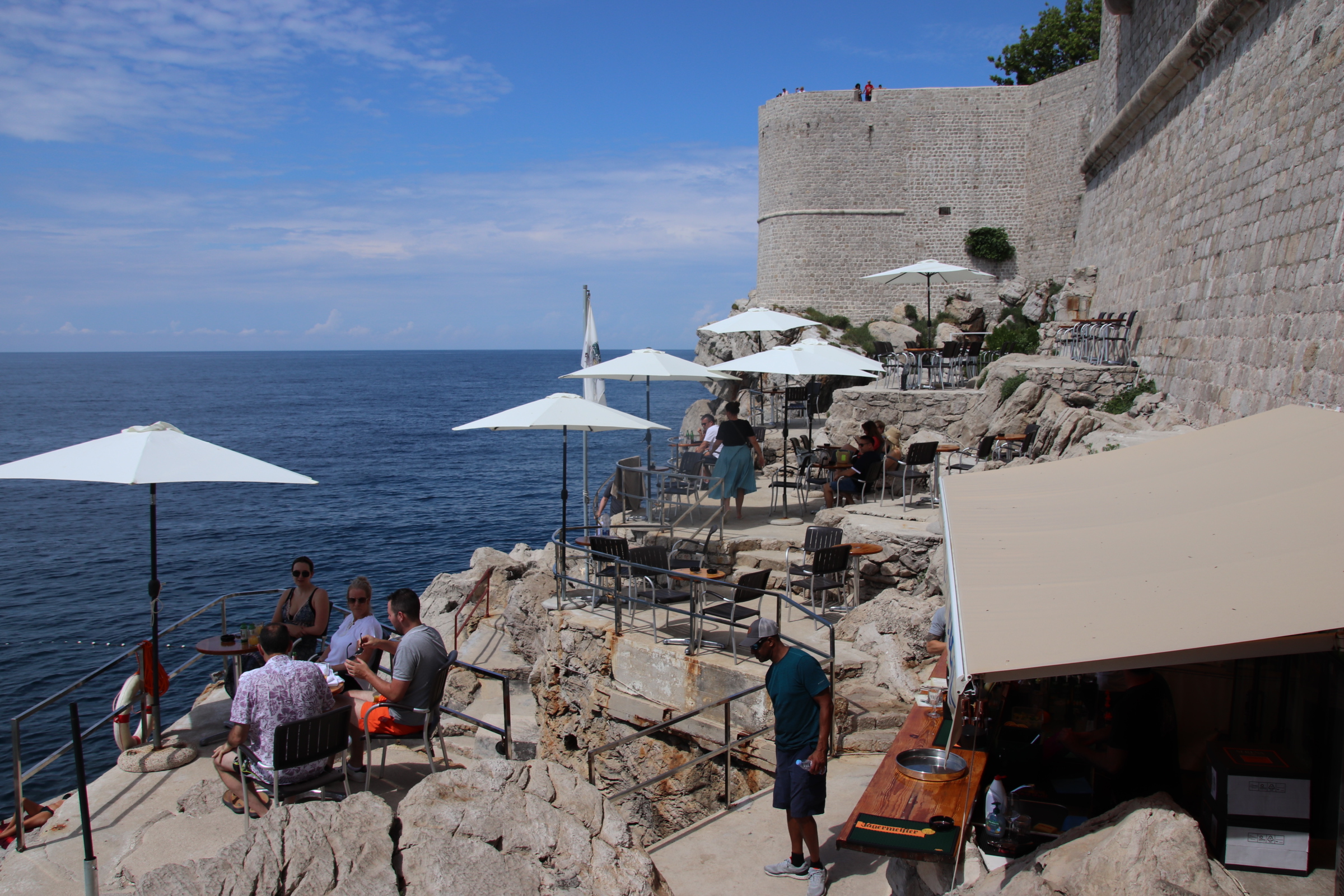
So, first port of call is the city of Dubrovnik. Outside its gigantic walls small villages, shopping precincts and islands provide a sense of normality.

Its very special Old Town, encircled by massive stone walls was completed in the 16th century to protect the area’s salt production and trade. At the time, a weight of salt was priced at the same amount of gold!

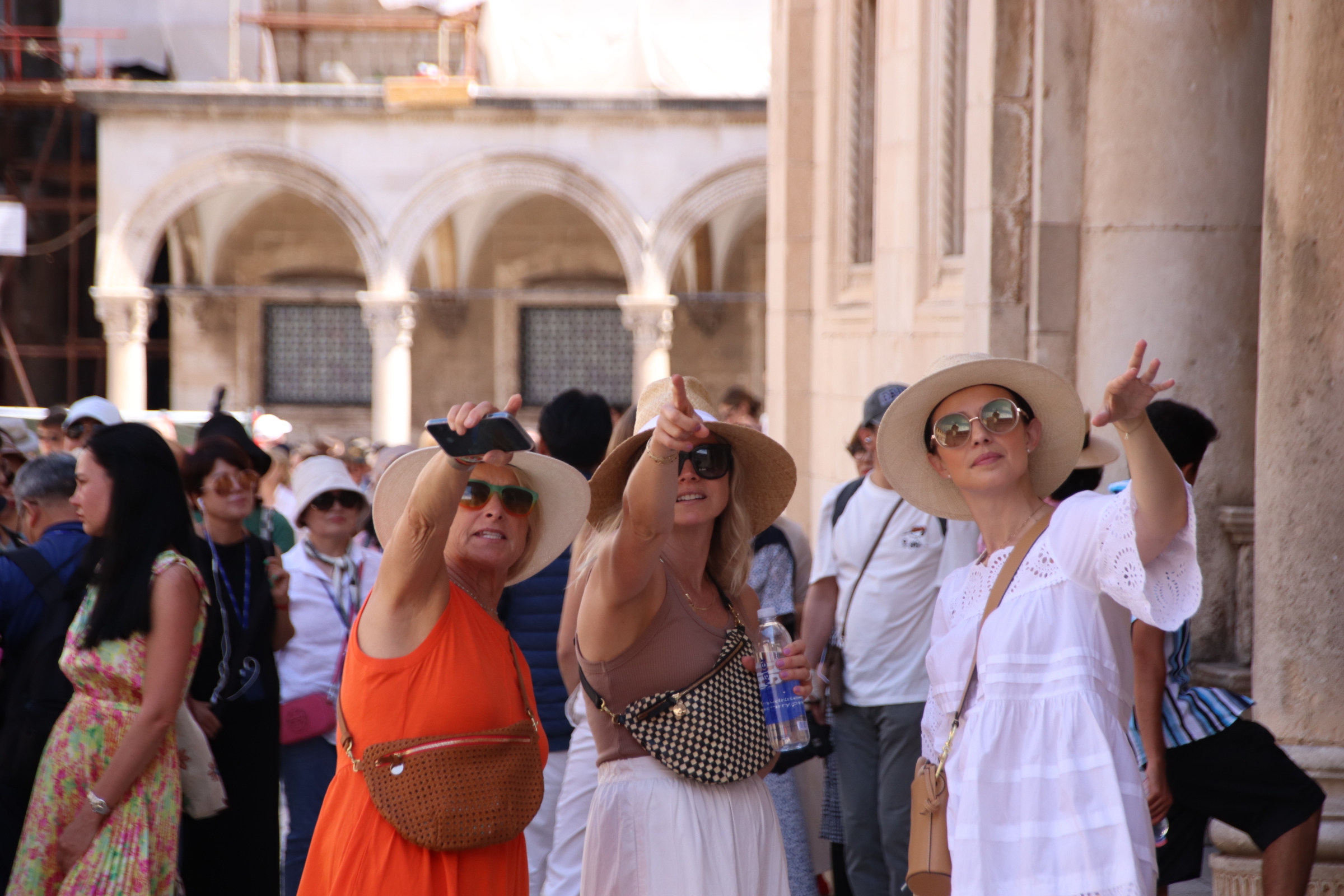
It is hugely popular with tourists, an essential stop for day visitors, coach tours & cruise ships. Indeed, having been dropped off by the transport of choice at the main gateway through the 10 metre thick walls, tributaries of visitors coalesce into the main flow which smoothly guggle at a sluggish pace over the bridge and into the town.

inside it is Sunday. Thousands of selfy-sticks, camera straps & swinging iphones mix it up on the polished stone cobbles with the few locals that still leave here. Church bells compete with trip company & restaurant touts shouting out their deals. The walls, the boats to the islands, the chair lift to the top of the hills all cost a pretty penny. Yet the place has a real buzz and a crazy atmosphere- great if you can deal with crowds!

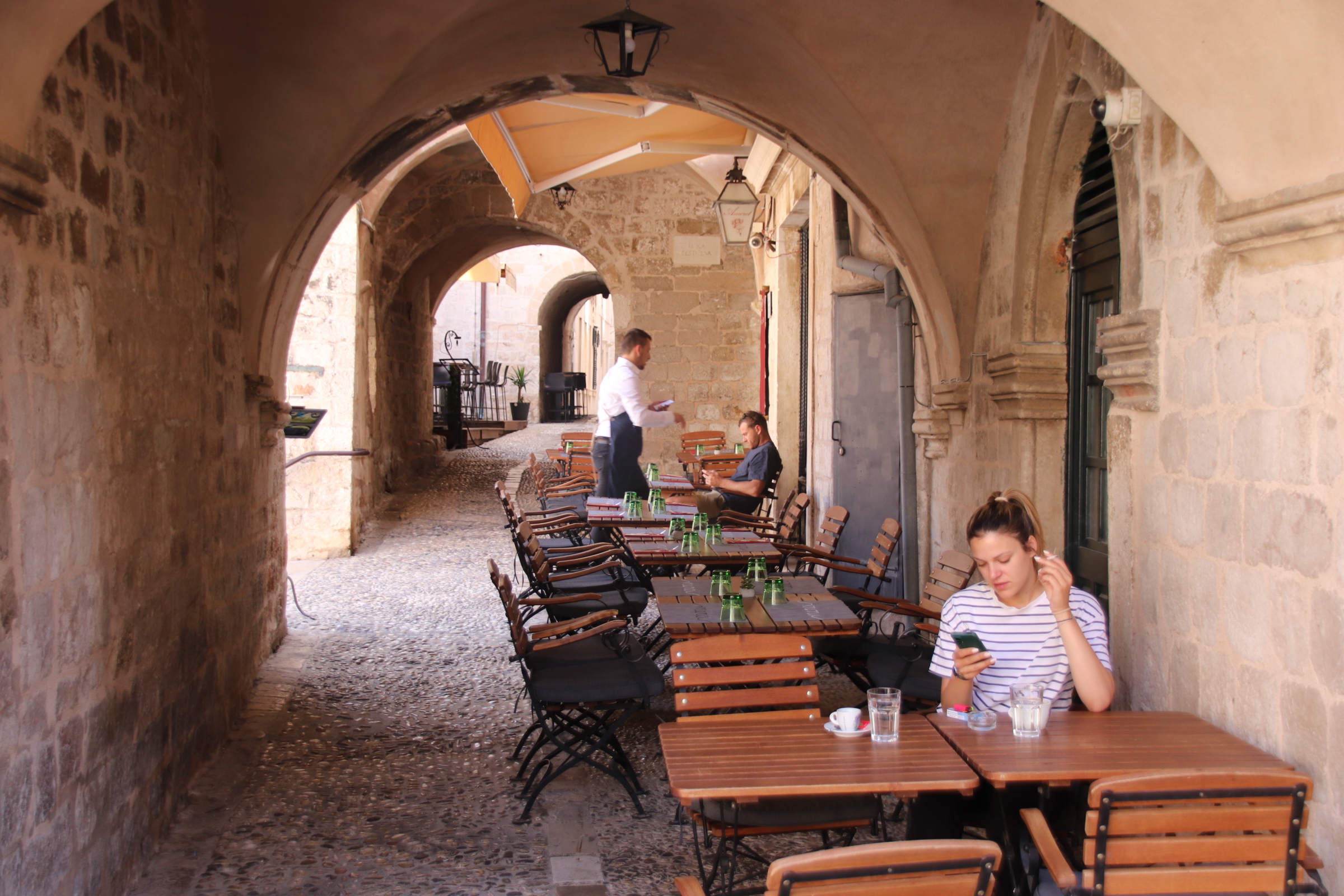
Visitors and locals seem to just put up with each other. Maybe both realise they need the other.